
- Home
- »
- Nutraceuticals & Functional Foods
- »
-
Weight Management Nutrition Market Size Report, 2033GVR Report cover

Weight Management Nutrition Market (2026 - 2033)
Size, Share & Trends Analysis Report By Need State By Product & Format (Primary Need State, Secondary Need State), By Sales Channel (Online, Offline), By Region, And Segment Forecasts
Market Size, 2025
$107.1BMarket Estimate, 2026
$112.4BMarket Forecast, 2033
$154.1BCAGR, 2026–2033
4.6%Weight Management Nutrition Market Summary
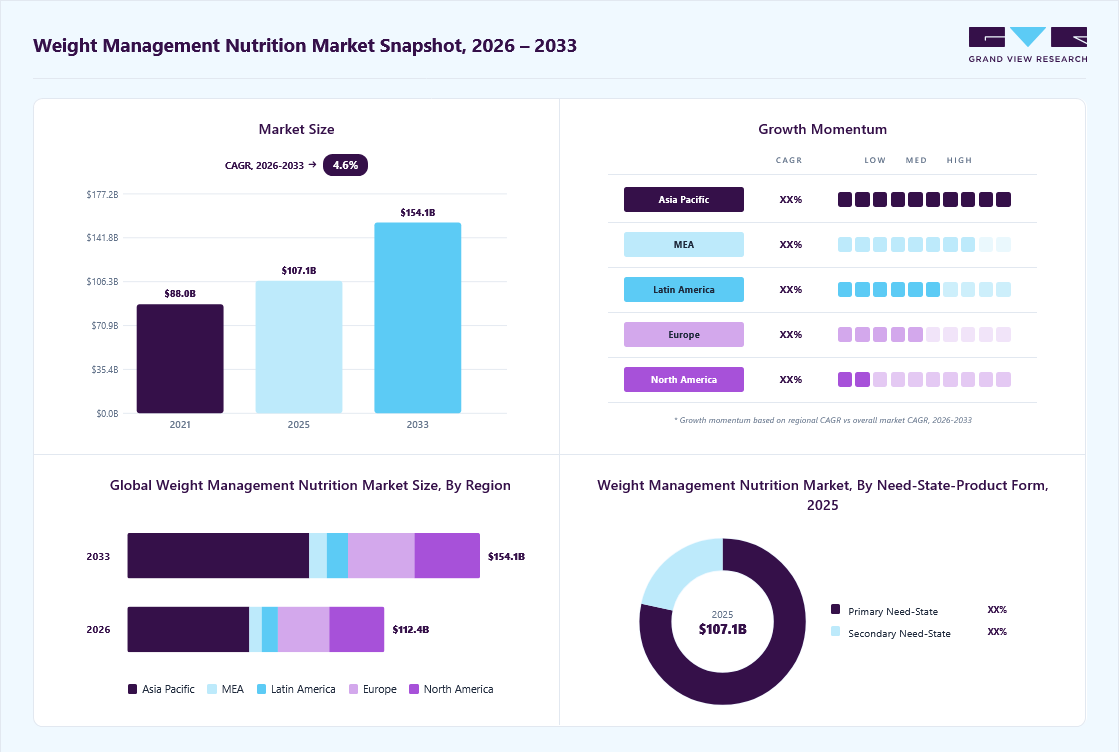
The global weight management nutrition market size was valued at USD 107.1 billion in 2025 and is projected to grow from USD 112.4 billion in 2026 to USD 154.1 billion by 2033, at a CAGR of 4.6% from 2026 to 2033. Asia Pacific dominated the market, accounting for a revenue share of 46.9% in 2025. The industry is primarily driven by the growing adoption of GLP-1 therapies, which are reshaping consumer demand for nutrition solutions. As GLP-1 use expands, consumers increasingly seek high-protein, nutrient-dense, and portion-controlled products to support weight loss and preserve lean muscle.
 Source: Grand View Research, IR Documents, Primary Interviews, Paid DatabasesTo learn more about this report,
 Download Free Sample Report
 Key Market Trends & Insights
- By need-state by product & format: Primary need-state segment led the market and accounted for a share of 78.3% in 2025.
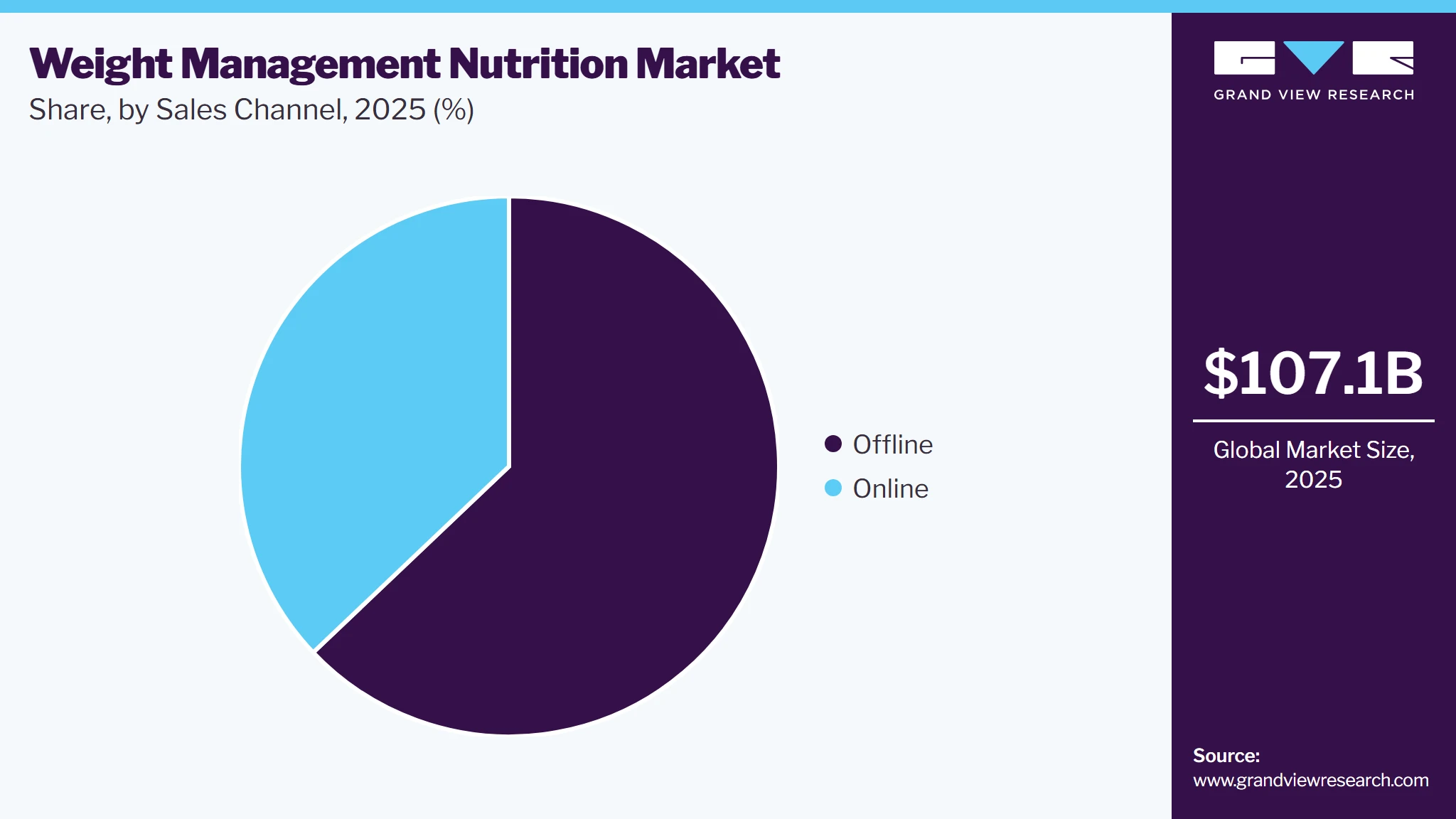
- By sales channel: Offline channel led the market and accounted for a share of 62.9% in 2025.
Regional Highlights
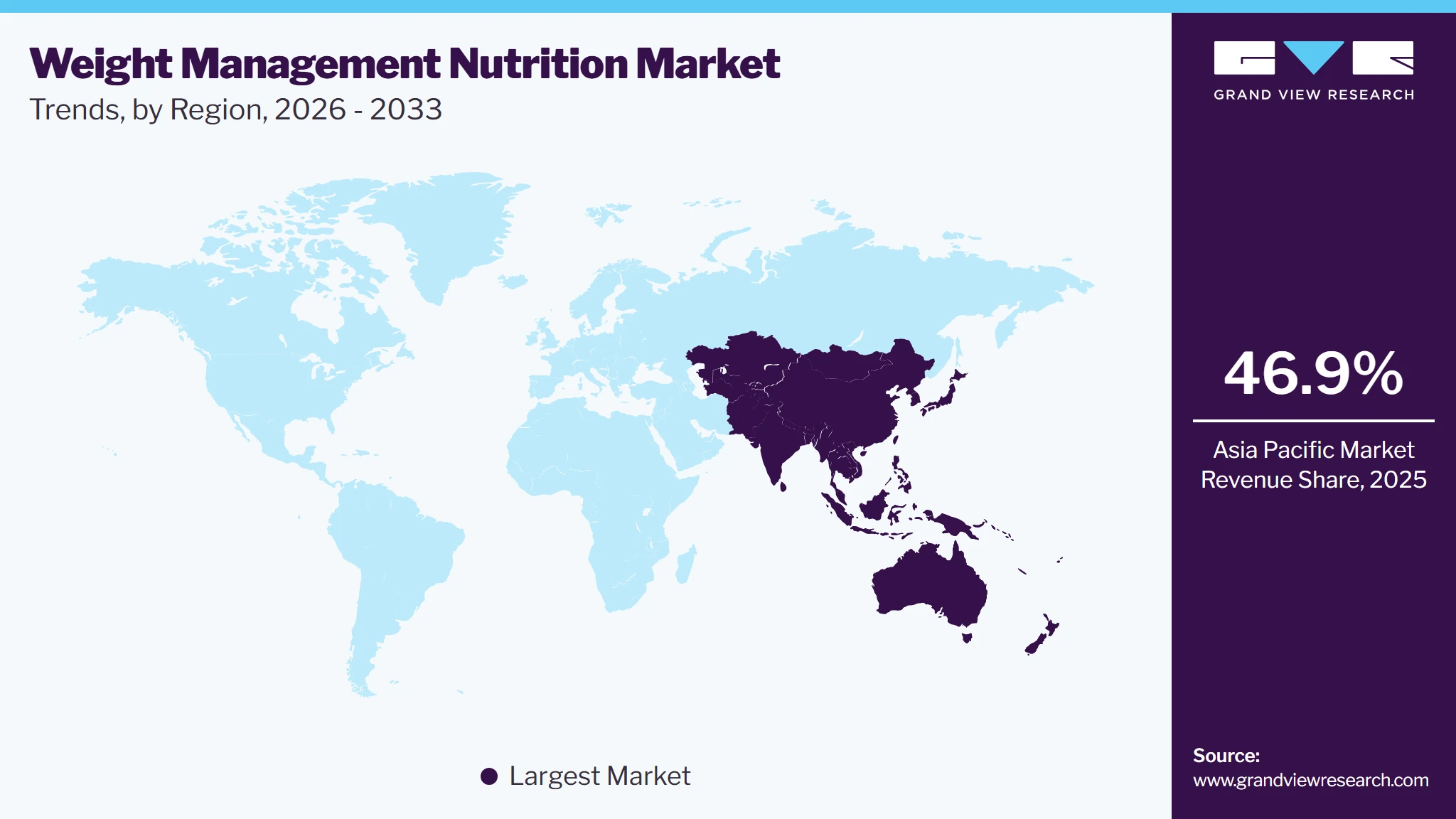
- Largest regional market: Asia Pacific (46.9% revenue share, 2025)
- By country: China held the largest market share in 2025
Market Size & Forecast
- Market Size in 2025: USD 107.1 Billion
- Estimated market size in 2026: USD 112.4 Billion
- Projected Market Size by 2033: USD 154.1 Billion
- CAGR (2026-2033): 4.6%
Three ways to get this report
Buy it, customize it, or ask a question.Ask an Analyst
Analyst response in 1 business day
- AccessReport author, directly
- Reply timeWithin 1 working day
- No sales callDirect answer only
- FormatEmail reply
- CostFree, no cost
Get the Full Report
What the study covers
- FormatsPDF · Excel · Dashboard
- Timeline2026–2033 annual, 2025 base
- Coverage20+ countries, 5 regions
- Companies10+ key players profiled
Customize the Report
20% free customization
- IncludeCountries, segments, points
- TailorTo your product definition
- ExtendDeeper competitor detail
- OrA fully bespoke study
- Turnaround5–10 working days
The market is further supported by rising awareness of metabolic health and long-term weight management, shifting consumer focus from short-term dieting toward sustainable lifestyle solutions. Consumers are increasingly prioritizing convenience, personalized nutrition, and clinically informed formulations that integrate seamlessly into daily routines. Growing investment in science-backed nutrition and digital health ecosystems is further expanding access to personalized weight management solutions.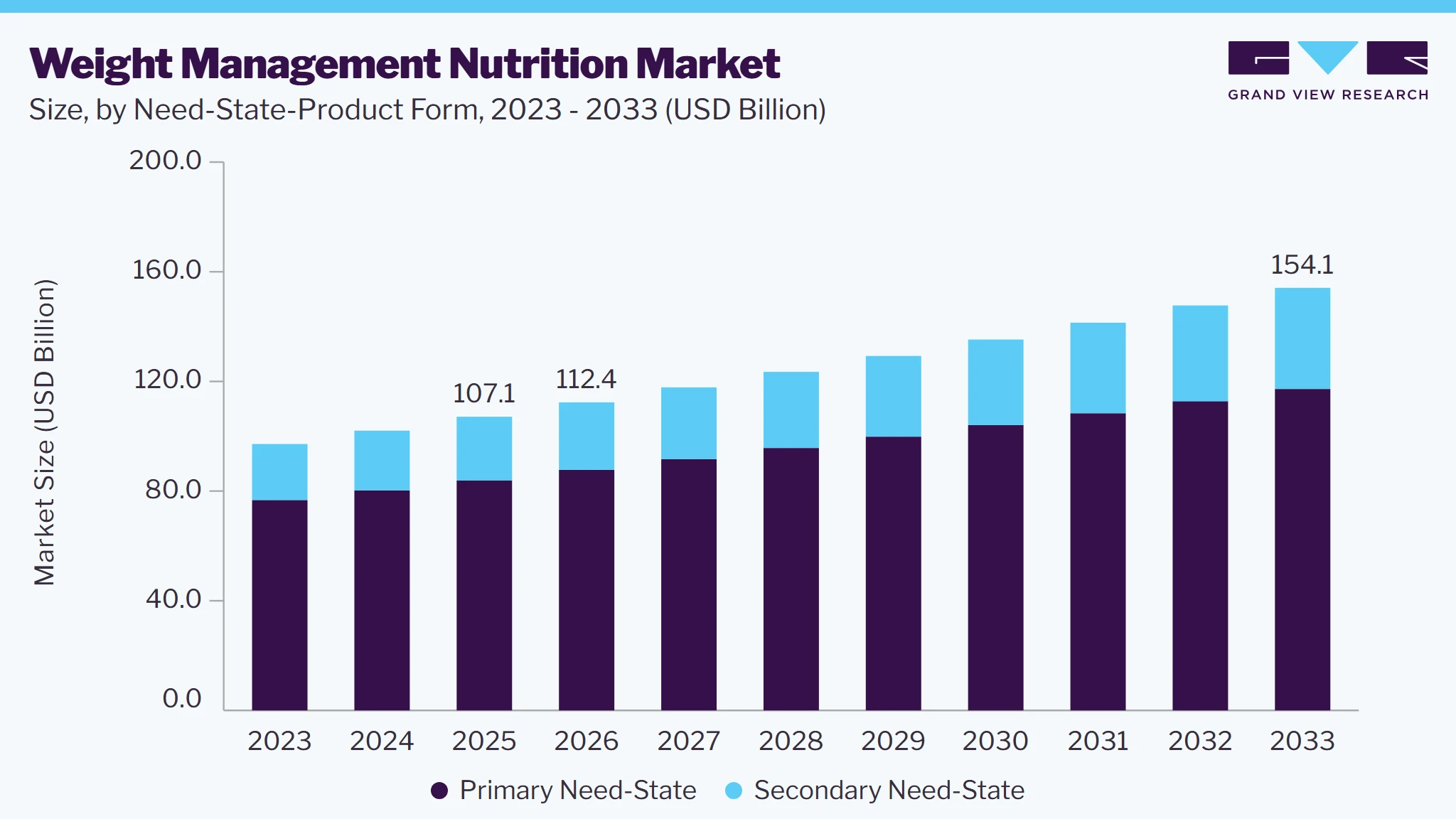 To learn more about this report, Download Free Sample Report
 Furthermore, the growing use of GLP-1 therapies is creating demand for nutrition solutions that address satiety, reduced appetite, and changes in eating patterns among users. The market is also evolving toward products designed to complement GLP-1 treatment journeys, including smaller-format meals, nutrient fortification, and digestive-health-focused offerings. As GLP-1 adoption broadens across weight management, nutrition brands are increasingly developing specialized product portfolios and consumer education platforms around medication-supported weight loss. In April 2025, The Vitamin Shoppe launched a dedicated GLP-1 Support range to address nutrient gaps and digestive needs associated with reduced food intake among GLP-1 users. The launch highlights how nutrition brands are developing specialized products around GLP-1 treatment journeys, spanning protein, fiber, micronutrient, and digestive-health support.
Consumer Insights for the Weight Management Nutrition Market:
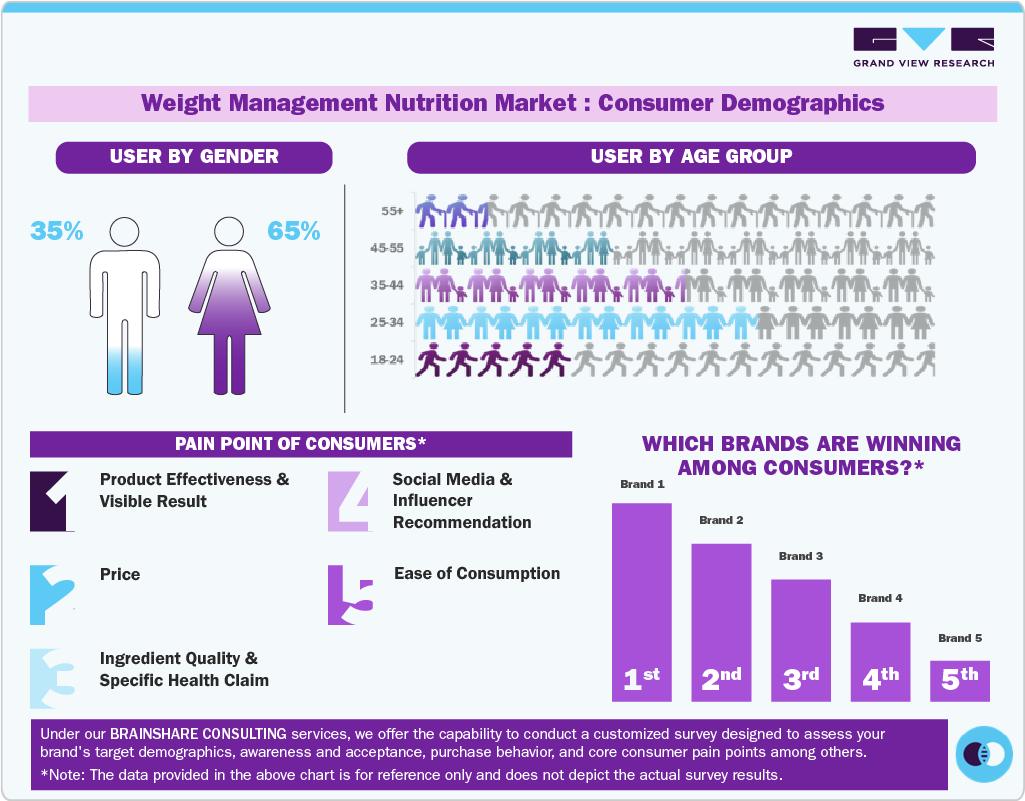
Consumer demand in the weight management nutrition market is increasingly shaped by a preference for science-backed, convenient, and targeted nutrition solutions that fit into everyday weight-management routines. GLP-1 users are creating a distinct consumer segment seeking products that help address changing appetite, meal patterns, and nutritional intake during treatment. Consumers are also placing greater emphasis on protein quality, nutrient density, digestive comfort, and overall nutritional adequacy when selecting products. Trust, ingredient transparency, clinical credibility, and clear product benefits are becoming important factors in purchase decisions.
 To learn more about this report, Download Free Sample Report
 Market Dynamics
The increasing uptake of GLP-1-based weight management solutions is shifting the market toward a more structured and medically guided nutrition approach. As GLP-1 therapies reduce appetite and meal portions, consumers are increasingly seeking nutrient-dense, convenient, and easy-to-consume nutrition solutions that address their changing dietary needs. This is driving demand for companion products such as meal replacements, protein-rich snacks, and micronutrient-support offerings. In February 2026, Cambridge Nutritional Foods introduced PortionIQ, a portion-controlled product line aimed at people using GLP-1 weight-management medications. The range is designed to provide easy, balanced nutrition that helps users regulate intake and support overall dietary balance during their weight-management process. At the same time, the integration of medication, nutrition, and digital health services is strengthening the role of nutrition within comprehensive weight management programs.
The high cost of specialized GLP-1 nutrition products and programs can limit consumer adoption and accessibility. These solutions often include premium meal plans, high-protein foods, portion-controlled products, supplements, and personalized nutritional guidance, making them more expensive than conventional dietary options. The need for ongoing dietary adjustments to meet protein, fiber, vitamin, and mineral requirements can further increase long-term costs. According to Navitus Health Solutions data published in February 2026, the survey of 2,000 U.S. consumers taking GLP-1 medications found that approximately 68% reported that treatment costs influenced their decisions regarding GLP-1 use. As a result, cost-conscious consumers may shift toward lower-priced alternatives that may not fully address the nutritional needs associated with GLP-1 use. Consequently, affordability remains a key barrier to the broader adoption and sustained use of GLP-1-specific nutrition solutions.
The weight management nutrition market has an opportunity to evolve toward behavior-shaping solutions integrated across the entire weight management journey. According to data published in April 2026, ClearlyMeds highlighted that GLP-1 users may benefit from structured eating patterns, higher protein intake, and simplified food choices, as appetite suppression can make intuitive eating more challenging. This supports the shift toward guided nutrition solutions that help consumers manage changing dietary behaviors and maintain nutritional adequacy. Adaptive and modular offerings can respond to changing physiological needs, while digital and AI-enabled platforms can further enhance personalization through meal tracking, nutrient analysis, progress monitoring, and behavioral insights.
Analyst Perspective
The global weight management nutrition market is transitioning from conventional diet-focused products to integrated, medically aligned nutrition solutions. The growing use of GLP-1 therapies is creating a distinct opportunity for products designed to address the nutritional challenges associated with pharmacological weight management. Market participants are increasingly differentiating through clinical validation, targeted formulations, personalization, and convenience rather than broad weight-loss positioning alone. The competitive landscape is also expanding as pharmaceutical, nutrition, food, supplement, and digital health companies increasingly overlap within the category.
Need State by Product & Format Insights
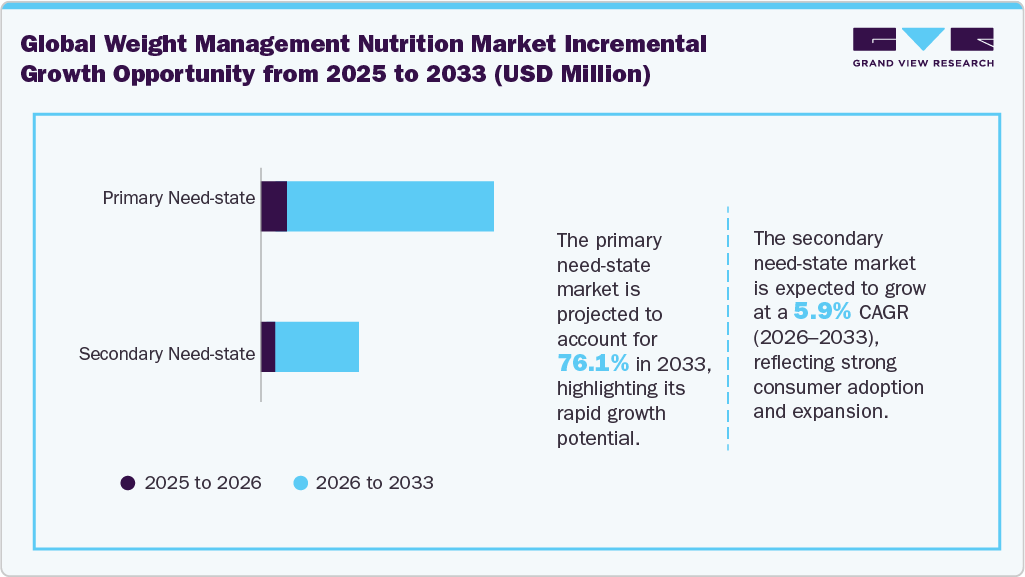
The primary need state segment in the weight management nutrition market accounted for the largest share of 78.3% in 2025. The primary need-state is driven by the need to manage appetite and support sustained weight reduction alongside GLP-1 therapy. A study published by Sage Publications in May 2025 reported that GLP-1-based therapies can result in weight reductions of approximately 5% to 18%, highlighting the importance of complementary nutrition support during treatment. Reduced hunger can alter meal frequency and food intake, increasing the importance of nutrient-dense choices within smaller eating occasions. Consumers, therefore, seek nutrition products that provide adequate protein, essential micronutrients, and balanced nutrition without excessive volume, encouraging brands to formulate products specifically tailored to the nutritional needs of individuals undergoing medically supported weight management.
 To learn more about this report, Download Free Sample Report
 The secondary need state segment in the weight management nutrition market is projected to grow at the fastest CAGR of 5.9% from 2026 to 2033. The secondary need-state is shaped by the need to maintain physical function, digestive comfort, and nutritional adequacy during the weight-management journey. Changes in eating patterns can increase interest in solutions supporting muscle maintenance, hydration, fiber intake, and gastrointestinal well-being. Consumers may also look for convenient formats that make it easier to meet nutritional requirements when appetite is lower. This is creating opportunities for targeted nutrition products addressing specific challenges associated with GLP-1-supported weight management.
Sales Channel Insights
The sales of weight-management nutrition products through offline channels accounted for the largest share of revenue at 62.9% in 2025. The offline channel is supported by the continued role of pharmacies, supermarkets, specialty nutrition stores, and healthcare-linked retail outlets in weight management purchases. Physical stores allow consumers to examine products directly and receive assistance from pharmacists, nutrition professionals, or trained retail staff. Supermarket and convenience-store expansion also improves accessibility for everyday nutrition categories.
 To learn more about this report, Download Free Sample Report
 The sales of weight-management nutrition products through online channels are projected to grow at a CAGR of 5.7% from 2026 to 2033. The online channel is driven by the growing availability of direct-to-consumer nutrition brands, e-commerce marketplaces, and digital health platforms offering weight management products. Consumers benefit from broader product assortments, subscription models, doorstep delivery, and access to detailed ingredient and nutritional information. The channel also enables brands to use personalized recommendations and digital education to guide consumers toward products compatible with GLP-1-supported weight management. Increasing integration between telehealth providers, prescription services, and online nutrition retailers can further strengthen digital purchasing journeys.
Regional Insights
The Asia Pacific weight management nutrition market dominated the global industry with a revenue share of 46.9% in 2025. The dominance is attributed to rising urbanization, changing dietary habits, increasing sedentary lifestyles, and growing awareness of metabolic health. Expanding middle-class populations are increasing spending on functional foods, supplements, and convenient nutrition products. Awareness of GLP-1-based weight management is also developing, creating a new opportunity for nutrition solutions linked to medically supported weight reduction. Digital commerce and health platforms are improving access to specialized products across geographically diverse markets.
 To learn more about this report, Download Free Sample Report
 The weight management nutrition market in China led the Asia Pacific region in 2025, holding the largest market share of 29.9%. The China market is supported by rising awareness of obesity, metabolic disorders, and preventive nutrition, particularly among urban consumers. Expanding healthcare access and increasing interest in clinically guided weight management are creating opportunities for specialized nutrition products. The country’s sophisticated e-commerce ecosystem enables rapid consumer adoption of emerging health and nutrition categories. Domestic manufacturers are also expanding functional-food and nutritional-supplement portfolios to address changing consumer needs.
North America Weight Management Nutrition Market Trends
The weight management nutrition market in North America held a 21.9% share in 2025. The industry is driven by high awareness of obesity as a chronic health condition and strong consumer spending on weight-management solutions. The region benefits from an established ecosystem of pharmaceutical companies, nutrition brands, healthcare providers, and digital health platforms. Growing use of GLP-1 medications is creating demand for complementary nutrition solutions tailored to changing dietary patterns. In March 2025, Collective Health and Noom Health partnered to offer an integrated weight-management solution combining digital coaching, care navigation, and access to GLP-1 and other anti-obesity medications for employer-sponsored health plans, highlighting the growing integration of nutrition, digital health, and medication-based weight management.
U.S. Weight Management Nutrition Market Trends
The weight management nutrition market in the U.S. led the North American industry in 2025, holding the largest market share of 71.9% of the region’s total revenue. The U.S. market is being driven by the rapid expansion of the obesity-treatment ecosystem, including GLP-1 prescriptions, telehealth services, and specialized weight-management programs. High healthcare expenditure and strong consumer interest in clinically backed solutions create opportunities for premium nutrition products. Pharmaceutical and nutrition companies are increasingly developing offerings that address nutritional gaps during medication-supported weight loss. Demand is also influenced by a large base of consumers seeking convenient solutions for managing weight-related health risks. The country’s advanced e-commerce infrastructure further enables personalized and subscription-based nutrition models.
Europe Weight Management Nutrition Market Trends
The weight management nutrition market in Europe is projected to grow at a CAGR of 3.7% from 2026 to 2033. The region’s growth is driven by increasing emphasis on preventive healthcare, healthy aging, and reducing the long-term burden associated with overweight and obesity. Growing adoption of medical weight-management approaches is expanding interest in nutrition products that can complement clinical treatment. Consumers are also showing greater preference for products with transparent ingredients, evidence-based claims, and sustainable sourcing. Strong pharmacy networks and established grocery channels provide multiple routes for reaching weight-management consumers. Regulatory attention toward nutrition, health claims, and food composition is also shaping product development across the region.
The weight management nutrition market in Germany led the European sector in 2025, holding the largest market share with 15.8% of the region’s total revenue. The growth is supported by increasing awareness of nutrition-related health risks and a well-developed healthcare and pharmacy infrastructure. The country’s strong consumer interest in quality, ingredient transparency, and scientifically supported products creates opportunities for specialized weight-management nutrition. For instance, in March 2026, a policy proposal in Germany suggested introducing a sugar tax on soft drinks and restricting energy drink sales to minors, reflecting growing policy efforts to reduce sugar consumption and encourage manufacturers to reformulate products. Growing interest in medically supervised obesity treatment is also increasing the relevance of nutrition products used alongside clinical interventions.
Latin America Weight Management Nutrition Market Trends
The weight management nutrition market in Latin America is projected to grow at a CAGR of 4.0% from 2026 to 2033. The industry is driven by increasing obesity prevalence, greater awareness of nutrition-related chronic diseases, and expanding interest in healthier lifestyles. For instance, in October 2025, a news report noted that about 67.5% of adults in Latin America are overweight or obese. Growing urban populations are creating demand for convenient foods that fit increasingly busy lifestyles while supporting weight-management goals. Retailers and food manufacturers are expanding healthier, reduced-calorie, high-protein, and functional product offerings. Improving digital commerce is widening access to specialized nutrition products beyond traditional retail channels.
Middle East & Africa Weight Management Nutrition Market
The weight management nutrition market in the Middle East & Africa is expected to grow at a CAGR of 5.0% from 2026 to 2033. The growth comes on the back of rising awareness of obesity and metabolic health, particularly in rapidly urbanizing and higher-income markets. Increasing healthcare investment is encouraging greater focus on prevention, clinical weight management, and nutrition-led interventions. Growing availability of GLP-1 therapies is creating an emerging opportunity for complementary nutrition solutions and specialized dietary products. Modern retail, pharmacies, and e-commerce platforms are gradually expanding consumer access to these categories.
Key Weight Management Nutrition Company Insights
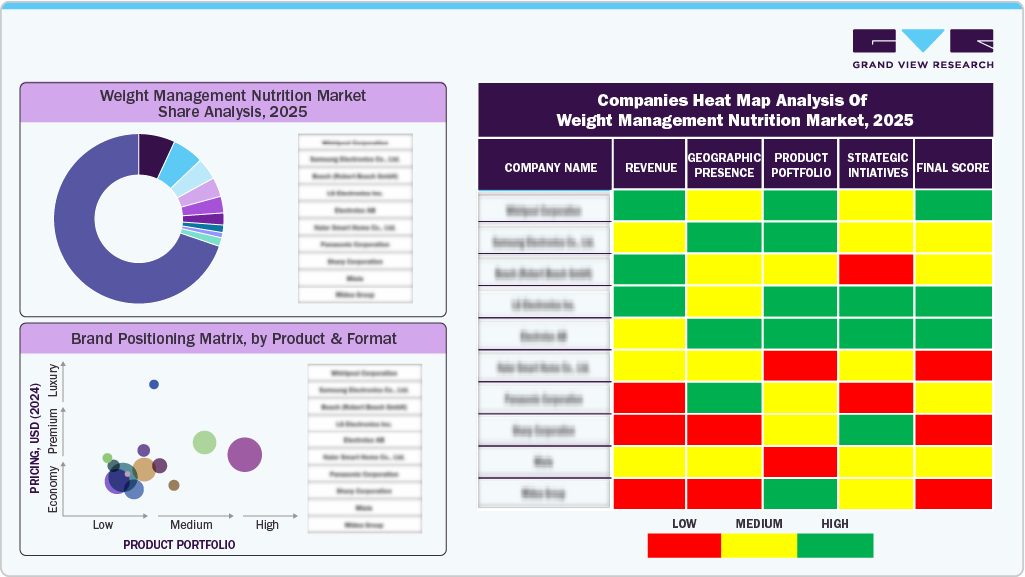
The weight management nutrition industry is highly competitive, with established nutrition companies, food and beverage manufacturers, supplement brands, and emerging health-focused players expanding their presence. Market participants are increasingly focusing on GLP-1-compatible nutrition portfolios, personalized formulations, and products addressing the changing dietary needs of consumers using weight-loss medications.
Competitive differentiation is increasingly based on clinical credibility, product efficacy, ingredient quality, convenience, and scientific positioning. Partnerships across pharmaceutical, healthcare, telehealth, and nutrition ecosystems are also becoming important for expanding consumer reach. Market share remains fragmented across multiple product categories and regions, with leading companies strengthening their positions through new product launches, acquisitions, distribution expansion, and direct-to-consumer strategies.
 To learn more about this report, Download Free Sample Report
 Key Weight Management Nutrition Companies
The following key companies have been profiled for this study on the weight management nutrition market:
-
Glanbia plc
-
Haleon Group of Companies
-
Herbalife Ltd
-
Abbott
-
Nestlé S.A.
-
Amway Corp.
-
Ajinomoto Co., Inc.
-
NutriSport Pharmacal, Inc.
-
GNC Holdings, LLC
-
LifeVantage Corporation
Competitive Benchmarking
Category
Operating Strategies
Competitive Edge
Weakness
Established Players (Glanbia plc; Haleon Group of Companies)
Expand product ranges, strengthen clinical/wellness partnerships, invest in R&D, and deepen omnichannel reach.
Strong consumer trust, extensive portfolios, established distribution, and higher marketing capabilities.
Higher operating costs, slower innovation cycles, and dependence on sustained consumer demand.
Emerging Players (NutriSport Pharmacal, Inc.)
Target specific weight-management needs, launch innovative formats, build digital-first brands, and leverage personalized nutrition.
Agility, focused positioning, faster product innovation, and strong digital engagement.
Limited scale, lower visibility, narrower distribution, and constrained R&D resources.
Weight Management Nutrition Market Report Scope
Report Attribute
Details
Market size in 2025
USD 107.1 billion
Estimated market size in 2026
USD 112.4 billion
Projected market size by 2033
USD 154.1 billion
Growth rate
CAGR of 4.6% from 2026 to 2033
Actuals
2021 - 2025
Forecast period
2026 - 2033
Quantitative (Revenue) units
Revenue in USD billion and CAGR from 2026 to 2033
Report coverage
Revenue forecast, company ranking, competitive landscape, growth factors, and trends
Segments covered
Need state by product & format, sales channel, region
Regional Scope
North America; Europe; Asia Pacific; Latin America; Middle East & Africa
Country scope
U.S.; Canada; Mexico; UK; Germany; France; Italy; Spain; Denmark; Sweden; Norway; Japan; China; India; Australia; Thailand; South Korea; Singapore; Brazil; Argentina; South Africa; Saudi Arabia; UAE.; Kuwait
Key companies profiled
Glanbia plc; Haleon Group of Companies; Herbalife Ltd; Abbott; Nestlé S.A.; Amway Corp.; Ajinomoto Co., Inc.; NutriSport Pharmacal, Inc.; GNC Holdings, LLC; LifeVantage Corporation
Customization scope
Free report customization (equivalent up to 8 analysts’ working days) with purchase. Addition or alteration to country, regional & segment scope.
Pricing and purchase options
Avail customized purchase options to meet your exact research needs. Explore purchase options
Global Weight Management Nutrition Market Report Segmentation
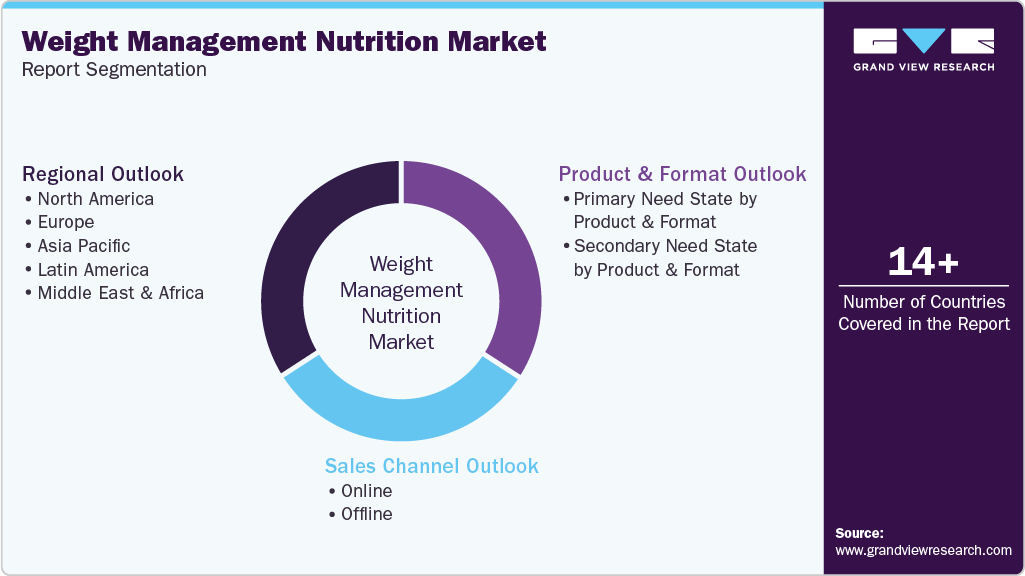
This report forecasts revenue growth at the global, regional and country levels and provides an analysis of the latest industry trends and opportunities in each of the sub-segments from 2021 to 2033. For this study, Grand View Research has segmented the global weight management nutrition market report on the basis of need-state by product & format, sales channel, and region.
 To learn more about this report, Download Free Sample Report
 -
Need State by Product & Format Outlook (Revenue, USD Billion; 2021 - 2033)
-
Primary Need State by Product & Format
-
Weight Loss / Fat Reduction
-
Dietary Supplements
-
Tablets
-
Capsules
-
Powder
-
Softgels
-
Liquid
-
Others
-
-
Fat Burners
-
Functional Food & Beverages
-
Sports Nutrition
-
-
-
-
NOTE: A similar analysis will be followed for below mentioned need state
-
Appetite Control & Satiety Management
-
Metabolic Health & Blood Sugar Support
-
Meal Replacement & Structured Nutrition
-
Women’s Hormonal Weight Management Nutrition
-
GLP-1 Companion Nutrition
-
Others
-
Secondary Need State by Product & Format
-
Gut Health & Microbiome Support
-
Dietary Supplements
- Tablets
- Capsules
- Powder
- Softgels
- Liquid
- Others
-
-
Fat Burners
-
Functional Food & Beverages
-
Sports Nutrition
-
-
-
NOTE: A similar analysis will be followed for below mentioned need state
-
Active Lifestyle / Fitness Support with Weight Management Benefit
-
Hormonal Balance Support with Weight Management Benefit
-
Holistic Wellness with Mindful Weight Management
-
General Wellness Products with Secondary Weight Management Benefit
-
-
Sales Channel Outlook (Revenue, USD Billion; 2021 - 2033)
-
Online
-
Direct to Consumer
-
Other e-commerce Channels
-
-
Offline
-
Hypermarkets & Supermarkets
-
Pharmacies & Drug Stores
-
Others
-
-
-
Regional Outlook (Revenue, USD Billion, 2021 - 2033)
-
North America
-
U.S.
-
Canada
-
Mexico
-
-
Europe
-
UK
-
Germany
-
France
-
Italy
-
Spain
-
Denmark
-
Sweden
-
Norway
-
-
Asia Pacific
-
China
-
Japan
-
India
-
Australia
-
South Korea
-
Thailand
-
Singapore
-
-
Latin America
-
Brazil
-
Argentina
-
-
Middle East & Africa
-
South Africa
-
Saudi Arabia
-
UAE
-
Kuwait
-
-
Research Methodology
The weight management nutrition marketfigures in this report are based on a proven research process that combines executive interviews with secondary research from proprietary databases, company filings, and recognized regulatory and institutional sources. Market size is built through value-chain sizing—reconciling supply-side and demand-side estimates—and triangulated with bottom-up and top-down approaches. Every estimate passes multiple levels of expert validation before publication, with eachweight management nutritionsegment quantified using the revenue-capture definitions in the table below.
Segment Definition -
Segment – Need State by Product & Format
Revenue capture definition
Primary Need State
Primary Need-State captures revenue from products designed to address the core nutritional requirements associated with weight-management journeys, including products that help consumers maintain dietary adequacy while reducing overall food intake. Revenue is generated through specialized foods, beverages, meal replacements, nutrition powders, and supplements sold through retail, healthcare, and digital channels. Suppliers can capture additional value through clinically positioned formulations, targeted nutrient profiles, convenient formats, and products developed specifically for consumers using GLP-1 therapies.
Secondary Need State
Secondary Need-State generates revenue from products addressing supporting nutritional and lifestyle requirements that arise during weight management, such as maintaining muscle function, digestive comfort, hydration, and overall nutritional balance. Sales are captured across functional beverages, protein products, fiber-focused formulations, micronutrient products, and other targeted nutrition formats. Revenue opportunities can expand through specialized formulations, personalized nutrition programs, premium ingredients, and products positioned for specific stages of the weight-management journey.
Estimation Model
Each layer progressively narrows the population pool and applies a conversion rate to arrive at addressable revenue.
Step Number
Layer
Guiding Question
Description
01
Consumption Universe Layer
Who needs weight management nutrition?
Adults seeking weight control through diet, portion management, and healthier nutrition.
02
Access & Availability Layer
Who can access weight management nutrition?
Consumers reached through retail, pharmacies, wellness platforms, clinics, and e-commerce.
03
Purchase & Usage Layer
Who actively uses weight management nutrition?
Consumers regularly using meal replacements, high-protein foods, functional beverages, and nutrition supplements.
04
Revenue Conversion Layer
How is revenue generated?
Revenue from products and programs sold across retail, healthcare, wellness, and digital channels.
Customization Table
Client Request
Customization Delivered
Value Adds
Weight Management Nutrition Market Segmentation & Consumer Analysis
Assessed the market across dietary formats, consumer profiles, lifestyle needs, and weight-management objectives, highlighting shifts in preferences and purchasing behavior.
Helps identify priority consumer segments, uncover unmet nutritional needs, and tailor offerings to evolving weight-management goals.
Weight Management Nutrition Competitive & Product Assessment
Evaluated leading brands and product portfolios based on formulation approaches, positioning, innovation themes, claims, and channel presence to understand competitive differentiation.
Supports identification of whitespace opportunities, sharper product positioning, and areas for portfolio expansion or refinement.
Weight Management Nutrition Product, Ingredient & Channel Outlook
Examined key ingredients, product formats, formulation trends, distribution channels, and emerging commercial models shaping the weight-management nutrition landscape.
Enables informed product development, ingredient strategy, channel prioritization, and planning for future market opportunities.
Frequently Asked Questions About This Report
The global weight management nutrition market size was valued at USD 107.1 billion in 2025 and is estimated at USD 112.4 billion for 2026.
Key factors driving the weight management nutrition market include rising obesity rates, growing health and wellness awareness, and increasing demand for convenient, personalized nutrition solutions.
Key players include Glanbia plc, Haleon Group of Companies, Herbalife Ltd, Abbott, Nestlé S.A., Amway Corp., Ajinomoto Co., Inc., NutriSport Pharmacal, Inc., GNC Holdings, LLC, and LifeVantage Corporation.
The Asia Pacific led the market with a 46.9% revenue share in 2025.
The global weight management nutrition market is expected to grow at a CAGR of 4.6% from 2026 to 2033, reaching USD 154.1 billion.
Primary need-state segment led the market and accounted for a share of 78.3% in 2025.
Offline channel led the market and accounted for a share of 62.9% in 2025.
About the Author(s)
Nutraceuticals & Functional Foods Research Team
Consumer Goods · Nutraceuticals & Functional FoodsThis report was authored by the nutraceuticals & functional foods research team at Grand View Research - comprising two research analysts, one senior research analyst, and one industry expert - with specialized expertise in the nutraceuticals & functional foods segment of the consumer goods industry. All findings are based on proprietary consumer goods databases, executive interviews, and regulatory analysis, subject to internal peer review prior to publication.
Last Updated:
Speak to Analyst

Customize this report to your needs - add regions, segments, or data points, with 20% free customization.
Or view our licence options:


ISO 9001:2015 & 27001:2022 Certified
We are GDPR and CCPA compliant! Your transaction & personal information is safe and secure. For more details, please read our privacy policy.


