
- Home
- »
- Homecare & Decor
- »
-
Wildlife Tourism Market Size And Share Report, 2026-2033GVR Report cover

Wildlife Tourism Market (2026 - 2033)
Size, Share & Trends Analysis Report By Group (Group/Friends, Couple, Family), By Booking Mode (Direct, Travel Agent, Marketplace Booking), By Region, And Segment Forecasts
Market Size, 2025
$190.7BMarket Estimate, 2026
$205.7BMarket Forecast, 2033
$380.9BCAGR, 2026–2033
9.2%Wildlife Tourism Market Summary
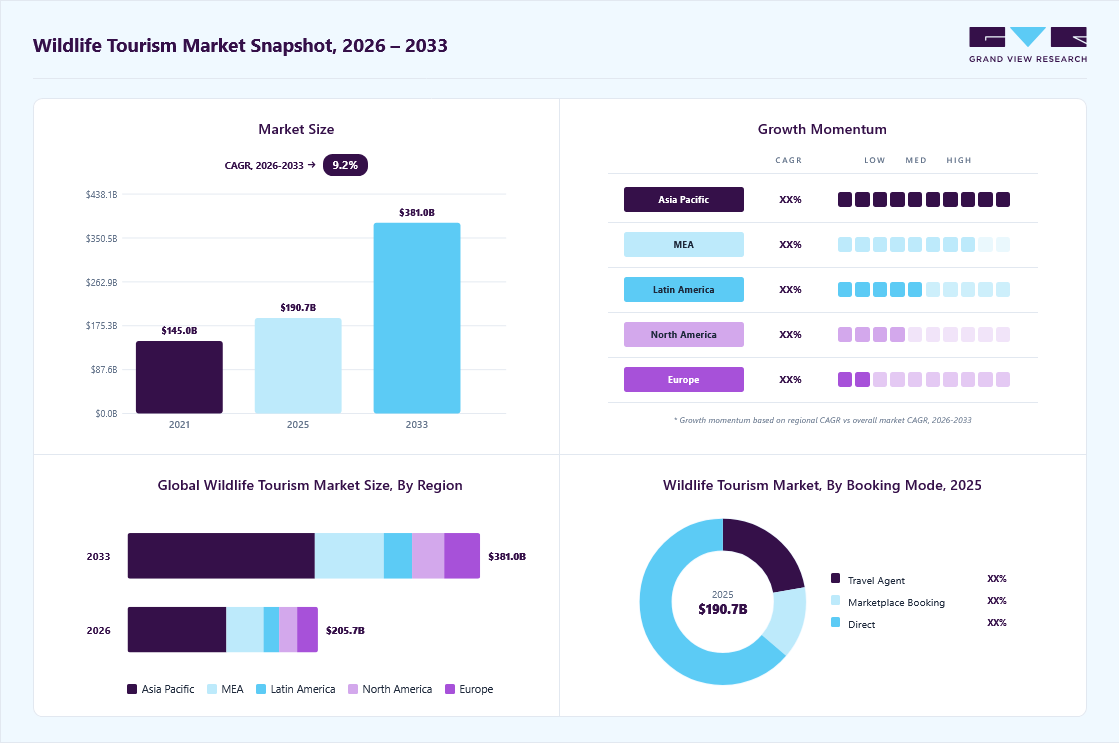
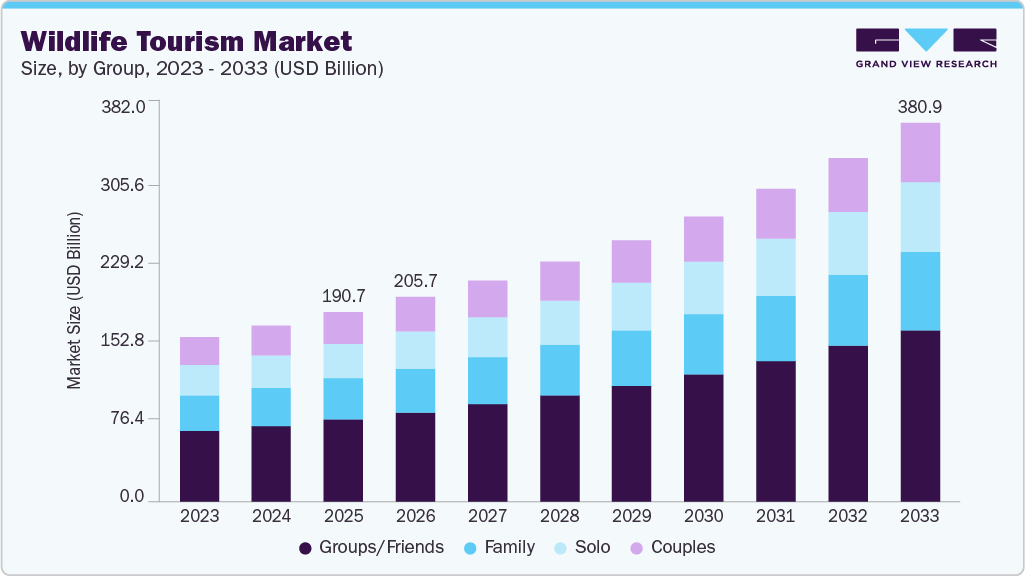
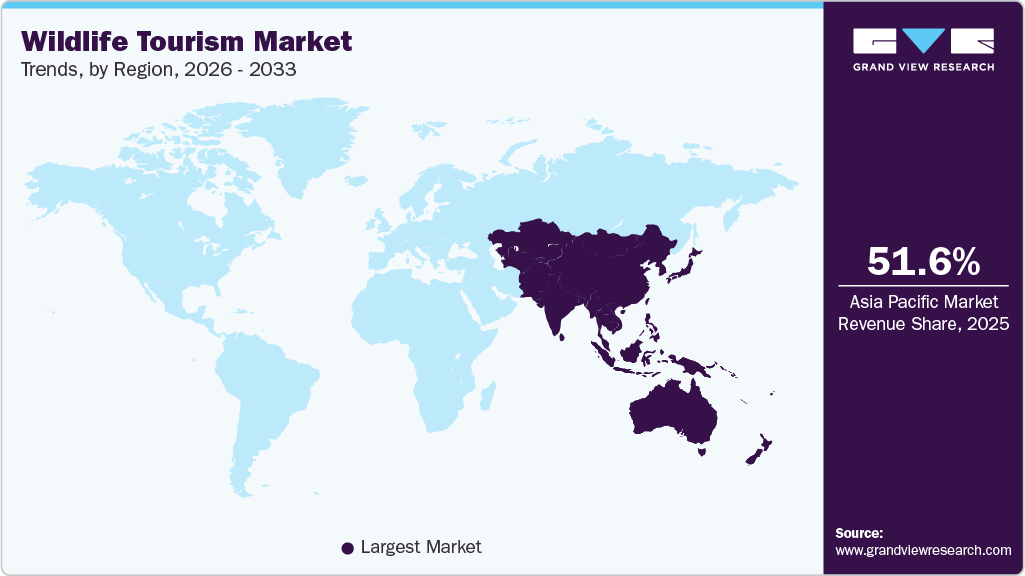
The global wildlife tourism market size was valued at USD 190.7 billion in 2025 and is projected to grow from USD 205.7 billion in 2026 to USD 380.9 billion by 2033, at a CAGR of 9.2% from 2026 to 2033. The market in Asia Pacific dominated with a revenue share of 51.6% in 2025. The increasing awareness about wildlife conservation, the popularity of resorts and hotels around jungles, availability of adventure activities on such sites are the factors that are contributing to the market growth.
 Source: Grand View Research, IR Documents, Primary Interviews, Paid DatabasesTo learn more about this report,
 Download Free Sample Report
 Key Market Trends & Insights
- By group: Group/friends segment held the largest market share of 43.5% in 2025.
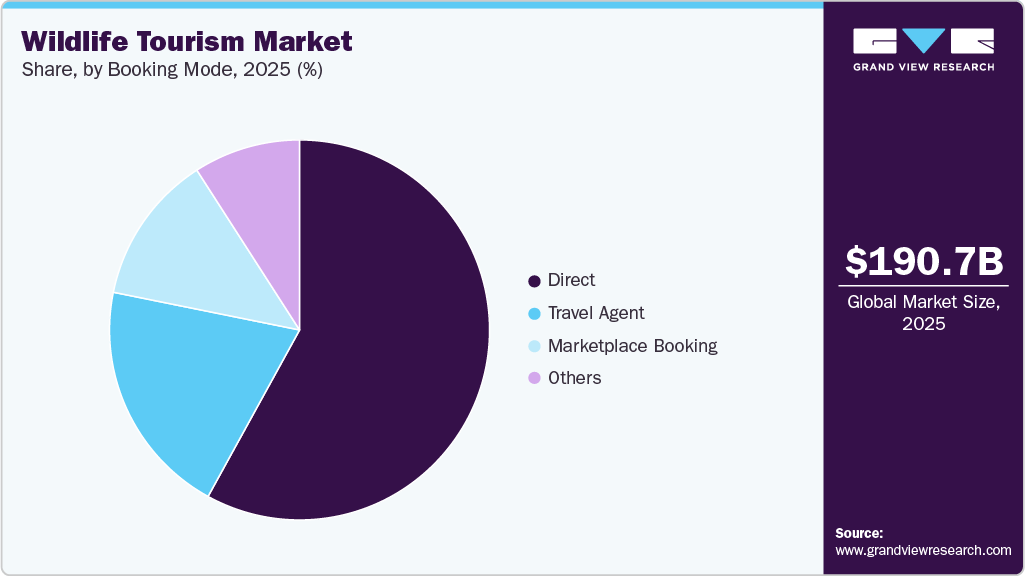
- By booking mode: Direct booking segment held the largest market share of 63.8% in 2025.
Regional Highlights
- Largest regional market: Asia Pacific (51.6% revenue share, 2025)
- By country: U.S. held the largest market share in 2025
Market Size & Forecast
- Market size in 2025: USD 190.7 Billion
- Estimated market size in 2026: USD 205.7 Billion
- Projected market size by 2033: USD 380.9 Billion
- CAGR (2026-2033): 9.2%
Three ways to get this report
Buy it, customize it, or ask a question.Ask an Analyst
Analyst response in 1 business day
- AccessReport author, directly
- Reply timeWithin 1 working day
- No sales callDirect answer only
- FormatEmail reply
- CostFree, no cost
Get the Full Report
What the study covers
- FormatsPDF · Excel · Dashboard
- Timeline2026–2033 annual, 2025 base
- Coverage20+ countries, 5 regions
- Companies10+ key players profiled
Customize the Report
20% free customization
- IncludeCountries, segments, points
- TailorTo your product definition
- ExtendDeeper competitor detail
- OrA fully bespoke study
- Turnaround5–10 working days
With major institutions such as the World Bank being involved in its development, promoting wildlife tourism aids in conserving wildlife and habitat, promoting wildlife-based economies, combating wildlife crime, and reducing demand for illegal wildlife products.With the growing awareness about nature conservation, there is a rising prevalence of wildlife tourism in various demographics. By traveling and visiting animals’ natural habitats tourists experience an increase in their awareness and become more sensitive toward the flora and fauna of the environment. Sharing such experiences on social networking sites encourages other people to do the same. Among several demographics, the awareness of climate crisis and nature conservation is propelling the trend of wildlife tourism. As travelers visit sanctuaries, zoos, and national parks, they experience an increase in their knowledge along with building sensitization towards such situations.
 To learn more about this report, Download Free Sample Report
 According to the UNWTO and WWF, wildlife tourism plays a significant role in conservation funding, with millions of visitors contributing to national park revenues and community-based tourism programs. Governments across Africa, Asia, and Latin America are investing in protected areas, improving eco-lodges, enhancing ranger training, and creating responsible tourism guidelines to boost their economies while safeguarding biodiversity.
A strong trend toward responsible and sustainable travel is shaping traveler behavior, with visitors increasingly choosing destinations that support conservation and ethical wildlife encounters. Blogs and sustainability reports highlight how travelers prefer parks that limit overcrowding, promote anti-poaching measures, and reinvest tourism income into habitat restoration. Countries such as Kenya, India, Costa Rica, and Australia have launched initiatives to expand protected areas, implement stricter wildlife interaction rules, and introduce community-led tourism models that ensure local populations benefit directly from conservation.
According to the statistics published by The UN World Tourism Organization (UNWTO), all of the regions with wildlife sites witnessed 65% of their destinations completely closed due to the pandemic. The same data also predicted a 20-30% decline in international tourist arrival. However, after the pandemic, the tourism industry rebounded strongly, leading to a surge in demand for nature-based and outdoor travel experiences. In the U.S., the country’s diverse landscapes support an exceptionally rich range of wildlife. Yellowstone National Park in Wyoming, for example, spans over 2.2 million acres of volcanic terrain and is home to 67 species of mammals, making it one of the most iconic destinations for wildlife enthusiasts.
In addition, when these experiences are shared on social media networking platforms, other travelers are compelled to do the same. Wildlife tourism encourages the development of underprivileged communities by bringing in a steady flow of revenue to local economies. More than 1,000 Kenyans are employed by the Northern Rangelands Trust in Kenya, which also offers them security, healthcare, and education. In addition, these employees are equipped with other skills, which can be used in other fields of employment.
This convergence of eco-conscious travelers, government initiatives, and conservation-focused tourism development is boosting wildlife tourism while also strengthening long-term environmental protection. Travelers want meaningful, sustainable experiences, and destinations are responding by balancing economic growth with biodiversity preservation making wildlife tourism one of the fastest-evolving segments of global tourism.
Group Insights
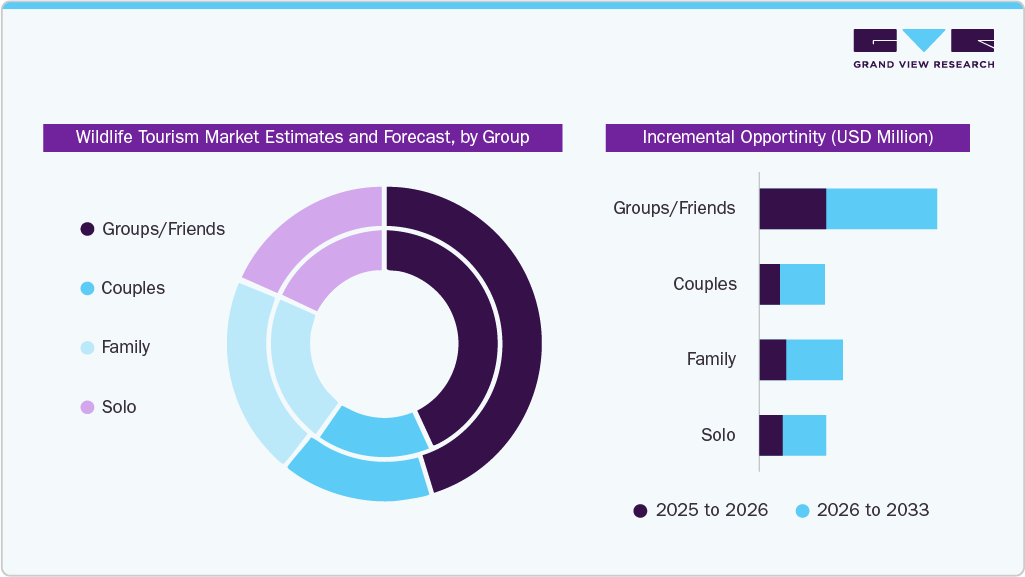
Wildlife tourism with group/friends accounted for a revenue share of 43.5% in 2025. Wildlife tourism with friends and groups is growing as travelers increasingly seek shared, immersive experiences that combine adventure, learning, and social bonding. Younger demographics, in particular, value outdoor activities that allow them to disconnect from routine, observe nature up close, and create memorable, collective experiences. The rise of social media has further amplified interest, as group trips to national parks, safaris, and conservation areas provide highly shareable moments. In addition, improved accessibility, guided group packages, and community-centric eco-lodges have made wildlife travel safer, more affordable, and more appealing for group travelers.
 To learn more about this report, Download Free Sample Report
 Solo wildlife tourism is expected to have a CAGR of 9.2% from 2026 to 2033. Rising interest in personal well-being, digital detox, and self-guided exploration has encouraged individuals especially millennials and Gen Z to pursue solo trips that provide a sense of independence and emotional fulfillment. At the same time, increased awareness of conservation, coupled with the influence of documentaries, photography communities, and social media storytelling, has inspired travelers to engage directly with wildlife and natural habitats. Enhanced safety measures improved eco-tourism infrastructure, and the availability of guided yet flexible solo-friendly packages have further accelerated demand for solo wildlife tourism globally.
Booking Mode Insights
Direct booking for wildlife tourism accounted for a share of 63.8% in 2025. Tourists now prefer engaging directly with lodges, national parks, and conservation operators to access real-time availability, flexible itineraries, and clearer pricing without intermediary markups. The rise of digital platforms, improved online payment systems, and social media discovery has further enabled travelers to research and book wildlife experiences independently. In addition, growing interest in responsible and conservation-driven travel encourages direct engagement with operators who can demonstrate sustainable practices and community impact.
 To learn more about this report, Download Free Sample Report
 Marketplace booking for wildlife tourism is expected to grow at a CAGR of 10.2% from 2026 to 2033. Digital platforms have simplified access to certified guides, conservation-focused tours, and remote wildlife destinations that were previously difficult to book directly. Greater transparency in pricing, safety standards, and eco-credentials combined with real-time reviews has strengthened consumer confidence in choosing ethical, sustainable operators. In addition, rising interest in responsible travel, biodiversity awareness, and curated small-group experiences has accelerated the shift toward marketplace-based bookings, making wildlife tourism more accessible, discoverable, and trustworthy for a global audience.
Regional Insights
North America Wildlife Tourism Market Trends
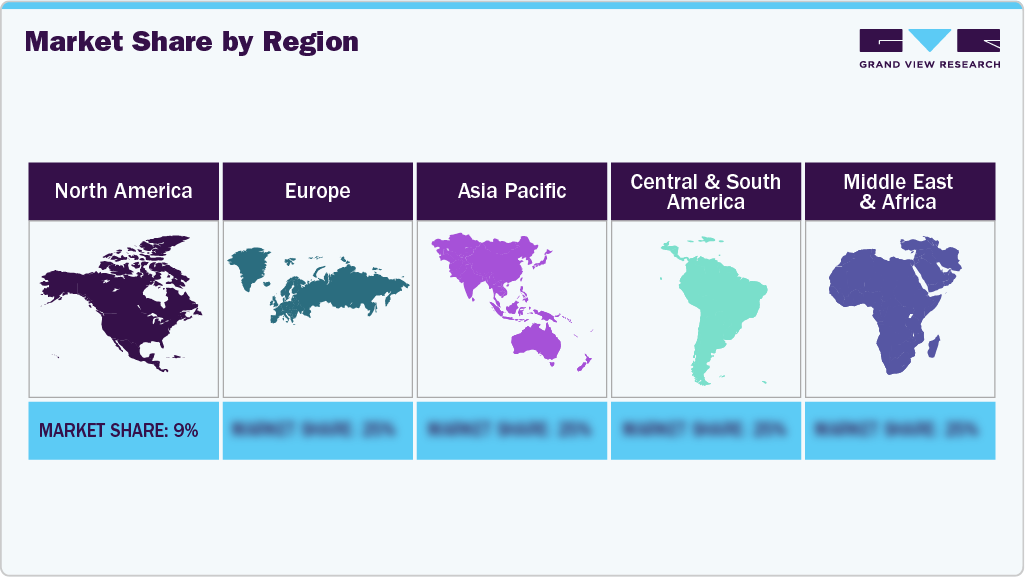
The North American wildlife tourism market is expected to register the highest CAGR of 8.6% from 2026 to 2033. Rising interest in biodiversity conservation, and adventure travel has encouraged more people to visit national parks, wildlife reserves, and marine habitats. The expansion of eco-lodges, guided wildlife tours, and conservation-focused programs in the U.S. and Canada is also making wildlife encounters more accessible and safer for visitors. In addition, post-pandemic travel preferences have shifted toward open, natural environments rather than crowded urban destinations, further accelerating demand for wildlife tourism across the region.
 To learn more about this report, Download Free Sample Report
 U.S. Wildlife Tourism Market Trends
Wildlife tourism market in the U.S. is expected to grow at a CAGR of 8.4% from 2026 to 2033. The U.S. wildlife tourism market is expanding as travelers increasingly seek immersive, nature-based experiences that offer both recreation and education. Surveys from organizations such as the U.S. Fish & Wildlife Service indicate a steady increase in wildlife watching participation, driven by millennials and families who value outdoor wellness, biodiversity learning, and unique photographic opportunities. In addition, improved park infrastructure, digital trip-planning tools, and social media exposure have further accelerated demand for wildlife tourism across major U.S. destinations.
Europe Wildlife Tourism Market Trends
Europe wildlife tourism market is expected to grow at a CAGR of 8.2% from 2026 to 2033. Rising environmental awareness, supported by strong EU conservation policies and successful wildlife reintroduction programs, has made Europe a prime destination for safe and accessible wildlife encounters. Travelers especially Millennials and families are showing heightened interest in sustainable tourism, bird-watching, marine conservation trips, and large-mammal tracking experiences in regions such as Scandinavia, the Alps, Scotland, and Eastern Europe. In addition, improved eco-tourism infrastructure, guided expeditions, and media influence (nature documentaries, social media storytelling) are further boosting demand for ethical and conservation-led wildlife tourism across the continent.
Asia Pacific Wildlife Tourism Market Trends
Asia Pacific wildlife tourism market accounted for a share of 51.6% in 2025. The wildlife tourism market in Asia Pacific is expanding rapidly, driven by rising disposable incomes, increasing interest in experiential and nature-based travel, and the region’s exceptional biodiversity, which includes globally renowned ecosystems such as the rainforests of Southeast Asia, the Himalayas, and the marine reserves of Australia and Indonesia. Growing awareness of conservation efforts, supported by government-led eco-tourism policies and sustainable tourism initiatives, has further encouraged responsible wildlife experiences. In addition, social media visibility and the preference among younger travelers for authentic, adventure-oriented activities have strengthened demand for wildlife safaris, birdwatching tours, marine encounters, and national park visits across the region.
 To learn more about this report, Download Free Sample Report
 Key Wildlife Tourism Company Insights
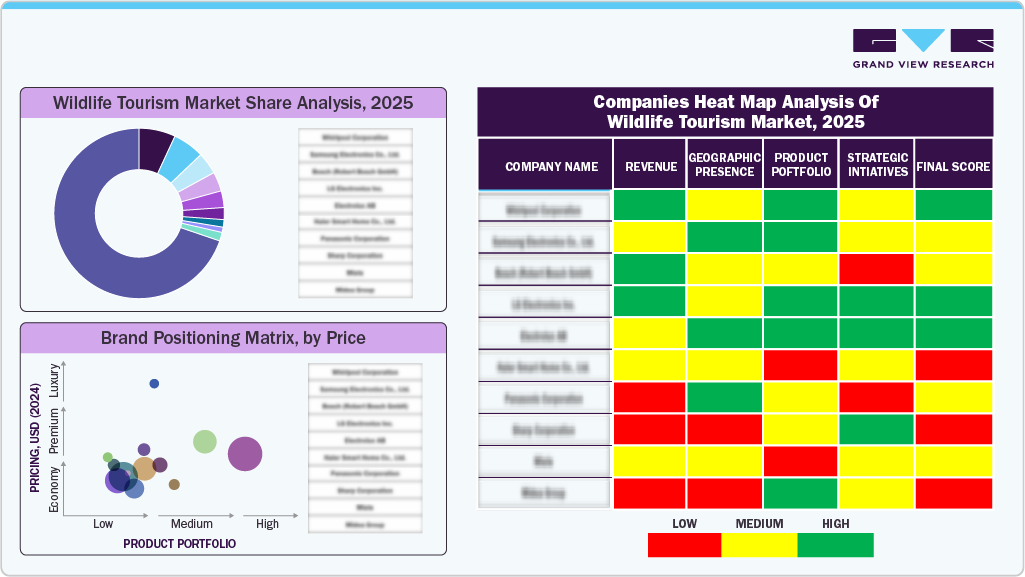
The market is characterized by the presence of a few established players and new entrants. Many big companies are increasing their focus on growing trends in the market. Players are also focusing on building sustainable practices to maintain their industry share.
 To learn more about this report, Download Free Sample Report
 -
In November 2025, South Africa announced a new transfrontier wildlife safari corridor linking Kruger, Limpopo, and neighboring protected areas to restore animal migration routes and boost ecotourism. The project combines new multi-day safari routes, community-run eco-lodges, and revenue sharing with investments in renewable energy and low-impact waste systems, positioning it as a model of responsible tourism that benefits both conservation and local economies.
-
In November 2024, Uttar Pradesh expanded eco-tourism inside the core zones of its tiger reserves, Pilibhit, Amangarh, and Dudhwa, by opening the 2024-25 season earlier than usual and adding facilities like a new boating point in Pilibhit and a bamboo cabin near the Sharda River, along with plans to upgrade Katarniaghat and other sanctuaries with more safaris and amenities. These investments of several crores in tourism infrastructure come despite NTCA guidelines and Supreme Court-linked directives that call for phasing out permanent tourism structures in core tiger habitats, highlighting growing tension between conservation rules and the state’s push to attract more visitors.
Key Wildlife Tourism Companies:
The following key companies have been profiled for this study on the wildlife tourism market.
- Exodus Travels Ltd.
- Poseidon Expeditions
- 50 Degrees North
- Chinkara Journeys
- Birding Ecotours
- Elm Wildlife Tours
- Frontiers North Adventures Inc.
- Rockjumper Birding Ltd.
- Absolute Zambia Safaris Ltd.
- G Adventures
Wildlife Tourism Market Report Scope
Report Attribute
Details
Market size in 2025
USD 190.7 billion
Estimated market size in 2026
USD 205.7 billion
Projected market size by 2033
USD 380.9 billion
Growth rate
CAGR of 9.2% from 2026 to 2033
Base year for estimation
2025
Historical data
2021 - 2025
Forecast period
2026 - 2033
Quantitative units
Revenue in USD million/billion, and CAGR from 2026 to 2033
Report coverage
Revenue forecast, company ranking, competitive landscape, growth factors, and trends
Segments covered
Group, booking mode, and region
Regional scope
North America; Europe; Asia Pacific; Central & South America; the Middle East & Africa
Country scope
U.S.; Canada; Mexico; UK; Germany; France; Italy; Spain; China; India; Japan; South Korea; Australia & New Zealand; Brazil; South Africa
Key companies profiled
Exodus Travels Ltd.; Poseidon Expeditions; 50 Degrees North; Chinkara Journeys; Birding Ecotours; Elm Wildlife Tours; Frontiers North Adventures Inc.; Rockjumper Birding Ltd.; Absolute Zambia Safaris Ltd.; G Adventures
Customization scope
Free report customization (equivalent up to 8 analysts working days) with purchase. Addition or alteration to country, regional & segment scope.
Pricing and purchase options
Avail customized purchase options to meet your exact research needs. Explore purchase options
Global Wildlife Tourism Market Report Segmentation
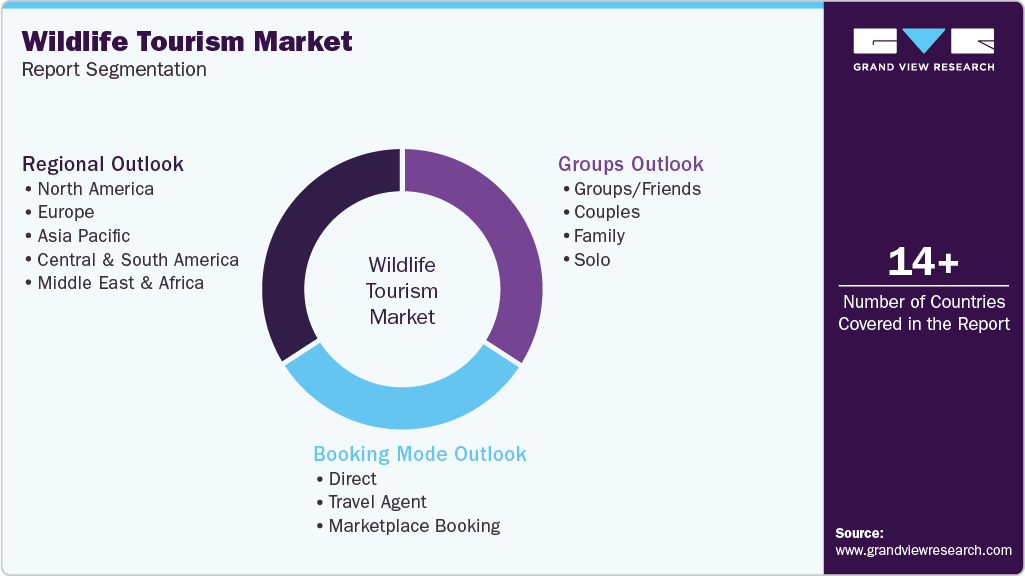
This report forecasts revenue growth at global, regional & country levels and provides an analysis on the latest trends and opportunities in each of the sub-segments from 2021 to 2033. For this study, Grand View Research has segmented the wildlife tourism market on the basis of groups, booking mode, and region.
 To learn more about this report, Download Free Sample Report
 -
Groups Outlook (Revenue, USD Million, 2021 - 2033)
-
Groups/Friends
-
Couples
-
Family
-
Solo
-
-
Booking Mode Outlook (Revenue, USD Million, 2021 - 2033)
-
Direct
-
Travel Agent
-
Marketplace Booking
-
-
Regional Outlook (Revenue, USD Million, 2021 - 2033)
-
North America
-
U.S.
-
Canada
-
Mexico
-
-
Europe
-
UK
-
Germany
-
France
-
Italy
-
Spain
-
-
Asia Pacific
-
China
-
India
-
Japan
-
Australia & New Zealand
-
South Korea
-
-
Central & South America
-
Brazil
-
-
Middle East & Africa (MEA)
-
South Africa
-
-
Frequently Asked Questions About This Report
The group/friends segment led with a 43.5% revenue share in 2025.
The direct booking segment led with a 63.8% revenue share in 2025.
Asia Pacific dominated with a 51.6% revenue share in 2025.
Key players include Exodus Travels Ltd.; Poseidon Expeditions; 50 Degrees North; Chinkara Journeys; Birding Ecotours; Elm Wildlife Tours; Frontiers North Adventures Inc.; Rockjumper Birding Ltd.; Absolute Zambia Safaris Ltd.; G Adventures
The global wildlife tourism market size was valued at USD 190.7 billion in 2025 and is estimated at USD 205.7 billion for 2026.
The global wildlife tourism market is expected to grow at a CAGR of 9.2% from 2026 to 2033, reaching USD 380.9 billion by 2033.
Key factors that are driving the wildlife tourism market growth include increasing awareness about wildlife conservation, the popularity of resorts and hotels around jungles, and the availability of adventure activities on wildlife sites.
About the Author(s)
Homecare & Decor Research Team
Consumer Goods · Homecare & DecorThis report was authored by the homecare & decor research team at Grand View Research - comprising two research analysts, one senior research analyst, and one industry expert - with specialized expertise in the homecare & decor segment of the consumer goods industry. All findings are based on proprietary consumer goods databases, executive interviews, and regulatory analysis, subject to internal peer review prior to publication.
Last Updated:
Speak to Analyst

Customize this report to your needs - add regions, segments, or data points, with 20% free customization.
Or view our licence options:


ISO 9001:2015 & 27001:2022 Certified
We are GDPR and CCPA compliant! Your transaction & personal information is safe and secure. For more details, please read our privacy policy.


