
- Home
- »
- Medical Devices
- »
-
Wound Debridement Market Size & Share Report, 2026-2033GVR Report cover

Wound Debridement Market (2026 - 2033)
Size, Share & Trends Analysis Report By Product (Gels, Ointments & Creams, Wound Irrigation Solution), By Method (Autolytic, Enzymatic), By Wound Type, By End-use, By Mode Of Purchase, By Region, And Segment Forecasts, 2026 - 2033
Market Size, 2025
$5.3BMarket Estimate, 2026
$5.6BMarket Forecast, 2033
$8.6BCAGR, 2026–2033
6.3%Wound Debridement Market Summary
The global wound debridement market size was valued at USD 5.3 billion in 2025 and is projected to grow from USD 5.6 billion in 2026 to USD 8.6 billion by 2033, at a CAGR of 6.3% from 2026 to 2033. North America dominated the global market with the largest revenue share of 37.1% in 2025. The high incidence of chronic conditions, such as pressure ulcers, diabetic foot ulcers, and other target wounds, the availability of reimbursement in developed economies, and changing lifestyles are anticipated to drive the market growth
 Source: Grand View Research, IR Documents, Primary Interviews, Paid DatabasesTo learn more about this report,
 Download Free Sample Report
 Key Market Trends & Insights
- By product: Medical gauzes segment led the market with the largest revenue share of 22.9% in 2025.
- By method: Surgical segment led the market with the largest revenue share of 27.0% in 2025.
- By wound type: Diabetic foot ulcers segment led the market with the largest revenue share of 33.2% in 2025.
- By end-use: Hospitals segment led the market with the largest revenue share of 54.7% in 2025.
- By mode of purchase: Prescription segment led the market with the largest revenue share of 58.8% in 2025.
Regional Highlights
- Largest regional market: North America (37.1% revenue share, 2025)
- Fastest-growing regional market: Asia Pacific (highest CAGR, 2026-2033)
- By country: The wound debridement market in the U.S. held the largest share in the North America region in 2025.
Market Size & Forecast
- Market Size in 2025: USD 5.3 Billion
- Estimated Market Size in 2026: USD 5.6 Billion
- Projected Market Size by 2033: USD 8.6 Billion
- CAGR (2026-2033): 6.3%
Three ways to get this report
Buy it, customize it, or ask a question.Ask an Analyst
A direct answer, usually in 1 working day
- AccessReport author, directly
- Reply timeWithin 1 working day
- No sales callDirect answer only
- FormatEmail reply
- CostFree, no cost
Get the Full Report
What the study covers
- FormatsPDF · Excel · Dashboard
- Timeline2026–2033 annual, 2025 base
- Coverage20+ countries, 5 regions
- Companies10+ key players profiled
Customize the Report
20% free customization
- IncludeCountries, segments, points
- TailorTo your product definition
- ExtendDeeper competitor detail
- OrA fully bespoke study
- Turnaround5–10 working days
Furthermore, the increasing incidence of accidents such as road accidents, burns, and trauma events across the globe is anticipated to drive the market. In addition, the widening base of the geriatric population and increasing initiatives by the governments and private organizations to raise awareness regarding wound care treatment are projected to work in favor of the market.
 To learn more about this report, Download Free Sample Report
 The increasing number of people suffering from diabetes is anticipated to impel the market growth further. According to the International Diabetes Federation, diabetes is one of the most prevalent medical disorders in the world, affecting almost 537 million adults in 2021. It is expected to affect 643 million people by 2030 and 783 million people by 2045. According to the 2024 update on Heart Disease & Stroke Statistics, an estimated 9.7 million adults in the U.S. are living with undiagnosed diabetes, while 29.3 million have received a formal diagnosis. Such a rising number of diabetic population possesses a risk of diabetic foot ulcers, and other wounds, which are difficult to treat & take a longer duration to heal. These wounds require advanced wound debridement products, and thus, the wound debridement industry is expected to grow over the forecast period.
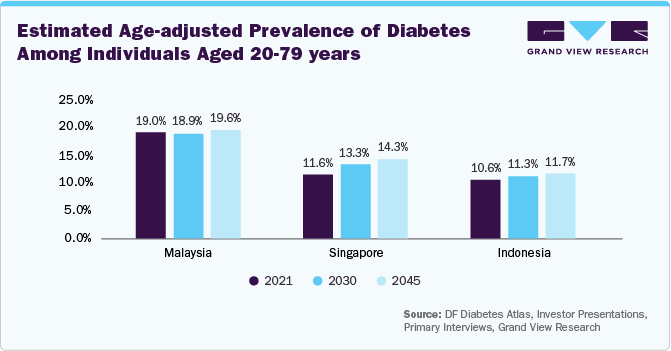
As the prevalence of chronic conditions such as diabetes continues to rise in Southeast Asian countries such as Singapore, Indonesia, and Malaysia, the associated higher risk of foot complications is expected to drive the demand for wound debridement products in the coming years.
 To learn more about this report, Download Free Sample Report
 Furthermore, tragic accidents have occurred more frequently worldwide. For instance, according to data published by the WHO in December 2023, road traffic crashes claim the lives of approximately 1.19 million people each year. In addition, between 20 and 50 million individuals sustain non-fatal injuries, many of which result in long-term disabilities. These mishaps frequently cause serious bleeding and other injuries, prompting quick medical attention and occasionally requiring surgical operations to provide patients with immediate relief. As wound debridement products help in the debridement of such accidental wounds, the demand for wound debridement is expected to expand significantly over the forecast period.
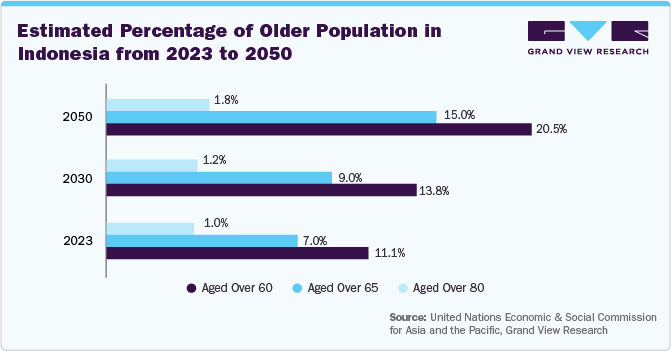
As the global population continues to age, chronic conditions that affect skin integrity, such as diabetes and peripheral vascular disease, are becoming increasingly common. While this pattern is most prominent in developed countries, it is also gaining traction in emerging economies. Aging individuals are more susceptible to health complications that delay wound healing, leading to a greater need for consistent and advanced wound care solutions. For instance, according to the data published by the United Nations Development Programme in June 2024, the Department of Statistics Malaysia (DOSM) projects a significant rise in the percentage of citizens aged 65 and above: from 8.1% in 2024 to 14.5% by 2040. In addition, the population aged over 60 years in Indonesia is also anticipated to witness a significant increase in the coming years.
 To learn more about this report, Download Free Sample Report
 In addition, the increasing adoption of debridement products and techniques to heal the wound faster is propelling the market growth. The micro-organisms and the presence of toxins on the wound inhibit healing and may lead to infection. Debridement removes the dead or infected tissues from the wound to promote healing.
Market Dynamics
The wound debridement market is primarily driven by the rising prevalence of chronic wounds, including diabetic foot ulcers, pressure ulcers, and venous leg ulcers, coupled with the growing geriatric population and increasing incidence of diabetes. Technological advancements in debridement products and a shift toward advanced wound care solutions are accelerating adoption across healthcare settings. However, high treatment costs, reimbursement limitations in certain regions, and the need for skilled healthcare professionals for surgical and mechanical debridement may restrain market growth. Emerging opportunities stem from the increasing use of enzymatic and autolytic debridement products, expanding home healthcare services, and growing healthcare investments in developing economies.
The wound debridement market is primarily driven by the rising incidence of chronic, hard-to-heal wounds associated with aging populations, diabetes, obesity, and vascular disorders. As healthcare providers place greater emphasis on faster wound healing, infection prevention, and limb preservation, the demand for effective debridement procedures continues to rise. Furthermore, growing adoption of advanced wound care protocols and the need to reduce hospitalization duration are encouraging the routine use of debridement across acute, chronic, and post-surgical wound management settings.
The growth of the wound debridement market is constrained by the high costs associated with advanced debridement products, devices, and repeated treatment procedures, particularly for chronic wound patients requiring long-term care. In many developing regions, limited reimbursement coverage and budget constraints hinder the adoption of advanced wound management solutions. In addition, the shortage of skilled wound care professionals and specialized treatment centers can restrict access to effective debridement services, impacting overall market penetration.
The wound debridement market presents significant growth opportunities through the increasing adoption of advanced wound care technologies and the expansion of home healthcare services. Rising demand for minimally invasive, patient-friendly debridement solutions is encouraging innovation in enzymatic, ultrasonic, and hydro surgical products. In addition, improving healthcare infrastructure, growing awareness of chronic wound management, and increasing investment in outpatient and home-based care settings are creating new avenues for market expansion, particularly in emerging economies.
Market Concentration & Characteristics
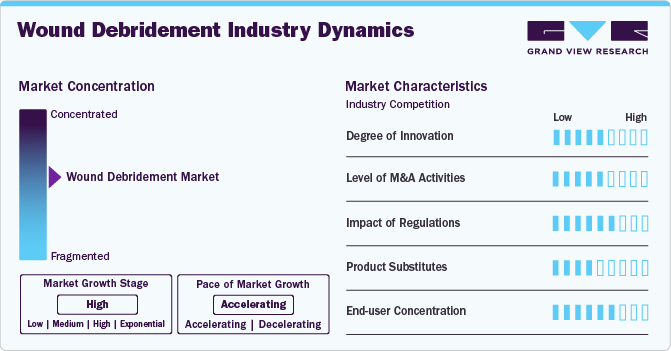
The wound debridement industry is moderately innovative, with companies focusing on improving the effectiveness of their products. There is a growing trend to use advanced ingredients that help wounds heal faster, prevent infections, and make the healing process more comfortable for patients. In addition, many companies are adopting eco-friendly packaging and more sustainable production methods to meet the rising demand for environmentally conscious products.
Regulations play a significant role in shaping the wound debridement industry. Regulatory bodies like the FDA ensure that wound care products, including wound debridement products, meet high safety and quality standards before they reach consumers. Manufacturers must follow strict testing and approval processes, which can increase development costs and time, but ensure the safety and reliability of these products.
 To learn more about this report, Download Free Sample Report
 Mergers and acquisitions (M&A) in the wound debridement industry are increasing as companies aim to expand their product lines and strengthen their market presence. Larger companies are acquiring smaller firms that specialize in new wound care technologies or specific niches, enabling them to diversify their offerings, enhance research and development, and improve distribution networks for wider access to advanced products. For instance, in April 2024, Mölnlycke AB agreed to acquire the Austrian manufacturer of Granudacyn wound cleansing and moisturizing solutions, P.G.F. Industry Solutions GmbH. This acquisition will help the company to strengthenits wound cleansing and moisturizing portfolio.
Various product substitutes are available as alternatives to conventional wound debridement techniques. Advanced wound dressings-such as hydrogels, hydrocolloids, alginates, and foam dressings-facilitate autolytic debridement by creating a moist environment to break down necrotic tissue naturally. Enzymatic debriding agents, which utilize proteolytic enzymes to dissolve dead tissue, and negative pressure wound therapy (NPWT), which promotes wound healing and supports debridement indirectly, are also widely adopted.
The wound debridement industry shows a significant level of end-user concentration, with hospitals, home care, and other wound care centers representing the primary consumers of debridement products and services. Hospitals dominate due to the high volume of complex wound cases, availability of skilled healthcare professionals, and access to advanced debridement technologies.
Analyst Perspective
The wound debridement market is poised for sustained growth, driven by the rising prevalence of chronic wounds, the growing diabetic and geriatric populations, and the increasing emphasis on effective wound bed preparation. Market participants are focusing on advanced debridement technologies that improve healing outcomes, reduce infection risks, and enhance patient comfort. While reimbursement limitations and treatment costs remain challenges, expanding access to specialized wound care services and the shift toward outpatient and home-based wound management are expected to create significant growth opportunities. Continuous innovation in selective and minimally invasive debridement solutions will remain a key competitive differentiator over the forecast period.
Product Insights
Based on product, the medical gauzes segment led the market with the largest revenue share of 22.9% in 2025. Medical gauzes help in maintaining moisture around the wound, which allows rapid healing. Since these wound care products enable faster healing, wound dressings are highly recommended for chronic wounds, such as diabetic ulcers, burn injuries, pressure ulcers, and other slow-healing wounds. Gauzes are mainly composed of substances such as collagen, hydrocolloids, hydrogels, foams, and alginates.
The ultrasonic devices segment is expected to grow at the fastest CAGR over the forecast period. Gels maintain a moist wound environment and have certain benefits as compared to other products. Gels are amorphous and clear hydrogels, mainly used for the treatment of sloughy and necrotic tissue in chronic wounds. Increasing cases of surgical wounds or Surgical Site Infection (SSI) among patients and rising incidence of chronic wounds, especially diabetic foot ulcers, are among the major factors contributing to the segment growth.
Method Insights
Based on method, the surgical segment led the market with the largest revenue share of 27.0% in 2025. It is the fastest way of wound debridement procedure to achieve a clean wound bed, thereby contributing to the segment growth.
The autolytic are expected to grow at the fastest CAGR over the forecast period. Autolytic debridement is the removal of necrotic debris and damaged tissues from a wound site by the body’s endogenous enzymes that engulf specific components of body tissues/cells. This method is usually comfortable and effective, but it takes a longer time than other methods of debridement. However, if significant autolysis is not observed within 1-2 weeks, then another method of debridement is considered.
Wound Type
Based on wound type, the diabetic foot ulcers segment led the market with the largest revenue share of 33.2% in 2025. The diabetic foot ulcers segment accounted for the largest market revenue share in 2024. This dominance can be attributed to the increasing number of diabetic patients, coupled with several foot deformities and trauma. For instance, according to the International Diabetes Federation, around 90 million people alone in South East Asia suffer from diabetes. This number further increases to 206 million in the Western Pacific region. As per NCBI, the risk of developing a diabetic foot ulcer in a patient with diabetes is around 2%, which increases to around 17%-60% if the person has suffered from a diabetic foot ulcer previously. Thus, with such a rise in diabetic population along with the risk of diabetic foot ulcers these patients possess, the diabetic foot ulcers segment is projected to have a significant CAGR over the forecast period.
However, the pressure ulcers are expected to grow at the fastest CAGR over the forecast period. Pressure ulcers are also known as bed sores; they usually occur due to prolonged, intense pressure on the skin. Prolonged hospital stay is the most common cause for such ulcers, and it mostly occurs among the geriatric population. Pressure ulcers generally occur at the bony areas of the body, like ankles, hips, and tailbone. The rising geriatric population across the globe is the major driving factor for the segment's growth. For instance, according to WHO, the number of 60+ population in 2019 was expected to reach 254 million, whereas it is anticipated to reach 24% by 2040 of the total population.
End Use Insights
Based on end-use, the hospitals segment led the market with the largest revenue share of 54.7% in 2025. This can be attributed to an increase in surgical procedures and a rising number of hospitals. For instance, a study by NCBI in 2020 predicted that 310 million surgical cases were performed annually around the world, of which 40 million to 50 million were done in the U.S. alone. In addition, the number of hospitals and hospitalizations has increased globally.
 To learn more about this report, Download Free Sample Report
 Homecare is expected to grow at the fastest CAGR over the forecast period. Homecare settings have been increasing in many countries. Moreover, many surgeries require a prolonged recovery period, leading to frequent debridement of wounds. Further, the geriatric population and bariatric population prefer a home care setting. Thus, the rising bariatric population & geriatric population are anticipated to boost the home healthcare segment.
Mode of Purchase Insights
Based on mode of purchase, the prescription segment led the market with the largest revenue share of 58.8% in 2025. The dominance can be attributed to the availability of reimbursement for wound debridement products, if the products are prescribed by a certified medical practitioner. For instance, Medicare covers around 80% of the cost for medically necessary wound care supplies. This encourages people to visit physicians and receive prescribed wound debridement medication.
Over the counter is expected to grow at the fastest CAGR over the forecast period. Several OTC wound debridement products are available in the market for the treatment of various wounds, such as cuts, abrasions, scrapes, and scratches. In addition, easy access to wound debridement products, previous experience, and economic factors play an important role in people opting for OTC wound debridement products. Further, e-commerce platforms, such as Amazon and Walmart, along with the presence of several online pharmacies, such as 1mg, Netmeds, and Apollo Pharmacy, have increased the availability of OTC wound debridement products. Thereby, boosting the segment growth.
Regional Insights
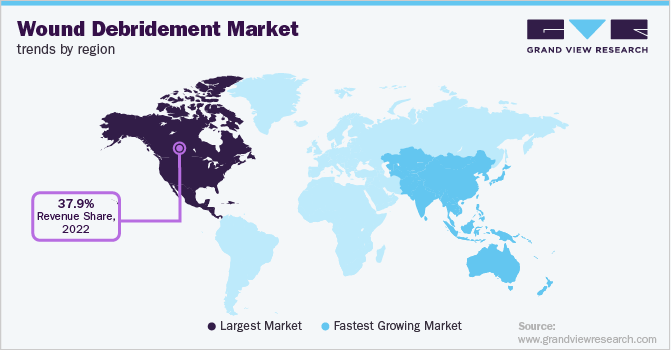
North America dominated the wound debridement market with the largest revenue share of 37.1% in 2025. The rapid adoption of advanced equipment in the U.S. has allowed the region to account for a larger market share. The presence of leading manufacturers and the quick adoption of advanced products are projected to boost the region’s growth further. The region is continuously developing cost-efficient and advanced products for the patients to capture a huge share of the market. In addition, the rising prevalence of chronic diseases and the growing geriatric population are factors responsible for the regional market growth.
 To learn more about this report, Download Free Sample Report
 U.S. Wound Debridement Market Trends
The wound debridement market in the U.S. held the largest share in the North America region in 2025. The U.S. market is experiencing growth, driven by factors such as the rising prevalence of chronic wounds (particularly diabetic foot ulcers and pressure ulcers) due to an aging population and increasing rates of diabetes and obesity. There's a growing demand for advanced wound care solutions, with a push towards less invasive and more effective debridement methods. This includes the increasing adoption of ultrasonic and hydro surgical debridement technologies alongside traditional methods like surgical and enzymatic debridement. The market is further influenced by a well-established healthcare infrastructure, increasing awareness of advanced wound care practices, and the availability of reimbursement for debridement procedures.
Europe Wound Debridement Market Trends
The wound debridement market in Europe is anticipated to grow at a significant CAGR over the forecast period, owing to factors such as high disposable income, the presence of a well-established healthcare infrastructure, and the availability of skilled professionals. Moreover, the presence of favorable reimbursement coverage has increased the adoption of surgical procedures. In addition, the increasing geriatric population and rising cases of chronic diseases are also anticipated to drive the market.
The UK wound debridement market is also expanding, driven by an aging population, the rising prevalence of chronic diseases like diabetes, and the increasing incidence of chronic wounds. For instance, according to a report published by Diabetes UK (The British Diabetic Association) in March 2024, more than five million people in the UK are currently living with diabetes, equating to over one in every 14 individuals. The UK market is characterized by a growing awareness of advanced wound care, increasing government support, and rising healthcare expenditure. This leads to adopting advanced wound debridement products and technologies, focusing on improving patient outcomes and reducing healthcare costs.
The wound debridement market in Germany is anticipated to grow at a significant CAGR over the forecast period. Germany has a lucrative environment for technologically innovative startups. Around 80% of the medical device manufacturers, including companies operating in wound care products, are SMEs in the country. Moreover, many companies are entering into strategic alliances, such as partnerships, mergers, agreements, and product launches.
Asia Pacific Wound Debridement Market Trends
The wound debridement market in Asia Pacific is anticipated to witness at a significant CAGR during the forecast period. This can be attributed to the region's growing diabetes population and rising healthcare expenditure. For instance, the Down to Earth organization estimates that India had 74.2 million diabetics between the ages of 20 and 79 as of December 2021. Furthermore, it is expected that this figure would rise to 124.8 million by 2045. Therefore, an increase in the diabetic population may help the market growth in the Asia Pacific region. Furthermore, according to a report published by Insurance Asia, APAC’s healthcare spending is expected to surge 9.9% in 2024. These factors are expected to drive the segment’s growth over the forecast period
The China wound debridement market is anticipated to grow at a significant CAGR during the forecast period. China is a key player in the Asia Pacific region. The increasing prevalence of chronic disorders and the rising geriatric population propels market growth. According to the data published by THE STATE COUNCIL OF THE PEOPLE’S REPUBLIC OF CHINA, in October 2024, China's aging population is a significant demographic shift, with nearly 297 million individuals aged 60 and above in 2023, constituting 21.1% of the total population. These factors fuel market growth.
Latin America Wound Debridement Market Trends
The wound debridement market in Latin America is anticipated to grow at a steady CAGR during the forecast period, driven by several key factors. The region's aging population and the increasing prevalence of chronic conditions such as diabetes and obesity contribute to a higher incidence of chronic wounds, including diabetic foot ulcers and pressure ulcers. These conditions necessitate advanced wound care solutions, including effective debridement methods. Countries like Brazil and Argentina are at the forefront of this growth, owing to their large populations and expanding healthcare infrastructures.
Middle East Africa Wound Debridement Market Trends
The wound debridement market in the Middle East & Africa is anticipated to grow at a significant CAGR during the forecast period. The growing geriatric population, increasing number of surgeries, and rising incidence of sports-related injuries are expected to propel the market growth. In addition, the increasing government initiatives to develop healthcare infrastructure, the region is expected to witness a rise in the number of surgeries, leading to an increase in demand for advanced wound debridement products.
Key Wound Debridement Company Insights
The wound debridement industry is extremely fragmented, with both major and local market competitors. Due to the fact that the current market players are stepping up their efforts to grab the majority in the wound debridement industry, fierce competition is anticipated, with the degree of competitiveness perhaps rising even higher. Many market participants are engaging in various strategic activities, such as product launches, mergers and acquisitions, and geographic growth, in an effort to gain a competitive edge over rivals. Thus, with various strategies adopted by the market players, the wound debridement industry is predicted to grow during the forecast period.
Key Wound Debridement Companies:
The following are the leading companies in the wound debridement market. These companies collectively hold the largest market share and dictate industry trends.
- Coloplast Corp
- Medline Industries
- Smith & Nephew
- ConvaTec Group PLC
- Integra LifeSciences
- B. Braun SE
- Molnlycke Health Care AB
- Lohmann & Rauscher
- 3M
- Schülke & Mayr GmbH
- Cardinal Health
- SERAG-WIESSNER GmbH & Co. KG
- Lotus Surgicals Pvt Ltd
- ActiMaris
- BAIHE MEDICAL EUROPE
- URGO MEDICAL
- BD
- Bravida Medical
- Advanced Medical Solutions Limited
- Advancis Medical
- curea medical GmbH
- DEBX MEDICAL
- Dr. Ausbüttel & Co. GmbH (Draco)
Competitive Benchmarking
Category
Operating Strategies
Competitive Edge
Weakness
Established Players (3M, Smith & Nephew PLC, Mölnlycke Health Care AB, ConvaTec Group PLC, Coloplast Corp.)
- Focus on broad wound care portfolios encompassing debridement, advanced dressings, and infection management products.
- Invest heavily in R&D and clinical studies to support product efficacy and reimbursement coverage.
- Strong brand recognition and established relationships with hospitals and wound care centers.
- Extensive regulatory approvals and proven clinical evidence supporting product adoption.
- Higher product pricing compared to regional competitors.
- Slower product development cycles due to complex organizational structures and regulatory processes.
Emerging Players (Schülke & Mayr GmbH, SERAG-WIESSNER GmbH & Co. KG, Lotus Surgicals Pvt Ltd, ActiMaris)
- Focus on niche technologies such as ultrasonic, enzymatic, and bioactive debridement solutions.
- Target underserved regional markets and outpatient wound care settings.
- Greater flexibility and faster innovation cycles for introducing novel products.
- Competitive pricing strategies that improve accessibility in cost-sensitive markets.
- Limited brand awareness and smaller customer bases.
- Restricted financial resources for large-scale clinical trials and commercialization efforts.
Recent Developments
-
In January 2024, Smith+Nephew, the medical technology firm, announced the completion of its acquisition of CartiHeal, the developer of Agili-C, an innovative sports medicine technology for cartilage regeneration in the knee.
-
In April 2024, Mölnlycke AB agreed to acquire the Austrian manufacturer of Granudacyn wound cleansing and moisturizing solutions, P.G.F. Industry Solutions GmbH. This acquisition will help the company to strengthen its wound cleansing and moisturizing portfolio.
Wound Debridement Report Scope Table
Report Attribute
Details
Market size value in 2025
USD 5.3 billion
Estimated market size in 2026
USD 5.6 billion
Projected market size by 2033
USD 8.6 billion
Growth rate
CAGR of 6.3% from 2026 to 2033
Historical data
2021 - 2024
Forecast period
2026 - 2033
Quantitative units
Revenue in USD million/billion and CAGR from 2026 to 2033
Report coverage
Revenue forecast, company ranking, competitive landscape, growth factors, and trends
Segments covered
Product, method, wound type, end-use, mode of purchase, region
Regional scope
North America; Europe; Asia Pacific; Latin America; MEA
Country scope
U.S.; Canada; Mexico; Germany; UK; France; Italy; Spain; Norway; Denmark; Sweden; China; Japan; India; South Korea; Australia; Thailand; Singapore; Brazil; Argentina; Saudi Arabia; South Africa; UAE; Kuwait
Key companies profiled
Coloplast Corp, Medline Industries, Smith & Nephew, ConvaTec Group PLC, Integra LifeSciences, B. Braun SE, Molnlycke Health Care AB, Lohmann & Rauscher, 3M, Schülke & Mayr GmbH
Cardinal Health, SERAG-WIESSNER GmbH & Co. KG, Lotus Surgicals Pvt Ltd, ActiMaris, BAIHE MEDICAL EUROPE, URGO MEDICAL, BD, Bravida Medical, Advanced Medical Solutions Limited, Advancis Medical, curea medical GmbH, DEBX MEDICAL, Dr. Ausbüttel & Co. GmbH (Draco)
Customization scope
Free report customization (equivalent up to 8 analysts' working days) with purchase. Addition or alteration to country, regional & segment scope.
Pricing and purchase options
Avail customized purchase options to meet your exact research needs. Explore purchase options
Global Wound Debridement Market Report Segmentation
This report forecasts revenue growth at the global, regional, and country levels and provides an analysis of the latest industry trends in each of the sub-segments from 2021 to 2033. For this study, Grand View Research has segmented the global wound debridement market report based on the product, method, wound type, end use, mode of purchase, and region:
-
Product Outlook (Revenue, USD Million, 2021 - 2033)
-
Gels
-
Ointments & Creams
-
Wound Irrigation Solution
-
Surgical Devices
-
Medical Gauzes
-
Ultrasonic Devices
-
Others
-
-
Method Outlook (Revenue, USD Million, 2021 - 2033)
-
Autolytic
-
Enzymatic
-
Surgical
-
Mechanical
-
Others
-
-
Wound Type Outlook (Revenue, USD Million, 2021 - 2033)
-
Pressure Ulcers
-
Stage 1
-
Stage 2
-
Stage 3
-
Stage 4
-
Deep Tissue Injury
-
-
Diabetic Foot Ulcers
-
Venous Leg Ulcers
-
Burn Wounds
-
Second-degree (partial-thickness)
-
Third-degree (full-thickness) burns
-
-
Others
-
-
End Use Outlook (Revenue, USD Million, 2021 - 2033)
-
Hospital (Inpatient)
-
Hospital (Outpatient)
-
Complex Wound Clinic
-
Leg Ulcer Clinic
-
Diabetic Foot Clinic
-
Walking-in Clinic
-
Podiatry Clinic
-
General Practitioners (GP) Surgery
-
Nursing Home
-
Home Health
-
Hospitalization at Home (HAD)
-
-
Purchase Outlook (Revenue, USD Million, 2021 - 2033)
-
Prescription
-
Over The Counter
-
Others
-
-
Regional Outlook (Revenue, USD Million, 2021 - 2033)
-
North America
-
U.S.
-
Canada
-
Mexico
-
-
Europe
-
UK
-
Germany
-
France
-
Italy
-
Spain
-
Denmark
-
Sweden
-
Norway
-
-
Asia Pacific
-
Japan
-
China
-
India
-
Australia
-
Thailand
-
South Korea
-
-
Latin America
-
Brazil
-
Argentina
-
-
Middle East & Africa
-
South Africa
-
Saudi Arabia
-
Kuwait
-
UAE
-
-
Research Methodology
Segment Definition
Segment - Usability
Revenue capture definition
Medical Gauzes
Revenue is captured from the sale of sterile and non-sterile gauze products used for wound cleansing, mechanical debridement, exudate management, and post-debridement dressing across hospitals, clinics, ambulatory care centers, and home healthcare settings.
Gels
Revenue is captured from the sale of wound debridement gels, including hydrogels and enzymatic gels, used to soften, hydrate, and facilitate the removal of necrotic tissue while promoting an optimal wound-healing environment across clinical and home-care settings.
Ointments & Creams
Revenue is captured from the sale of debridement ointments and creams used to aid the removal of devitalized tissue, maintain wound moisture balance, and support healing in chronic, acute, and post-surgical wounds across healthcare and home-care settings.
Ultrasonic Devices
Revenue is captured from the sale of ultrasonic wound debridement devices and associated accessories used to selectively remove necrotic tissue, reduce bioburden, and promote wound healing in hospitals, wound care centers, and surgical settings.
Surgical Devices
Revenue is captured from the sale of surgical debridement devices and instruments, including scalpels, curettes, forceps, and related tools, used for the removal of necrotic or infected tissue during wound management procedures in hospitals, surgical centers, and wound care clinics.
Others
Revenue is generated from the sale of ancillary wound debridement products and accessories, including debridement pads, sponges, irrigation solutions, and specialized wound-cleansing tools used to support wound bed preparation and tissue removal procedures across healthcare settings.
Estimation Model
Approach
Description
Bottom-Up Epidemiological Modeling
Wound prevalence and incidence rates derived from country-level variables - including diabetic population size, aging demographics, obesity rates, and healthcare access indices - combined with average wound debridement product utilization per patient across five global regions.
Top-Down Revenue Triangulation
Analyzing the wound debridement sector's share within the broader advanced wound management ecosystem by tracking OEM revenues (3M, Smith & Nephew, Mölnlycke, Coloplast, ConvaTec) through annual reports, investor filings, and distributor channel data.
Demand-Side Care-Setting Modeling
Procedure and treatment volume analysis of the chronic wound patient population segmented by wound type (DFU, pressure ulcers, venous leg ulcers, surgical wounds) and care setting (hospitals, long-term care, home care) combined with reimbursement coverage and debridement treatment frequency data.
Delivered Customizations
This report has been delivered with the following In-depth customizations
CLIENT REQUEST
CUSTOMIZATION DELIVERED
VALUE ADDS
Disease epidemiology and patient population analysis
Detailed epidemiological data covering prevalence, incidence, and patient segmentation of chronic wounds (diabetic foot ulcers, pressure ulcers, venous leg ulcers, and surgical wounds) across key geographies to isolate the debridement-eligible patient pool.
Enables accurate demand forecasting, supports healthcare burden quantification, aids reimbursement strategy, and strengthens go-to-market planning for wound debridement products.
Product share analysis by manufacturer and product type
Revenue and volume-based market share estimation at product level - including gels, ointments & creams, wound irrigation solutions, surgical debridement devices, medical gauzes, and ultrasonic debridement devices - segmented by manufacturer.
Provides insights into market leadership, competitive intensity, growth opportunities, and strategic investment priorities within the global wound debridement market.
Product presence matrix across key companies
Cross-company product portfolio mapping across wound debridement sub-categories - identifying strong, moderate, and limited presence for each player across product types, wound types, and care settings.
Supports competitive benchmarking, whitespace identification, partnership evaluation, and portfolio gap analysis for debridement device and consumable manufacturers and investors.
Frequently Asked Questions About This Report
The global wound debridement market size was estimated at USD 5.3 billion in 2025 and is expected to reach USD 5.6 billion in 2026.
The global wound debridement market is expected to grow at a compound annual growth rate of 6.3% from 2026 to 2033 to reach USD 8.6 billion by 2033.
The diabetic foot ulcers segment led the market with the largest revenue share of 33.2% in 2025.
Some key players operating in the wound debridement market include Coloplast Corp; Medline Industries; Smith & Nephew; ConvaTec Group PLC; Integra LifeSciences; B. Braun SE; Molnlycke Health Care AB; Lohmann & Rauscher; 3M; Schülke & Mayr GmbH; Cardinal Health; SERAG-WIESSNER GmbH & Co. KG; Lotus Surgicals Pvt Ltd; ActiMaris; BAIHE MEDICAL EUROPE; URGO MEDICAL; BD; Bravida Medical; Advanced Medical Solutions Limited; Advancis Medical; curea medical GmbH; DEBX MEDICAL; Dr. Ausbüttel & Co. GmbH (Draco).
Key factors that are driving the wound debridement market growth include a growing number of accidents and fire outbreaks are leading to rising in the cases of injuries.
Asia Pacific is the fastest-growing region over the forecast period.
The medical gauzes segment led the market with the largest revenue share of 22.9% in 2025.
The surgical segment led the market with the largest revenue share of 27.0% in 2025.
North America dominated the wound debridement market with a share of 37.1% in 2025.
About the Author(s)
Medical Devices Research Team
Healthcare · Medical DevicesThis report was authored by the medical devices research team at Grand View Research - comprising two research analysts, one senior research analyst, and one industry expert - with specialized expertise in the medical devices segment of the healthcare industry. All findings are based on proprietary healthcare databases, executive interviews, and regulatory analysis, subject to internal peer review prior to publication.
Last Updated:
Speak to Analyst

Customize this report to your needs - add regions, segments, or data points, with 20% free customization.
Or view our licence options:


ISO 9001:2015 & 27001:2022 Certified
We are GDPR and CCPA compliant! Your transaction & personal information is safe and secure. For more details, please read our privacy policy.


