
- Home
- »
- Medical Devices
- »
-
Continuous Dual Glucose-Ketone Monitoring Systems: Trends & Market OpportunitiesGVR Report cover
![Adoption Of Continuous Dual Glucose-Ketone Monitoring Systems: Emerging Trends & Market OpportunityReport]()
Adoption Of Continuous Dual Glucose-Ketone Monitoring Systems: Emerging Trends & Market Opportunity
Adoption Of Continuous Dual Glucose-Ketone Monitoring Systems
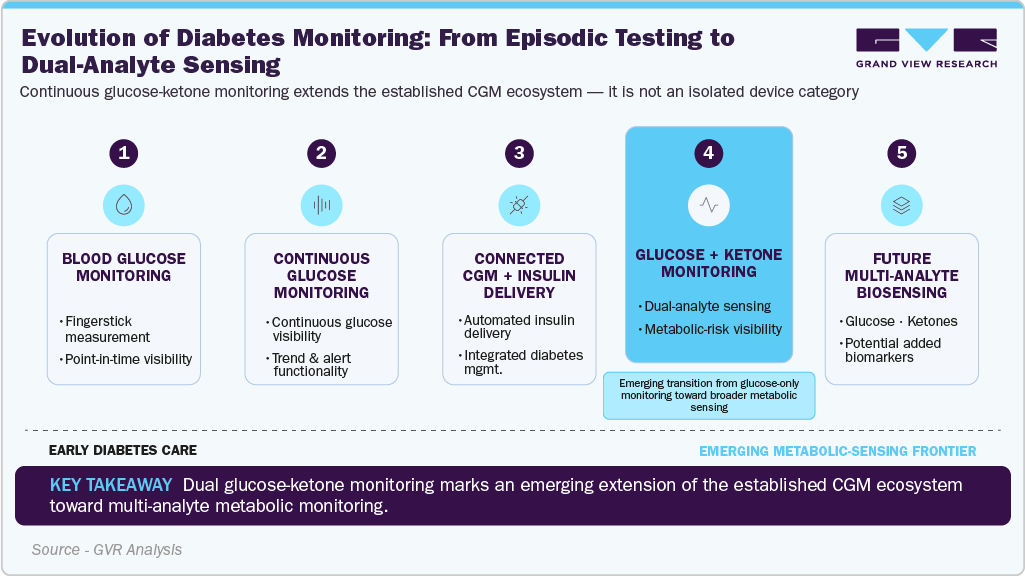
Diabetes monitoring has progressively evolved from intermittent measurements toward continuous and increasingly connected models of disease management. Continuous glucose monitoring has changed diabetes management by enabling real-time visibility into glucose fluctuations and reducing dependence on episodic blood glucose testing. The next phase of continuous monitoring is beginning to extend beyond glucose alone, with the emergence of dual-analyte sensing technologies capable of continuously monitoring glucose alongside ketone levels.
The development of continuous glucose-ketone monitoring represents an important evolution in diabetes monitoring, particularly for populations vulnerable to diabetic ketoacidosis (DKA), patients receiving intensive insulin therapy, and other individuals requiring visibility into metabolic changes. Unlike conventional ketone testing, which is generally performed reactively through blood or urine measurements, continuous ketone sensing has the potential to identify rising ketone levels earlier and provide users with a more comprehensive view of their metabolic status.
Why is Continuous Ketone Monitoring Emerging?
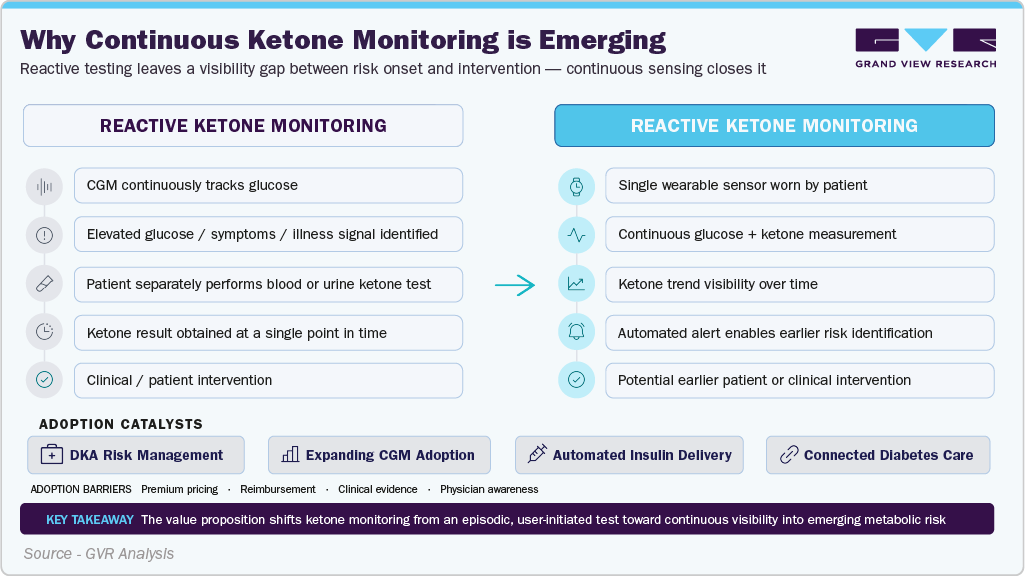
Ketone monitoring is conventionally performed when individuals experience symptoms of ketosis, persistent hyperglycemia, illness, missed insulin doses, or other conditions associated with increased DKA risk. This creates a reactive monitoring path in which ketone levels are measured only after a potential risk has already been identified.
Continuous ketone monitoring has the potential to shift this template toward proactive surveillance. Continuous visibility could enable earlier identification of elevated ketone levels while reducing dependence on users initiating separate blood or urine ketone tests.
The clinical relevance of this capability is particularly key among people with type 1 diabetes and other populations at elevated risk of ketosis. The emergence of automated insulin delivery, increasing use of wearable diabetes technologies, and greater emphasis on preventing acute diabetes-related complications are therefore creating a favorable environment for the introduction of continuous dual-analyte monitoring.
Key Adoption Drivers and Barriers
The adoption of continuous glucose-ketone monitoring is expected to be supported by a combination of clinical need, increasing familiarity with CGM technology, improvements in wearable sensor capabilities, and the growing integration of diabetes management systems.
Key advantages include continuous visibility into metabolic status, reduced dependence on episodic ketone testing, earlier identification of rising ketone levels, and the ability to integrate glucose and ketone information within existing digital diabetes-management ecosystems.
However, near-term adoption is likely to remain selective. High sensor pricing, reimbursement availability, physician awareness, patient willingness to transition from established CGM platforms, and the degree of incremental clinical benefit demonstrated over conventional CGM, and ketone testing will influence the speed of adoption.
Consequently, early uptake is expected to remain concentrated within patient populations where the clinical value of continuous ketone visibility is highest, before going towards broader diabetes populations.
Who is likely to Adopt First?
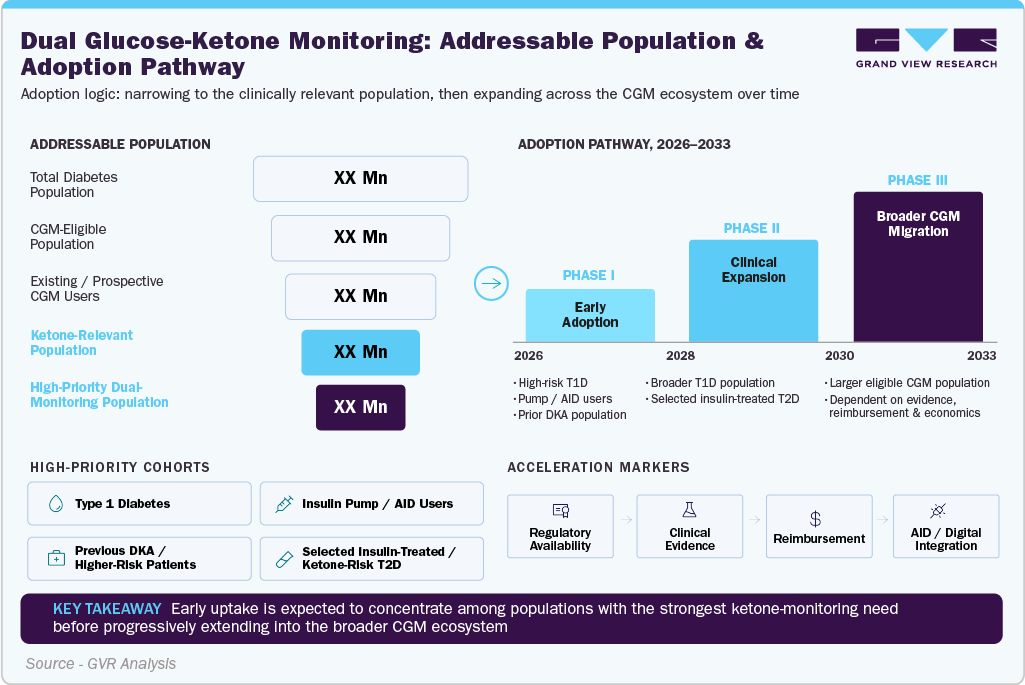
Adoption of continuous dual glucose-ketone monitoring is unlikely to occur uniformly across the overall diabetes population. Instead, early adoption is expected to be concentrated among patient groups where continuous ketone information provides the incremental clinical utility over standalone glucose monitoring.
People with type 1 diabetes represent the most immediate addressable population owing to their dependence on insulin and greater susceptibility to ketosis and DKA. Within this population, individuals using insulin pumps or automated insulin delivery systems, patients with a history of DKA, pediatric populations requiring oversight, and individuals experiencing recurrent glycemic instability also represent relevant early-adopter cohorts.
Over time, the addressable opportunity is expected to extend towards selected insulin-treated type 2 diabetes populations and other patient groups with elevated ketosis risk. The resulting market opportunity should therefore be assessed through a risk and use-case based adoption framework rather than against the entire global diabetes population.
Adoption Outlook
A. Addressable Population
B. CGM To Dual Monitoring Migration
A considerable proportion of early dual-monitoring users are expected to emerge from the existing CGM ecosystem rather than from previously unmonitored diabetes populations.
The commercial opportunity therefore represents both an expansion of continuous monitoring into additional metabolic parameters and a potential migration of selected users from conventional glucose-only CGM toward dual glucose-ketone systems.
The rate of migration is expected to vary considerably across patient populations. High-risk insulin-dependent patients may demonstrate greater willingness to adopt dual sensing, whereas glucose-only monitoring is likely to remain sufficient for a substantial proportion of lower-risk CGM users.
Assessing this migration pathway is therefore critical for understanding whether continuous glucose-ketone monitoring develops primarily as a specialized premium segment within CGM or ultimately becomes a more widely adopted configuration of continuous diabetes monitoring.
Market Opportunity
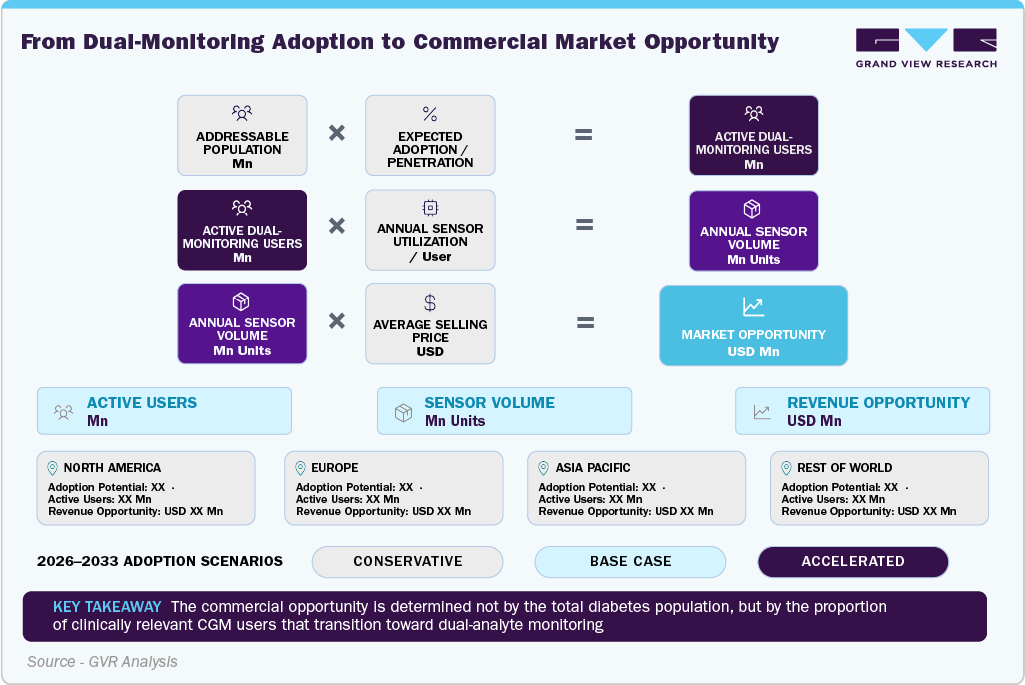
The adoption potential for continuous dual glucose-ketone monitoring is expected to vary across regions according to existing CGM penetration, diabetes technology infrastructure, reimbursement environments, regulatory availability, and patient purchasing power.
North America is expected to represent an important early commercialization market owing to its established CGM ecosystem and high adoption of advanced diabetes technologies. Europe represents another significant opportunity, supported by increasing CGM adoption and expanding availability of connected diabetes-management solutions.
Asia Pacific represents a substantial longer-term opportunity owing to its large diabetes population, although adoption is expected to vary significantly between developed and emerging markets. Other regions may demonstrate comparatively gradual penetration as affordability and access remain important determinants of advanced monitoring adoption


Customize this report to your needs - add regions, segments, or data points, with 20% free customization.
Or view our licence options:


ISO 9001:2015 & 27001:2022 Certified
We are GDPR and CCPA compliant! Your transaction & personal information is safe and secure. For more details, please read our privacy policy.


