- Home
- »
- Market Trend Reports
- »
-
The Evolution Of Glaucoma Treatment : Comparative Outlook On Minimally Invasive Glaucoma Surgery Devices With Conventional Procedures
![The Evolution Of Glaucoma Treatment : Comparative Outlook On Minimally Invasive Glaucoma Surgery Devices With Conventional ProceduresReport]()
The Evolution Of Glaucoma Treatment : Comparative Outlook On Minimally Invasive Glaucoma Surgery Devices With Conventional Procedures
- Published: Sep, 2025
- Report ID: GVR-MT-100414
- Format: PDF/Excel databook
- No. of Pages/Datapoints: 100
- Report Coverage: 2024 - 2030
Overview of the Glaucoma Surgery Industry
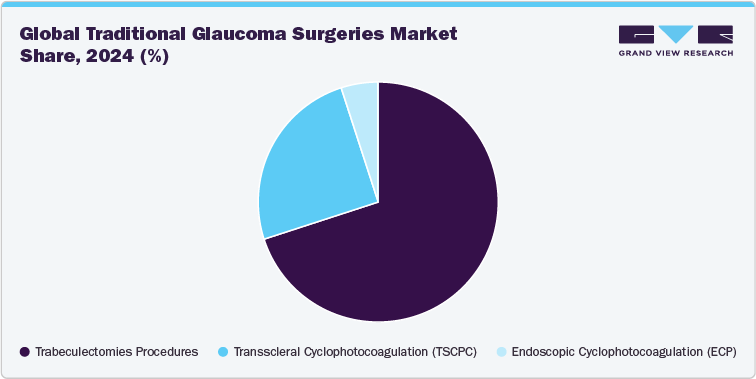
The introduction of minimally invasive glaucoma surgery (MIGS) devices has resulted in the upliftment of glaucoma management industry. These new innovations provide a less invasive option compared to traditional procedures, which may lead to fewer complications and better patient outcomes. This trend report explores the development of glaucoma treatments, comparing MIGS devices to standard procedures such as trabeculectomy, Transscleral Cyclophotocoagulation (TSCPC), and Endoscopic Cyclophotocoagulation (ECP).
Glaucoma, a major cause of irreversible blindness, requires effective management approaches. Traditional surgery has been crucial in controlling eye pressure; however, its invasive nature often leads to serious complications. Minimally invasive glaucoma surgery (MIGS) devices have become a promising alternative, aiming to provide effective pressure control with lower risk profiles.
Conventional Glaucoma Surgeries and MIGS Devices
-
Traditional Glaucoma Surgeries
- Trabeculectomy
Trabeculectomy creates filtration blebs to drain aqueous humor, which helps lower IOP. Although effective, it comes with risks like infection, hypotony, and complications related to the bleb. To succeed in the long term, careful monitoring and management are necessary.
-
Transscleral Cyclophotocoagulation (TSCPC) and Endoscopic Cyclophotocoagulation (ECP)
For TSCPC, laser energy is used to remove ciliary body tissue, which reduces the production of aqueous fluid. ECP uses endoscopic methods to specifically destroy the ciliary body. These procedures are typically considered when medical treatment is unsuccessful, but they can cause inflammation and possibly lead to vision loss.
- Minimally Invasive Glaucoma Surgery Devices (MIGS) Devices

Emergence and Mechanisms of MIGS Devices
MIGS devices are designed to lower IOP through minimally invasive means, often combined with cataract surgery. They primarily target the trabecular meshwork, Schlemm's canal, or the suprachoroidal space. Some well-known and rapidly growing MIGS devices include PRESERFLO MicroShunt, Hydrus Microstent, iStent implants, Express implants, Ahmed Valve, and Baerveldt.
-
iStent Inject: A trabecular micro-bypass stent that facilitates aqueous outflow. The iStent device developed by Glaukos Corporation reached a significant milestone of 500,000 implants worldwide around 2021, as reported by the company in official press releases and investor communications. This milestone reflects the cumulative total of devices implanted globally since the product’s introduction. The iStent was initially approved by the FDA in 2012, making it one of the first minimally invasive glaucoma surgery (MIGS) devices approved for use in the United States. Since then, it has gained substantial adoption due to its role in lowering intraocular pressure during cataract surgery for patients with mild to moderate primary open-angle glaucoma.
-
PRESERFLO MicroShunt: This product is approved in Canada, Europe, Asia Pacific, and Latin America, but is pending U.S. FDA approval. However, per annual reports and new articles, the device is in Phase 3 of its clinical trial and might receive FDA approval by mid-2026.
-
Hydrus Microstent: The Hydrus Microstent was initially approved by the CE Mark in 2011, followed by FDA approval in August 2018 for use with cataract surgery in patients with mild to moderate primary open-angle glaucoma. By the time of FDA approval, over 4,000 Hydrus implants had already been performed globally. As of November 2021, Ivantis reported over 85,000 implants worldwide.
-
Xen Implant, Ex-PRESS, Ahmed Valve, and Baerveldt: In addition to the PreserFlo MicroShunt, Hydrus, and iStent, the glaucoma surgery devices market includes several other key products that follow distinct market trends. The Xen Gel Stent continues to be a widely adopted standard MIGS solution, showing steady growth driven by its established presence in multiple markets. The Ex-PRESS Glaucoma Filtration Device remains a commonly used and well-established option, maintaining consistent usage due to its long-standing acceptance in clinical practice. The Ahmed Glaucoma Valve and Baerveldt Glaucoma Implant are standard solutions for more complex or refractory cases, exhibiting stable demand patterns over time. These products typically reflect mature market dynamics, characterized by moderate growth rates and well-established adoption, in contrast to newer products like PreserFlo, Hydrus, and iStent, which are experiencing rapid adoption in specific regions following regulatory approvals.
Steady Growth of Traditional Glaucoma Surgeries Across Certain Regions
Trabeculectomy procedures have decreased in regions such as North America, Europe, the Middle East, and Africa. This decline is primarily driven by the growing preference for Minimally Invasive Glaucoma Surgeries (MIGS), which offer lower risk and faster recovery than traditional surgeries.
However, in contrast, the Asia Pacific and Latin American regions are expected to increase the number of trabeculectomies performed gradually. This trend is supported by the continued preference for traditional surgical approaches in these regions, influenced by physician familiarity, infrastructure, and patient population needs.
Comparative Analysis Between Traditional Glaucoma Surgeries and MIGS Devices
Minimally Invasive Glaucoma Surgery (MIGS) devices have become a less invasive option compared to traditional glaucoma surgeries. They aim to lower intraocular pressure (IOP) with fewer complications and faster recovery. Although MIGS provides moderate IOP reduction and improved safety, conventional procedures like trabeculectomy, Transscleral Cyclophotocoagulation (TSCPC), and Endoscopic Cyclophotocoagulation (ECP) are still the standard for patients with advanced or uncontrolled glaucoma. This is because they can achieve greater IOP reduction. The table below directly compares key factors, highlighting the unique benefits and drawbacks of each surgical approach.
Table 1 Comparative Factors Between Traditional Glaucoma Surgeries and MIGS Devices
Factors
Minimally Invasive Glaucoma Surgery (MIGS) Devices
Conventional Surgeries
Surgical Approach
Ab interno (from inside the eye) via gonioscopic guidance.
Ab externo (external approach), creating a filtering bleb.
Procedure Duration
Typically shorter, often combined with cataract surgery.
Longer, requiring separate surgical sessions.
Intraocular Pressure (IOP) Reduction
Moderate (typically 20–30% reduction).
Significant (up to 40–50% reduction).
Safety Profile
High; fewer complications such as hypotony or infection.
Higher risk of complications, including bleb-related issues
Recovery Time
Shorter; patients often resume normal activities within days.
Longer, extended postoperative care is required
Ideal Candidates
Patients with mild to moderate open-angle glaucoma.
Patients with advanced glaucoma or those unresponsive to medical therapy
FDA Approval Status
Devices like iStent and Hydrus are FDA-approved.
Procedures like trabeculectomy are standard and widely accepted.
Cost Considerations
Generally lower; may be covered by insurance when criteria are met.
Higher; may involve longer hospital stays and postoperative care
![gvr icn]()
GET A FREE SAMPLE
![gvr icn]()
This FREE sample includes market data points, ranging from trend analyses to market estimates & forecasts. See for yourself.
![gvr icn]()
NEED A CUSTOM REPORT?
We can customize every report - free of charge - including purchasing stand-alone sections or country-level reports, as well as offer affordable discounts for start-ups & universities.
Contact us now to get our best pricing.
![esomar icon]()
ESOMAR certified & member
![ISO]()
ISO Certified
We are GDPR and CCPA compliant! Your transaction & personal information is safe and secure. For more details, please read our privacy policy.






We are committed towards customer satisfaction, and quality service.
Client Testimonials

"The quality of research they have done for us has been excellent..."
ISO Certified