- Home
- »
- Market Trend Reports
- »
-
Vision Trends In The Gulf: Emerging Growth In The GCC Contact Lenses Market
![Vision Trends In The Gulf: Emerging Growth In The GCC Contact Lenses MarketReport]()
Vision Trends In The Gulf: Emerging Growth In The GCC Contact Lenses Market
- Published: Jun, 2025
- Report ID: GVR-MT-100369
- Format: PDF/Excel databook
- No. of Pages/Datapoints: 75
- Report Coverage: 2024 - 2030
Snapshot Of Growth Rate, Key Trends, Market Size & Players
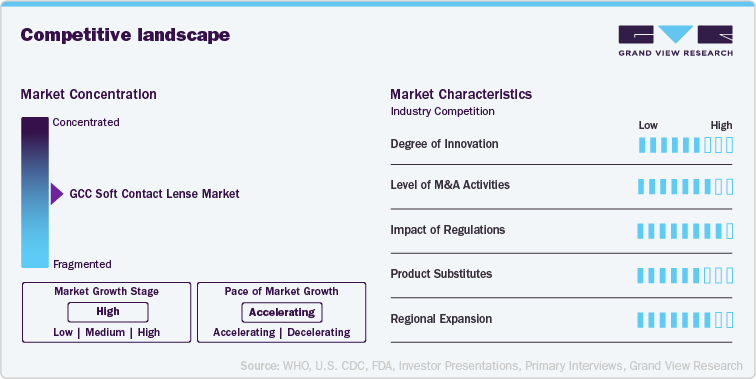
The GCC soft contact lenses market was valued at USD 335.29 million in 2024 and is expected to grow at a CAGR of 6.39% from 2025 to 2030 to reach a value of USD 486.54 million in 2030. This growth can be attributed to the rising prevalence of vision disorders, advancements in technology & product innovation, and the growing consumer preference for contact lenses over traditional eyewear. With lifestyle changes, increased screen time, and urbanization, the burden of vision problems across the region is rising, driving the demand for effective and convenient vision correction solutions.
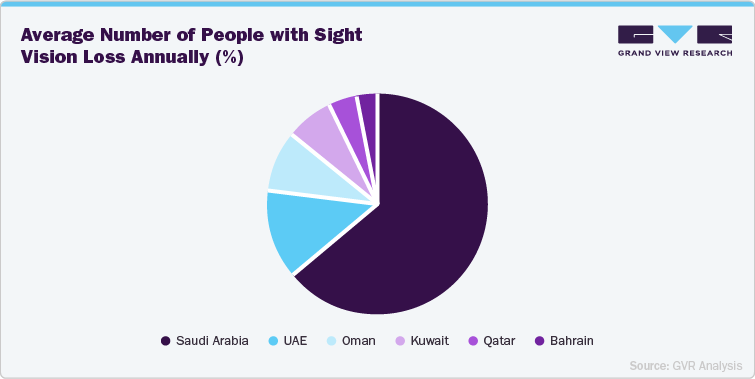
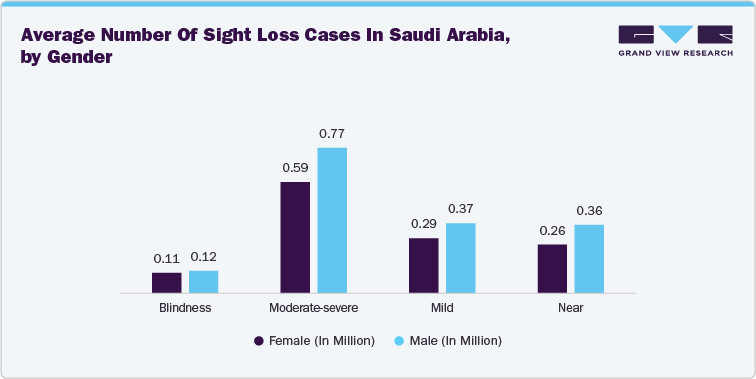
In 2024, Saudi Arabia held the largest revenue share within the GCC soft contact lenses market at 51.14%, driven by rapid lifestyle shifts, a high incidence of vision loss affecting around 2.08 million people annually, and rising eye care awareness. Innovative products like smart and colored contact lenses are attracting consumers. Additionally, ocular conditions such as diabetic retinopathy and dry eye syndrome are becoming more common due to factors like prolonged screen exposure.
Some players operating in the market are Johnson & Johnson Vision (Acuvue); Alcon; Bausch + Lomb; CooperVision; Bella Contact Lenses; Dahab Contact Lenses; Anesthesia Colored Lenses; Amara Contact Lenses; Carl Zeiss Vision Care; EssilorLuxottica (Middle East); Daya Lenses; Lensme Lenses (Golden Cala); Diva Lenses; Sama Contact Lenses; Afle Contact Lenses; Yateem Group.; Ophtalens; Leila & Leila; Contamac; Hydrogel Vision Corp. (Clerio Vision); and Menicon Co., Ltd. Companies are focusing on developing products that can aid in research and diagnosis through technological advancements and mergers & acquisitions.
Consumer Behavior and Preferences in the Contact Lenses Market
The contact lenses market is experiencing significant growth, driven by evolving consumer behaviors and preferences. Key trends include a shift from spectacles to contact lenses, increasing demand for colored and cosmetic lenses, and a surge in online purchasing. These trends are influenced by factors such as lifestyle changes, technological advancements, and the growing influence of social media.
1. Shift from Spectacles to Contact Lenses
In the GCC region, there’s a rising shift from traditional spectacles to contact lenses, driven by demand for convenience, aesthetics, and comfort in hot, humid climates. Contact lenses are especially preferred by active individuals and those seeking fog-free vision in air-conditioned environments. Technological advancements, particularly silicone hydrogel lenses, offer improved oxygen permeability and comfort, boosting their appeal. Digital device usage across GCC has also increased demand for lenses with blue light protection to reduce eye strain. A recent study, Profile of Contact Lens Prescribing in GCC Countries, highlights a significant consumer move toward silicone hydrogel and daily disposable lenses. Aesthetic appeal is also driving adoption, especially among Arabic women-64% of contact lens users are women, with 20% using them for cosmetic reasons, reflecting cultural beauty preferences focused on eye enhancement. The market is further bolstered by the region's embrace of personalized healthcare, with growing interest in customized lenses for conditions like astigmatism and presbyopia. This combination of lifestyle alignment, advanced materials, and aesthetic trends positions contact lenses as the preferred vision correction method in the GCC. With digital screen use surging and consumer expectations evolving, the contact lens market in the region is poised for continued growth.
2. Demand for Colored and Cosmetic Lenses
Colored and cosmetic contact lenses are gaining momentum across the GCC, particularly among young people who prioritize aesthetics and self-expression. Social media and beauty trends have fueled widespread use, with many young women in urban centers incorporating colored lenses into their everyday beauty routines. These lenses are now viewed not only as vision correction tools but also as fashionable accessories. Daily disposable variants are especially favored for their comfort and variety. For instance, in March 2024, beauty entrepreneur Huda Kattan partnered with Diva Lenses to introduce her first range of colored contact lenses. Designed to enhance dark brown eyes with four natural-looking shades, the collection-available with prescription options-marks her expansion beyond the Huda Beauty brand and reflects growing interest in stylish eye care products.
However, cultural attitudes remain a key influence on adoption. While younger users readily embrace cosmetic lenses, older generations often remain hesitant or disapproving, creating a generational divide that slows market growth. Additionally, in more conservative societies, discomfort associated with touching one’s eyes further discourages lens use. The following table illustrates contact lens usage by age group, emphasizing how physiological, cultural, and lifestyle factors influence adoption for both aesthetic and corrective purposes.
Contact Usage and Reasoning, by Age Group
Age Group
% of People using Contact Lenses
Reason
18-29
~45-55%
Highest adoption due to lifestyle choices, comfort, and cosmetic appeal. Young adults prioritize convenience and aesthetics, particularly daily disposable lenses.
30-44
~30-35%
Adoption decreases slightly as presbyopia may begin to affect this group. Multifocal lenses help, but glasses are still a common choice.
45-60
~15-20%
Significant decline due to presbyopia and preference for reading glasses. Multifocal lenses exist but may not be widely adopted.
60+
~5-10%
Lowest adoption due to age-related conditions (e.g., dry eye syndrome, cataracts), cultural preference for glasses, and challenges with contact lens handling.
Source: NCBI, National Library of Medicine
3. Online Purchasing Behavior Trends
E-commerce has become a vital distribution channel in the GCC soft contact lens market, offering a fast and convenient alternative to traditional optical stores. Consumers can now easily compare and purchase daily disposables, monthly lenses, and cosmetic-colored lenses through online platforms.
UAE and Saudi Arabia have seen significant growth in online lens sales, supported by high internet usage, a young, tech-savvy population, and features like mobile apps and virtual try-ons. Platforms such as Amazon.ae (formerly Souq), Noon, Lenskart, and Eyewa have gained popularity by offering perks like same-day delivery, subscription services, and tailored product suggestions. The sector is further evolving through strategic collaborations. For instance, in July 2024, SmartBuyGlasses partnered with Checkout.com to offer localized payment options and improve transaction experiences, enhancing digital eyewear shopping.
In Oman, many consumers still prefer in-person product interaction, slowing e-commerce growth. However, Bahrain, Kuwait, and Qatar are seeing increasing digital adoption, fueled by demand for convenience and cosmetic lenses. Bahrain-based Hassan’s and Qatar's Eyenk.com are leading with wide offerings, including branded and specialized lenses.
As of 2023, internet usage across GCC nations remains exceptionally high. This widespread connectivity, combined with a youthful, tech-oriented population and growing demand for quick and convenient access to diverse contact lens options, is driving the shift toward online purchasing. The rise of digital platforms has significantly expanded e-commerce, allowing consumers to easily explore and order lenses online. This trend is especially prominent in the UAE and Saudi Arabia, where high internet adoption has accelerated online contact lens sales. The table below highlights internet penetration rates across the region.
Internet Usage in GCC Countries, 2023
Countries
Internet Users in 2023 (%)
Bahrain
100%
Kuwait
99.75%
Oman
95.25%
Qatar
94.20%
Saudi Arabia
99.9%
United Arab Emirates
99.9%
Source: World Population Review and The Global Economy
The GCC-formed by Saudi Arabia, UAE, Kuwait, Qatar, Oman, and Bahrain-is a major economic region fueled by energy resources. Soft contact lens usage is increasing, driven by a youthful, tech-oriented population, digital screen exposure, and cosmetic preferences. High income levels and developed retail systems make premium lenses accessible. The region’s hot climate makes contact lenses more comfortable than glasses. Online retail and tele-optometry are enhancing access. In Saudi Arabia, lens demand is rising due to lifestyle changes, aging, and growing awareness of eye issues like dry eye and diabetic retinopathy, boosting interest in cosmetic, smart, and specialty lenses.
Retail Providers of Contact Lenses Across GCC Countries
Retail Providers
Provider Names
Countries
Physical Retail and Optical Stores
Hassan’s Optician Co.
Bahrain, Kuwait, Qatar, UAE
Al Jaber Optical
UAE, expanding regionally
Magrabi Optical
Saudi Arabia, UAE, Qatar, Bahrain, Oman
Yateem Optician
UAE, Bahrain, Oman, Qatar
Al-Dawaa Pharmacies
Saudi Arabia
E-commerce and Online Retail Platforms
Noon.com
UAE, Saudi Arabia
Eyewa
UAE, Saudi Arabia, Kuwait, Bahrain
Amazon.ae / Amazon.sa
All GCC Countries
Contactlensshop.ae
UAE, with GCC shipping
Eyenk.com
Qatar
Source: GVR Analysis
Top 10 Optical Brand Analysis
S. No.
Brand / Store
Store Type (Chain/Standalone)
Head Office / Flagship
Key Offering
1
MAGRABi (+ Rivoli Vision)
Chain
Headquarters Jeddah; flagship Jeddah Park Mall
Sun, Rx, CLs, eye-exams
2
Doctor M
Chain
Dubai Headquarters; Riyadh hub
Lifestyle eyewear, basic eye-tests
3
Eyewa
Chain
Dual Headquarters Riyadh/Dubai; Riyadh Gallery
Omnichannel sun, Rx, CLs
4
Grand Optics
Chain
Riyadh Headquarters; Olaya St flagship
Frames, sun, CLs, eye-tests
5
Al Jaber Optical
Chain
Dubai Headquarters; KHeadquartersbar flagship
Sun, Rx, CLs, labs
6
Vision Express (Alshaya JV)
Chain
Kuwait Headquarters; Riyadh Park flagship
Sun, Rx, CLs
7
Eye Boutique
Chain
Riyadh Headquarters; King Fahd Rd
Designer frames, CLs
8
Bawadi (Jana) Optical
Mini chain
Jeddah (Al Bawadi)
Sun, Rx, eye-tests
9
Al Mutlaq Optical
Mini chain
Riyadh
Frames, sun, CLs
10
Optical Club (Eyewa sub-brand)
Chain
Riyadh
Value frames, sun, CLs
Source: GVR Analysis. The final deliverable will provide estimated forecast analysis (2025) for the top 10 players listed above for Saudi Arabia.
![gvr icn]()
GET A FREE SAMPLE
![gvr icn]()
This FREE sample includes market data points, ranging from trend analyses to market estimates & forecasts. See for yourself.
![gvr icn]()
NEED A CUSTOM REPORT?
We can customize every report - free of charge - including purchasing stand-alone sections or country-level reports, as well as offer affordable discounts for start-ups & universities.
Contact us now to get our best pricing.
![esomar icon]()
ESOMAR certified & member
![ISO]()
ISO Certified
We are GDPR and CCPA compliant! Your transaction & personal information is safe and secure. For more details, please read our privacy policy.






We are committed towards customer satisfaction, and quality service.
Client Testimonials

"The quality of research they have done for us has been excellent..."
ISO Certified