- Home
- »
- Market Trend Reports
- »
-
Goserelin (Zoladex) Market Outlook, 2025 - 2033: Competitive Landscape, Pricing Trends, And Growth Forecast
![Goserelin (Zoladex) Market Outlook, 2025-2033: Competitive Landscape, Pricing Trends, And Growth ForecastReport]()
Goserelin (Zoladex) Market Outlook, 2025-2033: Competitive Landscape, Pricing Trends, And Growth Forecast
- Published: Nov, 2025
- Report ID: GVR-MT-100506
- Format: PDF/Excel databook
- No. of Pages/Datapoints: 120
- Report Coverage: 2024 - 2030
Report Overview
The Goserelin (Zoladex) market continues to evolve, supported by its established role in hormone-dependent cancers and expanding global access to generic formulations. Demand is primarily driven by its clinical utility in prostate cancer, breast cancer, and gynecologic indications, along with sustained adoption of long-acting injectable therapies. Market trends are shaped by changing treatment guidelines, growing cancer incidence, and pricing shifts following patent expiries across key regions. For instance, filings show that in the U.S. the key patents on Zoladex (goserelin acetate implant) expired around 2021. Competitive activity among branded and generic manufacturers, coupled with ongoing research into next-generation hormonal therapies, is redefining market positioning. This report provides an in-depth assessment of current market dynamics, competitive landscape, and future growth potential, offering strategic insights for stakeholders across the pharmaceutical value chain.
Key Report Deliverables
Analyze the Goserelin (Zoladex) market landscape: Examine Goserelin as a leading LHRH agonist used in prostate cancer, breast cancer, and gynecologic disorders, highlighting its clinical relevance, dosing advantages, and role as a non-surgical alternative to chemical castration. Assess demand drivers such as the rising global cancer burden, expanding use of hormonal therapies in early-stage and metastatic settings, and post-patent generic penetration reshaping pricing dynamics.
-
Evaluate the competitive environment: Identify major pharmaceutical players supplying branded and generic Goserelin globally, and analyze their commercial strategies, market share shifts, and product positioning versus competing GnRH analogs like Leuprolide, Triptorelin, and Degarelix. Consider the competitive impact of newer oral hormonal therapies, androgen-receptor inhibitors, and biosimilar-driven price pressures.
-
Forecast market growth: Project future adoption trends across oncology and reproductive health, with emphasis on growth in emerging markets, increasing guideline-based hormonal suppression, and expansion of depot formulations. Evaluate potential risks including declining branded revenues due to generic erosion, evolving treatment algorithms favoring targeted agents, and shifts toward combination therapy models.
-
Identify regulatory and market barriers: Assess challenges such as post-expiry pricing controls, reimbursement restrictions, tender-driven procurement in public health systems, and patient access gaps between high-income and developing regions. Evaluate how safety labeling updates, formulary decisions, and biosimilar substitution policies may influence commercial outcomes.
-
Assess the concurrent competitive landscape: Map both direct competitors (GnRH agonists & antagonists) and indirect competitors (oral hormonal therapies, anti-androgens, chemotherapy, radioligand therapies) to determine Goserelin’s differentiation in terms of cost, dosing frequency, real-world tolerability, and physician preference. Analyze how the shift toward next-generation prostate and breast cancer regimens will redefine Goserelin’s long-term market relevance.
Market Introduction And Sales Growth
Goserelin (Zoladex) has remained a key therapy in the management of hormone-dependent cancers, particularly prostate cancer, pre-/peri-menopausal breast cancer, and select gynecologic conditions. Since its introduction, the product has achieved strong and sustained market presence due to its proven clinical efficacy, long-acting depot implant formulation, and widespread inclusion in global treatment guidelines. Its continued adoption is supported by high physician familiarity, consistent treatment outcomes, and the advantage of non-surgical hormonal suppression. Even as the product matures, growing cancer prevalence, treatment expansion into earlier disease stages, and broad usage across developed and emerging markets contribute to ongoing demand.
Impact of Patent Protection on Sales
Although the core molecule patents for Goserelin have expired in most major regions, its market performance remained strong for many years due to formulation patents, delivery-system exclusivity, and limited competition in key countries. During the patent-protected period, the absence of generic alternatives allowed the brand to maintain premium pricing and market loyalty, especially in oncology settings where treatment continuity is critical. Patent expiry has introduced gradual pricing pressure in some markets, but the controlled-release implant technology, physician comfort, and reimbursement coverage continue to support the brand’s resilience.
Expansion and Market Penetration Strategies
Commercial strategy for Goserelin has focused on expanding access into additional geographies, strengthening adoption in oncology practice, and supporting physicians through clinical education and treatment pathway alignment. Broader availability of multiple depot dose strengths has helped retain market differentiation, especially in regions prioritizing treatment adherence and reduced clinic visits. Market penetration efforts also include expansion into developing regions, competitive tendering in public healthcare systems, patient-support initiatives, and messaging around long-term clinical experience. These approaches help sustain brand relevance even in the face of rising generic competition.
Future Outlook Until Competitive Shift
Over the coming years, the Goserelin market is expected to remain stable, driven by continued global incidence of hormone-sensitive cancers and entrenched clinical use. However, future growth will rely more on volume expansion than price, as competition from other GnRH analogs, antagonists, and next-generation hormonal therapies increases. Market performance will also depend on factors such as reimbursement evolution, competitive tender outcomes, and treatment guideline updates. While the era of exclusivity has passed, the brand is positioned to retain a meaningful share of the oncology hormone-therapy segment due to its established safety, clinical history, and delivery convenience.
Current Market Scenarios
Goserelin (marketed as Zoladex) remains a foundational therapy in the treatment of hormone-dependent cancers, particularly prostate cancer, pre/peri-menopausal breast cancer, and gynecologic indications such as endometriosis and uterine fibroids. As one of the earliest LHRH agonists to enter the market, it helped establish chemical androgen and estrogen suppression as a standard treatment pathway in oncology and reproductive medicine. Its long-acting implant formulation, proven safety profile, and decades of clinical experience have positioned it as a trusted therapeutic option among oncologists and gynecologists worldwide, reinforcing its continued relevance even as newer hormonal agents enter the market.
In North America and Europe, the product retains steady use due to guideline-based recommendations, strong physician familiarity, and ongoing preference for depot formulations that support treatment adherence and reduce the frequency of clinic visits. Although patent expiry has opened the door for generics, Zoladex still benefits from brand loyalty, established reimbursement pathways, and clinical reliability, helping preserve share in hospital oncology settings. In Asia Pacific, rising cancer incidence, expanded screening programs, and broader access to hormonal therapies are accelerating demand, with Goserelin achieving additional traction in countries prioritizing injectable depots as cost-effective alternatives to surgical castration or oral combination regimens.
Across Latin America and the Middle East & Africa, growth is driven by improving cancer care infrastructure, tender-based procurement, and government-funded access programs that prefer long-acting injectable therapies with predictable outcomes. However, regional variations in affordability, formulary access, and generic penetration continue to shape adoption rates. Despite increased competition from other GnRH agonists, antagonists, and next-generation hormonal agents, Goserelin maintains a strong position due to its established clinical record, wide therapeutic applicability, and ongoing integration into combination treatment strategies. Looking ahead, its market trajectory will be defined by lifecycle management, competitive pricing strategies, and expanding use in multi-drug oncology regimens, ensuring continued relevance within the global hormone-therapy landscape.

Market Dynamics
Growing Demand for Hormone-Responsive Cancer Therapies
The rising global prevalence of hormone-dependent cancers such as prostate and breast cancer continues to drive demand for established LHRH agonists like Goserelin (Zoladex). As a proven standard-of-care in androgen deprivation therapy (ADT) and estrogen suppression, Goserelin remains widely used in both early-stage and advanced disease settings due to its long-standing clinical reliability, predictable pharmacokinetics, and broad physician familiarity. Its role in neoadjuvant, adjuvant, and palliative treatment settings further reinforces its continued relevance despite increasing therapeutic diversification, particularly in oncology markets seeking safe, durable, and guideline-recognized treatment options.
Pricing Dynamics and Competitive Landscape
Although biosimilar and generic competition has intensified following patent expiries in major markets, Zoladex maintains strong brand retention in regions where clinical confidence, formulary preference, and established patient support programs influence prescribing decisions. In cost-sensitive markets, price erosion and tenders have accelerated generic uptake, while in premium markets such as the U.S. and Japan, brand loyalty, oncology specialist preference, and bundled hospital procurement models continue to support its competitive position. Meanwhile, newer hormonal therapies and GnRH antagonists such as degarelix and relugolix are shaping competitive differentiation based on dosing convenience, cardiovascular risk profiles, and reimbursement incentives, gradually redefining market dynamics across oncology care pathways.
Opportunities in Lifecycle Strategy and Regional Expansion
Post-patent lifecycle strategies, including sustained physician engagement, oncology education initiatives, and treatment guideline alignment, remain central to preserving Goserelin’s market footprint. Growth potential is expected to be stronger in emerging regions across Asia Pacific, Latin America, and parts of the Middle East, where expanding cancer screening programs, improving oncology infrastructure, and government procurement initiatives are increasing access to hormonal therapies. While maturity in developed markets limits aggressive growth, consistent usage in long-term prostate and breast cancer management, combined with expanding global cancer burden, ensures ongoing commercial relevance. Market evolution will be shaped by treatment personalization, competitive pricing, and evolving clinical preferences, positioning Goserelin as a continued therapeutic staple within the global hormone therapy landscape.
The Pressure of Pricing and Market Erosion Post-Patent
With Goserelin (Zoladex) now off-patent in most major regions, the market landscape has shifted significantly, leading to intensified pricing pressure and accelerated generic penetration. As multiple low-cost alternatives enter the market, payers and hospital procurement systems in regions such as India, China, Brazil, and Eastern Europe are increasingly prioritizing cost-efficient formulations over branded Zoladex. In mature markets like the U.S., Japan, and parts of Western Europe, the brand retains a presence through physician familiarity, oncology guideline legacy, and structured reimbursement pathways, but competitive shifts and formulary negotiations are steadily narrowing its premium bandwidth. The rise of oral androgen-deprivation therapies and next-generation GnRH antagonists further contributes to therapeutic substitution, pushing AstraZeneca and license holders to rely more on brand equity than pricing power. Despite these pressures, Goserelin continues to hold relevance in clinical practice due to its proven efficacy, dosing predictability, and broad oncology acceptance-but the long-term outlook is shaped by increasing price sensitivity, tender-based hospital supply models, and therapeutic modernization.
Innovating Beyond the Patent - Sustaining Market Presence and Value
Post-patent, the sustainability of the Goserelin franchise hinges on strategic lifecycle management rather than product exclusivity. Manufacturers are investing in enhanced depot technologies, patient-friendly delivery devices, and supportive oncology adherence programs to differentiate from low-cost generic implants. Continued inclusion of Goserelin in global prostate and breast cancer treatment guidelines, alongside expanded roles in endometriosis, assisted reproductive protocols, and gender-affirming care, provides a multi-indication shield against complete erosion. While mature oncology markets are expected to witness gradual attrition due to next-generation hormonal competition, emerging markets in Asia Pacific, Latin America, and the Middle East present growth potential fueled by expanding oncology infrastructure, rising cancer incidence, and government-led cancer care initiatives. Strategic partnerships, local manufacturing alliances, and value-based contracting are becoming essential levers to protect brand relevance in a price-controlled global environment.

Shaping the Future - Innovation, Accessibility, and Regional Dynamics
The global hormone therapy market is undergoing a major shift, and Goserelin (Zoladex) continues to play a pivotal role in the evolution of treatment strategies for hormone-dependent cancers. As a long-acting GnRH agonist with well-established clinical efficacy, Zoladex remains a preferred therapeutic option in prostate cancer, breast cancer, endometriosis, and reproductive endocrinology. Even as newer hormonal agents and next-generation targeted therapies enter the market, Goserelin's proven safety, predictable dosing, and broad oncologic utility allow it to remain embedded in clinical guidelines across major geographies. Growing awareness, earlier cancer diagnosis, and patient preference for long-acting depot formulations are driving sustained demand, especially in settings where treatment consistency and affordability are priorities.
With the shift toward value-based care and oncology access expansion, Goserelin adoption trends vary across regions. In North America and Europe, the brand faces competitive pressure from generics and alternative ADT therapies, yet clinical familiarity and continued reimbursement support preserve its relevance. In emerging markets across Asia Pacific, Middle East, and Latin America, rising cancer incidence, expanding radiotherapy centers, and government-supported oncology programs are fueling greater demand for cost-efficient hormonal therapies making both branded and generic Goserelin key components of cancer care pathways. However, variations in regulatory approvals, tender pricing, and insurance coverage continue to shape differentiated adoption curves between high-income and developing regions.
Looking ahead, lifecycle optimization and strategic market positioning will determine Goserelin’s continued strength in a post-patent environment. While generics increasingly define price competition, opportunities remain in device innovation, patient self-care delivery systems, and expanded use in multi-therapy regimens for advanced cancer management. Growing research interest in combination hormonal-immunotherapy approaches and the drug’s continued inclusion in NCCN and EAU guidelines reinforce its clinical staying power. As oncology care becomes more global, Goserelin’s future will be shaped by its ability to balance cost accessibility, real-world evidence, and strategic adaptation ensuring it remains a durable therapeutic standard across both mature and rapidly developing cancer markets.
Overview of Alternative Therapeutics
The competitive landscape for Goserelin (Zoladex) is evolving rapidly as multiple hormonal and targeted therapies gain traction across prostate cancer, breast cancer, and reproductive health segments. Alternatives such as leuprolide, triptorelin, degarelix, and relugolix are increasingly positioned as substitutes within the androgen deprivation therapy (ADT) and ovarian suppression markets, offering variations in administration route, dosing frequency, and safety profiles. The rise of oral GnRH antagonists and next-generation hormone modulators is expanding physician choice, particularly in regions prioritizing convenience, faster testosterone suppression, or reduced risk of initial hormonal flare.
As competitors secure wider regulatory approvals, enter public hospital procurement lists, and penetrate emerging oncology markets, the shift toward diversified treatment approaches continues to reshape clinical decision-making. Cost-efficient generics and biosimilar-equivalent depot formulations are gaining notable adoption in tender-driven regions such as Asia Pacific, Latin America, and Eastern Europe, where affordability heavily influences prescribing trends. In contrast, mature markets like the U.S., Germany, and Japan maintain a balance between branded and generic hormonal agents, with treatment choice guided by guideline familiarity, urologist and oncologist preference, and patient adherence patterns.
For long-term market resilience, AstraZeneca and partner manufacturers must reinforce Zoladex’s positioning through guideline alignment, real-world evidence, and patient-focused delivery improvements. Opportunities remain in peri-radiotherapy use, combination regimens with AR pathway inhibitors, and continued inclusion in public health oncology programs. As the hormonal therapy landscape grows increasingly competitive, Zoladex’s sustained relevance will depend on strategic differentiation, accessibility initiatives, and its established clinical heritage in cancer management.
Competitive Landscape
The competitive landscape for Goserelin (Zoladex) is becoming increasingly dynamic as the hormone therapy market for prostate cancer, breast cancer, and reproductive health continues to expand. With the loss of patent protection across major markets, Goserelin now competes directly with multiple GnRH agonists and antagonists, including leuprolide, triptorelin, degarelix, and the more recent oral option relugolix. These alternatives are gaining traction through differentiated dosing schedules, alternative delivery formats, and perceived improvements in patient convenience and tolerability, increasing competitive pressure across both oncology and fertility segments.
Generic versions of goserelin have further reshaped market competition, particularly in tender-driven, cost-sensitive regions such as Asia Pacific, Eastern Europe, and Latin America, where formulary decisions heavily favor lower-cost therapeutics. Meanwhile, in developed markets such as the U.S., Japan, and Europe, the competitive environment is influenced by clinician preference, guideline recommendations, and payer negotiations-factors that continue to support branded Zoladex in specific treatment settings despite pricing challenges. The rising adoption of oral GnRH antagonists and combination-based prostate cancer regimens is also shifting treatment algorithms, creating new competitive dynamics for long-acting depot therapies like Zoladex.
To maintain relevance, AstraZeneca and licensed manufacturers are leveraging Zoladex’s long-established clinical profile, real-world data, and ongoing guideline inclusion in oncology and reproductive endocrinology. Strategic differentiation-such as continued positioning in adjuvant breast cancer therapy, combination use with radiotherapy, and supported patient-access programs-remains critical as market fragmentation increases. In a landscape defined by evolving therapeutic preferences and growing availability of generic and next-generation hormonal options, long-term leadership will depend on sustained clinical credibility, cost competitiveness, and market-adaptive lifecycle strategies.
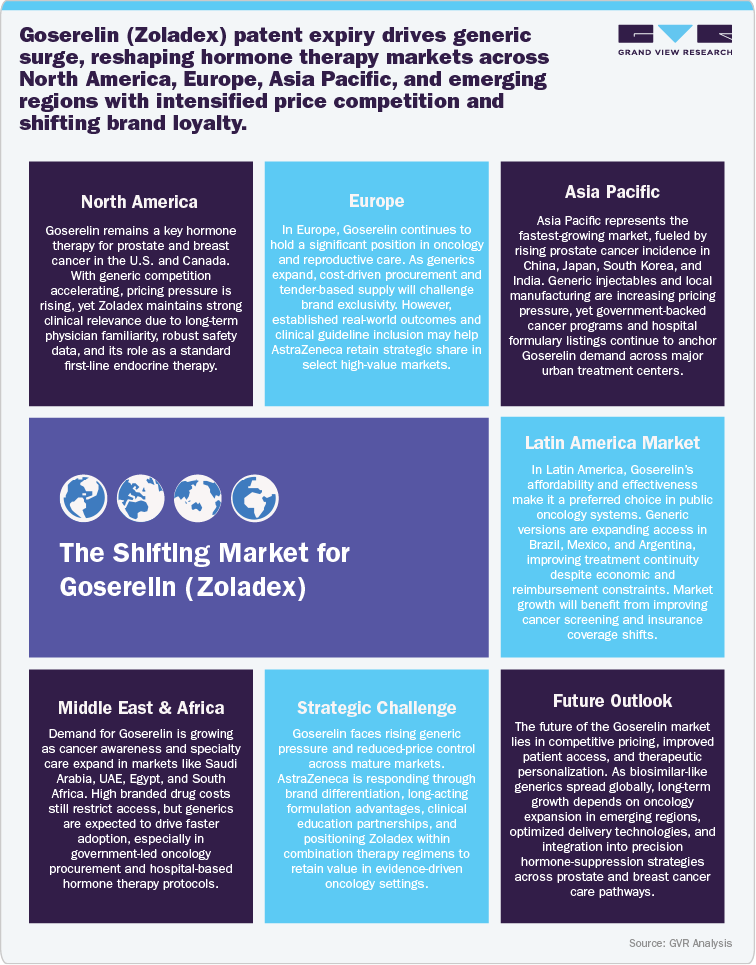
North America Goserelin (Zoladex) Market
North America remains a key market for Goserelin (Zoladex), driven by strong adoption in prostate and breast cancer treatment, particularly in the U.S., where the drug has long been integrated into NCCN-based oncology protocols. Despite the entry of generics, Zoladex continues to hold relevance in specialist-led cancer centers due to physician familiarity, long-acting depot formulation, and continued use in combination radiotherapy and neoadjuvant settings. Canada mirrors this trend but faces stronger cost-containment pressures and formulary-driven generic preference. Nonetheless, strong oncology infrastructure, high screening rates, and reimbursement support for hormone therapies sustain market demand across the region.
Europe Goserelin (Zoladex) Market
Europe represents a mature yet highly competitive market for Goserelin, with key countries such as Germany, the U.K., France, and Italy maintaining steady demand in prostate, breast, and gynecologic cancer care. Widespread generic availability and strict HTA-based price controls have shifted purchasing behavior toward lower-cost alternatives, especially in hospital tenders and public health systems. However, Zoladex retains strategic positioning in certain indications due to clinical guideline inclusion and real-world evidence supporting long-term survival outcomes. Lifecycle positioning, hospital contracting, and continued alignment with ESMO-based treatment standards remain essential for sustaining share in this value-driven market.
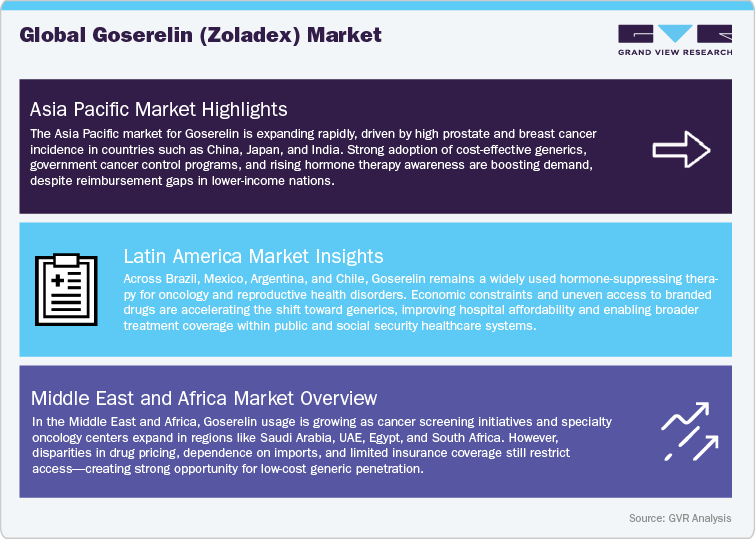
Asia Pacific Goserelin (Zoladex) Market
Asia Pacific is emerging as one of the fastest-growing regions for Goserelin, fueled by rising prostate and breast cancer incidence, expanding oncology infrastructure, and increasing access to hormonal therapies in countries like China, Japan, India, and South Korea. While generic competition is widespread, branded Zoladex continues to command physician preference in urban cancer centers and private healthcare settings. Government oncology programs and rising reimbursement coverage are increasing therapy uptake, though pricing remains a key differentiator. Partnerships with regional distributors, tender participation, and patient-support programs are helping sustain momentum in this expanding cancer therapeutics market.
Latin America Goserelin (Zoladex) Market
Latin America presents growing but cost-sensitive demand for Goserelin, with Brazil, Mexico, and Argentina leading market utilization. Cancer diagnosis rates and hormonal therapy use are rising, yet fragmented reimbursement systems and budget-driven procurement heavily favor generics. Branded Zoladex maintains presence in private oncology practices and specialty hospitals, supported by clinical familiarity and patient-assistance initiatives. Market penetration strategies increasingly rely on tiered pricing, local partnerships, and inclusion within national cancer treatment protocols to overcome affordability barriers and expand access.
Middle East & Africa Goserelin (Zoladex) Market
The Middle East and Africa region is gradually expanding its use of Goserelin as cancer care infrastructure develops in countries such as Saudi Arabia, UAE, and South Africa. Private hospitals and government-funded cancer programs continue to adopt hormonal therapies for prostate and breast cancer, though access varies significantly by country. Premium brands still hold an advantage in specialist settings, while generics dominate broader hospital procurement. Growth is shaped by oncology investments, increasing screening programs, and evolving reimbursement support, positioning the region as a long-term expansion opportunity for both branded and generic goserelin products.
Analyst Perspective
The Goserelin (Zoladex) market is at a critical inflection point as the oncology landscape continues to evolve and generic competition intensifies across global markets. Once a leading hormonal therapy for prostate cancer, breast cancer, and certain gynecologic disorders, Zoladex now competes in a highly commoditized LHRH agonist segment, where treatment decisions are increasingly influenced by cost, formulary access, and emerging alternatives such as oral GnRH antagonists and next-generation hormonal agents. However, despite patent expiry in major markets and the rise of lower-cost generics, Goserelin retains a meaningful role in clinical practice due to its long-established efficacy, physician familiarity, depot-based dosing convenience, and continued inclusion in NCCN, ESMO, and other global oncology guidelines.
Growing cancer incidence, expanding screening initiatives, and wider access to hormonal therapies across Asia Pacific, Latin America, and parts of the Middle East are sustaining global demand, particularly in regions where branded biologics and newer therapies remain cost-prohibitive. In mature markets such as the U.S. and Europe, the competitive landscape is shifting toward value-driven procurement models, hospital tenders, and real-world outcomes evaluation favoring manufacturers that can differentiate through supply consistency, patient support programs, and evidence-based positioning rather than brand alone.
To remain commercially relevant, manufacturers of Goserelin are increasingly focused on lifecycle strategies such as device innovation, regional market expansion, competitive tendering, and partnership-based access models. The future outlook for the Zoladex market will depend on strategic adaptation to pricing pressure, sustained demand in hormone-sensitive cancers, and the ability to defend clinical utility amid growing preference for oral therapies and targeted oncology agents. In this evolving environment, success will hinge on balancing affordability, accessibility, and continued clinical relevance across diverse global care settings.

Case Study (Recent Engagement): Keytruda Patent-Cliff & Price- Erosion Impact Model
PROJECT OBJECTIVE
To evaluate the potential revenue, price, and patient access implications of Keytruda’s 2028 patent cliff, incorporating biosimilar entry dynamics, country-specific adoption curves, and Merck’s lifecycle defense strategies (remarkably the subcutaneous formulation). The goal was to provide the client with a transparent, scenario-based model to anticipate outcomes and inform strategy
GVR SOLUTION
-
Built a bottom-up commodity-flow and analogue-based model, anchored on Merck’s $29.5B Keytruda sales in 2024.
-
Integrated jurisdictional LOE timelines (EU mid-2028, U.S. 2028-2029 pending litigation outcomes).
-
Modeled biosimilar adoption S-curves calibrated to oncology antibody analogues (EU faster via tenders, U.S. slower via contracting).
-
Applied price-erosion benchmarks (EU -15-30% Yr-1, deepening to -45-60% by Yr-3; U.S. -10-25% net decline over same horizon).
-
Layered lifecycle defenses (SC uptake assumptions of 25-40% of innovator units, combo refresh, contracting) to quantify buffers.
-
Delivered outputs as a dynamic Excel scenario tool and a management-ready PPT deck with revenue bridges, sensitivity tornadoes, and SC migration visuals.
IMPACT FOR CLIENT
-
Enabled the client to quantify downside vs. defense-optimized revenue trajectories:
-
Base case: 30-40% global revenue decline by Year-3 post-LOE.
-
Downside: 45-55% decline in tender-heavy markets.
-
Defense-optimized: Contained erosion to ~-20-25% with strong SC adoption.
-
-
Gave the client a clear view of which markets drive early erosion (EU) and where strategic contracting or SC migration can preserve share (U.S.).
-
Equipped decision-makers with a playbook of watch-points (tender concentration, litigation outcomes, SC IP coverage, combo pipeline) to guide commercial strategy.
-
Provided a transparent methodology that could be presented to boards/investors with evidence-backed assumptions
WHY THIS MATTERS
-
Keytruda is the world’s best-selling cancer drug, representing nearly one-third of Merck’s revenue.
-
Patent expiry will reshape both Merck’s earnings profile and global oncology access dynamics.
-
Payers and governments stand to benefit from biosimilar entry through lower costs, but manufacturers need to manage cliff risk while capturing upside from lifecycle innovations.
-
Understanding how quickly revenues erode and how patient access expands post-biosimilar is critical for:
-
Biopharma companies (strategic planning, pipeline prioritization).
-
Investors (valuing Merck’s cash flows beyond 2028).
-
Payers and policymakers (budgeting for oncology drug spend).
-
A robust patent cliff model helps clients navigate the dual challenge of price erosion and patient expansion, ensuring strategies are grounded in real-world benchmarks.
![gvr icn]()
GET A FREE SAMPLE
![gvr icn]()
This FREE sample includes market data points, ranging from trend analyses to market estimates & forecasts. See for yourself.
![gvr icn]()
NEED A CUSTOM REPORT?
We can customize every report - free of charge - including purchasing stand-alone sections or country-level reports, as well as offer affordable discounts for start-ups & universities.
Contact us now to get our best pricing.
![esomar icon]()
ESOMAR certified & member
![ISO]()
ISO Certified
We are GDPR and CCPA compliant! Your transaction & personal information is safe and secure. For more details, please read our privacy policy.





We are committed towards customer satisfaction, and quality service.
Client Testimonials

"The quality of research they have done for us has been excellent..."
ISO Certified