
- Home
- »
- Research
- »
-
Energy Monthly Pricing Data & Analysis – October 2026
![Energy Monthly Price Assessment – October 2026Report]()
Energy Monthly Price Assessment – October 2026
Primary Energy (Coal Products, Fossil Fuels, Nuclear Fuel) and Secondary Energy (Power, Refined Petroleum Products, Secondary Coal Products)
Energy Pricing Intelligence - Executive Summary
Energy markets entered the final quarter of 2026 under renewed geopolitical pressure as attacks on Saudi infrastructure added a fresh risk to already disrupted Middle Eastern trade. Physical crude cargoes continued to trade at a substantial premium to futures, reflecting the cost of securing deliverable barrels rather than a broad shortage of oil. However, October gains were much smaller than in September, as Saudi Arabia lowered its November pricing for Asian buyers and grades loading outside the Strait of Hormuz held close to their previous levels.
Natural gas, liquefied natural gas (LNG), and electricity markets tightened as winter approached. European storage stood at an estimated 74.6% on 20th October, compared with 82.8% a year earlier. The Dutch front month gas contract rose above EUR 90 per MWh for the first time since December 2022. Qatar’s LNG output remained limited, so buyers in Europe and Asia continued to compete for Atlantic cargoes. This lifted export-linked LNG values in the U.S., even though domestic Henry Hub prices stayed close to USD 3 per MMBtu.
Access real-time price trends for 200 commodities across key geographies.
Get Free Access
Explore Grand View Signal with a Free Account.Coal markets moved in opposite directions along the value chain. China’s thermal coal benchmark reached its highest level in about three years in mid-October prompting officials to order the restart of idled mines in Shanxi. The coking coal and coke weakened as steelmakers pushed through two rounds of coke price cuts. Propane recorded the sharpest monthly increase in the energy complex, supported by record U.S. export demand and a higher Saudi contract price.
Key Price Developments & Insights
-
Saudi Arabia’s October propane contract price rose to USD 680 per ton, while U.S. propane exports reached a record high in September as buyers replaced constrained Middle Eastern supply.
-
European gas storage reached an estimated 74.6% on 20th October, about 8 percentage points below the previous year, as the Dutch front-month gas contract briefly traded above EUR 90 per MWh.
-
Indian day-ahead electricity prices averaged about INR 7.7 per kWh in the first ten days of October, compared with INR 2.6 per kWh a year earlier, even as coal stocks at power plants stabilized above 18 million tons.
-
Dalian’s January coking coal contract fell by 5.6% on 19th October to CNY 1,403 per ton after Chinese authorities ordered faster mine restarts in Shanxi, while coke prices were reduced by an estimated CNY 200 to CNY 220 per ton across two rounds since 1st October.
-
Saudi Aramco cut its November Arab Light price for Asian buyers by USD 3 per bbl to a discount of USD 5 per bbl to Oman and Dubai, the widest since June 2020, while raising prices for Northwest Europe by USD 3 per bbl.
Top Performing Energy Commodity
-
Top Mover: Propane
-
Average MoM Growth (top 3 geographies): 19.5%
-
Volatility Level: High
Primary Energy – Pricing Trends, October 2026
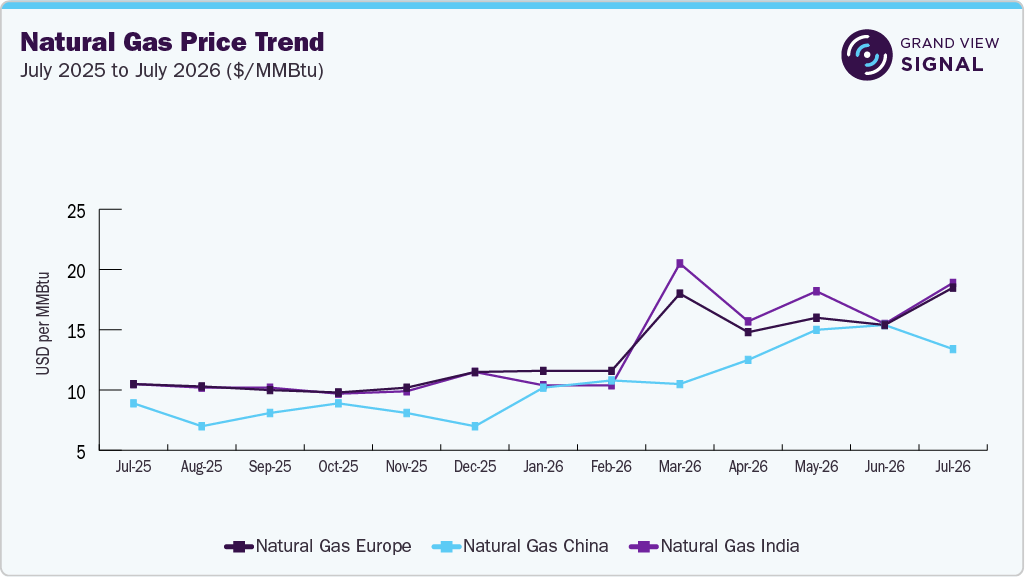
Primary energy prices continued to reflect the gap between physical supply and futures markets. Crude assessments in Europe remained well above front month futures through October, as refiners paid a premium for prompt cargoes that could be delivered without passing through the Strait of Hormuz. Attacks on Aramco’s Dhahran headquarters and on Riyadh in mid-October added to concern over Saudi supply. Nevertheless, Saudi Arabia’s decision to cut November prices for Asian buyers indicated that crude availability in that region was not the immediate constraint. Grades loaded inside the Gulf traded at wider discounts, while Murban, which loads at Fujairah, held close to its September level.
Natural gas conditions diverged further between Europe and the U.S. European prices rose as storage remained below the previous year’s level and LNG supply from Qatar stayed limited. U.S. inventories, by contrast, reached 3,644 billion cubic feet in the week ending 16th October, around 1% above the five-year average. The November Henry Hub contract weakened in late October indicating that strength in international gas prices was placing limited near-term pressure on the domestic market.
Coal markets were shaped largely by Chinese policy. The 5,500 kcal thermal coal benchmark at northern ports reached its highest level in about three years in mid-October. In addition, on 16th October the National Development and Reform Commission (NDRC) and National Energy Administration (NEA) met in Shanxi to accelerate the restart of idle mines. The prospect of additional domestic and Mongolian supply weighed on coking coal futures. Uranium remained stable with long-term contract prices holding near record levels while spot prices moved only marginally.
![Grand View Signal]() Pricing Intelligence Platform
- Real-time price trends and movements for 200 commodities
- Latest and impact-making market drivers
- Geographic coverage across key countries
- Impact and Forecasting based on Geopolitical Scenarios
- Historic pricing data from the past 10 years
Secondary Energy – Pricing Trends, October 2026
Secondary energy prices rose across most fuels in October. Propane posted the strongest increase as U.S. export demand and Saudi Arabia’s higher October contract price lifted linked prices in rest of the world. LNG values also increased with competition for flexible Atlantic cargoes intensifying while Qatar’s export volumes stayed low. In marine fuels, VLSFO and marine gas oil moved higher at both Rotterdam and Fujairah. Fujairah’s September sales recovered only modestly from low levels suggesting that high prices continued to restrict bunker demand.
European electricity prices followed gas higher with the largest monthly increase in the U.K., where gas-fired plants set the price more often. Forward markets also signaled a lasting premium with German baseload power for 2027 at EUR 154.42 per MWh on 23rd October against around EUR 117 per MWh in France, where nuclear output provides greater stability. In China, quasi first grade coke weakened after steelmakers imposed two rounds of price cuts. Coke producers attempted an increase on 21st October. However, domestic mills resisted keeping prices broadly stable at the lower level.
Energy Price Direction, By Geography And Group, November 2026
Geography
Primary Energy
Secondary Energy
China
-0.7%
2.1%
India
Europe
U.S.
Saudi Arabia
UAE
Qatar
Egypt
Morocco
Energy Pricing - Key Drivers
-
Attacks on Saudi infrastructure renewed the crude supply premium - Crude oil markets absorbed a new source of risk in October as Houthi attacks extended to Saudi Arabia’s energy and transport infrastructure. A strike on Riyadh’s international airport, the deadliest attack on the kingdom since 2015. Moreover, a building at Aramco’s headquarters in Dhahran was hit overnight on 14th October further escalated the tensions. These events raised concern over the security of the Red Sea route that Saudi Arabia has relied upon as an alternative to Hormuz. At the same time, Aramco widened its November discount for Asian buyers to protect market share while raising prices for Europe after resuming exports from Yanbu. This created opposing pressures as physical buyers paid more for secure prompt supply despite the futures market continuing to price an ease. The U.S. EIA’s October outlook placed Brent at USD 105 per bbl in the fourth quarter and USD 84 per bbl in 2027.
-
Low storage and limited Qatari supply tightened winter gas balances - European gas buyers entered the heating season with less storage cover than in recent years. Inventories reached an estimated 74.6% on 20th October against 82.8% a year earlier. Supply from Qatar remained the main constraint as attacks on Ras Laffan earlier in the year removed about 17% of the country’s LNG capacity and output stayed very limited. Reports on 7th October indicated that the first North Field East train could be ready to start operations in November. However, production is expected only in the first quarter of 2027. Consequently, Europe and Asia continued to compete for Atlantic cargoes and the Dutch front month contract rose above EUR 90 per MWh on 20th October.
-
Fuel constraints kept electricity prices elevated in India and Europe - Electricity markets showed how fuel security now shapes power prices in both import-dependent and coal-based systems. In India, the day-ahead market averaged about INR 7.7 per kWh in early October, nearly three times the level of a year earlier. Coal supply to power plants improved to 2.49 million tons per day in early October from 2.21 million tons in September, and stocks steadied at about 18.2 million tons on 10th October. However, estimated cover of around six days remained far below the normal benchmark. In Europe, higher gas costs fed directly into wholesale power, and forward prices for 2027. Generation availability rather than installed capacity alone, therefore continued to determine regional price outcomes.
Get in-depth driver impact analysis on energy prices.
Request Access
Access Grand View Signal.-
Chinese mine restarts weakened metallurgical coal and coke prices - Metallurgical coal sentiment weakened as Chinese authorities moved to increase domestic supply. On 16th October, the NDRC and NEA met in Shanxi and instructed the province to bring idled mines back online. The expectations of higher Mongolian deliveries added to the supply outlook. The Dalian January coking coal contract fell by 5.6% on 19th October and Shanxi Anze low-sulfur coking coal stood 5.3% lower than on 18th September. Steelmakers facing thin margins and lower hot metal output bought only as needed and secured two rounds of coke price cuts. Seaborne prices proved steadier with Australian premium hard coking coal only about 2% below its mid-September level on 16th October. The contrasting movements showed that Chinese policy now outweighs seaborne fundamentals in setting regional coking coal and coke prices.
-
Replacement demand lifted propane - Buyers continued to pay a premium for supply that could replace disrupted Gulf cargoes. The U.S. propane exports reached a record 2.2 million b/d in September, led by shipments to Europe. The Gulf Coast export premiums to Mont Belvieu more than doubled to 10.8 cents per gal. Saudi Arabia raised its October propane price by USD 55 per ton, lifting the reference cost for linked purchases in Asia and the Middle East.
Energy - Commodity Coverage
Primary Energy
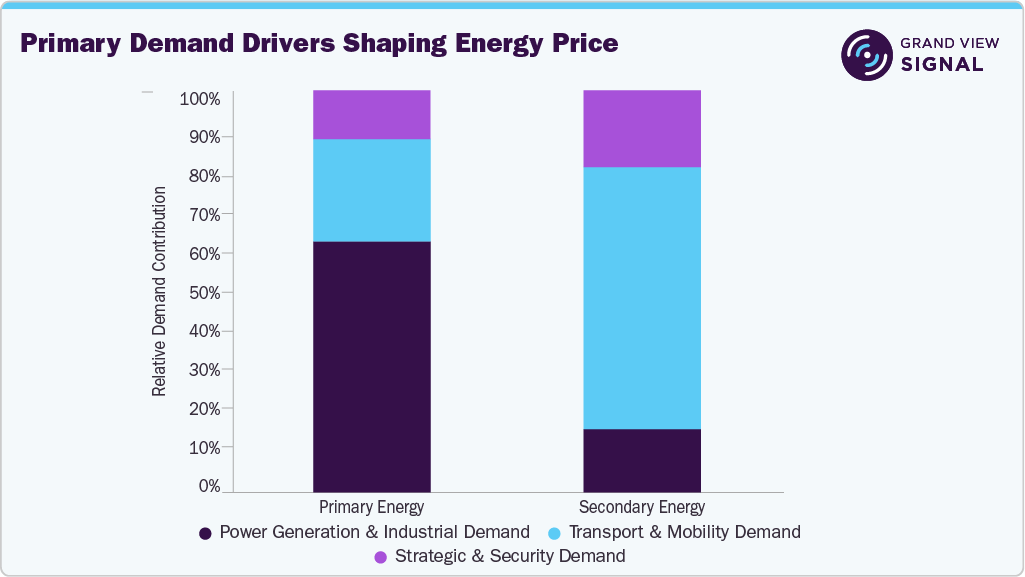
Primary energy covers steam coal, coking coal, hard coking coal, low sulfur coking coal, crude oil, natural gas, and uranium. October conditions reflected renewed attacks on Gulf supply infrastructure, policy-driven changes in Chinese coal supply, divergent gas storage positions, and steady nuclear fuel contracting.
Primary Energy Pricing - Key influencers
-
Gulf security and crude export-route availability
-
Gas storage levels ahead of winter
-
Chinese coal-mine restart policy
-
Steel-sector demand for metallurgical coal
-
Long-term uranium contracting by utilities
Get historical, current, and forecast primary energy price assessments.
Request Access
Access Grand View Signal.Secondary Energy
Secondary energy covers electricity spot prices, propane, LNG, VLSFO, marine gas oil and quasi first grade coke. October conditions reflected record U.S. LPG exports, competition for Atlantic LNG cargoes, gas-linked electricity costs, and lower coke settlements in China.
Secondary Energy Pricing - Key influencers
-
LNG cargo availability from Qatar and the U.S.
-
Gas-fired generation costs and power-plant coal stocks
-
Middle-distillate supply for marine gas oil
-
Steel margins and coke price negotiations
Get historical, current, and forecast secondary energy price assessments.
Request Access
Access Grand View Signal.Regional Commentary
China - China’s coal policy turned toward supply restoration after thermal coal prices reached a three-year high in mid-October. Officials instructed Shanxi to restart idled mines which weighed on coking coal futures and strengthened steelmakers’ position in coke negotiations. Mills secured two rounds of coke price cuts and resisted a proposed increase on 21 October. Fuel costs therefore moved in different directions for power generators and steelmakers.
India - India’s power market remained tight despite easing seasonal demand. Peak demand reached about 260 GW on 5th October before falling to around 234 GW later in the month. The coal deliveries to power plants increased and stocks stabilized above 18 million tons. Separately, the government raised the ceiling price for gas from deepwater and high-pressure fields to USD 9.9 per MMBtu for October to March while the price cap for older fields remained at USD 7.0 per MMBtu.
Europe - European energy costs rose as gas storage remained below last year’s level ahead of winter. The Dutch front-month gas contract moved above EUR 90 per MWh on 20th October and higher gas costs passed directly into electricity prices, particularly in the U.K. and Germany. France remained comparatively insulated by nuclear output with its 2027 baseload power price trading well below Germany’s.
U.S. - U.S. energy markets served as a key source of replacement supply. Propane exports reached a record 2.2 million b/d in September while LNG export values tracked European prices rather than domestic gas costs. Gas inventories stood at 3,644 billion cubic feet on 16th October. Separately, a USD 120 billion framework with South Korea announced on 30th September supported expectations for new reactor construction and long-term uranium demand.
Saudi Arabia - Saudi Arabia faced direct attacks on energy and transport infrastructure in October, including a strike on Aramco’s Dhahran headquarters and a deadly attack on Riyadh’s airport. Despite the heightened risk, Aramco cut November crude prices for Asian buyers to the widest discount since 2020, while increasing prices for Europe. The October propane contract price also rose by USD 55 per ton, increasing costs for linked regional purchases.
Get region-wise energy price assessment.
Request Access
Access Grand View Signal.UAE - The UAE’s bunker market showed a partial recovery at Fujairah. September sales increased by 5% to 231,000 tons, with VLSFO down 3%. However, Fujairah VLSFO remained above Rotterdam in early October reflecting the cost of supplying fuel into a disrupted region. Murban crude which loads outside Hormuz held near its September level.
Egypt - Egypt maintained administered fuel prices despite higher international costs. On 15th October, the automatic pricing committee kept gasoline and diesel prices unchanged after reviewing Brent prices and exchange-rate movements for the July–September quarter. Industrial gas prices remained at the levels introduced in May, leaving rising LNG import costs to be absorbed by the state rather than passed directly to consumers.
Morocco - Morocco’s fuel market showed early signs of relief after a prolonged series of increases. Diesel prices were cut by MAD 0.20 per liter from mid-October, following six increases totaling about MAD 3.54 per liter since mid-July. The adjustment reflected changes in international diesel supply, including the return of Russian exports. A tanker carrying about 40,000 tons of Russian low-sulfur diesel, loaded on 13th October, was reported bound for Morocco.
Qatar - Qatar’s LNG exports remained constrained by damage and shipping restrictions. Attacks earlier in the year removed about 17% of Ras Laffan’s capacity, and reported output stayed very limited in October. The first North Field East train may be ready to start operations in November, but production is expected only in early 2027. Qatar Land crude, which loads inside the Gulf, also traded at a wider discount to grades loaded outside Hormuz.
Analyst Commentary
“October showed that energy prices are being set less by the volume of supply available and more by the security of the routes that deliver it. Attacks on Saudi infrastructure, limited Qatari LNG output, and low European gas storage all increased the cost of dependable supply. The Chinese mine restarts demonstrated how quickly policy can soften domestic coal and coke prices. Futures markets already expect crude to ease over the coming months. However, that outcome depends on Gulf shipping returning to normal. Until then, buyers of gas, LNG, propane, and distillates are likely to face elevated winter costs and wide regional price differences.”
Senior Energy Analyst
Frequently Asked Questions
Propane emerged as the top-performing energy commodity outperforming other energy segments amid record U.S. export demand.
The U.S. registered the strongest performance in propane prices in October 2026.
Propane prices in the U.S. increased by over 21% on a MoM basis, as European and Asian buyers turned to U.S. cargoes to replace constrained Middle Eastern supply.
Price movement remained highly volatile with two consecutive monthly gains of more than 21% lifting U.S. propane prices by almost 50% between August and October.
![Key questions answered by the report]()
-



Coverage
Data Depth
200
Commodities
Multiple
Geographies
6 Months
Forecast
10 Years
Historic Data
Get Free Newsletter
This free newsletter offers a hint of our pricing commodity coverage encompassing executive summary, drivers, and scope of research.
Get FREE NewsletterTrusted pricing insights & Intelligence
See how Grand View Signal can support strategy and procurement teams, and why industry leaders rely on Grand View Research. Request a free demo or get your free access and explore our pricing intelligence platform.


