
- Home
- »
- Research
- »
-
Ferrous Metals Monthly Pricing Data & Analysis – September 2026
![Ferrous Metals Monthly Price Assessment – September 2026Report]()
Ferrous Metals Monthly Price Assessment – September 2026
Iron (Iron Ore 58% Fe, 61% Fe, 62% Fe, 65% Fe, and more), Steel (HRC, CRC, Plate, Rebar, Sections, Billets, and more), Steel Scrap (Shredded Scrap, Heavy Scrap, Cutting Scrap, Light New Scrap, and more)
Ferrous Metals Pricing Intelligence - Executive Summary
Ferrous metals followed different paths during September 2026. Iron ore rose above USD 100 per ton early in the month as Chinese mills prepared for holiday-related restocking, but the increase did not hold. The 62% Fe benchmark delivered to Qingdao had fallen below USD 100 per ton by 25 September. Weak steelmaker margins, slower ore purchasing after restocking, and rising port inventories limited demand for seaborne material. Lower-grade and higher-grade ores remained exposed to the same changes in mill operating rates, although their individual prices also depended on grade premiums and the economics of blending.
Steel finished products condition diverged by region. In China, the expected seasonal recovery in construction demand was weaker than local mills had anticipated. Producers reduced output, yet their finished-steel stocks rose during the middle of September. Domestic HRC and rebar prices on 24 September were below their end-August levels, while exports helped absorb part of the production that the local market could not take. India moved in the opposite direction: HRC strengthened as coking coal costs rose and maintenance reduced spot availability. Import competition remained a constraint on further increases.
Access real-time price trends for 200 commodities across key geographies.
Get Free Access
Explore Grand View Signal with a Free Account.Steel scrap buying conditions firmed selectively during September. Higher imported offers and increases in some domestic mill purchase prices supported that assessment. However, mills still had to weigh scrap costs against the prices they could obtain for rebar and billet. The EU’s tighter steel import quota system continued to shape sourcing decisions, while U.S. raw-steel production remained above its year-earlier level.
Key Price Developments & Insights
-
Iron ore lost its early-month gains. Chinese pre-holiday restocking supported prices at the start of September, but softer demand from mills and higher port stocks weighed on the 62% Fe benchmark later in the month.
-
China’s finished-steel demand disappointed during its usual September buying season. Member mills reduced crude-steel output in mid-September, but their finished-steel inventories still rose. Domestic HRC and rebar assessments were lower than at the end of August.
-
India’s HRC market strengthened on cost and availability pressures. Higher coking coal costs, maintenance at major mills, and lean distributor stocks supported domestic offers. Rising imports limited the scope for producers to pass through every cost increase.
-
Scrap became firmer, though finished steel economics remained decisive. September transactions showed stronger imported scrap offers, and several domestic mills raised purchase prices. The strength of rebar and billet sales determined how far mills could follow those increases.
-
Trade rules continued to affect steel flows. EU buyers had to consider product-specific quota availability and the 50% duty on imports above quota, while Indian mills faced growing finished steel imports despite existing protective measures.
Top Performing Ferrous Metal Commodity
-
Top Mover: Steel Scrap - Generic
-
Average MoM Growth (top 3 geographies): 4.3%
-
Volatility Level: Moderate

Iron – Pricing Trends, September 2026
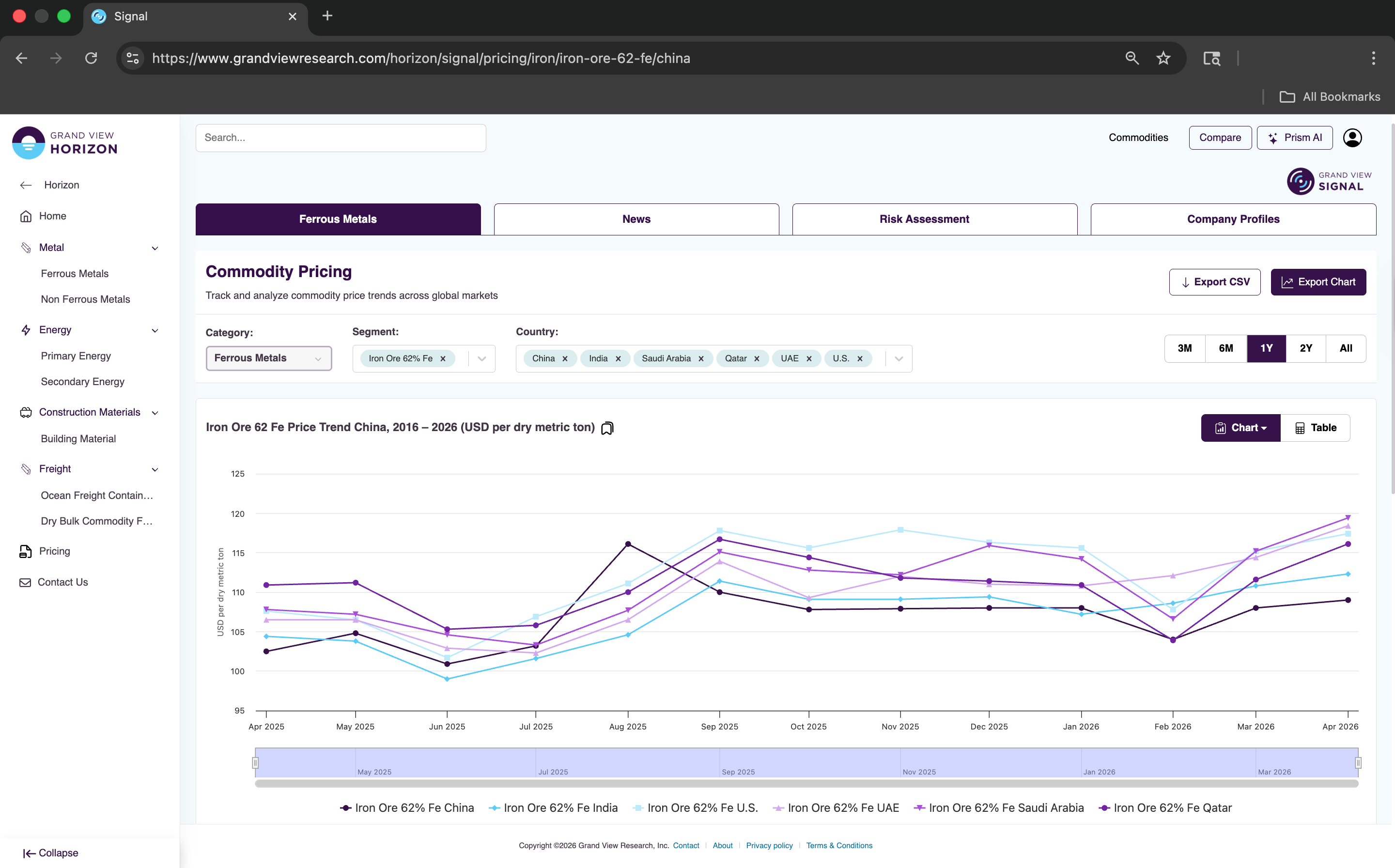
The iron category covers iron ore 58% Fe, 61% Fe, 62% Fe, 65% Fe and foundry pig iron. Iron ore prices began September with support from Chinese mills replenishing raw materials before the late-September and early-October holidays. The 62% Fe benchmark delivered to Qingdao was above USD 100 per ton on 4 September. That strength proved temporary. By 25 September, the same benchmark stood at USD 96.6 per ton as most pre-holiday purchasing had been completed, and port inventories had increased. The pattern showed that restocking could lift near-term prices but could not offset weak underlying steel demand through late September.
Blast-furnace operating decisions became more important later in September. China’s major mills lowered daily pig iron output during 11–20 September compared with early September. When hot-metal production slows, mills require less iron ore even if seaborne shipments remain available. Pig iron pricing was also sensitive to coke costs and the price of alternative metallic inputs. These conditions limited the scope for a sustained rise across the iron group.
Steel – Pricing Trends, September 2026
China’s steel market failed to develop a broad September recovery. Demand for construction products remained weak, while export sales were insufficient to clear domestic material at stronger prices. Among mills monitored by the China Iron and Steel Association, finished-steel inventories reached 17.08 million tons on 20 September, up 5.1% from the end of August, even after reductions in output. On 24 September, domestic HRC was assessed at CNY 3,320 per ton and rebar at CNY 3,090 per ton, respectively CNY 80 and CNY 30 below end-August levels. The weaker HRC result also shows that flat steel was not insulated from the slowdown.
India’s flat-steel market was firmer. HRC prices had risen substantially between August and early September as international coking coal became more expensive, maintenance tightened spot supply, and distributors held lean inventories. Expectations of stronger post-monsoon infrastructure and automotive procurement supported sentiment, but those expectations should be distinguished from completed September consumption. Imports, particularly from China, remained an alternative for some buyers and restrained domestic mills’ pricing power. In Europe, quota availability and origin documentation remained important purchasing considerations under the steel regulation in force since July.
![Grand View Signal]() Pricing Intelligence Platform
Pricing Intelligence Platform- Real-time price trends and movements for 200 commodities
- Latest and impact-making market drivers
- Geographic coverage across key countries
- Impact and Forecasting based on Geopolitical Scenarios
- Historic pricing data from the past 10 years
Steel Scrap Segment – Pricing Trends, September 2026
Scrap markets strengthened selectively during September. Imported scrap offers moved higher around the middle of the month, while limited availability of competing billet and pig iron supported some mills’ interest in scrap. Some mills also raised domestic scrap purchase prices late in September. Domestic mill purchases and imported offers refer to different grades and delivery terms, so their movements should be assessed separately.
The principal limit on further gains was the spread between scrap costs and finished-steel sales. September’s firmer scrap indications therefore did not establish that every shredded, heavy melting, demolition, cutting, or stainless scrap grade rose by the same amount. Grade, location, collection costs, and the availability of alternative metallic inputs continued to determine individual transactions.
Ferrous Metals Price Direction, By Geography And Metal Group, October 2026
Geography
Iron
Steel
Steel Scrap
China
-1.4%
-0.1%
-0.1%
India
Europe
U.S.
Saudi Arabia
UAE
Qatar
Egypt
Morocco
Ferrous Metals Pricing - Key Drivers
-
China’s seasonal steel demand recovered less than mills expected - September is normally a stronger period for Chinese steel consumption after the summer slowdown, but this year the improvement was too limited to absorb available output. Construction demand remained weak, restricting rebar sales, while orders for HRC were also below the level seen a year earlier. Mills reduced production during the middle of the month: average daily crude-steel output among producers monitored by the China Iron and Steel Association was slightly below the opening ten days of September. Even so, finished-steel stocks at those mills reached 17.08 million tons on 20 September, up 5.1% from the end of August. This combination of lower production and higher stocks indicates that demand weakened faster than mills adjusted supply. Exports helped move some material outside the domestic market but did not restore pricing power at home. With inventories elevated before the National Day holiday, buyers had little reason to accelerate purchases of rebar or flat steel.
-
Iron ore restocking offered only temporary price support - Chinese mills replenished iron ore early in September ahead of holiday-related disruption to trading and deliveries. That buying helped lift the 62% Fe benchmark delivered to Qingdao above USD 100 per ton at the start of the month. The support faded once most mills had secured their immediate requirements. Finished-steel sales remained weaker than expected, while rising stocks at ports gave buyers more flexibility over the timing of further purchases. Steelmaker margins also came under pressure from higher coking coal and coke costs, making mills more cautious about paying higher ore prices. By 25 September, the 62% Fe benchmark had fallen to USD 96.6 per ton. The reversal shows why a short period of raw-material restocking should not be treated as evidence of a lasting improvement in steel demand. Further ore buying remained tied to blast-furnace operating rates, inventory positions, and the price mills could obtain for finished steel.
-
Higher coking coal costs and tighter availability supported Indian steel - Indian steel producers faced a more expensive production environment in September as international coking coal costs increased. This mattered especially for integrated mills that rely on imported metallurgical coal to operate blast furnaces. At the same time, planned maintenance at major steelworks reduced spot availability, and distributors entered the month with relatively lean inventories. These supply conditions helped producers raise HRC offers, while expectations of stronger infrastructure and automotive procurement after the monsoon supported buyer interest. HRC had already risen markedly between August and early September. However, mills could not assume that every increase in raw material costs would be recovered through finished-steel prices. Imports continued to grow, with Chinese material accounting for a substantial share of India’s incoming finished steel. Buyers’ ability to consider imported alternatives placed a limit on domestic pricing power, even as coal costs and restricted local supply supported the market.
Get in-depth driver impact analysis on ferrous metal prices.
Request Free Access
Access Grand View Signal.-
EU import quotas changed steel purchasing decisions - Europe’s steel import regulation continued to affect purchasing during September. The system allows a defined volume of steel to enter duty-free, with a 50% duty applying after the relevant quota is exhausted. Consequently, the cost and practicality of an import depend on its product category, origin, and remaining quota rather than on the overseas offer price alone. Importers had to check eligibility and allocation before committing to deliveries, while domestic mills faced a more protected market for products exposed to excess imports. The policy did not, however, create steel demand where end-user consumption was weak. Its immediate effect on prices could differ between flat products, long products, and other covered categories, depending on domestic availability and the quota position. On 28 September, the European Commission opened a consultation to gather evidence from producers, steel users, and exporters about how the new system was functioning. This reinforced the need to separate the regulation’s effect on sourcing from underlying demand.
-
Turkish scrap buyers balanced firmer feedstock costs against steel sales - Türkiye remained an important reference for internationally traded ferrous scrap in September. Imported scrap offers became firmer during the month, while limited availability of some alternative metallic inputs increased mills’ interest in securing scrap. Some domestic mills also raised their purchase prices late in September. These developments provided support for the raw material market, but they did not give suppliers unlimited scope to increase offers. A steelmaker purchasing more expensive scrap must still sell rebar or billet at a price that covers conversion costs, energy, and freight. When finished-steel orders are slow, mills can limit purchases to immediate production needs or delay bookings while they test the market. This relationship between feedstock costs and finished-steel realizations explains why scrap strength was selective rather than uniform across all grades and locations. Shredded, heavy melting, demolition, and stainless scrap consequently remained subject to their own grade specifications, local supply conditions, and buyer requirements.

Ferrous Metals - Commodity Coverage
Iron
The iron group covers iron ore at 58%, 61%, 62%, and 65% Fe, along with foundry pig iron. September’s main influence was the change from Chinese pre-holiday ore restocking to more cautious purchases as steel margins weakened. The 62% Fe benchmark provides the clearest observed monthly example; changes in other grades also depend on their quality premiums and the needs of individual mills.
Iron Pricing - Key influencers
-
Chinese hot-metal output
-
Completed holiday restocking
-
Port inventory levels
-
Steelmaker margins
-
Ore-grade premiums and blending requirements
Get historical, current, and forecast iron price assessments.
Request Free Access
Access Grand View Signal.Steel
The steel category covers HRC, CRC, plate, rebar, billets, structural sections, pipes and other finished and semi-finished products. September conditions varied by market. Chinese HRC and rebar weakened as stocks accumulated at mills. Indian HRC strengthened under cost and supply pressure. European import quotas affected sourcing, while U.S. crude-steel production remained above its year-earlier level. These differences do not establish one common price direction for every steel product or geography.
Steel Pricing - Key influencers
-
End-use demand and inventory in China
-
Coking coal costs and imports in India
-
EU quota availability
-
U.S. mill operating rates
-
Project-led demand for long products and pipes
Get historical, current, and forecast steel price assessments.
Request Free Access
Access Grand View Signal.Steel Scrap
The steel scrap category includes shredded scrap, heavy melting scrap, demolition scrap, stainless scrap, shipbreaking scrap and other ferrous scrap grades. Turkish purchasing provided an important international reference during September, but the observed movement differed by grade and delivery basis. Mills’ ability to pay more depended on finished-steel orders and the cost of billet, pig iron, and other metallic inputs.
Steel Scrap Pricing - Key influencers
-
Turkish mill procurement
-
Rebar and billet margins
-
Local scrap collection
-
Grade specifications
-
Competition from alternative metallics
Get historical, current, and forecast steel scrap price assessments.
Request Free Access
Access Grand View Signal.Regional Commentary
China - Chinese mills entered September expecting a seasonal improvement in steel demand, but the increase was weaker than anticipated. Output cuts did not prevent inventories at major mills from rising by 20 September. Rebar remained exposed to soft construction consumption, while HRC also lost ground from its end-August assessment despite support from exports. Iron ore briefly benefited from pre-holiday buying before easing as mills completed procurement and reassessed their margins. The combination of soft domestic sales and accumulated finished-steel stocks kept the ferrous market under pressure near month-end.
India - India’s HRC market strengthened into September as mills faced more expensive coking coal, maintenance-related limits on spot supply, and lean distributor inventories. Prospective post-monsoon infrastructure and automotive orders added support to offers, although the actual pace of procurement remained important. Imports continued to rise despite trade measures, providing buyers with an alternative to domestic material. India’s steel policy discussions also drew attention to the longer-term need for iron ore and coking coal, but those future capacity plans were separate from September’s immediate price movement.
Europe - European buyers operated within a steel import regime that made quota availability, product category, and origin central to purchasing decisions. Imports above the relevant allocation faced a 50% duty. The Commission’s late-September consultation acknowledged that the effect on producers and steel users still required monitoring. Protection against excess imports supported domestic suppliers’ position, but the measure did not remove uncertainty over underlying consumption.
U.S. - U.S. steel production remained comparatively firm. Raw-steel output in the week ending 26 September was 1.845 million net tons, 3.9% higher than in the corresponding 2025 week, at a capability utilization rate of 80.5%. Adjusted year-to-date production was also ahead of the prior year. These figures indicate continued mill activity, although production alone does not establish that every finished-steel grade increased in price. The market remained sensitive to domestic orders, imported steel availability, and the cost of scrap and other inputs.
Saudi Arabia - Saudi long-steel pricing was selective in September. A major domestic producer kept its rebar offer unchanged for September production while raising certain wire rod offers. The distinction matters: it points to different conditions by product rather than a broad increase across construction steel. Infrastructure, industrial, and energy projects continued to provide an underlying demand channel for rebar, sections, and pipe, but September offer decisions also reflected buyers’ resistance and the costs of metallic inputs.
Get region-wise ferrous metal price assessment.
Request Free Access
Access Grand View Signal.UAE - The UAE retained a project-led base for long-steel consumption, including locally produced rebar supplied to Etihad Rail stations. That project evidence did not translate into uniformly stronger spot pricing. A September market assessment placed UAE rebar slightly below its previous monthly level and reported buyer resistance to higher offers. The market therefore combined visible infrastructure demand with competitive pressure on current rebar transactions. Producers’ ability to hold offers depended on the pace of project call-offs and the availability of alternative supply.
Egypt - Egyptian rebar prices firmed in late September as the market weighed changing input costs and the effect of safeguard duties on imported billets. Billet is essential feedstock for rolling mills that do not produce enough of their own semi-finished steel. A rise in its landed cost can therefore compress rolling margins or lead to higher rebar offers. Producer quotations on 24 September varied substantially, showing that the effect was not identical across integrated and billet-dependent operations. The risk to smaller rolling mills remained a material part of the market assessment.
Morocco - Morocco’s construction programme continued to provide a prospective outlet for rebar, structural steel, and fabricated products. Work was under way at the Hassan II stadium site near Casablanca, while an external-works tender linked to the development closed during September. The tender and visible site activity support the existence of a project pipeline but do not establish the volume of steel purchased during the month or a national steel price increase. Actual ferrous demand will depend on construction schedules, specifications, and the timing of contract awards.
Analyst Commentary
“September’s ferrous market was shaped by a clear difference between temporary raw-material buying and sustained finished-steel demand. Chinese mills restocked iron ore ahead of holidays, but weaker steel sales and rising finished-product inventories prevented the ore increase from lasting. India’s HRC market strengthened as coking coal costs rose and spot supply tightened, while imports limited further pricing power. Scrap offers became firmer, subject to mills’ rebar and billet margins. In Europe, import quotas changed sourcing decisions without resolving weak underlying consumption. Across the sector, the decisive question remained whether end-user orders could absorb production at prices sufficient to cover higher inputs.”
Senior Metals Analyst
Frequently Asked Questions
Steel scrap - generic emerged as the top-performing ferrous metal commodity, outperforming other ferrous products on the back of stronger price momentum.
India, Europe, and the U.S. registered strongest performance in steel scrap - generic prices in September 2026.
Steel scrap - generic prices in the U.S. increased by 7% on a MoM basis, indicating that local mill demand is picking up ahead of holiday seasons.
Price movement remained stable with recorded an average of 2.1% growth in the last three months.
![Key questions answered by the report]()
-



Coverage
Data Depth
200
Commodities
Multiple
Geographies
6 Months
Forecast
10 Years
Historic Data
Get Free Newsletter
This free newsletter offers a hint of our pricing commodity coverage encompassing executive summary, drivers, and scope of research.
Get FREE NewsletterTrusted pricing insights & Intelligence
See how Grand View Signal can support strategy and procurement teams, and why industry leaders rely on Grand View Research. Request a free demo or get your free access and explore our pricing intelligence platform.


