Packaging Solutions Industry Trends - 2026 And Beyond
Explore all 6 industry trends
Use the contents below to jump directly to the trend relevant to your research.
Trends Shaping New Foundations for The Packaging Solutions Industry
- The packaging currently being produced places importance on sustainability, on reducing the amount of materials used, on recyclable or renewable materials, and on being designed with circularity.
- Packaging solutions made from a single material or refillable are being developed, and unconventional packaging lowers consumption and transportation costs without having to sacrifice product protection, durability, and packaging performance.
- Digital identification, traceability, the use of AI and automation in the production of packaging are all employed in order to reduce waste, boost recycling, and produce packaging in the most efficient way.
- The application of mono-materials, paper-based packaging, and advanced coatings improves protection, material efficiency, and recyclability in various packaging solution industries.
- The introduction of automatically controlled, properly sized solutions leads to a reduction in the overuse of materials, improves the protection that packaging provides, optimizes the use of space, and boosts the efficiency of warehouses and the supply chain.
Introduction
Packaging solutions are evolving from individual packages to complete systems. A packaging solution must fulfill several requirements, including product protection, efficient use of materials, environmental goals, longer shelf life of the product, and efficient production. In addition, providing product information and withstanding transportation and distribution conditions may be necessary for improved packaging. This shifts the manufacturer's focus from packaging as a physical container to packaging as a complete solution for specific business and product requirements.
The expansion of e-commerce and delivery platforms is a major driver of packaging solutions industry growth, increasing the demand for efficient packaging. Many companies are developing packaging solutions that are efficient, cost-effective, durable, and recyclable. The packaging materials are becoming stronger, lighter, and more automated. Thus, packaging solutions are becoming more functional. This trend supports a wide product portfolio and supply chain with customization and responsiveness.
The following advancements demonstrate that packaging solutions are more intelligent, lightweight, sustainable, technologically sophisticated, and tightly linked with contemporary production and logistical processes.
Section 1: Circularity Becomes a Solution-Design Requirement
01Sustainable & Circular Packaging Solutions: Moving from Commitments to Integrated Designs
Packaging sustainability is considered in the design rather than as an afterthought in the product’s life cycle. The designers work to use less raw material and to use recyclable or renewable materials. In addition, the product is designed to improve recyclability. This shift is also influencing the way in which packaging is assessed, with all the various aspects, including the choice of materials, the need to protect the product, how it is used by consumers, and the methods of its collection, sorting, and recycling, being taken into account together.
The regulatory environment is reinforcing this approach. The EU’s PPWR, which began applying in August 2026, establishes an integrated structure planned to reduce packaging waste, strengthen the secondary raw materials market, and support a circular economy. The Ellen MacArthur Foundation’s Global Commitment report 2025 likewise shows that more than 1,200 organizations are working toward a shared circular-economy vision for plastics, with participating companies representing around 20% of plastic packaging produced globally.
The scale of packaging waste provides further context for these changes. Eurostat reported that the EU generated 79.7 million tons of packaging waste in 2023, equivalent to 177.8 kg per inhabitant. Plastic accounted for 19.8% of the total, while the recycling rate for plastic packaging waste reached 42.1%. These figures illustrate the continuing need for packaging designs that reduce material use and support collection, sorting, and recycling.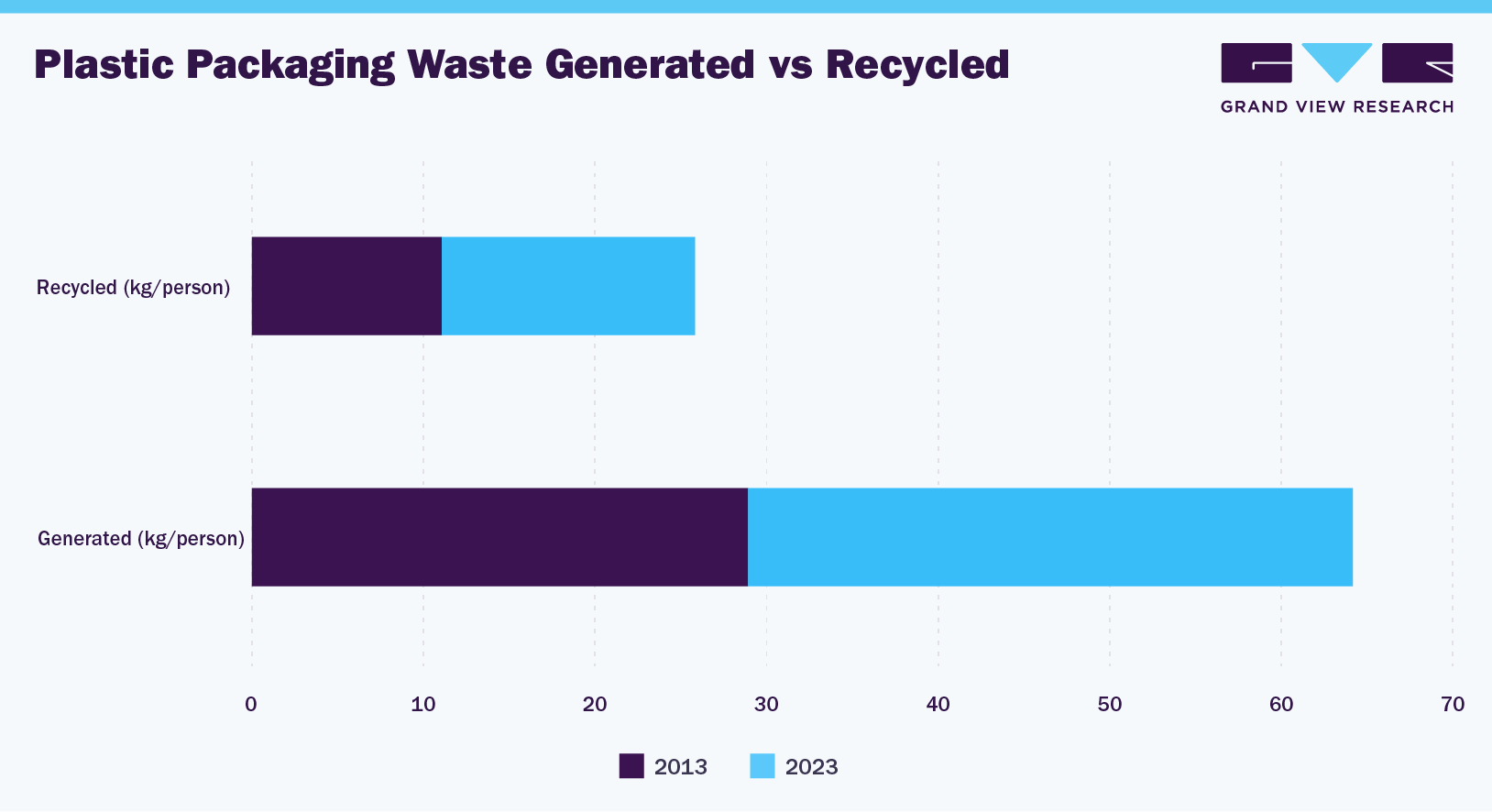
“The new Packaging and Packaging Waste Regulation is an investment in Europe’s future: it will help reduce waste, increase recycling, make food-contact packaging safer for the consumers by limiting harmful substances such as PFAS, and reduce our dependence on virgin raw materials. These are essential steps towards a truly circular economy.”
02Lightweight & High-Performance Packaging Solutions: Balancing Protection with Material Reduction
Packaging manufacturers are increasingly using lightweighting to reduce the amount of material used to package a product to deliver good protection. High-quality packaging also provides protection against impact and keeps products fresh by protecting them against moisture, oxygen, and temperature changes.
Mondi’s mono-material barrier solutions use PE or PP-based thermoplastic polymers to protect products from oxygen, water, light, and mineral oil. These materials create fully sealed, customized lightweight packaging with advanced engineering for consumers.
In a similar way, Amcor launched a new refill pouch for laundry and cleaning products, providing a 2-liter pouch that uses up to 80% less plastic than the comparable bottle configuration. The development of mono-material packaging is shifting towards lightweighting.
“From the very beginning, we have used 100% recycled PET bottles, saving raw materials that would otherwise be extracted from nature anew every year.”
These barrier properties are essential for the safe transportation of products in an e-commerce environment, impacting the whole supply chain. Reduced material consumption improves transport efficiency, while excessive reduction can damage the product. The balanced design format and optimized packaging solutions support material efficiency, barrier protection, convenience, and logistics performance.
Section 2: Packaging Gains a Digital Layer, Turning Packaging Production into a Data-Driven Process
03Smart, Connected & Automated Packaging Solutions: How AI and Digital Solutions Are Transforming Production, Data & Quality Management
Track your products with Smart Packaging. Products with QR codes, RFID tags, or digital identification are less likely to be thrown away due to a lack of information about the product. A product goes through several hands and can stay in use for a long time. With digital systems between the manufacturer and supply chain, consumer, and the recycling system, the product is connected throughout its lifecycle, reducing wastage and ensuring proper recycling of the product.
A milestone was witnessed in April 2025, when Digimarc announced the global implementation of GS1 Digital Link-enabled 2D barcodes with Unilever. The announcement helps Unilever prepare for the larger shift toward 2D barcodes and can deliver a digital gateway to product information. This demonstrates that the printed surface of packaging serves as a gateway to information that can be updated or expanded without changing the physical pack.
Digital identification is also being used in recycling. In April 2025, Digimarc reported that industrial-scale HolyGrail 2.0 trials in Germany had validated digital watermarking for automated sorting of post-consumer rigid plastic packaging. Throughout the trial, the company reported over 5.66 million detections across 5,949 SKUs, with detection accuracy consistently exceeding 90%. The invention is significant not just for consumer interaction, but also for allowing waste-management systems to receive more specific information about package materials and formats. These results provide measurable evidence of digital watermarking performance under industrial sorting conditions and its potential role in identifying packaging for recycling.
Digital Watermark Sorting: Trial Results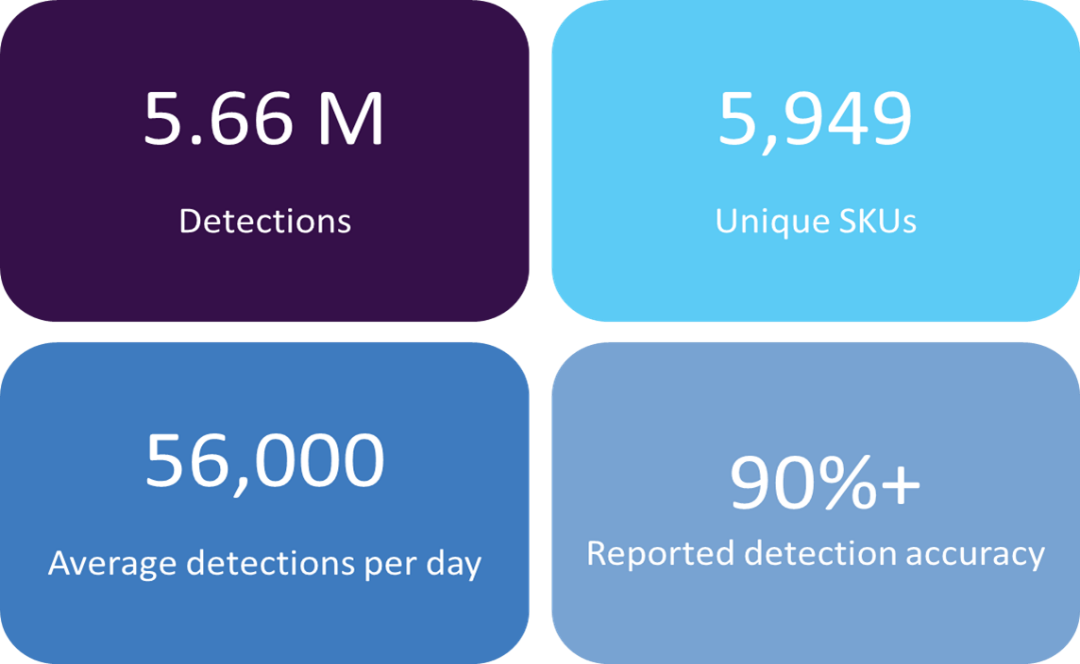
“This milestone isn’t just about increasing the quality and quantity of plastic recyclates, it’s about delivering actionable data that benefits everyone in the value chain”
Automation and artificial intelligence (AI) are improving packaging production and quality control. HP's Indigo V12 digital press uses automatic color adjustment, ink changes, and workflow automation to make large quantities of labels. HP also introduced its Nio platform as an AI-powered system that provides data insights and automates the whole printing process. Its AAA 2.0 technology detects print flaws using AI and supports correction measures.
Smart packaging solutions are becoming more versatile. These changes allow packaging to combine data, production, quality, and disposal management. Packaging suppliers now offer more than just basic materials, including digital labels, connected processes, automated production, and smart quality checks. This change helps brands handle shorter production runs, more product options, customized packaging, and higher needs for tracking and efficiency, supporting consistent packaging solutions industry growth.
04E-commerce, Logistics & Supply Chain Packaging Solutions Are Becoming More Customized
Innovative e-commerce packaging is now frequently subjected to automated processing, sorting, rehandling, shaking, dropping, piling, and transportation. In order to protect goods, to use materials reasonably, and to fully exploit storage and transportation space, packaging must be designed to meet these new demands. In February 2025, Packsize introduced the X6 automated system that produces up to 1,500 boxes per hour and creates box sizes made to fit each order. The system works with warehouse automation and cuts down on extra cardboard and filler material.
Automation is also getting more involved with packaging work and supply-chain management. In August 2025, Packsize teamed up with Bastian Solutions to provide automated packaging for e-commerce, retail, and manufacturing. They mentioned better order processing, smoother operations, and less packaging waste as key benefits of integrating packaging automation with warehouse technology.
“Together, we’re delivering systems that reduce waste, optimize throughput and adapt to the evolving needs of modern fulfillment.”
From simple boxes to custom packaging solutions for online shopping, automation is adapted to the supply chain. More and more packaging is designed as custom packaging in respect of the article, the order, the order preparation, the shipping, and the end delivery. This increases opportunities for custom packaging systems that use less material, improve warehouse efficiency, use shipping space better, and protect products more during delivery.
Section 3: Advanced Materials Expand the Ability of Package Offerings
05Advanced Material & Flexible Packaging Solutions: Combining Barrier, Convenience, and Circularity
Packaging companies are currently designing new material structures in such a way that they offer good protection for the products while at the same time enhancing recyclability and material efficiency. Those involved are designing flexible packaging, mono-material films, high-barrier structures, and advanced coatings to protect against oxygen, moisture, light, and other factors.
In February 2025, Mondi and Sherwin-Williams introduced a recyclable spouted pouch made from one material for use with concentrated paint; this new type of pouch is a replacement for the standard 5-liter paint tub and enables customers to mix the paint in a reusable container.
Traditional packaging designs are being changed due to advancements in materials. In December 2025, Tetra Pak and García Carrión launched a juice carton that has a paper-based barrier rather than the normal aluminum foil; the carton consists of over 80% paper and yet is still able to keep out air, light, moisture, and bacteria.
These developments reflect one of the more technical packaging solutions industry trends wherein packaging companies are redesigning material layers instead of only changing the packaging formats. The focus is on designing packaging structures that combine performance, convenience, material usage, and recyclability for each product.
06Packaging Solutions Industry Outlook: Packaging Solutions Becoming Integrated Systems
The packaging solutions industry outlook points to packaging that is more material-efficient, protective, recyclable, digitally networked, automatable, and ready for dispatch. They comprise materials, designs, technologies, and production methods for logistics solutions.
For manufacturers and consumers, the focus is shifting from simply selecting a package to a solution that covers everything from production and protection to delivery, use, and disposal. Taken together, these packaging solutions industry trends show that the package is no longer just a container. It is a system designed across its full lifecycle.
Last updated:


