
- Home
- »
- Nanoparticles
- »
-
2D Materials Beyond Graphene Market Report, 2026-2033GVR Report cover

2D Materials Beyond Graphene Market (2026 - 2033)
Size, Share & Trends Analysis Report By End Use (Electronics & Electrical, Energy & Power, Aerospace & Defense, Automotive), By Material (TMDs, h-BN, MXenes), By Region, And Segment Forecasts
Market Size, 2025
$3.1BMarket Estimate, 2026
$3.2BMarket Forecast, 2033
$3.9BCAGR, 2026–2033
3.2%2D Materials Beyond Graphene Market Summary
The global 2D materials beyond graphene market size was valued at USD 3.1 billion in 2025 and is projected to grow from USD 3.2 billion in 2026 to USD 3.9 billion by 2033, growing at a CAGR of 3.2% from 2026 to 2033. North America dominated the market with the largest revenue share of 33.3% in 2025. Materials such as molybdenum disulfide (MoS₂), hexagonal boron nitride (h-BN), and transition metal dichalcogenides (TMDs) are being widely explored for their potential in next-generation electronics, flexible displays, and photonic devices.
 Source: Grand View Research, IR Documents, Primary Interviews, Paid DatabasesTo learn more about this report,
 Download Free Sample Report
 Key Market Trends & Insights
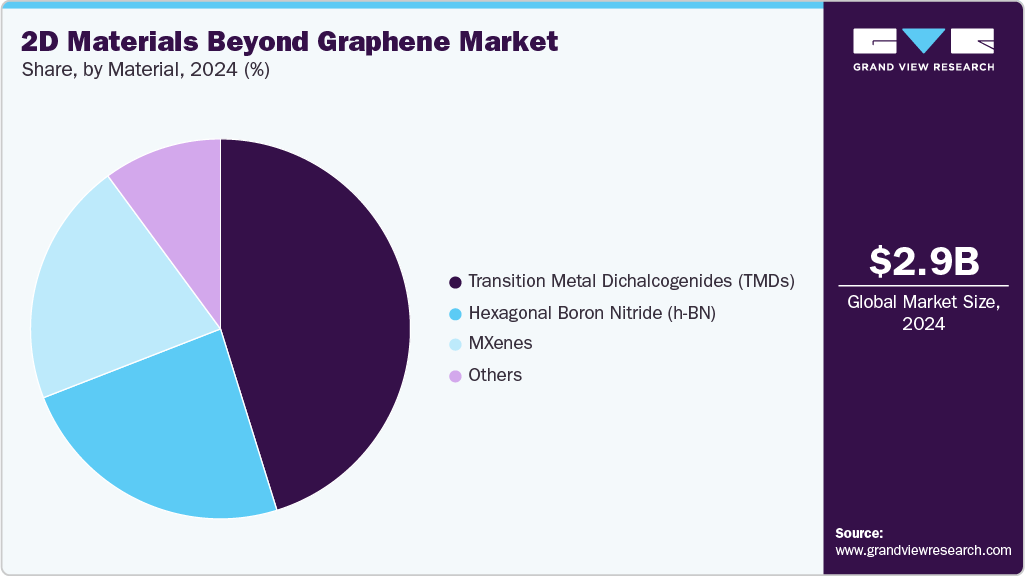
- By material: Transition metal dichalcogenides held the largest market share of 45.3% in 2025.
- By end use: Electronics & electrical held the largest revenue share of 40.7% in 2025.
Regional Highlights
- Largest regional market: North America (33.3% revenue share, 2025)
- By country: U.S. held the largest market share in 2025
Market Size & Forecast
- Market Size in 2025: USD 3.1 Billion
- Estimated market size in 2026: USD 3.2 Billion
- Projected market size by 2033: USD 3.9 Billion
- CAGR (2026-2033): 3.2%
Three ways to get this report
Buy it, customize it, or ask a question.Ask an Analyst
A direct answer, usually in 1 working day
- AccessReport author, directly
- Reply timeWithin 1 working day
- No sales callDirect answer only
- FormatEmail reply
- CostFree, no cost
Get the Full Report
What the study covers
- FormatsPDF · Excel · Dashboard
- Timeline2026–2033 annual, 2025 base
- Coverage20+ countries, 5 regions
- Companies10+ key players profiled
Customize the Report
20% free customization
- IncludeCountries, segments, points
- TailorTo your product definition
- ExtendDeeper competitor detail
- OrA fully bespoke study
- Turnaround5–10 working days
The growing demand for miniaturized and energy-efficient components in consumer electronics has further accelerated the exploration and adoption of these materials. Governments and private organizations increasingly fund nanotechnology research, contributing significantly to market expansion. The energy and storage sector represents another strong market growth avenue. These materials exhibit exceptional surface area, mechanical strength, and electrical conductivity, making them suitable for batteries, supercapacitors, and fuel cells. The rising focus on clean and renewable energy solutions has driven the adoption of advanced materials that enhance storage devices' energy density and charge-discharge efficiency. Moreover, the ability of these materials to act as efficient catalysts in hydrogen evolution reactions is boosting their demand in sustainable energy generation. Ongoing research into their electrochemical properties continues to expand potential end uses across the green energy ecosystem.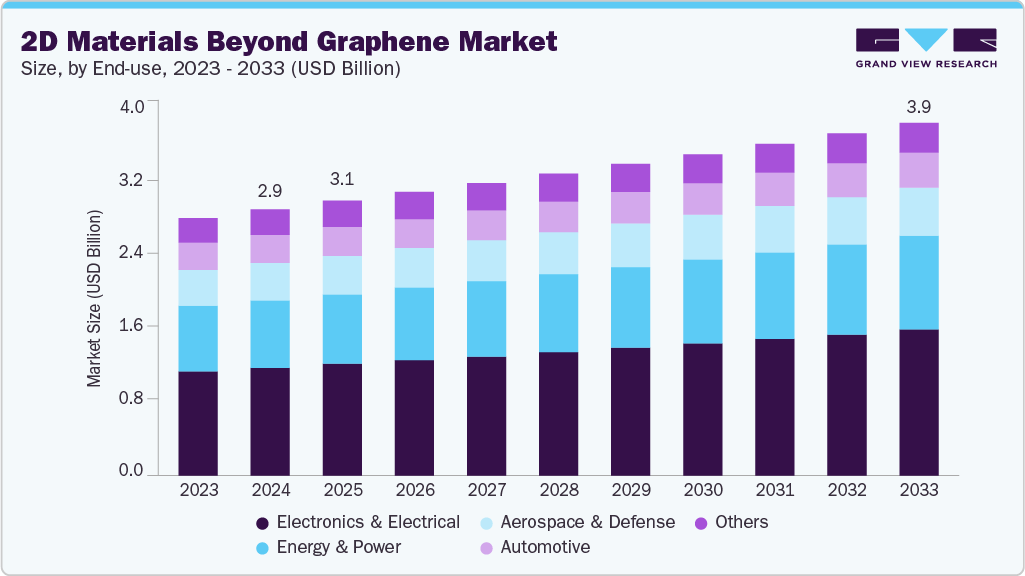 To learn more about this report, Download Free Sample Report
 In addition, the market is benefiting from the expanding scope of end uses in the biomedical and sensing sectors. 2D materials beyond graphene possess excellent biocompatibility, high surface reactivity, and tunable optical properties, which make them promising candidates for biosensing, drug delivery, and imaging technologies. Their use in detecting highly sensitive environmental pollutants and biological molecules is gaining traction in healthcare and environmental monitoring. The convergence of nanotechnology, material science, and biotechnology creates new opportunities to commercialize these materials. As industrial players move from laboratory-scale experiments to scalable production, the market is poised for significant long-term growth.
Market Dynamics
The 2D materials beyond graphene market is experiencing significant growth due to increasing demand for next-generation electronics, energy storage systems, optoelectronic devices, sensors, flexible electronics, and advanced semiconductor applications. Materials such as transition metal dichalcogenides (TMDs), hexagonal boron nitride (h-BN), black phosphorus, MXenes, and other emerging two-dimensional materials offer unique electrical, thermal, optical, and mechanical properties that complement or surpass graphene in specific applications. Growing investments in nanotechnology research, increasing commercialization of advanced materials, and rising demand for high-performance electronic components are further supporting market expansion. Additionally, continuous advancements in material synthesis, scalable manufacturing techniques, and integration technologies are enabling wider adoption of 2D materials across multiple industrial sectors.
The increasing adoption of 2D materials beyond graphene in advanced electronics and semiconductor applications is a major factor driving the 2D materials beyond graphene market. As conventional semiconductor materials approach their physical performance limits, researchers and manufacturers are exploring alternative materials that can enable smaller, faster, and more energy-efficient devices. Materials such as molybdenum disulfide (MoS₂), tungsten diselenide (WSe₂), and hexagonal boron nitride offer exceptional electronic properties that make them suitable for transistors, integrated circuits, photodetectors, and flexible electronic devices. The growing demand for miniaturized consumer electronics, wearable devices, and next-generation computing systems continues to accelerate research and commercialization efforts.
Furthermore, increasing investments from governments, research institutions, and technology companies are supporting the development of advanced semiconductor technologies based on 2D materials. The rapid expansion of artificial intelligence, Internet of Things (IoT), high-performance computing, and 5G infrastructure is creating demand for materials capable of delivering enhanced performance while reducing energy consumption. As industries seek innovative solutions for future electronic systems, the adoption of 2D materials beyond graphene is expected to grow significantly, supporting long-term market development.
The 2D materials beyond graphene market faces significant challenges due to high production costs, limited scalability, and commercialization barriers. Advanced materials such as MXenes, transition metal dichalcogenides (TMDs), and hexagonal boron nitride require complex synthesis techniques like chemical vapor deposition, molecular beam epitaxy, and liquid-phase exfoliation, which make large-scale production expensive and technically challenging. Variations in material purity, structural defects, and batch-to-batch consistency further limit commercial reliability. Additionally, the absence of standardized manufacturing processes and limited industrial-scale infrastructure, along with integration and regulatory challenges, continues to slow widespread commercialization.
The growing demand for next-generation energy storage systems, flexible electronics, and advanced nanotechnology applications is creating strong growth opportunities for the 2D materials beyond graphene market. Materials such as MXenes, transition metal carbides, and layered metal chalcogenides offer excellent electrical conductivity, high surface area, and superior electrochemical performance, making them suitable for batteries, supercapacitors, hydrogen storage, wearable devices, and transparent electronics. Continuous advancements in material engineering, scalable manufacturing technologies, and hybrid material systems are further improving performance and expanding application scope. Increasing investments in sustainable energy solutions and next-generation electronics are expected to drive broader adoption across energy, healthcare, electronics, and industrial sectors.
Market Concentration & Characteristics
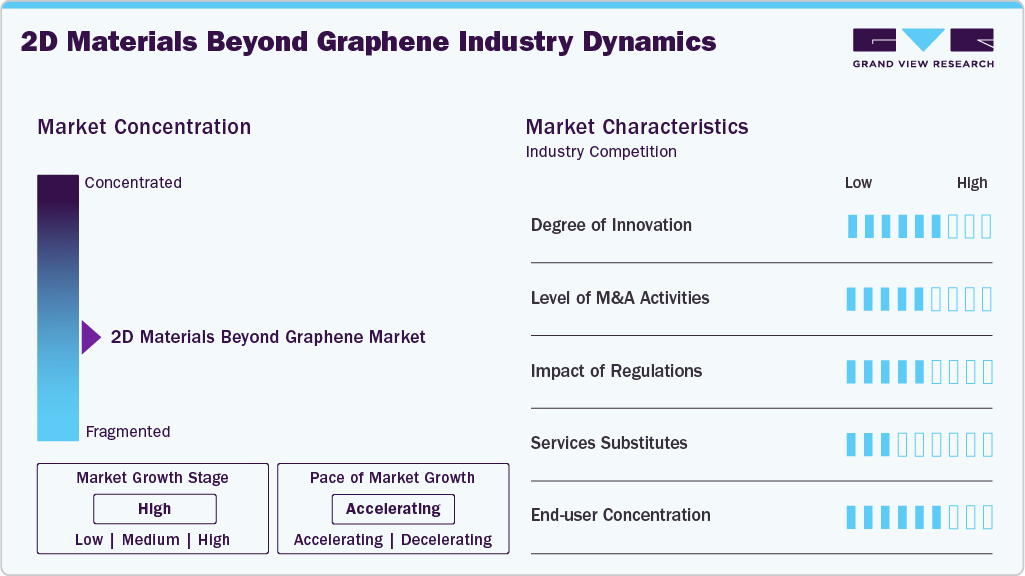
The global 2D materials beyond graphene industry is characterized by a high degree of innovation, driven by intensive research efforts and collaborations between academic institutions, startups, and established technology firms. The market remains nascent yet rapidly evolving, with continuous breakthroughs in synthesis methods, scalability, and material quality. Although commercialization is still limited, emerging patents and pilot-scale production reflect growing industrial interest. The sector has witnessed a moderate level of mergers and partnerships, primarily aimed at combining material expertise with end use development in semiconductors, energy storage, and flexible electronics. These strategic collaborations are crucial for bridging the gap between research and large-scale industrial deployment.
 To learn more about this report, Download Free Sample Report
 Regulatory frameworks also significantly shape the market dynamics, particularly concerning environmental safety, nanomaterial handling, and sustainable manufacturing practices. Compliance with international standards and nanomaterial safety regulations ensures responsible development and enhances market credibility. There are limited direct substitutes for 2D materials beyond graphene, given their unique physical and chemical properties. However, competition exists from advanced nanomaterials such as carbon nanotubes and perovskites in certain end uses. End-user concentration is relatively diversified, spanning electronics, energy, healthcare, and aerospace industries, though semiconductor and energy sectors currently account for the largest share. As standardization and production scalability improve, the market is expected to witness higher consolidation and broader adoption across industries.
Analyst Perspective
The 2D Materials Beyond Graphene market is gradually transitioning from research-driven development toward commercial-scale adoption, with the strongest growth opportunities emerging in advanced semiconductors, energy storage systems, flexible electronics, sensors, aerospace components, and next-generation optoelectronic devices. The key differentiator for companies will not be material discovery alone, but their ability to achieve scalable and cost-effective production, maintain consistent material quality, secure intellectual property, and successfully integrate 2D materials into commercial products and manufacturing processes.
Players with advanced synthesis capabilities, strong patent portfolios, strategic partnerships with semiconductors and electronics manufacturers, and diversified application exposure are likely to capture premium margins and long-term growth opportunities. In contrast, smaller and less diversified participants may remain vulnerable to commercialization challenges, high production costs, limited manufacturing scalability, evolving technology standards, and competition from established semiconductor and advanced material technologies.
End Use Insights
Based on end use, the electronics & electrical segment led the market with the largest revenue share of 40.7% in 2025 and is expected to grow at a CAGR of 3.4% over the forecast period, driven by increasing demand for miniaturized, high-performance electronic devices. Due to their excellent electrical conductivity and tunable band gaps, materials such as MoS₂ and h-BN are being explored for transistors, photodetectors, and flexible displays. Rapid growth in consumer electronics, wearable devices, and next-generation computing systems is boosting adoption. In addition, ongoing research in integrating 2D materials into semiconductors enhances device efficiency and performance. Industrial collaborations and pilot-scale production are further accelerating commercialization in this segment.
Energy & power is expected to grow at the fastest CAGR of 3.7% over the forecast period, driven by the rising need for advanced energy storage and conversion solutions. 2D materials beyond graphene are increasingly used in batteries, supercapacitors, and fuel cells because of their high surface area, conductivity, and chemical stability. The global push for renewable energy and efficient power management systems further fuels adoption. These materials also serve as catalysts for hydrogen evolution and other electrochemical reactions, supporting sustainable energy initiatives. Innovations in material synthesis and integration enable practical end uses in industrial and consumer energy technologies.
Material Insights
Based on material, the transition metal dichalcogenides (TMDs) segment led the market with the largest revenue share of 45.3% in 2025 and is expected to grow at a CAGR of 3.6% over the forecast period, driven by unique electrical, optical, and mechanical properties of materials such as MoS₂, WS₂, and WSe₂. These materials are widely applied in transistors, photodetectors, and flexible electronic devices for enhanced performance. The increasing adoption of TMDs in nanoelectronics and optoelectronics is driven by their tunable band gaps and high carrier mobility. Research advancements and improved scalable production methods are expanding industrial end uses. Collaboration between research institutions and manufacturers accelerates commercialization and reduces entry barriers in this segment.
 To learn more about this report, Download Free Sample Report
 MXenes is anticipated to grow significantly at a CAGR of 3.3% during the forecast period, driven by their exceptional conductivity, mechanical strength, and surface chemistry, making them ideal for energy storage, sensors, and electromagnetic shielding end uses. Increasing demand for high-performance electrodes in batteries and supercapacitors is a key driver. MXenes’ tunable surface functional groups also enable end uses in water purification and catalysis. Continuous advancements in scalable synthesis and processing technologies are improving material accessibility. The segment benefits from growing interest in multifunctional materials that address energy and environmental challenges.
Regional Insights
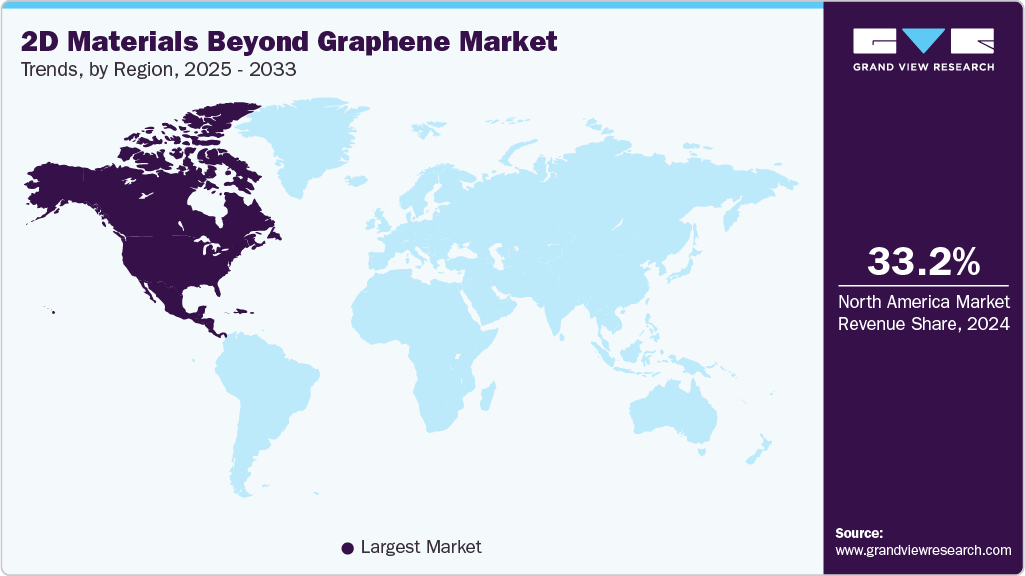
North America dominated the 2D materials beyond graphene market with the largest revenue share of 33.3% in 2025, driven by strong research infrastructure and extensive government funding for nanotechnology and advanced materials. Leading universities and research laboratories are actively developing novel 2D materials for electronics, photonics, and quantum computing end uses. The presence of major semiconductor manufacturers and collaborations between academia and industry are accelerating commercialization efforts. In addition, the region’s focus on developing flexible and wearable electronic devices is enhancing material demand. Supportive policies promoting clean energy and sustainable innovation further grow the market. Integrating 2D materials into energy storage and next-generation computing systems remains a key regional focus.
 To learn more about this report, Download Free Sample Report
 U.S. 2D Materials Beyond Graphene Market Trends
The 2D materials beyond graphene market in the U.S. held the largest share in the North America region in 2025. Federal initiatives supporting nanomaterial development under programs such as the National Nanotechnology Initiative (NNI) are stimulating innovation. The growing end use of 2D materials in sensors, transistors, and energy systems is expanding market opportunities. Strategic collaborations between industry leaders and research institutions are leading to early-stage commercialization of 2D materials. The defense and aerospace sectors also adopt these materials for lightweight, high-strength end uses. Moreover, the rising interest in clean energy technologies, such as hydrogen production and supercapacitors, is propelling domestic demand.
Asia Pacific 2D Materials Beyond Graphene Market Trends
The 2D materials beyond graphene market in Asia is witnessing significant growth due to strong manufacturing capabilities and rising investments in the semiconductor and electronics industries. Countries such as China, Japan, and South Korea spearhead research in transition metal dichalcogenides and boron nitride for advanced transistor fabrication. The demand for flexible and miniaturized devices has spurred the adoption of consumer electronics and communication technologies. Government initiatives supporting nanotechnology and clean energy materials are accelerating regional innovation. The increasing establishment of pilot-scale production units enables the transition from research to commercialization. Rapid industrialization and expanding academic collaboration networks are further strengthening the market outlook.
China 2D materials beyond graphene market represents one of the most dynamic markets, driven by robust government support for nanotechnology and material science innovation. Substantial funding under national programs and inclusion in the “Made in China 2025” initiative have propelled local research and industrial capabilities. Chinese firms and universities are developing scalable synthesis processes for TMDs and other 2D compounds. The country’s dominance in semiconductor fabrication and consumer electronics manufacturing provides a strong foundation for material adoption. Furthermore, China’s focus on renewable energy, including advanced batteries and hydrogen energy systems, fosters material utilization. Continuous collaborations between domestic and international research entities strengthen China’s global position in this sector.
Europe 2D Materials Beyond Graphene Market Trends
The 2D materials beyond graphene market in Europe is driven by the region’s strong emphasis on sustainable and safe nanomaterial development. The European Commission’s funding programs, such as Horizon Europe, encourage collaborative research on novel 2D materials and their integration into energy-efficient and green technologies. The presence of specialized research institutes and advanced semiconductor infrastructure supports innovation. European industries are exploring using 2D materials in quantum computing, energy storage, and biosensing end uses. Strict environmental and safety regulations ensure the responsible production and deployment of nanomaterials. Increasing demand for eco-friendly and high-performance materials continues to shape the regional market trajectory.
Germany 2D materials beyond graphene market is primarily driven by advancements in nanotechnology, electronics, and automotive end uses. The country’s strong industrial base and emphasis on precision manufacturing enable rapid integration of novel materials into high-performance products. German research organizations and universities are conducting pioneering work on transition metal dichalcogenides and boron nitride-based materials. In addition, Germany’s focus on renewable energy technologies, including fuel cells and advanced batteries, is enhancing the use of 2D materials for energy efficiency. Collaborative research projects supported by public-private partnerships are accelerating technological progress. The nation’s commitment to innovation and sustainability ensures steady market expansion in the coming years.
Central & South America 2D Materials Beyond Graphene Market Trends
The 2D materials beyond graphene market in Central & South America is growing gradually, supported by increasing awareness of nanotechnology’s potential in industrial and academic sectors. Countries such as Brazil and Mexico are investing in research programs focused on material synthesis and characterization. The region’s expanding electronics manufacturing and renewable energy initiatives create opportunities for advanced materials adoption. Government efforts to modernize research infrastructure are contributing to technological development. While commercialization remains limited, partnerships with global research entities foster knowledge transfer and innovation. The rising demand for sustainable materials in energy and environmental end uses is expected to stimulate future market growth.
Middle East & Africa 2D Materials Beyond Graphene Market Trends
The 2D materials beyond graphene market in the MEA is driven by emerging interest in advanced materials for energy, defense, and industrial end uses. The growing focus on clean and sustainable technologies, especially in the Gulf nations, encourages research into 2D materials for energy storage and hydrogen production. Collaborative projects between universities and international research organizations are promoting regional expertise. Investment in nanotechnology centers and innovation hubs gradually expands the region’s scientific capabilities. In addition, the diversification of economies toward high-tech industries supports market development. As awareness of 2D materials’ potential end uses increases, the region is expected to become an emerging participant in the global value chain.
Key 2D Materials Beyond Graphene Company Insights
Some of the key players operating in the market include 2D Semiconductors Inc., Graphenea S.A.:
-
2D Semiconductors Inc. offers a wide range of monolayer and few-layer materials, including molybdenum disulfide (MoS₂), tungsten diselenide (WSe₂), and boron nitride. These materials are used in next-generation electronic, optoelectronic, and photonic devices. The company focuses on customized material growth and scalable production to support innovation in advanced semiconductor technologies.
-
Graphenea S.A. provides graphene oxide, CVD-grown graphene, and 2D material films tailored for research, energy storage, and sensor end uses. Graphenea’s extensive R&D programs support collaborations with universities and technology firms across Europe and North America.
NanoXplore Inc. and Sixth Element Materials Technology Co., Ltd. are some of the emerging market participants.
-
NanoXplore Inc. is a vertically integrated manufacturer of graphene and advanced materials designed to enhance the performance of polymers and composites. The company develops graphene-enhanced thermoplastics that improve strength, conductivity, and durability in automotive and industrial end uses.
-
Sixth Element Materials Technology Co., Ltd., supplies graphene powders, dispersions, and films for coatings, batteries, and conductive inks. Its advanced research programs focus on expanding into transition metal dichalcogenides and boron nitride-based products.
Key 2D Materials Beyond Graphene Companies:
The following are the leading companies in the 2D materials beyond graphene market. These companies collectively hold the largest market share and dictate industry trends.
- 2D Semiconductors Inc.
- Graphenea S.A.
- NanoXplore Inc.
- Sixth Element Materials Technology Co., Ltd.
- Versarien plc
- 2D Layer Materials Pte. Ltd.
- XG Sciences, Inc.
- ACS Material, LLC
- Thomas Swan & Co. Ltd.
Competitive Benchmarking
Category
Operating Strategies
Competitive Edge
Weakness
Established Players (Graphenea S.A., NanoXplore Inc., Sixth Element Materials Technology Co., Ltd., Versarien plc, ACS Material, LLC)
Focus on large-scale production of TMDs, h-BN, MXenes, and other advanced 2D materials to support commercial demand.
Collaborate with semiconductor, electronics, energy storage, and research organizations to accelerate commercialization.
Invest heavily in R&D, intellectual property portfolios, and process optimization to improve material performance and consistency.
Established manufacturing infrastructure and strong technical expertise in nanomaterial synthesis.
Long-standing customer relationships and diversified end-use industry presence.
Strong patent portfolios, global distribution networks, and brand recognition.
High capital expenditure requirements for scaling production and maintaining material quality.
Commercial adoption remains dependent on the pace of emerging technology development.
Challenges in reducing production costs and achieving mass-market penetration.
Emerging Players (2D Semiconductors Inc., 2D Layer Materials Pte. Ltd., XG Sciences, Inc.)
Focus on niche applications such as flexible electronics, quantum devices, advanced sensors, and next-generation energy storage systems.
Partner with universities, research institutes, and technology startups to accelerate product development.
Develop proprietary synthesis methods and application-specific materials targeting high-growth markets.
High innovation capabilities and agility in developing customized material solutions.
Ability to commercialize emerging 2D material technologies faster in specialized segments.
Strong specialization in advanced material engineering and emerging applications.
Limited production capacity and relatively small customer base.
Dependence on external funding and research collaborations for growth.
Limited global market presence and lower economies of scale compared to established competitors.
2D Materials Beyond Graphene Market Report Scope
Report Attribute
Details
Market size in 2025
USD 3.1 billion
Estimated Market size in 2026
USD 3.2 billion
Projected Market size by 2033
USD 3.9 billion
Growth rate
CAGR of 3.2% from 2026 to 2033
Base year for estimation
2025
Historical data
2021 - 2024
Forecast period
2026 - 2033
Quantitative units
Revenue in USD million/billion and CAGR from 2026 to 2033
Report coverage
Revenue forecast, company ranking, competitive landscape, growth factors, and trends
Segments covered
Material, end use, and region
Regional scope
North America; Europe; Asia Pacific; Latin America; MEA
Country scope
U.S.; Canada; Mexico; Germany; UK; France; Italy; Spain; India; China; Japan
Key companies profiled
2D Semiconductors Inc.; Graphenea S.A.; NanoXplore Inc.; Sixth Element Materials Technology Co., Ltd.; Versarien plc; 2D Layer Materials Pte. Ltd.; XG Sciences, Inc.; ACS Material, LLC; Thomas Swan & Co. Ltd.
Customization scope
Free report customization (equivalent up to 8 analysts' working days) with purchase. Addition or alteration to country, regional & segment scope.
Pricing and purchase options
Avail customized purchase options to meet your exact research needs. Explore purchase options
Global 2D Materials Beyond Graphene Market Report Segmentation
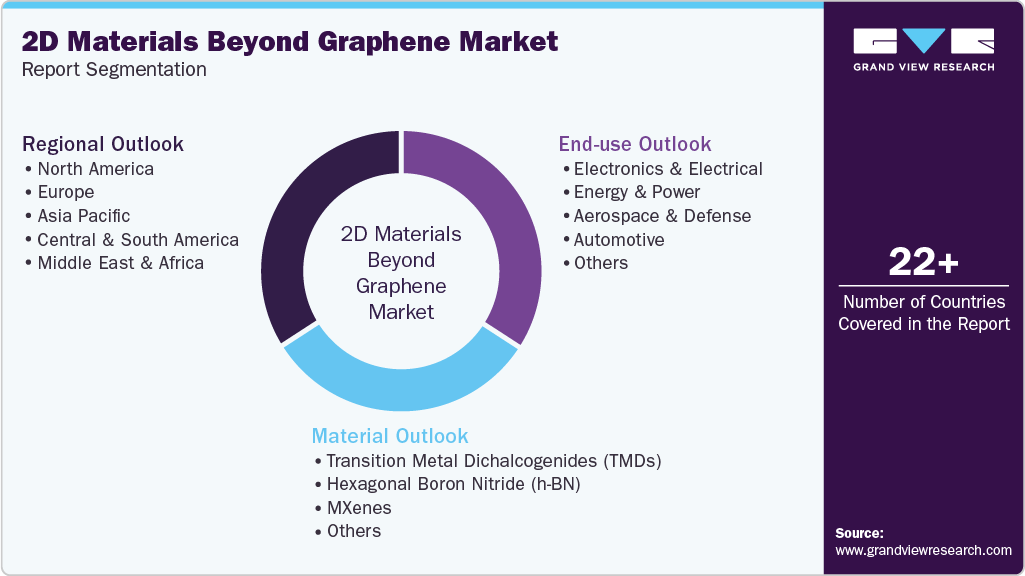
This report forecasts revenue growth at the global, regional, and country levels and provides an analysis of the latest industry trends in each of the sub-segments from 2021 to 2033. For this study, Grand View Research has segmented the global 2D materials beyond graphene market report based on end use, material, and region:
 To learn more about this report, Download Free Sample Report
 -
End Use Outlook (Revenue, USD Million, 2021 - 2033)
-
Electronics & Electrical
-
Energy & Power
-
Aerospace & Defense
-
Automotive
-
Others
-
-
Material Outlook (Revenue, USD Million, 2021 - 2033)
-
Transition Metal Dichalcogenides (TMDs)
-
Hexagonal Boron Nitride (h-BN)
-
MXenes
-
Others
-
-
Regional Outlook (Revenue, USD Million, 2021 - 2033)
-
North America
-
U.S.
-
Canada
-
Mexico
-
-
Europe
-
Germany
-
UK
-
France
-
Italy
-
Spain
-
-
Asia Pacific
-
China
-
India
-
Japan
-
-
Central & South America
-
Middle East & Africa
-
Research Methodology
Segment Definition
Segment - Material
Revenue capture definition
Transition Metal Dichalcogenides (TMDs)
Revenue generated from the sale of transition metal dichalcogenides (TMDs), including materials such as molybdenum disulfide (MoS₂), tungsten disulfide (WS₂), tungsten diselenide (WSe₂), and related compounds used in advanced electronic, optoelectronic, sensing, and energy storage applications. This segment captures revenues from TMD materials supplied to manufacturers, research institutions, and technology developers requiring semiconducting, photonic, and high-performance nanomaterials for transistors, photodetectors, flexible electronics, sensors, and next-generation semiconductor devices across electronics, energy, healthcare, and industrial sectors.
Hexagonal Boron Nitride (h-BN)
Revenue generated from the sale of hexagonal boron nitride (h-BN) used in advanced electronics, thermal management systems, protective coatings, insulation materials, and nanotechnology applications. This segment captures revenues from h-BN supplied to manufacturers and research organizations requiring electrically insulating, thermally conductive, chemically stable, and mechanically robust two-dimensional materials for semiconductor devices, dielectric layers, electronic packaging, aerospace components, and advanced composites across multiple industrial sectors.
MXenes
Revenue generated from the sale of MXenes used in energy storage, electromagnetic interference (EMI) shielding, sensing technologies, water purification, and advanced electronic applications. This segment captures revenues from MXene materials supplied to battery manufacturers, electronics companies, research institutions, and industrial users requiring highly conductive, flexible, and surface-functionalized nanomaterials for supercapacitors, lithium-ion batteries, wearable electronics, sensors, filtration systems, and electromagnetic shielding applications across energy, electronics, defense, and industrial sectors.
Others
Revenue generated from the sale of other two-dimensional materials beyond graphene, including black phosphorus, layered oxides, silicene, germanene, antimonene, and emerging nanomaterials utilized in advanced research and commercial applications. This segment captures revenues from materials supplied to manufacturers, technology developers, and research organizations requiring specialized electronic, optical, catalytic, sensing, and energy-related functionalities for next-generation devices and innovative industrial applications across diverse end-use sectors.
Segment - End Use
Revenue capture definition
Electronics & Electrical
Revenue generated from the sale of 2D materials beyond graphene used in electronics and electrical applications, including semiconductors, transistors, integrated circuits, sensors, photodetectors, displays, and flexible electronic devices. This segment captures revenues from materials supplied to electronics manufacturers and component developers requiring high-performance nanomaterials with enhanced electrical, optical, and thermal properties for next-generation consumer electronics, communication systems, computing devices, and industrial electronics applications.
Energy & Power
Revenue generated from the sale of 2D materials beyond graphene used in energy storage, energy conversion, and power management applications, including batteries, supercapacitors, fuel cells, hydrogen storage systems, and solar energy devices. This segment captures revenues from materials supplied to energy technology developers and power equipment manufacturers seeking advanced materials with superior conductivity, electrochemical performance, and energy efficiency for renewable energy systems and next-generation energy storage solutions.
Aerospace & Defense
Revenue generated from the sale of 2D materials beyond graphene used in aerospace and defense applications, including lightweight composites, advanced sensors, electromagnetic shielding systems, thermal management components, and high-performance coatings. This segment captures revenues from materials supplied to aerospace manufacturers, defense contractors, and government agencies requiring durable, lightweight, and multifunctional nanomaterials for aircraft, spacecraft, military electronics, surveillance systems, and defense equipment applications.
Automotive
Revenue generated from the sale of 2D materials beyond graphene used in automotive applications, including electric vehicle batteries, sensors, lightweight structural components, thermal management systems, and advanced electronics. This segment captures revenues from materials supplied to automotive manufacturers and component suppliers seeking high-performance materials that improve energy efficiency, vehicle performance, durability, safety, and electrification capabilities across conventional and electric vehicle platforms.
Others
Revenue generated from the sale of 2D materials beyond graphene used in various other applications, including healthcare, biomedical devices, environmental monitoring, water treatment, industrial processing, and academic research. This segment captures revenues from materials supplied to manufacturers, research institutions, and industrial users requiring advanced nanomaterials for specialized applications involving sensing, catalysis, filtration, diagnostics, and emerging technological innovations across multiple sectors.
Delivered Customizations
CLIENT REQUEST
CUSTOMIZATION DELIVERED
VALUE ADDS
Advanced Electronics & Semiconductor Opportunity Assessment
Evaluated 2D materials beyond graphene adoption trends across semiconductors, transistors, sensors, photodetectors, flexible electronics, integrated circuits, and next-generation computing applications driven by demand for miniaturization, higher performance, and energy efficiency.
Supports investment decisions by identifying high-growth application segments, commercialization opportunities, technology adoption trends, and emerging demand centers within the advanced electronics and semiconductor ecosystem.
2D Materials Beyond Graphene Supply Chain & Production Risk Assessment
Analyzed raw material availability, precursor supply chains, production capacity, synthesis technologies, commercialization readiness, pricing trends, intellectual property landscape, and manufacturing scalability challenges affecting global 2D materials beyond graphene supply.
Enables manufacturers and investors to strengthen sourcing strategies, mitigate supply chain risks, improve production planning, evaluate technology readiness, and enhance operational resilience amid evolving market dynamics.
Regional Demand & Regulatory Landscape Benchmarking
Conducted country-level analysis of 2D materials beyond graphene demand, nanotechnology policies, semiconductor incentive programs, advanced materials research funding, technology commercialization initiatives, and industry adoption trends across major producing and consuming regions.
Supports market entry and expansion strategies by identifying favorable regulatory environments, government-supported innovation hubs, high-growth regions, emerging application opportunities, and competitive positioning across the global 2D materials beyond graphene value chain.
Frequently Asked Questions About This Report
Based on end use, electronics & electrical dominated the global market, accounting for a revenue share of 40.7% in 2025, driven by increasing demand for miniaturized, high-performance electronic devices.
North America accounted for the largest 2D materials beyond graphene market share.
Transition Metal Dichalcogenides (TMDs) is the fastest growing material segment in the 2D materials beyond graphene market.
Middle East & Africa is the fastest growing region in the 2D materials beyond graphene market over the forecast period.
The global 2D materials beyond graphene market size was estimated at USD 3.1 billion in 2025 and is expected to reach USD 3.2 billion in 2026.
The global 2D materials beyond graphene market is expected to grow at a compound annual growth rate of 3.2% from 2026 to 2033 to reach USD 3.9 billion by 2033.
Transition metal dichalcogenides (TMDs) segment dominated the global market, accounting for a revenue share of 45.3% in 2025, driven by unique electrical, optical, and mechanical properties of materials such as MoS₂, WS₂, and WSe₂.
Some of the key players operating in the 2D materials beyond graphene market include 2D Semiconductors Inc., Graphenea S.A., NanoXplore Inc., Sixth Element Materials Technology Co., Ltd., Versarien plc, 2D Layer Materials Pte. Ltd.; XG Sciences, Inc.; ACS Material, LLC; and Thomas Swan & Co. Ltd.
Key factors driving the 2D Materials Beyond Graphene market include increasing demand for advanced semiconductors and flexible electronics, growing adoption in energy storage systems, rising investments in nanotechnology research, expanding aerospace and defense applications, and continuous advancements in scalable material synthesis and commercialization technologies.
About the Author(s)
Nanoparticles Research Team
Advanced Materials · NanoparticlesThis report was authored by the nanoparticles research team at Grand View Research - comprising two research analysts, one senior research analyst, and one industry expert - with specialized expertise in the nanoparticles segment of the advanced materials industry. All findings are based on proprietary advanced materials databases, executive interviews, and regulatory analysis, subject to internal peer review prior to publication.
Last Updated:
Speak to Analyst

Customize this report to your needs - add regions, segments, or data points, with 20% free customization.
Or view our licence options:


ISO 9001:2015 & 27001:2022 Certified
We are GDPR and CCPA compliant! Your transaction & personal information is safe and secure. For more details, please read our privacy policy.


