
- Home
- »
- Medical Devices
- »
-
AAV Contract Development And Manufacturing Organizations Market Report, 2033GVR Report cover

AAV Contract Development And Manufacturing Organizations Market (2026 - 2033)
Size, Share & Trends Analysis Report By Workflow (Upstream Processing, Downstream Processing), By Culture (Adherent Culture, Suspension Culture), By Application, By End Use, By Region, And Segment Forecasts
Market Size, 2025
$1.0BMarket Estimate, 2026
$1.2BMarket Forecast, 2033
$3.5BCAGR, 2026–2033
16.4%AAV Contract Development And Manufacturing Organizations Market Summary
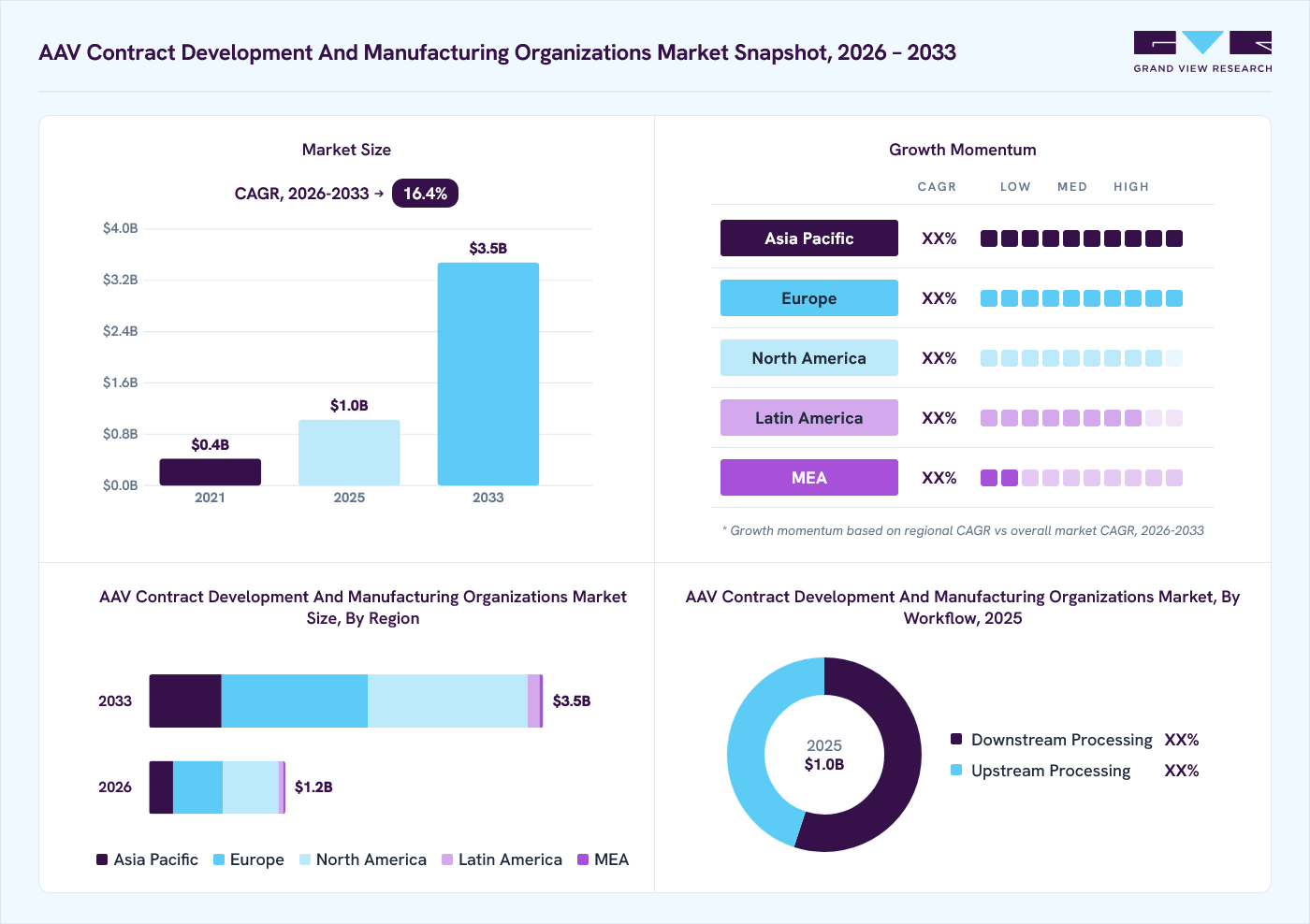
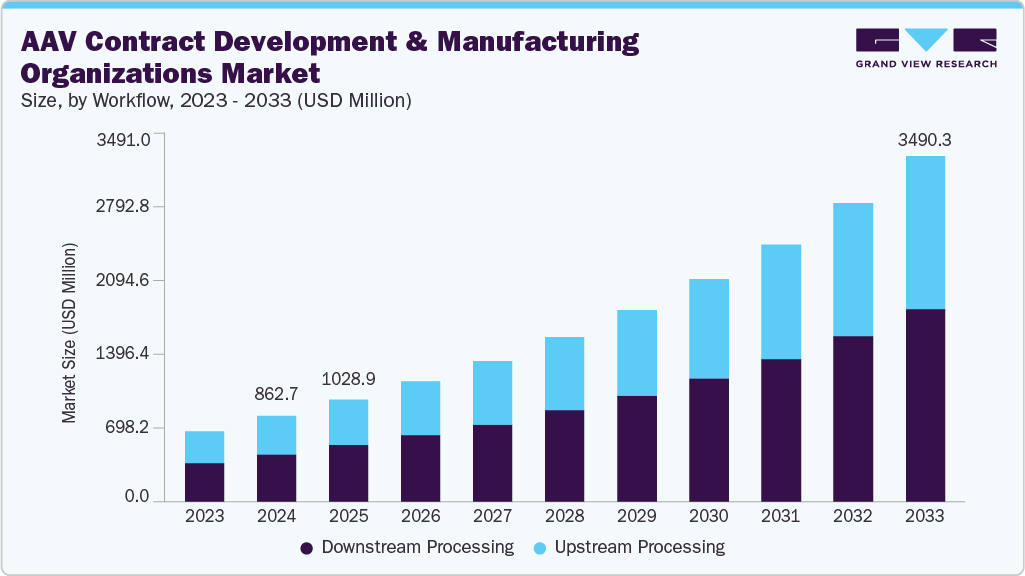
The global AAV contract development and manufacturing organizations market size was valued at USD 1.0 billion in 2025 and is projected to grow from USD 1.2 billion in 2026 to USD 3.5 billion by 2033, at a CAGR of 16.4% from 2026 to 2033. North America dominated the market, accounting for a revenue share of 40.8% in 2025. The market is driven due to the rising demand for adeno-associated virus (AAV) vectors in gene therapy applications, particularly in the treatment of rare genetic disorders, ophthalmic conditions, and neurological diseases.
 Source: Grand View Research, IR Documents, Primary Interviews, Paid DatabasesTo learn more about this report,
 Download Free Sample Report
Key Market Trends & Insights
- By workflow: Downstream processing segment led the market with the largest revenue share of 55.0% in 2025.
- By culture type: Adherent culture segment led the market with the largest revenue share of 58.2% in 2025.
- By application: Cell & gene therapy development segment led the market with the largest revenue share of 39.4% in 2025.
- By end use: Pharmaceutical and biopharmaceutical companies segment led the market with the largest revenue share of 55.5% in 2025.
Regional Highlights
- Largest regional market: North America (40.8% revenue share, 2025)
- By country: The U.S. held the largest market share in 2025.
Market Size & Forecast
- Market size in 2025: USD 1.0 Billion
- Estimated market size in 2026: USD 1.2 Billion
- Projected market size by 2033: USD 3.5 Billion
- CAGR (2026-2033): 16.4%
Prism AI by Grand View Research Free to tryAsk a question about the AAV contract development and manufacturing organizations marketTry asking✓Every figure cited from GVR research Prefer the report? Download free sample →Increasing approvals of AAV-based therapies by regulatory bodies have further accelerated the need for specialized manufacturing capacity. The market is primarily driven by thesurge in R&D investments in cell and gene therapy pipelines and is also fueling the reliance on AAV CDMOs. Small and mid-sized biotech firms often lack in-house vector development capabilities, making outsourcing a cost-effective and efficient solution. Leading CDMOs are expanding their capabilities by building advanced viral vector manufacturing facilities, integrating automated platforms, and offering end-to-end services including process development, GMP manufacturing, and regulatory support. This expansion of service portfolios is creating strong growth opportunities for the market.
Furthermore, strategic partnerships and capacity expansions by key players such as Lonza, Catalent, Thermo Fisher Scientific, and Samsung Biologics are enhancing market competitiveness. The growing prevalence of genetic and rare diseases, coupled with an increasing number of clinical trials evaluating AAV-based therapies, is further driving outsourcing demand. These dynamics position AAV CDMOs as a critical backbone of the gene therapy ecosystem, ensuring a timely supply of high-quality viral vectors for both clinical and commercial use.
Market Dynamics
The AAV Contract Development and Manufacturing Organizations market is witnessing strong momentum as AAV-based gene therapy programs continue to progress across rare diseases, neurological disorders, ophthalmology, metabolic disorders, and other genetic indications. Increasing clinical pipeline activity is strengthening demand for specialized CDMO services covering process development, upstream vector production, downstream purification, analytical characterization, GMP manufacturing, and fill-finish support.
The market is also benefiting from the growing shift toward outsourcing, as sponsors increasingly prefer external partners with dedicated viral vector expertise, scalable infrastructure, and regulatory-ready manufacturing systems. CDMOs are playing a critical role in reducing development timelines, improving process consistency, and supporting clinical-to-commercial transition for AAV programs.
 To learn more about this report, Download Free Sample Report
In addition, adoption of suspension culture platforms, closed processing, advanced chromatography, automation, and improved full/empty capsid analytics is enhancing manufacturing productivity and quality outcomes. Integrated CDMO models are gaining preference, as sponsors seek partners capable of supporting end-to-end development, scale-up, quality testing, and commercial supply readiness. Thus, the market remains positive, supported by expanding therapeutic applications and rising reliance on specialized AAV manufacturing capabilities.
The AAV contract development and manufacturing organizations market is primarily driven by the expanding pipeline of AAV-based gene therapies across rare diseases, neurological disorders, ophthalmology, metabolic disorders, and oncology. As more programs move from discovery and preclinical stages toward clinical and commercial development, sponsors require specialized CDMO support for process development, upstream vector production, downstream purification, analytical testing, GMP manufacturing, and fill-finish. AAV manufacturing requires strong technical expertise, controlled production platforms, validated quality systems, and regulatory-ready documentation, which many biotechnology and pharmaceutical companies prefer to outsource rather than build internally. This is increasing reliance on CDMOs with scalable suspension culture platforms, purification capabilities, and full/empty capsid analytical expertise. The market is further supported by rising investment in gene therapy development and growing adoption of AAV vectors due to their safety profile, tissue tropism, and broad therapeutic applicability. Hence, pipeline maturity and outsourcing intensity remain central growth drivers for AAV CDMO demand.
One of the key restraint in the AAV CDMO market is the technical complexity and high cost associated with scalable vector manufacturing. AAV production involves multiple critical steps, including plasmid preparation, cell expansion, transfection or infection, vector amplification, harvesting, purification, concentration, analytical characterization, and sterile fill-finish. Each step requires precise process control to maintain vector yield, potency, purity, and batch consistency. One of the major bottlenecks is downstream purification, particularly the separation of full, empty, and partially filled capsids, which directly affects product quality and regulatory acceptance. Low vector yield, high raw material cost, long production timelines, and limited process standardization increase overall manufacturing expenditure. These challenges are more pronounced for late-stage and commercial programs, where batch size, quality expectations, and documentation requirements are significantly higher. As a result, smaller sponsors may face cost pressure, delayed timelines, and limited access to high-quality GMP manufacturing slots.
The market is expected to witness new growth opportunity in the AAV CDMO market attributed to growing adoption of scalable suspension culture platforms, improved transfection systems, closed processing, automation, and advanced purification technologies. Sponsors are increasingly seeking CDMOs that can move beyond small-scale adherent production and support higher-yield, reproducible, and commercially viable AAV manufacturing. Suspension-based bioreactor systems offer better scalability, process control, and cost efficiency, making them attractive for clinical and commercial vector production. In parallel, demand is rising for advanced downstream solutions that improve recovery, reduce impurity burden, and enhance full capsid enrichment. CDMOs that invest in chromatography optimization, ultrafiltration/diafiltration, analytics, process automation, and platform-based manufacturing can differentiate strongly in the market. This opportunity is also supported by the growing need for faster technology transfer, reduced batch failure risk, and improved regulatory readiness. Therefore, technology-led capacity expansion support to CDMOs capture higher-value programs across the AAV development lifecycle.
Market Characteristics
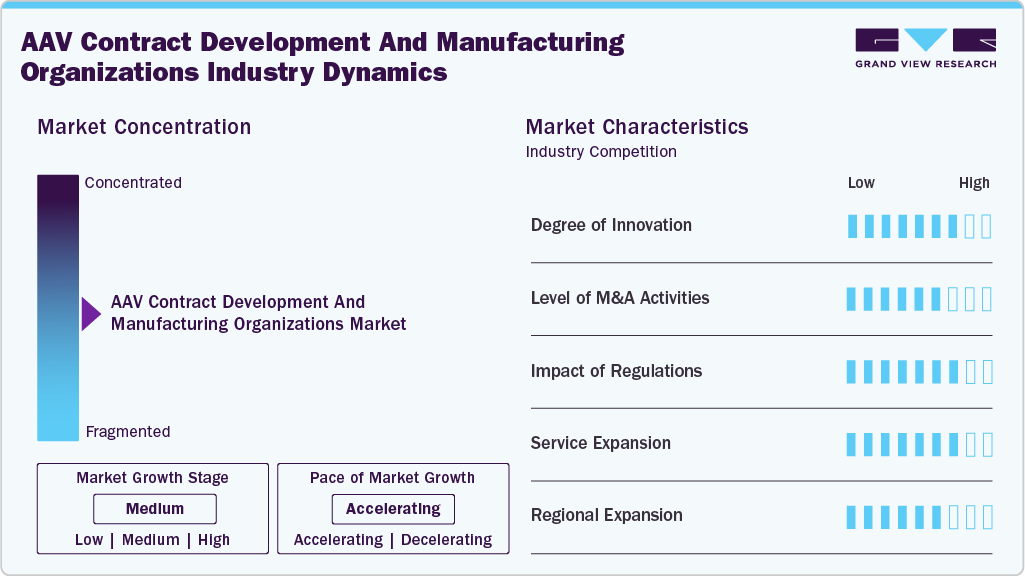
The AAV contract development and manufacturing organizations market growth stage is medium, and growth is accelerating. The market is characterized by the degree of innovation, level of M&A activities, regulatory impact, service expansion, and regional expansion.
Innovation in the AAV CDMO market is gaining momentum through the adoption of suspension culture platforms, high-yield producer cell systems, improved transfection technologies, closed processing, automation, and advanced purification methods. CDMOs are increasingly focusing on full/empty capsid separation, process intensification, analytical characterization, and scalable manufacturing platforms. These advancements are improving vector yield, purity, batch consistency, and commercial readiness, making innovation a key differentiator in supporting complex gene therapy development programs.
 To learn more about this report, Download Free Sample Report
The AAV CDMO market is witnessing increasing partnerships, collaborations, and selective acquisitions as companies seek to expand viral vector manufacturing capabilities and technical expertise. Strategic alliances between CDMOs, biotechnology companies, technology providers, and pharmaceutical sponsors are helping strengthen process development, GMP manufacturing, analytical testing, and fill-finish capabilities. M&A activity is mainly driven by the need to access specialized AAV platforms, expand capacity, reduce manufacturing bottlenecks, and build integrated service models across clinical and commercial gene therapy supply.
Regulatory impact remains significant in the AAV CDMO market due to strict requirements around vector quality, potency, purity, safety, traceability, and GMP compliance. Authorities expect robust documentation, validated analytical methods, impurity control, comparability data, and consistent manufacturing processes. This is increasing demand for CDMOs with strong regulatory expertise, quality systems, and experience supporting IND, CTA, BLA, and MAA submissions. Regulatory expectations are also encouraging investment in standardized processes, advanced analytics, and reliable quality-control frameworks.
Service expansion is becoming a key growth lever as sponsors increasingly prefer CDMOs that can support the complete AAV development and manufacturing lifecycle. Providers are expanding beyond vector production into plasmid support, process development, analytical development, upstream processing, downstream purification, formulation, fill-finish, stability testing, regulatory documentation, and commercial supply readiness. This integrated model reduces vendor complexity, improves project continuity, and enables faster clinical progression, making full-service AAV CDMO platforms more attractive to pharmaceutical and biotechnology clients.
Regional expansion is accelerating as demand for AAV manufacturing grows across North America, Europe, and Asia Pacific. CDMOs are investing in new GMP suites, viral vector facilities, bioreactor capacity, and regional partnerships to serve local and global gene therapy sponsors. Expansion is particularly focused on improving access to clinical and commercial manufacturing capacity, reducing supply-chain risk, and supporting faster technology transfer. Strong regional infrastructure, regulatory maturity, skilled talent, and proximity to gene therapy pipelines are shaping expansion strategies.
Impact of U.S. Tariffs on the Global AAV Contract Development And Manufacturing Organizations Market
U.S. tariffs are expected to have a moderate but strategically important impact on the global AAV Contract Development and Manufacturing Organizations market. AAV CDMO services depend on globally sourced plasmids, cell culture media, single-use bioreactor systems, chromatography resins, filtration assemblies, analytical reagents, sterile consumables, and specialized equipment. Any tariff-led increase in import costs can raise operating expenses for CDMOs, particularly those supporting GMP-grade upstream processing, downstream purification, analytical testing, and fill-finish. This may lead to higher project pricing, renegotiation of long-term manufacturing contracts, and greater cost pass-through to biotechnology and pharmaceutical sponsors.
The impact is more significant for smaller CDMOs and early-stage sponsors, as they have limited purchasing leverage and weaker ability to absorb supply-chain cost inflation. Tariff uncertainty is also encouraging sponsors and CDMOs to reassess sourcing models, build dual-supplier networks, maintain strategic inventory, and increase preference for U.S.-based or regionally integrated manufacturing infrastructure. Recent U.S. tariff policy has also accelerated pharmaceutical companies’ domestic manufacturing investments and supply-chain localization strategies. Thus, tariffs are not expected to materially reduce AAV outsourcing demand; rather, they may reshape vendor selection, procurement planning, pricing structures, and regional capacity expansion strategies across the AAV CDMO value chain.
Opportunity Analysis
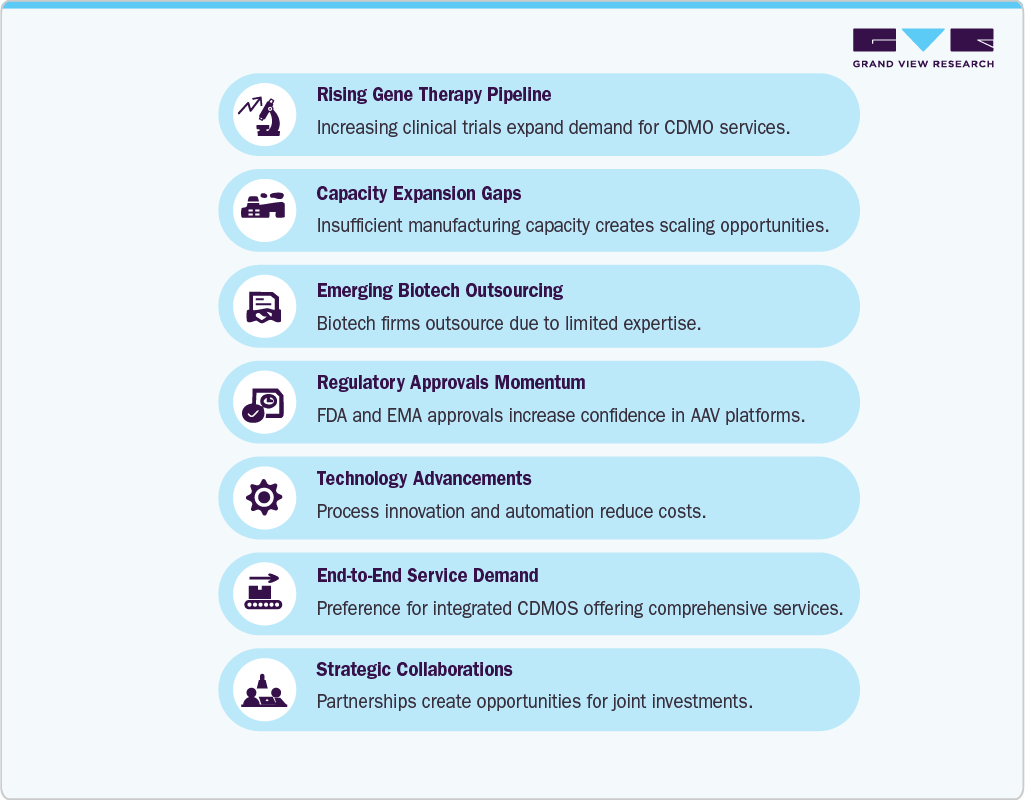
The AAV CDMO market presents strong opportunities driven by the rising gene therapy pipeline, particularly for rare diseases and neurological conditions, which is creating sustained demand for scalable viral vector manufacturing. Many small and mid-sized biotech firms lack in-house expertise, pushing them to outsource to CDMOs that offer cost-effective and integrated end-to-end solutions. Expanding regulatory approvals for AAV-based therapies are further encouraging early partnerships with manufacturers, while gaps in global capacity provide room for CDMOs to scale. Opportunities also lie in next-generation AAV development, such as capsid engineering and high-yield production systems, alongside regional growth in Asia-Pacific and Europe, where investments in gene therapy infrastructure are accelerating. Collectively, these factors position CDMOs to benefit from both short-term outsourcing needs and long-term commercial-scale manufacturing demand.
 To learn more about this report, Download Free Sample Report
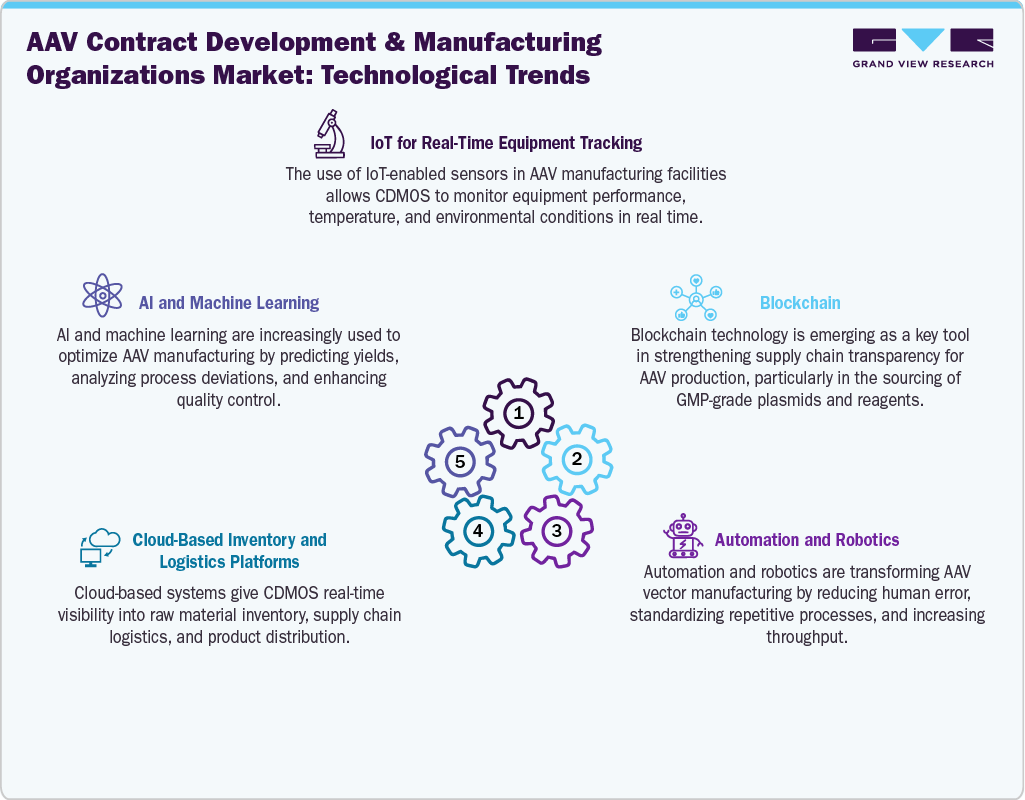
Technological Advancements
The technology landscape of AAV contract development and manufacturing organizations (CDMOs) is shaped by innovations across upstream and downstream platforms aimed at improving scalability, efficiency, and product quality. On the upstream side, HEK293 transient transfection systems remain widely used for flexibility, while Sf9/baculovirus systems support higher volumetric productivity for large-scale production. Emerging approaches, such as stable producer cell lines and helper-free systems, are gaining traction to reduce plasmid costs and enhance consistency. Advances in intensified bioprocessing, including perfusion systems, high-cell-density cultures, and single-use bioreactors, are enabling higher yields with reduced contamination risks. In terms of raw materials, the adoption of GMP-grade plasmids, chemically defined media, and specialized reagents for diverse AAV serotypes is becoming standard.
 To learn more about this report, Download Free Sample Report
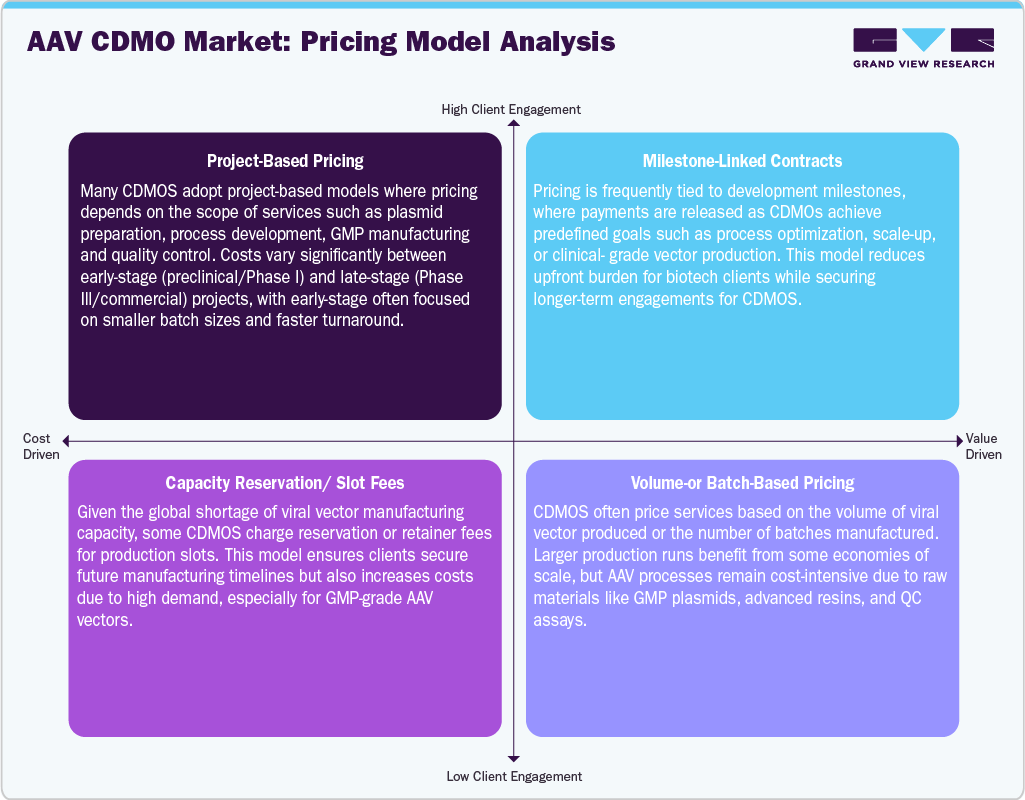
Pricing Analysis
 To learn more about this report, Download Free Sample Report
Workflow Insights
Based on workflow, the downstream processing segment led the market with the largest revenue share of 55.0% in 2025 and is expected to grow at the fastest CAGR over the forecast period. The growth of the segment is due to the increasing complexity of purification requirements for AAV vectors, where achieving high yield and purity is critical for clinical and commercial use. Removal of impurities such as host cell DNA, host proteins, and empty capsids requires advanced purification methods, including affinity chromatography, ion-exchange, and ultrafiltration systems. Rising demand for high-quality vectors that meet stringent regulatory standards has pushed CDMOs to invest heavily in sophisticated downstream technologies, including serotype-specific affinity resins and advanced separation techniques.
The upstream processing segment is anticipated to grow at a lucrative CAGR during the forecast period. The segment growth is driven due to advancements in cell culture systems, transfection methods, and bioreactor technologies that enable higher productivity of AAV vectors. Increasing adoption of suspension-based HEK293 and Sf9 insect cell platforms has improved scalability and flexibility, making upstream operations more efficient for both clinical and commercial manufacturing.
Culture Insights
Based on culture type, the adherent culture segment led the market with the largest revenue share of 58.2% in 2025. The growth of the segment is due to its long-standing use as the traditional method for producing AAV vectors, particularly during early-stage research and clinical development. Adherent-based systems, often relying on HEK293 cells grown on fixed surfaces, are favored for their well-established protocols, reproducibility, and ability to generate high-quality viral vectors in smaller batch sizes.Many early clinical trials continue to utilize adherent cultures because of their suitability for low-to-medium scale production and the lower upfront infrastructure investment compared to suspension systems.
The suspension culture segment is anticipated to grow at the fastest CAGR during the forecast period. The segment growth is due to its ability to support large-scale, cost-effective production of AAV vectors, which is essential as gene therapies advance into late-stage clinical trials and commercialization. Suspension-based systems, such as HEK293 or Sf9 cells in serum-free, stirred-tank bioreactors, offer higher volumetric productivity and easier scalability compared to traditional adherent cultures. The flexibility to rapidly adjust batch volumes and integrate automated bioprocessing makes suspension culture ideal for meeting increasing demand.
Application Insights
In terms of application, the market is segregated into cell & gene therapy development, vaccine development, biopharmaceutical and pharmaceutical discovery, and biomedical research. Based on application, the cell & gene therapy development segment led the market with the largest revenue share of 39.4% in 2025, owing to the rapid growth of gene therapy pipelines targeting rare genetic disorders, neurological conditions, and ophthalmic diseases. Increasing approvals of AAV-based therapies and a surge in clinical trials have fueled demand for high-quality viral vectors, driving reliance on CDMOs for scalable and compliant manufacturing.
The biopharmaceutical and pharmaceutical discovery segment is anticipated to grow at a lucrative CAGR during the forecast period. The segment growth is due to the increasing reliance of drug developers on AAV vectors for preclinical studies, target validation, and early-stage therapeutic development. Outsourcing vector production to CDMOs allows companies to focus on research and development while ensuring access to high-quality, reproducible viral vectors. Advances in vector engineering, including tissue-specific targeting and capsid optimization, are expanding the range of applications in drug discovery, further driving the segments demand.
End Use Insights
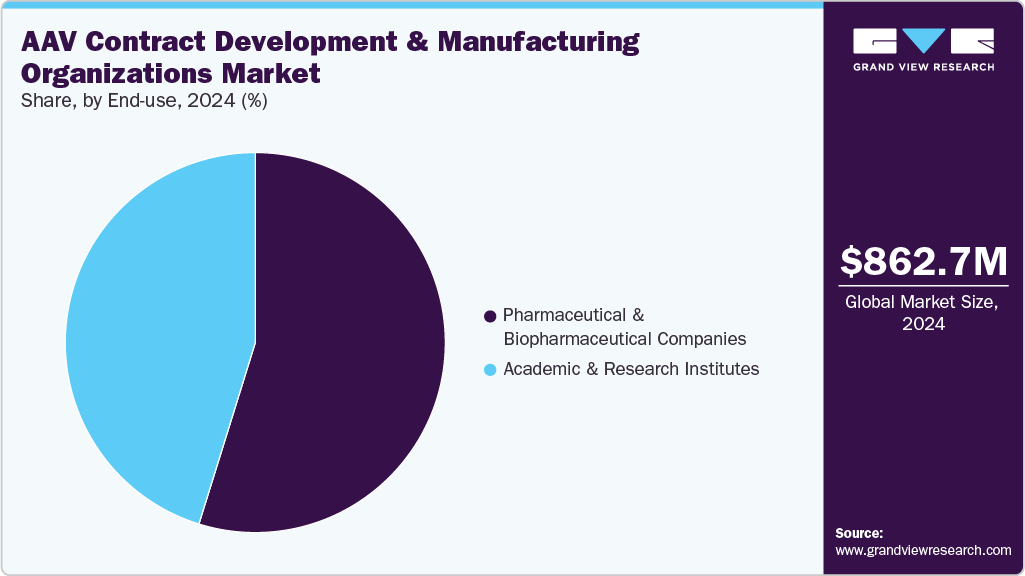
Based on end use, the pharmaceutical and biopharmaceutical companies segment led the market with the largest revenue share of 55.5% in 2025, owing to the increasing outsourcing of AAV vector manufacturing to specialized CDMOs by firms developing gene therapies and advanced biologics. These companies require scalable, GMP-compliant production to support clinical trials and commercial launches, making CDMO partnerships essential. The high complexity of AAV production, coupled with the need for regulatory adherence and consistent quality, drives reliance on experienced contract manufacturers rather than in-house capabilities.
 To learn more about this report, Download Free Sample Report
The academic & research institutes segment is anticipated to grow at a considerable CAGR during the forecast period. The segment growth is driven by the increasing adoption of AAV vectors in preclinical studies, gene function research, and proof-of-concept experiments. Academic labs and research organizations often lack the infrastructure and expertise for large-scale viral vector production, making outsourcing to CDMOs a cost-effective and efficient solution. Rising funding for genetic and rare disease research, coupled with collaborations between universities and biotech companies, is further boosting demand for reliable AAV manufacturing support.
Regional Insights
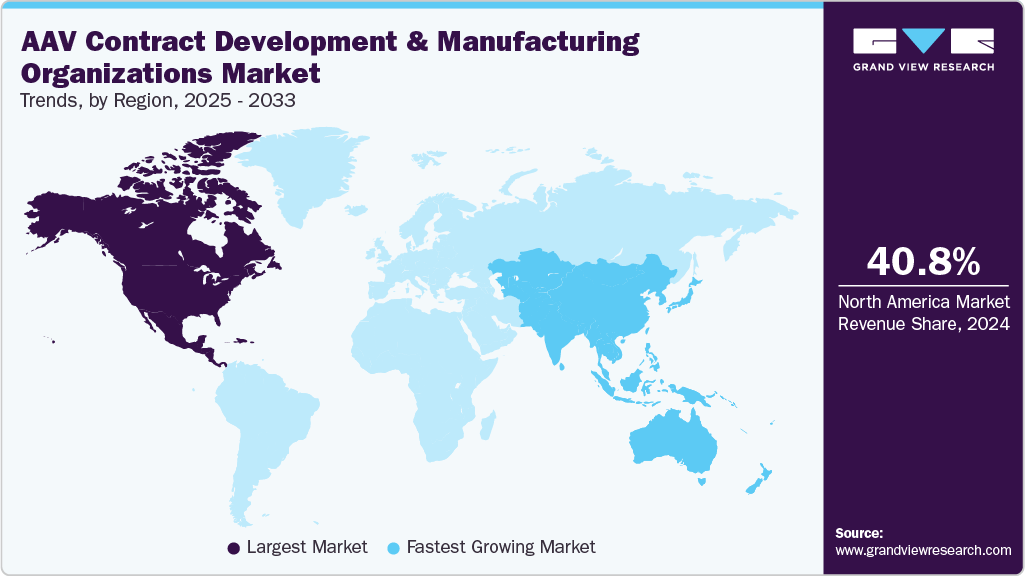
North America dominated the AAV contract development and manufacturing organizations market with the largest revenue share of 40.8% in 2025. This is attributed tothe strong presence of leading biotech and pharmaceutical companies, advanced manufacturing infrastructure, and high investment in gene therapy R&D.
 To learn more about this report, Download Free Sample Report
U.S. AAV Contract Development And Manufacturing Organizations Market Trends
The AAV contract development and manufacturing organizations market in the U.S. held the largest share in the North America region in 2025. The country’s growth is due tohigh concentration of biopharmaceutical and gene therapy companies, which require specialized AAV manufacturing expertise. The complexity of clinical- and commercial-grade vector production encourages outsourcing to CDMOs.
Europe AAV Contract Development And Manufacturing Organizations Market Trends
The adeno-associated virus contract development and manufacturing organizations industry in Europe is expected to grow significantly due to supportive regulatory frameworks, growing clinical trials, and strong biotech ecosystems. Companies in the region increasingly rely on CDMOs to handle complex vector manufacturing, ensuring quality and compliance while accelerating therapy development.
The AAV contract development and manufacturing organizations industry in Germany held a significant share in 2024, owing to the country’s strong biopharma R&D, clinical trial activity, and government incentives for advanced therapies. Its manufacturing base and skilled workforce make it a preferred hub for CDMO expansion.
The AAV contract development and manufacturing organizations industry in the UK held a significant share in 2024. The growth of the market is due to gene therapy research programs and early-stage clinical development. Biotech firms and academic institutions seek CDMOs for scalable, GMP-compliant vector production to move therapies from lab to clinic efficiently.
Asia Pacific AAV Contract Development And Manufacturing Organizations Market Trends
Asia Pacific AAVcontract development and manufacturing organizations industry is anticipated to witness the fastest CAGR over the forecast period, owing to increasing biotech activity, government incentives, and emerging clinical trial infrastructure. Cost-effective manufacturing, scalable solutions, and opportunities for technology transfer make CDMOs essential partners for both local and international companies.
The AAV contract development and manufacturing organizations industry in China held the largest share in 2024. The growth is due to a surge in biotech startups, government support for advanced therapies, and a growing clinical trial pipeline. CDMOs offering scalable, high-quality, and cost-effective AAV production are critical to meeting rising domestic and global demand.
The AAV contract development and manufacturing organizations industry in Japan is expected to grow over the forecast period. The country’s growth is due toregenerative medicine initiatives and gene therapy research. CDMOs providing process development, GMP-grade vector production, and regulatory support are increasingly sought to accelerate clinical programs.
The AAV contract development and manufacturing organizations industry in India is anticipated to grow at a lucrative CAGR over the forecast period. The country’s market growth is due to the lower operational costs, skilled scientific workforce, and growing R&D investments from both domestic and multinational companies.
Key AAV Contract Development and Manufacturing Organizations Company Insights
The major players operating across the market are focused on adopting in-organic strategic initiatives such as mergers, partnerships, acquisitions, among others. Moreover, companies focus on technological innovations to augment their market position. For instance, in October 2024, Thermo Fisher Inc. launched its Accelerator Drug Development platform, offering 360° CDMO and CRO services to streamline drug discovery and development.
Key AAV Contract Development and Manufacturing Organizations Companies:
The following are the leading companies in the AAV contract development and manufacturing organizations market.
- Thermo Fischer Scientific, Inc.
- Creative Biogene
- Catalent Inc.
- Charles River Laboratories International, Inc.
- Danaher (Aldevron)
- Forge Biologics
- Genezen
- ViroCell Biologics
- Merck KGaA
- VIRALGEN
- Biovian Oy
- Esco Lifesciences (Esco Aster Pte. Ltd.)
- GenScript ProBio
- Porton Advanced Solution Ltd
- Ask Bio
- Showa Denko
- Takara Bio, Inc.
- ABL Manufacturing
- Oxford Biomedica
- Belief Biomed, Inc.
- Beijing Anlong Biomedicine Co., Ltd
- Forecyte Bio Limited
- Gene Pharma, Inc.
- Skyline Therapeutics
- TFBS Bioscience, Inc.
Competitive Benchmarking
Category
Operating Strategies
Competitive Edge
Weakness
Established Players (Thermo Fisher Scientific, Inc.; Catalent Inc.; Charles River Laboratories International, Inc.)
- Established players focus on end-to-end AAV CDMO services, GMP capacity expansion, integrated analytical testing, process optimization, and global client partnerships. They prioritize scalable platforms, regulatory-compliant manufacturing, technology transfer, and long-term supply agreements with pharmaceutical and biotechnology companies developing late-stage and commercial gene therapy programs.
- Established players benefit from strong global infrastructure, validated GMP facilities, regulatory experience, broad service portfolios, and established sponsor relationships. Their ability to support process development, clinical manufacturing, commercial-scale production, quality control, and fill-finish under one network strengthens client retention and positions them as preferred partners for complex AAV programs.
- Established players may face capacity allocation challenges, higher service pricing, longer project onboarding timelines, and operational complexity across large manufacturing networks. Their standardized platforms can also reduce flexibility for early-stage or highly customized AAV projects, creating opportunities for specialized CDMOs offering faster turnaround and tailored development support.
Emerging Players (Creative Biogene; Forge Biologics; Genezen)
- Emerging players focus on specialized AAV vector development, flexible manufacturing models, niche technology platforms, and faster project execution. They target early-stage biotechnology firms, academic spinouts, and regional gene therapy developers by offering customized process development, research-grade to clinical-grade manufacturing, analytical support, and collaborative development partnerships.
- Emerging players benefit from agility, specialized AAV expertise, flexible client engagement, and faster decision-making. Their focused service models, customized workflows, and willingness to support smaller or early-stage programs allow them to capture demand from sponsors seeking responsive partners for preclinical, Phase I, and technology-transfer-driven AAV manufacturing needs.
- Emerging players often have limited GMP capacity, smaller geographic reach, lower commercial manufacturing experience, and weaker regulatory track records compared with established CDMOs. They may also face funding constraints, dependence on limited client pipelines, and challenges scaling operations to support late-stage clinical or commercial AAV manufacturing demand.
Recent Developments
-
In May 2024, Catalent entered into a partnership agreement with Siren Biotechnology, which aims to provide process development and cGMP manufacturing of Siren Biotechnology's AAV vector-based therapeutic candidates.
-
In July 2024, Charles River Laboratories entered into a partnership agreement with AAVantgarde to support their Stargardt’s disease program. The company will be responsible for developing the plasmid DNA required for the therapy.
AAV Contract Development And Manufacturing Organizations Market Report Scope
Report Attribute
Details
Market size in 2024
USD 862.7 million
Estimated market size in 2026
USD 1,206.9 million
Projected market size by 2033
USD 3,490.3 million
Growth rate
CAGR of 16.5% from 2025 to 2033
Actual data
2021 - 2024
Forecast period
2025 - 2033
Quantitative units
Revenue in USD million/billion and CAGR from 2025 to 2033
Report coverage
Revenue forecast, company ranking, competitive landscape, growth factors, and trends
Segments covered
Workflow, culture, application, end use, region
Regional scope
North America; Europe; Asia Pacific; Latin America; MEA
Country scope
U.S.; Canada; Mexico; UK; Germany; France; Italy; Spain; Norway; Denmark; Sweden; Japan; China; India; Australia; South Korea; Thailand; Brazil; Argentina; South Africa; Saudi Arabia; Kuwait; UAE; Oman; Qatar
Key companies profiled
Thermo Fischer Scientific, Inc.; Creative Biogene; Catalent Inc.; Charles River Laboratories International, Inc.; Danaher (Aldevron); Forge Biologics; Genezen; ViroCell Biologics; Merck KGaA; VIRALGEN; Biovian Oy; Esco Lifesciences (Esco Aster Pte. Ltd.); GenScript ProBio; Porton Advanced Solution Ltd.; Ask Bio; Showa Denko; Takara Bio, Inc.; ABL Manufacturing; Oxford Biomedica; Belief Biomed, Inc.; Beijing Anlong Biomedicine Co. Ltd.; Forecyte Bio Limited; Gene Pharma, Inc.; Skyline Therapeutics; TFBS Bioscience, Inc.
Customization scope
Free report customization (equivalent up to 8 analysts working days) with purchase. Addition or alteration to country, regional & segment scope.
Pricing and purchase options
Avail customized purchase options to meet your exact research needs. Explore purchase options
Global AAV Contract Development And Manufacturing Organizations Market Report Segmentation
This report forecasts revenue growth at global, regional, and country levels and provides an analysis of the latest industry trends in each of the sub-segments from 2021 to 2033. For this study, Grand View Research has segmented the global AAV contract development and manufacturing organizations market report based on workflow, culture, application, end use, and region.
-
Workflow Outlook (Revenue, USD Million, 2021 - 2033)
-
Upstream Processing
-
Vector Amplification & Expansion
-
Vector Recovery & Harvesting
-
-
Downstream Processing
-
Purification
-
Fill Finish
-
-
-
Culture Outlook (Revenue, USD Million, 2021 - 2033)
-
Adherent Culture
-
Suspension Culture
-
-
Application Outlook (Revenue, USD Million, 2021 - 2033)
-
Cell & Gene Therapy Development
-
Vaccine Development
-
Biopharmaceutical and Pharmaceutical Discovery
-
Biomedical Research
-
-
End Use Outlook (Revenue, USD Million, 2021 - 2033)
-
Pharmaceutical and Biopharmaceutical Companies
-
Academic & Research Institutes
-
-
Regional Outlook (Revenue, USD Million, 2021 - 2033)
-
North America
-
U.S.
-
Canada
-
Mexico
-
-
Europe
-
UK
-
Germany
-
France
-
Italy
-
Spain
-
Denmark
-
Norway
-
Sweden
-
-
Asia Pacific
-
Japan
-
China
-
India
-
Australia
-
South Korea
-
Thailand
-
-
Latin America
-
Brazil
-
Argentina
-
-
Middle East and Africa (MEA)
-
South Africa
-
Saudi Arabia
-
UAE
-
-
Research Methodology
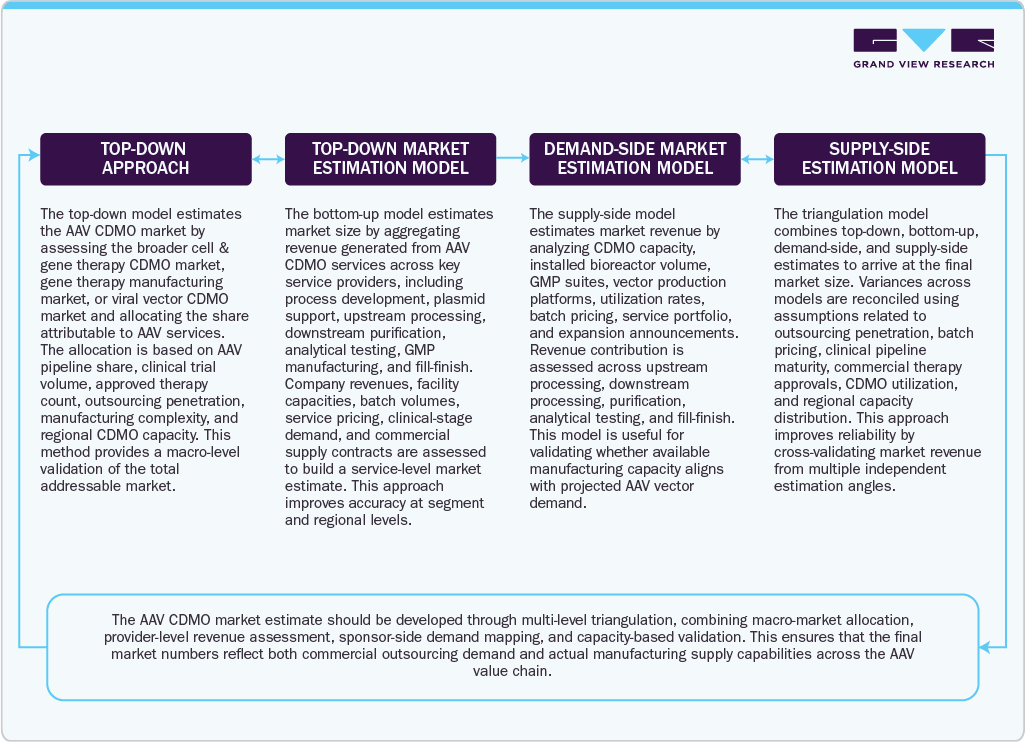
The AAV contract development and manufacturing organizations market figures in this report are based on a proven research process that combines executive interviews with secondary research from proprietary databases, company filings, and recognized regulatory and institutional sources. Market size is built through value-chain sizing - reconciling supply-side and demand-side estimates - and triangulated with bottom-up and top-down approaches. Every estimate passes multiple levels of expert validation before publication, with each AAV contract development and manufacturing organizations segment quantified using the revenue-capture definitions in the table below.
Segment Definition
Segment - Workflow
Definition
Upstream Processing
The segment captures revenue generated by providing CDMO services for AAV upstream processing to end users. The segment includes cell line or producer cell preparation, plasmid transfection, cell culture expansion, bioreactor operation, media optimization, process parameter control, and production of AAV vectors prior to recovery and purification.
Vector Amplification & Expansion
The segment covers revenue generated by providing CDMO services for AAV vector amplification and expansion to end users. The segment includes producer cell expansion, seed train development, transient transfection or helper virus-based amplification, bioreactor scale-up, media feeding strategies, and process optimization to increase AAV vector yield.
Vector Recovery & Harvesting
The segment includes revenue generated by providing CDMO services for AAV vector recovery and harvesting to end users. The segment includes cell lysis, clarification, harvest collection, removal of cell debris, nuclease treatment, primary filtration, and preparation of crude AAV harvest for downstream purification workflows.
Downstream Processing
The segment captures revenue generated by providing CDMO services for AAV downstream processing to end users. The segment includes clarification, concentration, purification, buffer exchange, impurity removal, sterile filtration, analytical testing support, and preparation of purified AAV vectors for final drug product manufacturing.
Purification
The segment covers revenue generated by providing CDMO services for AAV purification to end users. The segment includes chromatography, ultrafiltration/diafiltration, removal of host cell proteins, residual DNA, empty capsids, process-related impurities, and enrichment of full AAV capsids to meet quality and regulatory requirements.
Fill Finish
The segment captures revenue generated by providing CDMO services for AAV fill finish to end users. The segment includes formulation, sterile filtration, aseptic filling, vial or syringe filling, stoppering, capping, visual inspection, labeling, packaging support, and final drug product preparation under GMP-compliant conditions.
Segment - Culture
Revenue capture definition
Adherent Culture
The segment captures revenue generated by providing CDMO services for AAV adherent culture to end users. The segment includes cell expansion on fixed surfaces, use of roller bottles, cell factories, multilayer vessels, or microcarriers, transfection support, culture optimization, harvest preparation, and small- to mid-scale AAV vector production workflows.
Suspension Culture
The segment covers revenue generated by providing CDMO services for AAV suspension culture to end users. The segment includes suspension-adapted producer cell expansion, stirred-tank bioreactor processing, scalable transfection or infection workflows, media optimization, process monitoring, harvest preparation, and large-scale AAV vector production workflows.
Segment - Application
Revenue capture definition
Cell & Gene Therapy Development
The segment captures revenue generated by providing CDMO services for AAV cell & gene therapy development to end users. The segment includes AAV vector process development, plasmid production support, preclinical and clinical vector manufacturing, GMP production, analytical testing, scale-up, technology transfer, and manufacturing support for gene therapy and ex vivo cell therapy programs.
Vaccine Development
The segment covers revenue generated by providing CDMO services for AAV vaccine development to end users. The segment includes AAV vector design support, process development, vector production, purification, formulation, stability testing, analytical characterization, and GMP manufacturing support for vaccine candidates using AAV-based delivery platforms.
Biopharmaceutical and Pharmaceutical Discovery
The segment includes revenue generated by providing CDMO services for AAV biopharmaceutical and pharmaceutical discovery to end users. The segment includes research-grade AAV vector production, vector engineering support, assay material supply, target validation support, gene delivery platform development, early-stage screening, and preclinical material manufacturing.
Biomedical Research
The segment captures revenue generated by providing CDMO services for AAV biomedical research to end users. The segment includes custom AAV vector production, serotype selection support, small-batch research-grade manufacturing, gene expression studies, disease model support, academic research material supply, and analytical testing for nonclinical research applications.
Segment - End Use
Revenue capture definition
Pharmaceutical and Biopharmaceutical Companies
The segment captures revenue generated by providing CDMO services for AAV pharmaceutical and biopharmaceutical company end users. The segment includes process development, analytical development, GMP-grade AAV vector manufacturing, scale-up, technology transfer, quality control testing, regulatory support, clinical and commercial supply, and fill-finish services for company-sponsored cell and gene therapy programs.
Academic & Research Institutes
The segment covers revenue generated by providing CDMO services for AAV academic and research institute end users. The segment includes research-grade AAV vector production, custom vector design support, small-batch manufacturing, serotype selection, plasmid support, assay material supply, analytical characterization, and nonclinical vector supply for university, hospital, and government-funded research programs.
Estimation Model
 To learn more about this report, Download Free Sample Report
Delivered Customizations
This report has been delivered with the following In-depth customizations
Client Request
Customization Delivered
Value Adds
Advanced Cross-Segmentation Assessment
Detailed analysis can be delivered across workflow, culture, application, and end-use combinations, such as suspension culture-based upstream processing for cell & gene therapy, purification demand for pharmaceutical sponsors, and fill-finish requirements for clinical-stage AAV programs.
Supported to identify high-growth service pockets, workflow-level outsourcing demand, and priority combinations supporting revenue expansion in the AAV-CDMO market.
Regional Expansion & Market Entry Assessment
Country-level analysis can be delivered across the U.S., Canada, Germany, UK, China, Japan, India, Brazil, Saudi Arabia, and other key markets by assessing AAV pipeline activity, GMP capacity, regulatory environment, talent availability, cost competitiveness, and sponsor demand.
Supports facility expansion, regional partnership planning, market entry strategy, and prioritization of countries with strong AAV manufacturing and development potential.
Competitive Benchmarking & Capability Mapping
Competitive analysis can be delivered by benchmarking CDMOs on upstream and downstream capabilities, suspension culture adoption, purification platforms, analytical testing strength, fill-finish integration, GMP readiness, commercial-scale capacity, and technology-transfer expertise.
Provides visibility into competitive positioning, capability gaps, differentiation opportunities, and strategic collaboration or acquisition targets.
Capacity, Volume & Demand Forecasting
Volume-based assessment can be delivered by analyzing batch volume, bioreactor capacity, vector yield, utilization rate, clinical trial demand, commercial supply needs, and capacity bottlenecks across workflows, cultures, applications, end users, and regions.
Strengthens market sizing by linking revenue forecasts with manufacturing capacity, service demand, and future scale-up requirements across the AAV value chain.
Frequently Asked Questions About This Report
Some of the key players in the global AAV CDMO market are Thermo Fischer Scientific, Inc., Charles River Laboratories International, Inc., Catalent, Inc., Danaher, Oxford Biomedica, Merck KGaA, Biovian Oy, GenScript, and Ask Bio.
Increasing research and development to develop AAV-based therapeutics in cell and gene therapy and vaccines, and the rising number of corporate strategies such as expansion, merger & acquisitions, product launches drive the market growth.
The AAV contract development and manufacturing organizations market size was valued at USD 1.0 billion in 2025 and is estimated at USD 1.2 billion for 2026.
The AAV contract development and manufacturing organizations market is expected to grow at a CAGR of 16.4% from 2026 to 2033, reaching USD 3.5 billion.
Asia Pacific is the fastest-growing region over the forecast period.
The downstream processing segment led with a 16.5% revenue share in 2025 and is the fastest-growing segment.
The adherent culture segment led with a 58.2% revenue share in 2025, while suspension culture is the fastest-growing segment.
Which application segment leads the AAV contract development and manufacturing organizations market?The cell & gene therapy development segment led with a 39.4% revenue share in 2025 and is the fastest-growing segment.
The pharmaceutical and biopharmaceutical companies segment led with a 55.5% revenue share in 2025 and is the fastest-growing segment.
North America dominated with a 40.8% revenue share in 2025.
About the Author(s)
Medical Devices Research Team
Healthcare · Medical DevicesThis report was authored by the medical devices research team at Grand View Research - comprising two research analysts, one senior research analyst, and one industry expert - with specialized expertise in the medical devices segment of the healthcare industry. All findings are based on proprietary healthcare databases, executive interviews, and regulatory analysis, subject to internal peer review prior to publication.
Last Updated:
Speak to Analyst

Customize this report to your needs - add regions, segments, or data points, with 20% free customization.
Or view our licence options:


ISO 9001:2015 & 27001:2022 Certified
We are GDPR and CCPA compliant! Your transaction & personal information is safe and secure. For more details, please read our privacy policy.


