
- Home
- »
- Medical Devices
- »
-
Active Wheelchair Market Size & Share Report, 2026-2033GVR Report cover

Active Wheelchair Market (2026 - 2033)
Size, Share & Trends Analysis Report By Type (Manual Wheelchair, Powered Wheelchair), By Indication (Alzheimer's Disease, Cerebral Palsy), By Region, And Segment Forecasts
Market Size, 2025
$1.8BMarket Estimate, 2026
$1.9BMarket Forecast, 2033
$2.8BCAGR, 2026–2033
6.3%Active Wheelchair Market Summary
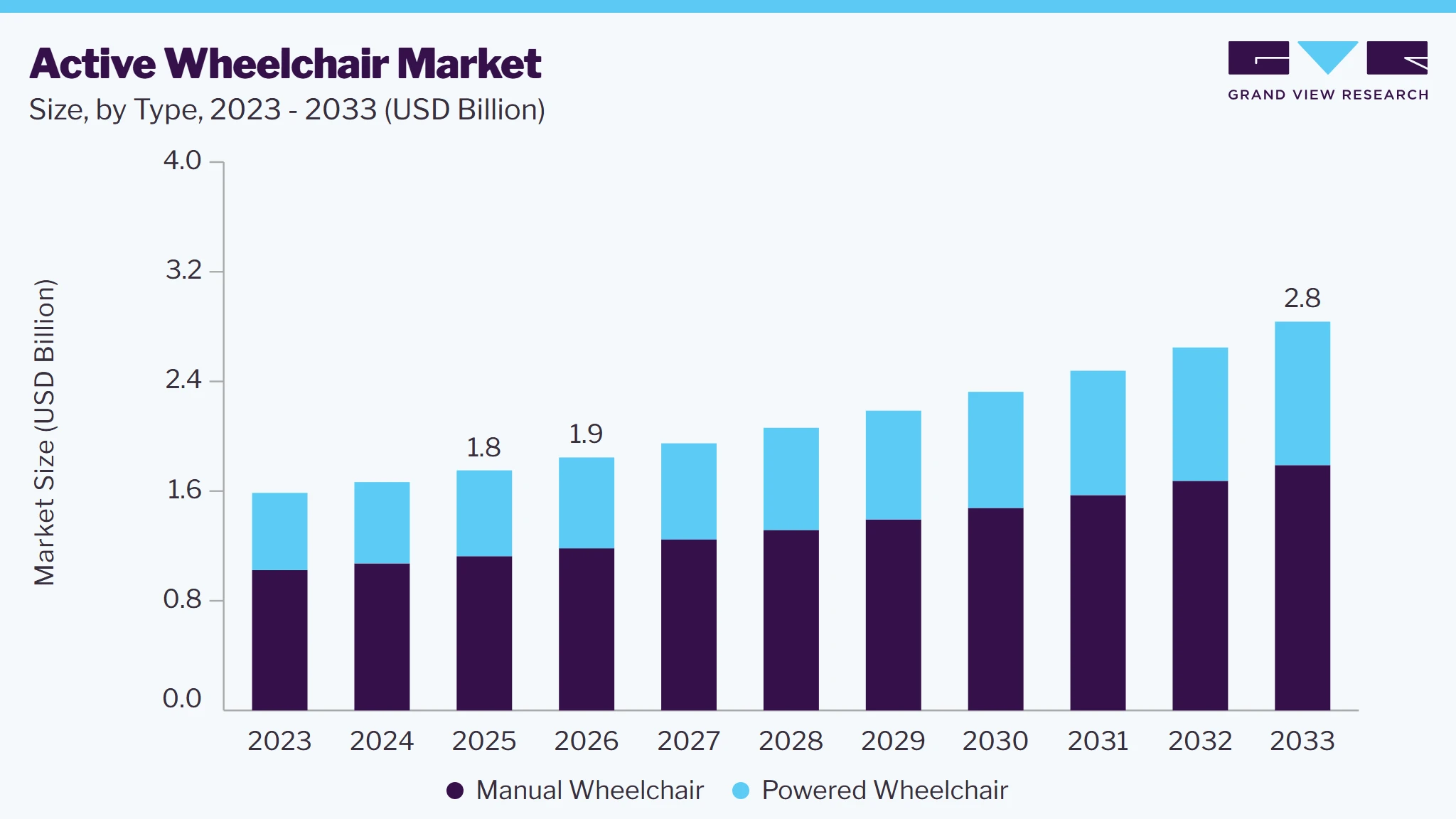
The global active wheelchair market size was valued at USD 1.8 billion in 2025 and is projected to grow from USD 1.9 billion in 2026 to USD 2.8 billion by 2033, at a CAGR of 6.3% from 2026 to 2033. North America dominated the active wheelchair market with the largest revenue share of 39.8% in 2025. Active wheelchairs are versatile, lightweight mobility aids tailored for regular and active lifestyles.
 Source: Grand View Research, IR Documents, Primary Interviews, Paid DatabasesTo learn more about this report,
 Download Free Sample Report
Key Market Trends & Insights
- By type: Manual wheelchair segment held the largest market share of 64.2% in 2025.
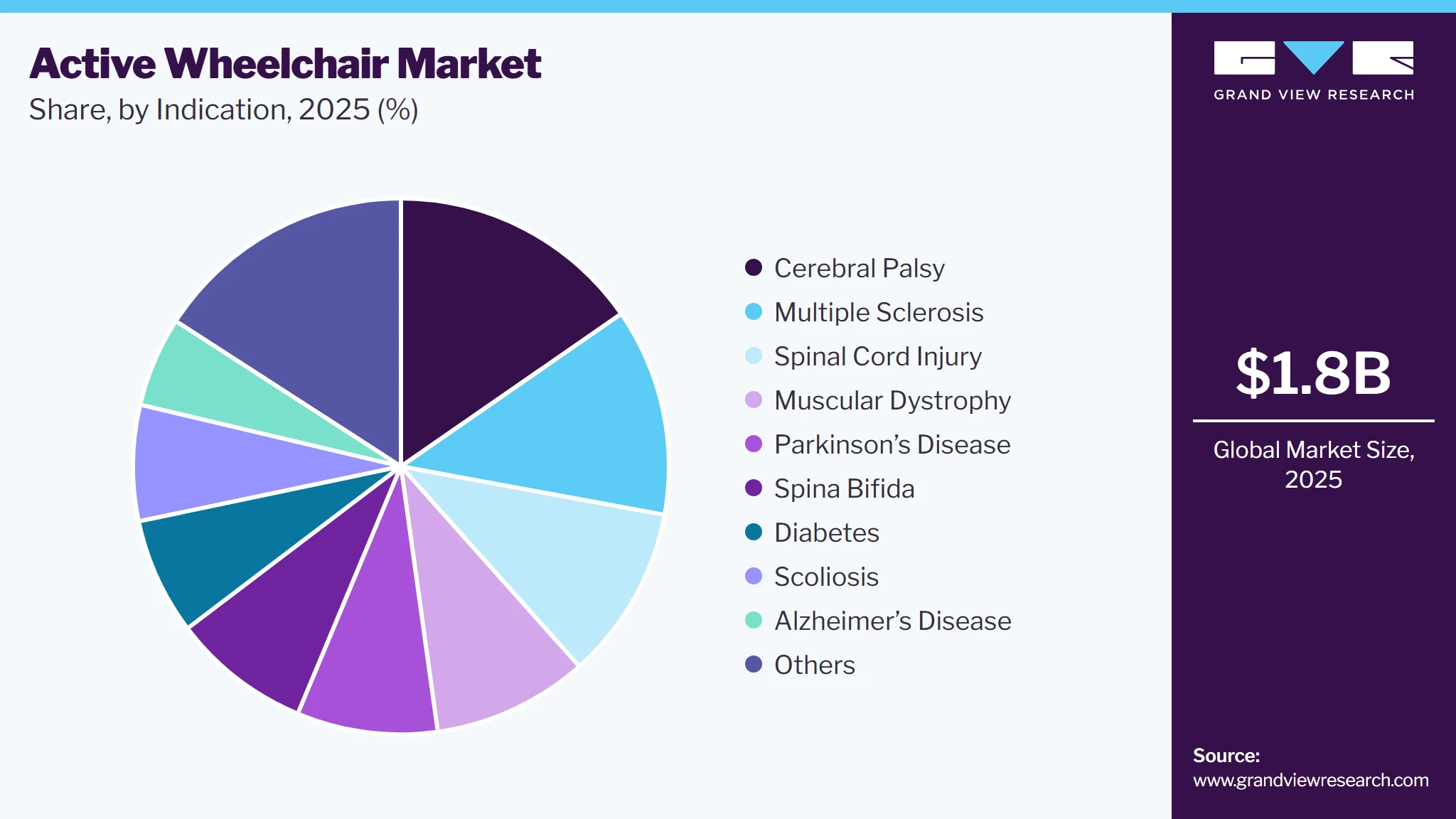
- By indication: Cerebral palsy segment held the largest market share of 15.4% in 2025.
Regional Highlights
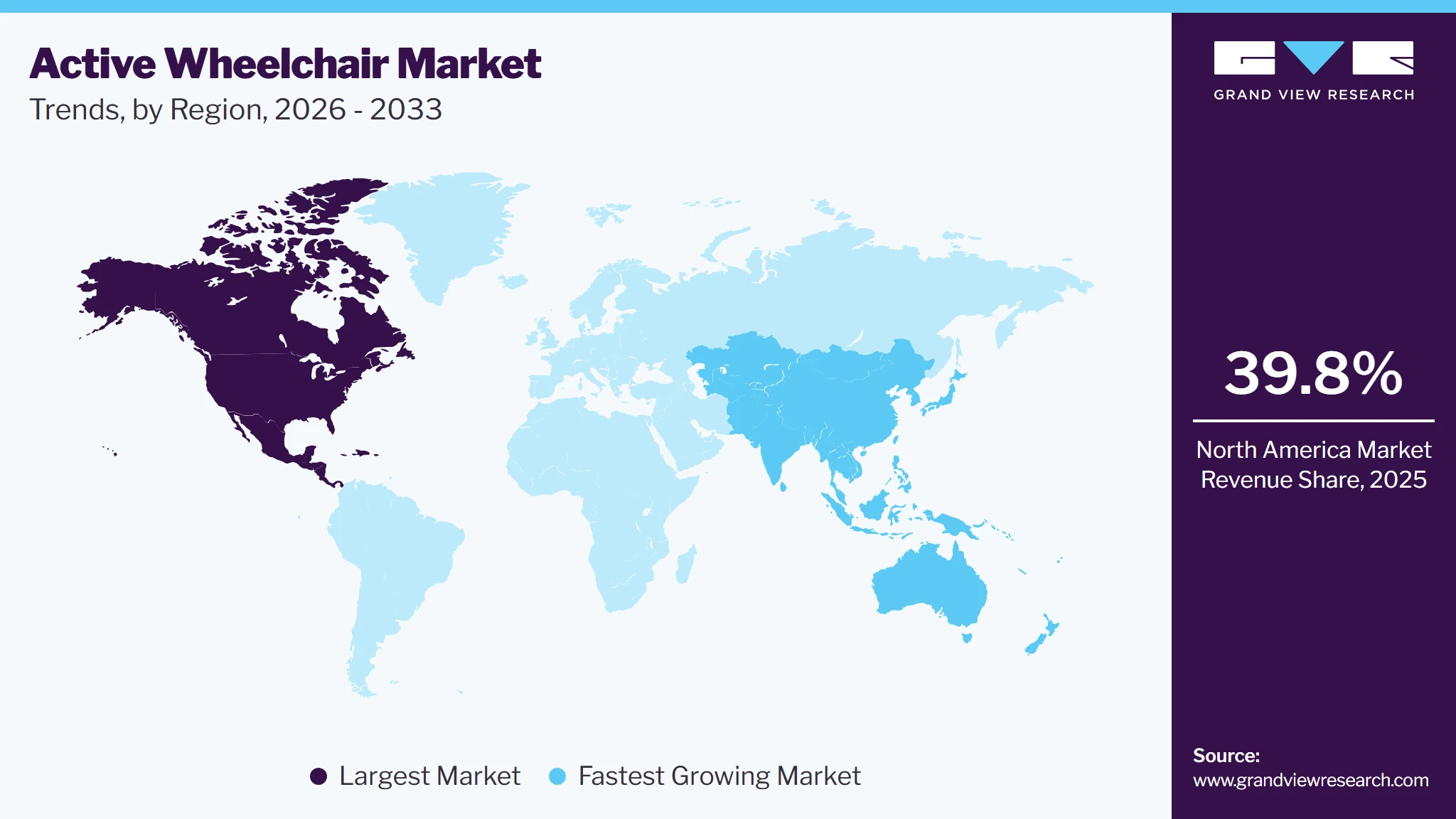
- Largest regional market: North America (39.8% revenue share, 2025)
- Fastest-growing regional market: Asia Pacific (highest CAGR, 2026-2033)
- By country: The U.S. held the largest market share in 2025.
Market Size & Forecast
- Market size in 2025: USD 1.8 Billion
- Estimated market size in 2026: USD 1.9 Billion
- Projected market size by 2033: USD 2.8 Billion
- CAGR (2026-2033): 6.3%
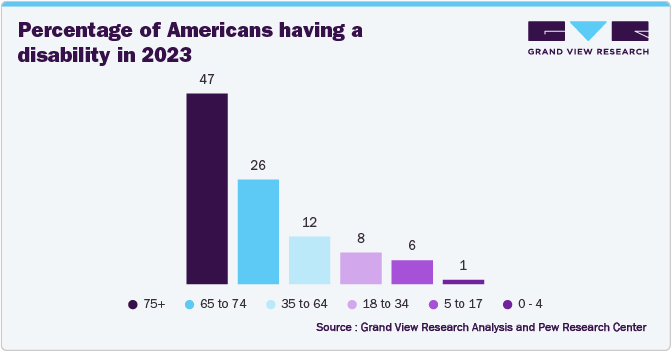
Prism AI by Grand View Research Free to tryAsk a question about the active wheelchair marketTry asking✓Every figure cited from GVR research Prefer the report? Download free sample →They are commonly used in sports and are highly steerable, customizable, and available in rigid and folding designs to meet individual preferences. The increasing number of disability cases is one of the major factors driving market growth. According to the WHO article published in March 2023, about 1.3 billion people across the globe live with significant disabilities, representing 16% of the total population. For these individuals, transportation challenges are far more severe, with disabled people facing difficulties that are 15 times greater than those encountered by individuals without disabilities.
This emphasizes the increased need for accessible, affordable mobility solutions like active wheelchairs. The substantial number of people affected by mobility limitations highlights a growing demand for advanced wheelchairs designed to improve accessibility, independence, and overall quality of life. As transportation remains a significant barrier, the active wheelchair industry is poised for growth, driven by the increasing need for enhanced mobility aids to support individuals with disabilities in their daily activities.
 To learn more about this report, Download Free Sample Report
Growing road accident cases drive market growth. According to the World Health Organization (WHO) article published in December 2023, every year, around 1.19 million population are unfortunately lost due to road traffic accidents, while an additional 20 to 50 million individuals sustain non-fatal injuries. A significant portion of these survivors are left with long-term disabilities, undescoring the critical need for advanced mobility solutions. This growing prevalence of disability caused by road accidents has fueled demand for active wheelchairs, which offer enhanced functionality and independence for individuals with mobility challenges. Active wheelchairs are designed to support rehabilitation and improve the quality of life for those affected by these life-altering incidents, driving market growth.
 To learn more about this report, Download Free Sample Report
The increasing use of mobility devices drives the growth of the market. According to the U.S. Department of Transportation, in February 2024, an estimated 5.5 million Americans rely on wheelchairs for mobility, with many facing significant challenges, particularly in air travel. The advancements in mobility solutions, as well as barriers such as inadequate accommodation and limited accessibility, continue to hinder travel experiences for wheelchair users. This ongoing issue emphasizes the need for innovative and reliable active wheelchairs that enhance mobility and address the growing demand for better accessibility, especially in public transportation like air travel.
 To learn more about this report, Download Free Sample Report
Technological advancements are another factor driving market growth. For instance, in June 2024, Ottobock UK launched Juvo B7, a technologically advanced power wheelchair designed to deliver unparalleled comfort and control for individuals with complex mobility needs. This state-of-the-art wheelchair is engineered to provide all-day support, ensuring comfort and ease of movement. The Juvo B7 is available in two drive configurations, mid-wheel, and front-wheel drive, allowing greater versatility and customization to meet each user's unique positioning and mobility requirements. Whether for indoor or outdoor use, the Juvo B7 is designed to enhance the independence and quality of life for those with specific mobility challenges, making it an ideal choice for individuals who need a reliable and adaptable mobility solution.
Market Dynamics
The active wheelchair market is experiencing steady growth, driven by the increasing prevalence of mobility impairments, rising participation of individuals with disabilities in education, employment, sports, and community activities, and growing demand for lightweight, high-performance mobility solutions. The market is further supported by continuous advancements in wheelchair design and materials, including the adoption of ultra-lightweight aluminum, titanium, and carbon fiber frames that enhance maneuverability, durability, and user comfort. Increasing awareness regarding the health benefits of active wheelchairs, such as improved posture, greater upper-body efficiency, reduced risk of secondary complications, and enhanced independence, is also contributing significantly to market growth. Favorable government initiatives promoting accessibility, disability inclusion, and rehabilitation services, along with expanding reimbursement support for mobility assistive devices in several developed countries, are further encouraging product adoption. Additionally, the growing preference for customized and user-specific wheelchairs, increasing participation in adaptive sports and recreational activities, and the rising emphasis on independent living and long-term community-based care are creating significant growth opportunities for manufacturers operating in the active wheelchair market.
The increasing number of disability cases worldwide is one of the primary factors driving the growth of the active wheelchair market. A growing population of individuals living with mobility-related disabilities caused by spinal cord injuries, musculoskeletal disorders, cerebral palsy, multiple sclerosis, stroke, traumatic injuries, lower-limb amputations, and age-related functional decline is generating sustained demand for advanced manual mobility solutions. According to the World Health Organization (WHO), approximately 1.3 billion people around one in six people globally live with a significant disability, with population ageing and the increasing burden of chronic diseases expected to further increase the prevalence of disability worldwide. This rising need for long-term mobility assistance is creating sustained growth opportunities for manufacturers of active wheelchairs and other advanced mobility devices. Unlike conventional wheelchairs, active wheelchairs are specifically designed for users with sufficient upper-body strength who require greater mobility, independence, and long-term comfort for everyday activities, education, employment, and sports. Their lightweight construction, ergonomic seating systems, and customizable configurations enable improved propulsion efficiency, reduced physical strain, and enhanced participation in community life. As healthcare systems increasingly emphasize rehabilitation, independent living, and patient-centered care, clinicians and rehabilitation specialists are recommending active wheelchairs to improve mobility outcomes and reduce secondary complications associated with prolonged wheelchair use.
The high cost of advanced active wheelchairs remains a significant restraint to the growth of the active wheelchair market, particularly in low- and middle-income countries where affordability and reimbursement limitations continue to restrict adoption. Active wheelchairs are engineered using lightweight materials such as aluminum alloys, titanium, and carbon fiber, and often incorporate highly customizable features, including adjustable seating systems, ergonomic backrests, specialized cushions, camber adjustments, and personalized frame geometries. These advanced design features improve maneuverability, comfort, and long-term mobility outcomes but also substantially increase manufacturing and purchase costs compared to standard manual wheelchairs. In addition, expenses associated with professional wheelchair assessment, customization, fitting, maintenance, replacement parts, and periodic upgrades further increase the overall cost of ownership. In many healthcare systems, reimbursement for premium or customized active wheelchairs is either limited or subject to strict eligibility criteria, leaving users to bear a considerable portion of the expense. As a result, many individuals especially those in developing regions, uninsured populations, and cost-sensitive healthcare settings continue to rely on conventional manual wheelchairs or lower-cost alternatives.
Market Concentration & Characteristics
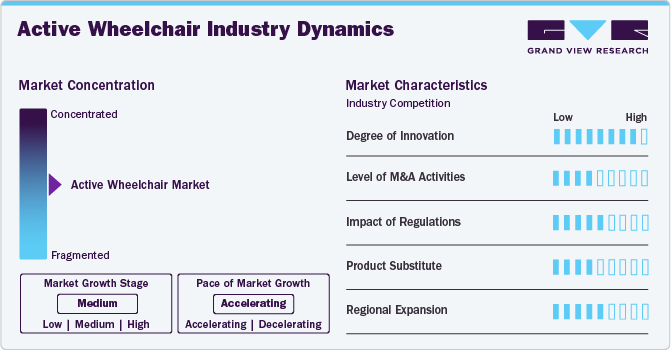
The active wheelchair industry is experiencing high advancements by incorporating advanced materials and cutting-edge technologies. Innovations in lightweight and durable materials, such as carbon fiber and titanium, are enhancing the performance and portability of these wheelchairs. In addition, improved suspension systems and customizable seating options provide users with better comfort and maneuverability, particularly those with an active lifestyle. Integrating intelligent technologies, including joystick controls, app connectivity, and advanced battery systems, further improves the user experience, ensuring greater independence and convenience.
Several active wheelchair industry players, such as Sunrise Medical, Numotion, MEYRA GmbH, Permobil, and Invacare Corporation, are involved in merger and acquisition activities. Through M&A strategies, these key players employ critical approaches such as strategic collaborations, product launches, and geographical expansion to enhance their presence and address the increasing demand for active wheelchairs. For instance, In October 2023, Sunrise Medical, a leading provider of cutting-edge mobility solutions, revealed the acquisition of Ride Designs, a prominent company known for its premium custom seating systems designed specifically for wheelchair users.
 To learn more about this report, Download Free Sample Report
Regulations are vital in the active wheelchair industry, as they guarantee product safety, performance, and quality. Although strict guidelines may result in longer approval timelines, they build consumer confidence and market reliability, advancing growth by upholding high standards for active mobility devices.
There are currently no direct substitutes. These mobility devices offer unparalleled features and benefits, such as enhanced maneuverability, customization, and support for an active lifestyle.
Leading companies in the active wheelchair industry are expanding their presence in emerging regions by collaborating with local distributors, establishing strategic alliances, and customizing their products to meet the unique healthcare needs of different populations. This approach enables them to better cater to regional demand while enhancing their competitive edge globally, driving increased market share and growth.
Analyst Perspective
The global active wheelchairs market is witnessing steady growth, driven by advancements in lightweight mobility technologies, increasing demand for personalized mobility solutions, and growing emphasis on independence and quality of life for individuals with mobility impairments. Healthcare providers and rehabilitation centers are increasingly promoting active mobility, while rising participation of wheelchair users in education, employment, sports, and recreational activities is creating growth opportunities. The increasing prevalence of spinal cord injuries, neuromuscular disorders, cerebral palsy, multiple sclerosis, and age-related mobility limitations continues to support demand. In addition, supportive government initiatives, disability inclusion policies, improved reimbursement programs, and growing focus on accessibility and independent living are further driving market expansion across developed and emerging economies.
Type Insights
Based on type, the manual wheelchair segment led the market with the largest revenue share of 64.2% in 2025 due to the growing incidence of disability cases, rising initiatives by key companies, and technological advancements. A manual wheelchair is a mobility device that requires the user to propel it using their hands on the wheels or with assistance from someone else. It is typically lightweight, compact, and designed for easy maneuverability, offering users independence and flexibility for daily activities. For instance, in May 2024, Küschall introduced the all-new Champion SL manual wheelchair, featuring a host of innovative enhancements designed to elevate the user experience. The company describes Champion SL as "engineered for travel and built for performance," highlighting its focus on mobility and functionality. This new model combines advanced design elements to deliver superior comfort, ease of use, and adaptability for active wheelchair users, making it a perfect fit for those seeking convenience and high daily performance.
The powered wheelchair segment will show lucrative growth during the forecast period. Increasing incidence of disability cases and technological advancements drive market growth. A powered wheelchair is a mobility device equipped with an electric motor designed to assist individuals with limited mobility in moving independently and comfortably. For instance, in April 2023, Sunrise Medical launched the QUICKIE Q50 R Carbon, the lightest portable power wheelchair in the QUICKIE range, with a transportation weight of just 32 lbs. This innovative wheelchair is designed for easy transportation, storage, and maneuverability, offering an excellent solution for individuals who want to stay active and independent without the challenges of a heavy or bulky mobility device. Constructed with magnesium wheels, carbon fiber frame and motors, and breathable material, the Q50 R Carbon combines lightweight design with exceptional strength, supporting up to 300 lbs.
Indication Insights
Based on indication, the cerebral palsy segment led the market with the largest revenue share of 15.4% in 2025. Increasing cerebral palsy cases, rising government initiatives, and technologically advanced product launches drive segment growth. Cerebral palsy is a neurological disorder caused by abnormal brain development or damage, affecting movement, posture, and muscle coordination. According to the Birth Injury Justice Center article published in September 2024, cerebral palsy (CP), affecting approximately 1 to 4 per 1,000 live births in the U.S., is a leading condition driving the demand for specialized mobility solutions such as active wheelchairs. With most cases about 85-90% arising from birth-related factors, individuals with CP often face unique mobility challenges. Active wheelchairs, designed for agility, independence, and customization, empower individuals with CP to lead more active and fulfilling lives, addressing their specific needs and enhancing overall mobility.
 To learn more about this report, Download Free Sample Report
The multiple sclerosis segment is expected to grow significantly during the forecast period due to several key factors. The increasing prevalence of numerous sclerosis diseases globally emphasizes the need for advanced solutions in healthcare settings to manage patient care effectively. Multiple sclerosis is a chronic condition characterized by inflammation and neurodegeneration within the central nervous system, making it one of the primary causes of neurological disability among young adults. According to the Elsevier B.V. article published in September 2024, estimated to have over 2.8 million cases worldwide, it significantly influences the demand in the active wheelchair industry. With incidence rates on the rise and a noticeable shift in MS prevalence toward older age groups, there is an increasing need for mobility solutions tailored to the unique challenges faced by individuals with this condition. Active wheelchairs, offering enhanced functionality and independence, provide critical support for those managing MS, enabling them to maintain mobility and improve their quality of life.
Regional Insights
North America dominated the active wheelchair market with the largest revenue share of 39.8% in 2025, owing to a rising incidence of disability, increasing demand for mobility solutions among the aging population, and increased government initiatives. According to the CDC, in July 2024, over one in four adults (28.7%) in the U.S. lived with some form of disability, with 12.2% experiencing mobility-related challenges such as difficulty walking or climbing stairs. This emphasizes the growing demand for innovative mobility solutions, such as active wheelchairs, which are crucial in addressing the challenges faced by individuals with mobility limitations. These wheelchairs are designed to promote greater independence, allowing users to navigate their environments quickly and confidently.
 To learn more about this report, Download Free Sample Report
U.S. Active Wheelchair Market Trends
The active wheelchair market in the U.S. held the largest share in the North America region in 2025. Increasing incidence of muscular dystrophy and increased government initiatives fuel market growth. According to the CDC article published in September 2024, about 1 in every 5,000 males aged 5-9 years, these progressive conditions increase mobility challenges over time. Active wheelchairs are essential for individuals with Duchenne and Becker muscular dystrophies, offering the functionality, adaptability, and independence needed to maintain mobility as their condition advances. This highlights the importance of advanced active wheelchair designs tailored to meet the needs of those with muscular dystrophy.
Europe Active Wheelchair Market Trends
The active wheelchair market in Europe held the second-largest revenue market share in 2024. Rising disability cases and increased government initiatives drive market growth. According to the Council of the EU and the European Council article published, in 2023, approximately 27% of the European Union population aged 16 and older was living with some form of disability, which equates to around 101 million people, or roughly one in four adults. This significant proportion of the population underscores the growing demand for mobility solutions, including active wheelchairs. As the need for enhanced mobility aids rises across Europe, active wheelchairs are becoming increasingly essential for individuals with disabilities, offering greater independence, mobility, and improved quality of life. This trend is expected to continue as the European market responds to the evolving needs of this large demographic.
Germany active wheelchair market is dominated by the highest revenue share, 24.2%, in 2024. Increasing accident and disability rates, ongoing advancements in technology, and improving healthcare infrastructure in the country. For instance, In February 2023, as per the article Statistisches Bundesamt, approximately 21,600 individuals were injured in road transport accidents, reflecting the ongoing challenges related to road safety in Germany. These figures underscore the continued need for mobility aids, as such accidents often result in injuries that require long-term mobility support. The demand for active wheelchairs is exceptionally high, as they play a crucial role in aiding recovery and improving the quality of life for those affected by road traffic-related injuries.
The active wheelchair market in the UK held the second-largest market share in 2024. Rising road accident injuries and increased government initiatives drive market growth. According to the brake article published in September 2024, In the UK, a total of 28,967 individuals were seriously injured in road traffic accidents in 2023, highlighting the significant impact of such incidents on public health and mobility. This considerable number of casualties emphasizes the ongoing need for effective mobility solutions, particularly for those requiring long-term movement assistance. As these accidents often lead to severe injuries, there is a growing demand for active wheelchairs, which provide vital support for recovery and help improve the independence and quality of life for those affected. This trend signals an increasing market potential for mobility aid in the UK.
France active wheelchair market is anticipated to witness a significant CAGR of 6.2% during the forecast period. Increased cases of disability and technological advancement drive the growth of the market. According to the lemonade article published in September 2024, in France, around 11 million individuals live with disabilities. This large demographic creates a growing demand for mobility solutions like active wheelchairs. The significant number of people requiring mobility assistance underscores the need for advanced and accessible mobility aids, driving expansion in the market. Addressing this large population's needs is crucial for improving their quality of life and independence, leading to increased market opportunities and innovation.
Asia Pacific Active Wheelchair Market Trends
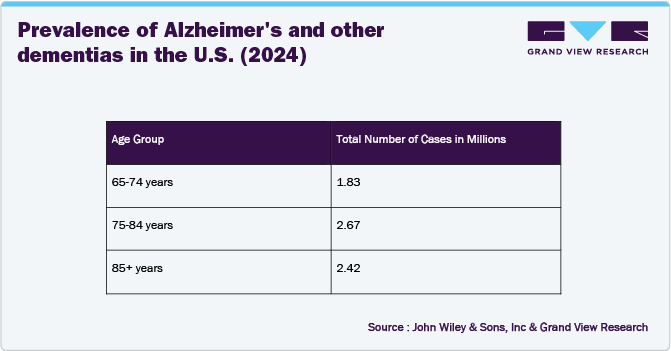
The Asia Pacific active wheelchair market in is expected to grow fastest during the forecast period. There are increasing disability cases, rising cases of Alzheimer’s disease, strategic initiatives by key players, and rising government initiatives. According to the Elsevier B.V. article published in November 2024, in the Asia Pacific region, the prevalence of Aβ-positive Alzheimer’s disease (AD) dementia varies significantly across different subregions. East Asia has the highest estimated number, with 6.6 million individuals affected, followed by South Asia with 3.9 million, high-income Asia Pacific regions with 2.5 million, and Southeast Asia with 2.4 million. This rising number of individuals living with Alzheimer’s disease highlights the growing need for mobility solutions, particularly as the disease progresses and impairs mobility. As more people in the Asia Pacific region face mobility challenges due to AD dementia, the demand for active wheelchairs is expected to increase, providing vital support for improving independence and enhancing the quality of life for affected individuals.
China active wheelchair market accounted for the second-largest share of the Asia Pacific region's market in2024. Rising number of disability cases, increasing geriatric population, technological advancements, and government initiatives. For instance, in December 2023, as per the Global Times article, the number of older people aged 60 and above has grown substantially and reached 280 million. Moreover, as per a Stanford University article published in March 2024, China faces a similar challenge, with 85 million individuals living with disabilities, which accounts for approximately 6.5 percent of its population.
The Japan active wheelchair market held the largest market share in the Asia Pacific region. Increasing disability cases and increased government initiatives drive market growth. According to the UJ Media Services article published in March 2024, in Japan, over 4 million people live with physical disabilities, with approximately 2 million relying on wheelchairs, making up about 1.57% of the population. Moreover, as per the Ministry of Health, 33.4% of individuals holding physical disability records are below 65, and 16.3% go outside daily. These figures underscore the growing need for advanced mobility solutions, such as active wheelchairs, to improve the quality of life for those facing mobility challenges. Access to effective mobility aids is crucial for supporting their independence and enabling participation in daily activities.
India active wheelchair market is experiencing significant growth. Increased road accident injuries and technological advancements drive the growth of the market. According to the Times of India article published in October 2024, road traffic accidents in India resulted in nearly 1.73 lakh fatalities and 4.63 lakh injuries, setting a record for road crash casualties in 2023. A significant portion of these deaths involved two-wheeler riders, particularly those not wearing helmets, who represented 44% of the fatalities. This alarming rise in road accidents emphasizes the need for mobility aid, as many individuals affected by such accidents may require long-term recovery support. The demand for active wheelchairs in India is expected to grow as these individuals seek solutions to regain independence and improve their quality of life after sustaining injuries in road crashes.
Latin America Active Wheelchair Market Trends
The active wheelchair market in Latin America is growing. Increasing disability cases and technologically advanced product launches. According to the NCBI article published in March 2024, in Latin America, approximately 85 million people, or 15% of the population, live with some form of disability. This sizable demographic highlights the growing demand for mobility solutions, including active wheelchairs, to support individuals in overcoming mobility challenges. As the need for advanced and accessible mobility aids increases, active wheelchairs play a crucial role in enhancing independence and improving the quality of life for those affected by disabilities across the region.
Brazil active wheelchair market is expanding due to several distinct growth drivers. The rising disability population drives the growth of the market. According to the Human Rights Watch article published in January 2024, Brazil has about 18 million individuals with disabilities, emphasizing a significant need for effective mobility solutions. This substantial population highlights the increasing demand for active wheelchairs, which offer enhanced mobility and independence for those with severe mobility challenges. As the number of people with disabilities continues to rise, the market for active wheelchairs in Brazil is expected to grow, driven by the need for advanced, supportive devices that improve daily living and overall quality of life for users.
Middle East & Africa Active Wheelchair Market Trends
The active wheelchair market in MEA is expected to grow lucratively due to the increasing number of disability cases and the increasing adoption of advanced medical technologies in the region. According to the HR Observer article published in December 2023, approximately 30 million people live with disabilities in the Middle East and Africa (MEA) region, highlighting a significant need for mobility solutions. This large population of individuals with mobility challenges underscores the growing demand for advanced mobility aids, including active wheelchairs.
South Africa active wheelchair market is growing at a CAGR of 3.7% over the forecast period. Rising disability cases and increased government initiatives drive the growth of the market. According to the Statistics South Africa article published in July 2024, with a population of approximately 62 million in 2022, around 3.3 million individuals are identified as having disabilities. This substantial number indicates a growing need for effective mobility solutions, particularly active wheelchairs. The increasing prevalence of disabilities, which impacts a significant segment of the population, underscores the importance of advanced mobility aids in enhancing independence and improving daily life for those affected. As the demand for active wheelchairs rises, driven by a larger and more diverse disabled population, the market is poised for growth, aiming to meet the needs of South Africans seeking better mobility and support.
Key Active Wheelchair Company Insights
Some key players operating in the active wheelchair industry include Sunrise Medical, Numotion, and MEYRA GmbH. The company’s key strategies include understanding the strengths and weaknesses of major market participants, anticipating future market trends, opportunities, and challenges, and making proactive decisions based on insights into emerging technologies and changing consumer preferences. For instance, Drive Medical and Mountain Trike are emerging players in the active wheelchair industry.
Key Active Wheelchair Companies
The following key companies have been profiled for this study on the active wheelchair market.
-
Sunrise Medical
-
Numotion
-
MEYRA GmbH
-
Permobil
-
Invacare Corporation
-
Pride Mobility
-
Ottobock
-
Drive Medical
-
Mountain Trike
-
Motion Composites
Competitive Benchmarking
Category
Operating Strategies
Competitive Edge
Weakness
Established Players (Sunrise Medical, Numotion, MEYRA GmbH, Permobil)
Focus on expanding premium active wheelchair portfolios with lightweight, customizable, and sports-oriented models.
Strengthen global distribution through rehabilitation centers, hospitals, dealers, and direct-to-consumer channels.
Strong brand recognition, extensive product portfolios, and established relationships with rehabilitation centers and healthcare providers.
Advanced engineering capabilities, superior product quality, customization options, and global after-sales service networks provide a competitive advantage.
High manufacturing and R&D costs increase product pricing and reduce affordability.
Stringent regulatory compliance and reimbursement requirements extend product development timelines.
Emerging Players (Drive Medical, Mountain Trike, Motion Composites)
Focus on innovative lightweight active wheelchairs using carbon fiber, titanium, and advanced aluminum materials.
Target niche segments such as sports wheelchairs, pediatric users, and highly customized mobility solutions.
Faster innovation cycles enable rapid introduction of lightweight, ergonomic, and highly customizable products.
Greater flexibility in adopting advanced materials, modular designs, and user-centric customization.
Limited financial resources and smaller distribution networks restrict global market penetration.
Lower brand recognition compared to established manufacturers affects customer adoption.
Recent Developments
-
In June 2024, Platinum Equity announced its acquisition of German wheelchair manufacturer Sunrise Medical from Nordic Capital. This transaction marks a change in ownership for the well-known mobility solutions provider.
-
In June 2024, Drive DeVilbiss Healthcare (DDH) revealed the acquisition of the complete product range from Mobility Designed, Inc. This strategic move will expand DDH's collection of innovative medical equipment and incorporate advanced industrial design expertise into its operations.
-
In April 2024,Numotion, in collaboration with the United Spinal Association and United Airlines, launched an innovative tool to assist wheelchair users in selecting flights that accommodate their mobility devices. This new feature, accessible through the United Airlines app and website, enables customers to easily find flights compatible with the specific dimensions of their wheelchairs, streamlining the travel process for individuals with mobility challenges.
-
In February 2024,Permobil introduced QuickConfig for the full range of Corpus power wheelchairs in the U.S. and Canada. Originally launched in the summer of 2023, the feature was first offered for the F5 Corpus VS and M Corpus VS standing power wheelchairs.
Active Wheelchair Market Report Scope
Report Attribute
Details
Market size in 2025
USD 1.8 billion
Estimated market size in 2026
USD 1.9 billion
Projected market size by 2033
USD 2.8 billion
Growth rate
CAGR of 6.3% from 2026 to 2033
Historical data
2021 - 2024
Forecast period
2026 - 2033
Quantitative units
Revenue in USD million/billion and CAGR from 2026 to 2033
Report coverage
Revenue forecast, company ranking, competitive landscape, growth factors, and trends
Segments covered
Type, indication, region
Regional scope
North America; Europe; Asia Pacific; Latin America; MEA
Country scope
U.S.; Canada; Mexico; Germany; UK; France; Italy; Spain; Norway; Denmark; Sweden; China; Japan; India; South Korea; Australia; Thailand; Brazil; Argentina; Saudi Arabia; South Africa; UAE; Kuwait;
Key companies profiled
Sunrise Medical; Numotion; MEYRA GmbH; Permobil; Invacare Corporation; Pride Mobility; Ottobock; Drive Medical; Mountain Trike; Motion Composites
Customization scope
Free report customization (equivalent up to 8 analysts' working days) with purchase. Addition or alteration to country, regional & segment scope.
Pricing and purchase options
Avail customized purchase options to meet your exact research needs. Explore purchase options
Global Active Wheelchair Market Report Segmentation
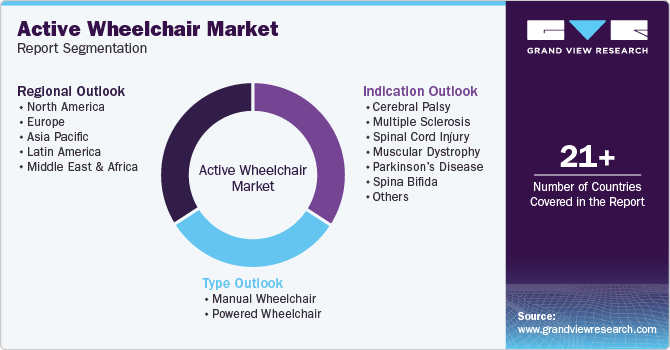
This report forecasts revenue growth at global, regional & country levels and provides an analysis of the industry trends in each of the sub-segments from 2021 to 2033. for this study, Grand View Research has segmented the global active wheelchair market report based on type, indication, and region:
 To learn more about this report, Download Free Sample Report
-
Type Outlook (Revenue, USD Million, 2021 - 2033)
-
Manual Wheelchair
-
Powered Wheelchair
-
-
Indication Outlook (Revenue, USD Million, 2021 - 2033)
-
Cerebral Palsy
-
Multiple Sclerosis
-
Spinal Cord Injury
-
Muscular Dystrophy
-
Parkinson’s Disease
-
Spina Bifida
-
Diabetes
-
Scoliosis
-
Alzheimer’s Disease
-
Amyotrophic lateral sclerosis (ALS)
-
Others
-
-
Regional Outlook (Revenue, USD Million, 2021 - 2033)
-
North America
-
U.S.
-
Canada
-
Mexico
-
-
Europe
-
UK
-
Germany
-
France
-
Italy
-
Spain
-
Denmark
-
Sweden
-
Norway
-
-
Asia Pacific
-
Japan
-
China
-
India
-
South Korea
-
Australia
-
Thailand
-
-
Latin America
-
Brazil
-
Argentina
-
-
Middle East & Africa
-
South Africa
-
Saudi Arabia
-
UAE
-
Kuwait
-
-
Research Methodology
The active wheelchair market figures in this report are based on a proven research process that combines executive interviews with secondary research from proprietary databases, company filings, and recognized regulatory and institutional sources. Market size is built through value-chain sizing - reconciling supply-side and demand-side estimates - and triangulated with bottom-up and top-down approaches. Every estimate passes multiple levels of expert validation before publication, with each active wheelchair segment quantified using the revenue-capture definitions in the table below.
Segment Definition
Segment - Type
Revenue capture definition
Manual Wheelchair
Revenue is generated through the commercialization of lightweight, ultra-lightweight, and custom-configured manual wheelchairs that rely on human power for propulsion. Manufacturers earn revenue from the upfront sale of highly specialized rigid or folding frames, adaptive seating configurations, and a continuous aftermarket stream of replaceable high-margin components such as high-performance wheels, specialized tires, ergonomic handrims, cushions, and custom backrests.
Powered Wheelchair
Revenue flows from the sale of advanced, motor-driven active mobility platforms designed for users with significant physical limitations who require motorized propulsion and positioning controls. Market participants derive substantial capital income from power base units, integrated electronic systems, and programmable proportional drive controls, alongside ongoing revenue from heavy-duty replacement batteries, complex power seating modules, and technical maintenance contracts.
Segment - Indication
Revenue capture definition
Cerebral Palsy
Revenue is captured through the provision of adaptive mobility systems tailored for individuals experiencing spasticity, posture imbalances, and variable muscle tone. Income is driven by highly customized, modular wheelchair systems integrated with specialized pediatric or adult growth-adaptive frames, extensive lateral pelvic and thoracic supports, complex head positioning accessories, and multi-point harness setups required to manage chronic spastic movements.
Multiple Sclerosis
Revenue is generated by supplying progressive, highly adjustable mobility solutions designed to adapt to a patient’s fluctuating and changing physical capabilities over time. Manufacturers monetize this segment through modular manual or power chairs equipped with flexible seating matrices, pressure-relieving cushions, and easily upgradable control interfaces that can be modified as the disease advances and muscle weakness changes.
Spinal Cord Injury
Revenue flows through the high-performance segment of ultra-lightweight manual chairs and complex power mobility devices tailored for paraplegic and tetraplegic individuals. This high-value segment captures premium margins from custom-welded titanium or carbon fiber frames, active-user wheel setups, specialized pressure-management seating systems designed to eliminate pressure injuries, and advanced power standing mechanisms that facilitate physiological and structural health.
Muscular Dystrophy
Revenue is derived from the distribution of specialized power wheelchairs configured to support progressive, profound muscle wasting. Income is anchored on advanced, lightweight power positioning systems featuring micro-joysticks or low-effort electronic controls, integrated power tilt-and-recline functions to prevent decubitus ulcers, and dynamic modular seating that can be constantly refitted to match loss of postural control.
Parkinson’s Disease
Revenue is captured through the commercialization of stabilized, safety-enhanced active mobility devices configured for individuals dealing with rigidity, bradykinesia, and resting tremors. Device companies generate income from specialized braking systems, anti-tip configurations, responsive or tension-adjustable manual wheel mechanisms, and highly supportive, ergonomic contour seating that assists with severe postural trunk lean.
Spina Bifida
Revenue is generated through pediatric and transitional youth-sized active wheelchairs engineered for congenital spinal cord exposure and lower-limb paralysis. Manufacturers secure long-term revenue loops due to the patient's biological growth, driving repetitive procurement cycles for new, larger-dimension adaptive frames, custom seating inserts, and pediatric wheel assemblies over the user's developmental lifecycle.
Diabetes
Revenue flows from mobility systems configured for individuals suffering from severe diabetic complications, including lower-limb amputations or advanced peripheral neuropathy. Market participants monetize this segment through standard-to-lightweight active wheelchairs paired with high-tier, specialized medical-grade skin-protection cushions designed to prevent deep tissue breakdown in patients with compromised vascular circulation.
Scoliosis
Revenue is captured by distributing wheelchairs integrated with custom asymmetric spinal orthopedic backrests and highly specific trunk positioning configurations. Income is driven by complex clinical seating evaluations that result in the high-margin fabrication of custom-contoured structural shells, multi-density foam backrests, and dynamic corrective lateral pads engineered to stabilize spinal curvature and distribute torso pressure evenly.
Alzheimer’s Disease
Revenue is derived from highly stable, simple-to-operate, and safety-oriented wheelchair designs engineered for patients with advanced cognitive decline. Manufacturers capture income through sturdy, tilt-recline chairs, centralized dual-braking configurations handled by caregivers, and ultra-durable, sanitizable anti-microbial fabrics that prevent wandering hazards while maintaining safe, passive seating posture.
Amyotrophic lateral sclerosis (ALS)
Revenue is generated through the deployment of rapid-response, high-end power wheelchair systems configured for fast-progressing bulbar and somatic neuromuscular degeneration. Because physical function changes rapidly, manufacturers capture significant value via fully loaded power bases pre-configured for high-tier environmental control integrations, multi-axis power seating, and eye-gaze or digital switch interface options.
Others
Revenue encompasses mobility solutions tailored for alternative physical or neurological conditions, including stroke recovery (hemiplegia-configured one-arm drives), traumatic brain injuries (TBI), severe osteoarthritis, lower-limb congenital anomalies, and general geriatric frailty requiring temporary or long-term active mechanical mobility support.
Estimation Model
Scope Definition
Build the Product Base
Estimate Penetration
Revenue Conversion
Key Question: What constitutes the active wheelchairs market and which segments are included?
Key Question: What is the potential addressable population requiring active wheelchairs?
Key Question: What proportion of eligible users adopt active wheelchairs across different regions and end-user settings?
Key Question: How is active wheelchair demand translated into market revenue?
Process Steps:
1. Define active wheelchair type categories.
2. Segment the market by type and indication.
3. Establish geographic coverage.
4. Define the base year, historical period, forecast period, inclusion/exclusion criteria, and identify key manufacturers operating in the market.Process Steps:
1. Estimate the target population with permanent mobility impairments resulting from different indications.
2. Analyze demographic trends including aging population, disability prevalence, and survival rates after traumatic injuries.
3. Assess wheelchair eligibility by evaluating individuals suitable for active wheelchairs versus standard manual or powered wheelchairs.
4. Evaluate reimbursement policies, healthcare accessibility, purchasing power, and availability of rehabilitation services across countries.Process Steps:
1. Estimate penetration of active wheelchairs among the eligible mobility-impaired population by region.
2. Assess replacement cycles, first-time purchases, and upgrade demand for lightweight and customized active wheelchairs.
3. Evaluate adoption across hospitals, rehabilitation centers, homecare settings, adaptive sports organizations, and individual consumers.
4. Analyze factors influencing adoption including product innovation, reimbursement coverage, clinician recommendations, awareness, and accessibility to customized mobility.Process Steps:
1. Determine average selling prices (ASP) across product categories, customization levels, and geographic regions.
2. Estimate annual unit shipments using manufacturer sales, distributor networks, procurement data, and replacement demand.
3. Calculate market revenue by combining unit volume with ASP and segmenting by product type, application, end-user, and geography.
4. Validate estimates using company financial reports, import/export statistics, procurement databases, primary interviews, and triangulation with industry experts.Data Sources: Regulatory databases, company product portfolios, industry publications, rehabilitation associations, government healthcare agencies.
Data Sources: WHO disability statistics, epidemiological databases, census data, national healthcare statistics, rehabilitation studies.
Data Sources: Primary interviews with industry experts, researchers, clinicians, robotics manufacturers.
Data Sources: Manufacturer price lists, distributor pricing databases, company financial reports, procurement records, e-commerce platforms.
Delivered Customizations
This report has been delivered with the following In-depth customizations
Client Request
Customization Delivered
Value Adds
Competitive Landscape Analysis
Conducted a comprehensive competitive landscape assessment of the global active wheelchairs market, covering leading manufacturers of rigid-frame, folding-frame, sports, ultra-lightweight, and customized active wheelchairs. The study evaluated company positioning, product portfolios, pricing strategies, distribution networks, regional presence, manufacturing capabilities, technological innovations, regulatory approvals, strategic partnerships, mergers & acquisitions, and new product launches. The analysis further assessed customization capabilities, lightweight material adoption (such as aluminum, titanium, and carbon fiber), wheelchair ergonomics, mobility-enhancing technologies, reimbursement strategies, and expansion initiatives across developed and emerging markets. Additionally, the assessment examined innovation trends in user-centric designs, smart mobility integration, sports wheelchair developments, and collaborations with rehabilitation centers and healthcare providers to identify competitive differentiation and future growth opportunities.
Enables stakeholders to understand the competitive dynamics, innovation landscape, and strategic positioning of key participants operating in the active wheelchairs market. The study supports informed decision-making regarding product development, geographic expansion, partnership opportunities, pricing optimization, and portfolio diversification. It also helps manufacturers benchmark competitor capabilities, identify unmet customer needs, evaluate commercialization strategies, and strengthen their presence across hospitals, rehabilitation centers, specialty mobility dealers, sports organizations, and direct-to-consumer distribution channels.
Indication Analysis
Conducted a detailed indication analysis of the global active wheelchairs market by evaluating the utilization of active wheelchairs across major medical conditions and mobility impairments. The study assessed demand patterns for spinal cord injuries, cerebral palsy, multiple sclerosis, muscular dystrophy, spina bifida, lower limb amputations, traumatic injuries, stroke-related disabilities, and other neurological and musculoskeletal disorders. The analysis examined disease prevalence, functional mobility requirements, patient demographics, rehabilitation pathways, long-term wheelchair dependency, clinical recommendations, reimbursement considerations, and adoption trends across pediatric and adult patient populations. Furthermore, the study evaluated how advancements in rehabilitation practices, increasing participation in adaptive sports, and growing emphasis on independent living influence the demand for customized and high-performance active wheelchairs across various healthcare settings.
Enables stakeholders to gain a comprehensive understanding of demand across key clinical indications and patient populations. The study supports strategic decision-making by identifying high-growth therapeutic segments, evolving rehabilitation needs, and patient-specific mobility requirements. It assists manufacturers in optimizing product portfolios, prioritizing R&D investments, developing indication-focused solutions, identifying emerging application opportunities, and strengthening collaborations with rehabilitation specialists, hospitals, and patient advocacy organizations.
Macroeconomic Analysis
Conducted a detailed macroeconomic assessment of the global factors influencing the active wheelchairs market. The study evaluated the impact of healthcare expenditure, public reimbursement policies, disability support programs, inflationary trends, disposable income levels, aging demographics, urbanization, manufacturing costs, raw material price fluctuations (including aluminum, titanium, and carbon fiber), supply chain dynamics, international trade policies, import-export regulations, and currency fluctuations affecting wheelchair production and commercialization. The analysis further examined government initiatives promoting accessibility, investments in rehabilitation infrastructure, demographic shifts, workforce participation among individuals with disabilities, and economic conditions influencing the affordability and adoption of active wheelchairs across developed and emerging economies.
Enables stakeholders to assess economic opportunities and potential risks influencing market expansion and long-term investment decisions. The study provides actionable insights for regional market prioritization, pricing strategies, manufacturing optimization, supply chain resilience, and capacity planning. It also helps organizations anticipate the impact of economic cycles, reimbursement reforms, demographic transitions, trade policy changes, and healthcare infrastructure investments on future demand, allowing businesses to develop sustainable growth strategies across global markets.
Frequently Asked Questions About This Report
Key factors that are driving the active wheelchair market growth include the increasing geriatric and disabled population, increasing prevalence of chronic diseases, and technological advancement in the active wheelchairs industry.
The global active wheelchair market size was valued at USD 1.8 billion in 2025 and is estimated at USD 1.9 billion for 2026.
The global active wheelchair market is expected to grow at a CAGR of 6.3% from 2026 to 2033, reaching USD 2.8 billion by 2033.
Based on type, the manual wheelchair segment accounted for a share of 64.2% in 2025 primarily due to affordability, lightweight designs, customization options, and growing demand for greater mobility and independence among users with mobility impairments.
Some key players operating in the active wheelchair market include Sunrise Medical, Numotion, MEYRA GmbH, Permobil, Invacare Corporation, Pride Mobility, Ottobock, Drive Medical, Mountain Trike, Motion Composites
North America dominated the active wheelchair market with a share of 39.8% in 2025. This is attributable to the growing prevalence of mobility impairments, rising geriatric population, increasing healthcare expenditure, and greater adoption of advanced mobility solutions.
Asia Pacific is the fastest-growing region over the forecast period.
By indication, the spinal cord injury segment expected to witness fastest CAGR over the forecast period.
About the Author(s)
Medical Devices Research Team
Healthcare · Medical DevicesThis report was authored by the medical devices research team at Grand View Research - comprising two research analysts, one senior research analyst, and one industry expert - with specialized expertise in the medical devices segment of the healthcare industry. All findings are based on proprietary healthcare databases, executive interviews, and regulatory analysis, subject to internal peer review prior to publication.
Last Updated:
Speak to Analyst

Customize this report to your needs - add regions, segments, or data points, with 20% free customization.
Or view our licence options:


ISO 9001:2015 & 27001:2022 Certified
We are GDPR and CCPA compliant! Your transaction & personal information is safe and secure. For more details, please read our privacy policy.


