
- Home
- »
- Medical Devices
- »
-
Wheelchair Market Size, Share & Trends Report, 2026-2033GVR Report cover

Wheelchair Market (2026 - 2033)
Size, Share & Trends Analysis Report By Product (Manual, Electric), By Age Group (Adult, Pediatric, Geriatric), By End Use (Homecare, Hospitals, Ambulatory Surgical Centers, Rehabilitation Centers), By Region, And Segment Forecasts
Market Size, 2025
$8.9BMarket Estimate, 2026
$10.0BMarket Forecast, 2033
$21.8BCAGR, 2026–2033
10.8%Wheelchair Market Summary
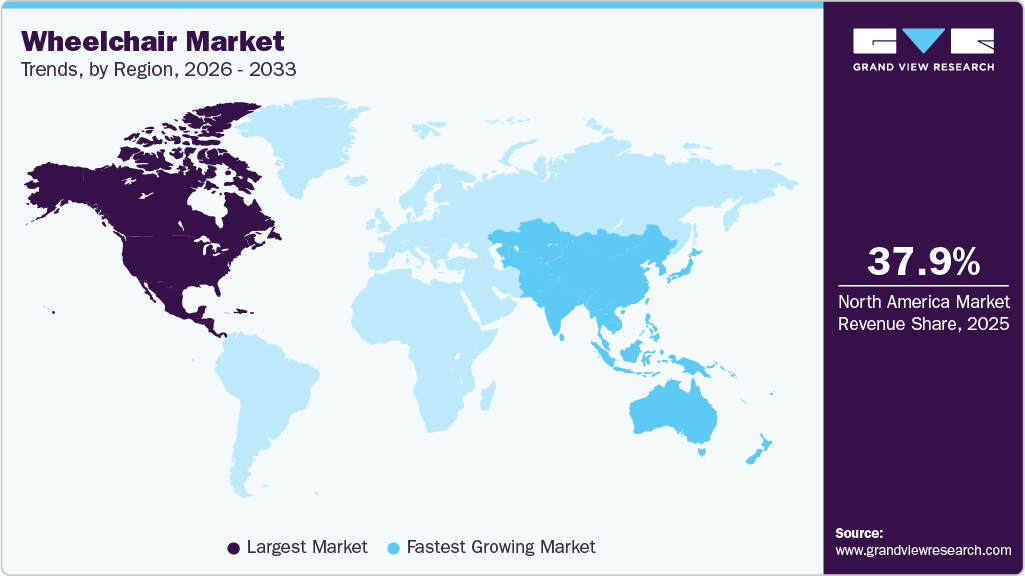
The global wheelchair market size was valued at USD 8.9 billion in 2025 and is projected to grow from USD 10.0 billion in 2026 to USD 21.8 billion by 2033, at a CAGR of 10.8% from 2026 to 2033. The market in North America dominated with a revenue share of 38.0% in 2025. This growth of wheelchair market is majorly driven by a combination of demographic, healthcare, and lifestyle factors.
Key Market Trends & Insights
- By product: Electric wheelchair segment led the market with the largest revenue share 55% in 2025.
- By end use: Home care segment accounted for the largest market revenue share in 2025
- By age group: Geriatric segment accounted for the largest market revenue share in 2025.
Regional Highlights
- Largest regional market: North America (38.0% revenue share, 2025)
- Fastest-growing regional market: Asia Pacific (highest CAGR, 2026-2033)
- By country: The U.S. held the largest market share in 2025.
Market Size & Forecast
- Market size in 2025: USD 8.9 Billion
- Estimated market size in 2026: USD 10.0 Billion
- Projected market size by 2033: USD 21.8 Billion
- CAGR (2026-2033): 10.8%
Three ways to get this report
Buy it, customize it, or ask a question.Ask an Analyst
Analyst response in 1 business day
- AccessReport author, directly
- Reply timeWithin 1 working day
- No sales callDirect answer only
- FormatEmail reply
- CostFree, no cost
Get the Full Report
What the study covers
- FormatsPDF · Excel · Dashboard
- Timeline2026–2033 annual, 2025 base
- Coverage20+ countries, 5 regions
- Companies10+ key players profiled
Customize the Report
20% free customization
- IncludeCountries, segments, points
- TailorTo your product definition
- ExtendDeeper competitor detail
- OrA fully bespoke study
- Turnaround5–10 working days
Aging populations worldwide are increasing the prevalence of mobility limitations associated with chronic conditions such as arthritis, stroke, and neurological disorders. At the same time, rising survival rates from accidents and serious injuries are leading to more individuals living with long-term physical impairments that require mobility support. According to the most recent health surveys, a significant proportion of adults worldwide and in the U.S. live with mobility impairments that can increase reliance on walking aids. Globally, an estimated 16% of the world’s population, more than 1.3 billion people, experience significant disability, which includes mobility limitations affecting key daily activities. In the United States, more than one in four adults report a functional disability, and about 12.2% of adults have a mobility disability characterized by serious difficulty walking or climbing stairs.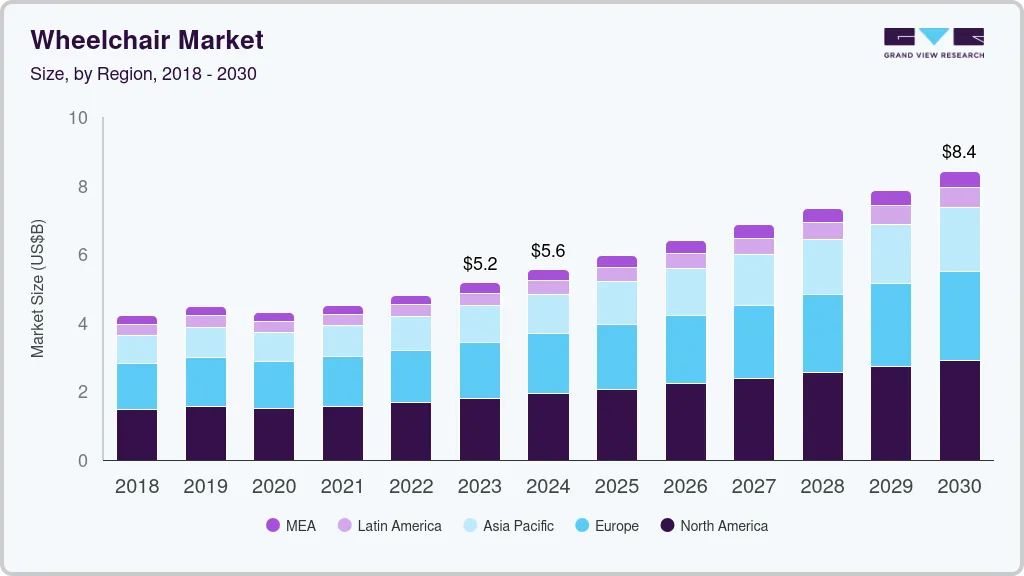 Source: Grand View Research, IR Documents, Primary Interviews, Paid DatabasesTo learn more about this report,
 Download Free Sample Report
 The rising road accident rates are expected to drive the demand for electric wheelchairs over the forecast period. According to an article published by the National Highway Traffic Safety Administration (NHTSA), as of 2024, 39,345 people died in traffic crashes in the U.S. Furthermore, according to the World Health Organization (WHO), road traffic accidents result in the tragic loss of approximately 1.19 million lives and leave an additional 20 to 50 million people with varying degrees of nonfatal injuries annually. Among those injured, a significant portion suffer from long-term or permanent disabilities, often requiring mobility assistance for the rest of their lives. This increase in accident-related disabilities is expected to improve the demand for electric wheelchairs, which offer essential support for individuals who face daily mobility challenges.
The automatic stair-climbing wheelchair industry is also expanding due to growing demand for accessible mobility solutions in multi-story buildings, public infrastructure, and urban environments. Technological advancements in sensors, balance control, and motorized mechanisms are improving safety, reliability, and user confidence, accelerating adoption across healthcare and home care settings.
The rising geriatric population also fuels market growth. According to several NCBI studies, individuals aged over 65 are at a greater risk of developing chronic illnesses & disabilities, such as Parkinson’s disease and nervous system disorders. According to the WHO, the global population aged 60 & above significantly increased from around 1 billion in 2020 to about 1.4 billion in 2030 and is expected to almost double to around 2.1 billion by 2050.
Furthermore, the number of elderly patients with critical illnesses has significantly increased in the past few years. The risk of malnutrition and frailty in the geriatric population with comorbidities, such as stroke, depression, and dementia, is much higher, mainly due to various age-related changes in body composition & muscle mass, resulting in physical disabilities. This reduces the ability to perform Activities of Daily Living (ADLs), increasing the risk of falls or injuries, thereby creating demand for the electric wheelchair industry.
Moreover, increasing prevalence of childhood disabilities, such as cerebral palsy, muscular dystrophy, and spinal cord disorders, along with improved early diagnosis and intervention drives the growth of pediatric wheelchairs industry. Growing awareness among parents, caregivers, and schools about mobility, inclusion, and independence for children with special needs is further boosting adoption. In addition, advancements in lightweight, adjustable, and ergonomically designed pediatric wheelchairs, supported by government initiatives and healthcare investments, are driving market growth.
Advancements in electric wheelchair technology have significantly improved the functionality, safety, and user experience for individuals with mobility challenges. According to the article published in February 2024, modern electric wheelchairs are increasingly equipped with Internet of Things (IoT) and AI technologies. These smart wheelchairs can autonomously navigate their environment, monitor the user’s health, and integrate with smart home systems. For instance, the Munevo DRIVE system allows users to control their wheelchairs using head gestures, enabling greater independence for those with severe muscle diseases.
The Munevo DRIVE system allows users to control their wheelchairs using subtle head movements, making it easier for individuals who cannot use their hands effectively. In addition, this system can adjust seating positions to prevent pressure ulcers. In parallel, the non-magnetic wheelchair industry is growing rapidly, particularly in healthcare settings where compatibility with MRI and other magnetic medical equipment is critical. The growing use of imaging technologies in hospitals and rehabilitation centers is increasing demand for non-magnetic wheelchairs made from materials such as aluminum, titanium, and specialized composites to ensure patient safety and clinical efficiency.
Moreover, increasing demand for assistive technologies that enhance independence for individuals with limited upper-body mobility, particularly in healthcare, home care, and rehabilitation settings. Advances in AI, machine vision, and human-machine interface technologies are improving the precision, responsiveness, and ease of operation of robotic arms, making them more practical and affordable for widespread adoption. These factors highlight the rising traction across the wheelchair-mounted robotic arm market. In addition, the recent innovations in wheelchair market are emerging regularly, one of the key innovations is the development of a smart wheelchair which integrates into a self-cleaning commode & transforms itself into a stretcher.
In addition, the demand for the wheelchair accessible vehicle (WAV) market is rising due to the increasing prevalence of disabilities, mobility impairments, and an aging population that requires safe and convenient transportation solutions. Growing emphasis on inclusivity, accessibility regulations, and government support for disability-friendly infrastructure has further encouraged the adoption of modified vehicles. Furthermore, advancements in vehicle conversion technologies, such as lowered floors, automated ramps, lifts, and smart restraint systems, are improving safety, comfort, and usability, making wheelchair-accessible vehicles more practical and widely accepted for personal and commercial use.
Market Dynamics
The rapid expansion of the global wheelchair market is primarily fueled by increasing instances of disability, chronic diseases, and population aging. According to the World Health Organization (WHO), the population of 1.3 billion people, about 16% of the global population, is living with disability, & estimate of around 80 million having the need for a wheelchair. The demand for wheelchairs is high among the population aged 65 and above. Quick growth in the elderly population is one of the key driving factors of the market. Older adults are more likely to develop conditions such as arthritis, stroke, Parkinson’s disease, and osteoporosis, which often require mobility aids. As a result, the old age group segment has become the largest user group in the wheelchair market. Furthermore, the number of elderly patients with critical illnesses has significantly increased in the past few years. The risk of malnutrition and frailty in the geriatric population with comorbidities, such as stroke, depression, and dementia, is much higher, mainly due to various age-related changes in body composition & muscle mass, resulting in physical disabilities. This reduces the ability to perform Activities of Daily Living (ADLs), increasing the risk of falls or injuries, thereby creating demand for electric wheelchair.
Globally, were limited number of disabled people who have access to proper mobility solutions, such as wheelchairs. Additionally, very few within the mentioned population can afford a proper wheelchair as per the World Health Organization (WHO). In many developing regions, families face affordability issues pertaining to advanced wheelchairs, as government and charitable organizations do not provide comprehensive reimbursement or support. Mostly, patients have to pay the entire cost of an advanced wheelchair out of their own pocket. These restraints hinder the adoption of wheelchairs among individuals who have mobility impairments. Factors such as financial constraints, insufficient insurance coverage, and limited availability of assistive technology services are expected to restrain the growth of the wheelchair market overall. Furthermore, maintenance and upkeep costs for powered wheelchairs add to the overall ownership burden, reducing long-term adoption rates.
Smart and connected wheelchairs offer a significant growth opportunity in the wheelchair market. The advanced mobility solutions combine technologies, including AI, IoT, and obstacle-detection systems, with remote monitoring to create technologically advanced mobility assistance equipment. Smart chairs can assist users in navigating complex environments, avoiding collisions & accidents & monitoring health metrics in real time. As users shift towards personalized healthcare & assistance, manufacturers are investing heavily in research & development for intelligent mobility devices. The rising integration of digital healthcare & assistive technologies is expected to drive innovation & improve user outcomes.
Product Insights
The electric wheelchair segment led the market with the largest revenue share of above 56% in 2025 and is anticipated to grow at the fastest CAGR during the forecast period. Electric wheelchairs are typically built with high-quality brake systems, particularly to stop accidental rolling. Most electric wheelchairs offer the convenience of being controlled by a simple joystick. Growing awareness about these features is expected to drive the segment over the forecast period. Modern wheelchairs are incorporated with guide sensors, nonlinear processing circuits, pulse steering drive, and several control methods that make the wheelchairs easy to use & smoother in motion.
Recent research funding highlights a transformative shift in wheelchair technology, illustrated by an approximately USD 42 million federal project led by the University of Pittsburgh’s Human Engineering Research Laboratories to integrate advanced mobility systems with robotic arm functionality into a next-generation wheelchair platform. This initiative aims to move beyond traditional mobility aids by combining autonomous stabilization, robotics, and AI-enabled control into a single solution representing a significant acceleration in assistive mobility innovation and pointing to future product evolution in highly differentiated wheelchair segment.
The manual wheelchair segment is expected to witness a significant CAGR of above 11% over the forecast period. Manual wheelchairs are the most common form of mobility assistive devices, providing mobility support to the disabled and geriatric population. This type of wheelchair is propelled by the user or pushed by another person and is differentiated into three types: self-propelled, attendant-propelled, and wheelbase.
According to the WHO, around 610 million (10%) people globally have disabilities, and around 80 million of them require wheelchairs. In the U.S. alone, around 20-24% of women and 17-19% of men have some type of disability, which indicates that one out of every four American women has a disability, or nearly 25-29% of U.S. adults have some type of disability. In addition, there has been an increase in the adoption of self-propelled wheelchairs in sports, as they are lightweight and offer optimal mobility for various sports, such as marathons, basketball, & tennis. Attendant-propelled manual wheelchairs are largely used in hospitals and airports for patient transport. Manual wheelchairs are ideal for admitting, discharging, and transferring patients with mobility issues.
Age Group Insights
The geriatric segment accounted for the largest market revenue share in 2025. According to a PM&R article published in July 2023, the prevalence of gait disorders significantly increases with age, affecting only 10% of individuals aged 60 to 69, but increases to over 60% in those above 80 and 82% in adults over 85. These disorders not only affect mobility but also increase the risk of cognitive decline, cardiovascular disease, disability, and a 2.2 times higher likelihood of institutionalization and death in older adults compared to those without gait issues. Falls, often resulting from gait problems, are the leading cause of injury among seniors in the U.S., causing 3 million emergency room visits, 800,000 hospitalizations, and nearly USD 50 billion in healthcare costs each year.
Increased disability cases among geriatric patients drive the market growth. According to a Washington Post article published in January 2024, about one-third of adults aged 65 and older in the U.S., which equates to nearly 19 million seniors, live with some form of disability. This substantial portion of the aging population underscores the critical need for effective mobility solutions. Electric wheelchairs have become increasingly vital for this demographic, offering essential support and enhancing independence for seniors facing mobility challenges.
The adult segment is expected to witness at the fastest CAGR over the forecast period. Rising road accident injuries among adults boost demand in the wheelchair industry. According to the HT Digital Streams Ltd. article published in October 2023, 461,312 road accidents resulted in 168,491 fatalities and 443,366 injuries in 2022. Young adults aged 18 to 45 accounted for 66.5% of the victims, while those in the broader working age group of 18 to 60 made up 83.4% of all fatalities. These figures emphasize the significant impact road accidents have on adults, many of whom face long-term mobility challenges due to severe injuries.
As a result, demand for electric wheelchairs is rising, particularly among adults. Electric wheelchairs have become vital for accident survivors in this age group, enabling them to regain independence and mobility. This increasing need for advanced mobility solutions is driving growth in the wheelchair industry.
End Use Insights
The homecare segment accounted for the largest market revenue share in 2025 and is anticipated to grow at the fastest CAGR during the forecast period. The growth is attributed to the growing adoption of electric wheelchairs in homecare settings globally, mainly due to the rising geriatric population. Wheelchairs provide a safer alternative to furniture or other makeshift solutions to move around at home. They are designed to provide stability and reduce the risk of falls. Individuals with chronic health conditions that affect mobility, such as multiple sclerosis, muscular dystrophy, and spinal cord injuries, often use wheelchairs to facilitate daily activities at home.
The rehabilitation centers segment is anticipated to grow a significant CAGR over the forecast period. Rehabilitation centers, which focus on helping individuals regain function and independence following injury or surgery, rely on electric wheelchairs to provide versatile and effective mobility solutions. Improving timeliness and efficiency in rehabilitation centers drives the growth of the market.
Regional Insights
North America dominated the global wheelchair market with the largest revenue share of more than 37% in 2025, supported by a high prevalence of disability and strong institutional support systems. In the U.S., conditions such as arthritis remain a major contributor to mobility limitations, with academic and public health sources highlighting tens of millions of adults affected nationwide. Demographic shifts also play a critical role in supporting long-term market growth. The rapidly expanding geriatric population in North America is increasing the incidence of age-related mobility impairments, while broader social inclusion policies and disability rights initiatives are enabling more individuals with physical limitations to remain active in the workforce and community life. Improved government funding mechanisms for long-term care, coupled with rising awareness around accessibility and independence, are expected to further strengthen demand for wheelchairs across the region over the coming years.
 To learn more about this report, Download Free Sample Report
 U.S. Wheelchair Market Trends
The wheelchair market in the U.S. accounted for the largest market revenue share in North America in 2025, driven by country’s large and growing population of individuals living with mobility limitations, driven by chronic conditions, injuries, and age-related physical decline. Public health data from the Centers for Disease Control and Prevention (CDC) highlights that many American adults live with some form of disability, many of which directly impact movement and independence. Conditions such as arthritis, neurological disorders, and post-surgical mobility challenges continue to increase the need for both manual and powered wheelchairs across home care, hospital, and long-term care settings. Increasing use of mobility devices drives the market. According to the U.S. Department of Transportation, in February 2024, an estimated 5.5 million Americans rely on wheelchairs for mobility, with many facing significant challenges, particularly in air travel. The advancements in mobility solutions, as well as barriers such as inadequate accommodations and limited accessibility, continue to hinder travel experiences for wheelchair users.
Europe Wheelchair Market Trends
The wheelchair market in Europe is being reshaped by growing geriatric population in developed economies, such as Germany, the UK, France, & Italy, and untapped opportunities in Eastern Europe. Changes in Europe’s sociodemographic structure are likely to boost the demand for mobility aids further. An increase in the number of disabled individuals in the workforce, growing incidence of birth defects & disabilities in children, and the introduction of disability laws to enable individuals to enjoy a normal lifestyle & social status are some of the other factors expected to drive the sales of mobility devices in European countries.
The wheelchair market in Spain experiencing significant growth in European market. Growing number of accident cases in Spain drives the market. According to the general expatriate’s article published in March 2024, Spain reported 1,042 fatal road accidents, which led to 1,145 fatalities
The UK wheelchair market is steadily growing due to rising number of disability cases is driving the market. According to the UK government’s Family Resources Survey, as of March 2024, about 16.8 million people in the UK, roughly 25% of the population, were classified as disabled. This marks a significant stability as figures for the year 2023 reported around 16.1 million disabled people, which is around 24% of the population, who were reported as disabled. This stable trend reflects a sustained need for mobility solutions, such as electric wheelchairs, which continue to play an essential role in supporting individuals with disabilities and maintaining their mobility and independence.
Wheelchair market in Germany is steadily growing. The market is shaped by a combination of demographic shifts and a well-developed healthcare culture that emphasizes independence and quality of life for people with mobility impairments. With around 8 million people in the country living with some form of disability, a significant proportion of whom experience reduced mobility, there is a consistent underlying need for both manual and powered wheelchairs in daily life, institutional care, and rehabilitation settings. This growing base of potential users is amplified by Germany’s ageing population, which places increasing emphasis on mobility support as a key component of ageing-in-place and active lifestyles.
Asia Pacific Wheelchair Market Trends
The wheelchair market in Asia Pacific is anticipated to grow at the fastest CAGR over the forecast period. Wheelchair are gaining traction in the Asia-Pacific region. The increasing prevalence of osteoarthritis in the Asia Pacific region is driving demand for effective mobility solutions, including wheelchairs.
The China wheelchair market is benefits from innovations such as powered wheelchairs, lightweight materials, and ergonomic designs have significantly improved usability, comfort, and accessibility. These enhancements make wheelchairs more appealing to a broader range of users, including geriatric population and people with disabilities. For instance, in June 2023, Jin Medical International Ltd. launched a new ultralight electric wheelchair and an electric mobility vehicle for elderly people, developed with Nanjing Tech University. The wheelchair features dual brushless motors, a 25km-range battery, a 360-degree remote control, and weighs only 21.5kg. Both models are set for sale in China and international markets through online platforms and authorized dealers. These advancements are expected to further expand the market by making mobility solutions more accessible, convenient, and attractive to a growing population of elderly and disabled users.
The wheelchair market in South Korea is largely driven by rising prevalence of disabilities nationwide. South Korea’s Health Ministry reported that over 2.63 million people were officially registered as disabled in 2024, equivalent to one in every 20 Koreans. The annual data showed physical disabilities were most common, and the share of older people with disabilities continues to rise. The ministry plans to review demographic trends and adjust related policies. This trend is anticipated to support demand for wheelchairs and other mobility aids, creating long-term growth opportunities for manufacturers and healthcare providers.
The India wheelchair market is driven by innovation and technological advancements. For instance, in July 2025, IIT Madras launched YD One, India’s lightest active rigid-frame wheelchair, weighing just 8.5 kg. Developed jointly by the TTK Centre for Rehabilitation Research and THRYV Mobility, the device is minimalistic, customizable, and available in 14 colours. Made with aerospace-grade material, it is designed for durability and independent mobility, addressing limitations of heavy hospital-grade wheelchairs. Such developments are installing confidence in individuals with mobility limitations for using wheelchairs.
Latin America Wheelchair Market Trends
The wheelchair market in the Latin America is expected to grow at the CAGR from 2026 to 2033, due to presence of notable geriatric population, considerable individuals living with disabilities, and consistent development of public healthcare systems in countries such as Brazil, Argentina, Chile, and Colombia. With growing elderly populations, cases of stroke, spinal injuries, diabetes-related amputations, and osteoarthritis are becoming prevalent. This is leading to a higher demand for wheelchairs for both short-term and permanent mobility requirements. The region is witnessing an increased demand for manual wheelchairs owing to its lightweight, foldable, and durable properties, making them easier to use indoors and on rough outdoor surfaces in city infrastructure.
Wheelchair market in Brazil is growing due to its large population, growing elderly group, and expanding public rehabilitation services infrastructure. Rising cases of stroke, spinal cord injuries, diabetes-related amputations, and musculoskeletal disorders have greatly increased the demand for both short-term and long-term mobility solutions. According to World Bank statistics, trends show that Brazil’s population aged 65 and above has reached 23.42 million people, which is 11% of the total population. This directly increases the need for mobility assistive devices in home and long-term care settings. Manual wheelchairs lead the market as they are affordable and widely available through public health channels, especially for basic mobility in lower-income households.
Middle East & Africa Wheelchair Market Trends
The wheelchair market in the Middle East and Africa (MEA) is growing steadily, owing to the rising need for advanced mobility solutions among individuals with disabilities, individuals with mobility issues, and the geriatric population. The rising prevalence of chronic diseases, along with a growing aging population, affects individuals’ mobility and hence drives the demand for wheelchairs across the region. In addition, government initiatives coupled with improvements in healthcare systems are improving access to mobility solutions, supporting wider adoption. Furthermore, investments in healthcare infrastructure and rehabilitation services are making electric wheelchairs more accessible to individuals with motion impairments.
The Saudi Arabia wheelchair market is experiencing notable growth supported by the government’s strong commitment to improving the quality of life for all citizens and residents, including people with disabilities. Saudi Arabia defines disability as a condition that can affect a person’s physical, sensory, mental, or behavioral abilities and may make it harder to meet daily needs alone. To address this, the government has framed broad policies for prevention, early detection, care, and rehabilitation. These efforts have improved access to medical, psychological, social, and educational services, which has led to a greater need for mobility aids, including wheelchairs. Thes factors also drives the growth across GCC electric wheelchair industry as increasing healthcare investments, better rehabilitation infrastructure, and rising awareness of advanced mobility solutions are encouraging greater adoption of powered and assistive mobility devices across the region.
Key Wheelchair Company Insights
The wheelchair industry is highly competitive and has several key players. The major market players are focusing on expanding their geographical presence, forming partnerships to improve patient mobility and care through advanced wheelchair technologies, leveraging strategic collaborations, and exploring mergers and acquisitions.
Key Wheelchair Companies
The following key companies have been profiled for this study on the wheelchair market.
-
Sunrise Medical
-
Invacare Corporation
-
Permobil
-
Pride Mobility Products Corp.
-
Notion
-
Ottobock
-
MEYRA GmbH
-
Hoveround Corporation
-
Golden Technologies
-
Drive DeVilbiss Healthcare Ltd.
-
Medline Industries, Inc.
Recent Development
-
In July 2025, investment vehicles affiliated with private equity firm Rhône have entered exclusive talks to acquire a majority stake in Invacare Holdings S.à r.l. and Direct Healthcare Group (DHG), aiming to strengthen leadership in the mobility and healthcare industry by combining their complementary portfolios. The proposed strategic deal is expected to enhance innovation, broaden global reach, and improve service for patients, caregivers, and healthcare providers worldwide.
-
In April 2025, Sunrise Medical launched the Magic Mobility XT4, a 4x4 power wheelchair designed for unmatched off-road performance with all-wheel suspension, servo-powered steering, and four high-torque 700W motors. The XT4 tackles sand, snow, mud, and uneven terrain with superior power, stability, and durability, offering riders up to 19 miles of real-world range.
-
In June 2024, Platinum Equity announced its acquisition of German wheelchair manufacturer Sunrise Medical from Nordic Capital. This transaction marks a change in ownership for the well-known mobility solutions provider.
Wheelchair Market Report Scope
Report Attribute
Details
Market size in 2025
USD 8.9 billion
Estimated market size in 2026
USD 10.0 billion
Projected market size by 2033
USD 21.8 billion
Growth rate
CAGR of 10.8% from 2026 to 2033
Base year for estimation
2025
Historical data
2021 - 2024
Forecast period
2026 - 2033
Quantitative units
Revenue in USD Billion, and CAGR from 2026 to 2033
Report coverage
Revenue forecast, company ranking, competitive landscape, growth factors, and trends
Segments covered
product, age group, end-use, region
Regional Scope
North America; Europe; Asia Pacific; Latin America; MEA
Country Scope
U.S.; Canada; Mexico; UK; Germany; France; Italy; Spain; Denmark; Sweden; Norway: Japan; China India; Australia; Thailand; South Korea; Brazil; Argentina; South Africa; Saudi Arabia; UAE; Kuwait
Key companies profiled
Sunrise Medical; Invacare Corporation; Permobil; Pride Mobility Products Corp.; Numotion; Ottobock; MEYRA GmbH; Hoveround Corporation; Golden Technologies; Drive DeVilbiss Healthcare Ltd.; Medline Industries, Inc.
Customization scope
Free report customization (equivalent up to 8 analysts working days) with purchase. Addition or alteration to country, regional & segment scope.
Pricing and purchase options
Avail of customized purchase options to meet your exact research needs. Explore purchase options
Global Wheelchair Market Report Segmentation
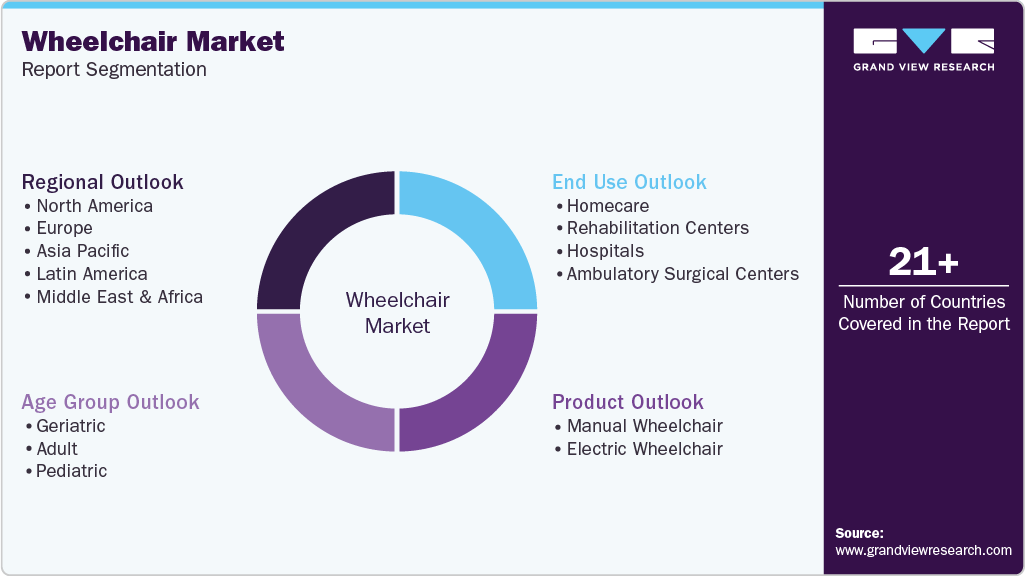
This report forecasts revenue growth at global, regional, and country levels and provides an analysis of the latest industry trends in each of the sub-segments from 2021 to 2033. For this study, Grand View Research has segmented the global wheelchair market report based on product, age group, end use, and region:
 To learn more about this report, Download Free Sample Report
 -
Product Outlook (Revenue, USD Billion, 2021 - 2033)
-
Manual Wheelchair
-
Standard Wheelchair
-
Lightweight & Ultra-Lightweight Wheelchair
-
Sports & Active Wheelchair
-
Others
-
-
Electric Wheelchair
-
Front-wheel
-
Mid-wheel
-
Rear-wheel
-
Others
-
-
-
Age Group Outlook (Revenue, USD Billion, 2021 - 2033)
-
Geriatric
-
Adult
-
Pediatric
-
-
End Use Outlook (Revenue, USD Billion, 2021 - 2033)
-
Homecare
-
Rehabilitation Centers
-
Hospitals
-
Ambulatory Surgical Centers
-
-
Region Outlook (Revenue, USD Billion, 2021 - 2033)
-
North America
-
U.S.
-
Canada
-
Mexico
-
-
Europe
-
UK
-
Germany
-
France
-
Italy
-
Spain
-
Norway
-
Denmark
-
Sweden
-
-
Asia Pacific
-
China
-
Japan
-
South Korea
-
Thailand
-
Australia
-
India
-
-
Latin America
-
Brazil
-
Argentina
-
MEA
-
-
South Africa
-
Saudi Arabia
-
UAE
-
Kuwait
-
-
Frequently Asked Questions About This Report
North America dominated with a revenue share of 38.0% in 2025
Electric wheelchair segment led the market with the largest revenue share 55% in 2025.
Some of the players operating in this market are Carex Health Brands, Inc.; Drive Medical Design & Manufacturing; Graham-Field Health Products, Inc.; Invacare; Medline; Sunrise Medical LLC; Karman Healthcare; Quantum Rehab; Numotion; Pride Mobility Products Corp.
The global wheelchair market size was valued at USD 8.9 billion in 2025 and is expected to reach USD 10.0 billion in 2026.
The global wheelchair market is expected to grow at a compound annual growth rate of 10.8% from 2026 to 2033 to reach USD 21.8 billion by 2033.
About the Author(s)
Medical Devices Research Team
Healthcare · Medical DevicesThis report was authored by the medical devices research team at Grand View Research - comprising two research analysts, one senior research analyst, and one industry expert - with specialized expertise in the medical devices segment of the healthcare industry. All findings are based on proprietary healthcare databases, executive interviews, and regulatory analysis, subject to internal peer review prior to publication.
Last Updated:
Speak to Analyst

Customize this report to your needs - add regions, segments, or data points, with 20% free customization.
Or view our licence options:


ISO 9001:2015 & 27001:2022 Certified
We are GDPR and CCPA compliant! Your transaction & personal information is safe and secure. For more details, please read our privacy policy.


