
- Home
- »
- Advanced Interior Materials
- »
-
Advanced Polymer Composites Market Report, 2026-2033GVR Report cover
![Advanced Polymer Composites Market (2026 - 2033)Report]()
Advanced Polymer Composites Market (2026 - 2033)
Size, Share & Trends Analysis Report By Material (Resin, Fiber), By Application (Aerospace & Defense, Automotive, Energy, Construction), By Region (North America, Asia Pacific, Europe, Latin America, MEA), And Segment Forecasts
Market Size, 2025
$11.7BMarket Estimate, 2026
$12.2BMarket Forecast, 2033
$17.0BCAGR, 2026–2033
4.9%Advanced Polymer Composites Market Summary
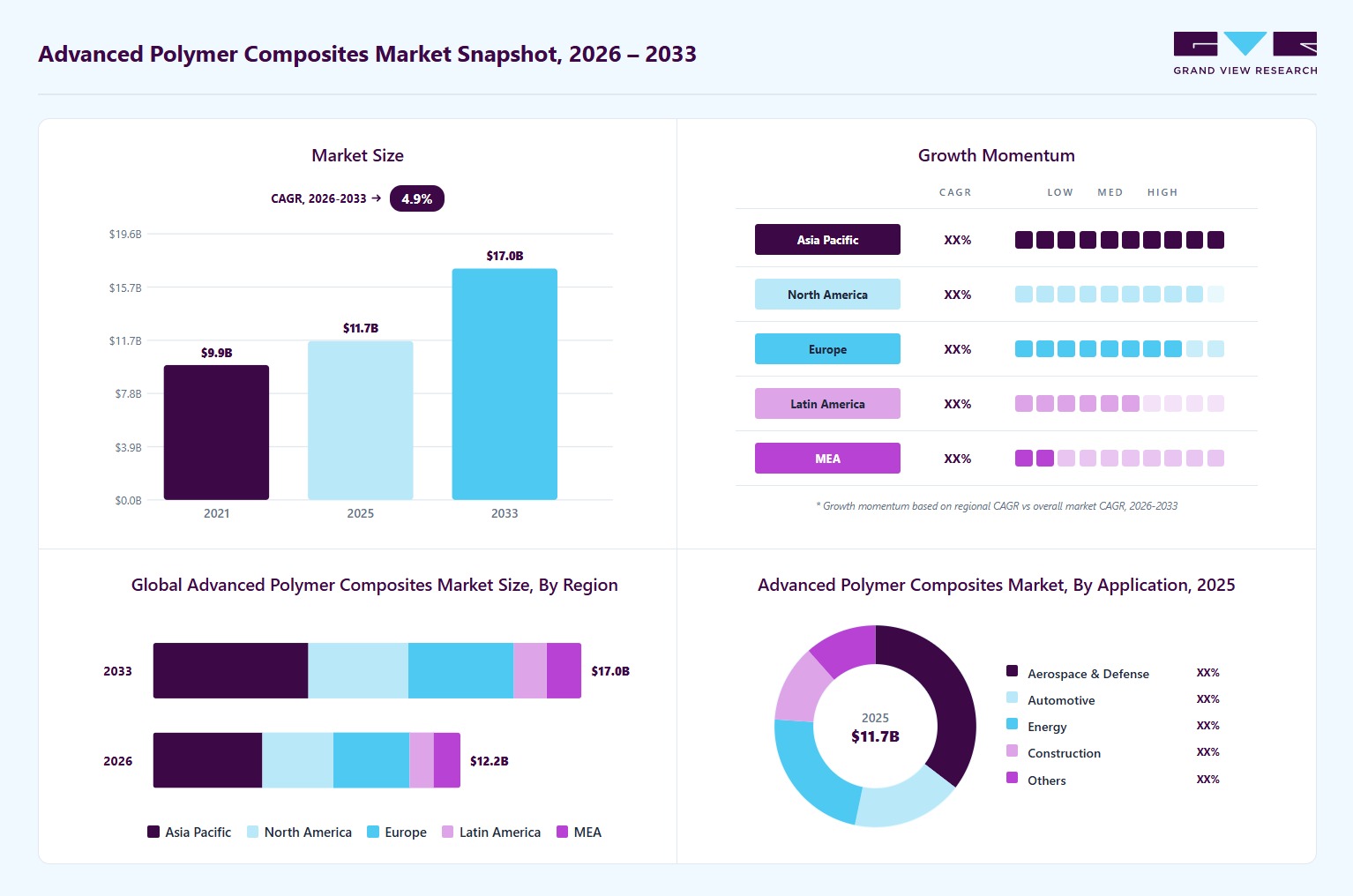
The global advanced polymer composites market size was valued at USD 11.7 billion in 2025 and is projected to grow from USD 12.2 billion in 2026 to USD 17.0 billion by 2033, growing at a CAGR of 4.9% from 2026 to 2033. Asia Pacific dominated the advanced polymer composites market with the largest revenue share of 35.4% in 2025. The demand for advanced polymer composites is expected to increase significantly in the future due to their superior strength-to-weight ratio, durability, and versatility across various industries.
Key Market Trends & Insights
- By material: Fiber segment led the market with the largest revenue share of 53.0% in 2025 and is expected to grow at a CAGR of 5.1% over the forecast period.
- By application: Aerospace & defense segment led the market with the largest revenue share of 35.4% in 2025 and is expected to grow at a CAGR of 4.8% over the forecast period.
Regional Highlights
- Largest regional market: Asia Pacific (35.4% revenue share, 2025)
- By country: The China held the largest market share in 2025.
Market Size & Forecast
- Market size in 2025: USD 11.7 Billion
- Estimated market size in 2026: USD 12.2 Billion
- Projected market size by 2033: USD 17.0 Billion
- CAGR (2026-2033): 4.9%
These materials are increasingly used in aerospace, automotive, construction, and renewable energy sectors where performance and efficiency are critical. Advanced polymer composites, including carbon fiber and fiberglass-reinforced composites, offer enhanced mechanical properties, corrosion resistance, and thermal stability, making them ideal for high-performance applications. As industries push for more sustainable and lightweight solutions, these composites are becoming the preferred choice for reducing energy consumption and improving fuel efficiency, especially in the automotive and aerospace industries. Additionally, advancements in recycling technologies and the development of bio-based and recyclable polymer composites further boost their appeal as sustainable alternatives, ensuring their continued demand in the coming years.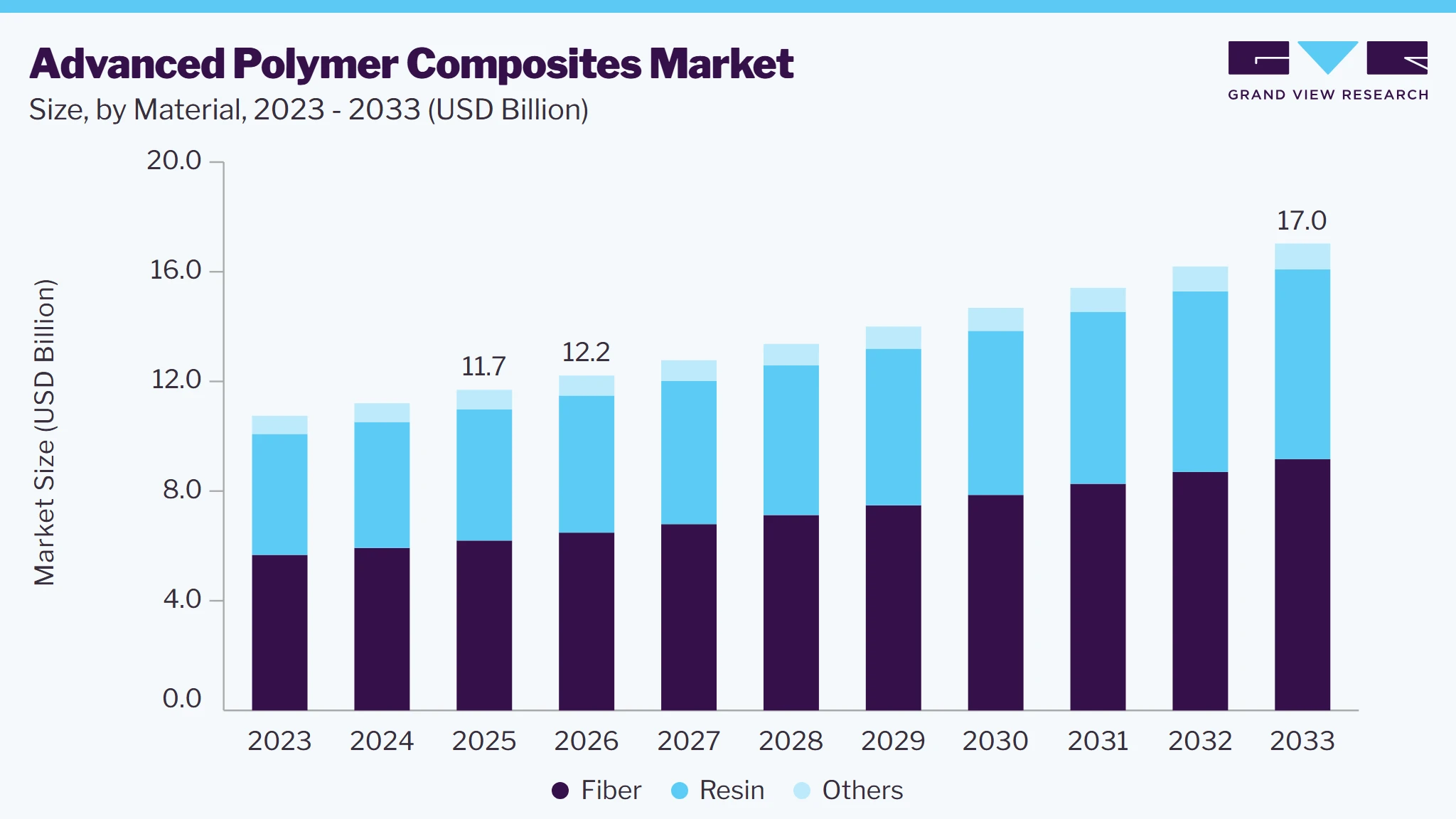
The market for advanced polymer composites is likely to be hampered by high production costs, which remain a significant barrier to widespread adoption, particularly in cost-sensitive industries. The complex manufacturing processes, such as resin infusion and high-temperature curing, require specialized equipment and skilled labor, contributing to expensive material costs. Additionally, the lack of standardized recycling processes for polymer composites limits their sustainability appeal, as recycling these materials can be difficult and costly.
Market players are opting for various strategies to gain a competitive advantage. Key players are focusing on innovations in material science, reducing production costs, and expanding their application areas. Many companies are investing in research and development to create lighter, stronger, and more sustainable composites, including bio-based and recyclable materials, to meet growing environmental demands. Additionally, players are adopting automated manufacturing processes and advanced molding technologies to improve efficiency, reduce costs, and scale production.
Market Dynamics
The advanced polymer composites market is experiencing significant growth due to increasing aircraft production, rising defense modernization programs, growing demand for lightweight and high-performance materials, and continuous advancements in composite manufacturing technologies. Advanced polymer composites are widely used in aerospace and defense applications for aircraft structures, rotor blades, engine components, missiles, satellites, and space exploration systems, where high strength-to-weight ratio, corrosion resistance, durability, and thermal stability are critical performance requirements. The expansion of commercial aviation, increasing military procurement activities, and rising investments in space exploration programs are further supporting market growth. Additionally, advancements in carbon fiber composites, glass fiber composites, aramid fiber composites, thermoplastic composites, and resin systems are enabling improved fuel efficiency, enhanced structural performance, and compliance with evolving aerospace and defense performance standards.
The increasing emphasis on lightweight aircraft design and enhanced operational efficiency is a major factor driving the advanced polymer composites market. Aircraft manufacturers and defense contractors are continuously adopting advanced composite materials that offer superior strength-to-weight ratios, corrosion resistance, fatigue durability, and thermal performance while significantly reducing overall platform weight. Advanced polymer composites play a crucial role in improving fuel efficiency, extending operational range, increasing payload capacity, and supporting the development of next-generation aircraft and defense systems. The growing production of commercial aircraft, military fighter jets, helicopters, unmanned aerial vehicles, and space launch vehicles is creating strong demand for advanced composite materials.
Furthermore, rising environmental concerns and stringent emission reduction objectives are encouraging aerospace manufacturers to increase the use of lightweight composite materials that contribute to lower fuel consumption and reduced lifecycle operating costs. Increasing global air passenger traffic, expanding defense expenditures, and ongoing fleet modernization initiatives are further accelerating the adoption of advanced polymer composites across aerospace and defense applications worldwide.
The advanced polymer composites market faces challenges related to high manufacturing costs, complex production processes, and stringent certification requirements. Advanced composite materials often require specialized raw materials, precision fabrication techniques, autoclave processing, and advanced quality control systems, resulting in higher production expenses compared to conventional metallic materials. In addition, aerospace-grade composite components must comply with rigorous industry standards for structural integrity, impact resistance, fatigue performance, fire safety, and long-term operational reliability.
The growing investment in space exploration initiatives and advanced defense programs is creating substantial growth opportunities for the advanced polymer composites market. Increasing development of reusable launch vehicles, advanced satellites, hypersonic weapons, missile defense systems, urban air mobility platforms, and next-generation military aircraft is generating strong demand for lightweight, high-strength composite materials capable of withstanding extreme operational environments. These advanced applications require innovative composite solutions that provide exceptional durability, thermal resistance, structural performance, and mission reliability while reducing overall system weight.
Market Concentration & Characteristics
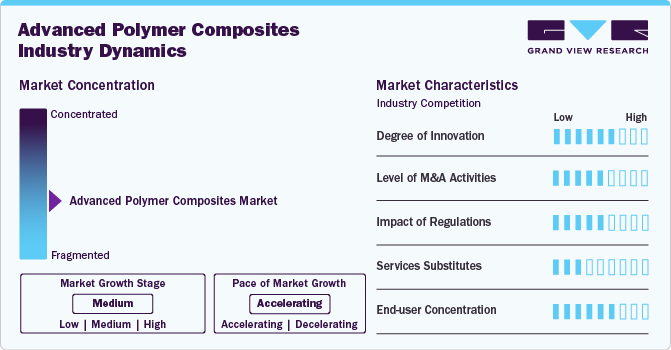
The market growth stage is medium, and the pace of the market growth is accelerating. The advanced polymer composites market is fragmented, with numerous small and medium enterprises operating in wide geographical reach. Market players are engaged in partnerships with industries such as aerospace, automotive, and renewable energy are being strengthened to tap into new markets. Companies are also focusing on strategic acquisitions, bolstering their product portfolios, and enhancing their supply chain capabilities to ensure reliability and meet increasing demand across diverse sectors. These players aim to maintain leadership in the competitive polymer composites market by continuously advancing their technologies and expanding their market presence.
The Advanced Polymer Composites market faces substitution threats from synthetic fibers like metals (such as aluminum and steel), traditional plastics, and natural fibers, all of which offer certain benefits like lower cost, easier processing, or better recyclability in some cases. Metals are often preferred for applications requiring high strength and durability, especially in automotive and construction industries, while traditional plastics may be used in less demanding environments where weight and strength are less critical. Natural fibers, like hemp or flax, are being explored as more sustainable alternatives to synthetic composites. The availability and cost-effectiveness of these substitutes can potentially limit the growth of the advanced polymer composites market, especially in price-sensitive sectors.
Analyst Perspective
The advanced polymer composites market is evolving from a conventional materials industry into a technology-driven market centered on lightweighting, high strength-to-weight performance, corrosion resistance, thermal stability, and next-generation engineering applications. The strongest growth opportunities are emerging from commercial aerospace expansion, electric vehicle adoption, wind energy installations, defense modernization programs, advanced air mobility platforms, hydrogen infrastructure development, and increasing investments in sustainable high-performance materials. The key differentiator for companies will not be composite production capacity alone, but their ability to develop innovative fiber-reinforced solutions, improve manufacturing efficiency, meet stringent certification requirements, and deliver application-specific performance advantages while maintaining cost competitiveness. Players with advanced carbon fiber technologies, proprietary resin systems, strong R&D capabilities, automated composite manufacturing expertise, diversified end-market exposure, and strategic partnerships with OEMs are likely to capture premium margins and long-term growth opportunities.
Material Insights
Based on material, the fiber segment led the market with the largest revenue share of 53.0% in 2025 and is expected to grow at a CAGR of 5.1% over the forecast period. This is attributed to their critical role in providing structural strength and reinforcing the resin matrix. Carbon fibers are particularly sought after in high-performance applications like aerospace, automotive, and sports equipment, while glass fibers are more commonly used in less demanding sectors. Fiber-based composites continue to be the major driver in the market due to their superior mechanical properties.
The resin material segment is also expected to witness a notable revenue-based CAGR of 4.6% over the forecast period. The demand for resins, particularly epoxy, polyester, and vinyl ester resins, is substantial due to their role in providing durability, chemical resistance, and structural integrity. The growth of sectors like aerospace and automotive, where resin properties like lightweight and strength are critical, drives the demand for resins.
Application Insights
Based on application, the aerospace & defense segment led the market with the largest revenue share of 35.4% in 2025 and is expected to grow at a CAGR of 4.8% over the forecast period. As the aerospace industry focuses on sustainability, performance optimization, and cost reduction, the demand for lightweight, durable, and corrosion-resistant materials will continue to rise.
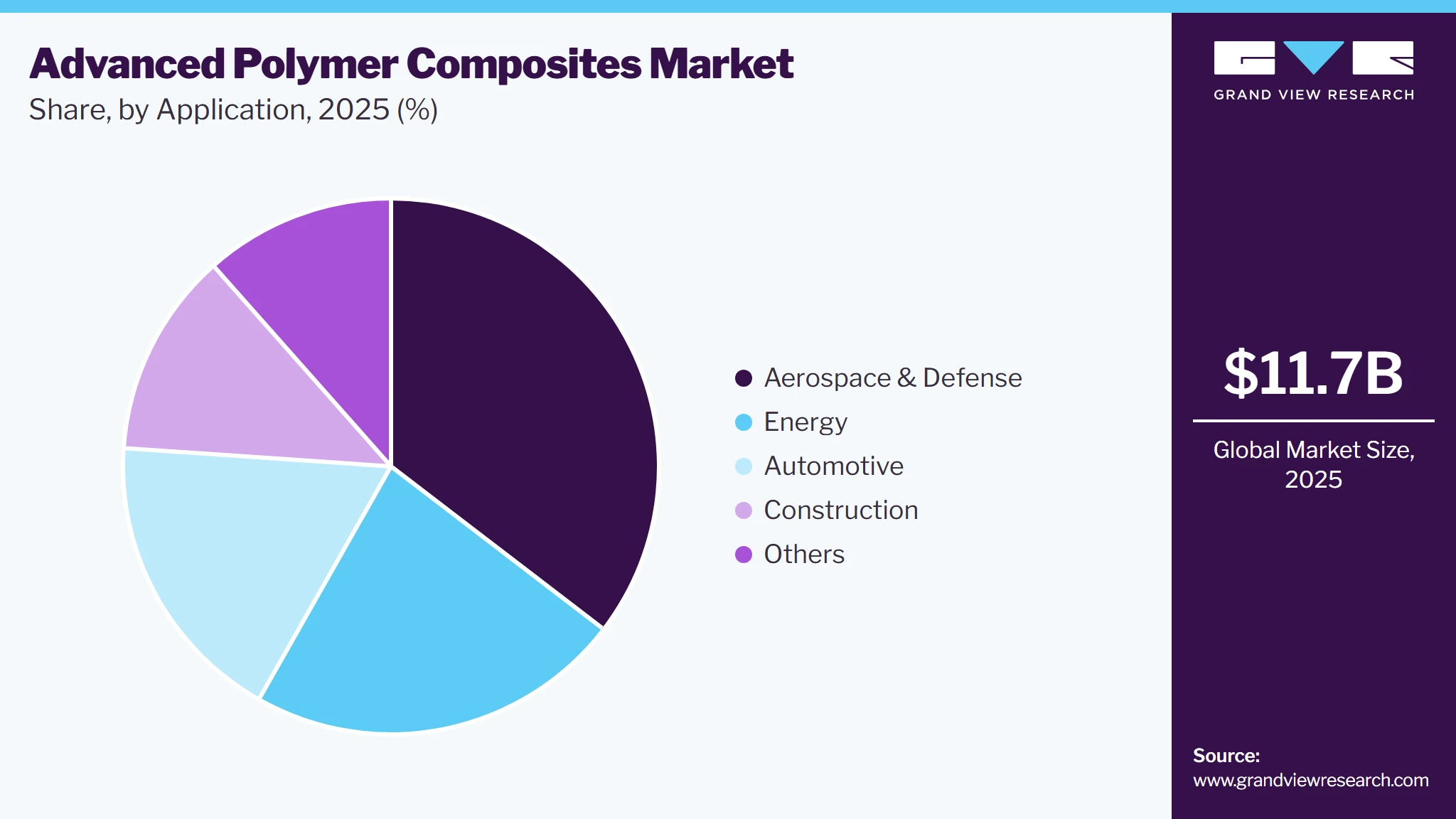
The energy segment is also expected to witness a notable revenue-based CAGR of 4.8% over the forecast period. In the energy sector, particularly within wind energy and oil & gas applications, advanced polymer composites are gaining traction due to their ability to withstand extreme environmental conditions while offering significant weight reduction. In wind turbines, the use of composite materials for blades helps in improving energy efficiency and reducing the overall weight, thereby increasing the turbines' operational lifespan and reducing maintenance costs.
Regional Insights
Asia Pacific dominated the advanced polymer composites market with the largest revenue share of 35.4% in 2025, owing to the rapid growth in the adoption of advanced polymer composites due to industrialization, infrastructure development, and the rising demand for lightweight materials in automotive and aerospace. The shift towards sustainable energy and the growing middle class in emerging economies, coupled with government support, fuels the increasing use of these materials across various sectors.

The advanced polymer composites market in China held the largest share in the Asia Pacific region in 2025. Advanced polymer composites market is China is leading the adoption of advanced polymer composites, driven by its rapid expansion in the aerospace, automotive, and renewable energy sectors. Government initiatives, such as the Made in China 2025 plan, prioritize high-tech materials to drive innovation, while the country's focus on electric vehicles and wind energy is further boosting demand for composites in these industries.
North America Advanced Polymer Composites Market Trends
North America advanced polymer composites market is increasing due to their widespread use in aerospace, automotive, and renewable energy sectors. Strong investments in sustainability and energy efficiency across industries are driving the shift towards these lightweight, high-performance materials. Additionally, regulatory standards and corporate sustainability goals are boosting adoption in both public and private sectors.
In the U.S., Advanced Polymer Composites demand is propelled particularly in aerospace, automotive, and defense industries. The Department of Defense and major manufacturers are increasingly integrating these materials into aircraft, vehicles, and military systems to enhance performance and reduce weight. Additionally, the growing demand for green energy solutions and lightweight structures in commercial applications further drives market growth.
Europe Advanced Polymer Composites Market Trends
In Europe, the market is expected to witness a notable revenue-based CAGR of 4.6% from 2025 to 2030, owing to the stringent environmental regulations and a focus on reducing carbon emissions are accelerating the demand for advanced polymer composites, especially in automotive and construction. The European Green Deal and increasing demand for electric vehicles are key factors driving the use of these materials in the region, offering significant weight reduction and energy efficiency benefits.
Germany advanced polymer composites market is a leader in automotive and industrial manufacturing, is embracing advanced polymer composites for their strength, durability, and lightweight properties. The country's focus on Industry 4.0, coupled with strong automotive giants like Volkswagen and BMW, pushes the integration of these materials into electric vehicles and sustainable construction, enhancing both performance and sustainability.
Latin America Advanced Polymer Composites Market Trends
In Latin America, the demand for advanced polymer composites is rising in the construction and automotive industries as countries seek to modernize infrastructure and reduce vehicle weight for better fuel efficiency. Economic growth, along with increasing investment in renewable energy, is also contributing to the adoption of these high-performance materials across the region.
Middle East & Africa Advanced Polymer Composites Market Trends
The demand for Advanced Polymer Composites in the Middle East & Africa is increasing due by large-scale infrastructure projects, particularly in the construction and oil & gas sectors. The region's increasing focus on smart cities and sustainable building practices, along with its reliance on durable materials for extreme environmental conditions, is spurring the growth of composites in both commercial and industrial applications.
Key Advanced Polymer Composites Company Insights
Some of the key players operating in the market include Owens Corning andToray Advanced Composites.
-
Toray Industries, Inc. operates through the following business segments: Fibers and Textiles, Functional Chemicals, Carbon Fiber Composite Materials, Environment & Engineering, Life Science, and others
-
Owens Corning provides its products through three segments, namely roofing, insulations, and composite. It offers services to various industries such as building & construction, transportation, consumer goods & electronics, industry, and energy generation. The company has over 30 manufacturing facilities and 5 R&D centers across Europe, North America, and Asia.
SGL Group and Cytec Industries Inc. are some of the emerging market participants in Advanced Polymer Composites market.
-
SGL Group was established in 1992 and is headquartered in Wiesbaden, Germany. SGL group is a publicly owned company with a broad shareholder structure. The company has three business segments such as carbon fibers and materials, performance products, and graphite specialties. SGL group has in-depth production, materials, applications and engineering expertise, comprehensive graphite and carbon fiber-based product portfolio, and an integrated value chain from carbon fibers to composites.
-
Cytec Industries (Solvay. S.A.) was established in 1863 and headquartered in New Jersey, U.S. The company has four business segments including aerospace materials, additive technologies, and industrial materials. The aerospace materials segment is the largest amongst the entire businesses and contributes 50% of the company’s total revenue. It includes advanced composites, structural films, and carbon fibres. The application includes commercial airlines and military sector.
Key Advanced Polymer Composites Companies
The following key companies have been profiled for this study on the advanced polymer composites market.
-
Owens Corning
-
Toray Advanced Composites
-
SGL Group
-
Cytec Industries Inc.
-
BASF SE
-
Koninklijke Ten Cate NV
-
Arkema S.A.
-
Mitsubishi Rayon Co. Ltd.
-
Hexcel Corporation
-
3B - the fibreglass company
Competitive Benchmarking
Category
Operating Strategies
Competitive Edge
Weakness
Established Players (Owens Corning, Toray Advanced Composites, SGL Group, BASF SE)
- Focus on long-term supply agreements with aerospace and defense OEMs.
- Invest heavily in carbon fiber capacity expansion and advanced composite manufacturing technologies.
- Strengthen market position through strategic acquisitions, partnerships, and vertical integration across the value chain.
- Extensive global manufacturing footprint and established distribution networks.
- Strong R&D capabilities enabling development of high-performance composite materials and proprietary technologies.
- Long-standing customer relationships with major aerospace, automotive, and energy companies.
- High dependence on cyclical aerospace and industrial demand.
- Significant capital expenditure requirements for production expansion and technology upgrades.
- Longer innovation and commercialization cycles due to stringent qualification and certification requirements.
Emerging Players (Koninklijke Ten Cate NV, Cytec Industries Inc., 3B - the fiberglass company)
- Focus on niche applications such as specialty composites, lightweight structures, and customized reinforcement solutions.
- Expand through technology collaborations with OEMs, research institutes, and regional manufacturers.
- Target emerging sectors including electric vehicles, urban air mobility, renewable energy, and advanced industrial applications.
- Greater flexibility in product customization and application-specific solutions.
- Ability to rapidly adopt innovative manufacturing processes and advanced material technologies.
- Strong focus on specialized market segments with less direct competition from industry leaders.
- Limited manufacturing scale compared to global composite leaders.
- Lower brand recognition and weaker bargaining power with large OEM customers.
- Resource constraints for large-scale R&D investments, capacity expansion, and global market penetration.
Recent Developments
-
In June 2022, Hexcel Corporation announced that Sikorsky, a Lockheed Martin Company, has provided a long-term contract, in order to deliver innovative composite structures for the CH-53K King Stallion heavy lift helicopter program
-
In March 2022, Hexcel Corporation announced the expansion of its current engineered core manufacturing operation in Morocco. In order to address the rising demand for lightweight advanced composites from aerospace clients
Advanced Polymer Composites Market Report Scope
Report Attribute
Details
Market size in 2025
USD 11.7 billion
Estimated market size in 2026
USD 12.2 billion
Projected market size by 2033
USD 17.0 billion
Growth rate
CAGR of 4.9% from 2026 to 2033
Base year for estimation
2025
Historical data
2021 - 2024
Forecast period
2026 - 2033
Quantitative units
Revenue in USD million/billion and CAGR from 2026 to 2033
Report coverage
Revenue forecast, company ranking, competitive landscape, growth factors, and trends
Segments covered
Material, application, and region
Regional scope
North America; Europe; Asia Pacific; Latin America; Middle East & Africa
Country scope
U.S.; Canada; Mexico; U.K.; Germany; France; Italy; Spain; China; India; Japan; Brazil; Saudi Arabia
Key companies profiled
Owens Corning; Toray Advanced Composites; SGL Group; Cytec Industries Inc.; BASF SE; Koninklijke Ten Cate NV; Arkema S.A.; Mitsubishi Rayon Co. Ltd.; Hexcel Corporation; 3B - the fibreglass company
Customization scope
Free report customization (equivalent up to 8 analysts' working days) with purchase. Addition or alteration to country, regional & segment scope.
Pricing and purchase options
Avail customized purchase options to meet your exact research needs. Explore purchase options
Global Advanced Polymer Composites Market Report Segmentation
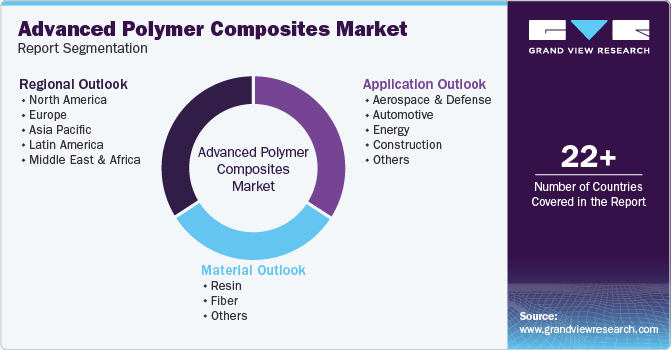
This report forecasts revenue growth at global, regional, and country levels and provides an analysis of the latest industry trends in each of the sub-segments from 2021 to 2033. For this study, Grand View Research has segmented the global advanced polymer composites market report based on material, application and region.
-
Material Outlook (Revenue, USD Million, 2021 - 2033)
-
Resin
-
Epoxy
-
Phenolic
-
Polyester
-
Others
-
-
Fiber
-
Carbon Fiber
-
Glass Fiber
-
Aramid Fiber
-
Others
-
-
Others
-
-
Application Outlook (Revenue, USD Million, 2021 - 2033)
-
Aerospace & Defense
-
Automotive
-
Energy
-
Construction
-
Others
-
-
Regional Outlook (Revenue, USD Million, 2021 - 2033)
-
North America
-
U.S.
-
Canada
-
Mexico
-
-
Europe
-
Germany
-
UK
-
France
-
Italy
-
Spain
-
-
Asia Pacific
-
China
-
Japan
-
India
-
-
Latin America
-
Brazil
-
-
Middle East & Africa
-
Saudi Arabia
-
-
Research Methodology
(a) Segment Definition -
Segment - Material: Resin
Revenue capture definition
Epoxy
Revenue generated from the sale of epoxy-based advanced polymer composites used in structural components, aircraft interiors, automotive body panels, wind turbine blades, and high-performance industrial applications. This segment captures revenues from epoxy resin systems supplied to manufacturers and composite fabricators requiring superior mechanical strength, adhesion properties, fatigue resistance, and durability across aerospace, automotive, energy, construction, and other end-use industries.
Phenolic
Revenue generated from the sale of phenolic-based advanced polymer composites used in fire-resistant structures, transportation interiors, aerospace components, construction materials, and industrial applications. This segment captures revenues from phenolic resin systems supplied to manufacturers requiring excellent flame retardancy, low smoke emissions, thermal stability, and safety compliance across aerospace, rail, automotive, and building applications.
Polyester
Revenue generated from the sale of polyester-based advanced polymer composites used in automotive parts, construction panels, marine structures, electrical components, and general industrial applications. This segment captures revenues from polyester resin systems supplied to composite manufacturers seeking cost-effective, lightweight, corrosion-resistant, and durable material solutions for high-volume production environments.
Others
Revenue generated from the sale of other resin materials used in advanced polymer composites, including vinyl ester, polyurethane, thermoplastic resins, and specialty polymer systems. This segment captures revenues from resin suppliers serving applications requiring customized performance characteristics such as enhanced chemical resistance, impact strength, processability, and thermal performance across multiple industries.
Segment - Material: Fiber
Revenue capture definition
Carbon Fiber
Revenue generated from the sale of carbon fiber-reinforced advanced polymer composites used in aerospace structures, automotive components, wind energy systems, sporting goods, and defense applications. This segment captures revenues from carbon fiber composite materials supplied to manufacturers requiring exceptional strength-to-weight ratios, stiffness, fatigue resistance, and lightweight performance in high-value engineering applications.
Glass Fiber
Revenue generated from the sale of glass fiber-reinforced advanced polymer composites used in construction materials, automotive parts, wind turbine blades, electrical components, and industrial equipment. This segment captures revenues from glass fiber composite materials supplied to manufacturers seeking cost-effective reinforcement solutions offering high strength, corrosion resistance, electrical insulation, and design flexibility.
Aramid Fiber
Revenue generated from the sale of aramid fiber-reinforced advanced polymer composites used in ballistic protection systems, aerospace structures, automotive components, protective equipment, and defense applications. This segment captures revenues from aramid composite materials supplied to customers requiring superior impact resistance, high tensile strength, lightweight characteristics, and enhanced durability under demanding operating conditions.
Others
Revenue generated from the sale of other fiber-reinforced advanced polymer composites, including basalt fiber, natural fiber, ultra-high-molecular-weight polyethylene (UHMWPE) fiber, and specialty reinforcement materials. This segment captures revenues from fiber suppliers serving niche and emerging applications requiring customized performance, sustainability benefits, or specialized mechanical properties.
Segment - Material: Others
Revenue capture definition
Others
Revenue generated from the sale of other advanced polymer composite materials, including hybrid composites, natural fiber composites, basalt fiber composites, thermoplastic composites, nanocomposites, and specialty reinforced polymer systems used across aerospace, automotive, energy, construction, marine, and industrial applications. This segment captures revenues from composite material suppliers serving manufacturers that require customized performance characteristics such as enhanced impact resistance, improved thermal stability, superior sustainability, lightweight design, and application-specific mechanical properties for advanced engineering and structural applications.
Segment - Application
Revenue capture definition
Aerospace & Defense
Revenue generated from the sale of advanced polymer composites used in aircraft structures, rotor blades, engine components, missiles, satellites, military vehicles, and space exploration systems. This segment captures revenues from composite materials supplied to aerospace manufacturers, defense contractors, and government agencies requiring lightweight, high-strength, corrosion-resistant, and thermally stable materials for critical mission applications.
Automotive
Revenue generated from the sale of advanced polymer composites used in body panels, structural components, battery enclosures, chassis systems, and lightweight vehicle applications. This segment captures revenues from composite materials supplied to automotive manufacturers and suppliers seeking improved fuel efficiency, vehicle performance, crash resistance, and reduced overall vehicle weight.
Energy
Revenue generated from the sale of advanced polymer composites used in wind turbine blades, oil and gas equipment, hydrogen storage systems, energy infrastructure, and renewable energy applications. This segment captures revenues from composite materials supplied to energy equipment manufacturers requiring lightweight, corrosion-resistant, durable, and high-performance materials capable of operating in harsh environments.
Construction
Revenue generated from the sale of advanced polymer composites used in bridges, reinforcement structures, panels, roofing systems, pipes, facades, and other construction applications. This segment captures revenues from composite materials supplied to construction companies and infrastructure developers seeking durable, corrosion-resistant, lightweight, and low-maintenance building solutions.
Others
Revenue generated from the sale of advanced polymer composites used in marine, electrical and electronics, consumer goods, sporting equipment, medical devices, and various industrial applications. This segment captures revenues from composite materials supplied to manufacturers requiring high-performance material solutions that offer strength, durability, design flexibility, and long service life across diverse end-use sectors.
Estimation Model
Layer Name
Key Question
Description
Raw Material Production Analysis
What is the total production and availability of key raw materials used in advanced polymer composites?
Estimates the overall supply and production volumes of primary raw materials including carbon fiber, glass fiber, aramid fiber, epoxy resins, phenolic resins, polyester resins, thermoplastic polymers, and specialty additives. This layer evaluates raw material manufacturing capacities, regional supply dynamics, pricing trends, and availability across major producing countries to establish the foundational supply base for advanced polymer composite manufacturing.
Composite Manufacturing & Conversion Analysis
How much raw material is converted into advanced polymer composite products?
Assesses the conversion of fibers and resins into finished composite materials through processes such as lay-up molding, filament winding, pultrusion, resin transfer molding, compression molding, and automated fiber placement. The analysis incorporates manufacturing yields, material utilization rates, production efficiencies, and output volumes of composite laminates, prepregs, structural components, and specialty composite products across industries.
End-Use Industry Demand Assessment
Where are advanced polymer composites being consumed and in what quantities?
Evaluates demand across major application sectors including aerospace & defense, automotive, energy, construction, marine, electronics, and industrial applications. This layer analyzes composite consumption patterns, penetration rates, production volumes of end-use products, lightweighting trends, and material substitution opportunities to quantify market demand at the application level.
Revenue & Market Size Validation
What is the total market value generated from advanced polymer composite sales?
Calculates the market size by combining volume consumption data with average selling prices across composite types, fiber materials, resin systems, and applications. The results are validated through manufacturer revenues, industry benchmarks, trade statistics, company reports, and expert interviews to determine the final market value and forecast growth potential for the Advanced Polymer Composites Market.
Delivered Customizations
This report has been delivered with the following In-depth customizations
Client Request
Customization Delivered
Value Adds
Aerospace & Defense Opportunity Assessment
Evaluated advanced polymer composite adoption across commercial aircraft, military jets, helicopters, UAVs, satellites, and space launch vehicles, including demand outlook for carbon fiber, epoxy systems, and lightweight structural components.
Supports strategic expansion decisions by identifying high-growth aerospace programs, material demand hotspots, and long-term procurement opportunities across OEMs and defense contractors.
Composite Manufacturing Technology Benchmarking
Compared automated fiber placement (AFP), automated tape laying (ATL), resin transfer molding (RTM), pultrusion, filament winding, and compression molding technologies.
Assists manufacturers in selecting cost-effective production technologies, improving operational efficiency, and enhancing competitiveness.
Competitive Intelligence & Market Share Analysis
Assessed product portfolios, manufacturing capacities, strategic initiatives, geographic presence, and innovation capabilities of leading market participants.
Provides actionable intelligence for competitive positioning, partnership evaluation, and strategic business planning.
Frequently Asked Questions About This Report
The key factors that are driving the advanced polymer composites market include their superior strength-to-weight ratio, durability, and versatility which are used across various industries.
Some of the key players operating in the advanced polymer composites market include Owens Corning, Toray Advanced Composites, SGL Group, Cytec Industries Inc., BASF SE, Koninklijke Ten Cate NV, Arkema S.A., Mitsubishi Rayon Co. Ltd., Hexcel Corporation, and 3B - the fibreglass company.
The aerospace & defense segment led the advanced polymer composites market with the largest revenue share of 35.4% in 2025.
Fiber segment is expected to be the fastest-growing material category with a CAGR of 5.1% from 2026 to 2033.
The automotive segment is expected to be the fastest-growing end-use market, registering a CAGR of 5.2% over the forecast period.
Asia Pacific dominated the market with the largest revenue share of 35.4% in 2025.
The global advanced polymer composites market size was valued at USD 11.7 billion in 2025 and is expected to reach USD 12.2 billion in 2026.
The global advanced polymer composites market is expected to grow at a compound annual growth rate of 4.9% from 2026 to 2033 to reach USD 17.0 billion by 2033.
About the Author(s)
Advanced Interior Materials Research Team
Advanced Materials · Advanced Interior MaterialsThis report was authored by the advanced interior materials research team at Grand View Research - comprising two research analysts, one senior research analyst, and one industry expert - with specialized expertise in the advanced interior materials segment of the advanced materials industry. All findings are based on proprietary advanced materials databases, executive interviews, and regulatory analysis, subject to internal peer review prior to publication.
Last Updated:
Speak to Analyst

Customize this report to your needs — add regions, segments, or data points, with 20% free customization.
Or view our licence options:


ISO 9001:2015 & 27001:2022 Certified
We are GDPR and CCPA compliant! Your transaction & personal information is safe and secure. For more details, please read our privacy policy.












