
- Home
- »
- Next Generation Technologies
- »
-
Agricultural Testing Market Size & Share Report, 2026-2033GVR Report cover

Agricultural Testing Market (2026 - 2033)
Size, Share & Trends Analysis Report By Sample (Soil, Water), By Type (Nutrient Analysis, Contaminant Testing), By Technology, By End Use (Farmers, Agribusiness Companies), By Region, And Segment Forecasts
Market Size, 2025
$11.8BMarket Estimate, 2026
$12.4BMarket Forecast, 2033
$17.1BCAGR, 2026–2033
4.6%Agricultural Testing Market Summary
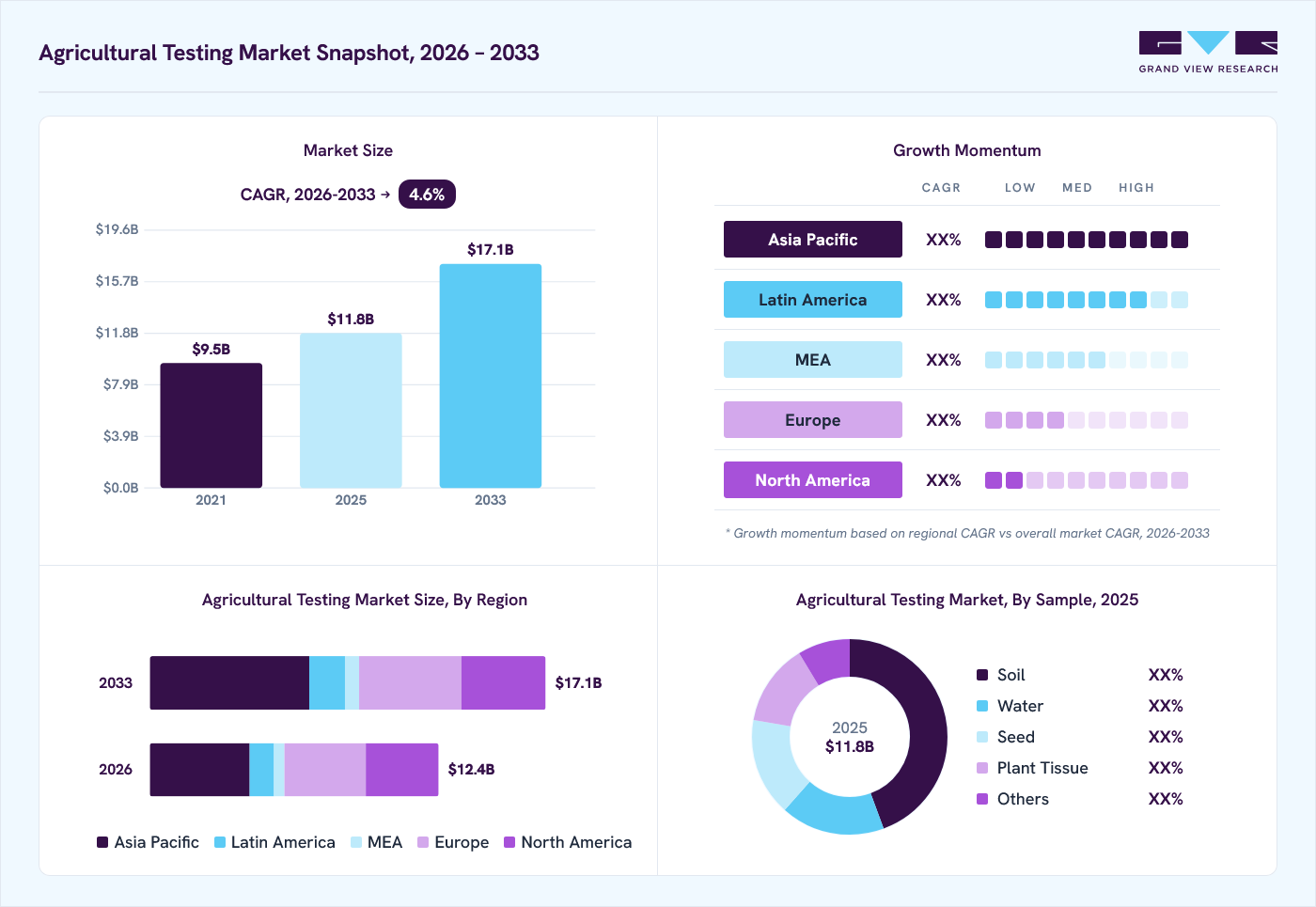
The global agricultural testing market size was valued at USD 11.8 billion in 2025 and is projected to grow from USD 12.4 billion in 2026 to USD 17.1 billion by 2033, at a CAGR of 4.6% from 2026 to 2033. Asia Pacific dominated the global market, accounting for the largest revenue share of 33.8% in 2025. Rising demand for soil health assessment and nutrient management is driving market growth.
 Source: Grand View Research, IR Documents, Primary Interviews, Paid DatabasesTo learn more about this report,
 Download Free Sample Report
 Key Market Trends & Insights
- By sample: The soil segment dominated the market, with a revenue share of 44.3% in 2025.
- By type: The nutrient analysis segment led the market and accounted for a share of 36.4% in 2025.
- By technology: The spectroscopy-based testing segment dominated the market, with a revenue share of 37.4% in 2025.
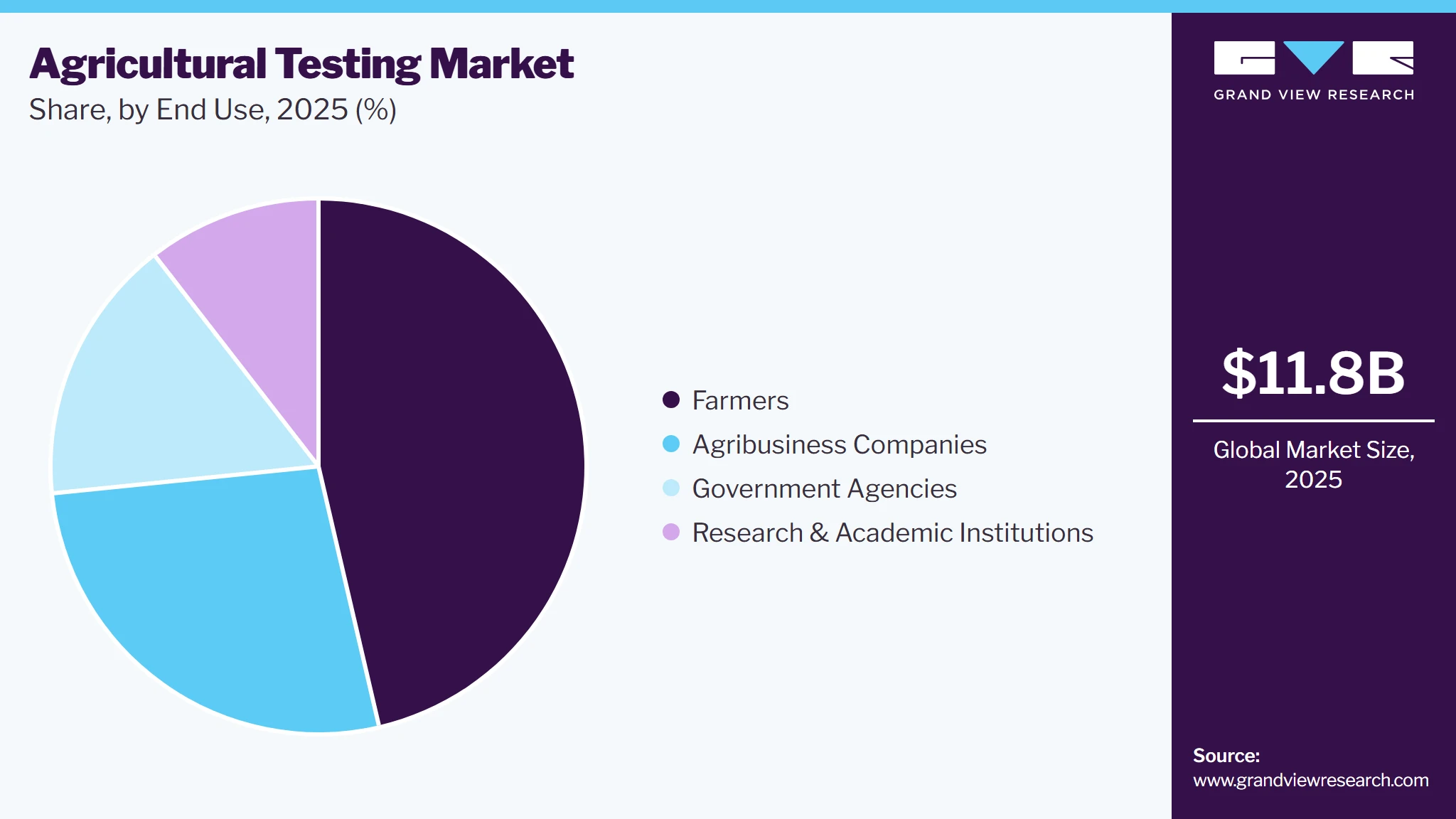
- By end use: The farmers segment held the largest revenue share in 2025.
Regional Highlights
- Largest regional market: Asia Pacific (33.8% revenue share, 2025)
- Fastest-growing regional market: Asia Pacific (highest CAGR, 2026-2033)
- By country: India held the largest market share in 2025.
Market Size & Forecast
- Market size in 2025: USD 11.8 Billion
- Estimated market size in 2026: USD 12.4 Billion
- Projected market size by 2033: USD 17.1 Billion
- CAGR (2026-2033): 4.6%
Three ways to get this report
Buy it, customize it, or ask a question.Ask an Analyst
Analyst response in 1 business day
- AccessReport author, directly
- Reply timeWithin 1 working day
- No sales callDirect answer only
- FormatEmail reply
- CostFree, no cost
Get the Full Report
What the study covers
- FormatsPDF · Excel · Dashboard
- Timeline2026–2033 annual, 2025 base
- Coverage20+ countries, 5 regions
- Companies10+ key players profiled
Customize the Report
20% free customization
- IncludeCountries, segments, points
- TailorTo your product definition
- ExtendDeeper competitor detail
- OrA fully bespoke study
- Turnaround5–10 working days
The increasing emphasis on precision agriculture is driving growth in the agricultural testing industry, as farmers require accurate information about soil fertility, nutrient availability, crop health, water quality, and input efficiency before making production decisions. Modern farming operations increasingly rely on data-driven cultivation strategies that require laboratory analysis and field testing to optimize fertilizer application, irrigation scheduling, crop selection, and resource management across agricultural land. Agricultural testing provides scientifically validated information that supports more efficient farm management and improves production planning across commercial farming operations. Producers increasingly invest in testing services that help optimize agricultural inputs and improve overall cultivation efficiency across diverse crop systems.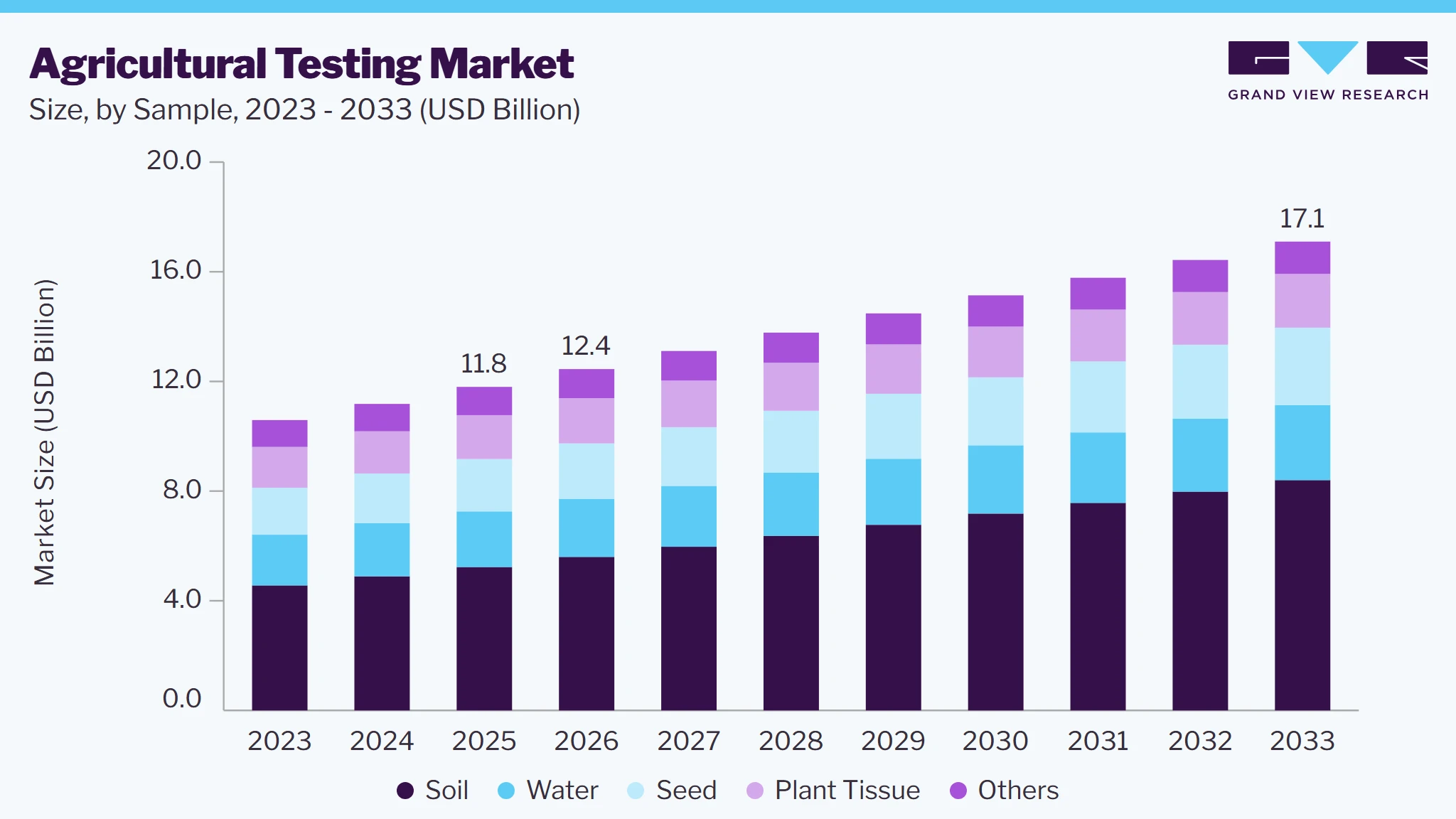 To learn more about this report, Download Free Sample Report
 The growing commercialization of high-value crops is driving market growth. Producers cultivating fruits, vegetables, nuts, medicinal plants, herbs, spices, horticultural crops, and specialty agricultural products increasingly require detailed testing services to maintain quality standards, optimize nutrition programs, and improve crop consistency across commercial production systems. High-value crop cultivation often requires precise nutrient management, soil monitoring, irrigation assessment, and plant health analysis throughout the production cycle. Commercial growers increasingly invest in advanced testing services that support premium agricultural production and specialized crop management across competitive markets.
The increasing use of scientific crop nutrition management is driving market growth. Commercial producers increasingly move away from generalized fertilizer application practices toward field-specific nutrient management programs based on laboratory analysis and agronomic testing results. Plant tissue testing, soil nutrient analysis, water quality assessment, and fertilizer evaluation enable growers to optimize nutrient application based on crop requirements and field conditions across different growth stages. Agricultural consultants and commercial farms increasingly use testing data to improve nutrient efficiency and support balanced crop nutrition across large agricultural operations.
The growing expansion of commercial farming enterprises is driving market growth. Large agricultural companies, contract farming operations, agribusiness organizations, plantation operators, greenhouse enterprises, and commercial growers increasingly require systematic testing programs across multiple fields, crop varieties, irrigation systems, and production sites. Commercial farming operations increasingly implement routine soil, water, seed, plant tissue, and residue testing as part of standardized agricultural management and quality assurance programs. Large-scale agricultural enterprises increasingly invest in laboratory partnerships and analytical services that support enterprise-level production optimization and operational management across extensive farming operations.
The increasing integration of digital agriculture and farm analytics is driving market growth. Modern agricultural management increasingly combines laboratory testing results with satellite imagery, sensor networks, farm management software, geographic information systems, precision equipment, and digital decision-support platforms to improve agricultural planning and operational efficiency. Agricultural testing data increasingly serves as a foundational component of digital farm management systems that support field zoning, nutrient mapping, irrigation optimization, yield forecasting, and predictive crop management across commercial agricultural operations. Technology providers increasingly integrate testing services with broader precision agriculture and digital farming ecosystems.
Market Dynamics
The market for agricultural testing is experiencing steady growth as farmers, agribusinesses, food producers, and agricultural research organizations increasingly rely on scientific analysis to improve crop productivity, soil fertility, and overall agricultural efficiency. Testing services for soil, water, seed, plant tissue, fertilizers, and agricultural chemicals are becoming essential for optimizing nutrient management, detecting contaminants, identifying crop deficiencies, and supporting precision farming decisions. The growing need to maximize yields from limited arable land, improve input efficiency, and maintain crop quality is encouraging broader adoption of laboratory-based and field-based agricultural testing services. In addition, increasing regulatory oversight of food safety, environmental sustainability, and agricultural input use is driving demand for accurate, standardized testing across the agricultural value chain.
The rising demand for disease and pathogen detection in crops is driving growth in the agricultural testing industry, as farmers increasingly seek laboratory-based diagnostics capable of identifying bacterial, fungal, viral, nematode, and other crop pathogens before visible symptoms become widespread in commercial fields. Modern crop production requires rapid, accurate detection methods that enable producers to continuously monitor plant health and verify disease presence with scientific precision, rather than relying solely on visual field inspections. Agricultural testing laboratories increasingly provide pathogen identification, molecular diagnostics, microbial screening, and disease confirmation services that support more informed crop management decisions throughout the production cycle. Commercial growers increasingly invest in diagnostic testing that helps maintain crop quality, protect production assets, and improve operational planning across diverse agricultural systems.
High costs of advanced agricultural testing services are constraining growth in the market, as many farmers and agricultural businesses face financial constraints in adopting comprehensive laboratory diagnostics and specialized analytical services. Advanced soil microbiome analysis, molecular pathogen detection, genomic testing, residue analysis, precision nutrient profiling, heavy metal testing, and sophisticated laboratory assessments often require expensive equipment, highly trained personnel, specialized reagents, and complex analytical procedures, thereby increasing overall testing costs. Small and medium-sized farms, family-owned agricultural operations, and resource-constrained producers may delay or reduce testing frequency when laboratory services become financially demanding. Agricultural testing providers frequently need substantial investment in instrumentation, laboratory infrastructure, quality assurance systems, and technical expertise, which can increase service pricing across commercial testing programs.
The growing demand for biological soil health and microbiome analysis is creating significant opportunities in the agricultural testing industry, as farmers seek a deeper understanding of soil biology beyond traditional nutrient and pH measurements. Modern agricultural practices increasingly recognize that microbial diversity, beneficial bacteria and fungi, interactions among organic matter, enzymes, and biological soil processes play important roles in long-term crop productivity and soil sustainability. Agricultural testing laboratories increasingly have opportunities to expand their service portfolios by offering advanced microbiome sequencing, microbial community analysis, soil biological activity testing, and soil ecosystem assessment services tailored to commercial farming operations. Producers increasingly seek comprehensive soil intelligence that combines chemical, physical, and biological analysis to improve overall land management and crop performance.
Analyst Perspective
The market for agricultural testing is increasingly being shaped by the shift from generalized farming practices toward evidence-based agricultural decision-making. Competitive differentiation is shifting from laboratory capacity alone to the ability to deliver rapid, accurate, and agronomically relevant insights that directly support farm management decisions. Service providers that combine advanced analytical techniques with digital reporting platforms, precision agriculture integration, and region-specific agronomic expertise are likely to strengthen their market position. As agriculture becomes more data-intensive and sustainability-focused, agricultural testing is expected to evolve from a periodic compliance activity into a continuous decision-support function that influences crop planning, input optimization, environmental management, and long-term farm productivity.
Sample Insights
The soil segment accounted for the largest market share of 44.3% in 2025. The growing adoption of regenerative and conservation agriculture is driving market growth within the soil segment. Farmers implementing cover cropping, reduced tillage, crop rotation, organic amendments, biological soil enhancement, and conservation farming practices increasingly require soil analysis to monitor organic matter accumulation, biological activity, nutrient cycling, carbon sequestration potential, and overall soil improvement across agricultural land. Soil testing provides measurable indicators that help producers evaluate the effectiveness of regenerative farming practices and long-term soil restoration efforts. Agricultural organizations increasingly promote soil monitoring as a core component of sustainable land management and conservation agriculture programs.
The seed segment is anticipated to grow at a significant CAGR during the forecast period. The increasing globalization of seed trade and distribution is driving market growth within the seed segment. International seed movement increasingly requires standardized testing for quality verification, varietal identity, phytosanitary compliance, germination performance, and regulatory certification across multiple agricultural markets. Seed exporters, importers, distributors, breeding companies, and multinational agricultural enterprises increasingly require laboratory testing to support international trade documentation and quality assurance across global seed supply chains. Accredited testing laboratories increasingly provide standardized analytical services that facilitate cross-border seed commerce and commercial distribution across diverse agricultural regions.
Type Insights
The nutrient analysis segment accounted for the largest market share of 36.4% in 2025. The increasing use of plant tissue testing is driving market growth across the nutrient analysis segment. Plant tissue analysis provides direct measurement of nutrient uptake and nutritional status within growing crops, allowing producers to monitor nutrient availability during active crop development rather than relying solely on soil measurements. Nutrient analysis of leaves, stems, fruits, roots, and other plant tissues helps identify hidden deficiencies, nutrient imbalances, excess nutrient accumulation, and crop-specific nutritional challenges across commercial agricultural operations. Farmers increasingly conduct tissue testing throughout different growth stages to adjust nutrient management programs and improve crop nutrition with greater precision.
The contaminant testing segment is expected to register a significant CAGR from 2026 to 2033. The increasing use of pesticides and agricultural chemicals is driving market growth within the contaminant testing segment. Commercial farming operations increasingly require laboratory analysis to monitor pesticide residues, herbicide persistence, fungicide accumulation, insecticide levels, and compliance with chemical application across different crop categories and production environments. Contaminant testing enables producers to evaluate residue levels before harvest and to optimize crop protection practices in accordance with market requirements and commercial quality standards. Agricultural consultants and commercial growers increasingly use laboratory testing to support responsible chemical management and residue monitoring across intensive farming operations.
Technology Insights
The spectroscopy-based testing segment accounted for the largest market share of 37.4% in 2025. The growing need for rapid laboratory turnaround is driving market growth across the spectroscopy-based testing segment. Commercial agricultural operations increasingly require analytical results within short operational windows during planting, fertilization, irrigation scheduling, crop monitoring, harvest planning, and quality management activities across intensive farming systems. Spectroscopy-based testing allows laboratories to process large numbers of samples efficiently while maintaining high analytical precision across multiple agricultural matrices and testing parameters. Agricultural testing laboratories increasingly adopt spectroscopic technologies to improve workflow efficiency, reduce processing time, increase sample throughput, and support commercial producers with faster analytical reporting.
The chromatography-based testing segment is expected to register a significant CAGR from 2026 to 2033. The increasing use of molecular and biochemical research in agriculture is driving market growth within the chromatography-based testing segment. Universities, agricultural research institutes, biotechnology companies, pharmaceutical organizations, plant science laboratories, and crop improvement programs increasingly use chromatographic techniques for metabolite analysis, plant biochemistry research, nutrient profiling, secondary metabolite characterization, and advanced agricultural experimentation across diverse crop species. Chromatography-based testing provides researchers with highly accurate chemical separation and quantification capabilities that support scientific discovery and agricultural innovation. Research organizations increasingly require sophisticated chromatographic instrumentation to investigate plant physiology, crop nutrition, stress responses, and pharmaceutical crop development.
End Use Insights
The farmers segment accounted for the largest market share of 46.3% in 2025. The increasing adoption of digital farm management and record-keeping is driving market growth within the farmers segment. Farmers increasingly use mobile applications, cloud-based farm management software, digital field records, precision agriculture platforms, sensor networks, and operational analytics tools that require laboratory testing data to improve agricultural decision-making across commercial farming operations. Agricultural testing results are increasingly being incorporated into long-term farm databases that support crop planning, nutrient budgeting, field performance analysis, irrigation management, and productivity forecasting across multiple growing seasons. Producers increasingly seek testing services that integrate with digital agricultural management systems and provide actionable agronomic insights for continuous farm improvement.
 To learn more about this report, Download Free Sample Report
 The agribusiness companies segment is anticipated to register the fastest CAGR during the forecast period. The growing expansion of food processing and value-added agricultural production is driving market growth within the agribusiness companies segment. Agribusiness organizations increasingly process grains, oilseeds, fruits, vegetables, herbs, spices, dairy ingredients, and specialty agricultural commodities into higher-value food products that require rigorous laboratory verification of quality and safety parameters throughout the production process. Agricultural testing supports raw material evaluation, process control, contaminant monitoring, nutritional analysis, and product standardization across commercial food manufacturing operations. Food-focused agribusiness companies increasingly require advanced analytical services that ensure consistency across large production volumes and multiple processing facilities.
Regional Insights
Asia Pacific agricultural testing industry dominated the global market, accounting for 33.8% of revenue in 2025. The growing development of agricultural research and biotechnology capabilities is driving market growth across the Asia Pacific market. Universities, agricultural research institutes, biotechnology companies, crop breeding organizations, seed companies, and government agricultural laboratories increasingly conduct research on crop improvement, soil health, nutrient management, disease resistance, and advanced agricultural technologies that require sophisticated analytical testing capabilities. Agricultural testing supports experimental validation, breeding programs, quality characterization, contaminant analysis, and scientific research across multiple crop species and agricultural production systems. Collaboration between research organizations and commercial agricultural enterprises increasingly accelerates agricultural innovation and technology adoption throughout the region.
 To learn more about this report, Download Free Sample Report
 The agricultural testing industry in China is projected to grow significantly during the forecast period. The growing emphasis on soil health restoration and long-term land productivity is driving market growth across the China market. Agricultural producers increasingly recognize that maintaining healthy soils is essential for sustaining crop yields, improving nutrient efficiency, enhancing water retention, supporting microbial activity, and strengthening long-term agricultural performance across commercial farming systems. Comprehensive soil testing programs increasingly evaluate organic matter content, nutrient reserves, pH, salinity, biological indicators, and soil structural characteristics across multiple production seasons. Farmers increasingly use laboratory data to develop long-term soil improvement strategies and monitor changes in soil condition over time.
The agricultural testing industry in India is projected to grow significantly during the forecast period. The increasing adoption of precision agriculture technologies is driving market growth within the India market. Farmers increasingly integrate digital field mapping, GPS-guided equipment, sensor networks, variable-rate application technologies, remote sensing platforms, and intelligent farm management systems, all of which require accurate laboratory testing as a foundation for precision farming decisions. Agricultural testing provides field-specific nutrient data, soil analysis, water quality assessment, and crop diagnostics that support more targeted management strategies across commercial agricultural operations. Agricultural technology companies increasingly integrate laboratory analytical services with broader digital agriculture ecosystems that improve operational efficiency and resource optimization.
North America Agricultural Testing Market Trends
The agricultural testing industry in North America is anticipated to grow steadily from 2026 to 2033. The increasing focus on soil health restoration and long-term land productivity is driving market growth across the North America market. Agricultural producers increasingly recognize that maintaining healthy soils is essential for sustaining crop yields, improving water retention, enhancing nutrient cycling, supporting microbial activity, and strengthening long-term agricultural performance across commercial farming operations. Comprehensive soil testing programs increasingly evaluate organic matter content, nutrient reserves, biological indicators, pH, salinity, and soil structure across multiple production seasons. Farmers increasingly use laboratory data to develop long-term soil improvement strategies and monitor changes in soil condition over time.
U.S. Agricultural Testing Market Trends
The U.S. agricultural testing industry is projected to grow significantly during the forecast period. The increasing focus on maximizing agricultural productivity is driving market growth across the U.S. market. Farmers increasingly seek scientifically validated methods to improve yields while reducing unnecessary expenditure on fertilizers, pesticides, irrigation, and other agricultural inputs in commercial production systems. Agricultural testing provides precise information on nutrient deficiencies, soil imbalances, water quality, and crop nutritional status, supporting more efficient farm management and improved production planning throughout the growing season. Producers increasingly use laboratory data to optimize resource allocation and improve profitability across diverse crop production environments.
Europe Agricultural Testing Market Trends
The agricultural testing industry in Europe is anticipated to grow steadily from 2026 to 2033. The strong development of agricultural biotechnology and crop innovation ecosystems is driving market growth across the European market. Universities, agricultural research institutes, biotechnology companies, crop breeding organizations, seed companies, food technology firms, and government agricultural laboratories increasingly conduct research on crop improvement, soil health, nutrient management, disease resistance, and advanced agricultural technologies that require sophisticated analytical testing capabilities. Agricultural testing supports experimental validation, breeding programs, quality characterization, contaminant analysis, and scientific research across multiple crop species and agricultural production systems. Collaboration between research organizations and commercial agricultural enterprises increasingly accelerates agricultural innovation and technology adoption throughout the region.
The agricultural testing industry in the UK is expected to grow significantly during the forecast period. The increasing adoption of precision nutrient management is driving market growth within the UK market. Farmers increasingly move away from generalized fertilizer application toward field-specific nutrient management programs that rely on laboratory analysis to determine actual nutrient requirements across different soil zones and production environments. Agricultural testing provides precise information on macro- and micronutrient availability, nutrient deficiencies, fertilizer efficiency, and crop nutritional status, supporting more targeted agricultural management. Commercial producers increasingly integrate laboratory nutrient data with precision farming technologies to improve input efficiency and optimize agricultural productivity across farming operations.
The agricultural testing industry in Germany is expected to grow significantly during the forecast period. The increasing integration of digital agriculture and predictive farm management is driving market growth within the German market. Laboratory testing data increasingly combine with satellite imagery, weather forecasting systems, machine learning models, sensor networks, autonomous agricultural equipment, and digital farm management platforms that support data-driven crop management across commercial farming enterprises. Agricultural testing increasingly serves as a foundational source of scientifically validated information that supports nutrient mapping, irrigation optimization, disease forecasting, yield prediction, carbon management, and enterprise-level agricultural planning across production systems. Technology providers increasingly develop integrated agricultural intelligence platforms that incorporate laboratory analytical services into broader precision agriculture ecosystems.
Key Agricultural Testing Company Insights
Some prominent players in the agricultural testing industry include Eurofins and Actlabs, among others.
-
Eurofins is a global laboratory testing and analytical services company. Eurofins focuses on delivering high-precision laboratory analysis, regulatory compliance support, quality assurance, and scientific consulting services that help customers improve product quality, ensure safety, and meet international standards. Eurofins provides a comprehensive portfolio of laboratory testing services and analytical products that support modern agricultural production and agronomic decision-making. The services help farmers, agronomists, fertilizer manufacturers, seed companies, and agricultural enterprises evaluate soil fertility, nutrient availability, water quality, crop health, contamination risks, and compliance with agricultural regulations and sustainability standards.
-
Actlabs is a global analytical laboratory company specializing in testing, inspection, and scientific analysis services across industries, including agriculture, mining, environmental management, energy, pharmaceuticals, and industrial manufacturing. The company focuses on delivering reliable analytical data that supports productivity improvement, regulatory compliance, resource management, and sustainable agricultural practices. The analytical services help farmers, agronomists, fertilizer manufacturers, seed companies, and agricultural consultants make informed decisions regarding nutrient management, irrigation practices, crop health, and environmental stewardship.
Key Agricultural Testing Companies
The following key companies have been profiled for this study on the agricultural testing market.
-
Actlabs
-
AGAT Laboratories
-
AgSource
-
Agvise Laboratories
-
Cotecna
-
Element Materials Technology
-
Eurofins
-
ITC Labs
-
Matrix Sciences
-
PERENNIA FOOD AND AGRICULTURE CORPORATION
-
SGS Société Générale de Surveillance SA
Competitive Benchmarking
Operating Strategies
Competitive Edge
Weakness
Mature Players: Eurofins Scientific; SGS; Intertek Group; Bureau Veritas; ALS Limited
- Established players focus on comprehensive agricultural testing services, including soil, water, seed, fertilizer, crop, and residue analyses for commercial agriculture and food production.
- They invest in laboratory automation to improve testing accuracy, turnaround time, and regulatory compliance.
- These companies benefit from extensive laboratory infrastructure, internationally recognized certifications, and long-standing relationships with agribusinesses, exporters, and government agencies.
- Their broad testing capabilities and global operational presence enable consistent quality assurance across diverse agricultural supply chains.
- Operating large laboratory networks requires significant investment in equipment, skilled personnel, and quality management systems.
- Compliance with evolving agricultural regulations and the maintenance of standardized testing procedures across multiple regions can also increase operational complexity and costs.
Emerging Players: EarthOptics; Pattern Ag; Trace Genomics; Biome Makers; AgroCares
- Emerging players focus on biological soil testing, microbial analysis, and digital diagnostics technologies that provide faster agronomic insights.
- They emphasize AI-driven analytics and data integration with farm management platforms to support precision agriculture and sustainability initiatives.
- These companies offer innovative testing approaches that deliver more detailed biological and field-level insights than many conventional laboratory methods.
- Their technology-driven platforms enable faster decision-making, greater accessibility, and stronger integration with digital agriculture ecosystems.
- Limited laboratory infrastructure and smaller customer networks can restrict large-scale commercial expansion.
- Building regulatory acceptance and demonstrating long-term agronomic value across crops and geographic regions remain important challenges for adoption.
Recent Developments
-
In August 2026, ACT LAB announced its expansion into New Jersey, marking another step forward in the company’s strategy to provide consistent testing results, operational excellence, and responsive customer support for regulated cannabis businesses. The expansion has been achieved through the acquisition of Sriven Labs. New Jersey offers a strong opportunity for the company to extend its industry-leading turnaround times and customer-focused service, helping cannabis operators meet regulatory requirements, enhance consumer safety, and reinforce confidence in regulated cannabis products.
-
In April 2026, Eurofins acquired CSR Laboratorio, strengthening Eurofins Agro Testing’s service capabilities and market presence in Spain. CSR Laboratorio’s local expertise, operational capabilities, and specialized agricultural testing services complement Eurofins broader portfolio of agricultural testing solutions across the region. Eurofins operates a network of agricultural laboratories and partners across Europe and other global markets, providing analyses for soil, crops, water, compost, and manure. Through its standardized analytical methods combined with customized agronomic recommendations, Eurofins helps landowners improve crop yields, enhance crop quality, and manage nutrients and water resources more efficiently.
-
In January 2026, Eurofins and trinamiX GmbH jointly developed a mobile feed analysis solution for the equine industry, bringing high-quality forage testing directly to stables and pastures across Europe. The solution enables stable owners, horse feed manufacturers, forage suppliers, and veterinary professionals to make better-informed decisions through immediate access to nutritional data. Designed for the entire equine sector, it supports applications across sport horses, breeding operations, leisure horses, and rehabilitation programs.
Agricultural Testing Market Report Scope
Report Attribute
Details
Market size in 2025
USD 11.8 billion
Estimated market size in 2026
USD 12.4 billion
Projected market size by 2033
USD 17.1 billion
Growth rate
CAGR of 4.6% from 2026 to 2033
Actual data
2021 - 2025
Forecast period
2026 - 2033
Quantitative units
Revenue in USD billion and CAGR from 2026 to 2033
Report coverage
Revenue forecast, company share, competitive landscape, growth factors, and trends
Segments covered
Sample, type, technology, end use, region
Regional scope
North America; Europe; Asia Pacific; Latin America; MEA
Country scope
U.S.; Canada; Mexico; UK; Germany; France; China; India; Japan; Australia; South Korea; Brazil; UAE; Saudi Arabia; South Africa
Key companies profiled
Actlabs; AGAT Laboratories; AgSource; Agvise Laboratories; Cotecna; Element Materials Technology; Eurofins; ITC Labs; Matrix Sciences; PERENNIA FOOD AND AGRICULTURE CORPORATION; SGS Société Générale de Surveillance SA
Customization scope
Free report customization (equivalent to 8 analysts working days) with purchase. Addition or alteration to country, regional & segment scope.
Pricing and purchase options
Avail customized purchase options to meet your exact research needs. Explore purchase options
Global Agricultural Testing Market Report Segmentation
This report forecasts revenue growth at global, regional, and country levels and provides an analysis of the latest industry trends in each of the sub-segments from 2021 to 2033. For this study, Grand View Research has segmented the agricultural testing market report based on sample, type, technology, end use, and region:
-
Agricultural Testing Sample Outlook (Revenue, USD Billion, 2021 - 2033)
-
Soil
-
Water
-
Seed
-
Plant Tissue
-
Others
-
-
Agricultural Testing Type Outlook (Revenue, USD Billion, 2021 - 2033)
-
Nutrient Analysis
-
Contaminant Testing
-
Microbiological Testing
-
Genetic & Molecular Testing
-
Others
-
-
Agricultural Testing Technology Outlook (Revenue, USD Billion, 2021 - 2033)
-
Spectroscopy-Based Testing
-
Chromatography-Based Testing
-
Molecular Diagnostics
-
Rapid Test Kits
-
Others
-
-
Agricultural Testing End Use Outlook (Revenue, USD Billion, 2021 - 2033)
-
Farmers
-
Agribusiness Companies
-
Government Agencies
-
Research & Academic Institutions
-
-
Agricultural Testing Regional Outlook (Revenue, USD Billion, 2021 - 2033)
-
North America
-
U.S.
-
Canada
-
Mexico
-
-
Europe
-
Germany
-
UK
-
France
-
-
Asia Pacific
-
China
-
India
-
Japan
-
South Korea
-
Australia
-
-
Latin America
-
Brazil
-
-
Middle East & Africa
-
UAE
-
Saudi Arabia
-
South Africa
-
-
Research Methodology
The agricultural testing market figures in this report are based on a proven research process that combines executive interviews with secondary research from proprietary databases, company filings, and recognized regulatory and institutional sources. Market size is built through value-chain sizing-reconciling supply-side and demand-side estimates-and triangulated with bottom-up and top-down approaches. Every estimate passes multiple levels of expert validation before publication, with each agricultural testing segment quantified using the revenue-capture definitions in the table below.
Segment Definition
Sample
Revenue capture definition
Soil
The largest sample segment captures value through laboratory analysis of soil fertility, nutrient levels, pH, organic matter, salinity, and micronutrient availability. Demand is driven by precision farming, fertilizer optimization, and increasing focus on improving long-term soil health and crop productivity.
Water
Market value is derived from testing irrigation water, groundwater, surface water, and nutrient solutions for quality, salinity, contamination, and suitability for agricultural use. Farmers and agribusinesses increasingly invest in water testing to improve irrigation efficiency, protect crop health, and comply with environmental standards.
Seed
Commercial activity is centered on seed quality assessment, germination testing, purity analysis, vigor evaluation, and pathogen detection before planting. Seed producers, distributors, and commercial farms rely on testing services to ensure high planting performance and minimize crop establishment risks.
Plant Tissue
Value is created through analysis of nutrient uptake, mineral deficiencies, toxicities, and physiological conditions within crops during the growing season. Plant tissue testing supports real-time crop nutrition management and enables more precise fertilizer and crop protection decisions.
Others
This category includes fertilizer samples, compost, animal feed, agricultural residues, and environmental samples used in specialized agricultural testing applications. Expanding sustainability initiatives and precision agriculture practices continue to broaden demand for these testing services.
Type
Revenue capture definition
Nutrient Analysis
The largest testing segment is driven by the need to evaluate macro- and micronutrient levels in soil, water, plants, and fertilizers. Accurate nutrient analysis helps growers optimize input usage, improve crop yields, and reduce unnecessary fertilizer application.
Contaminant Testing
Market demand is supported by testing for pesticides, heavy metals, chemical residues, toxins, and environmental pollutants that may affect agricultural production and food safety. Regulatory compliance and export-quality requirements are driving adoption across commercial agriculture.
Microbiological Testing
Commercial opportunities arise from detecting bacterial, fungal, viral, and other microbial contaminants in agricultural samples. Food safety concerns, plant disease management, and biosecurity requirements continue to drive investment in microbiological testing capabilities.
Genetic & Molecular Testing
Value is captured through DNA-based testing, varietal identification, disease resistance screening, trait analysis, and molecular diagnostics for crops and seeds. Advancements in agricultural biotechnology and breeding programs are expanding the use of genetic testing across modern agriculture.
Others
This segment includes residue analysis, physical quality testing, soil biology assessment, enzyme testing, and emerging precision agriculture diagnostics. Continuous innovation in agricultural science is creating new specialized testing applications across the farming value chain.
Technology
Revenue capture definition
Spectroscopy-Based Testing
The largest technology segment, utilizing infrared, near-infrared, and other spectroscopic methods for rapid analysis of soil, plant, seed, and fertilizer samples. The technology is widely adopted because it enables fast, non-destructive, and cost-effective testing for routine agricultural analysis.
Chromatography-Based Testing
Market value is driven by high-precision analysis of pesticides, herbicides, fertilizers, contaminants, and other chemical compounds. Laboratories invest in chromatography technologies to meet regulatory standards and support advanced agricultural quality testing requirements.
Molecular Diagnostics
Commercial demand is fueled by PCR, DNA sequencing, and other molecular techniques used for pathogen detection, genetic identification, trait analysis, and disease diagnostics. Increasing adoption of biotechnology and precision agriculture is strengthening this technology segment.
Rapid Test Kits
Value is created through portable, easy-to-use testing solutions that provide immediate field-level results for nutrients, pathogens, contaminants, and water quality. Farmers and agronomists increasingly utilize rapid testing to make timely crop management decisions without waiting for laboratory processing.
Others
This category includes biosensors, immunoassays, imaging-based diagnostics, AI-enabled testing platforms, and emerging laboratory technologies. Technological innovation continues to expand the range and accessibility of agricultural testing solutions across different farming environments.
End Use
Revenue capture definition
Farmers
The largest end-use segment comprises growers who use agricultural testing to optimize fertilizer application, irrigation management, crop nutrition, and disease control decisions. Testing services help farmers improve productivity while reducing input costs and environmental impact.
Agribusiness Companies
Seed producers, fertilizer manufacturers, food processors, exporters, and agricultural input companies invest heavily in quality assurance testing, product development, supply chain monitoring, and regulatory compliance. Advanced testing supports both commercial performance and market access requirements.
Government Agencies
Public-sector organizations use agricultural testing for food safety monitoring, environmental protection, soil health programs, disease surveillance, import and export regulation, and national agricultural development initiatives. Government laboratories and testing programs play a key role in maintaining agricultural standards and public safety.
Research & Academic Institutions
Universities, agricultural research centers, breeding programs, and scientific laboratories rely on testing technologies for crop research, soil science, plant pathology, genetics, and agricultural innovation. These institutions drive demand for advanced analytical technologies and specialized laboratory testing services.
Estimation Model
Layer No.
Layer
Question
Analysis
01
Analytical Assessment Layer
What agricultural materials require testing and analysis?
Identify the agricultural inputs and biological materials that require laboratory evaluation, including soil, water, seeds, fertilizers, compost, plant tissue, crop residues, and harvested produce. This layer defines market demand by evaluating the need to determine nutrient composition, contamination levels, soil fertility, irrigation suitability, seed quality, and overall agricultural productivity potential before critical farming decisions are made.
02
Laboratory Capability Layer
What enables reliable agricultural testing services?
Assess the infrastructure required to deliver accurate analytical results, including accredited laboratories, sample collection networks, analytical instruments, chromatography systems, spectroscopy equipment, molecular testing technologies, quality assurance protocols, and trained agronomists and laboratory professionals. Market participation depends on testing accuracy, turnaround time, regulatory compliance, and the ability to provide standardized and reproducible analytical outcomes.
03
Agronomic Decision Support Layer
How are agricultural testing results integrated into farming and supply chain decisions?
Analyze how farmers, agronomists, cooperatives, input suppliers, food processors, and agricultural enterprises use testing results to optimize fertilizer application, irrigation management, crop selection, pest and disease management, seed treatment, and harvest quality planning. Testing services increasingly integrate with farm management software, precision agriculture platforms, and advisory services that convert laboratory data into actionable agronomic recommendations.
04
Compliance & Productivity Value Layer
How is commercial value generated within the agricultural testing ecosystem?
Evaluate revenue streams from laboratory testing services, field sampling, diagnostic packages, certification programs, regulatory compliance testing, contract research, digital reporting platforms, and agronomic consulting. Additional value is created through improved crop yields, optimized input utilization, reduced environmental impact, enhanced export compliance, food safety assurance, and recurring seasonal testing demand across multiple stages of agricultural production and distribution.
Delivered Customizations
This report has been delivered with the following In-depth customizations
Client Request
Customization Delivered
Value Adds
Soil Fertility, Nutrient Profiling & Farm Diagnostics Trends
Conducted a focused analysis of agricultural testing services covering soil fertility assessment, nutrient profiling, pH testing, salinity analysis, micronutrient evaluation, and land suitability diagnostics across commercial farming and specialty crop cultivation.
Helps stakeholders identify high-demand testing applications, evaluate soil health management trends, and assess commercialization opportunities in precision farm diagnostics and advisory services.
Crop Quality, Seed Performance & Input Validation Adoption Trends
Evaluated adoption trends for seed germination testing, seed vigor analysis, crop quality testing, fertilizer validation, water quality assessment, and pesticide residue testing supporting productivity improvement and quality assurance across agricultural value chains.
Provides insights into quality assurance requirements, productivity optimization opportunities, and commercially attractive laboratory and field testing services supporting reliable agricultural inputs and crop outcomes.
Agricultural Laboratory Networks & Compliance Opportunity Assessment
Assessed demand for digital laboratory platforms, portable field testing kits, remote sample collection services, traceability-enabled testing systems, and integration with farm management and certification programs, along with challenges related to testing standardization, laboratory infrastructure, turnaround time, and farmer awareness.
Supports investment and expansion strategies by identifying underserved testing markets, evaluating laboratory modernization readiness, and strengthening long-term growth potential in science-based agricultural quality and compliance ecosystems.
Frequently Asked Questions About This Report
The global agricultural testing market size was estimated at USD 11.8 billion in 2025 and is expected to reach USD 12.4 billion in 2026.
The global agricultural testing market is expected to grow at a compound annual growth rate of 4.6% from 2026 to 2033 to reach USD 17.1 billion by 2033.
Key factors include rising demand for soil health assessment and nutrient management, growing commercialization of high-value crops, and increasing use of scientific crop nutrition management.
Asia Pacific dominated the market with 33.8% revenue share in 2025.
Asia Pacific is the fastest-growing region over the forecast period.
The soil segment led with an 44.3% revenue share in 2025 and is the fastest-growing segment.
The spectroscopy-based testing held the largest share (over 37%) and is the fastest-growing segment.
Key players operating in the agricultural testing market include Actlabs, AGAT Laboratories, AgSource, Agvise Laboratories, Cotecna, Element Materials Technology, Eurofins, ITC Labs, Matrix Sciences, PERENNIA FOOD AND AGRICULTURE CORPORATION, SGS Société Générale de Surveillance SA.
The nutrient analysis segment led with an 36.4% revenue share in 2025 and is the fastest-growing segment.
About the Author(s)
Next Generation Technologies Research Team
Technology · Next Generation TechnologiesThis report was authored by the next generation technologies research team at Grand View Research - comprising two research analysts, one senior research analyst, and one industry expert - with specialized expertise in the next generation technologies segment of the technology industry. All findings are based on proprietary technology databases, executive interviews, and regulatory analysis, subject to internal peer review prior to publication.
Last Updated:
Speak to Analyst

Customize this report to your needs - add regions, segments, or data points, with 20% free customization.
Or view our licence options:


ISO 9001:2015 & 27001:2022 Certified
We are GDPR and CCPA compliant! Your transaction & personal information is safe and secure. For more details, please read our privacy policy.


