
- Home
- »
- Next Generation Technologies
- »
-
Agriculture Spraying Equipment Market Report, 2026 - 2033GVR Report cover

Agriculture Spraying Equipment Market (2026 - 2033)
Size, Share & Trends Analysis Report By Farm Size (Large Farms, Medium Farms, Small Farms), By Type (Self-propelled, Tractor-mounted), By Capacity, By Region, And Segment Forecasts
Market Size, 2025
$13.3BMarket Estimate, 2026
$14.4BMarket Forecast, 2033
$24.1BCAGR, 2026–2033
7.6%Agriculture Spraying Equipment Market Summary
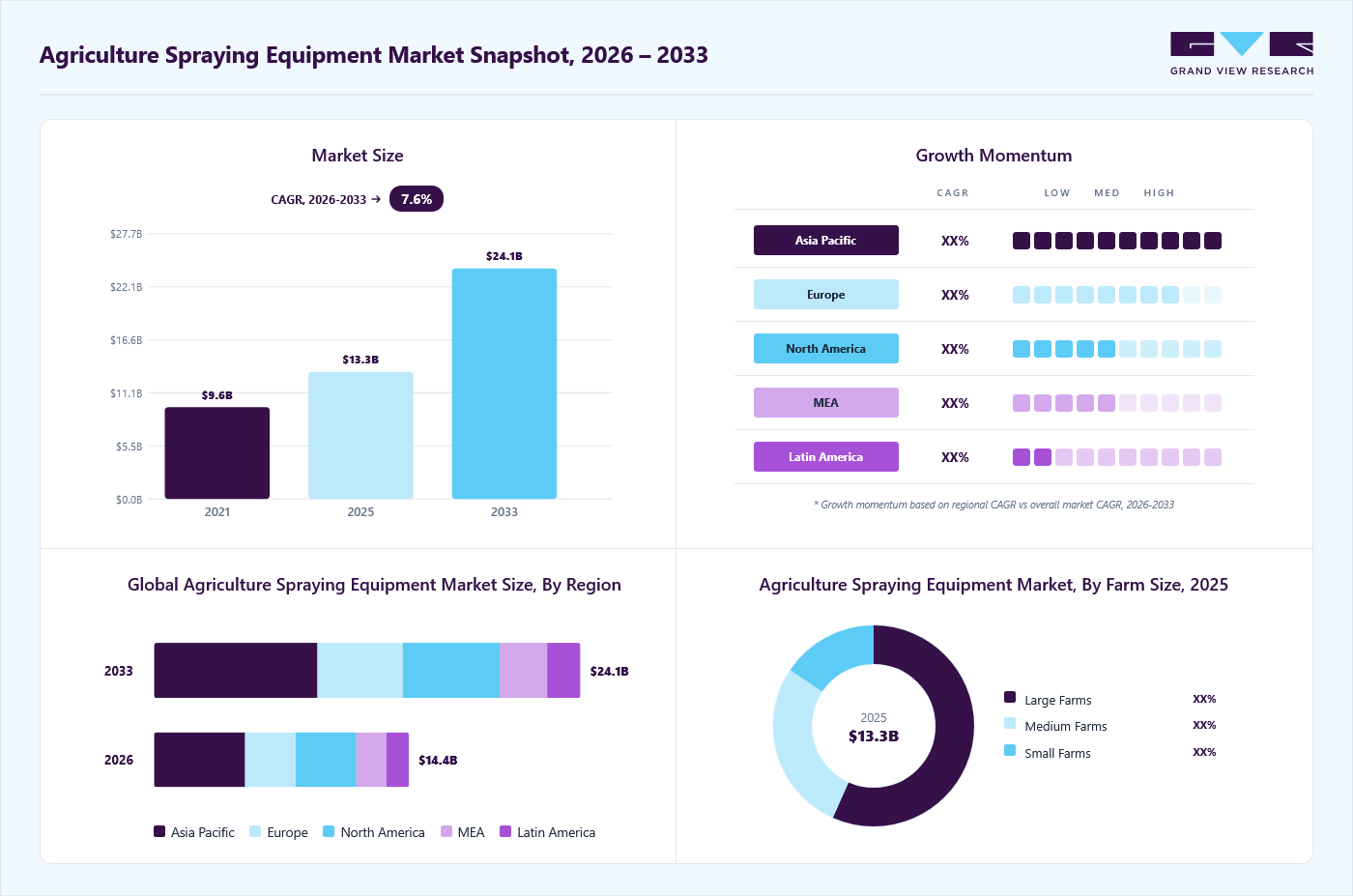
The global agriculture spraying equipment market size was valued at USD 13.3 billion in 2025 and is projected to grow from USD 14.4 billion in 2026 to USD 24.1 billion by 2033, at a CAGR of 7.6% from 2026 to 2033. Asia Pacific dominated with a revenue share of 35.4% in 2025. This growth is driven by growing adoption of mechanized farming practices across agricultural regions.
 Source: Grand View Research, IR Documents, Primary Interviews, Paid DatabasesTo learn more about this report,
 Download Free Sample Report
Key Market Trends & Insights
- By farm size: Large farms segment dominated the market, with a revenue share of 56.6% in 2025.
- By type: Tractor-mounted segment held the largest market share of 38.4% in 2025.
- By capacity: Low volume segment held the largest market share of 42.5% in 2025.
Regional Highlights
- Largest regional market: Asia Pacific (35.4% revenue share, 2025)
- By country: China held the largest market share in 2025.
Market Size & Forecast
- Market size in 2025: USD 13.3 Billion
- Estimated market size in 2026: USD 14.4 Billion
- Projected market size by 2033: USD 24.1 Billion
- CAGR (2026-2033): 7.6%
Prism AI by Grand View Research Free to tryAsk a question about the agriculture spraying equipment marketTry asking✓Every figure cited from GVR research Prefer the report? Download free sample →
The agriculture spraying equipment market is witnessing significant growth globally, driven by increasing focus on farm efficiency, larger farm sizes, government support for modern techniques, and the ongoing mechanization of agricultural activities. The growth of the agriculture spraying equipment market is driven by an increasing focus on farm efficiency, larger farm sizes, government support for modern techniques, and the ongoing mechanization of agricultural activities. Farm efficiency and farm size are critical factors in modern agriculture, where maximizing output while minimizing inputs is essential. Farmers are increasingly turning to advanced spraying equipment to achieve these goals. Technologies such as GPS-guided systems and variable rate types allow for a precise type of fertilizers, pesticides, and herbicides, targeting specific areas as needed. This precision not only optimizes crop yields but also reduces waste and environmental impact. As sustainability becomes a key concern, agriculture spraying equipment that promotes the efficient use of resources gains prominence. Manufacturers are responding by developing sprayers with advanced features like automated calibration and real-time monitoring, enabling farmers to achieve higher efficiency and farm size levels than before.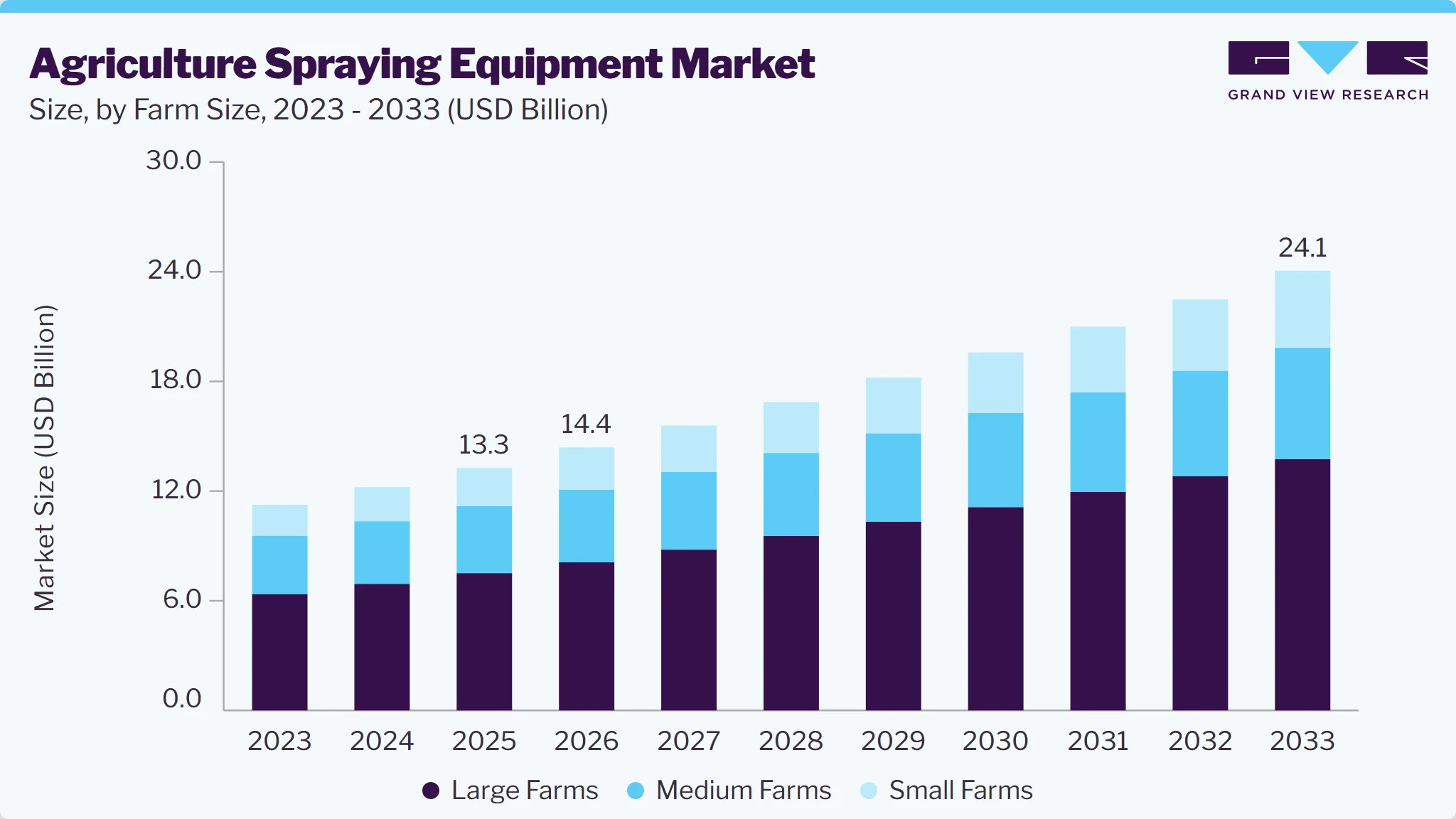 To learn more about this report, Download Free Sample Report
Governments worldwide are recognizing the importance of modern agricultural techniques in ensuring food security and sustainability. Policies and subsidies that support the adoption of advanced spraying equipment are becoming more prevalent. These initiatives aim to promote precision agriculture practices that minimize environmental impact while maximizing yield. By incentivizing the use of state-of-the-art spraying technologies, governments are fostering innovation in the agriculture spraying equipment market. This support not only encourages farmers to invest in efficient equipment but also drives research and development in new spraying technologies. As a result, the market for agriculture spraying equipment is experiencing growth driven by governmental initiatives aimed at modernizing and enhancing the efficiency of agricultural practices globally.
The ongoing mechanization of agricultural activities is revolutionizing farming practices worldwide. Spraying equipment plays a crucial role in this transformation by automating and optimizing the type of inputs, such as fertilizers and pesticides. Automated systems and robotics are increasingly integrated into spraying equipment, enabling precise and consistent spraying types across large fields. This shift towards mechanization addresses labor shortages and increases operational efficiency in farming operations. Modern sprayers are equipped with features such as automated boom control and type rate controllers, enhancing accuracy and reducing wastage of inputs. As farmers seek to improve farm size and reduce costs, the demand for advanced spraying equipment that supports mechanized farming continues to rise, driving innovation and market expansion in the agriculture spraying equipment sector.
Market Dynamics
The agriculture spraying equipment market is witnessing steady growth as farmers increasingly focus on improving crop protection efficiency and maximizing agricultural productivity. Rising incidences of pest infestations, plant diseases, and weed resistance are driving the demand for advanced spraying systems capable of delivering precise and uniform application of pesticides, herbicides, fungicides, and fertilizers. The adoption of mechanized farming practices and the expansion of large-scale commercial agriculture are further supporting the demand for high-capacity, technologically advanced spraying equipment. Additionally, growing awareness regarding chemical usage efficiency and environmental sustainability is encouraging the deployment of precision spraying technologies that minimize input wastage and reduce off-target application.
The increasing adoption of precision agriculture and smart farming technologies is a major driver of the agricultural spraying equipment market, as these innovations rely heavily on accurate, efficient, and data-driven crop input application systems. Modern farmers are increasingly utilizing GPS guidance, satellite imagery, field sensors, drones, and farm management software to optimize agricultural operations and improve productivity. These technologies generate detailed field-level information regarding crop health, pest infestations, nutrient deficiencies, and soil conditions, creating demand for advanced spraying equipment capable of executing highly precise applications. Traditional spraying methods often result in uneven coverage, excessive chemical use, and unnecessary operational costs. Precision agriculture addresses these inefficiencies by enabling spraying equipment to apply inputs precisely where needed. As smart farming adoption accelerates globally, demand for technologically advanced spraying systems continues to grow significantly.
According to the Association of Equipment Manufacturers (AEM), the adoption of precision agriculture technologies in the United States is generating substantial operational, economic, and environmental benefits for farmers. The use of technologies such as GPS-guided equipment, variable-rate technology (VRT), yield monitoring systems, drones, and remote sensing tools has contributed to approximately a 5% increase in crop productivity while reducing fertilizer usage by 8%, herbicide consumption by 9%, water use by 5%, and fuel consumption by 7%. Industry studies indicate that more than 60% of large U.S. farms have adopted at least one precision agriculture technology, while adoption rates for GPS guidance systems in major row crops such as corn and soybean farming exceed 70% in several regions. Furthermore, variable-rate application technologies have enabled input savings of 10% to 20%, depending on crop type and field conditions, helping farmer’s lower production costs while maintaining yield performance.
High acquisition costs of advanced spraying equipment represent a significant restraint on the agricultural spraying equipment market, as modern spraying technologies require substantial financial investment that many farmers struggle to afford. Advanced spraying systems increasingly incorporate GPS guidance, variable-rate application technology, automated boom controls, sensors, telematics, artificial intelligence capabilities, and precision agriculture integration features. While these technologies improve operational efficiency and crop management outcomes, they also significantly increase equipment purchase prices compared to conventional spraying solutions. Small and medium-sized farmers, who represent a large portion of the global agricultural community, often operate under tight financial constraints and may find it difficult to justify such substantial capital expenditures. As a result, many producers continue to rely on older equipment despite the potential benefits of advanced technologies. This financial barrier slows the rate of technology adoption and limits overall market growth.
The growing adoption of autonomous and robotic spraying equipment presents a significant opportunity for the agricultural spraying equipment market, as it represents a fundamental shift toward highly efficient, technology-driven farming operations. Modern agriculture increasingly faces challenges related to labor shortages, rising operational costs, and the need for improved productivity, creating strong demand for automation solutions. Autonomous spraying systems can operate with minimal human intervention while maintaining precise application accuracy across large agricultural areas. These technologies allow farmers to spray more consistently and efficiently than traditional manual methods. As agricultural producers seek ways to enhance productivity while reducing dependency on labor-intensive processes, autonomous spraying equipment is emerging as a highly attractive investment. This transition creates substantial growth opportunities for manufacturers capable of developing advanced robotic spraying platforms.
Analyst Perspective
The agriculture spraying equipment market is undergoing a shift from volume-based chemical application toward precision-based crop protection strategies. Competitive differentiation is increasingly determined by application accuracy, coverage efficiency, and the ability to reduce chemical use while maintaining crop health. Equipment manufacturers that incorporate technologies such as GPS guidance, variable-rate spraying, automated boom control, and drone-assisted spraying capabilities are likely to gain stronger traction among modern farming operations. As regulatory scrutiny of agrochemical use intensifies and farmers seek higher returns on every input invested, demand is expected to favor solutions that deliver measurable improvements in spray effectiveness, operational efficiency, and environmental compliance.
Farm Size Insights
Based on farm size, the large farms segment led the market with the largest revenue share of 56.6% in 2025. Medium-sized farms have the resources and scale to invest in advanced spraying equipment, which enhances farm size and efficiency. They often face increasing pressures to maximize yield and quality to remain competitive, driving the adoption of precision spraying technologies. These farms typically have larger areas to cover than small farms, making the efficiency and effectiveness of advanced sprayers more beneficial. Additionally, government subsidies and support programs for agricultural modernization are more accessible to medium farms, encouraging investment in modern spraying equipment.
The large farms segment is expected to register the significant CAGR over the forecast period. Large farms have substantial financial resources, allowing them to invest in advanced and high-capacity spraying equipment that enhances farm size and efficiency. The scale of operations on large farms necessitates the use of sophisticated machinery to cover vast areas quickly and accurately, minimizing labor costs and maximizing crop yield. Additionally, large farms often adopt precision agriculture technologies, which are integrated into modern spraying equipment, to optimize input use and improve crop management. The increasing need to meet high farm size targets and maintain a competitive advantage in the market further drives the adoption of advanced spraying equipment on large farms.
Type Insights
Based on type, the tractor-mounted segment led the market with the largest revenue share of 38.4% in 2025 due to its high efficiency and versatility in covering large areas quickly. These machines are equipped with advanced technologies, such as variable rate type and GPS, enhancing accuracy and reducing input costs. Their ability to operate in varied terrain and weather conditions makes them highly reliable for large-scale farming operations. Additionally, self-propelled sprayers offer significant labor savings as they require fewer operators compared to traditional equipment. The growing trend towards precision agriculture and the need for increased farm size in farming practices have further driven the demand for self-propelled spraying equipment.
The tractor-mounted segment is projected to register the significant CAGR over the forecast period in the agriculture spraying equipment market due to its cost-effectiveness and versatility for various farm sizes. These sprayers can be easily attached and detached from tractors, providing flexibility and convenience for farmers. They are particularly beneficial for small to medium-sized farms, where dedicated self-propelled sprayers may be too expensive. Tractor-mounted sprayers also allow for efficient utilization of existing farm machinery, maximizing the investment in tractors. Additionally, advancements in technology have enhanced the precision and efficiency of these sprayers, making them increasingly popular among farmers looking to optimize their operations.
Capacity Insights
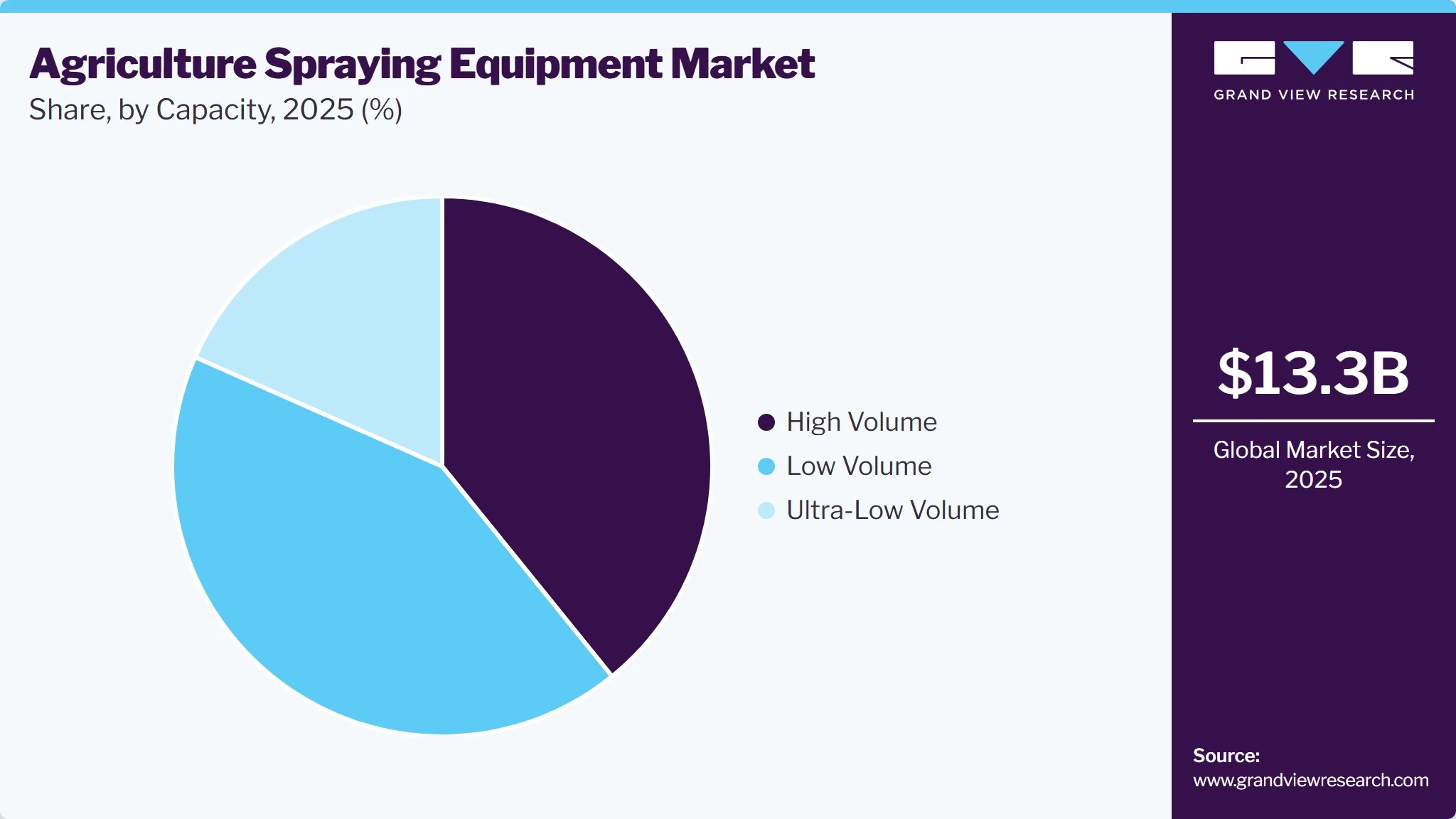
Based on capacity, the low volume segment led the market with the largest revenue share of 42.5% in 2025 due to its ability to cover extensive areas in a single operation, making it ideal for large-scale farming. These sprayers reduce the frequency of refilling, thereby increasing operational efficiency and minimizing downtime. They are particularly suited for crops requiring substantial amounts of liquid, such as those prone to pest infestations and diseases. The demand for high-volume capacity sprayers is driven by the need for more efficient resource utilization and the growing emphasis on maximizing crop yield. Furthermore, advancements in spraying technology have made high-volume capacity sprayers more precise and effective, enhancing their appeal to modern farmers.
 To learn more about this report, Download Free Sample Report
The ultra-low volume (ULV) segment is anticipated to witness the significant CAGR in the agriculture spraying equipment market, due to its efficiency in using minimal amounts of pesticide or herbicide, which reduces overall chemical usage and costs. ULV sprayers generate very fine droplets, ensuring thorough coverage and effective pest control with smaller quantities of liquid. This method is environmentally friendly, aligning with the increasing regulatory pressures and farmer preferences for sustainable farming practices. The precision and effectiveness of ULV sprayers make them suitable for sensitive crops and areas where minimizing chemical exposure is crucial. Additionally, advancements in spraying technology have made ULV equipment more reliable and user-friendly, driving their adoption among progressive farmers seeking modern solutions.
Regional Insights
Asia Pacific Agriculture Spraying Equipment Market Trends
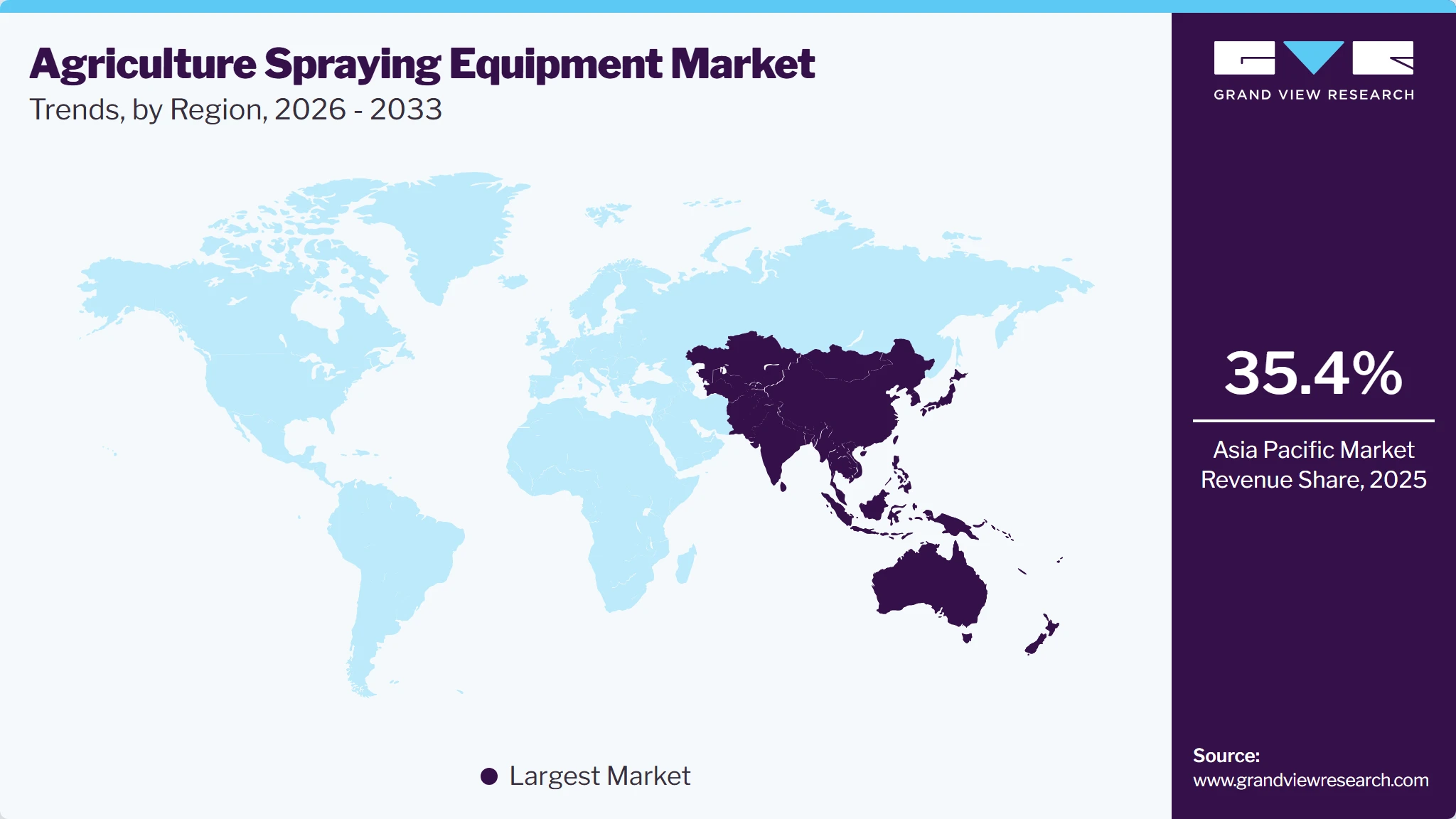
Asia Pacific dominated the global agriculture spraying equipment market with the largest revenue share of 35.4% in 2025. The region's significant agricultural farm size and expanding farming activities across countries like China, India, and Southeast Asia fueled demand for advanced spraying equipment. Rapid urbanization and industrialization in these economies have increased the need for efficient agricultural practices to ensure food security and mitigate environmental impacts. Government initiatives promoting modern farming techniques and investments in agricultural infrastructure further supported market growth. Additionally, technological advancements in spraying equipment, such as GPS-guided systems and automated spraying solutions, have enhanced operational efficiency and attracted substantial investments in the region, solidifying Asia Pacific's leadership in the global market.
 To learn more about this report, Download Free Sample Report
The agriculture spraying equipment market in China held the largest share in the Asia Pacific region in 2025. The expansion of large-scale and commercial farms in China is contributing to the demand for efficient and scalable spraying solutions. As land consolidation efforts progress, larger farms require equipment capable of treating vast areas in a short amount of time. Tractor-mounted boom sprayers, self-propelled sprayers, and UAVs are suited to such operations, offering the speed, precision, and adaptability needed to manage large and varied crop fields. These machines also support uniform treatment and reduce crop damage, which is critical for high-value cash crops and export-oriented farming.
North America Agriculture Spraying Equipment Market Trends
The North America agriculture spraying equipment market is expected to grow with a CAGR of 6.9% over the forecast period, primarily driven by technological advancements and robust adoption of precision agriculture practices. The region's agricultural sector benefits significantly from advanced spraying equipment, which allows farmers to optimize crop yields while minimizing environmental impact. Government initiatives supporting modern agricultural techniques further bolster market growth, foster innovation, and the adoption of efficient spraying technologies. North America's strong revenue share underscores its leadership in adopting and integrating cutting-edge agricultural machinery, positioning the region as a key contributor to the global agriculture spraying equipment market.
U.S. Agriculture Spraying Equipment Market Trends
The agriculture spraying equipment market in the U.S. is expected to grow during the forecast period. The growth of the U.S. market is propelled by technological advancements in spraying equipment, increasing farm sizes, and government incentives promoting precision agriculture. These factors collectively drive demand for advanced spraying solutions, enhancing agricultural farm size and sustainability across the U.S.
Europe Agriculture Spraying Equipment Market Trends
The agriculture spraying equipment market in Europe is projected to grow during the forecast period. The region's strong emphasis on sustainable agriculture practices has driven increased adoption of precision spraying technologies and environmentally friendly solutions. The ongoing advancements in agricultural machinery and automation have bolstered operational efficiency and farm size among European farmers. Moreover, supportive regulatory frameworks and government subsidies promoting modernization in agriculture have incentivized investments in advanced spraying equipment. Furthermore, Europe's well-established agricultural sector and focus on innovation have positioned the region as a hub for technological development and market expansion in the agriculture spraying equipment industry.
The agriculture spraying equipment market in the UK is projected to grow during the forecast period. The growing awareness and adoption of precision farming across the UK is bolstering the spraying equipment market. Many farms are investing in smart technologies such as drone scouting, satellite imagery, and soil analysis platforms, which generate real-time data to inform spraying operations. Sprayers that can interface with these digital platforms are gaining traction, as they allow site-specific input types and enable traceability for food quality assurance. In high-value crop farm size such as fruits, vegetables, and horticulture, where input management is closely tied to profitability and quality, advanced spraying systems are particularly valuable.
Key Agriculture Equipment Company Insights
Some key companies operating in the agriculture spraying equipment market include Deere & Company, and CNH Industrial N.V., among others.
-
Deere & Company, known globally as John Deere, is a leading manufacturer of agricultural and construction equipment. Their core business segments encompass agricultural machinery (tractors, combines, seeding equipment, spraying systems), construction and forestry equipment (excavators, dozers, harvesters), and turf & lawn care equipment (mowers, tractors, zero-turn mowers). The company operates on a global scale, with a significant presence in North and South America, Europe, and Asia.
EcoRobotix SA and DJI are some emerging market companies in the target market.
-
EcoRobotix SA is a leading provider of ultra-high precision farming solutions based on artificial intelligence. The company focuses on sustainable agricultural practices, leveraging advanced AI technology to significantly reduce the use of fungicides, herbicides, and insecticides by up to 95%. Their flagship farm size, called the ARA plant protection spraying machine, utilizes AI and machine learning to target and treat specific areas accurately, ensuring environmental benefits and cost savings for farmers.
Key Agriculture Spraying Equipment Companies:
The following key companies have been profiled for this study on the agriculture spraying equipment market.
-
AGCO Corporation
-
ANDREAS STIHL AG & Co. KG
-
Buhler Industries Inc.
-
CNH Industrial N.V.
-
Deere & Company
-
DJI
-
EcoRobotix SA
-
EXEL Industries SA
-
Kubota Corporation
-
Mahindra & Mahindra Ltd
-
Yamaha Motor Corporation
-
ISEKI & Co., Ltd.
Competitive Benchmarking
Category
Operating Strategies
Competitive Edge
Weakness
Established Players (John Deere; CNH Industrial; AGCO Corporation; Kubota; Hardi International)
- Mature players in the agriculture spraying equipment market focus on high-capacity sprayers designed for large-scale farming operations. They integrate precision application technologies such as GPS guidance, section control, and variable-rate spraying. Their strategy emphasizes maximizing chemical efficiency while minimizing input waste and field overlap. They also strengthen market reach through dealer networks, equipment financing, and aftermarket service programs.
- Mature players benefit from extensive engineering expertise in crop protection equipment. Their sprayers offer high field coverage, operational reliability, and compatibility with precision farming systems. Strong service infrastructure ensures equipment uptime during critical spraying seasons. Long-standing relationships with commercial farms support repeat purchases and upgrades.
- Large spraying systems require significant capital investment from farmers. Equipment demand is influenced by crop prices and farm profitability cycles. Maintenance costs can be substantial due to the complexity of precision application systems. Regulatory changes regarding pesticide usage may also affect equipment demand patterns.
Emerging Players (Hylio; XAG; Ecorobotix; Agribotix; Blue River Technology)
- Emerging players focus on targeted spraying technologies that reduce chemical consumption and environmental impact. They develop autonomous drones, robotic sprayers, and AI-powered crop recognition systems. Their strategy centers on the precision treatment of weeds, pests, and crop diseases at the plant level. Many also provide software platforms that support application planning and performance analysis.
- Emerging players deliver highly accurate spraying solutions that improve resource efficiency. Their technologies help farmers reduce chemical costs and comply with sustainability goals. AI and machine vision capabilities enable selective spraying rather than blanket field applications. They also address labor shortages by increasing automation in crop protection activities.
- Emerging players face challenges in scaling production and field deployment across diverse farming regions. Adoption can be limited by regulatory restrictions on autonomous and drone-based spraying systems. Farmers may require training to utilize advanced application technologies effectively. Limited dealer networks and support infrastructure can also slow market penetration.
Recent Developments
-
In May 2025, AGCO Corporation signed a proof-of-concept collaboration contract with Robert Bosch, BASF Digital Farming, and Raven Industries Inc. Xarvio Digital Farming Solutions offers an automated, real-time agronomic decision-making engine to support weed control and crop optimization directly in the field. The initiative aims to assess spraying technology to enhance the efficiency and effectiveness of crop protection types, ultimately lowering input costs and promoting both agricultural and environmental sustainability.
-
In February 2024, Deere & Company, in collaboration with GUSS Automation, launched a fully electric, autonomous orchard sprayer designed for herbicide type. This advanced sprayer allows growers to remotely manage multiple units simultaneously. By enhancing farm size, improving labor efficiency through automation, and delivering more precise herbicide types, the intelligent system supports sustainable farming practices with reduced emissions.
-
In July 2023, Deere & Company acquired Smart Apply, a company known for its precision spraying technology that reduces chemical use, airborne drift, and runoff in orchard, vineyard, and tree nursery types. This acquisition enhances John Deere's portfolio with advanced solutions to improve crop yield efficiency, sustainability, and regulatory compliance for high-value crop growers worldwide.
-
In June 2023, Ecorobotix SA, an agriculture spraying equipment manufacturer, announced the launch of a new Ultra-High Precision Sprayer. The new farm size is highly efficient and is introduced for the North America market. The introduction of a new farm size is expected to help the company acquire new customers and increase its market share in the North America market.
Agriculture Spraying Equipment Market Report Scope
Report Attribute
Details
Market size value in 2025
USD 13.3 billion
Market size value in 2026
USD 14.4 billion
Revenue forecast in 2033
USD 24.1 billion
Growth rate
CAGR of 7.6% from 2026 to 2033
Base year for estimation
2025
Historical data
2021 - 2024
Forecast period
2026 - 2033
Quantitative units
Revenue in USD million/billion and CAGR from 2026 to 2033
Report coverage
Revenue forecast, company market share analysis, competitive landscape, growth factors, and trends
Segments covered
Farm Size, type, capacity, region
Regional scope
North America; Europe; Asia Pacific; Latin America; MEA
Country scope
U.S.; Canada; Mexico; UK; Germany; France; China; India; Japan; Australia; South Korea; Brazil; UAE; Saudi Arabia; South Africa
Key companies profiled
Deere & Company; Kubota Corporation; CNH Industrial N.V.; AGCO Corporation; Mahindra & Mahindra Ltd; ANDREAS STIHL AG & Co. KG; DJI; Yamaha Motor Corporation; EXEL Industries SA; Buhler Industries Inc.; EcoRobotix SA; ISEKI & Co., Ltd.
Customization scope
Free report customization (equivalent up to 8 analysts' working days) with purchase. Addition or alteration to country, regional & segment scope.
Pricing and purchase options
Avail customized purchase options to meet your exact research needs. Explore purchase options
Global Agriculture Spraying Equipment Market Report Segmentation
This report forecasts revenue growth at global, regional, and country levels and provides an analysis of the latest industry trends in each of the sub-segments from 2021 to 2033. For this study, Grand View Research has segmented the global agriculture spraying equipment market report based on farm size, type, capacity, and region.
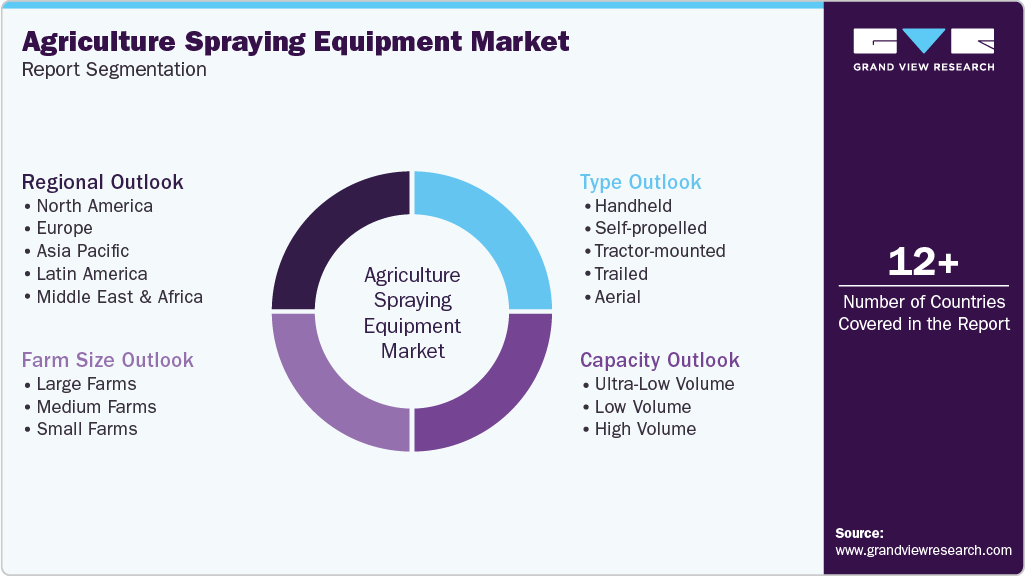 To learn more about this report, Download Free Sample Report
-
Type Outlook (Revenue, USD Billion, 2021 - 2033)
-
Handheld
-
Self-propelled
-
Tractor-mounted
-
Trailed
-
Aerial
-
-
Capacity Outlook (Revenue, USD Billion, 2021 - 2033)
-
Ultra-Low Volume
-
Low Volume
-
High Volume
-
-
Regional Outlook (Revenue, USD Billion, 2021 - 2033)
-
North America
-
U.S.
-
Canada
-
Mexico
-
-
Europe
-
UK
-
Germany
-
France
-
-
Asia Pacific
-
China
-
India
-
Japan
-
South Korea
-
Australia
-
-
Latin America
-
Brazil
-
-
Middle East & Africa
-
UAE
-
Saudi Arabia
-
South Africa
-
-
Research Methodology
The agriculture spraying equipment market figures in this report are based on a proven research process that combines executive interviews with secondary research from proprietary databases, company filings, and recognized regulatory and institutional sources. Market size is built through value-chain sizing - reconciling supply-side and demand-side estimates - and triangulated with bottom-up and top-down approaches. Every estimate passes multiple levels of expert validation before publication, with each agriculture spraying equipment segment quantified using the revenue-capture definitions in the table below.
Segment Definition
Segment - Farm Size
Revenue capture definition
Large Farms
The highest-value demand originates from large-scale agricultural operations that require high-capacity spraying systems capable of covering extensive acreage within narrow application windows. Equipment suppliers benefit from purchases of advanced precision spraying technologies, automation features, GPS guidance systems, and fleet-scale equipment upgrades.
Medium Farms
Market activity is supported by growers seeking a balance between operational efficiency and capital expenditure. Demand is concentrated on versatile spraying solutions that improve chemical application accuracy while offering flexibility across multiple crop types and field conditions.
Small Farms
Spending is primarily directed toward affordable, easy-to-operate spraying equipment that minimizes labor requirements and improves the effectiveness of crop protection. Adoption is often influenced by government mechanization programs, cooperative ownership models, and equipment rental services.
Segment - Type
Revenue capture definition
Handheld
Value is created through compact spraying solutions used in horticulture, specialty crops, greenhouses, and small agricultural plots. Manufacturers benefit from the consistent demand for portable equipment that enables targeted application of pesticides, herbicides, and nutrients in areas inaccessible to larger machinery.
Self-propelled
This premium segment captures investment in high-performance machines designed for large-scale field operations. Advanced navigation systems, precision spraying technologies, and higher operational productivity allow suppliers to command premium pricing and attract commercial farming enterprises.
Tractor-mounted
Demand stems from farmers seeking to leverage existing tractor infrastructure while expanding spraying capabilities. Equipment providers generate business through attachment sales, compatibility upgrades, and precision application enhancements that improve field productivity.
Trailed
Market growth is driven by farms that require larger tank capacities and extended operational coverage without the cost of self-propelled machinery. These systems are widely adopted for broad-acre crop production where efficiency and cost optimization are key purchasing factors.
Aerial
Investment is accelerating in drone-based and aircraft spraying platforms that enable rapid treatment of crops, difficult terrain, and large agricultural areas. Technology providers capitalize on demand for precision agriculture solutions that reduce chemical wastage and improve application uniformity.
Segment - Capacity
Revenue capture definition
Ultra-Low Volume
Commercial opportunities arise from equipment designed to apply highly concentrated formulations with minimal liquid usage. Adoption is driven by the need to reduce water consumption, improve chemical efficiency, and support precision application practices.
Low Volume
This segment benefits from widespread utilization across diverse farming operations where operators seek effective crop protection while maintaining moderate input requirements. Manufacturers compete through innovations that improve spray coverage, droplet control, and operational flexibility.
High Volume
Spending is concentrated in applications requiring extensive coverage, dense crop canopies, or large-scale treatment programs. Equipment in this category is valued for its ability to maximize field throughput and maintain consistent application performance across extensive agricultural operations.
Estimation Model
Layer
Question
Analysis
Crop Protection Requirement Layer
Where is agricultural spraying equipment needed?
Identify crop cultivation environments where effective application of pesticides, herbicides, fungicides, fertilizers, and biological crop protection products is essential. This includes field crops, orchards, vineyards, plantations, greenhouse operations, and specialty crop farms. The layer evaluates the extent to which growers require spraying solutions to protect crop health, maximize yields, and minimize losses caused by weeds, pests, and diseases.
Application Precision Layer
What factors influence equipment selection and deployment?
Assess agronomic and operational requirements such as farm size, crop type, terrain conditions, chemical application rates, labor availability, and environmental regulations. Growers increasingly prioritize technologies that improve spray accuracy, reduce chemical wastage, minimize drift, and ensure uniform coverage, making precision application capabilities a key determinant of equipment adoption.
Technology Utilization Layer
How are spraying systems integrated into modern farming operations?
Analyze the use of self-propelled sprayers, tractor-mounted sprayers, aerial spraying platforms, drone-based spraying systems, and smart spraying technologies equipped with GPS guidance, sensors, variable-rate application, and automated boom controls. This layer examines how farmers leverage advanced spraying solutions to optimize input usage, improve operational efficiency, and support precision agriculture practices.
Productivity & Service Value Layer
How is economic value generated within the spraying equipment ecosystem?
Evaluate revenue generation through equipment sales, replacement components, maintenance services, precision agriculture software, equipment leasing, and contract spraying services. Additional value is created through reduced chemical consumption, improved crop productivity, lower labor requirements, and enhanced compliance with environmental standards. As agriculture becomes increasingly data-driven, service-based offerings and technology-enabled spraying solutions contribute a growing share of market revenues alongside traditional equipment sales.
Delivered Customizations
This report has been delivered with the following In-depth customizations
Client Request
Customization Delivered
Value Adds
Crop Protection Application Efficiency & Precision Spraying Trends
Conducted a focused analysis of spraying equipment used for herbicide, pesticide, fungicide, and foliar nutrient applications across row crops, orchards, vineyards, and plantation farming operations, focusing on coverage accuracy and input utilization efficiency.
Helps stakeholders identify high-demand spraying applications, evaluate precision agriculture adoption trends, and assess opportunities for reducing chemical usage while improving crop protection outcomes.
High-Capacity Field Operations & Mechanized Spraying Adoption Trends
Evaluated adoption trends for self-propelled sprayers, tractor-mounted sprayers, trailed sprayers, and air-assisted spraying systems designed to improve field productivity, operational speed, and coverage across large agricultural holdings.
Provides insights into farm mechanization requirements, operational efficiency improvements, and commercially attractive equipment segments supporting large-scale agricultural production.
Smart Spraying Technologies & Sustainable Application Opportunity Assessment
Assessed demand for sensor-based spraying systems, variable-rate application technologies, GPS-guided sprayers, automated boom control systems, and AI-enabled target spraying solutions, along with challenges related to equipment costs, operator training, and regulatory compliance for chemical application.
Supports investment and expansion strategies by identifying precision spraying opportunities, evaluating technology readiness, and strengthening long-term growth potential in sustainable and data-driven crop protection practices.
Frequently Asked Questions About This Report
The low volume held the largest share (over 42.5%) in 2025, while high volume segment is the fastest-growing segment.
The global agriculture spraying equipment market size was estimated at USD 13.3 billion in 2025 and is expected to reach USD 14.4 billion in 2026.
Key factors include growing adoption of mechanized farming practices across agricultural regions, increasing adoption of precision agriculture and smart farming technologies, and growing adoption of autonomous and robotic spraying equipment.
Asia Pacific dominated with 35.4% revenue share in 2025.
Asia Pacific is anticipated to witness the fastest CAGR over the forecast period.
The tractor-mounted segment led with a 38.4% revenue share in 2025, while self-propelled segment is the fastest-growing segment.
The large farms segment led with an 56.6% revenue share in 2025, while small farms segment is the fastest-growing segment.
Key players operating in the agriculture spraying equipment market include Deere & Company; Kubota Corporation; CNH Industrial N.V.; AGCO Corporation; Mahindra & Mahindra Ltd; ANDREAS STIHL AG & Co. KG; DJI; Yamaha Motor Corporation; EXEL Industries SA; Buhler Industries Inc.; EcoRobotix SA; ISEKI & Co., Ltd.
The global agriculture spraying equipment market is expected to grow at a compound annual growth rate of 7.6% from 2026 to 2033 to reach USD 24.1 billion by 2033.
About the Author(s)
Next Generation Technologies Research Team
Technology · Next Generation TechnologiesThis report was authored by the next generation technologies research team at Grand View Research - comprising two research analysts, one senior research analyst, and one industry expert - with specialized expertise in the next generation technologies segment of the technology industry. All findings are based on proprietary technology databases, executive interviews, and regulatory analysis, subject to internal peer review prior to publication.
Last Updated:
Speak to Analyst

Customize this report to your needs - add regions, segments, or data points, with 20% free customization.
Or view our licence options:


ISO 9001:2015 & 27001:2022 Certified
We are GDPR and CCPA compliant! Your transaction & personal information is safe and secure. For more details, please read our privacy policy.


