
- Home
- »
- Healthcare IT
- »
-
AI In Pathology Market Size And Share Report, 2026-2033GVR Report cover

AI In Pathology Market (2026 - 2033)
Size, Share & Trends Analysis Report By Component (Software, Hardware), By Technology (Machine Learning, Computer Vision-based Image Analysis), By Application, By End Use, By Region, And Segment Forecasts
Market Size, 2025
$168.3MMarket Estimate, 2026
$211.2MMarket Forecast, 2033
$1,151.6MCAGR, 2026–2033
27.4%AI In Pathology Market Summary
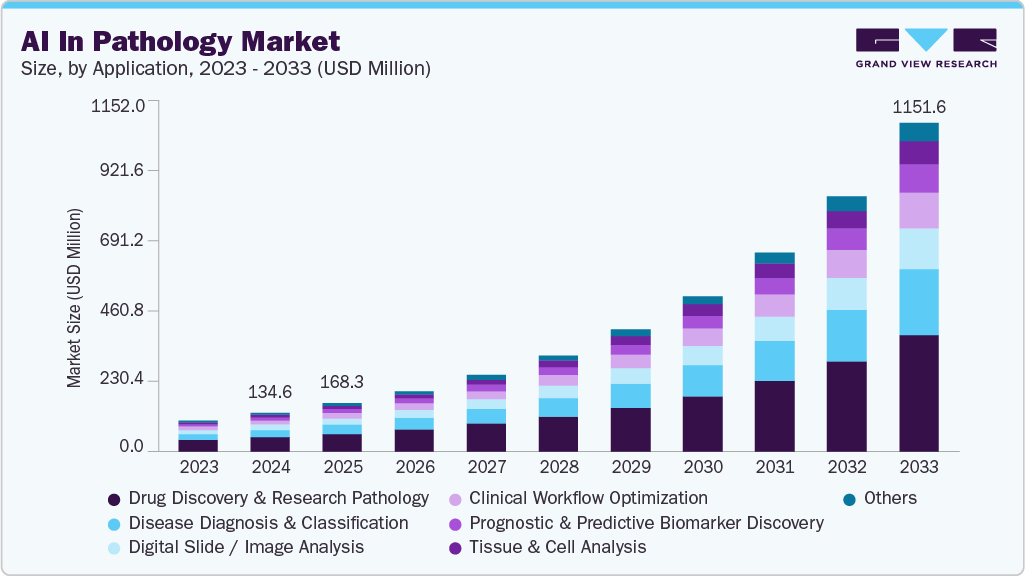
The global AI in pathology market size was valued at USD 168.3 million in 2025 and is projected to grow from USD 211.2 million in 2026 to USD 1,151.6 million by 2033, at a CAGR of 27.4% from 2026 to 2033. The North America held the largest share of 40.3% of the global market in 2025. Growing demand for precision medicine, rising prevalence of chronic diseases, technological advancements are significant factors contributing to market growth.
 Source: Grand View Research, IR Documents, Primary Interviews, Paid DatabasesTo learn more about this report,
 Download Free Sample Report
 Key Market Trends & Insights
- By component: Software segment held the largest market share of 51.2% in 2025.
- By technology: Machine learning segment held the largest market share of 35.7% in 2025.
- By application: Drug discovery & research pathology segment held the largest market share of 36.3% in 2025.
- By end use: Life sciences companies segment held the largest market share of 47.5% in 2025.
Regional Highlights
- Largest regional market: North America (over 40.3% revenue share, 2025)
- Fastest-growing regional market: Asia Pacific (highest CAGR, 2026-2033)
- By country: The U.S. held the largest market share in 2025.
Market Size & Forecast
- Market size in 2025: USD 168.3 Million
- Estimated market size in 2026: USD 211.2 Million
- Projected market size by 2033: USD 1,151.6 Million
- CAGR (2026-2033): 27.4%
Three ways to get this report
Buy it, customize it, or ask a question.Ask an Analyst
Analyst response in 1 business day
- AccessReport author, directly
- Reply timeWithin 1 working day
- No sales callDirect answer only
- FormatEmail reply
- CostFree, no cost
Get the Full Report
What the study covers
- FormatsPDF · Excel · Dashboard
- Timeline2026–2033 annual, 2025 base
- Coverage20+ countries, 5 regions
- Companies10+ key players profiled
Customize the Report
20% free customization
- IncludeCountries, segments, points
- TailorTo your product definition
- ExtendDeeper competitor detail
- OrA fully bespoke study
- Turnaround5–10 working days
Moreover, the growing digitization of pathological infrastructure, supportive regulatory progress, and industry partnerships are strengthening the market environment. The growing demand for precision medicine is one of the significant drivers of artificial intelligence in pathology industry. AI facilitates tailored treatments by integrating histopathological image analysis with genomic data to provide more precise disease subtyping and prognosis. For instance, in July 2025, LG AI Research unveiled its upgraded pathology AI model, EXAONE Path 2.0, to enhance cancer diagnosis and drug development. The system combines analysis of both entire slide images and smaller patches to avoid feature collapse and preserve contextual information. Trained on multi-omics data, including DNA, RNA, and whole slide pathology images, the model analyzes genetic mutations, gene expression, and subtle tissue changes with 78.4% prediction accuracy.In addition, growing funding for AI research and healthcare digital transformation programs, alongside rising adoption of telepathology, support the deployment of AI tools on a large scale. For instance, in March 2025, Proscia secured USD 50 million in funding to accelerate the adoption of its AI-powered Concentriq platform, an AI-driven pathology solution, to integrate more AI capabilities and leverage partnerships with OEMs like Agilent Technologies and Siemens Healthineers.
 To learn more about this report, Download Free Sample Report
 Workflow optimization and operational efficiency in laboratories also significantly fuel the adoption of AI pathology solutions. AI-driven automation of routine tasks such as tissue segmentation, cell counting, and measurement reduces manual labor and human error, allowing pathologists to devote more time to complex cases. For instance, in January 2025, Owkin unveiled new insights into digital pathology and AI solutions, highlighting challenges such as rising pathologist burnout due to workload and diagnostic complexity. Their AI diagnostics support quick interpretation of whole slide images, biomarker screening, and patient outcome predictions to enable precision oncology.
Furthermore, industry partnerships are strengthening the market environment. Pharmaceutical companies are collaborating with AI developers to incorporate digital pathology into clinical trials and drug development. For instance, in April 2025, Precision for Medicine and PathAI announced a strategic collaboration to develop novel AI technologies and integrate PathAI’s advanced digital pathology capabilities into Precision for Medicine’s clinical trial and biospecimen operations. Precision for Medicine is expected to leverage PathAI’s AISight image management system and AI algorithms to enhance biospecimen analysis workflows with quality control steps, improving data consistency and reliability.
Recent Developments in the Artificial Intelligence in Pathology Market
Company/Institute
Year and Month
Initiative
Techcyte
August 2025
Techcyte partnered with Modella AI to integrate Modella’s research-use-only AI co-pilot, PathChat, into Techcyte’s cloud-based digital pathology platform, Techcyte Fusion. The collaboration aims to improve workflow efficiency in pathology research by combining Modella’s AI innovation with Techcyte’s unified pathology platform and expanding access to AI-powered tools.
FUJIFILM Healthcare
June 2025
FUJIFILM Healthcare Europe partnered with Ibex Medical Analytics to integrate Ibex’s AI platform with Fujifilm’s SYNAPSE Pathology solution, improving cancer diagnosis efficiency and accuracy.
Techcyte
March 2025
Techcyte launched Fusion, a unified anatomic and clinical digital pathology platform that integrates pathology teams, IT systems, and AI tools into a single cloud-native SaaS solution. Fusion aims to eliminate workflow silos, enhance diagnostic accuracy, and improve interoperability by uniting patient data, whole slide imaging, laboratory information systems (LIS), communication tools, and AI diagnostics. The platform supports seamless integration with LIS, EHR, scanners, and third-party AI algorithms using standards like DICOM, FHIR, HL7, and DICOMWeb.
Koninklijke Philips N.V.
March 2025
Philips and Ibex Medical Analytics expanded their partnership to accelerate the adoption of AI-enabled digital pathology. The collaboration integrates Ibex's AI platform with Philips IntelliSite Pathology Solution (PIPS), offering enhanced interoperability and a new release of PIPS 6.0 with improved workflows and AI capabilities.
Pramana, Inc.
March 2025
Pramana and ARUP Laboratories partnered to digitize pathology slides and develop AI-powered algorithms for hematopathology diagnostics. Using Pramana’s SpectralHT edge AI-enabled whole-slide imaging scanners, the collaboration aims to improve bone marrow biopsy assessments by enhancing diagnostic accuracy and efficiency.
Microsoft
May 2024
In collaboration with the University of Washington and Providence Health Network, Microsoft developed Prov-GigaPath, one of the largest AI models for real-world whole-slide digital pathology analysis. Trained on 1.3 billion pathology images from over 171,000 slides of 30,000+ patients covering 31 tissue types, the model addresses challenges like data scarcity, whole-slide modeling, and accessibility.
Market Concentration & Characteristics
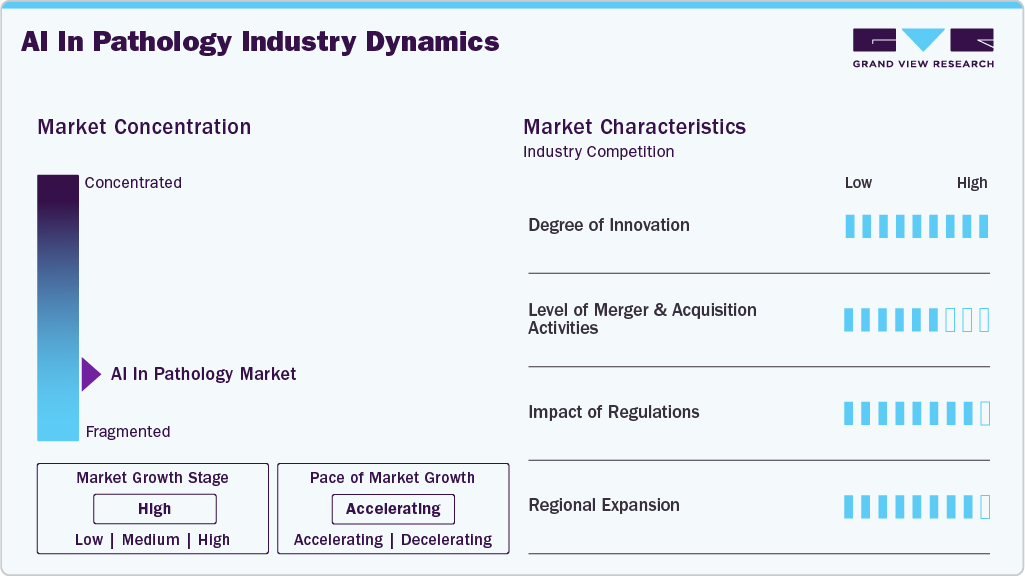
The chart below illustrates the relationship between industry concentration, industry characteristics, and industry participants. The x-axis represents the level of industry concentration, ranging from low to high. The y-axis represents various industry characteristics, including industry competition, level of partnerships & collaboration activities, degree of innovation, impact of regulations, and regional expansion. The Artificial Intelligence in Pathology industry is fragmented, with several emerging players entering the market. The degree of innovation is high. The level of merger & acquisition activities is moderate. Moreover, the impact of regulations and the regional expansion of industry is high.
Artificial Intelligence in Pathology industry is characterized by constant innovation, with a strong focus on launching new platforms and devices to leverage administrative tasks, improve diagnostic accuracy, and enhance care delivery. Prominent players are integrating their existing systems with advanced technologies such as cloud computing. For instance, in September 2025, Proscia, a pathology AI company, integrated its Concentriq platform with AWS HealthImaging to manage growing digital pathology data and standardize siloed data. This cloud-native integration offers sub-second image retrieval, enterprise-scale interoperability using DICOM standards, and a seamless AI data foundation.
 To learn more about this report, Download Free Sample Report
 The industry is experiencing a moderate level of merger and acquisition activities undertaken by several key players. This is due to the desire to gain a competitive advantage in the industry, enhance technological capabilities, and consolidate in a rapidly growing market. For instance, in August 2025, Tempus AI acquired Paige, a digital pathology AI company, for USD 81.25 million. The acquisition expands Tempus’ dataset, technical team, and footprint in digital pathology, aiming to build the largest oncology foundation model and advance precision medicine.
“Paige is a leader in digital pathology and has amassed one of the most comprehensive digital pathology datasets in the world through its relationship with Memorial Sloan Kettering Cancer Center. We believe both the Paige team, with their deep generative AI experience, and the dataset they have built, will be catalytic across all of our AI efforts.”
-Eric Lefkofsky, Founder and CEO of Tempus.
Regulations, such as the HIPAA in the U.S. and the GDPR in Europe, establish standards for safeguarding patient data privacy and security. Compliance with these regulations is crucial for AI applications in healthcare to ensure the safe and secure handling of patient information, reducing the risk of data breaches and unauthorized access.
The industry is witnessing high geographical expansion. Companies within the artificial intelligence in pathology industry seek geographic expansion strategies to maintain their foothold in emerging markets and attract customers from these regions. For instance, in November 2023, Dedalus Group and Ibex Medical Analytics launched a fully integrated end-to-end AI-powered digital pathology solution for cancer diagnosis in major European markets. The solution integrates Ibex’s Galen AI platform into Dedalus’ comprehensive Digital Pathology system, enabling complete digitization of anatomic pathology labs.
Component Insights
By component, the software segment held the largest market share of 51.20% in 2025. In addition, this segment is expected to grow at the fastest CAGR during the forecast period. The software segment encompasses the algorithms and platforms that analyze digital slides and deliver diagnostic insights. These solutions enable automated detection of abnormalities, quantification of biomarkers, and predictive modeling for treatment response.
Moreover, image analysis & pattern recognition is a critical component of artificial intelligence in pathology, enabling automated evaluation of digital histopathology slides. These solutions use advanced deep learning and computer vision techniques to detect, classify, and quantify cellular and tissue-level features. Applications include tumor grading, biomarker quantification, immune cell profiling, and detection of disease-specific tissue alterations. For instance, in January 2025, NEC Corporation and Biomy, Inc. signed an MoU to jointly develop and expand AI/deep learning-based analytical platforms in digital pathology. Their partnership focuses on enhancing Biomy’s cloud-based DeepPathFinder platform, automatically analyzing digital pathology images to classify cell and tissue types, including immune cells like lymphocytes and plasma cells from H&E-stained slides.
Thus, as digital pathology adoption grows globally, demand for robust image analysis and pattern recognition software continues to rise, positioning image analysis & pattern recognition as a major driver of innovation and market growth.
Technology Insights
Based on technology, the machine learning segment accounted for the largest revenue share of 35.65% in 2025. Machine learning enables automated classification, segmentation, and quantification of tissue structures by training models on annotated whole-slide images. This capability supports pathologists in detecting patterns and anomalies with greater consistency and speed. In addition, machine learning is increasingly applied to predictive and prognostic modeling in pathology. Advanced methods, including deep learning and transfer learning, allow models to perform effectively even with limited training data. Integrating these models into digital pathology workflows enhances efficiency and accuracy across clinical laboratories. As the demand for precision medicine grows, machine learning remains a foundational technology driving innovation in AI-powered pathology solutions.
The computer vision-based image analysis segment is anticipated to register fastest CAGR from 2026 to 2033. This segment enables automated interpretation of histopathology slides. These solutions leverage advanced image recognition techniques to identify, segment, and quantify complex tissue structures accurately. Computer vision-based image analysis is widely applied in cancer detection, grading, and biomarker analysis, where accurate image interpretation is critical. This segment is increasingly integrated into digital pathology platforms, supporting faster and more reliable diagnostic outcomes.
Application Insights
Based on application, the drug discovery & research pathology segment accounted for the largest revenue share of 36.30% in 2025. AI platforms process vast volumes of pathology images, enabling high-throughput analysis for evaluating drug efficacy, toxicity, and mechanism of action. In addition, AI-enabled pathology enhances biomarker discovery and patient stratification. Integrating multi-omics data further strengthens drug response modeling and improves translational research outcomes. For instance, in January 2025, NVIDIA partnered with Mayo Clinic to transform digital pathology and drug discovery using AI. The partnership aims to create human digital twins for simulating patient outcomes, support generative AI tools for personalized medicine and enable new drug discovery, thus advancing precision health and patient care with scalable AI infrastructure and next-generation diagnostic tools.
The disease diagnosis & classification segment is projected to grow at the fastest CAGR during the forecast period. AI enhances disease classification by stratifying patients based on histological and molecular characteristics. This allows better alignment with personalized treatment protocols and targeted therapies. AI capabilities offer precision and efficiency in identifying complex disease states. For instance, in March 2025, Paige launched the Paige GI Suite, an AI-assisted diagnostic tool for the entire gastrointestinal tract, detecting and grading over 40 GI-related conditions, including cancers and inflammatory diseases. Available on the Paige Alba platform, this system-wide solution represents a significant advance in AI-powered pathology for comprehensive GI diagnosis and precision medicine.
End Use Insights
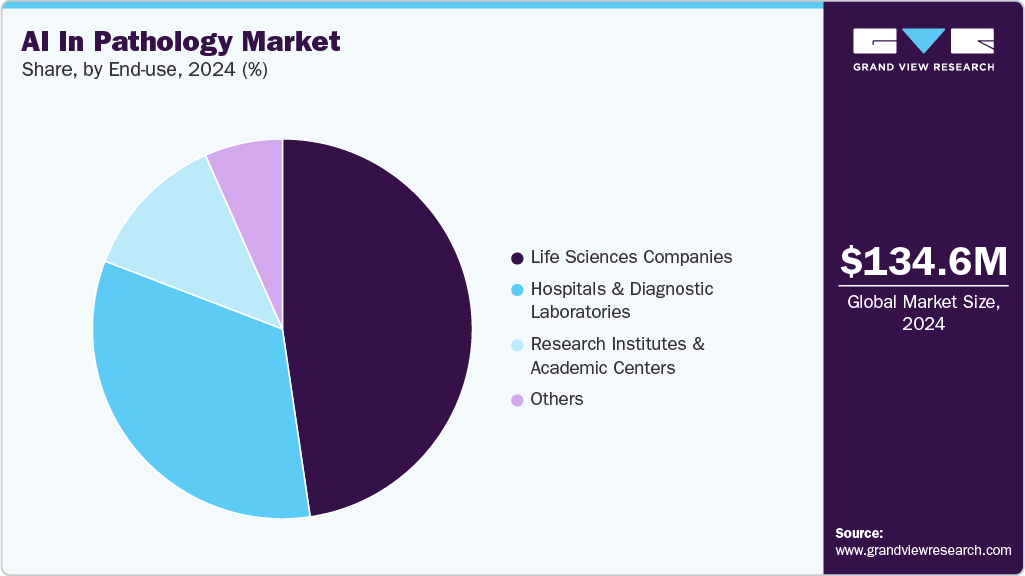
Based on end use, the life science companies’ segment held the largest market share of 47.51% in 2025. Life science companies are increasingly adopting artificial intelligence in pathology to accelerate drug discovery, biomarker identification, and translational research. By leveraging AI-driven image analysis, these organizations are able to process large volumes of pathology data efficiently, identifying novel disease mechanisms and therapeutic targets. In addition, life science companies utilize AI-powered pathology platforms for companion diagnostics and personalized medicine initiatives.
 To learn more about this report, Download Free Sample Report
 The hospitals and diagnostic laboratories segment is anticipated to grow at the fastest CAGR from 2026 to 2033. These institutes are key adopters of computational pathology, leveraging AI-driven image analysis, digital slide management, and automated reporting to improve diagnostic speed and accuracy. The demand for AI-enabled pathology in hospitals and clinics is driven by increasing case complexity and the shortage of skilled pathologists. For instance, in February 2025, Ruijin Hospital, affiliated with Shanghai Jiao Tong University School of Medicine, and Huawei Technologies unveiled RuiPath, a clinical-grade multimodal AI pathology model.
Regional Insights
North America AI In Pathology Market Trends
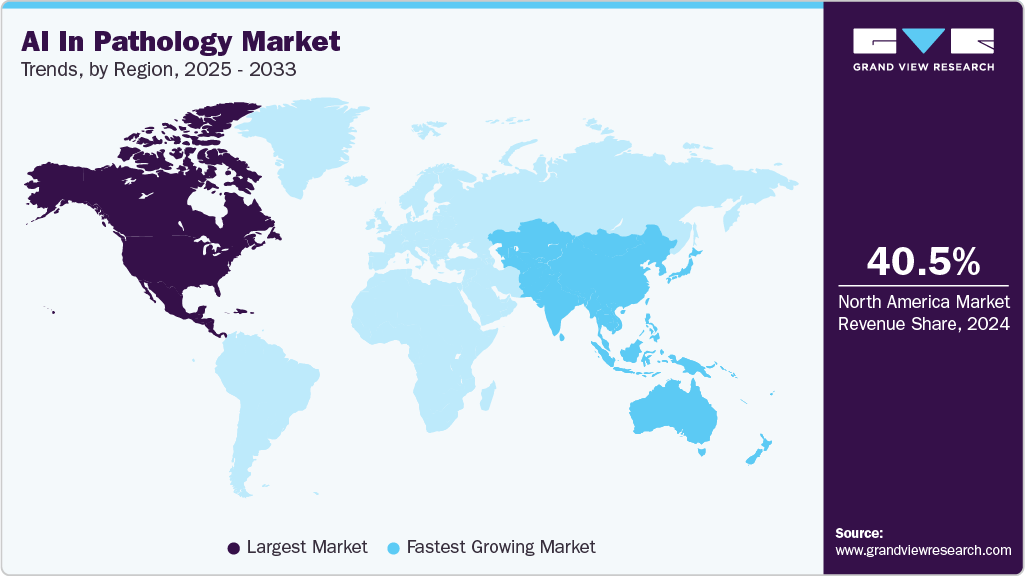
North America artificial intelligence in pathology industry accounted for the largest revenue share of 40.33% in 2025. The market is driven by the integration of AI-based diagnostics, strong digital infrastructure, and high investment in clinical research. For instance, major U.S. cancer centers are deploying deep learning models for tumor classification and biomarker quantification, improving diagnostic accuracy and enabling personalized treatment strategies.
 To learn more about this report, Download Free Sample Report
 U.S. AI In Pathology Market Trends
The U.S. artificial intelligence in pathology industry held the largest market share in 2025. The market is expanding due to the growth of high-throughput slide scanning, adoption of cloud-based pathology platforms, and rising use of multi-omics data integration in diagnostics. In March 2025, Aiforia partnered with PathPresenter to accelerate adoption of digital pathology and AI in the U.S., integrating Aiforia’s AI-powered image analysis with PathPresenter’s workflow platform. This collaboration enables pathologists to access advanced AI models for cancers such as breast, lung, and prostate, improving diagnostic speed and accuracy.
"This partnership with PathPresenter is a significant step in expanding the reach of Aiforia's AI solutions in the United States. PathPresenter's widely used platform connects pathologists globally and provides access to valuable expertise and best-in-class tools. By integrating our technologies, we will enable pathologists to seamlessly access and utilize Aiforia's AI solutions for image analysis, aiming to improve the speed and accuracy of the diagnostic workflows.”
-Jukka Tapaninen, CEO of Aiforia.
Europe AI In Pathology Market Trends
Europe artificial intelligence in pathology industry is expected to witness significant growth during the forecast period. This is attributed to the widespread adoption of AI technologies in healthcare and growing need for rapid disease diagnosis. The region also benefits from strong investment in healthcare digitization and supportive regulatory frameworks that encourage innovation and integration of digital diagnostics. Moreover, leading companies such as Leica Biosystems (Danaher), F. Hoffmann-La Roche Ltd., Visiopharm A/S, and Proscia Inc. maintain a robust presence in Europe, actively pursuing strategic initiatives to expand their market share.
The UK industry is expected to grow over the forecast period, owing to the robust healthcare infrastructure and increasing investments in AI technologies to enhance medical diagnosis and patient care. Advancements in machine learning and image analysis technologies are further enabling scalable and cost-effective pathology workflows throughout the UK.
Germany artificial intelligence in pathology industry is expected to grow significantly over the forecast period. This growth is attributed to increasing investments in healthcare technology and robust healthcare infrastructure. In addition, advanced research in digital diagnostics and strong technological innovation further contribute to market growth. Funding from the Federal Ministry of Health and incentives under the Digital Healthcare Act (DVG) accelerate adoption. Public-private partnerships and clinical validation trials support early use of next-gen solutions featuring deep learning, cloud-based data sharing, and EMR interoperability.
Asia Pacific AI In Pathology Market Trends
Asia Pacific artificial intelligence in pathology industry is expected to grow at the fastest CAGR in the coming years. This growth is attributed to the rising healthcare expenditure, increasing adoption of AI in healthcare, and growing prevalence of chronic diseases. In addition, growing focus on rapid diagnostics and precision medicine propel market growth further. Moreover, collaborations between key market players expedite market growth. For instance, in November 2024, Lunit announced a strategic collaboration with AstraZeneca to develop an AI-powered digital pathology tool, Lunit SCOPE Genotype Predictor, aimed at rapidly predicting NSCLC driver mutations from H&E slides.
“This collaboration with Lunit underscores our commitment to advancing precision medicine in oncology. Tools like this will help to address unmet needs by optimizing diagnostic workflows for NSCLC patients and, ultimately, improve their outcomes.”
-Kristina Rodnikova, Head of Global Oncology Diagnostics, Oncology Business Unit at AstraZeneca.
India industryis expanding rapidly, driven by the high prevalence of hypertension, government health initiatives, and technological innovation. Moreover, the shortage of trained pathologists and the need for faster, more accurate diagnoses increase adoption of AI-powered digital pathology solutions. The growing burden of cancer and infectious diseases creates demand for scalable platforms capable of handling large volumes of complex histopathological data.
The artificial intelligence in pathology industry in Japan is expected to grow rapidly over the forecast period. Strong government support and significant investments in healthcare innovation drive extensive research and development in this field. Japan’s aging population increases the demand for efficient diagnostics, fueling growth in computational pathology adoption across hospitals and research centers.
Latin America AI In Pathology Market Trends
Latin America artificial intelligence in pathology industry is anticipated to grow at a significant CAGR over the forecast period. Rising prevalence of cancer and chronic diseases fuels demand for faster, precise diagnostics, while government initiatives and funding support digital healthcare infrastructure. Collaborations between hospitals, research institutes, and technology providers accelerate development of AI-based pathology platforms. Investments in R&D and growing clinician awareness of AI-assisted diagnostics are expanding market adoption.
Middle East And Africa AI In Pathology Market Trends
Middle East and Africa artificial intelligence in pathology industry is expected to grow at a significant CAGR over the forecast period. The market is characterized by a dynamic landscape driven by the increasing adoption of AI in healthcare, rising healthcare expenditures and supportive government policies. Countries such as Saudi Arabia and the UAE are integrating AI into healthcare infrastructure under strategic visions such as Saudi Vision 2033 and the UAE National Strategy for Artificial Intelligence 2031.
Key AI In Pathology Company Insights
Key players operating in the artificial intelligence in pathology industry are undertaking various initiatives to strengthen their market presence and increase the reach of their products and services. Strategies such as new product launches and partnerships play a key role in propelling market growth.
Key AI In Pathology Companies:
The following key companies have been profiled for this study on the AI in pathology market.
- Leica Biosystems Nussloch GmbH (subsidiary of Danaher)
- Koninklijke Philips N.V.
- F. Hoffmann-La Roche Ltd.
- PathAI
- Proscia Inc.
- Aiforia/ Aiforia Technologies PLC
- Ibex Medical Analytics
- Mindpeak GmbH
- Owkin, Inc.
- Tempus AI
- Indica Labs, LLC.
- Qritive
Recent Developments
-
In August 2025, PathAI and Moffitt Cancer Center announced a multi-year strategic collaboration to deploy PathAI's AISight Dx digital pathology platform across Moffitt's pathology programs. AISight Dx is a cloud-native digital pathology image management system combining enterprise-scale slide management, viewing, and collaboration with seamless AI integration to enhance speed, accuracy, and operational efficiency. The partnership supports joint research programs, real-world multimodal data collation, clinical trials, biopharma collaborations, and co-development of next-generation AI diagnostics to advance precision medicine.
-
In July 2025, PathAI launched the Precision Pathology Network (PPN), a network of digital anatomic pathology labs powered by the AISight Image Management System (IMS). The network offers advanced AI capabilities like MET-Predict for identifying MET-amplified tumors, access to Explore biomarker discovery, and the PLUTO foundation model for research collaboration and custom model development.
-
In March 2025, Philips and Ibex Medical Analytics expanded their partnership to enhance AI-enabled digital pathology workflows with the new Philips IntelliSite Pathology Solution (PIPS) 6.0. This integration offers deeper interoperability, improving diagnostic workflows and driving productivity gains of up to 37%.
-
In January 2025, Mayo Clinic launched Mayo Clinic Digital Pathology to modernize pathology and accelerate medical breakthroughs. Leveraging its extensive archive of 20 million digital slide images linked to 10 million patient records, the platform integrates de-identified clinical data, advanced imaging, and AI technologies.
-
In January 2025, Leica Biosystems and Indica Labs announced a strategic partnership to create a digital pathology platform combining Leica’s Aperio scanners with Indica’s HALO AI software. The platform, cleared under CE-IVDR for Europe, the UK, and Switzerland, aims to enhance AI-powered cancer diagnostics and streamline pathology workflows, supporting both onsite and remote diagnosis with comprehensive AI integration.
"We are delighted to team up with Leica Biosystems under this exciting arrangement. As two leading players in digital pathology, with complementary capabilities, this initiative will combine Leica Biosystems’ expertise and footprint in instrumentation with Indica’s expertise and footprint in enterprise software and AI. This collaboration between two companies dedicated to open pathology offers the potential to break down some of the barriers that prevent patients from receiving fast, reliable diagnoses and effective therapies.”
-Indica Labs CEO Steven Hashagen
-
In June 2024, Quest Diagnostics acquired select assets of PathAI Diagnostics, including its advanced digitized pathology lab. The acquisition aims to integrate AI for more accurate diagnosis and treatment.
“This transaction will enable Quest to dramatically ramp our capabilities in AI and digital pathology, building on our leadership in oncology and subspecialized pathology services.”
-Kristie Dolan, Senior Vice President, Oncology, Quest Diagnostics.-
In May 2024, Paige launched its Foundation Models, including the world’s largest multi-modal AI model for pathology and oncology, enabling life sciences and computational pathology developers to accelerate AI innovation.
AI In Pathology Market Report Scope
Report Attribute
Details
Market size in 2025
USD 168.3 million
Estimated market size in 2026
USD 211.2 million
Projected market size by 2033
USD 1,151.6 million
Growth rate
CAGR of 27.4% from 2026 to 2033
Actual data
2021 - 2025
Forecast period
2026 - 2033
Quantitative units
Revenue in USD million and CAGR from 2026 to 2033
Report coverage
Revenue forecast, company ranking, competitive landscape, growth factors, and trends
Segments covered
Component, technology, application, end use, region
Regional scope
North America; Europe; Asia Pacific; Latin America; MEA
Country scope
U.S.; Canada; Mexico; Germany; UK; France; Italy; Spain; Denmark; Sweden; Norway; China; Japan; India; South Korea; Australia; Thailand; Brazil; Argentina; South Africa; Saudi Arabia; UAE; Kuwait
Key companies profiled
Leica Biosystems Nussloch GmbH (subsidiary of Danaher); Koninklijke Philips N.V.; F. Hoffmann-La Roche Ltd.; PathAI; Proscia Inc.; Aiforia/ Aiforia Technologies PLC; Ibex Medical Analytics; Mindpeak GmbH; Owkin, Inc.; Tempus AI; Indica Labs, LLC.; Qritive
Customization scope
Free report customization (equivalent up to 8 analysts working days) with purchase. Addition or alteration to country, regional & segment scope.
Pricing and purchase options
Avail customized purchase options to meet your exact research needs. Explore purchase options
Global AI In Pathology Market Report Segmentation
This report forecasts revenue growth at global, regional, and country levels and provides an analysis of the latest industry trends in each of the sub-segments from 2021 to 2033. For this study, Grand View Research has segmented global AI inpathology market report based on component, technology, application, end use, and region.
-
Component Outlook (Revenue, USD Million, 2021 - 2033)
-
Software
-
Image Analysis & Pattern Recognition
-
Predictive Analytics Tools
-
Workflow Automation Software
-
Diagnostic Decision Support
-
-
Hardware
-
Whole Slide Imaging (WSI) Scanners
-
Digital Pathology Systems
-
AI-Enabled Microscopes
-
-
Service
-
Implementation & Integration
-
Consulting & Training
-
Managed AI Services
-
Maintenance & Support
-
-
-
Technology Outlook (Revenue, USD Million, 2021 - 2033)
-
Machine Learning (ML)
-
Deep Learning
-
Convolutional Neural Networks (CNNS)
-
Generative Adversarial Networks (GANS)
-
Recurrent Neural Networks (RNNS)
-
Other Neural Networks
-
-
-
Natural Language Processing (NLP)
-
Computer Vision-based Image Analysis
-
-
Application Outlook (Revenue, USD Million, 2021 - 2033)
-
Disease Diagnosis & Classification
-
Prognostic & Predictive Biomarker Discovery
-
Digital Slide Image Analysis
-
Clinical Workflow Optimization
-
Drug Discovery & Research Pathology
-
Tissue & Cell Analysis
-
Others
-
-
End Use Outlook (Revenue, USD Million, 2021 - 2033)
-
Hospitals & Diagnostic Laboratories
-
Life Sciences Companies
-
Research Institutes & Academic Centers
-
Others
-
-
Regional Outlook (Revenue, USD Million, 2021 - 2033)
-
North America
-
U.S.
-
Canada
-
Mexico
-
-
Europe
-
Germany
-
UK
-
France
-
Italy
-
Spain
-
Denmark
-
Sweden
-
Norway
-
-
Asia Pacific
-
China
-
Japan
-
India
-
South Korea
-
Australia
-
Thailand
-
-
Latin America
-
Brazil
-
Argentina
-
-
MEA
-
South Africa
-
Saudi Arabia
-
UAE
-
Kuwait
-
-
Frequently Asked Questions About This Report
The global AI in pathology market size was valued at USD 168.3 million in 2025 and is estimated at USD 211.2 million for 2026.
The global AI in pathology market is expected to grow at a CAGR of 27.4% from 2026 to 2033, reaching USD 1,151.6 million by 2033.
The software segment led with a 51.2% market share in 2025 and is also expected to grow at the fastest CAGR during the forecast period.
The machine learning segment led with the largest market share of 35.7% in 2025, while the computer vision-based image analysis segment is expected to register the fastest CAGR during the forecast period.
The drug discovery & research pathology segment accounted for the largest revenue share of 36.3% in 2025, while the disease diagnosis & classification segment is projected to grow at the fastest CAGR.
The life sciences companies segment held the largest market share of 47.5% in 2025, while the hospitals and diagnostic laboratories segment is anticipated to grow at the fastest CAGR from 2026 to 2033.
North America dominated the market with over 40.3% of the global revenue share in 2025.
Some of the key players operating in the AI in pathology market include Leica Biosystems Nussloch GmbH (subsidiary of Danaher), Koninklijke Philips N.V., Hoffmann-La Roche Ltd., PathAI, Proscia Inc., Aiforia Technologies PLC, Ibex Medical Analytics, Mindpeak GmbH, Owkin, Inc., Tempus AI, Indica Labs, LLC., and Qritive.
Key factors driving the AI in pathology market include growing demand for precision medicine, rising prevalence of chronic diseases, increasing digitization of pathology infrastructure, supportive regulatory progress, growing adoption of telepathology, rising funding for AI research and healthcare digital transformation programs, workflow optimization in laboratories, and increasing collaborations between pharmaceutical companies and AI developers.
About the Author(s)
Healthcare IT Research Team
Healthcare · Healthcare ITThis report was authored by the healthcare it research team at Grand View Research - comprising two research analysts, one senior research analyst, and one industry expert - with specialized expertise in the healthcare it segment of the healthcare industry. All findings are based on proprietary healthcare databases, executive interviews, and regulatory analysis, subject to internal peer review prior to publication.
Last Updated:
Speak to Analyst

Customize this report to your needs - add regions, segments, or data points, with 20% free customization.
Or view our licence options:


ISO 9001:2015 & 27001:2022 Certified
We are GDPR and CCPA compliant! Your transaction & personal information is safe and secure. For more details, please read our privacy policy.


