
- Home
- »
- Healthcare IT
- »
-
AI In Pharmacovigilance Software Market Report, 2027-2035GVR Report cover

AI In Pharmacovigilance Software Market (2027 - 2035)
Size, Share & Trends Analysis Report Component (Software/Platform, Services), By Deployment (Cloud-Based, On-Premise), By Application, By End Use, By Region, And Segment Forecasts
Market Size, 2026
$697.8MMarket Estimate, 2027
$814.0MMarket Forecast, 2035
$4,389.6MCAGR, 2027–2035
23.4%AI In Pharmacovigilance Software Market Summary
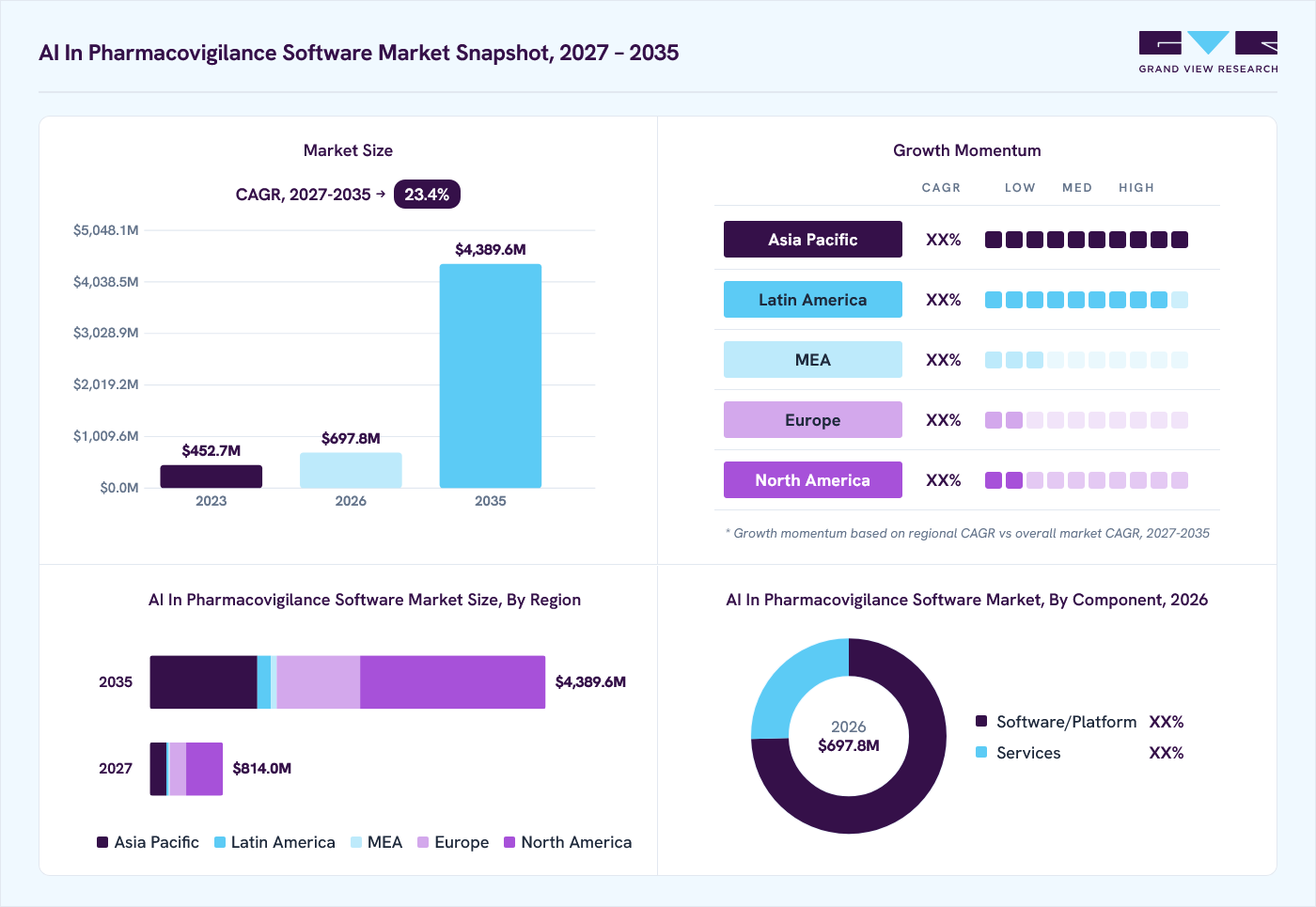
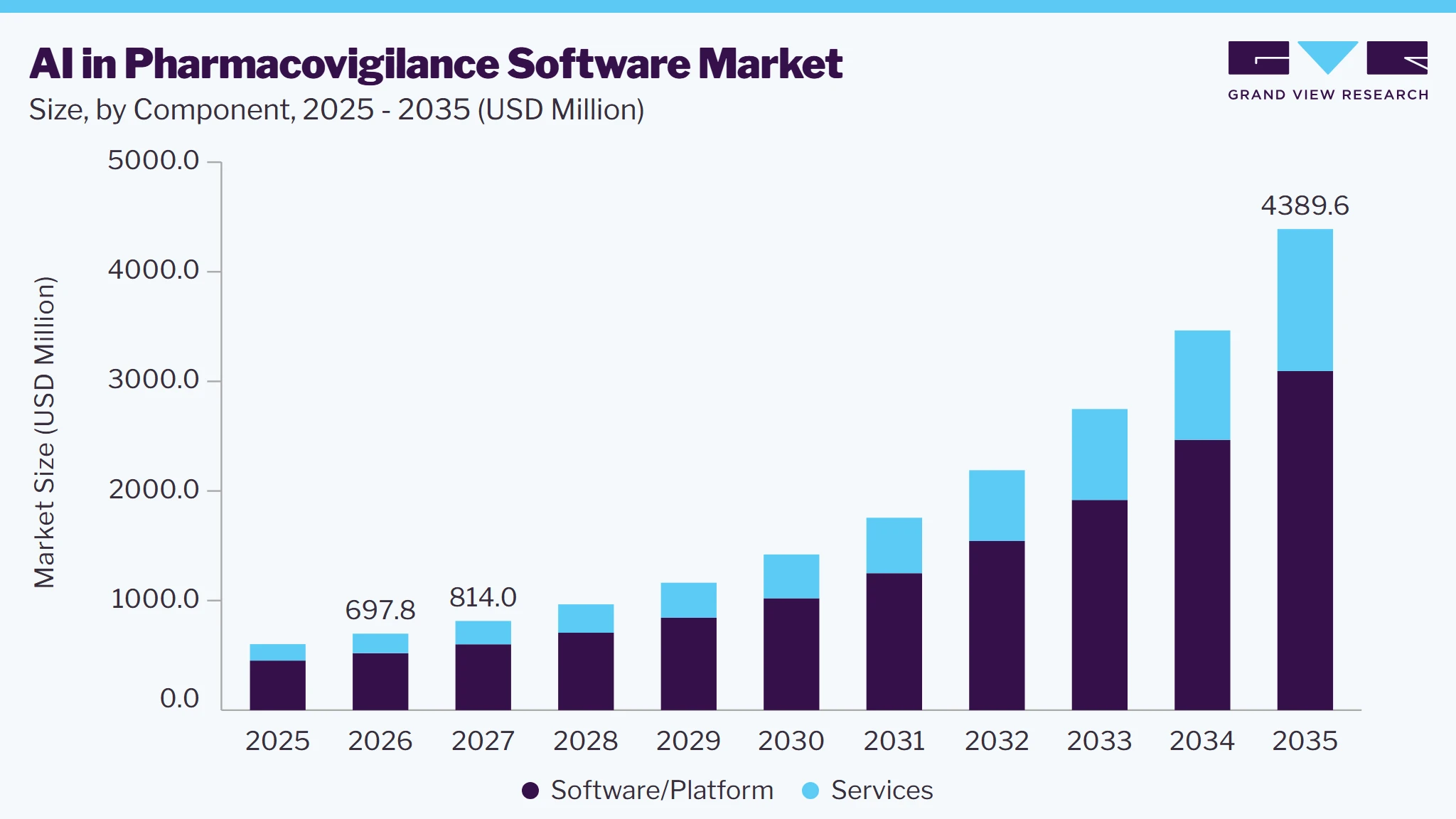
The global AI in pharmacovigilance software market size was valued at USD 697.8 million in 2026 and is projected to grow from USD 814.0 million in 2027 to USD 4389.6 million by 2035, at a CAGR of 23.4% from 2027 to 2035. North America dominated the market, accounting for a revenue share of 51.0% in 2026. Market growth is driven by the increasing volume of adverse event reports and the growing need to reduce pharmacovigilance operating costs.
 Source: Grand View Research, IR Documents, Primary Interviews, Paid DatabasesTo learn more about this report,
 Download Free Sample Report
Key Market Trends & Insights
- The AI in pharmacovigilance software market industry in the U.S. is expected to grow significantly over the forecast period.
- By component, the software/platform segment held the highest market share of 74.5% in 2026.
- Based on deployment, the cloud-based segment held the highest market share in 2026.
- Based on application, the adverse event case intake and processing segment held the highest market share in 2026.
- Based on end use, the pharmaceutical companies segment held the highest market share in 2026.
Regional Highlights
- Largest regional market: North America (51.0% revenue share, 2026)
- By country: The U.S. held the largest market share in 2026.
Market Size & Forecast
- Market size in 2026: USD 697.8 Million
- Estimated market size in 2027: USD 814.0 Million
- Projected market size by 2035: USD 4389.6 Million
- CAGR (2027-2035): 23.4%
Prism AI by Grand View Research Free to tryAsk a question about the AI in pharmacovigilance software marketTry asking✓Every figure cited from GVR research Prefer the report? Download free sample →Advancements in AI, NLP, and generative AI are enabling pharmaceutical companies to automate adverse event intake, case processing, medical coding, literature screening, and safety report preparation. The growing adoption of cloud-based safety platforms and integration with clinical and regulatory databases further supports demand for AI in pharmacovigilance software.
 To learn more about this report, Download Free Sample Report
Market Dynamics
The market is driven by the increasing volume of adverse event reports, stringent drug safety reporting requirements, and the need to reduce pharmacovigilance operating costs. Advancements in artificial intelligence, natural language processing, and generative AI are enabling automated case intake, data extraction, safety narrative generation, literature screening, and signal detection. However, data privacy concerns, AI model validation requirements, and the risk of processing errors continue to challenge adoption. Growing investment in end-to-end automation and intelligent safety monitoring presents opportunities for software providers to improve operational efficiency, support regulatory compliance, and manage increasingly complex drug safety workflows.
The growing volume of adverse event reports generated through post-marketing surveillance, clinical trials, patient support programs, and healthcare interactions is increasing demand for AI-powered pharmacovigilance automation software. Pharmaceutical companies must collect, validate, process, and report safety information within applicable regulatory timelines, creating substantial workloads for drug safety teams. AI technologies, including natural language processing (NLP), machine learning, and generative AI, automate data extraction, case classification, duplicate detection, and safety report preparation, reducing dependence on repetitive manual processing. According to the European Medicines Agency (EMA) data published in March 2027, approximately 1.77 million individual reports from patients and healthcare professionals were recorded in its 2026 reporting statistics, highlighting the scale of medicine safety monitoring.
Growing Need to Reduce Pharmacovigilance Operating Costs
Pharmaceutical companies are increasingly adopting AI in pharmacovigilance software to reduce the costs associated with adverse event case processing, manual data entry, medical coding, and quality checks. Automating repetitive tasks helps drug safety teams manage growing report volumes while reducing processing time and resource requirements. For instance, Indegene implemented its AI- and natural language processing (NLP)-powered NEXT Adverse Events Management platform for a multinational pharmaceutical company handling approximately 1.2 million non-serious cases over six months. The company reported a 60% reduction in case-processing costs and up to 50% reduction in processing time, demonstrating the potential of AI-enabled automation to improve cost efficiency in pharmacovigilance operations.
Expansion of End-to-End AI Automation Across Pharmacovigilance Workflows
The development of integrated AI platforms creates opportunities to automate multiple stages of pharmacovigilance, extending beyond individual case processing to literature monitoring, aggregate safety reporting, regulatory documentation, and signal management. Pharmaceutical companies increasingly seek unified systems that reduce manual handoffs, improve workflow consistency, and support the management of growing safety datasets. For instance, in July 2026, EVERSANA launched EVERSANA ORCHESTRATE PV, an AI-enabled solution covering literature monitoring, aggregate report authoring, and reporting workflows. The company reported that the solution accelerated the operations lifecycle by up to 50% and reduced manual labor investment by up to 40%. These company-reported outcomes illustrate the potential for integrated automation across broader drug safety operations.
“Through the power of our ORCHESTRATE operating system, our best-in-class experts in drug safety, and rapidly evolving AI-solutions, we’re streamlining safety processes, ensuring global compliance, and helping influence better patient outcomes.”
- Jim Lang, CEO, EVERSANA
These platforms process personal health information, adverse event reports, clinical records, and safety narratives, requiring robust data protection, access controls, audit trails, and secure integration with existing pharmacovigilance databases. In addition, pharmaceutical companies must validate AI models and maintain human oversight to ensure the accuracy and reliability of safety assessments. Compliance requirements across jurisdictions, including the EU General Data Protection Regulation (GDPR) and U.S. Health Insurance Portability and Accountability Act (HIPAA), increase implementation complexity and ongoing compliance costs.
For instance, in January 2026, the U.S. Food and Drug Administration (FDA) issued draft guidance on the use of AI to support regulatory decision-making for drugs and biological products. The guidance introduced a risk-based framework for evaluating AI model credibility in specific contexts of use, highlighting the need for appropriate validation and evidence before relying on AI-generated outputs in regulated decisions. These requirements increase the technical, documentation, and compliance workload for pharmaceutical companies implementing AI-enabled pharmacovigilance systems.
Pharmaceutical companies are increasingly implementing generative AI to automate individual case safety report (ICSR) intake, extract relevant information from unstructured documents, and generate safety narratives. These applications reduce administrative workload and accelerate case processing while allowing safety professionals to focus on medical assessment and quality control. For instance, in July 2026, Boehringer Ingelheim implemented ArisGlobal’s LifeSphere NavaX Advanced Intake solution for ICSR processing. ArisGlobal reported that the deployment achieved up to 90% of average data extraction accuracy within weeks of implementation, demonstrating the potential of generative AI to improve efficiency in regulated drug safety workflows.
“By going live with LifeSphere NavaX, we are unlocking the potential of AI and automation to transform how our teams process cases—scaling faster, more flexibly and with greater accuracy. This partnership supports our long-term vision to create a future-ready safety organization.”
- Dr. Robert Buchberger, Head of Patient Safety and Pharmacovigilance at Boehringer Ingelheim.
Automation of Safety Information from Patient Support Programs and Digital Channels
The expansion of patient support programs, digital health services, chatbots, and pharmaceutical contact centers creates opportunities for AI software to identify potential adverse events from conversations that traditionally require extensive manual review. NLP and generative AI extract relevant safety details, structure them into pharmacovigilance forms, and route records for assessment by qualified safety professionals. For instance, in September 2027, Authenticx expanded its pharmacovigilance AI solution to prepopulate safety forms from patient-service conversations and route records into existing manufacturer systems for human review. The company also reported that a supervised AI implementation reduced manual adverse event and product complaint review by approximately 90%, with 99% accuracy across more than 372,000 interactions in a customer case study. These results were company-reported and relate to the specific implementation rather than the entire market.
"Authenticx has already demonstrated that AI can identify potential safety events across patient conversations. These expanded capabilities carry the relevant context into configurable safety forms, and the systems PV teams already use, so trained professionals can focus their time on case qualification and reporting decisions."
- Eric Prugh, chief product officer at Authenticx
 To learn more about this report, Download Free Sample Report
AI Pharmacovigilance Capabilities and Technologies
Core Capability
Technologies and Methods
Automated Adverse Event Data Extraction
OCR, Natural Language Processing (NLP), and Generative AI
Medical Terminology Standardization
Machine Learning, semantic matching, and terminology-mapping algorithms
Safety Signal Identification and Evaluation
Statistical disproportionality analysis, machine learning, and deep learning
Aggregate Safety Report Preparation
Generative AI, document summarization, and automated report generation
Ai Pharmacovigilance Automation Software Workflow
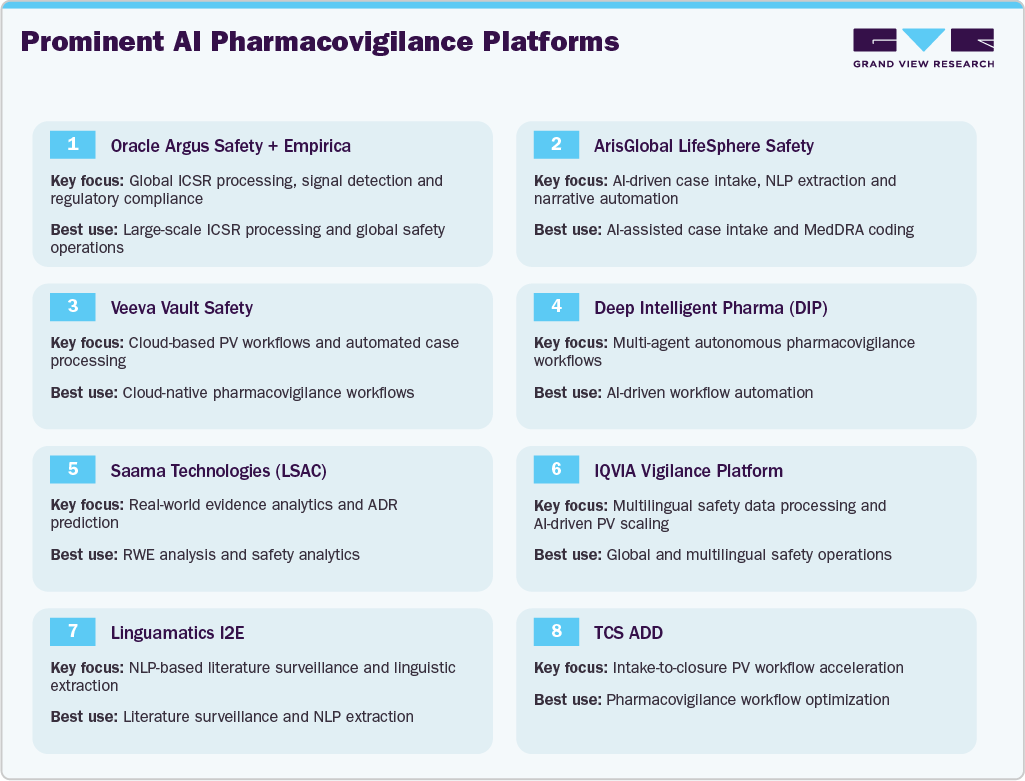
IQVIA Vigilance Platform: Workflow
Five stages from automated case intake to business transformation, with AI, NLP and ML across the lifecycle.
No.
Workflow Stage
Description
Key Features
01
Case Intake
Automated intake captures adverse events from external and internal sources using NLP, AI and ML.
NLP, AI and ML; All sources
02
Case Processing
Zero-touch, AI, NLP and ML-enabled case processing delivers faster, more accurate assessments.
Zero-touch; AI, NLP and ML
03
Case Submission
Compliant with all regulations through simplified reporting, rules management, and automated regulatory updates. Supports all formats, regulatory bodies and forms.
Rules management; All formats
04
Reporting and Analytics
Holistic, automated solution simplifies aggregate reporting and generation including in-stream signal detection.
Aggregate reports; In-stream signals
05
Business Transformation
Rapid deployment and updates through innovative training methods and use of model SOPs. Manuals ease maintenance of quality documents.
Model SOPs; Rapid deployment
Source note: Workflow analysis is from IQVIA Vigilance Platform.
Market Concentration & Characteristics
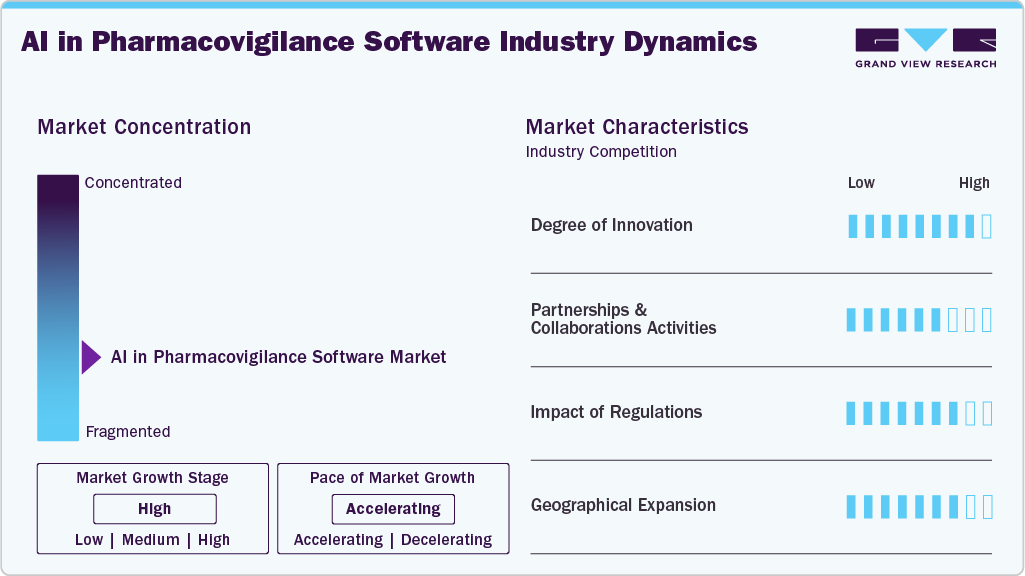
The market is experiencing high degree of innovation. Software developers are advancing beyond basic adverse event detection toward automated case processing, while retaining human oversight for critical decisions. For instance, in August 2027, Tata Consultancy Services launched TCS ADD AgentHub, an agentic AI platform designed to support drug development and pharmacovigilance workflows. The platform incorporated AI agents for individual case safety report (ICSR) intake, data entry, medical coding, case review, and literature analysis, with defined human oversight and auditability for regulated operations.
“TCS ADD AgentHub, is a role-based, enterprise-ready, and trusted AI platform that will enable our customers to accelerate drug development using agentic AI at scale. It enables a shift from reactive to proactive, scalable, and audit-ready operations amidst an ever-changing regulatory environment. TCS’ strategy is to move towards autonomous enterprise functions where AI agentic workforce operates alongside humans driving innovation in drug development and improving patient safety.”
- Debashis Ghosh, President, Lifesciences and Healthcare, TCS
 To learn more about this report, Download Free Sample Report
Strategic partnerships between software vendors and technology service providers are strengthening the market by combining AI capabilities with pharmacovigilance expertise. These collaborations help pharmaceutical companies deploy automated safety workflows across complex global operations. For instance, in September 2027, Oracle Life Sciences partnered with Wipro to strengthen pharmacovigilance services using Oracle Argus business process services.
“Life sciences organizations are under increasing pressure to modernize safety operations while maintaining compliance and speed. By integrating Oracle Life Sciences Argus BPS into our Wipro Intelligence suite of AI-powered solutions, Wipro’s PV service offerings can be enhanced to offer customers scalable, ready-to-deploy safety services.”
-Jasjit Singh Kang, Managing Partner & Global Head of Business Process Services
Regulatory requirements influence the development and adoption of AI in pharmacovigilance software by increasing the importance of model validation, data traceability, human oversight, and documented performance. Vendors must ensure that AI-generated outputs support reliable safety assessments without compromising reporting obligations or audit readiness. For instance, In January 2026, the U.S. Food and Drug Administration (FDA) issued draft guidance titled Considerations for the Use of AI to Support Regulatory Decision-Making for Drug and Biological Products. It introduced a risk-based credibility assessment framework for evaluating AI models used in regulatory decision-making, reinforcing the need to establish model reliability in the context of intended use.
Providers are expanding their geographic footprint through local partnerships, cloud deployments, and implementations that support country-specific reporting requirements alongside centralized global safety operations. For instance, in July 2027, RxLogix announced the expansion of the European Medicines Agency’s pharmacovigilance platform, onboarding 31 national competent authorities.
“Successfully supporting the European Medicines Agency and all National Competent Authorities represents far more than a technology expansion, it validates a new standard for modern PV infrastructure. This milestone demonstrates that the future of drug safety lies in unified, intelligent platforms that seamlessly integrate signal detection, regulatory reporting, and enterprise data management at unprecedented scale.”
-Raj More, Founder & CEO of RxLogix
Analyst Perspective
The market is poised for growth as pharmaceutical companies increasingly adopt AI-driven solutions to manage rising adverse event reporting volumes, streamline individual case safety report processing, and strengthen regulatory compliance. Furthermore, advancements in generative AI, natural language processing, and agentic AI are expanding automation across medical coding, literature surveillance, safety signal detection, and aggregate reporting. Established vendors are integrating AI into existing safety platforms, while specialized providers are targeting specific workflow inefficiencies. Future market growth will depend on demonstrating measurable efficiency gains, maintaining regulatory traceability, and delivering reliable AI outputs across global pharmacovigilance operations.
Component Insights
By component, the software/platform segment held the highest market share of 74.5% in 2026. These platforms integrate safety data from multiple sources, automate repetitive tasks, and manage large adverse event case volumes. For instance, in June 2026, ArisGlobal announced that a top 10 biopharmaceutical company had implemented its LifeSphere NavaX solution to automate safety case intake, with an expected annual processing volume of approximately 350,000 adverse event cases. This adoption highlighted the growing use of AI-enabled platforms to manage high-volume pharmacovigilance operations.
The services segment in the AI in pharmacovigilance software market is anticipated to grow at the fastest CAGR over the forecast period. Pharmaceutical companies require specialized expertise to integrate AI-enabled solutions into existing safety systems, validate automated workflows, maintain data quality, and ensure compliance with evolving pharmacovigilance regulations. The growing complexity of adverse event reporting requirements and the need to manage increasing volumes of drug safety data further support demand for specialized services.
Deployment Insights
The cloud-based segment held the largest market share of 73.9% in 2026 and is expected to grow at the fastest CAGR over the forecast period. Growth is driven by the scalability, remote accessibility, and lower upfront infrastructure requirements of cloud-based platforms. These solutions support centralized safety data management, integration across global pharmacovigilance teams, and faster deployment of AI-powered case processing and signal detection tools. For instance, in May 2024, WNS described the implementation of a tailored software-as-a-service (SaaS) solution for a biotechnology company to automate adverse event handling. The solution incorporated automated data ingestion, modular architecture, and compliance controls, improving processing efficiency, scalability, and reporting accuracy.
The on-premise segment is supported by pharmaceutical companies that prioritize direct control over safety data, internal infrastructure, system configuration, and access permissions. Organizations with established legacy systems and stringent internal data governance requirements continue to consider on-premise deployments for managing sensitive pharmacovigilance information. For instance, Ipca Laboratories previously relied on on-premise safety case processing systems before selecting Oracle Argus and Empirica to improve case processing, signal detection, and reporting efficiency.
Application Insights
By application, adverse event case intake and processing segment held the largest market share of 34.7% in 2026, driven by the high volume of individual case safety reports (ICSRs) generated through clinical trials, post-marketing surveillance, healthcare professionals, patients, and regulatory databases. Growing requirements for accurate case processing, shorter turnaround times, and consistent safety data management further strengthen adoption across pharmaceutical companies and contract research organizations (CROs).
The aggregate safety reporting and safety document authoring segment is anticipated to register the fastest CAGR over the forecast period, driven by increasing regulatory requirements for periodic safety reports, periodic benefit-risk evaluation reports (PBRERs), periodic safety update reports (PSURs), and pharmacovigilance system master files (PSMFs). For instance, Quark offers AI-enabled document automation through Quark Publishing Platform, supporting the generation and updating of aggregate safety reports and PSMFs by integrating structured and unstructured information from safety databases and signal management systems
End Use Insights
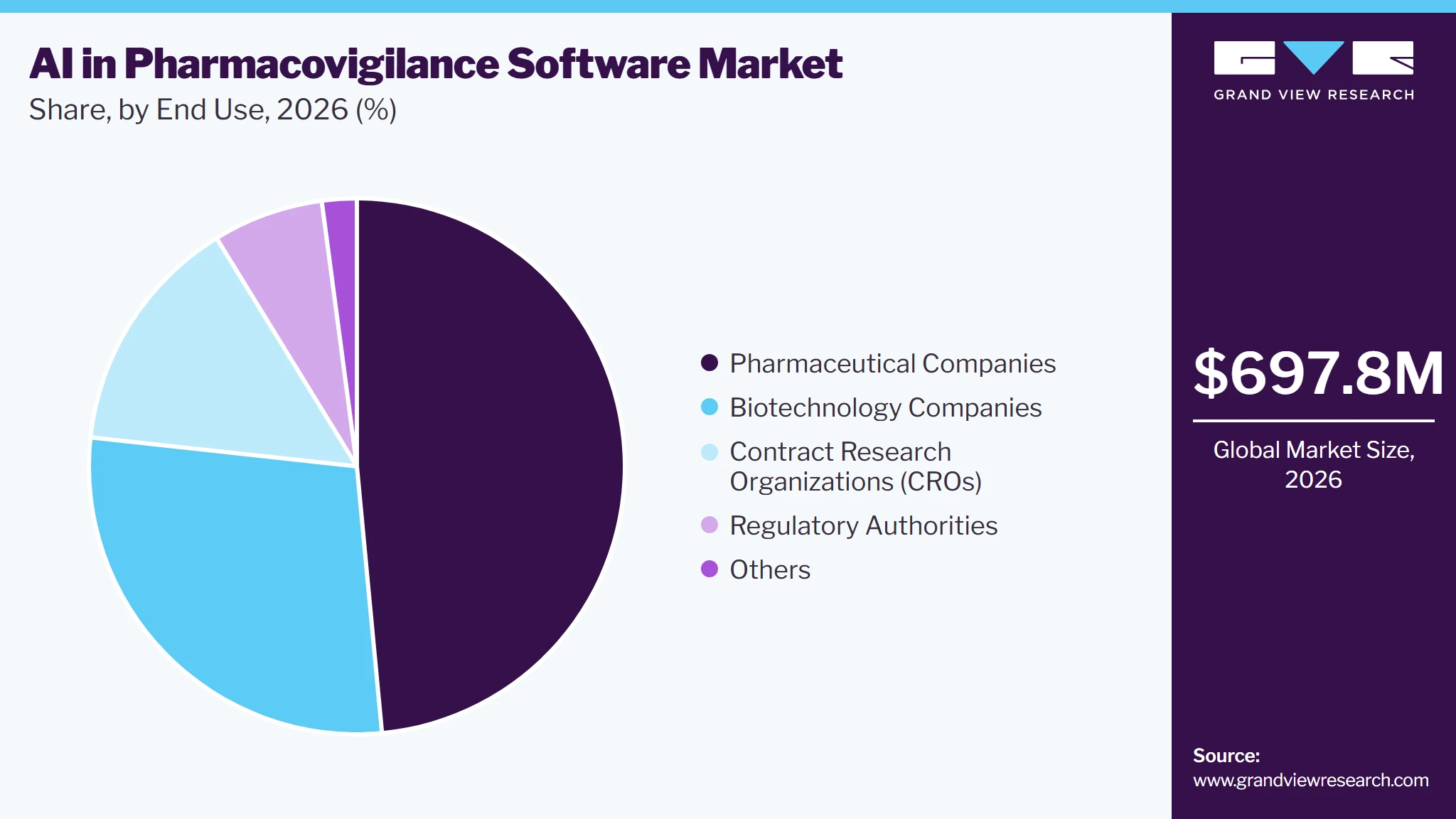
The pharmaceutical companies segment held the largest market share of 48.5% in 2026. Pharmaceutical manufacturers manage large volumes of adverse event reports and must comply with stringent pharmacovigilance regulations across multiple markets. AI-enabled automation streamlines adverse event case processing, safety signal detection, medical review, and regulatory reporting, improving data accuracy, operational efficiency, and patient safety. Increasing investments in digital safety infrastructure and the integration of AI into established pharmacovigilance workflows further support segment growth.
 To learn more about this report, Download Free Sample Report
CROs is expected to grow at the fastest CAGR over the forecast period. CROs handle safety monitoring, adverse event processing, medical review, and regulatory reporting for multiple sponsors, creating demand for scalable automation solutions. AI-powered tools help CROs reduce manual workloads, accelerate processing timelines, and maintain consistent reporting standards across clinical trials and post-marketing surveillance programs. The growing emphasis on cost optimization, operational flexibility, and efficient management of complex safety data further drives the adoption of AI in pharmacovigilance software among CROs.
Regional Insights
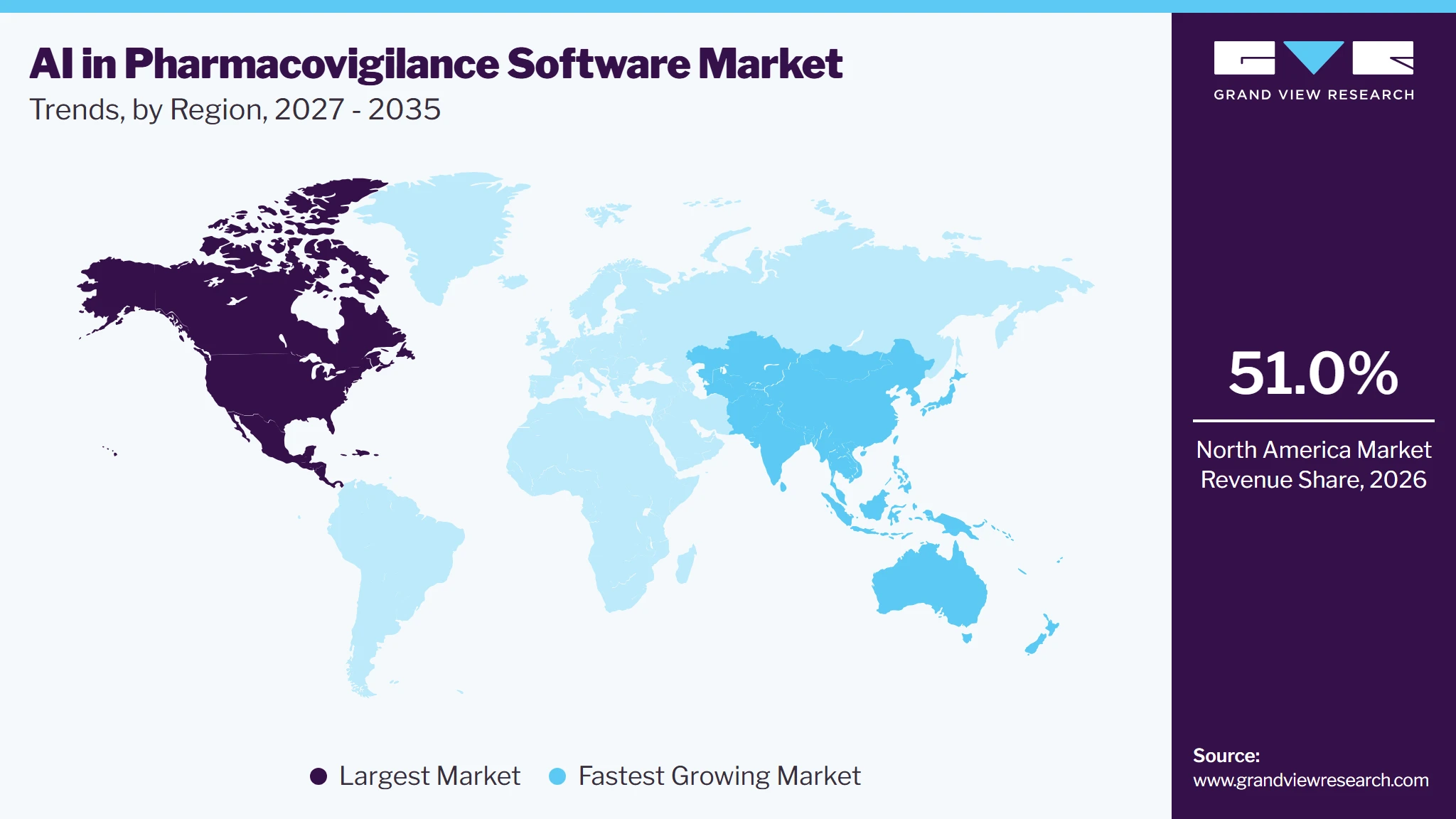
North America's AI in pharmacovigilance software market industry dominated the market with a 51.0% market share in 2026. The region benefits from a strong pharmaceutical and biotechnology industry, established drug safety reporting infrastructure, and high adverse event reporting volumes.
 To learn more about this report, Download Free Sample Report
Modernizing adverse event monitoring at a national scale required consolidating multiple legacy systems, handling millions of safety reports, and delivering a reliable platform on an accelerated timeline. We are proud to support the FDA in deploying a system that strengthens real-time safety surveillance for regulators, researchers, and the public.
-Jyotiska Biswas, CEO, ThinkTrends
The presence of major software developers and pharmacovigilance service providers supports the adoption of software. For instance, in April 2027, ThinkTrends announced that its agentic Document AI platform had been deployed as part of the U.S. FDA's nationwide Adverse Event Monitoring System (AEMS), automating the intake, classification, and normalization of unstructured safety reports across multiple product categories.
U.S. AI in Pharmacovigilance Software Market Trends
In the U.S., pharmaceutical manufacturers increasingly prioritize AI-enabled platforms to automate ICSR intake, extract information from unstructured documents, standardize medical coding, and improve safety data review. The FDA’s focus on emerging technologies in drug safety also supports market development. For instance, in December 2026, ArisGlobal announced that a leading global pharmaceutical company had deployed its LifeSphere NavaX generative AI capabilities for case data extraction and safety narrative generation, achieving a reported 17% improvement in case-intake efficiency within three weeks.
Europe AI in Pharmacovigilance Software Market Trends
Europe’s market is expanding as pharmaceutical companies adopt automated safety monitoring to address complex reporting requirements across multiple countries. The European Medicines Agency (EMA) and national regulatory authorities are advancing coordinated AI initiatives, strengthening the region’s focus on responsible AI implementation, data governance, and regulatory oversight. For instance, in June 2027, the EMA and Heads of Medicines Agencies published the 2026 AI Observatory Report, outlining AI applications in medicines regulation, including process automation, data analysis, and knowledge mining. The report also informed the European medicines regulatory network’s 2027-2028 data and AI workplan.
UK AI in Pharmacovigilance Software Market Trends
The UK market is supported by the country’s established pharmaceutical industry, the Medicines and Healthcare products Regulatory Agency’s (MHRA) focus on medicines safety, and growing interest in AI-based adverse reaction detection and risk assessment. Pharmaceutical companies and technology providers are increasingly evaluating AI to improve safety data analysis, identify potential drug-related risks, and reduce manual workloads while maintaining regulatory oversight. For instance, in June 2027, the MHRA announced a regulatory AI sandbox to enable companies and researchers to test AI approaches for improving medicines safety, predicting risks, and identifying potential side effects in a controlled environment.
“Through our 10-Year Health Plan, we are driving the NHS to be the most AI-enabled healthcare system in the world.”
- Health Innovation Minister Preet Gill
“By leveraging our strengths in life sciences, AI and pro-innovation regulation, this sandbox will help make the UK one of the best places in the world to develop the next generation of medicines safely.”
- Science Minister Lord Vallance
Germany AI in Pharmacovigilance Software Market Trends
Germany’s market is developing through pharmaceutical companies’ adoption of AI-driven safety data analysis, automated adverse event processing, and intelligent literature screening. The country’s established pharmaceutical industry and strong research ecosystem support the development of technologies to improve drug safety assessments. For instance, in August 2024, the German Research Center for Artificial Intelligence (DFKI) launched the PV-RADAR project in collaboration with DHC Business Solutions, Averbis, and Widler & Schiemann. The project uses NLP, knowledge graphs, and machine learning to connect distributed pharmacovigilance data, improve information retrieval, and automate data analysis, supporting more efficient and reliable drug safety monitoring.
Asia Pacific AI in Pharmacovigilance Software Market Trends
The Asia Pacific market is developing through pharmaceutical industry expansion and wider adoption of digital drug safety systems. Pharmaceutical manufacturers, CROs, and pharmacovigilance service providers are investing in AI-enabled case processing. Differences in national reporting requirements and growing demand for multilingual processing are also increasing the need for adaptable safety platforms. For instance, in March 2026, Tech Mahindra announced an agentic AI-powered pharmacovigilance solution developed using NVIDIA AI technology. The solution was designed to automate case intake, data transformation, quality control, and compliance management.
“As the pharmaceutical industry navigates volumes of data during trials and post-launch, our collaboration with NVIDIA leverages generative AI and multi-agent systems to streamline pharmacovigilance process. Together, we are revolutionizing drug safety management and using the innovative AI-driven framework to develop multiple use cases for our global customers.”
-Nikhil Malhotra, chief innovation officer & global head, AI and Emerging Technologies Tech Mahindra
China AI in Pharmacovigilance Software Market Trends
The country’s pharmaceutical companies are integrating AI-assisted adverse event analysis to manage domestic and international compliance requirements. For instance, in April 2027, China’s National Medical Products Administration (NMPA) issued its Implementation Opinions on “Artificial Intelligence + Drug Regulation”, outlining plans to integrate AI into drug review and approval, supervision, inspection, testing, and safety surveillance. The initiative established a roadmap for developing specialized AI models and intelligent agents for drug regulation by 2030, supporting the long-term development of AI-enabled pharmacovigilance solutions.
India AI in Pharmacovigilance Software Market Trends
Domestic technology companies are developing specialized solutions for pharmaceutical safety operations and global drug manufacturers seek more efficient case-processing models. For instance, in October 2027, Indian technology company HCLTech introduced its Intelligent Safety Platform (ISP), an agentic AI-powered solution designed to connect pharmacovigilance workflows from safety intake to signal detection. The platform integrates purpose-built AI agents, source traceability, confidence indicators, and audit trails while retaining human oversight, reflecting the shift toward connected AI-driven safety operations.
Latin America AI in Pharmacovigilance Software Market Trends
Latin America’s market is progressing as pharmaceutical companies and regulatory authorities strengthen adverse event monitoring and explore automated approaches to drug safety assessment. Demand is supported by the need to process increasing volumes of ICSRs, identify potential safety signals, and improve the consistency of safety data across different reporting systems. For instance, in December 2026, Brazil’s National Health Surveillance Agency (Anvisa) announced the publication of the Council for International Organizations of Medical Sciences (CIOMS) guidance on artificial intelligence in pharmacovigilance. Anvisa contributed to the international working group that developed guidance, which addressed AI applications in individual safety report analysis, signal detection, and large-scale safety data assessment.
“The incorporation of artificial intelligence into pharmacovigilance demands methodological rigor, transparency, and robust governance. The CIOMS guide offers a common basis for regulators, developers, and researchers to adopt technological solutions responsibly, aligned with the protection of life and the safety of patients. The Brazilian contribution reinforces Anvisa's commitment to acting at the forefront of scientific and regulatory knowledge.”
-Thiago Campos, director of the Fifth Directorate
Middle East & Africa AI in Pharmacovigilance Software Market Trends
The Middle East and Africa market is emerging as regulators modernize drug safety surveillance and improve cross-border information sharing. In the Middle East, regulatory digitization and cloud-based safety systems support more efficient reporting, while African markets are prioritizing shared infrastructure to address fragmented pharmacovigilance capabilities. For instance, in September 2027, the African Medicines Agency selected Qinecsa as the technology partner for AfriVigilance, a continent-wide medicines safety surveillance platform. The system incorporates Qinecsa’s HaloPV case management and QVW signal detection technologies, with implementation designed to connect safety information across clinical trials and real-world use. The initiative strengthens the digital infrastructure needed for broader adoption of AI-enabled case processing and safety signal analysis across African markets.
“As Africa expands local manufacturing of medical products, we must be equally rigorous about how we monitor their safety. AfriVigilance gives our National Regulatory Authorities and member states a continental system built on African data, for African populations, and this partnership with Qinecsa and our technical partners puts that ambition on a delivery footing.”
Dr Delese Mimi Darko, Director General of the African Medicines Agency
Key Companies & Market Share Insights
Key companies in the AI in pharmacovigilance software market are focusing on AI, NLP, machine learning, and generative AI to streamline adverse event reporting and drug safety monitoring. Software providers are developing solutions that automate individual case safety report (ICSR) intake, adverse event data extraction, medical coding, case narrative generation, literature surveillance, and safety signal detection. Integration with drug safety databases, clinical trial systems, and regulatory reporting platforms further supports faster case processing, improved data consistency, and compliance with pharmacovigilance requirements.
Key AI in Pharmacovigilance Software Companies
The following key companies have been profiled for this study on the AI in pharmacovigilance software market.
-
Oracle Corporation
-
ArisGlobal
-
Veeva Systems Inc.
-
IQVIA Holdings Inc.
-
Quantiphi
-
Zensar
-
Indegene Limited
-
Accenture plc
-
Cognizant Technology Solutions
-
EVERSANA
-
Tata Consultancy Services (TCS)
-
Ennov
Competitive Benchmarking
Category
Operating Strategies
Competitive Edge
Weakness
Established Players (e.g., Oracle Corporation, ArisGlobal, Veeva Systems Inc., IQVIA Holdings Inc., Accenture plc, Cognizant Technology Solutions, Tata Consultancy Services (TCS))
- Expand AI capabilities across existing pharmacovigilance platforms and safety databases.
- Strengthen global delivery, regulatory compliance, and integration with pharmaceutical enterprise systems.
- Established customer relationships and extensive drug safety expertise.
- Scalable platforms with broad regulatory and workflow coverage.
- Complex implementation and system validation requirements.
- High integration costs and challenges associated with legacy infrastructure.
Emerging / Specialized Players (e.g., Quantiphi, Zensar, Indegene Limited, EVERSANA, Ennov)
- Develop targeted AI solutions for case processing, literature monitoring, and safety analytics.
- Offer tailored automation and AI-enabled pharmacovigilance services.
- Specialized AI expertise and flexible implementation approaches.
- Ability to address specific workflow gaps and customer requirements.
- Narrower product coverage for some providers.
- Need to demonstrate AI reliability and achieve broader adoption across large pharmaceutical enterprises.
Recent Developments
-
In September 2027, Graph AI raised USD 13.3 million in Series A funding led by Insight Partners, with participation from existing investor Bessemer Venture Partners, to accelerate the expansion of its AI-native patient safety platform across the U.S. and Europe. The platform combined AI with deterministic controls, validation layers, and audit trails to support traceability, human oversight, customer validation, and inspection readiness.
-
In September 2027, PubHive was named “Best AI-Driven Pharmacovigilance Platform 2027” at the SME Managing Director of the Year Awards. The recognition highlighted the company’s focus on helping pharmacovigilance teams manage growing volumes of scientific literature and safety information through structured, transparent workflows.
-
In September 2027, Authenticx expanded its pharmacovigilance AI solution to automate downstream drug safety workflows by converting patient-service conversations into structured safety records. The solution analyzed calls, self-service chats, bots, and interactions handled through patient support hubs and contact centers to identify potential adverse events, prepopulate configurable pharmacovigilance forms, and route records into pharmaceutical manufacturers’ existing safety systems.
AI in Pharmacovigilance Software Market Report Scope
Report Attribute
Details
Market size value in 2027
USD 814.0 Million
Revenue forecast in 2035
USD 4,389.6 Million
Growth Rate
CAGR of 23.4% from 2027 to 2035
Actual data
2021 - 2025
Forecast period
2027 - 2035
Quantitative units
Revenue in USD Billion/Million and CAGR from 2027 to 2035
Report coverage
Revenue forecast, company ranking, competitive landscape, growth factors, and trends
Segments covered
Component, deployment, application, end use, and region
Regional scope
North America, Europe, Asia Pacific, Latin America, and MEA
Country scope
U.S., Canada, Mexico, UK, Germany, France, Italy, Spain, Sweden, Denmark, Norway, China, Japan, India, Australia, South Korea, Thailand, Brazil, Argentina, Saudi Arabia, South Africa, UAE, Kuwait
Key companies profiled
Oracle Corporation, ArisGlobal, Veeva Systems Inc., IQVIA Holdings Inc., Quantiphi, Zensar, Indegene Limited, Accenture plc, Cognizant Technology Solutions, EVERSANA, Tata Consultancy Services (TCS), Ennov.
Customization scope
Free report customization (equivalent up to 8 analyst’s working days) with purchase. Addition or alteration to country, regional & segment scope
Pricing and purchase options
Avail customized purchase options to meet your exact research needs. Explore purchase options
Global AI in Pharmacovigilance Software Market Report Segmentation
This report forecasts revenue growth at global, regional, and country levels and provides an analysis of the latest industry trends in each of the sub-segments from 2023 to 2035 . For this study, Grand View Research has segmented global AI in pharmacovigilance software market report based on components, deployment, application, end use, and region.
-
Component Outlook (Revenue, USD Million, 2023 - 2035)
-
Software/Platform
-
Services
-
-
Deployment Outlook (Revenue, USD Million, 2023 - 2035)
-
Cloud-Based
-
On-Premise
-
-
Application Outlook (Revenue, USD Million, 2023 - 2035)
-
Adverse Event Case Intake and Processing
-
Medical Literature Monitoring and Screening
-
Signal Detection and Risk Management
-
Aggregate Safety Reporting and Safety Document Authoring
-
Regulatory Safety Reporting and Compliance Management
-
-
End Use Outlook (Revenue, USD Million, 2023 - 2035)
-
Pharmaceutical Companies
-
Biotechnology Companies
-
Contract Research Organizations (CROs)
-
Regulatory Authorities
-
Others
-
-
Regional Outlook (Revenue, USD Million, 2023 - 2035)
-
North America
-
U.S.
-
Canada
-
Mexico
-
-
Europe
-
Germany
-
U.K.
-
France
-
Italy
-
Spain
-
Denmark
-
Sweden
-
Norway
-
-
Asia Pacific
-
China
-
Japan
-
India
-
South Korea
-
Australia
-
Thailand
-
-
Latin America
-
Brazil
-
Argentina
-
-
Middle East and Africa (MEA)
-
South Africa
-
Saudi Arabia
-
UAE
-
Kuwait
-
-
Research Methodology
The AI in pharmacovigilance software market figures in this report are based on a proven research process that combines executive interviews with secondary research from proprietary databases, company filings, and recognized regulatory and institutional sources. Market size is built through value-chain sizing - reconciling supply-side and demand-side estimates - and triangulated with bottom-up and top-down approaches. Every estimate passes multiple levels of expert validation before publication, with each AI in pharmacovigilance software segment quantified using the revenue-capture definitions in the table below.
Segment Definition
Segment
Segment Definition
By Component:
Software/Platform
AI in pharmacovigilance software encompasses digital platforms designed to automate drug safety activities, including adverse event processing, safety signal identification, medical literature screening, and regulatory documentation.
Services
Services cover the technical and operational support required to deploy and maintain AI-based pharmacovigilance systems. These include implementation, integration, customization, validation, maintenance, and outsourced drug safety operations.
By Deployment:
Cloud-Based
Cloud-based solutions operate on remotely hosted infrastructure and provide access to pharmacovigilance applications through secure internet connections. Their scalability supports organizations managing safety information across multiple locations and markets.
On-Premise
On-premise deployments involve installing pharmacovigilance software within an organization's own IT environment. This arrangement allows internal teams to manage data storage, system access, infrastructure configuration, and security controls directly.
By Application:
Adverse Event Case Intake and Processing
This application focuses on capturing and processing reports of suspected adverse reactions received from clinical trials, healthcare professionals, patients, and post-marketing surveillance activities. AI tools assist with data extraction, case classification, validation, duplicate identification, and medical coding.
Medical Literature Monitoring and Screening
AI-based literature monitoring tools examine scientific publications, medical journals, and other relevant sources to identify drug safety information. Automated screening and relevance classification help safety teams identify publications requiring further assessment.
Signal Detection and Risk Management
This segment covers the analysis of adverse event data to identify patterns that indicate potential medicine-related safety concerns. AI supports signal prioritization, risk assessment, ongoing safety monitoring, and the evaluation of appropriate risk minimization measures.
Aggregate Safety Reporting and Safety Document Authoring
Solutions within this category compile safety data from multiple sources to support the preparation of periodic and development-related safety documents. These include Periodic Safety Update Reports (PSURs), Periodic Benefit-Risk Evaluation Reports (PBRERs), and Development Safety Update Reports (DSURs).
Regulatory Safety Reporting and Compliance Management
This application addresses the preparation, validation, submission, and tracking of safety reports required by regulatory authorities. Automated workflows help organizations manage reporting deadlines, documentation standards, submission requirements, and applicable pharmacovigilance regulations.
By End Use:
Pharmaceutical Companies
Pharmaceutical manufacturers use AI pharmacovigilance solutions to evaluate medicine safety throughout clinical development and commercial use. These systems support adverse event management, signal detection, benefit-risk assessment, and regulatory reporting across product portfolios.
Biotechnology Companies
Biotechnology companies rely on pharmacovigilance automation to monitor the safety of biologics, vaccines, biosimilars, gene therapies, and other biotechnology-derived products. The software assists with safety data collection and evaluation during clinical trials and after product commercialization.
Contract Research Organizations (CROs)
CROs provide outsourced research and drug safety services to pharmaceutical and biotechnology companies. AI-enabled pharmacovigilance tools help these organizations manage sponsor-specific safety databases, process adverse event cases, monitor literature, and prepare regulatory submissions.
Regulatory Authorities
Government agencies and medicine regulatory bodies use pharmacovigilance technologies to review safety submissions, evaluate adverse event patterns, and monitor potential risks associated with medicinal products. AI-supported analysis assists regulatory surveillance and evidence-based safety assessments.
Others
This category includes academic institutions, research organizations, healthcare providers, and other entities involved in drug safety research or monitoring. Their applications include adverse event data analysis, safety research, and the evaluation of medicine-related risks.
Estimation Model
Step
Demand Flow Analysis
1. Identification of Key Market Players
Identify key players in AI in pharmacovigilance software, such as ArisGlobal, Veeva Systems Inc., IQVIA Holdings Inc., Quantiphi, Zensar, Indegene Limited, EVERSANA, Tata Consultancy Services (TCS), Accenture plc, and other market participants.
2. Product Benchmarking
Benchmark AI in pharmacovigilance software products and integrated solutions available in the market.
3. Company Revenue Analysis
Analyze individual company revenues and estimate segment-specific earnings for selected players in the AI in pharmacovigilance software market.
4. Market Size Estimation
Estimate segment and subsegment revenues for selected players across regional and global markets. Extrapolate total player revenues to determine the global market size, considering the market share held by key players.
5. Market Forecasting
Forecast the market based on the historical performance of market players and the impact of key market variables over the forecast period.
Delivered Customizations
This report has been delivered with the following In-depth customizations
CLIENT REQUEST
CUSTOMIZATION DELIVERED
VALUE ADDS
Pricing analysis
Evaluated subscription-based licensing, enterprise licensing, usage-based pricing, modular pricing, and service-based models. Assessed pricing variables such as case-processing volume, user count, AI modules, deployment type, implementation fees, maintenance, and support.
Helps clients establish competitive pricing structures, identify recurring-revenue opportunities, and determine premium pricing potential for advanced AI automation modules.
Cybersecurity and data privacy assessment
Comprehensive assessment of cybersecurity and data protection requirements for AI pharmacovigilance software, covering patient data confidentiality, encryption, access controls, identity management, cloud and on-premises security, audit trails, data retention, third-party integrations, and incident response. The analysis also considers applicable privacy and regulatory requirements across target markets.
Helps vendors identify cybersecurity and data governance risks that could restrict adoption. Supports secure product architecture, strengthens customer confidence, and helps address information security and compliance requirements during pharmaceutical procurement and implementation.
Pharmaceutical company adoption analysis
Assessed adoption potential across pharmaceutical companies, biotechnology firms, CROs, and pharmacovigilance service providers using factors such as adverse event volumes, clinical trial activity, geographic reach, existing safety databases, and automation maturity.
Helps identify high-potential customer segments, prioritize prospective buyers, and refine customer acquisition strategies.
About the Author(s)
Healthcare IT Research Team
Healthcare · Healthcare ITThis report was authored by the healthcare it research team at Grand View Research - comprising two research analysts, one senior research analyst, and one industry expert - with specialized expertise in the healthcare it segment of the healthcare industry. All findings are based on proprietary healthcare databases, executive interviews, and regulatory analysis, subject to internal peer review prior to publication.
Last Updated:
Speak to Analyst

Customize this report to your needs - add regions, segments, or data points, with 20% free customization.
Or view our licence options:


ISO 9001:2015 & 27001:2022 Certified
We are GDPR and CCPA compliant! Your transaction & personal information is safe and secure. For more details, please read our privacy policy.


