
- Home
- »
- Healthcare IT
- »
-
AI In Sepsis Warning Systems Market Size Report 2026-2033GVR Report cover

AI In Sepsis Warning Systems Market (2026 - 2033)
Size, Share & Trends Analysis Report By Component (Software/platform, Services), By Deployment (Cloud-Based, On-Premise), By Application (Early Sepsis, Detection, Risk Prediction and Stratification), By End-use, By Region, And Segment Forecasts
Market Size, 2025
$213.8MMarket Estimate, 2026
$251.9MMarket Forecast, 2033
$1,176.4MCAGR, 2026–2033
24.6%AI In Sepsis Warning Systems Market Report Summary
The global AI in sepsis warning systems market size was valued at USD 213.8 million in 2025 and is projected to grow from USD 251.9 million in 2026 to USD 1,176.4 million by 2033, at a CAGR of 24.6% from 2026 to 2033. North America dominated the market, accounting for a revenue share of 36.1% in 2025.The market growth is driven by the growing need for early sepsis detection and timely clinical intervention.
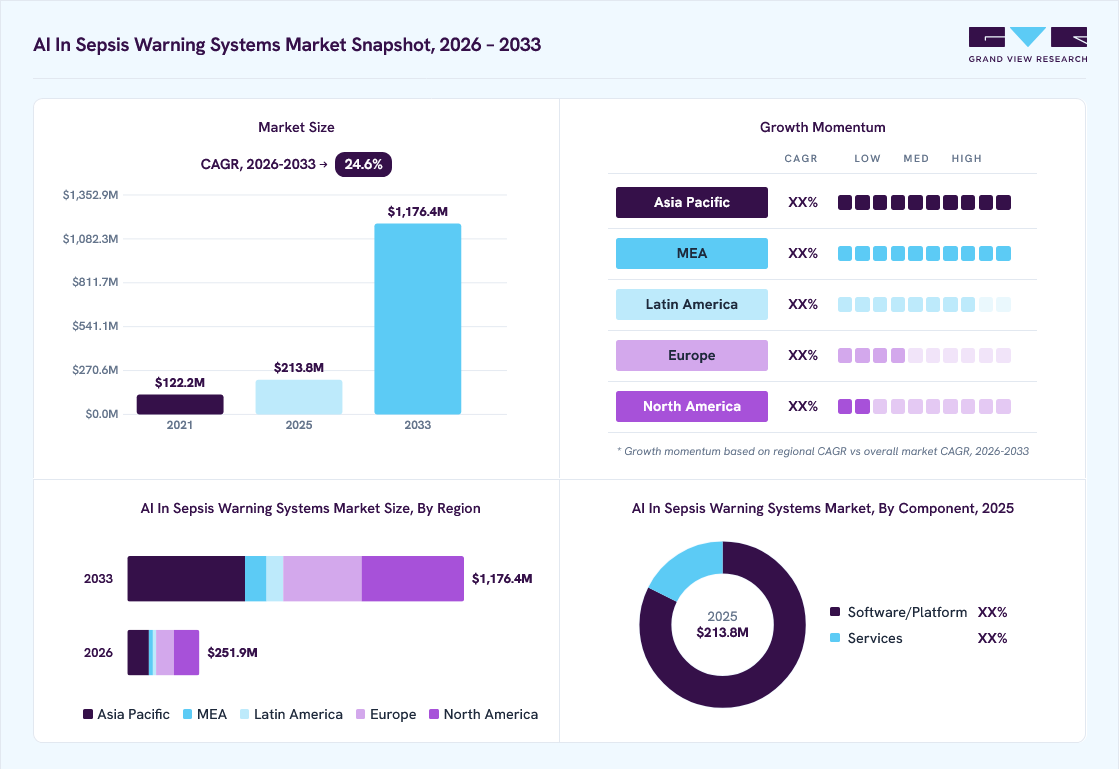 Source: Grand View Research, IR Documents, Primary Interviews, Paid DatabasesTo learn more about this report,
 Download Free Sample Report
Key Market Trends & Insights
- By component: Software/platform segment held the highest market share of 82.3% in 2025.
- By deployment: Cloud-based segment held the highest market share in 2025.
- By application: Early sepsis detection segment held the highest market share in 2025.
- By end use: Hospitals segment held the highest market share in 2025.
Regional Highlights
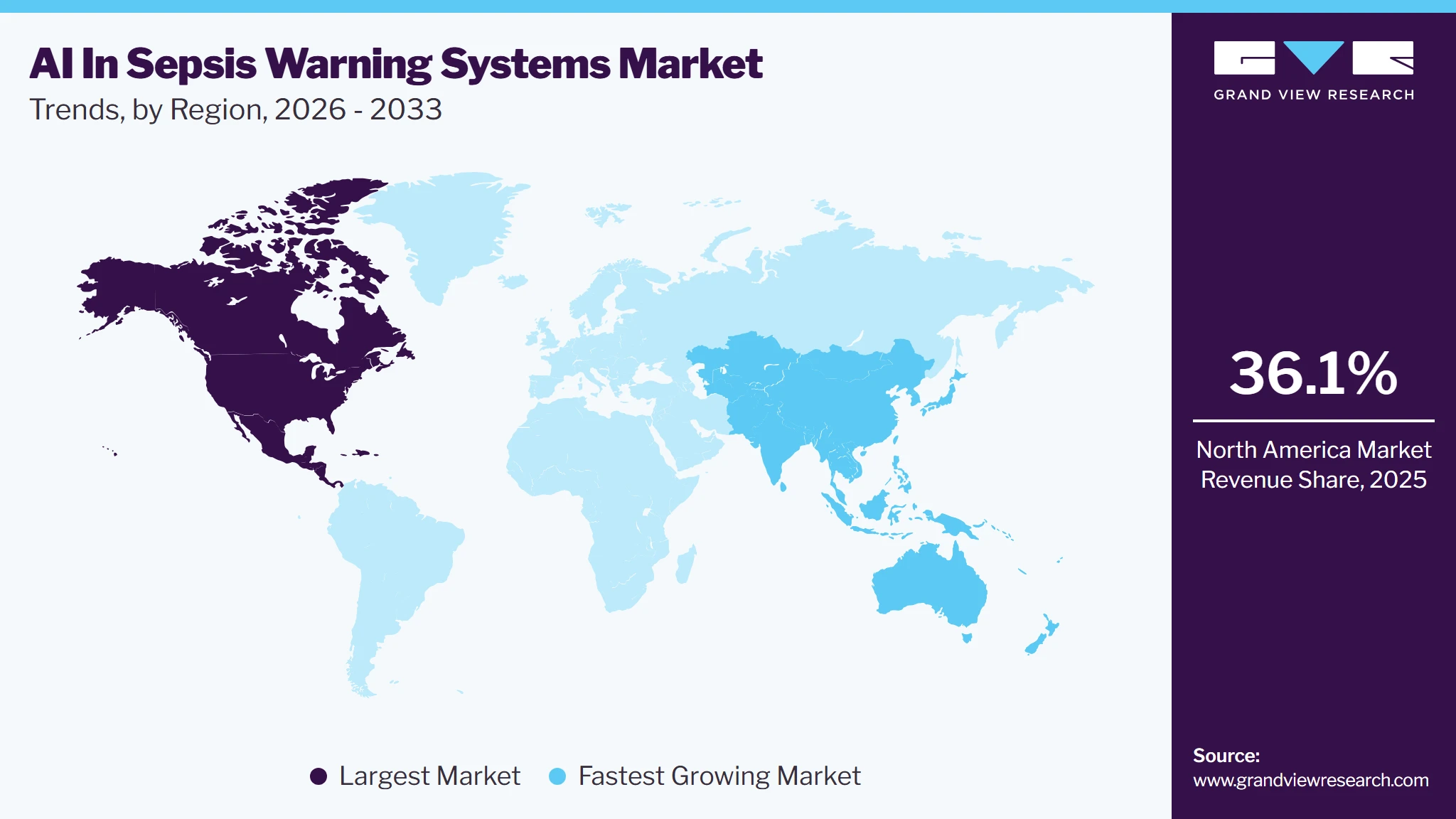
- Largest regional market: North America (36.1% revenue share, 2025)
- Fastest-growing regional market: Asia Pacific (highest CAGR, 2026-2033)
- By country: The U.S. held the largest market share in 2025
Market Size & Forecast
- Market size in 2025: USD 213.8 Million
- Estimated market size in 2026: USD 251.9 Million
- Projected market size by 2033 : USD 1,176.4 Million
- CAGR (2026-2033): 24.6%
Prism AI by Grand View Research Free to tryAsk a question about the AI in sepsis warning systems marketTry asking✓Every figure cited from GVR research Prefer the report? Download free sample →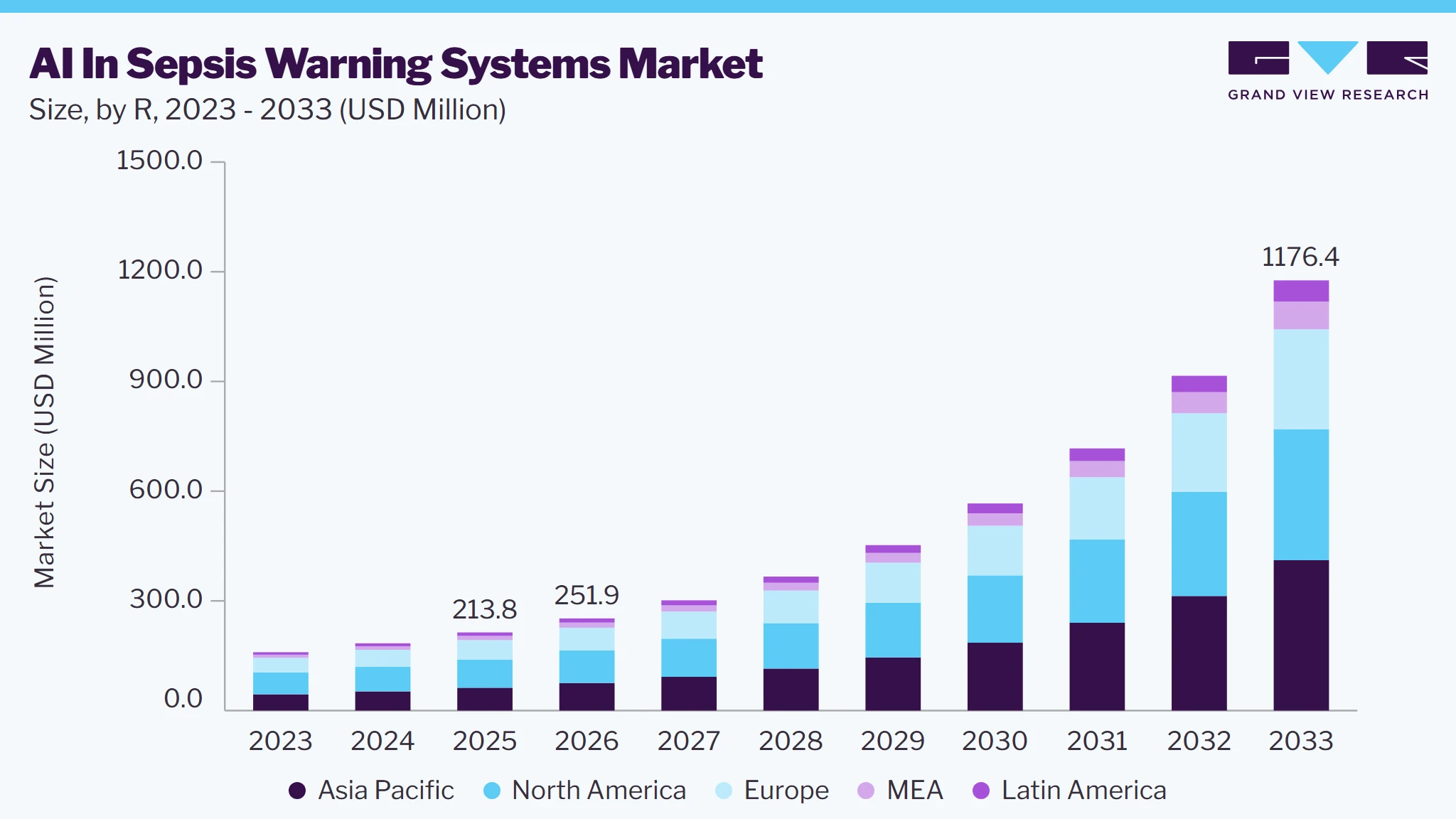 To learn more about this report, Download Free Sample Report
The growing adoption of electronic health records (EHRs), real-time patient monitoring systems, and data-driven clinical decision support solutions is supporting the integration of AI into hospital workflows. Advancements in machine learning and predictive analytics are enabling healthcare providers to identify high-risk patients by analyzing multiple clinical parameters, monitoring changes in patient conditions, and detecting early signs of clinical deterioration.Market Dynamics
The AI in sepsis warning systems market is driven by the growing need for early sepsis detection, timely clinical intervention, and improved patient outcomes. Increasing adoption of electronic health records, real-time patient monitoring, and predictive analytics is supporting the integration of AI-based warning systems into hospital workflows. Advancements in machine learning enable healthcare providers to analyze vital signs, laboratory results, medical history, and other clinical indicators to identify patients at risk of sepsis. Expanding applications in early detection, risk prediction, clinical alerting, and patient deterioration monitoring are further supporting market growth.
The rising need for early sepsis detection and timely clinical intervention is driving the adoption of AI-based sepsis warning systems across hospitals. Sepsis presents diagnostic challenges because its symptoms vary according to patients' clinical conditions, requiring healthcare professionals to evaluate multiple indicators, including vital signs, laboratory results, and medical history. AI-enabled platforms analyze these data in real time and identify patients at risk, supporting earlier clinical assessment and treatment. According to the U.S. Centers for Disease Control and Prevention (CDC), data published in August 2026 show that at least 1.7 million adults and more than 18,000 children in the U.S. develop sepsis annually, highlighting the need for effective early-warning solutions.
For instance, in September 2025, Cleveland Clinic announced the expanded rollout of Bayesian Health’s AI-enabled clinical intelligence platform across its U.S. hospitals to support the early detection and treatment of sepsis. The platform was already implemented at 13 Cleveland Clinic hospitals, with further expansion planned across its hospitals in Ohio and Florida during 2025. The organizations also planned to co-develop additional AI modules to support clinical decision-making for other critical conditions.
“Artificial intelligence is demonstrating the ability to support clinicians and improve patient outcomes. This innovative platform has the potential to help healthcare providers identify complicated conditions such as sepsis earlier by providing real-time insights that are embedded directly into workflows.”
-Rohit Chandra, Ph.D., Chief Digital Officer at Cleveland Clinic
Variability in AI model performance across hospitals and patient populations remains a key restraint on the adoption of AI in sepsis warning systems. Although AI-powered alerts are increasingly integrated into electronic health records to support early recognition of clinical deterioration, strong statistical performance does not necessarily translate into clinical usefulness. Even highly sensitive models generate false-positive alerts and low positive predictive values, increasing clinicians' workload, interrupting clinical workflows, and contributing to alert fatigue. Repeated low-value alerts also reduce clinicians' trust in AI-based risk prediction tools.
For instance, a systematic review published in NPJ Digital Medicine in April 2025 evaluated 91 studies of real-time sepsis prediction models and reported that median AUROC declined from 0.811 during internal validation to 0.783 during full-window external validation. The median Utility Score also decreased from 0.381 to -0.164, indicating reduced model utility in external settings. These findings highlight the challenges of maintaining reliable predictive performance across diverse clinical settings and reinforce the need for multicenter validation, prospective clinical testing, and continuous performance monitoring prior to large-scale implementation.
Integrating AI-powered sepsis prediction into emergency department triage and waiting-room workflows presents an opportunity to expand the market beyond conventional inpatient monitoring. Patients with early-stage sepsis often present with nonspecific symptoms, making timely identification difficult during initial assessment. AI systems that analyze clinical observations and patient data before deterioration becomes apparent support earlier risk identification and help clinicians prioritize high-risk patients. Expansion into emergency departments, particularly high-volume facilities, creates additional opportunities for AI vendors to deploy their solutions across broader hospital networks.
For instance, in September 2026, Western Sydney Local Health District announced plans to expand its SAFE-WAIT AI sepsis prediction project from its pilot to five emergency departments across Western Sydney. During the pilot, the AI model identified high-risk patients approximately 90 minutes before conventional sepsis triggers and supported earlier antibiotic administration-83 minutes earlier on average for high-risk patients and 58 minutes earlier for moderate-risk patients. The expansion highlights the opportunity to deploy AI sepsis warning systems in emergency department waiting rooms, where early risk stratification supports timely reassessment and intervention.
Case Study: Clinical Implementation and Outcomes of TREWS
Published by: Johns Hopkins University Publication date: April 2025
Background and Objective
Sepsis requires early identification and timely treatment to reduce mortality and complications. Johns Hopkins researcher Suchi Saria developed the Targeted Real-Time Early Warning System (TREWS) to help clinicians identify patients at risk of sepsis earlier.
AI System Implementation
TREWS integrates electronic health records with machine learning to analyze structured clinical data, including vital signs and laboratory results, as well as unstructured information from physicians’ notes. The system identifies patients at risk and integrates alerts into clinical workflows to support timely assessment and treatment.
Clinical Adoption
According to Johns Hopkins University, TREWS achieved a reported 90% adoption rate by integrating into clinicians’ workflows. The system was deployed across dozens of U.S. hospitals and commercialized through Bayesian Health following research led by Suchi Saria.
Reported Clinical Outcomes
Performance Indicator
Reported Outcome
Sepsis mortality
18% reduction
Earlier sepsis identification
Nearly two hours earlier than traditional methods
Average hospital stay
Reduced by half a day
Intensive care unit use
10% reduction
Clinical workflow adoption
90% adoption rate
Market Implications
The TREWS implementation demonstrates the potential of AI-based sepsis warning systems to support early risk identification, timely clinical intervention, and more efficient hospital workflows. Integration with electronic health records and adoption across multiple hospitals also highlight the importance of interoperability and workflow compatibility in expanding the use of AI-based sepsis detection solutions.
AI Models and Clinical Implementation in Sepsis Detection
AI Model / System
Developer / Institution
Clinical Application
Key Capabilities / Findings
Epic Sepsis Model (ESM)
Epic Systems Corporation
Sepsis risk prediction using electronic health record data.
Widely deployed across hospitals to identify patients at risk of sepsis; reported limitations include low sensitivity and high false-alarm rates.
Sepsis Watch
Duke Health
Real-time sepsis risk alerts in emergency departments and intensive care units.
Implemented in 2018; associated with a 27% reduction in sepsis deaths at Duke. A reported 2025 multisite validation found AUROC values of 0.906-0.960, indicating strong predictive discrimination across participating hospitals.
InSight
Dascena
Early sepsis risk prediction using patient clinical data.
Designed to predict sepsis risk up to 48 hours before symptom onset; the supplied information identifies it as FDA-approved.
COMPOSER
University of California San Diego (UCSD)
Real-time sepsis risk identification in hospitalized patients.
Analyzes more than 150 clinical variables to identify patients at high risk of sepsis.
Market Concentration & Characteristics
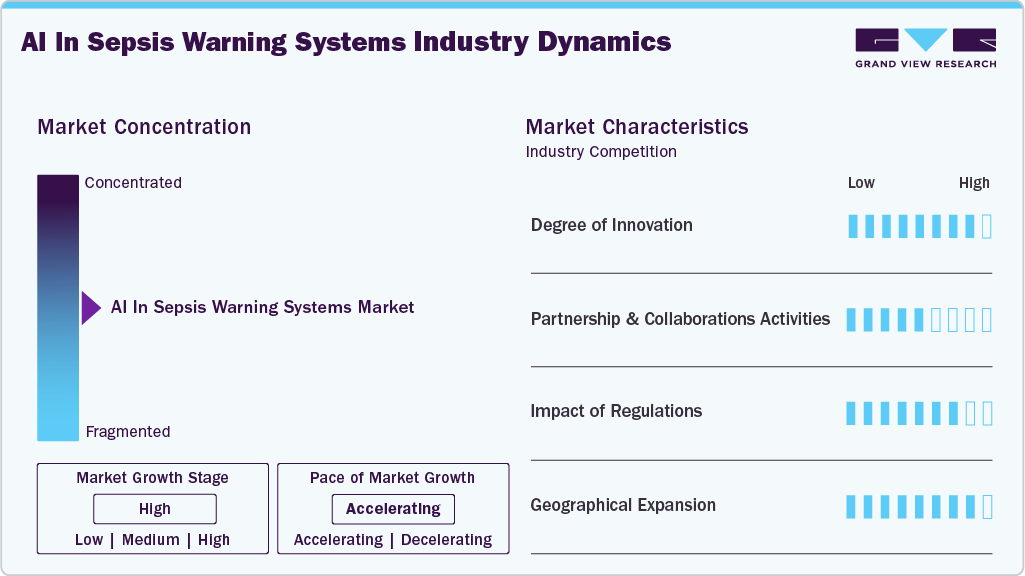
The degree of innovation is increasing through advancements in continuous patient monitoring, machine learning, and real-time clinical decision support. Newer systems analyze electronic health records, including vital signs, laboratory results, and clinical notes, to identify patients at risk before conventional clinical triggers emerge. For instance, in September 2025, Cleveland Clinic reported that its pilot implementation of Bayesian Health’s AI platform at Fairview Hospital achieved a tenfold decrease in false alerts, a 46% increase in identified sepsis cases, and a sevenfold increase in cases flagged before antibiotic administration. These findings illustrate ongoing innovation in predictive accuracy and the integration of AI alerts into clinical workflows.
Partnerships between AI developers, healthcare providers, academic institutions, and diagnostic companies are supporting the development, validation, and commercialization of sepsis warning technologies. These collaborations combine clinical data, research expertise, and healthcare infrastructure to translate AI models into practical clinical applications. For instance, in April 2024, Prenosis announced a commercial distribution collaboration with Roche to make its Sepsis ImmunoScore AI-based diagnostic and predictive tool available through Roche’s navify Algorithm Suite. The collaboration supports wider access to AI-enabled sepsis assessment through an established healthcare technology platform.
 To learn more about this report, Download Free Sample Report
Regulatory developments are shaping the commercialization and clinical adoption of AI-based sepsis warning systems by establishing pathways for evaluating their safety and effectiveness. In April 2026, the U.S. Food and Drug Administration (FDA) granted 510(k) clearance to Bayesian Health’s Sepsis Flagging Device, an AI-based software system that analyzes electronic health record data to support early sepsis detection and risk prediction within 24 hours. In September 2026, Bayesian Health also announced approval for Medicare’s New Technology Add-on Payment (NTAP), with additional reimbursement for eligible inpatient cases beginning October 2026. These developments establish a regulatory and reimbursement precedent for continuous AI-based sepsis monitoring in U.S. hospitals.
Regional expansion is extending across additional hospitals and healthcare networks, particularly through emergency department deployments and hospital-wide integration. For instance, in September 2026, Western Sydney Local Health District in Australia announced plans to expand its SAFE-WAIT AI sepsis prediction project from Westmead Hospital to five emergency departments, including Auburn, Blacktown, Mount Druitt, and Nepean. During the pilot, the system identified high-risk patients approximately 90 minutes before conventional sepsis triggers and was associated with earlier antibiotic administration.
Component Insights
By component, the software/platform segment held the highest market share of 82.3% in 2025. This dominance is attributed to the increasing adoption of AI-powered predictive analytics platforms that process electronic health records, laboratory results, vital signs, and other clinical information to identify patients at risk of sepsis. Growing demand for automated clinical alerts and continuous patient monitoring is further supporting software adoption across hospitals. For instance, in July 2026, LifeBridge Health’s Sinai Hospital of Baltimore deployed Prenosis’ FDA-authorized Sepsis ImmunoScore, an AI-powered software solution that analyzes 22 patient parameters to identify sepsis risk and potential progression within 24 hours. The deployment highlights the increasing integration of AI-based sepsis assessment software into clinical practice.
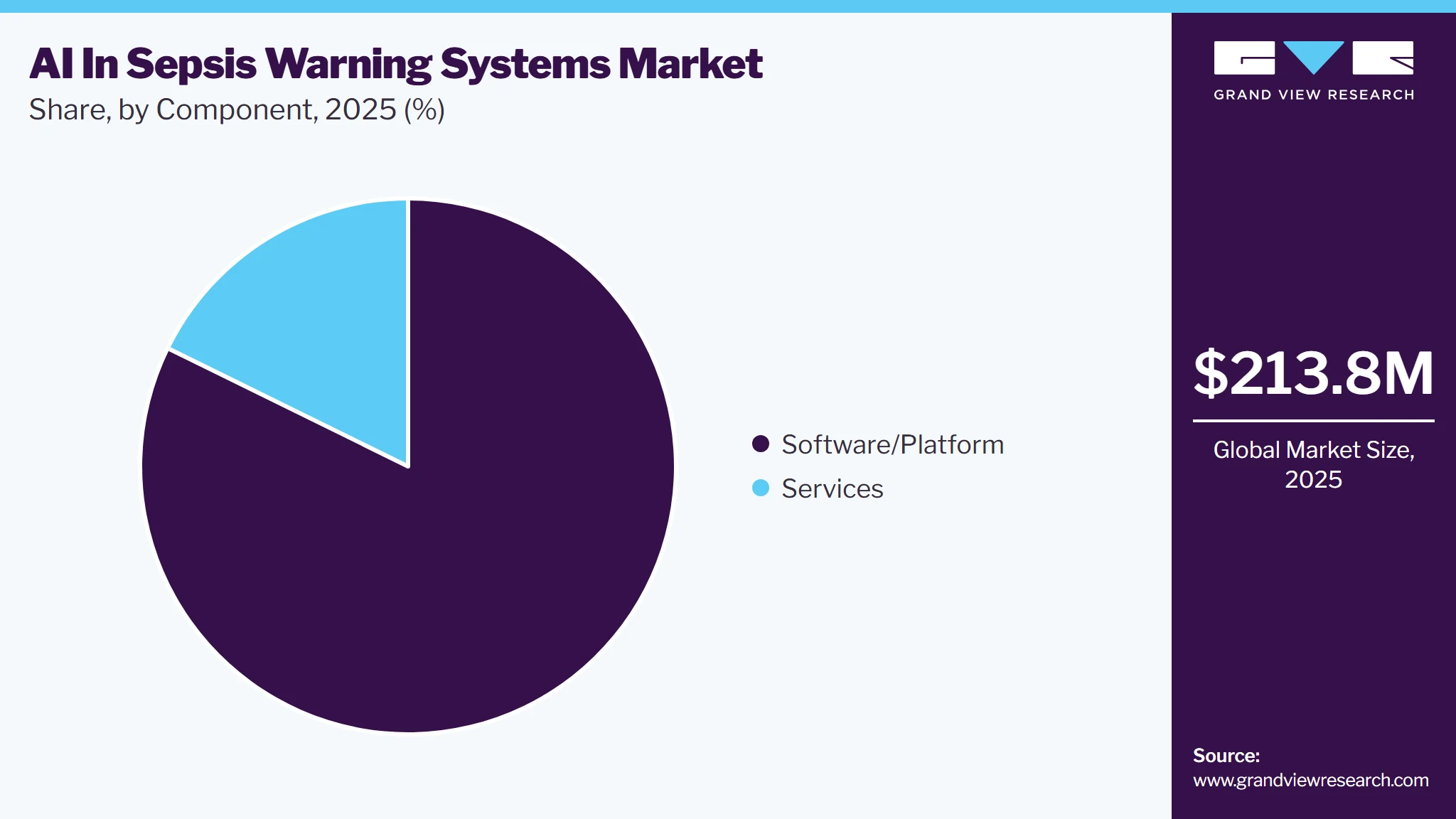 To learn more about this report, Download Free Sample Report
The services segment in the AI in sepsis warning systems market is anticipated to grow at the fastest CAGR over the forecast period. Healthcare providers require specialized services to integrate AI-generated alerts into existing hospital systems and establish appropriate clinical response protocols. For instance, Ochsner Health implemented AI-driven sepsis clinical decision-support tools within its electronic health record system, combining predictive alerts with structured screening workflows, clinical checklists, and performance dashboards. The implementation required coordination among clinicians, informatics teams, and hospital staff to support integration and adoption. This highlights the importance of implementation and workflow-integration services in expanding the use of AI-based sepsis warning systems.
Deployment Insights
The cloud-based segment held the highest market share in 2025 and is anticipated to grow at the fastest CAGR over the forecast period. Cloud-based platforms enable hospitals to process patient information, deploy predictive models, and distribute sepsis risk alerts without maintaining all computing resources locally. For instance, the AIDEx platform was developed to forecast sepsis in real time by processing live patient data through a secure cloud environment. It uses electronic health record data formatted according to Fast Healthcare Interoperability Resources (FHIR) standards to calculate sepsis risk scores and present them through a web-based dashboard. Its cloud-based, modular architecture demonstrates the potential to scale AI-powered sepsis monitoring across clinical environments.
On-premise deployment enables AI sepsis warning systems to operate on hospital-managed physical or virtual servers, supporting integration with existing electronic health records while retaining greater control over data storage and processing. For instance, in October 2026, researchers described BIAlert, an interoperable machine learning-based clinical decision-support system operating in real time across two hospitals. The platform was deployed on hospital-side servers to preserve patient data privacy and generates individualized clinical alerts using standardized healthcare data. This implementation illustrates the continued relevance of on-premise architecture for hospitals seeking AI-powered sepsis detection within locally managed IT environments.
Application Insights
By application, the early sepsis detection segment held the highest market share in 2025. AI-powered warning systems analyze patient vital signs, laboratory results, medical histories, and other clinical indicators to identify early signs of deterioration and alert healthcare professionals. Integration with EHR and real-time monitoring systems further supports the use of these solutions across emergency departments and intensive care units. For instance, Johns Hopkins University’s TREWS was deployed across five hospitals to identify patients at risk of sepsis using real-time clinical data. In a prospective, multisite study involving 590,736 monitored patients, timely clinician confirmation of alerts was associated with an 18.7% adjusted relative reduction in in-hospital mortality among the evaluated sepsis patients, highlighting the clinical value of early detection and prompt intervention.
The EHR-integrated sepsis protocol support segment in the AI in sepsis warning systems market is anticipated to grow at the fastest CAGR over the forecast period. These solutions combine patient vitals, laboratory results, medical histories, and clinical documentation to support early risk identification and protocol-based interventions. In addition, growing emphasis on embedding sepsis screening into routine clinical workflows, improving clinician response times, and standardizing treatment pathways is expected to accelerate segment growth.
End Use Insights
The hospital segment held the highest market share 2025, driven by high patient volumes, the need for continuous clinical surveillance, and the availability of electronic health records and critical-care monitoring infrastructure. Hospitals deploy AI-based warning systems across emergency departments, intensive care units, and general wards to identify patients at risk and support timely clinical intervention. For instance, Duke Health deployed its Sepsis Watch AI system across the emergency departments of all three Duke University Health System hospitals. The system analyzes patient variables using deep learning and integrates risk alerts into clinical workflows, illustrating the role of hospital-wide implementation in expanding the use of AI for early sepsis detection.
Emergency and acute-care facilities is expected to grow at the fastest CAGR over the forecast period. The segment growth is supported by the need to identify sepsis during initial assessment, triage, and acute deterioration. AI-powered systems analyze patient observations, comorbidities, and clinical records to prioritize high-risk cases and support prompt reassessment before sepsis becomes clinically apparent. For instance, in September 2026, Western Sydney Local Health District announced plans to expand its SAFE-WAIT AI sepsis prediction project to five emergency departments across Western Sydney. The system uses triage observations and patient risk factors to generate risk scores, helping nurses prioritize repeat assessments and monitoring while patients await medical review.
Regional Insights
North America's AI in sepsis warning systems market industry dominated the market with a 36.1% market share in 2025, supported by advanced hospital IT infrastructure, increasing use of predictive analytics, and growing investment in clinical data platforms that enable earlier identification of high-risk patients. Collaboration between healthcare institutions, researchers, and technology developers is strengthening the regional ecosystem for AI-enabled clinical decision support. For instance, in June 2026, the Government of Canada announced a USD 71.14 million investment in the VITAL health data platform, which connects de-identified clinical data from hospitals to support healthcare research, clinical trials, and AI innovation. Its initial phase connects 160 hospitals across Ontario, Alberta, and Quebec, creating infrastructure that supports further development and evaluation of healthcare AI applications, including sepsis-related technologies.
 To learn more about this report, Download Free Sample Report
U.S. AI In Sepsis Warning Systems Market Trends
The U.S. market is benefiting from the expansion of predictive analytics across hospital networks and increasing emphasis on validating AI models using real-world clinical data. For instance, in February 2026, JAMA Network Open published a prospective multicenter validation of Epic Sepsis Model version 2 involving 227,091 inpatient encounters across four U.S. health systems: the University of Michigan, Oregon Health & Science University, Emory Healthcare, and MetroHealth. The model achieved encounter-level AUROC values ranging from 0.82 to 0.92, demonstrating its predictive discrimination across participating institutions. The study highlights the growing role of multicenter clinical validation in evaluating AI sepsis prediction technologies for hospital implementation.
Europe AI In Sepsis Warning Systems Market Trends
In region’s market is anticipated to grow significantly over the forecast period. Hospitals and research institutions are developing approaches that combine patient data with advanced analytics to improve the early identification of sepsis and support timely clinical intervention. For instance, in July 2025, researchers at Heidelberg University Hospital and the German Cancer Research Center reported an AI-based approach combining hyperspectral skin imaging with machine learning to support rapid, non-invasive sepsis detection at the bedside. Published in Science Advances, the research also examined the potential to predict patient outcomes, highlighting European innovation in AI-enabled sepsis diagnostics beyond conventional EHR-based warning systems.
The UK has witnessed significant growth through NHS digital transformation initiatives and partnerships between hospitals and healthcare AI developers. Adoption is extending beyond conventional deterioration scores toward AI tools that analyze routine patient records to identify infection risks earlier. For instance, in December 2025, East Kent Hospitals University NHS Foundation Trust partnered with U.K.-based Sanome to pilot its MEMORI AI platform at Kent and Canterbury Hospital. Integrated into the hospital’s electronic patient record system, MEMORI analyzes routine clinical observations, medications, and demographic information to generate individualized infection-risk assessments and supports earlier clinical review. The platform received approval from the Medicines and Healthcare products Regulatory Agency (MHRA) in August 2025, supporting its deployment as a regulated medical software product in the U.K.
The market is advancing through hospital-based implementation of clinical decision-support systems and research into real-time patient risk prediction. Healthcare institutions are integrating machine learning into clinical workflows to identify sepsis and other acute complications using routinely collected patient data. For instance, in May 2025, University Hospital Augsburg integrated an externally developed AI-based clinical decision-support system to generate real-time risk predictions for sepsis and acute kidney injury. A study published in August 2026 described an ongoing evaluation using retrospective data from 2019-2026, covering approximately 10,000 labeled cases to assess diagnostic accuracy and patient outcomes. This implementation reflects Germany’s focus on evaluating AI decision-support tools in routine hospital practice.
Asia Pacific AI In Sepsis Warning Systems Market Trends
The Asia Pacific market is experiencing significant growth. The region is exploring AI systems that analyze routine clinical data to identify high-risk patients and support timely intervention. For instance, China Medical University Hospital in Taiwan has implemented the Intelligent Sepsis Early Prediction System (iSEPS), which uses artificial intelligence to analyze complete blood count results and 56 additional blood-cell population parameters to assess bacteremia risk. The system provides risk assessments alongside routine blood tests and has demonstrated an accuracy of 0.844 following implementation, illustrating the integration of AI into existing diagnostic workflows.
The country is increasingly using multicenter hospital datasets to develop predictive models suited to different clinical specialties and patient populations. For instance, in April 2025, researchers published a study in npj Digital Medicine evaluating AI-based mortality prediction models for septic shock using electronic health records from 4,872 ICU patients across three hospitals in China. The research incorporated data from general, pediatric, and respiratory intensive care units, demonstrating the application of AI analytics to mortality risk assessment across diverse critical-care settings.
The India market is developing through hospital-based machine learning research focused on early risk identification and prediction of severe sepsis complications. Researchers are developing models using routinely collected clinical, laboratory, and imaging data to support risk stratification in intensive care units. For instance, in September 2026, researchers affiliated with the All-India Institute of Medical Sciences (AIIMS), New Delhi, and the Indian Institute of Technology Delhi published a study developing and validating a machine learning model to predict refractory septic shock. Using data from 1,008 adult ICU patients for model development and 102 patients for prospective validation, the model achieved an area under the receiver operating characteristic curve of 0.877 in training and 0.839 in prospective validation.
Latin America AI In Sepsis Warning Systems Market Trends
The Latin America market is developing through the adoption of AI-enabled clinical decision-support platforms and research into machine learning models for early sepsis identification. Healthcare institutions are exploring tools that analyze vital signs and laboratory results to support timely clinical assessment and improve sepsis protocol initiation. For instance, in April 2026, a doctoral thesis published by the University of São Paulo evaluated Brazil’s Robô Laura AI-powered clinical decision-support system at a high-complexity philanthropic hospital. The retrospective analysis covered 6,910 sepsis protocols over four years and eight months, reporting that hospital sepsis mortality declined from 31.44% to 21.64% during the first year after implementation, alongside a 33% increase in the average monthly number of initiated sepsis protocols. The mortality reduction was not sustained in subsequent years, highlighting both the potential of AI-supported early identification and the importance of continued evaluation in real-world clinical settings.
Middle East & Africa AI In Sepsis Warning Systems Market Trends
The Middle East & Africa market is progressing through the deployment of digital clinical surveillance tools and automated alerts to improve early identification of sepsis across hospital networks. For instance, in August 2026, Sheikh Khalifa Medical City and Al Ain Hospital in the United Arab Emirates introduced AI algorithms and alert systems to identify patients at risk of sepsis and septic shock. The deployment reflects growing interest in integrating AI-driven risk detection into hospital workflows to provide clinical teams with additional time to assess high-risk patients and initiate treatment.
Key AI In Sepsis Warning Systems Company Insights
Key companies in the AI in sepsis warning systems industry are actively pursuing product development, clinical validation, regulatory clearances, and integration of AI-powered sepsis prediction tools into EHRs and hospital workflows. Market participants are focusing on improving early detection accuracy, reducing false-positive alerts, and enabling real-time risk assessment to support timely clinical intervention. Strategic collaborations with hospitals and healthcare providers, alongside the expansion of AI-based clinical decision-support solutions across emergency departments and inpatient settings, are further shaping the competitive landscape.
Key AI In Sepsis Warning Systems Companies
The following key companies have been profiled for this study on the AI in sepsis warning systems market
-
Bayesian Health
-
Prenosis
-
CLEW Medical
-
Clairyon
-
Cytovale
-
Mednition
-
Palantir Technologies
-
Ambient Clinical Analytics
-
Epic Systems Corporation
-
Oracle
-
Dascena, Inc.
Competitive Benchmarking
Category
Operating Strategies
Competitive Edge
Weakness
Established Players (e.g., Epic Systems Corporation, Oracle, Palantir Technologies, Ambient Clinical Analytics, Bayesian Health, Prenosis)
- Leverage established healthcare IT infrastructure and hospital partnerships to expand integration of sepsis-warning capabilities into clinical workflows.
- Invest in product validation, interoperability, regulatory compliance, and ongoing software optimization to maintain adoption across healthcare organizations.
- Benefit from established hospital relationships, clinical data access, and integration capabilities across existing healthcare systems.
- Established deployment experience and regulatory clearances for selected products strengthen credibility with healthcare providers.
- Legacy infrastructure and complex integrations across hospital systems increase implementation and maintenance requirements.
- Predictive performance, false-positive alerts, and variation across healthcare settings remain challenges, even for widely deployed systems.
Emerging / Specialized Players
(e.g., CLEW Medical, Clairyon, Cytovale, Mednition)
- Focus on specialized AI models and sepsis-specific solutions, targeting unmet needs in early detection, risk stratification, and clinical surveillance.
- Build partnerships with hospitals, research institutions, and healthcare technology providers to validate solutions and expand clinical adoption.
- Specialized product development enables focused innovation in sepsis prediction, risk assessment, and clinical alerting.
- More focused product portfolios support faster iteration and customization for specific clinical workflows.
- Smaller market presence and fewer large-scale deployments limit visibility and access to broad healthcare customer networks.
- Dependence on clinical validation, EHR integration, regulatory pathways, and hospital procurement cycles creates barriers to wider adoption.
Recent Developments
-
In May 2026, Bayesian Health’s Sepsis Flagging Device received FDA 510(k) clearance, becoming the first continuous AI sepsis monitor to receive such clearance. The clearance built on the company's prior FDA Breakthrough Device Designation and marked a milestone for its real-time clinical intelligence platform. The platform continuously monitored patient data, identified patients requiring clinical attention, and delivered AI-generated insights within existing clinical workflows to support timely clinical assessment and intervention.
-
In September 2026, Sinai Hospital began using Sepsis ImmunoScore, an FDA-authorized AI diagnostic tool developed by Prenosis to help physicians identify patients who had or were at risk of developing sepsis within 24 hours. The tool analyzed up to 22 clinical and laboratory measurements to identify patterns associated with sepsis, supporting earlier risk assessment and clinical intervention.
-
In September 2025, Predicate AI Labs Inc. partnered with Mayo Clinic to advance the development and validation of an AI-based early warning system for sepsis. The company's OpenDx platform combined real-time physiological data from wearable sensors with AI models to identify early patterns associated with sepsis risk. Predicate aimed to leverage Mayo Clinic's clinical expertise and real-world insights to accelerate the development of predictive tools for earlier sepsis detection and intervention.
AI In Sepsis Warning Systems Market Report Scope
Report Attribute
Details
Market size in 2025
USD 213.8 million
Estimated market size in 2026
USD 251.9 million
Projected market size by 2033
USD 1,176.4 million
Growth Rate
CAGR of 24.6% from 2026 to 2033
Actual data
2021 - 2025
Forecast period
2026 - 2033
Quantitative units
Revenue in USD billion/million and CAGR from 2026 to 2033
Report coverage
Revenue forecast, company ranking, competitive landscape, growth factors, and trends
Segments covered
Component, deployment, application, end use, region
Regional scope
North America; Europe; Asia Pacific; Latin America; MEA
Country scope
U.S. ; Canada; Mexico; UK; Germany; France; Italy; Spain; Sweden; Denmark; Norway; China; Japan; India; Australia; South Korea; Thailand; Brazil; Argentina; Saudi Arabia; South Africa; UAE; Kuwait
Key companies profiled
Bayesian Health; Prenosis; CLEW Medical; Clairyon; Cytovale; Mednition; Palantir Technologies; Ambient Clinical Analytics; Epic Systems Corporation; Dascena, Inc.
Customization scope
Free report customization (equivalent up to 8 analyst’s working days) with purchase. Addition or alteration to country, regional & segment scope
Pricing and purchase options
Avail customized purchase options to meet your exact research needs. Explore purchase options
Global AI In Sepsis Warning Systems Market Report Segmentation
This report forecasts revenue growth at global, regional, and country levels and provides an analysis of the latest industry trends in each of the sub-segments from 2021 to 2033. For this study, Grand View Research has segmented global AI in sepsis warning systems market report based on component, deployment, technology, application, end use, and region.
-
Component Outlook (Revenue, USD Million, 2021 - 2033)
-
Software/platform
-
Services
-
-
Deployment Outlook (Revenue, USD Million, 2021 - 2033)
-
Cloud-Based
-
On-Premise
-
-
Application Outlook (Revenue, USD Million, 2021 - 2033)
-
Early Sepsis Detection
-
Risk Prediction and Stratification
-
Clinical Alerting and Escalation
-
Patient Deterioration Monitoring
-
EHR-Integrated Sepsis Protocol Support
-
-
End Use Outlook (Revenue, USD Million, 2021 - 2033)
-
Hospitals
-
Emergency and Acute-Care Facilities
-
Academic & Research Institutes
-
Others
-
-
Regional Outlook (Revenue, USD Million, 2021 - 2033)
-
North America
-
U.S.
-
Canada
-
Mexico
-
-
Europe
-
Germany
-
U.K.
-
France
-
Italy
-
Spain
-
Denmark
-
Sweden
-
Norway
-
-
Asia Pacific
-
China
-
Japan
-
India
-
South Korea
-
Australia
-
Thailand
-
-
Latin America
-
Brazil
-
Argentina
-
-
Middle East and Africa (MEA)
-
South Africa
-
Saudi Arabia
-
UAE
-
Kuwait
-
-
Research Methodology
The AI in sepsis warning systems market figures in this report are based on a proven research process that combines executive interviews with secondary research from proprietary databases, company filings, and recognized regulatory and institutional sources. Market size is built through value-chain sizing-reconciling supply-side and demand-side estimates-and triangulated with bottom-up and top-down approaches. Every estimate passes multiple levels of expert validation before publication, with each AI in sepsis warning systems segment quantified using the revenue-capture definitions in the table below.
Segment Definition
Segment
Segment Definition
By Component:
Software/Platform
Software and platforms comprise AI-powered systems that analyze electronic health records (EHRs), vital signs, laboratory results, and other patient data to identify early signs of sepsis. These solutions generate risk scores, predictive alerts, and clinical decision-support insights to support timely diagnosis and intervention.
Services
Services include the implementation, integration, customization, maintenance, and technical support of AI-based sepsis warning systems. These services help healthcare providers integrate AI solutions with existing EHRs and hospital information systems, configure alerting workflows, and train clinical staff.
By Deployment:
Cloud-Based
Cloud-based sepsis warning systems operate on cloud infrastructure and process patient data through remotely hosted computing environments. These solutions support centralized data processing, remote access, scalability, and software updates across multiple healthcare facilities.
On-Premise
On-premise sepsis warning systems are installed and operated within a healthcare provider's local IT infrastructure. These systems allow hospitals to maintain greater control over patient data, system configurations, and access permissions.
By Application:
Early Sepsis Detection
Early sepsis detection systems analyze clinical indicators, including vital signs, laboratory results, and patient records, to identify patterns associated with the onset of sepsis. These systems notify healthcare professionals when patient data indicate potential sepsis, supporting earlier clinical assessment and treatment initiation.
Risk Prediction and Stratification
Risk prediction and stratification solutions estimate the likelihood of sepsis development or progression by analyzing patient-specific clinical information. These systems categorize patients according to their predicted risk levels, helping clinicians prioritize assessments, allocate resources, and determine the need for closer monitoring.
Clinical Alerting and Escalation
Clinical alerting and escalation applications generate notifications when patient data meet predefined risk thresholds or AI-generated warning criteria. These alerts are directed to appropriate clinical personnel and support escalation through established hospital workflows, enabling timely patient reassessment and intervention.
Patient Deterioration Monitoring
Patient deterioration monitoring systems continuously or periodically analyze physiological measurements, laboratory results, and other clinical indicators to identify worsening patient conditions associated with sepsis. These systems help clinicians recognize changes in patient status and initiate further evaluation before deterioration becomes severe.
EHR-Integrated Sepsis Protocol Support
HR-integrated sepsis protocol support solutions connect AI-generated risk assessments with electronic health records and established clinical workflows. They provide relevant patient information, prompt clinical reassessment, and support the execution of institutional sepsis protocols, including recommended investigations, documentation, and treatment-related actions.
By End Use:
Hospitals
Hospitals manage patients across emergency departments, general inpatient wards, and intensive care units. These facilities deploy AI-based sepsis warning systems to support early identification, continuous risk assessment, clinical alerting, and coordination among multidisciplinary care teams.
Emergency and Acute-Care Facilities
Emergency and acute-care facilities use AI-based warning systems to identify patients at risk of sepsis during initial assessment and urgent treatment. These solutions support rapid risk stratification and clinical prioritization in high-pressure environments where timely recognition of infection-related deterioration is essential.
Academic and Research Institutes
Academic and research institutes use AI-based sepsis warning systems to develop, validate, and evaluate predictive models using clinical datasets. These institutions assess model accuracy, clinical performance, generalizability, and integration into healthcare workflows, supporting the advancement of AI-based sepsis detection technologies.
Others
This segment includes healthcare organizations and clinical facilities, such as specialized treatment centers and eligible outpatient facilities. Adoption depends on patient volume, availability of electronic clinical data, infrastructure readiness, and the suitability of AI-based sepsis monitoring for their care settings.
Estimation Model
The market size of the AI in sepsis warning systems market was estimated using a bottom-up approach, supported by company-level revenue analysis, product benchmarking, and segment-level revenue estimation. Key market participants were identified, and their AI-based products and integrated solutions were benchmarked to assess their presence in the market. Company revenues attributable to AI in sepsis warning systems were analyzed to estimate segment-specific revenues, followed by extrapolation of regional and global market size based on the estimated market shares of key players. The market forecast was developed by evaluating historical company performance and key market variables over the forecast period.
Delivered Customizations
This report has been delivered with the following In-depth customizations
Client Request
Customization Delivered
Value Adds
Clinical Performance and Validation Assessment
Evaluated the clinical performance considerations of AI-based sepsis warning systems, including sensitivity, specificity, predictive accuracy, false-positive alerts, and the ability to identify patients at risk of developing sepsis. Examined the importance of validating AI models across different patient populations and clinical settings, including emergency departments, intensive care units, and general hospital wards.
Supports comparative evaluation of AI solutions, assessment of clinical reliability, and informed technology selection. Helps healthcare providers understand the evidence required to assess predictive performance and the potential impact of AI alerts on early clinical intervention.
Hospital Integration and Workflow Assessment
Assessed integration requirements for AI sepsis warning systems across electronic health records (EHRs), laboratory information systems, vital-sign monitoring devices, and hospital information systems. Evaluated how patient data, including vital signs, laboratory results, medical history, and clinical observations, are processed to generate risk scores and alerts.
Helps healthcare providers evaluate integration feasibility, implementation requirements, and compatibility with existing clinical workflows. Supports the identification of operational barriers, improves understanding of alert management requirements, and informs decisions regarding system deployment and clinical adoption.
Regulatory and Market Adoption Assessment
Reviewed regulatory considerations affecting AI-based sepsis warning systems, including medical device software classification, applicable authorization pathways, clinical evidence requirements, data privacy, cybersecurity, and patient data governance. Considered differences in regulatory and healthcare-system requirements across major markets, alongside factors influencing adoption, such as hospital IT readiness, procurement processes, clinical acceptance, reimbursement considerations, and evidence of clinical and operational value.
Helps identify market-entry requirements, regulatory considerations, and adoption barriers across healthcare systems. Supports market prioritization, commercialization planning, and assessment of requirements for scaling AI sepsis warning solutions across different geographic markets.
About the Author(s)
Healthcare IT Research Team
Healthcare · Healthcare ITThis report was authored by the healthcare it research team at Grand View Research - comprising two research analysts, one senior research analyst, and one industry expert - with specialized expertise in the healthcare it segment of the healthcare industry. All findings are based on proprietary healthcare databases, executive interviews, and regulatory analysis, subject to internal peer review prior to publication.
Last Updated:
Speak to Analyst

Customize this report to your needs - add regions, segments, or data points, with 20% free customization.
Or view our licence options:


ISO 9001:2015 & 27001:2022 Certified
We are GDPR and CCPA compliant! Your transaction & personal information is safe and secure. For more details, please read our privacy policy.


