
- Home
- »
- Healthcare IT
- »
-
Alcohol Rehabilitation Services Market Report, 2026-2033GVR Report cover
![Alcohol Rehabilitation Services Market (2026 - 2033)Report]()
Alcohol Rehabilitation Services Market (2026 - 2033)
Size, Share & Trends Analysis Report By Healthcare Settings (Inpatient, Residential), By Age Group (Adolescents, Adults), By Region (North America, Europe, APAC, Latin America, MEA), And Segment Forecasts
Market Size, 2025
$41.0BMarket Estimate, 2026
$43.4BMarket Forecast, 2033
$66.8BCAGR, 2026–2033
6.3%Alcohol Rehabilitation Services Market Summary
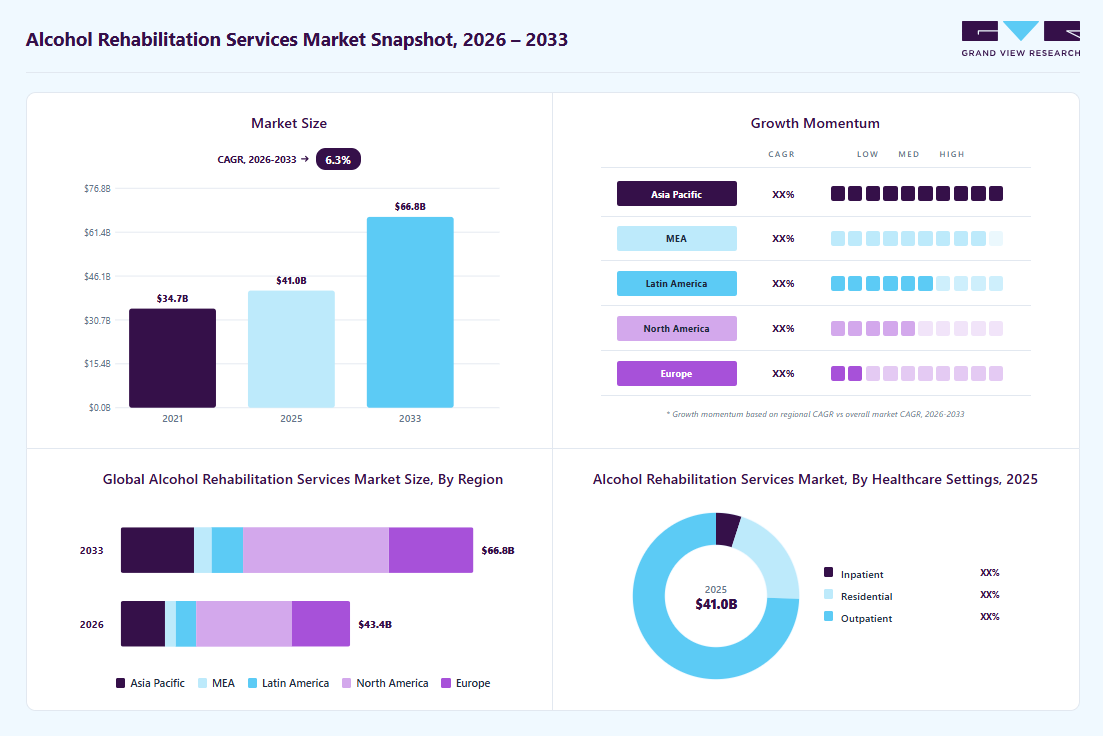
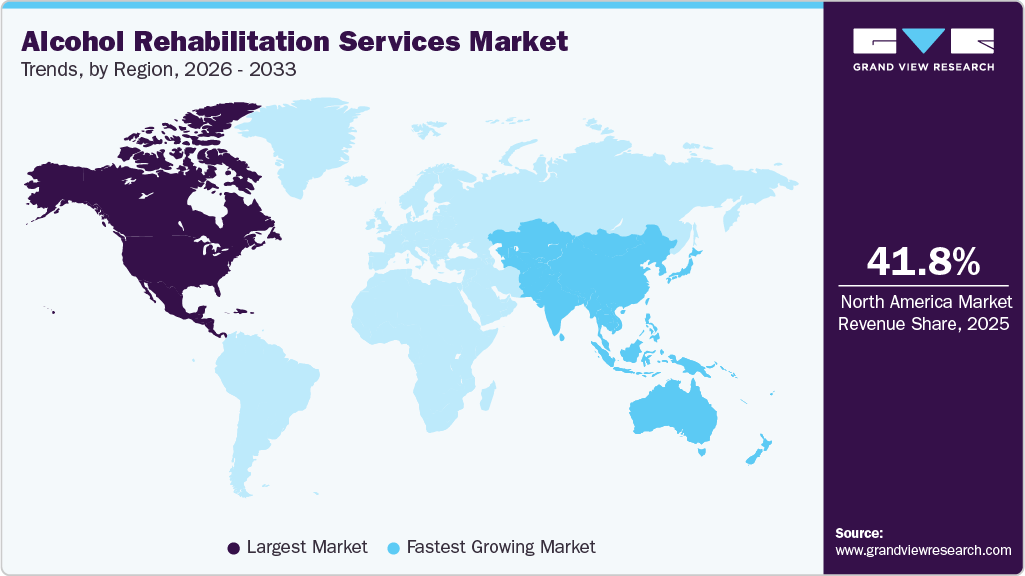
The global alcohol rehabilitation services market size was valued at USD 41.0 billion in 2025 and is projected to grow from USD 43.4 billion in 2026 to USD 66.8 billion by 2033, at a CAGR of 6.3% from 2026 to 2033. The North America held the largest share of 41.8% of the global market in 2025. This growth is attributed to the rising prevalence of alcohol use disorder globally, fueled by increasing stress levels, mental health challenges, and changing social behaviors.
Key Market Trends & Insights
- By healthcare settings: Outpatient segment held the largest share in 2025.
- By age group: Geriatric segment held a significant share of 78.8 % in 2025.
Regional Highlights
- Largest regional market: North America (41.8% revenue share, 2025)
- Fastest-growing regional market: Asia Pacific (highest CAGR, 2026-2033).
- By country: The U.S. led the North America market in 2025.
Market Size & Forecast
- Market size in 2025: USD 41.0 Billion
- Estimated market size in 2026: USD 43.4 Billion
- Projected market size by 2033: USD 66.8 Billion
- CAGR (2026-2033): 6.3%
Three ways to get this report
Buy it, customize it, or ask a question.Get the Full Report
What the study covers
- FormatsPDF · Excel · Dashboard
- Timeline2026–2033 annual, 2025 base
- Coverage20+ countries, 5 regions
- Companies10+ key players profiled
Customize the Report
20% free customization
- IncludeCountries, segments, points
- TailorTo your product definition
- ExtendDeeper competitor detail
- OrA fully bespoke study
- Turnaround5–10 working days
Ask Prism AI
A cited answer in seconds
- Corpus30K studies, 1.2M points
- ScopeAll markets, not just this
- CitationTraced to report & table
- HonestySays "not covered" if so
- SpeedSeconds, not days
Greater awareness about the health risks associated with excessive alcohol consumption including liver disease, cardiovascular disorders, and mental health conditions has encouraged more individuals to seek professional treatment.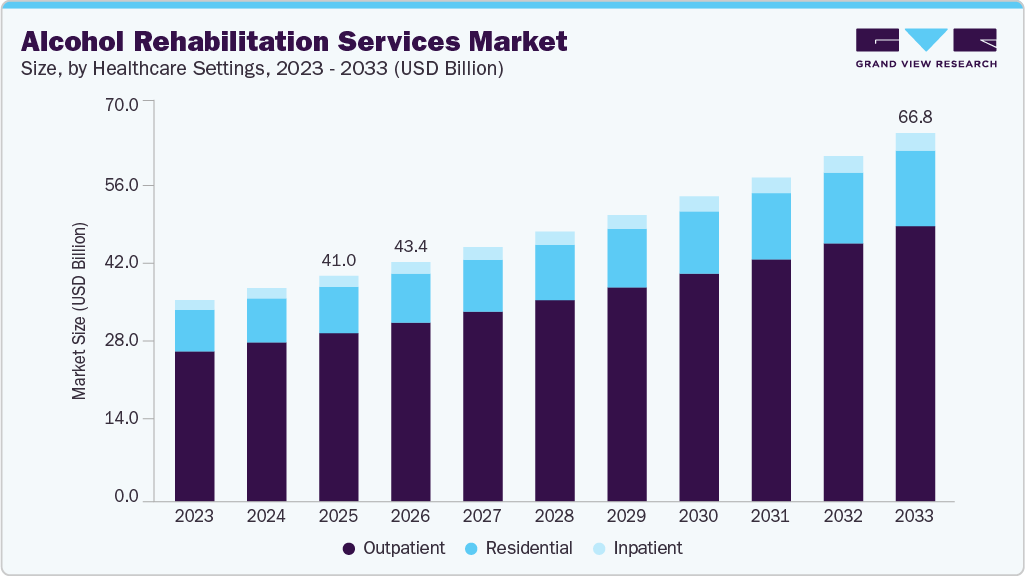
The section below outlines the key factors driving the growth of alcohol rehabilitation services, highlighting rising prevalence of alcohol use disorders, increasing demand for structured and residential treatment, and the need for medically supervised care. It also examines the role of integrated mental health support, personalized therapy approaches, and continuous care models in strengthening rehabilitation services as a preferred treatment pathway.
Rising Prevalence of Alcohol Use Disorders (AUD):
Rapid urbanization, changing lifestyles, workplace stress, social pressures, and greater alcohol accessibility have contributed to a steady rise in harmful drinking behaviors across both developed and developing regions. As more individuals experience alcohol dependence and related health complications, the need for structured treatment programs including detoxification, behavioral therapy, counseling, and relapse prevention continues to expand.
A larger patient population directly translates into higher demand for rehabilitation services across inpatient, outpatient, and community-based settings. In addition, chronic alcohol dependence often requires long-term management and repeated interventions, which further increases service utilization over time. Healthcare systems are therefore witnessing growing admission rates to rehabilitation centers, along with increased demand for specialized professionals such as addiction counselors, psychologists, and psychiatrists. Consequently, the rising global burden of alcohol use disorders is creating sustained and long-term market growth opportunities for alcohol rehabilitation service providers.
Growing Focus on Mental Health and Dual Diagnosis Treatment:
Healthcare providers and policymakers are increasingly adopting a dual-diagnosis treatment approach, which simultaneously addresses substance dependence and underlying psychological conditions rather than treating them separately. For instance, in December 2025 New Chapter Recovery announced the expansion of its integrated dual diagnosis services to enhance access to comprehensive mental health care for individuals undergoing addiction recovery.
“We continue to see firsthand how gaps in behavioral health access create barriers for individuals ready to begin recovery,” said Sarah Johnson, Communications Director at New Chapter Recovery. “By expanding our dual diagnosis treatment programs and addiction treatment facilities, we can better meet the needs of patients struggling with co-occurring disorders and provide care that treats the whole person.”
Moreover, rising awareness of mental health through public campaigns, workplace wellness programs, and expanded insurance coverage for behavioral health services has increased acceptance of seeking treatment for both addiction and psychiatric disorders. For instance, in January 2026, the Substance Abuse and Mental Health Services Administration (SAMHSA) announced the termination of hundreds of grants that supported mental health and substance use disorder programs across the United States, with the total funding impact estimated at approximately USD 2 billion.
Advancements in Treatment Approaches and Medication-Assisted Therapy (MAT):
The continuous advancement in treatment methodologies, particularly the adoption of MAT combined with evidence-based behavioral interventions, is a significant driver for the market. The introduction of pharmacological options such as anti-craving and relapse-prevention medications has improved clinical outcomes, reduced withdrawal symptoms, and enhanced long-term recovery success rates. When these medications are integrated with counseling, cognitive behavioral therapy, and psychosocial support, treatment programs become more comprehensive and personalized, leading to higher patient engagement and retention.
The rise of luxury rehabilitation centres in India reflects a growing demand for premium, personalized mental health and addiction treatment services among affluent individuals. High-end facilities offering private villas, gourmet meals, holistic therapies, and discreet treatment environments are becoming increasingly popular as wealthy patients seek confidentiality, comfort, and individualized care experiences that go beyond traditional rehabilitation models. Monthly treatment costs in these centres generally range from about USD 2,204.92 to USD 13,229.5, significantly higher than standard rehabilitation facilities, indicating a clear segmentation of the market toward premium services. The demand is being driven by factors such as rising disposable incomes, increasing mental health awareness, lifestyle stress among high-net-worth individuals, and the cost advantage compared to international luxury rehab options, which can be substantially more expensive.
Market Concentration & Characteristics
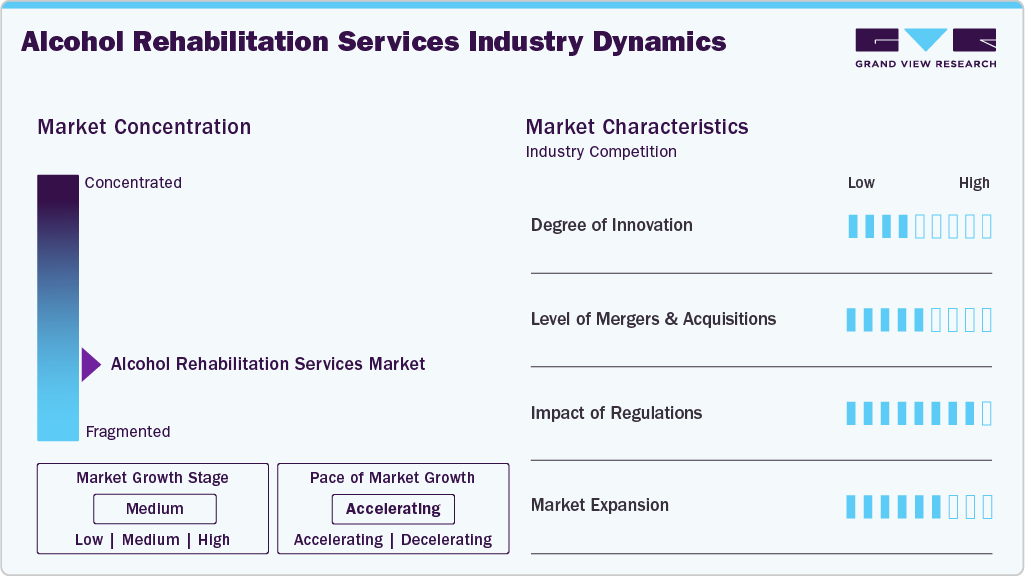
The chart below represents the relationship between industry concentration, industry characteristics, and industry participants. There is a medium degree of innovation, moderate level of merger & acquisition activities, high impact of regulations, and moderate expansion of industry.
The industry is experiencing a medium degree of innovation. For instance, in October 2024, PursueCare expanded its addiction treatment offerings by introducing RESET and RESET-O, two prescription digital therapeutics authorized by the U.S. FDA (FDA) for the treatment of substance use disorders.
Nick Mercadante, Founder and Chief Executive Officer of PursueCare. said:
“At PursueCare, we are driven by the belief that everyone deserves accessible, high-quality care that meets them where they are and stays with them through their journey. RESET and RESET-O align perfectly with our mission. Digital therapeutics empower individuals to reclaim control over their health, advancing a new standard of care for chronic substance use disorder,”
Several key players are actively engaging in mergers & acquisitions to promote growth & innovation and improve their competitiveness by combining the expertise & efforts of different organizations. For instance, in October 2025, a Florida-based healthcare company announced its plan to acquire Addiction Recovery Care reflecting an ongoing consolidation in the addiction treatment sector, where providers face mounting financial and regulatory pressures.
Tim Robinson, the founder and CEO said:
“Following the necessary organizational changes, this strategic consolidation is the most responsible and forward-looking step we can take,” the email said. “It ensures the necessary long-term stability and investment required to continue our core mission: providing high-quality treatment for addiction and co-occurring disorders across Kentucky.”
The industry in India is governed through a combination of mental health legislation, healthcare standards, and government welfare programs aimed at substance abuse treatment. The primary legal framework is the Mental Healthcare Act, 2017, which classifies substance use disorders under mental illness and establishes patient rights, informed consent requirements, and standards for admission, treatment, and discharge in rehabilitation facilities. In addition, treatment centers may fall under the oversight of the Ministry of Social Justice and Empowerment through the National Action Plan for Drug Demand Reduction (NAPDDR), which provides funding support, licensing norms, and operational guidelines for de-addiction and rehabilitation centers.
In October 2024, Transcend Clinic announced the opening of a new treatment clinic aimed at expanding access to specialized addiction recovery therapies in a medically supervised environment. The facility is designed to provide innovative treatment approaches supported by a multidisciplinary team of physicians and trained medical professionals, with a focus on patient safety, personalized care, and improved recovery outcomes.
Jorge Medina, CEO of Transcend Clinic said:
"Transcend Clinic is committed to changing lives. Our new clinic has a science first approach with the highest standard of care in the market. We will change the public's perception of what ibogaine is capable of," "We're proud to be at the forefront of addiction treatment and are excited to continue making a positive impact on the lives of our patients."
Healthcare Settings Insights
Based on healthcare settings, outpatient segment held a significant share of 74.5% in 2025 driven by rising alcohol use disorder (AUD) prevalence, increasing preference for cost-effective and flexible treatment options, and expanding insurance coverage for behavioral health services. Compared to inpatient programs, outpatient care offers affordability, shorter treatment cycles, and the ability for patients to maintain employment and family responsibilities while receiving therapy, making it highly attractive for working-age populations. The shift toward community-based and integrated care models where counseling, medication-assisted treatment, and mental health support are delivered in coordinated outpatient settings has further strengthened this segment.
The residential segment is expected to grow at the fastest CAGR during the forecast period driven by increasing prevalence of severe and complex alcohol dependence cases is driving demand for residential rehab, as these patients require structured, high-intensity treatment. Mental health awareness in India has increased in recent years; however, only around 10-12% of individuals with mental health disorders actively seek treatment. This unmet need is driving demand for specialized residential rehabilitation centres that provide intensive psychiatric care. Leading institutions such as Sukoon Health, Athena Behavioral Health, NIMHANS, Jagruti, Sanctum, Tulasi, IHBAS, and Abhasa are expanding their offerings, delivering 24/7 personalised care, therapy, and comprehensive deaddiction support.
Age Group Insights
Based on age group, geriatric segment held a significant share of 78.8 % in 2025, primarily due to older adults, often linked to loneliness, retirement, and major life transitions. Age-related physiological changes increase sensitivity to alcohol, while the growing burden of chronic diseases and polypharmacy necessitates medically supervised detox and integrated care. The high incidence of co-occurring mental health conditions such as depression and anxiety is boosting demand for dual-diagnosis treatment. Moreover, the expansion of age-specific treatment programs is improving outcomes and accelerating segment growth.
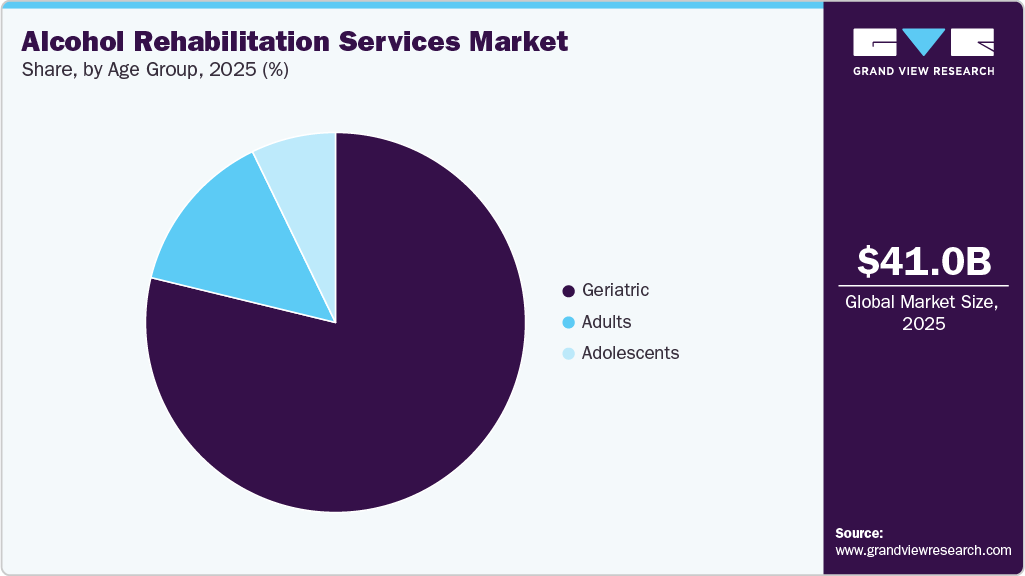
The adults segment is expected to grow at the fastest CAGR during the forecast period. The growing prevalence of alcohol use disorders (AUD) among adults, coupled with rising alcohol-attributable mortality and health risks associated with heavy and prolonged consumption, is significantly driving demand for alcohol rehabilitation services in the adult population. In June 2024, the World Health Organization reported that alcohol consumption accounted for approximately 2.6 billion deaths annually, representing 4.7% of total deaths, with nearly 2 billion fatalities occurring among men, highlighting a substantial treatment need among adults.
Regional Insights
North America held the largest revenue share of 41.8% in 2025, driven by the increasing awareness of addiction as a treatable medical condition, and expanding access to behavioral healthcare services. Government initiatives and funding programs led by agencies such as the Substance Abuse and Mental Health Services Administration and the National Institute on Alcohol Abuse and Alcoholism are strengthening treatment infrastructure, prevention campaigns, and community-based recovery programs, which improve diagnosis and treatment rates.
U.S. Alcohol Rehabilitation Services Market Trends
The U.S. alcohol rehabilitation services market is experiencing significant growth, driven by Assisted Outpatient Treatment (AOT) programs across the country by increasing demand for structured, court-mandated recovery pathways supported by scalable care infrastructure. A policy analysis from the Substance Use Disorder Foundation highlights that integrating AOT with continuous digital recovery platforms such as the Orbiit Recovery Ecosystem can significantly reduce costs while improving treatment adherence, monitoring, and accountability compared with traditional reliance on emergency departments, hospitalization, or incarceration.
“The intent behind AOT is sound, but a court order alone does not equal care,” said Dan Francis, CEO of Orbiit Services Inc. “What determines success is whether the system can actually support daily engagement and accountability in the community. For less than five dollars a day, Orbiit provides that infrastructure.”
Asia Pacific Alcohol Rehabilitation Services Market Trends
Asia Pacific is expected to grow at the fastest CAGR during the forecast period. This is due to countries such as China, India, Japan, and Australia which are witnessing growing awareness of mental health and substance abuse treatment, which is encouraging more individuals to seek professional rehabilitation services. Government initiatives, public health campaigns, and policy frameworks aimed at reducing alcohol-related harm are also improving treatment accessibility and funding support.
Japan alcohol rehabilitation services market held significant revenue share in 2025 driven by the growing technological developments and approvals in the country. For instance, the approval of a digital therapeutic alcoholism treatment app in February 202 developed by CureApp in Japan is aimed to expand access to evidence-based treatment through technology-enabled care. Regulatory authorization of such apps validates digital therapeutics as a legitimate component of addiction treatment, encouraging healthcare providers to integrate mobile-based behavioral therapy, monitoring, and counseling into rehabilitation programs.
Europe Alcohol Rehabilitation Services Market Trends
The market in Europe is expected to witness high growth owing to the availability of universal or publicly funded healthcare systems in many European countries that improve affordability and treatment accessibility, encouraging more individuals to seek professional help. The growing adoption of outpatient care models, community-based recovery programs, and telehealth counseling services is also expanding service reach, particularly in rural and underserved populations.
The Germany alcohol rehabilitation services market held a significant share in the Europe industry owing to the appointment of new national commissioners (“czars”) to unify addiction and treatment policies. For instance, in May 2025, the German federal government confirmed new leadership roles for addiction and drug policy, patient affairs, and care coordination within the Federal Ministry of Health, with the objective of harmonizing strategies across federal states (Länder) and improving patient care outcomes. This policy reset is expected to reduce administrative fragmentation, enhance regulatory clarity, and promote nationwide prevention and treatment programs, thereby increasing access to rehabilitation services.
Latin America Alcohol Rehabilitation Services Market Trends
The industry in Latin America is expected to register considerable growth over the forecast period owing to the improvements in healthcare infrastructure and the gradual expansion of private healthcare providers are increasing treatment capacity, particularly in major economies such as Brazil, Mexico, and Argentina. Cultural shifts toward recognizing addiction as a medical condition rather than a social stigma are encouraging more individuals to seek professional help, further driving service utilization.
The Brazil alcohol rehabilitation services market held the largest market share in 2025 driven by the advancement of drug use prevention initiatives in Brazil through collaboration with the United Nations Office on Drugs and Crime (UNODC), including the pilot implementation in Recife, is acting as an important driver for alcohol rehabilitation services in the country. Such programs strengthen national capacity for early identification, prevention, and intervention related to substance use disorders, including alcohol dependence. Enhanced international cooperation brings technical expertise, standardized treatment methodologies, and funding support, which help improve the quality and reach of rehabilitation programs.
Middle East & Africa Alcohol Rehabilitation Services Market Trends
The industry in the Middle East & Africa (MEA) is driven by rising awareness of substance use disorders, increasing urbanization, and gradual improvements in healthcare infrastructure across several countries in the region. Although alcohol consumption rates are comparatively lower in some Middle Eastern nations due to cultural and religious norms, changing lifestyles, expatriate populations, and socioeconomic stressors are contributing to a growing need for addiction treatment services. In Africa, increasing alcohol consumption, particularly among younger populations, along with a rising burden of mental health disorders, is creating demand for rehabilitation programs, counseling, and community-based recovery services.
UAE alcohol rehabilitation services market is being driven by adoption of a humanitarian, evidence-based approach to addiction treatment, emphasizing comprehensive care for both patients and their families. Facilities such as Al Amal Hospital, the National Rehabilitation Centre, the Erada Centre for Treatment and Rehab, and the Ownak Aftercare Centre provide a wide range of services, including detoxification, individualized and family counseling, rehabilitation programs, and continuous aftercare. Furthermore, recent legal reforms and strategic initiatives, such as the Abu Dhabi Strategy to Combat Drug Abuse 2022-2024, have strengthened regulatory support for rehabilitation services.
Key Alcohol Rehabilitation Services Company Insights
The market is fragmented, with the presence of many region & country level alcohol rehabilitation services providers.The market players undertake several strategic initiatives, such as partnerships & collaborations, product launches, mergers & acquisitions, and geographical expansion to maintain their position and grow in the market.
Key Alcohol Rehabilitation Services Companies:
The following key companies have been profiled for this study on the alcohol rehabilitation services market.
- American Addiction Centers
- Hazelden Betty Ford Foundation.
- Recovery Centers of America
- Banyan Treatment Center
- Caron Treatment Center
- Cenikor
- The Recovery Village
- JourneyPure
- Avenues Recovery Center
- Priory
Recent Developments
-
In September 2025, Erada Centre for Treatment and Rehab launched a new brand identity to reinforce its commitment to excellence in addiction rehabilitation. This rebranding reflects the center’s focus on providing high-quality, evidence-based treatment services, including detoxification, counseling, rehabilitation programs, and aftercare support for individuals and families.
His Excellency Mohammed Abdullah Falaknaz, Chairman of the Board of Erada Center, said: “The launch of the new identity is more than a visual change; it is a new beginning that reflects our vision to build a future of greater wellbeing, resilience, and hope. We aim to be a regional reference in addiction treatment and a source of inspiration for patients and their families.”
-
In July 2025, The EOI cum proposed to Establish District De-Addiction Centres (DDACs) under the NAPDDR Scheme aimed at strengthening the alcohol and substance rehabilitation infrastructure at the district level. Under the National Action Plan for Drug Demand Reduction (NAPDDR), these centres are envisioned to provide comprehensive de-addiction services, including detoxification, counseling, rehabilitation, and follow-up care for individuals struggling with alcohol and substance use disorders.
-
In July 2025, RightLi and Centerstone announced plans to merge, forming the nation’s largest nonprofit provider of behavioral health services. This strategic consolidation is driven by the need to expand access to mental health and addiction treatment, achieve operational efficiencies, and strengthen service delivery across a wider geographic footprint.
“This partnership represents an incredible opportunity to shape the future of care,” Brightli CEO C.J. Davis said. “Across Brightli’s history, our organization and affiliates have led more than 25 successful mergers and affiliations across our network. We have seen firsthand the power of joining forces to expand access and improve outcomes. We share Centerstone’s deep commitment to compassion, connection, and measurable impact. Together, we’re not just growing. We’re building a stronger, more sustainable system of care that breaks down barriers and saves lives.
Alcohol Rehabilitation Services Market Report Scope
Report Attribute
Details
Market size in 2025
USD 41.0 billion
Estimated market size in 2026
USD 43.4 billion
Projected market size by 2033
USD 66.8 billion
Growth rate
CAGR of 6.3% from 2026 to 2033
Actual data
2021 - 2025
Forecast period
2026 - 2033
Quantitative units
Revenue in USD million/billion and CAGR from 2026 to 2033
Report coverage
Revenue forecast, company ranking, competitive landscape, growth factors, and trends
Segments covered
Healthcare settings, age group, region
Regional scope
North America; Europe; Asia Pacific; Latin America; MEA
Country scope
U.S.; Canada; Mexico; Germany; UK; France; Italy; Spain; Norway; Denmark; Sweden; China; Japan; India; South Korea; Australia; Thailand; Brazil; Argentina; Saudi Arabia; South Africa; UAE; Kuwait
Key companies profiled
American Addiction Centers; Hazelden Betty Ford Foundation; Recovery Centers of America; Banyan Treatment Center; Caron Treatment Center; Cenikor; The Recovery Village; JourneyPure; Avenues Recovery Center; Priory
Customization scope
Free report customization (equivalent up to 8 analysts working days) with purchase. Addition or alteration to country, regional & segment scope.
Pricing and purchase options
Avail customized purchase options to meet your exact research needs. Explore purchase options
Global Alcohol Rehabilitation Services Market Report Segmentation
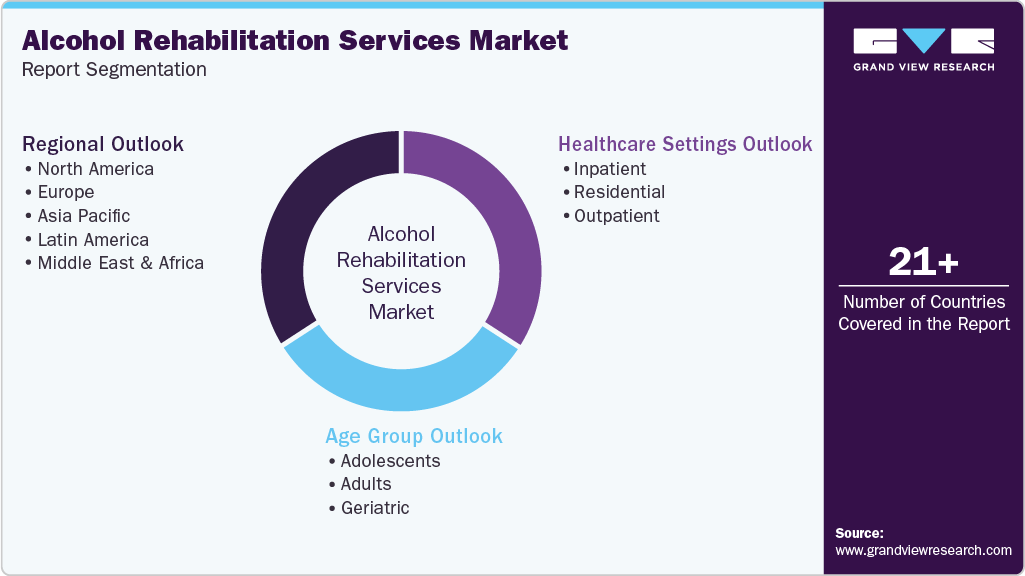
This report forecasts revenue growth at global, regional, and country levels and provides an analysis of the latest industry trends in each of the sub-segments from 2021 to 2033. For this study, Grand View Research has segmented the global alcohol rehabilitation services market report based on healthcare settings, age group, and region:
-
Healthcare Settings Outlook (Revenue, USD Billion, 2021 - 2033)
-
Inpatient
-
Residential
-
Outpatient
-
-
Age Group Outlook (Revenue, USD Billion, 2021 - 2033)
-
Adolescents
-
Adults
-
Geriatric
-
-
Regional Outlook (Revenue, USD Billion, 2021 - 2033)
-
North America
-
U.S.
-
Canada
-
Mexico
-
-
Europe
-
UK
-
Germany
-
France
-
Italy
-
Spain
-
Denmark
-
Sweden
-
Norway
-
-
Asia Pacific
-
China
-
Japan
-
India
-
South Korea
-
Australia
-
Thailand
-
-
Latin America
-
Brazil
-
Argentina
-
-
Middle East and Africa (MEA)
-
South Africa
-
Saudi Arabia
-
UAE
-
Kuwait
-
-
Frequently Asked Questions About This Report
North America dominated with a 41.8% revenue share in 2025.
Asia Pacific is the fastest-growing region over the forecast period.
Geriatric segment held the largest share (over 78.0%) in 2025, while adults is the fastest-growing age group.
The outpatient segment held a significant share of 74.5% in 2025 driven by rising alcohol use disorder (AUD) prevalence, increasing preference for cost-effective and flexible treatment options, and expanding insurance coverage for behavioral health services.
Key players include American Addiction Centers; Hazelden Betty Ford Foundation; Recovery Centers of America; Banyan Treatment Center; Caron Treatment Center; Cenikor; The Recovery Village; JourneyPure; Avenues Recovery Center; Priory.
Factors driving the market include rising prevalence of alcohol use disorder globally, fueled by increasing stress levels, mental health challenges, and changing social behaviors
The global alcohol rehabilitation services market size was valued at USD 41.0 billion in 2025 and is estimated at USD 43.4 billion for 2026.
The global alcohol rehabilitation services market is expected to grow at a CAGR of 6.3% from 2026 to 2033, reaching USD 66.8 billion by 2033.
About the Author(s)
Healthcare IT Research Team
Healthcare · Healthcare ITThis report was authored by the healthcare it research team at Grand View Research - comprising two research analysts, one senior research analyst, and one industry expert - with specialized expertise in the healthcare it segment of the healthcare industry. All findings are based on proprietary healthcare databases, executive interviews, and regulatory analysis, subject to internal peer review prior to publication.
Last Updated:
Speak to Analyst


Customize this report to your needs - add regions, segments, or data points, with 20% free customization.
Or view our licence options:


ISO 9001:2015 & 27001:2022 Certified
We are GDPR and CCPA compliant! Your transaction & personal information is safe and secure. For more details, please read our privacy policy.


