
- Home
- »
- Biotechnology
- »
-
Analytical Chemistry Sample Preparation Market Report, 2033GVR Report cover

Analytical Chemistry Sample Preparation Market (2026 - 2033)
Size, Share & Trends Analysis Report By Product (Kits & Reagents, Consumables), By Technique (Extraction, Filtration), By Application (HPLC, LC-MS, GC-MS), By End Use, By Region, And Segment Forecasts
Market Size, 2025
$2.4BMarket Estimate, 2026
$2.6BMarket Forecast, 2033
$4.0BCAGR, 2026–2033
6.7%Analytical Chemistry Sample Preparation Market Summary
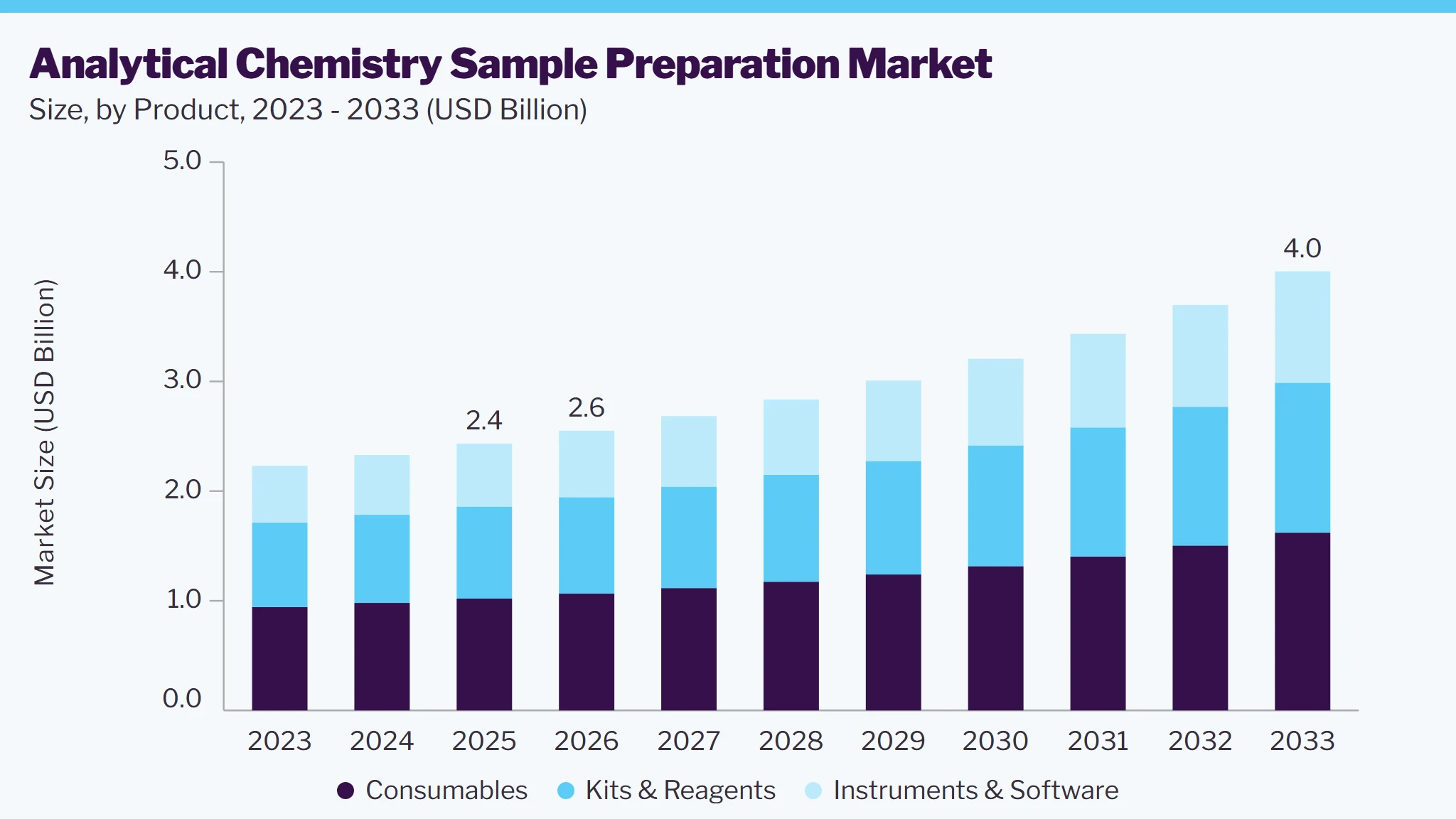
The global analytical chemistry sample preparation market size was valued at USD 2.4 billion in 2025 and is projected to grow from USD 2.6 billion in 2026 to USD 4.0 billion by 2033, at a CAGR of 6.7% from 2026 to 2033. The market in North America dominated with a revenue share of 46.5% in 2025. The analytical chemistry sample preparation industry is expanding rapidly due to increasing demand for precise testing in pharmaceuticals, food safety, environmental monitoring, and research.
 Source: Grand View Research, IR Documents, Primary Interviews, Paid DatabasesTo learn more about this report,
 Download Free Sample Report
Key Market Trends & Insights
- By product: Consumables segment held the largest market share of 41.9% in 2025.
- By technique: Extraction segment held the largest market share of 40.9% in 2025.
- By application: LC-MS segment held the largest market share of 24.3% in 2025.
- By end use: Pharmaceutical & biotechnological companies segment held the largest market share of 43.0% in 2025.
Regional Highlights
- Largest regional market: North America (46.5% revenue share, 2025)
- Fastest-growing regional market: Asia Pacific (highest CAGR, 2026-2033)
- By country: The U.S. held the largest market share in 2025
Market Size & Forecast
- Market size in 2025: USD 2.4 Billion
- Estimated market size in 2026: USD 2.6 Billion
- Projected market size by 2033: USD 4.0 Billion
- CAGR (2026-2033): 6.7%
Prism AI by Grand View Research Free to tryAsk a question about the analytical chemistry sample preparation marketTry asking✓Every figure cited from GVR research Prefer the report? Download free sample →Advances in automation, regulatory compliance, and high-throughput techniques are driving growth. Laboratories are adopting innovative methods to enhance efficiency, accuracy, and reliability. Rising investments in R&D and technological innovations, such as microextraction and solid-phase extraction, further boost market demand.
 To learn more about this report, Download Free Sample Report
The COVID-19 pandemic has emphasized the need for efficient and adaptable sample preparation in analytical chemistry. Increased testing in pharmaceuticals, diagnostics, and environmental monitoring drove demand for rapid, reliable techniques. Laboratories adopted automation and advanced technologies to handle high-throughput analysis while ensuring accuracy. The crisis highlighted the importance of streamlined workflows and regulatory compliance, accelerating innovation in sample preparation methods. As a result, the market continues to evolve, supporting faster and more efficient analytical processes across various industries.
In addition, the increasing demand for precise testing in pharmaceuticals, food safety, environmental monitoring, and research is driving market growth. This is attributed to stricter regulatory requirements, advancements in analytical technologies, and the need for high-quality, reliable data. Industries are investing in innovative sample preparation techniques to improve accuracy, efficiency, and reproducibility. As testing standards evolve, laboratories seek automated and high-throughput solutions to meet growing analytical demands across various sectors.
Furthermore, advances in automation are anticipated to propel market growth. This is expected to be driven by the need for higher efficiency, reduced human error, and faster sample processing in laboratories. Automated solutions enhance reproducibility, streamline workflows, and improve data accuracy, making them essential for high-throughput pharmaceutical applications, food safety, and environmental testing applications. As demand for precise and reliable analytical results increases, the adoption of automated sample preparation technologies continues to rise, supporting market expansion.
Market Dynamics
The analytical chemistry sample preparation market is driven by increasing demand for accurate, reproducible, and high-throughput analytical workflows across pharmaceutical, biotechnology, clinical, and research applications. Growing adoption of HPLC, LC-MS, GC-MS, and ICP-MS techniques, along with advancements in automation and AI-enabled sample processing, is accelerating market growth. However, high costs of automated systems and workflow standardization challenges may limit adoption among smaller laboratories. Increasing research activities and demand for efficient laboratory workflows are expected to support market expansion.
The increasing integration of automation, robotics, and artificial intelligence (AI) into analytical chemistry sample preparation workflows is significantly driving market growth. Automated sample preparation platforms minimize manual intervention, improving reproducibility, reducing human error, and enabling high-throughput processing for pharmaceutical, clinical, environmental, and food testing laboratories. AI-powered software further enhances workflow optimization by selecting optimal preparation protocols, monitoring instrument performance, predicting maintenance requirements, and improving data quality through intelligent error detection. The adoption of robotic liquid handling systems, automated solid-phase extraction (SPE), and AI-enabled laboratory management solutions is accelerating as laboratories seek faster turnaround times, greater operational efficiency, and compliance with stringent regulatory standards. As analytical laboratories increasingly embrace digital transformation and smart laboratory concepts, demand for advanced automated sample preparation technologies continues to expand, supporting market growth.
The high capital investment required for automated sample preparation systems limits market adoption, particularly among small and medium-sized laboratories and academic institutions. High costs associated with robotic platforms, software, maintenance, consumables, and workforce training create financial barriers, encouraging many users to continue with manual or semi-automated workflows. These cost challenges, along with integration complexities, restrict adoption in cost-sensitive markets and hinder overall market growth.
Market Concentration & Characteristics
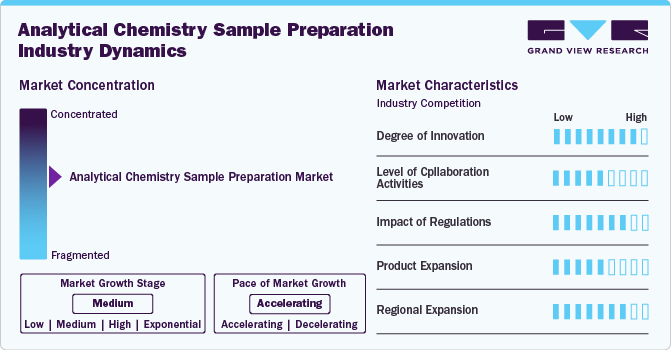
The analytical chemistry sample preparation industry is set for strong growth, driven by increasing demand for accurate testing, automation, and AI integration. Rising applications in pharmaceuticals, food safety, and environmental testing are boosting market expansion. Innovations in technology and efficiency improvements are further fueling adoption.
The market is growing steadily, with moderate collaboration among industry players. Key drivers include increasing demand for accurate pharmaceutical testing, food safety, and environmental monitoring. Advances in automation, regulatory compliance, and high-throughput techniques enhance efficiency and reliability. Companies are investing in innovative technologies to streamline workflows and improve analytical precision. As industries prioritize quality control and data accuracy, the market continues to expand, supported by ongoing technological advancements and strategic partnerships. In January 2025, Agilent Technologies and ABB collaborated to automate sample preparation and analytical workflows, enhancing efficiency, accuracy, and scalability in pharmaceuticals, biotech, environmental testing, and food safety. This integration streamlines sample handling and data processing, accelerating R&D and reducing time-to-market.
 To learn more about this report, Download Free Sample Report
Regulations have moderately influenced the market by ensuring standardization, improving data accuracy, and driving demand for compliant technologies. Stricter guidelines in pharmaceuticals, food safety, and environmental testing have increased the adoption of advanced preparation techniques. However, regulatory complexities and compliance costs pose challenges for smaller players.
The market has seen significant growth in product expansion, driven by advancements in automation, increasing demand for high-quality analysis, and the integration of AI-driven solutions. Growing applications in pharmaceuticals, food safety, and environmental testing have also contributed to developing innovative sample preparation techniques. For instance, in January 2025, Nicoya introduced the Alto Automation Suite for its Alto Digital SPR system, making it the first SPR platform fully compatible with standard lab automation. This innovation enables high-throughput analysis of thousands of samples per week without human intervention, enhancing efficiency in biomolecular research.
The analytical chemistry sample preparation industry is expanding gradually across regions, driven by increasing regulatory standards, growing demand for accurate testing in pharmaceuticals and food safety, and advancements in automation and AI integration. Emerging markets also contribute to growth through increased research activities and industrial applications.
Analyst Perspective
The analytical chemistry sample preparation market is expected to witness sustained growth due to increasing analytical testing requirements, expansion of pharmaceutical and biotechnology research, and rising adoption of advanced analytical techniques. The shift toward automated, high-throughput, and integrated sample preparation workflows is improving efficiency and reproducibility across laboratories. While high system costs and implementation complexities remain challenges, ongoing technological advancements, increasing laboratory automation, and demand for reliable analytical outcomes are expected to create significant growth opportunities.
Artificial Intelligence Integration Transforms Sample Preparation
The integration of artificial intelligence (AI) is transforming sample preparation into analytical chemistry, enhancing efficiency, accuracy, and automation. AI-powered systems optimize workflows by reducing manual errors, predicting optimal sample conditions, and streamlining data analysis. Machine learning algorithms enable real-time adjustments, improving reproducibility and precision in complex sample matrices. AI-driven automation accelerates high-throughput testing while ensuring regulatory compliance in pharmaceuticals, food safety, and environmental monitoring industries. As laboratories adopt AI-enhanced sample preparation techniques, they benefit from faster processing, reduced costs, and improved analytical outcomes, driving innovation and growth in the market.
Sample Preparation: A Key Driver in Chromatographic Analysis
The analytical chemistry sample preparation industry is experiencing steady growth as industries prioritize efficiency, accuracy, and automation in laboratory workflows. Advancements in instruments, consumables, and reagents are reducing processing time and improving the reliability of analytical techniques. Increased demand for high-throughput extraction and filtration methods drives adoption across pharmaceuticals, biotechnology, and research sectors. As laboratories focus on streamlining sample preparation for chromatography and mass spectrometry applications, businesses offering innovative and automated solutions are positioned for strong market expansion.
Product Insights
Based on product, the consumables segment held the largest market share of 41.9% in 2025, driven by increasing laboratory testing, stringent regulatory requirements, and the growing need for high-quality sample processing materials. Frequent use and repeat purchases of filters, cartridges, and reagents in pharmaceuticals, food safety, and environmental testing contributed to its strong market position. The rising adoption of automated workflows also boosted demand for reliable consumables, ensuring accuracy and efficiency in sample preparation processes across various industries.
The instruments & software segment in the analytical chemistry sample preparation industry is expected to grow at the highest CAGR of 7.7% from 2026 to 2033. This growth is driven by increasing automation, AI integration, and the demand for high-precision analysis. Advanced software solutions for data management, compliance, and innovations in sample preparation instruments are boosting adoption. Rising applications in pharmaceuticals, food safety, and environmental testing further contribute to market expansion.
Technique Insights
Based on technique, the extraction segment held the largest market share of 40.9% in 2025 and is expected to grow at the fastest rate of 7.3% CAGR in the coming years. This growth is driven by the increasing need for efficient sample purification, rising demand in pharmaceuticals and environmental testing, and advancements in automated extraction techniques. Adopting innovative methods like solid-phase and liquid-liquid extraction further boosts efficiency, accuracy, and compliance with stringent industry regulations.
The filtration segment is also set for strong growth, driven by increasing demand for high-purity samples in pharmaceuticals, food safety, and environmental testing. Advances in membrane and microfiltration technologies enhance efficiency, while stricter regulatory standards boost adoption. The rise of automated filtration systems further supports market expansion, ensuring faster and more accurate sample preparation.
Application Insights
Based on application, LC-MS dominated the market with a revenue share of 24.3% in 2025 and is projected to grow at the highest CAGR in the coming years. This growth is driven by its high precision, sensitivity, and ability to detect complex compounds in pharmaceuticals, food safety, and environmental analysis. Increasing regulatory standards, advancements in instrumentation, and the rising demand for accurate analytical techniques further boost adoption. Additionally, the integration of automation and AI enhances efficiency, making LC-MS essential for laboratories seeking reliable and high-throughput sample analysis.
The ICP-MS segment is expected to grow strongly in the market, driven by its superior sensitivity, precision, and ability to detect trace metals in pharmaceuticals, food safety, and environmental testing. Increasing regulatory requirements, technological advancements, and rising demand for high-accuracy elemental analysis further boost adoption. Additionally, automation and AI integration enhance efficiency, making ICP-MS a preferred choice for laboratories and research institutions.
End Use Insights
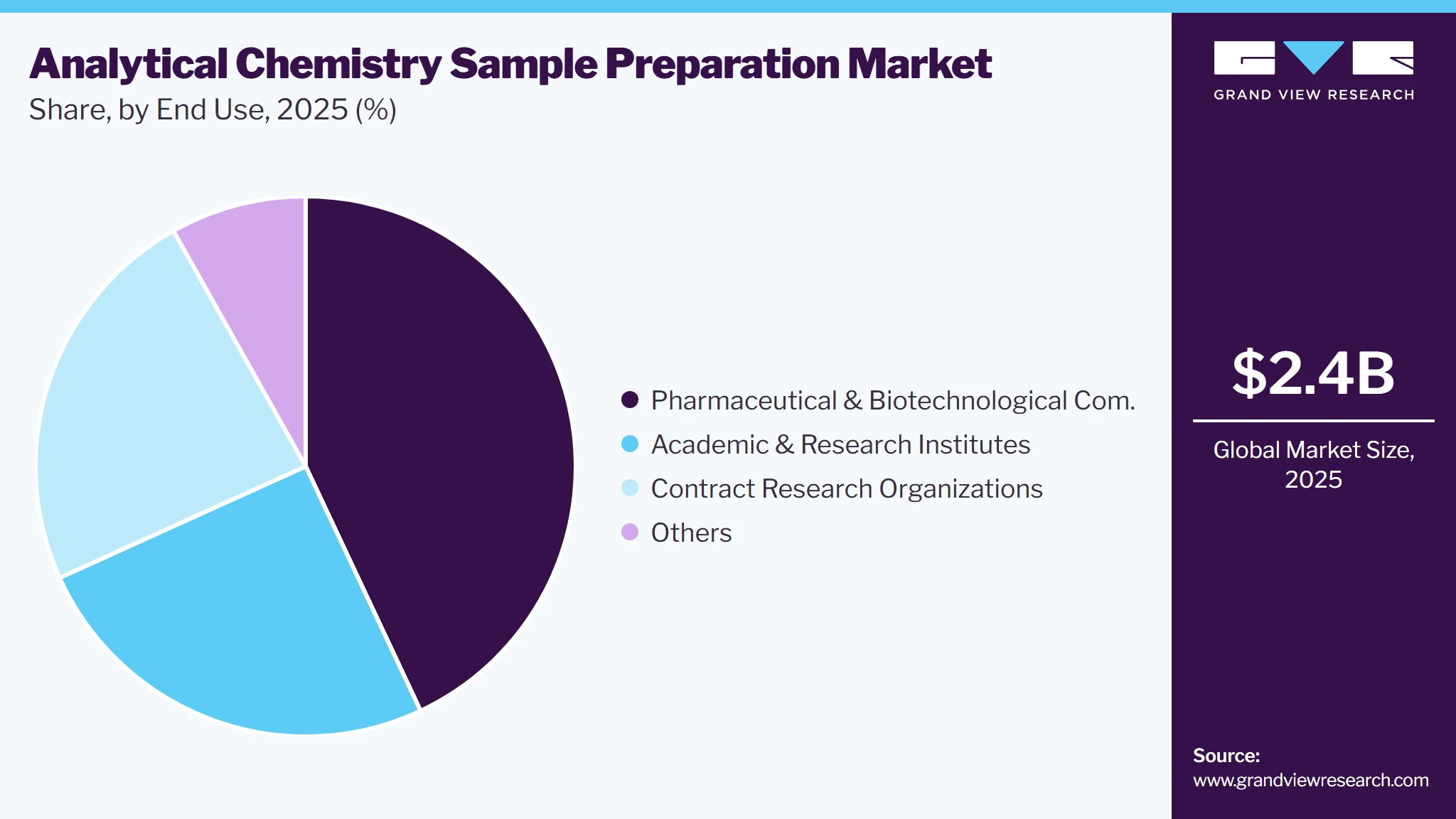
Based on end use, the pharmaceutical & biotechnological companies segment led the market with the largest revenue share of 43.0% in 2025, driven by their increasing demand for high-precision analytical testing in drug development, quality control, and regulatory compliance. Stringent guidelines from regulatory bodies require accurate sample preparation for drug safety and efficacy testing. Advancements in automation, AI-driven workflows, and high-throughput screening further enhance efficiency. Additionally, the growing focus on biologics and personalized medicine boosts the need for advanced sample preparation techniques, fueling market expansion.
 To learn more about this report, Download Free Sample Report
Meanwhile, the contract research organizations (CROs) segment is expected to grow the fastest in the coming years, driven by pharmaceutical and biotechnology companies' increasing outsourcing of analytical testing. The demand for cost-effective, high-quality sample preparation services is rising, along with stricter regulatory requirements. Advancements in automation and AI-driven workflows further enhance efficiency, making CROs preferred for drug development, clinical trials, and quality control processes.
Regional Insights
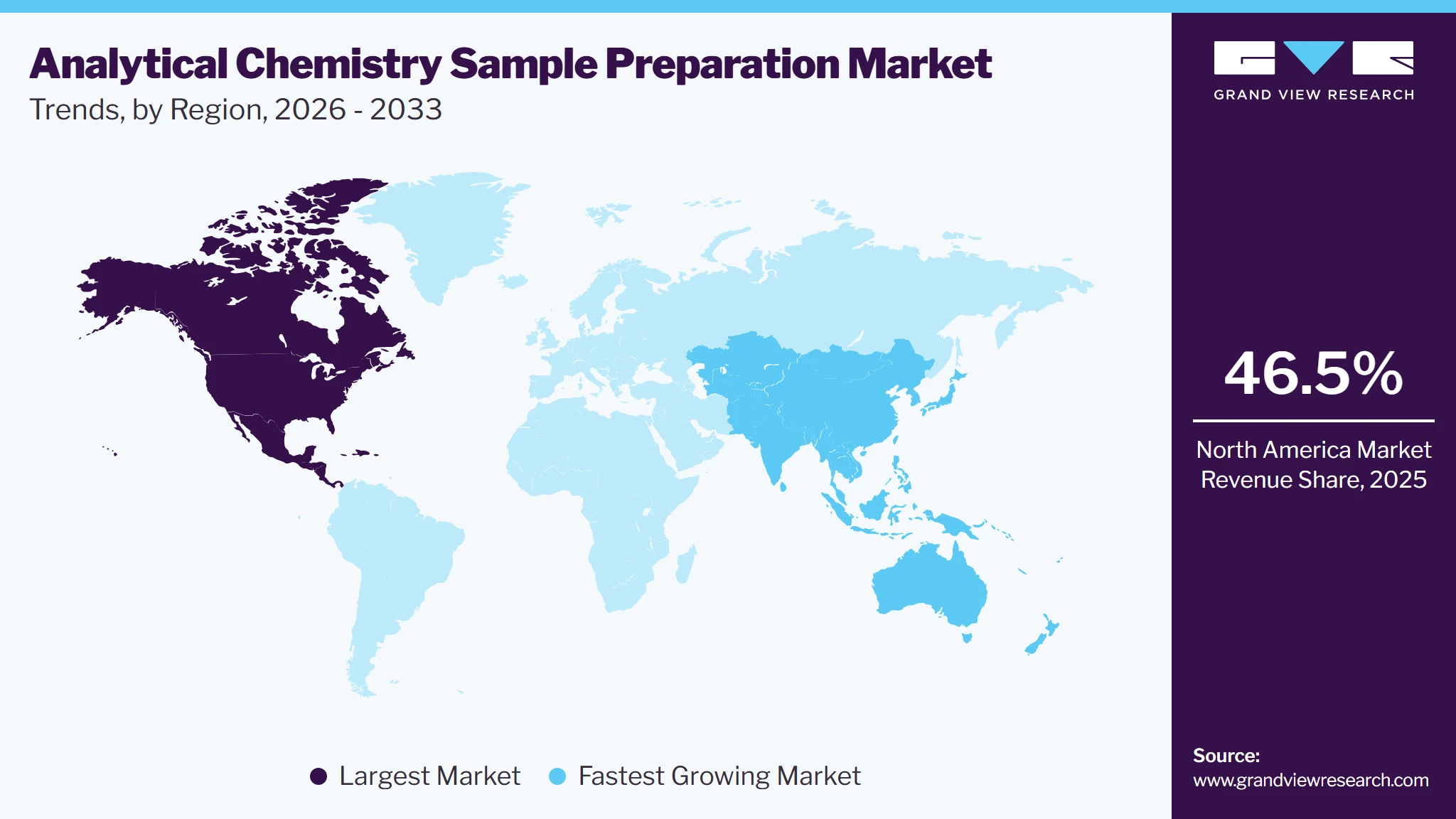
North America dominated the analytical chemistry sample preparation market with the largest revenue share of 46.5% in 2025, driven by strong investments in pharmaceutical research, stringent regulatory standards, and advanced laboratory infrastructure. The presence of major pharmaceutical and biotechnology companies, along with increasing demand for high-precision analytical testing, further supports market dominance. Rising adoption of automation, AI-driven workflows, and innovative sample preparation technologies enhance efficiency and accuracy. Additionally, growing applications in food safety, environmental analysis, and forensic testing contribute to market expansion.
 To learn more about this report, Download Free Sample Report
U.S. Analytical Chemistry Sample Preparation Market Trends
The analytical chemistry sample preparation market in the U.S. held the largest share in the North America region in 2025.
Europe Analytical Chemistry Sample Preparation Market Trends
Europe is a key analytical chemistry sample preparation market, driven by stringent regulatory standards, rising pharmaceutical research, and growing environmental testing needs. Advancements in automation and AI-driven workflows further boost market adoption across industries.
The UK analytical chemistry sample preparation market is expanding due to increasing pharmaceutical and biotechnology research investments. Strict regulatory requirements drive the demand for high-precision testing and advanced sample preparation techniques. Growing applications in food safety, environmental monitoring, and forensic analysis further support market growth. Additionally, automation and AI integration advancements enhance laboratory efficiency and accuracy.
The Germany analytical chemistry sample preparation market is growing rapidly due to strong pharmaceutical research, strict regulations, and advanced laboratory technologies.
Asia Pacific Analytical Chemistry Sample Preparation Market Trends
The Asia Pacific analytical chemistry sample preparation market is expected to grow the fastest, 7.3% CAGR from 2026 to 2033, driven by rising pharmaceutical and biotechnology research. Increasing regulatory standards and growing demand for food safety and environmental testing further boost market expansion. Advances in automation and AI-driven workflows enhance efficiency and accuracy in laboratories. Additionally, rapid industrialization and increased investments in healthcare infrastructure support the region’s strong growth.
The China analytical chemistry sample preparation market is set for rapid growth, driven by expanding pharmaceutical and biotechnology research. Increasing regulatory standards and a strong focus on food safety and environmental testing fuel demand. Advances in automation and AI-driven technologies enhance laboratory efficiency and accuracy. Additionally, government investments in healthcare and industrial innovation further support market expansion.
The Japan analytical chemistry sample preparation market held a strong share in 2025, driven by advanced pharmaceutical research and stringent regulatory standards. Growing demand for high-precision testing in food safety and environmental monitoring further supported market growth. Adoption of automation and AI-driven technologies improved laboratory efficiency and accuracy. Strong government support for scientific innovation and healthcare advancements also contributed to market expansion.
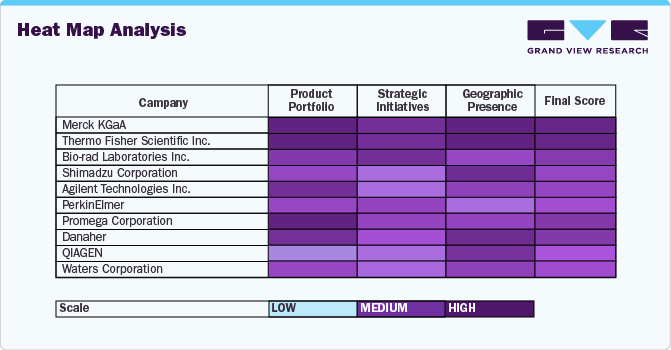
Key Analytical Chemistry Sample Preparation Company Insights
Key players operating in the analytical chemistry sample preparation industry are undertaking various initiatives to strengthen their market presence and increase the reach of their products and services. Strategies such as expansion activities and partnerships are key in propelling market growth.
Key Analytical Chemistry Sample Preparation Companies:
The following key companies have been profiled for this study on the analytical chemistry sample preparation market.
-
Merck KGaA
-
Thermo Fisher Scientific Inc.
-
Bio-rad Laboratories Inc.
-
Shimadzu Corporation
-
Agilent Technologies Inc.
-
PerkinElmer
-
Promega Corporation
-
Danaher
-
QIAGEN
-
Waters Corporation
 To learn more about this report, Download Free Sample Report
Competitive Benchmarking
Category
Operating Strategies
Competitive Edge
Weakness
Established Players (Thermo Fisher Scientific Inc., Merck KGaA, Bio-Rad Laboratories Inc., Agilent Technologies Inc. etc)
- Expand sample preparation ecosystems through integrated reagents, kits, consumables, automation platforms, instrument compatibility, digital solutions, and strategic expansion across pharmaceutical, clinical, and research applications.
- Extensive application expertise, strong instrument compatibility, global service infrastructure, regulatory experience, and ability to support laboratories with complete sample-to-result workflows.
- Dependence on high-value instruments and specialized consumables can increase customer switching barriers. Product complexity and higher ownership costs may limit penetration in smaller laboratories and emerging economies.
Emerging Players (Promega Corporation, Waters Corporation, PerkinElmer. etc)
- Target specific analytical workflows by developing application-focused kits, reagents, purification solutions, and customized preparation technologies for areas such as molecular analysis, biopharma research, and diagnostics.
- Greater flexibility in developing specialized solutions, faster innovation cycles, and strong expertise in targeted applications.
- Narrower product offerings, limited geographic reach, and lower integration capabilities compared with full-scale analytical workflow providers.
Recent Developments
-
In March 2026, Refeyn launched MyMass mass photometer in the United Kingdom, providing compact sample quality assessment solutions for structural biology workflows by enabling purity, homogeneity, oligomerization analysis before experiments.
“Structural biology and AI-driven drug discovery are moving fast, but they're only as good as the samples that drive them. MyMass directly addresses that challenge and marks a significant step forward for Refeyn, putting the power of mass photometry within reach of more researchers than ever before."
-Gerry Mackay, Refeyn CEO.
Analytical Chemistry Sample Preparation Market Report Scope
Report Attribute
Details
Market size in 2025
USD 2.4 billion
Estimated market size in 2026
USD 2.6 billion
Projected market size by 2033
USD 4.0 billion
Growth rate
CAGR of 6.7% from 2026 to 2033
Base year for estimation
2025
Historical data
2021 - 2024
Forecast period
2026 - 2033
Quantitative units
Revenue in USD million/billion and CAGR from 2026 to 2033
Report coverage
Revenue forecast, company ranking, competitive landscape, growth factors, and trends
Segments covered
Product, technique, application, end use, region
Regional scope
North America; Europe; Asia Pacific; Latin America; MEA
Country scope
U.S.; Canada; UK; Germany; France; Spain; Italy; Sweden; Norway; Denmark; Russia; Japan; China; India; South Korea; Australia; Thailand; Brazil; Mexico; Argentina; South Africa; UAE; Saudi Arabia; Kuwait
Key companies profiled
Merck KGaA; Thermo Fisher Scientific Inc.; Bio-rad Laboratories Inc.; Shimadzu Corporation; Agilent Technologies Inc.; PerkinElmer; Promega Corporation; Danaher; QIAGEN; Waters Corporation
Customization scope
Free report customization (equivalent up to 8 analysts' working days) with purchase. Addition or alteration to country, regional & segment scope.
Pricing and purchase options
Avail customized purchase options to meet your exact research needs. Explore purchase options
Global Analytical Chemistry Sample Preparation Market Report Segmentation
This report forecasts revenue growth at global, regional, and country levels and provides an analysis of the latest industry trends in each of the sub-segments from 2021 to 2033. For this study, Grand View Research has segmented the global analytical chemistry sample preparation market report based on product, technique, application, end use, and region:
-
Product Outlook (Revenue, USD Million; 2021 - 2033)
-
Kits & Reagents
-
Consumables
-
Instruments & Software
-
-
Technique Outlook (Revenue, USD Million; 2021 - 2033)
-
Extraction
-
Filtration
-
Precipitation
-
Centrifugation
-
Others
-
-
Application Outlook (Revenue, USD Million; 2021 - 2033)
-
HPLC
-
LC-MS
-
GC-MS
-
MALDI-ToF-MS
-
ICP-MS
-
NMR
-
Others
-
-
End Use Outlook (Revenue, USD Million; 2021 - 2033)
-
Pharmaceutical & Biotechnological Companies
-
Academic & Research Institutes
-
Contract Research Organizations
-
Others
-
-
Regional Outlook (Revenue, USD Million; 2021 - 2033)
-
North America
-
U.S.
-
Canada
-
Mexico
-
-
Europe
-
Germany
-
UK
-
France
-
Italy
-
Spain
-
Denmark
-
Sweden
-
Norway
-
-
Asia Pacific
-
China
-
Japan
-
India
-
South Korea
-
Australia
-
Thailand
-
-
Latin America
-
Brazil
-
Argentina
-
-
MEA
-
South Africa
-
Saudi Arabia
-
UAE
-
Kuwait
-
-
Research Methodology
The analytical chemistry sample preparation market figures in this report are based on a proven research process that combines executive interviews with secondary research from proprietary databases, company filings, and recognized regulatory and institutional sources. Market size is built through value-chain sizing - reconciling supply-side and demand-side estimates - and triangulated with bottom-up and top-down approaches. Every estimate passes multiple levels of expert validation before publication, with each analytical chemistry sample preparation segment quantified using the revenue-capture definitions in the table below.
Segment Definition
Segment - Product
Revenue capture definition
Kits & Reagents
Revenue is generated from sample preparation kits, chemical reagents, buffers, solvents, and consumables used for extraction, purification, enrichment, and preparation of biological, chemical, and environmental samples prior to analytical testing.
Consumables
Revenue is generated from disposable sample preparation components, including tubes, plates, filters, cartridges, vials, and other single-use laboratory supplies used during analytical workflows.
Instruments & Software
Revenue is generated from automated sample preparation instruments, integrated platforms, and software solutions that enable sample processing, workflow automation, method optimization, and data management.
Segment - Technique
Revenue capture definition
Extraction
Revenue is generated from technologies and products used to isolate target compounds, analytes, nucleic acids, proteins, or other components from complex sample matrices before analytical analysis.
Filtration
Revenue is generated from filtration-based sample preparation solutions used for removing impurities, particulates, and unwanted components to improve sample quality and analytical accuracy.
Precipitation
Revenue is generated from precipitation techniques and related reagents used to separate and concentrate analytes such as proteins, nucleic acids, and chemical compounds during sample preparation.
Centrifugation
Revenue is generated from centrifugation-based equipment and consumables used for separation, clarification, concentration, and purification of samples through centrifugal force.
Others
Revenue is generated from additional sample preparation techniques, including dilution, digestion, derivatization, evaporation, and solid-phase extraction methods not classified under major technique categories.
Segment - Application
Revenue capture definition
HPLC
Revenue is generated from sample preparation products and workflows designed to prepare samples for high-performance liquid chromatography analysis, including purification, extraction, and concentration steps.
LC-MS
Revenue is generated from sample preparation solutions used to optimize samples for liquid chromatography-mass spectrometry analysis by improving sensitivity, reducing matrix effects, and enhancing detection accuracy.
GC-MS
Revenue is generated from sample preparation products used for gas chromatography-mass spectrometry workflows, including derivatization, extraction, and purification of volatile and semi-volatile compounds.
MALDI-ToF-MS
Revenue is generated from sample preparation technologies supporting matrix-assisted laser desorption/ionization time-of-flight mass spectrometry analysis, including sample deposition, matrix preparation, and purification solutions.
ICP-MS
Revenue is generated from sample preparation solutions used for inductively coupled plasma mass spectrometry workflows, including digestion, dilution, and preparation of samples for elemental analysis.
NMR
Revenue is generated from sample preparation products and workflows used for nuclear magnetic resonance analysis, including sample preparation tubes, solvents, and processing solutions.
Others
Revenue is generated from sample preparation solutions supporting additional analytical techniques, including spectroscopy, electrophoresis, and other laboratory analysis methods.
Segment - End Use
Revenue capture definition
Pharmaceutical & Biotechnological Companies
Revenue is generated from analytical chemistry sample preparation products and systems used in drug discovery, development, quality control, biomarker analysis, and biopharmaceutical research workflows.
Academic & Research Institutes
Revenue is generated from sample preparation solutions adopted by universities and research organizations for analytical research, molecular studies, and experimental laboratory applications.
Contract Research Organizations
Revenue is generated from sample preparation technologies used by CROs to support outsourced analytical testing, bioanalysis, pharmaceutical research, and laboratory service activities.
Others
Revenue is generated from sample preparation solutions used by government laboratories, environmental testing facilities, food and beverage companies, forensic laboratories, and diagnostic centers.
Estimation Model
Stage
Description
Top-Down
Company Revenue Analysis: Aggregated revenues of key analytical chemistry sample preparation equipment, consumables, reagents, and automation solution providers across product categories. Estimates were validated through company reports, product portfolios, industry databases, and primary research to derive the overall market size.
Bottom-Up
Application Market Analysis and Adoption Rate Analysis: Estimated the global market size based on analytical testing demand across key applications and distributed revenues by region using laboratory infrastructure, R&D activity, testing volumes, and adoption of advanced sample preparation technologies.
Primary Research
Conducting Interviews with Industry Experts: Conducted interviews with sample preparation solution providers, analytical instrument manufacturers, pharmaceutical and biotechnology companies, contract research organizations, academic researchers, and laboratory managers to validate market estimates, pricing trends, technology adoption, workflow preferences, and competitive dynamics.
Validation
Data Triangulation & Validation Model: Market estimates were validated through triangulation of secondary research, primary interviews, company-level revenue assessments, product portfolio analysis, and demand-side adoption trends to ensure accuracy and consistency across product segments, applications, and regional markets.
Forecasting
Forecasting & CAGR Modeling: Forecasts were developed using historical market trends, increasing demand for high-throughput analytical workflows, automation adoption, advancements in chromatography and mass spectrometry techniques, pharmaceutical and biotechnology research expansion, and growing emphasis on reproducible and efficient sample preparation processes.
Delivered Customizations
This report has been delivered with the following In-depth customizations
Client Request
Customization Delivered
Value Adds
Automation & Digitalization Trend Assessment
Assessed the impact of laboratory automation, robotics, AI-enabled workflow optimization, and integrated sample-to-answer platforms on sample preparation processes.
Provides insights into automation opportunities, technology shifts, and future growth areas within analytical laboratory workflows.
Emerging Technology & Innovation Analysis
Evaluated advancements in miniaturized sample preparation, sustainable workflows, microextraction technologies, and AI-driven laboratory solutions.
Provides visibility into future technology trends and supports innovation roadmap development.
Technology Adoption & Workflow Preference Analysis
Analyzed adoption of key sample preparation technologies, including extraction, filtration, precipitation, centrifugation, and automated sample preparation platforms across analytical workflows such as HPLC, LC-MS, GC-MS, ICP-MS, and NMR.
Helps clients understand technology adoption trends, identify high-growth workflow areas, and align investments with evolving laboratory requirements.
Frequently Asked Questions About This Report
Asia Pacific is the fastest-growing region over the forecast period.
The consumables segment led with a 41.9% revenue share in 2025.
The extraction segment led with a 40.9% revenue share in 2025.
The LC-MS segment led with a 24.3% revenue share in 2025.
North America dominated the analytical chemistry sample preparation market with a share of 46.5% in 2025. This is driven by its advanced research infrastructure, strong R&D investments, and technological innovations in laboratory techniques.
The global analytical chemistry sample preparation market is expected to grow at a CAGR of 6.7% from 2026 to 2033, reaching USD 4.0 billion by 2033.
The global analytical chemistry sample preparation market size was valued at USD 2.4 billion in 2025 and is estimated at USD 2.6 billion for 2026.
Some key players operating in the analytical chemistry sample preparation market include Merck KGaA; Thermo Fisher Scientific Inc.; Bio-rad Laboratories Inc.; Shimadzu Corporation; Agilent Technologies Inc.; PerkinElmer; Promega Corporation; Danaher; QIAGEN; and Waters Corporation
Key factors driving the growth of the analytical chemistry sample preparation market include technological advancements in chromatography and mass spectrometry, increasing automation in laboratories, and rising investments in R&D across pharmaceuticals, biotechnology, and environmental testing. Additionally, stringent regulatory requirements for quality and accuracy in sample analysis, coupled with the growing demand for high-throughput analytical solutions, are further propelling market expansion.
About the Author(s)
Biotechnology Research Team
Healthcare · BiotechnologyThis report was authored by the biotechnology research team at Grand View Research - comprising two research analysts, one senior research analyst, and one industry expert - with specialized expertise in the biotechnology segment of the healthcare industry. All findings are based on proprietary healthcare databases, executive interviews, and regulatory analysis, subject to internal peer review prior to publication.
Last Updated:
Speak to Analyst

Customize this report to your needs - add regions, segments, or data points, with 20% free customization.
Or view our licence options:


ISO 9001:2015 & 27001:2022 Certified
We are GDPR and CCPA compliant! Your transaction & personal information is safe and secure. For more details, please read our privacy policy.


