
- Home
- »
- Medical Devices
- »
-
Angioplasty Balloons Market Size & Share Report 2026-2033GVR Report cover

Angioplasty Balloons Market (2026 - 2033)
Size, Share & Trends Analysis Report By Product (Normal Balloons, Drug Coated Balloons), By Application (Coronary, Peripheral), By End, By Region, And Segment Forecasts
Market Size, 2025
$2.8BMarket Estimate, 2026
$2.9BMarket Forecast, 2033
$3.9BCAGR, 2026–2033
4.2%Angioplasty Balloons Market Summary
The global angioplasty balloons market size was valued at USD 2.8 billion in 2025 and is projected to grow from USD 2.9 billion in 2026 to USD 3.9 billion in 2033, at a CAGR of 4.2% from 2026 to 2033. North America dominated the market, accounting for a revenue share of 38.0% in 2025. The global market is driven by the rising global incidence of cardiovascular diseases, particularly coronary artery disease, and an aging population.
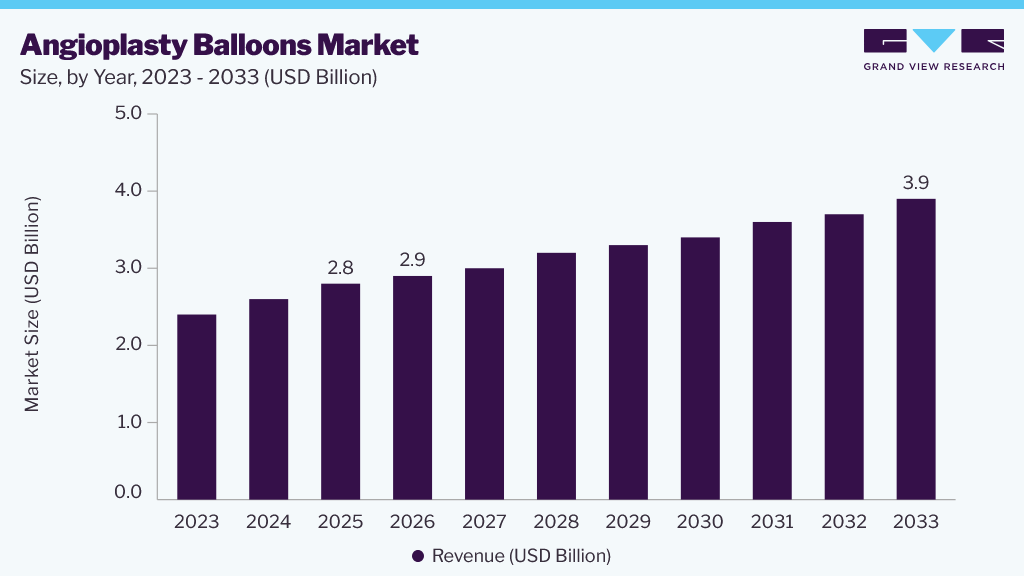 Source: Grand View Research, IR Documents, Primary Interviews, Paid DatabasesTo learn more about this report,
 Download Free Sample Report
Key Market Trends & Insights
- By product: The normal balloons segment held the largest market share of around 55.0% in 2025.
- By application: The coronary vascular diseases segment held the largest market share of around 50.0% in 2025.
- By end use: The ambulatory surgery centers segment held the largest market share in 2025.
Regional Highlights
- Largest regional market: North America (38.0% revenue share, 2025)
Market Size & Forecast
- Market size in 2025: USD 2.8 Billion
- Estimated market size in 2026: USD 2.9 Billion
- Projected market size by 2033: USD 3.9 Billion
- CAGR (2026-2033): 4.2%
Three ways to get this report
Buy it, customize it, or ask a question.Ask an Analyst
Analyst response in 1 business day
- AccessReport author, directly
- Reply timeWithin 1 working day
- No sales callDirect answer only
- FormatEmail reply
- CostFree, no cost
Get the Full Report
What the study covers
- FormatsPDF · Excel · Dashboard
- Timeline2026–2033 annual, 2025 base
- Coverage20+ countries, 5 regions
- Companies10+ key players profiled
Customize the Report
20% free customization
- IncludeCountries, segments, points
- TailorTo your product definition
- ExtendDeeper competitor detail
- OrA fully bespoke study
- Turnaround5–10 working days
In October 2024, the CDC reported that approximately 5% of adults aged 20 and older have coronary artery disease (CAD), which translates to about 1 in 20 individuals. Advancements in balloon technology, such as drug-eluting balloons and improved materials, enhance performance and patient outcomes. The growing preference for minimally invasive procedures, with shorter recovery times and reduced complications, further boosts market demand.The increasing global incidence of cardiovascular diseases, particularly coronary artery disease, is one of the primary drivers of the market. As the global population ages, the number of individuals suffering from heart-related conditions grows, fueling the demand for minimally invasive procedures like angioplasty. This trend has led to a higher adoption of angioplasty balloons in hospitals and clinics. In October 2024, heart disease was identified as the primary cause of death in the U.S., impacting individuals of all genders and various racial and ethnic backgrounds. Alarmingly, a person dies from cardiovascular disease every 33 seconds.
Significant advancements in angioplasty balloon technology, such as the development of drug-eluting balloons and advanced materials, are driving market growth. These innovations offer improved performance, better patient outcomes, and reduced restenosis rates. Newer balloon designs that provide better flexibility and enhanced delivery capabilities are appealing to healthcare providers, further increasing their use. In November 2024, the DCB-BIF trial, presented at TCT 2024, compared drug-coated balloons (DCB) to non-compliant balloons (NCB) for treating side branches after provisional stenting in coronary bifurcation lesions. DCB led to a 44% reduction in major adverse cardiac events (MACE), driven by fewer spontaneous myocardial infarctions. This study supports DCB use in simple true bifurcation lesions but highlights the need for further research, particularly on intravascular imaging guidance.
The growing preference for minimally invasive procedures is another key factor propelling the market growth. These procedures offer shorter recovery times, reduced hospital stays, and a lower risk of complications compared to traditional surgeries. In addition, the cost-effectiveness of angioplasty, especially in resource-limited settings, has made it a widely accepted treatment option, driving market demand. In December 2024, the article "Eclipse on Orbital Atherectomy: Balloon Angioplasty Still Shines in Calcified Lesions" explores how balloon angioplasty continues to be a vital treatment for calcified lesions despite the rise of orbital atherectomy. The article emphasizes that balloon angioplasty remains favored for its accessibility, effectiveness, and cost-efficiency in managing complex cardiovascular conditions.
Market Concentration & Characteristics
The degree of innovation in the angioplasty balloons industry is high, driven by the need for better patient outcomes and the increasing demand for minimally invasive procedures. Advancements focus on improving balloon materials, coating technologies, and drug-eluting balloons. Manufacturers are exploring bioresorbable technologies and balloon designs that better adapt to complex vessel anatomies. The pressure to enhance balloon performance, reduce complications, and minimize recovery times continues to stimulate innovation.
The angioplasty balloons industry has a moderate level of mergers and acquisitions. Larger medical device companies are acquiring smaller firms specializing in innovative balloon technologies or those with unique drug-eluting balloon offerings. These acquisitions allow firms to diversify their portfolios and strengthen their capabilities in the cardiovascular sector. The goal is often to integrate cutting-edge technology or expand into new markets
The impact of regulations on the angioplasty balloons industry is high. Regulatory bodies like the FDA and the European Medicines Agency (EMA) impose stringent standards for product approval and safety testing. This drives manufacturers to comply with rigorous clinical trial requirements and quality control processes, which can lengthen time-to-market and increase costs. However, strong regulatory oversight also ensures the safety and efficacy of devices, which is crucial for patient trust.
Product expansion in the angioplasty balloons industry is high, as companies seek to broaden their product lines to cater to various cardiovascular conditions. This includes expanding into drug-eluting balloons, which offer targeted drug delivery to reduce restenosis, and bioresorbable balloons, eliminating the need for permanent implants. Manufacturers are also exploring specialized balloons for complex lesions, smaller vessels, and different types of coronary and peripheral artery diseases.
Regional expansion in the angioplasty balloons industry is moderate, with significant growth in emerging markets such as the Asia-Pacific and Latin America. These regions are witnessing increased demand for advanced cardiovascular treatments due to aging populations and rising incidences of cardiovascular diseases. In developed regions like North America and Europe, market expansion is driven by technological advancements and growing healthcare infrastructure.
Analyst Perspective
The global angioplasty balloons market is expected to expand steadily, supported by the rising prevalence of coronary and peripheral artery diseases, increasing adoption of minimally invasive vascular interventions, and advances in balloon catheter technologies. The normal balloons segment is expected to retain the largest market share, supported by their established use across routine angioplasty procedures, relatively lower cost, and broad clinical applicability. The demand for drug-coated, scoring, and cutting balloons is increasing as physicians seek specialized technologies for complex lesions, calcified vessels, and restenotic disease. The expansion of catheterization facilities, improving cardiovascular care infrastructure, and growing procedural volumes in emerging markets are expected to create additional opportunities for angioplasty balloon manufacturers.
Product Insights
The normal balloons segment held the largest market share of around 55.0% in 2025, due to the low price of these devices, supportive government regulations, streamlined approval processes, and favorable reimbursement policies. Drug-Eluting Balloons (DEBs) are expected to experience substantial demand growth. The positive reimbursement policies contributed to higher sales of DEBs in 2024, which is projected to continue throughout the forecast period. In September 2024, a study published in the Journal of the American College of Cardiology highlighted that balloon angioplasty significantly reduced major adverse cardiac events (MACE) in patients with coronary artery disease. This approach offers potential advantages over traditional methods, suggesting a shift toward better clinical outcomes. The findings could influence future treatment strategies for coronary interventions.
The scoring balloons segment is anticipated to grow at the fastest CAGR over the forecast period, owing to the increasing prevalence of peripheral artery disease (PAD) and coronary artery disease (CAD), which require effective and minimally invasive treatment options. Better plaque modification, lower risk of vessel dissection and recoil, and improved stent delivery and expansion are also the key drivers. In September 2024, a study found that cutting balloon (CB) and scoring balloon (SB) treatments for calcified in-stent restenosis were equivalent in angiographic outcomes. While CB showed a higher rate of residual stenosis, factors such as severe calcified ISR implantation negatively affected results, with no significant differences in major adverse cardiovascular events.
End Use Insights
The ambulatory surgery centers segment dominated the market with the largest revenue share in 2025. The market can be categorized by end use into ambulatory surgery centers, hospitals, and cath labs. Ambulatory Surgery Centers (ASCs) dominated the market by offering cost-effective, efficient, and minimally invasive procedures. ASCs are increasingly preferred for non-emergency, elective surgeries such as angioplasty because they provide a high level of care in a more convenient, lower-cost environment than hospitals. With advancements in medical technology, including angioplasty balloon procedures, these centers can perform complex cardiovascular treatments in an outpatient setting.
The cath labs segment is expected to grow at the fastest CAGR during the forecast period due to its essential role in diagnosing and treating cardiovascular diseases. Cath labs are specialized facilities equipped with advanced imaging technology and catheter-based tools that enable precise, minimally invasive procedures, such as balloon angioplasty. For instance, in June 2025, Methodist Hospitals chose Royal Philips to establish four advanced interventional catheterization laboratories at its Northlake and Southlake campuses. These labs feature Philips' image-guided therapy solutions to support complex cardiovascular procedures, such as balloon angioplasty, and enhance procedural precision, workflow efficiency, and patient outcomes.
Application Insights
The coronary vascular diseases segment held the largest market share of around 50.0% in 2025. The market is divided into two main segments: coronary and peripheral vascular diseases. The coronary vascular diseases (CVD) segment leads the market, primarily due to the widespread occurrence of coronary artery disease (CAD), which is the foremost cause of cardiovascular-related complications and deaths worldwide. In June 2024, the FDA approved the use of drug-coated balloon (DCB) stents for angioplasty procedures, which are now available at OhioHealth. This procedure, which uses paclitaxel-coated balloons, is designed to reduce the risk of restenosis in patients with coronary artery disease. The DCB offers an alternative to traditional stents, improving treatment options for patients and potentially enhancing recovery outcomes.
The peripheral vascular diseases (PVD) segment is expected to witness the fastest CAGR during the forecast period, fueled by rising risk factors such as diabetes, obesity, smoking, and hypertension that contribute to atherosclerosis in peripheral arteries. In January 2024, Summa Therapeutics, LLC announced the first human use of its Finesse Injectable balloon catheter platform for injectable angioplasty in patients with below-the-knee peripheral artery disease (PAD), targeting those at risk of limb loss.
Regional Insights
The angioplasty balloons industry in North America held a significant position in the global market in 2025, with a share of approximately 38.0%. North America has been a dominant region in the market, driven by advanced healthcare infrastructure, high healthcare spending, and a growing elderly population. The U.S. and Canada are major contributors to market growth, with widespread adoption of minimally invasive procedures and cutting-edge medical technologies. In October 2024, the UPMC Heart and Vascular Institute in Central Pa. treated its first patient with a new FDA-approved drug-coated balloon therapy for in-stent restenosis (ISR). This innovative treatment delivers a drug via balloon catheter to prevent the recurrence of ISR and offers a promising solution for patients suffering from related chest pain and cardiac events.
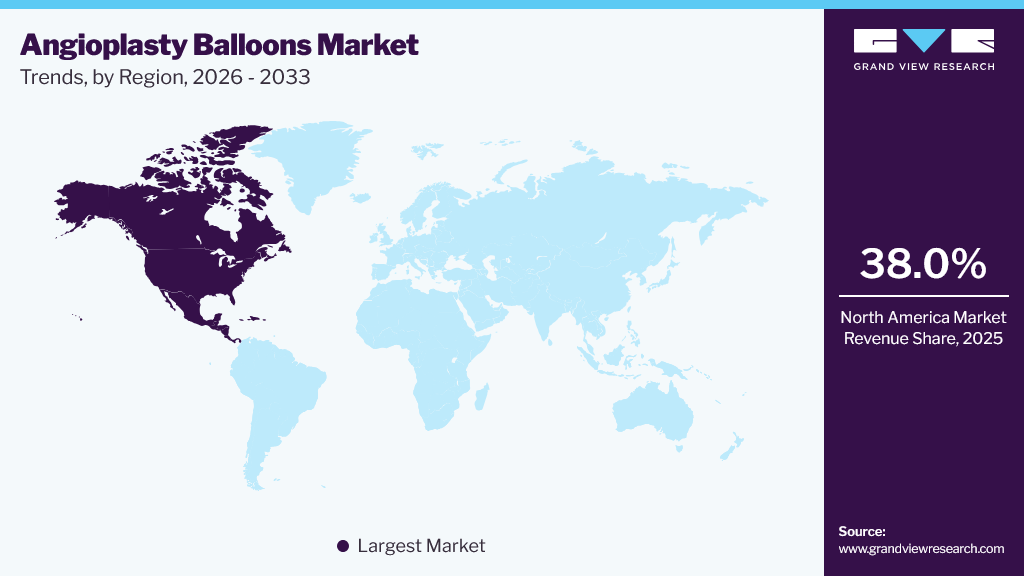 To learn more about this report, Download Free Sample Report
U.S. Angioplasty Balloons Market Trends
The angioplasty balloons industry in the U.S. accounted for the largest market share in the North American region in 2025. The U.S. market growth is attributed to its advanced healthcare system, high demand for cardiovascular procedures, and the growing prevalence of coronary artery disease (CAD) and peripheral vascular diseases (PVD). The adoption of minimally invasive surgeries, the availability of advanced medical technologies, and the presence of key industry players in the country have accelerated market growth. In September 2024, UHealth University of Miami Health System became the first academic medical center in Florida to successfully treat a patient with the new AGENT Drug-Coated Balloon (DCB) technology, aimed at preventing re-narrowing of coronary arteries in patients with stents.
Europe Angioplasty Balloons Market Trends
The angioplasty balloons industry in Europe is anticipated to grow significantly over the forecast period. Europe is a significant region in the global market, driven by increasing incidences of cardiovascular diseases, an aging population, and a well-established healthcare infrastructure. Countries such as Germany, France, and the UK lead the market due to their advanced medical technologies and high adoption rates of interventional cardiology procedures. In September 2024, the European Society of Cardiology (ESC) released a statement from the European Association of Percutaneous Cardiovascular Interventions (EAPCI) on the use of drug-coated balloons (DCBs) in interventions. The statement outlines the growing role of DCBs in coronary and peripheral artery procedures, highlighting their benefits in reducing restenosis and improving outcomes. Ongoing research and clinical guidelines are also discussed to optimize DCB use in practice.
The UK angioplasty balloons industry is expected to grow over the forecast period. In the UK, the market benefits from a strong healthcare system, with the National Health Service (NHS) providing broad access to advanced interventional cardiology treatments. The rising prevalence of coronary artery disease and peripheral vascular diseases, combined with the growing trend toward minimally invasive surgeries, supports the demand for angioplasty balloons.
The angioplasty balloons industry in Germany is expected to grow over the forecast period. Germany is one of the largest markets for angioplasty balloons in Europe, due to its advanced healthcare system, high standard of medical research, and a large aging population. The country’s well-established network of hospitals and catheterization labs, combined with the growing demand for interventional cardiology procedures, particularly in coronary and peripheral artery diseases, has spurred the use of angioplasty balloons. In March 2024, JAMA published an article on "The AGENT IDE Randomized Clinical Trial," demonstrating that drug-coated balloons, tested in Germany, effectively reduce neointimal growth and restenosis compared to standard balloon angioplasty. The ISAR-DESIRE 3 trial also indicated that these balloons significantly lowered the need for repeat revascularization over 10 years compared to uncoated balloons.
France angioplasty balloons industry is expected to grow over the forecast period. In France, the market is growing steadily, supported by a robust healthcare system, high healthcare expenditure, and an aging population with a high prevalence of cardiovascular diseases. The French healthcare system provides wide access to medical treatments, and hospitals and catheterization labs are key centers for performing balloon angioplasty. For instance, in April 2025, the French National Authority for Health (HAS) issued a positive assessment of Medtronic's IN.PACT 018 paclitaxel-coated balloon for treating symptomatic femoropopliteal artery disease, supporting its clinical adoption for patients needing endovascular revascularization.
Asia Pacific Angioplasty Balloons Market Trends
The angioplasty balloons industry in Asia Pacific is expected to experience rapid growth, with a projected CAGR of 4.3% from 2026 to 2033. Asia-Pacific is experiencing significant growth in the angioplasty balloon market, driven by a rapidly aging population, rising incidences of cardiovascular diseases, and improving healthcare infrastructure. The market is expanding due to greater access to advanced medical treatments, increasing healthcare investments, and rising awareness about the benefits of minimally invasive procedures. For instance, in April 2026, Cordis launched its SELUTION SLR PTA Drug-Eluting Balloon (DEB) in Japan, introducing the country's first sirolimus-eluting balloon approved for peripheral artery disease. The launch broadens access to advanced endovascular treatments in Japan and is expected to encourage the adoption of drug-eluting balloon technologies throughout the Asia-Pacific region.
The Japan angioplasty balloons industry is expected to grow rapidly over the forecast period. Japan has a well-established and advanced healthcare system, making it a key market for angioplasty balloons in the Asia-Pacific region. With one of the highest rates of cardiovascular diseases in the world, the demand for balloon angioplasty procedures is high. In October 2024, a study in JACC: Cardiovascular Interventions found that targeting a pressure ratio of 0.7 in functional assessment-guided pulmonary artery dilation improved outcomes for patients with chronic thromboembolic pulmonary hypertension (CTEPH) undergoing balloon pulmonary angioplasty, enhancing lung perfusion and reducing complications.
Latin America Angioplasty Balloons Market Trends
The angioplasty balloons industry in Latin America is witnessing a significant trend. The Latin America market is expanding due to increasing rates of cardiovascular diseases and the growing adoption of minimally invasive procedures. Countries such as Brazil, Mexico, and Argentina are seeing higher demand for angioplasty balloons, driven by improving healthcare infrastructure and rising cardiovascular health awareness. In March 2024, the FDA approval of a drug-coated balloon (DCB) for in-stent restenosis could significantly impact Latin America. The technology offers an advanced treatment option for patients with coronary artery disease, particularly in regions where access to cutting-edge medical interventions is growing.
The Brazil angioplasty balloons industry is expected to grow over the forecast period. Brazil is the largest market for angioplasty balloons in Latin America, driven by the rising prevalence of cardiovascular diseases and an expanding healthcare sector. The Brazilian government’s focus on improving access to medical treatments and the increasing adoption of modern medical technologies have spurred the demand for angioplasty procedures. The growing number of catheterization labs and the trend toward minimally invasive surgeries have further fueled the adoption of angioplasty balloons in Brazil.
Middle East & Africa Angioplasty Balloons Market Trends
The angioplasty balloons industry in the Middle East and Africa is poised to grow in the near future. The Middle East and Africa (MEA) region is witnessing steady growth in the angioplasty balloon market, driven by increasing cardiovascular disease prevalence, improving healthcare infrastructure, and growing awareness about the benefits of interventional cardiology procedures. Countries like Saudi Arabia, the UAE, and South Africa are leading the market, with investments in advanced medical technologies and healthcare facilities. In addition, the rising demand for minimally invasive treatments and the expansion of specialized heart centers in the region are contributing to the market’s growth.
The angioplasty balloons industry in Saudi Arabia is expected to grow over the forecast period. Saudi Arabia is a key market in the MEA region for angioplasty balloons, driven by high rates of cardiovascular diseases, especially coronary artery disease. The country has been investing heavily in its healthcare system, with a focus on upgrading hospitals and catheterization labs to provide advanced treatment options. For instance, in January 2025, the Heart Center at King Fahd University Hospital in Al Khobar became the first facility in Saudi Arabia's Eastern Region to perform Balloon Pulmonary Angioplasty (BPA) for patients with chronic thromboembolic pulmonary hypertension (CTEPH). The milestone demonstrates the country's growing expertise in catheter-based cardiovascular treatments and highlights the increasing demand for specialized angioplasty balloon technologies.
The Kuwait angioplasty balloons industry is anticipated to grow over the forecast period. Kuwait is witnessing steady growth in the angioplasty balloon market, primarily due to the rising prevalence of cardiovascular diseases and an increasingly health-conscious population. The country’s well-established healthcare system, combined with significant investments in advanced medical technologies, has led to the adoption of minimally invasive interventional procedures, including balloon angioplasty.
Key Angioplasty Balloons Company Insights
Some of the key market players operating in the angioplasty balloons industry include Medtronic, Boston Scientific Corporation, Johnson & Johnson Services, Inc., and Abbott. These companies are making significant infrastructure investments, which enable them to develop, manufacture, and commercialize a high volume of devices worldwide. In addition, to increase their presence globally, companies engage in several strategic partnerships with distributors and other companies.
Key Angioplasty Balloons Companies
The following key companies have been profiled for this study on the angioplasty balloons market:
-
Medtronic
-
Boston Scientific Corporation
-
Johnson & Johnson Services, Inc.
-
Abbott
-
BD
-
Koninklijke Philips N.V.
-
Terumo Corporation
-
Cardinal Health
-
Biotronik
-
Cook
-
ENDOCOR GmbH & CO. KG
-
B. Braun SE
Recent Developments
-
In May 2026, Medtronic received FDA approval for manufacturing-process updates to its IN.PACT Admiral Paclitaxel-Coated PTA Balloon Catheter, including changes to luer adhesive curing and balloon-forming processes. The regulatory update supports continued production of Medtronic's drug-coated peripheral angioplasty balloon platform.
-
In March 2026, the FDA approved a supplement for the Stellarex 0.035" OTW Drug-Coated Angioplasty Balloon, covering manufacturing and testing-process changes for the peripheral angioplasty catheter.
-
In February 2025, Cagent Vascular introduced the Serranator SL-PRO PTA Serration Balloon Catheter for complex below-the-knee and pedal interventions. This addition expands its angioplasty balloon portfolio to include enhanced deliverability and vessel-dilation technology for peripheral artery disease.
-
In July 2024, Teleflex Incorporated received FDA clearance for its Ringer Perfusion Balloon Catheter (PBC), the first of its kind for percutaneous transluminal coronary angioplasty (PTCA). This innovative catheter features a helical balloon design that maintains coronary blood flow during balloon inflation, enabling improved myocardial perfusion and facilitating the delivery of additional devices during procedures.
-
In March 2024, Boston Scientific Corporation disclosed that it has obtained FDA approval for its AGENT Drug-Coated Balloon (DCB). This device is designed to treat coronary in-stent restenosis (ISR) in individuals suffering from coronary artery disease. ISR occurs when a previously stented artery experiences narrowing or blockage due to the buildup of plaque or scar tissue. This new approval aims to enhance treatment options for patients facing this complication.
-
In March 2024, a BIDMC-led trial resulted in the FDA's approval of coronary drug-coated balloons (DCBs), marking a breakthrough in the treatment of coronary artery disease. The trial demonstrated the effectiveness of DCBs in reducing restenosis and improving patient outcomes. This approval paves the way for broader clinical applications of DCBs, offering a promising option for patients undergoing coronary interventions.
Angioplasty Balloons Market Report Scope
Report Attribute
Details
Market size in 2025
USD 2.8 billion
Estimated market size in 2026
USD 2.9 billion
Projected market size by 2033
USD 3.9 billion
Growth rate
CAGR of 4.2% from 2026 to 2033
Base year for estimation
2025
Historical data
2021 - 2025
Forecast period
2026 - 2033
Quantitative units
Revenue in USD billion and CAGR from 2026 to 2033
Report coverage
Revenue forecast, company ranking, competitive landscape, growth factors, and trends
Segments covered
Product, application, end use, region
Regional Scope
North America; Europe; Asia Pacific; Latin America; MEA
Country Scope
U.S.; Canada; Germany; UK; France; Italy; Spain; Denmark; Sweden; Norway; China; Japan; India; South Korea; Australia; Thailand; Brazil; Mexico, Argentina; South Africa; Saudi Arabia, UAE; Kuwait
Key companies profiled
Medtronic; Boston Scientific Corporation; Johnson & Johnson Services, Inc.; Abbott; BD; Koninklijke Philips N.V.; Terumo CorporationCardinal Health; Biotronik; Cook; ENDOCOR GmbH & CO. KG; B. Braun SE
Customization scope
Free report customization (equivalent to 8 analyst working days) with purchase. Addition or alteration to country, regional & segment scope.
Pricing and purchase options
Avail of customized purchase options to meet your exact research needs. Explore purchase options
Global Angioplasty Balloons Market Report Segmentation
This report forecasts revenue growth at the global, regional, and country levels and provides an analysis of the latest industry trends and opportunities across each sub-segment from 2021 to 2033. For this study, Grand View Research has segmented the global angioplasty balloons market report based on product, application, end use, and region:
- Product Outlook (Revenue, USD Billion, 2021 - 2033)
- Normal Balloons
- Drug Coated Balloons
- Cutting Balloons
- Scoring Balloons
- Application Outlook (Revenue, USD Billion, 2021 - 2033)
- Peripheral Vascular Disease
- Coronary Vascular Disease
- End-use Outlook (Revenue, USD Billion, 2021 - 2033)
- Ambulatory Surgical Centers
- Hospitals
- Cath Labs
- Regional Outlook (Revenue, USD Billion, 2021 - 2033)
- North America
- U.S.
- Canada
- Mexico
- Europe
- UK
- Germany
- France
- Italy
- Spain
- Denmark
- Sweden
- Norway
- Asia Pacific
- Japan
- China
- India
- South Korea
- Australia
- Thailand
- Latin America
- Brazil
- Argentina
- Middle East & Africa
- South Africa
- Saudi Arabia
- UAE
- Kuwait
- North America
Frequently Asked Questions About This Report
Key players in the market include Medtronic; Boston Scientific Corporation; Johnson & Johnson Services, Inc.; Abbott; BD; Koninklijke Philips N.V.; Terumo Medical Corporation; Cardinal Health; BIOTRONIK; Cook Medical; ENDOCOR GmbH & CO. KG; B. Braun SE, and others.
The global angioplasty balloons market size was valued at USD 2.8 billion in 2025 and is estimated at USD 2.9 billion for 2026.
The global angioplasty balloons market is expected to grow at a CAGR of 4.2% from 2026 to 2033, reaching USD 3.9 billion.
North America dominated with an approximately 38.0% revenue share in 2025.
The normal balloons segment accounted for the largest revenue share of over 50.0% in 2025.
About the Author(s)
Medical Devices Research Team
Healthcare · Medical DevicesThis report was authored by the medical devices research team at Grand View Research - comprising two research analysts, one senior research analyst, and one industry expert - with specialized expertise in the medical devices segment of the healthcare industry. All findings are based on proprietary healthcare databases, executive interviews, and regulatory analysis, subject to internal peer review prior to publication.
Last Updated:
Speak to Analyst

Customize this report to your needs - add regions, segments, or data points, with 20% free customization.
Or view our licence options:


ISO 9001:2015 & 27001:2022 Certified
We are GDPR and CCPA compliant! Your transaction & personal information is safe and secure. For more details, please read our privacy policy.


