
- Home
- »
- Pharmaceuticals
- »
-
Antibiotic Market Size, Share & Trends Report, 2026-2033GVR Report cover
![Antibiotics Market (2026 - 2033)Report]()
Antibiotics Market (2026 - 2033)
Size, Share & Trends Analysis Report By Drug Class (Cephalosporin, Fluoroquinolone), By Type (Branded Antibiotics, Generic Antibiotics), By Action Mechanism, By Region, And Segment Forecasts
Market Size, 2025
$55.3BMarket Estimate, 2026
$57.6BMarket Forecast, 2033
$74.0BCAGR, 2026–2033
3.6%Antibiotics Market Summary
The global antibiotic market size was valued at USD 55.3 billion in 2025 and is projected to grow from USD 57.6 billion in 2026 to USD 74.0 billion by 2033, at a CAGR of 3.6% from 2026 to 2033, major factor contributing to market growth. North America dominated the global market with the largest revenue share of 39.3% in 2025. The antibiotics market is driven by the prevalence of bacterial infections.

Key Market Trends & Insights
- By type: Generic antibiotics segment held the highest market share of 81.7% in 2025.
- By drug class: Cephalosporin segment led the market with the largest revenue share of 18.1% in 2025.
- By action mechanism: Cell wall synthesis inhibitors led the market with the largest revenue share of 51.5% in 2025.
Regional Highlights
- Largest regional market: North America (39.3% revenue share, 2025)
- Fastest-growing regional market: Asia Pacific (highest CAGR, 2026-2033)
- By country: The U.S. held the largest market share in 2025.
Market Size & Forecast
- Market size in 2025: USD 55.3 Billion
- Estimated market size in 2026: USD 57.6 Billion
- Projected market size by 2033: USD 74.0 Billion
- CAGR (2026-2033): 3.6%
Respiratory tract infections (RTIs), such as pneumonia and bronchitis, are among the most widespread, for instance, in May 2025, the CDC estimated that the U.S. experienced between 47-82 million flu illnesses, 21 million medical visits, and 640,000 hospitalizations, based on data from 2024 - 2025. These preliminary figures, derived from weekly influenza surveillance and mathematical modeling, reflect the season's disease burden, often leading to secondary bacterial infections requiring antibiotics. Urinary tract infections (UTIs) follow closely, with over 150 million cases annually worldwide, according to BMC Infectious Diseases, making them a leading cause of antibiotic use. Skin and soft tissue infections (SSTIs), such as cellulitis, are also significant, especially in outpatient care. Hospital-acquired infections (HAIs), including Clostridium difficile and methicillin-resistant Staphylococcus aureus (MRSA), further increase demand. These infections are fueled by urbanization, aging populations, and rising antimicrobial resistance (AMR), which reduces the efficacy of existing treatments. High infection rates in developing regions with limited healthcare access further amplify the need for antibiotics, sustaining market growth despite resistance challenges.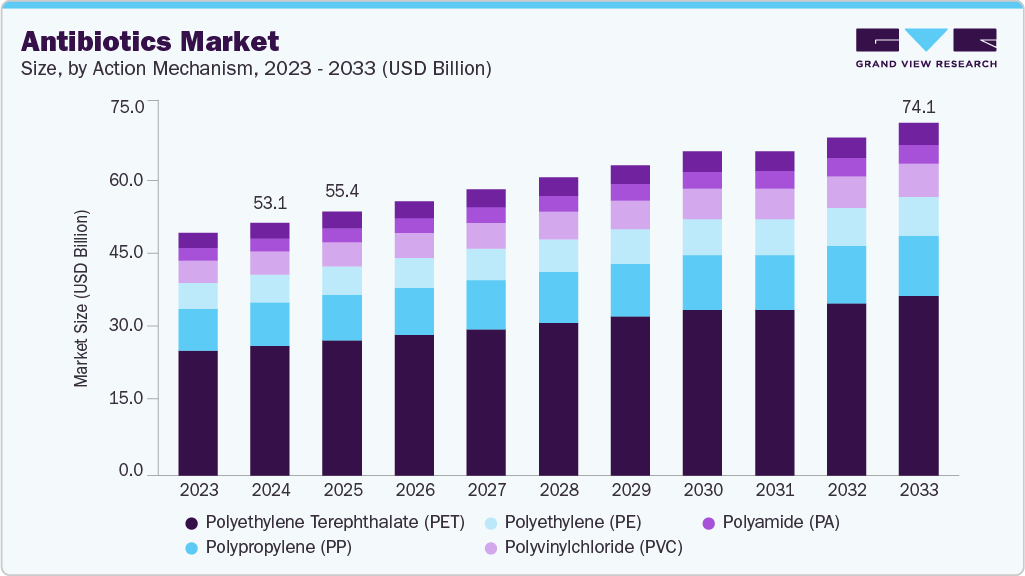
Research and development (R&D) in antibiotics face hurdles due to high costs and low profitability. Developing new antibiotics is expensive, with clinical trials and regulatory demands adding to the burden, while short treatment durations limit returns. However, initiatives such as in April 2025, CARB-X awarded ArrePath USD 3.7 million to develop a novel antibiotic targeting multidrug-resistant Enterobacterales, focusing on complicated urinary tract infections. Using an AI-driven platform, ArrePath identified inhibitors with a unique mechanism, potentially offering oral and IV treatment options to combat antimicrobial resistance effectively. For example, Pfizer partnered with AbbVie in 2023 to develop novel antibiotic combinations, sharing costs and risks. The Global AMR R&D Hub also coordinates international efforts to bolster the antibiotic pipeline. Despite these measures, challenges persist, as resistance develops quickly, reducing the lifespan of new drugs. Sustained public-private collaboration is critical to overcoming these barriers and ensuring the development of effective antibiotics to combat rising resistance.
Key players in the antibiotics market employ strategies such as mergers, partnerships, and innovation to stay competitive. In February 2025, key biotech deals included Novartis acquiring Anthos Therapeutics for up to $2.15 billion ($925 million upfront) for its stroke prevention program, Eli Lilly buying Organovo’s FXR program for inflammatory bowel disease (terms undisclosed), and the merger of Alumis and Acelyrin, focusing on immune-mediated diseases with a $737 million cash runway. In 2023, Merck invested over USD 674 million partnering with Exscientia to apply AI in drug development, manufacturing, and regulatory processes. Additionally, Merck joined forces with BenevolentAI, investing hundreds of millions more in AI drug discovery platforms. Smaller firms like Entasis Therapeutics, which gained FDA approval for Xacduro in 2023 for pneumonia, target niche markets. Companies such as GSK also promote antibiotic stewardship to encourage responsible use. However, generic competition and the need for constant innovation amid resistance pressures challenge profitability. These developments reflect a dynamic market where firms balance cost management with the pursuit of novel antibiotics to maintain their edge.
Market Dynamics
The antibiotics market is projected to grow over the forecast period due to the rising prevalence of bacterial infections, increasing incidence of hospital-acquired infections (HAIs), and growing burden of antimicrobial resistance (AMR). The increasing occurrence of multidrug-resistant pathogens has led to higher demand for antibacterial therapies, resulting in increased research and development activities by pharmaceutical companies. In addition, government initiatives and funding programs focused on addressing antibiotic resistance are supporting market growth. For instance, in February 2025, the U.S. Food and Drug Administration (FDA) approved EMBLAVEO (aztreonam and avibactam), developed by AbbVie and Pfizer, for the treatment of adults with complicated intra-abdominal infections with limited or no alternative treatment options. The approval expanded the availability of treatment options for drug-resistant bacterial infections and supported product development activities in the market. Furthermore, the development of new antibiotics and expansion of clinical pipelines are contributing to market growth.
The antibiotics market is driven by the increasing incidence of antimicrobial resistant bacterial infections across both developed and emerging markets. The growing prevalence of resistant pathogens has increased the need for effective antibacterial therapies capable of treating infections that no longer respond adequately to conventional antibiotics. Healthcare providers and public health organizations continue to emphasize the importance of maintaining access to effective treatment options for resistant infections, supporting demand for both existing and newly developed antibiotics. In addition, increasing hospitalization rates, surgical procedures, and the growing burden of chronic diseases have contributed to higher utilization of antibacterial therapies. Pharmaceutical companies are investing in research and development activities to address evolving resistance patterns and strengthen their anti-infective portfolios. For instance, in 2025, Shionogi & Co., Ltd. announced positive Phase 3 results for cefiderocol in the treatment of serious Gram-negative bacterial infections, further supporting the development of therapies targeting resistant pathogens. Such developments highlight the continued industry focus on addressing antimicrobial resistance and expanding treatment options for difficult to treat bacterial infections. As resistance rates continue to increase globally, demand for effective antibiotic therapies is expected to remain a key factor supporting market growth.
Stringent regulatory requirements and the complexity of antibiotic development remain significant restraints for the antibiotics market. The discovery and development of new antibacterial agents require substantial investments in research and clinical studies, extended development timelines, and comprehensive safety and efficacy evaluations. Compared with many other therapeutic areas, antibiotics face additional challenges related to addressing antimicrobial resistance and meeting evolving regulatory standards. In addition, efforts to promote appropriate antibiotic use may limit the use of certain products, particularly newer therapies reserved for resistant infections. The widespread availability of generic antibiotics also creates pricing pressure and increases competition across multiple product categories. Furthermore, scientific challenges associated with identifying new mechanisms of action and developing treatments for resistant pathogens can increase development costs and project risks. These factors may reduce investment in antibiotic research and limit the number of new products entering the market. As a result, regulatory requirements, pricing pressure, and development costs continue to present challenges for companies operating in the global antibiotics market.
The expanding availability of healthcare services and increasing access to essential medicines across emerging markets present a significant opportunity for the antibiotics market. Rising healthcare expenditure, improving healthcare infrastructure, and increasing awareness of infectious disease management are supporting greater utilization of antibacterial therapies in countries across Asia Pacific, Latin America, the Middle East, and Africa. Governments and healthcare organizations are investing in healthcare delivery systems, improving access to medical treatment, and strengthening disease management programs, contributing to increased demand for antibiotics. In addition, pharmaceutical companies are expanding their presence in emerging markets through regulatory approvals, distribution agreements, manufacturing investments, and strategic partnerships. For instance, in 2025, Viatris expanded its injectable manufacturing capacity through investments aimed at increasing the production of anti-infective medicines. As healthcare access continues to improve across emerging markets, demand for antibiotic therapies is expected to increase, creating growth opportunities for companies to expand their geographic presence.
Market Concentration & Characteristics
The antibiotics market features a strong focus on innovation to counter antimicrobial resistance. Regulatory oversight from agencies such as the FDA and EMA imposes stringent approval standards, reflecting concerns over resistance and safety. Challenges include the economic feasibility of developing antibiotics with limited use to preserve efficacy, while opportunities arise from addressing unmet needs in multi-drug resistant infections and expanding into emerging markets. The competitive landscape includes dominant pharmaceutical firms and a significant generic sector.
The antibiotics market prioritizes innovation to tackle antimicrobial resistance. Companies invest in novel antibiotics and combination therapies, exemplified by the FDA-approved Xacduro for resistant pneumonia. Research also explores narrow-spectrum antibiotics to limit resistance development, alongside protein synthesis inhibitors for enhanced efficacy. These efforts sustain market growth by meeting critical health demands.

Entry into the antibiotics market requires overcoming high R&D costs for clinical trials and safety testing. Manufacturing complexity, especially for advanced drug classes, increases investment needs. Regulatory requirements from the FDA and EMA demand rigorous compliance, deterring new entrants and favoring established firms with substantial resources.
Regulatory bodies enforce strict standards for antibiotic safety and efficacy, addressing resistance concerns. The FDA’s fast-track designations and the GAIN Act incentivize development through expedited approvals and exclusivity extensions. However, extensive post-marketing surveillance and usage restrictions present ongoing compliance challenges.
Substitutes like bacteriophage therapy and vaccines remain underdeveloped, posing minimal competition. Generic antibiotics dominate as cost-effective alternatives to branded products, while new antibiotics with unique mechanisms address resistance, serving as substitutes for less effective treatments.
Expansion targets regions such as Asia Pacific, with its large population and healthcare growth, alongside Latin America and Middle East & Africa, where disease burdens drive demand. Companies must navigate diverse regulations and local dynamics to capitalize on these opportunities.
Analyst Perspective
The antibiotics market is driven by the continued demand for antibacterial therapies used in the treatment of infectious diseases and the increasing prevalence of bacterial infections across both developed and emerging markets. Competition among market participants is focused on portfolio expansion, regulatory approvals, product differentiation, and geographic expansion. Companies are investing in the development of new antibacterial therapies and lifecycle management strategies while strengthening their presence in established and emerging markets. The growing focus on addressing antimicrobial resistance and maintaining an effective supply of treatment options is supporting research, development, and commercialization activities within the industry. Strategic initiatives including product launches, partnerships, licensing agreements, and manufacturing capacity expansion continue to shape the competitive landscape of the global antibiotics market.
Pipeline Analysis
The antibiotics market is experiencing significant research and development to address antimicrobial resistance and expand treatment options. A notable advancements such as, In March 2025, McMaster University researchers, led by Gerry Wright, discovered a new antibiotic class featuring lariocidin, a lasso peptide published in Nature. This innovative molecule targets bacterial protein synthesis uniquely, addressing the growing threat of antimicrobial resistance. In June 2025, Roche's zosurabalpin, a new antibiotic developed with Harvard University, is entering phase 3 trials to tackle carbapenem-resistant Acinetobacter baumannii (CRAB), a deadly Gram-negative bacteria causing pneumonia and sepsis. In May 2025, Roche planned a phase 3 trial for zosurabalpin, targeting carbapenem-resistant Acinetobacter baumannii (CRAB), to launch late 2025 or early 2026, addressing a major antibiotic resistance challenge.
Antibiotics Market Patent Summary
Table: Antibiotics with patent expirations
Antibiotic
Brand Name
Estimated Patent Expiry
Notes
Ceftazidime-avibactam
Zavicefta/Avycaz
2032
β-lactam/β-lactamase inhibitor combo for multidrug-resistant Gram-negative infections; QIDP exclusivity
Aztreonam-avibactam
Emblaveo
2032
Novel combo targeting metallo-β-lactamase producers; patent and exclusivity protections ongoing
Delafloxacin
Baxdela
2031
Fluoroquinolone antibiotic approved for skin infections; patent protection active
Omadacycline
Nuzyra
2030
Tetracycline-class antibiotic for community-acquired infections; patent and exclusivity active
Lefamulin
Xenleta
2031
Pleuromutilin antibiotic for respiratory infections; patent protection extends into early 2030s
Plazomicin
Zemdri
2032
Aminoglycoside antibiotic for complicated UTIs; patent protection ongoing
Vabomere
Meropenem-vaborbactam
2031
Carbapenem-β-lactamase inhibitor combo; patent and QIDP exclusivity
Relebactam (with Imipenem)
Recarbrio
2033
β-lactamase inhibitor combo; patent and exclusivity protections
Rifamycin SV
Aemcolo
2035
Antibiotic for travelers’ diarrhea; patent protection
Cefiderocol
Fetroja
2035
Siderophore cephalosporin antibiotic for multidrug-resistant Gram-negative infections; patent protected
Source: FDA Orange Book (2025)
Many older antibiotics face generic competition due to expired patents, while newer drugs benefit from extended exclusivity, driving innovation and market dynamics.
Drug Class Insights
Based on drug class, the cephalosporin segment led the market with the largest revenue share of 18.1% in 2025, Penicillin is the first drug class to be discovered and is still widely used to treat various infections, especially those caused by staphylococci & streptococci, clostridium, and listeria. They act by either inhibiting cell wall synthesis or by preventing the formation of the peptidoglycan layer. In treating infections such as pharyngitis, skin infection, bronchial cough, gonorrhea and ear fungus, these medicines represent the first line of treatment. In April 2024, the U.S. FDA approved Pivya (pivmecillinam), a penicillin-class antibiotic, for treating uncomplicated urinary tract infections in women, reinforcing penicillin's market leadership. Antibiotic resistance development, allergic activities, and several other adverse effects are the main reasons these drugs are expected to lose market share over the forecast period.
Cephalosporins are projected to significant market growth during the forecast period. As a subtype of beta-lactam antibiotics, they effectively target gram-positive and gram-negative bacteria, including Pseudomonas aeruginosa, Klebsiella pneumoniae, and Bacteroides fragilis. Like penicillins, generics dominate the cephalosporin market, showing similar seasonal usage patterns. Cephalosporins encompass five generations, with the third, fourth, and fifth generations widely used for resistant pathogens. Cefixime, a prevalent third-generation broad-spectrum cephalosporin, treats infections caused by P. aeruginosa and N. gonorrhoeae, with activity against S. aureus, S. pneumoniae, and Enterobacteriaceae. These factors drive increasing demand in the antibiotics market.
Type Insights
Based on type, the generic antibiotic segment led the market with the largest revenue share of 81.7% in 2025, the affordability of generic formulations, presence of a large number of manufacturers leading to high bargaining power of buyers, and supportive regulatory framework are the key factors responsible for the dominance. In addition, favorable government initiatives to promote generic preparations and easy access to generic drugs is fueling segment expansion.

Branded Antibiotics segment is estimated to register the significant CAGR over the forecast period. Due to the robust investigational pipeline, rising need for new & novel antibiotics, and increasing focus of key players to strengthen their product offerings and distribution network. For instance, In July 2024, Pfizer announced that the European Medicines Agency’s Committee for Medicinal Products for Human Use (CHMP) granted approval for a novel antibiotic combination, Emblaveo (aztreonam-avibactam), targeting multidrug-resistant Gram-negative bacterial infections. These aspects are increasing the demand for the antibiotics market.
Action Mechanism Insights
Based on action mechanisms, the cell wall synthesis inhibitors led the market with the largest revenue share of 51.5% in 2025. Cell wall synthesis inhibitors are the primarily widely used antibiotics, as they are described with wide-spectrum action against gram-positive and gram-negative bacteria. These drugs inhibit the synthesis of the peptidoglycan layer, which is crucial for the structural activity of the cell wall. This category of drugs includes cephalosporins, penicillin, carbapenems, and others. In March 2025, Meiji Seika Pharma reported successful Phase III trial results for OP0595, a novel β-lactamase inhibitor, demonstrating enhanced efficacy in combination therapies targeting bacterial cell wall synthesis. This development, supported by increased government funding and research initiatives, strengthens the cell wall synthesis inhibitors segment, positioning OP0595 as a promising candidate for addressing antibiotic resistance, particularly in multidrug-resistant infections, and driving significant market growth over the forecast period.
The RNA Synthesis Inhibitors segment is projected to experience substantial growth over the forecast period, primarily due to intensified research and development efforts and the introduction of new products by market players. This growth is further supported by the success of clinically approved natural products, such as rifamycins and fidaxomycin, which are recognized for their ability to inhibit RNA polymerase (RNAP).
Regional Insights
North America dominated the antibiotic marketwith the largest revenue share of 39.3% in 2025, high antibiotic consumption, and a significant burden of infectious diseases. The region benefits from extensive research and development (R&D) activities, particularly in the U.S., where pharmaceutical giants like Pfizer and Merck prioritize innovation to combat antimicrobial resistance (AMR). The aging population increases demand for antibiotics to treat conditions such as pneumonia, while government initiatives play a crucial role in supporting development efforts.

A key example is the U.S. Food and Drug Administration’s (FDA) approval of Innoviva Inc.’s Xacduro in May 2023 for hospital-acquired bacterial pneumonia, demonstrating the region’s focus on addressing resistant infections. The high prevalence of diseases such as tuberculosis (TB), During 2023, a total of 9,615 TB cases were provisionally reported by the 50 U.S. states and the District of Columbia (DC), representing an increase of 1,295 cases (16%) as compared with 2022. Challenges include antibiotic misuse, which exacerbates AMR, and stringent regulatory processes that can delay product approvals.
U.S. Antibiotics Market Trends
The antibiotic market in the U.S. held the largest share in the North America region in 2025. U.S. antibiotics market is growing due to substantial healthcare spending, cutting-edge R&D, and a strong emphasis on innovation. The country leads globally in developing next-generation antibiotics to counter AMR, supported by policies such as the Generating Antibiotic Incentives Now (GAIN) Act of 2012, which provides incentives such as extended exclusivity periods. A notable instance is the collaboration between Merck and the National Institute of Allergy and Infectious Diseases (NIAID) in 2023 to develop novel antibiotics targeting multidrug-resistant bacteria. The U.S. faces a high infectious disease burden, with TB cases notably affecting Hispanic or Latino populations. Regulatory oversight by the FDA ensures quality but often slows market entry due to rigorous evaluation.
Europe Antibiotics Market Trends
Europe’s antibiotics market is driven by advanced healthcare systems, stringent regulations, and a concerted effort to address AMR. The region’s large geriatric population drives demand for antibiotics to treat age-related infections, while the European Medicines Agency (EMA) enforces high standards that ensure quality but complicate approvals. A significant development is the Global Antibiotic Research & Development Partnership (GARDP) working with Bugworks Research Inc. in June 2024 to develop BWC0977, a broad-spectrum antibiotic targeting resistant bacteria. Public-private partnerships, such as the AMR Action Fund, bolster innovation, though high R&D costs and regulatory fragmentation across countries pose barriers. Antibiotic stewardship programs, particularly robust in nations such as the UK and France, aim to curb misuse, reflecting Europe’s commitment to sustainable antibiotic use and maintaining market stability.
UK’s antibiotics market is underpinned by a sophisticated healthcare system and significant R&D investment. The National Health Service (NHS) leads efforts in antibiotic stewardship to reduce misuse and preserve efficacy, aligning with the UK’s 5-year action plan on AMR (2019-2024, extended to align with global targets). A key instance is In 2024, GARDP received significant funding (EUR 60 million) to support large-scale clinical trials such as NeoSep1, targeting neonatal sepsis in low- and middle-income countries, with GSK as a key partner supporting access and policy frameworks. The rising prevalence of bacterial infections and government-backed R&D initiatives drive market growth, though Brexit-related regulatory shifts introduce complexities. The UK remains a hub for antibiotic innovation, supported by its public health policies and focus on combating AMR effectively.
Germany’s antibiotics market is strengthened by its advanced healthcare infrastructure and a robust pharmaceutical sector. The country actively addresses AMR through participation in European initiatives, with a high incidence of bacterial infections driving demand. For example, in January 2023, BioVersys receiving support from the AMR Action Fund for clinical trials of novel antibiotics. Germany’s regulatory framework, aligned with EMA standards, ensures quality production but imposes strict approval timelines. The aging population and rising healthcare expenditure further stimulate the market. Bayer AG’s efforts to develop new antibiotic classes targeting resistant strains, backed by government research programs, exemplify Germany’s commitment to innovation and its strong market position within Europe.
France’s antibiotics market is driven by a substantial geriatric population and government support for healthcare innovation. The country emphasizes antibiotic stewardship to limit misuse, particularly of broad-spectrum drugs. Companies like Sanofi invest in novel antibiotics, though regulatory hurdles and high R&D costs present challenges. France’s focus on targeted therapies and regional collaboration sustains market growth, positioning it as a vital contributor to Europe’s antibiotics landscape.
Asia Pacific Antibiotics Market Trends
The Asia Pacific antibiotics market is propelled by a vast population, increasing infectious disease prevalence, and expanding healthcare access. The region is a hub for generic antibiotic production, led by countries such as India and China, though unregulated over-the-counter sales and counterfeit drugs fuel AMR. Government initiatives, such as India’s National Action Plan on AMR, aim to regulate use and enhance surveillance. Rapid urbanization and healthcare investments further drive growth, with China and India leading in consumption. The market benefits from local manufacturing strengths, despite challenges in quality control and resistance management.
Japan’s antibiotics market is characterized by an aging population and a preference for branded antibiotics, supported by an advanced healthcare system. Companies like Astellas Pharma Inc. lead R&D efforts to develop novel antibiotic classes addressing AMR, with government initiatives improving healthcare access. The Pharmaceuticals and Medical Devices Agency (PMDA) enforces strict standards, often lengthening approval processes. Japan’s market remains robust, driven by its pharmaceutical expertise and commitment to tackling resistance through innovation.
China dominates the Asia Pacific antibiotics market with its large population, high antibiotic use, and growing healthcare infrastructure. Rising bacterial infections and urbanization fuel demand, while local generic manufacturers strengthen supply. The National Action Plan on AMR (2016-2020, extended) regulates use and improves surveillance, exemplified by China’s collaboration with international bodies to combat counterfeit drugs. Challenges such as over-the-counter sales persist, but investments in R&D and healthcare reforms, alongside Pfizer’s strategic partnerships, enhance market growth. China’s role as a major exporter underscores its pivotal position in the region.
Latin America Antibiotics Market Trends
Latin America’s antibiotics market is emerging, driven by improving healthcare systems, growing awareness of bacterial infections, and a high disease burden, including TB. Generic antibiotics dominate due to affordability, supported by global health initiatives. A key instance is Pfizer’s 2023 partnership with a Brazilian firm to enhance antibiotic distribution in underserved areas. Challenges like AMR and supply chain disruptions persist, but expanding healthcare infrastructure and public-private collaborations drive progress. Brazil’s Unified Health System (SUS) boosts access, positioning the region for steady market development.
Brazil’s antibiotics market is propelled by its large population, urbanization, and government healthcare programs like SUS, which subsidizes antibiotics. The high prevalence of infectious diseases drives demand to develop affordable generics. AMR and regulatory complexities pose challenges, but Brazil’s growing pharmaceutical sector and efforts to curb counterfeit drugs support growth. The country leads Latin America’s market, leveraging its population size and healthcare reforms.
Middle East & Africa Antibiotics Market Trends
The Middle East & Africa (MEA) antibiotics market is driven by a high infectious disease burden, including TB, and improving healthcare access. Generic antibiotics prevail, supported by initiatives such as the Global Fund’s provision of TB treatments in Africa. Challenges include resistance and supply issues, but government investments, especially in Saudi Arabia, foster growth. The market is poised for expansion through infrastructure development and partnerships.
Saudi Arabia’s antibiotics market grows with healthcare investments under Vision 2030 and reliance on imported antibiotics from firms such as Pfizer and GSK. Local production is emerging, though regulatory oversight remains a hurdle. High infection rates and population growth drive demand, with generics gaining traction, positioning Saudi Arabia as a key MEA market player.
Key Antibiotics Company Insights
The antibiotics market features dominant players such as AbbVie, Inc., Merck & Co., Inc., Pfizer Inc., and Novartis AG. Merck, established in 1891 and based in the U.S., excels in developing and commercializing pharmaceuticals for human and animal health. Pfizer, founded in 1849 and headquartered in New York, focuses on pharmaceutical innovation and manufacturing. Emerging companies such as Nabriva Therapeutics PLC, a biopharmaceutical firm targeting infectious diseases, and Viatris, Inc., a multinational based in Canonsburg, Pennsylvania, alongside Teva Pharmaceutical Industries Ltd., are also making strides, enhancing competition and innovation in this vital healthcare sector.
Key Antibiotics Companies:
The following key companies have been profiled for this study on the antibiotics market.
-
AbbVie, Inc.
-
Pfizer Inc.
-
Novartis AG
-
Merck & Co., Inc.
-
Teva Pharmaceutical Industries Ltd.
-
Lupin Pharmaceuticals, Inc.
-
Viatris, Inc.
-
Melinta Therapeutics LLC
-
Cipla, Inc.
-
Shionogi & Co., Ltd.
-
KYORIN Pharmaceutical Co., Ltd.
-
GSK plc
-
Nabriva Therapeutics PLC
Competitive Benchmarking
Category
Operating Strategies
Competitive Edge
Weakness
Established Players (AbbVie Inc., Pfizer Inc., Novartis AG, Merck & Co., Inc., Teva Pharmaceutical Industries Ltd., Viatris, Inc., Cipla, Inc., GSK plc., Shionogi & Co., Ltd.)
- Expand antibiotic portfolios through lifecycle management, regulatory approvals, geographic expansion, and strategic collaborations. Focus on strengthening hospital and retail distribution channels, increasing manufacturing capacity, and supporting antimicrobial stewardship initiatives. Invest in research and development activities targeting antimicrobial resistance, novel antibacterial agents, and combination therapies. Pursue partnerships with healthcare organizations and government agencies to improve access to antibiotic treatments across developed and emerging markets.
- Strong global brand recognition, extensive manufacturing and distribution infrastructure, broad product portfolios covering branded and generic antibiotics, and established relationships with hospitals, pharmacies, and healthcare providers. Significant financial resources, regulatory expertise, and large scale production capabilities support market penetration and supply reliability across multiple regions.
- Pricing pressure from generic competition, increasing regulatory requirements, and limited profitability associated with certain antibiotic classes. High research and development costs coupled with scientific challenges in discovering novel antibiotics may affect long term returns on investment. Growing antimicrobial resistance can also reduce the effectiveness of existing products and require continuous portfolio renewal.
Emerging and Specialized Players (Lupin Pharmaceuticals, Inc., Melinta Therapeutics LLC, KYORIN Pharmaceutical Co., Ltd., Nabriva Therapeutics PLC)
- Focus on specialized antibiotic therapies, resistant bacterial infections, and niche infectious disease segments. Invest in targeted research programs, licensing agreements, strategic partnerships, and regional expansion initiatives. Emphasize development and commercialization of differentiated antibacterial products addressing unmet clinical needs, particularly in multidrug resistant infections and hospital acquired infections.
- Specialized expertise in infectious disease therapeutics, focused antibiotic portfolios, and greater flexibility in addressing specific market opportunities. Strong capabilities in selected therapeutic areas and the ability to respond quickly to evolving resistance patterns support differentiation within the market.
- Limited commercial scale, narrower product portfolios, and lower financial resources compared with multinational pharmaceutical companies. Dependence on a small number of marketed products, regulatory approvals, and partnership agreements may increase business risk. Challenges related to market access, reimbursement, and competition from larger pharmaceutical companies may also affect growth potential.
Recent Developments
-
In October 2024, Iterum Therapeutics received FDA approval for ORLYNVAH, a new oral antibiotic combining sulopenem etzadroxil and probenecid for uncomplicated UTIs, targeting resistant bacteria like Escherichia coli.
-
In November 2024, Zai Lab signed an agreement with Pfizer to commercialize XACDURO, a sulbactam-durlobactam combination for hospital-acquired bacterial pneumonia in mainland China, addressing multidrug-resistant infections.
-
In March 2024, Wockhardt reported positive results for Zidebactam/Cefepime, a novel antibiotic effective against drug-resistant skull bone infections and pneumonia in a renal transplant patient.
-
In June 2024, GARDP collaborated with Bugworks Research Inc. to develop BWC0977, a broad-spectrum antibiotic targeting multidrug-resistant bacteria, advancing global efforts against AMR.
Antibiotics Market Report Scope
Report Attribute
Details
Market size in 2025
USD 55.3 billion
Estimated market size in 2026
USD 57.6 billion
Projected market size by 2033
USD 74.0 billion
Growth rate
CAGR of 3.6% from 2026 to 2033
Historical data
2021 - 2024
Forecast period
2026 - 2033
Quantitative units
Revenue in USD million/billion and CAGR from 2026 to 2033
Report coverage
Revenue forecast, company ranking, competitive landscape, growth factors, and trends
Segments covered
Drug class, type, action mechanism, region
Regional scope
North America; Europe; Asia Pacific; Latin America; MEA
Country scope
U.S.; Canada; Mexico; Germany; UK; France; Italy; Spain; Norway; Denmark; Sweden; China; Japan; India; South Korea; Australia; Thailand; Brazil; Argentina; Saudi Arabia; South Africa; UAE; Kuwait;
Key companies profiled
AbbVie, Inc., Pfizer Inc., Novartis AG, Merck & Co., Inc., Teva Pharmaceutical Industries Ltd., Lupin Pharmaceuticals, Inc., Viatris, Inc., Melinta Therapeutics LLC., Cipla, Inc., Shionogi & Co., Ltd., KYORIN Pharmaceutical Co., Ltd., GSK plc, Nabriva Therapeutics PLC.
Customization scope
Free report customization (equivalent up to 8 analysts' working days) with purchase. Addition or alteration to country, regional & segment scope.
Pricing and purchase options
Avail customized purchase options to meet your exact research needs. Explore purchase options
Global Antibiotics Market Report Segmentation
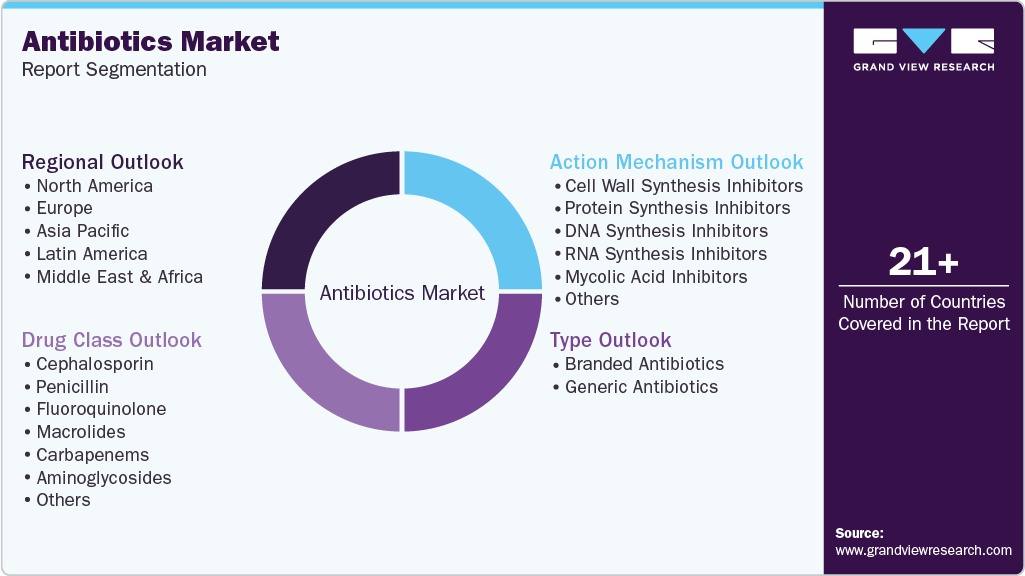
This report forecasts revenue growth at global, regional & country levels and provides an analysis on the industry trends in each of the sub-segments from 2021 to 2033. For the purpose of this study, Grand View Research has segmented the global antibiotics market report on the basis of drug class, type, action mechanism, and region:
-
Drug Class Outlook (Revenue in USD Million, 2021 - 2033)
-
Cephalosporin
-
Penicillin
-
Fluoroquinolone
-
Macrolides
-
Carbapenems
-
Aminoglycosides
-
Sulfonamides
-
7-ACA
-
Others
-
-
Type Outlook (Revenue, USD Million, 2021 - 2033)
-
Branded Antibiotics
-
Generic Antibiotics
-
-
Action Mechanism Outlook (Revenue, USD Million, 2021 - 2033)
-
Cell Wall Synthesis Inhibitors
-
Protein Synthesis Inhibitors
-
DNA Synthesis Inhibitors
-
RNA Synthesis Inhibitors
-
Mycolic Acid Inhibitors
-
Others
-
-
Regional Outlook (Revenue, USD Million, 2021 - 2033)
-
North America
-
U.S.
-
Canada
-
Mexico
-
-
Europe
-
UK
-
Germany
-
France
-
Italy
-
Spain
-
Denmark
-
Sweden
-
Norway
-
-
Asia Pacific
-
China
-
Japan
-
India
-
Australia
-
Thailand
-
South Korea
-
-
Latin America
-
Brazil
-
Argentina
-
-
Middle East & Africa
-
South Africa
-
Saudi Arabia
-
UAE
-
Kuwait
-
-
Research Methodology
Segment Definition
Segment - Drug Class
Revenue capture definition
Cephalosporin
Includes cephalosporin antibiotics indicated for the treatment of bacterial infections. The segment comprises first-, second-, third-, fourth-, and fifth-generation cephalosporins available in oral and injectable formulations..
Penicillin
Includes penicillin-based antibiotics indicated for the treatment of bacterial infections. The segment covers natural penicillins, aminopenicillins, antistaphylococcal penicillins, and beta-lactam/beta-lactamase inhibitor combinations.
Fluoroquinolone
Includes fluoroquinolone antibiotics indicated for the treatment of respiratory tract, urinary tract, gastrointestinal, and other bacterial infections. The segment comprises branded and generic products available in multiple dosage forms
Macrolides
Includes macrolide antibiotics indicated for the treatment of respiratory tract infections, skin infections, and sexually transmitted infections. The segment covers oral and injectable antibacterial products within the macrolide drug class.
Carbapenems
Includes carbapenem antibiotics indicated for the treatment of severe bacterial infections. The segment comprises broad-spectrum antibacterial products used against susceptible and drug-resistant bacterial pathogens.
Aminoglycosides
Includes aminoglycoside antibiotics indicated for the treatment of bacterial infections caused by susceptible microorganisms. The segment covers antibacterial products administered as monotherapy or combination therapy.
Sulfonamides
Includes sulfonamide antibiotics indicated for the treatment of urinary tract, respiratory tract, gastrointestinal, and other bacterial infections. The segment comprises standalone and combination antibacterial products.
7-ACA
Includes cephalosporin antibiotics manufactured using 7-Aminocephalosporanic Acid (7-ACA) as a core intermediate. The segment covers antibacterial products developed from 7-ACA-derived cephalosporin compounds.
Others
Includes antibiotic classes not categorized under cephalosporins, penicillins, fluoroquinolones, macrolides, carbapenems, aminoglycosides, or sulfonamides. The segment comprises tetracyclines, glycopeptides, polymyxins, oxazolidinones, and related antibacterial products.
Segment - Type
Revenue capture definition
Branded Antibiotics
Includes antibiotic products marketed under a brand name by pharmaceutical companies. The segment comprises innovator drugs, branded generic products, and combination antibiotics indicated for the treatment of bacterial infections.
Generic Antibiotics
Includes antibiotic products marketed under their non-proprietary names following the expiration of brand exclusivity. The segment comprises therapeutically equivalent formulations approved for the treatment of bacterial infections across multiple indications.
Segment - Action Mechanism
Revenue capture definition
Cell Wall Synthesis Inhibitors
Includes antibiotics that inhibit bacterial cell wall formation, resulting in disruption of bacterial growth and survival. The segment comprises beta-lactams, glycopeptides, and related antibacterial agents targeting cell wall synthesis pathways.
Protein Synthesis Inhibitors
Includes antibiotics that inhibit bacterial protein production by acting on ribosomal subunits. The segment comprises macrolides, aminoglycosides, tetracyclines, oxazolidinones, and other antibacterial agents targeting protein synthesis mechanisms.
DNA Synthesis Inhibitors
Includes antibiotics that interfere with bacterial DNA replication and repair processes. The segment comprises fluoroquinolones and other antibacterial agents that target enzymes involved in DNA synthesis and bacterial cell division.
RNA Synthesis Inhibitors
Includes antibiotics that inhibit bacterial RNA production by targeting RNA polymerase activity. The segment comprises antibacterial agents indicated for the treatment of bacterial infections through suppression of RNA synthesis pathways.
Mycolic Acid Inhibitors
Includes antibiotics that inhibit the synthesis of mycolic acids, essential components of mycobacterial cell walls. The segment comprises antibacterial agents primarily indicated for the treatment of mycobacterial infections, including tuberculosis.
Others
Includes antibiotics with mechanisms of action not categorized under cell wall synthesis inhibitors, protein synthesis inhibitors, DNA synthesis inhibitors, RNA synthesis inhibitors, or mycolic acid inhibitors. The segment comprises antibacterial agents targeting metabolic pathways, cell membrane integrity, and other bacterial functions.
Estimation Model
The antibiotic market size was estimated using a bottom up approach that involved identifying key manufacturers, benchmarking their flow cytometry product portfolios, and assessing revenues generated from relevant instruments, reagents, software, and services. Market revenues were further segmented by technology based on adoption rates and application trends, followed by aggregation of segment level estimates and validation through market share analysis of leading industry participants to derive the overall market size.
Delivered Customizations
This report has been delivered with the following In-depth customizations
Client Request
Customization Delivered
Value Adds
Antibiotic Disease Burden & Epidemiology Assessment
Analysis of bacterial infection incidence, prevalence, antimicrobial resistance trends, hospitalization rates, and patient populations across major countries and regions.
Supports demand estimation, patient pool quantification, and identification of high growth geographic markets.
Antibiotic Treatment & Utilization Analysis
Evaluation of treatment algorithms, antibiotic utilization patterns, prescribing practices, therapy duration, and treatment preferences across major infection indications.
Provides insights into product utilization trends and key factors driving antibiotic consumption.
Antibiotic Market Share & Competitive Assessment
Assessment of branded and generic antibiotic penetration, competitive positioning, market share trends, and product performance across major therapeutic categories.
Enables evaluation of competitive positioning and market participation across major product categories.
Pipeline & Clinical Development Assessment
Analysis of pipeline candidates, clinical trial activity, novel antibacterial mechanisms, combination therapies, and products targeting resistant pathogens.
Provides visibility into future product launches, pipeline activity, and emerging therapeutic segments.
Reimbursement & Market Access Analysis
Evaluation of payer coverage policies, reimbursement frameworks, pricing trends, treatment accessibility, and formulary positioning of branded and specialty migraine drugs.
Facilitates assessment of pricing dynamics, reimbursement policies, and market access conditions.
Frequently Asked Questions About This Report
The global antibiotics market size was valued at USD 55.3 billion in 2025 and is estimated at USD 57.6 billion in 2026.
The global antibiotics market is expected to grow at a CAGR of 3.6% from 2026 to 2033, reaching USD 74.0 billion by 2033.
The generic antibiotics segment dominated the market with the largest revenue share of 81.7% in 2025, driven by widespread availability, cost-effectiveness, and high prescription volumes.
The cell wall synthesis inhibitors segment held the largest market share, accounting for 51.5% of revenue in 2025, owing to the extensive use of beta-lactams and related antibacterial therapies.
North America dominated the antibiotics market with a 39.3% revenue share in 2025.
Key players operating in the antibiotics market include AbbVie, Inc., Pfizer Inc., Novartis AG, Merck & Co., Inc., Teva Pharmaceutical Industries Ltd., Lupin Pharmaceuticals, Inc., Viatris, Inc., Melinta Therapeutics LLC, Cipla, Inc., Shionogi & Co., Ltd., KYORIN Pharmaceutical Co., Ltd., GSK plc, and Nabriva Therapeutics PLC.
Key factors driving the market include the rising prevalence of bacterial infections, increasing incidence of hospital-acquired infections (HAIs), growing burden of antimicrobial resistance (AMR), expanding antibiotic R&D pipelines, and government initiatives supporting the development of therapies for drug-resistant infections.
Asia Pacific is the fastest-growing regional market and is projected to expand at a CAGR of 4.4% from 2026 to 2033.
Based on drug class, the cephalosporin segment led the market with the largest revenue share of 18.1% in 2025.
About the Author(s)
Pharmaceuticals Research Team
Healthcare · PharmaceuticalsThis report was authored by the pharmaceuticals research team at Grand View Research - comprising two research analysts, one senior research analyst, and one industry expert - with specialized expertise in the pharmaceuticals segment of the healthcare industry. All findings are based on proprietary healthcare databases, executive interviews, and regulatory analysis, subject to internal peer review prior to publication.
Last Updated:
Speak to Analyst


Customize this report to your needs — add regions, segments, or data points, with 20% free customization.
Or view our licence options:


ISO 9001:2015 & 27001:2022 Certified
We are GDPR and CCPA compliant! Your transaction & personal information is safe and secure. For more details, please read our privacy policy.


