
- Home
- »
- Biotechnology
- »
-
Antibody Optimization Service Market Size Report 2026-2033GVR Report cover

Antibody Optimization Service Market (2026 - 2033)
Size, Share & Trends Analysis Report By Type (Affinity Maturation, Humanization), By Technology (Phage Display, AI-based Computational Optimization), By Application, By End Use, By Region, And Segment Forecasts
Market Size, 2025
$1.5BMarket Estimate, 2026
$1.6BMarket Forecast, 2033
$2.9BCAGR, 2026–2033
9.0%Antibody Optimization Service Market Summary
The global antibody optimization service market size was valued at USD 1.5 billion in 2025 and is projected to grow from USD 1.6 billion in 2026 to USD 2.9 billion by 2033, at a CAGR of 9.0% from 2026 to 2033. North America dominated the market, accounting for a revenue share of 36.6% in 2025. The growth is primarily driven by the increase in demand for next-generation therapeutic antibodies, rising investments in biologics research and development, and advancements in computational modeling and protein engineering platforms.
 Source: Grand View Research, IR Documents, Primary Interviews, Paid DatabasesTo learn more about this report,
 Download Free Sample Report
Key Market Trends & Insights
- By type: Affinity maturation segment dominated the market, with a revenue share of 36.1% in 2025.
- By technology: Phage display segment held the largest market share of 45.8% in 2025.
- By application: Oncology segment held the largest revenue share of 45.5% in 2025.
- By end use: Pharmaceutical companies segment accounted for the largest revenue share of 44.2% in 2025.
Regional Highlights
- Largest regional market: North America (36.6% revenue share, 2025)
- Fastest-growing regional market: Asia Pacific (highest CAGR, 2026-2033)
- By country: The U.S. held the largest market share in 2025.
Market Size & Forecast
- Market size in 2025: USD 1.5 Billion
- Estimated market size in 2026: USD 1.6 Billion
- Projected market size by 2033: USD 2.9 Billion
- CAGR (2026-2033): 9.0%
Prism AI by Grand View Research Free to tryAsk a question about the antibody optimization service marketTry asking✓Every figure cited from GVR research Prefer the report? Download free sample →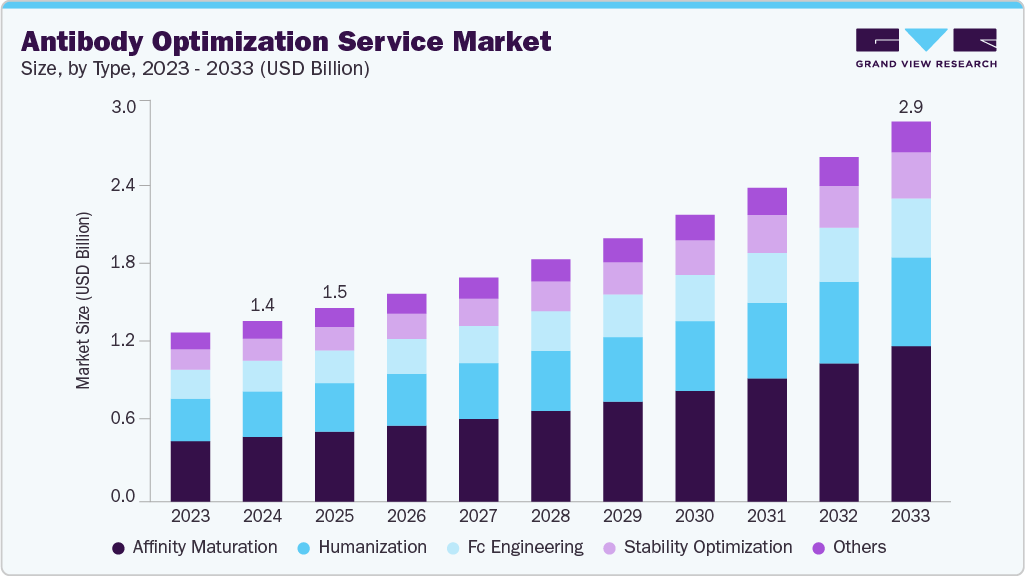 To learn more about this report, Download Free Sample Report
Market Dynamics
The antibody optimization service market is witnessing steady growth, driven by the expanding biologics pipeline, increasing adoption of antibody-based therapeutics, and advancements in protein engineering, computational modeling, and high-throughput screening technologies. Pharmaceutical and biotechnology companies are increasingly outsourcing antibody optimization activities to specialized service providers to reduce development timelines, access advanced scientific expertise, and improve cost efficiency. Growing investments in precision medicine, immuno-oncology, and bispecific and multispecific antibody development are further strengthening demand for optimization services. However, market growth is moderated by stringent regulatory expectations, high technical complexity, and the need to consistently deliver reproducible, high-quality optimization outcomes across diverse antibody formats. Despite these challenges, continued innovation in artificial intelligence-assisted antibody engineering, automation, and integrated discovery-to-optimization service offerings is expected to enhance service capabilities and create new growth opportunities for market participants.
The increasing occurrence of complex and chronic illnesses, such as cancer, autoimmune diseases, neurodegenerative diseases, and emerging infectious diseases, is spurring demand for the optimization of antibody services. As patient populations increase and diseases become more heterogeneous, the need for highly targeted, effective biologics that hit specific molecular pathways becomes evident. Monoclonal antibodies and next-generation therapeutic formats have become highly utilized due to their specificity and lower systemic toxicity. To achieve the best possible therapeutic performance, monoclonal and other next-generation proteins must be optimized for the selective enhancement of affinity, stability, specificity, and immunogenicity. This has intensified the demand for specialized optimization platforms and the capability to satisfy the complex needs of contemporary drug development programs.
Disease Prevalence in U.S. Population
Disease
Prevalence (% of population)
Prevalence (of people)
Obesity
35%
115 million
All cardiovascular diseases
20%
66 million
Type 2 diabetes mellitus
15%
50 million
All cancers
4%
13 million
All autoimmune diseases
3%
10 million
Source: Johns Hopkins University, Presentation, Secondary Research, Grandview Resaerch.inc
Moreover, the increasing presence of new pathogens and newly evolving viral variants, in the context of worldwide infectious disease concerns, has pushed the development of rapid and scalable antibodies to the forefront. Optimization of antibodies is crucial for increasing neutralization potency, enhancing therapeutic efficacy, and scaling up production for pandemic preparedness and response. Accordingly, the increasing burden of complex disease expands the therapeutic antibody pipeline and strengthens the rationale for optimization services to develop next-generation clinically relevant biologics.
The antibody optimization service market faces significant restraint due to the complex regulatory landscape and stringent quality requirements governing therapeutic antibody development. Service providers must comply with internationally recognized standards such as Good Laboratory Practice (GLP), Good Manufacturing Practice (GMP), and evolving regulatory guidelines for biologics, requiring substantial investments in quality management systems, documentation, validation, and process standardization. Differences in regulatory expectations across regions, particularly between North America, Europe, and Asia-Pacific, further complicate service delivery for global clients. Additionally, ensuring reproducibility, data integrity, and consistent optimization outcomes across multiple antibody engineering platforms increases operational complexity and costs. These regulatory and quality compliance burdens can extend project timelines, limit the adoption of novel optimization technologies, and create barriers for small and mid-sized service providers, thereby restraining overall market growth.
Market Concentration & Characteristics
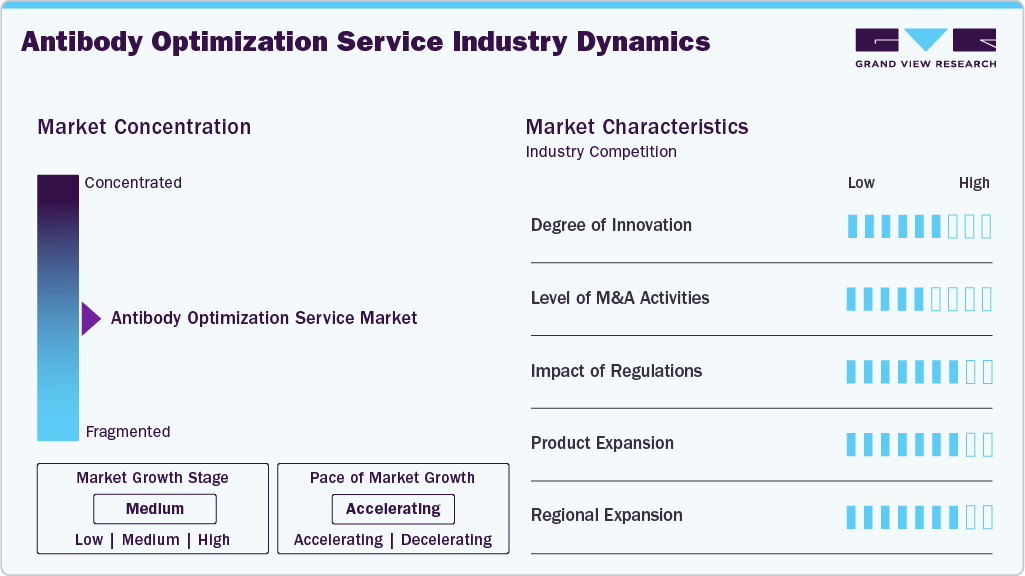
The antibody optimization service market exhibits a high level of innovation, driven by advancements in protein engineering, AI-enabled antibody design, and high-throughput screening techniques. For instance, in April 2025, Antibody Solutions launched single plasma B-cell discovery services through its Cellestive platform in the U.S., expanding B-cell pathways and enhancing high-throughput, AI-driven antibody discovery capabilities. The emergence of new formats (e.g., bispecifics, ADCs, and nanobodies) provides additional impetus for innovations and renewed collaboration between biopharmaceutical companies and AI-enabled platforms, leading to faster and more precise antibody development.
There is a moderate yet consistent increase in merger and acquisition (M&A) activity in the market, primarily driven by demand for comprehensive biologics development capabilities and progressive engineering technologies. For instance, in September 2024, Valerio Therapeutics acquired Emglev Therapeutics to create a new subsidiary, Valor Bio, which now holds exclusive rights to fully synthetic single-domain antibody platforms for the development of next-generation immunotherapies. The continued growth in deal volume and strategic collaboration interest indicates that the antibody optimization service market is maturing, is continuously adding competition, and is increasingly focusing on consolidation and technology leadership.
 To learn more about this report, Download Free Sample Report
Regulations have a significant impact on the antibody optimization service market by enforcing development, safety, and quality standards throughout the biopharmaceutical value chain. Regulatory agencies, such as the FDA and EMA, and other relevant authorities worldwide, have been advocating for the reduction of immunogenicity, ensuring product stability, maintaining process and manufacturing consistency, and promoting clinical safety. These regulatory agencies encourage companies to utilize more sophisticated optimization services early in the development process, particularly as compliance standards are a primary concern. As biologics and antibody-based therapeutics become more mainstream globally, we can expect that regulatory considerations around evolving drug modalities (such as bispecifics, ADCs, or engineered antibodies) will shape future service offerings, and their market expectations will rely on optimization services more than ever.
Product expansion is a key trend in the antibody optimization service industry, with providers broadening their capabilities to offer more integrated and advanced solutions. Companies are seeking to deliver end-to-end support, from discovery to engineering and optimization, in biologics development, aiming to meet the growing demand for efficient, high-precision antibody engineering workflows.
Regional expansion is gaining momentum in the market as companies seek to strengthen their global presence and tap into emerging biopharma hubs. Service providers are beginning to establish infrastructure, partnerships, and research centers in the primary markets of North America, Europe, and the Asia Pacific, with regional expansion unfolding in key clusters such as the U.S., Germany, China, and Singapore. Local capacity enables closer engagement with clients, aligns with regulatory requirements, promotes faster project turnaround, and presents an opportunity to access the rapidly growing interest in biologics development and capacity in developing regions.
Analyst Perspective
The antibody optimization service market is split between large, well-established companies and smaller specialized players, creating a competitive environment driven more by capabilities than size alone. Mature players offer end-to-end biologics services, combining antibody discovery, engineering, and optimization within broad service portfolios, which helps them secure large contracts from pharmaceutical companies and long-term partnerships. On the other hand, emerging players focus on specific services such as affinity maturation, Fc engineering, and humanization, mainly serving early-stage biotech and research-focused clients. While large companies benefit from scale, global reach, and integrated offerings, smaller firms are often stronger in customization, speed, and advanced antibody engineering techniques. This structure is likely to continue as demand grows across both large-scale drug development programs and more specialized innovative antibody projects.
Rising prevalence of complex diseases
The increasing occurrence of complex and chronic illnesses, such as cancer, autoimmune diseases, neurodegenerative diseases, and emerging infectious diseases, is spurring demand for the optimization of antibody services. As patient populations increase and diseases become more heterogeneous, the need for highly targeted, effective biologics that hit specific molecular pathways becomes evident. Monoclonal antibodies and next-generation therapeutic formats have become highly utilized due to their specificity and lower systemic toxicity. To achieve the best possible therapeutic performance, monoclonal and other next-generation proteins must be optimized for the selective enhancement of affinity, stability, specificity, and immunogenicity. This has intensified the demand for specialized optimization platforms and the capability to satisfy the complex needs of contemporary drug development programs.
Disease Prevalence in the U.S. Population
Disease
Prevalence (% of population)
Prevalence (of people)
Obesity
35%
115 million
All cardiovascular diseases
20%
66 million
Type 2 diabetes mellitus
15%
50 million
All cancers
4%
13 million
All autoimmune diseases
3%
10 million
Source: Johns Hopkins University, Presentation, Secondary Research, Grand View Research, Inc.
Moreover, the increasing presence of new pathogens and newly evolving viral variants, in the context of worldwide infectious disease concerns, has pushed the development of rapid and scalable antibodies to the forefront. Optimization of antibodies is crucial for increasing neutralization potency, enhancing therapeutic efficacy, and scaling up production for pandemic preparedness and response. Accordingly, the increasing burden of complex disease expands the therapeutic antibody pipeline and strengthens the rationale for optimization services to develop next-generation clinically relevant biologics.
Growing focus on next-generation biologics
The increasing emphasis on next-generation biologics is a major driver of demand for antibody optimization services. Biopharma companies are increasingly developing more complex, antibody-based therapeutics, such as bispecific antibodies, antibody-drug conjugates (ADCs), nanobodies, and Fc-engineered antibodies, to improve therapeutic precision and clinical outcomes. As drug developers advance beyond traditional monoclonal antibodies, there will likely be a greater demand for unique engineering methods and specialized expertise that will continue to facilitate the growth of the antibody optimization service ecosystem.
Next-generation antibody formats are being developed at an increasingly rapid pace, driven by advancements in protein engineering, computational biology, artificial intelligence-assisted antibody design, and high-throughput screening technology. These actions are saving companies time and money, minimizing development failure and abandonment rates.
Type Insights
Based on type, the affinity maturation segment held the largest market share of 36.1% in 2025 and is also expected to grow with the fastest CAGR throughout the forecast period. This growth is driven by the need to enhance antibody-antigen binding for improved therapeutic efficacy, as well as the increasing use of high-affinity antibodies in oncology and autoimmune diseases. Technological advancements in computational modeling and display platforms further support its strong market position.
The stability optimization segment is expected to grow at a significant CAGR during the forecast period. The growth of this segment is facilitated by advancements in protein engineering, analytical characterization tools, and the increasing demand for stable therapeutic antibodies in biopharmaceutical development.
Technology Insights
Based on technology, the phage display segment accounted for the largest revenue share, 45.8%, in 2025. This technology is a popular option for antibody discovery and engineering due to its adaptability, affordability, and the ability to screen large antibody libraries rapidly. Its extensive use in research partnerships and therapeutic antibody development also serves to further solidify its market leadership.
The AI-based computational optimization segment of the antibody optimization service market is expected to witness the fastest growth during the forecast period, driven by the increasing integration of artificial intelligence and machine learning in antibody design and development. Growing adoption of silico modeling and data-driven optimization by biopharmaceutical companies further fuels the segment’s expansion.
Application Insights
Based on application, oncology dominated the market with a revenue share of 45.5% in 2025 and are anticipated to grow at the fastest CAGR over the forecast period, driven by the widespread use of therapeutic antibodies, such as monoclonal and bispecific antibodies, in cancer treatment, which is responsible for this dominance. This segment's dominant position is further reinforced by the rising global incidence of cancer and the growing emphasis on creating tailored and targeted immunotherapies.
The neurological disorders segment is expected to register the fastest growth during the forecast period, driven by the rising prevalence of neurodegenerative diseases such as Alzheimer’s and Parkinson’s. Increasing research into antibody-based therapies that target misfolded proteins and neuroinflammatory pathways, along with growing investments in central nervous system (CNS) drug development, are key factors driving the expansion of this segment.
End Use Insights
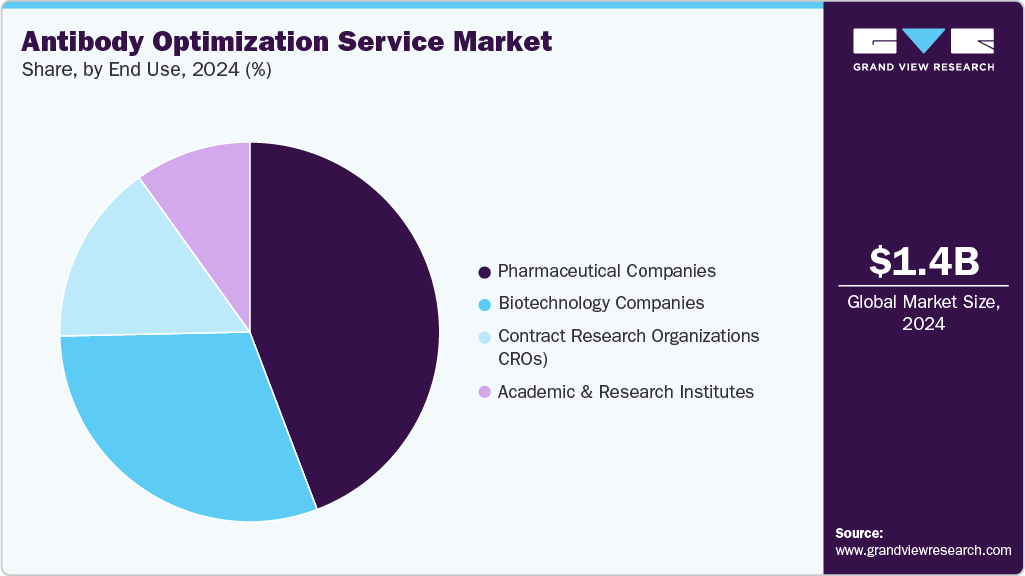
Based on end use, the pharmaceutical companies segment led the market with the largest revenue share of 44.2%. Their significant investment in the creation of antibody-based medications, their strategic alliances with biotech firms and CROs, and the expanding pipeline of monoclonal and bispecific antibodies all contributed to this, further solidifying the market's dominance.
 To learn more about this report, Download Free Sample Report
The biotechnology companies segment is anticipated to record the fastest CAGR during the forecast period, driven by the growing emphasis on cutting-edge antibody engineering and discovery initiatives. The segment's growth is being further accelerated by increased funding and strategic alliances with significant pharmaceutical companies.
Regional Insights
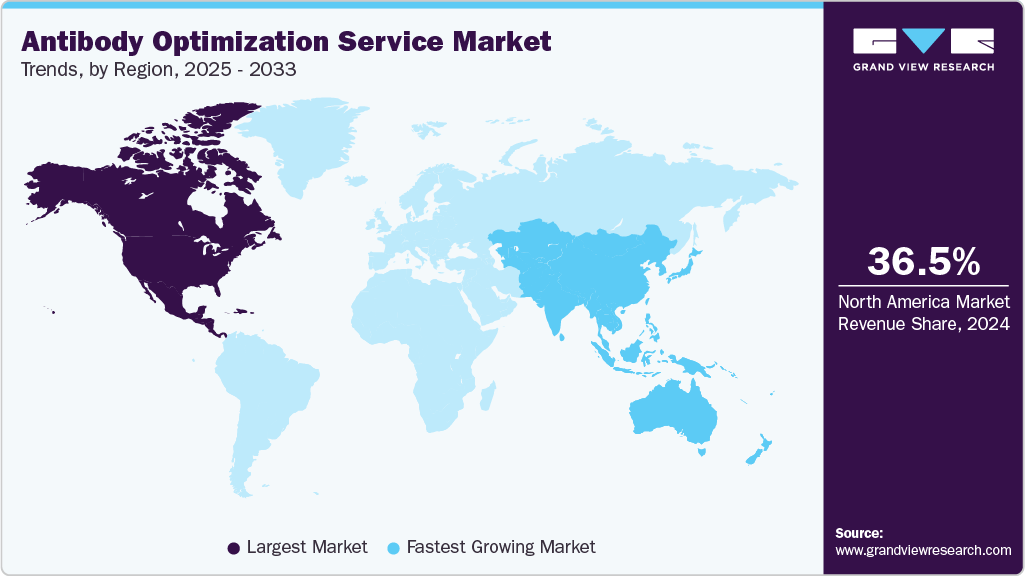
North America dominated the antibody optimization service market with the largest revenue share of 36.6% in 2025. The increasing demand for innovative therapeutic antibodies, including bispecific and antibody-drug conjugates (ADCs), and the growing funding for precision medicine research continue to drive the use of these services.
 To learn more about this report, Download Free Sample Report
U.SAntibody Optimization Service Market Trends
The antibody optimization service market in the U.S. held the largest share in the North America region in 2025. The U.S. antibody optimization service industry has experienced significant growth, supported by expanding antibody discovery pipelines, investment in advanced engineering platforms, and facility expansions by biotech firms to accelerate preclinical optimization and GMP workflows.
Europe Antibody Optimization Service Market Trends
Europe is experiencing steady growth due to its strong research infrastructure, regulatory support for biologics innovation, and research collaboration between the public and private sectors. Investment in AI-based antibody design, display technologies, and precision immunotherapies is strengthening market presence.
The UK antibody optimization service market is expanding due to strong investments in antibody research, growing biotech start-up activity, and government-backed innovation programs in precision medicine. For instance, in February 2025, Vector Laboratories partnered with Etcembly, a UK-based Company, to apply AI for optimizing antibody engineering, aiming to enhance manufacturability and accelerate the development of next-generation therapeutics. Moreover, with the involvement of leading university academics and incubators, new advanced antibody optimization workflows, including AI-based screening and structure-guided engineering technologies, are being adopted more rapidly.
The antibody optimization service market in Germany is a key regional segment, driven by its well-established biotech and pharmaceutical manufacturing industry, government support for infrastructure development in the biotech sector, and active R&D in the development of immunotherapy applications.
Asia Pacific Antibody Optimization Service Market Trends
The Asia Pacific antibody optimization service industry is expected to register the fastest CAGR from 2026 to 2033, driven by the expansion of biologics R&D programs, growth in investments in antibody therapeutics, and the establishment of new partnerships between regional biotech companies and global technology companies.
The China antibody optimization service marketis continuing to emerge as a key player in the region, driven by aggressive government financing, expansion of biomanufacturing at scale, and rapid advances in the biotech startup ecosystem. Domestic companies are investing in in-silico engineering tools and high-throughput antibody screening platforms and forming additional commercial partnerships to accelerate innovation in biologics.
The antibody optimization service market in Japan is expected to witness substantial progress over the forecast period. This growth is expected to be driven by biomedical advances, increasing interest in tailored immunotherapies and the treatment of various complex diseases, as well as strong industry-academic collaboration.
MEA Antibody Optimization Service Market Trends
The Middle East & Africa region is experiencing a rise in interest and demand for antibody optimization services. Government-supported research projects and partnerships with global biotechnology companies are helping to establish advanced platforms for therapeutic antibody development, thereby driving the expansion of this market.
The Kuwait antibody optimization service market is gradually developing. This growth of the market in Kuwait is supported by the growing investments in biotechnology, precision medicine, and research infrastructure.
Key Antibody Optimization Service Company Insights
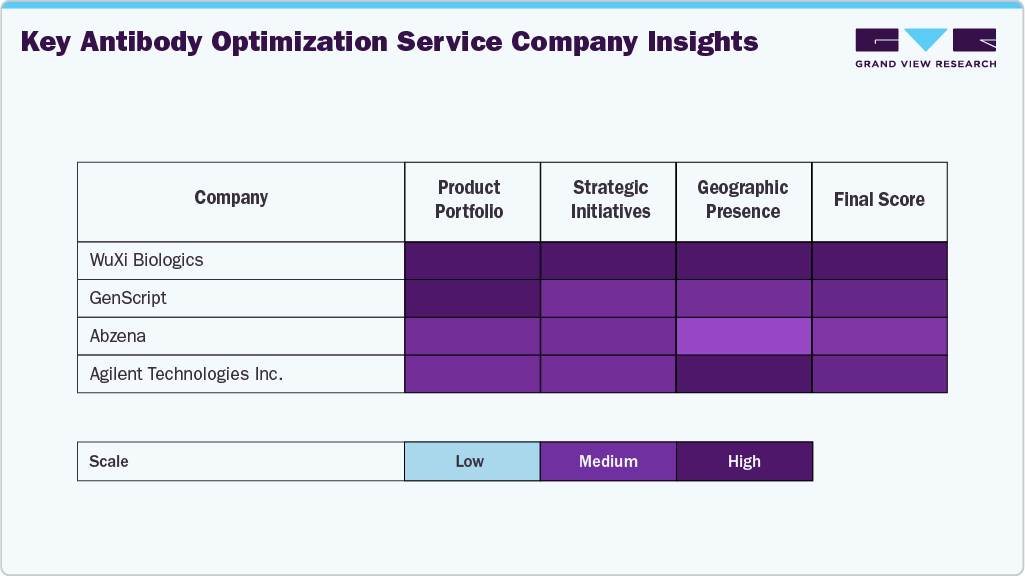
The antibody optimization services industry comprises a range of established multinational companies, as well as biotechnology companies offering specialized services built upon advanced engineering platforms, artificial intelligence design tools, and a high level of expertise in biologics development. Leading companies, including WuXi Biologics, GenScript Biotech, Evotec SE, Fusion Antibodies plc, and Abzena, possess significant competitive advantages in the market and offer a comprehensive range of services across multiple aspects of antibody engineering, including development assessments, affinity maturation, and advanced protein analytics. These well-established companies continue to expand their capabilities through state-of-the-art discovery platforms, proprietary optimization technologies, and collaborations with a broad range of pharmaceutical and biotechnological partners.
 To learn more about this report, Download Free Sample Report
In addition, firms such as Sino Biological Inc.; AvantGen Inc.; Thermo Fisher Scientific Inc.; Agilent Technologies Inc.; and Bio-Rad Laboratories Inc. are actively enhancing their market presence by offering specialized optimization tools, recombinant antibody platforms, and scalable solutions for next-generation biologics.
Key Antibody Optimization Service Companies:
The following key companies have been profiled for this study on the antibody optimization service market.
-
WuXi Biologics
-
GenScript Biotech
-
Evotec SE
-
Fusion Antibodies plc
-
Abzena
-
Sino Biological Inc.
-
AvantGen Inc.
-
Thermo Fisher Scientific Inc.
-
Agilent Technologies Inc.
-
Bio-Rad Laboratories Inc.
Competitive Benchmarking
Category
Operating Strategies
Competitive Edge
Weakness
Established Players (WuXi Biologics, Thermo Fisher Scientific Inc., Agilent Technologies Inc.,etc)
- Strengthen offerings through automation, high-throughput screening, AI-enabled design tools, and global service expansion.
- Strong global presence, established pharma partnerships, broad service portfolios, and scalable biologics capabilities.
- High capital intensity, operational complexity, and exposure to regulatory and geopolitical risks.
Emerging Players (Myriad Genetics, PerkinElmer, Pacific Biosciences, etc)
- Focus on specialized, project-based antibody optimization services including affinity maturation, humanization, Fc engineering, and library screening.
- Strong technical specialization, flexibility, and ability to support customized and early-stage biologics programs.
- Limited scale, lower global reach, and dependence on outsourced demand from larger pharma and biotech clients.
Recent Developments
-
In June 2026, Biointron launched RushData, an integrated high-throughput antibody discovery platform enabling rapid CHO-based expression, standardized datasets, and AI/ML-ready screening workflows for accelerated development processes.
-
In February 2026, GeminiBio collaborated with Tolemy Bio to launch aiMOS™, an AI/ML-enabled media optimization service for cell therapy manufacturing using multi-omics data platform collaboration initiative.
“Cell therapy developers shouldn’t have to accept one‑size‑fits‑all media when their processes, cell sources, and activation strategies are so different.”
-Brian Parker, Chief Executive Officer at GeminiBio. “aiMOS
Antibody Optimization Service Market Report Scope
Report Attribute
Details
Market size in 2025
USD 1.5 billion
Estimated market size in 2026
USD 1.6 billion
Projected market size by 2033
USD 2.9 billion
Growth rate
CAGR of 9.0% from 2026 to 2033
Base year for estimation
2025
Historical data
2021 - 2024
Forecast period
2026 - 2033
Quantitative units
Revenue in USD million/billion and CAGR from 2026 to 2033
Report coverage
Revenue forecast, company ranking, competitive landscape, growth factors, and trends
Segments covered
Type, technology, application end use, region
Regional scope
North America; Europe; Asia Pacific; Latin America; MEA
Country scope
U.S.; Canada; UK; Germany; France; Spain; Italy; Sweden; Norway; Denmark; Japan; China; India; South Korea; Australia; Thailand; Brazil; Mexico; Argentina; South Africa; UAE; Saudi Arabia; Kuwait
Key companies profiled
WuXi Biologics; GenScript Biotech; Evotec SE; Fusion Antibodies plc; Abzena; Sino Biological Inc.; AvantGen Inc.; Thermo Fisher Scientific Inc.; Agilent Technologies Inc.; Bio-Rad Laboratories Inc.
Customization scope
Free report customization (equivalent up to 8 analysts' working days) with purchase. Addition or alteration to country, regional & segment scope.
Pricing and purchase options
Avail customized purchase options to meet your exact research needs. Explore purchase options
Global Antibody Optimization Service Market Report Segmentation
This report forecasts revenue growth at the global, regional & country levels and provides an analysis on the latest trends in each of the sub-segments from 2021 to 2033. For this study, Grand View Research has segmented the antibody optimization service market report based on type, technology, application, end use, and region:
-
Type Outlook (Revenue, USD Million, 2021 - 2033)
-
Affinity Maturation
-
Humanization
-
Fc Engineering
-
Stability Optimization
-
Others
-
-
Technology Outlook (Revenue, USD Million, 2021 - 2033)
-
Phage Display
-
Yeast/Mammalian Display
-
Ribosome/mRNA Display
-
AI-based Computational Optimization
-
-
Application Outlook (Revenue, USD Million, 2021 - 2033)
-
Oncology
-
Autoimmune & Inflammatory Diseases
-
Infectious Diseases
-
Neurological Disorders
-
Others
-
-
End Use Outlook (Revenue, USD Million, 2021 - 2033)
-
Pharmaceutical Companies
-
Biotechnology Companies
-
Contract Research Organizations (CROs)
-
Academic & Research Institutes
-
-
Regional Outlook (Revenue, USD Million, 2021 - 2033)
-
North America
-
U.S.
-
Canada
-
Mexico
-
-
Europe
-
Germany
-
UK
-
France
-
Italy
-
Spain
-
Denmark
-
Sweden
-
Norway
-
-
Asia Pacific
-
China
-
Japan
-
India
-
South Korea
-
Australia
-
Thailand
-
-
Latin America
-
Brazil
-
Argentina
-
-
Middle East & Africa
-
South Africa
-
Saudi Arabia
-
UAE
-
Kuwait
-
-
Research Methodology
The antibody optimization service market figures in this report are based on a proven research process that combines executive interviews with secondary research from proprietary databases, company filings, and recognized regulatory and institutional sources. Market size is built through value-chain sizing - reconciling supply-side and demand-side estimates - and triangulated with bottom-up and top-down approaches. Every estimate passes multiple levels of expert validation before publication, with each antibody optimization service segment quantified using the revenue-capture definitions in the table below.
Segment Definition
Segment - Type
Revenue capture definition
Affinity Maturation
Revenue is generated from services that enhance antibody-antigen binding affinity through mutagenesis, library screening, directed evolution, computational design, and affinity engineering techniques to improve therapeutic efficacy.
Humanization
Revenue is generated from services that reduce the immunogenicity of non-human antibodies by replacing non-human framework regions with human antibody sequences while preserving antigen-binding specificity.
Fc Engineering
Revenue is generated from services that modify the Fc region of antibodies to improve effector functions, extend serum half-life, enhance stability, or optimize interactions with Fc receptors and complement proteins.
Stability Optimization
Revenue is generated from services that improve antibody stability, solubility, aggregation resistance, manufacturability, and storage characteristics through sequence engineering, structural optimization, and formulation support.
Others
Revenue is generated from other antibody optimization services, including specificity engineering, developability assessment, deimmunization, glycoengineering, and customized optimization solutions not classified under the above categories.
Segment - Technology
Revenue capture definition
Phage Display
Revenue is generated from antibody optimization services utilizing phage display libraries for antibody selection, affinity maturation, epitope mapping, and lead optimization.
Yeast/Mammalian Display
Revenue is generated from optimization services employing yeast or mammalian cell display platforms for screening, affinity improvement, expression enhancement, and functional validation of antibody candidates.
Ribosome/mRNA Display
Revenue is generated from services using cell-free ribosome or mRNA display technologies to generate and optimize high-diversity antibody libraries for improved binding characteristics and functionality.
AI-based Computational Optimization
Revenue is generated from services leveraging artificial intelligence, machine learning, structural modeling, and computational algorithms to predict antibody variants, optimize sequences, and accelerate antibody engineering workflows.
Segment - Application
Revenue capture definition
Oncology
Revenue is generated from antibody optimization services supporting the development of therapeutic and diagnostic antibodies for cancer detection, targeted therapy, immuno-oncology, and precision oncology applications.
Autoimmune & Inflammatory Diseases
Revenue is generated from optimization services for antibodies intended to treat autoimmune and inflammatory disorders by improving target specificity, efficacy, and safety profiles.
Infectious Diseases
Revenue is generated from antibody optimization services used to develop antibodies targeting bacterial, viral, fungal, and parasitic infections, including emerging and pandemic pathogens.
Neurological Disorders
Revenue is generated from optimization services for antibodies targeting neurological and neurodegenerative diseases, including engineering to improve blood-brain barrier penetration, stability, and target engagement.
Others
Revenue is generated from antibody optimization services supporting additional therapeutic areas, including cardiovascular, metabolic, ophthalmic, respiratory, and rare diseases.
Segment - End Use
Revenue capture definition
Pharmaceutical Companies
Revenue is generated from antibody optimization services provided to pharmaceutical companies for preclinical research, biologics discovery, lead optimization, and therapeutic antibody development.
Biotechnology Companies
Revenue is generated from optimization services delivered to biotechnology companies developing monoclonal antibodies, bispecific antibodies, antibody-drug conjugates (ADCs), and other antibody-based therapeutics.
Contract Research Organizations (CROs)
Revenue is generated from antibody optimization services outsourced by CROs to support integrated drug discovery and development programs for their pharmaceutical and biotechnology clients.
Academic & Research Institutes
Revenue is generated from antibody optimization services provided to universities, government laboratories, and research institutes conducting basic, translational, and collaborative antibody research.
Estimation Model
Approach
Focus Area
Description
Top-Down
Company Revenue Analysis
Aggregated revenues of key antibody optimization service providers, CROs, and biologics service organizations across major service categories. Revenue estimates were validated using company annual reports, investor presentations, paid databases, industry publications, and primary interviews to derive the overall market size.
Bottom-Up
Technology Penetration Assessment
Derived the global market size based on spending on antibody discovery and optimization services. Distributed across regions and countries according to biologics R&D expenditure, therapeutic applications, pipeline activity, outsourcing penetration, pharmaceutical and biotechnology research intensity, and regional adoption of antibody engineering technologies.
Primary Research
Conducting Interviews with Industry Experts
Conducted interviews with antibody optimization service providers, pharmaceutical and biotechnology companies, CRO executives, biologics researchers, antibody engineering specialists, and industry consultants to validate market estimates, pricing trends, technology adoption, outsourcing patterns, and the competitive landscape.
Validation
Data Triangulation & Validation Model
Market estimates were validated through triangulation of secondary research, primary interviews, company-level revenue assessments, biologics pipeline analysis, and demand-side adoption across pharmaceutical, biotechnology, CRO, and academic end users to ensure consistency and accuracy across all market segments and geographies.
Forecasting
Forecasting & CAGR Modeling
Forecasts were developed using historical market trends, growth in therapeutic antibody pipelines, expansion of biologics R&D investments, outsourcing trends, advancements in AI-assisted antibody engineering, and increasing demand for next-generation antibody therapeutics across key therapeutic areas.
Delivered Customizations
This report has been delivered with the following In-depth customizations
Client Request
Customization Delivered
Value Adds
Technology Adoption & Platform Preference Analysis
Analyzed adoption of major antibody optimization technologies, including phage display, yeast/mammalian display, ribosome/mRNA display, and AI-based computational optimization platforms, along with their usage across pharma and biotech pipelines.
Helps clients understand technology shift patterns, optimize platform selection strategies, and invest in high-growth enabling technologies such as AI-driven antibody design.
Pricing Structure & Service Engagement Models Analysis
Analyzed pricing mechanisms such as project-based pricing, FTE-based models, milestone-based contracts, and long-term strategic partnerships in antibody optimization services.
Helps clients optimize pricing strategies, negotiate contracts effectively, and improve profitability across service offerings.
AI & Digital Biology Integration Assessment
Assessed adoption of AI-driven antibody design, in silico optimization, machine learning-based affinity prediction, and digital biology platforms across service providers.
Enables clients to identify innovation opportunities and invest in next-generation computational antibody optimization capabilities.
Frequently Asked Questions About This Report
The affinity maturation segment led with a 36.1% revenue share in 2025.
The global antibody optimization service market size was valued at USD 1.5 billion in 2025 and is estimated at USD 1.6 billion for 2026.
The global antibody optimization service market is expected to grow at a CAGR of 9.0% from 2026 to 2033, reaching USD 2.9 billion by 2033.
North America led the antibody optimization service market, accounting for the largest revenue share of 36.6% in 2025.
The phage display segment led with a 45.8% revenue share in 2025.This technology is a popular option for antibody discovery and engineering due to its adaptability, affordability, and the ability to screen large antibody libraries rapidly.
The oncology segment led with a 45.5% revenue share in 2025 and are anticipated to grow at the fastest CAGR over the forecast period, driven by the widespread use of therapeutic antibodies, such as monoclonal and bispecific antibodies, in cancer treatment, which is responsible for this dominance.
Asia Pacific is the fastest-growing region over the forecast period.
The key players operating in the antibody optimization service market include WuXi Biologics, GenScript Biotech, Evotec SE, Fusion Antibodies plc, Abzena, Sino Biological Inc., AvantGen Inc., Thermo Fisher Scientific Inc., Agilent Technologies Inc., and Bio-Rad Laboratories Inc..
The growth is primarily driven by the increase in demand for next-generation therapeutic antibodies, rising investments in biologics research and development, and advancements in computational modeling and protein engineering platforms.
About the Author(s)
Biotechnology Research Team
Healthcare · BiotechnologyThis report was authored by the biotechnology research team at Grand View Research - comprising two research analysts, one senior research analyst, and one industry expert - with specialized expertise in the biotechnology segment of the healthcare industry. All findings are based on proprietary healthcare databases, executive interviews, and regulatory analysis, subject to internal peer review prior to publication.
Last Updated:
Speak to Analyst

Customize this report to your needs - add regions, segments, or data points, with 20% free customization.
Or view our licence options:


ISO 9001:2015 & 27001:2022 Certified
We are GDPR and CCPA compliant! Your transaction & personal information is safe and secure. For more details, please read our privacy policy.


