
- Home
- »
- Advanced Interior Materials
- »
-
Architectural Membranes Market Size Report, 2026-2033GVR Report cover

Architectural Membranes Market (2026 - 2033)
Size, Share & Trends Analysis Report By Material Type (PTFE Coated Fabric, PVC Coated Fabric), By End Use (Sports & Recreation, Transportation Infrastructure), By Region, And Segment Forecasts
Market Size, 2025
$2.9BMarket Estimate, 2026
$3.0BMarket Forecast, 2033
$4.6BCAGR, 2026–2033
6.2%Architectural Membranes Market Summary
The global architectural membranes market size was valued at USD 2.9 billion in 2025 and is projected to grow from USD 3.0 billion in 2026 to USD 4.6 billion by 2033, at a CAGR of 6.2% from 2026 to 2033. Asia Pacific dominated the market, accounting for the largest revenue share of 33.3% in 2025, driven by the growing demand for lightweight and flexible building materials that offer both aesthetic appeal and functional performance. These membranes, made from materials such as PTFE, PVC, and ETFE, enable architects and designers to create unique, free-form structures while ensuring durability and resistance to environmental conditions.
 Source: Grand View Research, IR Documents, Primary Interviews, Paid DatabasesTo learn more about this report,
 Download Free Sample Report
 Key Market Trends & Insights
- By material type: PTFE coated fabric segment led the market with the largest revenue share of 35.2% in 2025.
- By end use: Sports & recreation segment led the market with the largest revenue share of 42.0% in 2025.
Regional Highlights
- Largest regional market: Asia Pacific (33.3% revenue share, 2025)
- By country: China held the largest share of Asia Pacific in 2025.
Market Size & Forecast
- Market Size in 2025: USD 2.9 Billion
- Estimated Market Size in 2026: USD 3.0 Billion
- Projected Market Size by 2033: USD 4.6 Billion
- CAGR (2026-2033): 6.2%
Three ways to get this report
Buy it, customize it, or ask a question.Ask an Analyst
A direct answer, usually in 1 working day
- AccessReport author, directly
- Reply timeWithin 1 working day
- No sales callDirect answer only
- FormatEmail reply
- CostFree, no cost
Get the Full Report
What the study covers
- FormatsPDF · Excel · Dashboard
- Timeline2026–2033 annual, 2025 base
- Coverage20+ countries, 5 regions
- Companies10+ key players profiled
Customize the Report
20% free customization
- IncludeCountries, segments, points
- TailorTo your product definition
- ExtendDeeper competitor detail
- OrA fully bespoke study
- Turnaround5–10 working days
Increasing urbanization and infrastructure development, particularly in emerging economies, is another major driver for the market. Governments and private sector developers are investing heavily in large public venues and commercial complexes that require innovative roofing and façade solutions. Architectural membranes offer an efficient alternative to conventional materials due to their reduced structural support requirements, faster installation timelines, and lower maintenance costs. This not only improves project economics but also aligns with the rising emphasis on cost-effective construction methods in both developed and developing regions.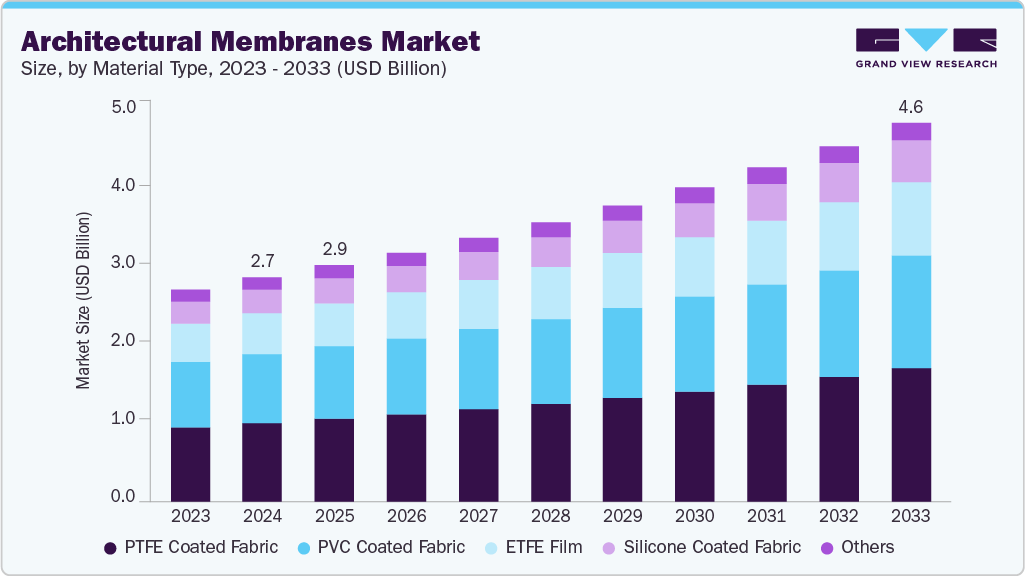 To learn more about this report, Download Free Sample Report
 Sustainability and environmental regulations are also propelling the use of architectural membranes. Many of these materials are recyclable, have a long service life, and contribute to energy efficiency by reducing the need for artificial lighting and air conditioning. As green building certifications such as LEED and BREEAM become increasingly important, architectural membranes that support energy conservation and reduce carbon footprints are gaining traction. Furthermore, advancements in membrane coating technologies have enhanced UV resistance, fire safety, and self-cleaning properties, making them more attractive for long-term use in diverse climatic conditions.
Market Dynamics
The architectural membranes market is witnessing steady growth, driven by increasing adoption of lightweight and flexible construction materials, rising demand for modern and sustainable building solutions, and expanding use in large-span structures such as stadiums, airports, exhibition centers, and commercial complexes. Architectural membranes are increasingly preferred over conventional roofing and façade systems due to their high strength-to-weight ratio, design flexibility, faster installation, translucency for natural lighting, and improved energy efficiency. Growing investments in urban infrastructure, coupled with the rising emphasis on iconic and visually distinctive architectural designs, is further supporting market expansion. In addition, advancements in PTFE-coated fiberglass, ETFE films, PVC membranes, and tensile structure engineering are enabling improved durability, weather resistance, and lifecycle performance, thereby widening application scope across both permanent and temporary structures.
The increasing focus on sustainable and energy-efficient construction practices is a key driver for the architectural membranes market. Developers and architects are progressively adopting lightweight membrane structures to reduce overall material usage, construction time, and structural load while achieving high design efficiency. Architectural membranes enable better daylight utilization and thermal performance, thereby reducing dependency on artificial lighting and HVAC systems, which aligns with stringent green building regulations and energy efficiency standards. Additionally, rapid urbanization and infrastructure development, particularly in emerging economies, are fueling demand for cost-effective yet visually advanced construction solutions. The growing popularity of tensile architecture in commercial spaces, transportation hubs, and recreational facilities, along with rising investments in smart and sustainable cities, is further accelerating market growth globally.
The architectural membranes market faces certain challenges, including high initial installation costs, complex engineering requirements, and dependence on specialized design expertise. Compared to conventional construction materials, membrane structures require precise structural analysis, custom fabrication, and skilled installation, which can increase project costs and execution timelines. Additionally, fluctuations in raw material prices such as polymers, coated fabrics, and specialty films can impact overall project economics. Concerns related to long-term durability under extreme weather conditions, fire resistance compliance, and maintenance requirements also influence adoption, particularly in cost-sensitive projects and developing regions. These factors may limit large-scale deployment in standard construction applications where traditional materials remain more economical and widely accepted.
The increasing focus on landmark architectural projects and large-scale infrastructure development is creating significant opportunities for the architectural membranes market. Rising investments in airports, stadiums, cultural centers, commercial complexes, and transportation hubs are driving demand for innovative roofing and façade solutions that combine aesthetics with functionality. Architectural membranes offer high design flexibility, enabling architects to create complex geometries and visually striking structures that are increasingly preferred in modern urban development. Furthermore, the growing trend of adaptive and temporary structures for events, exhibitions, and disaster-relief applications is expanding the addressable market. Advancements in high-performance membrane materials with improved UV resistance, self-cleaning properties, and longer service life are also enhancing adoption potential. The continued shift toward sustainable and visually differentiated architecture is expected to unlock strong long-term growth opportunities for the global architectural membranes market.
Market Concentration & Characteristics
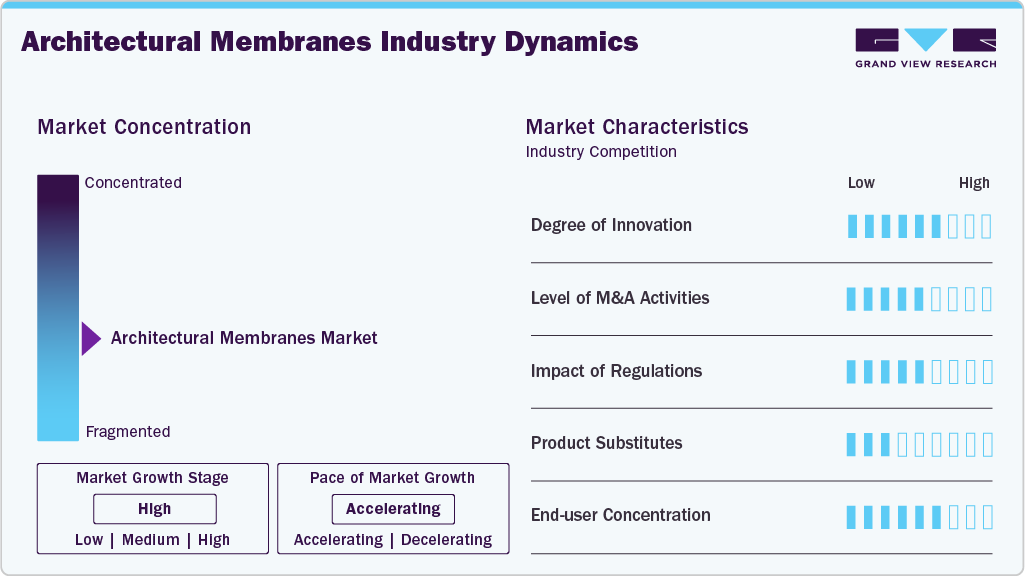
The architectural membranes market exhibits a moderate to high degree of innovation, driven by advancements in material science, coating technologies, and sustainable manufacturing processes. Continuous R&D efforts are leading to the development of membranes with enhanced durability, improved UV resistance, superior tensile strength, and energy-efficient properties. The market has also seen a steady level of mergers and acquisitions, as established players seek to expand their global footprint, diversify their product portfolios, and strengthen technological capabilities.
 To learn more about this report, Download Free Sample Report
 Additionally, industry regulations, particularly those related to building safety standards, fire resistance, and environmental sustainability, significantly influence product design and adoption rates. These regulations encourage the adoption of high-performance membranes that meet strict compliance requirements, shaping competitive strategies across the sector. From a structural standpoint, the availability of service substitutes is relatively limited, as architectural membranes offer a unique combination of flexibility, lightweight properties, and aesthetic versatility that is difficult to replicate with conventional building materials. However, alternative façade systems.
Analyst Perspective
The Architectural Membranes market is increasingly evolving into a design- and sustainability-driven segment, supported by growing demand for lightweight, energy-efficient, and visually distinctive building solutions. Adoption is accelerating across stadiums, airports, transportation hubs, commercial complexes, and public infrastructure projects where membranes offer superior design flexibility, reduced structural load, and enhanced durability. Market participants are focusing on advanced materials such as PTFE, ETFE, and high-performance PVC membranes to meet evolving requirements for longevity, weather resistance, and environmental performance. Going forward, companies with strong engineering capabilities, innovative material technologies, established project execution expertise, and the ability to support sustainable construction objectives will be best positioned to capitalize on emerging growth opportunities and strengthen their competitive advantage.
Material Type Insights
Based on material type, the PTFE coated fabric segment led the market with the largest revenue share of 35.2% in 2025 and is expected to grow at a CAGR of 6.2% over the forecast period. PTFE-coated fabrics offer outstanding performance in both permanent and temporary structures, making them an ideal choice for applications such as stadium roofs, large-span enclosures, and commercial facades. Their low surface energy ensures self-cleaning properties, reducing maintenance costs and extending service life, which appeals to project developers seeking long-term operational efficiency. Additionally, growing demand for sustainable building materials is driving adoption, as PTFE-coated fabrics are recyclable and contribute to energy efficiency through natural lighting and thermal insulation.
The ETFE film segment is expected to grow at the fastest CAGR of 6.9% over the forecast period, driven by increasing demand for lightweight, transparent, and high-strength materials. ETFE films provide exceptional light transmission while offering excellent resistance to UV radiation, chemicals, and weathering, making them ideal for applications such as skylights, façades, and transparent roofing systems. Their lightweight nature reduces structural load and lowers installation costs, while their flexibility supports innovative architectural designs. Moreover, advancements in multi-layer ETFE cushions with enhanced thermal insulation and solar control capabilities are boosting their adoption in energy-efficient and iconic building projects worldwide.
End Use Insights
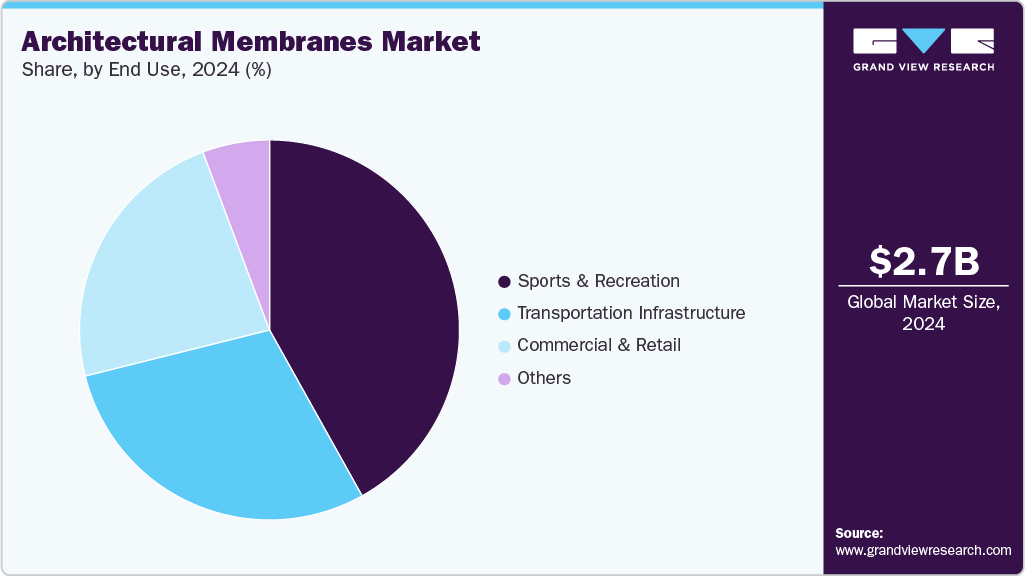
Based on end use, the sports & recreation segment led the market with the largest revenue share of 42.0% in 2025 and is expected to grow at a CAGR of 6.3% over the forecast period. Architectural membranes in these settings enable the construction of expansive, column-free spaces that enhance visibility and spectator experience while ensuring weather protection. The ability of membrane structures to incorporate natural lighting reduces energy consumption, making them both functional and sustainable. Furthermore, the global trend of hosting international sporting events, coupled with government-backed infrastructure development programs, continues to stimulate demand for membrane-based roofing and enclosure systems in this segment.
 To learn more about this report, Download Free Sample Report
 The transportation infrastructure segment is expected to grow at the fastest CAGR of 6.5% over the forecast period, driven by the need for efficient, lightweight, and aesthetically appealing solutions in public infrastructure. Applications such as airport terminals, railway stations, bus depots, and pedestrian walkways benefit from membranes’ ability to span large areas with minimal structural support. Their resistance to harsh environmental conditions, ease of maintenance, and capacity to integrate with modern lighting and ventilation systems enhance passenger comfort and operational efficiency. In addition, urbanization and government investments in upgrading transportation hubs to meet growing commuter demands are accelerating the integration of membrane structures in this sector.
Regional Insights
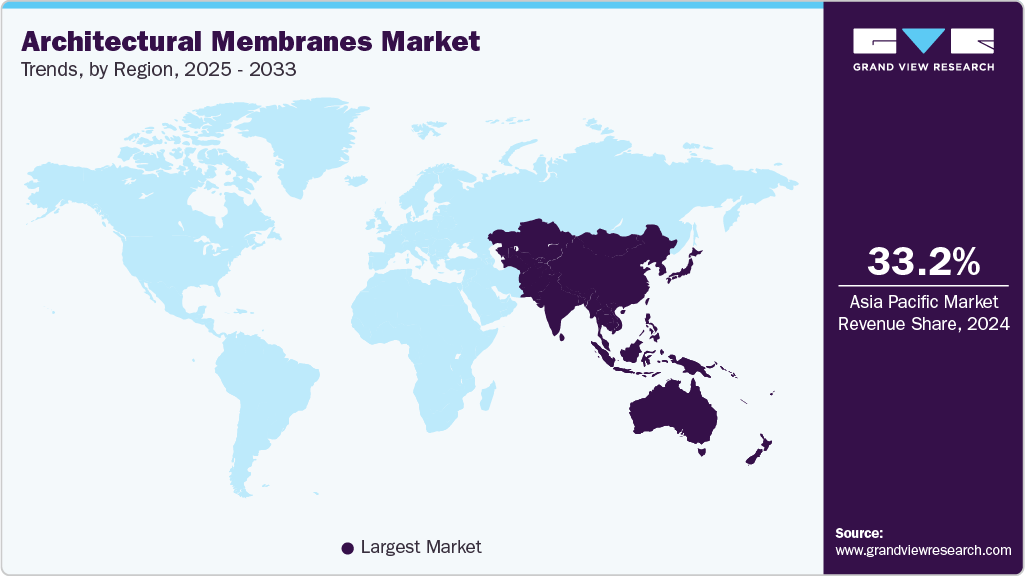
Asia Pacific dominated the architectural membranes market with the largest revenue share of 33.3% in 2025, driven by rapid urbanization and significant investment in infrastructure development across emerging economies such as China, India, and Southeast Asian countries. Governments are investing heavily in smart city projects, public transportation systems, and sports facilities, all of which increasingly incorporate tensile membrane structures for their design flexibility and aesthetic appeal. Additionally, the growing demand for energy-efficient and sustainable construction materials is bolstering the adoption of architectural membranes in commercial and institutional buildings across the region.
 To learn more about this report, Download Free Sample Report
 China Architectural Membranes Market Trends
The architectural membranes market in China held the largest share in the Asia Pacific region in 2025. China architectural membranes market is being propelled by government-backed initiatives promoting green building standards and modern urban planning. The country’s ambition to reduce carbon emissions and improve energy efficiency in the construction sector has led to increased usage of lightweight and sustainable materials such as PTFE and ETFE membranes. Moreover, China’s strong presence in global manufacturing also ensures cost-effective local production of membrane materials, further driving domestic demand in sports, commercial, and cultural infrastructure projects.
North America Architectural Membranes Market Trends
The North America architectural membranes market growth is largely supported by a well-established construction industry that is increasingly embracing innovative design elements and sustainable construction practices. The push for LEED-certified buildings and environmentally responsible architecture has created strong demand for materials that offer thermal efficiency, light transmission, and durability—features inherent to architectural membranes. Additionally, frequent renovation of aging infrastructure and the expansion of stadiums and exhibition spaces across the U.S. and Canada are contributing to the market expansion.
The United States architectural membranes market benefits from robust investments in public infrastructure and the modernization of sports arenas, airports, and convention centers. The U.S. construction sector is also experiencing a shift toward environmentally conscious design, with architectural membranes playing a vital role in achieving energy efficiency and aesthetic goals. Moreover, the presence of several leading membrane manufacturers and architectural firms in the U.S. encourages innovation, enabling the adoption of advanced materials and fabrication techniques.
Europe Architectural Membranes Market Trends
The Europe architectural membranes market is driven by stringent environmental regulations and strong support for sustainable construction technologies. Countries in the region prioritize green architecture, with regulations promoting the use of recyclable and energy-efficient building materials. The aesthetic value of architectural membranes also aligns well with Europe’s cultural emphasis on design innovation in public spaces, transportation terminals, and sports facilities. Furthermore, a mature construction market with a focus on renovation and retrofitting offers continuous growth opportunities for membrane applications.
Germany architectural membranes market stands out in the European market due to its engineering excellence and leadership in sustainable construction practices. The country’s architectural membranes market is bolstered by strong governmental policies supporting energy-efficient building envelopes and innovative design solutions. Additionally, Germany’s focus on research and development facilitates the integration of cutting-edge materials such as ETFE membranes in complex and high-profile architectural projects. The demand is further fueled by the modernization of public infrastructure and high interest in long-span and lightweight structural solutions.
Latin America Architectural Membranes Market Trends
The growth of the Latin America architectural membranes market is primarily driven by increasing investments in tourism infrastructure, sports venues, and public facilities. Countries such as Brazil and Mexico are focusing on improving urban infrastructure, which includes projects that favor cost-effective and visually appealing architectural solutions. The affordability, versatility, and quick installation of membrane structures make them particularly attractive in a region with budget-sensitive construction practices. Additionally, growing awareness of sustainable architecture is gradually influencing material choices.
Middle East & Africa Architectural Membranes Market Trends
The Middle East & Africa architectural membranes market is experiencing strong growth due to large-scale infrastructure projects supported by ambitious national development plans. Particularly in the Gulf Cooperation Council (GCC) countries, extreme climatic conditions have led to high demand for architectural membranes due to their ability to reflect solar radiation and provide natural daylighting. Projects such as stadiums, airports, and cultural landmarks often incorporate tensile structures for both functional and aesthetic reasons. In Africa, increasing urbanization and international investments in real estate and tourism are laying the groundwork for wider membrane adoption.
Key Architectural Membranes Company Insights
Some key players operating in the market include Hiraoka and Seaman Corp.
-
Hiraoka is a Japan-based company known for its high-performance membrane materials used in architectural applications. The company offers a wide range of coated fabrics, including PVC and PTFE membranes that are engineered for durability, UV resistance, and fire retardancy. Hiraoka's architectural membranes are widely used in sports facilities, roofing systems, and large-span structures, and they are recognized for their aesthetic versatility and strength.
-
Seaman Corporation is a U.S.-based manufacturer specializing in advanced coated fabrics, including its flagship brand, Shelter-Rite® Architectural Fabrics. These products are known for their structural integrity, weather resistance, and longevity, making them suitable for stadiums, pavilions, and tensioned membrane structures. Seaman Corp combines technical innovation with custom design solutions to meet diverse architectural demands.
ObeiKan, Chukoh Chem are some of the emerging market participants in the architectural membranes market.
-
ObeiKan manufactures and supplies a range of coated architectural fabrics, particularly focusing on PVC membranes and polyester base fabrics. The company is active in various large-scale construction projects, offering membranes that are lightweight, UV-stable, and customizable. ObeiKan’s membranes are commonly used in tensile structures, canopies, and skylights across commercial and public spaces.
-
Chukoh Chemical Industries is a Japanese company known for its PTFE-based products, including advanced architectural membrane materials. Its offerings are engineered for high durability, chemical resistance, and non-stick surfaces. Chukoh Chem supplies membrane materials ideal for stadiums, exhibition centers, and industrial roofing, providing long-term performance in harsh environments.
Key Architectural Membranes Companies
The following key companies have been profiled for this study on the architectural membranes market.
-
Hiraoka
-
Seaman Corp
-
Saint-Gobain
-
Chukoh Chem
-
ObeiKan
-
Sika
-
Atex Membrane
-
Taconic-AFD
-
Kobond
Competitive Benchmarking
Category
Operating Strategies
Competitive Edge
Weakness
Established Players (Hiraoka, Seaman Corp, Saint-Gobain)
- Invest in high-performance coated fabrics (PTFE, PVC, ETFE) and advanced tensile membrane technologies.
- Strengthen collaboration with architects, stadium developers, and large-scale infrastructure contractors.
- Focus on innovation in durability, fire resistance, and sustainability-compliant materials.
- Strong global presence with diversified product portfolios across PTFE, PVC, and ETFE membranes.
- Long-standing relationships with architectural firms and EPC contractors.
- Advanced R&D capabilities enabling high-performance, weather-resistant membrane solutions.
- High dependence on construction and infrastructure cycles.
- Significant R&D and compliance costs due to stringent fire safety and building regulations.
- Longer product development and approval timelines.
Emerging Players (ObeiKan, Chukoh Chem)
- Focus on cost-competitive membrane fabrics and region-specific architectural solutions.
- Develop customized and semi-standardized membrane solutions for mid-scale projects.
- Ability to offer cost-effective alternatives to global premium suppliers. Flexible manufacturing and quicker turnaround for regional demand.
- Increasing capability in coated polyester and PVC-based membrane solutions.
- Limited global distribution networks compared to established players.
- Lower penetration in large-scale iconic architectural projects.
- Dependence on regional demand fluctuations and price-sensitive contracts.
Recent Developments
- In January 2023, SPACECOOL INC. officially launched a groundbreaking membrane material incorporating its proprietary radiative cooling technology, branded as SPACECOOL. This innovation represents a significant advancement in the architectural membranes market, particularly in the context of sustainability and energy efficiency.
Architectural Membranes Market Report Scope
Report Attribute
Details
Market size in 2025
USD 2.9 billion
Estimated Market size in 2026
USD 3.0 billion
Projected Market size by 2033
USD 4.6 billion
Growth rate
CAGR of 6.2% from 2026 to 2033
Base year for estimation
2025
Historical data
2021 - 2024
Forecast period
2026 - 2033
Quantitative units
Revenue in USD million/billion and CAGR from 2026 to 2033
Report coverage
Revenue forecast, company ranking, competitive landscape, growth factors, and trends
Segments covered
Material, end use, region
Regional scope
North America; Europe; Asia Pacific; Central & South America; Middle East & Africa
Country scope
U.S.; Canada; Mexico; UK; Germany; France; Italy; China; India; Japan, UAE, Saudi Arabia, Africa, Egypt. Qatar, Africa, Kuwait
Key companies profiled
Hiraoka; Seaman Corp; Saint-Gobain; Chukoh Chem; ObeiKan; Sika; Atex Membrane; Taconic-AFD; Kobond
Customization scope
Free report customization (equivalent up to 8 analysts' working days) with purchase. Addition or alteration to country, regional & segment scope.
Pricing and purchase options
Avail customized purchase options to meet your exact research needs. Explore purchase options
Global Architectural Membranes Market Report Segmentation
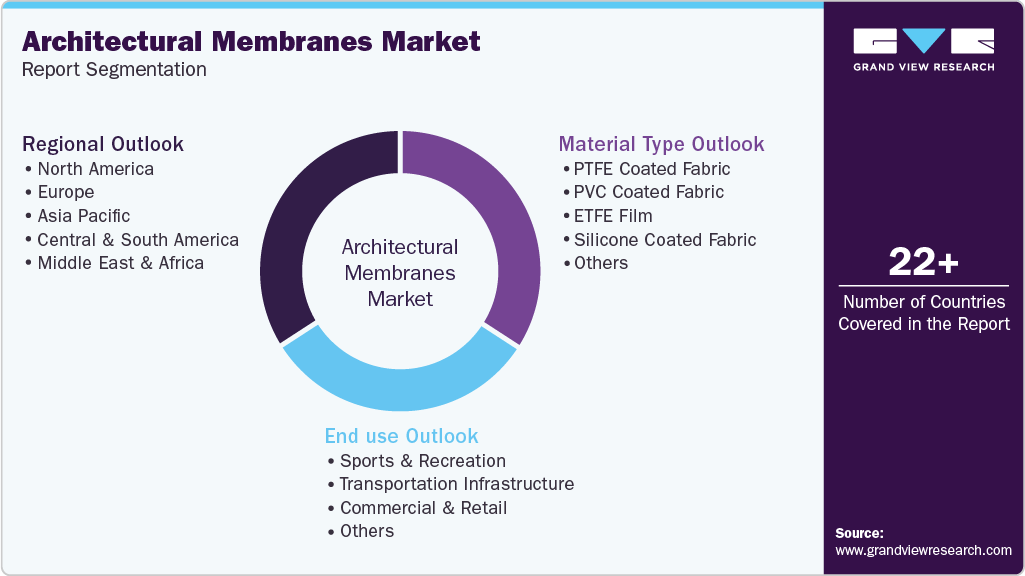
This report forecasts revenue growth at global, regional, and country levels and provides an analysis of the latest industry trends in each of the sub-segments from 2021 to 2033. For this study, Grand View Research has segmented the global architectural membranes market report based on material type, end use and region.
 To learn more about this report, Download Free Sample Report
 -
Material Type Outlook (Revenue, USD Million, 2021 - 2033)
-
PTFE Coated Fabric
-
PVC Coated Fabric
-
ETFE Film
-
Silicone Coated Fabric
-
Others
-
-
End use Outlook (Revenue, USD Million, 2021 - 2033)
-
Sports & Recreation
-
Transportation Infrastructure
-
Commercial & Retail
-
Others
-
-
Regional Outlook (Revenue, USD Million, 2021 - 2033)
-
North America
-
U.S.
-
Canada
-
Mexico
-
-
Europe
-
Germany
-
UK
-
France
-
Italy
-
-
Asia Pacific
-
China
-
Japan
-
India
-
-
Central & South America
-
Middle East & Africa
-
Saudi Arabia
-
UAE
-
Egypt
-
Qatar
-
Kuwait
-
-
Research Methodology
The architectural membranes market figures in this report are based on a proven research process that combines executive interviews with secondary research from proprietary databases, company filings, and recognized regulatory and institutional sources. Market size is built through value-chain sizing - reconciling supply-side and demand-side estimates - and triangulated with bottom-up and top-down approaches. Every estimate passes multiple levels of expert validation before publication, with each architectural membranes segment quantified using the revenue-capture definitions in the table below.
Segment Definition
Material Segment
Revenue Capture Definition
PTFE Coated Fabric
Revenue generated from architectural membranes based on PTFE-coated fiberglass fabrics used in tensile structures, stadium roofs, airports, and large-span roofing applications. This segment captures revenues from manufacturers and suppliers offering high-durability, weather-resistant, and long-life membrane solutions designed for permanent architectural installations.
PVC Coated Fabric
Revenue generated from architectural membranes produced using PVC-coated polyester fabrics, widely used in temporary structures, canopies, walkways, and cost-sensitive architectural applications. This segment captures revenues from suppliers providing flexible, lightweight, and economically viable membrane solutions for short-to-medium lifespan installations.
ETFE Film
Revenue generated from architectural membranes based on ETFE (ethylene tetrafluoroethylene) film systems used in modern façade systems, skylights, atriums, and iconic architectural structures. This segment includes revenues from advanced membrane solutions offering high transparency, lightweight properties, and superior thermal performance for premium applications.
Silicone Coated Fabric
Revenue generated from architectural membranes utilizing silicone-coated fiberglass fabrics used in high-performance tensile structures, façades, and roofing systems requiring enhanced flexibility, UV resistance, and environmental durability. This segment captures revenues from suppliers focused on long-life, high-strength architectural membrane solutions.
Others
Revenue generated from architectural membranes based on other specialized materials including hybrid coatings, advanced polymer blends, and emerging membrane technologies used in niche architectural and experimental construction applications.
End use Segment
Revenue Capture Definition
Sports & Recreation
Revenue generated from architectural membranes used in sports facilities such as stadiums, arenas, swimming complexes, and recreational structures. This segment captures demand for large-span roofing systems that provide weather protection, natural lighting, and aesthetic architectural appeal.
Transportation Infrastructure
Revenue generated from architectural membranes deployed in transportation-related infrastructure such as airports, railway stations, bus terminals, and transit hubs. This segment includes applications in roofing, façades, walkways, and canopy structures designed to enhance passenger comfort and structural efficiency.
Commercial & Retail
Revenue generated from architectural membranes used in commercial buildings including shopping malls, retail complexes, exhibition centers, corporate buildings, and hospitality structures. This segment captures demand driven by aesthetic design requirements, branding considerations, and energy-efficient building solutions.
Others
Revenue generated from architectural membranes used in miscellaneous applications such as public spaces, temporary event structures, cultural installations, educational institutions, and specialty architectural projects not covered under core end-use categories.
Estimation Model
Layer Name
Key Question
Description
Global Construction & Infrastructure Materials Market
What is the total market size of construction and infrastructure materials used across global building and civil engineering projects?
This layer represents the overall construction materials ecosystem, including structural steel, glass, concrete systems, membranes, façade materials, and other building envelope solutions used across residential, commercial, and infrastructure projects globally. It encompasses demand generated from new construction, renovation, and large-scale infrastructure development activities across regions.
Global Architectural Membranes Market
What portion of the construction materials market is represented by architectural membranes?
This layer narrows the focus to architectural membranes used in tensile structures, roofing systems, façades, canopies, and large-span architectural applications. It captures demand driven by modern architectural design trends, lightweight construction requirements, and sustainable building practices across commercial, public, and infrastructure projects.
Technical Textile-Based Architectural Membranes Market
What share of architectural membranes consists of technical textile-based membrane systems?
This layer focuses specifically on architectural membranes manufactured using technical textiles such as PTFE-coated fiberglass, PVC-coated polyester, silicone-coated fabrics, and ETFE films. It includes both permanent and temporary structures used in stadiums, airports, transportation hubs, and commercial complexes, driven by durability, flexibility, and energy-efficient design requirements.
Architectural Membranes Market (End-Use Commercialization)
What is the market value of architectural membranes commercialized across end-use applications globally?
This final layer represents revenues generated from architectural membrane products deployed across sports & recreation facilities, transportation infrastructure, commercial & retail buildings, and other architectural applications. The market is driven by increasing demand for aesthetic, lightweight, and sustainable roofing and façade solutions across global construction projects.
Delivered Customizations
This report has been delivered with the following In-depth customizations
Client Request
Customization Delivered
Value Adds
Competitive Landscape & Innovation Mapping
Benchmarking of leading architectural membrane manufacturers based on product portfolio, material technologies, project references, geographic footprint, engineering capabilities, sustainability initiatives, and strategic positioning.
Delivered actionable competitive intelligence to support strategic planning, partnership identification, acquisition evaluation, and market differentiation initiatives.
Regulatory, Sustainability & Green Building Compliance Assessment
Evaluation of building regulations, fire safety standards, environmental certifications, green building requirements (LEED/BREEAM), and sustainability trends influencing membrane adoption across key regions.
Assisted clients in aligning product development and market strategies with evolving regulatory requirements and sustainability-driven construction trends.
Future Technology & Innovation Outlook
Analysis of emerging trends including recyclable membrane materials, smart building envelopes, advanced coating technologies, energy-efficient membrane systems, and digital design integration.
Enabled clients to anticipate market shifts, strengthen innovation roadmaps, and capture long-term growth opportunities in next-generation architectural membrane solutions.
Frequently Asked Questions About This Report
Asia Pacific held the largest market share, contributing 33.3% of total market revenue in 2025.
The Asia Pacific region is projected to be the fastest-growing regional market, registering a CAGR of 6.5% from 2025 to 2033.
The sports & recreation segment dominated the market, accounting for the largest revenue share of 42.0% in 2025.
ETFE film is expected to be the fastest-growing material segment, registering a CAGR of 6.9% during the forecast period.
The global architectural membranes market size was valued at USD 2.9 billion in 2025 and is estimated at USD 3.0 billion for 2026.
The PTFE coated fabric segment dominated the market and accounted for the largest revenue share of 35.2% in 2025, driven by the exceptional durability, chemical resistance, and ability to withstand extreme temperatures
The global architectural membranes market is expected to grow at a CAGR of 6.2% from 2026 to 2033, reaching USD 4.6 billion by 2033.
Some of the prominent companies in the architectural membranes market include Hiraoka, Seaman Corp, Saint-Gobain, Chukoh Chem, ObeiKan, Sika, Atex Membrane, Taconic-AFD, and Kobond.
Key factors driving the architectural membranes market include increasing demand for sustainable and energy-efficient building materials, rapid urbanization, and the growing adoption of innovative lightweight structural solutions in modern architecture.
About the Author(s)
Advanced Interior Materials Research Team
Advanced Materials · Advanced Interior MaterialsThis report was authored by the advanced interior materials research team at Grand View Research - comprising two research analysts, one senior research analyst, and one industry expert - with specialized expertise in the advanced interior materials segment of the advanced materials industry. All findings are based on proprietary advanced materials databases, executive interviews, and regulatory analysis, subject to internal peer review prior to publication.
Last Updated:
Speak to Analyst

Customize this report to your needs - add regions, segments, or data points, with 20% free customization.
Or view our licence options:


ISO 9001:2015 & 27001:2022 Certified
We are GDPR and CCPA compliant! Your transaction & personal information is safe and secure. For more details, please read our privacy policy.


