
- Home
- »
- Medical Devices
- »
-
AI In Breast Imaging Market Size & Share Report, 2026-2033GVR Report cover

AI In Breast Imaging Market (2026 - 2033)
Size, Share & Trends Analysis Report By Imaging Modality (Mammography, Breast MRI), By Application, By Clinical Use, By End Use, By Deployment, By Region, And Segment Forecasts
Market Size, 2025
$305.9MMarket Estimate, 2026
$391.9MMarket Forecast, 2033
$1,824.8MCAGR, 2026–2033
24.6%AI in Breast Imaging Market Summary
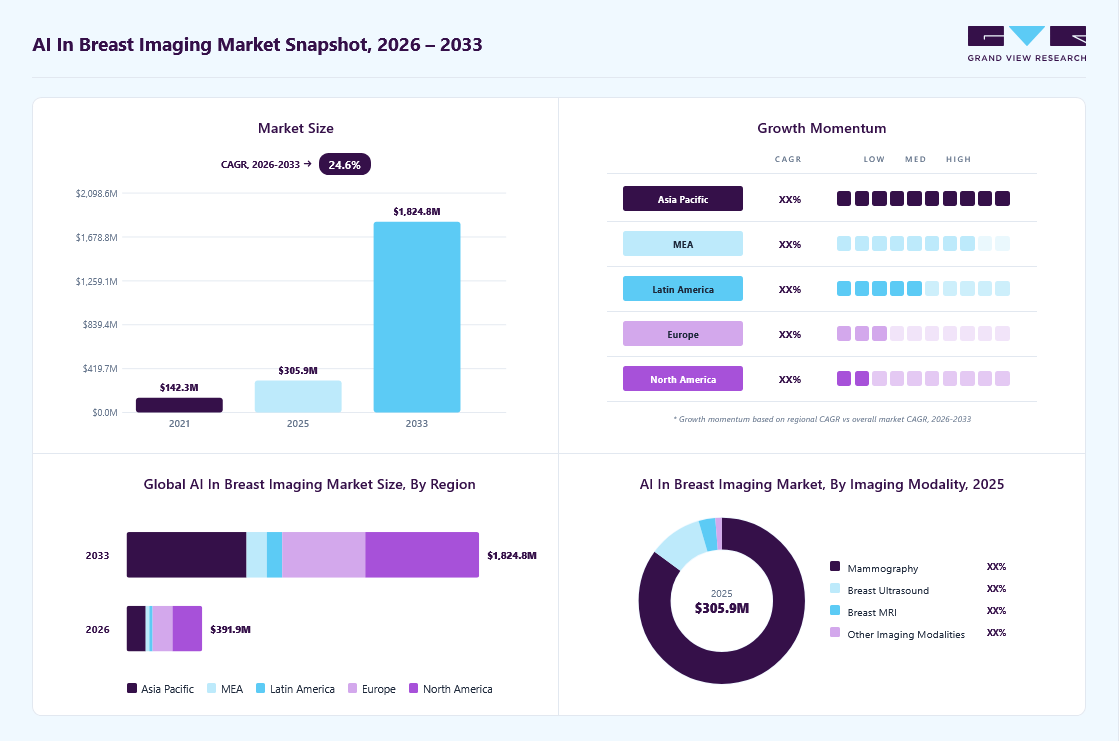
The global AI in breast imaging market size was valued at USD 305.9 million in 2025 and is projected to grow from USD 391.9 million in 2026 to USD 1,824.8 million by 2033, at a CAGR of 24.6% from 2026 to 2033. North America dominated the market, accounting for a revenue share of 40.1% in 2025. The industry is driven by the increasing adoption of AI-assisted breast cancer screening and diagnosis, along with rising breast cancer incidence and screening volumes. Growing demand for radiologist workflow support and the expanding use of AI for cancer detection, breast density assessment, risk prediction, and diagnostic decision support are also driving the market.
 Source: Grand View Research, IR Documents, Primary Interviews, Paid DatabasesTo learn more about this report,
 Download Free Sample Report
 Key Market Trends & Insights
- By imaging modality: Mammography segment led the market with the largest revenue share of 84.9% in 2025.
- By deployment: On-premise segment led the market with the largest revenue share of 46.0% in 2025.
- By application: Cancer detection and localization segment led the market with the largest revenue share of 41.2% in 2025.
- By clinical use: Routine screening segment led the market with the largest revenue share of 58.9% in 2025.
- By end use: Hospitals & academic medical centers segment led the market with the largest revenue share of 43.4% in 2025.
Regional Highlights
- Largest regional market: North America (40.1% revenue share, 2025)
- Fastest-growing regional market: Asia Pacific (highest CAGR, 2026-2033)
- By country: The U.S. held the largest market share in 2025.
Market Size & Forecast
- Market size in 2025: USD 305.9 million
- Estimated market size in 2026: USD 391.9 million
- Projected market size by 2033: USD 1,824.8 million
- CAGR (2026-2033): 24.6%
Three ways to get this report
Buy it, customize it, or ask a question.Ask an Analyst
Analyst response in 1 business day
- AccessReport author, directly
- Reply timeWithin 1 working day
- No sales callDirect answer only
- FormatEmail reply
- CostFree, no cost
Get the Full Report
What the study covers
- FormatsPDF · Excel · Dashboard
- Timeline2026–2033 annual, 2025 base
- Coverage20+ countries, 5 regions
- Companies10+ key players profiled
Customize the Report
20% free customization
- IncludeCountries, segments, points
- TailorTo your product definition
- ExtendDeeper competitor detail
- OrA fully bespoke study
- Turnaround5–10 working days
AI-based solutions are being applied across mammography, digital breast tomosynthesis, breast ultrasound, and breast MRI for cancer detection and localization, lesion characterization, breast density assessment, risk prediction, image reconstruction, and workflow support. Recent clinical evidence is expanding the potential role of AI beyond basic detection. In July 2026, a study published in Radiology evaluated more than 577,000 screening mammograms across 109 U.S. imaging sites and found that integration of DeepHealth's AI-powered workflow increased the adjusted cancer detection rate among general radiologists by 32.7%, from 3.76 to 4.99 cancers per 1,000 examinations, reaching a level comparable to breast imaging specialists using the same workflow. AI applications are also expanding toward long-term risk assessment.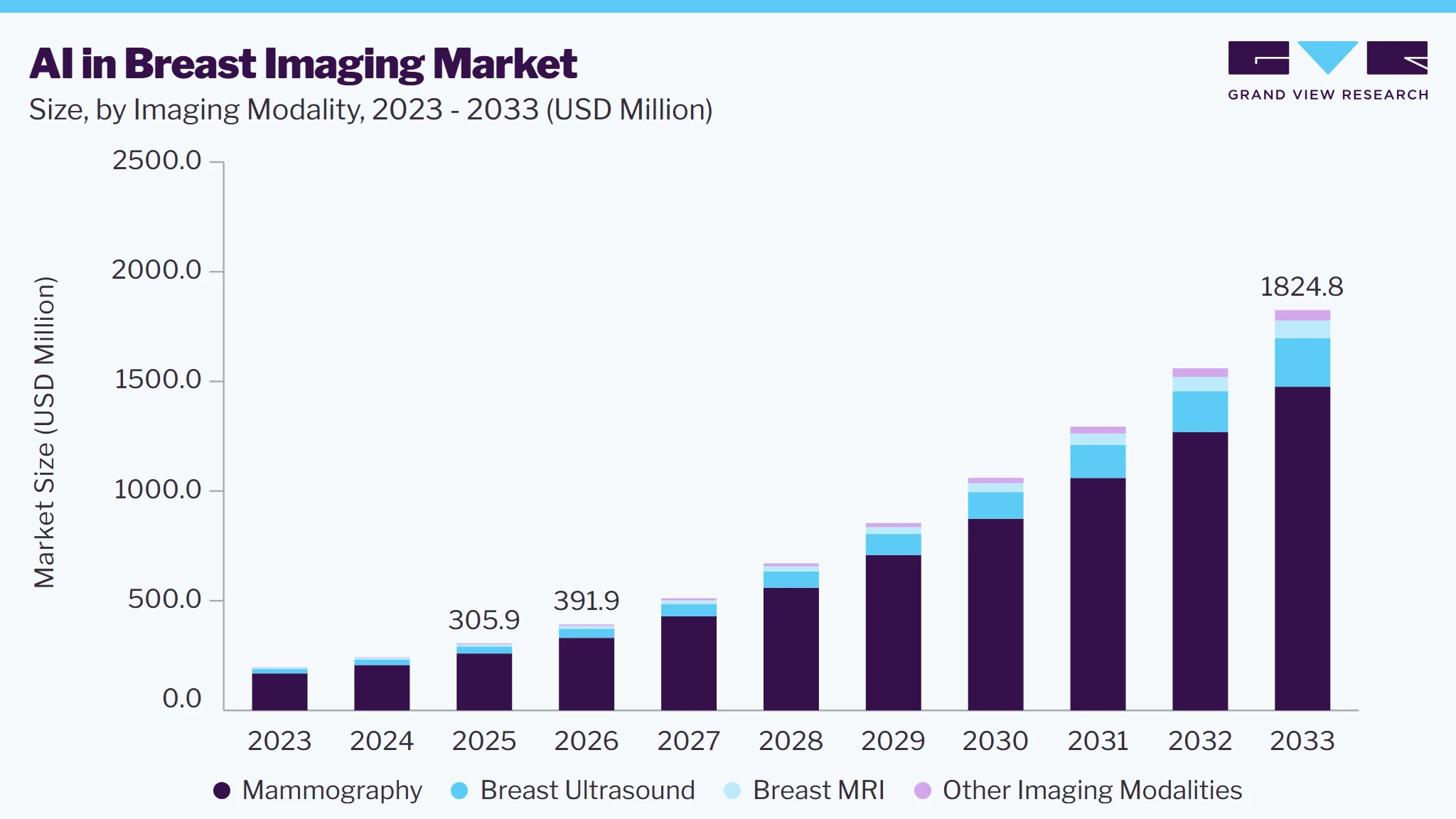 To learn more about this report, Download Free Sample Report
 “The goal of routine breast screening is to find cancers as early as possible, when patients have the best opportunity for timely, effective treatment,” said Christoph Lee, M.D., breast imaging specialist and study author. “What is compelling about this study is that it shows how AI-powered solutions can support general radiologists in detecting more cancers across a large, real-world screening population. This workflow offers a practical way to expand access to specialist-comparable cancer detection while keeping the interpreting radiologist’s judgment at the center of every decision.”
In September 2026, a study evaluated the IICM+ AI model for predicting distant breast cancer recurrence in patients with early-stage HR+/HER2-negative, node-negative disease. The model achieved a C-index of 0.735 compared with 0.578 for the 21-gene Recurrence Score in a separate validation group, although additional validation across larger and more diverse populations is required before routine clinical use. These developments are broadening the addressable application landscape toward cancer detection, diagnostic decision support, image-based risk prediction, and treatment monitoring. Regulatory clearances, clinical validation, digital imaging infrastructure, cloud-based deployment, and partnerships between AI developers and healthcare providers are further supporting market expansion.
Market Dynamics
The market is experiencing steady growth due to increasing adoption of AI-assisted screening and the rising demand for accurate, efficient breast cancer detection. AI solutions support mammography, digital breast tomosynthesis, breast ultrasound, and breast MRI by improving cancer detection, lesion characterization, breast density assessment, risk prediction, and diagnostic workflows. The market is further supported by advances in cloud-based imaging, multimodality AI platforms, regulatory clearances, and integration with existing radiology systems.
Higher breast cancer screening volumes directly increase the number of mammograms and other breast-imaging examinations that need to be interpreted, creating a larger potential user base for AI software. Earlier screening initiation can further expand the number of women entering screening programs and increase the frequency of imaging examinations over the screening population. This increases demand for AI tools that can assist with cancer detection, triage, prioritization, and workflow management. The growing global incidence of breast cancer and shortage of specialized radiologists further increase the need for technologies that can support large screening workloads.
AI adoption can be limited when healthcare providers are uncertain about how AI-generated findings should be incorporated into clinical decisions. False-positive findings may increase recalls and additional diagnostic examinations, while false-negative findings raise concerns about missed cancers. There are also questions regarding responsibility when AI recommendations differ from radiologist interpretations. Integration with PACS, RIS, mammography systems, reporting platforms, and existing clinical workflows can require technical changes and staff training.
AI-based risk prediction expands breast imaging AI beyond identifying abnormalities in the current examination toward estimating a woman's future risk of developing breast cancer. AI can analyze mammographic features, breast density, clinical information, and other patient characteristics to identify women who may have different levels of future risk. This can support more personalized screening strategies and help clinicians determine whether additional assessment or closer monitoring may be appropriate. Recent research has shown that combining clinical information with mammographic features can improve short-term breast cancer risk prediction compared with individual data sources.
Market Concentration & Characteristics
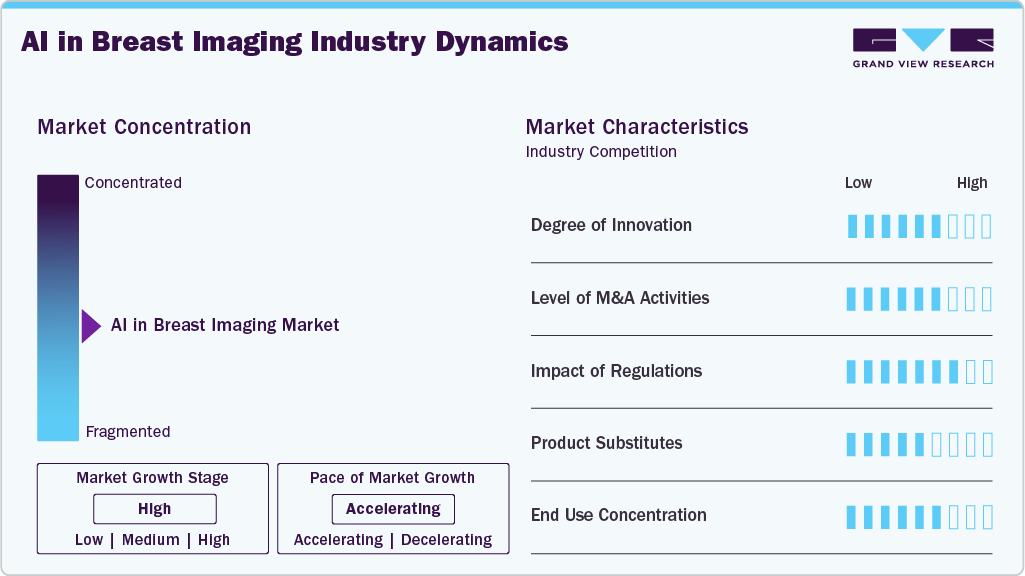
The market is characterized by a high degree of innovation, driven by advances in AI algorithms, multimodal breast imaging, clinical decision support, and workflow automation. Companies are developing solutions for cancer detection, lesion characterization, breast density assessment, image-based risk prediction, image acquisition and reconstruction, reporting, and quality assurance across mammography, digital breast tomosynthesis, breast ultrasound, and breast MRI. Integration with PACS, radiology information systems, enterprise imaging platforms, and cloud infrastructure is further expanding the functionality and scalability of AI solutions.
The market has witnessed moderate to high merger and acquisition activity as established imaging companies and healthcare technology providers expand their AI capabilities. Companies are acquiring specialized AI developers to strengthen portfolios in breast cancer detection, breast density assessment, ultrasound analysis, risk prediction, and workflow management. These transactions allow companies to combine AI algorithms with established imaging platforms, distribution networks, clinical infrastructure, and customer relationships, supporting broader commercialization of integrated breast imaging solutions.
 To learn more about this report, Download Free Sample Report
 AI in breast imaging is subject to medical-device regulations covering software safety, clinical performance, cybersecurity, quality management, and premarket requirements. In the U.S., AI-enabled breast imaging software requires FDA clearance before commercialization, depending on its intended use and risk classification. Regulatory requirements also influence clinical validation, algorithm performance, data management, and post-market monitoring.
The market faces competition from conventional radiologist interpretation without AI assistance, traditional computer-aided detection systems, and alternative diagnostic approaches. Conventional interpretation remains established across mammography, ultrasound, and MRI workflows, while supplemental imaging modalities such as ultrasound and MRI are used for selected patients. However, these approaches do not directly replace AI software because AI can operate as an analytical and decision-support layer within existing imaging workflows.
Demand for AI in breast imaging is concentrated among hospitals and academic medical centers, independent breast and women's health centers, independent diagnostic imaging centers, and government and public health screening programs. High-volume breast screening providers represent important users because large examination volumes create demand for automated cancer detection, triage, density assessment, workflow management, and reporting support. Multi-site imaging networks are also increasing the demand for enterprise AI platforms that can be deployed across multiple facilities and integrated with existing imaging infrastructure.
Analyst Perspective
The market is supported by increasing adoption of AI-assisted mammography, breast ultrasound, and MRI, rising breast cancer screening volumes, and growing demand for earlier and more accurate detection. Integration of AI solutions with imaging systems, PACS, radiology workflows, and cloud platforms is supporting broader clinical adoption. From an analyst’s perspective, companies offering clinically validated, regulatory-cleared, interoperable, and cost-effective AI solutions will be positioned to expand adoption. Future market development will depend on continuous algorithm innovation, clinical evidence, integration capabilities, regulatory compliance, cybersecurity, and expansion across screening and diagnostic settings in emerging markets.
Imaging Modality Insights
The mammography segment dominated the market, accounting for 84.9% of the revenue in 2025. This dominance is supported by the widespread use of mammography as the primary breast cancer screening modality and the large volume of examinations performed across organized and opportunistic screening programs. Increasing adoption of AI-based cancer detection, lesion localization, triage, breast density assessment, and workflow support is strengthening the integration of AI into mammography workflows. Clinical evidence demonstrates that the potential of AI-assisted mammography to improve cancer detection and reduce radiologist workload is also supporting adoption among healthcare providers.
The breast MRI segment is expected to grow at a significant rate during the forecast period due to the increasing use of MRI for high-risk screening, diagnostic evaluation, staging, and treatment monitoring. Breast MRI provides high sensitivity for detecting breast abnormalities and is increasingly used for women with elevated breast cancer risk and for evaluating complex or inconclusive findings from mammography and ultrasound. AI integration is expanding across breast MRI workflows, including lesion detection, segmentation, characterization, image reconstruction, image quality enhancement, and treatment response assessment. AI-assisted interpretation can also help manage the large volume and complex nature of MRI data, supporting radiologists' efficiency and consistency.
Application Insights
The cancer detection and localization segment dominated the market, accounting for 41.2% of the revenue in 2025. This dominance is supported by the growing global burden of breast cancer and the increasing need for early and accurate detection. For instance, according to the WHO, approximately 2.4 million women were diagnosed with breast cancer globally in 2024, while 694,000 deaths were reported from the disease. Approximately 0.5–1% of breast cancers occur in men. Early diagnosis and screening are important for reducing breast cancer mortality, increasing demand for technologies that assist radiologists in identifying suspicious lesions. AI-based detection and localization tools can support the interpretation of mammography, tomosynthesis, ultrasound, and MRI by identifying abnormalities and prioritizing suspicious examinations. Growing screening volumes, advances in AI algorithms, and increasing clinical validation are expected to further support segment growth.
The treatment response assessment segment is expected to grow at the fastest rate during the forecast period due to the increasing use of breast imaging for monitoring treatment effectiveness and evaluating changes in tumor characteristics. AI can analyze serial mammography, ultrasound, and MRI examinations to identify changes in lesion size, morphology, enhancement patterns, and other imaging biomarkers, supporting more consistent assessment of treatment response. The growing use of neoadjuvant systemic therapy, particularly before surgery, is also increasing the need for imaging-based evaluation of response and treatment planning.
Clinical Use Insights
The routine screening segment dominated the market, accounting for 58.9% of the revenue in 2025. This dominance is supported by the large volume of mammography examinations performed through population-based and routine breast cancer screening programs. Increasing emphasis on early breast cancer detection and regular screening is creating greater demand for AI tools that can assist radiologists in identifying suspicious findings and prioritizing examinations. AI-assisted screening can also support workload management in high-volume imaging centers by improving interpretation efficiency and providing consistent analysis of mammographic images. The growing availability of AI solutions for cancer detection, lesion localization, breast density assessment, and workflow support is further strengthening adoption within routine screening.
The staging and treatment monitoring segment is expected to grow at the fastest rate during the forecast period due to the increasing use of breast imaging for assessing disease extent, monitoring treatment response, and supporting clinical decision-making throughout the cancer care pathway. AI can analyze imaging data from mammography, breast MRI, and ultrasound to identify and characterize lesions, quantify tumor characteristics, compare serial examinations, and assess changes following systemic or surgical treatment. The growing use of neoadjuvant therapies is also increasing the need for accurate imaging-based assessment before surgery.
End Use Insights
The hospitals & academic medical centers segment dominated the market, accounting for 43.4% share in 2025. This dominance is driven by the expansion of hospital networks, breast cancer screening infrastructure, and advanced diagnostic imaging capacity across major healthcare systems. Hospitals and academic medical centers are increasing investments in digital mammography, digital breast tomosynthesis, breast ultrasound, and MRI, creating a broader infrastructure base for AI integration. Expansion of dedicated breast imaging and oncology centers within large healthcare institutions is also increasing demand for AI-assisted cancer detection, lesion characterization, breast density assessment, and treatment monitoring.
The government & public health screening programs segment is expected to grow at the fastest rate during the forecast period. Growth is driven by the expansion of government-led cancer screening programs, increasing availability of screening services through primary and community healthcare facilities, and efforts to improve early detection across urban and rural populations. In India, national cancer screening initiatives focus on breast, cervical, and oral cancers, with screening services supported through health centers, community health facilities, and district hospitals. Programs such as the National Programme for Prevention and Control of Cancer, Diabetes, Cardiovascular Diseases and Stroke and Ayushman Bharat have expanded the role of primary healthcare facilities in cancer screening and early diagnosis. The wider availability of screening infrastructure and large patient populations creates opportunities for AI-based mammography, image interpretation, triage, and workflow support across public healthcare networks.
Deployment Insights
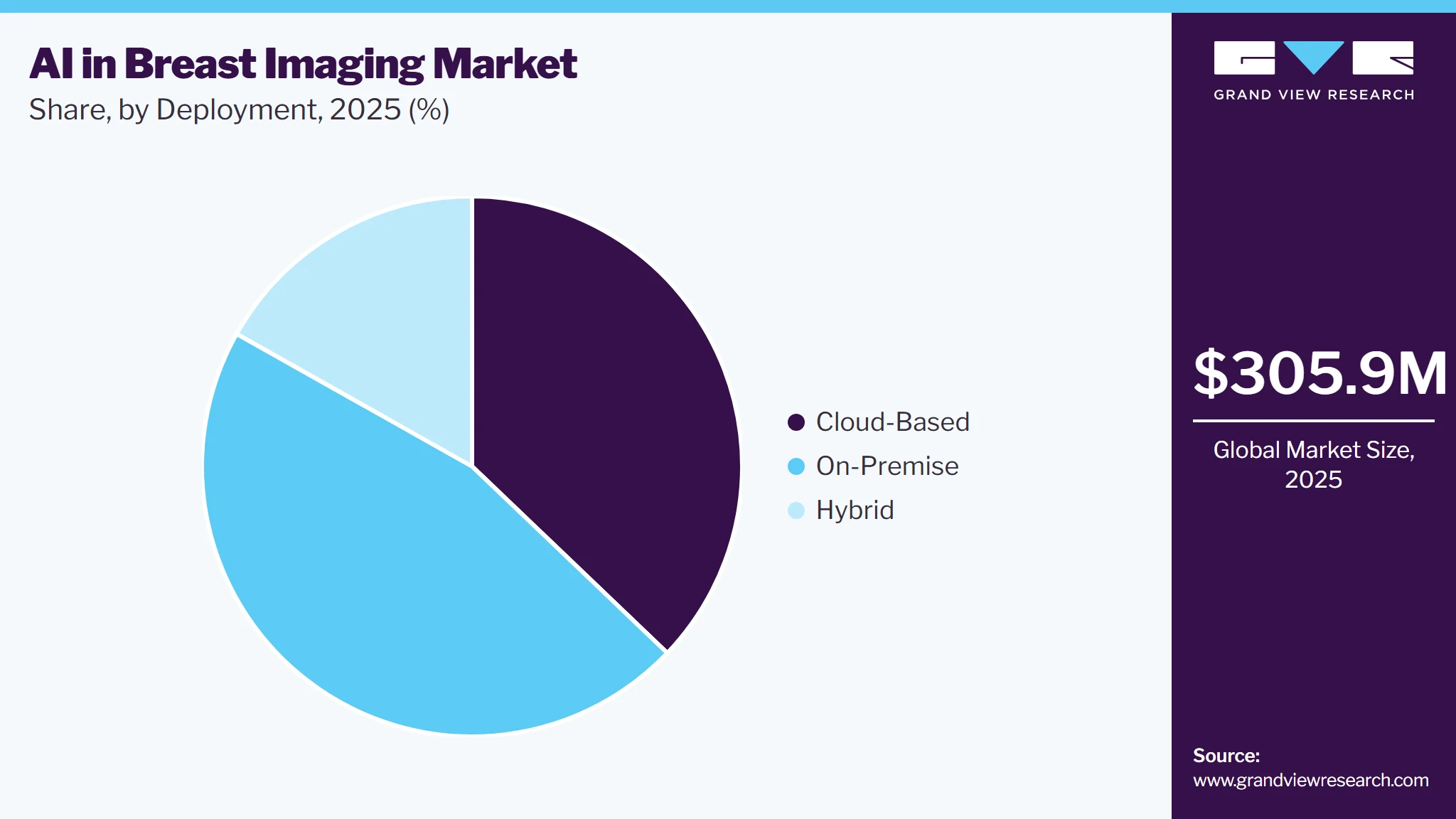
The on-premise segment dominated the AI in breast imaging market, accounting for 46.0% in 2025. This dominance is driven by the need for healthcare providers to maintain greater control over sensitive medical imaging data, comply with data protection and healthcare regulations, and integrate AI software directly with existing PACS, RIS, and hospital IT infrastructure. Hospitals and imaging centers with established IT systems often prefer on-premise deployment because it can support localized data processing, controlled access, and integration with existing clinical workflows. Concerns related to data security, connectivity, and cloud migration costs also support demand for on-premise AI solutions.
 To learn more about this report, Download Free Sample Report
 The cloud-based segment is expected to grow at the fastest rate during the forecast period. Growth is driven by the increasing adoption of scalable imaging infrastructure, remote access to AI applications, and demand for centralized processing across multi-site healthcare networks. Cloud deployment enables healthcare providers to access AI tools without extensive on-site computing infrastructure and facilitates software updates, centralized algorithm management, and integration across distributed imaging centers. The expansion of digital mammography, rising imaging volumes, and increasing adoption of cloud-based PACS and enterprise imaging platforms are further supporting demand for cloud-based AI solutions.
Regional Insights
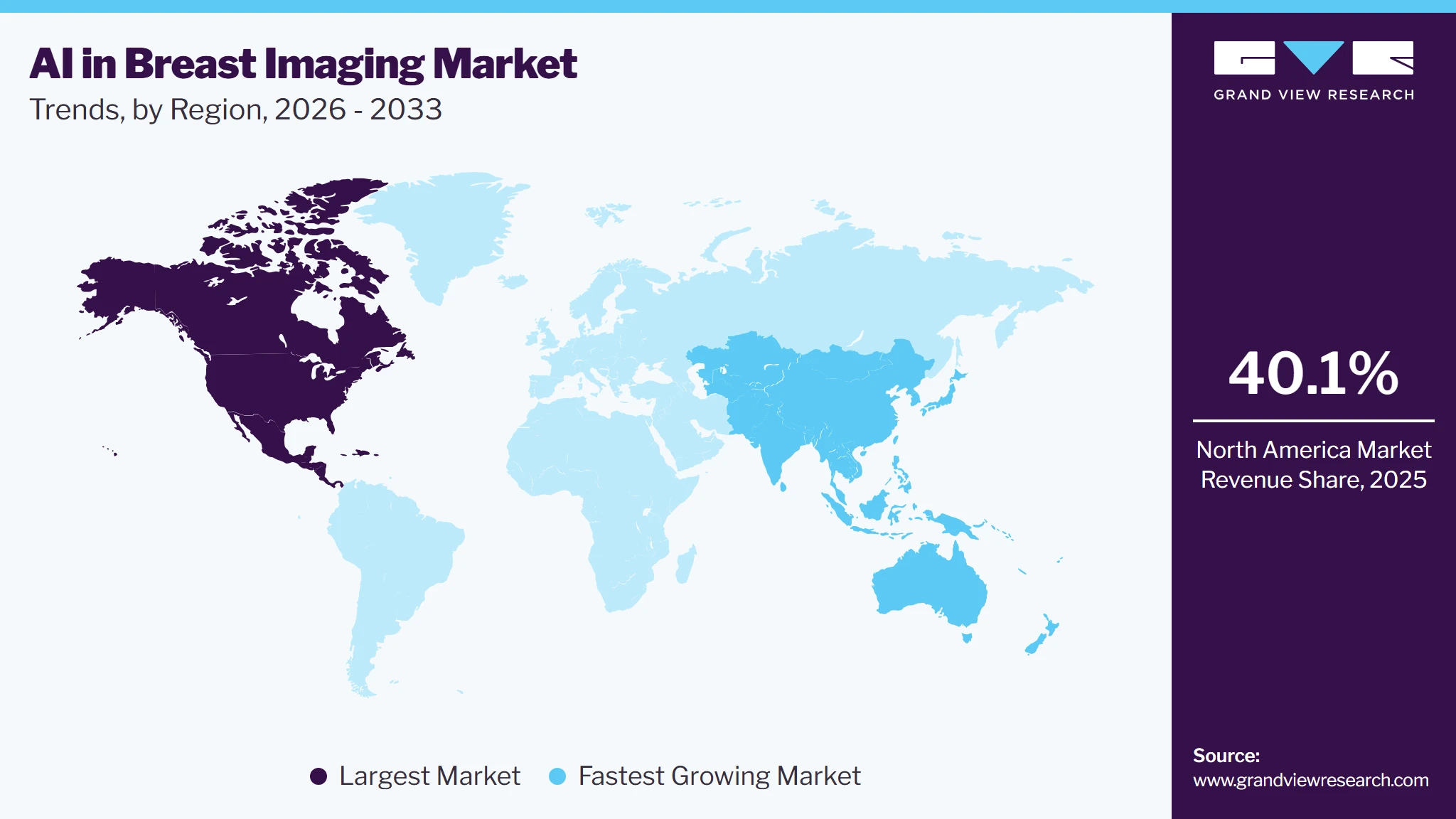
The North America AI in breast imaging market dominated with a revenue share of 40.1% in 2025, supported by the region's established breast cancer screening infrastructure, high mammography utilization, and substantial disease burden. In the U.S., approximately 321,910 new cases of invasive breast cancer and 42,140 breast cancer deaths are estimated among women in 2026. Breast cancer accounts for about 1 in 3 new cancers diagnosed in U.S. women each year, while incidence rates have increased by approximately 1% annually in recent years. These trends are increasing demand for technologies that support early detection, screening efficiency, and breast cancer risk assessment.
 To learn more about this report, Download Free Sample Report
 U.S. AI In Breast Imaging Market Trends
The AI in breast imaging market in the U.S. is benefiting from increasing clinical adoption of AI-assisted mammography, breast-density assessment, diagnostic support, and workflow applications. The FDA's mammography regulations require facilities to provide patients with information about breast density, creating an operational requirement for consistent breast-density assessment. The market is also expanding toward AI applications beyond screening mammography. For instance, in March 2026, FDA approval of the Claire OCT System demonstrates regulatory progress for AI-supported intraoperative breast imaging, expanding the potential application landscape toward treatment and surgical decision support.
Europe AI In Breast Imaging Market Trends
The AI in breast imaging market in Europe is advancing as European healthcare systems increase clinical evaluation and deployment of AI across breast cancer screening and diagnostic workflows. For instance, in September 2026, the European Society of Radiology highlighted AI-supported mammography as a major application under Europe's broader AI-for-health initiatives, noting that AI can support earlier and more accurate breast cancer detection while assisting radiologists rather than replacing them. It also highlighted the BreastSCan project, which is developing AI tools for image quality assessment, risk stratification, lesion detection, and breast density classification. The project is assembling more than 1 million mammography, ultrasound, and MRI images from over 7,500 confirmed breast cancer cases, creating a substantial European data resource for AI development and validation.
The UK AI in breast imaging market is gaining momentum through government-backed clinical evaluation of AI-assisted breast cancer screening. For instance, in February 2025, the UK Department of Health and Social Care announced the EDITH (Early Detection using Information Technology in Health) trial, supported by USD 14.57 million from the National Institute for Health and Care Research. The trial is being conducted across 30 testing sites and is expected to involve nearly 700,000 women, evaluating AI tools designed to assist radiologists in identifying potential breast cancer earlier. The UK breast screening program conducts approximately 2.1 million screens annually, creating a substantial clinical setting for AI deployment. The initiative also reflects the NHS's focus on digital technologies to increase screening capacity and address workforce pressures.
Asia Pacific AI In Breast Imaging Market Trends
The AI in breast imaging market in Asia Pacific is expected to witness the fastest CAGR of 30.0% from 2026 to 2033, advancing through the development and international expansion of AI-based breast cancer screening technologies by regional companies. For instance, in September 2026, South Korea-based Lunit announced the regional deployment of its Lunit INSIGHT MMG solution across the Stockholm Region in Sweden, where it will serve as an independent second reader across three institutions and is expected to support 200,000 to 250,000 mammography examinations annually. The deployment follows Lunit’s use of the technology in approximately 200,000 examinations at Capio Saint Göran Hospital since 2023 and demonstrates the commercial expansion of AI-based mammography solutions developed in Asia Pacific.
The China AI in breast imaging market is expanding toward accessible, technology-enabled breast cancer screening solutions. For instance, in October 2024, doctors at Peking Union Medical College Hospital (PUMCH) were developing an artificial intelligence-based infrared thermography (AI-IRT) system that connects an infrared camera to a smartphone and uses an AI algorithm and big-data platform to assess breast cancer risk from thermal images. The research team envisioned the system for pre-clinical screening through home and community health-center settings, with potential advantages including non-invasive imaging, absence of radiation, rapid assessment, and lower screening costs. The researchers also noted that prospective validation studies were still required, indicating that the technology remained at the development and validation stage.
"Early screening and diagnosis are key to the treatment of breast cancer," said Sun Qiang, a chief breast physician at the PUMCH and a core member of the research team.
Latin America AI In Breast Imaging Market Trends
The AI in breast imaging market in Latin America is progressing alongside the modernization of medical imaging infrastructure, particularly in Brazil. For instance, in September 2026, Sectra signed a partner agreement to enter Brazil, Latin America's largest healthcare market, with an initial focus on its cloud-based enterprise imaging platform, Sectra One Cloud. Brazil has approximately 7,100 hospitals, and the private sector accounts for a substantial share of advanced imaging investment. The company reported increasing demand from major private hospital groups for scalable cloud-based imaging platforms, indicating a gradual transition from on-premises systems toward subscription-based imaging infrastructure. Sectra's breast imaging platform supports mammography, digital breast tomosynthesis, breast MRI, automated whole-breast ultrasound, breast density assessment, and AI applications, creating an infrastructure base for broader adoption of AI-enabled breast imaging workflows in Brazil.
MEA AI In Breast Imaging Market Trends
The AI in breast imaging market in the Middle East & Africa is progressing alongside government investments in healthcare infrastructure, preventive screening, and digital health. Saudi Arabia is expanding organized breast cancer screening through the Health Sector Transformation Program under Saudi Vision 2030. In January 2026, the Health Holding Company launched the “Taakkad” preventive screening initiative, which includes breast cancer screening and is being implemented through health clusters and digitally enabled appointment pathways.
Key AI In Breast Imaging Company Insights
Organizations in the AI in breast imaging market are focusing on expanding their customer base and strengthening their market presence through strategic initiatives. Key players are pursuing product launches, regulatory clearances, technology enhancements, strategic partnerships, collaborations, and integration of AI solutions with existing imaging and healthcare IT platforms. Companies are also expanding into new geographic markets and broadening their product portfolios across mammography, breast ultrasound, breast MRI, breast density assessment, and AI-based risk prediction. These initiatives are supporting technology adoption, strengthening commercial reach, and increasing the integration of AI into breast imaging workflows.
Key AI In Breast Imaging Companies
Some prominent players in the global AI in breast imaging market include:
-
Hologic
-
Lunit (incl. Volpara)
-
ScreenPoint Medical
-
DeepHealth (RadNet)
-
Therapixel
-
Vara
-
Siemens Healthineers
-
GE HealthCare
-
Clairity
-
Koios Medical
-
CureMetrix
-
Densitas
-
Whiterabbit.ai
-
MedCognetics
-
Philips
-
Quibim
-
QView Medical
-
Qlarity Imaging
Competitive Benchmarking
Category
Operating Strategies
Competitive Edge
Weakness
Established Players (Hologic, Lunit (incl. Volpara), Siemens Healthineers, GE HealthCare, Philips, DeepHealth (RadNet))
- Focus on expanding AI capabilities across mammography, breast tomosynthesis, ultrasound, MRI, breast density assessment, cancer detection, risk prediction, and workflow optimization.
- Expand AI platforms through integration with imaging equipment, PACS, enterprise imaging systems, and cloud-based environments.
- Strong global brand recognition, extensive imaging technology portfolios, established customer relationships, regulatory expertise, and broad sales and service infrastructure.
- Integration of AI with imaging hardware and enterprise workflows provides opportunities for comprehensive solutions across screening and diagnostic pathways.
- High R&D and regulatory costs, complex integration requirements, and potentially higher implementation costs may constrain adoption among smaller imaging providers.
- Large organizational structures can also result in longer development and commercialization cycles.
Emerging Players (ScreenPoint Medical, Therapixel, Vara, Clairity, Koios Medical, CureMetrix, Densitas)
- Concentrate on specialized AI applications such as mammographic cancer detection, breast density assessment, and lesion characterization.
- Prioritize regulatory clearances, clinical validation, interoperability with existing imaging infrastructure.
- Specialized algorithm development, focused clinical applications, flexible integration models, and the ability to address specific gaps within breast imaging workflows.
- Smaller organizational structures can support focused product development and partnerships across selected markets and clinical use cases.
- Smaller global distribution and service networks compared with large imaging manufacturers, with greater dependence on strategic partnerships and third-party imaging infrastructure.
- Potentially lower financial resources for large-scale clinical validation, international expansion, and regulatory submissions.
Recent Developments:
-
In October 2026, Everlywell partnered with Clairity to make Clairity Breast, an FDA-authorized AI tool for assessing five-year breast cancer risk from routine mammograms, commercially available nationwide.
-
In April 2026, Quibim and Vara entered an exclusive partnership to bring Vara’s AI mammography screening platform to Spain, aiming to reduce radiologist workload and improve breast cancer detection. Vara’s AI had demonstrated a 16.7% increase in cancer detection and was being used in 50% of Germany’s national screening program.
Jonas Muff, founder and CEO of Vara, adds: “Breast cancer screening is one of the most impactful healthcare priorities – but it only works if programs can sustain the capacity to serve every woman at high quality. That is exactly where the pressure is building across Europe and in Spain. Vara exists to make screening programs more effective and more sustainable while also increasing quality. With Quibim’s deep expertise in Spain’s healthcare system, we can now bring that same proven infrastructure to Spanish screening programs.”
AI In Breast Imaging Market Report Scope
Report Attribute
Details
Market size in 2025
USD 305.9 million
Estimated market size in 2026
USD 391.9 million
Projected market size by 2033
USD 1,824.8 million
Growth rate
CAGR of 24.6% from 2026 to 2033
Base year for estimation
2025
Actual estimates/historical data
2021 – 2024
Forecast period
2026 – 2033
Quantitative units
Revenue in USD million and CAGR from 2026 to 2033
Report coverage
Revenue forecast, company ranking, competitive landscape, growth factors, and trends
Segments covered
Imaging modality, application, clinical use, end use, deployment, region
Regional scope
North America; Europe; Asia Pacific; Latin America; Middle East & Africa
Country scope
U.S.; Canada; Mexico; UK; Germany; France; Italy; Spain; Denmark; Sweden; Norway; Japan; China; India; Thailand; Australia; South Korea; Brazil; Argentina; South Africa; Saudi Arabia; UAE; Kuwait
Key companies profiled
Hologic; Lunit (incl. Volpara); ScreenPoint Medical; DeepHealth (RadNet); Therapixel; Vara; Siemens Healthineers; GE HealthCare; Clairity; Koios Medical; CureMetrix; Densitas; Whiterabbit.ai; MedCognetics; Philips; Quibim; QView Medical; Qlarity Imaging.
Customization scope
Free report customization (equivalent up to 8 analyst’s working days) with purchase. Addition or alteration to country, regional & segment scope
Pricing and purchase options
Avail customized purchase options to meet your exact research needs. Explore purchase options
Global AI in Breast Imaging Market Report Segmentation
This report forecasts revenue growth at global, regional & country levels and provides an analysis of the latest industry trends & opportunities in each of the sub-segments from 2021 to 2033. For this study, Grand View Research has segmented global AI in breast imaging market report based on imaging modality, application, clinical use, end use, deployment, and region:
-
Imaging Modality Outlook (Revenue, USD Million, 2021 - 2033)
-
Mammography
-
2D Digital Mammography
-
Digital Breast Tomosynthesis
-
Contrast-Enhanced Mammography
-
-
Breast Ultrasound
-
Handheld Ultrasound
-
Automated Whole-Breast Ultrasound
-
-
Breast MRI
-
Conventional Contrast-Enhanced MRI
-
Abbreviated Breast MRI
-
-
Other Imaging Modalities
-
-
Application Outlook (Revenue, USD Million, 2021 - 2033)
-
Cancer Detection and Localization
-
Lesion Characterization and Diagnostic Support
-
Breast Density Assessment
-
Image-Based Risk Prediction
-
Image Acquisition and Reconstruction
-
Workflow, Reporting, and Quality Assurance
-
Treatment Response Assessment
-
-
Clinical Use Outlook (Revenue, USD Million, 2021 - 2033)
-
Routine Screening
-
Supplemental and High-Risk Screening
-
Diagnostic Evaluation
-
Staging and Treatment Monitoring
-
-
End Use Outlook (Revenue, USD Million, 2021 - 2033)
-
Hospitals & Academic Medical Centers
-
Independent Breast and Women’s Health Centers
-
Independent Diagnostic Imaging Centers
-
Government & Public Health Screening Programs
-
-
Deployment Outlook (Revenue, USD Million, 2021 - 2033)
-
On-Premise
-
Cloud-Based
-
Hybrid
-
-
Regional Outlook (Revenue, USD Million, 2021-2033)
-
North America
-
U.S.
-
Canada
-
Mexico
-
-
Europe
-
UK
-
Germany
-
France
-
Italy
-
Spain
-
Denmark
-
Sweden
-
Norway
-
-
Asia Pacific
-
Japan
-
China
-
India
-
Thailand
-
Australia
-
South Korea
-
-
Latin America
-
Brazil
-
Argentina
-
-
Middle East & Africa
-
South Africa
-
Saudi Arabia
-
UAE
-
Kuwait
-
-
Research Methodology
The AI in breast imaging market figures in this report are based on a proven research process that combines executive interviews with secondary research from proprietary databases, company filings, and recognized regulatory and institutional sources. Market size is built through value-chain sizing—reconciling supply-side and demand-side estimates—and triangulated with bottom-up and top-down approaches. Every estimate passes multiple levels of expert validation before publication, with each AI in breast imaging segment quantified using the revenue-capture definitions in the table below.
Segment Definition
Deployment
Revenue capture definition
On-Premise
Revenue generated from AI in breast imaging software deployed and operated on healthcare providers’ local servers or on-site IT infrastructure. Includes software licenses, implementation fees, upgrades, maintenance, and technical support associated with locally hosted AI solutions.
Cloud-Based
Revenue generated from AI in breast imaging solutions hosted on cloud infrastructure and accessed remotely through secure networks. Includes subscription fees, usage-based or per-study charges, cloud software licenses, platform fees, updates, maintenance, and technical support.
Hybrid
Revenue generated from AI in breast imaging solutions combining local/on-premises infrastructure with cloud-based processing, storage, or application services. Includes software licenses, subscriptions, cloud service fees, implementation, integration, maintenance, upgrades, and technical support associated with hybrid deployments.
Estimation Model
Market Estimation Approaches
No Approach
Description
01
Bottom-Up Estimation
The market is estimated by assessing the annual volume of breast imaging examinations performed across hospitals and academic medical centers, independent breast and women’s health centers, independent diagnostic imaging centers, and government and public health screening programs at the country, regional, and global levels. The assessment incorporates AI adoption rates across mammography, breast ultrasound, breast MRI, and other imaging modalities.
02
Top-Down Approach
The market estimation begins with an assessment of the global medical imaging AI and breast imaging technology market, followed by evaluating the share attributable to AI-enabled breast imaging solutions through secondary research and expert validation. The analysis considers key market indicators such as the volume of mammography, breast ultrasound, and breast MRI examinations, adoption of AI-assisted interpretation and workflow solutions, and breast cancer screening volumes.
03
Supply-Side Analysis
The analysis considers the revenue contribution, product portfolios, AI solution deployment models, regulatory clearances, installed customer base, annual examination volumes processed by AI platforms, and geographic presence of leading breast imaging AI companies. Assessment parameters include AI solutions for mammography, digital breast tomosynthesis, contrast-enhanced mammography, breast ultrasound, and breast MRI, along with applications.
Delivered Customization
Client Request
Customization Delivered
Value Adds
AI-Based Breast Imaging Product Portfolio & Application Analysis
Conducted a comprehensive assessment of AI-based breast imaging solutions across mammography, breast ultrasound, breast MRI, and other imaging modalities. Evaluated AI applications spanning cancer detection and localization, lesion characterization and diagnostic support, breast density assessment, image-based risk prediction, image acquisition and reconstruction, workflow and reporting, quality assurance, and treatment response assessment.
Helps stakeholders identify high-growth AI applications, understand modality-specific demand, evaluate clinical use opportunities, and align product portfolios with evolving breast imaging workflows and diagnostic requirements.
Clinical Adoption, End-user & Deployment Landscape Analysis
Analyzed the adoption of AI in breast imaging across hospitals and academic medical centers, independent breast and women’s health centers, independent diagnostic imaging centers, and government and public health screening programs. Assessed procurement priorities, clinical workflow integration, regulatory considerations, reimbursement environment, interoperability requirements, deployment preferences across on-premises, cloud-based, and hybrid models, and factors influencing AI implementation.
Enables AI developers and imaging technology providers to identify high-demand end-user segments, optimize commercialization strategies, strengthen deployment models, prioritize integration capabilities, and expand adoption across established and emerging healthcare markets.
AI Solution Positioning & Manufacturer Competitiveness Assessment
Evaluated leading AI in breast imaging companies based on modality coverage, AI capabilities, clinical applications, regulatory clearances, workflow integration, deployment architecture, algorithm performance, interoperability, geographic presence, and commercial partnerships. The assessment also analyzed recent product launches, platform expansions, strategic collaborations, regulatory developments, clinical validation initiatives, and competitive differentiation across mammography, breast ultrasound, and breast MRI applications.
Supports competitive benchmarking, identifies technology and portfolio expansion opportunities, informs product development priorities, strengthens market positioning, and helps companies identify commercialization opportunities across high-value clinical applications and healthcare settings.
Frequently Asked Questions About This Report
The global AI in breast imaging market size was valued at USD 305.9 million in 2025 and is estimated at USD 391.9 million for 2026.
Key factors include the increasing adoption of AI-assisted breast cancer screening and diagnosis, rising breast cancer incidence and screening volumes, growing demand for radiologist workflow support, and the expanding use of AI for cancer detection, breast density assessment, risk prediction, and diagnostic decision support.
North America dominated with a 40.1% revenue share in 2025.
Asia Pacific is the fastest-growing region over the forecast period.
The mammography segment held the largest share of 84.9% in 2025, and breast MRI segment is the second fastest-growing segment.
The cancer detection and localization held the largest share of 41.2% in 2025, while treatment response assessment is the fastest-growing segment.
The routine screening segment dominated the market, accounting for 58.9% of the revenue in 2025. This dominance is supported by the large volume of mammography examinations performed through population-based and routine breast cancer screening programs.
Key players include Hologic, Lunit (incl. Volpara), ScreenPoint Medical, DeepHealth (RadNet), Therapixel, Vara, Siemens Healthineers, GE HealthCare, Clairity, Koios Medical, CureMetrix, Densitas, Whiterabbit.ai, MedCognetics, Philips, Quibim, QView Medical, and Qlarity Imaging.
The global AI in breast imaging market is expected to grow at a CAGR of 24.6% from 2026 to 2033, reaching USD 1,824.8 million.
About the Author(s)
Medical Devices Research Team
Healthcare · Medical DevicesThis report was authored by the medical devices research team at Grand View Research - comprising two research analysts, one senior research analyst, and one industry expert - with specialized expertise in the medical devices segment of the healthcare industry. All findings are based on proprietary healthcare databases, executive interviews, and regulatory analysis, subject to internal peer review prior to publication.
Last Updated:
Speak to Analyst

Customize this report to your needs - add regions, segments, or data points, with 20% free customization.
Or view our licence options:


ISO 9001:2015 & 27001:2022 Certified
We are GDPR and CCPA compliant! Your transaction & personal information is safe and secure. For more details, please read our privacy policy.


