
- Home
- »
- Healthcare IT
- »
-
AI In Life Science Analytics Market Size, Share Report, 2033GVR Report cover

AI In Life Science Analytics Market (2026 - 2033)
Size, Share & Trends Analysis Report By Deployment (Cloud, On-premise), By Component (Software, Hardware, Services), By Application (Research & Development, Supply Chain Analytics), By End-use, By Region, And Segment Forecasts
Market Size, 2025
$2.2BMarket Estimate, 2026
$2.4BMarket Forecast, 2033
$4.8BCAGR, 2026–2033
10.5%AI In Life Science Analytics Market Summary
The global AI in life science analytics market size was valued at USD 2.2 billion in 2025 and is projected to grow from USD 2.4 billion in 2026 to USD 4.8 billion by 2033, growing at a CAGR of 10.5% from 2026 to 2033. North America dominated the market, accounting for the largest global share of 50.6% in 2025. The global market is experiencing significant growth driven by advancements in AI and machine learning technologies.
 Source: Grand View Research, IR Documents, Primary Interviews, Paid DatabasesTo learn more about this report,
 Download Free Sample Report
 Key Market Trends & Insights
- By deployment: The cloud-based segment held the largest market share of 52.0% in 2025.
- By component: The services segment held the largest market share of 42.5% in 2025.
- By application: The sales & marketing support segment held the largest share of 32.5% in 2025
Regional Highlights
- Largest regional market: North America (50.6% revenue share, 2025)
- Fastest-growing regional market: Asia Pacific (fastest CAGR, 2026-2033)
- By country: The U.S. held the largest share of North America in 2025.
Market Size & Forecast
- Market size in 2025: USD 2.2 Billion
- Estimated market size in 2026: USD 2.4 Billion
- Projected market size by 2033: USD 4.8 Billion
- CAGR (2026-2033): 10.5%
Three ways to get this report
Buy it, customize it, or ask a question.Ask an Analyst
A direct answer, usually in 1 working day
- AccessReport author, directly
- Reply timeWithin 1 working day
- No sales callDirect answer only
- FormatEmail reply
- CostFree, no cost
Get the Full Report
What the study covers
- FormatsPDF · Excel · Dashboard
- Timeline2026–2033 annual, 2025 base
- Coverage20+ countries, 5 regions
- Companies10+ key players profiled
Customize the Report
20% free customization
- IncludeCountries, segments, points
- TailorTo your product definition
- ExtendDeeper competitor detail
- OrA fully bespoke study
- Turnaround5–10 working days
Innovations in AI technologies have transformed the analysis of complex, large-scale biological and clinical data. Advancements such as deep learning, generative AI, and high-performance computing facilitate faster, more accurate drug discovery and personalized medicine development. These innovations have enhanced the analysis of complex and large-scale datasets, thereby improving drug discovery, personalized medicine, and patient care. In addition, increased investments from pharmaceutical companies and government initiatives supporting AI research and development are contributing to market expansion. AI's capabilities in streamlining clinical trials, optimizing supply chain management, and enhancing decision-making processes are further accelerating its adoption within the life sciences industry.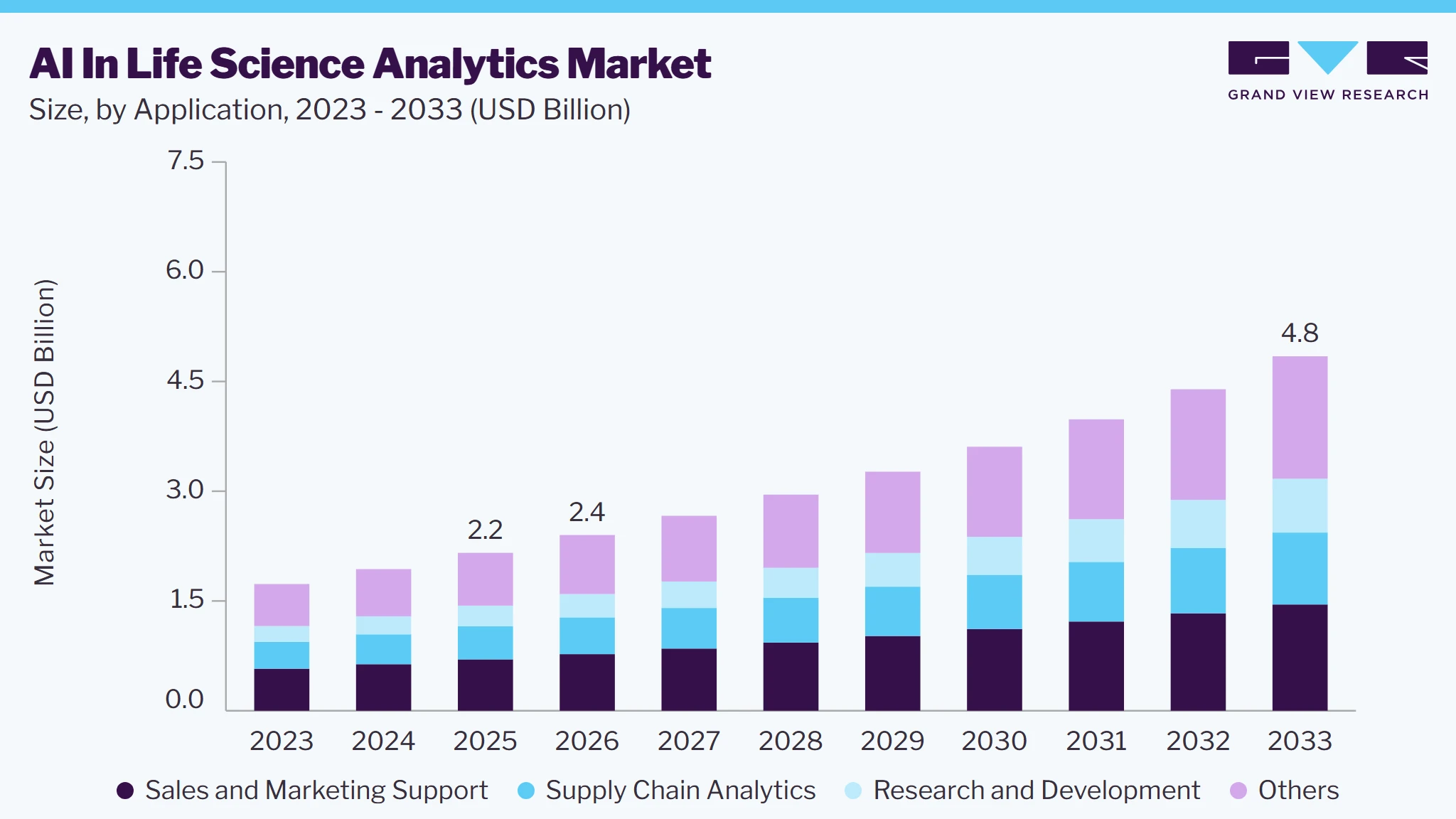 To learn more about this report, Download Free Sample Report
 Life sciences industries focus on enhancing health through innovative medical solutions, including drug development, critical disease treatments, and minimally invasive surgical equipment to improve patient outcomes and recovery times. Companies are actively advancing AI innovation in this sector. For example, in October 2023, Fujitsu Limited and RIKEN's HPC- and AI-driven Drug Development Platform Division introduced an AI technology that predicts protein’s structural changes from electron microscope images, generating 3D density maps using generative AI.
Government initiatives supporting AI in life sciences vary globally, reflecting diverse strategies to leverage AI for healthcare, biomedical research, and pharmaceutical innovation. These initiatives aim to accelerate technological advancements, foster cross-sector collaboration, and address regulatory and ethical challenges. Notably, the U.S. has made substantial progress with the National Artificial Intelligence Initiative Office (NAIIO), established in early 2021, which coordinates AI research and development across federal agencies, academia, and industry.
Key players in the market are increasingly focused on enhancing their AI-based tools to improve quality and capabilities. In March 2022, Sorcero launched 'Clarity,' a tool designed to offer medical affairs teams an integrated view across all areas of scientific engagement. Utilizing Sorcero’s advanced analytics, medical teams can now visualize and track medical content at scale. In addition, in 2022, CloudMedx introduced 'ACO REACH Explorer,' aimed at unifying and visualizing disparate data to enhance health equity and Omni channel patient engagement.
Market Dynamics
The global market is experiencing significant growth driven by advancements in AI and machine learning technologies. Innovations in AI technologies have transformed the analysis of complex, large-scale biological and clinical data. In addition, increased investments from pharmaceutical companies and government initiatives supporting AI research and development are contributing to market expansion. AI's capabilities in streamlining clinical trials, optimizing supply chain management, and enhancing decision-making processes are further accelerating its adoption within the life sciences industry.
The AI in the life sciences analytics market is driven by expanding integration across drug discovery, biomedical research, and clinical development. Life sciences organizations are increasingly adopting AI to process large volumes of genomic, proteomic, imaging, and clinical data, enabling faster and more accurate scientific decision-making. AI-powered analytics improve target identification, biomarker discovery, protein structure prediction, and treatment optimization, reducing research timelines and enhancing development efficiency. Continuous advances in machine learning, generative AI, and predictive analytics are enabling researchers to uncover complex biological relationships that are difficult to identify using conventional analytical methods. For instance, in April 2026, Litmys and Konovo formed a partnership to improve drug-development intelligence for life sciences companies. The collaboration combines Litmys’ predictive commercial-readiness scoring with Konovo’s network of more than two million healthcare stakeholders across the US, Europe, and Asia to support earlier, smarter R&D and clinical decisions. Such strategic initiatives demonstrate the growing role of AI in accelerating life sciences research and strengthening demand for advanced analytics platforms that support data-driven pharmaceutical and biotechnology innovation.
Moreover, government initiatives promoting the adoption of artificial intelligence are further driving AI adoption in the life sciences analytics market. Public investments in AI research, digital health infrastructure, and biomedical innovation are encouraging collaboration between government agencies, research institutions, and industry participants to accelerate scientific discovery while addressing regulatory and ethical considerations. In addition, market participants continue to expand AI-enabled analytics capabilities to improve scientific engagement and healthcare decision-making. For instance, in January 2026, Oracle launched its Life Sciences AI Data Platform to unify customer, third-party, and de-identified real-world records into a single generative AI environment. The platform is built to speed R&D, clinical trials, post-market safety, and commercialization by turning fragmented data into actionable insights.
“Oracle Life Sciences AI Data Platform unifies and intelligently organizes data and employs AI and advanced analytics to reveal deep insights that are often not possible with humans alone.”
- Seema Verma, executive vice president and general manager, Oracle Health and Life Sciences
The AI in life science analytics market faces primary challenges related to data privacy, cybersecurity, and regulatory compliance. AI platforms process large volumes of sensitive clinical, genomic, patient, and research data, making them vulnerable to data breaches and unauthorized access. Compliance with regulations such as the General Data Protection Regulation (GDPR), the Health Insurance Portability and Accountability Act (HIPAA), and other regional data protection frameworks increases implementation complexity and operational costs. Organizations must establish robust data governance, secure data-sharing mechanisms, and continuous monitoring processes before deploying AI analytics solutions, which is anticipated to delay adoption across pharmaceutical, biotechnology, and research organizations.
The complexity of integrating AI solutions while maintaining regulatory compliance further restrains market growth. Life sciences companies often manage data across multiple jurisdictions, each with different privacy laws, consent requirements, and cross-border data transfer regulations. Ensuring transparency, auditability, and explainability of AI-generated insights is becoming crucial for regulatory acceptance and clinical decision-making. In addition, substantial investments in cybersecurity infrastructure, compliance validation, and ongoing software updates increase the total cost of AI implementation. These factors are likely to discourage small and mid-sized organizations from adopting advanced AI-powered life science analytics platforms, limiting broader market expansion.
Analyst Perspective
The AI in life science analytics market is growing rapidly as pharmaceutical, biotechnology, and contract research organizations increasingly adopt artificial intelligence to improve research productivity, clinical development, commercial decision-making, and operational efficiency. The growing availability of real-world data, genomic information, electronic health records, and scientific literature is driving demand for AI-powered platforms that generate actionable insights and reduce development timelines. The market is increasingly shifting toward integrated, cloud-native solutions that combine machine learning, natural language processing, generative AI, and predictive analytics to optimize clinical trials, patient recruitment, pharmacovigilance, market access, and commercial performance, with vendors offering scalable, secure, and data-integrated platforms expected to gain a competitive advantage as precision medicine and data-driven drug development continue to expand.
Market Concentration & Characteristics
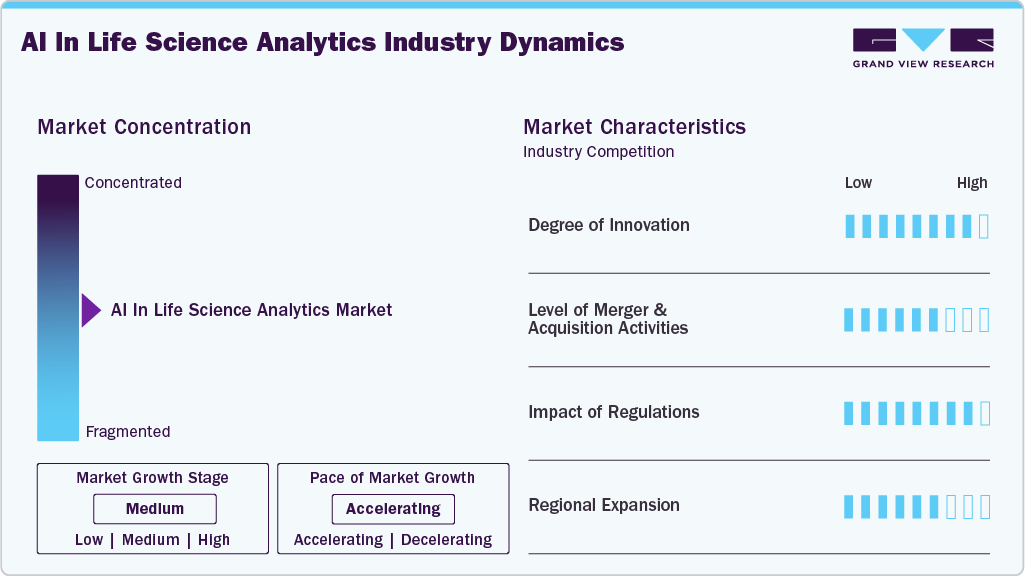
The chart below illustrates the relationship between market concentration, industry characteristics, and industry participants. The x-axis represents the level of industry concentration, ranging from low to high. The y-axis represents various industry characteristics, including industry competition, level of mergers & acquisitions, impact of regulations, and geographic expansion. The AI in life science analytics industry is slightly fragmented, with many small players entering the market and offering new products. In addition, the impact of regulations on industry is high. Moreover, the level of mergers and acquisitions and the regional expansion of the market is medium.
The degree of innovation within the market is high, driven by continuous advancements in AI algorithms, machine learning techniques, and the integration of big data analytics. AI is revolutionizing how data from genomics, proteomics, clinical trials, and patient records are analyzed and utilized to drive insights and discoveries in life sciences. Innovations in natural language processing (NLP), computer vision, and predictive analytics are pushing the boundaries of what is possible in drug discovery, personalized medicine, and healthcare delivery. For instance, PathAI uses AI to analyze pathology images and aid pathologists in diagnosing diseases like cancer with higher accuracy. This technology not only enhances diagnostic capabilities but also improves patient outcomes by ensuring timely and precise diagnoses.
 To learn more about this report, Download Free Sample Report
 Mergers and acquisitions (M&A) activities in the global market are on the rise as companies strive to enhance their technological capabilities, expand market reach, and integrate complementary solutions. Larger pharmaceutical companies, healthcare providers, and technology firms are increasingly acquiring AI startups and specialized analytics firms to gain access to advanced AI algorithms, proprietary data sets, and expertise in applying AI to the life sciences sector. For example, in March 2024, Clarivate Plc, a global intelligence solutions provider, announced its intention to acquire most assets from MotionHall, a Silicon Valley startup specializing in AI solutions for the life sciences sector. This acquisition aligns with Clarivate's strategy to strengthen its Life Sciences and healthcare offerings through the incorporation of generative AI and proprietary industry-specific AI solutions.
Regulations play a critical role in shaping the market, influencing data privacy standards, ethical considerations, and the approval process for AI-driven medical devices and pharmaceuticals. Regulatory bodies such as the FDA in the U.S and the EMA in Europe are actively developing guidelines and frameworks to ensure the safety, efficacy, and ethical use of AI technologies in healthcare. The FDA has established a regulatory pathway for AI-based medical devices through its Digital Health Innovation Action Plan. Similarly, the EU's AI Act provides a thorough regulatory framework for AI usage, offering life sciences companies clarity on safe and responsible AI practices.
Geographic expansion plays a key role in driving the market growth by fostering collaboration, access to diverse datasets, and talent pools across regions. It enables companies to tap into new markets, leverage local expertise, comply with region-specific regulations, and gain insights from different healthcare systems, ultimately fueling innovation and accelerating the adoption of AI technologies in life sciences globally.
Case Study Insights
A leading pharmaceutical company required precise monitoring of the market share of its consumer health and medication products. The company aimed to identify future business prospects for each product, assess their market contributions, and analyze key factors influencing market growth.
The Microsoft Excel-based classification model required substantial manual intervention, resulting in rework and human error. Therefore, the manufacturer sought a scalable, AI-based solution to automate market share analytics categorization.
Solution:
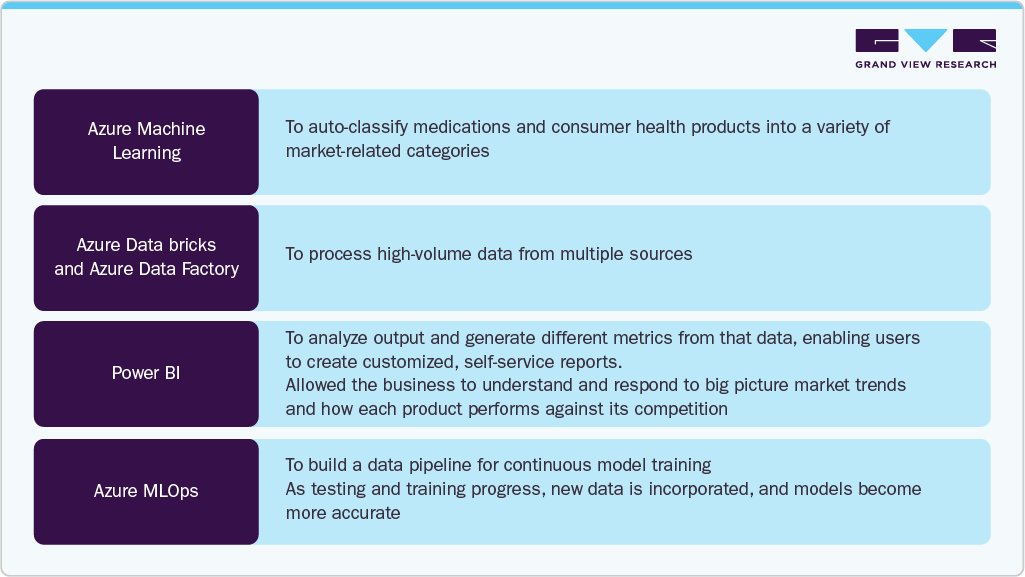
Cognizant designed an AI-powered intelligence system using several advanced technologies.
 To learn more about this report, Download Free Sample Report
 Result:
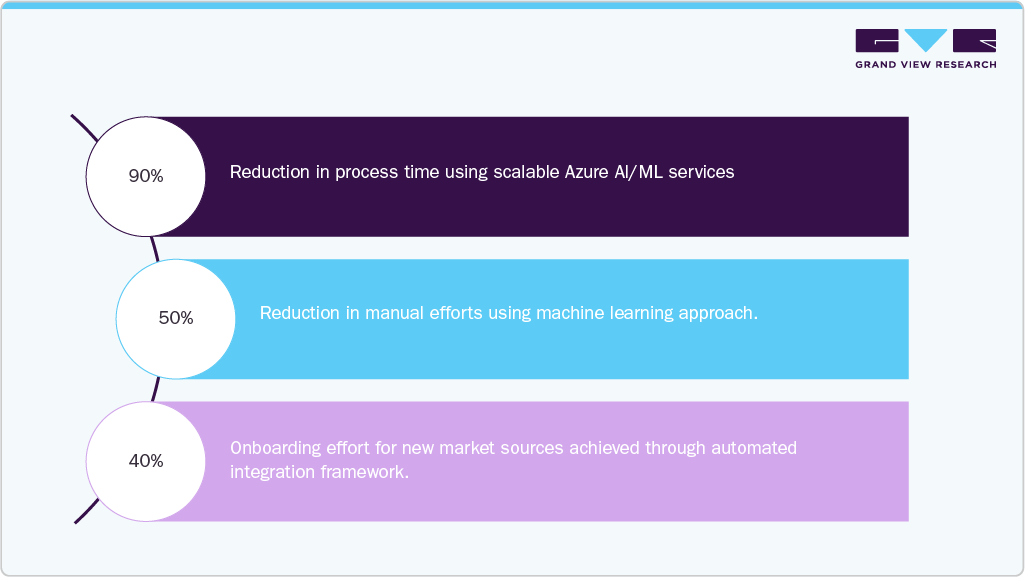
This engagement enhanced operational efficiency, enabling the manufacturer to focus on more value-added, less repetitive tasks. It also significantly enhanced the customer experience by simplifying the categorization and sorting of sales for specific consumer health and medication products.
 To learn more about this report, Download Free Sample Report
 Deployment Insights
By deployment, the cloud-based segment held the largest market share of 52.0% in 2025. In addition, this segment is expected to witness the fastest growth with a CAGR over the forecast period. It is also expected to grow at the fastest CAGR over the forecast period, due to its scalability, flexibility, and cost efficiency. Cloud providers offer AI-specific services and tools that streamline the development, training, and deployment of machine learning models in life sciences. These platforms provide access to pre-built AI algorithms, model development frameworks, and automated workflows that simplify the AI lifecycle management process. For instance, Microsoft Azure offers cost-effective AI solutions for life sciences, including AI-powered analytics and machine learning tools. Azure's flexible pricing options and comprehensive cloud services support organizations in optimizing research budgets and achieving operational efficiencies through scalable AI deployments.
The on-premise segment is anticipated to grow at a substantial CAGR during the forecast period, as they supports internal system integration, enables custom feature requests, and incorporates hardware capabilities. Users can fully control security measures and customize IT configurations to meet specific cybersecurity needs. These solutions also permit backup at personalized frequencies, allowing users to directly configure backup schedules and policies and design backup techniques and data strategies accordingly.
Component Insights
By component, the services segment held the largest market share of 42.5% in 2025. In addition, this segment is expected to witness the fastest growth with a CAGR over the forecast period, due to the demand for AI implementation and integration services, complexity of AI solutions and technologies, and focus on customization and personalization. Organizations across sectors are increasingly recognizing the value of AI in enhancing operational efficiency, customer engagement, and decision-making processes. However, many lack the internal expertise to implement and integrate AI solutions effectively. This drives the demand for AI service providers who offer consulting, implementation, customization, and integration services. For instance, AI service providers like IBM Watson offer AI-as-a-Service platforms that enable businesses to access pre-built AI models and tools for various applications, such as predictive analytics and virtual assistants. These platforms simplify AI adoption by providing ready-to-use solutions and technical support.
Moreover, businesses increasingly seek AI solutions that are tailored to their specific needs and industry requirements. Service providers offer customization services that align AI capabilities with business objectives, workflows, and regulatory compliance. For instance, IQVIA’s AI software, used by life science and healthcare customers, uncovers critical insights into population well-being, including social determinants of health (SDoH), significantly influencing health outcomes. Hence, in June 2023, IQVIA won the “Best AI-based Solution for Healthcare” award at the sixth annual AI Breakthrough Awards. The recognition is for AI software, which includes natural language processing (NLP) technology to analyze complex, unstructured patient data and provide insights into patient care and disease states.
Application Insights
By application, the sales and marketing support segment held the largest market share of 32.5% in 2025. This growth is attributed to the increasing adoption of AI-driven solutions to enhance sales effectiveness, customer engagement, and market intelligence within the life sciences sector. AI enables life science companies to personalize customer interactions and engagement strategies based on individual preferences, behaviors, and historical data. Advanced analytics and AI algorithms analyze vast datasets, including customer profiles, purchasing patterns, and market trends, to segment audiences and deliver targeted marketing campaigns.
However, the research and development segment is expected to register fastest growth over the forecast period. The rising adoption of analytical solutions in drug development and clinical trials is one of the driving factors for growth. Leading companies are constantly investing in the development of new innovative drugs for the treatment of many severe diseases, such as cancer, diabetes, and other infectious diseases that necessitate extensive research and development. For instance, in December 2023, the U.S. Pharmacopeia (USP) inaugurated the USP Advanced Manufacturing Technology Lab in the U.S. as part of its new suite of R&D analytical solutions. These services aim to support drug manufacturers adopting advanced technologies, such as pharmaceutical continuous manufacturing (PCM), to improve diverse geographic presence in pharmaceutical production and strengthen supply chain resilience.
End Use Insights
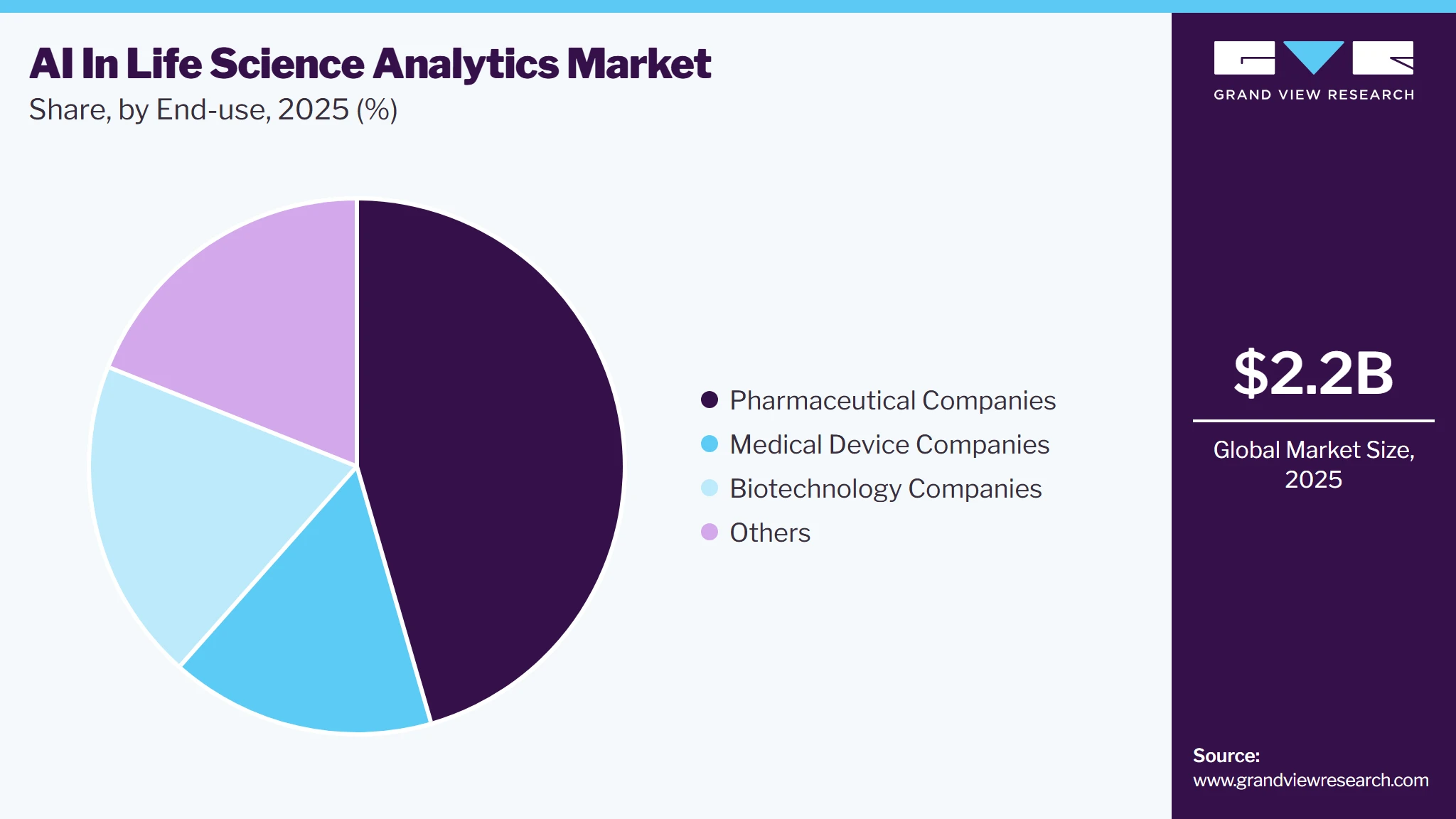
By end-use, the pharmaceutical companies segment held the largest market share of 45.5% in 2025. AI enables pharmaceutical companies to embrace precision medicine approaches by analyzing patient data, genetic profiles, and biomarkers to tailor treatment strategies based on individual characteristics and disease complexities. For instance, Insilico Medicine uses AI to discover novel drug candidates and optimize molecular structures for pharmaceutical companies. By leveraging AI-driven drug discovery platforms, Insilico accelerates the identification of promising compounds, streamlines preclinical testing, and facilitates collaborative research partnerships to address unmet medical needs and improve patient outcomes. In addition, various government organizations are undertaking initiatives to promote the safe use of AI in the pharmaceutical field. For instance, in March 2024, the WHO developed a discussion paper to analyze the growing application of AI to each step of vaccine and medicine development and production.
 To learn more about this report, Download Free Sample Report
 However, the biotechnology companies segment and is expected to witness the fastest growth during the forecast period from 2026 to 2033, owing to the advantages offered by the incorporation of AI technology such as, effective decision making, cost effectiveness, and accelerated R&D analysis of homogenous databases. Moreover, through integration of these tools the biotechnology firms can improve their workflows in order to gain competitive advantages and in development of therapies for various diseases. For instance, in November 2023, Evommune, Inc. and Accutar Biotechnology, Inc. announced a strategic alliance to identify new small-molecule therapeutic candidates to treat chronic inflammatory conditions. The collaboration utilizes Accutar's proprietary AI platform and Evommune's expertise in developing oral small-molecule treatments targeting the root causes of chronic immune-mediated inflammatory disorders.
Regional Insights
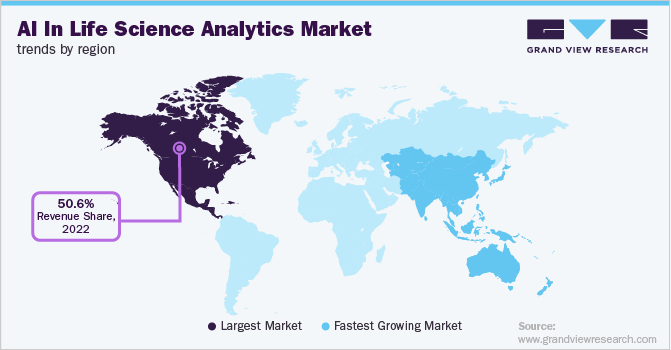
North America dominated the AI in life science analytics market with the largest revenue share of 50.6% in 2025. The increasing initiatives undertaken by the governments and collaborations among the government bodies and private players for development of technological solutions is anticipated to drive the market growth. Furthermore, rapid adoption of the solutions by the healthcare institutions in order to organize the organizational workflows is anticipated to boost market growth.
 To learn more about this report, Download Free Sample Report
 U.S. AI in Life Science Analytics Market Trends
The AI in life science analytics market in the U.S. held the largest share in the North America region in 2025. The U.S. AI in life science analytics industry is driven by the increased use of AI in various life science domains. For instance, in March 2023, NVIDIA announced expanded generative AI cloud services designed to customize AI foundation models, aiming to accelerate protein and therapeutic development and advance research in genomics, chemistry, biology, and molecular dynamics.
“The transformative power of generative AI holds enormous promise for the life science and pharmaceutical industries.”
- Vice President of healthcare at NVIDIA.
Europe AI in Life Science Analytics Market Trends
The Europe AI in life science analytics industry is driven by rapid advancements in AI technology, significant investments, and supportive regulatory policies. The need to reduce healthcare costs, address a geriatric population, and manage chronic diseases further accelerates AI adoption. Collaborations between academia, research institutions, and industry enhance innovation, while improved data availability and a shift towards patient-centric healthcare models strengthen AI applications.
The UK AI in life science analytics industry is significantly driven by government initiatives. For instance, in October 2023, the government announced a new USD 108.7 (EUR 100) million investment focused on rapidly deploying AI to achieve breakthroughs in therapies for incurable diseases. The AI Life Sciences Accelerator Mission is expected to use the UK’s strengths in securing advanced AI and health data.
The AI in life science analytics industry in Germany is driven by strategic initiatives undertaken by the market players. For instance, in September 2023, Merck KGaA announced two strategic partnerships focused on leveraging advanced AI-driven drug development and discovery to enhance its research initiatives. Partnering with BenevolentAI in London and Exscientia in Oxford, these partnerships aim to develop novel drug candidates with best-in-class potential in oncology, neurology, and immunology.
Asia Pacific AI in Life Science Analytics Market Trends
The AI in life science analytics industry in Asia Pacific is expected to grow at the fastest CAGR during the forecast period. Rising number of countries aiming to adopt AI based tools and high presence of biotech companies are the reasons that are fueling the growth of market. Major players in Asia Pacific are more focusing on adoption of AI based analytical tools to enhance the operation efficiency also plays a crucial role in market growth.
The Japan AI in life science analytics industry is driven by increased used of AI and ML technologies to develop healthcare solutions. For instance, in June 2023, Eisai, LifeArc, Health Data Research UK (HDR UK), Gates Ventures, and the University of Edinburgh announced a two-year research agreement named NEURii. This collaboration leverages collective expertise in therapeutics, health data management, commercialization, technology development, and advanced analytics/data science to focus on brain health. NEURii will utilize high-quality individual data, AI, and ML to develop patient-focused digital health solutions.
The AI in life science analytics industry in India is expected to grow at a significant CAGR over the forecast period. The growth is driven by rapid technological advancements and expansion of healthcare facilities integrated with AI technologies. For instance, in March 2024, Axtria, a global cloud-based software and data analytics for the life sciences sector, announced the opening of its 9th innovation and Capability Centre in Hyderabad, India. This new facility expands Axtria's capacity to provide advanced AI-driven solutions and data analytics, including generative AI technologies, to support life sciences companies in achieving better health outcomes.
Latin America AI in Life Science Analytics Market Trends
The AI in life science analytics industry in Latin America is anticipated to grow significantly due to demand for advanced healthcare, growing pharmaceutical and biotechnology companies, and technological advancements.
Middle East & Africa AI in Life Science Analytics Market Trends
Middle East & Africa AI in life science analytics industry is anticipated to witness significant growth due to increased healthcare expenditures and government investments in interoperability and artificial intelligence (AI), leveraging AI in life science analytics.
Key AI in Life Science Analytics Company Insights
The market is highly competitive, with numerous companies worldwide investing in AI-based tools to provide more effective analytical solutions. For example, in September 2021, IQVIA launched the AI-powered MI Contact Center for life sciences. This solution enables companies to share information through new virtual agents, complementing human experts to prioritize and respond to inquiries more efficiently.
Key players operating in the market are undertaking various initiatives to strengthen their market presence and increase the reach of their products and services. Strategies such as new product launches and partnerships are playing a key role in propelling market growth.
Key AI In Life Science Analytics Companies:
The following key companies have been profiled for this study on the AI in life science analytics market.
-
Inovalon
-
Indegene
-
Lexalytics
-
Databricks
-
SAS Institute, Inc.
-
IQVIA
-
IBM
-
Sorcero
-
Axtria
Competitive Benchmarking
Category
Operating Strategies
Competitive Edge
Weakness
Established Players (IQVIA, IBM, SAS Institute, Inc., Databricks, Inovalon)
- Expand AI-powered life science analytics platforms through strategic acquisitions, cloud partnerships, and collaborations with pharmaceutical companies, biotechnology firms, CROs, and healthcare providers. Invest in machine learning, generative AI, real-world evidence (RWE), clinical trial analytics, commercial intelligence, and cloud-native data platforms to strengthen end-to-end analytics capabilities across the drug development lifecycle.
- Strong global presence, extensive healthcare and life sciences datasets, advanced AI and analytics capabilities, and established relationships with pharmaceutical and biotechnology companies. Robust cloud infrastructure, regulatory expertise, scalable platforms, and comprehensive consulting and implementation services enable deployment across research, clinical, commercial, and market access functions.
- High implementation costs, lengthy deployment timelines, and complex enterprise integrations may limit adoption among smaller life sciences organizations. Dependence on large-scale customer contracts and evolving data privacy regulations can increase operational complexity and compliance costs.
Emerging & Specialized Players (Indegene, Lexalytics, Sorcero, Axtria)
- Focus on specialized AI-driven analytics solutions for medical affairs, commercial analytics, scientific intelligence, natural language processing (NLP), omnichannel engagement, and sales optimization. Leverage cloud-based platforms, domain-specific AI models, and strategic partnerships with pharmaceutical companies to deliver personalized, scalable, and data-driven decision support solutions.
- Greater agility in deploying innovative AI applications tailored to specific life sciences functions such as medical affairs, pharmacovigilance, scientific literature analysis, and commercial operations. Ability to rapidly integrate generative AI, NLP, and predictive analytics into targeted workflows while offering flexible deployment and faster implementation.
- Limited global scale, smaller customer base, and lower financial resources compared to multinational analytics providers. Narrower product portfolios, lower brand recognition, and dependence on strategic partnerships may restrict expansion into large enterprise-wide analytics programs.
Recent Developments
- In September 2025, Inovalon launched a new data and analytics offering on Snowflake's AI Data Cloud for Healthcare & Life Sciences. This partnership provides payers and life sciences organizations secure, near real-time access to Inovalon's primary source data and advanced analytics. The seamless integration reduces IT overhead, accelerates data refresh by 4-9 days, and enhances care quality, risk management, and operational efficiency.
“Making Inovalon’s datasets and analytics available directly through Snowflake means payers no longer have to wait for insights or value. Our collaboration eliminates the friction of traditional data exchange and allows payers to act immediately on quality, risk, and cost intelligence so they can serve their populations better.”
- Mike Jones, President of Inovalon’s Payer Business Unit.
-
In June 2024, Medidata launched Clinical Data Studio, a unified platform that integrates data from both Medidata and non-Medidata sources. This technology allows stakeholders to control data quality and deliver safer trials faster, accelerating decision-making and enabling holistic data and risk strategies. AI helps identify potential issues and safety signals.
-
In April 2024, IQVIA and Salesforce announced broadening their global partnership to hasten the development of the Life Sciences Cloud. This collaboration integrates IQVIA OCE innovations with Salesforce's platform, offering customers a comprehensive engagement solution. Leveraging IQVIA's data, domain expertise, and advanced analytics, Salesforce's CRM software aims to revolutionize healthcare professional (HCP) and patient engagement, providing seamless and effective experience.
-
In January 2024, Cleveland Clinic and IBM researchers released a strategy using AI to identify new immunotherapy targets. This marks the initial peer-reviewed publication stemming from their Discovery Accelerator partnership, which aims to progress healthcare and life sciences research.
-
In September 2023, SAS introduced SAS Health, a new AI and analytics solution catering to health insurers, providers, and public health agencies. This solution empowers them with flexibility and agility to drive health innovation, ultimately improving health outcomes and patient experiences.
-
In August 2023, Indegene launched Invisage, an AI-enabled platform designed for life sciences companies to enhance their go-to-market strategies. Utilizing data from a vast network of healthcare professionals (HCPs) and interactions, InvisageTM facilitates personalized outcomes for HCPs, optimizing engagement and effectiveness in the industry.
-
In March 2022, IQVIA introduced OCE+, the latest advancement in its prominent life science customer engagement platform. OCE+ integrates IQVIA’s Next Best recommendation engine into the Orchestrated Customer Engagement (OCE) platform, offering AI-driven suggestions for engaging healthcare professionals (HCPs). This addition enhances HCP experience, boosts productivity, and increases user ROI.
AI in Life Science Analytics Market Report Scope
Report Attribute
Details
Market size value in 2025
USD 2.2 billion
Market size value in 2026
USD 2.4 billion
Revenue forecast in 2033
USD 4.8 billion
Growth rate
CAGR of 10.5% from 2026 to 2033
Historical data
2021 - 2024
Forecast period
2026 - 2033
Quantitative units
Revenue in USD million/billion, and CAGR from 2026 to 2033
Report coverage
Revenue forecast, company ranking, competitive landscape, growth factors, and trends
Segments covered
Deployment, component, application, end-use, region
Regional scope
North America; Europe; Asia Pacific; Latin America; MEA
Country scope
U.S.; Canada; Mexico; Germany; UK; France; Italy; Spain; Norway; Denmark; Sweden; China; Japan; India; South Korea; Australia; Thailand; Brazil; Argentina; Saudi Arabia; South Africa; UAE; Kuwait
Key companies profiled
Inovalon; Indegene; Lexalytics; Databricks; SAS Institute, Inc.; IQVIA; IBM; Sorcero; Axtria
Customization scope
Free report customization (equivalent up to 8 analysts' working days) with purchase. Addition or alteration to country, regional & segment scope.
Pricing and purchase options
Avail customized purchase options to meet your exact research needs. Explore purchase options
Global AI in Life Science Analytics Market Report Segmentation
This report forecasts revenue growth at global, regional, and country levels and provides an analysis of the latest industry trends in each of the sub-segments from 2021 to 2033. For this study, Grand View Research has segmented the global AI in life science analytics market report based on deployment, component, application, end use, and region.
-
Deployment Outlook (Revenue, USD Million, 2021 - 2033)
-
On-premises
-
Cloud-based
-
-
Component Outlook (Revenue, USD Million, 2021 - 2033)
-
Hardware
-
Software
-
Services
-
-
Application Outlook (Revenue, USD Million, 2021 - 2033)
-
Research and Development
-
Sales and Marketing Support
-
Supply Chain Analytics
-
Others
-
-
End Use Outlook (Revenue, USD Million, 2021 - 2033)
-
Medical Device Companies
-
Pharmaceutical Companies
-
Biotechnology Companies
-
Others
-
-
Regional Outlook (Revenue, USD Million, 2021 - 2033)
-
North America
-
U.S.
-
Canada
-
Mexico
-
-
Europe
-
UK
-
Germany
-
France
-
Italy
-
Spain
-
Norway
-
Sweden
-
Denmark
-
-
Asia Pacific
-
Japan
-
China
-
India
-
Australia
-
Thailand
-
-
Latin America
-
Brazil
-
Argentina
-
-
Middle East and Africa (MEA)
-
South Africa
-
Saudi Arabia
-
UAE
-
Kuwait
-
-
Research Methodology
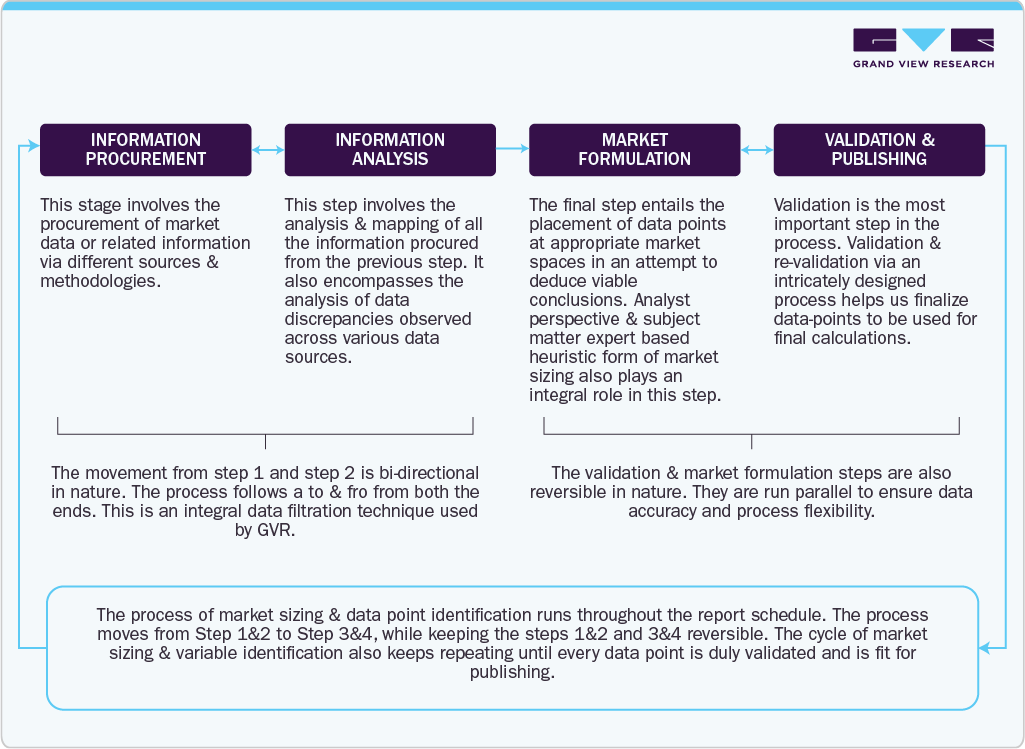
The AI in life science analytics market figures in this report are based on a proven research process that combines executive interviews with secondary research from proprietary databases, company filings, and recognized regulatory and institutional sources. Market size is built through value-chain sizing - reconciling supply-side and demand-side estimates - and triangulated with bottom-up and top-down approaches. Every estimate passes multiple levels of expert validation before publication, with each AI in life science analytics segment quantified using the revenue-capture definitions in the table below.
Segment Definition
Segment - Deployment
Revenue capture definition
On-premises
AI analytics solutions installed and managed within an organization's own IT infrastructure and data centers. On-premises deployment offers greater control over sensitive research, clinical, and commercial data, making it suitable for organizations with stringent security, privacy, and regulatory compliance requirements.
Cloud-based
AI analytics platforms hosted on cloud infrastructure and delivered via software-as-a-service (SaaS) or cloud computing models. Cloud-based solutions provide scalable computing resources, remote accessibility, faster deployment, lower infrastructure costs, and seamless integration with large life sciences datasets.
Segment - Application
Revenue capture definition
Research and Development (R&D)
AI-powered analytics used to accelerate drug discovery, target identification, biomarker discovery, genomic analysis, clinical trial design, patient stratification, and research data interpretation, improving the efficiency and success of life sciences innovation.
Sales and Marketing Support
AI analytics solutions that help optimize commercial operations by analyzing market trends, physician prescribing behavior, customer engagement, sales performance, market access strategies, and promotional effectiveness to improve business outcomes.
Supply Chain Analytics
AI applications that optimize procurement, manufacturing, inventory management, demand forecasting, logistics, distribution, supplier performance, and supply chain resilience across life sciences operations.
Others
Includes AI analytics applications in regulatory compliance, pharmacovigilance, medical affairs, quality management, pricing and reimbursement, manufacturing optimization, healthcare economics, and corporate strategy.
Segment - Component
Revenue capture definition
Hardware
Physical computing infrastructure required to support AI-powered life science analytics, including high-performance servers, graphics processing units (GPUs), storage systems, networking equipment, and specialized computing platforms for processing large biomedical datasets.
Software
AI-driven software platforms and analytical applications that process clinical, genomic, proteomic, commercial, and operational data to generate predictive insights, optimize decision-making, and improve research and business performance across life sciences organizations.
Services
Professional services supporting the implementation, integration, customization, consulting, validation, maintenance, training, and technical support of AI analytics solutions within pharmaceutical, biotechnology, and medical device organizations.
Segment - End Use
Revenue capture definition
Medical Device Companies
Manufacturers of medical devices that utilize AI analytics to support product development, quality management, regulatory compliance, manufacturing optimization, post-market surveillance, and commercial decision-making.
Pharmaceutical Companies
Pharmaceutical organizations that deploy AI analytics across drug discovery, clinical development, regulatory affairs, pharmacovigilance, manufacturing, supply chain management, commercialization, and market analytics to improve operational and research efficiency.
Biotechnology Companies
Biotechnology firms that leverage AI analytics for genomics, molecular biology, precision medicine, biologics development, biomarker identification, clinical research, and advanced therapeutic innovation.
Others
Includes contract research organizations (CROs), contract development and manufacturing organizations (CDMOs), academic and research institutions, diagnostic laboratories, healthcare organizations, and government agencies utilizing AI-driven life science analytics solutions.
Estimation Model
 To learn more about this report, Download Free Sample Report
 Market Estimation Process:
Market-specific Research Models:
Consensus-Based Estimates & Forecasting
The AI in life science analytics market presents emerging dominant opportunities, featuring global key players such as Inovalon; Indegene; Lexalytics; Databricks; SAS Institute, Inc.; IQVIA; IBM; Sorcero; Axtria. To ensure a holistic approach, the GVR research team adopted a comprehensive methodology, considering multiple companies worldwide and utilizing various variables for data accuracy.
Our methodology included:
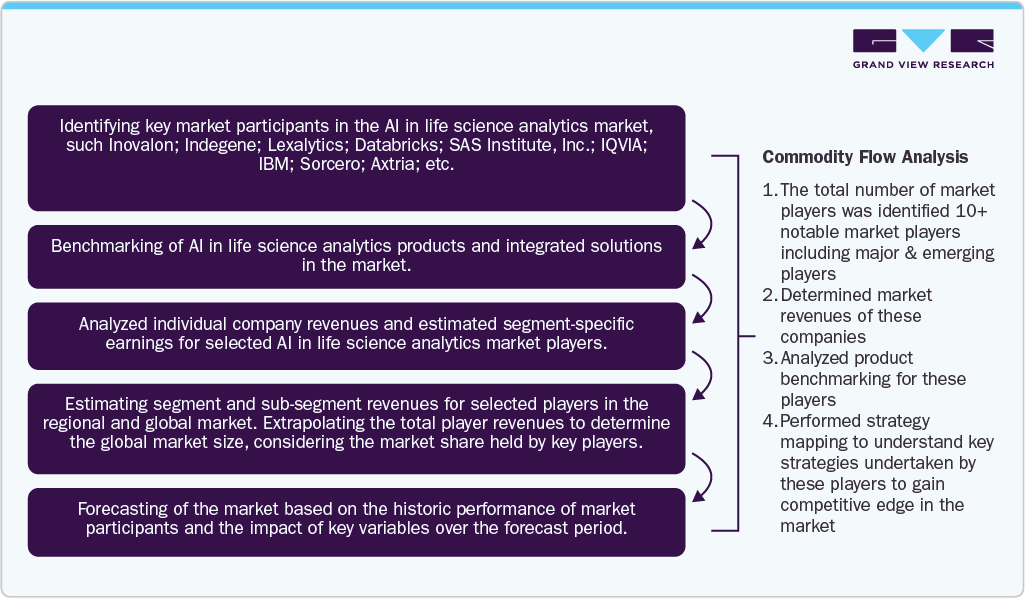
Model 1: Commodity Flow Analysis - For public players, annual reports were referenced. For private players, premium paid data sources such as S&P Global, Crunchbase, ZoomInfo, RocketReach, etc., were used for the latest revenue insights.
Model 2: Parent Market Analysis
Model 3: Country-level Multivariate Analysis Assumptions
Model 4: Segment-level Multivariate Analysis Assumptions
Model 5: AI in Life Science Analytics Market CAGR Calculations
Model 1: Commodity Flow Analysis
 To learn more about this report, Download Free Sample Report
 Commodity flow analysis was employed to track the movement of AI in life science analytics through the value chain, from technology providers to end users. This analysis provided insights into demand generation points, intermediary roles, and ultimate consumption patterns.
Delivered Customizations
This report has been delivered with the following In-depth customizations
Client Request
Customization Delivered
Value Adds
AI in Life Science Analytics Adoption & Research Intelligence Analysis
Developed a tailored analysis of the global AI in Life Science Analytics market focused on AI-powered analytics for drug discovery, clinical development, commercial operations, pharmacovigilance, medical affairs, regulatory intelligence, and real-world evidence generation. The study assessed adoption trends across pharmaceutical companies, biotechnology firms, contract research organizations (CROs), contract development and manufacturing organizations (CDMOs), and research institutions while evaluating increasing clinical data volumes, digital transformation initiatives, and the growing demand for data-driven decision-making across the life sciences value chain.
Enables stakeholders to understand evolving AI adoption trends, identify high-growth analytics applications, assess opportunities across research, clinical, and commercial functions, and evaluate the impact of AI-driven insights on operational efficiency, innovation, and long-term market expansion.
Advanced Analytics, Drug Development & Commercial Intelligence Assessment
Delivered a customized evaluation of AI-powered life science analytics across clinical trial optimization, patient recruitment, biomarker discovery, predictive modeling, market access analytics, sales and marketing optimization, medical literature analysis, and pharmacovigilance. The analysis assessed machine learning, natural language processing (NLP), generative AI, cloud-based analytics platforms, and real-world data integration. Additionally, it evaluated technology adoption patterns and product innovations from leading companies including IQVIA, IBM, SAS Institute, Databricks, Inovalon, Indegene, Axtria, Sorcero, and Lexalytics.
Provides actionable insights into commercially attractive analytics segments, emerging AI technologies, evolving life sciences requirements, and growth opportunities associated with accelerated drug development, improved clinical trial efficiency, enhanced commercial performance, optimized regulatory compliance, and evidence-based decision-making.
Life Sciences Data Infrastructure, Regulatory Environment & Competitive Landscape Assessment
Conducted a focused assessment of the AI in Life Science Analytics ecosystem, including cloud computing infrastructure, data integration platforms, interoperability frameworks, regulatory compliance standards, cybersecurity requirements, AI governance, and competitive positioning. The analysis evaluated implementation challenges, data quality and governance requirements, technology adoption barriers, scalability considerations, strategic partnerships, and competitive differentiation initiatives among leading market participants such as IQVIA, IBM, SAS Institute, Databricks, Inovalon, Indegene, Axtria, Sorcero, and Lexalytics.
Supports strategic planning for AI platform deployment, digital transformation initiatives, life sciences partnerships, technology investments, geographic expansion, and market entry strategies by identifying adoption drivers, regulatory challenges, operational considerations, revenue opportunities, data infrastructure requirements, and competitive advantages across the global AI in Life Science Analytics value chain.
Frequently Asked Questions About This Report
North America dominated with a 50.6% revenue share in 2025.
The global market is experiencing significant growth driven by advancements in AI and machine learning technologies.
The cloud-based segment led with a 52.0% revenue share in 2025.
The services segment led with a 42.5% revenue share in 2025.
The sales & marketing support segment led with a 32.5% revenue share in 2025.
The global AI in life science analytics market size was valued at USD 2.2 billion in 2025 and is estimated at USD 2.4 billion for 2026.
The global AI in life science analytics market is expected to grow at a CAGR of 10.5% from 2026 to 2033, reaching USD 4.8 billion by 2033.
Asia Pacific is the fastest-growing region over the forecast period.
Key players include Key players includes Inovalon; Indegene; Lexalytics; Databricks; SAS Institute, Inc.; IQVIA; IBM; Sorcero; Axtria.
About the Author(s)
Healthcare IT Research Team
Healthcare · Healthcare ITThis report was authored by the healthcare it research team at Grand View Research - comprising two research analysts, one senior research analyst, and one industry expert - with specialized expertise in the healthcare it segment of the healthcare industry. All findings are based on proprietary healthcare databases, executive interviews, and regulatory analysis, subject to internal peer review prior to publication.
Last Updated:
Speak to Analyst

Customize this report to your needs - add regions, segments, or data points, with 20% free customization.
Or view our licence options:


ISO 9001:2015 & 27001:2022 Certified
We are GDPR and CCPA compliant! Your transaction & personal information is safe and secure. For more details, please read our privacy policy.


