
- Home
- »
- Consumer F&B
- »
-
Ashwagandha Supplements Market Size Report, 2026-2033GVR Report cover

Ashwagandha Supplements Market (2026 - 2033)
Size, Share & Trends Analysis Report By Form (Capsules, Tablets & Pills, Powder, Liquid), By Distribution Channel (Hospital Pharmacy, Retail Pharmacy, Online Pharmacy), By Region, And Segment Forecasts
Market Size, 2025
$777.8MMarket Estimate, 2026
$840.1MMarket Forecast, 2033
$1,529.5MCAGR, 2026–2033
8.9%Ashwagandha Supplements Market Summary
The global ashwagandha supplements market size was valued at USD 777.8 million in 2025 and is projected to grow from USD 840.1 million in 2026 to USD 1529.5 million by 2033, at a CAGR of 8.9% from 2026 to 2033. North America dominated the market, accounting for a revenue share of 37.1% in 2025. This can be attributed to the rising consumer demand for natural remedies for sleep, stress, immunity, and overall wellness.
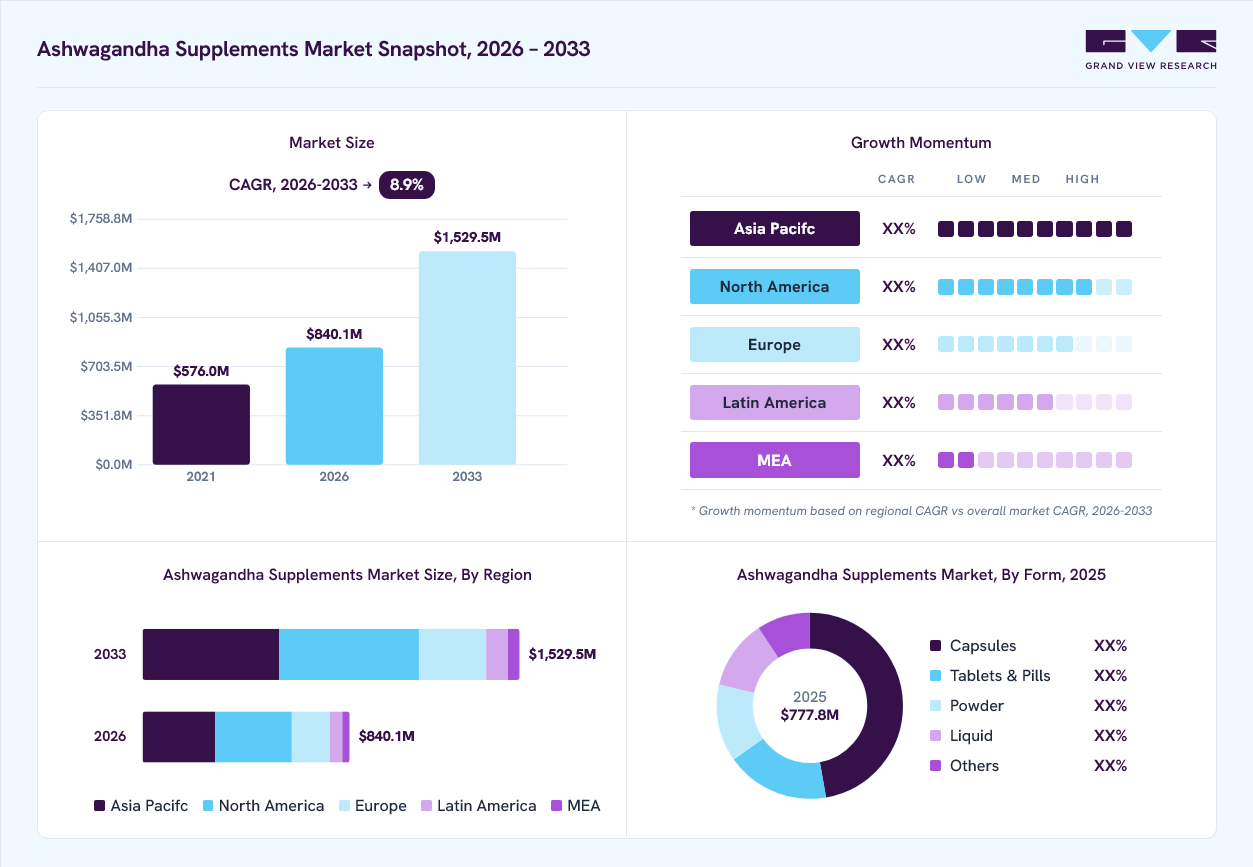 Source: Grand View Research, IR Documents, Primary Interviews, Paid DatabasesTo learn more about this report,
 Download Free Sample Report
 Key Market Trends & Insights
- By form: Capsules segment led the market with the largest revenue share of 47.2% in 2025.
- By distribution channel: Retail pharmacy segment led the market with the largest revenue share of 46.8% in 2025.
Regional Highlights
- Largest regional market: North America (37.1% revenue share, 2025)
- Fastest-growing regional market: Asia Pacific (highest CAGR, 2026-2033)
- By country: The U.S. held the largest market share in 2025.
Market Size & Forecast
- Market size in 2025: USD 777.8 Million
- Estimated market size in 2026: USD 840.1 Million
- Projected market size by 2033: USD 1529.5 Million
- CAGR (2026-2033): 8.9%
Three ways to get this report
Buy it, customize it, or ask a question.Ask an Analyst
Analyst response in 1 business day
- AccessReport author, directly
- Reply timeWithin 1 working day
- No sales callDirect answer only
- FormatEmail reply
- CostFree, no cost
Get the Full Report
What the study covers
- FormatsPDF · Excel · Dashboard
- Timeline2026–2033 annual, 2025 base
- Coverage20+ countries, 5 regions
- Companies10+ key players profiled
Customize the Report
20% free customization
- IncludeCountries, segments, points
- TailorTo your product definition
- ExtendDeeper competitor detail
- OrA fully bespoke study
- Turnaround5–10 working days
Significant market trends support this demand, including growing scientific validation of traditional uses, which leads to trusted and standardized extract formulations (e.g., KSM-66, Sensoril). Moreover, continuous product innovation also includes diverse formats such as gummies, powders, and functional beverages.A notable trend in the Ashwagandha market is the focus on transparency and quality. Consumers now prefer supplements with standardized extracts, third-party testing, and certifications such as organic or non-GMO. Rising awareness of adulteration and inconsistent potency is driving brands to ensure clear labeling and reliable sourcing, giving high-quality products a competitive advantage.
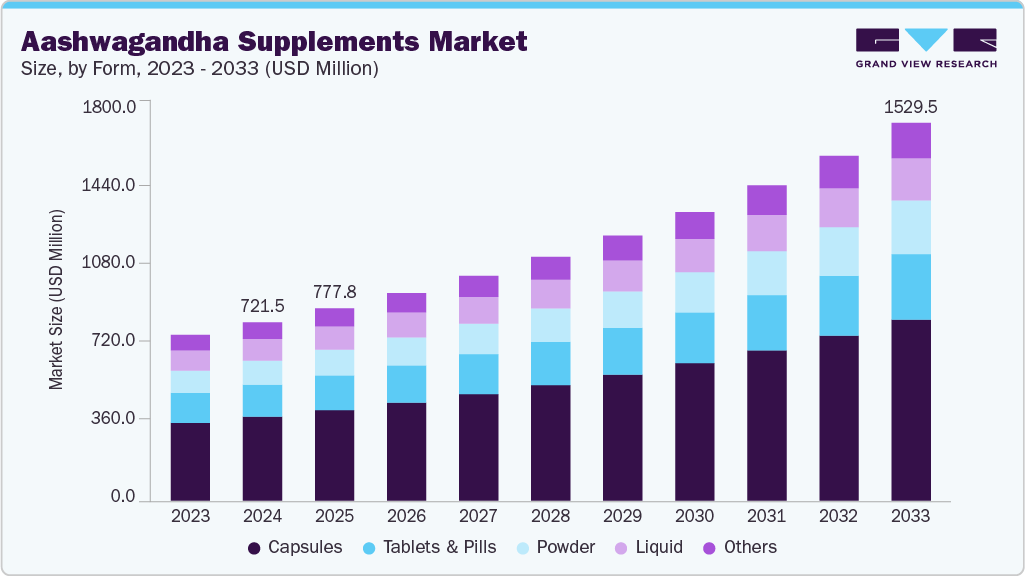 To learn more about this report, Download Free Sample Report
 There is a growing trend among consumers toward natural remedies for managing stress, sleep disturbances, anxiety, and cognitive health, with Ashwagandha increasingly recognized as a safe and effective alternative to traditional medications. In addition, the rising prevalence of chronic health conditions has boosted demand for Ashwagandha supplements, which have potential wellness benefits. Ashwagandha has gained attention for its anti-inflammatory, antioxidant, and immune-supporting properties. Besides, consumers are actively seeking natural alternatives to traditional online pharmacies to manage these conditions, leading to a surge in demand for herbal supplements.
Moreover, Ashwagandha has demonstrated the ability to reduce inflammation, boost immune function, and protect against oxidative stress, making it a valuable component of a wellness routine. Its growing reputation as a natural performance enhancer is also driving demand within the sports nutrition sector. Athletes are increasingly turning to Ashwagandha for benefits such as improved muscle recovery, reduced exercise-induced fatigue, and enhanced strength and endurance, leading to its wider integration into training programs across all levels of athletic performance.
According to a March 2025 article by The Turmeric Co., a 28-day study on 30 professional female footballers found that daily supplementation with 600 mg of Ashwagandha root extract improved recovery and sleep quality compared to a placebo. The benefits of these supplements became more noticeable with consistent use over eight weeks, and pairing them with magnesium further supported stress reduction and sleep quality, underscoring their role in improving athletic performance and overall wellness.
Furthermore, the growing availability of Ashwagandha supplements in multiple forms-capsules, tablets, powders, and gummies-has driven consumer demand, offering convenience and ease of incorporation into daily routines. Established brands' presence and expansion of online retail channels have further supported market growth. Companies are also using social media, influencer partnerships, and content marketing to educate consumers about the benefits of Ashwagandha.
For instance, in July 2025, GNC India launched Ayurvedic Honeysticks that blend traditional ingredients with modern convenience. The single-serve 8g sticks combine natural honey with 400mg of Shilajit and saffron or 400mg of Ashwagandha, offering a portable energy, endurance, and stress relief solution. Designed for busy consumers, these products are available on GNC India’s website and major online platforms.
Innovation in product development remains a key focus, with new delivery formats and formulations being introduced to cater to diverse consumer preferences. This includes blends combining Ashwagandha with other adaptogens and complementary ingredients, such as turmeric, Rhodiola, and magnesium, targeting specific health concerns and enhancing overall efficacy. Alongside these developments, Pricing remains an essential factor in consumer decision-making, with the Ashwagandha market price particularly influencing purchases in premium segments.
Market Dynamics
The ashwagandha supplements market is witnessing steady growth, driven by increasing consumer interest in natural solutions for stress management, cognitive wellness, sleep support, and overall health optimization. Ashwagandha, a widely recognized adaptogenic herb, is gaining popularity among health-conscious consumers seeking plant-based supplements to support physical and mental well-being. Rising awareness of preventive healthcare, growing adoption of herbal and Ayurvedic products, and expanding availability through e-commerce and retail channels are further contributing to market expansion. Additionally, increasing product innovation in the form of capsules, gummies, powders, and functional beverages is expected to strengthen market growth over the forecast period.
Market Dynamics
Growing consumer concerns regarding stress, burnout, anxiety, and sleep-related issues are significantly driving demand for ashwagandha supplements. As consumers increasingly seek natural alternatives to support mental well-being, manufacturers are expanding their ashwagandha-based product portfolios with innovative formulations targeting stress relief, relaxation, and emotional wellness. The ingredient's strong association with adaptogenic benefits and its growing incorporation into mainstream wellness products continue to strengthen its market position across both developed and emerging markets.
In May 2025, Natural Remedies launched Ashwa.30, a next-generation ashwagandha extract specifically developed to support energy, endurance, and stress management at a low daily dosage. The launch reflects growing industry investment in clinically differentiated ashwagandha ingredients designed to address rising consumer demand for stress-support solutions.
The primary restraints affecting the growth of the ashwagandha supplements market is the increasing regulatory scrutiny surrounding product safety, ingredient standardization, and potential adverse health effects. While ashwagandha is widely recognized as a traditional herbal ingredient, regulatory authorities in several countries have intensified their assessment of its safety profile following reports of liver-related adverse events and concerns regarding hormonal effects. These developments have created challenges for manufacturers in terms of compliance, product reformulation, labeling requirements, and market access, particularly in highly regulated regions.
In April 2026, India's Food Safety and Standards Authority (FSSAI) clarified that only ashwagandha roots and their extracts are permitted for use in supplements and nutraceutical products, while the use of ashwagandha leaves and leaf extracts was prohibited due to safety concerns and insufficient scientific validation. This regulatory action requires affected manufacturers to reformulate products and adjust sourcing strategies, highlighting the challenges posed by evolving regulatory frameworks.
The growing consumer preference for convenient, multifunctional, and lifestyle-oriented health products is creating significant growth opportunities in the ashwagandha supplements market. While traditional capsules and tablets continue to dominate sales, consumers are increasingly seeking alternative formats that can be easily integrated into daily routines without compromising convenience or efficacy. This shift is encouraging manufacturers to expand beyond conventional supplements and develop innovative delivery formats such as gummies, honey sticks, ready-to-drink beverages, protein shakes, chewables, and wellness shots. At the same time, rising demand for holistic wellness solutions is driving the incorporation of ashwagandha into functional products targeting stress management, cognitive health, energy enhancement, sleep support, and physical recovery. The convergence of nutraceuticals, functional foods, and personalized wellness is expected to broaden the consumer base for ashwagandha products and create new revenue streams for market participants. Furthermore, increasing consumer acceptance of adaptogenic ingredients and the growing popularity of preventive healthcare are encouraging companies to invest in product innovation, branded ingredients, and science-backed formulations designed for specific health outcomes. These developments are expected to strengthen product differentiation and accelerate market expansion across both mature and emerging wellness markets.
In July 2025, GNC India launched Ayurvedic Honey Sticks infused with ashwagandha, saffron, and shilajit, offering consumers a convenient on-the-go format for stress management, energy support, and daily wellness. The launch reflects the industry's growing focus on improving supplement accessibility through innovative delivery systems.
Analyst Perspective
The ashwagandha supplements market is transitioning from a traditional herbal category into a branded efficacy-driven nutraceutical segment, where value creation is increasingly shifting from raw ingredient supply to proprietary extracts, clinical validation, and differentiated delivery formats. The long-term winners are unlikely to be companies competing solely on dosage or price; rather, they will be those that establish consumer trust through standardized formulations, transparent sourcing, and condition-specific positioning for stress, sleep, cognitive health, and performance. As regulatory scrutiny intensifies and product commoditization increases, scientifically substantiated brands with strong intellectual property and functional wellness integration will be best positioned to capture premium market share and sustain pricing power.
Consumer Insights
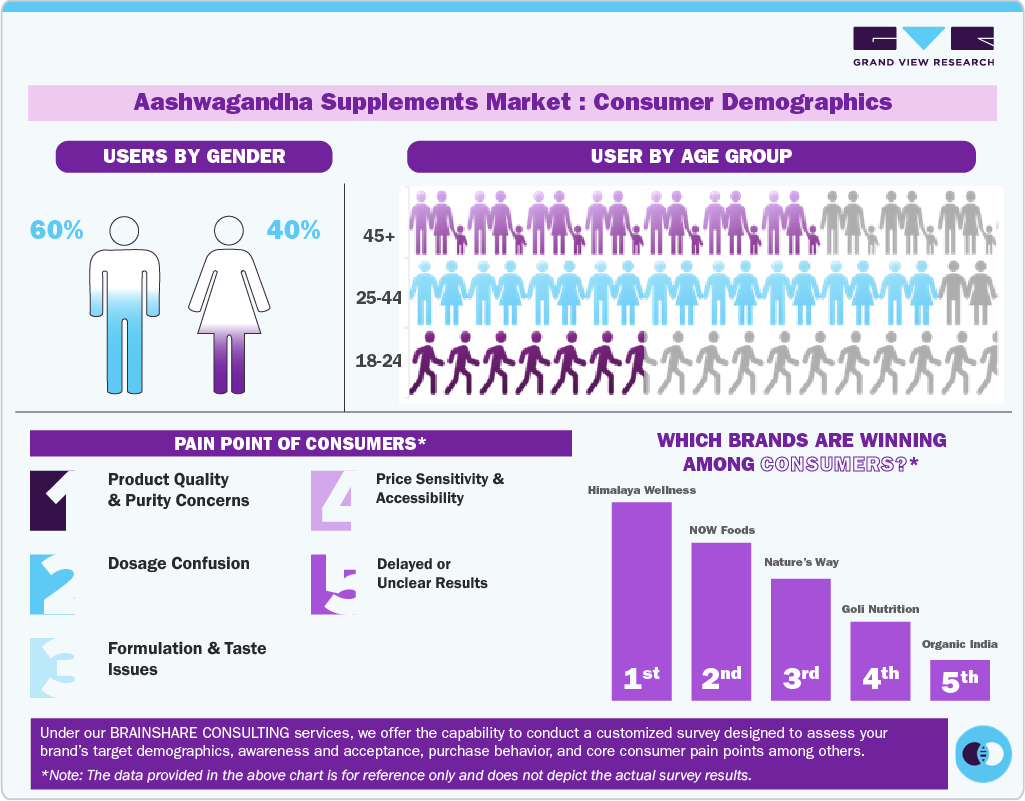
The user base for Ashwagandha supplements is predominantly male, comprising about 60% of consumers, while women make up approximately 40%. This indicates that Ashwagandha’s appeal as a supplement for stress relief and vitality aligns strongly with male consumers, particularly those focused on fitness, energy, and hormonal support. At the same time, the notable female users highlight growing adoption among women, who increasingly use Ashwagandha for stress management, hormonal balance, and holistic wellness.
 To learn more about this report, Download Free Sample Report
 When looking at age demographics, the largest segment of users falls in the 25-44 years bracket. This age group represents working professionals and urban consumers who are actively seeking natural solutions to manage stress, sleep issues, and energy levels. The 45+ age group constitutes the next largest segment, indicating that middle-aged and older adults are also adopting Ashwagandha for vitality, memory, and overall wellness. The youngest group, 18-24 years, makes up the smallest share, likely because of lower disposable income and limited awareness, though this group shows potential growth through trend-driven formats like gummies.
The pain points of consumers highlight several key challenges in the Ashwagandha market.
-
The top concerns include product quality and purity, as users are cautious about adulteration and inconsistent potency.
-
Dosage confusion is another significant pain point, with uncertainty about adequate daily intake and standardized extracts.
-
Formulation and taste issues also affect adoption, as powders can be bitter and capsules difficult to swallow.
-
Price sensitivity and accessibility are among the most common pain points, particularly concerning the Ashwagandha market price, as consumers weigh perceived value against product cost, especially in the premium extract segment.
The leading brands in the market, as recognized and preferred by consumers, showcase a diverse landscape of trust and innovation. Himalaya Wellness ranks first, demonstrating strong brand loyalty in the Ayurvedic and herbal segment. NOW Foods and Nature’s Way occupy second and third positions, owing to their widespread availability and established presence across North America. Goli Nutrition and Organic India are popular too, reflecting the rising popularity of lifestyle-oriented products such as gummies and certified organic formulations.
The ranking of brands favored by consumers highlights a delicate balance between heritage credibility and innovative product formats, shaping consumer choices in the growing market, where Ashwagandha market price considerations continue to influence purchase decisions.
Form Insights
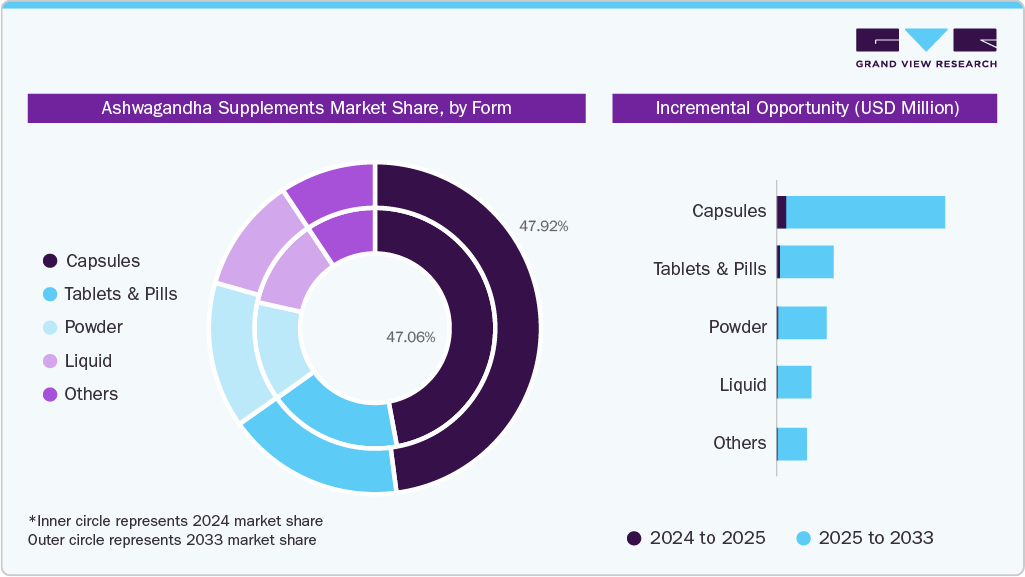
Based on form, the capsules segment led the market with the largest revenue share of 47.2% in 2025 and is expected to grow at a CAGR of 9.0% over the forecast period. The capsule form of ashwagandha supplements offers several advantages over other forms, such as ease of consumption and dosage control. Capsules provide a convenient and standardized way to incorporate ashwagandha into daily routines, ensuring consistent intake and optimal benefits. Moreover, the controlled dosage in capsules helps avoid overconsumption and potential side effects associated with excessive ashwagandha intake. Key players are investing in research and development to develop novel capsule formulations that cater to the evolving needs of consumers seeking natural and effective stress management solutions.
 To learn more about this report, Download Free Sample Report
 The powder segment is anticipated to witness a growth rate of 9.6% from 2025 to 2033. Powdered ashwagandha supplements are a convenient and affordable way to get the benefits of this herb. They are also highly concentrated so that they can be taken in smaller doses than other forms of ashwagandha. Consumers can easily add the powder to smoothies and yogurt or even incorporate it into their cooking, making it a convenient and discreet way to obtain its therapeutic benefits. Additionally, powder supplements often offer a higher concentration of active ingredients, providing a more potent dose compared to other forms.
Distribution Channel Insights
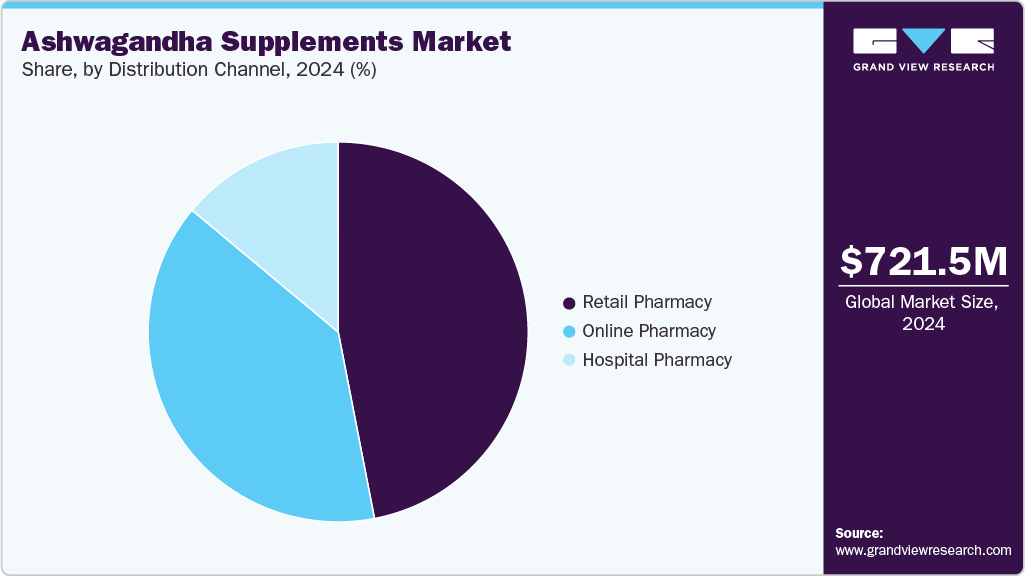
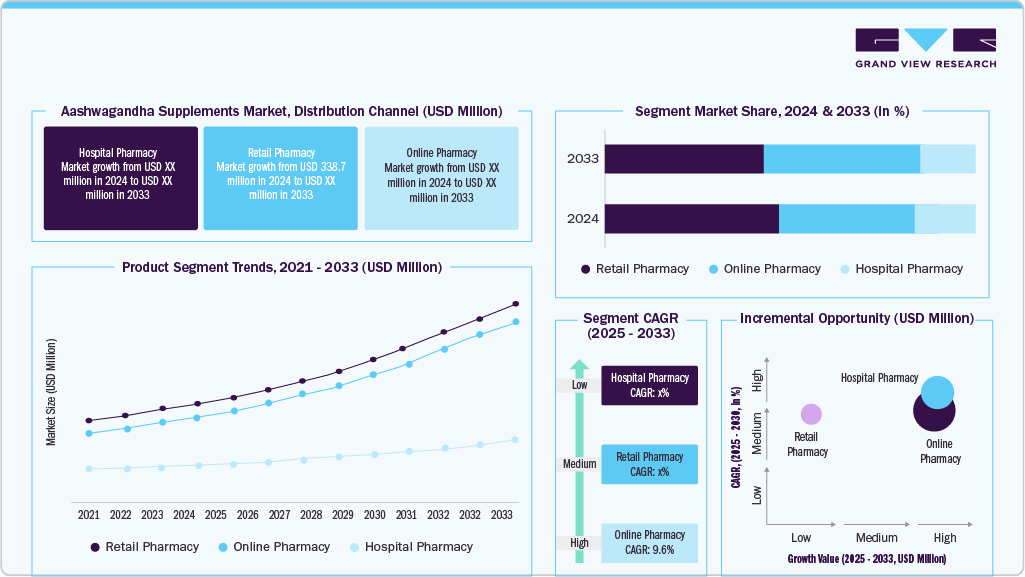
Based on distribution channel, retail pharmacy segment led the market with the largest revenue share of 46.8% in 2025. Retail pharmacies provide a readily accessible and trusted platform for consumers seeking ashwagandha supplements. Their physical presence in communities’ fosters convenience and immediate availability, appealing to consumers who prefer in-person shopping and interaction with pharmacists. Pharmacists, with their expertise in health and wellness, play a crucial role in educating customers about the benefits, dosages, and potential interactions of ashwagandha supplements.
 To learn more about this report, Download Free Sample Report
 This trusted guidance enhances consumer confidence and encourages informed purchasing decisions. Moreover, retail pharmacies often offer private-label or store-brand ashwagandha supplements, providing consumers with competitive pricing and alternative options.
 To learn more about this report, Download Free Sample Report
 The online pharmacy segment is estimated to grow at a CAGR of 9.6% from 2025 to 2033. The convenience and accessibility offered by online platforms are key factors contributing to their success. Consumers can easily browse a wide variety of ashwagandha products from different brands, compare prices, read customer reviews, and make informed purchase decisions comfortably from their homes. This eliminates the need for physical store visits, saving time and effort. Moreover, online pharmacies often provide detailed product information, including dosage recommendations and potential side effects, helping consumers make well-informed choices.
Regional Insights
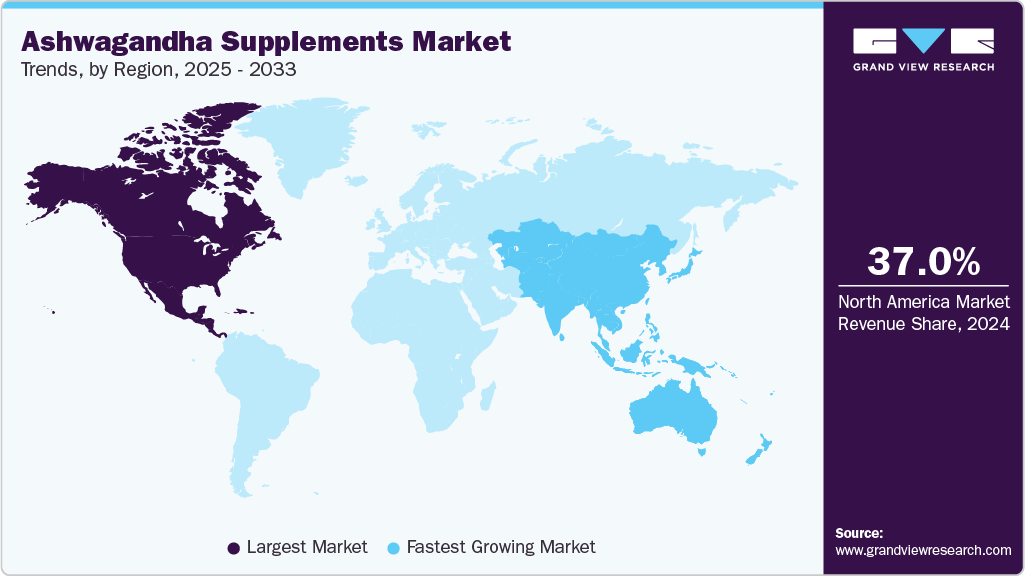
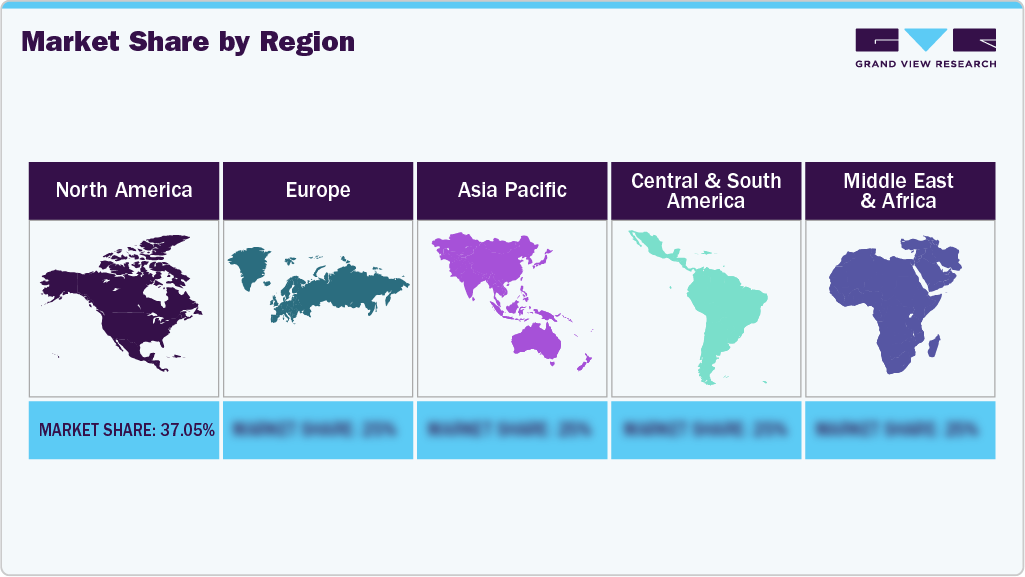
North America dominated the ashwagandha supplements market with the largest revenue share of 37.1% in 2025, driven by the growing awareness of potential health benefits associated with botanical supplements and the increasing demand for natural and herbal remedies. The region is experiencing a surge in the popularity of Ashwagandha, an ancient medicinal herb traditionally used in Ayurvedic medicine. Consumers in North America are actively seeking holistic approaches to well-being, fueling the demand for supplements that support overall health and wellness.
 To learn more about this report, Download Free Sample Report
 U.S. Ashwagandha Supplements Market Trends
The ashwagandha supplements market in the U.S. held the largest share in the North America region in 2025, driven by theincreasing consumer demand for natural and herbal remedies and a growing interest in natural remedies for stress, anxiety, and overall well-being. Moreover, the growing popularity of yoga and meditation, along with the rising awareness about holistic health practices, is further fueling the demand for herbal supplements.
 To learn more about this report, Download Free Sample Report
 Europe Ashwagandha Supplements Market Trends
The ashwagandha supplements market in Europe is expected to grow at a CAGR of 8.4% from 2025 to 2033. Germany, the UK, and France are leading markets within Europe, fueled by high consumer demand for adaptogenic herbs and a growing interest in stress management and cognitive enhancement. The market is witnessing a strong shift towards organic and sustainable sourcing practices, driven by consumer preference for ethically produced products. Furthermore, the increasing availability of ashwagandha supplements in mainstream supermarkets and pharmacies is making them more accessible to a wider consumer base.
Asia Pacific Ashwagandha Supplements Market Trends
The ashwagandha supplements market in the Asia Pacific is set to grow at the fastest CAGR of 9.3% from 2025 to 2033. The growth of the middle-income population with increased disposable income and rising awareness of the herb's traditional medicinal benefits is driving demand for products in the Asia Pacific. This region, particularly India, is a prominent producer of Ashwagandha, resulting in a robust supply chain and cost-effectiveness. Moreover, the burgeoning wellness and preventative healthcare consciousness in countries like China, Japan, and South Korea is creating a favorable environment for herbal supplements.
Key Ashwagandha Supplements Company Insights
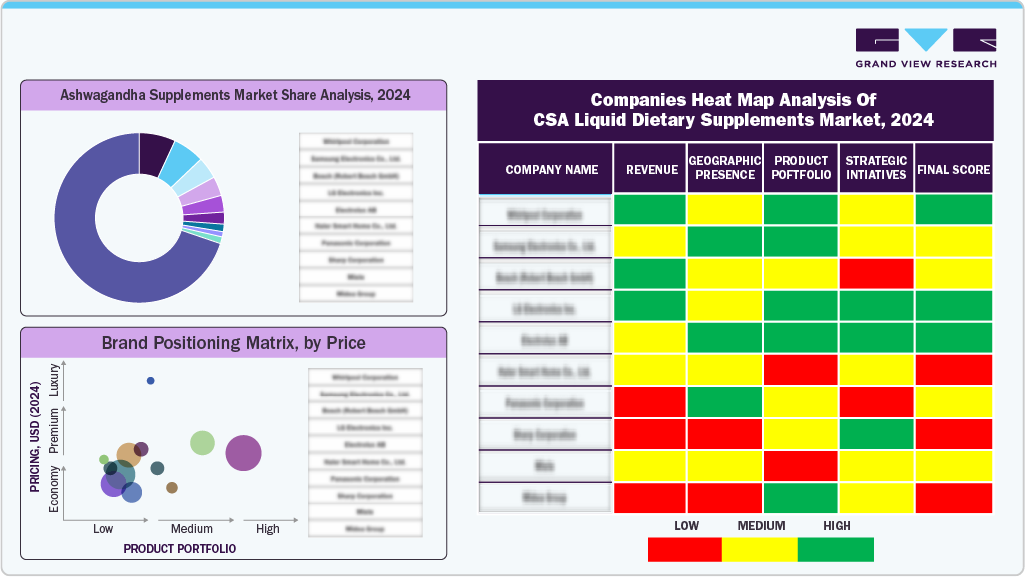
NOW Foods, Swanson, KSM-66, Nature Made, Nature's Bounty, Himalaya Wellness Company, Dabur, Solaray, Gaia Herbs, and Four Sigmatic are some of the dominant players in the ashwagandha supplements market, which is characterized by intense competition.
Key players in the market are focusing on product development to cater to evolving consumer demands and preferences. They are introducing new formulations, such as organic, vegan, and sugar-free supplements, to meet the needs of health-conscious consumers.
Additionally, strategic mergers and acquisitions are shaping the market landscape, with larger companies acquiring smaller players to expand their product portfolios and strengthen their market position.
 To learn more about this report, Download Free Sample Report
 Key Ashwagandha Supplements Companies:
The following key companies have been profiled for this study on the ashwagandha supplements market.
-
NOW Foods
-
Swanson
-
KSM-66
-
Nature Made
-
Nature's Bounty
-
Himalaya Wellness Company
-
Dabur
-
Solaray
-
Gaia Herbs
-
Four Sigmatic
Competitive Benchmarking
Category
Operating Strategies
Competitive Edge
Weakness
Established Players (Himalaya Wellness Company, Dabur, Gaia Herbs)
- Focus on extensive product portfolios, established retail distribution, and brand-led consumer trust across multiple supplement categories. Emphasize quality certifications, global expansion, and product standardization.
- Strong brand recognition, broad distribution networks, manufacturing scale, and longstanding consumer credibility enable sustained market presence and premium shelf positioning.
- Slower product innovation cycles and greater exposure to regulatory compliance costs may limit agility in responding to emerging wellness trends.
Emerging Players (KSM-66, Solaray, Four Sigmatic)
- Focus on science-backed formulations, proprietary extracts, niche wellness applications, and innovative delivery formats targeting specific consumer needs.
- Clinical differentiation, targeted branding, and strong positioning in adaptogenic, functional wellness, and premium supplement categories support rapid market penetration.
- Limited distribution reach and lower brand awareness compared to established supplement companies may constrain large-scale market expansion.
Recent Developments
-
In June 2025, Natural Remedies introduced Ashwa.30, a new Ashwagandha extract developed to support stress relief, boost energy, and enhance endurance. Standardized to 15% withanolides, it also includes a proprietary ATP-active component designed to aid cellular energy production.
-
In May 2024, Herbochem launched +91 ASHWAGANDHA ingredients that can help formulate capsules, tablets, gummies, or any other desired form.
-
In August 2022, Swanson launched Passion Fruit Orange Ashwagandha Gummies with Vitamin D to help manage stress. This strategy helped the company expand its product portfolio and share in the ashwagandha supplements market.
-
In October 2021, Gaia Herbs launched a new line of botanical gummies, including Ashwagandha, Sleep, and Relax Gummies. The Ashwagandha Gummies are designed to support stress reduction and enhance the body's resilience to stress by leveraging Ashwagandha's adaptogenic properties.
Ashwagandha Supplements Market Report Scope
Report Attribute
Details
Market size in 2025
USD 777.8 million
Estimated market size in 2026
USD 840.1 million
Projected market size by 2033
USD 1,529.5 million
Growth rate
CAGR of 8.9% from 2026 to 2033
Base year for estimation
2025
Historical data
2021 - 2024
Forecast period
2026 - 2033
Quantitative units
Revenue in USD million and CAGR from 2026 to 2033
Report coverage
Revenue forecast, company ranking, competitive landscape, growth factors, and trends
Segments covered
Form, distribution channel, region
Regional scope
North America; Europe; Asia Pacific; Central & South America; MEA
Country scope
U.S.; Canada; Mexico; Germany; UK; France; Italy; Spain; China; Japan; India; South Korea; Australia & New Zealand; Brazil; South Africa
Key companies profiled
NOW Foods; Swanson; KSM-66; Nature Made; Nature's Bounty; Himalaya Wellness Company; Dabur; Solaray; Gaia Herbs; Four Sigmatic
Customization scope
Free report customization (equivalent up to 8 analysts' working days) with purchase. Addition or alteration to country, regional & segment scope.
Pricing and purchase options
Avail customized purchase options to meet your exact research needs. Explore purchase options
Global Ashwagandha Supplements Market Report Segmentation
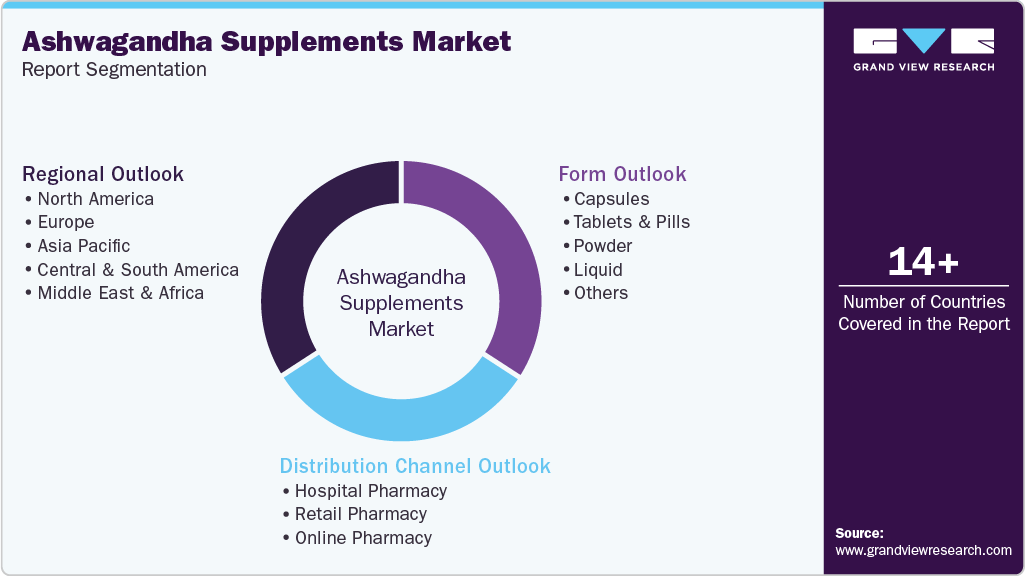
This report forecasts revenue growth at global, regional & country levels and provides an analysis of the industry trends in each of the sub-segments from 2021 to 2033. For this study, Grand View Research has segmented the global ashwagandha supplements market report based on form, distribution channel, and region:
 To learn more about this report, Download Free Sample Report
 -
Form Outlook (Revenue, USD Million, 2021 - 2033)
-
Capsules
-
Tablets & Pills
-
Powder
-
Liquid
-
Others
-
-
Distribution Channel Outlook (Revenue, USD Million, 2021 - 2033)
-
Hospital Pharmacy
-
Retail Pharmacy
-
Online Pharmacy
-
-
Regional Outlook (Revenue, USD Million, 2021 - 2033)
-
North America
-
U.S.
-
Canada
-
Mexico
-
-
Europe
-
UK
-
Germany
-
France
-
Italy
-
Spain
-
-
Asia Pacific
-
China
-
Japan
-
India
-
South Korea
-
Australia & New Zealand
-
-
Central & South America
-
Brazil
-
-
Middle East & Africa
-
South Africa
-
-
Research Methodology
The ashwagandha supplements market figures in this report are based on a proven research process that combines executive interviews with secondary research from proprietary databases, company filings, and recognized regulatory and institutional sources. Market size is built through value-chain sizing - reconciling supply-side and demand-side estimates - and triangulated with bottom-up and top-down approaches. Every estimate passes multiple levels of expert validation before publication, with each ashwagandha supplements segment quantified using the revenue-capture definitions in the table below.
Segment Definition
Segment - Form
Revenue capture definition
Capsules
This segment includes the sales of ashwagandha supplements in capsule form containing root powder, root extracts, or standardized formulations. Revenue is generated through retail, pharmacy, and online sales of convenient, pre-measured supplements intended for stress management, sleep support, cognitive wellness, and overall health maintenance.
Tablets & Pills
This segment includes the sales of ashwagandha supplements formulated as tablets and pills, either as standalone products or combined with other vitamins, minerals, and herbal ingredients. Revenue is generated through consumer purchases of affordable and easy-to-store supplements marketed for daily wellness and stress support.
Powder
This segment includes the sales of powdered ashwagandha root and extract products designed for direct consumption or mixing with beverages, smoothies, and nutritional formulations. Revenue is generated through sales to consumers seeking flexible dosage options and integration into fitness, wellness, and nutritional routines.
Liquid
This segment includes the sales of liquid ashwagandha products such as tinctures, syrups, oral drops, concentrated extracts, and ready-to-consume wellness formulations. Revenue is generated through products offering convenient consumption and enhanced versatility for wellness-focused consumers.
Others
This segment includes the sales of ashwagandha supplements in alternative formats such as gummies, chewables, soft gels, honey sticks, wellness shots, and effervescent products. Revenue is generated through innovative formulations designed to improve convenience, taste, portability, and consumer engagement.
Segment - Distribution Channel
Revenue capture definition
Hospital Pharmacy
This segment includes the sales of ashwagandha supplements through hospital pharmacies and healthcare facilities. Revenue is generated from purchases made by patients seeking physician-recommended herbal supplements for stress management, recovery support, and overall wellness.
Retail Pharmacy
This segment includes the sales of ashwagandha supplements through retail pharmacies, drug stores, health stores, and wellness outlets. Revenue is generated from over-the-counter purchases by consumers seeking convenient access to herbal and nutraceutical products.
Online Pharmacy
This segment includes the sales of ashwagandha supplements through online pharmacies, e-commerce platforms, and direct-to-consumer websites. Revenue is generated through digital purchases driven by product accessibility, wider brand selection, subscription services, and home delivery convenience.
Estimation Model
Layer
Guiding Question
Description
Target Consumer Layer
Who is the potential consumer base?
Identify the population segments most likely to consume ashwagandha supplements, including existing stress management, sleep support, cognitive wellness, sports performance, and preventive healthcare solutions. Demographic factors, wellness awareness, and supplement consumption patterns are studied to define the addressable consumer pool.
Market Access Layer
Who can access ashwagandha supplements?
Apply region-specific supplement penetration rates, retail and e-commerce accessibility, healthcare practitioner recommendations, and regulatory approvals to determine the population with practical access to ashwagandha products. Distribution channels and reach and product availability further refine the accessible market.
Adoption Layer
Who actively purchases ashwagandha supplements?
Apply herbal supplement adoption rates, consumer preference for adaptogens, repeat purchase behavior, and health & wellness spending patterns to estimate the active user base. This layer reflects actual consumers purchasing ashwagandha products through online, pharmacy, and retail channels.
Revenue Generation Layer
How much revenue is generated?
Multiply the active consumer base by average annual spending on ashwagandha supplements, considering product format mix, premium versus mass-market offerings, purchase frequency, and regional consumer spending. This layer converts consumer adoption into total market revenue.
Delivered Customizations
This report has been delivered with the following In-depth customizations
CLIENT REQUEST
CUSTOMIZATION DELIVERED
VALUE ADDS
Raw Material Pricing Trends & Sourcing Challenges
Assessed ashwagandha root procurement trends, cultivation concentration, supply chain risks, and raw material price fluctuations across key sourcing regions.
Enables stakeholders to optimize sourcing strategies, mitigate supply risks, and improve procurement planning.
Proprietary Extraction Technologies & Competitive Benchmarking
Evaluated branded extract technologies, standardization capabilities, clinical validation, and differentiation strategies adopted by leading ingredient manufacturers.
Supports product development decisions and identifies opportunities for premium positioning and market differentiation.
Merger, Acquisition & Expansion Activity Assessment
Analyzed recent acquisitions, strategic partnerships, manufacturing expansions, and investment activities among major market participants.
Provides insights into competitive dynamics, consolidation trends, and potential investment or partnership opportunities.
Frequently Asked Questions About This Report
The global ashwagandha supplements market size was valued at USD 777.8 million in 2025 and is estimated at USD 840.1 million for 2026.
Asia Pacific is the fastest growing region over the forecast period.
By capsules form, ashwagandha supplements dominated the market in 2025 with a share of 47.2%.
Retail Pharmacy accounts for 46.8% market share in 2025.
North America dominated the ashwagandha supplements market with a share of 37.1% in 2025. This whopping market share is mainly attributed to the growing awareness of potential health benefits associated with botanical supplements and the increasing demand for natural and herbal remedies. The region is experiencing a surge in the popularity of ashwagandha, an ancient medicinal herb traditionally used in Ayurvedic medicine.
Some of the key market players in the ashwagandha supplements market are NOW Foods; Swanson; KSM-66; Nature Made; Nature's Bounty; Himalaya Wellness Company; Dabur; Solaray; Gaia Herbs; Four Sigmatic
The ashwagandha supplements market has experienced significant growth in recent years, driven by the increasing popularity of Ayurveda and other traditional medicine systems and the growing acceptance of adaptogenic herbs like ashwagandha, which are believed to help the body adapt to stress and maintain overall well-being. Moreover, innovation in product development is paramount, particularly the introduction of novel delivery formats and formulations is further driving the ashwagandha supplements market size.
The global ashwagandha supplements market is expected to grow at a CAGR of 8.9% from 2026 to 2033, reaching USD 1,529.5 million by 2033.
About the Author(s)
Consumer F&B Research Team
Consumer Goods · Consumer F&BThis report was authored by the consumer f&b research team at Grand View Research - comprising two research analysts, one senior research analyst, and one industry expert - with specialized expertise in the consumer f&b segment of the consumer goods industry. All findings are based on proprietary consumer goods databases, executive interviews, and regulatory analysis, subject to internal peer review prior to publication.
Last Updated:
Speak to Analyst

Customize this report to your needs - add regions, segments, or data points, with 20% free customization.
Or view our licence options:


ISO 9001:2015 & 27001:2022 Certified
We are GDPR and CCPA compliant! Your transaction & personal information is safe and secure. For more details, please read our privacy policy.


