
- Home
- »
- Pharmaceuticals
- »
-
Aspergillosis Treatment Market Size & Share Report, 2033GVR Report cover

Aspergillosis Treatment Market (2026 - 2033)
Size, Share & Trends Analysis Report By Type (Allergic, Chronic, Invasive), By Drug Class (Antifungal), By Route of Administration (Oral Drugs, Powders), By Distribution Channel (Hospital Pharmacy), By Region, And Segment Forecasts
Market Size, 2025
$4.2BMarket Estimate, 2026
$4.4BMarket Forecast, 2033
$6.1BCAGR, 2026–2033
4.7%Aspergillosis Treatment Market Summary
The global aspergillosis treatment market size was valued at USD 4.2 billion in 2025 and is projected to grow from USD 4.4 billion in 2026 to USD 6.1 billion by 2033, at a CAGR of 4.7% from 2026 to 2033. North America dominated the market, accounting for a revenue share of around 40.0% in 2025. The growing prevalence of aspergillosis and other fungal infections, coupled with increasing research and development efforts focused on novel antifungal therapies, is expected to support market growth over the forecast period.
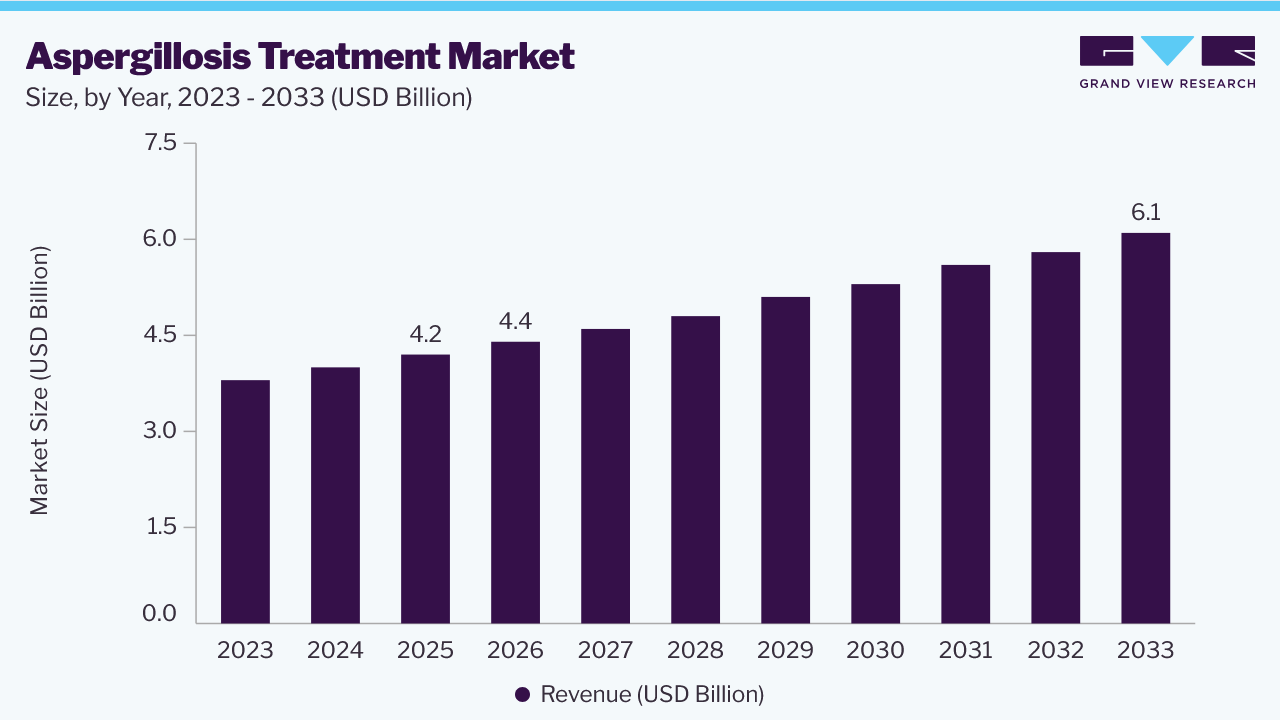 Source: Grand View Research, IR Documents, Primary Interviews, Paid DatabasesTo learn more about this report,
 Download Free Sample Report
Key Market Trends & Insights
- By type: Allergic aspergillosis segment held the largest revenue share of over 49.0% in 2025
- By drug class: Antifungal drug led the market, with a revenue share of around 80.0% in 2025
- By route of administration: Oral drug dominated the market with a share of around 48.0% in 2025
- By distribution channel: Hospital pharmacy dominated the market with a share of over 45.0% in 2025
Regional Highlights
- Largest regional market: North America (40.0% revenue share, 2025)
- Fastest-growing regional market: Asia Pacific (highest CAGR, 2026-2033)
Market Size & Forecast
- Market size in 2025: USD 4.2 Billion
- Estimated market size in 2026: USD 4.4 Billion
- Projected market size by 2033: USD 6.1 Billion
- CAGR (2026-2033): 4.7%
Prism AI by Grand View Research Free to tryAsk a question about the aspergillosis treatment marketTry asking✓Every figure cited from GVR research Prefer the report? Download free sample →Aspergillosis, a serious fungal infection, poses a major respiratory risk, especially for immunocompromised individuals, and can cause a spectrum of symptoms ranging from mild shortness of breath to severe pneumonia and invasive fungal growth in the lungs. With the increasing number of patients with compromised immune systems, there is an increasing need for advanced therapy to treat this challenging disease. The market expansion demonstrates the healthcare industry's commitment to meeting the urgent medical needs of those affected by aspergillosis, with an ongoing effort to develop innovative treatments.
To address the challenges associated with aspergillosis, pharmaceutical companies are increasingly focusing on the development of novel antifungal therapies and alternative drug-delivery approaches. Existing antifungal treatments can be limited by drug resistance, adverse effects, drug-drug interactions, and treatment failure, particularly among high-risk and immunocompromised patients. As a result, pharmaceutical and biotechnology companies are investing in research and development of therapies that offer improved efficacy, safety, and targeted delivery. This growing focus on innovative treatment modalities, together with the increasing burden of aspergillosis among high-risk populations, is expected to support market growth.
Market Dynamics
The growing population of immunocompromised individuals is a major driver of the aspergillosis treatment market. Invasive aspergillosis predominantly affects patients with severely weakened immune systems, including those undergoing hematopoietic stem-cell or solid-organ transplantation, patients receiving chemotherapy, and individuals treated with high-dose corticosteroids.
The increasing prevalence of hematological malignancies, expansion of organ and stem-cell transplantation procedures, and broader use of immunosuppressive therapies are consequently expanding the population at risk of invasive fungal infections. In addition, the emergence of azole-resistant Aspergillus strains is increasing the need for effective alternative antifungal therapies, further supporting demand for novel treatment options.
The high cost of diagnosing and treating invasive aspergillosis is a significant barrier to market growth, particularly in resource-constrained healthcare systems. Severe cases can require prolonged hospitalization, intensive monitoring, combination or sequential antifungal therapy, and management of underlying conditions such as cancer or transplant-related complications. These factors can substantially increase the overall economic burden on healthcare systems and patients.
The economic burden is further amplified by treatment failure and antifungal resistance, which may require alternative or prolonged therapies. Consequently, the high cost of advanced antifungal treatments and associated hospital care can restrict access to newer therapies, particularly in emerging and developing markets.
The emergence of antifungal resistance, particularly azole-resistant Aspergillus infections, is creating demand for new antifungal therapies with novel mechanisms of action. Although azoles remain a key treatment option, infections resistant to azoles can be difficult to manage and may lead to poorer outcomes. Olorofim, developed by F2G, is an emerging therapy targeting this unmet need. In June 2025, F2G published Phase 2b results for oral olorofim in The Lancet Infectious Diseases. The study included 202 patients with invasive fungal infections, of whom 101 had Aspergillus infections, 22 of which were azole-resistant. The results showed encouraging clinical responses in patients with limited treatment options. F2G and Shionogi are continuing to evaluate olorofim in Phase 3 trials for invasive aspergillosis. Novel therapies such as olorofim could expand treatment options for drug-resistant aspergillosis and create new opportunities for market participants.
Analyst Perspective
The aspergillosis treatment market is expected to grow steadily, driven by the expanding population of immunocompromised patients and the rising incidence of invasive fungal infections. Increasing antifungal resistance is further creating demand for therapies with novel mechanisms of action, while emerging treatments such as inhaled and next-generation oral antifungals could expand the addressable market. However, high treatment costs, complex disease management, and challenges associated with antifungal resistance may limit adoption, particularly in cost-sensitive markets.
Type Insights
The allergic segment dominated the market, accounting for a revenue share of over 49.0% in 2025, driven by its higher prevalence and milder disease presentation compared to other types. Conditions such as ABPA, which affects patients with asthma and cystic fibrosis, result from an allergic reaction to Aspergillus antigens in the lungs, leading to respiratory symptoms and inflammation.
The CPA segment is expected to witness the highest CAGR during the forecast period. This growth can be attributed to several factors, including an increasing prevalence of chronic aspergillosis, advances in diagnostic techniques enabling earlier detection, and the development of targeted therapies to address this persistent fungal infection.
Distribution Channel Insights
The hospital pharmacy segment dominated the aspergillosis treatment market, accounting for over 45.0% of the revenue share in 2025. This dominance is attributed to the critical role of hospital-based distribution channels in ensuring timely access to and effective delivery of aspergillosis treatments. The preference for hospital pharmacies reflects the trust placed in these settings to address the complex medical requirements of treatment, thereby shaping the market landscape.
The other segment is expected to witness strong growth during the forecast period. This indicates evolving distribution channels and emerging avenues that aren't strictly confined to hospitals or retail pharmacies. The "others" segment likely encompasses novel distribution methods, such as online pharmacies and specialized clinics, which are gaining traction for their convenience and targeted approach.
Drug Class Insights
The antifungal drugs segment dominated the market, accounting for around 80.0% of revenue in 2025. Its dominance is primarily attributed to the central role of antifungal therapy in the management of aspergillosis, particularly invasive disease. Triazole antifungals remain a key treatment class, with voriconazole recommended as primary therapy for invasive pulmonary aspergillosis in major clinical guidelines.
The antifungal drugs segment is further classified into azoles, echinocandins, polyenes, allylamines, and others. The azoles sub-segment dominated in 2025, supported by the established use of triazoles such as voriconazole, itraconazole, posaconazole, and isavuconazole in the treatment and prevention of different forms of aspergillosis. Triazoles are preferred for most patients with invasive aspergillosis; however, treatment selection depends on disease type, resistance patterns, patient characteristics, drug interactions, and tolerability. Therapeutic drug monitoring is also recommended for several azole-based treatment regimens.
Route of Administration Insights
The oral drugs segment dominated the market, accounting for more than 48.0% of revenue in 2025, supported by the established use of oral antifungal therapies for long-term management and step-down treatment of aspergillosis. Oral voriconazole and itraconazole are among the established options for several clinical forms of the disease, enabling continued treatment outside the hospital setting when clinically appropriate.
The ointment segment is anticipated to witness the fastest CAGR during the forecast period. This growth can be attributed to its localized treatment, making it effective for skin and superficial infections. Ongoing research efforts have led to improved formulations that enhance their antifungal properties and patient outcomes. Moreover, the rising prevalence of skin-related cases, especially among immunocompromised individuals, has boosted the demand for effective topical treatment options, contributing to the growth of the ointment segment.
Regional Insights
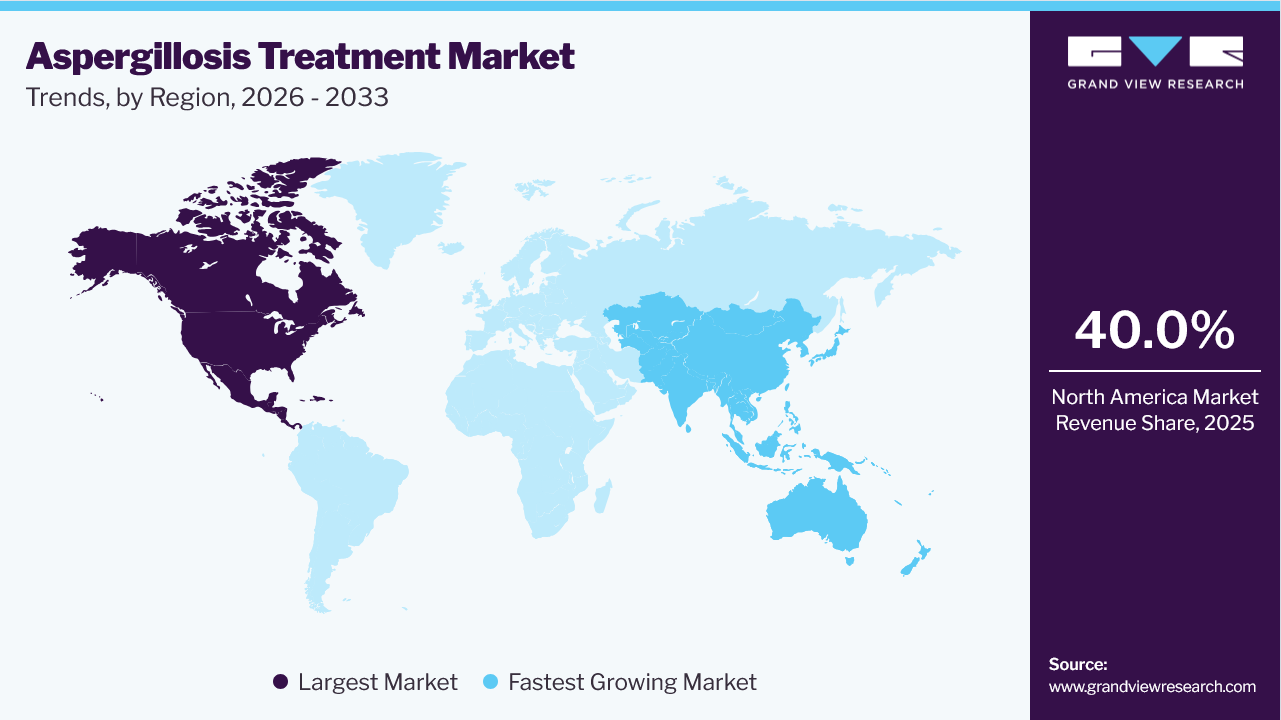
North America aspergillosis treatment market dominated the aspergillosis treatment market, accounting for approximately 40.0% of global revenue in 2025. The region's leading position is supported by advanced healthcare infrastructure, a large population of immunocompromised patients, strong access to antifungal therapies, established diagnostic capabilities, and significant investment in pharmaceutical and biotechnology research. The presence of specialized transplant, oncology, and infectious disease centers also supports the diagnosis and treatment of complex cases of aspergillosis.
 To learn more about this report, Download Free Sample Report
Asia Pacific Aspergillosis Treatment Market Trends
Asia Pacific is expected to register the fastest growth during the forecast period. The APAC market expansion is supported by the increasing burden of fungal infections, a growing immunocompromised population, rising healthcare expenditure, improving diagnostic capabilities, and expanding access to advanced antifungal therapies. Increasing transplantation activity, growth in oncology care, and the expansion of healthcare infrastructure across emerging economies are also expected to increase the demand for aspergillosis diagnosis and treatment. In addition, greater awareness of invasive fungal infections and the growing presence of pharmaceutical companies in countries such as China, India, and Japan are expected to support regional market development.
Key Aspergillosis Treatment Company Insights
The aspergillosis treatment market participants are focusing on product development, clinical trials, strategic collaborations, licensing agreements, and acquisitions to strengthen their antifungal portfolios and address the growing unmet need for effective treatments against invasive and drug-resistant fungal infections.
Key Aspergillosis Treatment Companies
The following key companies have been profiled for this study on the aspergillosis treatment market.
-
Astellas Pharma Inc
-
Bayer AG
-
F2G
-
Mayne Pharma Group Limited
-
Merck & Co.
-
Novartis AG
-
Pfizer, Inc
-
PULMATRiX, Inc.
Recent Development
- In January 2026, Basilea Pharmaceutica Ltd. and Prokaryotics Inc. entered a collaboration to jointly develop a first-in-class broad-spectrum antifungal with a novel mechanism of action. The program targets severe invasive infections caused by Candida, Aspergillus, and rare molds, addressing the significant unmet need for new antifungal therapies. The collaboration aims to advance clinical candidates for further development by Basilea.
Aspergillosis Treatment Market Report Scope
Report Attribute
Details
Market size in 2025
USD 4.2 billion
Estimated market size in 2026
USD 4.4 billion
Projected market size by 2033
USD 6.1 billion
Growth rate
CAGR of 4.7% from 2026 to 2033
Base year for estimation
2025
Historical data
2021 – 2024
Forecast period
2026 – 2033
Quantitative units
Revenue in USD billion, and CAGR from 2026 to 2033
Report coverage
Revenue forecast, company ranking, competitive landscape, growth factors, and trends
Segments covered
Type, drug class, route of administration, distribution channel, region
Regional Scope
North America; Europe; Asia Pacific; Latin America; MEA
Country Scope
U.S.; Canada; Mexico; Germany; UK; France; Italy; Spain; Denmark; Sweden; Norway; China; Japan; India; South Korea; Australia; Thailand; Brazil; Argentina; South Africa; Saudi Arabia; UAE; Kuwait
Key companies profiled
Pfizer, Inc.; Merck & Co., Inc.; F2G; Novartis AG; Astellas Pharma Inc.; Bayer AG; Mayne Pharma Group Limited; PULMATRiX, Inc.
Customization scope
Free report customization (equivalent to 8 analyst working days) with purchase. Addition or alteration to country, regional & segment scope.
Pricing and purchase options
Avail of customized purchase options to meet your exact research needs. Explore purchase options
Global Aspergillosis Treatment Market Report Segmentation
This report forecasts revenue growth at global, regional, and country levels and provides an analysis of the latest industry trends in each of the sub-segments from 2021 to 2033. For this report, Grand View Research has segmented the global aspergillosis treatment market report based on type, drug class, route of administration, distribution channel, and region:
-
Type Outlook (Revenue, USD Billion, 2021 - 2033)
-
Allergic Aspergillosis
-
Chronic Aspergillosis
-
Invasive Aspergillosis
-
-
Drug Class Outlook (Revenue, USD Billion, 2021 - 2033)
-
Antifungal drugs
-
Azoles
-
Echinocandins
-
Polyenes
-
Allylamines
-
Others
-
-
Others
-
-
Route Of Administration Outlook (Revenue, USD Billion, 2021 - 2033)
-
Oral Drugs
-
Ointments
-
Powders
-
Others
-
-
Distribution Channel Outlook (Revenue, USD Billion, 2021 - 2033)
-
Hospital Pharmacy
-
Retail Pharmacy
-
Others
-
-
Regional Outlook (Revenue, USD Billion 2021 - 2033)
-
North America
-
U.S.
-
Canada
-
Mexico
-
-
Europe
-
UK
-
Germany
-
France
-
Italy
-
Spain
-
Sweden
-
Norway
-
Denmark
-
-
Asia Pacific
-
China
-
Japan
-
India
-
Australia
-
Thailand
-
South Korea
-
-
Latin America
-
Brazil
-
Argentina
-
-
Middle East and Africa
-
Saudi Arabia
-
South Africa
-
UAE
-
Kuwait
-
-
Frequently Asked Questions About This Report
North America dominated with approximately 40.0% revenue share in 2025.
The global aspergillosis treatment market size was valued at USD 4.2 billion in 2025 and is estimated at USD 4.4 billion for 2026.
The global aspergillosis treatment market is expected to grow at a CAGR of 4.7% from 2026 to 2033, reaching USD 6.1 billion by 2033.
Key players in the market include Pfizer, Inc., Merck & Co., Inc., F2G, Novartis AG, Astellas Pharma Inc., Bayer AG, Mayne Pharma Group Limited, PULMATRiX, Inc, and others.
The allergic aspergillosis segment held the largest revenue share of over 49.0% in 2025.
About the Author(s)
Pharmaceuticals Research Team
Healthcare · PharmaceuticalsThis report was authored by the pharmaceuticals research team at Grand View Research - comprising two research analysts, one senior research analyst, and one industry expert - with specialized expertise in the pharmaceuticals segment of the healthcare industry. All findings are based on proprietary healthcare databases, executive interviews, and regulatory analysis, subject to internal peer review prior to publication.
Last Updated:
Speak to Analyst

Customize this report to your needs - add regions, segments, or data points, with 20% free customization.
Or view our licence options:


ISO 9001:2015 & 27001:2022 Certified
We are GDPR and CCPA compliant! Your transaction & personal information is safe and secure. For more details, please read our privacy policy.


