
- Home
- »
- Homecare & Decor
- »
-
Australia Insect Repellent Market Size Report, 2027-2035GVR Report cover

Australia Insect Repellent Market (2027 - 2035)
Size, Share & Trends Analysis Report By Product (Personal/Body Insect Repellents, Area/Spatial Insect Repellents), By Insect Type (Mosquitoes, Bugs), By Ingredient Type, By Usage, By Distribution Channel, And Segment Forecasts
Market Size, 2026
$212.9MMarket Estimate, 2027
$222.3MMarket Forecast, 2035
$310.3MCAGR, 2027–2035
4.3%Australia Insect Repellent Market Summary
The Australia insect repellent market size was valued at USD 212.9 million in 2026 and is expected to grow from USD 222.3 million in 2027 to USD 310.3 million by 2035 at a CAGR of 4.3% from 2027 to 2035. The increasing incidence of mosquito- and tick-borne diseases is strengthening demand for preventive protection. According to the World Health Organization’s (WHO) 2025 World Malaria Report, approximately 282 million malaria cases and 610,000 deaths were recorded globally in 2024.
Key Market Trends & Insights
- By product: Personal/body insect repellents accounted for a market share of 61.6% in 2026.
- By insect type: Products designed for mosquitoes accounted for a market share of 52.0% in 2026.
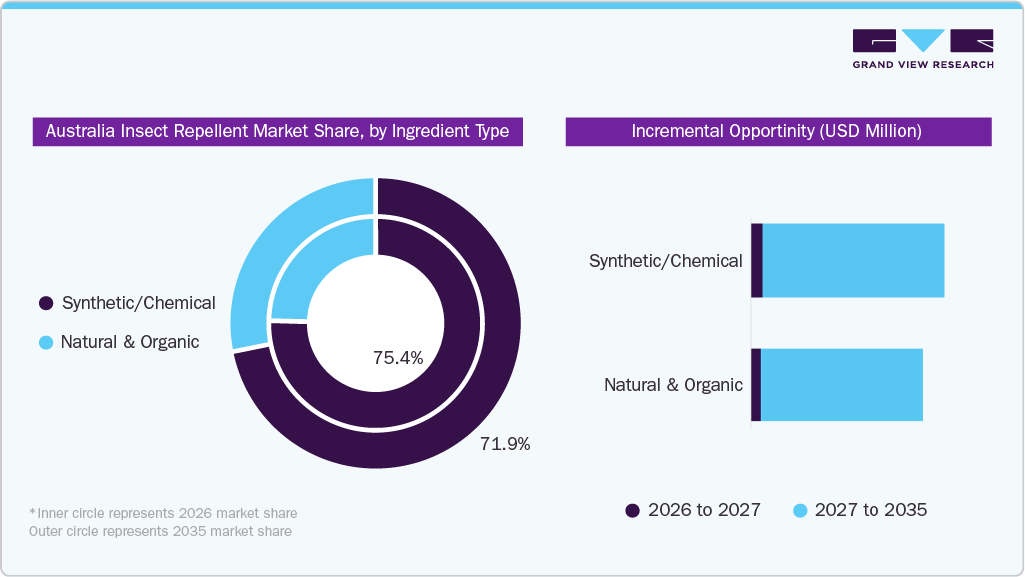
- By ingredient type: Synthetic/chemical category accounted for a market share of 75.4% in 2026.
- By usage: Outdoor application accounted for a market share of 58.1% in 2026.
- By distribution channel: Hypermarkets & supermarkets accounted for a market share of 39.7% in 2026.
Market Size & Forecast
- Market Size in 2026: USD 212.9 Million
- Estimation Market Size in 2027: USD 222.3 Million
- Projected Market Size by 2035: USD 310.3 Million
- CAGR (2027-2035): 4.3%
Prism AI by Grand View Research Free to tryAsk a question about the australia insect repellent marketTry asking✓Every figure cited from GVR research Prefer the report? Download free sample →
Additionally, WHO reported a record 14.43 million dengue cases in 2024, highlighting the growing disease burden. These outbreaks are encouraging households, particularly in tropical and subtropical regions, to incorporate insect repellents into routine personal and household protection. Rising temperatures, changing rainfall patterns, and humidity further reinforce this demand by expanding mosquito breeding habitats and extending vector activity across regions. Rapid urbanization, inadequate sanitation, and population growth also increase human exposure to insects. Furthermore, increased international travel, outdoor recreation, and camping are expanding the need for portable personal protection. These factors are encouraging manufacturers to introduce skin-friendly formulations, natural and plant-based ingredients, wearable repellents, and convenient application formats, broadening product adoption across consumer groups.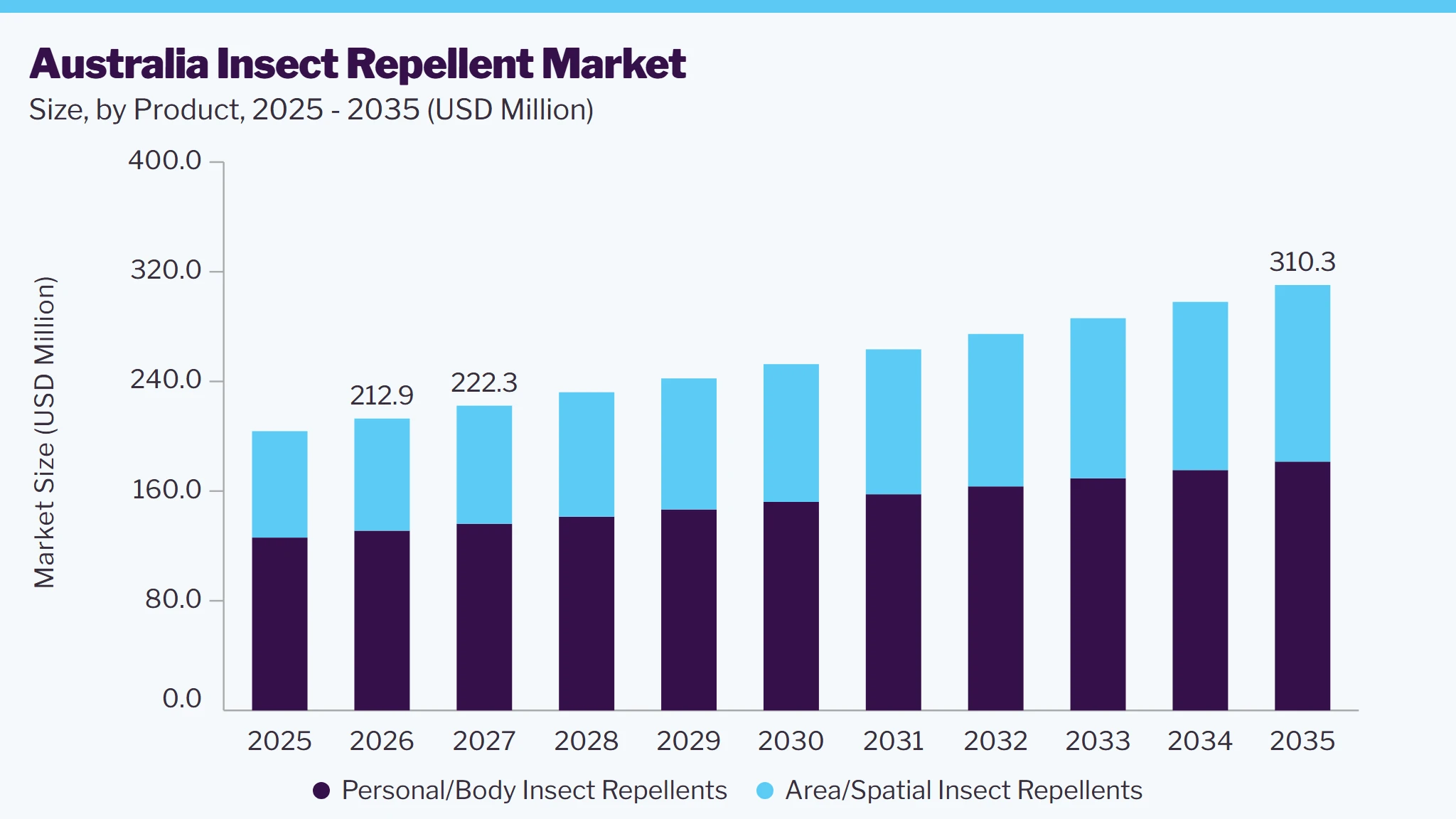 Source: Grand View Research, IR Documents, Primary Interviews, Paid DatabasesTo learn more about this report,
 Download Free Sample Report
Increasing mosquito and household pest activity, combined with favorable climatic conditions, is strengthening demand for insect repellents across Australia. Warmer temperatures, humidity and seasonal rainfall encourage mosquito proliferation, while increased pest activity around residential areas, gardens and outdoor spaces raises the need for preventive protection. According to a 2024 Gympie Regional Council Report, approximately 11,000 mosquitoes were captured across eight trap sites between November 2023 and February 2024, indicating elevated mosquito activity. This supports recurring demand for personal and household repellents.
Furthermore, rainfall and flooding create stagnant-water breeding environments, intensifying mosquito populations and increasing exposure to insect-borne infections. In 2024, Australia's Bureau of Meteorology reported that 2024 recorded 28% above-average national rainfall, making it the eighth-wettest year since records began. These conditions can increase seasonal requirements for sprays, lotions, coils and household insect-control products. Additionally, growing awareness of mosquito-borne diseases, including Ross River virus, dengue and Japanese encephalitis, encourages preventive purchasing.
Consequently, increasing health awareness is encouraging consumers to incorporate insect repellents into everyday outdoor activities, particularly camping, gardening and recreational travel. Alongside this, growing preference for natural formulations is creating opportunities for botanical repellents containing citronella, eucalyptus and other plant-derived ingredients. A 2024 Australian consumer survey found that 26% of respondents prioritized health- and environmentally oriented products when purchasing home-care and cleaning products, indicating potential receptiveness to naturally positioned household repellents. This creates opportunities for brands to expand DEET-free formulations, provided they demonstrate scientifically validated efficacy.
Market Dynamics
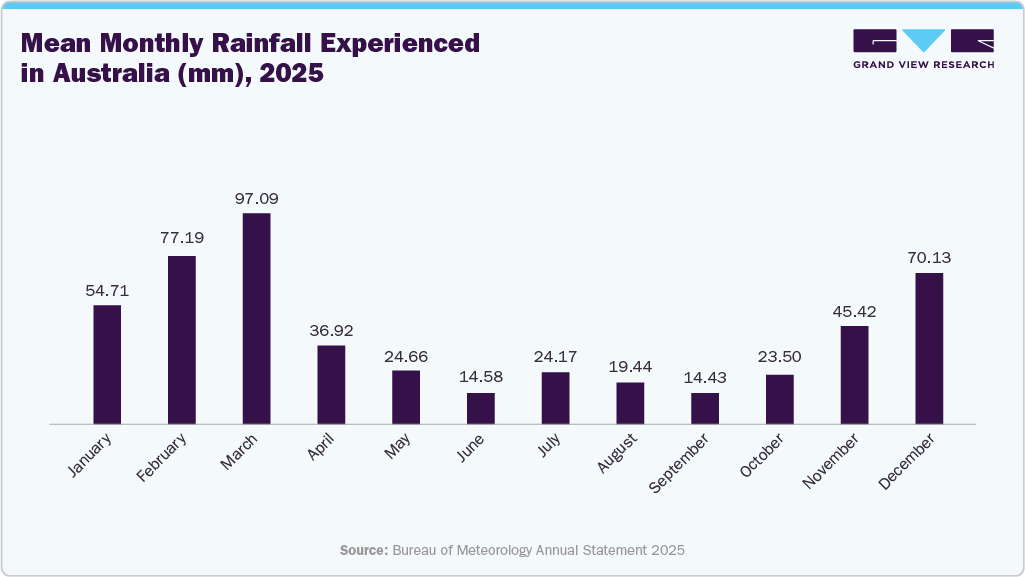
Increasing rainfall and flood frequency across mosquito-prone Australian regions are creating favorable breeding conditions, supporting demand for insect repellents. According to the Bureau of Meteorology Annual Climate Statement, Australia received 503 mm of rainfall in 2025, 8% above the long-term average, while northern Australia recorded 21% above-average rainfall during the 2024-25 wet season. These conditions increase the availability of waterlogged areas and temporary breeding habitats, encouraging demand for preventive insect-control products.
 To learn more about this report, Download Free Sample Report
Furthermore, flooding creates stagnant-water accumulation in residential areas, drainage systems, wetlands and agricultural land, allowing mosquito larvae to develop and adult populations to increase. According to NASA, during January-February 2025, parts of coastal Queensland received more than 100 cm of rainfall within approximately four days, contributing to widespread flooding. According to Port Hedland Government, following Cyclone Zelia, Port Hedland treated over 120 hectares of pooled water to control mosquito breeding. Such conditions increase requirements for topical repellents, household sprays and mosquito-control products. Mosquito breeding patterns further amplify this demand, as many species require standing water to complete their aquatic larval development before emerging as adults. CSIRO indicates that mosquito larvae can develop in stagnant water within 7-10 days, enabling populations to increase rapidly following rainfall and flooding. This short breeding cycle can increase the frequency of mosquito outbreaks, encouraging more frequent repellent purchases and replenishment of household insect-control products.
Australia’s APVMA registration framework can restrain insect-repellent market growth by increasing the time and capital required to introduce new formulations, active ingredients and product formats. A full assessment for a product containing an approved active constituent can take 18 months and cost AUD 83,511 where no comparable registered product exists; approval of a new active constituent requiring full assessment carries a 14-month timeframe and AUD 38,776 fee. These costs can disproportionately affect smaller brands and delay product launches, limiting innovation and competition.
Unregistered and inadequately labeled insect repellents further restrict market growth by increasing regulatory scrutiny and limiting the availability of non-compliant products. In 2025, the APVMA reported removing 532 unregistered agricultural and veterinary chemical products from online stores within six months, highlighting the scale of non-compliant product listings and enforcement requirements. Additionally, New South Wales Health Pathology emphasizes the importance of using appropriately registered repellents and following age-specific application guidelines. These requirements increase compliance responsibilities for manufacturers and online retailers, potentially restricting product availability and increasing market-entry costs.
The Australian insect repellent market presents an opportunity for manufacturers to develop botanical and DEET-free formulations that address growing consumer interest in plant-derived ingredients and alternative repellent solutions. Increasing demand for products containing ingredients such as picaridin, oil of lemon eucalyptus, and citronella creates opportunities for companies to expand their product portfolios across personal and spatial repellents. Manufacturers can strengthen consumer confidence by supporting botanical claims with efficacy testing, transparent ingredient disclosures, and evidence of protection duration. This creates opportunities to differentiate premium formulations while catering to consumers seeking alternatives to conventional synthetic repellents.
Analyst Perspective
The Australian insect repellent market is being shaped by increasing awareness of mosquito-borne diseases, outdoor recreational activities, and demand for effective personal protection solutions. Growing consumer interest in botanical ingredients, DEET-free formulations, and skin-friendly products is encouraging manufacturers to diversify their product portfolios. Demand for convenient formats, including sprays, lotions, roll-ons, wipes, and wearable repellents, is creating opportunities for product innovation. Seasonal mosquito activity, camping, gardening, and domestic travel further support product adoption. Meanwhile, manufacturers are strengthening brand positioning through formulation improvements, efficacy testing, product differentiation, and expanding retail and e-commerce distribution networks.
Brand Market Share Insights
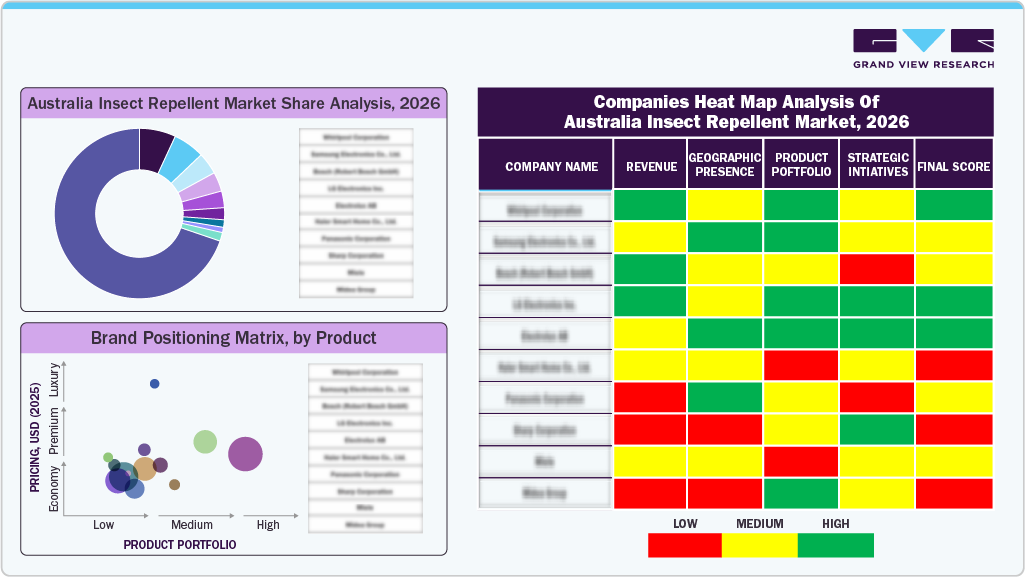
The Australian insect repellent market is characterized by competition among established consumer goods manufacturers, domestic brands, and specialized repellent providers. Companies are differentiating their offerings through active ingredient innovation, longer protection duration, convenient application formats, and alternative formulations. Established brands such as Aerogard, Bushman, and RID maintain market presence through diverse product portfolios covering sprays, aerosols, lotions, gels, and roll-ons. Meanwhile, growing interest in botanical ingredients and DEET-free alternatives is encouraging manufacturers to introduce differentiated products targeting consumers seeking alternative personal protection solutions. Companies are also focusing on product efficacy, skin compatibility, and convenient delivery systems to strengthen brand positioning across personal and spatial insect repellent categories.
 To learn more about this report, Download Free Sample Report
For instance, Reckitt Benckiser, through its Aerogard brand, offers Naturals Fabric Insect Repellent containing oil of lemon eucalyptus, eucalyptus oil, and pine oil, with up to four hours of protection. The formulation is developed and tested in Australia, demonstrating the company's focus on botanical-based product differentiation. Similarly, Bushman, an Australian-owned repellent brand, has expanded its portfolio with Bushman Naturals, featuring 20% Citriodiol and up to nine hours of protection. Its product range also includes DEET-based aerosols, pump sprays, lotions, and dry gels with different protection durations. These developments highlight how established brands are combining formulation diversification and multiple delivery formats to address varying consumer protection requirements and strengthen their competitive positioning in Australia.
Consumer Insights
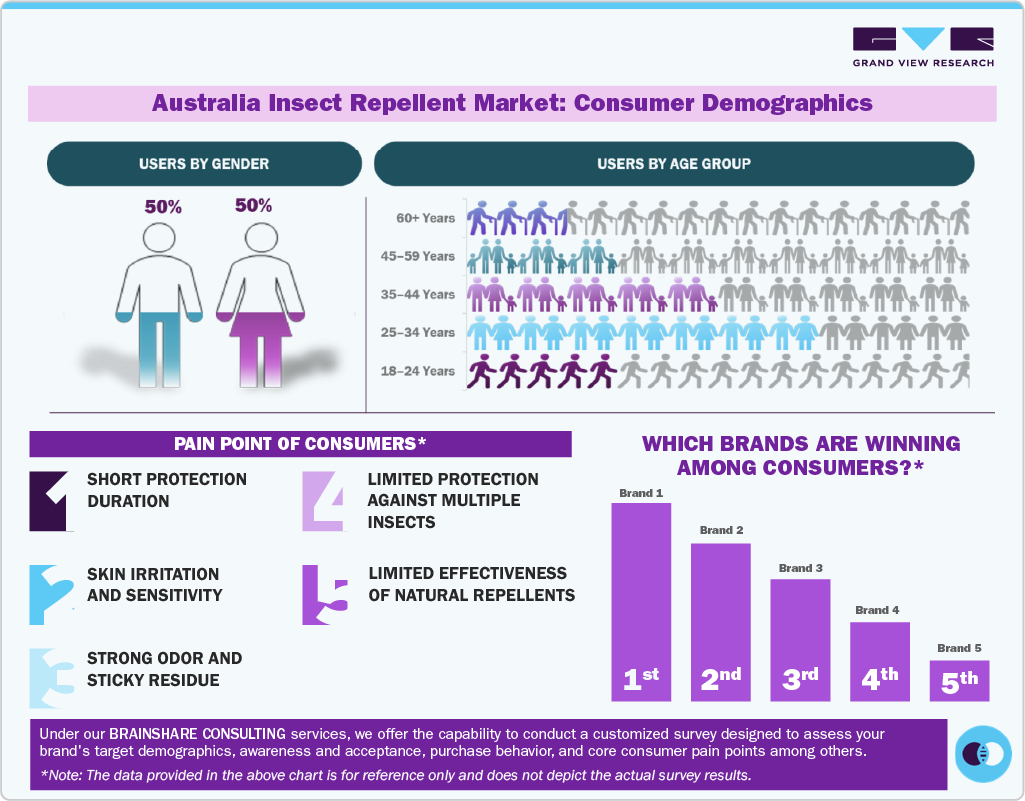
Consumer preferences in the Australian insect repellent market are influenced by age, protection requirements, convenience, and the effectiveness of different insect-control products. Mosquito coils remain a commonly preferred option across age groups, particularly among consumers aged 50-64 years, with 56.2% indicating preference for this product, followed by 51.2% among those aged 35-49 years and 42.3% among consumers aged 18-34 years. Among individuals aged 65 years and above, preference for mosquito coils stands at 36.3%. These preferences highlight the continued relevance of spatial insect repellents for household and outdoor mosquito control. Their use across different age groups also reflects consumer familiarity with traditional mosquito protection formats, particularly for patios, gardens, and other outdoor residential spaces.
 To learn more about this report, Download Free Sample Report
Product preferences also vary across age groups based on application methods and convenience. Residual insecticide sprays used on properties are preferred by 37.6% of consumers aged 18-34 years, compared with 33.1% among those aged 35-49 years, 26.3% among those aged 50-64 years, and 31.5% among consumers aged 65 years and above. Automatic mosquito sprays attract relatively higher preference among consumers aged 35-49 years (32.8%) and 18-34 years (30.7%). Electronic zappers record preference levels of 28.8%, 25.6%, 22.6%, and 16.6%, respectively, across the four age groups. These variations indicate opportunities for manufacturers to develop age-targeted spatial repellent solutions.Product Insights
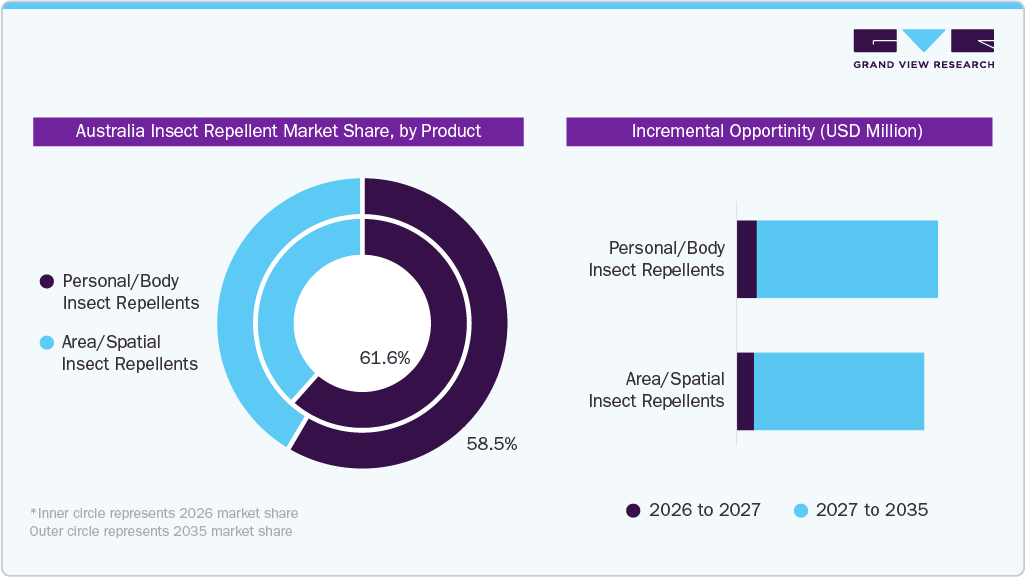
Personal/body insect repellents accounted for the largest market share of 61.6% in 2026. The personal/body insect repellents segment is driven by rising awareness of mosquito-borne diseases and increasing emphasis on bite prevention. Reported Murray Valley encephalitis (MVE) cases and associated fatalities in Western Australia and the Northern Territory are reinforcing demand for effective skin-applied repellents. Health authorities recommend formulations containing DEET, picaridin, or oil of lemon eucalyptus (OLE) to reduce mosquito bites. For instance, in October 2025, WA Health reported 24 Ross River virus notifications since July and advised residents to use repellents containing these active ingredients. APVMA registration requirements further strengthen consumer confidence in regulated products.
 To learn more about this report, Download Free Sample Report
Area/spatial insect repellents are anticipated to grow at a CAGR of 5.1% from 2027 to 2035. The area/spatial insect repellents segment is gaining importance as Australian households increasingly adopt solutions for protecting indoor and outdoor spaces. Rising mosquito-borne disease concerns are encouraging the use of mosquito coils, insecticide sprays, vapor dispensers, and treated pads. In January 2026, NSW Health recommended these products following a probable Japanese encephalitis case and virus detection in sentinel chickens. Similarly, Northern Territory health guidance highlighted mosquito coils, lanterns, and insecticide-treated pads for patios and verandas following MVE-related deaths in 2026. These public health recommendations are supporting awareness and adoption of spatial insect protection solutions.Insect Type Insights
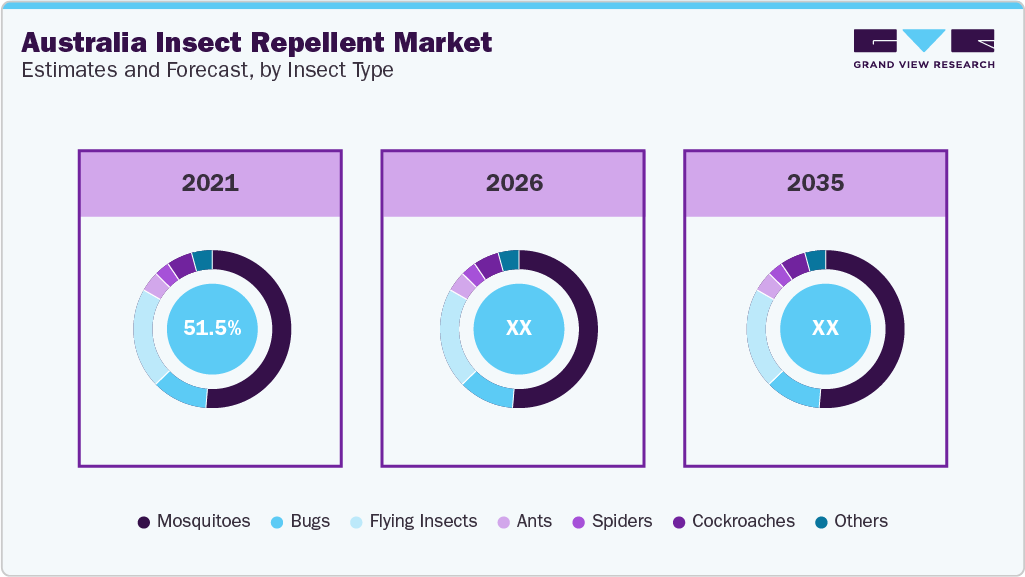
Mosquitoes accounted for the largest market share of 52.0% in 2026. Mosquitoes represent the largest insect-related demand driver in the Australian insect repellent market, supported by concerns over mosquito-borne diseases and their geographic spread into temperate and urban regions. Buruli ulcer has emerged as an additional concern, with research linking transmission to mosquitoes, particularly Aedes notoscriptus, which breeds in residential water containers. According to SBS News, Victoria recorded 426 Buruli ulcer cases in 2025, including clusters across Melbourne suburbs. Furthermore, locally acquired cases in the Batemans Bay area of NSW in 2023 highlight the expanding geographic relevance of mosquito protection, supporting household demand for personal and spatial repellents.
 To learn more about this report, Download Free Sample Report
Flying insects are anticipated to grow at a CAGR of 4.8% from 2027 to 2035. The flying insects segment is driven by growing concerns over flies, biting midges, wasps, and other airborne pests that affect outdoor comfort and public health across Australia. Stinging insects, particularly bees and wasps, contribute to injury-related hospitalizations, increasing awareness of insect prevention around residential and recreational spaces. According to AIHW, bee allergies accounted for 1,072 hospitalizations in 2021-22. Furthermore, Western Australia's European wasp surveillance program identified and destroyed 73 nests during the 2025-26 season across 25 locations. Such government-led monitoring activities highlight ongoing pest concerns and support demand for insect deterrents and outdoor protection products.Ingredient Type Insights
Synthetic/chemical accounted for the largest market share of 75.4% in 2026. The synthetic/chemical segment includes repellents made with active ingredients such as DEET and picaridin, along with synthetic pyrethroids used in area products. These ingredients form the backbone of the Australian insect repellent market because health authorities rely on them when mosquito-borne disease activity rises. That reliance is growing. Mosquito-borne virus cases almost tripled across Queensland in 2024, with Queensland Health recording 3,225 cases, including 2,475 cases of Ross River virus and 371 cases of dengue fever. When disease risk rises this sharply, consumers move toward products with proven, long-lasting protection. This directly benefits synthetic formulations, which offer longer protection per application than most plant-based alternatives.
To learn more about this report, Download Free Sample Report
Natural & organic products are anticipated to grow at a CAGR of 5.8% from 2027 to 2035. The natural & organic segment includes repellents made with plant-derived active ingredients, such as oil of lemon eucalyptus (OLE), citronella, and natural pyrethrum. Australia has a unique supply advantage in this segment. According to Hort Innovation, Australia supplies more than 60% of the global market for pyrethrum, a natural insecticide extracted from chrysanthemum flowers. The crop is grown mainly in north-west Tasmania and around Ballarat, Victoria, and has a farm-gate value of more than AUD 18 million annually. In July 2024, the industry launched a record AUD 6.3 million research program. Hort Innovation stated that “there is growing demand for natural insecticides” and that the pyrethrum market “is projected to grow significantly over the next five years”. This domestic supply base gives Australian manufacturers reliable access to a plant-based active, supporting the development of natural area repellents such as candles, coils, sticks, and plug-in devices.Usage Insights
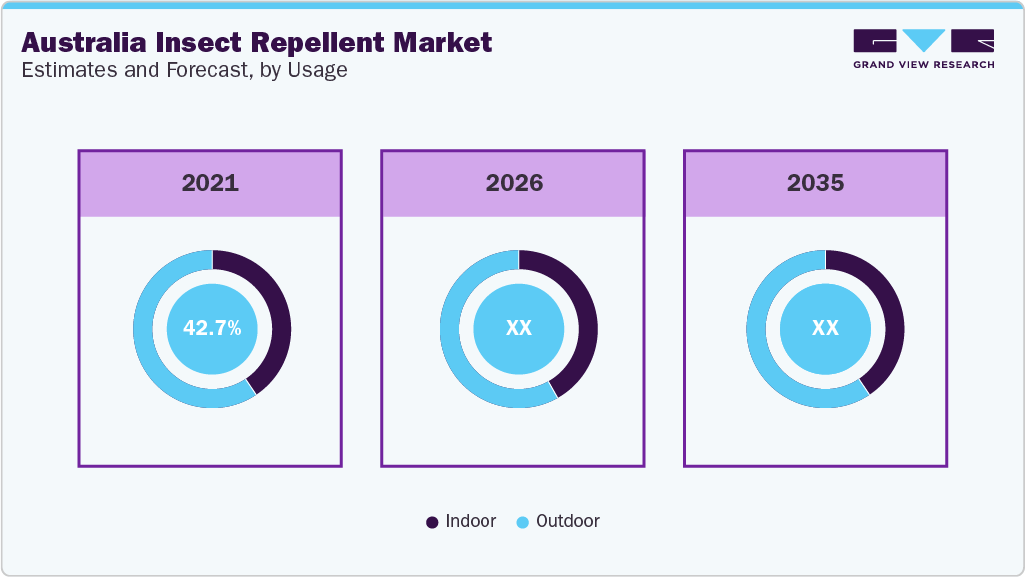
Outdoor usage accounted for the largest market share of 58.1% in 2026. The outdoor segment is driven by increasing participation in camping, fishing, gardening, outdoor dining, and recreational activities, alongside rising awareness of mosquito-borne diseases. According to SA Health surveillance, South Australia recorded 106 Ross River virus cases in 2025, compared with 25 in 2024, with cases concentrated around the Riverland and virus-carrying mosquitoes detected on the northern Adelaide Plains. Consequently, health authorities encouraged residents to use mosquito repellents and protective clothing. These developments are supporting demand for personal sprays, lotions, mosquito coils, candles, and portable repellent devices. Seasonal mosquito activity, warmer temperatures, and increased outdoor exposure further support adoption across residential and recreational settings.
 To learn more about this report, Download Free Sample Report
Indoor usage is anticipated to grow at a CAGR of 3.9% from 2027 to 2035. The indoor segment is supported by demand for insect control solutions across residential and commercial spaces, including homes, apartments, and hotels. Indoor mosquito exposure and household pests such as cockroaches, ants, and spiders encourage the use of plug-in repellents, insecticide sprays, and vaporizing devices. According to Queensland Health, the dengue-carrying mosquito Aedes aegypti prefers sheltered indoor resting locations, prompting recommendations for window screens and indoor insecticide sprays. Growing consumer preference for convenient, low-odor and smoke-free solutions is also supporting demand for electric vaporizers, automatic dispensers, and indoor sprays. Year-round household pest concerns further contribute to consistent indoor product consumption.Distribution Channel Insights
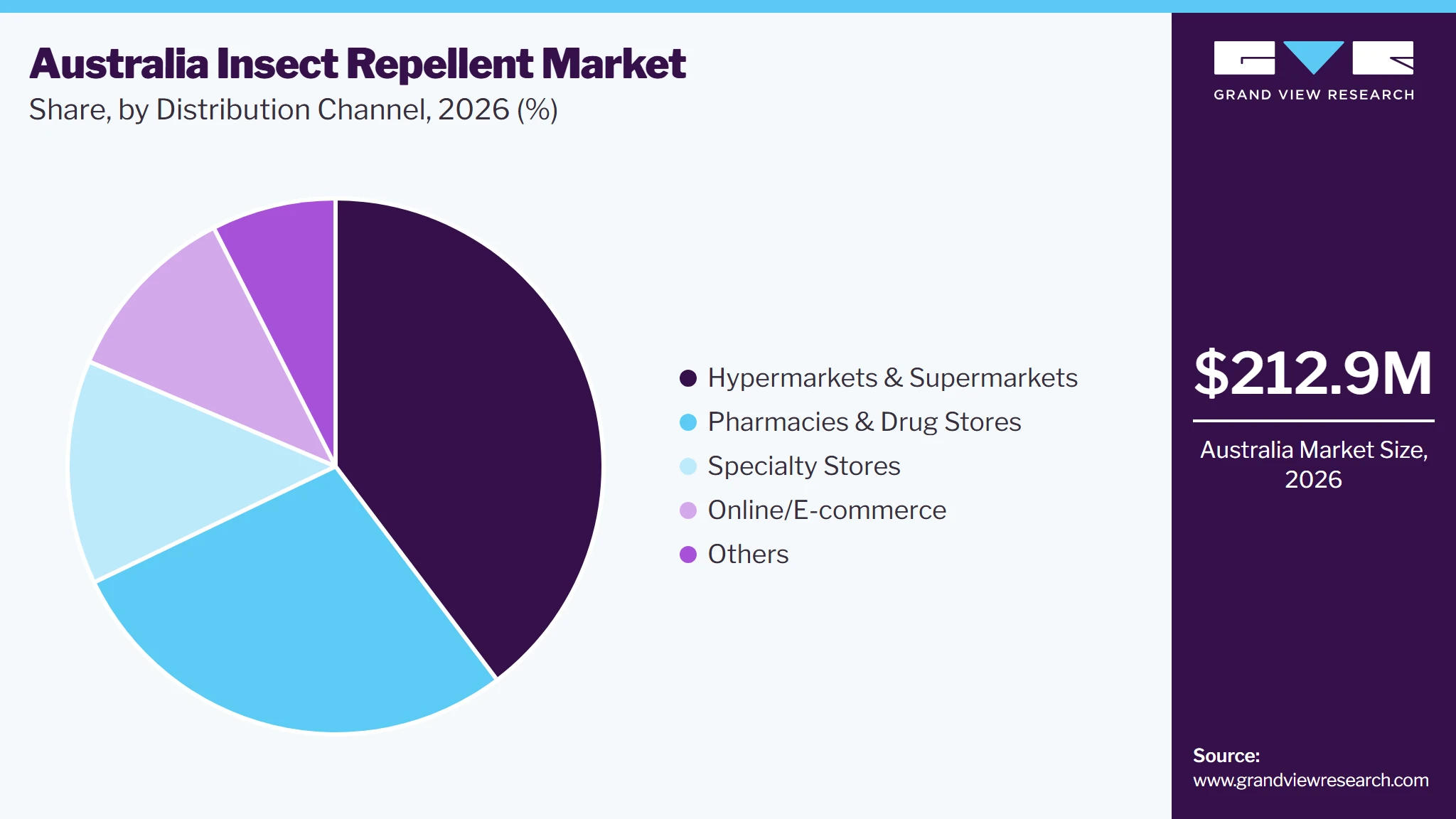
Hypermarkets & supermarkets accounted for the largest market share of 39.7% in 2026. This segment is a key distribution channel in the Australian insect repellent market, supported by convenient availability, established retail networks, and routine household shopping patterns. These outlets offer a wide range of products, including personal sprays, lotions, mosquito coils, insecticide aerosols, and electric vaporizers, allowing consumers to compare brands, formulations, and prices. Seasonal mosquito activity and increased awareness of insect-borne diseases further encourage purchases through grocery retail outlets. In March 2025, the Australian Competition and Consumer Commission (ACCC) released its final supermarkets inquiry report, outlining 20 recommendations to improve competition and price transparency. Increased scrutiny of supermarket pricing is likely to encourage promotional offers and competitive pricing strategies. Consequently, manufacturers must strengthen product differentiation, pricing strategies, and retail visibility to maintain brand competitiveness and attract price-conscious consumers.
 To learn more about this report, Download Free Sample Report
Online/e-commerce is anticipated to grow at a CAGR of 6.4% from 2027 to 2035. The online and e-commerce segment is gaining traction in the Australian insect repellent market, supported by increasing adoption of digital shopping platforms and demand for convenient access to personal and household protection products. E-commerce platforms allow consumers to compare active ingredients, product formulations, protection durations, prices, and customer reviews before purchasing. Online channels also improve access to specialized products, including botanical repellents, DEET-free formulations, travel-sized sprays, and wearable protection solutions. Supermarket websites, online pharmacies, and direct-to-consumer platforms are expanding product accessibility, particularly for consumers in regional and remote areas. Furthermore, subscription options, promotional discounts, and convenient home delivery encourage repeat purchases. Manufacturers are increasingly focusing on digital visibility, detailed product information, and online distribution partnerships to strengthen customer engagement and expand their market reach.
Key Australia Insect Repellent Market Companies:
-
Reckitt Benckiser Group plc
-
S.C. Johnson & Son, Inc.
-
Juno Laboratories Pty Ltd
-
RID Australia
-
Pascoe’s Pty Ltd
-
Thermacell Repellents, Inc.
-
Ego Pharmaceuticals Pty Ltd
-
Natural Wonders Australia Pty Ltd
-
Para'kito (PARAKITO Australia)
-
NATPAT (The Natural Patch Co.)
Competitive Benchmarking
Category
Operating Strategies
Competitive Edge
Weakness
Established Global and Domestic Players (Reckitt Benckiser Group plc, S.C. Johnson & Son, Inc., Juno Laboratories Pty Ltd, RID Australia, Pascoe’s Pty Ltd, Ego Pharmaceuticals Pty Ltd)
- These companies focus on broad insect repellent portfolios, including sprays, aerosols, lotions, creams and roll-ons. Their strategies emphasize product innovation, varying active-ingredient concentrations, family-oriented protection, brand positioning and extensive distribution through supermarkets, pharmacies and online channels.
- Established brand recognition, diverse product portfolios, formulation expertise and extensive retail networks provide competitive advantages. Their offerings address different consumer requirements, including tropical-strength protection, skin-friendly formulations and DEET-free alternatives.
- Intense brand competition, pricing pressure, regulatory compliance requirements and raw material cost fluctuations can affect profitability. Dependence on established product formats may also limit differentiation, while continuous innovation requires investment in research and marketing.
Specialized and Alternative Repellent Players (Thermacell Repellents, Inc., Natural Wonders Australia Pty Ltd, Para'kito, NATPAT - The Natural Patch Co.)
- These companies concentrate on specialized mosquito protection solutions, botanical formulations and alternative delivery formats, including portable repellent devices, wearable wristbands, essential-oil-based sprays and repellent patches. Their strategies emphasize product differentiation, convenience, DEET-free positioning, and niche consumer preferences.
- Specialized product offerings, alternative application formats and botanical positioning help these companies target consumers seeking convenient and alternative insect protection solutions. Portable devices and wearable products provide differentiation from conventional topical repellents.
- Limited brand visibility and distribution reach compared with established players can restrict market penetration. Botanical formulations may face challenges related to protection duration and efficacy consistency, while specialized devices and wearable products may involve higher costs or limitations in protection coverage.
Recent Developments
-
In July 2025, Advent International announced plans to accelerate growth and innovation across Reckitt's Essential Home portfolio following its agreement to acquire a 70% stake in the business. Advent plans to increase investment in brand equity, new product development and marketing, while strengthening retailer partnerships. The acquisition will establish Essential Home as a standalone global home care business.
-
In August 2026, McBride secured two long-term contract manufacturing agreements with Vestacy, the company behind brands including Mortein, Air Wick, Calgon and Cillit Bang. The agreements, lasting five to eight years, also include the acquisition of two manufacturing facilities in Spain and Portugal.
Australia Insect Repellent Market Report Scope
Report Attribute
Details
Market size in 2026
USD 212.9 million
Estimated market size in 2027
USD 222.3 million
Revenue forecast in 2035
USD 310.3 million
Growth Rate
CAGR of 4.3% from 2027 to 2035
Base year for estimation
2026
Historical data
2021 - 2025
Forecast period
2027 - 2035
Quantitative units
Revenue in USD million and CAGR from 2027 to 2035
Report coverage
Revenue forecast, company ranking, competitive landscape, growth factors, and trends
Segments covered
Product, insect type, ingredient type, usage, distribution channel
Country scope
Australia
Key companies profiled
Reckitt Benckiser Group plc; S.C. Johnson & Son, Inc.; Juno Laboratories Pty Ltd; RID Australia; Pascoe’s Pty Ltd; Thermacell Repellents, Inc.; Ego Pharmaceuticals Pty Ltd; Natural Wonders Australia Pty Ltd; Para'kito (PARAKITO Australia); NATPAT (The Natural Patch Co.)
Customization scope
Free report customization (equivalent to up to 8 analyst working days) with purchase. Addition or alteration to country, regional & segment scope.
Pricing and purchase options
Avail customized purchase options to meet your exact research needs. Explore purchase options
Australia Insect Repellent Market Report Segmentation
This report forecasts revenue growth at country levels and provides an analysis of the latest trends and opportunities in each of the sub-segments from 2021 to 2033. For this study, Grand View Research has segmented the Australia insect repellent market report based on product, insect type, ingredient type, usage, and distribution channel:
-
Product Outlook (Revenue, USD Million; 2021 - 2035)
-
Personal/Body Insect Repellents
-
Creams, Gels & Lotions
-
Sprays & Aerosols
-
Wipes
-
Roll-Ons & Sticks
-
Others
-
-
Area/Spatial Insect Repellents
-
Sprays & Aerosols
-
Sticks
-
Coils & Smoke Cards
-
Candles
-
Electric Diffusers
-
Powders & Granules
-
Others
-
-
-
Insect Type Outlook (Revenue, USD Million; 2021 - 2035)
-
Mosquitoes
-
Bugs
-
Flying Insects
-
Ants
-
Spiders
-
Cockroaches
-
Others
-
-
Ingredient Type Outlook (Revenue, USD Million; 2021 - 2035)
-
Synthetic/Chemical
-
Natural & Organic
-
-
Usage Outlook (Revenue, USD Million; 2021 - 2035)
-
Indoor
-
Outdoor
-
-
Distribution Channel Outlook (Revenue, USD Million; 2021 - 2035)
-
Hypermarkets & Supermarkets
-
Pharmacies & Drug Stores
-
Specialty Stores
-
Online/E-commerce
-
Others
-
Research Methodology
The Australia insect repellent market figures in this report are based on a proven research process that combines executive interviews with secondary research from proprietary databases, company filings, and recognized regulatory and institutional sources. Market size is built through value-chain sizing-reconciling supply-side and demand-side estimates-and triangulated with bottom-up and top-down approaches. Every estimate passes multiple levels of expert validation before publication, with each Australia insect repellent segment quantified using the revenue-capture definitions in the table below.
Segment Definition
Segment - Product
Revenue capture definition
Personal/Body Insect Repellents
Covers products formulated for direct application to human skin, clothing, or wearable accessories to deter mosquitoes, ticks, flies, and other biting insects from approaching or landing on the body. Includes creams, gels, lotions, sprays, aerosols, wipes, roll-ons, sticks, repellent patches, and wearable accessories containing synthetic or plant-derived active ingredients. Examples include DEET-based sprays, picaridin lotions, mosquito repellent wipes, and wearable mosquito-repellent wristbands.
Area/Spatial Insect Repellents
Covers products designed to repel mosquitoes and other insects within a defined surrounding space by releasing or dispersing repellent ingredients into the air or environment. Includes sprays, aerosols, incense sticks, mosquito coils, smoke cards, candles, electric diffusers, vapourisers, powders, granules, and other spatial repellent formats containing synthetic or plant-derived active ingredients for use in residential, recreational, and outdoor environments. Examples include mosquito coils, citronella candles, plug-in mosquito repellents, spatial repellent devices, and outdoor mosquito-repellent incense sticks.
Estimation Model
Category
Key Question
Description
Consumer Need & Target Base Layer
Who needs insect protection?
Identify Australian households and individuals exposed to mosquitoes, flies, biting midges, ants, cockroaches, spiders, and other insects. Consider population, household size, age groups, outdoor lifestyles, regional exposure, mosquito-borne disease awareness, climate, and seasonal insect activity. Include consumers seeking personal protection and household insect control.
Villa Availability & Distribution Layer
Who can access insect repellents?
Filter the target population based on access to suitable insect repellent products across Australia. Consider APVMA-registered products, product availability, retail distribution, and online accessibility. Include supermarkets, pharmacies, specialty stores, e-commerce platforms, and direct-to-consumer channels. Account for personal/body and area/spatial product availability, regional coverage, and price accessibility.
Active Purchasing & Engagement Layer
Who actually purchases and uses repellents?
Apply consumer adoption and purchasing assumptions to estimate actual product buyers and users. Consider household penetration, purchase frequency, product replacement, and average units purchased. Evaluate preferences for DEET, picaridin, botanical formulations, sprays, lotions, coils, electric diffusers, and other formats. Account for outdoor activities, indoor pest exposure, and disease-related awareness.
Monetisation Layer
How much revenue is generated?
Estimate market revenue by multiplying annual product sales volumes by average selling prices across insect repellent categories. Aggregate revenue across personal/body and area/spatial products. Adjust for product size, active ingredient, brand positioning, retail channel, seasonal demand, and promotional pricing. Avoid double-counting household users purchasing multiple product formats.
Delivered Customizations
This report has been delivered with the following In-depth customizations
Client Request
Customization Delivered
Value Adds
Australia Insect Repellent Market & Product Trend Analysis
Conducted an in-depth analysis of the Australia insect repellent market, covering personal/body repellents, including creams, gels, lotions, sprays, aerosols, wipes, roll-ons, and sticks, as well as area/spatial repellents, including sprays, aerosols, coils, smoke cards, candles, electric diffusers, and powders/granules. Assessed product innovations, active ingredients, botanical formulations, DEET-free alternatives, regulatory developments, and evolving consumer preferences.
Enables stakeholders to understand product-level demand, identify emerging formulation trends, evaluate opportunities across personal and spatial protection categories, and assess the impact of product innovation and regulatory requirements on market development.
Product Segmentation & Consumer Demand Analysis
Evaluated market demand across mosquito, bugs, flying insects, ants, spiders, cockroaches, and other insect categories. Examined consumer preferences, demographic factors, purchasing behaviour, product adoption, and usage requirements across indoor and outdoor environments. Assessed the influence of mosquito-borne diseases, seasonal insect activity, outdoor recreation, and household pest concerns on repellent consumption.
Provides insights into consumer protection requirements, insect-specific demand patterns, and product adoption trends. Helps stakeholders identify high-potential product categories, understand purchasing preferences, and develop targeted formulations and marketing strategies for Australian consumers.
Competitive Landscape Assessment
Evaluated the competitive landscape across established manufacturers, domestic repellent brands, specialized providers, and botanical product companies, including Reckitt, SC Johnson, Juno Laboratories, RID, Pascoe's, Thermacell, Ego Pharmaceuticals, Para’kito, and NATPAT. Examined product portfolios, formulation innovations, brand positioning, distribution strategies, APVMA registration requirements, and company developments in Australia.
Helps identify competitive differentiation, product innovation opportunities, distribution expansion strategies, and regulatory considerations. Supports business decisions related to product development, market positioning, portfolio diversification, and long-term growth in the Australian insect repellent market.
About the Author(s)
Homecare & Decor Research Team
Consumer Goods · Homecare & DecorThis report was authored by the homecare & decor research team at Grand View Research - comprising two research analysts, one senior research analyst, and one industry expert - with specialized expertise in the homecare & decor segment of the consumer goods industry. All findings are based on proprietary consumer goods databases, executive interviews, and regulatory analysis, subject to internal peer review prior to publication.
Last Updated:
Speak to Analyst

Customize this report to your needs - add regions, segments, or data points, with 20% free customization.
Or view our licence options:


ISO 9001:2015 & 27001:2022 Certified
We are GDPR and CCPA compliant! Your transaction & personal information is safe and secure. For more details, please read our privacy policy.


