
- Home
- »
- Sensors & Control
- »
-
Automotive Actuators Market Size & Share Report, 2026-2033GVR Report cover

Automotive Actuators Market (2026 - 2033)
Size, Share & Trends Analysis Report By Product Type, By Motion (Linear, Rotatory), By Vehicle Type (Passenger Vehicles, Commercial Vehicles), By Propulsion, By Application, By End-use, By Region, And Segment Forecasts
Market Size, 2025
$29.3BMarket Estimate, 2026
$29.8BMarket Forecast, 2033
$40.3BCAGR, 2026–2033
4.4%Automotive Actuators Market Summary
The global automotive actuators market size was valued at USD 29.3 billion in 2025 and is projected to grow from USD 29.8 billion in 2026 to reach USD 40.3 billion by 2033, at a CAGR of 4.4% from 2026 to 2033. Asia Pacific dominated the global market, accounting for the largest revenue share of 45.9% in 2025. The market is driven by the increasing electrification of vehicles, growing demand for advanced safety systems, and the rising adoption of vehicle automation technologies.
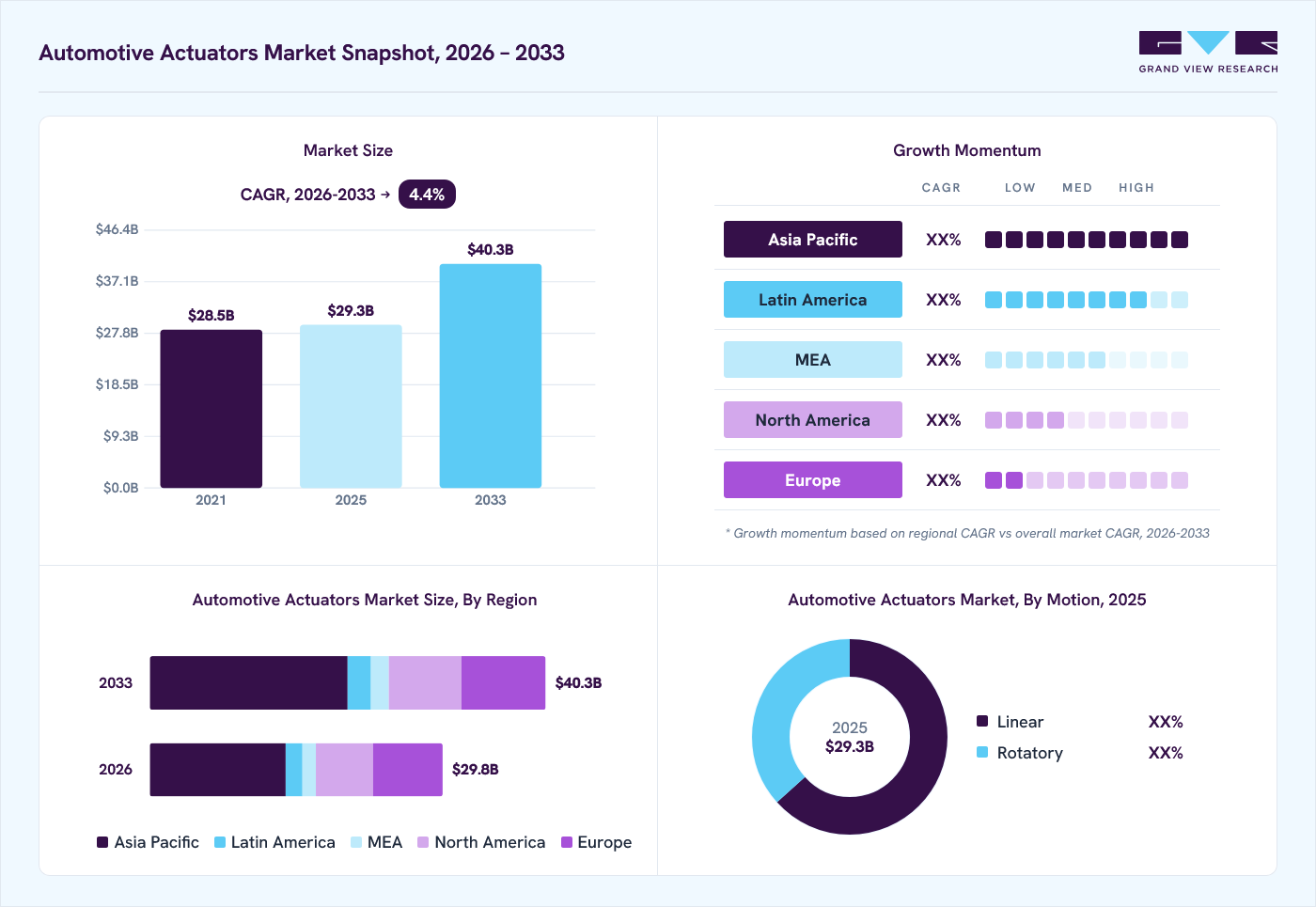 Source: Grand View Research, IR Documents, Primary Interviews, Paid DatabasesTo learn more about this report,
 Download Free Sample Report
Key Market Trends & Insights
- By product type: HVAC actuators segment dominated the market, with a revenue share of 67.3% in 2025
- By motion: Linear segment led the market and accounted for a share of 63.3% in 2025
- By vehicle type: Passenger vehicles segment dominated the market, with a revenue share of 77.9% in 2025
- By propulsion: ICE segment dominated the market, with a revenue share of 74.0% in 2025
- By application: Interior segment dominated the market, with a revenue share of 42.3% in 2025
- By end use: OEM segment held the largest revenue share in 2025.
Regional Highlights
- Largest regional market: Asia Pacific (45.9% revenue share, 2025)
- By country: China held the largest market share in 2025.
Market Size & Forecast
- Market size in 2025: USD 29.3 Billion
- Estimated market size in 2026: USD 29.8 Billion
- Projected market size by 2033: USD 40.3 Billion
- CAGR (2026-2033): 4.4%
Prism AI by Grand View Research Free to tryAsk a question about the automotive actuators marketTry asking✓Every figure cited from GVR research Prefer the report? Download free sample →
Actuators are essential components that convert electrical, hydraulic, or pneumatic signals into mechanical motion, enabling precise control of engine functions, braking systems, throttle operation, transmission, HVAC systems, seating, windows, and advanced driver assistance systems (ADAS). The growing production of passenger and commercial vehicles, particularly electric and hybrid vehicles, has significantly increased the demand for electric actuators due to their superior energy efficiency, compact design, and faster response times.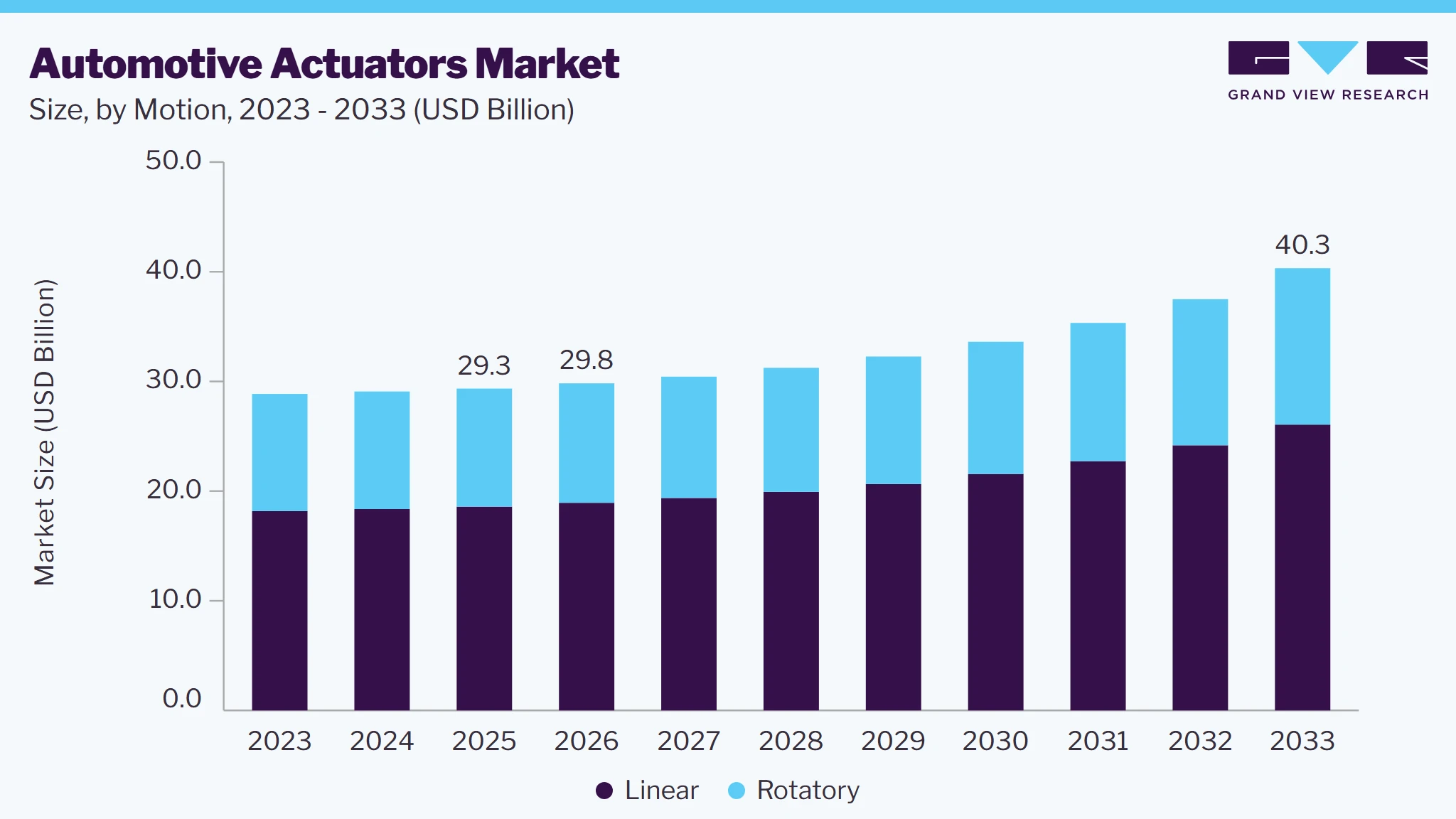 To learn more about this report, Download Free Sample Report
Technological advancements are transforming automotive actuators from standalone mechanical devices into intelligent, electronically controlled systems that support software-defined vehicles. Electric actuators are increasingly replacing hydraulic and pneumatic alternatives as they offer higher precision, lower maintenance requirements, reduced weight, and improved energy efficiency. Manufacturers are integrating actuators with sensors, electronic control units (ECUs), and vehicle communication networks to enable predictive diagnostics, real-time monitoring, and autonomous functionality. The emergence of brake-by-wire, steer-by-wire, active suspension systems, and electronically controlled thermal management solutions is further accelerating actuator innovation.
Investments in the automotive actuators market are increasing as global automotive suppliers and OEMs expand their capabilities in electrification, autonomous driving, and smart mobility technologies. Leading component manufacturers are investing heavily in research and development to develop high-performance electric actuators designed specifically for battery electric vehicles (BEVs), hybrid electric vehicles (HEVs), and next-generation autonomous vehicles. Strategic investments are also being directed toward expanding manufacturing facilities, improving semiconductor integration, and strengthening supply chain resilience.
Government regulations focused on vehicle safety, emissions reduction, and fuel efficiency continue to shape the automotive actuators market. Stringent emission standards across North America, Europe, China, Japan, and other major automotive markets are encouraging manufacturers to adopt electronically controlled engine management systems and lightweight actuator technologies that improve fuel economy and reduce greenhouse gas emissions. Vehicle safety regulations mandating features such as electronic stability control (ESC), anti-lock braking systems (ABS), electronic parking brakes (EPB), tire pressure monitoring systems (TPMS), and increasingly advanced ADAS functions have significantly increased actuator deployment per vehicle.
Despite strong growth prospects, the automotive actuators market faces several challenges that could restrain expansion. The high cost of advanced electric actuators, coupled with the complexity of integrating electronic control systems, increases overall vehicle production costs, particularly for price-sensitive vehicle segments. Supply chain disruptions affecting semiconductors, rare earth magnets, and electronic components can delay actuator production and increase procurement costs.
Market Dynamics
The automotive actuators market is experiencing steady growth, supported by increasing vehicle electrification, rising integration of advanced driver assistance systems (ADAS), and growing demand for intelligent vehicle control systems. Automotive actuators have evolved from conventional mechanical components to electronically controlled systems that improve vehicle efficiency, safety, comfort, and emission performance. The rapid adoption of electric vehicles (EVs), software-defined vehicles (SDVs), and by-wire technologies is accelerating demand for high-performance electric actuators across multiple vehicle systems.
The global automotive industry is undergoing a significant transition from internal combustion engine (ICE) vehicles to hybrid and battery-electric vehicles, driven by stringent emissions regulations, government incentives, and growing consumer demand for sustainable mobility. Electric vehicles require significantly higher levels of electronic control than conventional vehicles, creating demand for actuators that precisely regulate thermal management, battery cooling, electric braking, charging mechanisms, and electronic powertrain functions. As vehicle architectures become increasingly electrified, manufacturers are replacing conventional hydraulic and mechanical systems with electrically controlled actuator solutions that improve efficiency and reduce energy consumption.
Automotive actuators enable precise electronic control across multiple EV subsystems, improving battery performance, energy utilization, passenger comfort, and overall vehicle reliability. Electric actuators support intelligent thermal management systems, active grille shutters, coolant valves, brake-by-wire systems, and electronic parking brakes, all of which maximize driving range and operational efficiency. As global EV production continues to expand, actuator suppliers are introducing compact, lightweight, and energy-efficient products specifically designed for electrified vehicle platforms, thereby accelerating overall market growth.
Modern automotive actuators increasingly incorporate electric motors, sensors, embedded software, electronic control units (ECUs), and communication interfaces, substantially increasing product development costs compared to traditional mechanical actuators. Automotive manufacturers must ensure functional safety, cybersecurity compliance, electromagnetic compatibility, and long-term durability under demanding operating conditions. The resulting engineering complexity extends product validation cycles and increases manufacturing costs, particularly for safety-critical actuator applications such as braking, steering, and powertrain control.
The impact of higher development costs is particularly evident in entry-level passenger vehicles and emerging automotive markets, where cost sensitivity remains high. Smaller OEMs and Tier-2 suppliers often struggle to absorb the development costs of intelligent actuator systems, which limits the adoption of premium electronic actuator technologies. Supply chain constraints related to semiconductors, precision motors, and rare-earth materials further increase production costs and delay commercialization, slowing market expansion in cost-sensitive regions across Asia, Latin America, and parts of Africa.
The emergence of software-defined vehicles and higher levels of driving automation is creating significant opportunities for advanced automotive actuator manufacturers. Modern vehicle architectures increasingly rely on electronically controlled systems that receive real-time software commands and deliver precise mechanical responses across steering, braking, thermal management, lighting, seating, and body control applications. The integration of centralized vehicle computing platforms and zonal architectures is further increasing demand for intelligent actuator modules capable of supporting over-the-air software updates and predictive diagnostics.
The transition toward autonomous mobility creates substantial long-term revenue opportunities for suppliers offering smart electric actuators integrated with sensors, diagnostics, and communication capabilities. Companies with strong expertise in mechatronics, brushless motor technologies, embedded electronics, and software integration, including Bosch, Continental, DENSO, BorgWarner, and Hitachi Astemo, are well-positioned to capture this opportunity. High-value applications such as brake-by-wire, steer-by-wire, active suspension, and intelligent thermal management systems are expected to generate strong demand throughout the forecast period.
Market Concentration & Characteristics
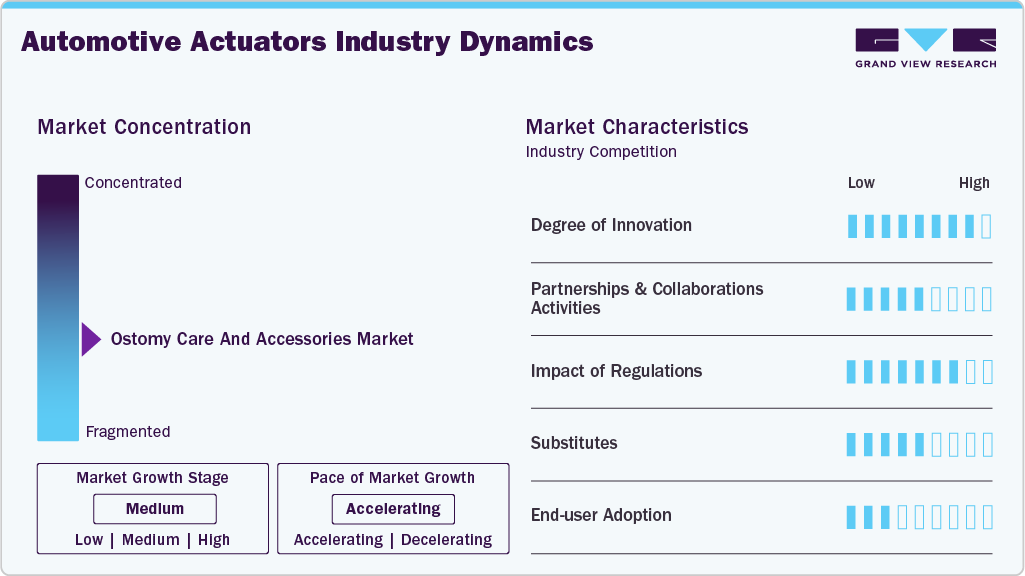
The automotive actuators market is moderately fragmented, characterized by the presence of several global Tier-1 automotive suppliers alongside numerous regional and niche actuator manufacturers. Key companies such as Robert Bosch GmbH, DENSO CORPORATION, Continental AG, BorgWarner Inc., Hitachi Astemo, Ltd., Mitsubishi Electric Corporation, MAHLE GmbH, Johnson Electric Holdings Limited, NIDEC CORPORATION, and EFI Automotive collectively account for a significant share of the market. However, no single company dominates the industry across all actuator categories, as the market encompasses a wide range of applications, including powertrain, braking, HVAC, seating, lighting, thermal management, and body control systems. The diversity of actuator technologies and vehicle applications enables multiple suppliers to compete within specialized product segments and regional markets.
 To learn more about this report, Download Free Sample Report
Competition is primarily driven by technological innovation, product reliability, manufacturing scale, and long-term supply agreements with automotive OEMs. Established Tier-1 suppliers leverage their global production networks, integrated electronics capabilities, and extensive research and development investments to maintain competitive positions. At the same time, specialized manufacturers focus on precision electric actuators and emerging applications in electric and software-defined vehicles. Market participants are increasingly pursuing strategic partnerships, acquisitions, and investments in intelligent mechatronic systems to strengthen their product portfolios and expand their presence in high-growth electric vehicle and advanced driver assistance system (ADAS) applications.
Analyst Perspective
The automotive actuators market is transitioning toward intelligent, software-controlled electromechanical systems that support electrification, autonomous driving, and vehicle digitalization. Increasing electronic content per vehicle, particularly in electric and premium vehicles, is expanding actuator demand across thermal management, braking, lighting, seating, and body control applications. Technological innovation is cantered on lightweight electric actuators, integrated sensor technologies, brushless motor platforms, and smart diagnostic capabilities that improve efficiency and reliability. Strategic investments by Tier-1 suppliers are increasingly focused on by-wire technologies, centralized vehicle architectures, and software-enabled actuator platforms.
Product Type Insights
The HVAC actuators segment dominated the market and accounted for the revenue share of 67.3% in 2025, driven by rising consumer demand for enhanced cabin comfort, automatic climate control, and energy-efficient thermal management systems across passenger and commercial vehicles. Modern vehicles increasingly incorporate multi-zone climate control, automatic air distribution, humidity management, and intelligent ventilation systems that require multiple electric actuators to regulate airflow, temperature, and air recirculation precisely. The rapid adoption of electric vehicles further strengthens demand for HVAC systems, which play a critical role in maintaining passenger comfort while optimizing battery energy consumption.
The coolant and refrigerant valve actuators segment is anticipated to grow at the highest CAGR during the forecast period, due to the increasing adoption of plug-in hybrid electric vehicles (PHEVs), hybrid electric vehicles (HEVs), and battery electric vehicles (BEVs), all of which require sophisticated thermal management systems. These actuators precisely regulate the flow of coolant and refrigerant through batteries, electric motors, power electronics, and cabin cooling circuits to maintain optimal operating temperatures and improve vehicle efficiency. As automakers focus on extending battery life, improving driving range, and enabling ultra-fast charging, demand for intelligent electronically controlled valve actuators continues to grow.
Motion Insights
The linear segment dominated the market and accounted for the revenue share of 63.3% in 2025, driven by the increasing integration of electrically controlled systems that require precise linear motion across modern vehicles. Linear actuators are extensively used in applications such as seat adjustment, active grille shutters, electronic parking brakes, coolant and refrigerant valves, HVAC airflow control, tailgates, and sunroof mechanisms. The rapid shift toward electric vehicles and premium passenger vehicles has further increased demand for compact, lightweight, and energy-efficient linear actuators capable of delivering accurate positioning and low power consumption.
The rotatory segment is anticipated to grow at a significant CAGR during the forecast period, driven by rising demand for electronically controlled rotational movement in critical automotive systems such as throttle control, exhaust gas recirculation (EGR), turbocharger wastegate control, HVAC dampers, adaptive lighting, and mirror adjustment systems. As automakers increasingly replace mechanical and hydraulic components with electric actuation technologies, rotatory actuators have become essential for improving control precision, fuel efficiency, emissions performance, and vehicle responsiveness.
Vehicle Type Insights
The passenger vehicles segment dominated the market and accounted for the revenue share of 77.9%in 2025, driven by rising consumer demand for enhanced safety, comfort, connectivity, and fuel efficiency. Modern passenger cars incorporate numerous actuators across applications such as HVAC systems, power seats, electronic parking brakes, adaptive headlamps, active grille shutters, throttle control, and advanced driver assistance systems (ADAS). The rapid adoption of battery electric vehicles (BEVs), hybrid vehicles, and software-defined vehicles has further increased actuator content per vehicle, particularly for thermal management, battery cooling, and electronic body control functions.
The commercial segment is expected to grow at the fastest CAGR during the forecast period, driven by increasing fleet modernization, stricter emission regulations, and rising adoption of advanced safety and efficiency technologies. Commercial vehicles require robust actuator systems for applications including engine management, braking, transmission control, HVAC, exhaust aftertreatment, and thermal management to improve operational efficiency and comply with regulatory standards. The expansion of electric buses, electric delivery vans, and medium- and heavy-duty electric trucks is creating additional demand for electric actuators that support battery cooling, regenerative braking, and electronic powertrain control.
Propulsion Insights
The ICE segment dominated the market and accounted for the revenue share of 74.0% in 2025. The growth of the segment is supported by the large global fleet of internal combustion engine vehicles and ongoing demand for improved fuel efficiency and lower emissions. Modern ICE vehicles rely extensively on actuators for critical functions such as electronic throttle control, exhaust gas recirculation (EGR), turbocharger wastegate operation, variable valve timing (VVT), transmission control, and engine thermal management. Increasingly stringent emission standards across North America, Europe, and Asia-Pacific are encouraging automakers to adopt advanced electronically controlled actuator systems that optimize combustion efficiency and reduce pollutant emissions.
The electric segment is expected to grow at the fastest CAGR during the forecast period, driven by the accelerating adoption of fuel cell electric vehicles (FCEVs), battery electric vehicles (BEVs), plug-in hybrid electric vehicles (PHEVs). Electric vehicles require more precision actuators to manage battery thermal systems, coolant and refrigerant valves, regenerative braking, charging mechanisms, electric drivetrains, and advanced HVAC systems. As automakers focus on extending driving range, improving battery performance, and enhancing energy efficiency, demand for intelligent electric actuators capable of precise electronic control continues to increase.
Application Insights
The interior segment dominated the market and accounted for the revenue share of 42.3% in 2025, driven by increasing consumer expectations for enhanced comfort, personalization, and connected in-cabin experiences. Modern vehicles incorporate numerous actuators for applications such as power seats, lumbar support, steering column adjustment, HVAC air distribution, sunroof operation, infotainment mechanisms, and electronic storage compartments. The growing popularity of premium vehicles, electric vehicles, and software-defined vehicle architectures has significantly increased the number of electronically controlled interior functions, thereby driving demand for compact, energy-efficient electric actuators.
The body & exterior segment is expected to grow at the fastest CAGR during the forecast period, driven by the increasing integration of electronically controlled systems that improve vehicle safety, aerodynamics, efficiency, and user convenience. Automotive actuators are widely used in applications including active grille shutters, adaptive headlamps, power tailgates, door locks, power windows, exterior mirrors, windshield wipers, and charging port doors in electric vehicles. The rising adoption of advanced driver assistance systems (ADAS), vehicle electrification, and aerodynamic optimization is encouraging automakers to deploy intelligent actuator technologies that enable precise electronic control and real-time responsiveness.
End Use Insights
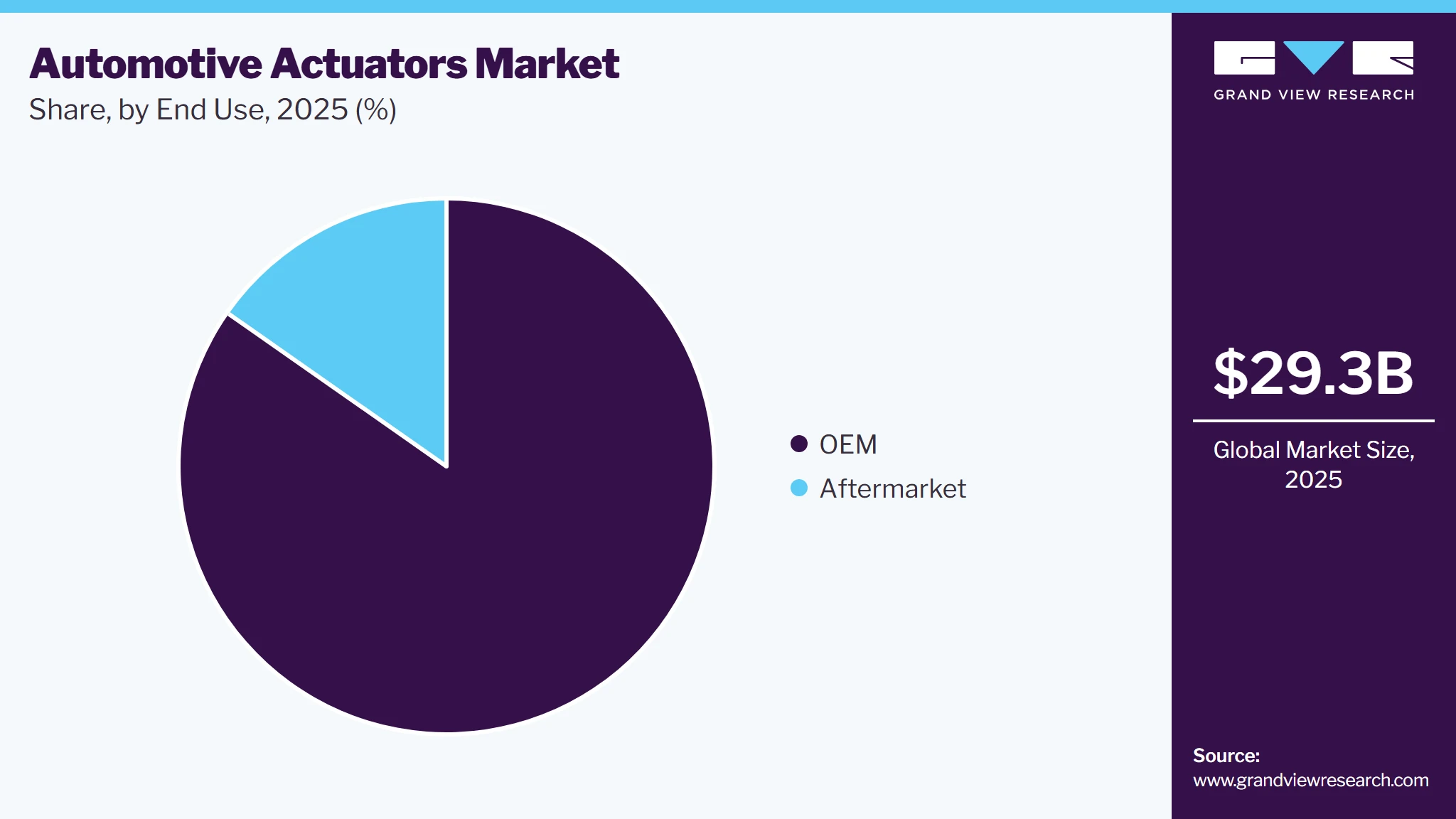
The OEM segment dominated with the largest revenue share of 84.7% in 2025, driven by increasing global vehicle production and the growing integration of electronically controlled systems in new vehicles. Automotive manufacturers are equipping passenger and commercial vehicles with more actuators to support applications such as powertrain control, braking, HVAC, seating, lighting, thermal management, and advanced driver assistance systems (ADAS). The rapid growth of electric vehicles and software-defined vehicle architectures has further increased actuator content per vehicle, creating sustained demand from original equipment manufacturers.
 To learn more about this report, Download Free Sample Report
The aftermarket segment is expected to grow at a significant CAGR over the forecast period, driven by the increasing global vehicle parc and the rising need for replacement and maintenance of actuator systems throughout a vehicle's operational life. Automotive actuators are subject to wear from continuous mechanical movement, exposure to harsh operating conditions, and prolonged electrical use, creating consistent demand for replacement components such as HVAC, throttle, brake, door lock, and power window actuators. The rising average age of vehicles in North America and Europe, combined with rising repair and maintenance activity in emerging economies, is supporting aftermarket sales.
Regional Insights
North America held a significant share of the market, with a revenue share of 19.7% in 2025, driven by high adoption of advanced vehicle electronics, rising production of electric vehicles (EVs), and strong demand for safety and comfort features. The region has a well-established automotive manufacturing ecosystem supported by major OEMs and Tier-1 suppliers that continuously invest in advanced actuator technologies for powertrain, braking, thermal management, and body control applications.
U.S. Automotive Actuators Industry Trends
The automotive actuators market in the U.S. is expected to grow significantly at a CAGR of 3.2% from 2026 to 2033, due to the presence of leading automotive manufacturers, technology companies, and global component suppliers. Rising production of battery electric vehicles, increasing consumer preference for premium vehicle features, and growing deployment of ADAS technologies are driving the adoption of sophisticated actuator systems across multiple vehicle platforms.
Europe Automotive Actuators Industry Trends
The automotive actuators market in Europe is anticipated to grow considerably from 2026 to 2033, due to stringent environmental regulations, rapid electrification of the automotive sector, and the presence of globally recognized automotive manufacturers. The region has been at the forefront of adopting electric actuators for emission control, thermal management, braking, and body electronics as manufacturers transition toward zero-emission mobility.
The UK automotive actuators market is expected to grow rapidly in the coming years, owing to the country's transition toward electric mobility and increasing investments in advanced automotive manufacturing. Government policies supporting zero-emission vehicles, combined with the expansion of EV production and research, are driving demand for electric actuators used in battery thermal management, braking systems, and vehicle body electronics.
Automotive actuators market in Germany held a substantial market share in 2025, due to the strong automotive manufacturing base and leadership in vehicle engineering and innovation. Home to several global automotive OEMs and Tier-1 suppliers, the country continues to invest heavily in electrification, premium vehicle technologies, and Industry 4.0 manufacturing.
Asia Pacific Automotive Actuators Industry Trends
Asia Pacific automotive actuators held a significant share of the global market in 2025, driven by high vehicle production volumes, rapid industrialization, expanding electric vehicle manufacturing, and the strong presence of automotive component suppliers. Countries such as China, Japan, South Korea, and India are major manufacturing hubs for passenger and commercial vehicles, as well as automotive electronics, driving substantial demand for actuator technologies.
 To learn more about this report, Download Free Sample Report
The Japan automotive actuators market is expected to grow rapidly in the coming years, driven by the competitive automotive industry and strong expertise in precision engineering and mechatronics. Leading Japanese OEMs and component manufacturers are continually investing in advanced actuator technologies for hybrid vehicles, battery-electric vehicles, and fuel-efficient internal-combustion-engine platforms.
Automotive actuators market in China held a substantial share in 2025 due to its position as the world's largest automotive and electric-vehicle manufacturing hub. Strong government support for new energy vehicles (NEVs), large-scale investments in domestic automotive production, and rapid advancements in vehicle electrification have significantly increased demand for electric actuator systems. Chinese OEMs are integrating advanced actuators across battery thermal management, regenerative braking, active aerodynamics, intelligent lighting, and smart cockpit applications to improve vehicle performance and energy efficiency.
Key Automotive Actuators Company Insights
Key players operating in the automotive actuators market include Robert Bosch GmbH, DENSO CORPORATION, Continental AG, BorgWarner Inc., and Johnson Electric Holdings Limited. These companies focus on the development and manufacturing of advanced automotive actuator solutions for powertrain, braking, thermal management, HVAC, seating, body electronics, and advanced driver assistance system (ADAS) applications.
-
Robert Bosch GmbH is a technology and engineering company headquartered in Gerlingen, Germany. Established in 1886, the company operates through four primary business sectors: Industrial Technology, Mobility, Consumer Goods, and Energy and Building Technology. Within the mobility segment, Bosch offers a comprehensive portfolio that includes automotive actuators, powertrain systems, braking systems, steering technologies, thermal management solutions, advanced driver assistance systems (ADAS), vehicle electronics, and software-defined vehicle technologies. The company serves major automotive OEMs and Tier-1 suppliers worldwide through an extensive manufacturing and research network spanning Europe, North America, Asia Pacific, and other regions.
-
DENSO CORPORATION is an automotive technology supplier headquartered in Kariya, Aichi Prefecture, Japan. Founded in 1949, the company develops and manufactures advanced automotive components and systems for passenger and commercial vehicles, as well as electrified mobility platforms. Its extensive product portfolio includes automotive actuators, thermal management systems, powertrain components, electrification technologies, engine management systems, advanced driver assistance systems (ADAS), mobility electronics, and vehicle software solutions. DENSO supplies products to major global automotive OEMs through a broad network of manufacturing facilities, research and development centers, and sales operations across Asia Pacific, North America, Europe, and other international markets.
Key Automotive Actuators Companies
The following key companies have been profiled for this study on the automotive actuators market.
-
Robert Bosch GmbH
-
DENSO CORPORATION
-
Continental AG
-
BorgWarner Inc.
-
Johnson Electric Holdings Limited
-
NIDEC CORPORATION
-
Hitachi Astemo, Ltd.
-
Mitsubishi Electric Corporation
-
MAHLE GmbH
-
EFI Automotive
Competitive Benchmarking
Category
Operating Strategies
Competitive Edge
Weakness
Established Players (Robert Bosch GmbH, DENSO CORPORATION, Continental AG, BorgWarner Inc.)
Focus on continuous R&D investment, global manufacturing expansion, strategic partnerships with OEMs, vertical integration, and development of intelligent electric actuator platforms for EVs and autonomous vehicles.
Extensive OEM relationships, diversified actuator portfolios, global manufacturing footprint, advanced mechatronics expertise, strong financial resources, and integrated electronics capabilities.
Large organizational structures can slow product development cycles, while high investment requirements and exposure to global supply chain disruptions increase operational complexity.
Emerging Players (NIDEC CORPORATION, EFI Automotive)
Focus on specialized actuator technologies, precision electric motors, thermal management solutions, niche vehicle applications, and expansion through technological innovation and partnerships with global Tier-1 suppliers.
Strong specialization in electric motors and precision mechatronics, agility in product innovation, competitive manufacturing costs, and increasing penetration in electric vehicle platforms.
Narrower product portfolios, comparatively lower global OEM penetration, and smaller geographic presence than diversified Tier-1 automotive suppliers limit competitive scale in the broader automotive actuators market.
Recent Developments
- In April 2026, Progressive Automations launched a dedicated UK e-commerce and B2B operation for its motion-control products and electric linear actuators, giving UK engineers, manufacturers, and OEMs direct access to its range with pricing in British pounds and local support. The UK platform lets customers browse detailed product specifications, download engineering documentation, and place orders online more easily, reducing friction in the sourcing process while serving both individual buyers and larger industrial accounts. It also emphasizes compliance and trust, with products supplied to the UK meeting applicable UKCA and RoHS standards, helping British customers source actuator solutions that meet local safety and environmental requirements.
Automotive Actuators Market Report Scope
Report Attribute
Details
Market size in 2025
USD 29.3 billion
Estimated Market size in 2026
USD 29.8 billion
Projected market size by 2033
USD 40.3 billion
Growth rate
CAGR of 4.4% from 2026 to 2033
Actual data
2021 - 2025
Forecast period
2026 - 2033
Quantitative units
Revenue in USD billion and CAGR from 2026 to 2033
Report coverage
Revenue forecast, company share, competitive landscape, growth factors, and trends
Segments covered
Product type, motion, vehicle type, propulsion, application, end use, region
Regional scope
North America; Europe; Asia Pacific; Latin America; MEA
Country scope
U.S.; Canada; Mexico; UK; Germany; France; China; India; Japan; Australia; South Korea; Brazil; UAE; Kingdom of Saudi Arabia; South Africa
Key companies profiled
Robert Bosch GmbH; DENSO CORPORATION; Continental AG; BorgWarner Inc.; Johnson Electric Holdings Limited; NIDEC CORPORATION; Hitachi Astemo, Ltd.; Mitsubishi Electric Corporation; MAHLE GmbH; EFI Automotive
Customization scope
Free report customization (equivalent to 8 analysts working days) with purchase. Addition or alteration to country, regional & segment scope.
Pricing and purchase options
Avail customized purchase options to meet your exact research needs. Explore purchase options
Global Automotive Actuators Market Report Segmentation
This report forecasts revenue growth at the global, regional, and country levels and provides an analysis of the latest industry trends in each of the sub-segments from 2021 to 2033. For this study, Grand View Research has segmented the global automotive actuators market report based on product type, motion, vehicle type, propulsion, application, end use, and region.
-
Product Type Outlook (Revenue, USD Billion, 2021 - 2033)
-
HVAC Actuators
-
Brake Actuators
-
Seat Actuators
-
Coolant and Refrigerant Valve Actuators
-
EGR Actuators
-
Grill Shutter Actuators
-
Headlamp Actuators
-
Sunroof Actuators
-
Others
-
-
Motion Outlook (Revenue, USD Billion, 2021 - 2033)
-
Linear
-
Rotatory
-
-
Vehicle Type Outlook (Revenue, USD Billion, 2021 - 2033)
-
Passenger Vehicles
-
Commercial Vehicles
-
Others
-
-
Propulsion Outlook (Revenue, USD Billion, 2021 - 2033)
-
ICE
-
Electric
-
-
Application Outlook (Revenue, USD Billion, 2021 - 2033)
-
Interior
-
Engine
-
Body & Exterior
-
-
End Use Outlook (Revenue, USD Billion, 2021 - 2033)
-
OEM
-
Aftermarket
-
-
Regional Outlook (Revenue, USD Billion, 2021 - 2033)
-
North America
-
U.S.
-
Canada
-
Mexico
-
-
Europe
-
UK
-
Germany
-
France
-
-
Asia Pacific
-
China
-
India
-
Japan
-
South Korea
-
Australia
-
-
Latin America
-
Brazil
-
-
Middle East & Africa
-
UAE
-
Saudi Arabia
-
South Africa
-
-
Research Methodology
The automotive actuators marketfigures in this report are based on a proven research process that combines executive interviews with secondary research from proprietary databases, company filings, and recognized regulatory and institutional sources. Market size is built through value-chain sizing-reconciling supply-side and demand-side estimates-and triangulated with bottom-up and top-down approaches. Every estimate passes multiple levels of expert validation before publication, with eachautomotive actuators segment quantified using the revenue-capture definitions in the table below.
Segment Definition
Segment - Product Type
Revenue capture definition
HVAC Actuators
Revenue generated from electric, pneumatic, and electronic actuators used to regulate airflow direction, blend doors, air intake, and temperature control within automotive HVAC systems.
Brake Actuators
Revenue generated from electronic parking brake actuators, brake-by-wire actuators, ABS actuators, and other braking system actuator assemblies supplied to OEMs and aftermarket channels.
Seat Actuators
Revenue generated from electric seat adjustment motors, lumbar support actuators, reclining actuators, headrest actuators, and memory seat positioning systems.
Coolant and Refrigerant Valve Actuators
Revenue generated from actuators controlling coolant flow, battery thermal management valves, refrigerant valves, and electronic thermal control systems in ICE and electric vehicles.
EGR Actuators
Revenue generated from exhaust gas recirculation valve actuators used to regulate exhaust flow for emission reduction and engine efficiency improvement.
Grill Shutter Actuators
Revenue generated from active grille shutter actuator systems that optimize engine cooling and vehicle aerodynamics for improved fuel efficiency and EV driving range.
Headlamp Actuators
Revenue generated from adaptive headlamp leveling actuators, beam adjustment systems, matrix LED positioning actuators, and adaptive lighting control mechanisms.
Sunroof Actuators
Revenue generated from electric motors and actuator systems used for sunroof opening, closing, tilting, and anti-pinch operations.
Others
Revenue generated from throttle actuators, turbocharger actuators, transmission actuators, door lock actuators, tailgate actuators, mirror actuators, window actuators, and others.
Segment - Motion
Revenue capture definition
Linear
Actuators that convert electrical or mechanical input into straight-line motion for positioning, lifting, sliding, or valve control applications.
Rotatory
Actuators that generate controlled rotational movement for throttle control, steering, HVAC dampers, seat positioning, and various body control functions.
Segment - Vehicle Type
Revenue capture definition
Passenger Vehicles
Automotive actuators integrated into passenger cars, SUVs, crossovers, MPVs, hatchbacks, and luxury vehicles.
Commercial Vehicles
Automotive actuators installed in light commercial vehicles, medium-duty trucks, heavy-duty trucks, buses, coaches, and vocational vehicles.
Others
Automotive actuators supplied for specialty vehicles including off-highway vehicles, military vehicles, agricultural equipment, and recreational vehicles where applicable.
Segment - Propulsion
Revenue capture definition
ICE
Actuators installed in gasoline, diesel, CNG, LPG, and hybrid internal combustion engine vehicles supporting engine, transmission, braking, HVAC, and body applications.
Electric
Actuators installed in battery electric vehicles, plug-in hybrid electric vehicles, fuel cell vehicles, and hybrid electric vehicles supporting battery thermal management, braking, HVAC, active aerodynamics, and body control systems.
Segment - Application
Revenue capture definition
Interior
Actuators used for seat adjustment, HVAC, steering column adjustment, sunroof operation, infotainment movement, and interior comfort functions.
Engine
Actuators supporting engine management, throttle control, turbocharger control, EGR, cooling systems, fuel management, and transmission operation.
Body & Exterior
Actuators controlling doors, windows, mirrors, tailgates, active grille shutters, lighting systems, electronic parking brakes, and other exterior vehicle functions.
Segment - End Use
Revenue capture definition
OEM
Revenue generated from actuators supplied directly to automotive manufacturers for factory installation in new vehicles.
Aftermarket
Revenue generated from replacement actuators, repair components, service kits, and retrofit actuator systems sold through distributors, dealers, and independent service providers after vehicle production.
Estimation Model
Layer
Question
Analysis
Global Vehicle Production Assessment
What is the addressable vehicle production base requiring automotive actuators?
The first layer evaluates annual global vehicle production by region and propulsion type, for passenger and commercial vehicles. Production volumes are segmented by ICE, hybrid, and electric vehicles because actuator content differs substantially across these platforms. OEM production forecasts establish the potential installation base for automotive actuators.
Actuator Penetration Analysis
How many actuators are installed per vehicle across different applications?
This layer estimates the average actuator content per vehicle by vehicle segment, propulsion technology, and equipment level. Premium vehicles generally contain significantly more actuators than entry-level models due to advanced comfort, safety, and ADAS features. Penetration rates are evaluated for HVAC, braking, seating, engine management, thermal management, and body control systems.
Average Selling Price (ASP) Analysis
What revenue is generated from each actuator category?
Average selling prices are estimated separately for each actuator type, considering technology complexity, functionality, vehicle class, and regional manufacturing costs. Electric smart actuators typically command higher ASPs than conventional mechanical actuators due to embedded electronics and software integration. Regional pricing differences and OEM procurement practices are also incorporated into revenue estimation.
Market Revenue Validation
What is the final market value after validating supply and demand?
The final layer validates market estimates using company revenues, OEM sourcing data, production capacities, supplier market shares, and industry shipment statistics. Primary interviews with automotive suppliers and secondary research are used to reconcile supply-side and demand-side estimates. The resulting market size is segmented by product type, application, motion type, propulsion, vehicle type, end use, and geography.
Delivered Customization
This report has been delivered with the following In-depth customizations:
Client Request
Customization Delivered
Value Adds
Regional Automotive Actuators Market Opportunity Assessment
- Country/region-wise market sizing and forecasts
- Analysis of demand, adoption trends, and regulatory landscape
- Identification of high-growth regions and investment hotspots
- Identified region-specific growth opportunities
- Supported expansion and go-to-market strategy
- Enabled informed regional investment decisions
Cross-Segmentation Analysis for the Automotive Actuators Market
- Criss-cross market analysis by Product Type, Motion, Vehicle Type, Propulsion, Application, and End Use
- Demand and adoption assessment across key segments
- Segment attractiveness and growth potential benchmarking
- Identified high-potential market segments
- Supported targeted product positioning and marketing strategy
- Improved customer and segment prioritization
Competitive Benchmarking and Strategic Positioning in the Automotive Actuators Market
- Benchmarking of key competitors across products, pricing, partnerships, and innovation
- Comparative assessment of market share, capabilities, and strategies
- Analysis of competitive strengths, gaps, and differentiation areas
- Identified competitive white spaces and growth gaps
- Supported strategic positioning and differentiation
- Enabled data-driven competitive strategy development
Frequently Asked Questions About This Report
The global automotive actuators market size was estimated at USD 29.3 billion in 2025 and is expected to reach USD 29.8 billion in 2026.
The global automotive actuators market is expected to grow at a compound annual growth rate of 4.4% from 2026 to 2033 to reach USD 40.3 billion by 2033.
The increasing electrification of vehicles, growing demand for advanced safety systems, and the rising adoption of vehicle automation technologies is driving growth of the market.
HVAC actuators segment dominated the global automotive actuators market with a share of 67.3% in 2025.
Linear segment dominated the global automotive actuators market with a share of 63.3% in 2025.
ICE segment dominated the global automotive actuators market with a share of 74.0% in 2025.
U.S. dominated the North America automotive actuators market with a share of 78.4% in 2025.
Some key players operating in the automotive actuators market include Robert Bosch GmbH; DENSO CORPORATION; Continental AG; BorgWarner Inc.; Johnson Electric Holdings Limited; NIDEC CORPORATION; Hitachi Astemo, Ltd.; Mitsubishi Electric Corporation; MAHLE GmbH; EFI Automotive.
About the Author(s)
Sensors & Control Research Team
Semiconductor & Electronics · Sensors & ControlThis report was authored by the sensors & control research team at Grand View Research - comprising two research analysts, one senior research analyst, and one industry expert - with specialized expertise in the sensors & control segment of the semiconductor & electronics industry. All findings are based on proprietary semiconductor & electronics databases, executive interviews, and regulatory analysis, subject to internal peer review prior to publication.
Last Updated:
Speak to Analyst

Customize this report to your needs - add regions, segments, or data points, with 20% free customization.
Or view our licence options:


ISO 9001:2015 & 27001:2022 Certified
We are GDPR and CCPA compliant! Your transaction & personal information is safe and secure. For more details, please read our privacy policy.


