
- Home
- »
- Medical Devices
- »
-
Bifurcation Lesions Market Size & Share Report, 2025-2030GVR Report cover

Bifurcation Lesions Market (2025 - 2030)
Size, Share & Trends Analysis Report, By Application (Coronary, Peripheral), By Region (North America, Europe, Asia Pacific, Latin America, MEA), And Segment Forecasts
Market Size, 2024
$2.5BMarket Estimate, 2026
$2.7BMarket Forecast, 2030
$3.5BCAGR, 2025–2030
6.0%Bifurcation Lesions Market Summary
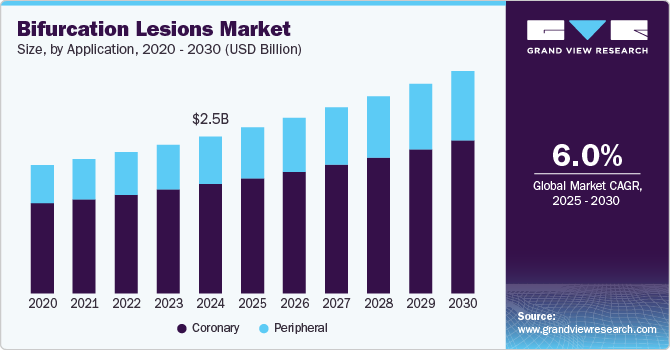
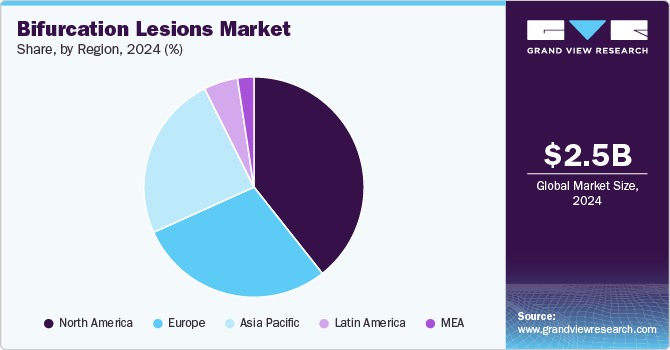
The global bifurcation lesions market size was valued at USD 2.5 billion in 2024 and is projected to grow from USD 2.7 billion in 2026 to USD 3.5 billion by 2030, at a CAGR of 6.0% from 2025 to 2030. North America dominated the market, accounting for a revenue share of 39.3% in 2024. Coronary artery disease, or coronary heart disease (CHD), is when the coronary arteries, liable for delivering blood to the heart, become constricted or obstructed due to plaque accumulation (atherosclerosis).
 Source: Grand View Research, IR Documents, Primary Interviews, Paid DatabasesTo learn more about this report,
 Download Free Sample Report
 Key Market Trends & Insights
- The bifurcation lesions market in the U.S. accounted for the largest market share in North America in 2024
- Based on application, the coronary segment led the market with the largest revenue share of 69.6% in 2024.
Market Size & Forecast
- 2024 Market Size: USD 2.5 Billion
- 2030 Projected Market Size: USD 3.5 Billion
- CAGR (2025-2030): 6.0%
- North America: Largest market in 2024
- Asia Pacific: Fastest growing market
Three ways to get this report
Buy it, customize it, or ask a question.Ask an Analyst
A direct answer, usually in 1 working day
- AccessReport author, directly
- Reply timeWithin 1 working day
- No sales callDirect answer only
- FormatEmail reply
- CostFree, no cost
Get the Full Report
What the study covers
- FormatsPDF · Excel · Dashboard
- Timeline2025–2030 annual, 2024 base
- Coverage20+ countries, 5 regions
- Companies10+ key players profiled
Customize the Report
20% free customization
- IncludeCountries, segments, points
- TailorTo your product definition
- ExtendDeeper competitor detail
- OrA fully bespoke study
- Turnaround5–10 working days
The increasing incidence of congenital heart disease is one of the factors boosting market growth. According to the British Heart Foundation article published in September 2024, it is estimated that more than 250 million people worldwide are living with coronary heart disease (CHD), a leading cause of cardiovascular complications. The bifurcation lesions are a common occurrence in patients with CHD, this large patient population highlights the growing demand for effective treatment options targeting complex coronary blockages. As coronary heart disease continues to affect a significant number of individuals, the need for advanced interventional procedures, including stenting for bifurcation lesions, becomes increasingly critical.
 To learn more about this report, Download Free Sample Report
 The increasing mortality rate from heart disease is a significant driver of market growth, impacting both men and women across diverse demographic groups. According to a CDC report from October 2024, a cardiovascular-related death occurs every 33 seconds. The growing impact of heart disease highlights the urgent need for effective treatments targeting complex cardiovascular issues, such as bifurcation lesions commonly found in patients with coronary artery disease (CAD). With heart disease continuing to rise, there is a greater demand for advanced diagnostic tools and innovative solutions to manage bifurcation lesions, ultimately improving patient outcomes and reducing mortality associated with cardiovascular conditions.
Rising awareness drives the growth of the market. According to the Pan American Health Organization (PAHO) article published in September 2024, the (PAHO) recently organized a webinar that focused on key lessons learned in tackling congenital heart disease (CHD) in Latin America and the Caribbean. The session highlighted successful initiatives designed to reduce the impact of CHDs by enhancing screening, diagnosis, and access to healthcare across the region. Similarly, in the context of the bifurcation lesions industry, there is an increasing emphasis on improving diagnostic techniques, treatment options, and healthcare accessibility to better address complex coronary issues, leading to improved patient outcomes in both developed and emerging markets. Moreover, organizations such as the Children's Heart Foundation and the American Heart Association play a key role in raising awareness about congenital heart diseases (CHDs) and educating the public on their symptoms, risks, and available treatment options. In addition, these organizations support research initiatives focused on improving the diagnosis and treatment of CHD.
Congenital Heart Defects (CHD) Incidence in U.S. (2024)
Incidence
Statistic
Incidence of CHD in Newborns
1% of newborns are born with congenital heart disease (CHD) each year in the U.S.
Prevalence of CHD in the U.S.
More than 2.4 million U.S. children and adults are living with CHD.
Critical CHD in Babies
About 1 in 4 babies with a CHD have a critical CHD, requiring surgery or other procedures in their first year of life.
Genetic Link to CHD
15-20% of CHDs are related to genetic conditions.
Parental CHD and Baby’s Risk
A baby’s risk of having a CHD is at least three times higher if their parent has a CHD.
The aging global population is contributing to a rise in coronary artery disease (CAD) and bifurcation lesions, particularly among older adults who are more prone to cardiovascular conditions. These complex lesions, which occur at the points where coronary arteries split, are becoming increasingly prevalent, highlighting the urgent need for effective treatments. The growing focus on cardiovascular health and advancements in diagnostic technologies have led to earlier and more precise detection of these lesions. This has increased the demand for specialized devices and treatment techniques. The market for bifurcation lesion treatments continues to grow, driven by the need for timely intervention and improved outcomes, particularly within the aging population.
Market Concentration & Characteristics
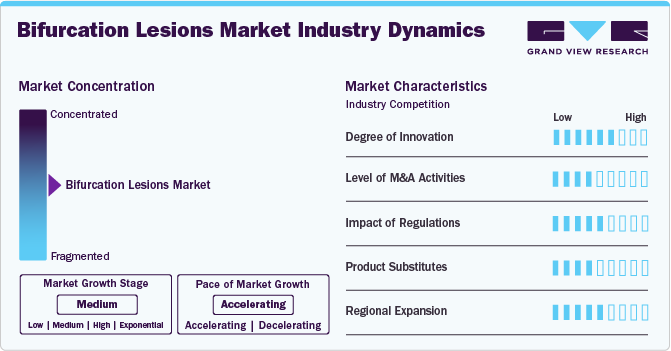
The bifurcation lesions industry is witnessing significant advancements, with companies prioritizing enhancing stent materials, incorporating bioactive elements, and integrating cutting-edge technologies. These advancements improve stent performance, greater biocompatibility, and enhanced procedural outcomes. The development of novel stenting techniques and materials improves the durability and efficacy of treatments and ensures better patient recovery and long-term results in managing complex bifurcation lesions.
Key manufacturers like Boston Scientific Corp., Abbott, and Cardinal Health are consolidating their market positions through strategic mergers and acquisitions. Alongside these efforts, these organizations emphasize key strategies such as innovating product offerings, forming strategic partnerships, and expanding into new geographical markets. These initiatives enable the companies to enhance their market presence and effectively address the increasing demand for bifurcation lesion treatments while also adapting to the evolving needs of the healthcare sector.
 To learn more about this report, Download Free Sample Report
 Regulatory frameworks play a crucial role in the bifurcation lesions industry by setting vital safety, quality, and effectiveness standards. Although rigorous regulations can lengthen the approval process for new products, which may delay market entry and innovation, they are essential in maintaining patient safety and product reliability. These regulations ensure that only high-quality, safe, and biologically compatible stents and devices are introduced into clinical practice, protecting patients from subpar materials and ensuring the effectiveness of treatments for bifurcation lesions.
There are no direct substitutes for bifurcation lesions. However, in certain surgical situations, alternative approaches or technologies may be considered based on the specific clinical requirements. These alternatives may include drug-eluting stents and balloon angioplasty. While these methods can sometimes be used in managing coronary artery disease, they do not replace the need for specialized treatments tailored to bifurcation lesions.
Key players in the bifurcation lesions industry are expanding their presence by entering new markets, forming strategic collaborations with regional distributors, and tailoring their product offerings to meet the distinct healthcare needs of various regions. This approach allows companies to better address the specific requirements of diverse healthcare systems, enhance product accessibility, and improve the availability of advanced medical solutions. Aligning their products with regional demands, these companies strengthen their market presence and drive the adoption of innovative treatments for bifurcation lesions in multiple healthcare environments.
Application Insights
Based on application, the coronary segment led the market with the largest revenue share of 69.6% in 2024, due to increased percutaneous coronary intervention procedures and technological advancements. Coronary refers to the arteries that supply blood, oxygen, and nutrients to the heart muscle, which is critical in maintaining heart function and cardiovascular health. According to the Yale Medicine article published in October 2024, In the U.S., about 900,000 percutaneous coronary interventions (PCIs) are performed annually, highlighting the significant prevalence of coronary artery disease and the growing need for effective treatment options. Bifurcation lesions, which represent a substantial portion of coronary stenoses, pose unique challenges during these procedures. The high volume of PCIs emphasizes the demand for advanced stenting techniques and specialized devices to address these complex lesions.
The peripheral segment is anticipated to grow at the fastest CAGR during the forecast period. The increasing number of peripheral artery disease and technological advancements drives the market's growth. Peripheral refers to areas or structures located away from the central part of the body, typically involving the limbs, such as the arms and legs, and the blood vessels supplying these regions. According to the NCBI article published in June 2024, globally, it is estimated that over 235 million people are affected by peripheral artery disease (PAD), highlighting its widespread prevalence. This condition, which primarily impacts the arteries in the limbs, is closely associated with the occurrence of bifurcation lesions in peripheral vessels. The high prevalence of PAD underscores the growing need for advanced treatment options, including specialized devices and techniques tailored to address bifurcation lesions in peripheral arteries.
Regional Insights
North America bifurcation lesions market dominated with the largest revenue share of 39.3% in 2024. The increasing number of cases of cardiovascular diseases (CVD), the rising number of congenital heart diseases, and technological advancements drive the market's growth. According to an American Heart Association article published in January 2024, cardiovascular disease accounted for 931,578 deaths in the U.S., an increase of nearly 3,000 from the previous year. Furthermore, the age-adjusted death rate for cardiovascular conditions rose by 4.0%, reaching 233.3 per 100,000 individuals. This escalating burden of cardiovascular disease underscores the urgent need for innovative treatment solutions, particularly for managing complex coronary conditions like bifurcation lesions.
 To learn more about this report, Download Free Sample Report
 U.S. Bifurcation Lesions Market Trends
The bifurcation lesions market in the U.S. accounted for the largest market share in North America in 2024. Increased incidence of peripheral artery disease and the rising incidence of CVD among the aging population. According to the CDC article published in May 2024, about 6.5 million individuals aged 40 and older in the United States are affected by Peripheral Artery Disease (PAD). This condition often involves bifurcation lesions in peripheral arteries. The growing prevalence of PAD emphasizes the need for advanced treatment solutions, including those explicitly addressing bifurcation lesions in peripheral arteries. This increased incidence of PAD fuels the demand for effective interventions, thereby driving market growth.
Europe Bifurcation Lesions Market Trends
The bifurcation lesions market in Europe held the second-largest revenue market share in 2024. The high death rate of CVDs is boosting the demand for bifurcation lesions in Europe. According to a WHO article published in May 2024, CVDs are the leading cause of disability and premature death in Europe. They are responsible for over 42.5% of all deaths annually, accounting for approximately 10,000 deaths every day. The high prevalence of cardiovascular diseases (CVDs) in Europe emphasizes the growing need for advanced treatment solutions, particularly for complex conditions such as bifurcation lesions. These lesions, which often result in more complicated procedures and higher risks of complications, require innovative techniques and tools to improve patient outcomes. With the rising burden of CVDs, the demand for effective treatments for bifurcation lesions has risen, prompting the development of more advanced stenting techniques, diagnostic tools, and surgical interventions.
The Germany bifurcation lesions market is anticipated to grow at the fastest CAGR during the forecast period. The rising number of CHD and technological advancements fuel the market's growth. According to the Springer article published in March 2024, with 11,314 deaths attributed to CHD in Germany, it highlights the significant burden of cardiovascular diseases (CVDs) in the country. This stark reality underscores the urgent need for advanced treatment options, particularly for complex conditions like bifurcation lesions. The high mortality rate associated with CHD emphasizes the critical importance of improving clinical outcomes through innovative cardiovascular care approaches. As the number of patients requiring effective treatments for bifurcation lesions increases, the demand for advanced stenting techniques and other interventional solutions in Germany is set to rise, driving market growth in the region.
The bifurcation lesions market in the UK held the second-largest market share in Europe in 2024. The increasing incidence of CHD and technological advancements drives the market's growth. According to the British Heart Foundation article published in September 2024, coronary heart disease (CHD) remains a leading cause of mortality in the UK, contributing to approximately 68,000 deaths annually. This translates to an average of 190 fatalities every day or one death every eight minutes. The high prevalence of CHD highlights the urgent need for effective treatments, particularly for complex conditions such as bifurcation lesions. The growing number of patients requiring advanced care solutions highlights the importance of innovative treatment approaches, such as stenting techniques and interventional therapies, in addressing these challenging conditions.
The French bifurcation lesions market is anticipated to witness at a significant CAGR during the forecast period. The growing number of CVD cases and rising incidence of ischemic heart disease drives the growth of the market. According to the Elsevier B.V. article published in November 2024, in France, ischemic heart disease (IHD) continues to place a substantial burden on public health, with over 242,000 hospitalizations and 31,000 related deaths in 2022. This growing prevalence of cardiovascular conditions, which affects nearly 3 million adults, underscores the increasing demand for effective treatments for complex coronary conditions, such as bifurcation lesions. With an aging population and a rising number of patients requiring advanced interventional therapies, there is a heightened need for innovative solutions in cardiac repair. This includes using advanced stenting techniques and other specialized approaches to treat bifurcation lesions, thereby driving the market growth in France.
Asia Pacific Bifurcation Lesions Market Trends
The bifurcation lesions market in the Asia Pacific is expected to grow at the fastest CAGR during the forecast period. The rising number of CVD cases and increasing R&D activities. Growing geriatric population in the Asia Pacific region. According to the United Nations Economic and Social Commission for Asia and the Pacific, in 2023, the Asia-Pacific region has approximately 697 million people aged 60 years and older, making up about 60% of the global elderly population. This age group is more vulnerable to cardiovascular diseases, and the growing number of older individuals in the region is driving an increased demand for treatments related to bifurcation lesions.
The China bifurcation lesions market accounted for the second-largest share in the Asia Pacific in 2024. The increasing number of surgeries and rising CHD cases drive the market's growth. According to the Chinese Medical Association article published in April 2024, in China, coronary heart disease (CHD) affects around 2 million individuals, with approximately 150,000 new cases diagnosed each year. CHD is the leading cause of mortality among those with congenital disabilities, accounting for nearly 40% of deaths in individuals under 20 years of age. This high incidence emphasizes the growing need for advanced treatments, including those targeting bifurcation lesions, to address the rising cardiovascular disease burden in the country.
The bifurcation lesions market in Japan is anticipated to grow at a significant CAGR during the forecast period. The increased number of CVD procedures and rising CHD cases drive the market's growth. According to the NCBI article published in February 2024, in Japan, a significant number of cardiovascular surgeries, totaling 63,054, are performed annually to address the rising incidence of cardiovascular diseases. This growing surgical demand highlights the need for specialized treatment options, particularly for complex conditions such as bifurcation lesions. With the prevalence of cardiovascular conditions continuing to escalate, the bifurcation lesions industry in Japan is poised for expansion, driven by the demand for advanced interventions that enhance patient outcomes and improve the effectiveness of cardiovascular surgeries.
The India bifurcation lesions market is experiencing significant growth. Growing healthcare expenditures, government initiatives, and the rising CHD cases drive the market's growth. According to the Apollo Hospital article published in September 2024, in India, approximately 150,000 to 200,000 children are born each year with congenital heart disease, contributing to the growing need for advanced cardiac treatments. The prevalence of heart conditions, including complex cases such as bifurcation lesions, increases, and there is a heightened demand for effective interventions and surgical solutions. The rising incidence of congenital and acquired heart diseases in India is expected to drive market growth as healthcare providers seek innovative therapies to improve patient outcomes and address the complexities of heart disease treatment.
Latin America Bifurcation Lesions Market Trends
The bifurcation lesions market in Latin America is growing. The increasing incidence of CHD and a strategic initiative by key players and organizations drive market growth. According to the American College of Cardiology Foundation article published in September 2024, estimates indicate that congenital heart disease is significantly more prevalent in Latin America and the Caribbean, with rates 60% higher than cancer. This condition occurs in approximately eight to 13 cases per 1,000 births across the region. The high incidence of congenital heart disease highlights the increasing demand for advanced cardiovascular treatments, including those for complex conditions like bifurcation lesions. As the need for effective surgical solutions rises, the bifurcation lesions industry in Latin America is expected to experience growth, driven by the demand for innovative therapies and improved patient outcomes in heart disease treatment.
The Brazil bifurcation lesions market is expanding due to several distinct growth drivers. For instance, in September 2023, the Brazilian government and healthcare institutions are taking significant steps to improve cardiovascular care and outcomes. Initiatives like the collaboration between Mount Sinai and the Brazilian Clinical Research Institute aim to advance research and medical education in cardiovascular diseases. These efforts highlight the rising need for cutting-edge treatment options in the country. Brazil continues to tackle the increasing prevalence of cardiovascular conditions, including complex bifurcation lesions. The demand for advanced interventional solutions is expected to grow, driving the demand for the bifurcation lesions industry in Brazil.
MEA Bifurcation Lesions Market Trends
The bifurcation lesions market in MEA is expected to grow at a lucrative CAGR during the forecast period, due to the increasing incidence of CVD diseases, rising CHD incidence, and the growing use of advanced medical technologies in the region. According to the Frontiers Media S.A. article published in 2024, in the Middle East and Africa (MEA) region, congenital heart disease (CHD) impacts around 1% of live births, resulting in approximately 1.5 million new cases yearly. The region faces distinctive challenges, including high rates of consanguinity and disparities in healthcare access, which contribute to the complexity of diagnosing and treating cardiovascular conditions. The prevalence of cardiovascular diseases, including bifurcation lesions, continues to rise, and there is an increasing demand for advanced interventional solutions and treatments to address these conditions. This growing need drives the expansion of the bifurcation lesions industry across the MEA region.
The Saudi Arabia bifurcation lesions market is anticipated to grow at the fastest CAGR of 5.0% over the forecast period. The rising number of surgeries and increasing incidence of CVD cases drive the market's growth. According to the article published by BMC Cardiovascular Diseases in March 2024, in May 2024, 1.6% of individuals aged 15 and older in Saudi Arabia were affected by cardiovascular diseases (CVD), including heart conditions and related disorders. This prevalence highlights the growing need for advanced healthcare solutions, including bifurcation lesions.
Key Bifurcation Lesions Company Insights
Some of the key players operating in the industry include Cook Group, Coloplast Group, and Smith & Nephew. The company’s key strategies include understanding the strengths and weaknesses of major market participants, anticipating future market trends, opportunities, and challenges, and making proactive decisions based on insights into emerging technologies and changing consumer preferences. For instance, Aziyo Biologics and Lemaitre are emerging players in bifurcation lesions.
Key Bifurcation Lesions Companies:
The following are the leading companies in the bifurcation lesions market. These companies collectively hold the largest market share and dictate industry trends.
- Boston Scientific Corp.
- Abbott
- Cardinal Health
- Medtronic
- C. R. Bard, Inc.
- Johnson & Johnson Services, Inc.
- Spectranetics
- Terumo Medical Corp.
- Tryton Medical Inc.
Recent Developments
-
In April 2024, Johnson & Johnson revealed an agreement to acquire Shockwave Medical, Inc. for USD 335 for each share in cash, totaling an enterprise value of approximately USD 13.1 billion, including cash. This deal, approved by both companies’ boards, strengthens J&J MedTech's presence in cardiovascular intervention and supports its expansion into high-growth markets.
-
In October 2024, Johnson & Johnson acquired V-Wave Ltd. for USD 1.7 billion. V-Wave, a privately held company specializing in advanced heart failure treatments, will now be integrated into Johnson & Johnson MedTech’s portfolio.
-
In February 2023, Abbott agreed to acquire Cardiovascular Systems, Inc. (CSI), a leading medical device company known for its cutting-edge atherectomy system to treat peripheral and coronary artery diseases. CSI shareholders will receive USD 20 per common share as part of the deal, valuing the transaction at approximately USD 890 million. This acquisition underscores Abbott’s commitment to enhancing its cardiovascular portfolio with advanced technologies to improve patient outcomes in artery disease treatments.
-
In September 2022, Medtronic gained FDA consent for its Resolute Onyx drug-eluting stents (DES) and Onyx Frontier to treat non-left main bifurcation lesions. This milestone marks Medtronic as the first company to offer a streamlined approach for treating these complex lesions using a single stent in a provisional bifurcation stenting technique. The approval is supported by clinical evidence demonstrating favorable patient outcomes and low complication rates with these stents.
Bifurcation Lesions Market Report Scope
Report Attribute
Details
Market size in 2024
USD 2.5 billion
Estimated market size in 2026
USD 2.7 billion
Projected market size by 2030
USD 3.5 billion
Growth rate
CAGR of 6.0% from 2025 to 2030
Base year for estimation
2024
Historical data
2018 - 2023
Forecast period
2025 - 2030
Report updated
December 2024
Quantitative units
Revenue in USD million/billion and CAGR from 2025 to 2030
Report coverage
Revenue forecast, company ranking, competitive landscape, growth factors, and trends
Segments covered
Application, region
Regional scope
North America; Europe; Asia Pacific; Latin America; and MEA
Country scope
U.S.; Mexico; Canada; UK; Germany; France; Italy; Spain; Denmark; Sweden; Norway; Japan; China; India; Australia; Thailand; South Korea; Brazil; Argentina; South Africa; Saudi Arabia; UAE; Kuwait.
Key companies profiled
Boston Scientific Corp.; Abbott; Cardinal Health; Medtronic; C. R. Bard, Inc.; Johnson & Johnson Services, Inc.; Spectranetics; Terumo Medical Corp.; Tryton Medical Inc.
Customization scope
Free report customization (equivalent up to 8 analysts working days) with purchase. Addition or alteration to country, regional & segment scope.
Pricing and purchase options
Avail customized purchase options to meet your exact research needs. Explore purchase options
Global Bifurcation Lesions Market Report Segmentation
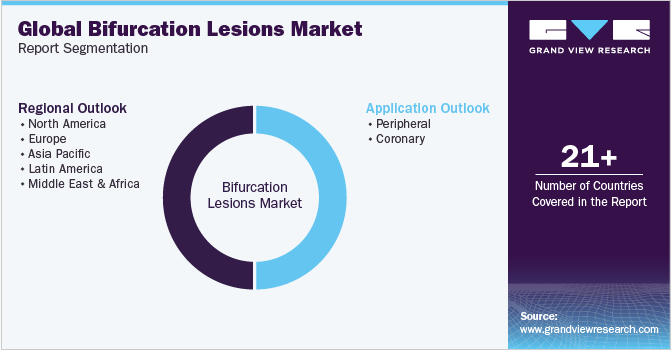
This report forecasts revenue growth at global, regional & country levels and analyzes the industry trends in each sub-segment from 2018 to 2030. For this study, Grand View Research has segmented the global bifurcation lesions market report based on application and region:
 To learn more about this report, Download Free Sample Report
 -
Application Outlook (Revenue, USD Million, 2018 - 2030)
-
Coronary
-
Peripheral
-
-
Regional Outlook (Revenue, USD Million, 2018 - 2030)
-
North America
-
U.S.
-
Canada
-
Mexico
-
-
Europe
-
UK
-
Germany
-
France
-
Italy
-
Spain
-
Denmark
-
Sweden
-
Norway
-
-
Asia Pacific
-
Japan
-
China
-
India
-
South Korea
-
Australia
-
Thailand
-
-
Latin America
-
Brazil
-
Argentina
-
-
Middle East & Africa
-
South Africa
-
Saudi Arabia
-
UAE
-
Kuwait
-
-
Frequently Asked Questions About This Report
North America dominated the bifurcation lesions market in 2024 with 39.3% share. This is attributable to the increasing demand for drug-eluting stents, the commercialization of devices for bifurcation lesions, and the local presence of major market players.
Key factors that are driving the market growth include commercialization of innovative devices, an increase in insurance coverage for bifurcation lesion procedures, and improving imaging modalities.
The global bifurcation lesions market size was valued at USD 2.5 billion in 2024 and is estimated at USD 2.7 billion for 2026.
Some key players operating in the bifurcation lesions market include Abbott; Boston Scientific Corporation; Cardinal Health; Medtronic; Johnson & Johnson Services, Inc.; C. R. Bard, Inc.; Spectranetics; and Terumo Medical Corporation.
The global bifurcation lesions market is expected to grow at a CAGR of 6.0% from 2025 to 2030, reaching USD 3.5 billion by 2030.
About the Author(s)
Medical Devices Research Team
Healthcare · Medical DevicesThis report was authored by the medical devices research team at Grand View Research - comprising two research analysts, one senior research analyst, and one industry expert - with specialized expertise in the medical devices segment of the healthcare industry. All findings are based on proprietary healthcare databases, executive interviews, and regulatory analysis, subject to internal peer review prior to publication.
Last Updated:
Speak to Analyst

Customize this report to your needs - add regions, segments, or data points, with 20% free customization.
Or view our licence options:


ISO 9001:2015 & 27001:2022 Certified
We are GDPR and CCPA compliant! Your transaction & personal information is safe and secure. For more details, please read our privacy policy.


