
- Home
- »
- Clinical Diagnostics
- »
-
Blood Group Typing Market Size & Share Report, 2026-2033GVR Report cover

Blood Group Typing Market (2026 - 2033)
Size, Share & Trends Analysis Report By Product (Reagents & Consumables, Instruments, Services), By Techniques, By Test Type, By Application (Blood Transfusions, Organ Transplants), By End Use, By Region, And Segment Forecasts
Market Size, 2025
$2.3BMarket Estimate, 2026
$2.5BMarket Forecast, 2033
$5.6BCAGR, 2026–2033
12.0%Blood Group Typing Market Summary
The global blood group typing market size was valued at USD 2.3 billion in 2025 and is projected to grow from USD 2.5 billion in 2026 to USD 5.6 billion by 2033, at a CAGR of 12.0% from 2026 to 2033. North America dominated the market, accounting for a revenue share of 44.2% in 2025. Market growth is driven by the rising burden of chronic diseases such as anemia, cancer, and blood disorders, which increases the need for frequent transfusions.
 Source: Grand View Research, IR Documents, Primary Interviews, Paid DatabasesTo learn more about this report,
 Download Free Sample Report
 Key Market Trends & Insights
- By product: Reagents & consumables segment held the largest market share of 72.2% in 2025.
- By techniques: Assay-based techniques and microarray-based held the highest market share in 2025.
- By test type: Antibody screening segment held the largest market share of 38.9% in 2025.
- By application: Blood transfusions segment held the highest market share in 2025.
- By end use: Diagnostic laboratories segment held the highest market share in 2025.
Key Market Trends & Insights
- Largest regional market: North America (44.2% revenue share, 2025)
- Fastest-growing regional market: Asia Pacific (highest CAGR, 2026-2033)
- By country: The U.S. held the largest market share in 2025.
Market Size & Forecast
- Market size in 2025: USD 2.3 Billion
- Estimated market size in 2026: USD 2.5 Billion
- Projected market size by 2033: USD 5.6 Billion
- CAGR (2026-2033): 12.0%
Three ways to get this report
Buy it, customize it, or ask a question.Ask an Analyst
Analyst response in 1 business day
- AccessReport author, directly
- Reply timeWithin 1 working day
- No sales callDirect answer only
- FormatEmail reply
- CostFree, no cost
Get the Full Report
What the study covers
- FormatsPDF · Excel · Dashboard
- Timeline2026–2033 annual, 2025 base
- Coverage20+ countries, 5 regions
- Companies10+ key players profiled
Customize the Report
20% free customization
- IncludeCountries, segments, points
- TailorTo your product definition
- ExtendDeeper competitor detail
- OrA fully bespoke study
- Turnaround5–10 working days
In addition, the growing number of surgical procedures, organ transplants, and trauma cases is further driving demand for accurate blood compatibility testing. The high burden of chronic diseases such as anemia, cancer, and hematological disorders is a significant driver of the blood group typing market, as these conditions often require frequent blood transfusions. For instance, according to a World Health Organization report published in 2025, anemia affects nearly 30% of women of reproductive age and around 40% of children under five globally, highlighting a substantial patient pool requiring transfusion support. Similarly, increasing cancer incidence and blood disorders such as thalassemia and sickle cell disease are contributing to repeated transfusion needs. This growing transfusion volume necessitates accurate ABO and Rh typing to ensure compatibility and prevent adverse reactions. Consequently, the rising prevalence of these chronic conditions is significantly accelerating demand for advanced blood group typing solutions worldwide.The growing number of surgical procedures, organ transplants, and trauma cases is driving the demand for accurate blood compatibility testing, thereby supporting the growth of the blood group typing market. For instance, according to the World Health Organization (December 2023), around 1.2 million people die each year due to road traffic accidents, while many sustain non-fatal injuries and many require emergency transfusions. In addition, the number of organ transplant procedures has increased globally. According to an article published in PubMed in 2026, 173,727 solid organ transplants were performed worldwide in 2024, and these statistics were reported by the Global Observatory on Donation and Transplantation, an initiative of the WHO. These clinical situations require precise ABO and Rh typing and cross-matching to ensure patient safety. As the volume of surgeries and emergency care continues to rise, the need for reliable blood group typing solutions is also increasing.
 To learn more about this report, Download Free Sample Report
 Expanding blood donation programs and increasing transfusion volumes are contributing to the demand for routine blood group typing and compatibility testing. For instance, according to the statistics published by the World Health Organization in May 2025, over 118.5 million blood donations are collected globally each year, all of which require mandatory blood grouping and screening before use. In addition, advancements in molecular and automated typing technologies, including PCR-based genotyping, are improving accuracy and reducing turnaround time. The growing use of blood group typing in prenatal testing for diagnosing hemolytic disease of the newborn (HDN), along with stricter regulatory standards for transfusion safety, is further supporting the adoption of advanced typing solutions, thereby supporting overall market expansion. However, stringent approval processes and varying regulatory frameworks across regions can delay product launches and market entry.
Market Dynamics
The increasing demand for safe blood transfusions is a major driver of the blood group typing market. Blood group typing plays a critical role in ensuring compatibility between donors and recipients, helping prevent life-threatening transfusion reactions and improving patient safety. Rising cases of trauma, surgical procedures, cancer treatments, organ transplantation, pregnancy-related complications, anemia, and inherited blood disorders such as sickle cell disease and thalassemia are increasing the global need for blood transfusions, thereby driving demand for accurate ABO, Rh, and antigen typing technologies. According to a World Health Organization study published in May 2025, more than 118.5 million blood donations are collected each year globally, and every donated blood unit requires mandatory blood grouping and compatibility testing before transfusion, highlighting the essential role of blood typing systems in healthcare.
The growing focus on transfusion safety and blood availability is further accelerating market growth. Healthcare systems are increasingly strengthening hemovigilance programs and transfusion screening practices to reduce the risk of incompatible transfusions and transfusion-transmitted complications. In June 2025, the UK’s NHS Blood and Transplant warned of a shortage of more than 200,000 blood donors, emphasizing rising transfusion demand driven by cancer care, hereditary blood disorders, and emergency treatments. This growing reliance on blood transfusion services increases the need for efficient blood grouping and compatibility testing across hospitals and blood banks.
Recent developments also reinforce this trend. In May 2026, healthcare authorities in England reported a 132% increase in demand for HbS-negative blood over the last decade to support patients with sickle cell disease, with annual requirements exceeding 191,000 blood units. Since patients with sickle cell disease often require repeated, closely matched transfusions, the need for advanced blood typing and extended antigen matching has increased significantly to ensure safe, compatible transfusions.
The high cost of advanced molecular typing technologies is a major restraint in the blood group typing market, as it limits the widespread adoption of highly accurate genotyping methods across hospitals, blood banks, and diagnostic laboratories. Molecular blood typing technologies, such as polymerase chain reaction (PCR)-based assays, microarray platforms, and next-generation sequencing (NGS), offer superior precision for identifying rare blood group antigens and resolving complex transfusion cases. However, these technologies require substantial investments in specialized instruments, proprietary reagents, software systems, and trained laboratory personnel, making them considerably more expensive than conventional serological blood typing methods. This cost burden is particularly challenging for small and mid-sized healthcare facilities and blood banks operating under constrained budgets, especially in low- and middle-income regions.
The growing complexity of molecular blood typing workflows further adds to operational expenses. In February 2026, a review published in Transfusion and Apheresis Science highlighted that high-throughput blood group molecular typing technologies based on microarray, short-read, and long-read next-generation sequencing platforms require robust computational infrastructure, advanced bioinformatics tools, and specialized laboratory validation processes to support large-scale donor and patient typing. These additional software, storage, and interpretation requirements significantly increase implementation costs for blood collection centers and transfusion laboratories, limiting broader adoption of advanced molecular typing technologies.
Recent technological developments also illustrate the financial challenge associated with advanced blood typing systems. In February 2026, a review published in Clinical Chemistry emphasized that newer high-throughput molecular blood group genotyping platforms, including DNA microarrays and NGS-based antigen-profiling systems, enable highly accurate and comprehensive antigen prediction but incur higher infrastructure and workflow costs than traditional serology-based methods. As a result, many healthcare providers continue to rely on lower-cost serological techniques for routine blood typing, slowing the penetration of advanced molecular platforms in routine clinical practice.
The growing adoption of molecular and automated blood typing technologies presents a significant growth opportunity for the blood group typing market. Healthcare providers and blood banks are increasingly adopting automated immunohematology analyzers, PCR-based genotyping, microarray platforms, and next-generation sequencing (NGS) to improve transfusion safety, reduce manual errors, and shorten turnaround times. Unlike conventional serological methods, molecular blood typing enables more precise identification of rare blood group antigens and weak antigen variants, supporting safer transfusions, organ transplantation, and the management of patients who require repeated transfusions, such as those with sickle cell disease and thalassemia. The increasing demand for high-throughput testing and digital laboratory workflows is further accelerating the adoption of automated blood typing systems across hospitals and transfusion centers.
Recent product innovations further highlight this opportunity. In June 2025, diagnostics company Devyser launched Devyser Genomic Blood Typing, a next-generation sequencing (NGS)-based assay designed to enable comprehensive genetic blood typing for red blood cell (RBC), human platelet antigen (HPA), and human neutrophil antigen (HNA) systems through a single workflow. The platform was developed to simplify complex blood group analysis and improve accuracy in transfusion and transplantation research through software-guided interpretation and high-resolution genotyping. This launch reflects increasing industry investment in molecular blood typing solutions to overcome the limitations of traditional serological testing, particularly in identifying rare blood groups and complex antigen profiles.
The expansion of automated blood typing systems is also strengthening market opportunities. In January 2026, new FDA-cleared Class II automated blood grouping systems were introduced for immunohematology workflows, enabling automated ABO/Rh typing, antigen phenotyping, antibody screening, and compatibility testing with integrated sample handling and software-based interpretation. These systems improve laboratory efficiency, reduce manual intervention, and support high-throughput blood bank operations, increasing the attractiveness of automated blood typing technologies among healthcare providers and transfusion centers.
Market Concentration & Characteristics
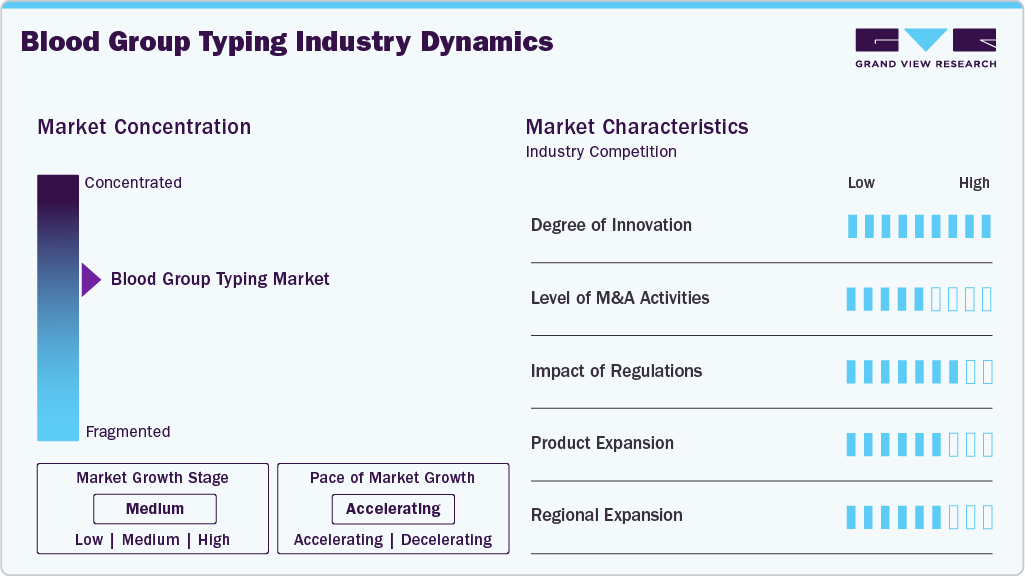
The blood group typing market is experiencing a high degree of innovation, driven by rapid technological advancements and evolving clinical requirements. There is a clear shift toward molecular and genotyping techniques, including PCR and next-generation sequencing (NGS), enabling the precise identification of rare blood antigens and improving transfusion safety. Automation and artificial intelligence are increasingly being integrated into laboratory workflows to enhance efficiency, reduce manual errors, and support complex data interpretation. In addition, the development of lab-on-a-chip and point-of-care devices is enabling rapid blood typing in emergency settings. For instance, in May 2024, Thermo Fisher Scientific launched the Applied Biosystems Axiom BloodGenomiX Array and Reporter Software, a high-throughput solution for blood group genotyping. The platform detects over 260 antigens across 38 blood group systems in a single assay. This DNA-based approach enables identification of rare blood groups with high accuracy and integrates automated analysis to improve workflow efficiency and transfusion safety.
The blood group typing industry is witnessing a moderate to high level of M&A activity, driven by the need to expand technological capabilities and strengthen product portfolios. Leading players are actively engaging in strategic deals to integrate molecular diagnostics and automation into transfusion medicine. For instance, in January 2025, Haemonetics Corporation agreed to sell its whole blood assets to GVS S.p.A for USD 67.1 million, including an upfront payment of USD 44.6 million and up to USD 22.5 million in contingent earn-outs. The deal includes the transfer of its whole blood collection, processing, and filtration portfolio, along with its manufacturing facility in Covina, California.
 To learn more about this report, Download Free Sample Report
 Regulations significantly influence the blood group typing market by ensuring safety, quality, and standardization in transfusion practices. For instance, according to the World Health Organization, blood and blood components are regulated as essential biological products requiring strict quality control. Mandatory screening of donated blood for infectious diseases such as HIV and hepatitis further drives the need for accurate typing and compatibility testing. In countries such as India, regulatory bodies mandate licensing and adherence to national standards for blood banks. While these regulations enhance patient safety and reduce transfusion risks, they also increase compliance costs and operational complexity for laboratories and healthcare providers.
The blood group typing market is expanding across regions, supported by improving healthcare infrastructure and increasing access to diagnostic services in emerging economies. Countries in Asia Pacific, Latin America, and the Middle East are witnessing higher investments in blood banks, transfusion services, and laboratory capabilities. For instance, government initiatives in countries such as India and China are strengthening blood donation systems and expanding diagnostic networks, increasing the demand for blood typing solutions. In addition, market players are focusing on expanding their presence through partnerships, distribution agreements, and participation in international healthcare events. This regional expansion is improving accessibility to advanced blood typing technologies and supporting overall market growth.
Product Insights
The reagents & consumables segment dominated the blood group typing market, accounting for a 72.2% revenue share in 2025, supported by recurring requirements for reagents and disposable testing materials across routine and specialized blood-group testing workflows. Blood-grouping reagents, antisera, reagent red blood cells, gel cards, cartridges, controls, and other consumables are repeatedly used for ABO/Rh typing, antibody screening, antigen characterization, and compatibility testing, creating a recurring procurement and replenishment cycle across blood banks, hospitals, donor centers, and diagnostic laboratories. In August 2025, the U.S. FDA approved Immucor's supplemental applications covering Reagent Red Blood Cells and Blood Grouping Reagent, Anti-D (Monoclonal Blend), supporting ABO serum grouping, unexpected antibody detection and identification, and Anti-D testing across manual and automated workflows. The regulatory approval reinforces the continued utilization and availability of blood-grouping reagents for routine and specialized immunohematology testing, while sustained transfusion activity, donor testing, and adoption of automated systems are expected to support recurring consumable demand and maintain the segment's leading position over the forecast period.
The Services segment is projected to register the fastest CAGR of 14.3% over the forecast period, supported by increasing utilization of specialized reference testing, outsourced blood-group characterization, and molecular genotyping services. Healthcare providers and blood services increasingly rely on specialized laboratories for complex blood-group investigations that require advanced testing infrastructure, molecular expertise, and interpretation capabilities beyond routine serological workflows. For instance, in October 2025, NHS Blood and Transplant extended the NHS England-funded blood-group genotyping program for patients with haemoglobinopathies, providing access to specialized genotyping services through March 31, 2026. The program expands access to centralized molecular testing for patients with complex transfusion requirements and demonstrates the role of specialized reference services in supporting advanced blood-group characterization. Such initiatives are expected to strengthen utilization of outsourced and centralized testing services and support the Services segment's position as the fastest-growing product category.
Techniques Insights
Assay-based techniques dominated the Blood Group Typing Market in 2025, supported by their established clinical utility, broad application across routine immunohematology workflows, and compatibility with standardized serological testing platforms. These techniques remain widely used for ABO/Rh typing, antigen phenotyping, antibody screening, and compatibility testing across blood banks, hospitals, donor centers, and transfusion services. For instance, in June 2025, the U.S. FDA cleared Grifols' Erytra automated blood-grouping and antibody-testing system, which uses DG Gel 8 card technology to perform blood grouping, antigen typing, antibody screening and identification, compatibility testing, and direct antiglobulin testing. The regulatory clearance demonstrates continued adoption of standardized gel-based assay workflows and reinforces the role of established serological technologies as the core testing approach within the market.
PCR-based and Microarray-based techniques are anticipated to witness strong growth over the forecast period, supported by increasing adoption of molecular blood-group genotyping, demand for extended antigen characterization, and the need to identify rare or variant blood-group profiles that may not be fully resolved through conventional serological methods. PCR-based approaches enable targeted characterization of clinically relevant blood-group genes and variants, while microarray platforms provide multiplex analysis of multiple antigen systems within a single workflow. For instance, in 2025, researchers at Oslo University Hospital applied a multiplex PCR- and hybridization-based assay to genotype 92,796 red blood cell antigens across 2,508 blood donors, supporting identification of antigen-negative donors and blood-group variants for extended donor profiling. In parallel, the Universal Blood Donor Typing (UBDT_PC1) microarray was evaluated in 6,946 ancestrally diverse participants, demonstrating more than 99.9% reproducibility across laboratories for high-throughput characterization of transfusion-relevant antigens. These developments demonstrate the expanding application of PCR and microarray technologies in donor genotyping, extended antigen profiling, and rare-donor identification, supporting strong growth of both techniques.
Test Type Insights
The antibody screening segment dominated the market accounting for 38.9% revenue share in 2025, due to its essential role in detecting unexpected antibodies that may lead to transfusion reactions. This test is routinely performed before blood transfusions, surgeries, and during pregnancy to ensure compatibility and patient safety. For instance, in April 2026, advanced automated blood screening systems were introduced at AIIMS Mangalagiri to enhance detection accuracy and reduce turnaround time. Additionally, increasing adoption of automated immunohematology analyzers, rising transfusion volumes, and growing focus on transfusion safety are further contributing to the sustained growth of the antibody screening segment.
The HLA typing segment is projected to grow at a CAGR of 13.8% over the forecast period, driven by the increasing number of organ and stem cell transplants, which require precise human leukocyte antigen matching to prevent rejection. Rising awareness of transplant compatibility and advancements in molecular typing techniques, including PCR and next-generation sequencing, are improving accuracy and outcomes. Additionally, growing adoption of HLA typing in disease association studies and personalized medicine is supporting segment growth. Increasing investments in transplant infrastructure and expanding donor registries globally are further contributing to the rising demand for HLA typing services.
Application Insights
The diagnostic testing segment dominated the Blood Group Typing Market, supported by the broad requirement for accurate blood-group determination, confirmatory testing, and resolution of complex or discrepant blood-group profiles across clinical laboratory workflows. Diagnostic laboratories perform routine and specialized testing for patients and transfusion services, including ABO/Rh typing, antibody investigations, extended antigen characterization, and molecular confirmation when conventional serological results are inconclusive. For instance, in 2025, researchers at Manipal Academy of Higher Education reported the molecular characterization of a rare Bombay/para-Bombay blood-group phenotype after routine column-agglutination testing produced an atypical ABO profile. The investigators subsequently applied an in-house genotyping panel covering 45 blood-group systems and sequencing of the ABO, FUT1, and FUT2 genes to resolve the patient's blood-group status. The case demonstrates the role of diagnostic testing in resolving complex blood-group discrepancies and supports continued demand for specialized molecular and serological testing capabilities within diagnostic laboratory workflows.
Organ transplantation is expected to witness the fastest CAGR of 14.1% over the forecast period, supported by the growing need for precise donor-recipient compatibility assessment and expanded use of blood-group typing in transplantation workflows. ABO and Rh typing, along with antibody and compatibility assessment, are important for evaluating donor and recipient blood-group status before transplantation and managing transfusion requirements associated with transplant procedures. The increasing adoption of molecular and high-resolution typing approaches is further enabling more detailed characterization in complex cases. For instance, in 2025, researchers developed a rapid ABO genotyping platform for transplantation and transfusion medicine that demonstrated 100% concordance with serologic phenotypes and Sanger sequencing across 89 routine transplant samples, while also resolving 79% of blood-bank problem samples. This demonstrates the application of advanced blood-group characterization in transplantation workflows and supports the strong growth outlook for the segment.
End use Insights
Diagnostic laboratories accounted for the largest revenue share of the blood group typing market in 2025, supported by their broad role in routine, confirmatory, and specialized blood-group testing for patients and transfusion services. These laboratories perform ABO/Rh typing, antibody investigations, extended antigen characterization, and molecular testing to resolve complex or discrepant blood-group profiles. For instance, in April 2025, researchers at the Interregional Blood Transfusion SRC in Switzerland investigated five samples referred to an immunohematology reference laboratory because of inconclusive or discrepant ABO serology and identified five previously unreported ABO alleles through combined serological testing, SSP-PCR, and sequencing. The study demonstrates the role of specialized diagnostic laboratories in resolving atypical blood-group findings through integrated serological and molecular testing. The expanding need for confirmatory testing, rare-variant identification, and specialized blood-group characterization is expected to sustain the leading revenue position of diagnostic laboratories over the forecast period.
 To learn more about this report, Download Free Sample Report
 Blood Banks are expected to register the fastest CAGR over the forecast period, supported by sustained blood-collection activity, increasing requirements for comprehensive donor characterization, and growing adoption of molecular and automated blood-group typing technologies. Blood banks are expanding testing beyond routine ABO/Rh determination to include extended antigen profiling and molecular genotyping, particularly to identify rare donors and improve the availability of compatible blood units for patients with complex or recurrent transfusion requirements. For instance, in July 2025, NHS Blood and Transplant reported that 77,000 blood donors had undergone DNA-based blood-group genotyping through the STRIDES NIHR BioResource study, covering 52 antigens across 16 blood-group systems. The program identified dozens of donors with rare blood types and is expected to strengthen the availability of precisely characterized blood units for precision-matched transfusion. This expansion of donor genotyping demonstrates the increasing integration of advanced blood-group characterization within blood-bank operations and supports the segment's strong growth outlook.
Regional Insights
North America blood group typing market dominated the global market and accounted for 44.2% share in 2025 due to advanced healthcare infrastructure, high adoption of automated and molecular diagnostics, and strong regulatory frameworks. The region benefits from a well-established network of blood banks and high awareness of transfusion safety. The increasing prevalence of chronic diseases, such as cancer and blood disorders, continues to drive transfusion demand. Additionally, technological advancements, including molecular typing and automation, are widely adopted across laboratories. The presence of key players such as Thermo Fisher Scientific and Bio-Rad Laboratories further supports market growth. Favorable reimbursement policies and continuous investments in healthcare innovation also contribute to sustained demand for advanced blood typing solutions.
 To learn more about this report, Download Free Sample Report
 U.S. Blood Group Typing Market Trends
The blood group typing industry in the U.S. represents the largest share in North America, driven by high healthcare spending and strong regulatory oversight. The country performs a large number of surgeries, transplants, and transfusions annually, increasing the demand for accurate blood typing. According to the American Red Cross, millions of blood units are collected each year, all of which require mandatory typing and screening. The U.S. also leads in adopting molecular typing and automation technologies. Additionally, the presence of advanced research institutions and diagnostic companies supports continuous innovation in transfusion medicine, further strengthening the market landscape.
Europe Blood Group Typing Market Trends
Europe represents a mature blood group typing industry characterized by strong regulatory standards and widespread adoption of advanced transfusion practices. Countries across the region emphasize blood safety and quality, supported by well-established healthcare systems and national blood services. Increasing demand for blood due to aging populations and rising chronic disease prevalence is contributing to market growth. The adoption of automated analyzers and molecular typing methods is increasing across laboratories. Regional organizations such as the European Blood Alliance promote best practices in blood transfusion and donor management, further supporting market expansion. Continuous focus on research and innovation also enhances the adoption of advanced blood typing technologies.
The blood group typing market in UK is supported by a centralized and highly regulated healthcare system. The NHS Blood and Transplant plays a key role in managing blood donation, testing, and distribution across the country. Increasing demand for transfusions due to surgeries, cancer treatments, and chronic diseases is driving the need for accurate blood typing. The UK is also adopting advanced technologies, including automated systems and molecular typing, to improve efficiency and safety. Strong regulatory oversight ensures adherence to high-quality standards, while ongoing investments in healthcare infrastructure support the adoption of innovative diagnostic solutions.
The blood group typing market in Germany is growing over the forecast period, driven by advanced healthcare infrastructure and strong emphasis on diagnostic quality. The country has a well-developed network of hospitals and blood banks, supporting high volumes of blood collection and transfusion. Increasing adoption of automated and molecular blood typing technologies is enhancing diagnostic accuracy and efficiency. Germany also benefits from strong regulatory compliance and healthcare funding. Organizations such as the German Red Cross play a significant role in blood collection and transfusion services. The presence of established diagnostic companies further contributes to technological advancements and market growth.
Asia Pacific Blood Group Typing Market Trends
Asia Pacific blood group typing industry is experiencing rapid growth due to expanding healthcare infrastructure, rising population, and increasing awareness of blood donation. Countries such as India and China are witnessing growing demand for transfusions owing to higher incidence of chronic diseases and trauma cases. Government initiatives aimed at improving blood bank networks and diagnostic capabilities are supporting market expansion. Additionally, increasing adoption of automated and molecular typing technologies is enhancing testing efficiency. The region also benefits from a large patient pool and improved access to healthcare services, making it a key growth area for market players.
The blood group typing market in Japan is driven by advanced healthcare systems and a rapidly aging population, which increases the demand for transfusions. The country emphasizes high standards for blood safety and quality, leading to widespread adoption of advanced diagnostic technologies. Organizations such as the Japanese Red Cross Society manage blood donation and transfusion services efficiently. Japan is also at the forefront of adopting automation and molecular typing methods, ensuring accurate and rapid testing. Continuous technological innovation and strong regulatory frameworks support the steady growth of the market.
The blood group typing market in China is witnessing significant growth due to expanding healthcare infrastructure and increasing government focus on improving diagnostic services. Rising incidence of chronic diseases and increasing surgical procedures are driving transfusion demand. The country is also strengthening its blood donation systems and regulatory standards. Increasing adoption of automated and molecular typing technologies is improving testing accuracy and efficiency. Additionally, domestic and international companies are expanding their presence in China to capitalize on growing opportunities, supported by the country’s large population and improving healthcare access.
Latin America Blood Group Typing Market Trends
Latin America blood group typing industry is experiencing gradual growth, supported by improving healthcare systems and increasing awareness of blood donation. Countries such as Brazil and Mexico are investing in strengthening blood bank infrastructure and transfusion services. Rising prevalence of chronic diseases and trauma cases is increasing the demand for blood typing. However, limited access to advanced technologies in some regions remains a challenge. Governments and healthcare organizations are focusing on improving diagnostic capabilities and ensuring safe transfusion practices, which are expected to support market growth over time.
Middle East & Africa Blood Group Typing Market Trends
The MEA blood group typing industry is growing due to improving healthcare infrastructure and increasing investment in diagnostic services. Countries in the Middle East are focusing on modernizing blood banks and adopting advanced technologies, while Africa is witnessing gradual improvements in transfusion services. Rising incidence of chronic diseases and trauma cases is driving demand for blood typing. Additionally, initiatives by organizations such as the World Health Organization to improve blood safety and donation practices are supporting market development. Despite challenges such as limited resources in some regions, ongoing investments are expected to enhance market growth.
Key Blood Group Typing Company Insights
The blood group typing market is moderately fragmented, with the presence of both multinational corporations and regional players competing across product segments. Despite fragmentation, competition remains intense due to ongoing technological advancements and increasing demand for accurate transfusion diagnostics. Key companies operating in this market include Grifols S.A., Merck KGaA, Bio-Rad Laboratories, Inc., Immucor, Inc., Novacyt Group, Danaher Corporation, Agena Bioscience, Inc., Ortho Clinical Diagnostics, and Quotient, Ltd. These players focus on product innovation, automation, and strategic collaborations to strengthen their market position and expand global reach.
Key Blood Group Typing Companies
The following key companies have been profiled for this study on the blood group typing market.
-
Grifols S.A.
-
Merck KGaA
-
Bio-Rad Laboratories, Inc.
-
Immucor, Inc
-
Novacyt Group
-
Danaher Corporation
-
Agena Bioscience, Inc.
-
Ortho Clinical Diagnostics
-
Quotient, Ltd.
Competitive Benchmarking
Operating Strategies
Competitive Edge
Weaknesses
Mature Players: Danaher Corporation
- Mature players focus on portfolio diversification, automation, global expansion, and acquisitions to strengthen market leadership. They invest heavily in R&D, integrate molecular and serological typing platforms, establish long-term hospital and blood bank contracts, and emphasize regulatory compliance to maintain competitive positioning.
- Established players benefit from strong brand recognition, extensive distribution channels, broad product portfolios, and robust regulatory expertise. Their large installed base, recurring consumables revenue, and ability to offer integrated blood typing solutions provide strong customer loyalty and sustained competitive advantages across global markets.
- Matured companies may experience slower innovation cycles, organizational complexity, and high operational costs. Dependence on legacy systems can reduce adaptability to emerging molecular technologies. Premium pricing strategies may also limit adoption in cost-sensitive markets, creating opportunities for agile and lower-cost competitors.
Emerging Players: Quotient, Ltd.
- Emerging players focus on niche innovation, molecular typing technologies, automation, and cost-efficient diagnostic platforms to gain market share. They commonly pursue partnerships with hospitals, blood banks, and research institutes while expanding geographically through regulatory approvals and distributor collaborations to accelerate commercialization and technology adoption.
- Emerging companies often possess greater flexibility, faster innovation cycles, and specialization in advanced molecular genotyping, automation, and rare antigen detection. Their ability to develop compact, software-integrated, and cost-effective solutions helps address unmet needs in transfusion safety, personalized medicine, and high-throughput blood typing.
- Emerging players typically face limited brand recognition, smaller distribution networks, and lower financial resources compared with established companies. High regulatory compliance costs, reimbursement challenges, and dependence on partnerships for commercialization may restrict expansion. Limited installed customer bases can also affect recurring revenue generation.
Recent Developments
-
In May 2024, Thermo Fisher Scientific launched the Applied Biosystems Axiom BloodGenomiX Array, a high-throughput genotyping solution capable of detecting over 260 antigens across 38 blood group systems. The platform supports extended and rare blood group identification with ~99.89% concordance, improving transfusion accuracy. It integrates advanced software for automated data analysis, reducing manual intervention and enhancing workflow efficiency in laboratories.
-
In January 2025, Haemonetics Corporation completed the sale of its whole blood assets to GVS S.p.A for USD 67.1 million. The deal includes blood collection, processing, and filtration technologies, along with a manufacturing facility in California. This allows Haemonetics to focus on core business areas while enabling GVS to expand its blood-related product portfolio.
-
In January 2026, FDA 510(k) Class II automated blood grouping systems were cleared for use in immunohematology workflows. These systems perform ABO and Rh typing, antigen phenotyping, antibody detection, and compatibility testing. They integrate automated sample handling, centrifugation, and software-based interpretation of agglutination results, improving accuracy and reducing manual errors. Additionally, these platforms support high-throughput, hands-free operations, enhancing efficiency in blood banks and strengthening overall transfusion safety.
-
In June 2025, Bio-Rad Laboratories, Inc. completed the acquisition of Stilla Technologies, a developer of next-generation digital PCR systems. The acquisition was finalized on June 30, 2025, following a binding offer earlier that year. This strategic move strengthened Bio-Rad’s molecular diagnostics capabilities, supporting advanced genetic analysis applications, including blood group typing and transfusion diagnostics.
Blood Group Typing Market Report Scope
Report Attribute
Details
Market size in 2025
USD 2.3 billion
Estimated market size in 2026
USD 2.5 billion
Projected market size by 2033
USD 5.6 billion
Growth rate
CAGR of 12.0% from 2026 to 2033
Base year for estimation
2025
Historical data
2021 - 2024
Forecast period
2026 - 2033
Quantitative units
Revenue in USD million/billion and CAGR from 2026 to 2033
Report coverage
Revenue forecast, company ranking, competitive landscape, growth factors, trends
Segments covered
Product, techniques, test type, application, end-use, region
Regional scope
North America; Europe; Asia Pacific; Latin America; Middle East & Africa
Country scope
U.S.; Canada; Mexico; UK; Germany; France; Italy; Spain; Denmark; Sweden; Norway; China; Japan; India; Australia; South Korea; Thailand; Brazil; Argentina; South Africa; Saudi Arabia; UAE; Kuwait
Key company profiled
Grifols S.A.; Merck KGaA; Bio-Rad Laboratories, Inc.; Immucor, Inc.; Novacyt Group; Danaher Corporation; Agena Bioscience, Inc.; Ortho Clinical Diagnostics; Quotient, Ltd.
Customization scope
Free report customization (equivalent up to 8 analysts working days) with purchase. Addition or alteration to country, regional & segment scope.
Pricing and purchase options
Avail customized purchase options to meet your exact research needs. Explore purchase options
Global Blood Group Typing Market Report Segmentation
This report forecasts revenue growth at global, regional, and country levels and provides an analysis of the latest industry trends in each of the sub-segments from 2021 to 2033. For this study, Grand View Research has segmented the global blood group typing market report based on product, techniques, test type, application, end-use, and region:
-
Product Outlook (Revenue, USD Million, 2021 - 2033)
-
Reagents & Consumables
-
RBC reagents
-
Antisera reagents
-
Anti Human Globulin Reagents
-
Blood Saline Reagents
-
-
Instruments
-
Services
-
-
Techniques Outlook (Revenue, USD Million, 2021 - 2033)
-
PCR-based and Microarray Techniques
-
Assay-based Techniques
-
Massively Parallel Sequencing Techniques
-
Other Techniques
-
-
Test Type Outlook (Revenue, USD Million, 2021 - 2033)
-
Antibody Screening
-
HLA Typing
-
Cross-matching Tests
-
ABO Blood Tests
-
Antigen Typing
-
-
Application Outlook (Revenue, USD Million, 2021 - 2033)
-
Blood transfusions
-
Organ transplants
-
Diagnostic testing
-
-
End Use Outlook (Revenue, USD Million, 2021 - 2033)
-
Hospitals & clinics
-
Diagnostic laboratories
-
Blood banks
-
Others
-
-
Regional Outlook (Revenue, USD Million, 2021 - 2033)
-
North America
-
U.S.
-
Canada
-
Mexico
-
-
Europe
-
UK
-
Germany
-
France
-
Italy
-
Spain
-
Denmark
-
Sweden
-
Norway
-
-
Asia Pacific
-
Japan
-
China
-
India
-
Australia
-
South Korea
-
Thailand
-
-
Latin America
-
Brazil
-
Argentina
-
-
Middle East & Africa
-
South Africa
-
Saudi Arabia
-
UAE
-
Kuwait
-
-
Delivered Customizations
This report has been delivered with the following In-depth customizations
Client Request
Customization Delivered
Value Adds
Blood Donation & Transfusion Demand Analysis
Assessment of blood donation volumes, transfusion requirements, trauma cases, surgical procedures, and healthcare demand influencing blood group typing utilization.
Identifies major demand drivers and high-growth end-user segments.
Hospital, Blood Bank & Laboratory Adoption Analysis
Evaluation of blood typing practices across hospitals, blood banks, diagnostic laboratories, and transfusion centers.
Supports customer targeting and expansion strategy development.
Automation & Workflow Efficiency Assessment
Analysis of automated blood grouping systems, reagent usage, laboratory workflow optimization, and digital transfusion management solutions.
Tracks laboratory modernization trends and operational improvement opportunities.
Frequently Asked Questions About This Report
The global blood group typing market size was valued at USD 2.3 billion in 2025 and is estimated at USD 2.5 billion for 2026.
The global blood group typing market is expected to grow at a CAGR of 12.0% from 2026 to 2033, reaching USD 5.6 billion by 2033.
Some key players operating in the blood group typing market include Grifols S.A.; Merck KGaA; Bio-Rad Laboratories, Inc.; Immucor, Inc.; Novacyt Group; Danaher Corporation; Agena Bioscience, Inc.; Ortho Clinical Diagnostics; Quotient, Ltd.
Key factors that are driving the market growth include rise in blood transfusions, growing awareness about prenatal care, increased use of blood typing tools in forensic sciences, and growing number of blood donations.
North America dominated the blood group typing market with a share of 44.2% in 2025. This is attributable to well-established healthcare infrastructure and large number of blood donation camps set up in the U.S.
The reagents & consumables segment led with a 72.2% revenue share in 2025, while services is the fastest-growing segment.
Assay-based techniques held the largest revenue share in 2025, while PCR-based and Microarray-based techniques are anticipated to witness strong growth over the forecast period.
The antibody screening segment held the largest share (38.9%) in 2025.
The diagnostic testing segment dominated the blood group typing market, while organ transplantation is expected to witness the fastest CAGR of 14.1% over the forecast period.
About the Author(s)
Clinical Diagnostics Research Team
Healthcare · Clinical DiagnosticsThis report was authored by the clinical diagnostics research team at Grand View Research - comprising two research analysts, one senior research analyst, and one industry expert - with specialized expertise in the clinical diagnostics segment of the healthcare industry. All findings are based on proprietary healthcare databases, executive interviews, and regulatory analysis, subject to internal peer review prior to publication.
Last Updated:
Speak to Analyst

Customize this report to your needs - add regions, segments, or data points, with 20% free customization.
Or view our licence options:


ISO 9001:2015 & 27001:2022 Certified
We are GDPR and CCPA compliant! Your transaction & personal information is safe and secure. For more details, please read our privacy policy.


