
- Home
- »
- Medical Devices
- »
-
Bone Allografts Market Size, Share & Growth Report, 2033GVR Report cover
![Bone Allografts Market (2026 - 2033)Report]()
Bone Allografts Market (2026 - 2033)
Size, Share & Trends Analysis Report By Product (Structural Allografts, Demineralized Bone Matrix (DBM)), By Application (Spinal Fusion, Trauma & Long Bone), By End-use, By Region, And Segment Forecasts
Market Size, 2025
$2.0BMarket Estimate, 2026
$2.1BMarket Forecast, 2033
$3.0BCAGR, 2026–2033
5.3%Bone Allografts Market Summary
The global bone allografts market size was valued at USD 2.0 billion in 2025 and is projected to grow from USD 2.1 billion in 2026 to USD 3.0 billion in 2033, at a CAGR of 5.3% from 2026 to 2033. North America held the largest market share of 42.4% in 2025. The growing geriatric population, rising healthcare costs, and increasing healthcare provider adherence to allografts are some factors propelling the industry's growth.

Key Market Trends & Insights
- By product: Structural allografts held the largest market share of 40.7% in 2025
- By application: Spinal fusion held the largest market share in 2025
- By end use: Hospitals held the largest market share in 2025
Regional Highlights
- Largest regional market: North America (42.4% revenue share, 2025)
- Fastest-growing regional market: Asia Pacific (highest CAGR, 2026 to 2033)
- By country: The U.S. held the largest revenue share in 2025
Market Size & Forecast
- Market size in 2025: USD 2.0 Billion
- Estimated market size in 2026: 2.1 Billion
- Projected market size by 2033: USD 3.0 Billion
- CAGR (2026-2033): 5.3%
The rising number of surgical procedures, such as joint reconstruction and spinal fusion surgeries. In addition, during the forecast period, the development of sophisticated bone graft procedures and an increase in the frequency of bone fractures are also anticipated to propel market growth. For instance, in February 2026, Medtronic received FDA approval to expand indications of its INFUSE Bone Graft for one- and two-level TLIF spine procedures, broadening treatment options for spinal fusion surgeries.
Market Dynamics
The bone allografts market is experiencing steady growth, driven by the increasing prevalence of orthopedic disorders, spinal conditions, traumatic injuries, and age-related bone degeneration requiring bone reconstruction and regeneration procedures. Bone allografts are widely utilized in spinal fusion, trauma repair, joint reconstruction, dental implantology, and sports medicine applications to promote bone healing and restore structural integrity. Rising volumes of orthopedic and dental surgeries, growing preference for allografts over autografts due to the avoidance of donor-site morbidity, and an expanding geriatric population susceptible to osteoporosis and degenerative bone diseases are contributing significantly to market growth. Furthermore, advancements in tissue processing, sterilization technologies, and regenerative medicine approaches are enhancing graft safety, performance, and clinical outcomes, supporting broader adoption across healthcare settings.
The growing volume of orthopedic, spinal fusion, trauma reconstruction, and dental implant procedures is a key driver of the bone allografts market. Bone allografts are increasingly preferred for their ability to support bone regeneration and eliminate the need for secondary bone harvesting procedures, thereby reducing surgical complications and improving patient outcomes.In December 2025, Xtant Medical commercially launched nanOss Strata, a next-generation synthetic bone graft engineered with hydroxycarbonapatite (HCA) to replicate the structure of human bone more closely.
The product was designed to enhance osteoconductivity, stimulate cellular activity, and improve bone integration, reflecting ongoing innovation in regenerative bone graft technologies. In addition, in May 2025, MTF Biologics and Kolosis BIO partnered to launch ATLAS Sternal Repair Matrix and IKON Allograft Surgical Matrix, two advanced allograft solutions designed for sternal fusion and soft-tissue repair in high-risk cardiac surgery patients. The launch highlighted ongoing innovation in allograft technologies aimed at improving tissue regeneration, surgical outcomes, and adoption across specialized clinical applications.
The expansion of organ and tissue donation programs, supported by government initiatives and improved transplant infrastructure, is driving growth in the bone allografts market. Enhanced donor registration systems, greater public awareness, and advancements in tissue procurement and distribution networks are increasing the availability of donor-derived tissues, supporting broader utilization of bone allografts in orthopedic, spinal, dental, and reconstructive procedures. In February 2026, the National Organ and Tissue Transplant Organization (NOTTO) reported that the number of transplants performed in India had increased nearly fourfold, from fewer than 5,000 in 2013 to almost 20,000 in 2025. In addition, more than 4.8 lakh citizens had registered for organ and tissue donation through an Aadhaar-based verification system, highlighting the strengthening donor ecosystem and improving the availability of transplantable tissues that support the market growth.
The bone allografts market faces challenges due to the potential risk of disease transmission and contamination associated with donor-derived tissues. Although stringent donor screening, tissue processing, and sterilization protocols have significantly improved safety, isolated incidents can increase regulatory scrutiny, raise compliance costs, and reduce physician and patient confidence in allograft products. These concerns may limit adoption, particularly in highly regulated healthcare markets. In January 2025, the U.S. Food and Drug Administration (FDA) issued draft guidance outlining donor eligibility requirements for human cells, tissues, and cellular and tissue-based products (HCT/Ps). The guidance reinforced stringent donor screening and testing protocols to reduce the risk of communicable disease transmission, increasing compliance requirements for tissue establishments and allograft manufacturers.
The integration of artificial intelligence (AI) and advanced tissue processing technologies presents a significant opportunity for the bone allografts market. AI-enabled tools can enhance graft assessment, improve processing efficiency, support data-driven decision-making, and optimize tissue utilization. These advancements are expected to improve graft quality, reduce processing time, and expand the availability of regenerative solutions for patients undergoing bone reconstruction procedures. In February 2025, Evergen launched an AI-powered image processing software designed to analyze CT bone graft scans and generate assessment reports in less than 10 seconds. Technology streamlined bone graft evaluation through automated, quantitative analysis, highlighting the growing role of artificial intelligence in advancing tissue engineering, regenerative medicine, and bone graft processing workflows.
Market Concentration & Characteristics
The bone allografts market is characterized by a high degree of innovation, with manufacturers focusing on developing next-generation viable cellular allografts, demineralized bone matrices (DBMs), and advanced regenerative solutions to improve bone healing and surgical outcomes. For instance, in February 2025, LifeNet Health launched OraGen, the viable dental bone allograft comprising cryopreserved corticocancellous bone with endogenous lineage-committed bone cells and demineralized bone matrix, designed for advanced dental bone regeneration procedures.
The bone allografts industry continues to witness a moderate level of strategic collaborations and partnership expansions as companies strengthen their biologics portfolios and broaden commercial reach. For instance, in March 2025, MTF Biologics expanded its strategic partnership with Kolosis BIO to broaden distribution of the DBX family of demineralized bone matrix (DBM) allografts, strengthening market access for advanced bone graft solutions used in orthopedic and spine procedures.
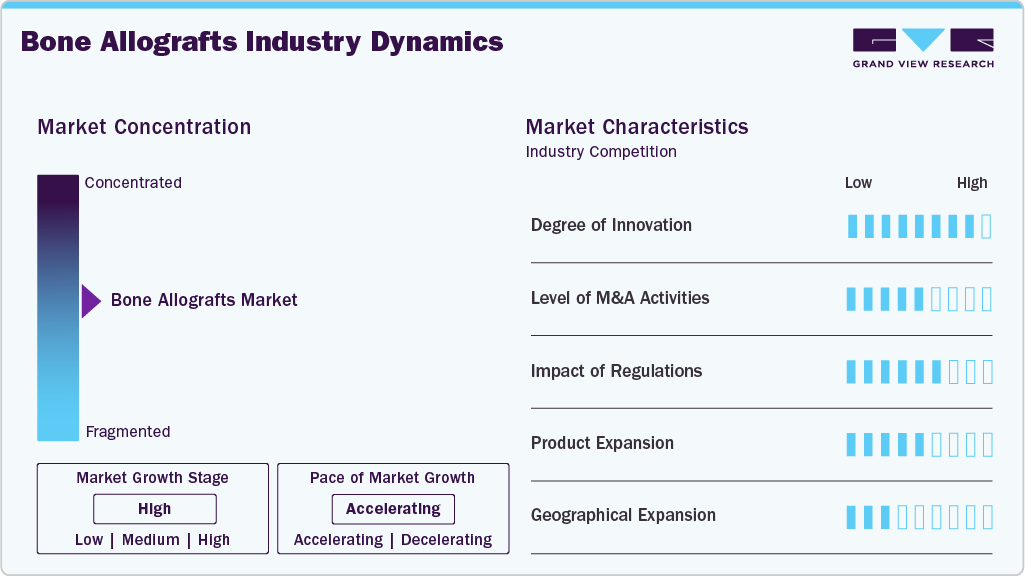
The market is subject to stringent regulatory oversight to ensure the safety, quality, and traceability of human tissue products. In the U.S., bone allografts are regulated by the U.S. Food and Drug Administration under 21 CFR Part 1271, which governs human cells, tissues, and cellular and tissue-based products (HCT/Ps). Manufacturers must comply with donor eligibility requirements, current good tissue practices (CGTP), tissue processing standards, and post-market surveillance requirements to ensure product safety and clinical effectiveness.
Several market players are expanding their product portfolios by launching innovative bone allograft solutions with enhanced osteoconductive and osteoinductive properties, improved handling characteristics, and broader clinical applications. For instance, in September 2024, LifeNet Health, in collaboration with Johnson & Johnson, introduced the PliaFX Pak bone allografting solution for spinal procedures and orthopedic trauma, including fracture fixations, fusions, and osteotomies.
Several market players are creating their market presence by entering new geographical regions to expand their footprints in global markets. For instance, in April 2025, CGBIO received U.S. FDA Investigational Device Exemption (IDE) approval for its NOVOSIS PUTTY bone graft substitute, paving the way for pivotal clinical trials in the U.S. and supporting the company's broader global expansion strategy.
Analyst Perspective
The bone allografts market is driven by various factors, such as the rising prevalence of orthopedic disorders, osteoporosis, traumatic bone injuries, spinal disorders, and age-related bone degeneration, all of which require bone reconstruction and regeneration procedures. Increasing volumes of spinal fusion, trauma repair, dental implant, and joint reconstruction surgeries, and growing preference for allografts over autografts due to reduced donor-site morbidity, are supporting market expansion. Furthermore, advancements in tissue processing technologies, demineralized bone matrix (DBM), cellular bone matrices, and regenerative medicine solutions are enhancing clinical outcomes and driving broader adoption of bone allografts across orthopedic, spinal, dental, and reconstructive applications.
Product Insights
The structural allografts segment dominated the bone allografts market in 2025, accounting for the largest revenue share of 40.7%, owing to their proven ability to provide immediate structural support, maintain spinal stability, and achieve high fusion success rates in complex orthopedic procedures. Their increasing use in cervical and lumbar spinal fusion surgeries is driven by their ability to eliminate donor-site morbidity associated with autografts, reduce operative time, and serve as a cost-effective alternative while delivering durable long-term clinical outcomes. For instance, in June 2025, a study published in the Journal of Spine Surgery evaluated 147 patients over a follow-up period of more than 10 years and found that human structural bone allografts achieved satisfactory fusion in 98.9% of cervical spine patients and 97.9% of lumbar spine patients. The study concluded that structural bone allografts are an excellent option for spinal fusion, particularly in traumatic, degenerative, and revision surgeries where the use of cages may not be feasible.
The cellular bone matrices (CBM) segment is anticipated to grow at the fastest CAGR over the forecast period. Advances in cellular bone matrix (CBM) technologies, which preserve viable bone cells and the natural bone scaffold, are further encouraging their use in spinal fusion procedures by improving clinical outcomes, reducing the need for secondary surgeries, and enhancing surgical efficiency. For instance, in February 2026, Vivex Biologics announced the publication of a peer-reviewed study in the Journal of Spine & Neurosurgery demonstrating the long-term effectiveness of its VIA Form+ cryopreserved viable bone allograft in lumbar interbody fusion. The study reported 100% radiographic fusion success within six months, sustained improvements in patient pain and neurological function, and no implant complications, reoperations, or hospital readmissions over a three-year follow-up period, reinforcing the clinical value of advanced cellular bone allografts in spinal fusion surgery.
Application Insights
The spinal fusion segment dominated the bone allografts industry in 2025, accounting for the largest revenue share of 34.2%, driven by the rising incidence of degenerative disc disease, spinal stenosis, scoliosis, and spondylolisthesis, particularly among the growing elderly population. The rising volume of spinal fusion procedures, coupled with the preference for bone allografts to avoid donor-site complications and reduce operative time, has significantly driven segment growth. In June 2026, Theradaptive secured U.S. FDA approval to advance its OASIS clinical trial to the pivotal study phase, evaluating OsteoAdapt SP for spinal fusion. The approval marked a significant milestone in the development of next-generation bone graft technology aimed at improving fusion outcomes in spinal surgery.
The dental segment is anticipated to grow at the fastest CAGR over the forecast period, driven by the increasing number of dental implant procedures, the rising prevalence of tooth loss and periodontal diseases, and the growing demand for bone regeneration prior to implant placement. The introduction of advanced allograft materials that simplify grafting procedures, accelerate bone healing, and improve clinical outcomes is further supporting the adoption of bone allografts in dental applications. For instance, in November 2024, Neoss Inc. launched the NeoGenix Extraction Allograft, a 100% human allograft composed of demineralized bone fibers and mineralized bone particulate for bone regeneration following tooth extraction. The one-step allograft was designed to simplify socket preservation procedures, promote faster bone growth, and preserve alveolar bone for future dental implant placement.
End Use Insights
The hospitals segment dominated the bone allografts market in 2025, accounting for a revenue share of 75.1%. The high share of this segment is due to the availability of most facilities and technologically advanced implants in hospitals for treating and diagnosing spinal disorders. The segment is estimated to witness significant growth with the growing demand for bone grafts for patients with spine disorders and dental pain. According to the University of Aberdeen, annually, up to 1.6 million individuals undergo spinal fusion surgery, needing a bone graft substitute. This further supports the dominance of the hospital segment.

The ambulatory surgical centers (ASCs) segment is anticipated to grow at the fastest CAGR over the forecast period. A shift toward outpatient orthopedic and spinal procedures, driven by advancements in minimally invasive surgical techniques and enhanced postoperative recovery protocols, is driving this growth. ASCs offer shorter hospital stays, lower treatment costs, faster patient turnaround, and reduced risk of hospital-acquired infections compared to traditional hospital settings. In addition, the increasing preference among patients and healthcare providers for cost-effective, same-day surgical care, along with the expanding number of ASCs equipped to perform orthopedic, sports medicine, and select spinal procedures, is expected to accelerate the adoption of bone allografts in these facilities.
Regional Insights
North America dominated the bone allografts market in 2025, accounting for the largest revenue share of 42.4%. The presence of well-established healthcare infrastructure, supportive reimbursement policies, and widespread adoption of bone grafts in orthopedic surgeries is further fueling the adoption of such products in the region. Moreover, a rise in sports-related injuries is anticipated to fuel the market during the forecast period.

U.S. Bone Allografts Market Trends
The bone allografts industry in the U.S. held the largest revenue share in 2025. The country's emphasis on technological innovation and research results in the continuous development of improved bone allograft products. Growing investments in regenerative medicine and increasing evidence from clinical studies supporting the safety and efficacy of next-generation bone allografts are further accelerating market growth.
Europe Bone Allografts Market Trends
The Europe bone allografts industry is anticipated to register significant growth during the forecast period. The region's strong focus on research and development fosters continuous innovation in bone graft technologies, improving product efficacy and enhancing patient outcomes. Furthermore, favorable healthcare policies and robust regulatory frameworks ensure the quality and safety of the product, thereby increasing their demand among the population.
The Germany bone allografts market is anticipated to grow at the fastest CAGR during the forecast period. The rising incidence of road accidents in the country contributes to increased demand for bone allografts. The country's well-established healthcare infrastructure, high adoption of advanced orthopedic technologies, and increasing demand for biologic bone graft substitutes are further supporting market growth. For instance, in February 2023, according to the Statistisches Bundesamt, approximately 21,600 people were injured in road accidents in Germany.
The bone allografts market in the UK is anticipated to grow at a considerable CAGR during the forecast period. The UK's National Health Service (NHS) provides universal healthcare coverage, ensuring seamless access to orthopedic procedures for all residents, which stimulates market growth. In addition, the country's rapidly aging population, which is more susceptible to osteoporosis, fractures, and other degenerative musculoskeletal conditions, is expected to drive the demand for bone regeneration products. Furthermore, ongoing research in regenerative medicine, increasing clinical adoption of biologic graft materials, and the presence of leading healthcare institutions are expected to further support market growth over the forecast period.
Asia Pacific Bone Allografts Market Trends
The Asia Pacific bone allografts industry is anticipated to grow at the fastest CAGR during the forecast period. The presence of a large number of patient pools with a range of orthopedic conditions and growing investments by market players to expand their presence in the region are anticipated to propel the market growth. In March 2026, Osteopore Limited entered into an exclusive distribution agreement with the Biomedical division of dsm-firmenich to commercialize an injectable regenerative bone filler across Singapore, Malaysia, Thailand, Vietnam, Indonesia, the Philippines, and Hong Kong. The partnership expanded the company's regenerative bone graft portfolio and strengthened its presence across Asia Pacific, reflecting increasing investments in advanced bone regeneration technologies.
The China bone allografts market is anticipated to register considerable growth during the forecast period, owing to the rapidly aging population, increasing prevalence of osteoporosis and degenerative musculoskeletal disorders, and the rising number of orthopedic, trauma, spinal fusion, and joint replacement surgeries.For instance, in June 2025, the Australia-China Centre for Tissue Engineering and Regenerative Medicine (ACCTERM) highlighted its ongoing role as a multi-institutional research center dedicated to developing novel products for tissue repair and regeneration. The center continued to strengthen research collaboration between Australia and China by supporting joint projects in biomaterials, stem cell applications, orthopedics, and dentistry, reinforcing innovation in regenerative medicine and advanced bone graft technologies.
The bone allografts market in Japan is anticipated to grow lucratively during the forecast period. Advanced healthcare systems, with a strong focus on innovation and technological advancements, are boosting market growth. The rising number of orthopedic procedures, including spinal fusion, joint reconstruction, and fracture repair surgeries, is contributing to the growing demand for bone allografts. Japan's advanced healthcare system, coupled with its strong emphasis on medical innovation, regenerative medicine, and tissue engineering, has accelerated the adoption of technologically advanced bone graft materials.
Latin America Bone Allografts Market Trends
Latin America is witnessing considerable growth in the bone allografts industry, due to the increasing awareness regarding the availability and benefits of bone allografts among healthcare professionals and patients. Moreover, the region's growing geriatric population and a rise in orthopedic conditions, which can lead to complications needing orthopedic interventions, are further propelling the market growth.
The Brazil bone allografts market is anticipated to witness steady growth during the forecast period, driven by the increasing burden of orthopedic disorders, rising incidence of traumatic injuries and road accidents, and the growing number of reconstructive orthopedic procedures. The expansion of Brazil's public healthcare system (SUS), improving access to high-complexity orthopedic surgeries, and increasing adoption of bone grafting procedures in major hospitals are further supporting market growth. For instance, in January 2025, the Hospital de Clínicas of the Federal University of Triângulo Mineiro, a public hospital under Brazil's Unified Health System (SUS), successfully performed its first orthopedic bone transplantation surgery of the year. The hospital highlighted that bone transplantation is a high-complexity procedure offered through SUS, reflecting the country's expanding capability to provide advanced orthopedic treatments and increasing adoption of bone graft procedures.
Middle East & Africa Bone Allografts Market Trends
The MEA bone allografts industry is experiencing lucrative growth due to several factors, including the rising prevalence of orthopedic conditions, product launches, and favorable reimbursement for orthopedic procedures. Moreover, governments and healthcare organizations are undertaking initiatives to improve healthcare facilities in the MEA, which is boosting market growth.
The UAE bone allografts market is anticipated to witness significant growth during the forecast period, driven by the increasing burden of musculoskeletal disorders, rising demand for orthopedic and reconstructive surgeries, and growing adoption of regenerative medicine technologies. The country's continued investments in advanced healthcare infrastructure, specialized orthopedic centers, and innovative treatment approaches are accelerating the use of bone graft materials in trauma, spinal, and dental procedures. Furthermore, increasing research activities and clinical adoption of bone regeneration techniques are expected to support market expansion. For instance, in May 2025, researchers from Ajman University published a study demonstrating the successful use of corticocancellous block allografts for lateral alveolar ridge augmentation before dental implant placement. The study reported favorable graft integration, increased bone width, and good implant stability, highlighting the growing clinical adoption of bone allografts for regenerative dental procedures in the UAE.
Key Bone Allografts Company Insights
Key participants in the bone allografts market are pursuing strategic initiatives, including product launches, service expansion, competitive pricing strategies, sales & marketing initiatives, partnerships, and mergers & acquisitions.
Key Bone Allografts Companies
The following key companies have been profiled for this study of the bone allografts market.
-
Zimmer Biomet
-
Medtronic
-
Stryker
-
Smith+Nephew
-
Lynch Biologics, LLC.
-
Biomatlante
-
Johnson & Johnson Services, Inc.
-
Royal Biologics
-
Baxter
-
Xtant Medical
Competitive Benchmarking
Operating Strategies
Competitive Edge
Weaknesses
Established Players (e.g., Zimmer Biomet, Medtronic)
- Expand bone graft and orthobiologics portfolios through acquisitions, product innovation, and strategic partnerships. Focus on spinal fusion, orthopedic reconstruction, trauma, and regenerative medicine applications. Invest in advanced allografts, demineralized bone matrix (DBM), and cellular bone matrices.
- Strong brand recognition, extensive distribution networks, diversified orthopedic and spine product portfolios, established surgeon relationships, and significant R&D capabilities. Their global presence, regulatory expertise, and manufacturing scale support broad commercialization and market penetration across multiple geographies.
- High operational and regulatory compliance costs associated with donor tissue processing and quality assurance. Lengthy product development and approval timelines, pricing pressures, and integration challenges from acquisitions may impact growth. Large organizational structures may also reduce responsiveness to niche market opportunities.
Emerging and Specialized Players (e.g., Lynch Biologics, LLC., Biomatlante)
- Focus on specialized bone grafting and regenerative medicine solutions, including allografts, synthetic graft substitutes, and biologically active bone regeneration products. Emphasize innovation in tissue processing, graft preservation, and cellular technologies.
- Greater flexibility in product development, faster innovation cycles, and strong expertise in tissue banking, regenerative medicine, and bone healing technologies. Their focused portfolios enable differentiation through specialized graft solutions and customized clinical applications.
- Limited global reach, lower brand visibility, and smaller financial resources compared with multinational orthopedic companies. Dependence on specific product categories, donor tissue availability, and regional distribution networks may restrict scalability and long-term market expansion.
Recent Developments
-
In October 2025, Aurora Spine Corporation launched a new biologics portfolio comprising advanced bone graft substitutes for spinal fusion procedures. The portfolio expansion strengthened the company's regenerative medicine offerings, supporting enhanced bone healing, improved fusion outcomes, and broader adoption of biologic solutions in spine surgery.
-
In February 2025, Evergen launched an AI-powered image processing software for automated analysis of CT bone graft scans. Developed in collaboration with the University of Florida, the technology enabled rapid, quantitative assessment of bone graft quality, streamlining tissue processing and improving efficiency in regenerative medicine and bone transplantation workflows.
-
In February 2024, TETROUS, INC., a regenerative medicine company, launched EnFix TAC to its product portfolio of EnFix demineralized bone allograft implants designed specifically for rotator cuff repair surgeries.
Bone Allografts Market Report Scope
Report Attribute
Details
Market size in 2025
USD 2.0 billion
Estimated market size in 2026
USD 2.1 billion
Projected market size by 2033
USD 3.0 billion
Growth rate
CAGR of 5.3% from 2026 to 2033
Actual data
2021 - 2025
Forecast data
2025 - 2033
Quantitative units
Revenue in USD million/billion and CAGR from 2026 to 2033
Report coverage
Revenue forecast, company ranking, competitive landscape, growth factors, and trends
Segments covered
Product, application, end use, region
Regional scope
North America; Europe; Asia Pacific; Latin America; MEA
Country scope
U.S.; Canada; Mexico; Germany; UK; France; Italy; Spain; Norway; Denmark; Sweden; China; Japan; India; South Korea; Australia; Thailand; Brazil; Argentina; Saudi Arabia; South Africa; UAE; Kuwait
Key companies profiled
Zimmer Biomet; Medtronic; Stryker; Smith+Nephew; Lynch Biologics, LLC.; Biomatlante; Johnson & Johnson Services, Inc.; Royal Biologics; Baxter; Xtant Medical
Customization scope
Free report customization (equivalent up to 8 analyst working days) with purchase. Addition or alteration to country, regional & segment scope.
Pricing and purchase options
Avail customized purchase options to meet your exact research needs. Explore purchase options
Global Bone Allografts Market Report Segmentation
This report forecasts revenue growth at the global, regional & country level and provides an analysis of industry trends in each of the sub-segments from 2021 to 2033. For this study, Grand View Research, Inc. has segmented the global bone allografts market report based on product, application, end use, and region:

-
Product Outlook (Revenue, USD Million/Billion, 2021 - 2033)
-
Structural Allografts
-
Cortical Allografts
-
Cancellous Allografts
-
Corticocancellous Allografts
-
Osteochondral Allografts
-
Massive Structural Allografts
-
-
Demineralized Bone Matrix (DBM)
-
Putty
-
Gel
-
Paste
-
Injectable DBM
-
Fibers/Strips/Sheets
-
-
Cellular Bone Matrices (CBM)
-
Mesenchymal Stem Cell (MSC)-Containing Allografts
-
Viable Osteogenic Cell Allografts
-
Cryopreserved Cellular Allografts
-
-
Machined Allografts
-
Others (Bone Chips, Bone Powder)
-
-
Application Outlook (Revenue, USD Million/Billion, 2021 - 2033)
-
Spinal Fusion
-
Trauma & Long Bone
-
Joint Reconstruction
-
Craniomaxillofacial
-
Dental
-
Foot & Ankle
-
Sports Medicine
-
-
End Use Outlook (Revenue, USD Million/Billion, 2021 - 2033)
-
Hospitals
-
Ambulatory Surgical Centers (ASCs)
-
Specialty Clinics/Dental Clinics
-
-
Regional Outlook Revenue, USD Million/Billion, 2021 - 2033)
-
North America
-
U.S.
-
Canada
-
Mexico
-
-
Europe
-
Germany
-
UK
-
Spain
-
Italy
-
France
-
Denmark
-
Norway
-
Sweden
-
-
Asia Pacific
-
Japan
-
China
-
India
-
Australia
-
Thailand
-
South Korea
-
-
Latin America
-
Brazil
-
Argentina
-
-
MEA
-
South Africa
-
Saudi Arabia
-
UAE
-
Kuwait
-
-
Research Methodology
The bone allografts market figures in this report are based on a proven research process that combines executive interviews with secondary research from proprietary databases, company filings, and recognized regulatory and institutional sources. Market size is built through value-chain sizing-reconciling supply-side and demand-side estimates-and triangulated with bottom-up and top-down approaches. Every estimate passes multiple levels of expert validation before publication, with each bone allografts segment quantified using the revenue-capture definitions in the table below.
Segment Definition
Segment - Product
Revenue capture definition
Structural Allografts
Structural allografts are donor bone grafts that provide mechanical support and restore bone integrity in load-bearing orthopedic procedures. Revenue is generated from their use in spinal, trauma, and reconstructive surgeries.
Demineralized Bone Matrix (DBM)
DBM consists of processed allograft bone with preserved osteoinductive proteins that promote bone regeneration. Revenue includes injectable, putty, gel, paste, and strip formulations used in orthopedic and dental applications.
Cellular Bone Matrices (CBM)
Cellular bone matrices are advanced allografts containing viable bone-forming cells to enhance bone healing and fusion. Revenue is derived from premium regenerative products used primarily in spine and complex orthopedic procedures.
Machined Allografts
Machined allografts are precision-shaped donor bone implants designed for specific surgical applications. Revenue is generated from customized bone dowels, wedges, rings, and other machined grafts used in orthopedic and dental surgeries.
Others (Bone Chips, Bone Powder)
This segment includes cancellous bone chips, cortical bone chips, bone powder, and other processed allograft forms used as bone void fillers. Revenue is generated from their use across orthopedic, trauma, spinal, and dental procedures.
Segment - Application
Revenue capture definition
Spinal Fusion
Includes bone allografts used to promote vertebral fusion and spinal stability during cervical, thoracic, and lumbar spine surgeries.
Trauma & Long Bone
Covers allografts used for fracture repair, bone defect reconstruction, and long bone healing following trauma or revision surgeries.
Joint Reconstruction
Includes bone grafts utilized during primary and revision joint replacement procedures to restore bone stock and implant stability.
Craniomaxillofacial
Encompasses bone allografts used in cranial and facial reconstruction procedures for congenital disabilities, trauma, and tumor-related surgeries.
Dental
Includes allografts used in dental implantology, ridge augmentation, sinus lift procedures, and periodontal bone regeneration.
Foot & Ankle
Covers bone graft products used in foot and ankle fusion, deformity correction, fracture repair, and reconstructive procedures.
Sports Medicine
Includes bone allografts used in ligament reconstruction, cartilage repair, tendon fixation, and other sports injury treatments.
Segment - End Use
Revenue capture definition
Hospitals
Revenue generated from bone allograft products purchased and utilized by public and private hospitals for orthopedic, spinal, trauma, and reconstructive surgeries.
Ambulatory Surgical Centers (ASCs)
Includes revenue from bone allografts used in outpatient surgical centers performing minimally invasive orthopedic, spine, sports medicine, and dental procedures.
Specialty Clinics/Dental Clinics
Covers revenue generated from specialty orthopedic, spine, and dental clinics utilizing bone allografts for regenerative, reconstructive, and implant-related procedures.
Estimation Model
1.1 Research Approach
The study follows a hybrid research methodology designed to ensure both clinical accuracy and commercial validity of the bone allografts market estimation.
The research combines:
-
Secondary research sources, including peer-reviewed orthopedic literature, hospital procedure databases, regulatory publications, tissue bank registries, and industry reports from orthopedic biologics manufacturers.
-
Primary research inputs, obtained through structured interviews and discussions with orthopedic surgeons, trauma specialists, spinal surgeons, tissue bank operators, hospital procurement heads, and key manufacturers/distributors.
-
The market estimation process is constructed using a demand-driven clinical modeling approach, where real-world surgical volumes are mapped to bone graft utilization patterns. Key variables integrated into the model include:
Procedure volumes across spinal fusion, trauma fixation, joint reconstruction, and dental bone grafting
-
Graft selection patterns across hospitals and geographies
-
Penetration rates of allografts compared to autografts and synthetic substitutes
-
Pricing variability across hospital segments and regions
-
Underlying disease burden, particularly degenerative bone disorders and trauma incidence
This approach ensures that the model reflects actual clinical practice behavior rather than theoretical demand assumptions.
1.2 Market Estimation Framework
The bone allografts market size is derived using a triangulated estimation framework, ensuring validation from both demand and supply perspectives.
The framework integrates three core models:
-
Procedure-based demand model
-
ASP-based revenue build-up model
-
Supply-side / manufacturer revenue validation model
Each model independently estimates market size, and the final value is derived through reconciliation and weighted triangulation, minimizing bias and improving accuracy.
-
This multi-layer validation ensures that:
-
Clinical demand is accurately captured
-
Pricing distortions are normalized
-
Supply-side constraints and reporting gaps are addressed
1.2.1 Demand Model
The demand model is a procedure-driven estimation approach that quantifies the total clinical requirement for bone allografts.
The model begins by identifying total orthopedic and dental procedures that potentially require bone grafting, including:
-
Spinal fusion surgeries (primary demand driver)
-
Trauma and fracture repair procedures
-
Joint reconstruction surgeries (hip, knee, extremities)
-
Dental bone grafting procedures (implant preparation and augmentation)
These procedures are then converted into bone allograft demand using a series of clinical conversion factors:
-
Graft utilization rate per procedure (percentage of surgeries requiring grafts)
-
Allograft adoption rate vs autografts and synthetics
-
Revision surgery inclusion rates
Geographic penetration differences (developed vs emerging markets)
The final output of this model is the total number of allograft units or equivalent usage volume, segmented by indication and region.
1.2.2 ASP Model
The ASP (Average Selling Price) model converts clinical demand into revenue by applying a weighted pricing structure across graft categories and regions.
Market value is derived using:
Weighted Average Selling Price (WASP) of bone allografts
-
Product mix distribution:
-
Structural allografts (high-value segment)
-
Demineralized Bone Matrix (DBM) (mid-value segment)
-
Cancellous and cortical chips (volume-driven low-to-mid value segment)
-
Usage intensity per procedure type (e.g., spinal fusion uses higher-value grafts than trauma repair)
- Reimbursement influence from public and private payers
Regional pricing variations influenced by hospital systems, procurement contracts, and tissue bank pricing strategies
This model ensures that clinical usage is accurately translated into monetary market value, reflecting real-world commercial conditions.
1.2.3 Manufacturer Model
The manufacturer model acts as a supply-side validation mechanism to verify the accuracy of demand-based estimates.
This approach reconstructs the total market size using:
-
Revenue disclosures of key orthopedic biologics and tissue banking companies
-
Product portfolio analysis (bone allografts, DBM, structural graft lines)
-
Hospital supply contracts and tender-based procurement systems
-
Distribution channel mapping (direct hospital supply, tissue banks, third-party distributors)
-
Import-export trade flows in key regulated markets
The objective is to ensure that the aggregated revenue from manufacturers aligns with the estimated demand-side market size, thereby validating the robustness of the overall model.
1.3 Forecast Development
The market forecast is developed using a structural growth factor model, supported by epidemiological and technological drivers.
Key growth determinants include:
-
Increasing prevalence of osteoporosis, osteoarthritis, and degenerative spinal disorders
-
Rising incidence of trauma and road traffic injuries globally
-
Aging population, leading to higher orthopedic intervention rates
-
Expanding adoption of minimally invasive and regenerative orthopedic procedures
-
Advancements in biologics, tissue engineering, and 3D-processed graft technologies
Growing preference for off-the-shelf biologic solutions over autografts due to reduced surgical morbidity
The forecast incorporates both volume expansion (more procedures) and value expansion (higher ASP adoption of advanced grafts).
1.4 Segmentation Method
Market segmentation is developed using a weighted clinical-commercial index framework, which evaluates each segment based on its contribution to overall market value.
Segmentation criteria include:
-
Procedure volume contribution (share of total graft-utilizing surgeries)
-
Clinical preference patterns among surgeons
-
Product performance and efficacy outcomes
-
Cost-effectiveness compared to alternative graft materials
-
Reimbursement coverage across healthcare systems
-
Regional adoption rates and hospital infrastructure maturity
This methodology ensures that segmentation reflects not just volume distribution but also economic and clinical value contribution across segments.
1.5 Scope & Assumptions
The scope of the bone allografts market analysis includes all major clinical applications across:
-
Spinal surgery procedures
-
Orthopedic trauma and fracture repair
-
Joint reconstruction procedures
-
Dental bone grafting applications
Key assumptions include:
-
Market valuation is presented in USD terms
-
Both primary and revision surgeries are included in the demand base
-
A blended ASP approach is applied to normalize pricing variations across regions
-
Adoption rates are assumed to vary based on healthcare infrastructure maturity
-
Surgical volumes are based on a combination of published epidemiological data and validated hospital datasets
Delivered Customizations
This report has been delivered with the following In-depth customizations
Client Request
Customization Delivered
Value Adds
Volume Analysis by Graft Type
Developed a comprehensive volume assessment of bone allografts segmented by cortical bone allografts, cancellous bone allografts, corticocancellous bone allografts, and demineralized bone matrix (DBM). The study evaluates annual procedure volumes, graft utilization patterns, application-specific demand, donor tissue availability, and regional adoption trends.
Enables stakeholders to identify high-volume graft categories, optimize production and inventory planning, allocate tissue banking resources effectively, and prioritize investments in rapidly growing application segments.
Patient Journey & Bone Graft Adoption Analysis
Developed a patient-centric assessment tracking diagnosis, treatment planning, graft selection, surgical intervention, rehabilitation, and long-term recovery across orthopedic, spinal, dental, and trauma procedures. The study incorporates surgeon preferences, patient outcomes, treatment adherence, reimbursement dynamics, and graft selection criteria.
Provides actionable insights to improve patient outcomes, enhance physician engagement, increase product adoption, optimize reimbursement strategies, and strengthen customer retention initiatives.
Advanced Bone Regeneration Technology Assessment
Conducted an in-depth evaluation of emerging bone regeneration technologies, including cellular bone matrices, demineralized bone matrix products, growth factor-enhanced grafts, tissue engineering solutions, AI-enabled tissue processing, and next-generation regenerative medicine platforms. The study benchmarks technology adoption, clinical effectiveness, regulatory developments, and competitive positioning.
Helps stakeholders identify innovation opportunities, enhance product differentiation, improve clinical outcomes, accelerate commercialization strategies, and strengthen long-term competitive positioning through advanced biologics and regenerative medicine investments.
Frequently Asked Questions About This Report
The global bone allograft market is expected to grow at a compound annual growth rate of 5.3% from 2026 to 2033 to reach USD 3.0 billion by 2033.
Some key players operating in the bone allograft market include Zimmer Biomet, Medtronic, Lynch Biologics, LLC, Biomatlante, Stryker, Royal Biologics, Johnsons & Johnsons, Smith & Nephew, Baxter
The global bone allograft market size was estimated at USD 2.0 billion in 2025 and is expected to reach USD 2.1 billion in 2026.
Asia Pacific is the fastest-growing region over the forecast period.
The structural allografts segment led with a 40.7% revenue share in 2025, while cellular bone matrices (CBM) is the fastest-growing segment.
Spinal fusion segment held the largest revenue share of 34.2% in 2025, while dental is the fastest-growing segment.
Hospitals segment held the largest share of 75.1% in 2025 and Ambulatory Surgical Centers (ASCs) is the fastest-growing segment.
North America dominated the bone allograft market with a share of 42.4% in 2025. Growing awareness related to the commercially accessible innovative products, accessibility of a well-developed healthcare structure, and higher healthcare expenditure is the major aspects contributing to the regional market growth.
Some of the key drivers impacting the bone allograft market include an aging population, and the growing adoption of an allograft increasing due to their properties, such as immediate structural support and osteoconductivity. In addition, they do not require another surgery bone, which triggers fast wound healing and decreases the surgery time. These are commonly used in dental, spine, and hip areas.
About the Author(s)
Medical Devices Research Team
Healthcare · Medical DevicesThis report was authored by the medical devices research team at Grand View Research - comprising two research analysts, one senior research analyst, and one industry expert - with specialized expertise in the medical devices segment of the healthcare industry. All findings are based on proprietary healthcare databases, executive interviews, and regulatory analysis, subject to internal peer review prior to publication.
Last Updated:
Speak to Analyst


Customize this report to your needs — add regions, segments, or data points, with 20% free customization.
Or view our licence options:


ISO 9001:2015 & 27001:2022 Certified
We are GDPR and CCPA compliant! Your transaction & personal information is safe and secure. For more details, please read our privacy policy.


