
- Home
- »
- Clinical Diagnostics
- »
-
Breast Lesion Localization Methods Market Report 2026-2033GVR Report cover

Breast Lesion Localization Methods Market (2026 - 2033)
Size, Share & Trends Analysis Report By Type, By Imaging Guidance Modality (Mammography-Guided Localization, Ultrasound-Guided Localization), By Lesion Type, By Procedure Setting, By End-use, By Region, And Segment Forecasts
Market Size, 2025
$1.2BMarket Estimate, 2026
$1.3BMarket Forecast, 2033
$2.2BCAGR, 2026–2033
7.3%Breast Lesion Localization Methods Market Summary
The global breast lesion localization methods market size was valued at USD 1.2 billion in 2025 and is projected to grow from USD 1.3 billion in 2026 to USD 2.2 billion by 2033, at a CAGR of 7.3% from 2026 to 2033. North America dominated the market, accounting for the largest revenue share of 39.4% in 2025. The growth of the global breast lesion localization methods market is driven by the increasing incidence of breast cancer, rising adoption of breast-conserving surgery, technological advancements in localization techniques, and expanding access to early breast cancer diagnosis worldwide.
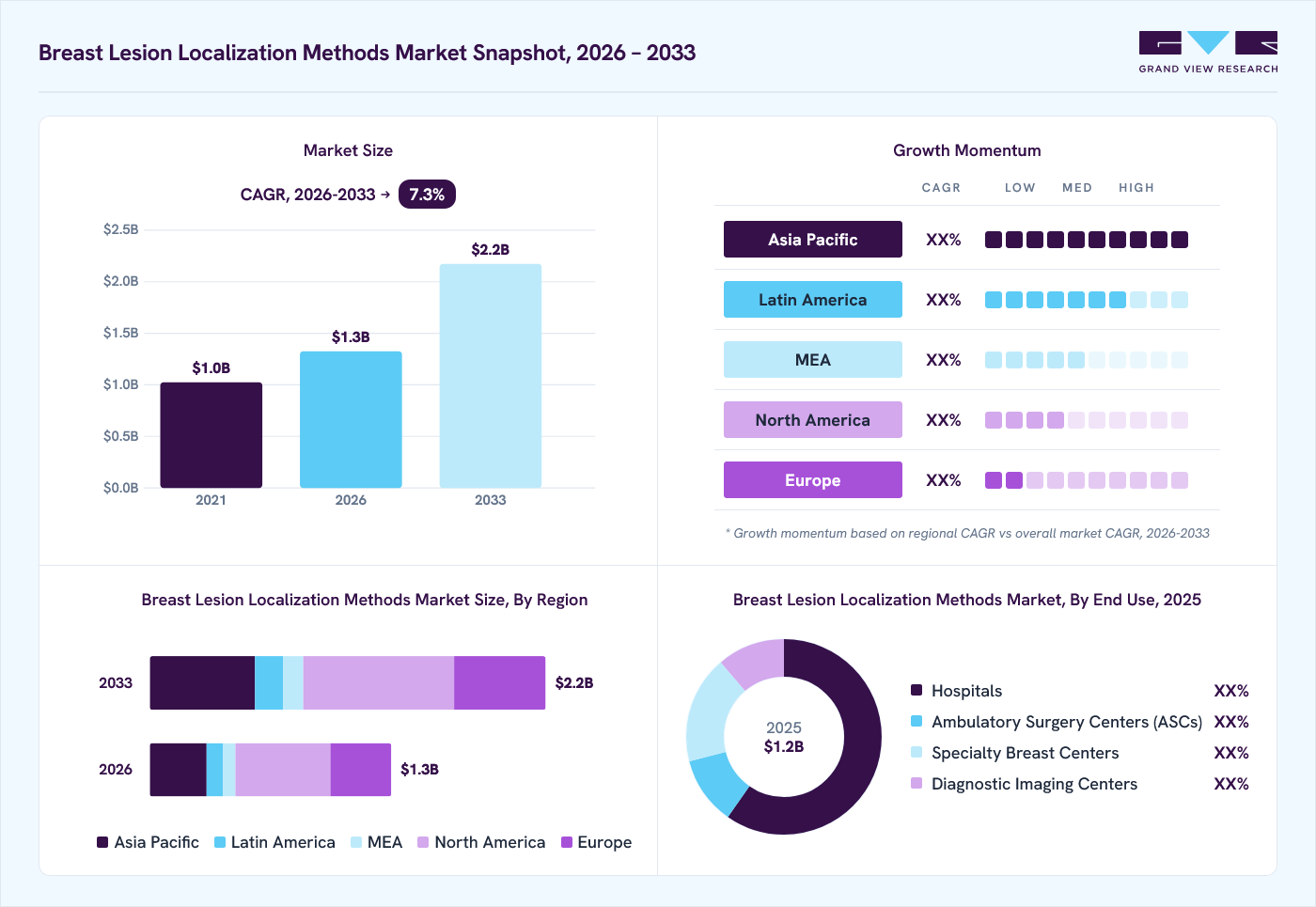 Source: Grand View Research, IR Documents, Primary Interviews, Paid DatabasesTo learn more about this report,
 Download Free Sample Report
 Key Market Trends & Insights
- By type: Wire-Guided Localization (WGL) held the largest revenue share of 35.8% in 2025.
- By imaging guidance modality: Ultrasound-guided localization held the largest revenue share of 43.8% in 2025.
- By lesion type: Malignant breast lesions held the largest revenue share of 64.4% in 2025.
- By procedure setting: Same-day localization procedures held the largest revenue share of 50.5% in 2025.
- By end use: Hospitals held the largest revenue share of 59.7% in 2025.
Regional Highlights
- Largest regional market: North America (39.4% revenue share, 2025)
- Fastest-regional market: Asia Pacific (highest CAGR, 2026-2033)
- By country: The U.S. held the largest share in 2025
Market Size & Forecast
- Market size in 2025: USD 1.2 billion
- Estimated market size in 2026: USD 1.3 billion
- Projected market size by 2033: USD 2.2 billion
- CAGR (2026-2033): 7.3%
Three ways to get this report
Buy it, customize it, or ask a question.Ask an Analyst
Analyst response in 1 business day
- AccessReport author, directly
- Reply timeWithin 1 working day
- No sales callDirect answer only
- FormatEmail reply
- CostFree, no cost
Get the Full Report
What the study covers
- FormatsPDF · Excel · Dashboard
- Timeline2026–2033 annual, 2025 base
- Coverage20+ countries, 5 regions
- Companies10+ key players profiled
Customize the Report
20% free customization
- IncludeCountries, segments, points
- TailorTo your product definition
- ExtendDeeper competitor detail
- OrA fully bespoke study
- Turnaround5–10 working days
In addition, the market is driven by a growing shift toward wire-free breast lesion localization technologies, as healthcare providers seek solutions that improve surgical precision, patient comfort, and clinical efficiency. Unlike conventional wire-guided localization, wire-free systems allow localization markers to be placed before the day of surgery, reducing scheduling constraints and enhancing coordination between radiology and surgical teams. These technologies also eliminate external wires, improving patient experience while supporting accurate localization of non-palpable breast lesions. Continuous adoption by hospitals and breast care centers reflects increasing confidence in these advanced systems.For instance, in July 2026, PIH Health Whittier Hospital became the first hospital in Los Angeles County and Orange County to transition to SCOUT MD wire-free localization technology. The advanced radar-based platform was introduced to improve surgical planning, increase localization precision, streamline clinical workflows, and enhance patient care by eliminating the need for traditional wire-guided localization procedures. This growing transition toward wire-free technologies is expected to support sustained market growth over the forecast period.
 To learn more about this report, Download Free Sample Report
 "PIH Health is committed to bringing the latest proven technologies to our patients and physicians," said James R. West, president and chief executive officer of PIH Health. "Becoming the first hospital in Los Angeles County and Orange County to transition to SCOUT MD reflects our continued investment in advanced, patient-centered care and our dedication to improving outcomes through innovation."
"SCOUT MD is a huge step in the surgical treatment of patients who are interested in breast conserving surgery," said Rashi Singh MD, breast surgeon at PIH Health Whittier Hospital. "This technology helps surgeons more accurately localize multiple lesions even within the same breast, while supporting a smoother experience for patients throughout their surgical process."
 To learn more about this report, Download Free Sample Report
 The infographic underscores the significant global burden of breast cancer, with approximately 2.43 million new cases, 693,660 deaths, and 8.15 million five-year prevalent cases reported in 2024. This growing patient population is directly increasing the demand for accurate breast lesion localization methods, particularly for non-palpable lesions detected through mammography, ultrasound, and MRI screening. As breast cancer screening programs expand and early-stage diagnoses become more common, healthcare providers are adopting advanced localization technologies such as magnetic seed, radar-based, RFID, and radioisotope-free systems to improve surgical precision and patient outcomes. Regions with the highest incidence and prevalence, including Asia, Europe, and North America, are expected to remain key markets for breast lesion localization methods due to rising breast-conserving surgeries, expanding screening infrastructure, and the increasing preference for minimally invasive, wire-free localization techniques.
Market Dynamics
The breast lesion localization methods market is experiencing steady growth, driven by the rising incidence of breast cancer, increasing adoption of breast-conserving surgeries, and growing demand for accurate preoperative lesion localization. The expansion of breast cancer screening programs and the increasing detection of non-palpable breast lesions through mammography and ultrasound are further supporting market growth. Continuous advancements in wire-free localization technologies, including magnetic, radar, radiofrequency identification (RFID), and radioactive seed systems, are improving surgical precision, workflow efficiency, and patient comfort.
Hospitals and breast care centers are replacing traditional wire-guided localization with advanced technologies such as magnetic, radar, radiofrequency identification (RFID), and radioactive seed localization. Unlike wire-guided procedures, wire-free systems allow the marker to be placed several days before surgery, improving scheduling flexibility for both radiology and surgical teams. These technologies also eliminate the discomfort and logistical challenges associated with external wires while supporting accurate lesion localization during breast-conserving surgery. Improved workflow efficiency reduces delays on the day of surgery and helps optimize operating room utilization.
The high cost of wire-free localization systems remains a key challenge limiting market growth. Compared with conventional wire-guided localization, wire-free technologies require healthcare facilities to invest in specialized localization consoles, detection devices, software integration, and staff training. In addition to the initial capital investment, most wire-free procedures require single-use disposable markers or seeds, increasing the cost of each procedure. These expenses can place financial pressure on hospitals and ambulatory surgical centers, particularly in developing countries and smaller healthcare facilities with limited budgets. Reimbursement policies for advanced localization technologies also vary across regions, making it difficult for some providers to recover the additional costs.
The expansion of breast cancer screening programs in emerging economies presents a significant opportunity for the breast lesion localization methods market. Governments and healthcare organizations across countries in Asia-Pacific, Latin America, the Middle East, and Africa are investing in national breast cancer awareness campaigns, mammography services, and early detection initiatives to reduce breast cancer mortality. As screening coverage increases, a larger number of non-palpable breast lesions are being detected at earlier stages, creating greater demand for accurate localization methods before breast-conserving surgery. This trend is encouraging hospitals and diagnostic centers to adopt advanced localization technologies that improve surgical precision and patient outcomes.
Market Concentration & Characteristics
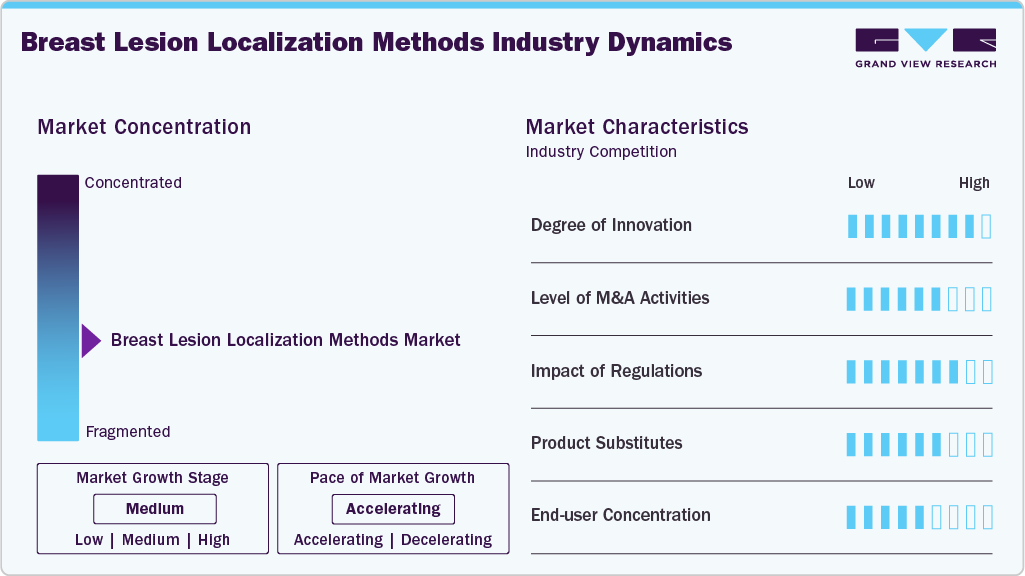
Innovation is a major competitive factor in the breast lesion localization methods market, with manufacturers focusing on wire-free technologies that improve surgical accuracy, workflow efficiency, and patient experience. Companies are introducing advanced magnetic, radar, radiofrequency identification (RFID), electromagnetic, and radioactive seed localization systems that enable flexible scheduling before surgery and reduce the limitations of conventional wire-guided localization.
Mergers, acquisitions, and strategic collaborations have a moderate influence on the breast lesion localization methods market by helping manufacturers expand their product portfolios, strengthen their distribution networks, and accelerate the commercialization of innovative localization technologies. In April 2026, GE HealthCare expanded its mammography collaboration with DeepHealth, a subsidiary of RadNet, to broaden global access to AI-powered breast cancer screening solutions. The partnership introduced enhanced capabilities of DeepHealth's AI-powered Breast Suite, including ProFound Pro and Safeguard Review, to improve breast imaging accuracy and support earlier cancer detection. Such strategic collaborations are expected to strengthen technological innovation, enhance clinical adoption of advanced breast imaging and localization workflows, and support the long-term market growth.
 To learn more about this report, Download Free Sample Report
 Regulatory requirements have a high impact on the breast lesion localization methods market because localization devices, biopsy site markers, and surgical navigation systems must demonstrate safety, clinical performance, biocompatibility, and imaging compatibility before receiving commercial approval. Regulatory agencies such as the U.S. FDA and the EU MDR require strong clinical evidence, quality management systems, and continuous post-market surveillance.
Regulatory approvals create opportunities for innovation and market expansion.
For instance, in May 2025, the FDA granted Breakthrough Device Designation to the EnVisio X1 In-Body Spatial Intelligence System, recognizing its potential to improve real-time localization and surgical navigation during minimally invasive cancer procedures. Such regulatory support is expected to accelerate the adoption of next-generation breast lesion localization technologies while maintaining high standards of clinical performance.
“Receiving breakthrough device designation for EnVisio X1 is a pivotal milestone, not only for Elucent [Medical] but for the future of surgical care,” Jason Pesterfield, chief executive officer of Elucent Medical, stated in a news release. “This recognition reinforces the urgency and potential of our technology to transform the current standard of care by empowering surgeons with real-time localization and surgical navigation tools. Our goal is to redefine what’s possible in minimally invasive surgery-helping patients receive more precise, less invasive interventions that can truly change lives.”
The availability of alternative localization techniques has a moderate influence on the breast lesion localization methods industry. Conventional wire-guided localization remains widely used because of its established clinical acceptance and relatively low procedural cost. In addition, intraoperative ultrasound-guided localization is used for ultrasound-visible lesions, eliminating the need for implanted localization markers in selected patients.
End-use concentration in the market is moderately high, with most procedures performed in hospitals, comprehensive breast centers, academic medical centers, and specialized oncology clinics that manage breast cancer diagnosis and surgery. These facilities possess advanced breast imaging systems, experienced radiologists, multidisciplinary breast care teams, and dedicated breast surgeons capable of performing image-guided localization procedures.
Analyst Perspective
The breast lesion localization methods market is experiencing steady growth due to the increasing incidence of breast cancer worldwide. The expansion of breast cancer screening programs has led to earlier detection of non-palpable breast lesions, driving demand for localization technologies. The growing adoption of breast-conserving surgeries is further supporting market growth. Healthcare providers are increasingly shifting toward minimally invasive and wire-free localization methods to improve patient comfort and surgical efficiency. Technological advancements in magnetic seed, RFID, radar reflector, and radioactive seed systems are enhancing localization accuracy and workflow. The rising use of image-guided surgical procedures is also contributing to market expansion. Increasing investments in specialized breast care centers and oncology hospitals are creating additional growth opportunities. Companies offering comprehensive and clinically validated localization solutions are expected to strengthen their competitive position. Strategic collaborations with hospitals, ongoing product innovation, and compliance with regulatory standards will remain key success factors. Expanding manufacturing capabilities and strengthening global distribution networks will further support long-term market growth.
Pricing analysis
Pricing in the breast lesion localization methods market varies considerably depending on the localization technology, device complexity, regulatory requirements, and whether the product is a reusable capital system or a single-use disposable component. Conventional wire-guided localization (WGL) remains the most economical option due to its simple design and widespread availability, making it the preferred choice in cost-sensitive healthcare settings. In contrast, wire-free technologies, including magnetic seed, RFID, radar reflector, and radioactive seed localization systems, command premium pricing because they require specialized detection consoles, proprietary markers, and compatibility with advanced imaging.
Clinical trials landscape
Clinical trials play a vital role in advancing the breast lesion localization methods market by generating strong evidence on the safety, accuracy, workflow efficiency, and surgical outcomes of emerging localization technologies. Device manufacturers and academic research groups are conducting multicenter prospective studies to compare wire-guided, magnetic seed, RFID, radar reflector, radioactive seed, and other image-guided localization methods. These studies support regulatory approvals, clinical guideline development, and broader adoption of wire-free localization systems by evaluating lesion retrieval rates, margin status, re-excision rates, patient-reported outcomes, surgeon satisfaction, and health-economic impact.
For instance, in May 2026, investigators presented the MELODY (Methods for Localization of Different Types of Breast Lesions) study at the 2026 ASCO Annual Meeting. The international prospective multicenter study (NCT05559411) had enrolled 9,727 patients across 27 countries as of January 2025 and is expected to complete enrollment in 2026. The trial compares multiple breast lesion localization methods, including wire-guided, magnetic, radiofrequency, radar, radioactive seed, and radio-occult localization, to assess oncological safety, surgical outcomes, patient experience, and economic impact, highlighting the growing global investment in evidence-based localization technologies.
Consumer perception and preferences
Consumer perception is becoming an important factor in the breast lesion localization methods market, particularly as more breast cancers are diagnosed at an early stage through screening programs. Patients are placing greater importance on localization methods that offer high procedural accuracy, minimal discomfort, flexibility in surgical scheduling, and better overall treatment experience. Awareness of wire-free localization technologies has grown through consultations with breast surgeons, radiologists, patient advocacy groups, and educational resources, leading many patients to prefer minimally invasive approaches that reduce anxiety and improve convenience. As hospitals adopt patient-centered breast cancer care pathways, preferences are shifting toward localization methods that support efficient surgery while maintaining excellent clinical outcomes.
Key Consumer Preferences
-
Minimally invasive and wire-free procedures: Patients prefer localization methods that eliminate external wires, improving comfort and reducing preoperative anxiety.
-
High localization accuracy: Consumers value technologies that enable precise lesion identification, helping surgeons achieve complete tumor removal while preserving healthy breast tissue.
-
Flexible scheduling: There is a growing preference for localization methods that allow marker placement before the day of surgery, reducing same-day procedural burden and improving convenience.
-
Safety and clinical validation: Patients and clinicians favor technologies supported by strong clinical evidence, regulatory approvals, and proven safety and effectiveness.
-
Improved patient experience:
Reduced discomfort during localization, streamlined clinical workflows, and shorter preoperative procedures are becoming important considerations.
Type Insights
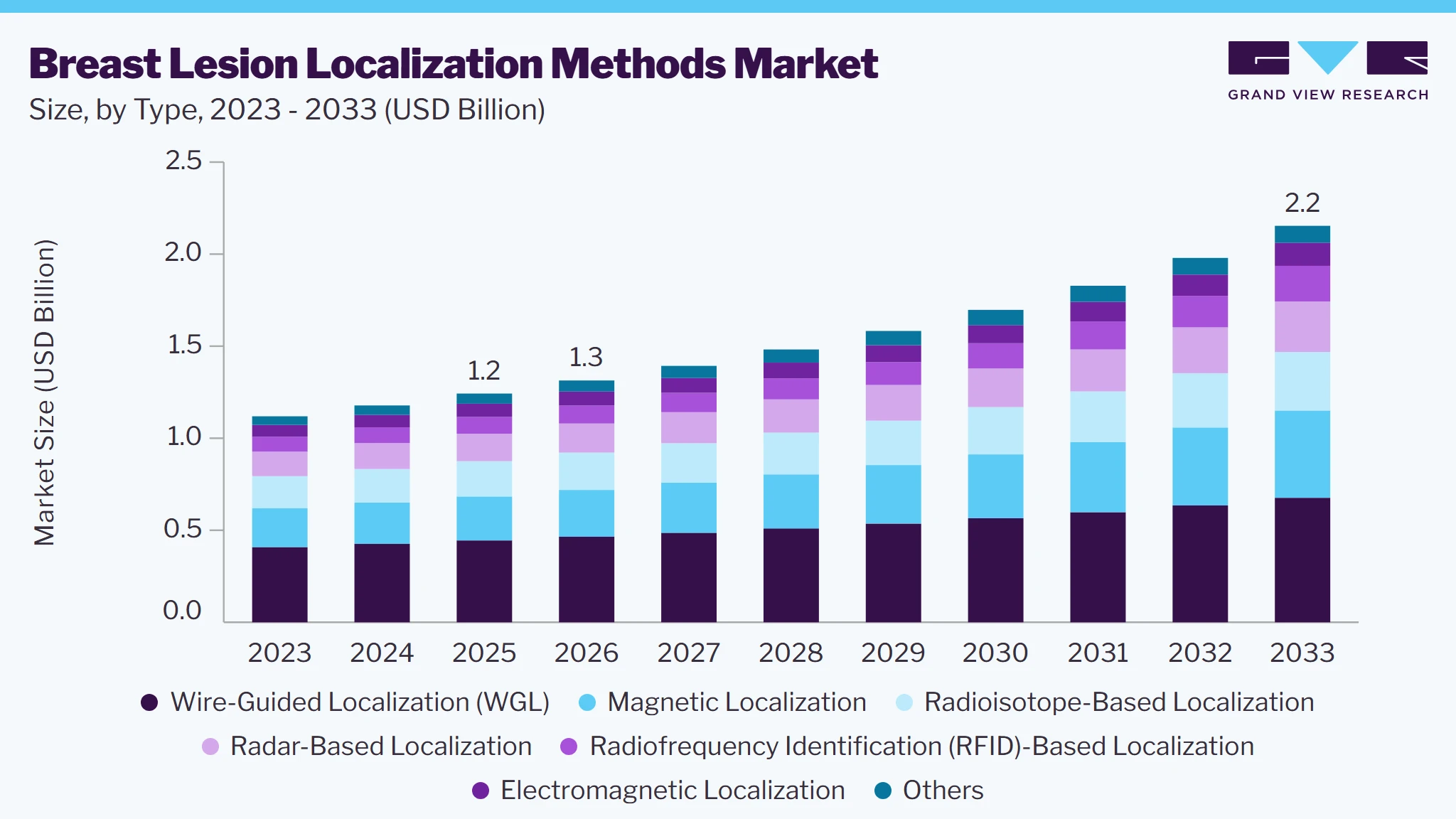
The Wire-Guided Localization (WGL) segment dominated the breast lesion localization methods market, accounting for 35.8% of the market in 2025. This dominance is driven by its long-standing clinical acceptance, low procedural cost, widespread availability, and compatibility with mammography, ultrasound, and MRI-guided localization procedures. WGL continues to be the standard localization technique in many hospitals, particularly in cost-sensitive healthcare settings, due to its well-established clinical workflow and extensive surgeon familiarity. For instance, in June 2025, a study published in the Journal of Medical Imaging and Radiation Oncology reported that 95% of surveyed breast surgeons in Australia and New Zealand use hook-wire localization, despite the increasing adoption of wire-free alternatives.
The Radiofrequency Identification (RFID)-based localization segment is expected to grow at the fastest CAGR during the forecast period, driven by the increasing preference for wire-free, non-radioactive localization technologies that improve patient comfort, streamline surgical scheduling, and enhance operating room efficiency. RFID systems enable lesion markers to be placed several days before surgery, reducing same-day workflow constraints while maintaining high localization accuracy. Growing clinical evidence supporting improved surgical outcomes and rising adoption by breast centers are further accelerating market growth.
Imaging Guidance Modality Insights
The ultrasound-guided localization segment dominated the breast lesion localization methods industry, accounting for 43.8% revenue share in 2025. This dominance is supported by the widespread availability of ultrasound systems, real-time visualization of breast lesions, and the absence of ionizing radiation. Ultrasound-guided localization is extensively utilized for sonographically visible, non-palpable breast lesions because it enables precise marker placement, improves procedural efficiency, and integrates seamlessly into routine breast imaging workflows. Its broad adoption across hospitals and breast imaging centers continues to strengthen the segment's market position. For instance, in June 2026, the European consensus on pre-operative imaging in breast cancer, jointly developed by EUSOBI, ESSO, ESP, and ESTRO, reached consensus that markers which can be re-localized using ultrasound are preferred for patients requiring image-guided lesion localization, highlighting the central role of ultrasound in preoperative breast surgery planning.
The tomosynthesis-guided localization segment is expected to grow at the fastest CAGR during the forecast period. This growth is driven by the increasing adoption of digital breast tomosynthesis (DBT) in breast cancer screening and diagnosis, which has improved the detection of subtle and non-palpable breast lesions that may not be visible on conventional mammography or ultrasound. Tomosynthesis-guided localization enables more precise targeting of lesions, particularly architectural distortions and calcifications, while improving procedural accuracy and workflow efficiency.
Lesion Type Insights
The malignant breast lesions segment dominated the breast lesion localization methods market, accounting for 64.4% in 2025. This dominance is driven by the rising global incidence of breast cancer, increasing detection of early-stage and non-palpable malignant lesions through organized screening programs, and the widespread adoption of breast-conserving surgery, which requires precise preoperative lesion localization. The growing implementation of mammography, digital breast tomosynthesis (DBT), breast ultrasound, and MRI has further increased the number of image-detected lesions requiring localization before surgery.
The high-risk breast lesions segment is expected to grow at the fastest CAGR during the forecast period. Growth is driven by the increasing detection of atypical ductal hyperplasia (ADH), atypical lobular hyperplasia (ALH), lobular carcinoma in situ (LCIS), flat epithelial atypia (FEA), and other lesions through widespread mammography, digital breast tomosynthesis, and image-guided core needle biopsy. These lesions frequently require surgical excision or close surveillance, creating greater demand for accurate preoperative lesion localization techniques. The expansion of risk-based breast cancer screening programs and updated clinical management guidelines are further accelerating the adoption of localization procedures for high-risk breast lesions.
Procedure Setting Insights
The same-day localization procedures segment dominated the breast lesion localization methods market, accounting for 50.5% revenue share in 2025. This dominance is driven by the widespread use of conventional wire-guided localization, which is performed on the day of surgery. Same-day localization is well established in clinical practice due to its compatibility with existing hospital workflows, broad availability across healthcare facilities, lower procedural costs, and extensive familiarity among surgeons and radiologists. In addition, many hospitals continue to prefer this approach because it minimizes the interval between localization and surgery, reducing the potential for marker migration while requiring no additional preoperative appointments.
The preoperative localization procedures segment is expected to grow at the fastest CAGR during the forecast period. Growth is driven by the increasing adoption of wire-free localization technologies, such as magnetic seed, radiofrequency identification (RFID), radar reflector, and electromagnetic systems, which enable marker placement several days or weeks before surgery. This approach improves patient convenience, provides greater flexibility in scheduling radiology and surgical procedures, enhances operating room efficiency, and reduces same-day procedural delays. Growing hospital investment in workflow optimization, multidisciplinary breast care, and patient-centered surgical pathways is further expected to accelerate the adoption of preoperative localization procedures during the forecast period.
End Use Insights
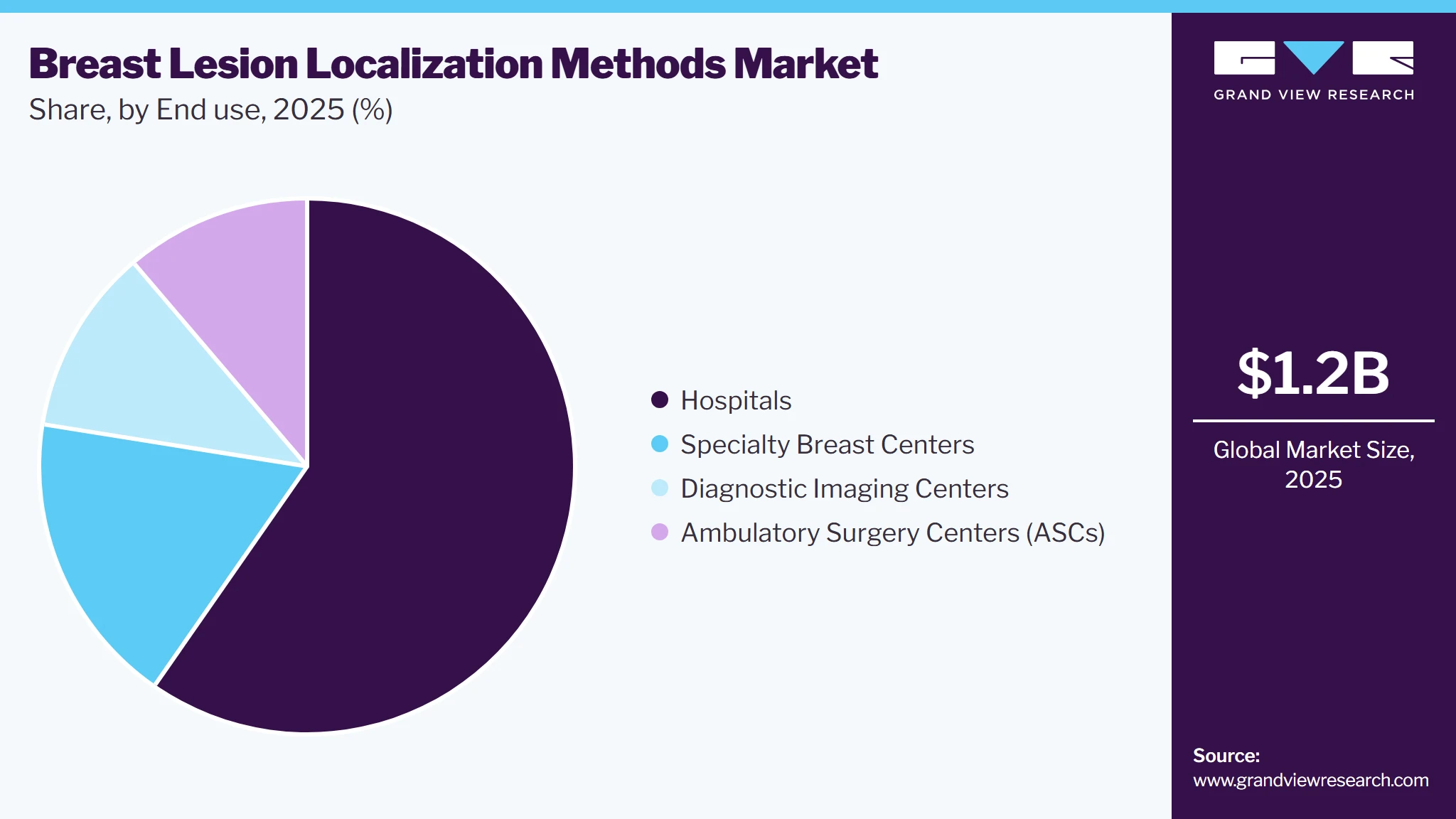
The hospitals segment dominated the breast lesion localization methods industry, accounting for 59.7% revenue share in 2025. This dominance is driven by the availability of advanced diagnostic imaging systems, specialized breast surgery departments, multidisciplinary breast care teams, and comprehensive oncology infrastructure within hospitals. Hospitals perform most breast-conserving surgeries and offer integrated services, including mammography, digital breast tomosynthesis, lesion localization, surgery, and pathology under one setting. The increasing number of accredited cancer centers, expansion of breast imaging facilities, and growing adoption of advanced wire-free localization technologies are further strengthening the segment. For instance, in February 2026, CK Birla Hospital, Delhi, became North India's first healthcare center to complete 50 robot-assisted breast cancer surgeries. The milestone demonstrated the hospital's adoption of advanced breast surgery technologies, reinforcing the growing integration of precision surgical techniques to improve clinical outcomes and patient care in breast cancer treatment.
 To learn more about this report, Download Free Sample Report
 The specialty breast centers segment is expected to grow at the fastest CAGR during the forecast period. Growth is driven by the increasing establishment of dedicated breast centers that provide integrated breast imaging, diagnosis, localization, surgery, and follow-up care under a single care pathway. These centers are adopting advanced wire-free localization technologies to improve patient comfort, optimize surgical scheduling, and enhance clinical outcomes. Rising breast cancer screening rates, growing preference for breast-conserving surgery, and increasing investments in multidisciplinary breast care are expected to further accelerate the adoption of breast lesion localization methods in specialty breast centers during the forecast period.
Regional Insights
North America held the largest share of the breast lesion localization methods market accounting for revenue share of 39.4% in 2025. The region benefits from a well-established breast cancer screening infrastructure, high adoption of breast-conserving surgery (BCS), widespread availability of advanced breast imaging technologies, and early adoption of wire-free localization systems such as magnetic seed, RFID, and radar-based localization. Strong clinical research activity and the presence of leading device manufacturers further support market growth.
 To learn more about this report, Download Free Sample Report
 U.S. Breast Lesion Localization Methods Market Trends
The U.S. continues to dominate the North America breast lesion localization methods industry owing to its high breast cancer screening rates, increasing use of breast-conserving surgery, and rapid adoption of advanced localization technologies. According to the American Cancer Society, 2025, an estimated 316,950 new cases of invasive breast cancer and 59,080 cases of ductal carcinoma in situ (DCIS) are expected to be diagnosed among women in the U.S. The growing number of early-stage and non-palpable breast lesions detected through screening is increasing the demand for accurate preoperative localization methods, supporting continued market expansion.
Europe Breast Lesion Localization Methods Market Trends
Europe represents a mature market driven by organized population-based mammography screening programs, high breast-conserving surgery rates, favorable clinical guidelines, and increasing adoption of wire-free localization technologies. Continuous investments in breast cancer care, multidisciplinary breast units, and image-guided surgery continue to support regional growth.
The UK breast lesion localization methods market is witnessing increasing adoption of Magseed and other wire-free localization technologies across NHS breast units to improve patient experience and surgical workflow. For instance, a 2026 audit conducted at Guy's and St Thomas' NHS Foundation Trust evaluated 100 Magseed-guided breast-conserving surgeries and reported accurate localization with successful surgical outcomes, highlighting the growing clinical acceptance of magnetic seed localization in the UK.
The breast lesion localization methods market in France continues to experience steady growth due to its organized national breast cancer screening program, advanced breast imaging infrastructure, and increasing utilization of breast-conserving surgery. The growing adoption of minimally invasive image-guided procedures and wire-free localization technologies, supported by European clinical evidence demonstrating high localization success and low complication rates, is expected to strengthen market demand.
Asia Pacific Breast Lesion Localization Methods Market Trends
The Asia Pacific breast lesion localization methods industry is projected to grow at the fastest CAGR during the forecast period, driven by rising breast cancer incidence, expanding screening initiatives, improving healthcare infrastructure, and increasing investment in breast imaging and surgical oncology services. Growing awareness of early diagnosis is further accelerating demand for image-guided localization procedures.
The breast lesion localization methods market in China continues to showcase high growth due to increasing breast cancer awareness, expansion of cancer screening initiatives, and continuous investment in tertiary oncology hospitals. For instance, Healthy China 2030 continues to prioritize early cancer detection and improved access to diagnostic and treatment services, supporting wider adoption of breast-conserving surgery and associated lesion localization technologies across the country.
Latin America Breast Lesion Localization Methods Market Trends
The Latin America breast lesion localization methods industry is witnessing gradual growth supported by improving access to breast cancer diagnosis, expansion of national cancer control programs, and increasing availability of breast-conserving surgery. Brazil and Mexico remain the leading regional markets due to ongoing investments in oncology infrastructure and breast imaging services. According to the Pan American Health Organization (PAHO), countries across Latin America are strengthening early breast cancer detection through national screening and cancer control initiatives, which is expected to increase the number of image-guided breast localization procedures performed annually.
MEA Breast Lesion Localization Methods Market Trends
The Middle East & Africa breast lesion localization methods industry is witnessing steady growth driven by expanding oncology infrastructure, increasing breast cancer awareness, and rising investments in specialized breast care centers. The region is also benefiting from the growth of medical tourism, particularly in the UAE and Saudi Arabia, where internationally accredited hospitals are attracting patients seeking advanced diagnostic imaging and breast surgery services. In February 2026, the Dubai Health Authority (DHA) announced that Dubai's healthcare ecosystem expanded to approximately 5,800 licensed healthcare facilities in 2025, an increase of more than 8% compared with 2024. The expansion includes hospitals, day-surgery centers, and specialized clinics, strengthening Dubai's position as a regional medical tourism hub and improving access to advanced breast cancer diagnosis and surgical care, including breast lesion localization procedures.
Key Breast Lesion Localization Methods Company Insights
Some of the key companies in the breast lesion localization methods market include Merit Medical Systems, Hologic, Inc., MOLLI Surgical (Stryker), Sirius Medical Systems B.V., Elucent Medical, BD, Argon Medical Devices, IsoAid, LLC, Geotek Medical, and PAJUNK. Organizations are focusing on increasing customer base to gain a competitive edge in the industry. Therefore, key players are taking several strategic initiatives, such as product launches and partnerships with other major companies.
Key Breast Lesion Localization Methods Companies
The following key companies have been profiled for this study of the breast lesion localization methods market.
-
Merit Medical Systems
-
Hologic, Inc.
-
MOLLI Surgical (Stryker)
-
Sirius Medical Systems B.V.
-
Elucent Medical
-
Becton, Dickinson and Company
-
Cook Group Incorporated (Cook Medical)
-
Argon Medical Devices
-
IsoAid, LLC
-
Mammotome (Danaher Corporation)
-
Geotek Medical
Competitive Benchmarking
Category
Operating
Strategies
Competitive Edge
Weakness
Established Players (Hologic, Inc.; Merit Medical Systems; BD; Cook Group Incorporated)
- Focus on expanding wire-free breast lesion localization technologies through continuous product innovation and strategic collaborations with hospitals, breast imaging centers, and oncology networks.
- Strengthening global distribution capabilities while broadening product portfolios across wire-guided, RFID, radar reflector, and breast intervention solutions.
- Strong global presence, well-established distribution networks, comprehensive breast care portfolios, and long-standing relationships with healthcare providers.
- Strong clinical evidence and integrated breast imaging and intervention solutions support widespread adoption.
- High investment in research, regulatory compliance, and post-market surveillance increases operational costs.
- Premium-priced technologies and lengthy procurement cycles may limit adoption in price-sensitive healthcare systems.
Emerging Players (MOLLI Surgical (Stryker); Sirius Medical Systems B.V.)
- Concentrate on developing innovative wire-free localization technologies and user-friendly localization systems that improve surgical workflow and patient experience.
- Expand market reach through partnerships with breast surgery centers, regional distributors, and academic hospitals while targeting underserved markets.
- Rapid adoption of novel technologies, competitive pricing strategies, and a strong focus on specialized breast localization solutions.
- Ability to quickly respond to evolving clinical requirements and technological advancements.
- Limited global commercial footprint, narrower product portfolios, and lower brand recognition compared with multinational companies.
- Expansion may be constrained by regulatory approval timelines, limited clinical evidence, and comparatively smaller sales and distribution networks.
Recent Developments
- In June 2026, Mammotome, a Danaher company, received CE Mark approval for its HydroMARK Plus Breast Biopsy Site Marker, expanding availability across Europe. The marker combined proprietary hydrogel technology with enhanced tissue-adherence features to improve marker stability and ultrasound visibility for up to 12 months, supporting accurate breast lesion localization during diagnosis and treatment.
- In April 2026, Merit Medical Systems acquired View Point Medical for approximately USD 140 million, expanding its breast and soft tissue tumor localization portfolio. The acquisition added the FDA-cleared OneMark Detection Imaging System and OneMark Tissue Markers, strengthening Merit’s wire-free breast lesion localization offerings and enhancing diagnostic biopsy and surgical localization capabilities.
"View Point's unique ultrasound-enhanced technology offers a highly innovative solution to localize more lesions at the time of biopsy - representing an estimated 1.3 million procedures annually in the United States alone."- Martha G. Aronson, Merit's President and Chief Executive Officer
"As treatment protocols evolve, the suspicious area is often most visible at the time of biopsy. Localizing these areas early in a patient's cancer journey can help physicians plan treatment and may help reduce the need for additional localization procedures."- Adam Smith, Merit's Chief Commercial Officer
Breast Lesion Localization Methods Market Report Scope
Report Attribute
Details
Market size in 2025
USD 1.2 billion
Estimated market size in 2026
USD 1.3 billion
Projected market size by 2033
USD 2.2 billion
Growth rate
CAGR of 7.3% from 2026 to 2033
Base year for estimation
2025
Actual estimates/Historical data
2021 - 2024
Forecast period
2026 - 2033
Market representation
Revenue in USD million/billion and CAGR from 2026 to 2033
Segments covered
Type, imaging guidance modality, lesion type, procedure setting, end use, region
Regional scope
North America; Europe; Asia Pacific; Latin America; Middle East & Africa
Country scope
U.S.; Canada; Mexico; UK; Germany; France; Italy; Spain; Denmark; Sweden; Norway; Japan; China; India; Thailand; Australia; South Korea; Brazil; Argentina; South Africa; Saudi Arabia; UAE; Kuwait
Key companies profiled
Merit Medical Systems; Hologic, Inc.; MOLLI Surgical (Stryker); Sirius Medical Systems B.V.; Elucent Medical; BD; Cook Group Incorporated; Argon Medical Devices; IsoAid, LLC; Mammotome (Danaher Corporation); Geotek Medical
Customization scope
Free report customization (equivalent up to 8 analyst’s working days) with purchase. Addition or alteration to country, regional & segment scope
Pricing and purchase options
Avail customized purchase options to meet your exact research needs. Explore purchase options
Global Breast Lesion Localization Methods Market Report Segmentation
This report forecasts revenue growth at the global, regional & country levels and provides an analysis of the latest industry trends in each of the sub-segments from 2021 to 2033. For this study, Grand View Research has segmented the global breast lesion localization methods market report based on type, imaging guidance modality, lesion type, procedure setting, end use, and region:
-
Type Outlook (Revenue, USD Million/Billion, 2021 - 2033)
-
Wire-Guided Localization (WGL)
-
Radioisotope-Based Localization
-
Radio-Guided Occult Lesion Localization (ROLL)
-
Radioactive Seed Localization (RSL)
-
-
Magnetic Localization
-
Magnetic Seed Localization
-
Magnetic Tracer Localization
-
-
Radar-Based Localization
-
Radiofrequency Identification (RFID)-Based Localization
-
Electromagnetic Localization
-
Others
-
-
Imaging Guidance Modality Outlook (Revenue, USD Million/Billion, 2021 - 2033)
-
Mammography-Guided Localization
-
Ultrasound-Guided Localization
-
MRI-Guided Localization
-
Tomosynthesis-Guided Localization
-
Others
-
-
Lesion Type Outlook (Revenue, USD Million/Billion, 2021 - 2033)
-
Malignant Breast Lesions
-
Benign Breast Lesions
-
High-Risk Breast Lesions
-
-
Procedure Setting Outlook (Revenue, USD Million/Billion, 2021 - 2033)
-
Same-Day Localization Procedures
-
Preoperative Localization Procedures (1-30 days before surgery)
-
-
End Use Outlook (Revenue, USD Million/Billion, 2021 - 2033)
-
Hospitals
-
Ambulatory Surgery Centers (ASCs)
-
Specialty Breast Centers
-
Diagnostic Imaging Centers
-
-
Regional Outlook (Revenue, USD Million/Billion, 2021 - 2033)
-
North America
-
U.S.
-
Canada
-
Mexico
-
-
Europe
-
UK
-
Germany
-
France
-
Italy
-
Spain
-
Denmark
-
Sweden
-
Norway
-
-
Asia Pacific
-
Japan
-
China
-
India
-
Thailand
-
Australia
-
South Korea
-
-
Latin America
-
Brazil
-
Argentina
-
-
Middle East & Africa
-
South Africa
-
Saudi Arabia
-
UAE
-
Kuwait
-
-
Research Methodology
The breast lesion localization methods market figures in this report are based on a proven research process that combines executive interviews with secondary research from proprietary databases, company filings, and recognized regulatory and institutional sources. Market size is built through value-chain sizing-reconciling supply-side and demand-side estimates-and triangulated with bottom-up and top-down approaches. Every estimate passes multiple levels of expert validation before publication, with each breast lesion localization methods segment quantified using the revenue-capture definitions in the table below.
Segment Definition
Segment - Type
Revenue capture definition
Wire-Guided Localization (WGL)
Revenue in this segment is generated from the sale of localization wires, introducer needles, and related disposable accessories used to accurately mark non-palpable breast lesions before surgery.
Radioisotope-Based Localization
This segment generates revenue through radioisotope-based localization systems, including radio-guided occult lesion localization (ROLL) and radioactive seed localization (RSL).
Magnetic Localization
Revenue is generated through magnetic localization systems comprising magnetic markers, handheld detection probes, consoles, and disposable accessories.
Radar-Based Localization
Revenue in this segment is generated from radar reflector localization systems, including implantable radar reflectors, detection consoles, handheld probes, and related disposable components.
Radiofrequency Identification
(RFID)-Based Localization
Revenue is generated through the sale of RFID tags, handheld readers, localization probes, and supporting system components used to identify non-palpable breast lesions during surgery.
Electromagnetic Localization
This segment generates revenue from electromagnetic localization systems comprising implantable electromagnetic markers, navigation consoles, detection probes, and associated accessories.
Others
Revenue in this segment is generated from ultrasound-guided skin marking and localization procedures, which utilize diagnostic ultrasound systems and skin-marking techniques to identify superficial or clearly visible breast lesions before surgery.
Estimation Model
Approach
Description
Bottom-Up Estimation
The market is estimated by evaluating the annual volume of breast lesion localization procedures performed across hospitals, breast imaging centers, oncology centers, and ambulatory surgical centers at the country, regional, and global levels. The assessment incorporates the utilization of wire-guided, magnetic seed, radioactive seed, RFID, and radar reflector localization methods.
Top-Down Approach
The market estimation begins with an assessment of the global breast cancer diagnostics, breast imaging, and breast surgery device markets, followed by evaluating the contribution of breast lesion localization technologies through secondary research and expert validation. The analysis considers key market indicators such as breast cancer incidence, participation in breast screening programs, and the volume of breast-conserving surgeries.
Supply-Side Analysis
The analysis evaluates the manufacturing capacity and commercial supply of breast lesion localization systems, including wire-guided, magnetic seed, radioactive seed, RFID, and radar reflector technologies. It further assesses product portfolios, annual device shipments, average selling prices, regulatory approvals, manufacturing facilities, distribution networks, and regional revenue contribution. Strategic collaborations with hospitals and breast care centers are also considered.
Delivered Customizations
This report has been delivered with the following In-depth customizations
Client Request
Customization Delivered
Value Adds
Breast Lesion Localization Technology & Product Portfolio Assessment
Performed a detailed evaluation of the breast lesion localization product landscape, covering wire-guided, radioactive seed, magnetic seed, RFID, and radar reflector localization technologies. The assessment examined technology adoption across breast-conserving surgery, excisional biopsy, and localization following neoadjuvant therapy, while comparing product features, workflow efficiency, imaging compatibility, and utilization across hospitals, breast imaging centers, and ambulatory surgical centers.
Helps stakeholders identify rapidly growing technology segments, evaluate product positioning across clinical applications, understand procedure-specific technology adoption, and align product development with evolving surgical and radiology requirements.
Healthcare Provider Adoption & Purchasing Analysis
Assessed the utilization of breast lesion localization systems across hospitals, oncology centers, breast care clinics, and ambulatory surgical centers. The analysis covered purchasing criteria, capital equipment versus disposable marker procurement, technology replacement trends, and the influence of breast cancer screening volumes and surgical caseloads on purchasing decisions across different regions.
Assists manufacturers in identifying high-potential customer groups, refining commercialization strategies, strengthening distribution channels, improving procurement planning, and expanding adoption across mature and developing healthcare markets.
Competitive Landscape & Technology Benchmarking
Conducted a comparative assessment of leading manufacturers based on localization technology portfolio, clinical performance, product innovation, regulatory approvals, geographic footprint, manufacturing capabilities, strategic partnerships, and commercialization initiatives. The study also reviewed technology differentiation, recent product introductions, and competitive developments influencing the global breast lesion localization methods market.
Supports strategic decision-making through competitive benchmarking, identifies innovation opportunities, strengthens market positioning, guides investment priorities, and enables companies to differentiate their offerings in technology-driven market.
Frequently Asked Questions About This Report
The global breast lesion localization methods market size was valued at USD 1.2 billion in 2025 and is estimated at USD 1.3 billion for 2026.
The global breast lesion localization methods market is expected to grow at a CAGR of 7.3% from 2026 to 2033, reaching USD 2.2 billion.
Based on type, the Wire-Guided Localization (WGL) segment held the largest share of 35.8% in 2025, while Radiofrequency Identification (RFID)-based localization is the fastest-growing segment over the forecast period.
Key players include Merit Medical Systems, Hologic, Inc., MOLLI Surgical (Stryker), Sirius Medical Systems B.V., Elucent Medical, BD, Cook Group Incorporated, Argon Medical Devices, IsoAid, LLC, Mammotome (Danaher Corporation), Geotek Medical, and PAJUNK.
North America dominated with a 39.4% revenue share in 2025.
Asia Pacific is the fastest-growing region over the forecast period.
The ultrasound-guided localization held the largest share of 43.8% in 2025, while tomosynthesis-guided localization is the fastest-growing segment over the forecast period.
The malignant breast lesions held the largest share of 64.4% in 2025, while high-risk breast lesions is the fastest-growing segment over the forecast period.
The same-day localization procedures held the largest share of 50.5% in 2025, while preoperative localization procedures (1–30 days before surgery) is the fastest-growing segment over the forecast period.
Key factors include the increasing incidence of breast cancer, rising adoption of breast-conserving surgery, technological advancements in localization techniques, and expanding access to early breast cancer diagnosis worldwide.
About the Author(s)
Clinical Diagnostics Research Team
Healthcare · Clinical DiagnosticsThis report was authored by the clinical diagnostics research team at Grand View Research - comprising two research analysts, one senior research analyst, and one industry expert - with specialized expertise in the clinical diagnostics segment of the healthcare industry. All findings are based on proprietary healthcare databases, executive interviews, and regulatory analysis, subject to internal peer review prior to publication.
Last Updated:
Speak to Analyst

Customize this report to your needs - add regions, segments, or data points, with 20% free customization.
Or view our licence options:


ISO 9001:2015 & 27001:2022 Certified
We are GDPR and CCPA compliant! Your transaction & personal information is safe and secure. For more details, please read our privacy policy.


