
- Home
- »
- Medical Devices
- »
-
Bronchial Biopsy Devices Market Size & Share Report, 2033GVR Report cover

Bronchial Biopsy Devices Market (2026 - 2033)
Size, Share & Trends Analysis Report By Product (Biopsy Forceps, Transbronchial Needle Aspiration Needles, Cytology Brushes, Cryobiopsy Devices), By Region (North America, Europe, Asia Pacific, MEA), And Segment Forecasts
Market Size, 2025
$712.8MMarket Estimate, 2026
$762.8MMarket Forecast, 2033
$1,195.4MCAGR, 2026–2033
6.6%Bronchial Biopsy Devices Market Trends
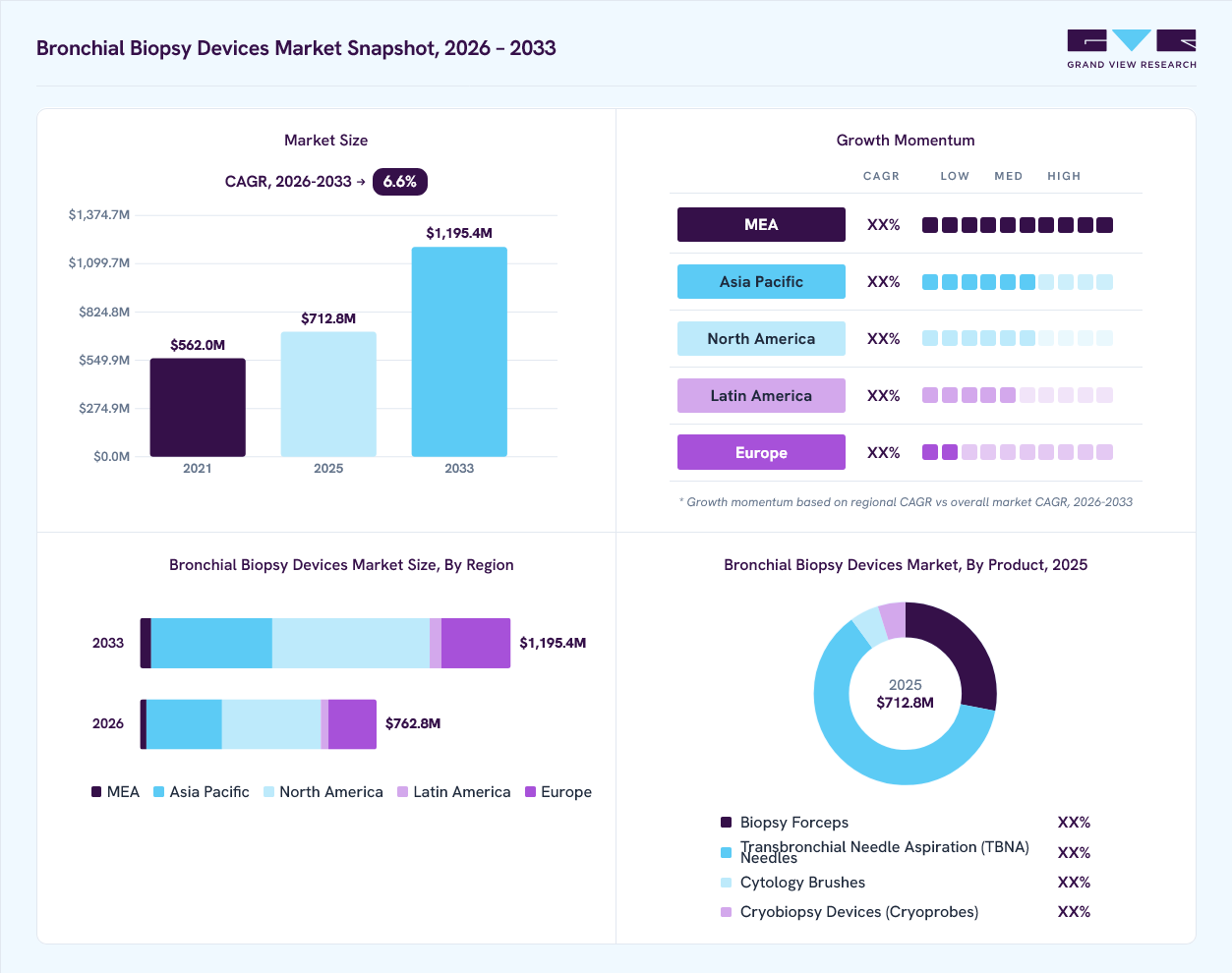
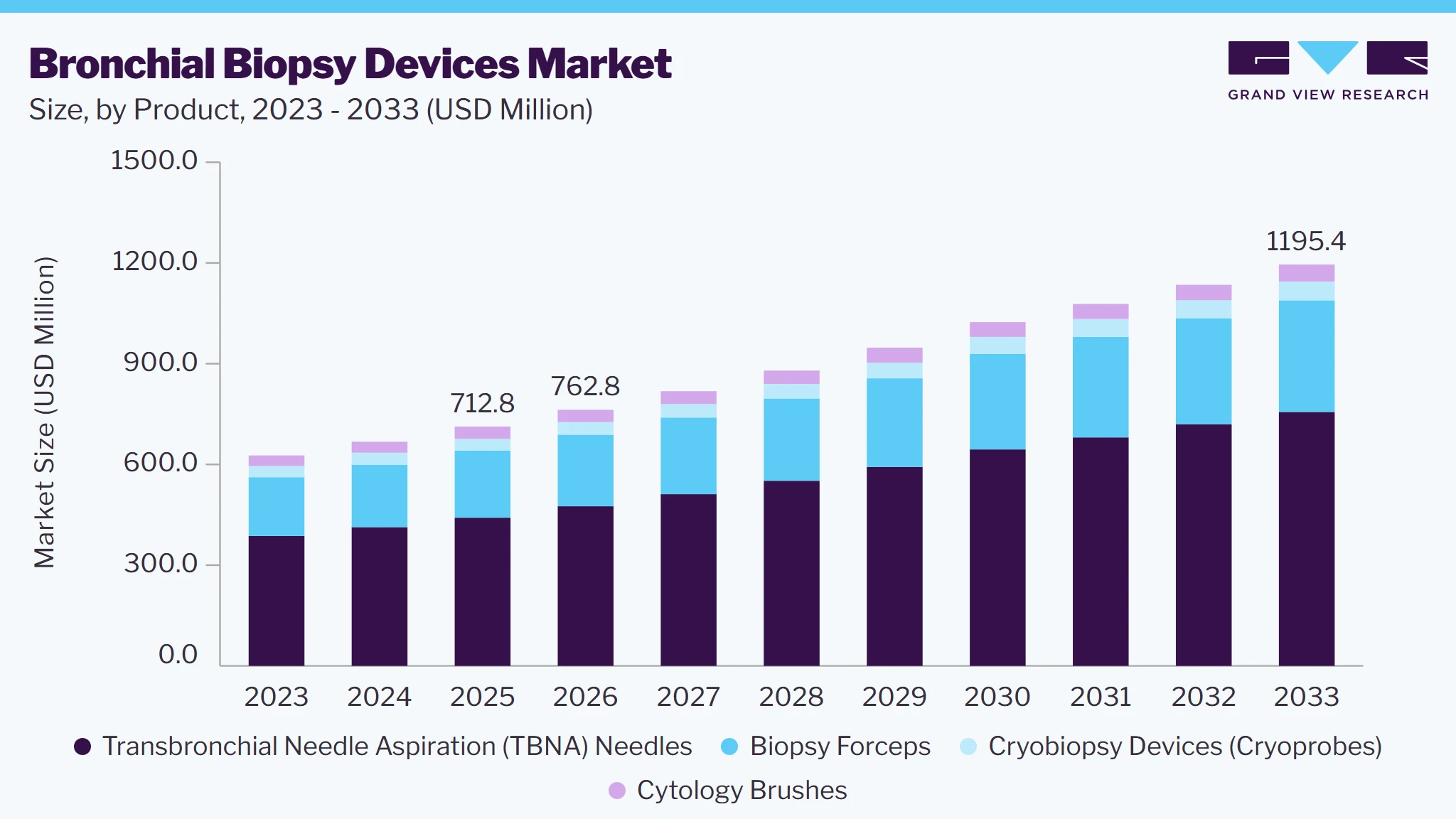
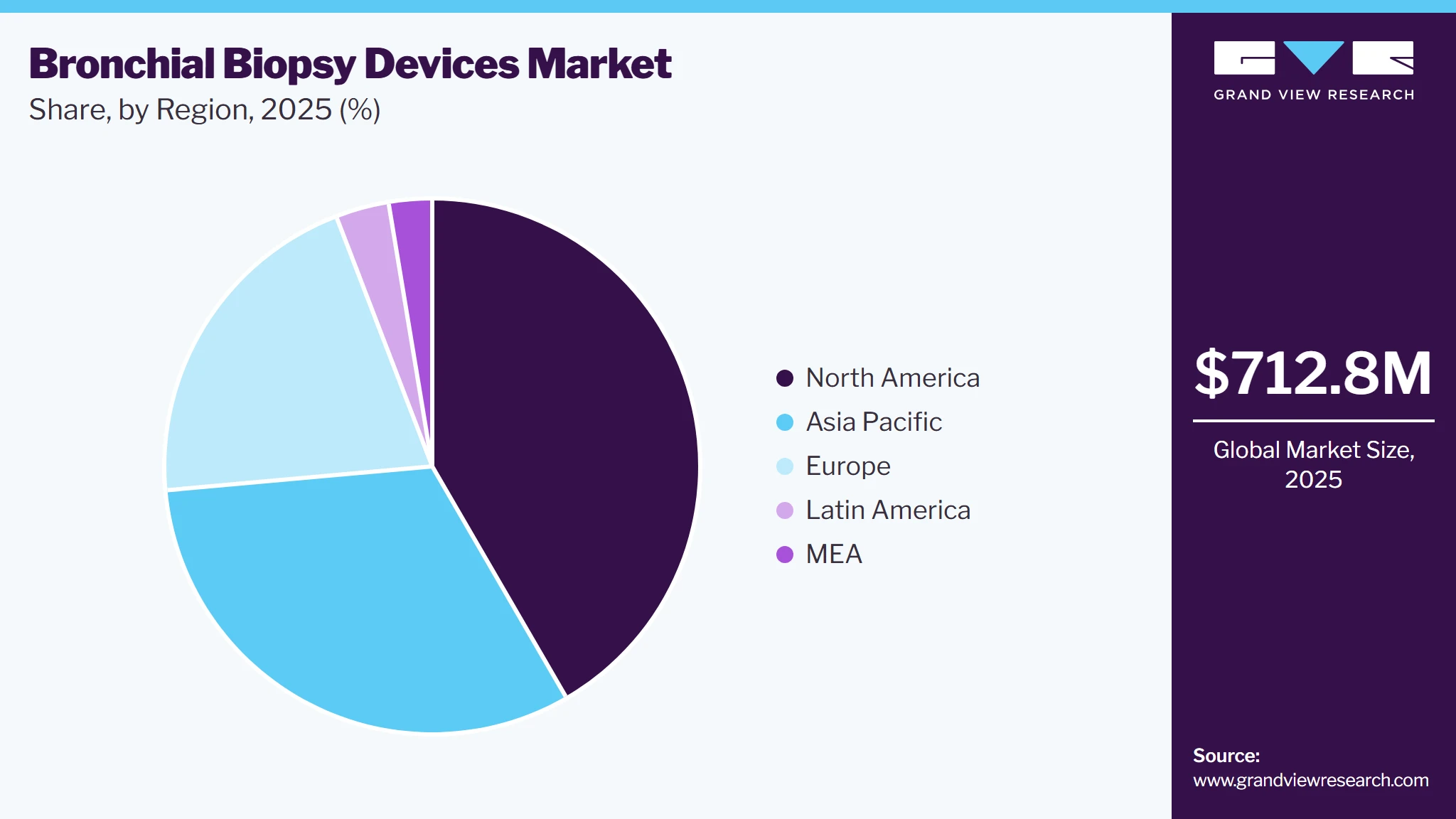
The global bronchial biopsy devices market size was valued at USD 712.8 million in 2025 and is projected to grow from USD 762.8 million in 2026 to USD 1,195.4 million by 2033, at a CAGR of 6.6% from 2026 to 2033. North America dominated the market, accounting for a revenue share of 41.6% in 2025. Rising utilization of bronchial biopsies for diagnosing lung cancer and related conditions, rising adoption of disposable devices, rapid technological advancements, and increasing awareness & screening initiatives by organizations are some of the factors contributing to market growth.
 Source: Grand View Research, IR Documents, Primary Interviews, Paid DatabasesTo learn more about this report,
 Download Free Sample Report
Key Market Trends & Insights
- By product: Transbronchial needle aspiration (TBNA) needles held the largest revenue share of 61.9% in 2025.
Regional Highlights
- Largest regional market: North America (41.6% revenue share, 2025)
- Fastest-growing regional market: Middle East & Africa (highest CAGR, 2026-2033)
- By country: The U.S. held the largest market share in 2025.
Market Size & Forecast
- Market size in 2025: USD 712.8 Million
- Estimated market size in 2026: USD 762.8 Million
- Projected market size by 2033: USD 1,195.4 Million
- CAGR (2026-2033): 6.6%
Prism AI by Grand View Research Free to tryAsk a question about the bronchial biopsy devices marketTry asking✓Every figure cited from GVR research Prefer the report? Download free sample →
The increasing utilization of bronchial biopsies for diagnosing lung cancer and related conditions is a significant factor driving the growth of the bronchial biopsy market. This surge can largely be attributed to the rising global incidence of lung cancer, which has necessitated more accurate and early diagnostic methods. According to WHO’s February 2024 insights, lung cancer is the most prevalent cancer globally, with 2.5 million new cases, representing 12.4% of all newly diagnosed cases. Moreover, the rising prevalence of smoking and exposure to environmental pollutants, including occupational hazards, have contributed to the increasing incidence of lung cancer, driving the demand for bronchial biopsies. According to WHO June 2023 statistics, smoking is the primary cause of lung cancer, accounting for approximately 85% of all cases and nearly 90% of all lung cancer deaths.Furthermore, the increasing adoption of disposable devices is significantly driving the growth of the market. Disposable bronchial biopsy devices, such as single-use needles and forceps, are becoming more popular due to their ability to reduce the risk of cross-contamination & infections. This is particularly important in procedures such as Endobronchial Ultrasound-Guided Transbronchial Needle Aspiration (EBUS-TBNA), where sterility is crucial for patient safety. In developed countries such as the U.S., physicians in outpatient and office settings are being trained in bronchial biopsies, leading to a rise in the adoption of disposable devices to save time.
 To learn more about this report, Download Free Sample Report
Conversely, in economically sensitive countries like India, reusable devices are preferred. Moreover, the adoption of newer diagnostic techniques like endobronchial ultrasound-guided transbronchial needle aspiration (EBUS-TBNA) still needs to be improved in India. According to a 2019 article titled “Endobronchial Ultrasound-Guided Transbronchial Needle Aspiration: Techniques and Challenges,” only 27% of surveyed respiratory physicians in India performed EBUS-TBNA, while 74% used conventional TBNA. Although EBUS-TBNA offers cost-effectiveness and safety advantages over invasive surgical procedures, it still entails significant expenses.
The COVID-19 pandemic had a limited negative impact on revenue, as companies such as Olympus Corporation, Boston Scientific, and CONMED reported sales volume growth in late 2020. Moreover, this growth was driven by the recovery of deferred & elective procedures and the easing of restrictions, especially in countries such as the U.S. For instance, Olympus Corporation revealed revenue recovery in the H2 of 2020, with a significant slowdown in year-on-year revenue decline.
The launch of the ViziShot 2 25 G EBUS-TBNA Needle for lung cancer staging and diagnosis in July 2020 further supported the company's revenue recovery.
“As the only company manufacturing and selling both bronchoscopes and needles, Olympus is proud to expand our EBUS-TBNA product family portfolio with the 25 G EBUS-TBNA needle. Our comprehensive pulmonary solutions bring great value to our physician customers striving to advance diagnosis and staging capabilities for lung disease and lung cancer.”
- Lynn Ray, Vice President, General Manager, Global Respiratory, Olympus.
Market Dynamics
The expansion of organized lung cancer screening programs is significantly increasing the early detection of suspicious pulmonary nodules, thereby driving demand for confirmatory bronchial biopsy procedures. Government bodies, healthcare systems, and leading oncology centers are actively investing in screening initiatives aimed at high-risk populations, which is resulting in a higher volume of diagnostic bronchoscopic interventions and supporting the adoption of advanced bronchial biopsy devices. For instance,
• In March 2026: The American Lung Association launched a statewide initiative in Illinois to provide free low-dose CT lung cancer screenings for at-risk individuals through May 2026. The program offers patient navigation, transportation, and financial assistance to improve screening uptake and facilitate early diagnosis, thereby increasing the need for follow-up biopsy procedures.
• In September 2025: The Ohio State University Comprehensive Cancer Center - James introduced a mobile lung cancer screening unit to expand access to low-dose CT screening across Ohio. By improving early detection among high-risk and underserved populations, the initiative is expected to increase the number of patients requiring tissue biopsy for definitive diagnosis.
The shortage of skilled healthcare professionals capable of performing image-guided and minimally invasive bronchial biopsy procedures is limiting the growth of the bronchial biopsy devices market. Advanced diagnostic techniques such as endobronchial ultrasound (EBUS)-guided biopsy, robotic-assisted bronchoscopy, and cryobiopsy require specialized clinical expertise to ensure accurate lesion localization, optimal tissue sampling, and minimization of procedural complications. However, the limited availability of trained pulmonologists, interventional bronchoscopists, radiologists, and supporting technical staff particularly in emerging economies and rural healthcare settings-continues to restrict the adoption of advanced bronchial biopsy technologies. This workforce gap also reduces procedural efficiency and limits the scalability of high-precision diagnostic interventions, thereby acting as a key constraint on overall market growth.
The increasing adoption of robotic-assisted bronchoscopy technologies is creating significant growth opportunities for the bronchial biopsy devices market by enhancing the precision, safety, and diagnostic yield of minimally invasive pulmonary tissue sampling procedures. Integration of robotic navigation systems with advanced imaging modalities, such as 3D CT mapping and endobronchial ultrasound (EBUS), enables clinicians to accurately access small, peripheral, and hard-to-reach lung lesions. This is expanding the clinical utilization of biopsy forceps, transbronchial needle aspiration (TBNA) needles, cytology brushes, and cryobiopsy devices, while improving overall diagnostic efficiency. The rising global deployment of robotic bronchoscopy platforms across tertiary care hospitals and specialty pulmonary centers is expected to further accelerate procedure volumes and drive demand for compatible biopsy instruments.
For instance,
• In March 2026, Mercy Hospital Fort Smith introduced robotic-assisted bronchoscopy technology to enable more precise, minimally invasive diagnosis of lung nodules and improve early detection of lung disease. The system uses advanced 3D CT mapping and robotic navigation to access small or hard-to-reach lesions, allowing same-procedure biopsy while reducing the need for invasive surgeries and hospital stays.
“Having a robotic-assisted bronchoscopy at Mercy allows patients to avoid more invasive procedures and unnecessary surgeries, this technology brings a new level of precision to lung diagnostics.”
said Dr. Paul Bean, chief medical officer at Mercy Fort Smith.
• In July 2025, Hamilton Medical Center introduced the Ion robotic-assisted bronchoscopy system to enhance minimally invasive diagnosis of lung nodules and support earlier detection of lung cancer. The system leverages robotic navigation and 3D imaging to access small, hard-to-reach lesions with high precision, enabling safer biopsies and improving diagnostic accuracy and patient outcomes.
“Ion gives us a powerful new tool in the fight against lung cancer, It helps us reach deep into the lungs with greater safety and accuracy, allowing us to diagnose earlier and act faster.”
- Sumedha Sonde, MD, pulmonologist.
Market Concentration & Characteristics
The degree of innovation in the industry is moderate. Companies and research institutes are continuously investing in research and development (R&D) to create new products that enhance diagnostic accuracy while minimizing patient discomfort. For instance, in April 2024, Prothea Technologies, established by the collaboration of the Universities of Bath and Edinburgh, received an investment of more than USD 13 million to develop a medical device for the diagnosis and staging of lung cancer. The team further seeks funding for developing a laser-ablation catheter to treat lesions immediately after diagnosis. Such investments foster R&D and encourage new product launches.
"Establishing Prothea Technologies is essential to bring our unique fibre optic technology into the clinic so it can benefit patients.
Prothea pulls together world-leading fibre-optic development from the University of Bath and clinical excellence from the University of Edinburgh, adding in commercial, insight, expertise and know-how to form a fantastic team.”
-Dr Jim Stone, Department of Physics at Bath, and Prothea’s chief technical officer.
The industry's level of partnerships & collaborations is moderate. This is due to several factors, including the desire to gain a competitive advantage in the industry, enhance technological capabilities, and the need to consolidate in a rapidly growing market. However, companies are engaged in merger and acquisition activities to expand their distribution network and gain a competitive advantage in the market. For instance, in May 2019, Argon Medical Devices acquired Mana-Tech, Ltd., an Ireland and UK distributor. As a result, the entire Mana-Tech team, including its customer service, sales, management, and distribution groups, became part of Argon Medical Devices.
 To learn more about this report, Download Free Sample Report
The market is significantly influenced by stringent regulations to ensure that medical devices meet high safety and efficacy standards before they can be marketed. To be marketed in Europe, bronchial biopsy devices must obtain CE marking, indicating compliance with MDR requirements. Furthermore, the U.S. FDA classifies bronchial biopsy devices into two main categories: Class II and Class III. Manufacturers must comply with the Quality System Regulation (QSR), also known as Good Manufacturing Practice (GMP), to ensure that devices are produced consistently and meet high-quality standards.
The level of regional expansion in the industry is moderate, driven by an increasing customer base for bronchial biopsy devices. The rising prevalence of respiratory diseases and increasing healthcare spending expedite the need for advanced biopsy devices for diagnosis. Moreover, the increasing awareness and screening initiatives led by various organizations are significantly driving the demand for bronchial biopsy devices, thereby compelling companies to expand their regional presence
Analyst Perspective
Increasing demand for minimally invasive pulmonary diagnostic procedures, coupled with the rising global burden of lung cancer and other respiratory diseases, is driving the adoption of advanced bronchial biopsy devices. Technological advancements such as endobronchial ultrasound (EBUS)-guided biopsy, robotic-assisted bronchoscopy, and cryobiopsy systems are enhancing diagnostic precision, procedural safety, and access to peripheral lung lesions, thereby expanding the clinical utility of these devices.
Furthermore, growing implementation of lung cancer screening programs, increasing healthcare expenditure, and the shift toward disposable biopsy instruments to minimize cross-contamination risks are supporting market expansion. However, stringent regulatory requirements, high capital costs associated with advanced bronchoscopy systems, and the need for specialized clinical expertise remain key challenges. Continued innovation in biopsy technologies, along with expanding access to early lung cancer diagnosis, is anticipated to create significant growth opportunities for market participants over the forecast period.
Product Insights
Based on product, transbronchial needle aspiration (TBNA) needles held the largest revenue share of 61.9% in 2025 and are expected to register the highest CAGR over the forecast period. The growth of this segment can be attributed to the advantages of EBUS-TBNA over conventional TBNA and other biopsy methods like mediastinoscopy. The increasing preference for EBUS-TBNA, driven by its greater accuracy, is fueling market demand.
However, EBUS-TBNA needles are more expensive than conventional TBNA needles. Nevertheless, adopting EBUS-TBNA in developed regions such as North America and Europe is expected to drive revenue growth for competitive market players and contribute to overall market expansion. The portable medical oxygen concentrators segment is expected to experience the fastest growth, with a CAGR of 7.0% during the forecast period. This growth is driven by increasing awareness of the benefits associated with the use of portable concentrators.
The adoption of EBUS-TBNA has been supported by recommendations from the American College of Chest Physicians, which endorse its use as an initial step in the mediastinal staging of lung cancer and provide technical guidelines for successful procedures. These recommendations have been in place since 2015, leading to an increasing preference for EBUS-TBNA over conventional methods in the U.S. Furthermore, in 2022, EBUS-TBNA accounted for the majority of revenue in the U.S. market, surpassing the revenue share of the Conventional TBNA sub-segment.
The biopsy forceps product segment is divided into disposable and reusable sub-segments. The disposable sub-segment is expected to dominate the market and hold the fastest CAGR of 7.6% during the forecast period.
Regional Insights
North America dominated the bronchial biopsy devices market with the largest revenue share of 41.6% in 2025. This is due to the rising prevalence of respiratory diseases, technological advancements, and a shift toward disposable devices for enhanced safety. As healthcare providers continue to adopt innovative diagnostic tools, the market is expected to expand, providing opportunities for established players and new entrants.
 To learn more about this report, Download Free Sample Report
U.S. Bronchial Biopsy Devices Market Trends
The bronchial biopsy devices market in the U.S. held the largest share in the North America region in 2025. According to the American Cancer Society, the number of new lung cancer cases is projected to rise, necessitating more frequent diagnostic procedures, including bronchial biopsies. In addition, as per the data published by the Lung Cancer Research Foundation, 1 in 16 people in the U.S. will be diagnosed with lung cancer during their lifetime. Moreover, leading players are continuously launching new products & kits to expand their offerings and maintain market dominance, thereby harnessing market growth.
Europe Bronchial Biopsy Devices Market Trends
The bronchial biopsy devices market in Europe is likely toexperience lucrative growth over the forecast period. The increasing prevalence of lung cancer remains one of the leading causes of cancer-related deaths across the region. The region’s advanced healthcare infrastructure supports adopting cutting-edge diagnostic technologies, including bronchial biopsy devices. Moreover, there is a rising trend toward early diagnosis and screening programs for lung diseases, boosting the demand for bronchial biopsy devices.
UK bronchial biopsy devices market is characterized by a strong focus on the early detection & diagnosis of lung diseases. This is driven by national healthcare initiatives such as the NHS Long Term Plan, which emphasizes the importance of early cancer detection. The growing incidence of lung cancer in the UK, one of the highest in Europe, is another major factor expected to improve the demand for bronchial biopsy procedures. In addition, specialized training programs for healthcare professionals in bronchial procedures contribute to the adoption of advanced devices across the country.
The bronchial biopsy devices market in Germany is expected to grow over the forecast period. This growth can be attributed to the country’s leading position in medical technology innovation and manufacturing. Germany’s robust healthcare system and high healthcare spending ensure widespread access to advanced bronchial biopsy devices across urban and rural areas. Moreover, German manufacturers, including Karl Storz and Richard Wolf GmbH, are some of the key players in the market, offering cutting-edge biopsy devices widely used in hospitals and clinics.
Asia Pacific Bronchial Biopsy Devices Market Trends
The bronchial biopsy devices marketinAsia Pacific is expected to witness the fastest growth over the forecast period. The prevalence of respiratory diseases, including lung cancer and COPD, is rising across Asia Pacific due to high smoking rates, urban pollution, and industrialization. In addition, governments across the region are investing in healthcare improvements as part of broader economic and social development plans. Moreover, countries like South Korea and Singapore are making substantial investments in healthcare infrastructure and technology upgrades, further fueling market growth.
China bronchial biopsy devices market is a rapidly expanding sector within the country's healthcare industry, driven by significant investments in healthcare infrastructure, increasing prevalence of respiratory diseases, and advancements in medical technology. For instance, the number of lung cancer cases has been increasing in China, which is expected to drive the demand for advanced diagnostic tools like bronchial biopsy devices. As per the data published by World Cancer Research Fund International, around 1060,584 new lung cancer cases were diagnosed in 2022. This growing disease burden is expected to drive the demand for effective diagnostic tools, including bronchial biopsy devices.
The bronchial biopsy devices market in Indiai s expected to register rapid growth from 2024 to 2030, driven by the country’s expanding healthcare infrastructure and rising demand for advanced diagnostic technologies. India’s healthcare sector is undergoing significant transformation with increasing investments in healthcare infrastructure and technology. The government’s initiatives, such as the National Health Mission and Ayushman Bharat, aim to improve healthcare access and quality across the country. Some of the major hospitals, such as AIIMS and Apollo Hospital, are adopting advanced medical technologies, including bronchial biopsy devices.
Latin America Bronchial Biopsy Devices Market Trends
The bronchial biopsy devices market in Latin America is experiencing growth due to the rising prevalence of respiratory diseases, technological innovations, and growing awareness of the benefits of early diagnosis. According to a study published in July 2022 by NCBI, COPD is prevalent in Latin America, with a prevalence of 8.9% in the general population over the age of 35. Moreover, there is a growing adoption of EBUS, which allows for real-time imaging and precise biopsy of lymph nodes & other structures within the bronchial system. In addition, several Latin American countries are developing & expanding lung cancer screening programs that utilize advanced bronchial biopsy techniques to improve early detection and treatment outcomes, which drives market growth further.
Brazil bronchial biopsy devices market is anticipated to grow significantly over the forecast period. The use of EBUS has become more widespread in Brazil, offering real-time imaging and improved accuracy in biopsies of lymph nodes & other structures within the lungs. For instance, Hospital Sírio-Libanês, located in São Paulo, has been at the forefront of adopting innovative diagnostic tools, including EBUS. Moreover, companies are collaborating with hospitals and healthcare institutions, which are key strategies for gaining a competitive edge in the market.
Middle East & Africa Bronchial Biopsy Devices Market Trends
The bronchial biopsy devices market in the Middle East & Africais expected to grow significantly as the region witnesses a notable increase in respiratory conditions, including asthma, COPD, and lung cancer. In addition, there is a growing emphasis on public health campaigns aimed at increasing awareness of respiratory diseases and the importance of regular health check-ups. These initiatives are expected to drive the demand for bronchial biopsy procedures as more patients seek early diagnosis and treatment options.
Saudi Arabia bronchial biopsy devices market is anticipated to grow significantly over the period owing to the growing preference for minimally invasive diagnostic procedures. Technologies such as rEBUS are becoming more popular due to their benefits of reduced recovery times and lower risk of complications. In addition, facilities like King Saud Medical City are increasingly utilizing rEBUS technology to enhance diagnostic precision and patient comfort. Moreover, Saudi Arabia is significantly investing in the modernization of its healthcare infrastructure, which supports the adoption of advanced bronchial biopsy devices.
Key Bronchial Biopsy Devices Company Insights
The market is fragmented, with several large players and emerging players operating in this space adopting various strategies such as collaborations, acquisitions, and partnerships. Additionally, the market is poised for positive expansion, driven by strategies employed by key market players to introduce new products and expand their networks. For instance, Praxis Medical gained entry into the market with its EndoCore EBUS-TBNA fine needle biopsy device, which received FDA 510(k) clearance in October 2023. The Endocore system is powered by a motor and works on the principle of rotary motion to collect large tissue samples with higher cellularity. Furthermore, the popularity of EBUS-TBNA continues to grow, and it is expected to attract new entrants to the market.
Key Bronchial Biopsy Devices Companies
The following key companies have been profiled for this study on the bronchial biopsy devices market.
-
Medtronic
-
Boston Scientific Corporation
-
CONMED Corporation
-
Olympus Corporation
-
Becton, Dickinson and Company (BD)
-
Cook Medical
-
Telemed Systems, Inc.
-
HOBBS MEDICAL INC
-
Argon Medical Devices (WEIGAO GROUP)
-
Horizons International Corp.
-
Erbe Elektromedizin GmbH.
Competitive Benchmarking
Category
Operating Strategies
Competitive Edge
Weakness
Established Players (Olympus Corporation
Boston Scientific Corporation, etc.)
- Focus on expanding comprehensive bronchoscopy portfolios through continuous product innovation, integration with advanced bronchoscopy platforms, global distribution expansion, regulatory approvals, and strategic collaborations with hospitals and research institutions.
- Strong global brand recognition, extensive distribution networks, broad product portfolios, established relationships with healthcare providers, robust R&D capabilities, and proven regulatory expertise.
- Premium product pricing, higher procurement costs, longer product development cycles, and comparatively lower flexibility in addressing niche or customized market requirements.
Emerging Players (HOBBS MEDICAL INC
Horizons International Corp.etc.)
- Focus on developing cost-effective and specialized bronchial biopsy devices, expanding regional distribution, pursuing regulatory approvals, and targeting underserved and emerging healthcare markets through product differentiation.
- Competitive pricing, faster product development cycles, greater flexibility, niche product specialization, and the ability to respond quickly to evolving clinical requirements.
- Limited global presence, smaller customer base, narrower product portfolios, lower brand recognition, and comparatively fewer financial and R&D resources to compete with established multinational companies.
Recent Developments
-
In September 2023, Broncus Medical, Inc. launched BioStar Transbronchial Needle Aspiration (TBNA) for minimally invasive diagnostic procedures. Healthcare practitioners use this needle to acquire accurate tissue samples & specimens for diagnosing and staging lung cancer.
-
In May2023, Argon Medical Devices introduced the SuperCore Advantage Semi-Automatic Biopsy Instrument, a new addition to its soft tissue biopsy product portfolio in the U.S.
-
In September 2022, Serpex Medical received U.S. FDA 510(k) clearance for its Compass Steerable Needles. These steerable biopsy needles allow accurate precision and access to enhance the diagnosis & treatment of lung cancer.
-
In July 2020, Olympus Corporation launched ViziShot 2 25 G needle for Endobronchial Ultrasound Transbronchial Aspiration (EBUS-TBNA) for lung cancer staging and diagnosis.
Bronchial Biopsy Devices Market Report Scope
Report Attribute
Details
Market size in 2025
USD 712.8 million
Estimated market size in 2026
USD 762.8 million
Projected market size by 2033
USD 1,195.4 million
Growth rate
CAGR of 6.6% from 2026 to 2033
Historical data
2021 - 2025
Forecast period
2026 - 2033
Quantitative units
Revenue in USD million and CAGR from 2026 to 2033
Report coverage
Revenue forecast, company ranking, competitive landscape, growth factors, and trends
Segments covered
Product, region
Regional scope
North America; Europe; Asia Pacific; Latin America; MEA
Country scope
U.S.; Canada; Mexico; UK; Germany; France; Italy; Spain; Sweden; Denmark; Norway; Japan; China; India; Australia; South Korea; Thailand; Brazil; Argentina; South Africa; Saudi Arabia; UAE; Kuwait
Key companies profiled
Olympus Corporation, Boston Scientific Corporation, CONMED Corporation, Cook Medical, HOBBS MEDICAL INC, Horizons International Corp. MediGlobe, PENTAX Medical, Becton, Dickinson and Company, Medtronic, Argon Medical Devices, Hologic, Inc.
Customization scope
Free report customization (equivalent up to 8 analysts' working days) with purchase. Addition or alteration to country, regional & segment scope.
Pricing and purchase options
Avail customized purchase options to meet your exact research needs. Explore purchase options
Global Bronchial Biopsy Devices Market Report Segmentation
This report forecasts revenue growth at global, regional, and country levels and provides an analysis of the latest industry trends in each of the sub-segments from 2021 to 2033. For this study, Grand View Research has segmented the global bronchial biopsy devices market report based on product, and region:
 To learn more about this report, Download Free Sample Report
-
Product Outlook (Revenue, USD Million, 2021 - 2033)
-
Biopsy Forceps
-
Durability
-
Disposable
-
Reusable
-
-
Transbronchial Needle Aspiration (TBNA) Needles
-
Conventional
-
EBUS-TBNA
-
-
Cytology Brushes
-
Cryobiopsy Devices (Cryoprobes)
-
Durability
-
Disposable
-
Reusable
-
-
-
-
Regional Outlook (Revenue, USD Million, 2021 - 2033)
-
North America
-
U.S.
-
Canada
-
Mexico
-
-
Europe
-
UK
-
Germany
-
France
-
Italy
-
Spain
-
Norway
-
Denmark
-
Sweden
-
-
Asia Pacific
-
Japan
-
China
-
India
-
Australia
-
South Korea
-
Thailand
-
-
Latin America
-
Brazil
-
Argentina
-
-
Middle East and Africa (MEA)
-
South Africa
-
Saudi Arabia
-
UAE
-
Kuwait
-
-
Research Methodology
The bronchial biopsy devices market figures in this report are based on a proven research process that combines executive interviews with secondary research from proprietary databases, company filings, and recognized regulatory and institutional sources. Market size is built through value-chain sizing-reconciling supply-side and demand-side estimates-and triangulated with bottom-up and top-down approaches. Every estimate passes multiple levels of expert validation before publication, with each bronchial biopsy devices segment quantified using the revenue-capture definitions in the table below.
Segment Definition
Segment- Product
Revenue Capture Definition
Biopsy Forceps
Includes revenue generated from forceps used during bronchoscopy procedures to obtain tissue samples from the lungs, bronchi, and other respiratory tract structures for diagnostic evaluation.
a) Disposable: Covers single-use biopsy forceps designed to minimize cross-contamination risks, eliminate reprocessing requirements, and support infection control protocols.
b) Reusable: Encompasses biopsy forceps intended for multiple uses following sterilization, commonly utilized in healthcare facilities to reduce per-procedure costs.
Transbronchial Needle Aspiration (TBNA) Needles
Includes revenue from aspiration needles used during bronchoscopy to obtain cytological or histological samples from lymph nodes and pulmonary lesions for the diagnosis and staging of thoracic diseases.
a) Conventional: Covers TBNA needles used during standard bronchoscopy procedures without real-time ultrasound guidance to sample mediastinal and hilar lymph nodes or lung lesions.
b) EBUS-TBNA: Encompasses needles specifically designed for use with endobronchial ultrasound (EBUS) systems, enabling real-time image-guided sampling of lymph nodes and pulmonary masses with improved diagnostic accuracy.
Cytology Brushes
Includes revenue from bronchoscopic cytology brushes used to collect cellular specimens from the bronchial mucosa and peripheral airways for cytological examination and cancer diagnosis.
Cryobiopsy Devices (Cryoprobes)
Covers cryoprobes used during bronchoscopy to obtain larger, high-quality tissue specimens through cryoadhesion, supporting the diagnosis of interstitial lung diseases, lung cancer, and other pulmonary disorders.
Disposable: Includes single-use cryoprobes designed to improve procedural efficiency, reduce infection risk, and eliminate the need for reprocessing.
Reusable: Encompasses cryoprobes intended for repeated clinical use following sterilization, offering a cost-effective solution for high-volume bronchoscopy centers.
Estimation Model
Category
Methodology
Description
Top-Down
Commodity Flow Analysis
The Bronchial Biopsy Devices Market was estimated using a top-down approach by analyzing the revenues, product portfolios, and adoption trends of leading market participants. The top companies offering bronchial biopsy forceps, transbronchial needle aspiration (TBNA) needles, cytology brushes, cryobiopsy devices, and related bronchoscopy biopsy instruments were assessed to determine the overall market size. Regional revenue contributions, procedure volumes, and end-user adoption trends were incorporated into the analysis.
Segmentation
Country-Level Segment Share Modeling
The market was segmented by product, usability, end use, and geography. Revenue allocation was conducted across biopsy forceps (disposable or reusable), transbronchial needle aspiration (TBNA) needles (conventional and EBUS-TBNA), cytology brushes, and cryobiopsy devices (disposable or reusable). The analysis also accounted for adoption across hospitals, ambulatory surgical centers, and specialty pulmonary clinics.
Validation
Data Triangulation & Validation Model
Market estimates and segment shares were validated through primary discussions with bronchoscopy device manufacturers, pulmonologists, thoracic surgeons, hospital procurement specialists, distributors, and industry experts. Secondary findings were cross-verified using company annual reports, investor presentations, regulatory filings, clinical guidelines, peer-reviewed publications, and healthcare industry databases to ensure consistency and accuracy.
Forecasting
Forecasting & CAGR Modeling
Market forecasts were developed by evaluating trends in minimally invasive pulmonary diagnostic procedures, increasing incidence of lung cancer and other respiratory diseases, growing adoption of endobronchial ultrasound (EBUS)-guided biopsy procedures, and technological advancements in bronchoscopy and cryobiopsy devices. The analysis also incorporated expanding lung cancer screening programs, rising healthcare expenditure, increasing preference for disposable biopsy instruments to reduce infection risk, and ongoing product innovations aimed at improving diagnostic accuracy and procedural efficiency.
Delivered Customizations
This report has been delivered with the following In-depth customizations
Client Request
Customization Delivered
Value Adds
Country-level procedure volume analysis
Analysis of bronchoscopy and bronchial biopsy procedure volumes, lung cancer incidence, healthcare infrastructure, and reimbursement trends across key countries.
Helps identify high-potential geographic markets and supports regional expansion strategies.
Regional-level pricing analysis by product category
Pricing analysis across North America, Europe, Asia Pacific, Latin America, and MEA for each major product category, including Biopsy Forceps, Transbronchial Needle Aspiration (TBNA) Needles, Cytology Brushes, and Cryobiopsy Devices (Cryoprobes).
Enables regional pricing comparisons, procurement planning, product positioning, and identification of pricing opportunities across key markets.
Regional company market share analysis by product segment
Company market share analysis at the regional level for each major product segment, including Biopsy Forceps, TBNA Needles, Cytology Brushes, and Cryobiopsy Devices, highlighting the competitive positioning of leading manufacturers.
Supports competitive intelligence, identifies regional market leaders, evaluates product-level competition, and informs expansion and market entry strategies.
Frequently Asked Questions About This Report
North America dominated the bronchial biopsy devices market with the largest revenue share of 41.6% in 2025.
Middle East & Africa is the fastest-growing region over the forecast period.
The global bronchial biopsy devices market is expected to grow at a CAGR of 6.6% from 2026 to 2033 to reach USD 1,195.4 million by 2033.
Transbronchial needle aspiration (TBNA) needles held the largest revenue share of 61.9% in 2025 and is the fastest growing product.
Some key players operating in the bronchial biopsy devices market include Olympus Corporation, Boston Scientific Corporation, CONMED Corporation, Cook Medical, HOBBS MEDICAL INC, Horizons International Corp. MediGlobe, PENTAX Medical, Becton, Dickinson and Company, Medtronic, Argon Medical Devices, Hologic, Inc.
The global bronchial biopsy devices market size was valued at USD 712.8 million in 2025 and is projected to grow from USD 762.6 million in 2026
Key factors driving the market growth include increasing awareness and screening initiatives by organizations, which have increased demand for bronchial biopsies over other biopsy types. In addition, the rising utilization of bronchial biopsies for diagnosing lung cancer and related conditions would likely propel the market.
About the Author(s)
Medical Devices Research Team
Healthcare · Medical DevicesThis report was authored by the medical devices research team at Grand View Research - comprising two research analysts, one senior research analyst, and one industry expert - with specialized expertise in the medical devices segment of the healthcare industry. All findings are based on proprietary healthcare databases, executive interviews, and regulatory analysis, subject to internal peer review prior to publication.
Last Updated:
Speak to Analyst

Customize this report to your needs - add regions, segments, or data points, with 20% free customization.
Or view our licence options:


ISO 9001:2015 & 27001:2022 Certified
We are GDPR and CCPA compliant! Your transaction & personal information is safe and secure. For more details, please read our privacy policy.


