
- Home
- »
- Consumer F&B
- »
-
Carbonated Beverages Market Size Report, 2026-2033GVR Report cover

Carbonated Beverages Market (2026 - 2033)
Size, Share & Trends Analysis Report By Product (Carbonated Soft Drinks, Carbonated Water, Carbonated Sports & Energy Drinks), By Flavor (Cola, Fruit Based), By Distribution Channel (Hypermarkets & Supermarkets, Convenience Stores, Food Service Outlets),
Market Size, 2025
$655.0MMarket Estimate, 2026
$698.8MMarket Forecast, 2033
$1,070.2MCAGR, 2026–2033
6.3%Carbonated Beverages Market Summary
The global carbonated beverages market size was valued at USD 655.0 million in 2025 and is projected to grow from USD 698.8 million in 2026 to USD 1,070.2 million by 2033, at a CAGR of 6.3% from 2026 to 2033. The market in North America dominated with a revenue share of 31.8% in 2025. The demand for carbonated beverages is supported by rising consumer preference for convenient, ready-to-drink (RTD) options, particularly among urban populations with busy lifestyles who seek quick refreshment options that require no preparation.
 Source: Grand View Research, IR Documents, Primary Interviews, Paid DatabasesTo learn more about this report,
 Download Free Sample Report
 Key Market Trends & Insights
- By product: Carbonated soft drinks segment held the largest market share of 50.0% in 2025.
- By flavor: Cola flavor segment held the largest market share of 60.5% in 2025.
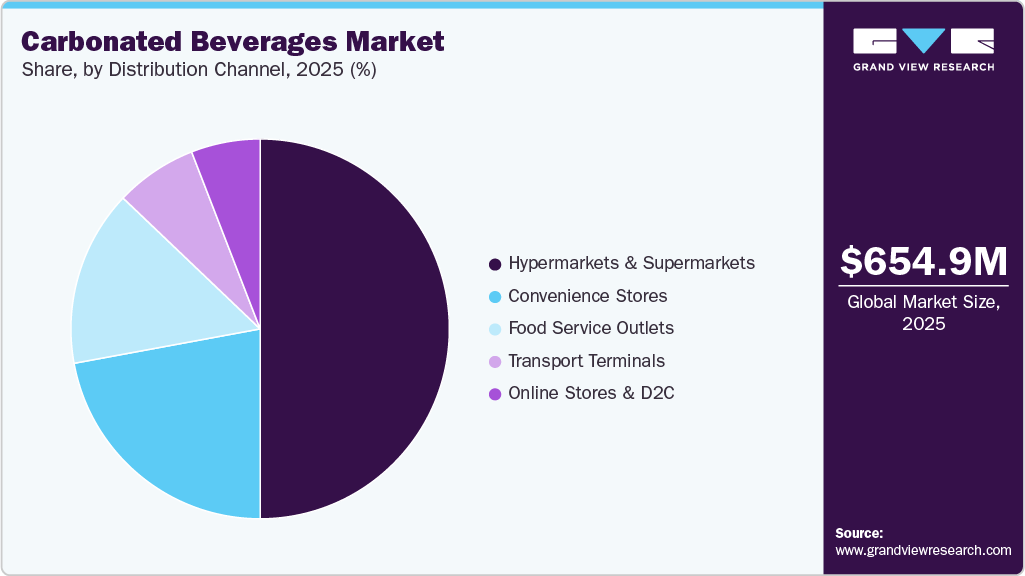
- By distribution channel: Hypermarkets & supermarkets segment held the largest market share of 50.0% in 2025.
Regional Highlights
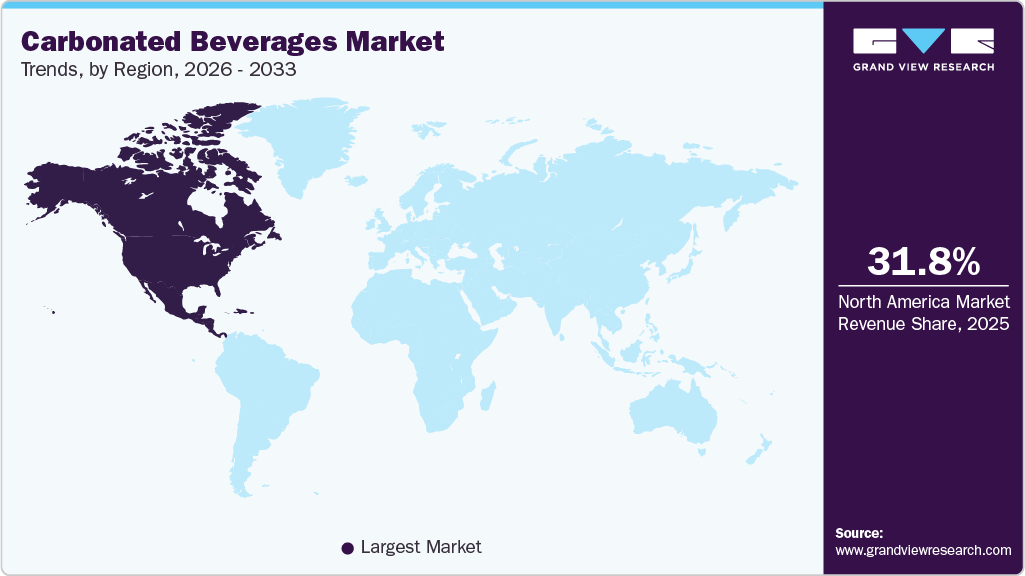
- Largest regional market: North America (31.8% revenue share, 2025)
- By country: U.S. held the largest market share in 2025
Market Size & Forecast
- Market size in 2025: USD 655.0 Million
- Estimated market size in 2026: USD 698.8 Million
- Projected market size by 2033: USD 1,070.2 Million
- CAGR (2026-2033): 6.3%
Three ways to get this report
Buy it, customize it, or ask a question.Ask an Analyst
Analyst response in 1 business day
- AccessReport author, directly
- Reply timeWithin 1 working day
- No sales callDirect answer only
- FormatEmail reply
- CostFree, no cost
Get the Full Report
What the study covers
- FormatsPDF · Excel · Dashboard
- Timeline2026–2033 annual, 2025 base
- Coverage20+ countries, 5 regions
- Companies10+ key players profiled
Customize the Report
20% free customization
- IncludeCountries, segments, points
- TailorTo your product definition
- ExtendDeeper competitor detail
- OrA fully bespoke study
- Turnaround5–10 working days
At the same time, the expansion of foodservice outlets and quick-service restaurant chains has further strengthened consumption, as carbonated drinks are commonly bundled with meals and combo offers, making them a standard beverage choice for many consumers. The carbonated beverage industry is increasingly shifting toward low- and zero-sugar beverages as consumers become more health-conscious and aim to reduce sugar intake. Concerns about health conditions such as Obesity and Type 2 Diabetes are encouraging consumers to choose beverages with fewer calories and reduced sugar content. In response, beverage companies are expanding their portfolios with diet and zero-sugar variants, using alternative sweeteners and improved formulations to maintain taste while offering healthier options.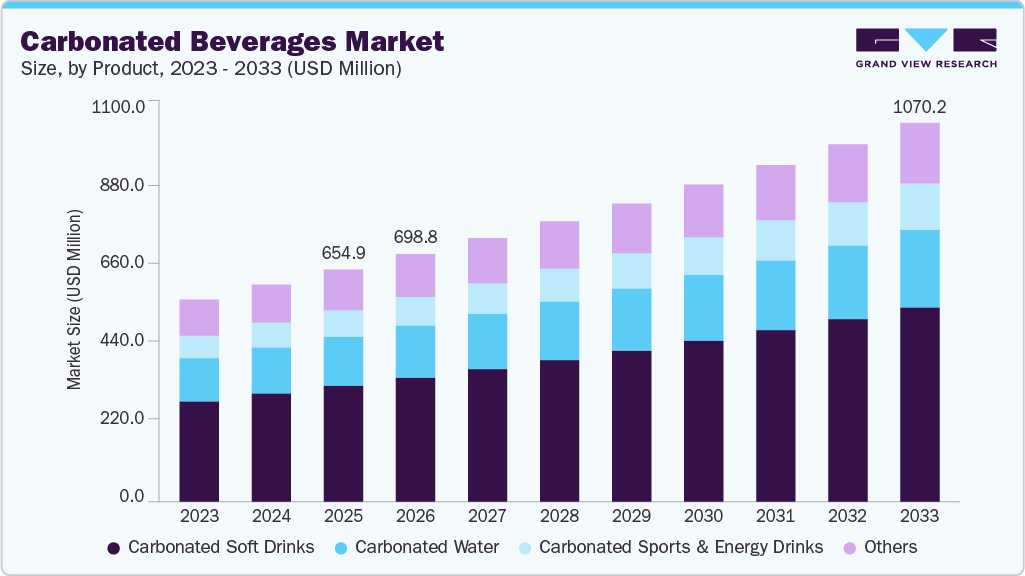 To learn more about this report, Download Free Sample Report
 Recent news coverage of the soda industry indicates a strong shift in consumer preferences toward reduced-sugar beverages. In several major markets, low- and no-sugar drinks accounted for nearly 60% of total soda sales volumes, highlighting the growing demand for healthier alternatives to traditional sugary soft drinks. Products such as Coca‑Cola Zero Sugar from The Coca‑Cola Company also experienced around 14% global volume growth in 2025, reflecting increasing consumer interest in sugar-free carbonated beverages as health awareness and sugar-reduction efforts continue to influence purchasing decisions.
Additionally, in the first half of 2025, approximately 55% of Varun Beverages' portfolio sales volume came from low-sugar or no-added-sugar drinks in India. This trend highlights a significant shift in consumer consumption habits, as more consumers are choosing beverages with reduced sugar content amid rising health awareness and growing concerns about excessive sugar intake.
The rising popularity of sparkling water and flavored carbonated drinks is a growing trend in the beverage industry, as consumers increasingly seek refreshing options with lower sugar and calorie content. Many health-conscious consumers are choosing sparkling water and lightly flavored carbonated drinks as alternatives to traditional sugary sodas because they offer the same fizzy experience with fewer artificial ingredients and reduced sweetness. This shift in preferences has encouraged beverage companies to expand their portfolios with flavored sparkling waters and other better-for-you carbonated beverage options.
For instance, in March 2026, Rubicon RAW announced the launch of new cherry-flavored energy drinks to expand its portfolio and capitalize on growing consumer demand for innovative flavors in the energy drink category. The new variants: Cherry Burst and Zero Added Sugar Cherry Raspberry offer both regular and no-added-sugar options to appeal to a wider range of consumers.
Consumer Insights
Flavor innovation plays an important role in consumer preferences within the carbonated beverage market. Consumers, particularly younger demographics, are drawn to unique and fruit-based flavors such as berry blends, tropical fruits, citrus combinations, and botanical infusions. These flavors offer variety and novelty, encouraging consumers to experiment with new beverage options beyond traditional cola flavors.
Consumers are increasingly paying attention to product ingredients and prefer beverages made with natural flavors, plant-based sweeteners, and fewer artificial additives. This growing demand for clean-label products is encouraging beverage companies to reformulate their drinks with more natural ingredients and clearly labeled formulations to build consumer trust and align with health-focused purchasing behavior.
For instance, in August 2025, Slice Soda introduced a new watermelon-flavored soda designed to combine classic soda taste with modern health benefits. The beverage contains a blend of prebiotics, probiotics, and postbiotics, positioning it within the growing functional soda category aimed at health-conscious consumers. In addition, the drink is formulated with natural ingredients, contains about 35 calories, and has only about 4 grams of sugar, offering a lower-sugar alternative to traditional sodas while still delivering a refreshing, fruity flavor.
Another emerging consumer preference is for beverages that provide functional health benefits in addition to refreshment. Many consumers are seeking drinks that contain ingredients such as vitamins, electrolytes, probiotics, or botanical extracts that support energy, digestion, or overall wellness. According to 2025 studies, around 63% of consumers are interested in beverages that support their health and well-being goals, underscoring the growing demand for functional drinks that offer benefits beyond basic hydration.
 To learn more about this report, Download Free Sample Report
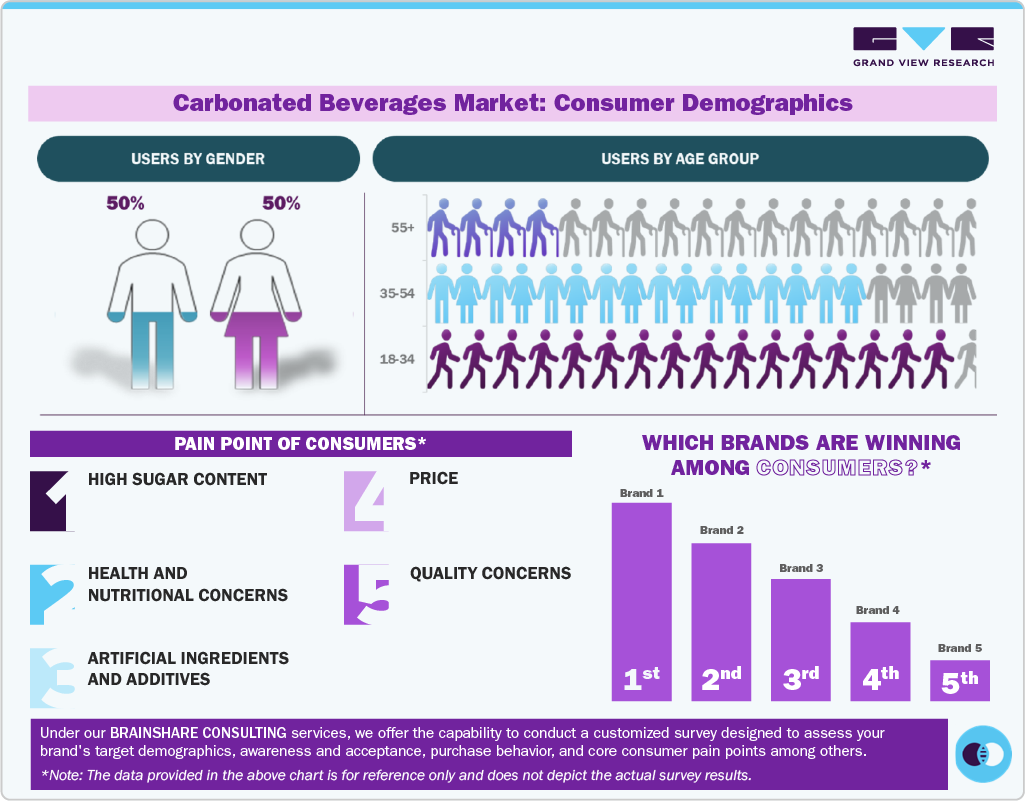
 Consumers are increasingly preferring low-sugar and zero-sugar carbonated beverages as awareness of the health impacts of excessive sugar consumption continues to rise. A 2025 consumer survey found that 75% of consumers were trying to limit or avoid sugar, including 61% who were attempting to reduce their intake and 14% who were avoiding it altogether. Among those limiting sugar, 63% specifically focused on reducing added sugars. In comparison, 63% of respondents expressed concern about the total amount of sugar they consume, and 56% about the type of sugar in their diet. These concerns are encouraging consumers to choose beverages with reduced or no added sugar, driving demand for diet and zero-sugar carbonated drink options.
Product Insights
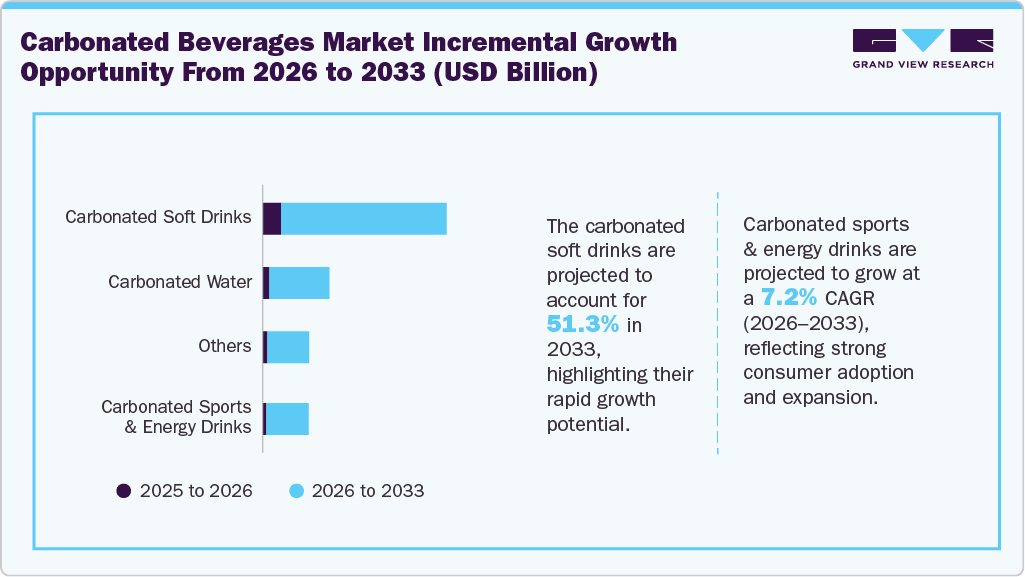
The carbonated soft drinks market held the revenue share of 50.0% in 2025, driven by its widespread popularity among consumers, diverse flavor offerings, and strong brand presence. Major companies have heavily invested in marketing and distribution, ensuring that carbonated soft drinks are accessible and appeal to a broad demographic. Furthermore, innovations such as low-calorie, sugar-free, and functional beverages have helped attract health-conscious consumers.
 To learn more about this report, Download Free Sample Report
 The carbonated sports & energy drinks segment is estimated to grow at a CAGR of 7.2% from 2026 to 2033 in the global carbonated beverages industry, driven by rising consumer demand for functional, convenient hydration solutions. With rising health awareness and growing numbers of fitness enthusiasts, individuals with active lifestyles are seeking beverages that provide hydration, energy, and performance-enhancing benefits. Innovations in product formulations, including lower sugar alternatives and added vitamins, are expected to drive growth over the coming years.
Flavor Insights
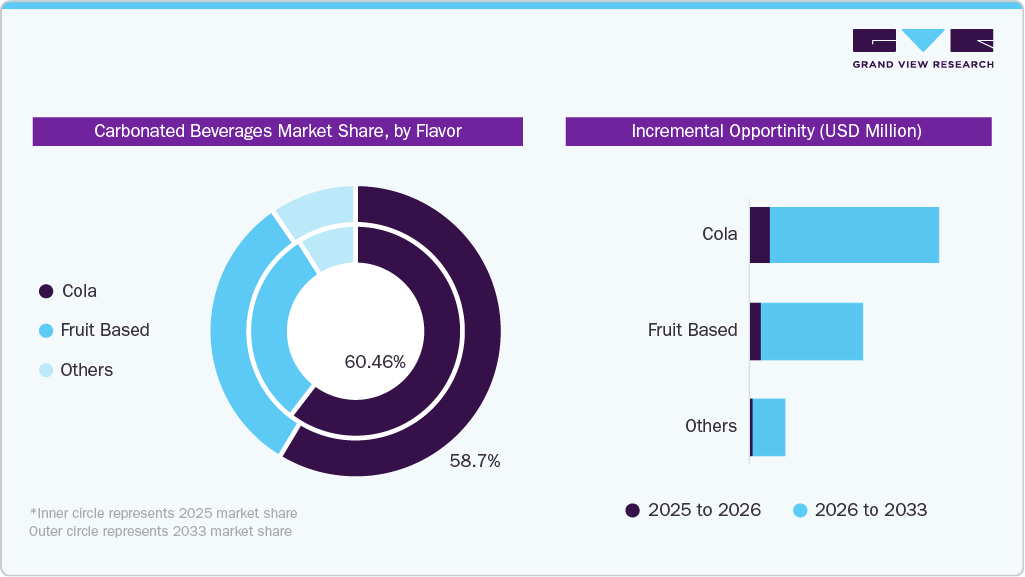
The cola flavor held the revenue share of 60.5% of the global carbonated beverages industry in 2025, due to its long-standing brand presence, balanced taste profile, and strong association with meals and social occasions. Major beverage companies such as The Coca-Cola Company and PepsiCo have promoted cola drinks globally for decades, creating strong consumer familiarity and loyalty. In addition, the flavor's combination of sweetness, mild acidity, and carbonation appeals to a broad range of consumers and pairs well with fast food commonly served at restaurants like McDonald's, which further supports its high worldwide consumption.
 To learn more about this report, Download Free Sample Report
 The fruit-based flavors segment is estimated to grow at a CAGR of 6.8% from 2026 to 2033, driven by rising consumer preference for natural healthy options. With growing health consciousness, consumers are shifting toward beverages that offer a blend of indulgence and wellness. This has led to an increasing demand for fruit-flavored carbonated drinks. These drinks provide a unique combination of taste, refreshment, and perceived health benefits from fruit extracts. For instance, in February 2026, Waterloo Sparkling Water introduced a new flavor, Banana Berry Bliss, along with lemon Italian and melon medley flavors, as part of its expanded sparkling water lineup. The drink features a unique blend of banana and berry flavors, with a creamy yet slightly tart profile, offering a refreshing, distinctive taste experience.
Distribution Channel Insights
The sale of carbonated beverages through hypermarkets & supermarkets held the revenue share of 50.0% of the global carbonated beverages industry in 2025. These retail outlets offer a one-stop shopping experience, providing consumers with easy access to a variety of carbonated beverages from multiple brands. Visible promotional activities, discounts, and bulk purchasing options attract price-sensitive customers.
 To learn more about this report, Download Free Sample Report
 The sale of carbonated beverages through online stores & D2C is estimated to witness a CAGR of 7.8% from 2026 to 2033. Consumers are increasingly turning to online platforms for easy access to a wide variety of beverages, including niche and premium options. Direct-to-consumer (D2C) brands offer personalized experiences, direct customer interactions, and better pricing. Furthermore, online stores offer home delivery, catering to the demand for convenience and expanding their reach into global markets.
Regional Insights
The carbonated beverages market in North America held the largest share of 31.8% in 2025, driven by the popularity of sparkling water for its refreshing qualities and low-calorie content. Consumers in the region are shifting toward healthier alternatives, leading to increasing interest in fruit-based, exotic, and craft-flavored carbonated drinks. In addition, the demand for unique and bold flavors, such as exotic fruits and artisanal blends, is fueling market expansion.
 To learn more about this report, Download Free Sample Report
 U.S. Carbonated Beverages Market Trends
The carbonated beverages market in the U.S. is estimated to grow at a CAGR of 5.2% from 2026 to 2033. The rise in popularity of functional carbonated drinks and the growing preference for premium and craft carbonated beverages are shaping the U.S. carbonated beverages industry. Consumers are increasingly seeking high-quality, artisanal drinks with unique flavors and premium ingredients, fueling demand for innovative products. Moreover, the surging demand for functional beverages that offer health benefits, such as enhanced immune function, improved gut health, and energy-boosting properties, is significantly shaping consumer preferences
The carbonated beverages market in Canada is estimated to grow at a CAGR of 6.5% from 2026 to 2033, attributed tothe shift toward healthier alternatives and the surging demand for seasonal and novelty offerings. Consumers are increasingly opting for low- and sugar-free functional drinks, compelling brands to innovate with healthier formulations. The appeal of limited-edition, seasonal flavors, and novelty products is gaining traction, creating excitement and attracting a wider audience.
Europe Carbonated Beverages Market Trends
The carbonated beverages market in Europe. is estimated to witness a CAGR of 6.0% from 2026 to 2033. The growth of non-alcoholic carbonated drinks and flavor innovation is set to propel the expansion of the carbonated beverages industry in Europe. As consumers increasingly seek healthier alternatives to traditional sodas, the demand for alcohol-free, refreshing options is rising. In addition, brands are focusing on flavor innovation, offering unique and exotic flavors to capture diverse consumer preferences.
The carbonated beverages market in Germany is estimated to witness a CAGR of 5.8% from 2026 to 2033. E-commerce platforms offer easy access to a wide variety of beverages, including low-sugar, organic, and functional carbonated drinks, catering to consumers' health-focused preferences. In particular, the diet carbonated beverages market is gaining momentum as consumers increasingly opt for reduced-calorie and sugar-free alternatives. D2C sales enable brands to connect directly with consumers, offering personalized options and subscription services. As demand for healthier and innovative products continues to rise, the combined impact of these trends is expected to further propel the growth of the carbonated beverages market in Germany.
The UK carbonated beverages market is estimated to witness at a CAGR of 4.6% from 2026 to 2033. The rise of low-alcohol beverages, including hard seltzers, and the shift toward non-traditional carbonated drinks are expected to favor the growth of the carbonated beverages industry in the UK As consumers increasingly seek healthier and lighter alternatives to traditional alcoholic drinks, hard seltzers, with their low-calorie content and refreshing flavors, are gaining popularity. Furthermore, non-traditional carbonated drinks, such as kombucha and sparkling water, are attracting health-conscious consumers looking for functional and natural options.
Asia Pacific Carbonated Beverages Market Trends
The carbonated beverages market in Asia Pacific is estimated to witness at a CAGR of 7.3% from 2026 to 2033, due to rising disposable income and the influence of Western brands. As consumers' purchasing power increases, there is a higher demand for premium, branded carbonated drinks. Western brands, such as Coca-Cola and Pepsi, continue to have a strong presence and engage in extensive marketing and innovation. The growing preference toward Western lifestyle trends and flavors is leading to increased adoption of carbonated beverages in the region.
The carbonated beverages market in China is estimated to witness a CAGR of 6.4% from 2026 to 2033. The growing demand for premium carbonated beverages in China is anticipated to drive market expansion, as consumers increasingly seek higher-quality, unique, and imported products. With rising disposable incomes and a preference for distinctive flavors, premium options are gaining strong traction. In parallel, the low and zero calorie carbonated beverages market is expanding rapidly, supported by rising health awareness and demand for reduced-sugar alternatives.
Additionally, the integration of traditional Chinese tea culture into carbonated drinks is attracting health-conscious consumers looking for innovative and refreshing options. Tea-based carbonated beverages combine the perceived health benefits of tea with the fizzy appeal of sodas, aligning well with local taste preferences. This trend, along with the growing inclination toward low and zero calorie offerings, is expected to further accelerate growth in China’s carbonated beverages market.
The carbonated beverages market in Japan is estimated to witness at a CAGR of 6.6% from 2026 to 2033. The focus on eco-friendly packaging and cultural and regional preferences are expected to accelerate the market growth across Japan. As environmental awareness grows, consumers and brands are prioritizing sustainable packaging solutions, such as recyclable cans and bottles, to reduce plastic waste. In addition, Japan's strong cultural emphasis on unique, locally inspired flavors are boosting demand for region-specific carbonated drinks that cater to local tastes.
The India carbonated beverages market is becoming more competitive as local brands such as Campa and Lahori Zeera expand their presence and challenge global players. These domestic brands are gaining market share by offering competitive pricing, local flavors, and strong regional distribution networks.
Health awareness among Indian consumers is gradually influencing beverage choices. Many consumers are shifting toward low- or no-added-sugar drinks, and this trend is already evident in sales data. For example, in 2025, about 55% of a major beverage bottler's sales volume in India came from low- or no-sugar drinks, reflecting growing demand for healthier beverage options.
Central and South America Carbonated Beverages Market Trends
The carbonated beverages market in Central and South America is estimated to witness at a CAGR of 6.8% from 2026 to 2033.Consumers show strong interest in fruit- and tropical-flavored products, reflecting local taste preferences. Beverage manufacturers are expanding their product portfolios with citrus, tropical, and berry flavors to attract consumers who prefer refreshing, regionally inspired drinks.
Middle East and Africa Carbonated Beverages Market Trends
The carbonated beverages market in Middle East and Africa is estimated to witness at a CAGR of 6.7% from 2026 to 2033. The market is strongly influenced by hot weather, which prompts consumers to seek refreshing, cooling drinks. High temperatures throughout much of the year increase consumption of chilled beverages, including sodas and sparkling drinks, as consumers seek quick refreshment and hydration.
Key Carbonated Beverages Company Insights
The global carbonated beverages market comprises a mix of well-established beverage manufacturers and emerging specialty brands that continue to innovate in product formulations, flavor development, and the integration of functional ingredients to meet evolving consumer preferences. Leading companies focus on producing a wide range of carbonated drinks, including cola beverages, fruit-flavored sodas, sparkling water, carbonated energy drinks, and functional sparkling beverages, while emphasizing low-sugar formulations, natural ingredients, and clean-label products to appeal to health-conscious consumers.
 To learn more about this report, Download Free Sample Report
 Key Carbonated Beverages Companies:
The following key companies have been profiled for this study on the carbonated beverages market.
- Anadolu Group
- Danone
- JONES
- Keurig Dr Pepper
- Monster Energy Company
- National Beverage Corp.
- PepsiCo
- Refresco Group
- SodaStream Inc.
- SUNTORY BEVERAGE & FOOD LIMITED
- The Coca‑Cola Company
Recent Developments
-
In March 2026, Boost Drinks launched a new functional soda brand called “It’s Giving.” The drink was introduced in 330-ml cans and in three flavors: Apple & Elderflower, Black Cherry, and Mango & Passionfruit. The soda was formulated as a gut-friendly beverage containing about 6 g of plant-based fiber per can to support digestive health, offering consumers an affordable functional soft drink option.
-
In November 2025, Radnor Hills launched a new carbonated soft drink range called Radnor Spring, expanding its beverage portfolio with a functional, low-calorie option. The new range featured sparkling spring water enriched with B vitamins and was introduced in four fruity flavors, including Black Cherry & Blackcurrant, Mango & Passionfruit, Pineapple & Grapefruit, and Strawberry & Raspberry.
Carbonated Beverages Market Report Scope
Report Attribute
Details
Market size in 2025
USD 655.0 million
Estimated Market size in 2026
USD 698.8 million
Projected Market size by 2033
USD 1,070.2 million
Growth rate
CAGR of 6.3% from 2026 to 2033
Actual data
2021 - 2025
Forecast period
2026 - 2033
Quantitative units
Revenue in USD million, and volume in liters, CAGR from 2026 to 2033
Report coverage
Revenue forecast, company ranking, competitive landscape, growth factors, and trends
Segments covered
Product, flavor, distribution channel, region
Regional scope
North America; Europe; Asia Pacific; Central & South America; MEA
Country scope
U.S.; Canada; Mexico; UK; Germany; France; Italy; Spain, China; India; Japan; South Korea; Australia & New Zealand; Brazil; South Africa
Key companies profiled
Anadolu Group; Danone; JONES; Keurig Dr Pepper; Monster Energy Company; National Beverage Corp.; PepsiCo; Refresco Group; SodaStream Inc.; SUNTORY BEVERAGE & FOOD LIMITED; The Coca‑Cola Company
Customization scope
Free report customization (equivalent up to 8 analyst working days) with purchase. Addition or alteration to country, regional, and segment scope.
Pricing and purchase options
Avail customized purchase options to meet your exact research needs. Explore purchase options
Global Carbonated Beverages Market Report Segmentation
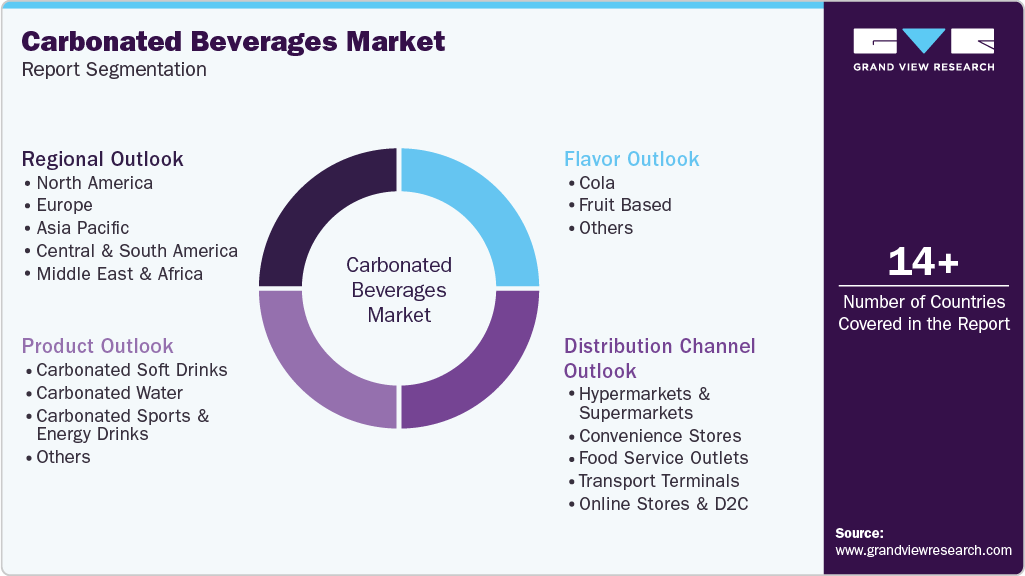
This report forecasts revenue growth at global, regional, and country levels and provides an analysis of the latest industry trends in each of the sub-segments from 2021 to 2033. For the purpose of this study, Grand View Research has segmented the global carbonated beverages market report based on product, flavor, distribution channel, and region:
 To learn more about this report, Download Free Sample Report
 -
Product Outlook (Revenue in USD Million; Volume in Liters; 2021 - 2033)
-
Carbonated Soft Drinks
-
Carbonated Water
-
Carbonated Sports & Energy Drinks
-
Others
-
-
Flavor Outlook (Revenue in USD Million; Volume in Liters; 2021 - 2033)
-
Cola
-
Fruit Based
-
Others
-
-
Distribution Channel Outlook (Revenue in USD Million; Volume in Liters; 2021 - 2033)
-
Hypermarkets & Supermarkets
-
Convenience Stores
-
Food Service Outlets
-
Transport Terminals
-
Online Stores & D2C
-
-
Regional Outlook (Revenue in USD Million; Volume in Liters; 2021 - 2033)
-
North America
-
U.S.
-
Canada
-
Mexico
-
-
Europe
-
Germany
-
UK
-
France
-
Spain
-
Italy
-
-
Asia Pacific
-
China
-
Japan
-
India
-
South Korea
-
Australia & New Zealand
-
-
Central & South America
-
Brazil
-
-
Middle East & Africa
-
South Africa
-
-
Frequently Asked Questions About This Report
Key factors that are driving the market growth include growing need for premium drinks and new product launches by key companies including PepsiCo and the Coca Cola Company.
Some key players operating in the carbonated beverages market include ANADOLU GRUBU A.Ş.; COCA-COLA FEMSA; Danone; JONES SODA CO.; Keurig Dr Pepper Inc.; Monster Energy Company; National Beverage Corp.; PepsiCo; Refresco Group; SODASTREAM INTERNATIONAL LTD.; SUNTORY BEVERAGE & FOOD LIMITED.; The Coca-Cola Company.
The cola flavor segment led with a 60.5% revenue share in 2025, while the fruit-based flavors segment is estimated to grow at a CAGR of 6.8% from 2026 to 2033.
The hypermarkets & supermarkets segment led with a 50.0% revenue share in 2025, while the online stores & D2C segment is estimated to witness a CAGR of 7.8% from 2026 to 2033.
The global carbonated beverages market size was estimated at USD 655.0 million in 2025 and is expected to reach USD 698.8 million in 2026.
The global carbonated beverages market is expected to grow at a compound annual growth rate of 6.3% from 2026 to 2033 to reach USD 1,070.2 million by 2033.
The carbonated soft drinks market held the revenue share of 50.0% in 2025, driven by its widespread popularity among consumers, diverse flavor offerings, and strong brand presence.
About the Author(s)
Consumer F&B Research Team
Consumer Goods · Consumer F&BThis report was authored by the consumer f&b research team at Grand View Research - comprising two research analysts, one senior research analyst, and one industry expert - with specialized expertise in the consumer f&b segment of the consumer goods industry. All findings are based on proprietary consumer goods databases, executive interviews, and regulatory analysis, subject to internal peer review prior to publication.
Last Updated:
Speak to Analyst

Customize this report to your needs - add regions, segments, or data points, with 20% free customization.
Or view our licence options:


ISO 9001:2015 & 27001:2022 Certified
We are GDPR and CCPA compliant! Your transaction & personal information is safe and secure. For more details, please read our privacy policy.


