
- Home
- »
- Consumer F&B
- »
-
Cheese Market Size & Share Report, 2026-2033GVR Report cover

Cheese Market (2026 - 2033)
Size, Share & Trends Analysis Report By Product (Cheddar, Mozzarella, Parmesan, Blue Cheese), By Source (Animal-based, Plant-based), By Type (Natural, Processed), By Distribution Channel (B2C/Retail, B2B), By Region, And Segment Forecasts
Market Size, 2025
$215.5BMarket Estimate, 2026
$227.2BMarket Forecast, 2033
$337.4BCAGR, 2026–2033
5.8%Cheese Market Summary
The global cheese market size was valued at USD 215.5 billion in 2025 and is projected to grow from USD 227.2 billion in 2026 to USD 337.4 billion by 2033, at a CAGR of 5.8% from 2026 to 2033. The market in Europe dominated with a revenue share of 34.7% in 2025. The growth is attributed to evolving consumer tastes and preferences for diverse, exotic flavors in food products, the growing demand for plant-based cheese products, the introduction of new and unique cheese varieties, and the globalization of culinary trends.
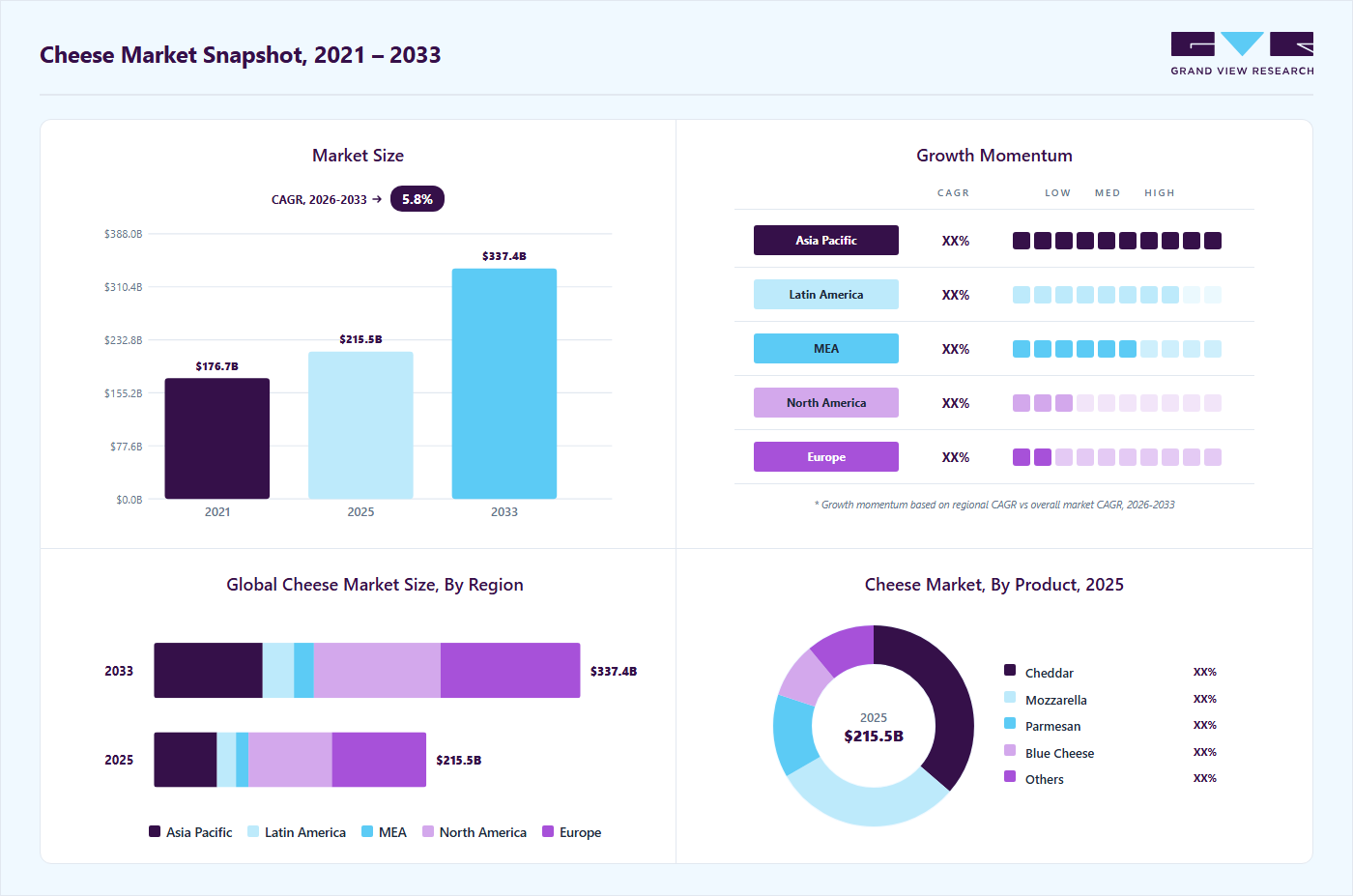 Source: Grand View Research, IR Documents, Primary Interviews, Paid DatabasesTo learn more about this report,
 Download Free Sample Report
 Key Market Trends & Insights
- By product: Cheddar cheese segment held the largest market share of 36.3% in 2025.
- By source: Animal-based cheese segment held the largest market share of 98.2% in 2025.
- By type: Natural cheese segment held the largest market share of 80.6% in 2025.
- By distribution channel: B2C/retail segment held the largest market share of 50.3% in 2025.
Regional Highlights
- Largest regional market: Europe (34.7% revenue share, 2025)
- By country: UK held the largest market share in 2025
Market Size & Forecast
- Market size in 2025: USD 215.5 Billion
- Estimated market size in 2026: USD 227.2 Billion
- Projected market size by 2033: USD 337.4 Billion
- CAGR (2026-2033): 5.8%
GVR research-powered AIAsk Prism AI about the cheese marketGet cited answers from GVR research on market growth, segments, regulations and forecasts.Start with✓ Source-linked answers ✓ Market-specific context ✓ Traceable figuresExplore Prism AI ↗
The granular cheese market is increasingly shifting toward sustainability and operational efficiency, recognizing the environmental impact of traditional cheese-making processes. In response to concerns about waste generated during whey separation, manufacturers in the granular cheese segment are adopting innovative production techniques that utilize specialized protein blends, particularly micellar casein, to optimize yield and reduce by-product waste. These advancements not only improve resource utilization but also align with growing consumer and regulatory demand for environmentally responsible dairy processing practices, supporting long-term growth and sustainability within the cheese industry.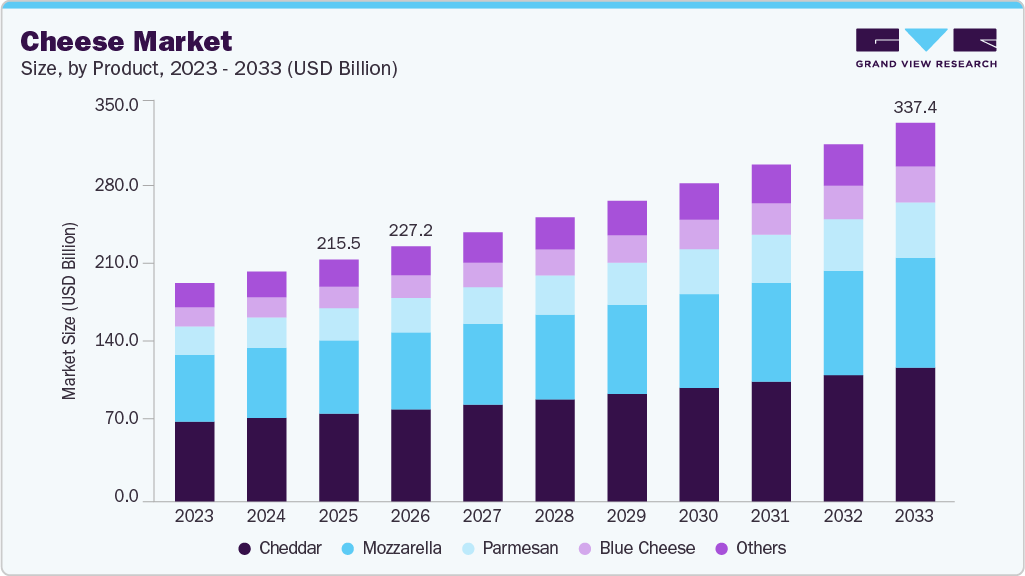 To learn more about this report, Download Free Sample Report
 Micellar casein enables more eco-friendly cheese production by preventing whey separation, thereby reducing costs and enhancing sustainability. The adoption of mature technology involves creating a stable, emulsified pre-cheese mixture, resulting in a glossy, white base that undergoes high-temperature treatments. This not only addresses environmental concerns but also proves advantageous in regions with limited dairy resources, such as Southeast Asia, the Middle East, and Sub-Saharan Africa. The integration of specialized proteins into cheese-making processes is a sustainable evolution in food technology, promising a new generation of cheeses that are not only delicious but also responsibly made.
The mozzarella cheese market is anticipated to witness significant innovation, driven by rising demand for diverse flavors and the rapid rise of plant-based cheese alternatives. Consumers' evolving tastes and preferences are fostering a competitive landscape in which manufacturers in the mozzarella cheese segment are compelled to introduce novel flavor-infused varieties, organic options, low-fat formulations, and creative plant-based alternatives to cater to a more discerning, health-conscious customer base. This dynamic shift toward product diversification and functional innovation is expected to accelerate growth and strengthen the overall development of the mozzarella cheese industry.
Market Dynamics
The growing demand for convenience and processed foods is a major factor driving the global cheese market. Rapid urbanization, busy work schedules, and changing consumer lifestyles have increased the preference for ready-to-eat and easy-to-prepare food products. Cheese is widely used in convenience foods such as pizzas, burgers, sandwiches, pasta, frozen meals, snacks, and bakery products due to its flavor, texture, and versatility. The expansion of quick-service restaurants (QSRs), fast-food chains, and online food delivery platforms has further boosted cheese consumption worldwide. In addition, rising disposable incomes and increasing exposure to Western cuisines in emerging economies are encouraging greater use of cheese in daily diets. Food manufacturers are also introducing innovative processed cheese formats, including slices, spreads, cubes, and shredded cheese, to meet evolving consumer preferences. The increasing popularity of packaged snacks and convenience meals among younger consumers continues to strengthen cheese demand across both developed and developing markets globally.
Health concerns associated with the fat, sodium, and calorie content of cheese are acting as a major restraint on the global cheese market. Many cheese products contain high levels of saturated fat and sodium, which are linked to obesity, high blood pressure, cardiovascular diseases, and cholesterol-related health issues. As consumers become increasingly health-conscious, many are reducing their intake of high-calorie dairy products and shifting toward healthier dietary alternatives. Growing awareness regarding balanced nutrition and preventive healthcare is encouraging demand for low-fat, low-sodium, lactose-free, and plant-based cheese substitutes. In addition, government health campaigns and stricter food labeling regulations are influencing consumers to carefully monitor dairy consumption. Individuals with lactose intolerance or dairy allergies also limit the potential consumer base for traditional cheese products. These changing dietary preferences are creating challenges for cheese manufacturers, forcing companies to invest in healthier product formulations and clean-label offerings while maintaining taste, texture, and product quality to remain competitive in the market.
Consumer Insights
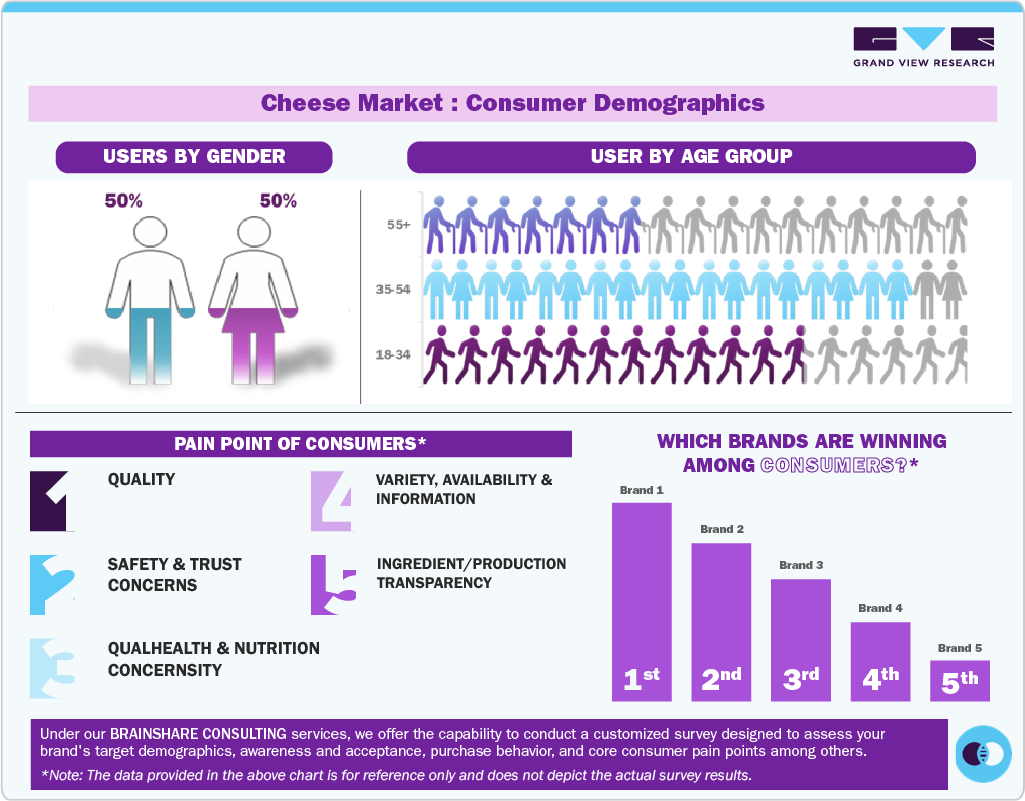
Across the globe, cheese consumers are increasingly driven by a blend of health consciousness, sustainability concerns, and a desire for culinary adventure. Millennials and Gen Z shoppers, who now represent a sizable share of the market, gravitate toward “better‑for‑you” options such as reduced‑fat, high‑protein, and probiotic‑rich cheeses, while also scrutinizing ingredient provenance and environmental impact. This group is willing to pay a premium for products labeled organic, grass‑fed, or produced with a low carbon footprint, prompting manufacturers to launch transparent supply‑chain stories and eco‑friendly packaging. Simultaneously, taste‑driven experimentation fuels demand for novel flavor profiles, think infused cheeses with global spices, smoked varieties, and hybrid dairy‑plant blends, allowing brands to differentiate themselves in saturated categories and capture the adventurous palate of today’s globally connected consumers.
 To learn more about this report, Download Free Sample Report
 The way cheese is bought has transformed dramatically, with omnichannel shopping now the norm. In mature markets like Europe and North America, e‑commerce platforms and subscription services have surged, offering curated cheese assortments delivered directly to doors, while in emerging economies (e.g., India, Brazil), rapid‑growth retail formats such as hypermarkets, modern trade, and even convenience‑store “on‑the‑go” slices drive volume.
Product Insights
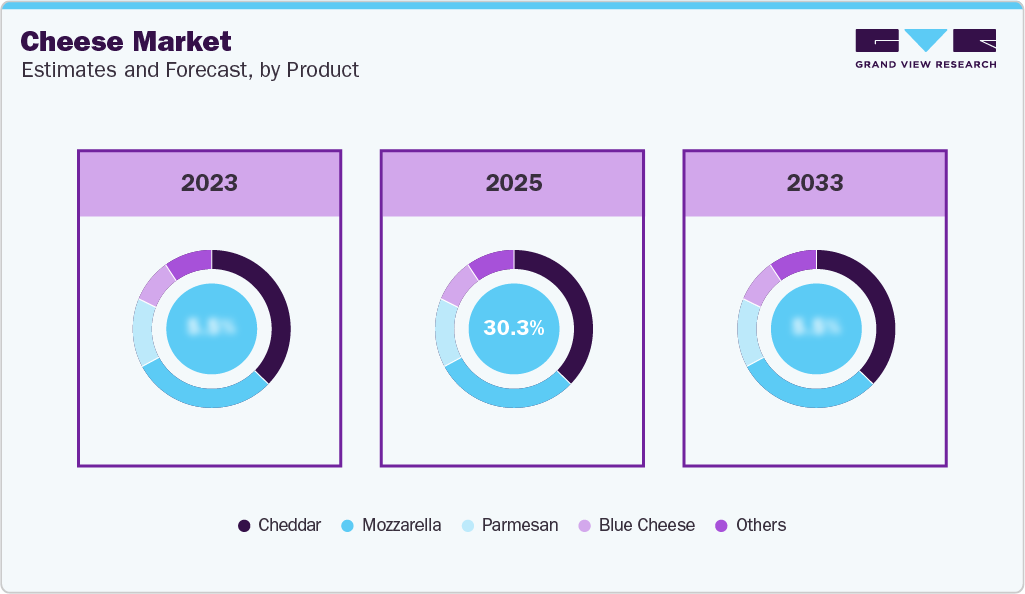
The cheddar cheese segment accounted for 36.3% of the cheese market in 2025. The surge in snacking and convenience eating, amplified by on‑the‑go lifestyles, fuels demand for pre‑packaged Cheddar snacks, cheese sticks, and ready‑to‑melt slices used in sandwiches, burgers, and pizza. Retail chains and e‑commerce platforms are expanding shelf space for these convenient formats, capitalizing on the cheese’s meltability, versatility, and long shelf life. Moreover, traditional block and sliced Cheddar is being reinvented through artisanal aging techniques and flavor infusions (e.g., smoked, herb‑crusted, and aged‑to‑sharpness profiles), catering to consumers seeking gourmet yet familiar taste experiences.
 To learn more about this report, Download Free Sample Report
 The parmesan cheese segment is projected to grow at a CAGR of 7.0% from 2026 to 2033. The demand is primarily driven by the rising global popularity of Italian cuisine and by growing consumer health awareness. As dishes like pasta, pizza, risotto, and salads gain traction across restaurants and home kitchens, authentic cheeses such as Parmigiano Reggiano have become essential ingredients for delivering traditional flavor and texture. At the same time, health-conscious consumers are favoring Parmesan because it is a naturally aged cheese rich in protein and calcium, with a lower lactose content than many soft cheeses.
Source Insights
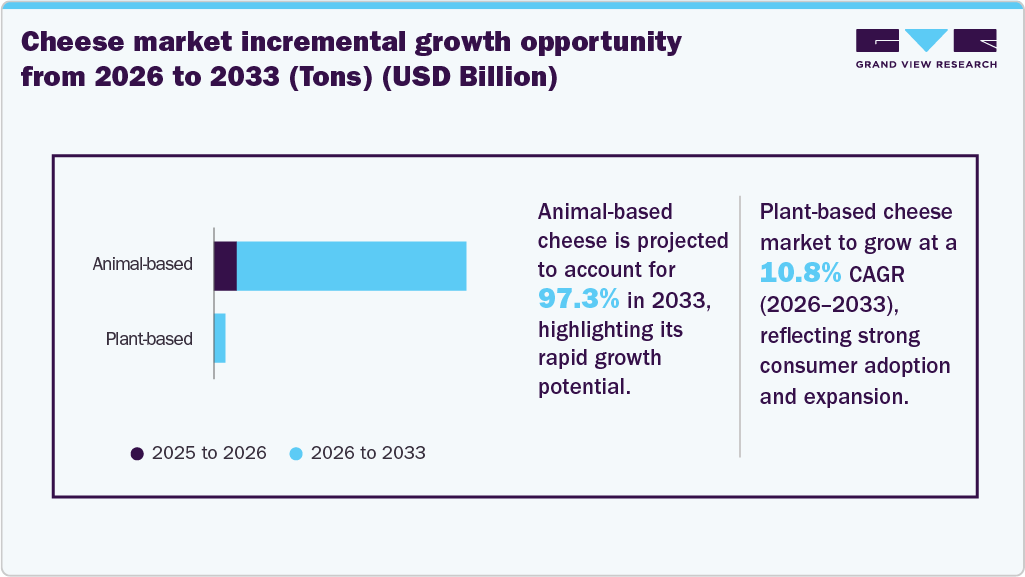
The animal-based cheese segment led the cheese market, accounting for a revenue share of 98.2% in 2025. This is attributed to the traditional and widespread consumption of cheese derived from animal milk, reflecting established preferences and familiar tastes among consumers. The popularity of conventional cheese and the high demand for cheese made from cow, goat, and other milk sources are expected to drive the segment growth.
 To learn more about this report, Download Free Sample Report
 The plant-based cheese segment is projected to grow at a CAGR of 10.8% from 2026 to 2033. This growth is driven by shifting consumer preferences towards plant-based diets, driven by health and environmental considerations due to increasing awareness about lactose intolerance and a growing vegan & flexitarian population. This is also encouraging innovation and investment in this sector to meet the rising demand for sustainable and cruelty-free alternatives to traditional dairy products. The plant-based cheese segment is further categorized into soy-based, cashew-based, almond-based, coconut-based cheese, etc.
Type Insights
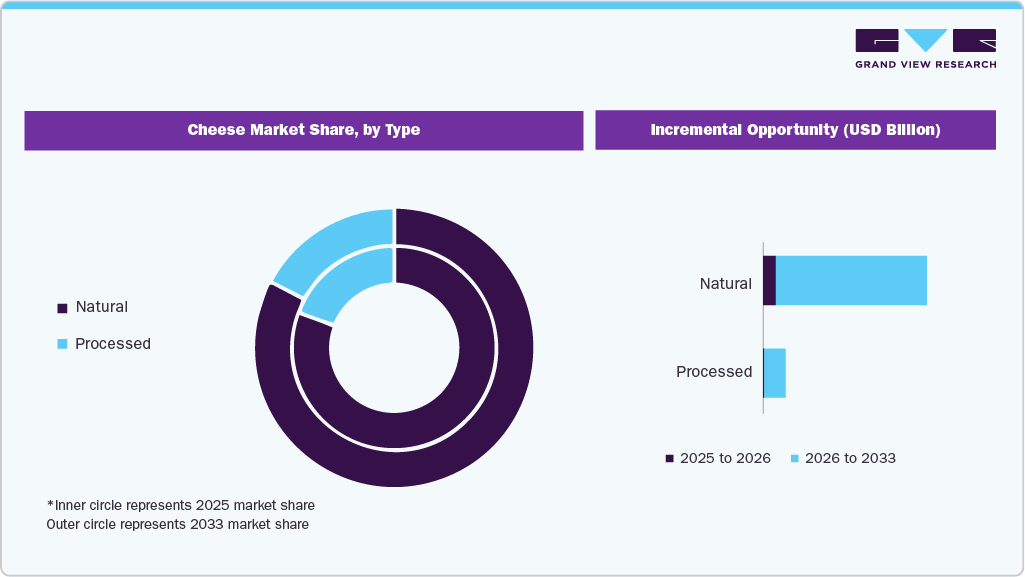
The natural cheese industry segment held a revenue share of 80.6% in 2025. It is perceived as fresh, authentic, and minimally processed. Consumers increasingly prefer clean-label foods with simple ingredients, and natural cheese typically contains only milk, cultures, salt, and enzymes, which builds trust and transparency. It also offers better taste, texture, and nutritional value, including higher protein and calcium levels than processed varieties.
 To learn more about this report, Download Free Sample Report
 The processed cheese market segment is projected to grow at a CAGR of 4.2% from 2026 to 2033. Processed cheese is sold in various forms, such as slices, cubes & blocks, spreads, and grated & shredded.Cheese slices accounted for a revenue share of around 59.69% in 2025. The demand for processed cheese, particularly processed cheese slices, is driven by a preference for convenience as these slices are pre-portioned and easy to use, making them ideal for quick snacks, sandwiches, and food preparation. Processed cheese slices also offer consistent quality, uniform thickness, and easy melting, enhancing their versatility across a range of culinary applications. In addition, the extended shelf life and convenient packaging contribute to their popularity among consumers seeking convenient and long-lasting dairy options.
Distribution Channel Insights
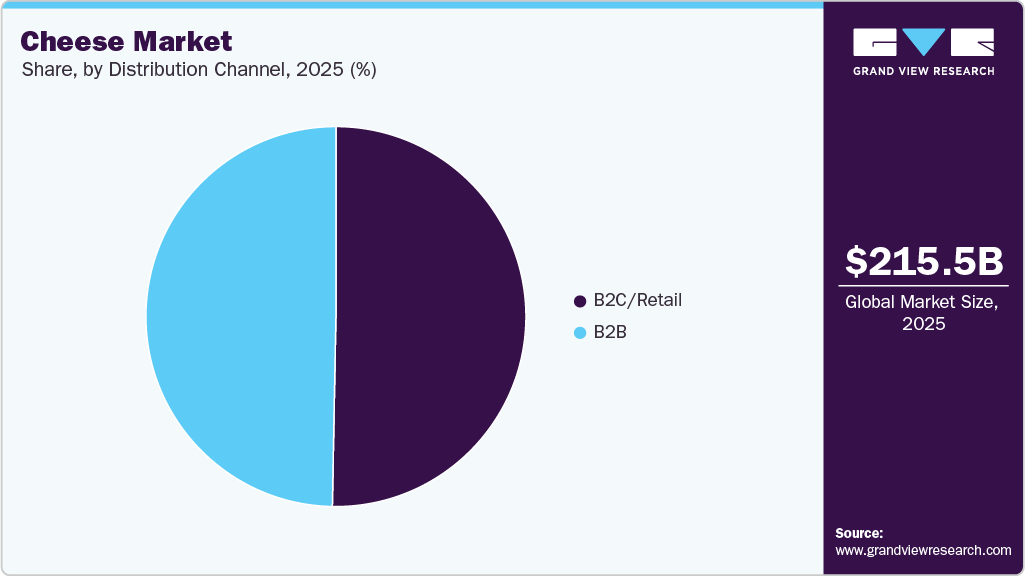
The sales of cheese through the B2C/retail channel accounted for a share of more than 50.3% in 2025. This is attributed to the growing consumer preference for convenient, diverse, and high-quality cheese options. The culinary trend, coupled with increased at-home cooking, has driven demand for cheese through hypermarkets/supermarkets. Retailers in various markets are revitalizing their specialty cheese programs by diversifying their offerings. Some are emphasizing domestic cheeses due to stable pricing compared to fluctuating import prices. For instance, the growing variety in retail in the U.S. includes U.S. versions of European favorite cheeses, reducing shipping costs. Retailers are enhancing cheese display areas, running in-store promotions, and organizing themed events to boost sales of specialty/artisanal cheeses.
 To learn more about this report, Download Free Sample Report
 The B2B distribution channel segment is projected to grow at a CAGR of 6.1% from 2026 to 2033. It includes both the food service industry and the food & beverage processing industry. Among food & beverage applications, cheese-based snacks accounted for a revenue share of 36.73% in 2025. The growing demand for healthy, culinary snacks is driving demand for snack products. Manufacturers are innovating exciting, locally inspired cheese flavors to appeal to consumers, particularly in Asia.
Regional Insights
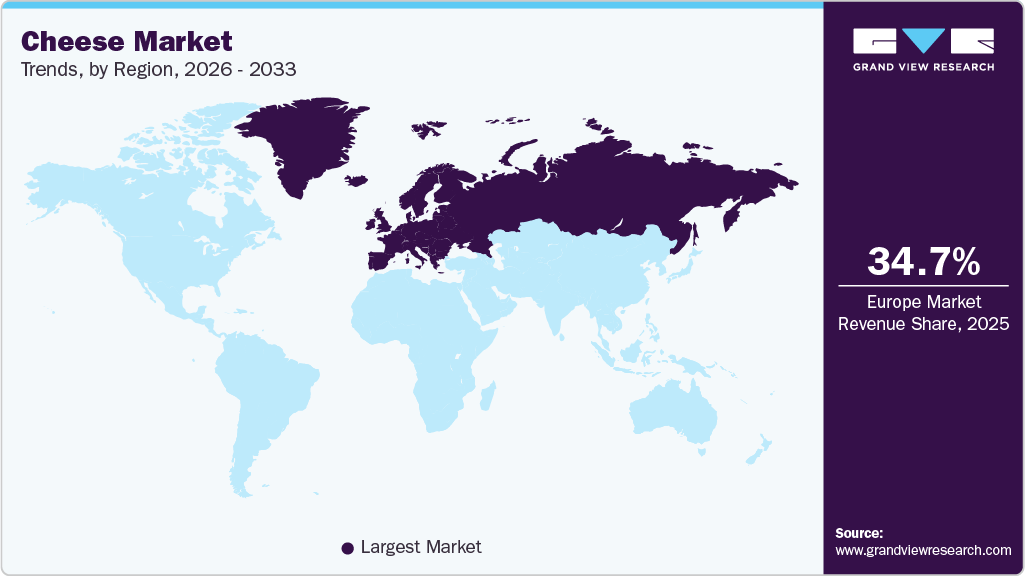
The cheese market in Europe accounted for a share of more than 34.7% in 2025. The demand for cheese is growing in Western European countries due to evolving consumer preferences, increased adoption across diverse culinary applications, and the introduction of innovative cheese varieties that cater to a widening consumer base. According to the per-capita data compiled by CLAL, the EU-27 average cheese consumption in 2024 was about 21.32 kg per person.
 To learn more about this report, Download Free Sample Report
 The cheese market in the UK is projected to grow at a CAGR of 5.0% from 2026 to 2033. Consumer preference shifts in the UK reflect a growing appetite for premium, artisanal, and specialty varieties alongside everyday staples. While traditional options like Cheddar remain widely consumed, shoppers are increasingly exploring higher-quality and regionally distinctive cheeses such as Stilton and farmhouse Cheddar. Consumers seeking unique flavors, authentic production methods, and superior quality, often influenced by food culture and dining experiences, drive this trend.
The France cheese market is expected to grow over the forecast period. Cheese consumption is deeply embedded in French culinary culture, forming an essential part of everyday meals across households. In France, a significant majority of households regularly purchase dairy cheese, which is commonly served at lunch or dinner, often as a dedicated cheese course before dessert. Iconic varieties such as Brie, Camembert, and Roquefort reflect strong regional traditions and protected production methods, reinforcing cheese’s cultural importance.
North America Cheese Market Trends
The cheese industry in North America is projected to grow at a CAGR of 5.4% from 2026 to 2033. Growing vegan, flexitarian, and lactose-intolerant consumer segments seeking dairy alternatives without compromising the taste and texture drive the rise of plant-based cheese in North America. In countries like the U.S. and Canada, increasing awareness of health, sustainability, and animal welfare concerns has accelerated demand for non-dairy options made from ingredients such as almonds, cashews, soy, and coconut oil. Continuous product innovation has significantly improved meltability and flavor profiles, making plant-based cheese more appealing for everyday uses like pizzas, sandwiches, and snacks, thereby supporting its steady market expansion.
U.S. Cheese Market Trends
The cheese industry in the U.S. is projected to grow at a CAGR of 5.8% from 2026 to 2033. The USDA data revealed that cheese consumption has continued to play a pivotal role in offsetting the decline in fluid beverage milk sales. According to the data, U.S. per capita cheese consumption reached 17.79 kg (approximately 39.2 pounds) in 2024, reflecting a marginal 0.32% decline from 2023 (17.85 kg) but remaining near historically high levels. Overall consumption has risen significantly over the long term, driven by changing consumer preferences and strong demand for popular American cheese varieties such as cheddar, Monterey Jack, and pepper jack.
The Canada cheese market is expected to grow during the forecast period. Foodservice demand plays an effective role in driving the market growth, as restaurants, quick-service chains, cafés, and pizzerias use large volumes of cheese across their menus. Popular items such as burgers, sandwiches, pasta, and especially pizza heavily rely on varieties like cheddar and mozzarella, ensuring consistent bulk demand and strengthening the market for cheddar cheese across foodservice channels. As dining-out culture and food delivery services continue to expand across Canada, operators increasingly seek high-quality, specialty, and value-oriented cheddar products to enhance flavor and menu differentiation, further supporting the overall market growth alongside steady retail sales.
Asia Pacific Cheese Market Trends
The cheese industry in Asia Pacific is projected to grow at a CAGR of 7.1% from 2026 to 2033. The growth in Western-style eating and foodservice is a major driver of cheese demand across the Asia Pacific. The rising popularity of pizza, burgers, pasta, and baked dishes, primarily influenced by global fast-food chains and international restaurant brands, has increased cheese usage in urban markets. Countries such as China, India, and South Korea are witnessing substantial expansion in quick-service restaurants and food delivery platforms that use cheese as a core ingredient. This shift in dietary habits, particularly among younger consumers, is accelerating the adoption of cheese across both dining-out and at-home consumption.
The China cheese market is anticipated to grow over the forecast period. Urban and young consumers are key market growth drivers, as they are more open to experimenting with international cuisines and modern food trends. In major cities, millennials and Gen-Z consumers frequently dine at Western-style restaurants and order through food delivery platforms, thereby increasing exposure to cheese-based dishes such as pizza, pasta, and baked goods that use grated and powdered cheese. This evolving consumption pattern is significantly supporting the expansion of the market for granular cheese across foodservice and retail channels. Additionally, this demographic is highly influenced by social media, global food culture, and convenience-oriented lifestyles, encouraging the integration of granular cheese into both Western meals and innovative fusion recipes at home.
The cheese market in India is projected to grow during the forecast period. Retail expansion and the growing influence of e-commerce are significantly boosting cheese consumption in India. The rapid spread of supermarkets, hypermarkets, and modern retail chains in urban and semi-urban areas has improved product visibility and cold-chain availability, making cheese more accessible to first-time buyers. Additionally, online grocery platforms and quick-commerce apps allow consumers to conveniently purchase a broader range of domestic and imported cheese varieties, often supported by discounts and doorstep delivery. This enhanced accessibility and convenience are accelerating household adoption and repeat purchases nationwide.
Central & South America Cheese Market Trends
The Central & South America cheese industry is projected to grow at a CAGR of 6.5% from 2026 to 2033. The expansion of quick-service restaurants, pizzerias, burger chains, and café culture across urban centers in Central & South America has significantly increased cheese consumption, particularly varieties such as mozzarella and cheddar, which are widely used in fast food and casual dining. At the same time, rapid urbanization and rising disposable incomes are encouraging consumers to incorporate cheese more frequently into both home-cooked meals and dining-out occasions. As middle-class populations grow in countries such as Brazil and Mexico, consumers are becoming more open to experimenting with international cuisines and modernized local dishes that feature cheese, thereby accelerating overall market demand.
Middle East & Africa Cheese Market Trends
The cheese industry in the Middle East & Africa is projected to grow at a CAGR of 6.1% from 2026 to 2033. Consumer preferences are increasingly shifting toward premium, high-quality, and diverse cheese varieties. Urban consumers, particularly in GCC countries and South Africa, are experimenting with international cuisines, driving demand for mozzarella, cheddar, Gouda, and specialty cheeses. At the same time, there is a strong preference for fresh and traditional cheeses that align with local tastes and culinary habits. Health awareness is also influencing purchasing decisions, with growing demand for low-fat, high-protein, natural, and clean-label products.
Key Cheese Company Insights
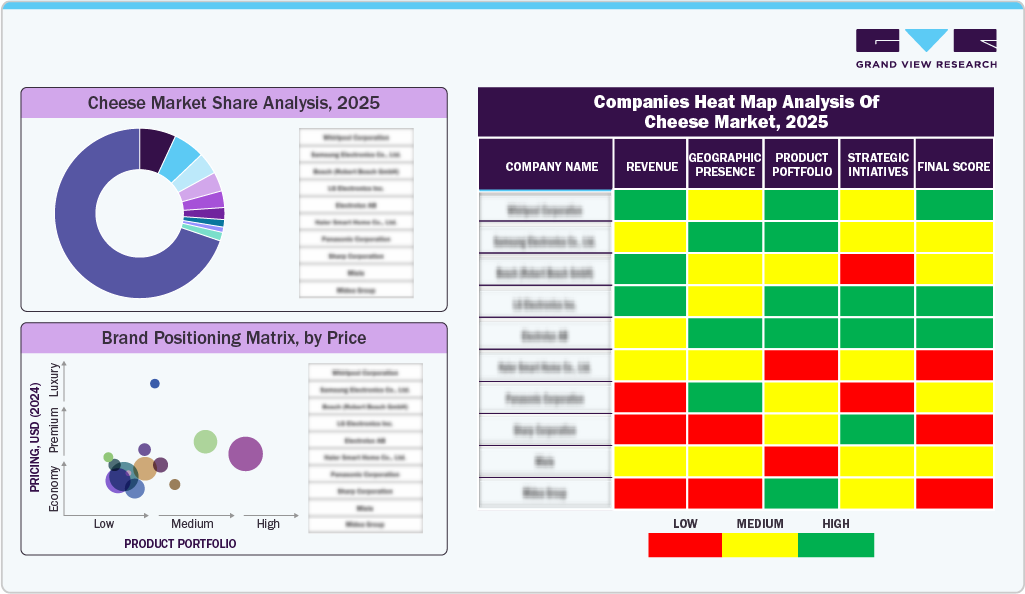
Leading players in the cheese market include Arla Foods Group, Fonterra Co-operative Group Ltd., and Glanbia Plc. The global market is highly competitive, with multinational dairy companies, regional manufacturers, private-label brands, and artisanal producers expanding across retail supermarkets, hypermarkets, specialty stores, foodservice outlets, and online grocery platforms worldwide. Companies are increasingly focusing on product innovation, premiumization, and diversification by offering specialty, organic, processed, and functional cheese varieties to cater to evolving consumer preferences. Manufacturers are also investing in advanced processing technologies, improved packaging solutions, cold-chain logistics, and sustainable sourcing practices to enhance product quality, shelf life, and brand positioning.
 To learn more about this report, Download Free Sample Report
 Key Cheese Companies:
The following key companies have been profiled for this study on the cheese market.
- Arla Foods Group
- Fonterra Co-operative Group Ltd.
- Glanbia Plc
- Saputo Cheese USA Inc.
- Bel Brands USA, Inc.
- FrieslandCampina
- Daiya Foods, Inc.
- Kite Hill
- Lactalis International
- Sargento Foods Inc.
Recent Developments
-
In January 2026, Arla Foods launched a new cottage cheese range in the UK, entering the category with high-protein Natural and Low Fat Natural varieties aimed at younger, health-conscious shoppers and tapping into renewed demand for versatile, nutritious dairy products. The products were designed for everyday use in meals or snacks and were rolled out through selected retailers to broaden appeal and drive growth.
-
In March 2025, Sargento introduced three new natural cheese products, including a sliced Natural American Cheese made with just five ingredients; three bold Seasoned Shredded Cheese varieties, developed with McCormick & Co., featuring spicy flavors such as Frank’s RedHot and Cholula; and three cheese-and-cracker Shareables in partnership with Mondelēz International. All were launched to appeal to consumers seeking innovative, high-quality cheese and convenient snacking options.
Cheese Market Report Scope
Report Attribute
Details
Market size in 2025
USD 215.5 billion
Estimated market size in 2026
USD 227.2 billion
Projected market size by 2033
USD 337.4 billion
Growth rate
CAGR of 5.8% from 2026 to 2033
Actuals
2021 - 2025
Forecast period
2026 - 2033
Quantitative units
Revenue in USD billion, volume in tons, and CAGR from 2026 to 2033
Report coverage
Revenue forecast, volume forecast, company ranking, competitive landscape, growth factors, and trends
Segments covered
Product, source, type, distribution channel, and region
Region covered
North America; Europe; Asia Pacific; Central & South America; and the Middle East & Africa
Country covered
U.S.; Canada; Mexico; UK; Germany; France; Spain; Italy; China; Japan; India ; South Korea; Australia & New Zealand; Brazil; and South Africa
Key companies profiled
Arla Foods Group; Fonterra Co-operative Group Ltd.; Glanbia Plc; Saputo Cheese USA Inc.; Bel Brands USA, Inc.; FrieslandCampina; Daiya Foods, Inc.; Kite Hill; Lactalis International; Sargento Foods Inc.
Customization scope
Free report customization (equivalent up to 8 analysts’ working days) with purchase. Addition or alteration to country, regional & segment scope.
Pricing and purchase options
Avail customized purchase options to meet your exact research needs. Explore purchase options
Global Cheese Market Report Segmentation
This report forecasts revenue & volume growth at the global, regional & country levels and provides an analysis of the latest trends and opportunities in each sub-segment from 2021 to 2033. For this study, Grand View Research has segmented the cheese market report based on product, source, type, distribution channel, and region:
-
Product Outlook (Volume, Tons; Revenue, USD Billion, 2021 - 2033)
-
Cheddar
-
Mozzarella
-
Parmesan
-
Blue Cheese
-
Others
-
-
Source Outlook (Volume, Tons; Revenue, USD Billion, 2021 - 2033)
-
Animal-Based
-
Cow Milk Cheese
-
Goat Milk Cheese
-
Sheep Milk Cheese
-
-
Plant-Based
-
Soy-Based
-
Cashew-Based
-
Almond-Based
-
Coconut-Based
-
Others
-
-
-
Type Outlook (Volume, Tons; Revenue, USD Billion, 2021 - 2033)
-
Natural
-
Processed
-
Slices
-
Block
-
Spreads
-
Others
-
-
-
Distribution Channel Outlook (Volume, Tons; Revenue, USD Billion, 2021 - 2033)
-
B2C/Retail
-
Hypermarkets & Supermarkets
-
Specialty Stores
-
Online
-
Others
-
-
B2B
-
Food Service
-
Food & Beverage Processing
-
Snacks
-
Sauces, Dressings, Dips, & Condiments
-
Bakery & Confectionery
-
Ready Meals
-
Others
-
-
-
-
Regional Outlook (Volume, Tons; Revenue, USD Billion, 2021 - 2033)
-
North America
-
U.S.
-
Canada
-
Mexico
-
-
Europe
-
UK
-
Germany
-
France
-
Spain
-
Italy
-
-
Asia Pacific
-
China
-
Japan
-
India
-
South Korea
-
Australia & New Zealand
-
-
Central & South America
-
Brazil
-
-
Middle East and Africa (MEA)
-
South Africa
-
-
Delivered Customizations
This report has been delivered with the following In-depth customizations
Client Request
Customization Delivered
Value Adds
Cross-Segmentation Analysis for Product Types Across Distribution Channels
Detailed cross-segmentation analysis of cheese product categories including Cheddar, Mozzarella, Parmesan, Blue Cheese, and other specialty cheese variants across B2C retail channels such as hypermarkets, supermarkets, specialty stores, convenience stores, online retail, and B2B channels including food service and food & beverage processing industries.
Identify fastest-growing cheese categories across B2C and B2B distribution channels. Evaluate channel-wise revenue contribution and adoption trends by cheese type. Support targeted category expansion and channel prioritization strategies through demand benchmarking and competitive analysis.
Consumer Behavior Analysis.
Comprehensive assessment of cheese consumption behavior across different demographic groups including age, income, lifestyle, household size, and geographic location. Analysis of consumer trends and preferences related to taste profile, health consciousness, convenience, premiumization, clean-label ingredients, and protein-rich diets. Evaluation of factors influencing purchasing behavior including pricing sensitivity, brand loyalty, packaging preferences, product origin, nutritional value, and promotional activities.
Support consumer-centric product development and marketing strategies through detailed behavioral insights and demographic segmentation. Identify high-growth consumer groups and emerging purchasing trends influencing cheese consumption. Evaluate key purchase drivers and barriers impacting brand selection and category penetration. Support pricing, packaging, and promotional optimization strategies based on consumer buying behavior analysis.
Market Share Analysis of Key Players Operating Across the Market (%)
Detailed analysis of market share distribution among leading global and regional cheese manufacturers, dairy cooperatives, specialty cheese producers, and private-label companies operating across the market. Assessment of competitor positioning by product portfolio, pricing strategy, production capacity, geographic presence, distribution network, and brand equity. Analysis of mergers, acquisitions, strategic alliances, and production expansions shaping competitive dynamics within the cheese industry.
Identify market leaders, emerging brands, and high-growth competitors across regional and global cheese markets. Evaluate competitive intensity and market concentration to support strategic positioning and investment decisions. Benchmark competitor strengths in branding, sourcing, manufacturing scale, product innovation, and distribution capabilities. Support acquisition, partnership, and expansion strategies through detailed competitor intelligence and market share benchmarking.
Frequently Asked Questions About This Report
Key factors that are driving the cheese market growth include evolving consumer preferences toward diverse and exotic cheese flavors, the rising popularity of plant-based cheese alternatives, and continuous innovation in introducing new and unique cheese varieties. The globalization of culinary trends and increased awareness of health-conscious choices also contribute to the market's growth.
The cheddar cheese segment led with a 36.3% revenue share in 2025, while the parmesan cheese segment is the fastest-growing.
The animal-based cheese segment led with a 98.2% revenue share in 2025, while the plant-based cheese segment is the fastest-growing.
The natural cheese segment led with a 80.6% revenue share in 2025, while the processed cheese segment is the fastest-growing.
The global cheese market size was valued at USD 215.5 billion in 2025 and is estimated at USD 227.2 billion for 2026.
The global cheese market is expected to grow at a CAGR of 5.8% from 2026 to 2033, reaching USD 337.4 billion by 2033.
Europe dominated with a 34.7% revenue share in 2025.
B2C/retail segment held the largest share (over 50.0%) in 2025, while the B2B distribution segment is the fastest-growing.
Key players include Arla Foods Group; Fonterra Co-operative Group Ltd.; Glanbia Plc; Saputo Cheese USA Inc.; Bel Brands USA, Inc.; FrieslandCampina; Daiya Foods, Inc.; Kite Hill; Lactalis International; Sargento Foods Inc.
About the Author(s)
Consumer F&B Research Team
Consumer Goods · Consumer F&BThis report was authored by the consumer f&b research team at Grand View Research - comprising two research analysts, one senior research analyst, and one industry expert - with specialized expertise in the consumer f&b segment of the consumer goods industry. All findings are based on proprietary consumer goods databases, executive interviews, and regulatory analysis, subject to internal peer review prior to publication.
Last Updated:
Speak to Analyst

Customize this report to your needs - add regions, segments, or data points, with 20% free customization.
Or view our licence options:


ISO 9001:2015 & 27001:2022 Certified
We are GDPR and CCPA compliant! Your transaction & personal information is safe and secure. For more details, please read our privacy policy.


