
- Home
- »
- Medical Devices
- »
-
Chemical Peel Market Size And Share Report, 2026-2033GVR Report cover

Chemical Peel Market (2026 - 2033)
Size, Share & Trends Analysis Report By Product (Lactic Peel, Fruit Peel), By Type (Superficial or Light Peel, Medium Peel), By Application (Hyperpigmentation, Dark Circles, Wrinkles), By End-use, By Region, And Segment Forecasts
Market Size, 2025
$2.2BMarket Estimate, 2026
$2.3BMarket Forecast, 2033
$3.4BCAGR, 2026–2033
5.8%Chemical Peel Market Summary
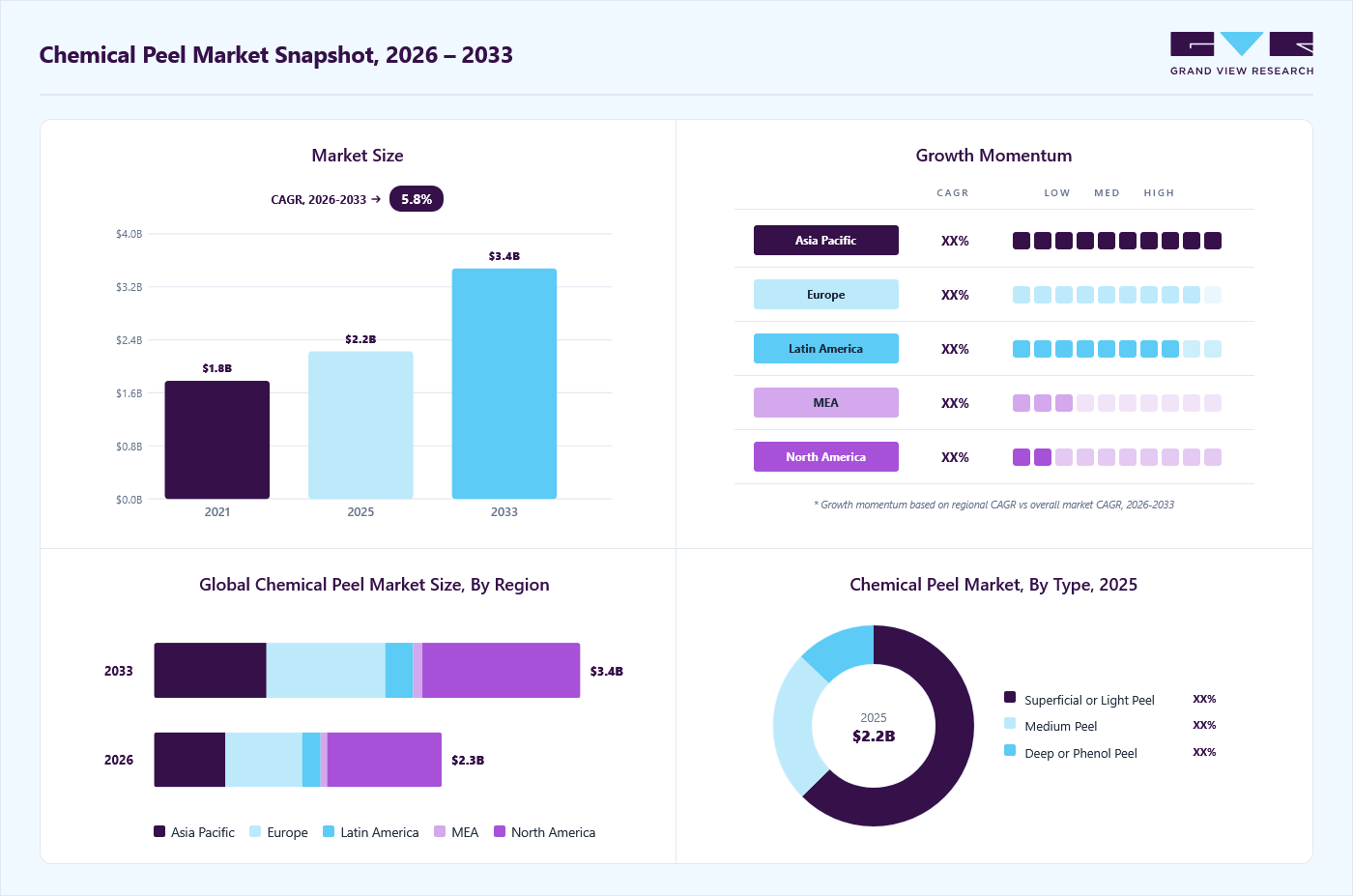
The chemical peel market size was valued at USD 2.2 billion in 2025 and is projected to grow from USD 2.3 billion in 2026 to USD 3.4 billion by 2033, at a CAGR of 5.8% from 2026 to 2033. The North America market held the largest share of 40.2% of the global market in 2025. Globally, growing awareness regarding skincare and aesthetics is expected to drive the market.
 Source: Grand View Research, IR Documents, Primary Interviews, Paid DatabasesTo learn more about this report,
 Download Free Sample Report
Key Market Trends & Insights
- By product: The fruit peel segment led the market with the largest revenue share of 23.5% in 2025.
- By type: The superficial or light peel segment led the market with the largest revenue share of 62.6% in 2025.
- By application: The acne spots segment led the market with the largest revenue share of 25.6% in 2025.
Regional Highlights
- Largest regional market: North America (40.2% revenue share, 2025)
- By country: The U.S. held the largest market share in 2025.
Market Size & Forecast
- Market size in 2025: USD 2.2 Billion
- Estimated market size in 2026: USD 2.3 Billion
- Projected market size by 2033: USD 3.4 Billion
- CAGR (2026-2033): 5.8%
Three ways to get this report
Buy it, customize it, or ask a question.Ask an Analyst
Analyst response in 1 business day
- AccessReport author, directly
- Reply timeWithin 1 working day
- No sales callDirect answer only
- FormatEmail reply
- CostFree, no cost
Get the Full Report
What the study covers
- FormatsPDF · Excel · Dashboard
- Timeline2026–2033 annual, 2025 base
- Coverage20+ countries, 5 regions
- Companies10+ key players profiled
Customize the Report
20% free customization
- IncludeCountries, segments, points
- TailorTo your product definition
- ExtendDeeper competitor detail
- OrA fully bespoke study
- Turnaround5–10 working days
Generally, women face more acne, pigmentation, and wrinkle issues as compared to men in any region, thus forming a major share of their customer base. While men generally face worse outbreaks of skin as compared to women, women face these issues frequently. An increase in disposable income and growing concern about appearance are some of the factors driving market growth.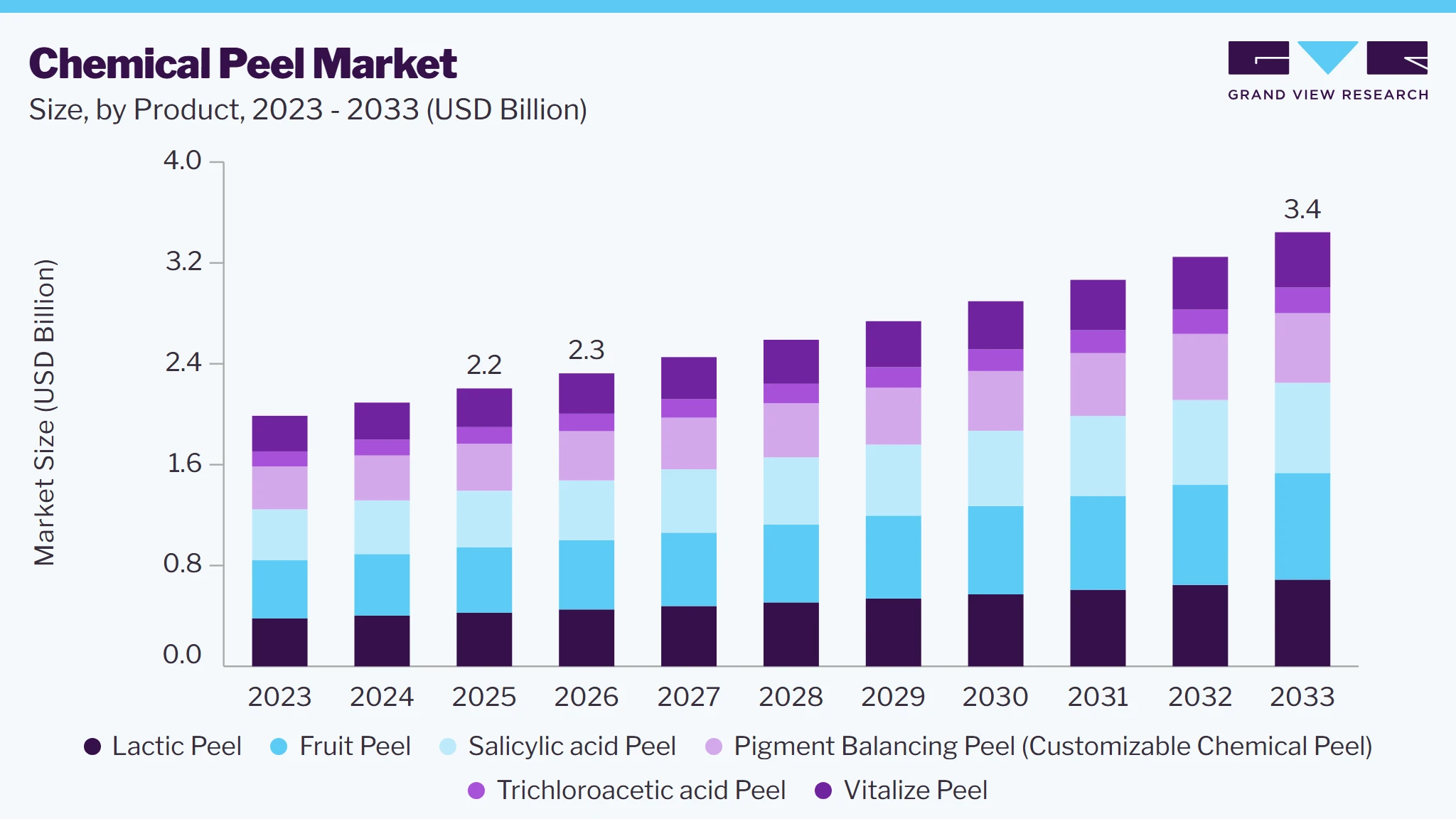 To learn more about this report, Download Free Sample Report
Growing interest in aesthetic procedures is driving the demand for noninvasive treatments, particularly chemical peels, which help improve skin texture and tone and reduce signs of aging. Consumers are increasingly seeking solutions for acne, pigmentation, and skin rejuvenation. Increased focus on skin health has also contributed to this trend, as people become more aware of the importance of maintaining youthful and healthy skin. This growing awareness is prompting individuals to invest in chemical peel treatments, boosting market expansion and encouraging more professional and at-home peel options.
Moreover, the increasing popularity of anti-aging treatments is significantly driving the chemical peel industry, as more consumers seek solutions to reduce signs of aging, such as wrinkles, fine lines, and age spots. Chemical peels are an effective option for rejuvenating skin and maintaining a youthful appearance. In addition, advancements in peel technology, such as improved formulations and safer, more effective application methods, have made these treatments more accessible and appealing to a broader audience. These innovations are set to further fuel demand, expanding the chemical peel market in the coming years. In November 2023, COSRX launched the AHA BHA PHA LHA 35 Peel, a revolutionary pink chemical exfoliator designed for a "glass skin" transformation in just 10 minutes. It targets uneven skin, clogged pores, and dullness with a powerful blend of four acids for a smoother, more radiant complexion.
Market Dynamics
The chemical peel market is positioned at the intersection of several long-term dermatology, aesthetic medicine, and skincare industry trends, including the rising demand for minimally invasive cosmetic procedures, increasing consumer focus on skin rejuvenation and appearance enhancement, and continuous advancements in dermatological formulations and treatment protocols. Chemical peel solutions enable dermatology clinics, medical spas, aesthetic centers, and hospital-based cosmetic departments to address a wide range of skin concerns, including acne scars, hyperpigmentation, melasma, photoaging, fine lines, wrinkles, and uneven skin texture through controlled chemical exfoliation and skin resurfacing techniques. These treatments utilize advanced formulations incorporating alpha hydroxy acids (AHAs), beta hydroxy acids (BHAs), trichloroacetic acid (TCA), phenol, retinoic acid, and combination peel technologies to deliver targeted epidermal and dermal remodeling. Modern chemical peel platforms are increasingly supported by customized treatment protocols, precision concentration formulations, combination therapies, and physician-guided skin assessment tools that improve treatment efficacy, patient safety, and overall clinical outcomes.
The increasing consumer preference for minimally invasive aesthetic treatments is one of the primary factors driving the growth of the chemical peel market. According to the American Society of Plastic Surgeons (ASPS), minimally invasive aesthetic procedures accounted for approximately 91.5% of all plastic surgery-related procedures performed in 2024, significantly outpacing surgical cosmetic interventions. Moreover, modern consumers are increasingly seeking cosmetic procedures that deliver noticeable improvements in skin appearance without the risks, high costs, prolonged recovery periods, and potential complications associated with surgical interventions. Chemical peels offer an effective, non-surgical solution for addressing a wide range of dermatological and aesthetic concerns, including acne scars, hyperpigmentation, melasma, sun damage, fine lines, wrinkles, and uneven skin texture. The procedure is relatively affordable, can be customized according to skin type and treatment objectives, and generally requires limited downtime compared to laser resurfacing or surgical facial rejuvenation procedures. As a result, chemical peels have become a widely adopted treatment across dermatology clinics, aesthetic centers, and medical spas.
One of the key restraints limiting the growth of the chemical peel market is the risk of adverse effects and post-treatment complications associated with the procedure, particularly when medium-depth and deep chemical peels are performed. Although chemical peels are generally considered safe when administered by trained professionals, patients may experience side effects such as prolonged erythema (skin redness), irritation, swelling, burning sensations, infection, scarring, and post-inflammatory hyperpigmentation or hypopigmentation. These risks are especially significant among individuals with darker skin tones, sensitive skin, or pre-existing dermatological conditions. The possibility of complications can discourage potential patients from undergoing treatment and may also make healthcare providers more cautious in recommending certain peel formulations. Furthermore, rising consumer awareness regarding procedure-related risks has led many patients to explore alternative skin rejuvenation technologies such as laser treatments, radiofrequency devices, intense pulsed light (IPL) therapies, and microneedling procedures, which are often perceived as offering greater precision and predictability. Regulatory scrutiny surrounding the use of high-concentration peeling agents and the need for trained practitioners further limit market penetration in some regions.
Analyst Perspective
The global chemical peel market is positioned at the intersection of several long-term medical aesthetic, clinical dermatology, and patient-centric skin health trends, including the surging demand for minimally invasive cosmetic "tweakments," an increasing emphasis on standardized, low-downtime procedures, and continuous advancements in biochemical formulation science. The rising prevalence of complex dermatological and pigmentary conditions such as severe acne vulgaris, post-inflammatory hyperpigmentation (PIH), melasma, solar lentigines, and premature photoaging is creating significant growth opportunities for professional skincare brands and aesthetic manufacturers. This expansion accelerates as dermatologists, plastic surgeons, and medical spa practitioners actively seek out highly precise, predictable, and customizable chemical resurfacing solutions that can maximize epidermal remodeling and dermal regeneration while minimizing the risk of adverse blistering, scarring, or prolonged erythema traditionally associated with legacy deep-peeling solutions. Furthermore, ongoing innovations in acid-delivery vehicles, time-released polyhydroxy complexes, self-neutralizing matrices, and multi-acid hybrid blending tech are fundamentally transforming the competitive landscape.
Product Insights
Based on product, the fruit peel segment led the market with the largest revenue share of 23.5% in 2025, due to its natural, effective, and non-invasive properties. Rich in alpha-hydroxy acids (AHAs), such as glycolic and citric acids, fruit peels promote exfoliation, improve skin texture, and reduce signs of aging. Consumers increasingly prefer fruit-based peels for their gentle action and minimal side effects compared to synthetic alternatives. Furthermore, the growing demand for organic and natural skincare products has fueled the segment's growth, making it the leading option in the chemical peel market.
The lactic acid peel segment is anticipated to emerge as the fastest-growing segment with a CAGR of 6.0% from 2025 to 2030, owing to its gentle yet effective exfoliating properties. Derived from milk, lactic acid is known for its ability to improve skin texture, brighten dark spots, and hydrate the skin, making it ideal for sensitive skin types. Consumers are increasingly turning to lactic acid peels as a milder, non-irritating alternative to harsher chemical peels, driving their growing popularity. In addition, their effectiveness in treating signs of aging and promoting overall skin health further fuels their growing demand in the market.
Type Insights
Based on type, the superficial or light peel segment led the market with the largest revenue share of 62.6% in 2025, attributed to its non-invasive nature, minimal downtime, and ease of application. These peels, often using alpha hydroxy acids (AHAs) or beta hydroxy acids (BHAs), offer effective skin rejuvenation with minimal side effects, making them popular among individuals seeking subtle improvements. With rising consumer awareness and increasing demand for accessible, affordable skincare treatments, light peels have become a go-to option for individuals looking to address mild skin concerns such as fine lines, acne scars, and uneven skin tone.
 To learn more about this report, Download Free Sample Report
The medium peel segment is projected to grow at the fastest CAGR during the forecast period, fueled by its ability to address a wide range of skin concerns, including moderate wrinkles, acne scars, and hyperpigmentation. Offering deeper exfoliation than light peels but less aggressive than deep peels, medium peels provide a balanced solution with minimal recovery time. Increasing consumer demand for non-invasive cosmetic procedures, coupled with advancements in peel formulations, is expected to drive the popularity of medium peels, making it a booming segment in the skincare industry.
Application Insights
Based on application, the acne spots segment led the market with the largest revenue share of 25.6% in 2025, driven by the rising prevalence of acne and the growing demand for effective treatments. Chemical peels, particularly those using salicylic acid and glycolic acid, are highly effective in treating acne scars and blemishes by promoting cell turnover and unclogging pores. Acne continues to be a common skin concern, prompting more consumers to turn to chemical peels for targeted, long-lasting solutions. This widespread demand, combined with the growing awareness of their efficacy, has solidified the dominance of the acne spots segment in the market. In September 2024, PCA SKIN expanded its professional peel offerings with the introduction of the Acne Peel and Acne Peel Plus. Designed to target the four primary causes of acne, these peels provide a thorough solution for acne-prone skin, with visible results achievable after just one treatment. Additionally, in January 2022, Vitality Institute launched its first-ever VI Peel Body Treatment, now offered at select practitioners' offices across the US. This exclusive chemical peel is designed to address body concerns like pigmentation, back acne, and scars.
The dark circles segment is expected to be the fastest-growing segment and grow at a notable CAGR from 2025 to 2030, propelled by the increasing focus on eye care and the rising prevalence of dark circles caused by factors such as stress, aging, and lifestyle choices. Chemical peels, particularly those with ingredients such as glycolic acid and vitamin C, effectively brighten the delicate under-eye area by exfoliating dead skin cells and stimulating collagen production. Consumers are seeking non-invasive solutions for this common concern, fueling the growth of the dark circles segment and driving remarkable expansion in the chemical peel industry.
End-use Insights
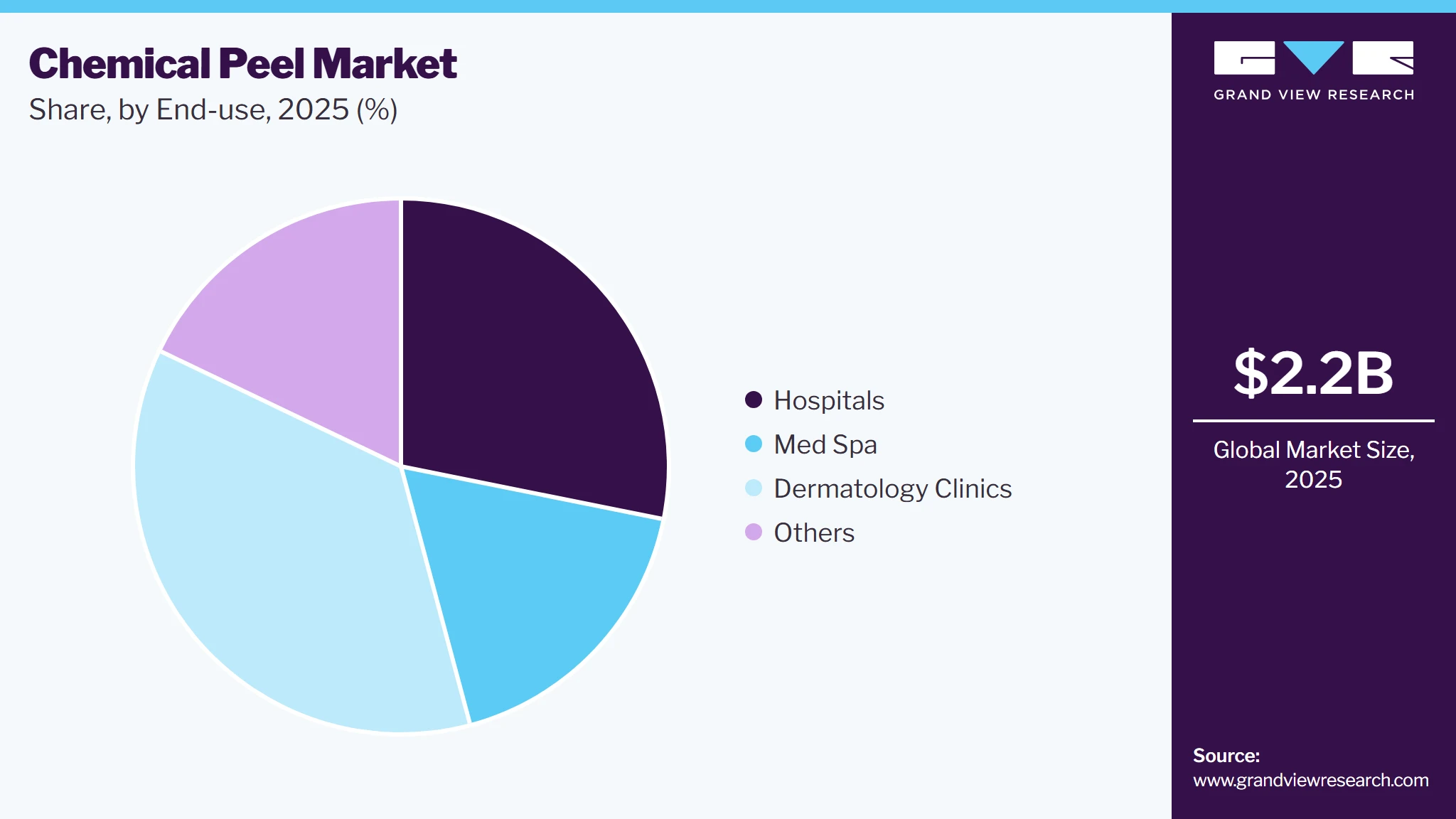
Based on end use, the dermatology clinics segment led the market with the largest revenue share of 36.3% in 2025, due to the growing preference for professional, personalized skincare treatments. Dermatologists offer advanced chemical peel procedures, ensuring safety and optimal results tailored to individual skin concerns. Consumers are seeking effective solutions for acne scars, hyperpigmentation, and signs of aging, leading them to increasingly turn to clinics for expert guidance. The rising awareness of the benefits of chemical peels and the demand for specialized treatments in controlled environments have driven the prominence of this segment.
The med spas segment is anticipated to be the fastest-growing segment and expand at a substantial CAGR over the forecast period, attributed to increasing consumer demand for professional, non-surgical aesthetic treatments. Med spas offer a range of advanced peel options, including superficial, medium, and deep peels, performed by skilled professionals, ensuring safety and effective results. People are seeking minimally invasive procedures for skin rejuvenation, making med spas preferred destinations. The growing popularity of these facilities, along with rising awareness of their benefits, positions the med spa segment for significant growth in the market.
Regional Insights
North America dominated the chemical peel market with the largest revenue share of 40.2% in 2025. This is attributable to the rising demand for non-invasive treatments and growing awareness of skincare. Consumers increasingly prefer chemical peels for their ability to improve skin texture, reduce acne scars, and address signs of aging without the need for surgery. With growing awareness of the benefits of chemical peels, more individuals are choosing these effective, minimally invasive procedures. This shift towards skincare-focused solutions, the presence of various dermatology clinics, combined with a growing interest in maintaining youthful, healthy skin, is fueling substantial market growth in the region. In April 2025, Tareen Dermatology expanded by opening a new office in Lakeville, Minnesota, reinforcing its commitment to offering accessible, top-quality skin care. With this addition, it becomes the largest independently owned dermatology practice in the state, now operating 9 locations with 26 board-certified providers.
 To learn more about this report, Download Free Sample Report
U.S. Chemical Peel Market Trends
The chemical peel market in the U.S. held the largest share in the North America region in 2025, owing to the growing preference for personalized skincare solutions. Consumers increasingly seek customized treatments tailored to their specific skin concerns, such as acne, pigmentation, and aging, making chemical peels a popular choice. Furthermore, the rise of medical spas and dermatology clinics has expanded access to advanced chemical peel services, offering professional expertise and enhancing treatment results. This combination of personalized skincare demand and the convenience of specialized clinics is fueling the chemical peel industry growth in the U.S.
Europe Chemical Peel Market Trends
Europe chemical peel market is anticipated to experience significant expansion over the forecast period. The growing preference for minimal downtime treatments is projected to drive the market size, as consumers seek effective yet convenient skincare solutions. Chemical peels with shorter recovery periods are increasingly popular for busy individuals. Moreover, the growth of online platforms for education and booking has made it easier for consumers to access information, schedule treatments, and connect with certified professionals. This digital transformation and rising awareness of the benefits of chemical peels, is driving market expansion across Europe.
Asia Pacific Chemical Peel Market Trends
Asia Pacific chemical peel market is projected to witness the fastest growth at a CAGR of 6.5% from 2025 to 2030. Advancements in chemical peel formulations, particularly those targeting anti-aging solutions, are set to propel the market growth. Consumers in the region are increasingly seeking effective, non-invasive treatments for wrinkles, fine lines, and skin texture. The introduction of more advanced and tailored peel formulations, including those with glycolic, lactic, and retinoic acids, promises improved results with minimal downtime. The growing demand for youthful skin and increased awareness of anti-aging benefits are expected to drive rapid expansion in the Asia Pacific chemical peel industry in the coming years.
India Chemical Peel Market Trends
India chemical peel market is anticipated to achieve noteworthy share during the forecast period, driven by the growing emphasis on skin rejuvenation and rising disposable income in India. Increasing awareness about skincare, along with a preference for non-invasive cosmetic procedures, is driving demand for chemical peels. Consumers are willing to invest more in advanced skincare treatments due to higher disposable income and a desire for youthful, radiant skin. These factors, combined with the availability of a variety of chemical peel treatments, are set to contribute to the rapid growth of market in the near future.
Key Chemical Peel Company Insights
Some of the key companies in the chemical peel industry includeIMAGE Skincare;Dermalogica;Johnson & Johnson Private Limited;Bausch Health Companies Inc.;Renée Rouleau Inc.;L’Oréal;Glytone;Sinclair;Proderma Light.
-
IMAGE Skincare provides professional-grade skincare products and treatments, focusing on anti-aging, acne, and overall skin health. Its formulations combine cutting-edge technology with natural ingredients, offering customized solutions for a variety of skin concerns.
-
Dermalogica offers professional-grade skincare products designed to address various skin concerns, such as aging, acne, and dryness. Its products focuses on high-quality ingredients, customized solutions, and expert skincare treatments for optimal skin health and results.
Key Chemical Peel Companies:
The following key companies have been profiled for this study on the chemical peel market.
-
IMAGE Skincare
-
Dermalogica
-
Johnson & Johnson Private Limited
-
Bausch Health Companies Inc.
-
Renée Rouleau Inc.
-
L’Oréal
-
Glytone
-
Sinclair
-
Proderma Light
Competitive Benchmarking
Category
Operating Strategies
Competitive Edge
Weakness
Established Players (IMAGE Skincare,Dermalogica, Johnson & Johnson Private Limited)
- Mature players leverage strong brand equity, extensive dermatology and aesthetic medicine portfolios, established physician networks, and broad geographic reach.
- They focus on product portfolio expansion, clinical validation, practitioner education programs, regulatory compliance, and strategic acquisitions to strengthen their position in the professional skincare and aesthetic treatment market.
- Mature companies benefit from extensive distribution channels, strong relationships with dermatologists and medical spas, significant marketing capabilities, and proven clinical efficacy data.
- Their ability to offer comprehensive skincare ecosystems including chemical peels, cosmeceuticals, injectables, and energy-based aesthetic solutions supports customer retention across multiple aesthetic segments.
- Premium pricing strategies can limit penetration in cost-sensitive markets, while dependence on established product lines may reduce flexibility in responding to rapidly evolving consumer skincare trends and emerging peel technologies.
Emerging Players (Glytone, Sinclair, Proderma Light)
- Emerging players prioritize formulation innovation, targeted treatment solutions, direct-to-consumer distribution, and digital marketing strategies.
- They focus on addressing specific skin concerns such as hyperpigmentation, acne scarring, photoaging, melasma, and uneven skin texture through specialized peel formulations. Many collaborate with dermatology clinics, aesthetic practitioners, and online skincare communities to accelerate market penetration.
- Emerging companies gain competitive advantage through rapid product development, niche positioning, flexible business models, and strong engagement with consumers through digital platforms. Their ability to quickly respond to evolving beauty trends, launch customized formulations, and target underserved skincare segments enables differentiation from larger competitors.
- Emerging players often face challenges related to limited financial resources, lower brand recognition, restricted geographic presence, and smaller clinical evidence bases.
- They may also encounter difficulties scaling manufacturing operations, expanding physician adoption, and competing with established companies in terms of marketing reach, regulatory expertise, and global distribution capabilities.
Recent Developments
-
In November 2023,Dermaceutical brand Fixderma introduced PeelPlex, its first range of dermatologist-approved, clinically researched peeling solutions. The collection features 17 professional-grade peeling products designed for various skin treatments.
-
In August 2021,LABthetics launched two new chemical peels: the 10% Salicylic Acid peel, designed to treat acne, control oil, and improve skin tone, paired with a salicylic cleanser, and the Jessner peel, a blend of glycolic, lactic, and kojic acids, aimed at reducing acne, wrinkles, and hyperpigmentation, with an at-home brightening barrier cream.
Chemical Peel Market Report Scope
Report Attribute
Details
Market size in 2025
USD 2.2 billion
Estimated market size in 2026
USD 2.3 billion
Projected market size by 2033
USD 3.4 billion
Growth rate
CAGR of 5.8% from 2026 to 2033
Historical data
2021 - 2024
Forecast period
2026 - 2033
Quantitative units
Revenue in USD million/billion and CAGR from 2026 to 2033
Report coverage
Revenue forecast, company ranking, competitive landscape, growth factors, and trends
Segments covered
Product, type, application, end-use, region
Regional scope
North America; Europe; Asia Pacific; Latin America; MEA
Country scope
U.S.; Canada; Mexico; Germany; UK; France; Italy; Spain; Norway; Denmark; Sweden; China; Japan; India; South Korea; Australia; Thailand; Brazil; Argentina; Saudi Arabia; South Africa; UAE; Kuwait;
Key companies profiled
IMAGE Skincare;Dermalogica;Johnson & Johnson Private Limited; Bausch Health Companies Inc.; Renée Rouleau Inc.; L’Oréal; Glytone; Sinclair; Proderma Light
Customization scope
Free report customization (equivalent up to 8 analysts' working days) with purchase. Addition or alteration to country, regional & segment scope.
Pricing and purchase options
Avail customized purchase options to meet your exact research needs. Explore purchase options
Global Chemical Peel Market Report Segmentation
This report forecasts revenue growth at global, regional, and country levels and provides an analysis of the latest industry trends in each of the sub-segments from 2021 to 2033. For the purpose of this study, Grand View Research has segmented the global chemical peel market report on the basis of product, type, application, end-use, and region:
-
Product Outlook (Revenue, USD Million, 2021 - 2033)
-
Lactic Peel
-
Fruit Peel
-
Salicylic Acid Peel
-
Pigment Balancing Peel (Customizable Chemical Peel)
-
Trichloroacetic Acid Peel
-
Vitalize Peel
-
-
Type Outlook (Revenue, USD Million, 2021 - 2033)
-
Superficial or Light Peel
-
Medium Peel
-
Deep or Phenol Peel
-
-
Application Outlook (Revenue, USD Million, 2021 - 2033)
-
Acne Spots
-
Wrinkles
-
Fine Lines
-
Hyperpigmentation
-
Scars
-
Dark Circles
-
Skin Brightening
-
Others
-
-
End-use Outlook (Revenue, USD Million, 2021 - 2033)
-
Hospitals
-
Med Spa
-
Dermatology Clinics
-
Others
-
-
Regional Outlook (Revenue, USD Million, 2021 - 2033)
-
North America
-
U.S.
-
Canada
-
Mexico
-
-
Europe
-
Germany
-
U.K.
-
France
-
Italy
-
Spain
-
Denmark
-
Sweden
-
Norway
-
-
Asia Pacific
-
China
-
Japan
-
India
-
Australia
-
South Korea
-
Thailand
-
-
Latin America
-
Brazil
-
Argentina
-
-
Middle East & Africa
-
South Africa
-
Saudi Arabia
-
UAE
-
Kuwait
-
-
Research Methodology
The chemical peel market figures in this report are based on a proven research process that combines executive interviews with secondary research from proprietary databases, company filings, and recognized regulatory and institutional sources. Market size is built through value-chain sizing - reconciling supply-side and demand-side estimates - and triangulated with bottom-up and top-down approaches. Every estimate passes multiple levels of expert validation before publication, with each chemical peel segment quantified using the revenue-capture definitions in the table below.
Segment Definition
Segment - Product
Revenue capture definition
Lactic Peel
Revenue is generated through the sale of lactic acid-based alpha-hydroxy acid (AHA) peeling solutions, primarily formulated for gentle, superficial-depth exfoliation. Manufacturers derive income from bulk clinical backbar bottles sold to professional facilities and single-use vial kits. Because lactic acid possesses inherent humectant properties that draw moisture into the stratum corneum, brands capture additional recurring revenue by bundling these peels with post-treatment hydrating serums and moisture-barrier locking creams.
Fruit Peel
Revenue flows from the commercialization of organic, enzyme-rich, or fruit-derived alpha-hydroxy acid solutions. Market participants earn revenue from the sale of professional-grade botanical resurfacing solutions designed for sensitive skin, alongside high-volume, lower-concentration over-the-counter (OTC) homecare exfoliating masks, pads, and enzyme serums distributed through premium beauty and retail e-commerce channels.
Salicylic Acid Peel
Revenue is generated through the distribution of oil-soluble beta-hydroxy acid (BHA) peeling formulations, highly utilized for their lipophilic and comedolytic ability to penetrate deep into sebum-filled pores. Pharmaceutical and cosmetic manufacturers earn revenue by supplying various concentration tiers to clinics for acute acne management. This segment features high recurring revenue streams driven by continuous product replenishment cycles to treat chronic, breakout-prone skin.
Pigment Balancing Peel
Revenue is captured through high-margin, specialized peeling systems that combine heavy exfoliation elements with advanced tyrosinase inhibitors, brightening agents, and anti-inflammatories. Manufacturers generate income through proprietary, multi-step kit setups that allow practitioners to dynamically alter the acid-to-brightener ratio based on the patient's Fitzpatrick skin type, capturing premium pricing over standard mono-acid formulations.
Trichloroacetic Acid Peel
Revenue is derived from the commercialization of trichloroacetic acid solutions, which are the industry benchmark for medium-to-deep epidermal protein coagulation and dermal remodeling. Income is generated through the sale of clinical-grade solutions ranging from 10% (superficial) up to 35%+. Due to the intensive skin-peeling process involved, companies capture significant secondary revenue by cross-selling mandatory, specialized medical-grade post-procedure healing balms.
Vitalize Peel
Revenue flows through the commercialization of proprietary, trademarked multi-acid clinical peel kits. Manufacturers capture high-value revenue by selling these pre-measured, sequential multi-step application kits exclusively to licensed medical providers. This closed-distribution network secures recurring business through mandatory practitioner account configurations and official brand training certifications.
Segment - Type
Revenue capture definition
Superficial or Light Peel
Revenue is generated from the high-volume sale of low-concentration acid formulations designed to exfoliate strictly within the outer stratum corneum with zero to minimal down-time. This segment represents the most consistent, high-frequency revenue stream for manufacturers, driven by rapid backbar product consumption in medical spas and clinics where light peels are scheduled as recurring monthly skin-maintenance, brightening, or pre-facial prep packages.
Medium Peel
Revenue is derived from professional-grade chemical agents formulated to penetrate through the entire epidermis down to the papillary dermis. Manufacturers capture value through specialized, physician-exclusive product tiers. Because medium peels require meticulous clinical application and cause multiple days of active skin shedding, revenue is characterized by higher unit margins per vial paired with stricter distribution channel controls.
Deep or Phenol Peel
Revenue flows from heavy-intensity, medical-grade chemical configurations that penetrate deep into the reticular dermis to treat severe photoaging and structural scarring. Revenue is generated through specialized surgical-suite kits that often bundle the active peeling agent with specialized cardiopulmonary monitoring-compliant accessories or post-operative occlusive dressings. This segment generates low unit-volume sales but commands the absolute highest price margins per product unit.
Segment - Application
Revenue capture definition
Acne Spots
Revenue is captured by formulating and positioning chemical peels to target active acne vulgaris, clogged follicles, and localized post-inflammatory erythema. Manufacturers drive income by marketing these solutions as rapid, targeted spot-clearing or full-face clarifying protocols that reduce excess sebum production and accelerate pore clearing.
Wrinkles
Revenue is generated from advanced dermal-remodeling peeling agents specifically indicated for deep structural rhytide correction. Income is driven by the aging global demographic's demand for aggressive anti-aging treatments that stimulate robust collagen synthesis and restore elastic fiber architecture, commanding premium medical-aesthetic pricing.
Fine Lines
Revenue streams develop from superficial-to-medium depth chemical exfoliants designed to smooth out early textural imperfections and micro-lines. Manufacturers capture value by promoting these peels as proactive anti-aging, "prejuvenation," or preventative skin-smoothing treatments for younger consumer cohorts.
Hyperpigmentation
Revenue is derived from specialized peeling formulations engineered to suppress melanin production and clear existing epidermal discoloration. Manufacturers capture major market share by bundling exfoliating acids with specialized pigment-fading compounds, capitalizing on the immense global demand for uniform skin-tone corrections.
Scars
Revenue is generated through deeper-penetrating chemical resurfacing solutions configured to break down fibrous, atrophic, or pitted acne scars. Income is captured through targeted professional procurement lines utilized in intensive dermatological scar-revision protocols.
Dark Circles
Revenue flows from hyper-targeted, low-concentration peeling formulations specifically buffered and optimized for the delicate periorbital skin barrier. Manufacturers earn revenue by engineering gentle, non-creeping chemical delivery matrices to safely address infraorbital vascular or melanin-induced shadowing.
Skin Brightening
Revenue is captured through high-frequency, cellular-turnover formulations (like vitamin C-infused fruit peels, glycolic blends, and superficial enzymes) engineered to remove light-deflecting dead corneum cells and immediately restore skin radiance. This application drives high-volume, recurring institutional purchases due to its popularity as an immediate "red-carpet" or "glow" procedure.
Others
Revenue encompasses non-facial or niche application segments, including chemical formulations optimized for body applications and localized pre-cancerous lesions (actinic keratoses) managed through specialized medical dermatology protocols.
Segment - End Use
Revenue capture definition
Hospitals
Revenue is generated through institutional bulk tenders, corporate medical procurement contracts, and direct supply-chain fulfillment to multi-specialty hospital dermatology and plastic surgery departments. Revenue capture in this segment is characterized by strict regulatory compliance documentation, high-volume orders, and a focus on therapeutic, medical-grade medium-to-deep chemical solutions for advanced dermatological diseases.
Med Spa
Revenue flows heavily through commercial aesthetic distribution networks, franchise-wide supply agreements, and master corporate spa account purchases. Manufacturers generate significant revenue here by selling high-volume superficial-to-medium peel kits, training workshop modules, and bundled post-procedure homecare retail lines that med spas directly up-sell to consumer clients to boost per-visit profit margins.
Dermatology Clinics
Revenue is captured through specialized physician-exclusive purchasing accounts, direct-to-clinic e-commerce portals, and independent medical practice buying groups (GPOs). Income is derived from premium, clinically validated peeling systems backed by rigorous clinical data and peer-reviewed safety profiles.
Others
Revenue is derived through alternative distribution endpoints, including independent licensed esthetician salons, anti-aging wellness clinics, professional aesthetic training schools, and direct-to-consumer (DTC) premium e-commerce channels handling low-concentration retail at-home maintenance peeling pads and daily micro-exfoliating skin care lines.
Estimation Model
Title
Key Question
Process Steps
Data Sources
Scope Definition
What is being sized?
1. Define Chemical Formulation & Concentration Categories
2. Scope Peel Type & End-Use Application Segments
3. Set Geographic Boundaries (Global/Regional)
4. Align on Base Year & Forecast Horizon (2026–2033)FDA, EMA, WHO
Build the Product Base How large is total addressable market? 1. Gather Professional Treatment & Retail Volume Data
2. Estimate Patient and Consumer Treatment Base
3. Apply Product Formulation & Tier Price Splits
4. Project Volume TrajectoriesClinic registries, medical establishment databases, brand-owner corporate annual filings Estimate Penetration What is the clinical adoption rate of multi-acid advanced peel modalities versus traditional single-acid solutions? 1. Quantify the Transition to Multi-Acid Blended Formulations
2. Evaluate the Shift toward Self-Neutralizing and Timed-Release Technology
3. Assess the Adoption Rate of Depth-Specific Hybrid Peels
4. Determine the Integration Rate of Multi-Zone Body Resurfacing ProtocolsPrimary interviews, company filings, trade surveys Revenue Conversion How does volume become revenue? 1. Collect Chemical Solution Cost Metrics
2. Segment by Revenue Streams
3. Apply End-Use Share
4. Cross-Check with Import/Export DataDistributor wholesale pricing catalogs, clinic procurement order registries Delivered Customizations
This report has been delivered with the following In-depth customizations
Client Request
Customization Delivered
Value Adds
Competitive Landscape Analysis
Conducted a comprehensive competitive landscape assessment for the global chemical peel market, covering major manufacturers of medical-grade and clinical over-the-counter (OTC) resurfacing solutions across premium dermatology practices, medical spa franchises, and specialized skincare retail networks. The study evaluated market positioning, product portfolios, strategic contract manufacturing alliances, and formulation innovations. Additionally, the analysis tracked international regulatory approval pathways, post-procedure skincare retail attachment strategies, medical aesthetic group purchasing organization (GPO) contract wins, and training academy certification networks deployed by leading medical-aesthetic brands and emerging indie clinical entrants.
Enables stakeholders to understand the competitive dynamics, technical positioning, and strategic corporate initiatives shaping the global chemical peel market. The study supports informed decision-making related to clinical distribution partnerships, professional-grade portfolio differentiation, R&D formulation investments, and brand commercialization planning. It also helps skincare manufacturers identify treatment-depth gaps, benchmark regulatory compliance steps across distinct global regions, and strengthen market penetration across medical spa corporate networks and independent aesthetic clinics.
Chemical Peel Type Analysis
Conducted a detailed segment-level assessment of the global chemical peel market categorized by product formulation type and depth intensity, explicitly evaluating Superficial (Light) Peels, Medium Peels, and Deep Peels. The study mapped out exact volume-to-value dynamics across active biochemical matrices, including salicylic acid, lactic acid, trichloroacetic acid (TCA), and specialized Jessner’s solutions. The analysis evaluated the specific clinical utilization profiles of each peel type, tracking how high-frequency, low-downtime light peels dominate recurring routine medspa bookings, whereas medium-to-deep peeling solutions are tightly restricted to physician-led settings for treating deep rhytides, severe actinic damage, and structural acne scarring. It further assessed evolving practitioner prescribing preferences, multi-acid blending trends, and the commercial attachment rate of mandatory backbar neutralizing solutions across each product tier.
Enables stakeholders to gain granular insights into high-growth chemical peel segments, evolving practitioner preferences, and formulation-driven distribution strategies across the clinical skincare ecosystem. The study supports strategic brand portfolio optimization, targeted indications-based clinical training curriculum design, and proactive product development pipelines tailored to match localized clinician licensing restrictions, safety profiles, and patient skin-type demographics (including Fitzpatrick skin type safely considerations).
Geographic Analysis
Conducted an in-depth geographic analysis of the chemical peel market across major regional territories, including North America, Europe, Asia-Pacific, Latin America, and the Middle East & Africa. The study cross-examined localized market drivers, including differing regional cosmetic vs. medical regulatory definitions for chemical concentrations, variations in consumer disposable income spent on minimally invasive "tweakments," and cultural shifts toward skin brightening and anti-aging regimens. The evaluation highlighted distinct regional trends, such as the high penetration of intensive medical-grade peels and franchise medspa procurement models in North America, the strict EU regulations on acid percentages for non-medical practitioners in Europe, and the surging clinical adoption of specialized, post-inflammatory hyperpigmentation (PIH)-safe multi-acid peels across high-growth, diverse skin-type demographics in the Asia-Pacific and Latin American markets.
Enables stakeholders to understand regional market maturity levels, navigate shifting local regulatory boundaries, and adapt commercial distribution pathways to localized realities. The study supports targeted geographic expansion planning, optimized country-specific retail and professional pricing architectures, and localized brand positioning strategies that align directly with regional consumer beauty standards, aesthetic practitioner behaviors, and regional skincare spending patterns.
Frequently Asked Questions About This Report
Globally growing awareness regarding skin care and aesthetics is expected to drive the chemical peel market.
The global chemical peel market size was valued at USD 2.2 billion in 2025 and is expected to reach USD 2.3 billion in 2026.
By product, the fruit peel segment led with a 23.5% revenue share in 2025 and is the fastest-growing segment.
Some of the key players operating in the chemical peel market include IMAGE Skincare, Dermalogica, Johnson & Johnson Private Limited, Bausch Health Companies Inc., Renée Rouleau Inc., L'Oréal Paris, GALDERMA, HANGZHOU TECHDERM BIOLOGICAL PRODUCTS, Alura Aesthetic Clinic, Amorepacific, Refresh Skin Therapy, Teoxane, Juvenil Essence, Caudalie, Sovereign Chemical & Cosmetics, and AbbVie Inc., among others.
The global chemical peel market, in terms of revenue, is expected to grow at a compound annual growth rate of 5.8% from 2026 to 2033 to reach USD 3.4 billion by 2033.
North America dominated the chemical peel market with a revenue share of 40.2% in 2025. Rising skin-related issues such as acne, hyperpigmentation, melasma, and solar dermatitis, among others are driving the demand for chemical peel products in the region.
Asia Pacific is the fastest-growing region over the forecast period.
Superficial or light peel held the largest revenue share in 2025, while medium peel is the fastest-growing area.
Acne spots held the largest revenue share in 2025 and is the fastest-growing area.
Dermatology clinics held the largest revenue share in 2025, while Med Spa is the fastest-growing area.
About the Author(s)
Medical Devices Research Team
Healthcare · Medical DevicesThis report was authored by the medical devices research team at Grand View Research - comprising two research analysts, one senior research analyst, and one industry expert - with specialized expertise in the medical devices segment of the healthcare industry. All findings are based on proprietary healthcare databases, executive interviews, and regulatory analysis, subject to internal peer review prior to publication.
Last Updated:
Speak to Analyst

Customize this report to your needs - add regions, segments, or data points, with 20% free customization.
Or view our licence options:


ISO 9001:2015 & 27001:2022 Certified
We are GDPR and CCPA compliant! Your transaction & personal information is safe and secure. For more details, please read our privacy policy.


