
- Home
- »
- Medical Devices
- »
-
Medical Spa Market Size And Share, Industry Report, 2033GVR Report cover

Medical Spa Market (2026 - 2033)
Size, Share & Trends Analysis Report By Service (Facial Treatment, Body Shaping & Contouring, Hair Removal, Scar Revision, Tattoo Removal), By Age Group, By Gender, By Service Provider, By Region, And Segment Forecasts
Market Size, 2025
$24.2BMarket Estimate, 2026
$27.8BMarket Forecast, 2033
$78.2BCAGR, 2026–2033
15.9%Medical Spa Market Summary
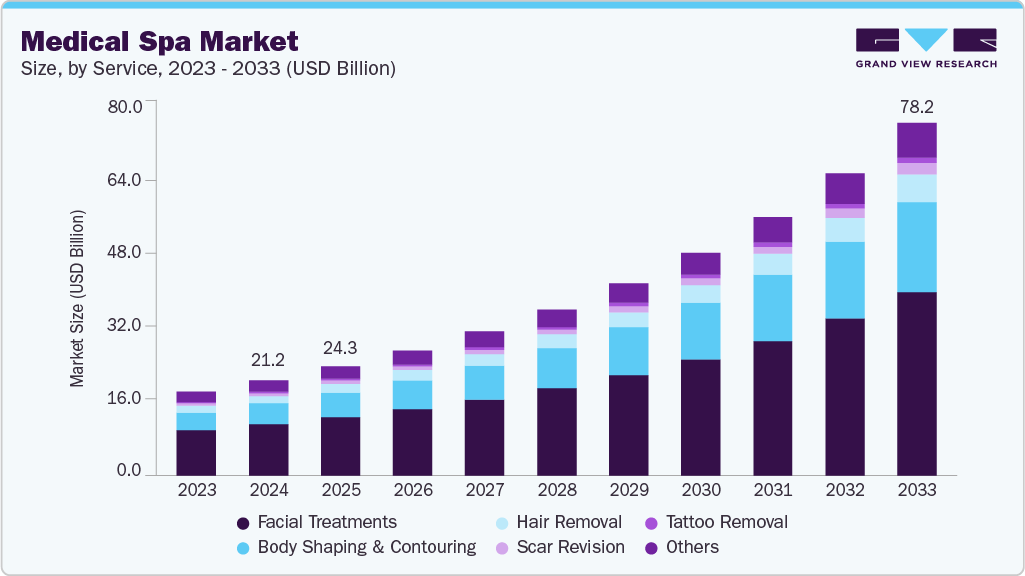
The global medical spa market size was valued at USD 24.2 billion in 2025 and is projected to grow from USD 27.8 billion in 2026 to USD 78.2 billion by 2033, at a CAGR of 15.9% from 2026 to 2033. North America dominated the women’s health app market with the largest revenue share of 41.2% in 2025. The market growth can be attributed to the rising awareness among consumers about self-care & antiaging services and the rapid growth of the wellness tourism sector.
 Source: Grand View Research, IR Documents, Primary Interviews, Paid DatabasesTo learn more about this report,
 Download Free Sample Report
 Key Market Trends & Insights
- By service insights: Facial treatments segment held the largest revenue share of 53.6% in 2025.
- By gender: Female segment led the market with the largest revenue share in 2025.
- By age group: Adult segment led the market with the largest revenue share of 70.8% in 2025.
- By service provider: Single ownership segment held the largest revenue share of 37.1% in 2025.
Regional Highlights
- Largest regional market: North America (41.2% revenue share, 2025)
- Fastest-growing regional market: Asia Pacific (highest CAGR, 2026-2033)
- By country: The medical spa market in the U.S. held the largest share in 2025.
Market Size & Forecast
- Market size in 2025: USD 24.2 Billion
- Estimated market size in 2026: USD 27.8 Billion
- Projected market size by 2033: USD 78.2 Billion
- CAGR (2026-2033): 15.9%
Three ways to get this report
Buy it, customize it, or ask a question.Ask an Analyst
Analyst response in 1 business day
- AccessReport author, directly
- Reply timeWithin 1 working day
- No sales callDirect answer only
- FormatEmail reply
- CostFree, no cost
Get the Full Report
What the study covers
- FormatsPDF · Excel · Dashboard
- Timeline2026–2033 annual, 2025 base
- Coverage20+ countries, 5 regions
- Companies10+ key players profiled
Customize the Report
20% free customization
- IncludeCountries, segments, points
- TailorTo your product definition
- ExtendDeeper competitor detail
- OrA fully bespoke study
- Turnaround5–10 working days
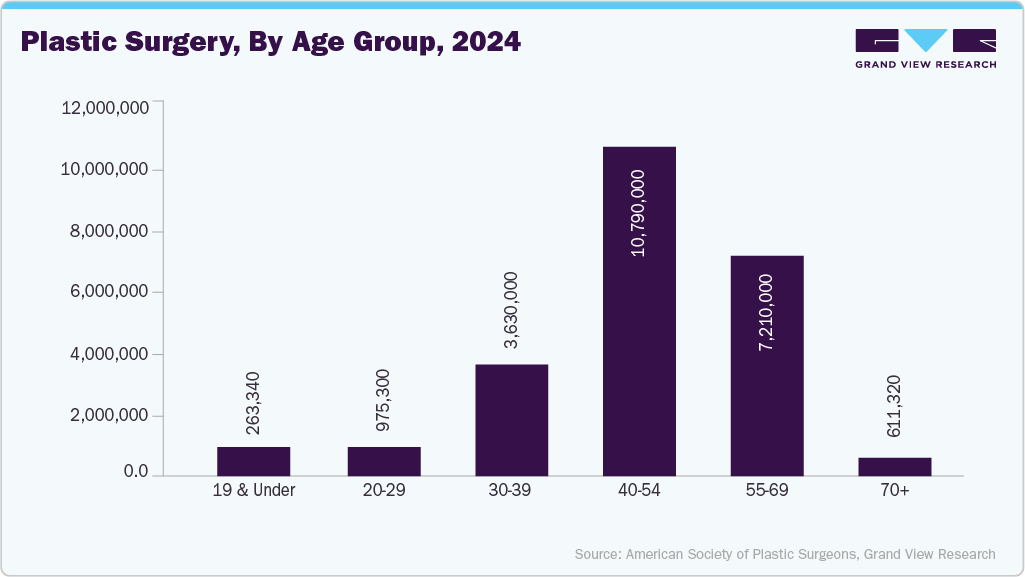
The American Med Spa Association (AMSA) reports a significant demand for minimally invasive treatments, encompassing procedures such as chemical peels, nonsurgical skin tightening, body sculpting, and tattoo removal. In addition, increase in popularity of wellness-themed vacations, often bundled with wellness packages in hotels, contributes to the swift growth in demand for such services.The medical spa industry has been shaped by constantly changing customer demands. With customers becoming more social media savvy, awareness about anti-aging solutions is on the rise. Increasing demand for anti-aging skincare solutions remains the key driver in this market. As per 2024 ASPS Procedural Statistics, patients aged 55-69 years account for a significant share of cosmetic procedures, reflecting the strong influence of the geriatric population on market demand. This is the stage of life when age-related changes such as deep wrinkles, sagging skin, and volume loss become more prominent, driving interest in corrective treatments.
 To learn more about this report, Download Free Sample Report
 Moreover, individuals in this age group often enjoy greater financial stability, enabling them to invest in elective aesthetic care. The growing availability of safe and minimally invasive procedures further supports adoption, positioning the 55-69 age group as a key driver of demand in the medical spa market.
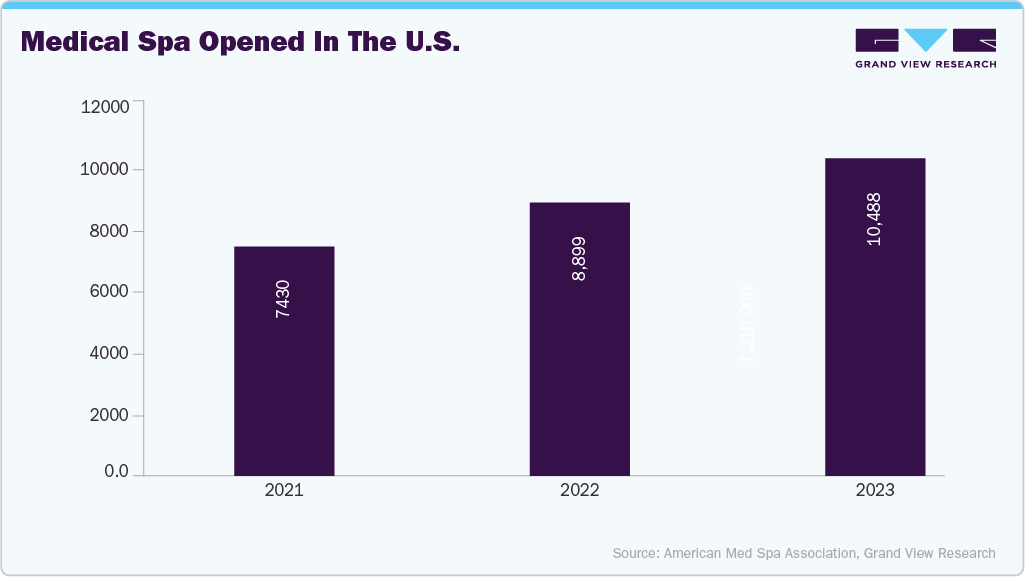
The growing awareness and acceptance of aesthetic treatments have propelled the success and expansion of cosmetic clinics, driving the demand for medica spa. According to an article published by the American Medical Spa Association (AmSpa) in November 2024, the medical spa industry has experienced steady growth over the past 15 years. The number of medical spas increased from 8,899 in 2022 to approximately 10,488 in 2023. This reflects a dynamic and expanding industry with several new participants fueling its growth. The rapid growth in the medical spa industry and convenient access to a range of skin treatments and services are predicted to improve demand by offering innovative procedures and personalized solutions catering to client needs.
 To learn more about this report, Download Free Sample Report
 The rising consumer disposable income, especially in emerging countries, and the expansion of the tourism sector are also boosting the demand for such services. Key companies offer personalized beauty treatments to justify premium prices and aim to leverage their position. An emerging trend in the sector is the incorporation of biophilic design and wellness architecture into the complete structural design of the property.
 To learn more about this report, Download Free Sample Report
 Rapid growth in the wellness tourism industry is creating potential growth opportunities for new entrants that offer a unique integration of business areas, such as hospitality, travel, beauty treatments, and fitness. Furthermore, the increasing adoption of dermal fillers among women in their late 20s and the rising demand for laser hair removal and facial procedures are likely to fuel the market growth.
The launch of the Indian Medical and Wellness Tourism Roadmap in July 2025, by the Federation of Hotel & Restaurant Associations of India (FHRAI) and KPMG is expected to act as a major catalyst for the growth of the medical spa market in India. The roadmap emphasizes integrating healthcare, hospitality, and wellness infrastructure to position India as a global destination for holistic medical and wellness treatments. This alignment directly benefits medical spas, as they sit at the intersection of clinical care and luxury wellness services. By promoting medical tourism hubs and standardizing service quality across wellness centers, the initiative will attract international patients seeking rejuvenation therapies, aesthetic procedures, and non-invasive treatments in a medically supervised yet relaxing environment.
Moreover, enhanced collaboration between hospitals, hotels, and spa operators supported by policy incentives and accreditation standards is expected to boost investment in advanced facilities, skilled personnel, and technology-driven treatments.
Trends in the U.S. Medical Spa Market (2024):
In November 2024, the American Med Spa Association (AmSpa) released its Medical Spa State of the Industry Report, built on a survey of medical spa professionals. Below are the various findings extracted:
Industry Expansion and Market Confidence:
-
Growth in Number of Medical Spas: The total number of medical spas in the U.S. increased from 8,899 in 2022 to 10,488 in 2023, reflecting a strong and sustained expansion of the industry.
-
Trend Implication: This continuous growth underscores the robust consumer demand for medical aesthetics treatments, indicating that the market remains far from saturation. The rise in new facilities highlights increasing investor and entrepreneurs’ confidence in the profitability and longevity of the sector.
Dominance of Independent, Single-Location Operators:
-
81% of Medical Spas Operate as Single Locations: The majority of U.S. medical spas are independently owned, single-location businesses, representing the entrepreneurial backbone of the industry.
-
Trend Implication: This structure demonstrates that medical aesthetics remains a small-business-driven industry, offering individuals and practitioners a low-barrier path to entrepreneurship. The ability of single-location operators to achieve strong revenue levels reflects a favorable business environment and steady consumer loyalty at the local level.
Emergence of Larger Chains and Industry Consolidation:
-
Growth in Multi-Location Operators: Multi-location medical spa operators now average nine locations per group, up from six in 2022.
-
Trend Implication: This indicates a gradual consolidation trend, where successful brands are scaling operations and expanding regionally or nationally. While mergers and acquisitions (M&A) activity remains relatively low, the rise of chain ownership points toward increasing professionalization and corporate involvement in the industry. Larger networks are likely to gain market share by leveraging operational efficiency, brand recognition, and consistent service standards.
Market Dynamics
The medical spa market is gaining momentum as consumers increasingly seek non-invasive and minimally invasive aesthetic treatments that offer cosmetic enhancement with limited downtime. Medical spas provide a wide range of services, including skin rejuvenation, laser treatments, body contouring, injectables, anti-aging therapies, and wellness-focused procedures tailored to individual needs. The growing emphasis on personal appearance, preventive skincare, and holistic wellness, combined with advancements in aesthetic technologies and increasing consumer awareness of cosmetic treatment options, is expected to continue driving growth in the medical spa market.
The medical spa has been shaped by constantly changing customer demands. With customers becoming more social media savvy, awareness about anti-aging solutions is on the rise. Increasing demand for anti-aging skincare solutions remains the key driver in this market. Patients aged 55-69 years account for a significant share of cosmetic procedures, reflecting the strong influence of the geriatric population on market demand. This is the stage of life when age-related changes such as deep wrinkles, sagging skin, and volume loss become more prominent, driving interest in corrective treatments.
Moreover, individuals in this age group often enjoy greater financial stability, enabling them to invest in elective aesthetic care. The growing availability of safe and minimally invasive procedures further supports adoption, positioning the 55-69 age group as a key driver of demand in the medical spa market.
 To learn more about this report, Download Free Sample Report
 The lack of skilled professionals required to perform surgical & minimally invasive procedures and growing overall treatment costs are expected to hinder market growth in the coming decade. Medical spa staff are required to be trained, licensed, and qualified to perform most treatments. For instance, laser treatments can only be performed by a physician, physician’s assistant, or a licensed nurse. Similarly, administering Botox injections requires a medical license and under the guidance of a physician. In addition, medical spa procedures are treatments that must be performed under the supervision of a licensed physician to avoid complications. There is a vast demand for skilled professionals with appropriate degrees and licenses in the medical spa industry. Due to this, the medical spa market might face challenges in the coming decade.
Consumers are increasingly seeking treatments that not only enhance appearance but also support long-term skin health, healthy aging, and overall well-being. This trend is driving demand for customized treatment plans that combine traditional aesthetic procedures with wellness services such as hormone optimization, nutritional counseling, IV therapy, weight management, regenerative medicine, and skin health programs. Advances in artificial intelligence, skin analysis technologies, and personalized treatment protocols are enabling medical spas to deliver highly tailored experiences that improve patient satisfaction and outcomes. In addition, rising interest among younger consumers in preventive anti-aging treatments and self-care services is expanding the addressable market beyond traditional cosmetic procedure patients. As a result, medical spas that integrate aesthetic and wellness offerings are well positioned to attract a broader customer base and unlock new revenue streams.
Key Opportunities in the Market
Opportunity Area
Development / Example
Market Impact
Integration of Wellness Services
Medical spas are expanding beyond aesthetic procedures to offer IV therapy, hormone optimization, nutritional counseling, and medical weight management programs.
Creates new revenue streams and attracts consumers seeking holistic health and wellness solutions.
Personalized Treatment Planning
Providers are increasingly utilizing AI-powered skin analysis and digital consultation tools to develop customized skincare and treatment plans.
Improves treatment outcomes, patient satisfaction, and customer retention.
Membership-Based Wellness Programs
Leading medical spa chains are introducing subscription models that provide recurring access to aesthetic and wellness treatments.
Enhances customer loyalty and generates predictable recurring revenue.
Regenerative Aesthetic Treatments
Growing availability of treatments such as platelet-rich plasma (PRP), exosome therapies, and other regenerative procedures.
Supports premium service offerings and addresses demand for natural-looking rejuvenation solutions.
Preventive Anti-Aging Among Younger Consumers
Consumers in their 20s, 30s, and 40s are increasingly adopting preventive skincare, injectables, and wellness treatments before visible signs of aging appear.
Expands the market beyond traditional older demographics and increases lifetime customer value.
Market Concentration & Characteristics
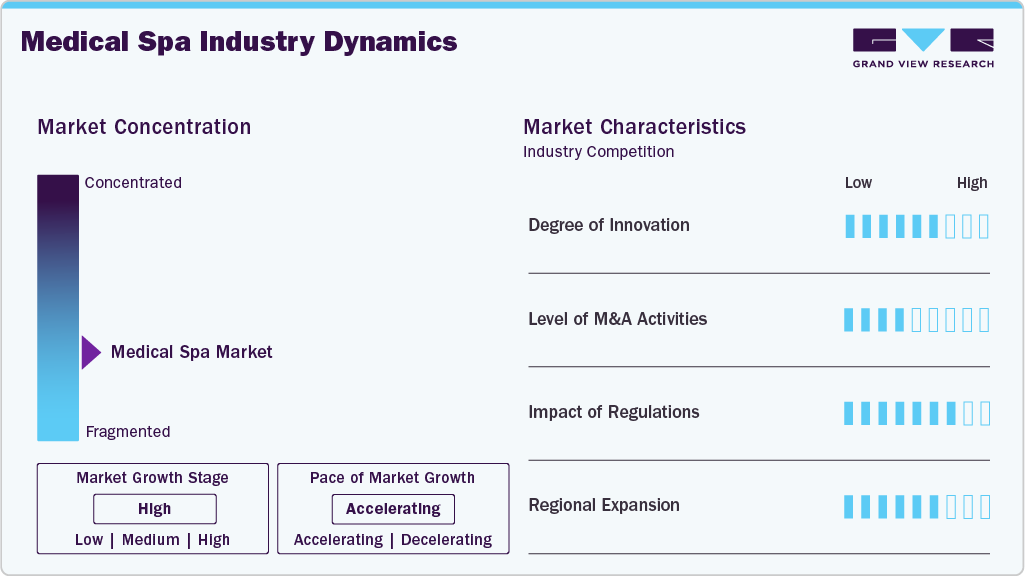
The chart below represents the relationship between industry concentration, characteristics, and participants. There is a high degree of innovation, moderate level of merger & acquisition activities, high impact of regulations, and moderate expansion of industry.
The medical spa industry is experiencing a high degree of innovation. In June 2025, Oriflame announced the extension of its Personalised Wellness Pack into two additional European markets including the Czech Republic and Romania in response to strong consumer engagement. The offering, under the Wellosophy brand, is built around a digital assessment that evaluates individuals’ lifestyle, diet, and health goals. Using an advanced algorithm, the assessment generates custom supplement recommendations from a portfolio of 30 science-backed options, covering 14 key health areas such as sleep, immunity, energy, skin, and stress. Delivered via a monthly subscription model, these packs include premium active ingredients such as Verisol collagen peptides and SkinAx2 antioxidant complex.
 To learn more about this report, Download Free Sample Report
 Several key players are actively engaging in partnerships & collaborations to promote growth & innovation and improve their competitiveness by combining the expertise & efforts of different organizations. For instance, in August 2024, Northrim Horizon completed the acquisition of Allure Medspa, a multi-location medical aesthetics provider, marking a strategic expansion move within the fast-growing U.S. medical spa market. This acquisition strengthens Northrim Horizon’s presence in the medical aesthetics sector, allowing it to capitalize on the industry’s rising consumer demand for non-invasive cosmetic procedures and wellness treatments.
The market is regulated by a variety of guidelines designed to ensure patient safety, quality of care, and ethical business practices.
-
In the U.S., ownership and operational models depend largely on state medical regulations-some states allow non-physicians to invest in or own medical spas under specific conditions, while others restrict ownership exclusively to licensed physicians. For instance, in Alaska, non-physicians can own medical spas through management services organizations (MSOs) that handle business operations, provided that licensed medical directors and practitioners perform all clinical procedures.
-
In response to growing concerns over patient safety and the proliferation of unregulated practices, the UK government has initiated steps to introduce more comprehensive regulation:
-
Health and Care Act 2022: This legislation grants the government the authority to establish a licensing scheme for non-surgical cosmetic procedures. The scheme aims to categorize procedures based on risk levels and set corresponding standards for practitioners and premises.
-
Botulinum Toxin and Cosmetic Fillers (Children) Act 2021: This act makes it a criminal offense to administer botulinum toxin or cosmetic fillers to individuals under the age of 18 for cosmetic purposes, even with parental consent.
-
Key market players in different regions are expected to increase due to their high capacity, established geographical presence and high customer base. For instance, in October 2023, SHA Wellness Clinic announced plans for regional expansion, with SHA Emirates set to debut in the UAE, aiming for completion around 2024-25.
Analyst Perspective
The medical spa market is benefiting from strong demand for minimally invasive aesthetic procedures, growing consumer focus on anti-aging treatments, and increasing interest in wellness-driven self-care. Advances in injectables, laser therapies, body contouring, and regenerative aesthetics are further expanding treatment options and attracting a broader customer base. The key competitive advantage will lie with providers that integrate aesthetic services with wellness offerings such as weight management, skin health, and preventive care. By creating a personalized, long-term client experience rather than a procedure-based model, medical spas can improve customer retention, increase spending per client, and strengthen their market position.
Service Insights
Based on service, the facial treatments segment led the market with the largest revenue share of 53.6% in 2025. This is driven by a combination of evolving consumer preferences, technological advancements, and increasing awareness of skincare and anti-aging solutions. Rising concerns about skin health, premature aging, hyperpigmentation, and acne have encouraged individuals to seek professional-grade facial treatments that deliver visible results beyond what over-the-counter products can achieve. Innovations in non-invasive and minimally invasive technologies, such as laser therapy, microdermabrasion, chemical peels, and hydrafacials, have made these treatments safer, more effective, and accessible to a broader audience.
The body shaping and contouring segment is anticipated to witness the fastest CAGR during the forecast period. Increasing consumer awareness about physical appearance and body image, fueled by social media and celebrity influence, has heightened demand for non-invasive or minimally invasive procedures that enhance body contours without the need for surgery. In addition, advances in medical technology, such as cryolipolysis, radiofrequency, ultrasound, and laser-based treatments, have made body shaping procedures safer, more effective, and accessible to a broader audience, encouraging repeat visits and expanding the customer base. The rising prevalence of obesity and sedentary lifestyles has also contributed to growing interest in fat reduction and body contouring treatments as convenient alternatives to traditional weight loss methods.
Gender Insights
Based on gender, the female segment led the market with the largest revenue share of 85.1% in 2025. Women being the primary customers, various women-oriented services are being increasingly designed, which is positively impacting segment growth. The rising adoption of various aesthetic treatments by females is boosting segment growth. As per the medisonps.com updates published in August 2025, South Korea stands out as a global leader in cosmetic procedures, with one of the highest per capita rates worldwide, approximately 8.90 procedures per 1,000 people. This prevalence is particularly notable among young women, with estimates indicating that one in three women aged 19-29 has undergone some form of plastic surgery.
The male segment is expected to witness lucrative growth during the forecast period. The adoption of services among men has increased as they have realized that these treatments are healthy and relaxing. As a result, the industry is developing skin care products and services focused on men. An increasing number of male customers and the development of targeted market strategies for males are likely to boost segment growth.
Age Group Insights
Based on age group, the adult segment led the market with the largest revenue share of 70.8% in 2025. Most of the med spas have their customers in their mid-30s, 40s, and 50s due to the increasing focus of adults on body contouring and anti-aging treatments. Nearly 26.0% of all the female customers in the U.S. belonged to the age group of 35-54 as per the 2022 AmSpa Medical Spa State of the Industry Report. The high spending capacity of people aged 35 to 50 and increasing demand for dermal fillers among this age group are propelling the segment's growth.
High influence of social media leads to increase in demand for facial treatments among adolescents. Teenagers are increasingly incorporating anti-aging products and treatments into their beauty regimes. Moreover, they want scar-less skin permanently and opt for nonsurgical scar revisions.
The geriatric segment is estimated to witness substantial growth during the forecast period. As per WHO updates 2025, the global population is expected to age significantly, with one in six people projected to be 60 years or older by 2030. This demographic shift reflects a substantial increase in the share of older adults, rising from 1 billion in 2020 to 1.4 billion by 2030. The trend is set to continue, and by 2050, the number of people aged 60 and above is expected to double, reaching 2.1 billion. The desire to look young and attractive even in old age is favoring the growth of the geriatric segment. People aged above 60 are more interested in maintaining a healthy lifestyle, which leads to an increase in the number of med spa visits.
Service Provider Insights
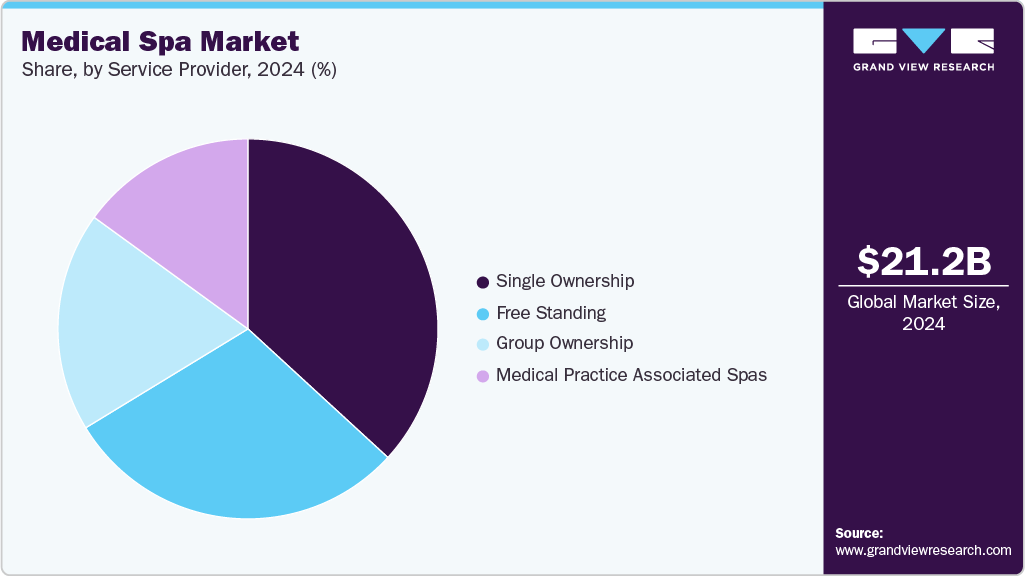
Based on service provider, the single ownership segment led the market with the largest revenue share of 37.1% in 2025. The single ownership segment in the medical spa (MedSpa) market is primarily driven by growing entrepreneurial activity among physicians, dermatologists, and aesthetic practitioners who seek greater control over their service offerings, branding, and profitability. These independently owned MedSpas can tailor treatments and pricing strategies to local client preferences, ensuring personalized service and stronger patient loyalty. Lower setup costs, availability of Turnkey MedSpa solutions, and easier access to financing have further encouraged solo practitioners to enter the market.
 To learn more about this report, Download Free Sample Report
 The medical practice associated spas is estimated to witness substantial growth during the forecast period due to the increasing integration of medical expertise with aesthetic and wellness services. One of the primary drivers is consumer preference for medically supervised treatments, as clients seek safer, more effective, and evidence-based aesthetic procedures such as injectables, laser therapies, and skin rejuvenation. The rising credibility and trust associated with licensed medical professionals, especially dermatologists, plastic surgeons, and cosmetic physicians-encourage patients to choose these settings over traditional spas.
Regional Insights
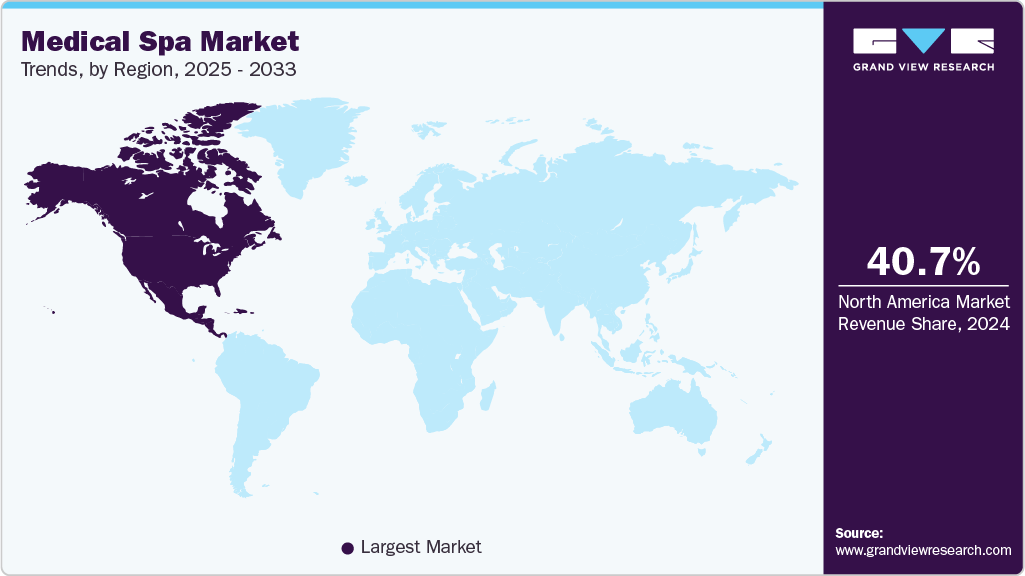
North America dominated the women’s health app market with the largest revenue share of 41.2% in 2025. Technological advancements have greatly improved the safety, effectiveness, and accessibility of both surgical and non-surgical treatments. Innovations such as 3D imaging, virtual consultations, and AI-driven personalized treatment plans have led to better patient outcomes and increased satisfaction. In addition, societal acceptance of cosmetic procedures has grown, driven by media portrayals, celebrity endorsements, and the normalization of aesthetic enhancements. Social media platforms have played a crucial role in driving beauty standards and increasing demand for procedures such as Botox, dermal fillers, and body contouring.
 To learn more about this report, Download Free Sample Report
 U.S. Medical Spa Market Trends
The medical spa market in the U.S. held the largest share in the North America region in 2025., driven by the growing strategic initiatives. In July 2024, Dr. Lee B. Daniel, founder of Aesthetic Plastic Surgery, The Spa Side, and The Guy Side in Eugene, Oregon, announced a partnership with Cosmetic Physician Partners (CPP), a leading network of physician-led medical aesthetic clinics in the U.S. This collaboration aims to raise the standards of aesthetic medicine by merging Dr. Daniel's dedication to personalized, high-quality patient care with CPP's operational expertise and support. Dr. Daniel emphasized that this partnership would enable his team to concentrate more on patient outcomes. It will ensure that staff members are well-trained and up to date with the latest scientific advancements, thereby enhancing their treatment capabilities and providing a more efficient, patient-centered approach.
Asia Pacific Medical Spa Market Trends
Asia Pacific accounted for the largest revenue share of the medical spa industry in 2024. The expansion of cosmetic surgery facilities in developing nations, rising healthcare costs, an aging population, and an increased emphasis on aesthetics are some of the major drivers of the regional industry. The demand for cosmetic procedures in China has increased recently due to the country's growth in obesity rate, which has resulted in people opting for more extreme weight-loss techniques such as liposuction.
The Japan medical spa market held a significant revenue share in 2024. In January 2023, establishment Labs launched its innovative Mia Femtech breast enhancement procedure in Japan, partnering with Seishin Plastic and Aesthetic Surgery Clinic as its first collaborator. Seishin is a prominent network of 10 premium plastic surgery clinics and is expected to offer the Mia procedure at its flagship clinic in Roppongi and its newest location in Ginza. This collaboration marks a strategic entry into the Asian market, with plans to expand Mia Femtech offerings to additional clinics in Japan and Europe. This partnership highlights Establishment Labs' commitment to redefining breast aesthetics through innovative, patient-centric solutions.
Europe Medical Spa Market Trends
The medical spa industry in Europe is expected to witness high growth due to the growing popularity of aesthetic procedures, influenced by social media and celebrity culture, which has led to greater acceptance and demand for cosmetic enhancements. Economic factors also play a crucial role; rising disposable incomes and economic stability across Europe allow more individuals to afford cosmetic surgeries. Furthermore, the aging population is seeking anti-aging treatments such as facelifts and Botox, contributing to the market's expansion.
The UK medical spa market held a significant revenue share in 2024. In August 2025, the UK government partnered with TikTok to address the growing trend of "cosmetic tourism," where residents seek cheaper procedures abroad, often leading to complications that strain the NHS. The campaign features influencers such as Midwife Marley and Doc Tally to educate the public on the risks of overseas treatments, emphasizing the importance of consulting UK professionals and verifying clinic credentials. It also advises securing travel insurance and being cautious of social media promotions, aiming to protect consumers and reduce NHS costs from treatment complications.
Latin America Medical Spa Market Trends
The medical spa industry in Latin America is anticipated to grow significantly due to the rise of medical tourism. It has positioned Latin America as a destination for individuals seeking affordable cosmetic procedures without compromising on quality, attracting patients from North America and beyond. The increasing acceptance of aesthetic treatments among both men and women, coupled with a growing middle class and improved access to cosmetic services, further contributes to the market's expansion.
The medical spa market in Argentina held a significant revenue share in 2024. Argentina's recent decision to eliminate export duties on over 4,000 manufactured goods, including cosmetics and personal care products, has significant implications for Argentina cosmetic surgery and procedures market. This policy shift enhances Argentina's competitiveness in the global beauty industry by reducing trade costs for local manufacturers, making it easier for them to access international markets. As a result, Argentina is positioned to become a more attractive sourcing hub for global beauty brands, potentially diverting some production away from Brazil.
Middle East and Africa Medical Spa Market Trends
The medical spa industry in MEA is anticipated to grow significantly over the forecast period. Innovative funding is revolutionizing the Middle East to become a hub for healthcare progress and access. Between 2021 and 2023, the Middle East saw about USD 103 million worth of healthcare investment added to a worldwide total of USD 48 billion. Governments, particularly Saudi Arabia and the UAE, are heavily investing in digital health and infrastructure. Private sector investors, including the Abu Dhabi Investment Authority, are making large bets too, with significant commitments to medical tech. Growth of health tech startups worth more than USD 1.5 billion indicates the direction towards new-age solutions. These projects are improving healthcare infrastructure and driving the uptake of cutting-edge technologies such as AI, giving rise to a viable healthcare ecosystem in the region.
Saudi Arabia medical spa market’s growth is driven by evolving beauty standards, increased disposable income, and advancements in medical technology. Moreover, in April 2025, Saudi Arabia launched 28 healthcare projects in Riyadh, as part of its Vision 2030 initiative. These projects aim to enhance healthcare infrastructure and services, significantly impacting the cosmetic surgery market. With advanced technologies and state-of-the-art facilities, demand for specialized services, including cosmetic procedures, is expected to rise. The increased private sector investment and promotion of medical tourism will position Saudi Arabia as a regional hub for aesthetic treatments, benefiting both local and international patients.
Key Medical Spa Company Insights
The market is fragmented, with the presence of many regional and country-level medical spa providers.The market players undertake several strategic initiatives, such as partnerships & collaborations, product launches, mergers & acquisitions, and geographical expansion to maintain their position and grow in the market.
Key Medical Spa Companies
The following key companies have been profiled for this study on the medical spa market.
-
Chic La Vie
-
Clinique La Prairie
-
Kurotel-Longevity Medical Center and Spa
-
Lanserhof
-
The Orchard Wellness Resort
-
Biovital Medspa
-
Allure Medspa
-
Longevity Wellness Worldwide
-
Serenity Medspa
-
Vichy Celestins Spa Hotel
-
Brenners Park-Hotel & Spa
-
SHA Wellness Clinic
-
Cocoona Centre Of Aesthetic Transformation
-
Mezzatorre
-
Aesthetics Medispa
-
Lily’s Medi Spa
-
Lisse
-
Drx Clinic
-
Westchase Medspa;
-
Chiva Som
-
Mandarin Oriental Hotel Group Limited
Competitive Benchmarking
Category
Operating Strategies
Competitive Edge
Weakness
Established Players (e.g., Chic La Vie, Serenity Medspa Allergan Aesthetics affiliated provider networks)
Expand multi-location medical spa networks through acquisitions and franchise models. Invest in advanced aesthetic technologies, membership programs, digital consultations, and personalized treatment offerings. Establish partnerships with aesthetic device manufacturers and skincare brands.
Strong brand recognition, extensive geographic presence, established customer base, and access to capital for technology investments. Ability to offer a comprehensive portfolio of aesthetic and wellness services with standardized treatment protocols.
High operational and staffing costs, greater regulatory compliance burden, and slower adaptation to emerging aesthetic trends. Large-scale operations may reduce flexibility in delivering highly customized services.
Emerging Players (Lily’s Medi Spa, Lisse, Drx Clinic regional wellness-focused providers)
Focus on specialized services such as injectables, regenerative aesthetics, body contouring, wellness therapies, or anti-aging programs. Utilize social media marketing, influencer partnerships, personalized care models, and local community engagement to attract clients.
Greater agility in adopting new treatment technologies and beauty trends. Ability to deliver highly personalized experiences and target niche customer segments with customized service offerings.
Limited financial resources for expansion, marketing, and technology adoption. Lower brand awareness, dependence on local markets, and challenges in scaling operations while maintaining service quality and regulatory compliance.
Recent Developments
-
In May 2025, The Laser Lounge Spa in Sarasota introduced a new range of medical-grade aesthetic treatments to cater to the rising demand for non-surgical beauty solutions. This launch reflects the growing consumer preference for minimally invasive procedures that deliver effective results with little to no downtime. The spa’s new offerings include advanced laser therapies, injectables, skin rejuvenation treatments, and body contouring solutions designed to enhance natural beauty safely and efficiently.
-
In December 2024, Empower Aesthetics entered a partnership with Livio Med Spa, a leading skincare and wellness provider operating in Cincinnati, Ohio and Covington, Kentucky. Through this collaboration, Empower will bring to Livio its operational, strategic, and financial capabilities, enabling greater scaling while aiming to preserve the local brand identity, clinical quality, and personalized care that Livio’s clientele appreciates.
"The values of the team at Livio Med Spa, led by the superb Lisa McMillan, that emphasize clinical excellence, clinical education, and clinical outcomes, tailored to clients' individual needs, align perfectly with the values and mission of Empower Aesthetics," said Rapp. "We're confident that Livio Med Spa will continue to thrive within the Empower Aesthetics ecosystem."
-
In August 2024, Northrim Horizon, an Arizona-based permanent capital investment firm, recently announced that it has completed the acquisition of Allure Medspa, a multi-location medical spa operator. With this deal, Allure Medspa becomes the sixth platform acquisition by Northrim under its Fund II.
"I'm thrilled to join Allure Medspa and to partner with Northrim to accelerate growth in this exciting industry," said Ms. Tan. "I'm inspired by Allure's team of passionate and talented professionals, who are deeply committed to providing high-quality, personalized care for individuals on their aesthetics journey."
Medical Spa Market Report Scope
Report Attribute
Details
Market size value in 2025
USD 24.2 billion
Estimated market size in 2026
USD 27.8 billion
Projected market size by 2033
USD 78.2 billion
Growth rate
CAGR of 15.9% from 2026 to 2033
Historical data
2021 - 2025
Forecast period
2026 - 2033
Quantitative units
Revenue in USD million/billion, and CAGR from 2026 to 2033
Report coverage
Revenue forecast, company ranking, competitive landscape, growth factors, and trends
Segments covered
Service, gender, age group, service provider, region
Regional scope
North America; Europe; Asia Pacific; Latin America; MEA
Country scope
U.S.; Canada; Mexico; Germany; UK; France; Italy; Spain; Norway; Denmark; Sweden; China; Japan; India; South Korea; Australia; Thailand; Brazil; Argentina; Saudi Arabia; South Africa; UAE; Kuwait
Key companies profiled
Chic La Vie; Kurotel-Longevity Medical Center and Spa; Clinique La Prairie; Lanserhof Lans; Longevity Wellness Worldwide; The Orchard Wellness Resort; Biovital Medspa; Allure Medspa; Serenity Medspa; Vichy Celestins Spa Hotel; Sha Wellness Clinic; Brenners Park-Hotel & Spa; Mezzatorre; Cocoona Centre Of Aesthetic Transformation; Lily's Medi Spa; Aesthetics Medispa; The Drx Aesthetics; Mandarin Oriental; Westchase; Lisse
Customization scope
Free report customization (equivalent up to 8 analysts' working days) with purchasse. Addition or alteration to country, regional & segment scope.
Pricing and purchase options
Avail customized purchase options to meet your exact research needs. Explore purchase options
Global Medical Spa Market Report Segmentation
This report forecasts revenue growth at the global, regional, and country levels and provides an analysis of the latest industry trends in each of the sub-segments from 2021 to 2033. For this study, Grand View Research has segmented the global medical spa market report based on service, gender, age group, service provider, and region:
-
Service Outlook (Revenue, USD Million, 2021 - 2033)
-
Facial Treatment
-
Body Shaping & Contouring
-
Hair Removal
-
Scar Revision
-
Tattoo Removal
-
Other Services
-
-
Gender Outlook (Revenue, USD Million, 2021 - 2033)
-
Male
-
Female
-
-
Age Group Outlook (Revenue, USD Million, 2021 - 2033)
-
Adolescent
-
Adult
-
Geriatric
-
-
Service Provider Outlook (Revenue, USD Million, 2021 - 2033)
-
Single Ownership
-
Group Ownership
-
Free-standing
-
Medical Practice Associated Spas
-
-
Regional Outlook (Revenue, USD Million, 2021 - 2033)
-
North America
-
U.S.
-
Canada
-
Mexico
-
-
Europe
-
Germany
-
UK
-
France
-
Spain
-
Italy
-
Denmark
-
Sweden
-
Norway
-
-
Asia Pacific
-
China
-
Japan
-
India
-
South Korea
-
Australia
-
Thailand
-
-
Latin America
-
Brazil
-
Argentina
-
-
Middle East and Africa (MEA)
-
South Africa
-
Saudi Arabia
-
UAE
-
Kuwait
-
-
Research Methodology
Segment Definition
Segment - Service
Revenue capture definition
Facial Treatments
This segment includes services focused on improving and maintaining the skin texture & appearance of the face. It encompasses various non-invasive and minimally invasive facial treatments, such as facials, chemical peels, and microdermabrasion, specifically designed to enhance skin health and combat signs of aging.
Body Shaping & Contouring
This segment includes services focused on improving and maintaining the skin texture & appearance of the face. It encompasses various non-invasive and minimally invasive facial treatments, such as facials, chemical peels, and microdermabrasion, specifically designed to enhance skin health and combat signs of aging.
Hair Removal
This segment includes services related to removing unwanted body hair using laser hair removal, waxing, or electrolysis methods. The focus is on providing long-term or permanent solutions for hair reduction.
Scar Revision
Scar revision services involve treatments and procedures to minimize the appearance of scars on the skin. This includes laser therapy, micro needling, or other techniques to improve the texture and color of scars.
Tattoo Removal
Tattoo removal services specialize in removing or fading unwanted tattoos. Procedures may include laser tattoo removal, which breaks down ink particles in the skin for natural elimination.
Others
Tattoo removal services specialize in removing or fading unwanted tattoos. Procedures may include laser tattoo removal, which breaks down ink particles in the skin for natural elimination
Segment - Gender
Revenue capture definition
Female
Female consumers represent a major customer segment in the medical spa market, seeking treatments such as anti-aging procedures, skin rejuvenation, body contouring, laser therapies, and wellness-focused aesthetic services.
Male
Male consumers increasingly utilize medical spa services for skincare, hair restoration, body sculpting, anti-aging treatments, and other minimally invasive aesthetic procedures aimed at enhancing appearance and confidence.
Segment - Age Group
Revenue capture definition
Adult
Adult patients, typically aged 18-64 years, are the primary users of medical spa services, seeking preventive skincare, cosmetic enhancements, body contouring, and wellness treatments to maintain their appearance and overall well-being.
Geriatric
Geriatric patients, generally aged 65 years and above, utilize medical spa services to address age-related concerns such as wrinkles, skin laxity, volume loss, pigmentation, and other signs of aging through non-invasive or minimally invasive treatments.
Adolescent
Adolescent patients, typically under 18 years of age, may access select medical spa services such as acne treatments, scar reduction procedures, and skin health therapies under appropriate medical supervision and parental consent.
Segment - Service Provider
Revenue capture definition
Single Ownership
Refers to medical spas owned and operated by an individual or a single entity.
Free Standing
Denotes medical spas that operate independently and are not directly associated with another healthcare facility.
Group Ownership
Indicates medical spas owned by individuals, investors, or a corporate entity
Medical Practice Associated Spas
Includes spas affiliated or associated with medical practices, where esthetic services are provided in conjunction with medical treatments.
Estimation Model
Model Details
This research methodology outlines the process for estimating the size of the global medical spa market for the period from 2021 to 2033. The study covers key service segments, including facial treatments, injectables, body contouring, laser-based procedures, hair restoration, and wellness services, across major geographic regions including North America, Europe, Asia Pacific, Latin America, and the Middle East & Africa. The objective is to develop a robust and defensible market estimate through a combination of bottom-up and top-down approaches supported by primary industry validation.
A triangulated market sizing approach was used, combining:
-
Bottom-Up Analysis from medical spa facility counts, average revenue per facility, and service mix trends
-
Top-Down checks using aesthetic procedure volumes, healthcare expenditure data, demographic indicators, and industry association publications
-
Primary Research with medical spa operators, dermatologists, plastic surgeons, aesthetic practitioners, equipment suppliers, and industry consultants
Step-By-Step Market Estimation Process
-
Population-Based Aesthetic Service Utilization Model
-
This model calculates the market size by estimating the number of individuals utilizing medical spa services across major countries and their annual spending on treatments.
-
Step 1: Country-level population data for 2021-2025 was collected from international statistical databases, including the United Nations Population Division and national statistical agencies.
-
Step 2: A medical spa utilization rate was applied, estimating the percentage of the adult population receiving at least one medical spa treatment annually. The utilization rate was derived from primary interviews, aesthetic procedure databases, industry publications, and consumer surveys.
-
Step 3: Average annual spending per medical spa consumer was estimated using publicly available treatment pricing data, operator interviews, service menus, and regional pricing benchmarks.
-
Step 4: Market size was calculated by multiplying population × utilization rate × average annual spending per user.
-
Step 5: Calculations were performed at the country level and subsequently aggregated to regional and global levels.
-
Step 6: Historical and forecast growth rates were incorporated based on demographic trends, disposable income growth, medical tourism activity, and aesthetic treatment adoption rates.
-
-
-
Facility-Based Revenue Extrapolation Model
-
This model estimates market size using the number of operational medical spas and their average annual revenues.
-
Step 1: The number of medical spa facilities by country was identified through industry associations, licensing databases, business registries, franchise networks, and proprietary databases.
-
Step 2: Average annual revenue per facility was estimated using financial disclosures, franchise reports, operator interviews, and benchmarking studies.
-
Step 3: Facility revenues were adjusted for regional differences in treatment pricing, service portfolio, patient volume, and purchasing power parity.
-
Step 4: Country-level market size was calculated by multiplying the number of medical spas by the adjusted average annual revenue per facility.
-
Step 5: Regional and global market values were generated through aggregation of country-level estimates.
-
Step 6: Annual adjustments were applied to account for new facility openings, industry consolidation, technology adoption, and service expansion trends.
-
-
-
Procedure-Volume and Treatment Spending Model
-
This model estimates market size based on the volume of medical aesthetic procedures performed globally and the average spending associated with each treatment category.
-
Step 1: Procedure volume data was collected from industry organizations, aesthetic medicine associations, dermatology societies, plastic surgery associations, and healthcare publications.
-
Step 2: Procedures were categorized into injectables, facial treatments, body contouring, laser treatments, hair restoration, skin rejuvenation, and wellness services.
-
Step 3: Average treatment pricing by region was established using publicly available provider pricing, industry surveys, and expert interviews.
-
Step 4: Revenue generated by each procedure category was calculated by multiplying procedure volume by average treatment cost.
-
Step 5: Category-level revenues were aggregated to determine country, regional, and global market sizes.
-
Step 6: Forecast assumptions incorporated procedure adoption trends, technological advancements, consumer preferences, and medical tourism growth.
-
-
Geographic Demand Potential Index (GDPI) Validation Models
In addition to the core triangulation models, a Geographic Demand Potential Index (GDPI) model was developed to benchmark medical spa demand across countries and regions globally. This model applied four macroeconomic and industry-specific indicators:
-
Adult Population Size
-
Disposable Income & Consumer Spending Capacity
-
Aesthetic Procedure Adoption Rate
-
Medical Tourism & Wellness Infrastructure Index
Each country's GDPI score was calculated and normalized to estimate its relative share of global medical spa demand. The resulting scores were used as a validation framework for the market estimates generated through Models 1-3, ensuring alignment with actual market concentration, treatment adoption patterns, and regional growth dynamics.
Final Market Triangulation
The final global medical spa market size was derived through triangulation of:
-
Population-Based Aesthetic Service Utilization Model
-
Facility-Based Revenue Extrapolation Model
-
Procedure-Volume and Treatment Spending Model
-
Geographic Demand Potential Index (GDPI) Validation Model
The weighted average of these models, validated through primary interviews and secondary industry sources, was used to generate the final historical estimates (2021-2025) and forecast projections (2026-2033) for the medical spa market.
Delivered Customizations
This report has been delivered with the following In-depth customizations
Client Request
Customization Delivered
Value Adds
Volume Analysis by Service Type
Developed a comprehensive volume assessment of medical-spa services segmented by injectables, facial rejuvenation. laser treatments, body contouring, hair restoration, wellness therapies, and skin tightening procedures. The study evaluates annual procedure volumes, repeat treatment frequency. customer demographics, spending patterns, and regional demand trends.
Enables stakeholders to identify high-volume service categories, optimize resource allocation, improve service portfolios, and prioritize investments in rapidly growing treatment segments.
Consumer Journey & Treatment Adoption Analysis
Developed a patient-centric assessment tracking awareness. consultation, treatment selection, repeat visits, and long-term engagement across aesthetic and wellness services. The study incorporates consumer motivations, treatment preferences, digital engagement patterns, and loyalty drivers.
Provides actionable insights for improving customer acquisition, retention strategies, membership programs, and personalized treatment experiences.
Al-Powered Aesthetic Technology Assessment
Conducted an in-depth evaluation of Al-enabled skin analysis systems, digital consultation platforms, treatment planning tools, and patient engagement technologies adopted by medical spas. The study benchmarks technology adoption, effectiveness, and competitive positioning.
Helps stakeholders identify emerging technologies, enhance operational efficiency, improve treatment outcomes, and strengthen digital transformation initiatives.
Frequently Asked Questions About This Report
The global medical spa market size was estimated at USD 24.2 billion in 2025 and is expected to reach USD 27.8 billion in 2026.
The global medical spa market is expected to grow at a compound annual growth rate of 15.9% from 2026 to 2033 to reach USD 78.2 billion by 2033.
Some of the major companies in the medical spa market are Chic La Vie; Kurotel-Longevity Medical Center and Spa; Clinique La Prairie; Lanserhof Lans; Longevity Wellness Worldwide; The Orchard Wellness Resort; Bijoux Medi-Spa; Biovital Medspa; Allure Medspa; Serenity Medspa; Vichy Celestins Spa Hotel; Sha Wellness Clinic; Brenners Park-Hotel & Spa; Mezzatorre Resort & Spa; Cocoona Centre Of Aesthetic Transformation; Lily's Medi Spa; Aesthetics Medispa; The Drx Aesthetics; Mandarin Oriental; Westchase; Lisse; Medspa; and Chiva Som
Key factors that are driving the medical spa market growth include the rising adoption of dermal fillers among women in their late 20s, increasing consumer awareness about self-care and anti-aging services, and rapid expansion of the wellness tourism sector.
The female segment accounted for the largest revenue share in 2025. Women being the primary customers, various women-oriented services are being increasingly designed, which is positively impacting segment growth
The adult segment held the largest market share of 70.8% in 2025 and is projected to witness highest CAGR over the forecast period. Most of the med spas have their customers in their mid-30s, 40s, and 50s due to the increasing focus of adults on body contouring and anti-aging treatments.
The single ownership segment held the largest revenue share of 37.1% in 2025 driven by growing entrepreneurial activity among physicians, dermatologists, and aesthetic practitioners who seek greater control over their service offerings, branding, and profitability.
The facial treatment segment dominated the market with a revenue share of 53.6% in 2025. This is driven by a combination of evolving consumer preferences, technological advancements, and increasing awareness of skincare and anti-aging solutions.
North America dominated the market with a share of 41.2% in 2025. Technological advancements have greatly improved the safety, effectiveness, and accessibility of both surgical and non-surgical treatments
About the Author(s)
Medical Devices Research Team
Healthcare · Medical DevicesThis report was authored by the medical devices research team at Grand View Research - comprising two research analysts, one senior research analyst, and one industry expert - with specialized expertise in the medical devices segment of the healthcare industry. All findings are based on proprietary healthcare databases, executive interviews, and regulatory analysis, subject to internal peer review prior to publication.
Last Updated:
Speak to Analyst

Customize this report to your needs - add regions, segments, or data points, with 20% free customization.
Or view our licence options:


ISO 9001:2015 & 27001:2022 Certified
We are GDPR and CCPA compliant! Your transaction & personal information is safe and secure. For more details, please read our privacy policy.


