
- Home
- »
- Homecare & Decor
- »
-
China Pest Control Products Market, Industry Report, 2033GVR Report cover

China Pest Control Products Market (2025 - 2033) Size, Share & Trends Analysis Report By Product (Sprays/Aerosols, Baits/Gels, Repellents), By Pest (Flying Insects, Crawling Insects, Rodents), By Control Mechanism, By End Use, And Segment Forecasts
China Pest Control Products Market Summary
The China pest control products market size was estimated at USD 1.10 billion in 2024 and is projected to reach USD 2.84 billion by 2033, growing at a CAGR of 11.2% from 2025 to 2033. Pest-borne illnesses remain a serious public health concern in China, with mosquitoes, flies, rodents, and cockroaches contributing to the spread of diseases across both urban and rural regions. Rising incidences of dengue, malaria, and Japanese encephalitis, alongside rodent-linked infections such as leptospirosis, are driving households, businesses, and municipalities to adopt structured pest management solutions. As urban expansion continues and climate change alters insect breeding patterns, the demand for preventive and responsive pest control measures has become more pronounced.
 Source: Grand View Research, IR Documents, Primary Interviews, Paid DatabasesTo learn more about this report,
 Download Free Sample Report
Lifestyle upgrades and outdoor design trends are also influencing the market growth. The expansion of landscaped residential complexes, outdoor recreation zones, and commercial green areas creates favorable habitats for pests, prompting higher adoption of home and garden pesticides. Facility managers and homeowners increasingly prioritize integrated pest solutions that balance safety, convenience, and effectiveness without compromising the aesthetic or ecological value of these spaces.
Growing awareness of chemical residues has led to a rising preference for pest control products using natural extracts such as citronella, neem, and pyrethrum. This aligns with China’s broader movement toward greener living and wellness-driven consumption. Skin-safe mosquito sprays, eco-friendly traps, and herbal repellents have become popular among urban families, reflecting the convergence of health, lifestyle, and sustainability.
Recent developments highlight this momentum. In June 2025, Rentokil Initial China launched its “Green Pest Control, Healthy Home” initiative in Shanghai, marking the company’s 20th anniversary. The program featured public education and household inspections designed to promote environmentally responsible pest management, reinforcing the growing emphasis on community-level health protection. Similarly, in August 2025, Xinhua reported a surge in demand for mosquito-control products amid nationwide heatwaves, with manufacturers responding by introducing biodegradable traps and electrothermal repellents that cater to both domestic consumers and overseas markets.
Furthermore, stricter hygiene regulations in foodservice, hospitality, and healthcare are driving organizations to outsource pest control services to professional operators. Hotels, restaurants, and hospitals are investing in low-residue treatment methods and integrated pest management (IPM) solutions, reinforcing demand for service-based models.
Buyers’ Behavioral Analysis
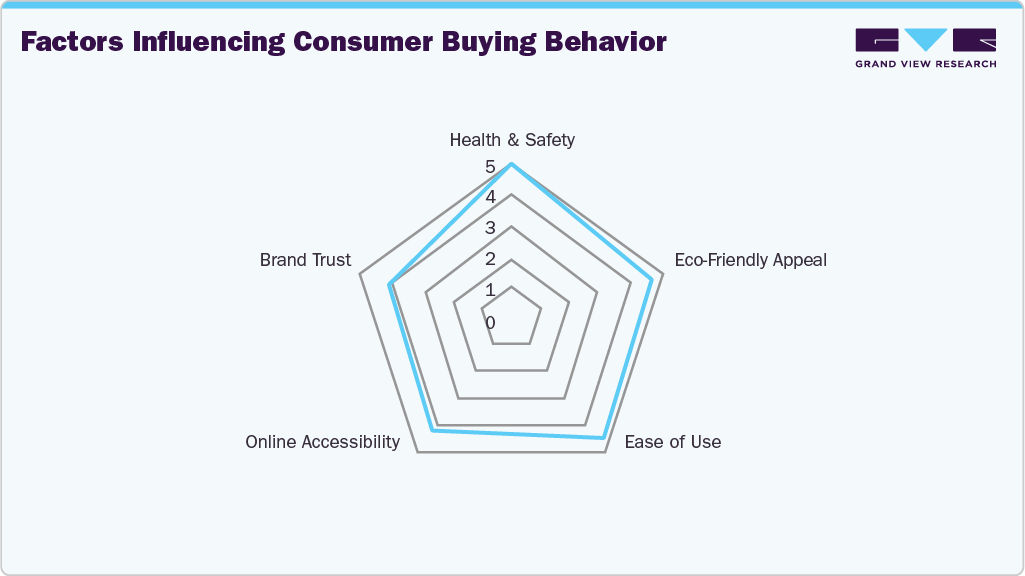
In China’s pest control market, health and household safety are the strongest influences on consumer buying behavior. Families, especially in urban apartments, value products that can effectively eliminate cockroaches, mosquitoes, and rodents without posing risks to children or pets. Demand for low-odor sprays, non-toxic gels, and eco-friendly repellents has grown rapidly, reflecting heightened awareness of indoor air quality and long-term exposure to chemicals.
Another critical factor is convenience and ease of use. Busy households in major cities tend to prefer ready-to-use aerosol sprays, plug-in mosquito repellents, or pre-baited traps that require little preparation. Packaging that is easy to store, single-use sachets, and products with clear instructions in Chinese are favored over complex, service-heavy solutions. Online availability through platforms like JD.com and Tmall also drives purchasing decisions, as consumers seek quick delivery and trusted reviews before making a purchase.
 To learn more about this report, Download Free Sample Report
Buying patterns further vary by income group and lifestyle. Middle- and high-income households increasingly opt for smart pest control devices, ultrasonic repellents, or branded eco-products marketed with certifications. Budget-conscious families, by contrast, prioritize affordability, bulk packs, and traditional methods such as sticky boards or incense coils. Seasonal outbreaks, like mosquito surges in southern provinces, also strongly influence purchase spikes, showing how both lifestyle needs and environmental conditions shape consumer demand.
Product Insights
Sprays/aerosols accounted for a revenue share of 38.83% in 2024. These products are widely available across supermarkets, e-commerce platforms, and local stores, making them the most accessible pest control option for urban and rural consumers alike. Their ease of use, requiring no professional assistance, appeals strongly to households looking for quick solutions to issues such as mosquitoes, cockroaches, and flies. In addition, manufacturers have expanded product ranges with improved formulations, odor-free variants, and eco-friendlier options, further increasing consumer acceptance.
Microbials/biopesticides are expected to grow at a CAGR of 15.0% from 2025 to 2033. With growing concerns over soil health, food safety, and human exposure to toxic residues, both policymakers and consumers are encouraging the adoption of eco-friendly pest management solutions. Supportive government initiatives promoting green agriculture, coupled with advancements in microbial formulations that improve efficacy and shelf life, are making these products more commercially viable. In addition, the expansion of China’s organic farming sector and greater demand for residue-free crops are reinforcing the shift toward biopesticides, positioning them as one of the fastest-growing segments in the country’s pest control market.
Control Mechanism Insights
Control mechanisms through chemicals accounted for a revenue share of 68.48% in 2024. Chemical pesticides remain the most reliable solution for managing a broad spectrum of pests, including insects, rodents, and agricultural nuisances, making them the preferred choice for both households and commercial users. Their ease of application, scalability, and compatibility with existing pest control practices have reinforced their dominance, especially in urban and industrial settings. Moreover, ongoing innovations in chemical formulations, such as longer-lasting sprays, targeted baits, and low-odor variants, have enhanced user convenience and safety, further driving adoption.
Biological control mechanisms are expected to grow at a CAGR of 14.0% from 2025 to 2033 within the China pest control products industry, due to increasing demand for sustainable and eco-friendly pest management solutions. With heightened awareness of the environmental and health risks associated with chemical pesticides, farmers, households, and commercial users are turning to natural predators, beneficial microbes, and bio-insecticides to manage pests safely. Supportive government policies promoting green agriculture, coupled with advancements in biocontrol technologies that enhance effectiveness and reliability, are driving adoption across both urban and rural markets. In addition, the rise of organic farming and stricter regulatory standards for chemical residues is encouraging wider use of biological control methods.
End Use Insights
B2B end use of pest control products accounted for a revenue share of 81.68% of the China pest control products industry in 2024. Hotels, restaurants, food processing units, healthcare facilities, and manufacturing plants require consistent and large-scale pest management to comply with hygiene standards, safety regulations, and quality certifications. Professional pest control services and bulk chemical solutions are preferred in these settings for their reliability, efficiency, and ability to cover large areas. In addition, businesses often invest in integrated pest management programs that combine preventive measures with targeted treatments, further driving B2B spending.
B2C end use for pest control products is expected to grow at a CAGR of 13.6% from 2025 to 2033 due to rising consumer awareness about health, hygiene, and home safety. Urbanization, higher disposable incomes, and increased access to e-commerce platforms are enabling households to adopt convenient and effective pest control solutions, such as sprays, traps, and smart devices. Growing concerns over disease-carrying pests, combined with the desire for quick and easy home-based solutions, are driving demand for ready-to-use products. In addition, manufacturers are introducing eco-friendly and user-friendly options tailored for domestic use, which is further accelerating adoption.
Pest Insights
Crawling insects accounted for a revenue share of 35.20% in 2024. Cockroaches, ants, and bedbugs remain persistent challenges in densely populated urban areas, where warm climates, high humidity, and improper waste management create favorable breeding conditions. These pests are not only a nuisance but also carriers of allergens and disease-causing pathogens, increasing consumer demand for effective control measures. The hospitality, foodservice, and healthcare sectors further amplify the need for targeted pest management to maintain hygiene and regulatory compliance. As a result, demand for sprays, baits, and professional pest control services targeting crawling insects has remained strong.
 To learn more about this report, Download Free Sample Report
Flying Insects are expected to grow at a CAGR of 11.6% from 2025 to 2033. Mosquitoes, flies, and other flying pests pose significant risks as vectors for diseases such as dengue, malaria, and food contamination, driving demand for preventive and control measures. Rapid urbanization, climate variability, and expanding residential and commercial spaces provide ideal breeding conditions, further intensifying the need for effective solutions. In addition, the rising adoption of eco-friendly and automated pest control technologies, including electric traps, repellents, and bio-insecticides, is boosting market growth.
Key China Pest Control Products Company Insights
The China pest control products industry comprises both well-established chemical and equipment manufacturers as well as emerging biopesticide and service providers. Leading companies actively respond to changing consumer preferences and regulatory trends by innovating eco-friendly solutions, expanding product portfolios, and integrating digital technologies to improve effectiveness and convenience. This strategic approach enables them to maintain a competitive edge and solidify their position in China’s rapidly evolving pest control industry.
-
BASF SE is one of the world’s largest chemical manufacturers and a leading provider of pest control solutions in China. The company offers a comprehensive portfolio of chemical pesticides, biocontrol products, and integrated pest management solutions for agricultural, industrial, and commercial clients. BASF actively invests in research and development to improve efficacy, safety, and environmental sustainability, while adapting formulations to meet China-specific pest challenges and regulatory requirements. Its strong distribution network and technical support services make it a preferred partner for large-scale agricultural operations, food processing units, and commercial facilities across the country.
-
Bayer CropScience Ltd. is a global leader in agricultural and pest management solutions, with a significant presence in China’s pest control market. The company provides a wide range of chemical and biological pesticides, including insecticides, fungicides, and herbicides, designed for both B2B and B2C applications. Bayer emphasizes innovation through advanced formulation technologies, eco-friendly solutions, and digital pest monitoring tools, catering to the evolving needs of farmers, households, and commercial enterprises. Its integrated approach combines product efficacy, regulatory compliance, and technical support, establishing Bayer as a trusted and influential player in China’s pest control industry.
Key China Pest Control Products Companies:
- Rentokil Initial plc
- Rollins, Inc.
- The ServiceMaster Company, LLC
- Anticimex AB
- Arrow Exterminators, Inc.
- Asante, Inc.
- Dodson Pest Control, Inc.
- Ecolab Inc.
- Massey Services, Inc.
- Sanix Incorporated
Prism AI by Grand View Research Free to tryAsk a question about the china pest control products marketTry asking✓Every figure cited from GVR research Prefer the report? Download free sample →Recent Developments
-
In June 2025, Rentokil Initial China joined forces with Pudong Development Group Housing Management to launch a public education initiative titled “Green Pest Control, Healthy Home”, held across older residential communities in Shanghai. Aligned with World Pest Day and part of the company's “20th Anniversary, 20 Initiatives” campaign, the program featured free on-site pest control inspections, interactive science displays, quizzes, and informational brochures to promote eco-friendly pest management. Strategically positioned to address local sanitation challenges, the campaign underscores Rentokil Initial China’s alignment with national public health programs and its long-term commitment to “rooting deeply in China and serving China” through professional technical outreach.
-
In September 2024, Rentokil Initial strengthened its operations in China by acquiring Hunan Chenglu Environmental Technology and Guangxi Yihua Environmental Protection. The deal expands Rentokil’s local reach and adds new technical expertise, regulatory accreditations, and skilled teams to its business. By combining these regional strengths with its global capabilities, the company aims to deliver higher-quality pest management services and accelerate the adoption of sustainable, professional solutions across the Chinese market.
China Pest Control Products Market Report Scope
Report Attribute
Details
Market size value in 2025
USD 1.22 billion
Revenue forecast in 2033
USD 2.84 billion
Growth rate (Revenue)
CAGR of 11.2% from 2025 to 2033
Actuals
2021 - 2023
Forecast period
2025 - 2033
Quantitative units
Revenue in USD billion and CAGR from 2025 to 2033
Report coverage
Revenue forecast, company ranking, competitive landscape, growth factors, and trends
Segments covered
Product, pest, control mechanism, end use
Country scope
China
Key companies profiled
Rentokil Initial plc; Rollins, Inc.; The ServiceMaster Company, LLC; Anticimex AB; Arrow Exterminators, Inc.; Asante, Inc.; Dodson Pest Control, Inc.; Ecolab Inc.; Massey Services, Inc.; Sanix Incorporated
Customization
Free report customization (equivalent up to 8 analysts working days) with purchase. Addition or alteration to country, regional & segment scope.
Pricing and purchase options
Avail customized purchase options to meet your exact research needs. Explore purchase options
China Pest Control Products Market Report Segmentation
This report forecasts revenue growth at the country level and provides an analysis of the latest industry trends and opportunities in each of the sub-segments from 2021 to 2033. For this study, Grand View Research has segmented the China pest control products market report by product, pest, control mechanism, and end use:
-
Product Outlook (Revenue, USD Billion, 2021 - 2033)
-
Sprays/Aerosols
-
Baits/Gels
-
Repellents
-
Predators/Parasites
-
Microbials/Biopesticides
-
Barriers/Exclusion
-
Mechanical Traps
-
Electronic Devices
-
-
Pest Outlook (Revenue, USD Billion, 2021 - 2033)
-
Flying Insects
-
Crawling Insects
-
Rodents
-
Others
-
-
Control Mechanism Outlook (Revenue, USD Billion, 2021 - 2033)
-
Chemical
-
Physical/Mechanical
-
Biological
-
-
End Use Outlook (Revenue, USD Billion, 2021 - 2033)
-
B2B
-
Direct Sales
-
Distributors & Wholesalers
-
Agricultural Supply Stores & Co-operatives
-
Commercial & Institutional E-procurement Platforms
-
Others (Government Procurement Programs, etc.)
-
-
B2C
-
Supermarkets and Hypermarkets
-
Pharmacies & Drugstores
-
Home Improvement & Hardware Stores
-
E-commerce/Online
-
Others (Grocery Stores, Department Stores, etc.)
-
-
Frequently Asked Questions About This Report
The China pest control products market was estimated at USD 1.10 billion in 2024 and is expected to reach USD 1.23 billion in 2025.
The China pest control products market is expected to grow at a compound annual growth rate of 11.2% from 2025 to 2033 to reach USD 2.84 billion by 2033.
Sprays/aerosols accounted for a revenue share of 38.83% of the China pest control products market in 2024. Their wide use is linked to convenience, fast action, and availability across retail channels. This highlights consumer reliance on ready-to-use solutions over other product types.
Some of the key players in the China pest control products market include Rentokil Initial plc, Rollins, Inc., The ServiceMaster Company, LLC, Anticimex AB, Arrow Exterminators, Inc., Asante, Inc., Dodson Pest Control, Inc., Ecolab Inc., Massey Services, Inc., Sanix Incorporated
The China pest control products market is driven by rapid urbanization and rising hygiene awareness among households. Growing concerns over vector-borne diseases and stricter government sanitation standards are boosting demand. Additionally, expanding commercial sectors such as foodservice and hospitality are fueling consistent product adoption.
About the Author(s)
Homecare & Decor Research Team
Consumer Goods · Homecare & DecorThis report was authored by the homecare & decor research team at Grand View Research - comprising two research analysts, one senior research analyst, and one industry expert - with specialized expertise in the homecare & decor segment of the consumer goods industry. All findings are based on proprietary consumer goods databases, executive interviews, and regulatory analysis, subject to internal peer review prior to publication.
Last Updated:
Speak to Analyst -

Customize this report to your needs - add regions, segments, or data points, with 20% free customization.
Or view our licence options:


ISO 9001:2015 & 27001:2022 Certified
We are GDPR and CCPA compliant! Your transaction & personal information is safe and secure. For more details, please read our privacy policy.


