
- Home
- »
- Healthcare IT
- »
-
Clinical Trials Support Software Solutions Market Report, 2033GVR Report cover

Clinical Trials Support Software Solutions Market (2026 - 2033)
Size, Share & Trends Analysis Report By Psroduct (eCOA, CTMS, EDC & CDMS), By Delivery Mode (Web & Cloud Based, On-premises), By Phase (I, II, III), By End-use, By Region, And Segment Forecasts
Market Size, 2025
$12.5BMarket Estimate, 2026
$14.2BMarket Forecast, 2033
$28.8BCAGR, 2026–2033
10.6%Clinical Trials Support Software Solutions Market Summary
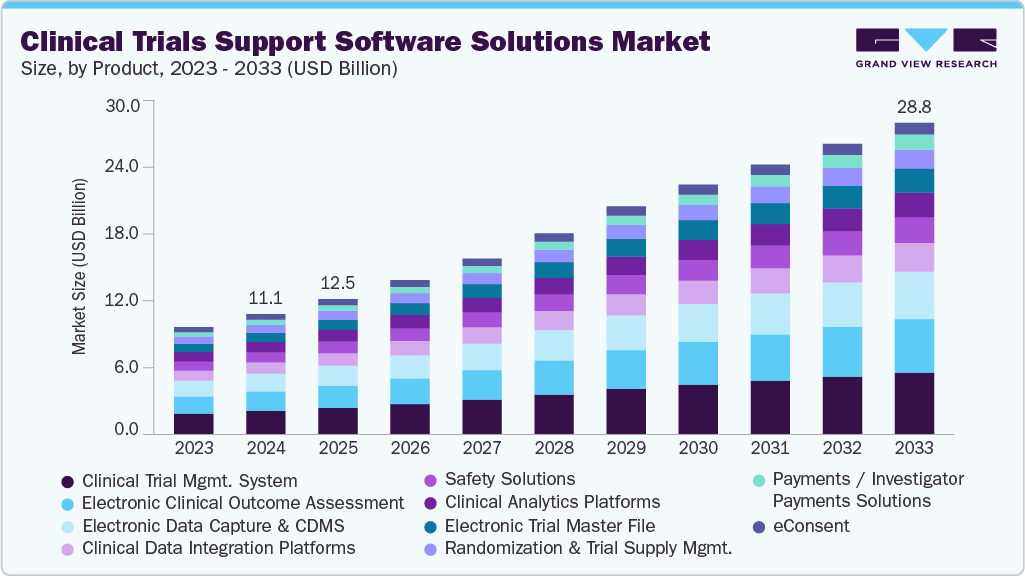
The global clinical trials support software solutions market size was valued at USD 12.5 billion in 2025 and is projected to grow from USD 14.2 billion in 2026 to USD 28.8 billion by 2033, growing at a CAGR of 10.6% from 2026 to 2033. North America dominated the market, accounting for the largest global share of 47.3% in 2025. Increasing research and development activities by biopharma and pharma companies are among the key trends escalating market growth.
 Source: Grand View Research, IR Documents, Primary Interviews, Paid DatabasesTo learn more about this report,
 Download Free Sample Report
 Key Market Trends & Insights
- By product: CTMS segment held the largest revenue share of 18.8% in 2025.
- By delivery mode: Cloud and web-based segment dominated the market with the largest share in 2025.
- By phase: Phase III segment held the largest revenue share of 53.5% in 2025.
- By end-use: CROs segment dominated the market for and held the largest share 2025.
Regional Highlights
- Largest regional market: North America (47.3% revenue share, 2025)
- By country: The U.S. held the largest share of North America in 2025.
Market Size & Forecast
- Market size in 2025: USD 12.5 Billion
- Estimated market size in 2026: USD 14.2 Billion
- Projected market size by 2033: USD 28.8 Billion
- CAGR (2026-2033): 10.6%
Three ways to get this report
Buy it, customize it, or ask a question.Ask an Analyst
A direct answer, usually in 1 working day
- AccessReport author, directly
- Reply timeWithin 1 working day
- No sales callDirect answer only
- FormatEmail reply
- CostFree, no cost
Get the Full Report
What the study covers
- FormatsPDF · Excel · Dashboard
- Timeline2026–2033 annual, 2025 base
- Coverage20+ countries, 5 regions
- Companies10+ key players profiled
Customize the Report
20% free customization
- IncludeCountries, segments, points
- TailorTo your product definition
- ExtendDeeper competitor detail
- OrA fully bespoke study
- Turnaround5–10 working days
In addition, the growing incorporation of software solutions in clinical trials is also projected to provide a fillip to the market growth. Furthermore, the increasing outsourcing and externalization of clinical trials by the majority of the prominent pharmaceutical and biotechnological companies is presumed to be responsible for driving the market at an unprecedented rate throughout the forecast period.
The stringent regulatory framework for clinical trials and a growing emphasis on safety monitoring significantly drive the adoption of clinical trial support software solutions in developed markets. For instance, agencies such as the U.S. Department of Health and Human Services (HHS) and the National Institutes of Health (NIH) are tightening clinical trial registration requirements and actively promoting clinical data transparency and sharing. Global health authorities are increasingly implementing strategic policies to strengthen clinical trial governance and promote the use of digital technologies in research settings. For instance, in May 2025, the World Health Organization (WHO) introduced the global action plan to strengthen clinical trial ecosystems, which prioritizes the adoption of digital solutions, greater transparency in trial registration and data sharing, and integration of trials into national health systems.
 To learn more about this report, Download Free Sample Report
 The surging demand for integrated software solutions among pharmaceutical and biopharmaceutical companies is also serving as a major growth catalyst. These solutions streamline various aspects of clinical trials, from study planning and data capture to safety reporting and regulatory compliance. In addition, increasing government grants to support research activities, along with a rapidly widening end use base that includes CROs, academic institutions, and healthcare providers, is expected to further boost the adoption of clinical trials supporting software solutions during the forecast period.
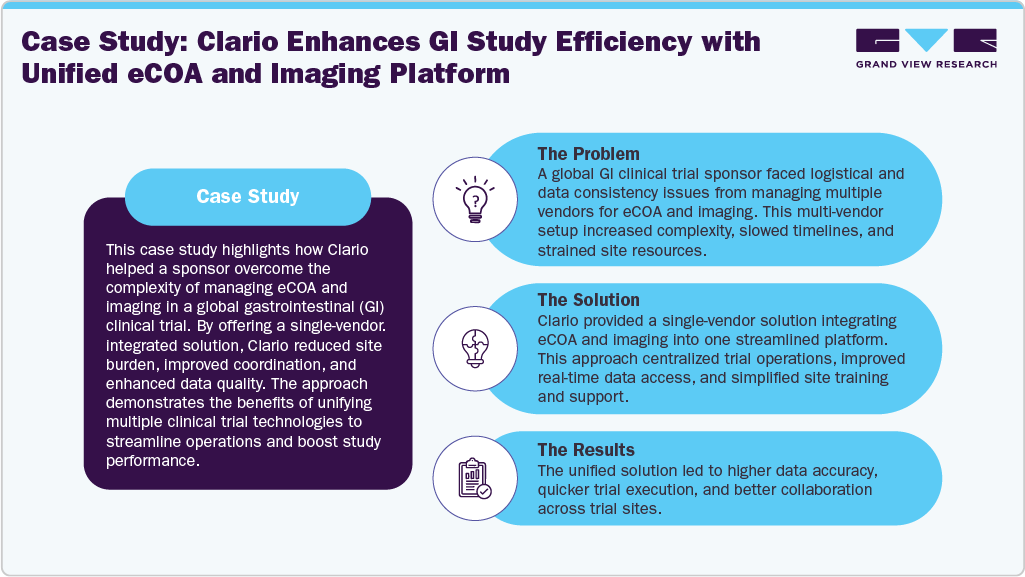
Key market players such as Cytel, Dassault Systèmes (via Medidata), Veeva Systems, IQVIA, Castor, Saama, Oracle, Parexel, Clario, Curebase, and Suvoda (post-merger with Greenphire) operate in a landscape characterized by increased strategic consolidation, AI innovation, and portfolio expansion. In April 2025, Suvoda merged with Greenphire to create a unified platform that integrates randomization, supply management, eConsent, eCOA, patient-centric payments, budgeting, and logistics, streamlining operations across the patient-to-site spectrum.
Companies are rapidly advancing toward integrated, AI-powered ecosystems that centralize trial functions and enable greater automation, scalability, and compliance. Recent developments reflect a strong focus on embedding solutions directly into clinical workflows, enabling real-time data capture, protocol optimization, and decentralized trial execution.
For instance, in January 2025, Medrio launched an AI-enabled reporting solution aimed at addressing the growing complexity of clinical trial data, offering real-time insights, automated workflows, and customizable dashboards to enhance trial oversight and decision-making. AI and machine learning are being leveraged to enhance patient-trial matching, predictive analytics, and risk-based monitoring, while the integration of payment automation and remote engagement tools is improving site satisfaction and trial efficiency. These trends indicate a shift from siloed point solutions to unified platforms capable of managing the entire clinical trial lifecycle driving faster, smarter, and more inclusive research outcomes.
AI-Powered Clinical Trial Matching: Deep6 AI
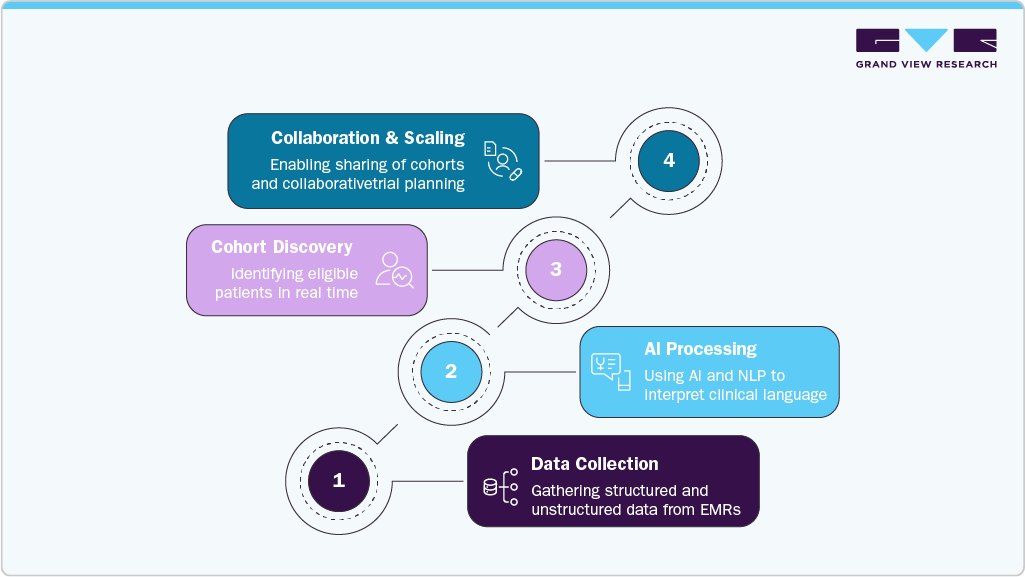
AI-powered clinical trial matching, as enabled by platforms like the one from Deep 6 AI, represents a transformative advancement in the clinical trial support solutions market. This technology uses artificial intelligence and natural language processing (NLP) to analyze vast amounts of structured and unstructured data from electronic health records (EHRs) to identify patients who meet complex trial eligibility criteria with high precision and speed. Unlike traditional recruitment methods, which often depend on manual chart reviews that are time-consuming and prone to mistakes, AI-powered matching automates and speeds up the process. It enables clinical research teams to identify eligible patients in real time, often finding candidates who might otherwise be overlooked due to complex or subtle clinical data. This method not only boosts recruitment rates and shortens trial timelines but also promotes inclusivity by recognizing diverse and underrepresented patient groups.
 To learn more about this report, Download Free Sample Report
 By integrating directly into provider workflows and supporting collaboration between sites and sponsors, AI-driven trial matching aligns closely with the industry’s move toward decentralized and patient-centric trial models. As clinical research becomes increasingly data-heavy, AI-powered matching is emerging as a vital tool within the broader clinical trial support solutions market, boosting efficiency, accuracy, and scalability throughout the trial process.
Market Dynamics
The increasing volume of Phase I-IV clinical studies across pharmaceuticals, biotechnology, and medical devices is driving demand for software that streamlines trial planning, execution, monitoring, and documentation. According to WHO June 2026 data on clinical trial, in 2025, the Western Pacific region accounted for 31,097 registered trials, compared with just 822 in Africa, highlighting a substantial disparity in clinical research activity. As of June 2025, the Western Pacific region reported 27,172 registered trials for 2024; by June 2026, this figure had increased to 32,498, reflecting an additional 5,326 retrospectively registered trials an increase of approximately 16%.
Moreover, as per the similar source, Western Pacific region has consistently recorded the highest annual volume of clinical trial registrations among all WHO regions. This growth has been driven primarily by China and Japan, which rank first and second, respectively, within the region in terms of registered clinical trials. The sustained increase is largely attributed to evolving regulatory and institutional requirements in China, where an expanding number of scientific journals, government funding agencies, universities, and hospitals mandate prospective clinical trial registration as a prerequisite for publication, funding, or ethical approval.
The high cost of implementing and maintaining clinical trial software solutions is restraining market growth, particularly among small and mid-sized pharmaceutical companies, biotechnology firms, academic research institutions, and contract research organizations (CROs). Deploying integrated platforms for electronic data capture (EDC), clinical trial management (CTMS), randomization and trial supply management (RTSM), eClinical, and analytics requires substantial upfront investment in software licensing, system integration, infrastructure, validation, cybersecurity, and user training. In addition, recurring expenses related to software upgrades, regulatory compliance, cloud hosting, technical support, and system maintenance further increase the total cost of ownership. These financial barriers can delay digital transformation initiatives and limit software adoption, especially in cost-sensitive and resource-constrained research environments.
The integration of artificial intelligence (AI) and advanced analytics into clinical trial support software presents a significant growth opportunity for the market. AI-powered platforms enable faster patient recruitment, automated data analysis, predictive risk assessment, protocol optimization, and real-time monitoring, improving trial efficiency while reducing operational costs. As pharmaceutical companies and contract research organizations increasingly adopt AI-driven solutions to enhance trial quality and accelerate drug development, demand for advanced clinical trial software is expected to rise. For instance, in June 2025, Medpace, partnered with Voximetry to incorporate its Torch AI-powered dosimetry software into radiopharmaceutical clinical trials. This collaboration enables precise, patient-specific radiation dose assessments using Voximetry’s GPU-accelerated, cloud-based platform, enhancing safety evaluation and trial efficiency.
“Voximetry’s industry-leading technology, deep domain expertise in advanced dosimetry, and strong commitment to service excellence and regulatory compliance, is what makes them the right partner”
- Scott Holland, Senior Director of Scientific Affairs at Medpace.
Market Concentration & Characteristics
The chart below illustrates the relationship between market concentration, industry characteristics, and industry participants. The x-axis represents the level of industry concentration, ranging from low to high. The y-axis represents various industry characteristics, including industry competition, impact of regulations, level of partnerships & collaborations activities, degree of innovation, and regional expansion. For instance, the clinical trials support software solutions market is slightly fragmented, with many product & service providers entering the market. The degree of innovation, the level of partnerships & collaboration activities, and the impact of regulations on the industry are high. However, the regional expansion observes moderate growth.
The degree of innovation in the industry is high owing to the rapid evolution of digital health technologies and the growing demand for more efficient clinical trial processes. Numerous players introduce new AI-integrated products to optimize trial design, patient recruitment, and real-time monitoring. For instance, in March 2024, PhaseV announced that it would demonstrate AI/ML-powered clinical trial design and analysis capabilities at the CMO Summit 360°.
 To learn more about this report, Download Free Sample Report
 The level of partnerships & collaboration activities by key players in the industry is high, reflecting the industry's need for integrated, interoperable, and technologically advanced solutions in clinical research. For instance, in June 2023, Syneos Health collaborated with uMotif Limited, leveraging an advanced digital platform that incorporates robust Electronic Clinical Outcome Assessment (eCOA) and Electronic Patient-reported Outcomes (ePRO) capabilities. This partnership aims to accelerate the pace of clinical trials, expediting the delivery of groundbreaking medications to patients more efficiently.
The impact of regulations on the market is high. Stringent regulatory requirements-such as those from the FDA (21 CFR Part 11), European Medical Agency (GCP), and ICH guidelines drive demand for robust, compliant digital platforms that ensure data integrity, security, and traceability throughout the clinical trial process. However, evolving regulations, particularly those encouraging decentralized trials, real-world evidence, and interoperability, such as the FDA’s Digital Health initiatives and EMA’s guidance on electronic systems, have created opportunities for innovation in the clinical trials support solutions market.
The level of regional expansion in the industry is moderate, owing to the globalization of clinical trials and the increasing demand for digital health infrastructure across emerging markets. For instance, in October 2023, Lokavant received an investment of USD 8 million from Mitsui & Co. Ltd. for expanding its AI and Predictive Clinical Trial Intelligence into the Asia-Pacific region.
 To learn more about this report, Download Free Sample Report
 Analyst Perspective
The clinical trials support software solutions market is experiencing strong growth, driven by the increasing complexity of clinical trials, rising adoption of decentralized and hybrid trial models, and growing demand for AI-enabled, cloud-based eClinical platforms. Sponsors and CROs are prioritizing integrated software ecosystems that streamline trial planning, patient recruitment, data management, regulatory compliance, and real-time analytics to improve operational efficiency and accelerate study timelines. While established vendors continue to strengthen their market positions through comprehensive platform offerings and strategic partnerships, emerging companies are gaining traction by delivering specialized, AI-driven, and cost-effective solutions. Over the forecast period, continued digitalization of clinical research, increasing regulatory support for technology-enabled trials, and expanding adoption across emerging markets are expected to sustain market growth.
Product Insights
CTMS segment dominated the market and accounted for the largest revenue share of 18.8% in 2025, owing to its central role in managing complex trial operations across multiple sites and phases. These systems streamline protocol planning, subject tracking, financial management, and regulatory compliance, making them indispensable for sponsors and CROs aiming to improve operational efficiency and ensure data integrity. The increasing complexity of clinical trials, coupled with the need for real-time visibility and centralized control, continues to drive widespread adoption of CTMS solutions.
Payments / investigator payment solutions segment is anticipated to grow at the fastest CAGR over the forecast period, driven by the growing emphasis on streamlining financial workflows and enhancing transparency in investigator compensation. These solutions automate complex payment processes, reduce administrative burden, and ensure timely, accurate reimbursements to sites and investigators, which in turn improves site engagement and retention.
Delivery Mode Insights
The cloud and web-based segment dominated the market in 2025 and is anticipated to grow at the fastest CAGR over the forecast period. The segment's dominance can be attributed to associated benefits such as easy accessibility, usability, and lower investments required. Web and cloud-based products are easily customizable, owing to which providers can customize the presentation of information for different user groups. These products have a greater level of interoperability. The segment is poised to maintain its position throughout the forecast.
On-premise delivery mode involves installing services and solutions on computers present within the organization. Though the software needs to be installed within the organization’s premises, it can be accessed from remote locations, providing the benefit of reduced costs due to power consumption and system maintenance. The on-premise solution is the most commonly preferred solution due to its benefits, such as security and ease of access. The preference for these services is mainly due to complete access to information and full control within the premises.
Phase Insights
Phase III segment dominated the market and accounted for the largest revenue share of 53.5% in 2025. Spiraling needs for the incorporation of clinical data management software to curb overall cost and improve process efficiency are contributing to the growth of the segment. An increasing number of drugs successfully reaching phase III is providing a significant push to the growth of the segment.
The phase I segment is estimated to be the most promising segment during the forecast years owing to the high significance of these systems to predict future outcomes and eliminate drug candidates possessing the least probability of success. Developments in biological modeling systems and personalized medicine technologies are leading to a boom in the development of newer drugs. A large number of phase I trials and complex management and analysis of data acquired during various studies are expected to propel the growth of the segment.
End Use Insights
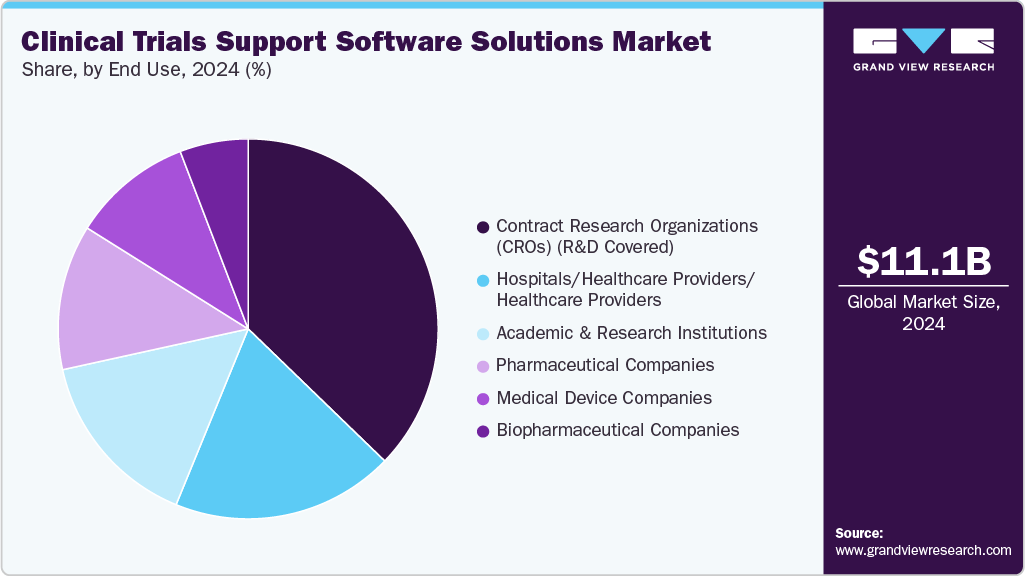
The CROs segment dominated the market for and held the largest revenue share 2025. The segment is projected to rise at a remarkable CAGR owing to the growing inclination of pharmaceutical companies to reduce overall expenditure. The rising usage of eClinical solutions in research is further widening the scope of segment growth. Benefits involved in outsourcing clinical trials to CROs are responsible for the heightened growth of this segment. These benefits include cost advantages, increased efficiency of services, enhanced productivity, and a higher focus on core areas of development critical to a company’s growth.
 To learn more about this report, Download Free Sample Report
 The biopharmaceutical companies’ segment is anticipated to witness at the fastest CAGR during the forecast period. This is driven by the increasing reliance on digital tools to optimize clinical trial workflows. These solutions help biopharma researchers streamline data management, monitor trial progress, and identify procedural inefficiencies, leading to faster and more accurate study outcomes. The push for innovation, coupled with complex clinical protocols and regulatory compliance needs, is accelerating adoption across the sector.
Regional Insights
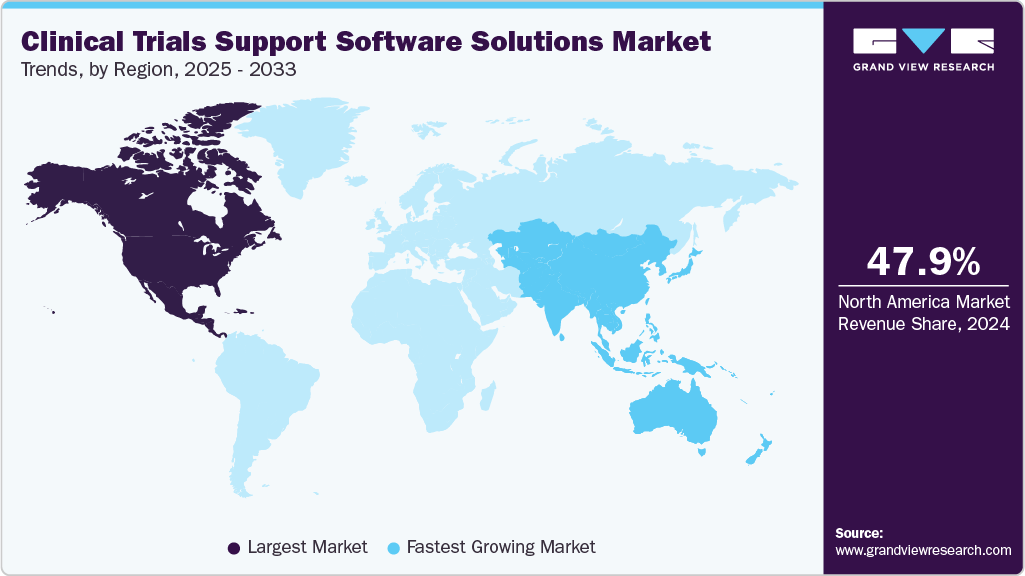
North America dominated the clinical trials support software solutions market with the largest revenue share of 47.3% in 2025, driven by a growing patient population and the high prevalence of lifestyle-related conditions such as diabetes and cardiovascular diseases. The region benefits from advanced healthcare infrastructure, strong government funding, and the presence of key industry players. For instance, in January 2023, the Government of Canada launched a national clinical trials consortium and research projects to enhance trial effectiveness, further propelling the adoption of clinical trial software solutions across the region.
 To learn more about this report, Download Free Sample Report
 U.S. Clinical Trials Support Software Solutions Market Trends
The clinical trials support software solutions market in the U.S. held the largest share in the North America region in 2025. The clinical trials support software solutionsmarketin the U.S. is driven by the region's advanced healthcare ecosystem, strong pharmaceutical presence, and supportive regulations, such as the FDA's 21 CFR Part 11 are fostering the adoption of digital and AI-enabled clinical trial solutions. For instance, in June 2025 launched a new Partner Program was launched aimed at accelerating clinical trial startup times by offering access to pre-configured technology stacks and operational support. The initiative emphasizes faster onboarding, greater control over trial execution, and transparent pricing, ultimately improving efficiency and scalability for CROs and sponsors.
Europe Clinical Trials Support Software Solutions Market Trends
The clinical trials support software solutions market in Europe is expected to grow significantly. This growth is attributed to the region's emphasis on personalized medicine, increasing clinical trials in oncology and rare diseases, and strong regulatory frameworks. Countries such as Germany and the UK are at the forefront, focusing on improving healthcare systems and the digital economy. Further, in January 2022, the European Commission, the European Medicines Agency (EMA), and the Heads of Medicines Agencies launched the Accelerating Clinical Trials in the EU initiative. This initiative aims to transform the design and conduct of clinical trials. The initiative focuses on harmonizing clinical trial processes, fostering innovation, and integrating clinical research into the European health system, thereby supporting the adoption of clinical trial support software solutions.
The UK clinical trials support software solutions market is growing due to strong technological infrastructure, high healthcare spending, and increasing rates of chronic diseases. The rising use of cloud-based solutions, valued for their flexibility, scalability, and cost-efficiency, is streamlining research operations. These factors, along with a supportive regulatory environment, are fueling the demand for advanced software solutions in clinical research across the UK.
The clinical trials support software solutions market in Germany held a significant share of the European industry in 2024. The large elderly population is a key factor driving growth in Germany. According to UN population data, one in every 20 Germans is over 80 years old, and this number is expected to increase until 2050. Challenges faced by the elderly include a high risk of chronic diseases such as cardiovascular issues, diabetes, neurovascular disorders, and weakened immune systems. Consequently, the German government is launching initiatives and investing in clinical trials related to these diseases, thereby boosting the market’s growth.
Asia Pacific Clinical Trials Support Software Solutions Market Trends
The clinical trials support software solutions market in Asia-Pacific is expected to grow at a significant CAGR of 13.9% during the forecast period. High unmet medical needs and the increasing prevalence of chronic diseases such as cancer, cardiovascular conditions, and infectious diseases drive the demand for software solutions in this area. An increasing number of trials are outsourced to countries such as China, India, Korea, and Japan due to their large patient populations and lower costs. This outsourcing trend is further boosting the adoption of clinical trials support software solutions in these regions.
Japan clinical trials support software solutions market is propelled by substantial R&D efforts by biopharmaceutical firms, rising integration of software solutions in clinical trials, and increasing demand for safety monitoring. Further, Japan is a significant player in the global pharmaceutical and clinical research industry. The country's pharmaceutical companies and research institutions conduct numerous clinical trials. Therefore, the adoption of clinical trials support software solutions has become essential for efficient data collection, management, and analysis during these trials.
The clinical trials support software solutions market in China holds a prominent position in the Asia-Pacific clinical trials support software market, driven by the increasing number of clinical trials and substantial government investments in healthcare research and technology. The country's focus on improving the quality of clinical trials and data management, along with the modernization of healthcare infrastructure, contributes to market growth.
Latin America Clinical Trials Support Software Solutions Market Trends
The clinical trials support software solutions market in Latin Americais expected to grow steadily. The presence of untapped opportunities in emerging countries, such as Brazil, is expected to propel the growth of the clinical trials support software solutions market in Latin America. The region’s regulatory landscape is evolving, with a growing focus on compliance with ICH-GCP standards. Governments are prioritizing improvements to clinical trial infrastructure to attract more international studies, which in turn is accelerating the adoption of trial technologies.
Middle East & Africa Clinical Trials Support Software Solutions Market Trends
The clinical trials support software solutions market in the Middle East & Africa is driven by the development of health amenities and increased funding toward medical research and technology. The GCC countries are new to clinical research, but with technological advancements and increasing digitization, the countries are overcoming the challenges faced on the technological front and are witnessing significant growth.
Key Clinical Trials Support Software Solutions Companies Insights
Key players operating in the clinical trials support software solutions market are undertaking various initiatives to strengthen their presence and increase the reach of their products and services. Strategies such as expansion activities and partnerships are key in propelling the market growth.
Key Clinical Trials Support Software Solutions Companies
The following key companies have been profiled for this study on the clinical trials support software solutions market.
-
Cytel Inc. (acquired by Nordic Capital and Astorg)
-
Dassault Systemes
-
Veeva Systems
-
IQVIA
-
Castor
-
Saama
-
Oracle
-
Parexel International Corporation
-
Clario (formerly Bioclinica and ERT)
-
RealTime Software Solutions, LLC
-
Curebase
-
Suvoda LLC (merged with Greenphire in April 2025)
-
ICON Plc
-
Medidata
-
Thermo Fisher Scientific Inc.
-
Greenphire
-
TELEMEDICINE TECHNOLOGIES S.A.S.
Competitive Benchmarking
Category
Operating Strategies
Competitive Edge
Weakness
Established Players (Cytel Inc., Dassault Systèmes (Medidata, IQVIA etc.)
Focus on end-to-end eClinical platforms, strategic acquisitions, AI integration, cloud-based solutions, global regulatory compliance, and partnerships with pharmaceutical companies and CROs.
Comprehensive product portfolios, strong global presence, established customer base, scalable platforms, extensive regulatory expertise, and significant R&D investments.
High implementation and maintenance costs, complex deployments, longer implementation timelines, and limited flexibility for smaller sponsors.
Emerging Players (Castor, .Saama etc.)
Focus on niche clinical trial solutions, AI-enabled analytics, decentralized clinical trials (DCT), SaaS-based deployment, and rapid product innovation.
Greater flexibility, faster implementation, lower cost, user-friendly interfaces, and specialization in specific clinical trial workflows or therapeutic areas.
Limited global presence, smaller customer base, fewer integrated modules, lower brand recognition, and relatively constrained financial and service capabilities compared to established vendors.
Recent Developments
-
In June 2025, Medpace, partnered with Voximetry to incorporate its Torch AI-powered dosimetry software into radiopharmaceutical clinical trials. This collaboration enables precise, patient-specific radiation dose assessments using Voximetry’s GPU-accelerated, cloud-based platform, enhancing safety evaluation and trial efficiency.
“Voximetry’s industry-leading technology, deep domain expertise in advanced dosimetry, and strong commitment to service excellence and regulatory compliance, is what make them the right partner. “
- Scott Holland, Senior Director of Scientific Affairs at Medpace.
-
In June 2024, IQVIA launched One Home, a unified clinical trial technology platform designed to simplify and accelerate decentralized clinical trials by integrating patient-centric tools, services, and data management into a single solution.
“With site capacity becoming a real challenge for the industry, we believe it is our role and responsibility to deliver a solution that brings industry stakeholders together and relieves the burden on research sites,”
- Bernd Haas, senior vice president, IQVIA Digital Products and Solutions.
-
In April 2024, PhaseV and Quanticate have partnered to combine AI-powered adaptive clinical trial design with expert biostatistics and data management, enabling clinical trial sponsors to improve patient recruitment, reduce time to market, and enhance study quality.
“There is currently a great need in the pharmaceutical industry to leverage flexible, dynamic, and adaptive trial designs based on simulations, bayesian-statistics, machine learning and accumulation of data throughout a trial while continuing to maintain the highest scientific integrity, PhaseV's platform allows trial teams to seamlessly evaluate and execute all types of designs. “
- David Underwood, CEO of Quanticate.
-
In June 2023, ICON plc announced the latest release of its Digital Platform, supporting seamless integration of site, sponsor, and patient services with harmonized data delivery. The platform is customizable for various therapeutic areas and study designs, offering end-to-end solutions for patient services in clinical trials, including a user-friendly mobile app, direct data capture for in-home services, eCOA, telehealth visits, eConsent, and digital health technology management.
“This newest version of the Digital Platform enables the efficient capture and delivery of quality data from a range of decentralised clinical trial services. Its ease of use enables greater patient centricity, reducing the barriers to trial participation and enhancing the equity, diversity and inclusion of patient populations.”
-Steve Cutler, CEO, ICON
Clinical Trials Support Software SolutionsMarket Report Scope
Report Attribute
Details
Market size in 2025
USD 12.5 billion
Market size value in 2026
USD 14.2 billion
Revenue forecast in 2033
USD 28.8 billion
Growth rate
CAGR of 10.6% from 2026 to 2033
Historical data
2021 - 2025
Forecast period
2026 - 2033
Quantitative units
Revenue in USD million, and CAGR from 2026 to 2033
Report coverage
Revenue forecast, company ranking, competitive landscape, growth factors, and trends
Segments covered
Product, delivery mode, phase, end-use, region
Regional scope
North America; Europe; Asia Pacific; Latin America; MEA
Country scope
U.S., Canada, Mexico, UK, Germany, France, Italy, Spain, Norway, Denmark, Sweden, Japan, China, India, Australia, Thailand, South Korea, Brazil, Argentina, Saudi Arabia, South Africa, UAE, and Kuwait
Key companies profiled
IQVIA, Dassault Systèmes, Veeva Systems, Cytel Inc. (acquired by Nordic Capital and Astorg), Castor, Saama, Oracle, Parexel International Corporation, Clario (formerly Bioclinica and ERT), RealTime Software Solutions, LLC, Curebase, Suvoda LLC (merged with Greenphire in April 2025), ICON Plc, Medidata, Thermo Fisher Scientific Inc., Greenphire, TELEMEDICINE TECHNOLOGIES S.A.S.
Customization scope
Free report customization (equivalent up to 8 analysts' working days) with purchase. Addition or alteration to country, regional & segment scope.
Pricing and purchase options
Avail customized purchase options to meet your exact research needs. Explore purchase options
Clinical Trials Support Software Solutions Market Report Segmentation
This report forecasts revenue growth at global, regional, and country levels and provides an analysis of the latest industry trends in each of the sub-segments from 2021 to 2033. For this study, Grand View Research has segmented the global clinical trials support software solutionsmarket report based on product, delivery mode, phase, end use, and regions.
-
Product Outlook (Revenue, USD Million, 2021 - 2033)
-
Electronic Clinical Outcome Assessment (eCOA) / ePRO)
-
Electronic Data Capture (EDC) & CDMS
-
Clinical Analytics Platforms
-
Clinical data integration platforms
-
Safety solutions
-
Clinical Trial Management System (CTMS)
-
Randomization and Trial Supply Management (RTSM)
-
Electronic Trial Master File (eTMF)
-
eConsent
-
Payments / Investigator Payments Solutions
-
Electronic Investigator Site File (eISF)
-
Patient Matching / Feasibility Solutions
-
-
Delivery Mode Outlook (Revenue, USD Million, 2021 - 2033)
-
Cloud and Web Based
-
On-Premise
-
-
Phase Outlook (Revenue, USD Million, 2021 - 2033)
-
Phase I
-
Phase II
-
Phase III
-
Phase IV (Post-marketing)
-
End Use Outlook (Revenue, USD Million, 2021 - 2033)
-
Hospitals/Healthcare Providers/Healthcare providers
-
Contract Research Organizations (CROs) (R&D covered)
-
Academic & Research Institutions
-
Pharmaceutical Companies
-
Biopharmaceutical Companies
-
Medical Device Companies
-
-
Regional Outlook (Revenue, USD Million, 2021 - 2033)
-
North America
-
U.S.
-
Canada
-
Mexico
-
-
Europe
-
UK
-
Germany
-
France
-
Italy
-
Spain
-
Denmark
-
Sweden
-
Norway
-
-
Asia Pacific
-
China
-
Japan
-
India
-
South Korea
-
Australia
-
Thailand
-
-
Latin America
-
Brazil
-
Argentina
-
-
Middle East and Africa (MEA)
-
South Africa
-
Saudi Arabia
-
UAE
-
Kuwait
-
-
Research Methodology
The clinical trials support software solutions market figures in this report are based on a proven research process that combines executive interviews with secondary research from proprietary databases, company filings, and recognized regulatory and institutional sources. Market size is built through value-chain sizing - reconciling supply-side and demand-side estimates - and triangulated with bottom-up and top-down approaches. Every estimate passes multiple levels of expert validation before publication, with each clinical trials support software solutions segment quantified using the revenue-capture definitions in the table below.
Segment Definition
Segment- Product
Revenue Capture Definition
Electronic Clinical Outcome Assessment (eCOA) / ePRO
Includes revenue from platforms used to electronically collect patient-, clinician-, observer-, and performance-reported outcomes across decentralized and site-based clinical trials.
Electronic Data Capture (EDC) & CDMS
Covers software used for electronic data collection, validation, cleaning, and centralized management of clinical trial data throughout the study lifecycle.
Clinical Analytics Platforms
Encompasses AI-enabled and advanced analytics platforms that support clinical trial optimization, predictive modeling, operational intelligence, and real-time performance monitoring.
Clinical data integration platforms
Includes platforms that aggregate and harmonize clinical data from multiple sources such as EHRs, laboratories, imaging systems, wearables, and third-party databases into a unified environment.
Safety solutions
Covers pharmacovigilance and clinical safety applications designed for adverse event reporting, case processing, signal detection, risk assessment, and regulatory compliance.
Clinical Trial Management System (CTMS)
Includes software that manages study planning, site operations, investigator activities, patient enrollment, study milestones, budgets, and overall clinical trial execution.
Randomization and Trial Supply Management (RTSM)
Encompasses solutions used for patient randomization, treatment assignment, investigational product inventory management, and trial supply logistics.
Electronic Trial Master File (eTMF)
Covers digital document management platforms used to create, organize, maintain, and archive essential trial documentation in accordance with regulatory requirements.
eConsent
Includes electronic informed consent platforms that facilitate patient education, digital consent, electronic signatures, remote enrollment, and audit-ready documentation.
Payments / Investigator Payments Solutions
Covers applications that automate investigator compensation, site payments, participant reimbursements, financial tracking, and payment reconciliation for clinical studies.
Electronic Investigator Site File (eISF)
Includes digital site file management solutions used to maintain investigator documentation, regulatory records, training certificates, delegation logs, and compliance documents.
Patient Matching / Feasibility Solutions
Encompasses AI-powered and data-driven platforms that identify eligible patients, evaluate site feasibility, optimize recruitment strategies, and accelerate clinical trial enrollment.
Segment- Delivery Mode
Revenue Capture Definition
Cloud and web-based
Covers subscription- and SaaS-based clinical trial software deployed through cloud infrastructure or web browsers, enabling remote access, scalability, real-time collaboration, and centralized data management.
On-premise
Includes software installed and managed within an organization's own IT infrastructure, providing greater control over data security, system customization, and regulatory compliance.
Segment- Phase
Revenue Capture Definition
Phase I
Includes software solutions supporting first-in-human studies, with capabilities for subject management, safety monitoring, dose escalation, and early clinical data collection.
Phase II
Covers platforms used in proof-of-concept and dose-finding studies, facilitating patient recruitment, efficacy assessment, clinical data management, and trial oversight.
Phase III
Encompasses software utilized in large-scale confirmatory trials requiring extensive site management, data integration, operational monitoring, regulatory documentation, and global collaboration.
Phase IV (Post-marketing)
Includes solutions supporting post-marketing studies, real-world evidence generation, long-term safety surveillance, patient follow-up, and regulatory reporting after product commercialization.
Segment- End Use
Revenue Capture Definition
Hospitals/Healthcare Providers/Healthcare providers
Represents the adoption of clinical trial software by hospitals, health systems, and healthcare providers for patient recruitment, study execution, data collection, and trial management.
Contract Research Organizations (CROs) (R&d coverd)
Covers software deployed by CROs to manage outsourced clinical trial operations, including study planning, site monitoring, regulatory compliance, data management, and sponsor collaboration across multiple projects.
Academic & Research Institutions
Includes software used by universities, research centers, and non-profit organizations to conduct investigator-initiated and collaborative clinical studies while managing research data and regulatory documentation.
Pharmaceutical Companies
Represents software utilization by pharmaceutical manufacturers to manage clinical development programs, streamline trial operations, ensure regulatory compliance, and accelerate drug development.
Biopharmaceutical Companies
Covers clinical trial software used by biotechnology and biopharmaceutical companies for developing biologics, biosimilars, cell and gene therapies, and other advanced therapeutics through all stages of clinical development.
Medical Device Companies
Includes software supporting clinical investigations for medical devices, diagnostics, and digital health technologies, enabling study management, regulatory submissions, post-market surveillance, and evidence generation.
Estimation Model
Section
Title
Description
[01] TOP-DOWN APPROACH
Commodity Flow Analysis
The clinical trial support software market was estimated using a top-down approach by aggregating revenues across key software categories, including Clinical Trial Management Systems (CTMS), Electronic Trial Master File (eTMF), Electronic Data Capture (EDC), Randomization and Trial Supply Management (RTSM), Clinical Data Management Systems (CDMS), Clinical Analytics, and other clinical trial support software. Market estimates for each software segment were independently assessed based on company revenues, product adoption, and regional demand, and subsequently rolled up to derive the overall market size.
[02] SEGMENTATION
Country-Level Segment Share Modeling
The market was segmented by deployment mode, application and use, and geography. Country-level market shares were estimated based on clinical trial activity, pharmaceutical and biotechnology R&D expenditure, CRO presence, regulatory environment, adoption of digital clinical trial technologies, and healthcare IT infrastructure across key regions.
[03] FORECASTING
Forecasting & CAGR Modeling
Market forecasts were developed by evaluating trends in decentralized and hybrid clinical trials, increasing adoption of cloud-based clinical trial software, growing clinical trial volumes, rising pharmaceutical and biotechnology R&D investments, and advancements in AI, automation, and data analytics. The analysis also incorporated evolving regulatory requirements, increasing outsourcing to CROs, and the growing demand for integrated clinical trial management solutions.
[04] VALIDATION
Data Triangulation & Validation Model
Market estimates and segment shares were validated through primary interviews with software vendors, pharmaceutical and biotechnology companies, contract research organizations (CROs), clinical research sites, and industry experts. Secondary findings were cross-verified using company reports, regulatory publications, clinical trial registries, industry databases, and scientific literature to ensure consistency and accuracy.
Delivered Customizations
This report has been delivered with the following In-depth customizations
Client Request
Customization Delivered
Value Adds
Comparison of traditional versus AI-enabled clinical trial technologies
Developed a cross-segment AI vs. traditional technology assessment across EDC & CDMS, CTMS, Clinical Analytics Platforms, RTSM, Clinical Data Integration Platforms, eTMF, and eConsent. The analysis included AI adoption rate by solution category, estimated market revenue split (AI-enabled vs. conventional platforms), vendor positioning by AI maturity, feature benchmarking, workflow automation level, and expected migration trends through 2033.
Helps stakeholders quantify AI penetration, identify high-growth software categories, prioritize product investments, and benchmark vendors based on AI readiness.
Clinical trial software implementation case studies
Expanded beyond implementation examples by analyzing implementation costs, deployment timelines, ROI benchmarks, operational KPIs, customer adoption drivers, implementation challenges, and technology partner ecosystem across pharmaceutical companies, CROs, and research institutions. Included cross-case comparisons to identify best-performing implementation models.
Enables clients to benchmark implementation strategies, estimate business impact, reduce deployment risks, and support software investment decisions.
Assessment of clinical trial software utilization across trial phases
Performed a phase-wise market opportunity analysis mapping software adoption across Phase I-IV by solution category, therapeutic area, sponsor type, CRO utilization, average software spend per trial, AI adoption intensity, and projected revenue contribution from each trial phase. Identified whitespace opportunities where software penetration remains low but trial activity is increasing.
Helps identify the highest-value growth opportunities, optimize go-to-market strategy, prioritize product development, and target underserved clinical trial segments.
Frequently Asked Questions About This Report
Key factors that are driving the market growth include increasing research and development activities by biopharma and pharma companies, technology advancements and the growing incorporation of software solutions in clinical trials.
Asia Pacific is the fastest-growing region over the forecast period.
CTMS segment dominated the market and accounted for the largest revenue share of 18.8% in 2025
Phase III segment dominated the market and accounted for the largest revenue share of 53.5% in 2025 .
The CROs segment dominated the market for and held the largest revenue share 2025
Some key players operating in the clinical trials support software solutions market include IQVIA, Dassault Systèmes, Veeva Systems, Cytel Inc. (acquired by Nordic Capital and Astorg), Castor, Saama, Oracle, Parexel International Corporation, Clario (formerly Bioclinica and ERT), RealTime Software Solutions, LLC, Curebase, Suvoda LLC (merged with Greenphire in April 2025), ICON Plc, Medidata, Thermo Fisher Scientific Inc., Greenphire, TELEMEDICINE TECHNOLOGIES S.A.S.
The global clinical trials support software solutions market size was valued at USD 12.5 billion in 2025 and is estimated at USD 14.2 billion in 2026
The global clinical trials support software solutions market is expected to grow at a compound annual growth rate of 10.6% from 2026 to 2033 to reach USD 28.8 billion by 2033.
North America dominated the clinical trials support software solutions market with a share of 47.3% in 2025. This is attributable to growing patient population and the high prevalence of lifestyle-related conditions such as diabetes and cardiovascular diseases. The region benefits from advanced healthcare infrastructure, strong government funding, and the presence of key industry players
About the Author(s)
Healthcare IT Research Team
Healthcare · Healthcare ITThis report was authored by the healthcare it research team at Grand View Research - comprising two research analysts, one senior research analyst, and one industry expert - with specialized expertise in the healthcare it segment of the healthcare industry. All findings are based on proprietary healthcare databases, executive interviews, and regulatory analysis, subject to internal peer review prior to publication.
Last Updated:
Speak to Analyst

Customize this report to your needs - add regions, segments, or data points, with 20% free customization.
Or view our licence options:


ISO 9001:2015 & 27001:2022 Certified
We are GDPR and CCPA compliant! Your transaction & personal information is safe and secure. For more details, please read our privacy policy.


