
- Home
- »
- Healthcare IT
- »
-
Cloud-based Dental Practice Management Software Market Report 2033GVR Report cover

Cloud-based Dental Practice Management Software Market (2026 - 2033)
Size, Share & Trends Analysis Report By Application (Insurance Management, Payment Processing, Patient Record Management, Appointment Scheduling, Dental Analytics), By End Use, By Region, And Segment Forecasts
Market Size, 2025
$1.1BMarket Estimate, 2026
$1.3BMarket Forecast, 2033
$2.8BCAGR, 2026–2033
12.3%Cloud-based Dental Practice Management Software Market Summary
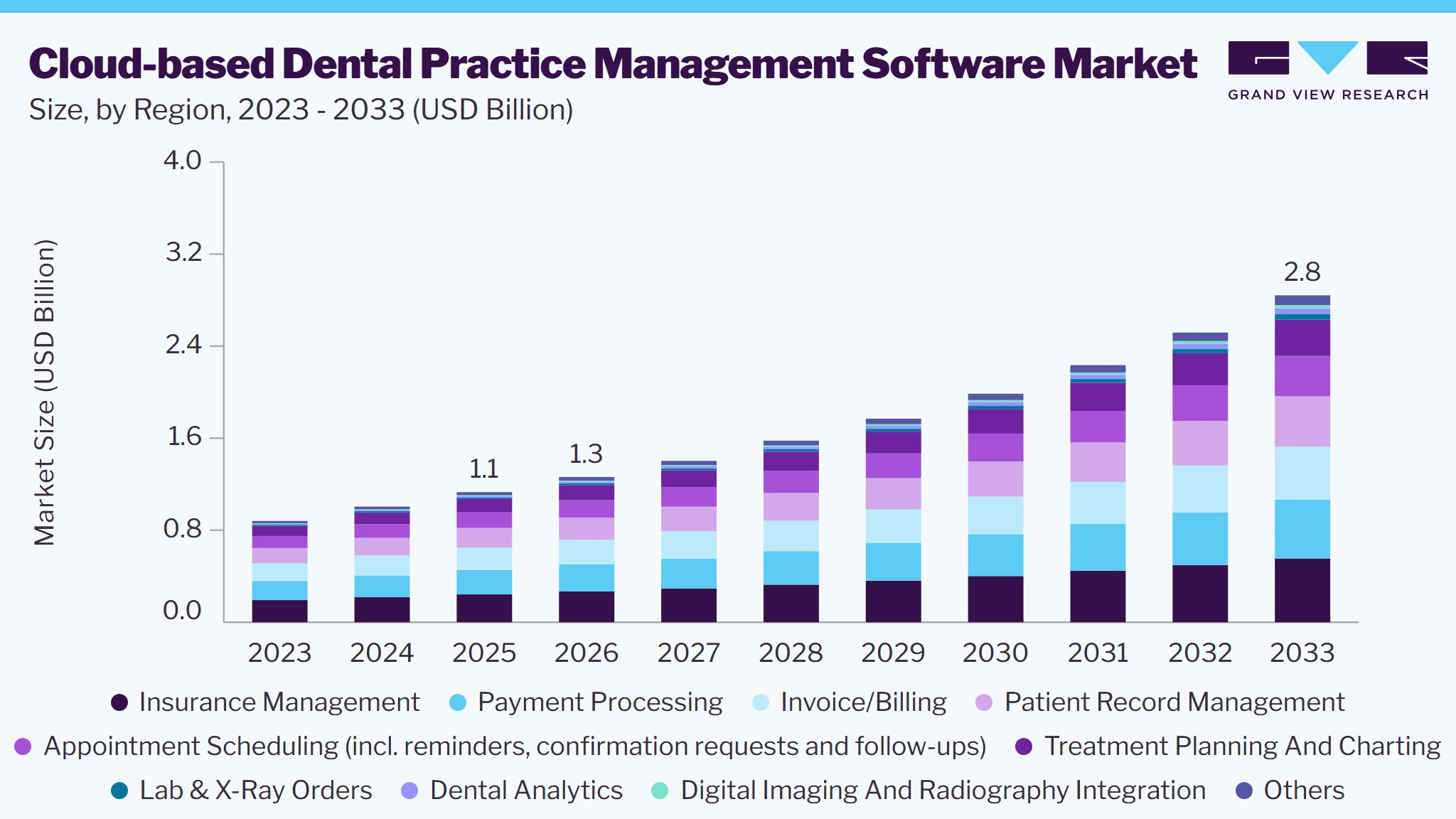
The global cloud-based dental practice management software market size was valued at USD 1.1 billion in 2025 and is projected to grow from USD 1.3 billion in 2026 to USD 2.8 billion by 2033, at a CAGR of 12.3% from 2026 to 2033. North America dominated the cloud-based dental practice management software market with the largest revenue share of 38.0% in 2025. The dental industry is fueled by the growing need for effective dental practice management solutions that enhance workflow efficiency and patient care.
 Source: Grand View Research, IR Documents, Primary Interviews, Paid DatabasesTo learn more about this report,
 Download Free Sample Report
Key Market Trends & Insights
- By application: Insurance management segment held the largest market share of 21.4% in 2025.
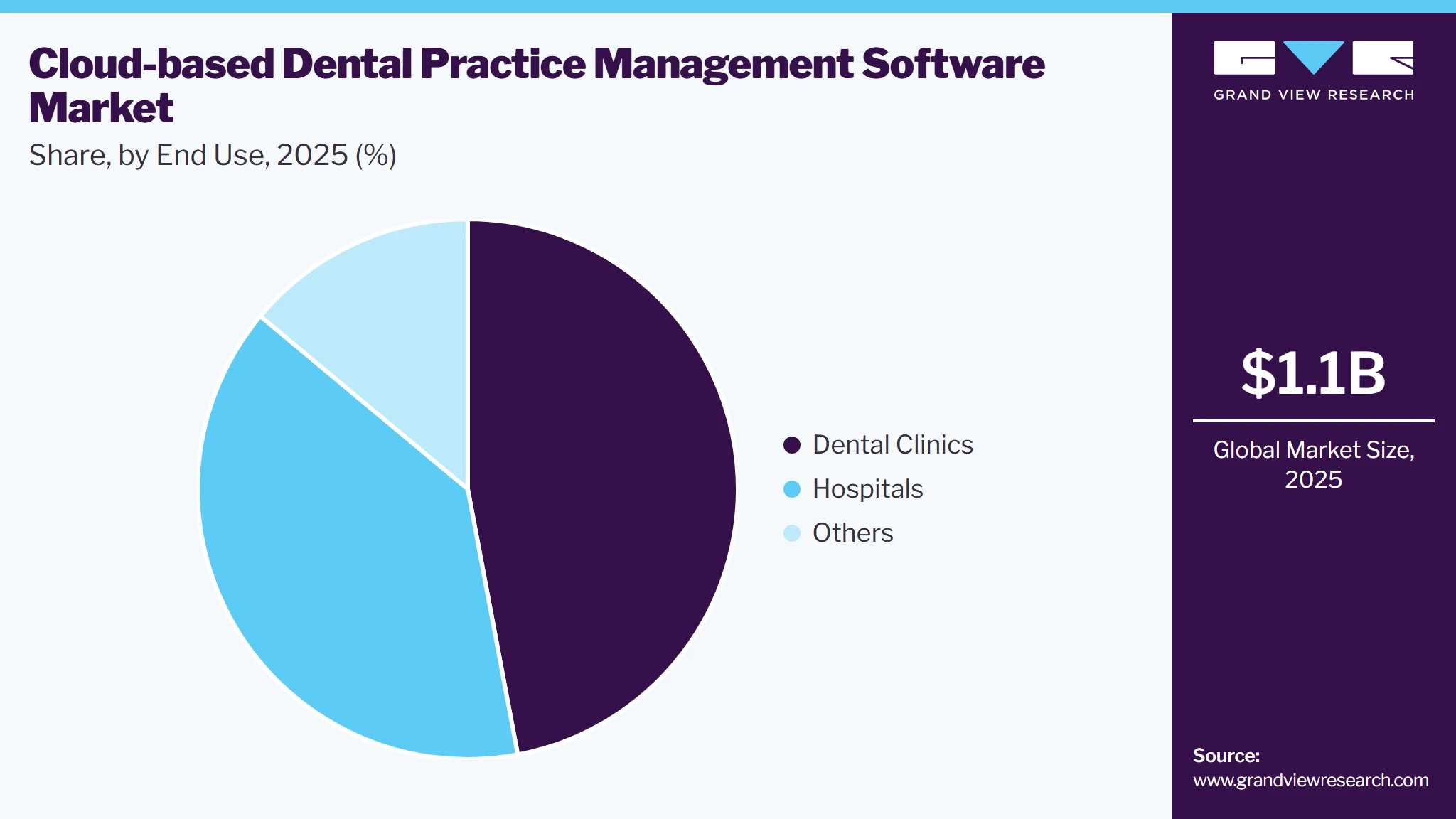
- By end use: Dental clinics segment held the largest market share of 47.0% in 2025.
Regional Highlights
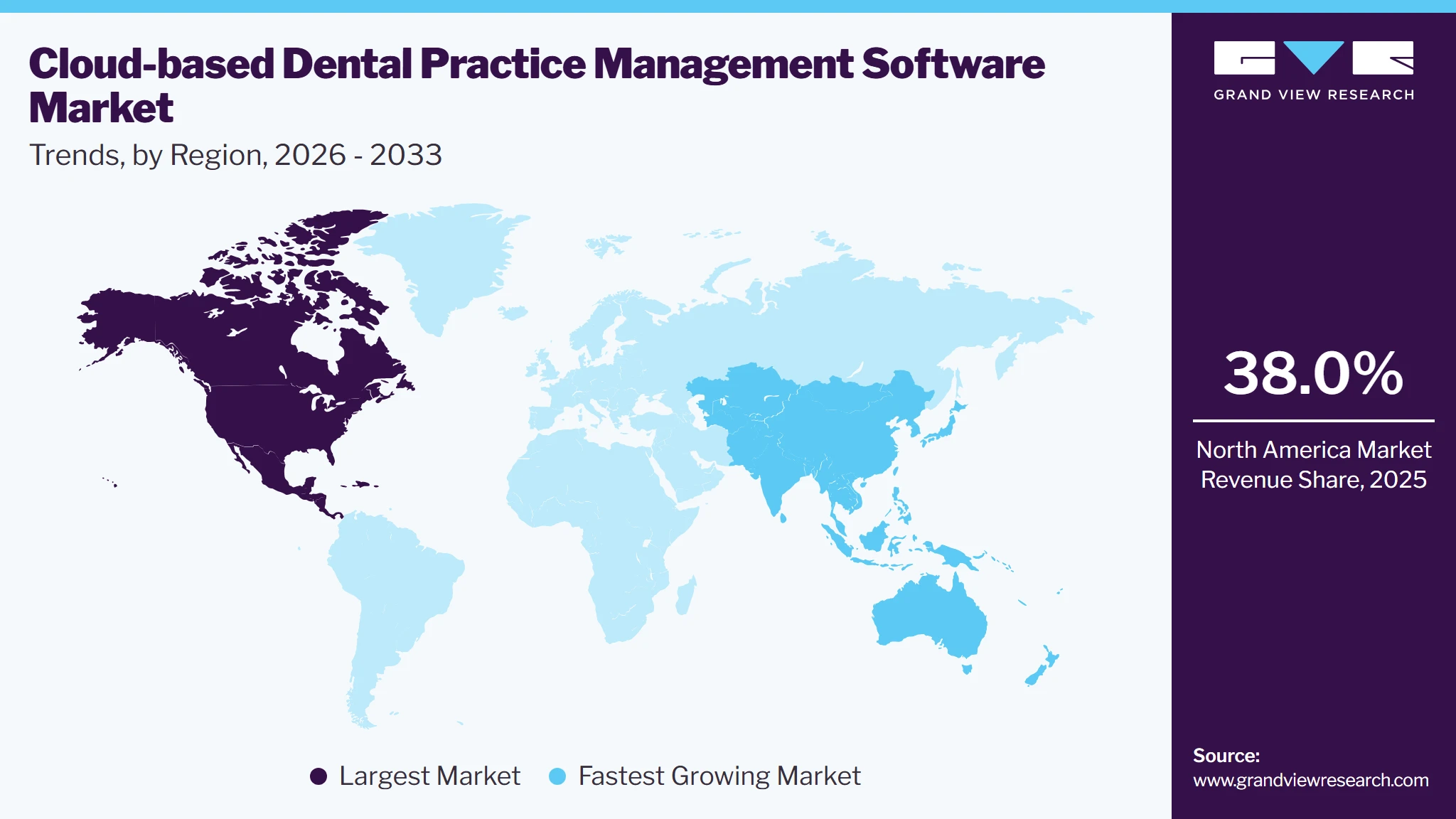
- Largest regional market: North America (38.0% revenue share, 2025)
- Fastest-growing regional market: Asia Pacific (highest CAGR, 2026-2033)
- By country: The U.S. held the largest market share in 2025.
Market Size & Forecast
- Market size in 2025: USD 1.1 Billion
- Estimated market size in 2026: USD 1.3 Billion
- Projected market size by 2033: USD 2.8 Billion
- CAGR (2026-2033): 12.3%
Three ways to get this report
Buy it, customize it, or ask a question.Ask an Analyst
Analyst response in 1 business day
- AccessReport author, directly
- Reply timeWithin 1 working day
- No sales callDirect answer only
- FormatEmail reply
- CostFree, no cost
Get the Full Report
What the study covers
- FormatsPDF · Excel · Dashboard
- Timeline2026–2033 annual, 2025 base
- Coverage20+ countries, 5 regions
- Companies10+ key players profiled
Customize the Report
20% free customization
- IncludeCountries, segments, points
- TailorTo your product definition
- ExtendDeeper competitor detail
- OrA fully bespoke study
- Turnaround5–10 working days
The market expansion is propelled by ongoing technological advancements in the sector, positive government initiatives in the oral healthcare industry, and a growing number of dental practices. In the U.S., the Health Information Technology for Economic and Clinical Health (HITEC) Act plays a crucial role in promoting and expediting the adoption of health information technology. Its primary objective is to enhance healthcare delivery and provide patients with top-notch services.Healthcare IT systems, especially in specialized dental offices, are anticipated to increase insurance coverage. Over the past few years, dental clinics have witnessed a rise in patient visits. The increase in dental clinics can be credited to the growing awareness and the need for oral healthcare. Additionally, the upward trajectory of cosmetic dentistry is expected to boost the demand for DPM platforms. These factors are expected to drive the demand for oral treatments in the future, leading to the adoption of cloud-based dental practice management (DPM) software.
 To learn more about this report, Download Free Sample Report
In recent years, there has been a surge in dental appointments. This can be attributed to the rise in the prevalence of cavities and other oral issues and the rise in consciousness regarding oral care and hygiene. The shift in dietary habits towards fast and sugary foods has contributed to the rising oral problems. According to the National Center for Health Statistics, dental caries affects 13% of children and 26% of adults in the U.S. This is expected to drive cloud-based DPM software market growth.
The rise in patient volume at dental clinics has posed challenges for dentists regarding scheduling appointments and managing patient data, highlighting the need for DPM software such as Dentrix Ascend, Tab32, and other solutions. The recent surge in oral health awareness has resulted in more frequent preventive dental visits every six months in many countries. The growing consciousness about oral health and the subsequent increase in patient visits are key drivers propelling the market forward.
Market Dynamics
The increasing number of dental practices globally is a key growth driver for the cloud-based dental practice management (DPM) software market, as the expansion of dental service providers directly increases the demand for digital solutions that can efficiently manage clinical and administrative operations. As more dental clinics, specialty centers, and dental service organizations (DSOs) enter the market, the need for software platforms capable of streamlining appointment scheduling, patient record management, billing, insurance claims processing, and regulatory compliance becomes increasingly critical.
The global dental services industry has been expanding steadily due to rising oral health awareness, growing demand for cosmetic dentistry, and improved access to dental care services. According to the World Health Organization (WHO), approximately 3.7 billion people globally were affected by oral diseases as of March 2025. The large patient population has increased the demand for dental services, leading to the expansion of dental clinics and practices across both developed and emerging economies. As patient volumes continue to increase, dental providers are increasingly adopting DPM software to automate administrative workflows, improve patient management, and enhance operational efficiency.
The trend is particularly evident in the U.S., where the American Dental Association (ADA) reported 202,485 actively practicing dentists in 2024. The continued growth of private practices, dental service organizations (DSOs), and multi-location dental groups has significantly increased the complexity of scheduling, insurance management, billing, and patient communication. As a result, dental practices are increasingly implementing DPM software solutions to improve workflow efficiency and reduce administrative burden.
Rising Dental Tourism
Rising dental tourism is contributing to the growth of the cloud-based dental practice management (DPM) software market, as international patient inflows increase the complexity of appointment scheduling, treatment coordination, patient record management, and follow-up care. Dental clinics serving overseas patients often require digital systems to manage consultations, treatment plans, medical records, billing, and communication across different locations and time zones.
According to the U.S. Centers for Disease Control and Prevention (CDC), dental care is among the most common forms of medical tourism among U.S. residents, primarily due to the high cost of dental treatments and limited insurance coverage. According to Patients Beyond Borders, more than 1 million Americans travel to Mexico annually for elective medical treatments, with approximately 65%-70% of these visits related to dental procedures. Major dental tourism destinations such as Los Algodones and Tijuana handle large volumes of international patients each year.
Similarly, Asia has emerged as a major dental tourism hub. According to the Medical Tourism Corporation, Thailand receives approximately 972,000 dental tourists annually. Turkey has also become a leading destination for cosmetic dentistry, implants, and restorative procedures due to competitive treatment costs and advanced dental facilities.
The adoption of cloud-based DPM software, electronic dental records, digital imaging systems, and teledentistry platforms has improved operational efficiency in dental practices. However, increased reliance on digital technologies has heightened cybersecurity risks. DPM software stores sensitive patient data, thus making dental practices appealing targets for cybercriminals. Many small and independent clinics have limited cybersecurity resources, which increases their vulnerability to unauthorized access. Thus, some providers may hesitate to fully adopt advanced digital practice management solutions.
The rising number of healthcare data breaches has further intensified concerns regarding patient data security. According to the 2024 Healthcare Data Breach Report published in January 2025, a total of 725 healthcare data breaches involving 500 or more records were reported, exposing over 133 million patient records. The increasing frequency and scale of such incidents highlight the vulnerability of healthcare information systems to cyberattacks and raise concerns among dental providers regarding the security of patient information stored within DPM platforms. As dental practices continue to digitize their operations, concerns about data protection and cyber resilience may pose barriers to software adoption.
Stringent data protection regulations, including HIPAA in the U.S. and GDPR in Europe, require dental practices and software vendors to implement strong security measures to protect patient information. Meeting these requirements demands ongoing investment in data encryption, multi-factor authentication, secure cloud infrastructure, cybersecurity monitoring, and employee training. For small and medium-sized dental practices, these costs can pose financial and operational challenges, which may delay the adoption of advanced cloud-based DPM software. Thus, concerns about data privacy and cybersecurity remain significant barriers to the growth of the cloud-based DPM software market.
Impact Of Artificial Intelligence
Integrating artificial intelligence (AI) into dental practice management platforms has significantly transformed the operations of dental practices. AI-powered features such as automated scheduling, patient communication, billing optimization, clinical data analysis, and predictive analytics enhance workflow efficiency and enable data-driven decision-making for dental professionals. These advanced capabilities reduce administrative burdens and increase the time available for patient care, leading to enhanced productivity and improved patient satisfaction.
Moreover, AI facilitates personalization in patient engagement through automated reminders, tailored treatment recommendations, and real-time feedback mechanisms, leading to higher patient retention and adherence to dental care plans. For instance, in March 2025, Curve Dental introduced AI-Assisted Notations powered by Bola AI to streamline clinical documentation. The integration lets dental teams dictate notes, perio charting, and restorative notations directly into Curve Dental, reducing manual entry, improving accuracy, and saving time.
Similarly, in November 2025, Henry Schein One and AWS collaborated to embed generative AI across Dentrix, Dentrix Ascend, and Dentally. The partnership aims to create the industry’s first AI-augmented dental practice management system, improving documentation, scheduling, charting, claims validation, and revenue operations while enhancing patient care and practice efficiency.
“This collaboration represents a pivotal moment for dentistry. Cutting-edge AI is finally meeting clinical expertise. We’re not just improving workflows - we’re reimagining how dental care is delivered, documented, and optimized around the world. Our vision is to create an AI-first ecosystem that supports every aspect of care - from diagnostics to documentation, from claims to patient engagement - integrating intelligence into the core of every experience. This is the future of dentistry: connected, efficient, and profoundly human.”
- Ryan Hungate, Chief Clinical and Strategy Officer at Henry Schein One.
Application Insights
Based on application, the insurance management segment led the market with the largest revenue share of 21.4% in 2025. However, the dental analytics segment is anticipated to grow at the fastest CAGR during the forecast period. Dental offices face the challenges of dealing with numerous insurance providers with unique policies and requirements as demand for effective insurance claim processing and revenue cycle management in dental practices continues to rise. Cloud-based insurance management software has emerged to simplify claims procedures and monitor payments and disbursals. This software plays a vital role in maintaining the financial stability of dental practices. Moreover, these software solutions often integrate seamlessly with the electronic health record (EHR) systems, facilitating smooth data exchange and alleviating administrative burdens on dental staff.
The payment processing segment is anticipated to witness a steady CAGR during the forecast period. The segment growth can be attributed to several key factors. Firstly, there has been significant growth in the adoption of business intelligence tools, which has empowered dentists to gain valuable insights for their patients. Additionally, the rising number of tertiary oral hospitals has contributed to the expansion of this segment. Lastly, the rise in the spending capacity of the population has enabled them to access premium services easily. As a result, many DPM software companies are now offering business intelligence solutions to assist dentists in optimizing their resources and maximizing revenue generation.
End Use Insights
Based on end use, the dental clinics segment led the market with the largest revenue share of 47.0% in 2025. However, the hospitals’ segment is anticipated to grow at the fastest CAGR during the forecast period. Major dental support organizations such as Heartland Dental, Aspen Dental, and Great Expressions Dental Centers oversee approximately 250 to 1,000 practices each. These organizations are broadening their reach by acquiring smaller practices. While this consolidation may limit the overall market, the mergers and acquisitions between small practices and larger entities is fueling the segment growth.
 To learn more about this report, Download Free Sample Report
With their robust infrastructure, hospitals attract a significant number of patients, and to effectively handle this patient volume and facility, hospitals are investing heavily in advanced cloud-based DPM software. Based on cloud technology, this software offers ample storage capacity through servers, enabling the storage of vast amounts of patient data - making it particularly suitable for large hospitals with high patient volumes. Cloud-based DPM software also provides business analysis on a monthly or annual basis, leading to the development of effective treatment plans. Solo dental practitioners can use this information to optimize their resources and finances.
Regional Insights
North America dominated the cloud-based dental practice management software market with the largest revenue share of 38.0% in 2025. The strategic presence of major players such as Henry Schein One & Curve Dental and the rapid adoption of oral care services by baby boomers are the key factors responsible for the regional market growth.
 To learn more about this report, Download Free Sample Report
U.S. Cloud-based Dental Practice Management Software Market Trends
The cloud-based dental practice management software market in the U.S. held the largest share in the North America region in 2025.
Asia Pacific Cloud-based Dental Practice Management Software Market Trends
Asia Pacific cloud-based dental practice management software market is expected to witness significant expansions in the foreseeable future. The market growth is supported by the increasing investments made by healthcare IT companies in the region and the improving economic conditions and healthcare infrastructure. Notably, China is anticipated to witness substantial growth during the forecast period, attributed to the rise in the elderly population, higher expenditure on oral care, and the rapid adoption of cutting-edge technologies.
Key Cloud-based Dental Practice Management Software Company Insights
Mergers, acquisitions, and various innovative technological solutions contribute to the large share captured by a few industry giants. The market is projected to grow due to partnerships and acquisitions aimed at moving into cloud.
-
Dentiflow is a software company specializing in cloud-based solutions for dental practices. The company’s platform integrates various aspects of dental practice management, including appointment scheduling, patient records, billing, and treatment planning. Recently, the company has been focusing on expanding its feature set to include more advanced analytics and reporting tools, helping dental practices make data-driven decisions.
-
Dentidesk is a cloud-based dental practice management software company offering solutions for dental professionals. DENTIDESK's software is known for its user-friendly interface and accessibility, allowing dental staff to access and manage practice information from any device with an internet connection. The company focuses on tools that enhance practice efficiency, improve patient communication, and facilitate better financial management for dental offices.
Key Cloud-Based Dental Practice Management Software Companies
The following key companies have been profiled for this study on the cloud-based dental practice management software market.
-
Dentiflow
-
DENTIDESK
-
CD Newco, LLC
-
Tab32
-
Henry Schein One, LLC
-
Planet DDS
-
Good Methods Global Inc
-
Carestream Dental LLC
Competitive Benchmarking
Category
Operating Strategies
Competitive Edge
Weakness
Established Players (Henry Schein, Inc., Carestream Dental, LLC, NextGen Healthcare, Inc., CareStack, Curve Dental)
- Expand cloud-based practice management platforms through acquisitions, strategic partnerships, and integration with imaging, EHR, and revenue cycle management solutions.
- Invest in AI-enabled workflow automation, analytics, patient engagement tools, and multi-location practice support.
- Strong market presence, extensive customer base, and comprehensive product portfolios covering clinical and administrative workflows.
- Established distribution networks, robust technical support capabilities, and high interoperability with third-party healthcare systems.
- Higher implementation and maintenance costs may limit adoption among small dental practices.
- Complex product architectures and longer upgrade cycles can reduce flexibility in addressing evolving customer requirements.
Emerging Players (DentiMax, Practice-Web, Inc., ACE Dental Software, Dentiflow)
- Focus on affordable and user-friendly solutions targeting independent dental clinics and small-to-mid-sized practices.
- Leverage cloud deployment, flexible pricing models, and customer-centric feature development to increase market penetration.
- Greater agility in product development and faster response to customer feedback and market requirements.
- Ability to offer cost-effective, specialized solutions tailored to niche dental practice needs.
- Limited financial resources and smaller sales networks compared to larger competitors.
- Lower brand recognition, restricted international presence, and fewer integrated service capabilities may hinder large-scale expansion.
Recent Developments
-
In June 2024, CA-Tab32, a prominent cloud-based dental practice management platform, recently obtained SOC 2 attestation. This attestation serves as an independent assessment and external audit, affirming that the company effectively upholds the security commitments it offers to its valued customers.
-
In November 2022, Pearl, the provider of dental AI solutions worldwide, and Curve Dental, a well-known cloud-based dental software firm, collaborated to incorporate Pearl's Second Opinion disease detection features into Curve Dental's comprehensive Superhero practice management platform. This partnership between Pearl and Curve offers a wide array of FDA-cleared clinical AI capabilities to the 70,000 users of Curve across the U.S. and Canada.
Cloud-Based Dental Practice Management Software Market Report Scope
Report Attribute
Details
Market size in 2025
USD 1.1 billion
Estimated market size in 2026
USD 1.3 billion
Projected market size by 2033
USD 2.8 billion
Growth rate
CAGR of 12.3% from 2026 to 2033
Historical data
2021 - 2024
Forecast period
2026 - 2033
Quantitative units
Revenue in USD million/billion and CAGR from 2026 to 2033
Report coverage
Revenue forecast, company ranking, competitive landscape, growth factors, and trends
Segments covered
Application, end use, region
Regional scope
North America; Europe; Asia Pacific; Latin America; MEA
Country scope
U.S.; Canada; Mexico; Germany; UK; France; Italy; Spain; Norway; Denmark; Sweden; China; Japan; India; South Korea; Australia; Thailand; Brazil; Argentina; Saudi Arabia; South Africa; UAE; Kuwait
Key companies profiled
Henry Schein One; Carestream Dental, LLC; DentiMax; Practice-Web, Inc.; Nextgen Healthcare, Inc. (NXGN Management, LLC) (Acquired by Thoma Bravo); ACE Dental; CareStack (Good Methods Global Inc.); CD Newco, LLC (Curve Dental); Dentiflow; Dental Intelligence, Inc.; Jarvis Analytics (a Henry Schein, Inc. company); Practice Analytics; ABELMed Inc.
Customization scope
Free report customization (equivalent up to 8 analysts' working days) with purchase. Addition or alteration to country, regional & segment scope.
Pricing and purchase options
Avail customized purchase options to meet your exact research needs. Explore purchase options
Global Cloud-Based Dental Practice Management Software Market Report Segmentation
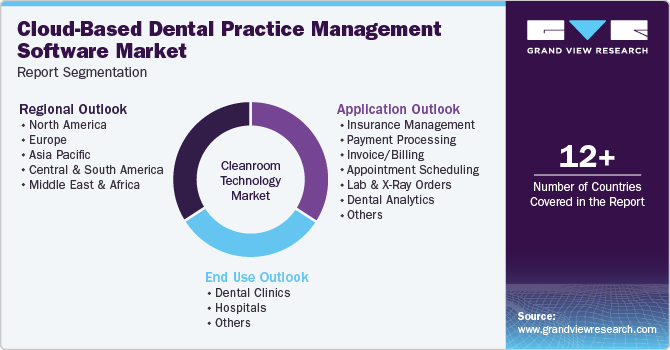
This report forecasts revenue growth at the global, regional, and country levels and provides an analysis of the latest industry trends and opportunities in each of the sub-segments from 2021 to 2033. For the purpose of this study, Grand View Research has segmented the global cloud-based dental practice management software market report based on application, end use, region.
 To learn more about this report, Download Free Sample Report
-
Application Outlook (Revenue, USD Million, 2021 - 2033)
-
Insurance Management
-
Payment Processing
-
Invoice/Billing
-
Patient Record Management
-
Appointment Scheduling
-
Treatment Planning and Charting
-
Lab & X-Ray Orders
-
Dental Analytics
-
Digital Imaging and Radiography Integration
-
Others
-
-
End Use Outlook (Revenue, USD Million, 2021 - 2033)
-
Dental Clinics
-
Hospitals
-
Others
-
-
Regional Outlook (Revenue, USD Million, 2021 - 2033)
-
North America
-
U.S.
-
Canada
-
Mexico
-
-
Europe
-
UK
-
Germany
-
France
-
Italy
-
Spain
-
Denmark
-
Sweden
-
Norway
-
-
Asia Pacific
-
Japan
-
China
-
India
-
Australia
-
South Korea
-
Thailand
-
-
Latin America
-
Brazil
-
Argentina
-
-
Middle East & Africa (MEA)
-
South Africa
-
Saudi Arabia
-
UAE
-
Kuwait
-
-
Research Methodology
The cloud-based dental practice management software market figures in this report are based on a proven research process that combines executive interviews with secondary research from proprietary databases, company filings, and recognized regulatory and institutional sources. Market size is built through value-chain sizing - reconciling supply-side and demand-side estimates - and triangulated with bottom-up and top-down approaches. Every estimate passes multiple levels of expert validation before publication, with each cloud-based dental practice management software segment quantified using the revenue-capture definitions in the table below.
Segment Definition
Segment - Application
Revenue capture definition
Patient Record Management
Patient record management refers to the process of storing, organizing, and accessing patient information within a software system designed for dental practices. It involves capturing and maintaining comprehensive patient records, including personal details, medical history, treatment plans, appointments, and clinical notes.
Appointment Scheduling
(Reminders, Confirmation Requests,
and Follow-ups)Appointment scheduling is the process of efficiently managing and organizing patient appointments within a digital platform designed for dental practices. This functionality includes features such as appointment creation, reminders, confirmation requests, and follow-ups.
Treatment Planning and Charting
Treatment planning and charting enable dental professionals to create and manage treatment plans for patients while recording clinical information in a digital format. These features streamline treatment planning, improve communication with patients, and enhance accessibility to patient records.
Digital Imaging and Radiography Integration
Digital imaging and radiography integration refers to the capability of capturing, storing, and managing dental images, such as X-rays, intraoral photographs, and other diagnostic images, within a dental practice management platform. This integration improves diagnostic accuracy, workflow efficiency, and access to imaging records for treatment planning.
Invoice/Billing
Invoice/billing applications enable dental practices to generate and manage invoices for services provided to patients. These solutions streamline the billing process, facilitate accurate and timely payment collection, and support the financial performance of dental practices.
Payment Processing
Payment processing applications enable dental practices to securely process financial transactions associated with patient services. These solutions integrate payment capabilities within the software to simplify billing, payment collection, and transaction management.
Insurance Management
Insurance management refers to the functionality that enables dental practices to efficiently manage insurance-related activities, including claim submission, eligibility verification, reimbursement tracking, and payment reconciliation. This functionality improves the accuracy and timeliness of insurance processing.
Lab & X-Ray Orders
Lab & X-ray orders refer to the functionality that enables dental professionals to electronically request, manage, and track laboratory tests and diagnostic imaging services. This feature improves workflow efficiency and communication between dental practices and external laboratories or imaging providers.
Dental Analytics
Dental analytics refers to software functionality that enables dental practices to collect, organize, analyze, and visualize operational and clinical data. It provides insights into patient demographics, treatment procedures, financial performance, resource utilization, and overall practice efficiency to support informed decision-making.
Others
Other applications include electronic prescribing, administrative and workflow management tools, periodontal charting, patient communication solutions, online consent management, document management, and additional features that enhance the efficiency and quality of dental practice operations.
Segment - End Use
Revenue capture definition
Dental Clinics
Dental clinics represent the primary end users of cloud-based dental practice management software. These facilities utilize the software to manage patient records, appointment scheduling, billing, insurance claims, treatment planning, and overall clinical and administrative operations.
Hospitals
Hospitals with dedicated dental departments or oral healthcare units use cloud-based dental practice management software to integrate dental services with broader hospital information systems. These solutions support patient management, clinical workflows, billing processes, and multidisciplinary care coordination.
Others
The others segment includes academic dental institutions, dental service organizations (DSOs), specialty dental centers, community healthcare facilities, research organizations, and government-supported oral healthcare programs that utilize practice management software to support operational and patient management activities.
Estimation Model
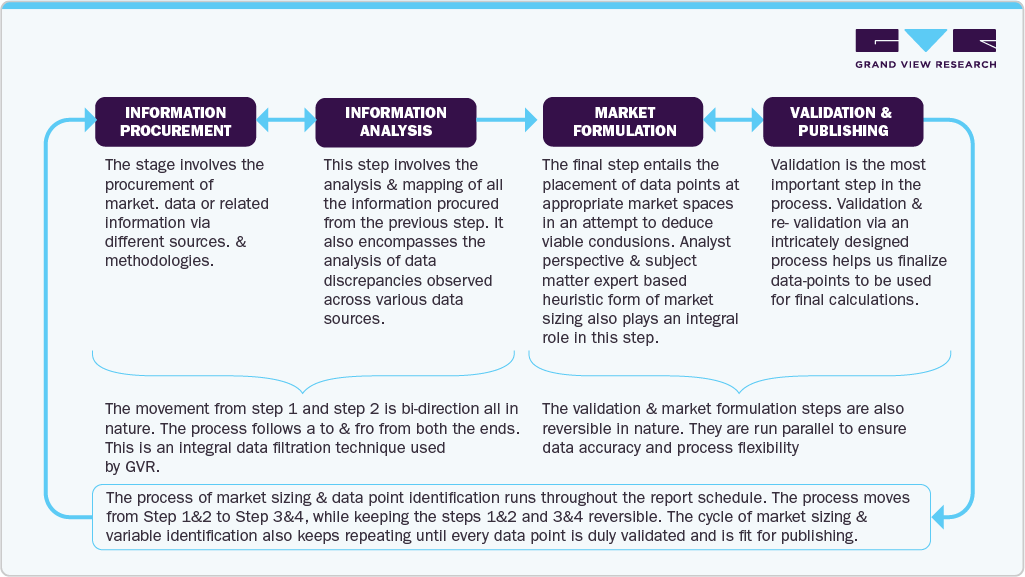 To learn more about this report, Download Free Sample Report
Market-specific Research Models:
Consensus-Based Estimates & Forecasting
The cloud-based dental practice management software market presents emerging to dominant opportunities, featuring global key players such as Henry Schein One; Carestream Dental, LLC; DentiMax; Practice-Web, Inc.; Nextgen Healthcare, Inc. (NXGN Management, LLC) (Acquired by Thoma Bravo); ACE Dental; CareStack (Good Methods Global Inc.); CD Newco, LLC (Curve Dental); Dentiflow; Dental Intelligence, Inc.; Jarvis Analytics (a Henry Schein, Inc. company); Practice Analytics; ABELMed Inc. To ensure a holistic approach, the GVR research team adopted a comprehensive methodology, considering multiple companies worldwide and utilizing various variables for data accuracy.
Methodology included
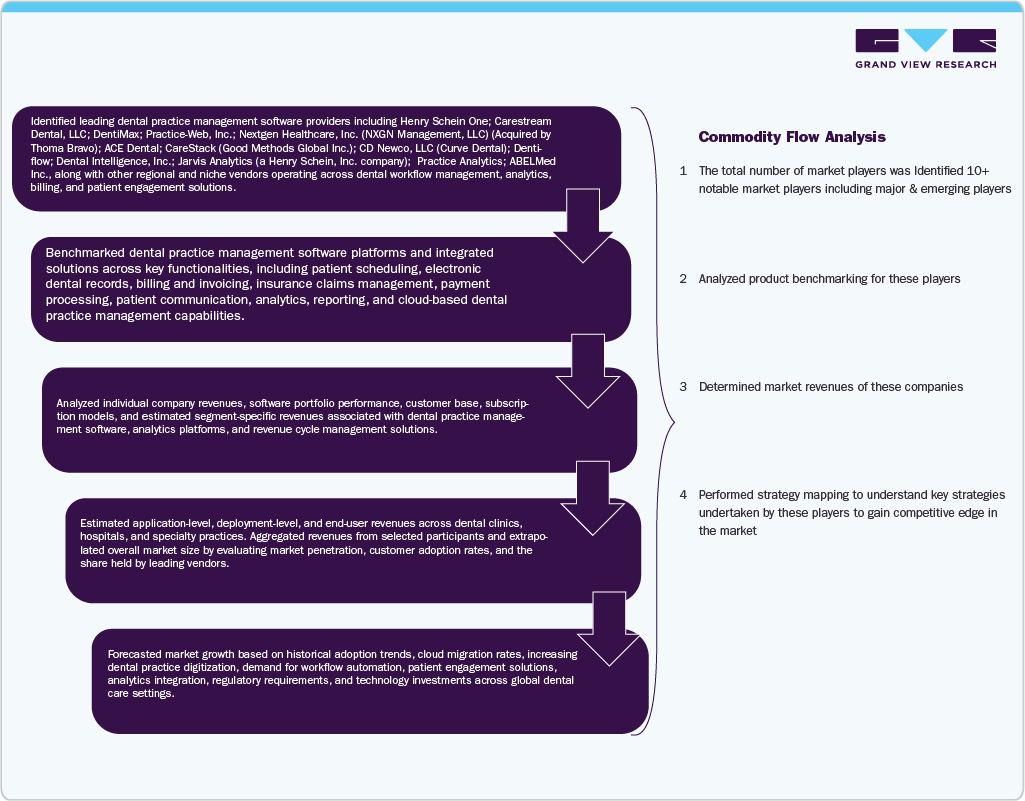
Model 1: Commodity Flow Analysis - For public players, annual reports were referenced. For private players, premium paid data sources such as S&P Global, Crunchbase, ZoomInfo, RocketReach, etc., were used for the latest revenue insights.
Model 2: Parent Market Analysis
Model 3: Country-level Multivariate Analysis Assumptions
Model 4: Segment-level Multivariate Analysis Assumptions
Model 5: Cloud-based Dental Practice Management Software Market CAGR Calculations
 To learn more about this report, Download Free Sample Report
Commodity flow analysis was employed to track the movement of cloud-based dental practice management software through the value chain, from technology providers to end users. This analysis provided insights into demand generation points, intermediary roles, and ultimate consumption patterns.
Delivered Customizations
This report has been delivered with the following In-depth customizations
Client Request
Customization Delivered
Value Adds
Cloud-based Dental Practice Management Software Market Adoption & Digital Workflow Analysis
Developed a tailored analysis of the global cloud-based dental practice management software market focused on practice digitization trends, administrative workflow automation, patient communication platforms, billing management, insurance processing, and cloud-based software adoption across dental clinics and hospitals. The study assessed deployment preferences, software utilization patterns, and healthcare IT investments influencing practice management modernization.
Enables stakeholders to understand evolving digital dentistry trends, identify high-growth software segments, assess technology adoption readiness, and evaluate the impact of workflow automation on operational efficiency, patient experience, and long-term market growth.
Cloud-based Dental Practice Operations, Patient Engagement & Revenue Cycle Assessment
Delivered a customized evaluation of software utilization trends across appointment scheduling, patient communication, invoicing, payment processing, insurance management, and treatment workflow coordination. The analysis assessed patient engagement strategies, digital payment adoption, practice productivity improvements, and demand for integrated platforms supporting efficient clinical and administrative operations.
Provides actionable insights into changing dental practice management requirements, commercialization opportunities, application segment trends, and emerging opportunities linked to patient-centric digital solutions, revenue cycle optimization, and improved operational performance.
Dental Healthcare IT Infrastructure, Deployment & Competitive Landscape Assessment
Conducted a focused assessment of the dental software ecosystem, vendor positioning, interoperability requirements, cybersecurity considerations, and software scalability across independent clinics, DSOs, hospitals, and specialty dental practices. The analysis evaluated technology adoption barriers, implementation challenges, and competitive dynamics influencing software procurement decisions.
Supports strategic planning for software development, cloud migration initiatives, partnership opportunities, and market expansion by identifying adoption drivers, deployment preferences, investment opportunities, and competitive advantages across the global dental practice management software value chain.
Frequently Asked Questions About This Report
North America dominated with a 38.0% revenue share in 2025.
Some key players operating in the cloud-based dental practice management software market includes Henry Schein One; CD Newco, LLC (CurveDental); Dentidesk; Dentiflow; Planet DDS; Tab32, CareStack; and Carestream Dental LLC.
Key factors that are driving the cloud-based dental practice management software market growth include an increasing number of dental visits, technological advancements, the rising number of dental offices, and growing awareness about oral care.
Asia Pacific is expected to be the fastest-growing regional market during the forecast period.
Insurance management segment held the largest market share of 21.4% in 2025.
Dental clinics segment held the largest market share of 47.0% in 2025.
The global cloud-based dental practice management software market size was valued at USD 1.1 billion in 2025 and is estimated at USD 1.3 billion for 2026.
The global cloud-based dental practice management software market is expected to grow at a CAGR of 12.3% from 2026 to 2033, reaching USD 2.8 billion by 2033.
About the Author(s)
Healthcare IT Research Team
Healthcare · Healthcare ITThis report was authored by the healthcare it research team at Grand View Research - comprising two research analysts, one senior research analyst, and one industry expert - with specialized expertise in the healthcare it segment of the healthcare industry. All findings are based on proprietary healthcare databases, executive interviews, and regulatory analysis, subject to internal peer review prior to publication.
Last Updated:
Speak to Analyst

Customize this report to your needs - add regions, segments, or data points, with 20% free customization.
Or view our licence options:


ISO 9001:2015 & 27001:2022 Certified
We are GDPR and CCPA compliant! Your transaction & personal information is safe and secure. For more details, please read our privacy policy.


