
- Home
- »
- Consumer F&B
- »
-
Cocoa Beans Market Size, Share & Trends Report, 2033GVR Report cover

Cocoa Beans Market (2026 - 2033)
Size, Share & Trends Analysis Report By Product (Cocoa Butter, Cocoa Powder, Cocoa Liquor), By Application (Confectionery, Functional Foods & Beverages, Pharmaceuticals), By Distribution Channel, By Region, And Segment Forecasts
Market Size, 2025
$16.3BMarket Estimate, 2026
$17.2BMarket Forecast, 2033
$23.7BCAGR, 2026–2033
4.6%Cocoa Beans Market Summary
The global cocoa beans market size was valued at USD 16.3 billion in 2025 and is projected to grow from USD 17.2 billion in 2026 to USD 23.7 billion by 2033, at a CAGR of 4.6% from 2026 to 2033. North America dominated the market, accounting for a revenue share of 29.0% in 2025. Rising disposable incomes in these regions enable greater purchasing power for chocolate and cocoa-based products, which are widely perceived as accessible indulgences.
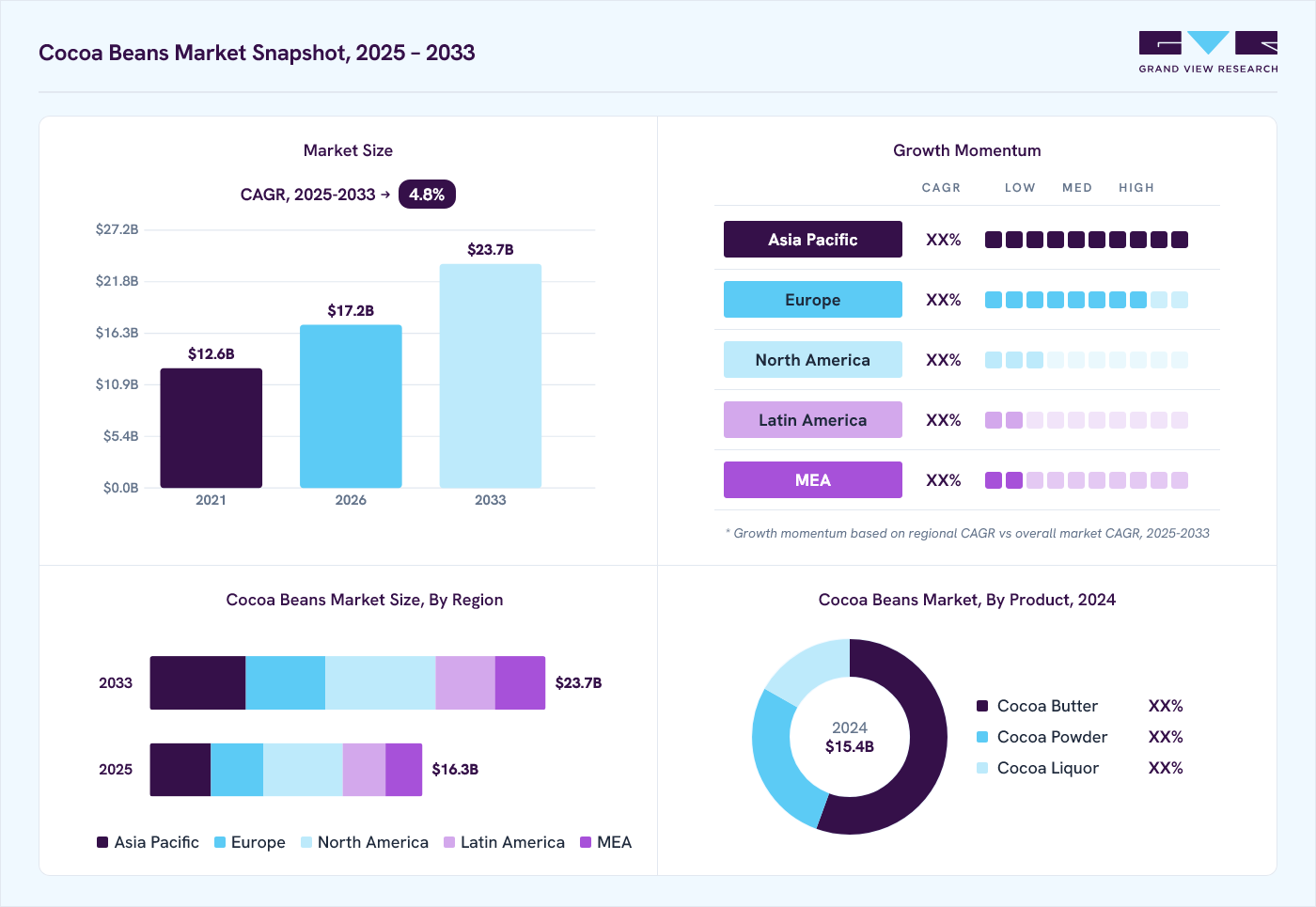 Source: Grand View Research, IR Documents, Primary Interviews, Paid DatabasesTo learn more about this report,
 Download Free Sample Report
 Key Market Trends & Insights
- By product: Cocoa butter segment led the market with the largest revenue share of 55.5% in 2025.
- By distribution channel: Offline segment led the market with the largest revenue share of 79.5% in 2025.
- By application: Confectionary segment led the market with the largest revenue share of over 35% in 2025.
Regional Highlights
- Largest regional market: North America (29.0% revenue share, 2025)
- By country: The U.S. held the largest market share in 2025.
Market Size & Forecast
- Market size in 2025: USD 16.3 Billion
- Estimated market size in 2026: USD 17.2 Billion
- Projected market size by 2033: USD 23.7 Billion
- CAGR (2026-2033): 4.6%
Three ways to get this report
Buy it, customize it, or ask a question.Ask an Analyst
Analyst response in 1 business day
- AccessReport author, directly
- Reply timeWithin 1 working day
- No sales callDirect answer only
- FormatEmail reply
- CostFree, no cost
Get the Full Report
What the study covers
- FormatsPDF · Excel · Dashboard
- Timeline2026–2033 annual, 2025 base
- Coverage20+ countries, 5 regions
- Companies10+ key players profiled
Customize the Report
20% free customization
- IncludeCountries, segments, points
- TailorTo your product definition
- ExtendDeeper competitor detail
- OrA fully bespoke study
- Turnaround5–10 working days
Furthermore, a growing awareness of the perceived health benefits of dark chocolate, such as its antioxidant properties, is bolstering demand, leading to its incorporation into new functional foods and beverages. Cocoa beans consumption reduces high blood pressure, manage chronic fatigue syndrome, provide protection from sunburn, and offer additional health advantages to the body. Cocoa is rich in polyphenols, which safeguard the body's tissues from oxidative stress and diseases such as cancer and inflammation. As consumer preferences shift towards indulgent treats, the global chocolate market has seen significant expansion. This trend is particularly pronounced in emerging economies, where rising disposable incomes enable consumers to purchase premium chocolate products. The growing popularity of dark chocolate, which contains higher cocoa content, further fuels this demand as health-conscious consumers seek out products perceived to have health benefits.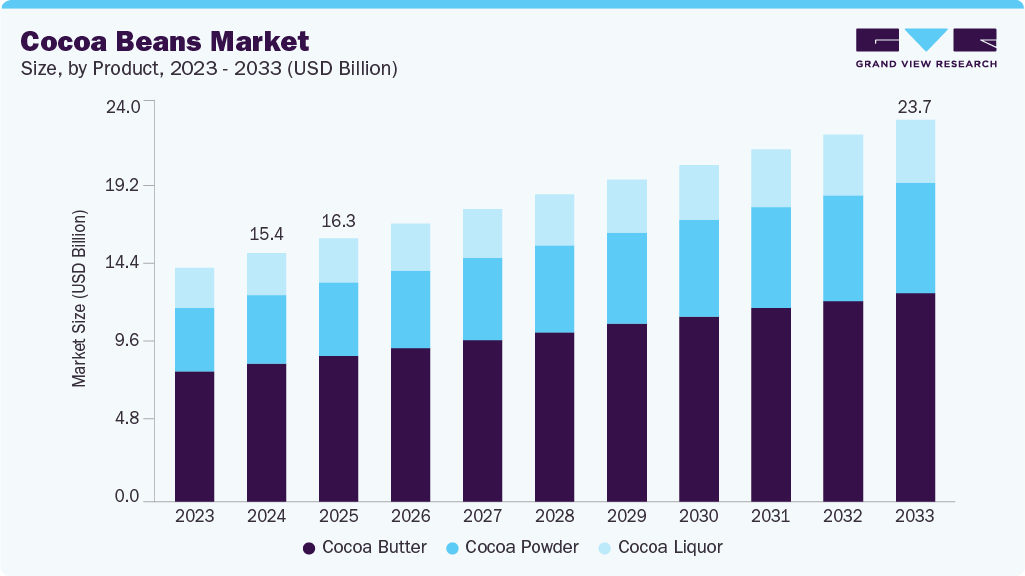 To learn more about this report, Download Free Sample Report
 Governments, non-governmental organizations, and private companies are investing in infrastructure projects that improve the efficiency of cocoa transport and trade. These investments reduce costs and increase supply reliability, making the cocoa market more attractive to global buyers. In addition, efforts to combat issues such as cocoa supply chain disruptions and price volatility contribute to a more stable and predictable market environment. For instance, a June 2025 news article from The Hindu says the Indian government is providing subsidies to cocoa farmers, reinforcing its commitment to sector support and ensuring farmers can benefit from financial incentives to enhance productivity.
Market Dynamics
The cocoa beans market is primarily driven by demand from the global chocolate and confectionery industry, which accounts for the majority of cocoa bean consumption. Cocoa beans are also used in bakery products, beverages, dairy products, cosmetics, pharmaceuticals, and nutraceutical ingredients. Market growth is being influenced by increasing chocolate consumption in emerging economies, the premiumization of confectionery products, and industry-wide efforts to improve sustainability and traceability within cocoa supply chains. However, production remains highly concentrated in West Africa, making global supply susceptible to climatic conditions and geopolitical disruptions.
Rising consumption of chocolate products continues to be the primary growth driver for the cocoa beans market. Increasing disposable incomes, urbanization, and expanding middle-class populations in Asia-Pacific, Latin America, and the Middle East are supporting higher per capita chocolate consumption. In developed markets, demand is shifting toward premium, dark, and high-cocoa-content chocolates, requiring greater volumes of quality cocoa beans. Beyond confectionery, cocoa ingredients are witnessing increased incorporation into bakery products, ready-to-drink beverages, dairy formulations, and nutritional products, further strengthening industrial demand. Expansion of manufacturing capacity by leading chocolate producers and continued product innovation are expected to sustain cocoa bean consumption over the forecast period.
The cocoa beans market faces significant challenges due to its dependence on a limited number of producing countries, particularly Côte d'Ivoire and Ghana, which together account for more than half of global cocoa production. Cocoa cultivation is highly sensitive to changing weather patterns, including prolonged droughts, excessive rainfall, rising temperatures, and pest and disease outbreaks such as cocoa swollen shoot virus and black pod disease. These factors reduce crop yields and contribute to supply shortages and price volatility. In addition, rising fertilizer costs, labor shortages, and stricter sustainability regulations continue to increase production costs, affecting profitability across the cocoa value chain.
Growing emphasis on sustainable cocoa production presents a significant opportunity for the market. Chocolate manufacturers, processors, and governments are investing in farmer training, regenerative agriculture, agroforestry, and certification programs to improve yields while addressing environmental and social challenges. Increasing adoption of digital farm monitoring, satellite-based crop management, and block chain-enabled traceability is improving supply chain transparency and supporting compliance with evolving regulations, including deforestation-related sourcing requirements. These initiatives are expected to enhance long-term supply security, improve farm productivity, and strengthen the availability of certified cocoa beans for global manufacturers.
Analyst Perspective
The women's health app market sits at a rare intersection of structural tailwinds few digital health verticals can match — a clinically underserved female population, a rapidly expanding menopausal cohort, and a B2B monetisation channel through insurer and employer contracts that is largely insulated from consumer price sensitivity. The central competitive moat, however, will belong to the player that consolidates condition coverage across menstrual health, pregnancy, menopause, and disease management into a single longitudinal record — converting episodic app usage into a durable, lifelong health relationship that commands the premium the underlying epidemiology clearly justifies.
Consumer Insights for Cocoa Beans
In the cocoa marketplace, consumers prefer cocoa beans due to growing awareness of quality, health benefits, and sustainability. Traditional chocolate consumption continues to be the primary factor influencing demand, especially in Europe and North America, where there is a rising popularity of premium and artisanal chocolates. Consumers are more interested in dark chocolate due to its perceived health advantages, including antioxidants and lower sugar content. At the same time, younger demographics in Asia-Pacific are expanding demand for cocoa-based products, ranging from bakery items to beverages. Health-conscious buyers also seek products containing natural cocoa powders or minimally processed chocolate, reflecting a broader movement toward clean-label and functional food choices.
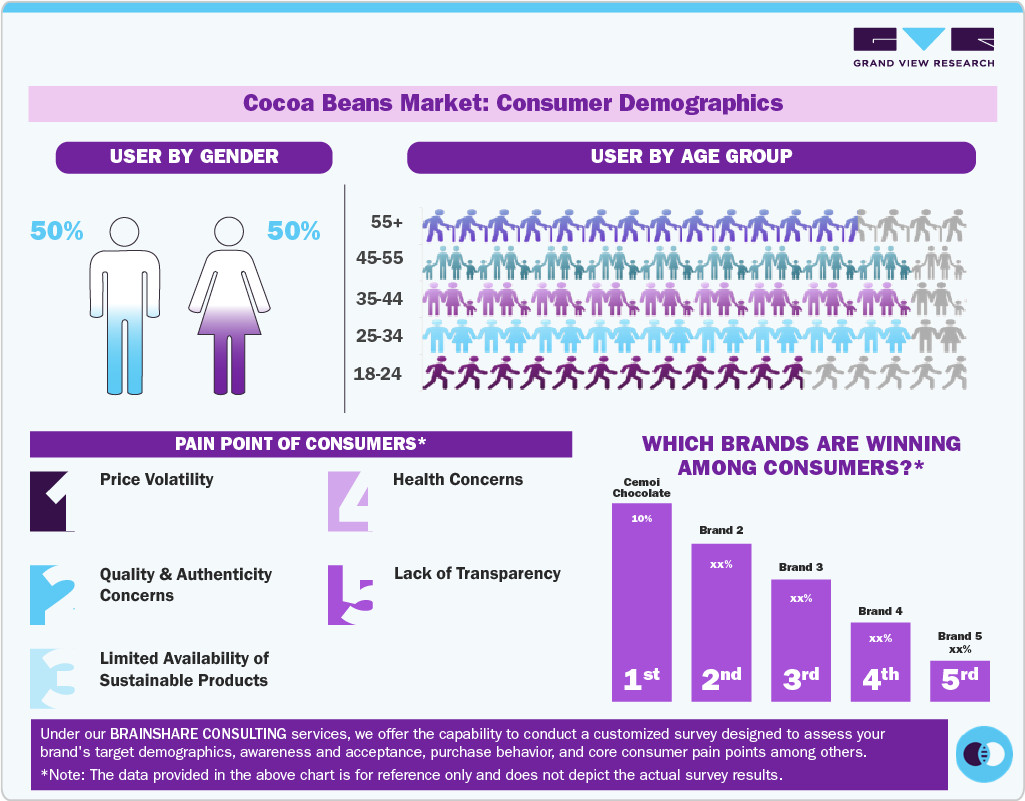 To learn more about this report, Download Free Sample Report
 Sustainability and ethical sourcing are central in shaping consumer insights for cocoa beans. Shoppers are becoming more conscious of the social and environmental challenges of cocoa farming, such as deforestation, farmer poverty, and child labor. As a result, demand for Fairtrade, Rainforest Alliance, and organic-certified cocoa products is rising steadily across global markets. Many consumers are willing to pay a premium for products that guarantee traceability and fair compensation for farmers. In addition, increasing disposable incomes and urban lifestyles are fueling a taste for indulgent cocoa-based confectionery and beverages. This balance of ethical awareness and indulgence strongly influences purchasing behavior and market growth.
Product Insights
Based on product, the cocoa butter segment led the market with the largest revenue share of 55.5% in 2025. The rising consumer preference for natural and organic ingredients in food products proliferates the market. As health consciousness among consumers continues to grow, there is a shift towards products perceived as healthier alternatives to synthetic or heavily processed ingredients. Cocoa butter, a natural fat derived from cocoa beans, is widely used in various food applications, including chocolates, baked goods, and confectionery items. It serves as a flavor enhancer and a textural agent that improves mouthfeel.
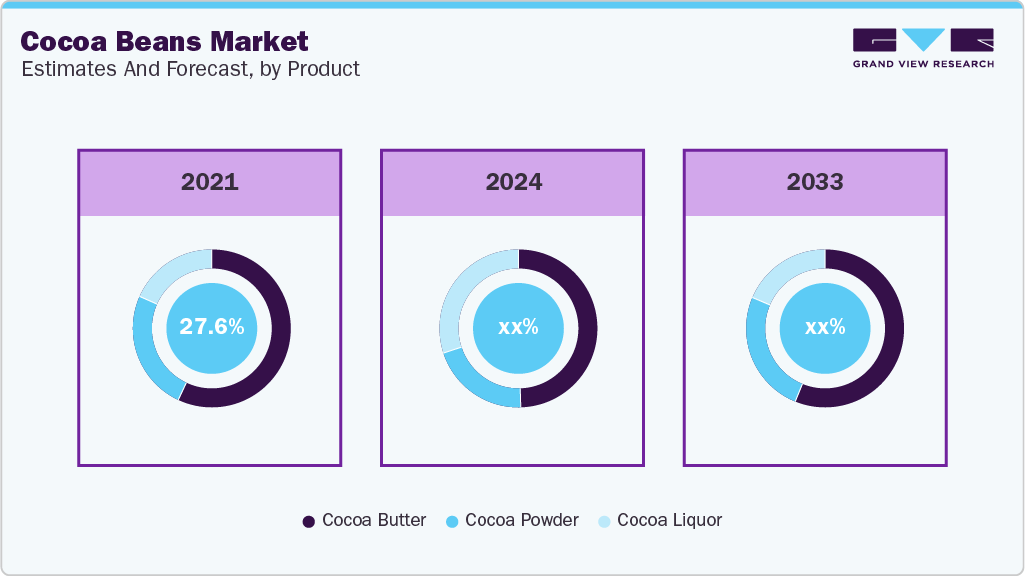 To learn more about this report, Download Free Sample Report
 The cocoa powder segment is anticipated to register the fastest CAGR of 5.4% from 2025 to 2033. The demand for cocoa powder has surged with the growing consumption of chocolate products across various age groups and demographics. Manufacturers in the chocolate and confectionery sector are constantly seeking high-quality cocoa powder to meet the escalating demand for their products, thereby contributing to the expansion of the cocoa powder market.
Application Insights
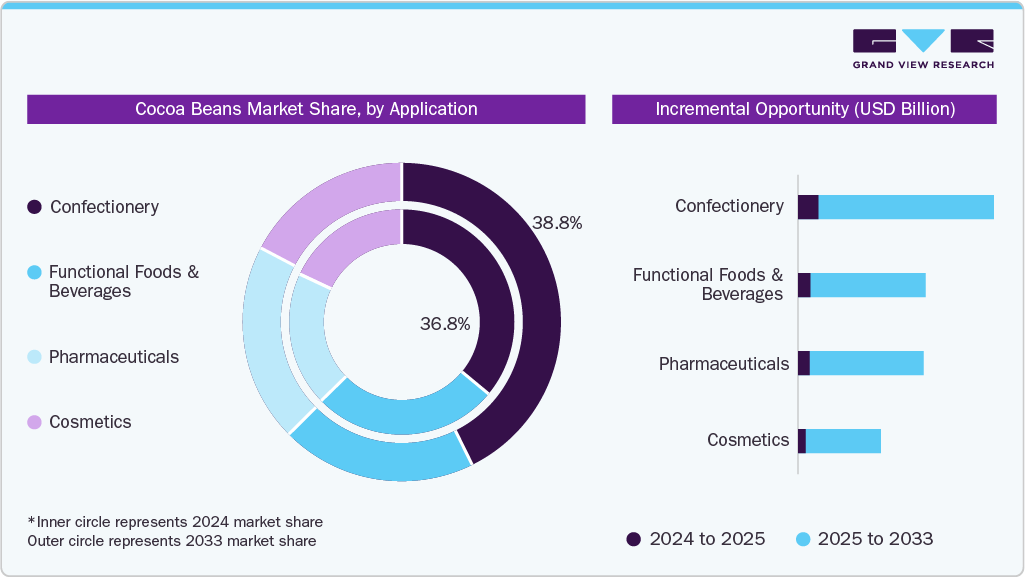
Based on application, the confectionary segment led the market with the largest revenue share of over 35% in 2025. The increasing consumer demand for premium and artisanal chocolates has led to a surge in the use of high-quality cocoa beans. As consumers become more discerning about their chocolate choices, they are willing to pay a premium for products made with superior cocoa beans. This trend has prompted manufacturers to invest in high-quality cocoa sources and sustainable practices to cater to this growing market segment, thereby driving the overall demand for cocoa beans.
 To learn more about this report, Download Free Sample Report
 The pharmaceuticals segment is expected to register the fastest CAGR of 5.5% from 2025 to 2033. With a rising trend towards holistic and preventative healthcare, there is a strong interest in natural products that complement traditional medicine. Cocoa beans, known for their potential to support heart health, manage blood pressure, and improve mood, align well with this trend. Pharmaceutical companies are leveraging these properties to develop supplements and medications that appeal to health-conscious consumers, further stimulating the demand for cocoa beans in the pharmaceutical sector.
Distribution Channel Insights
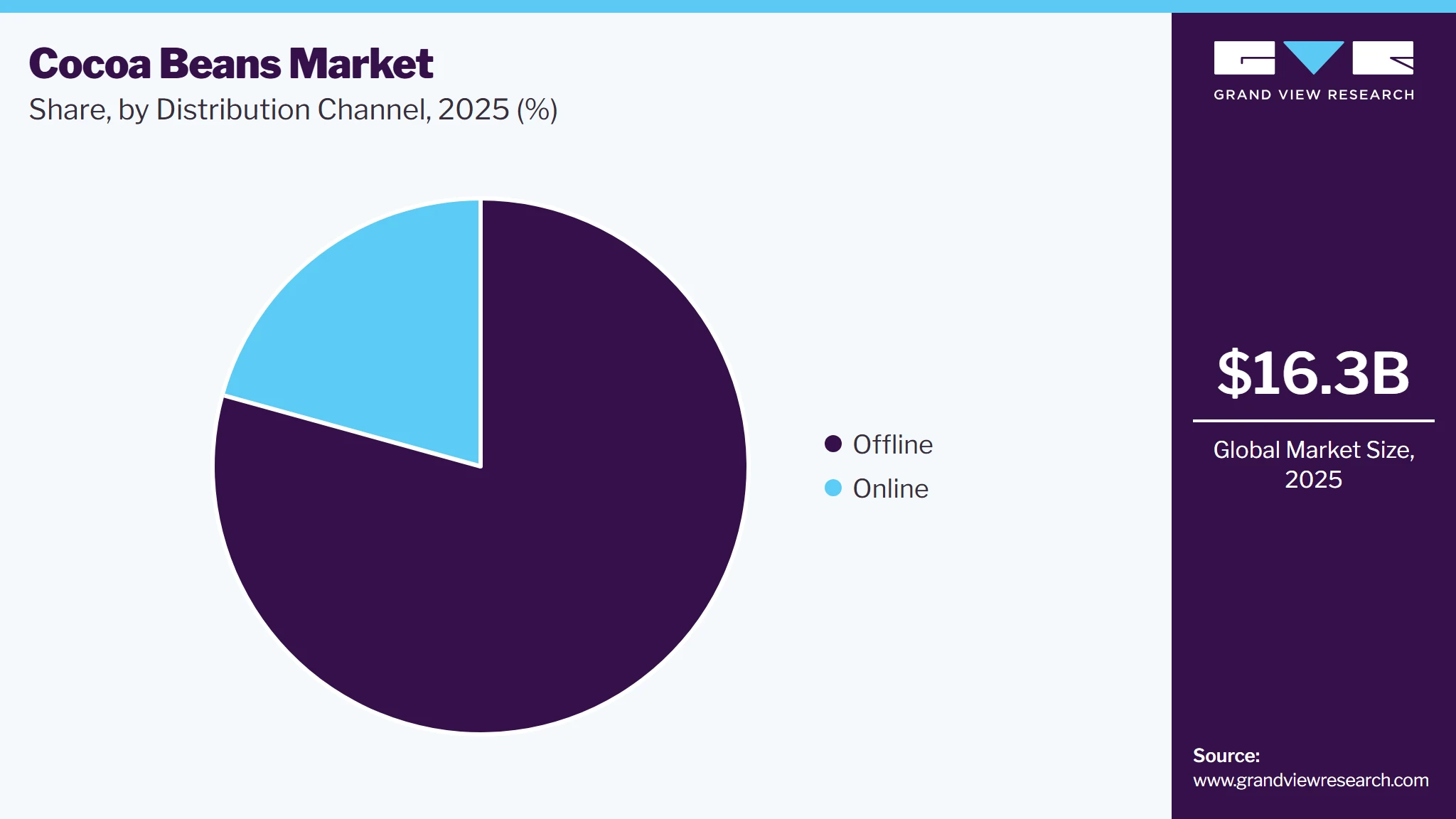
Based on distribution channel, the offline segment led the market with the largest revenue share of 79.5% in 2025. As lifestyles become busier, consumers seek one-stop shopping experiences to purchase various products, including cocoa-based goods such as chocolate, snacks, and baking ingredients. Hypermarkets and supermarkets cater to this need by offering a wide range of cocoa products under one roof, making it easier for consumers to find what they need without visiting multiple stores.
 To learn more about this report, Download Free Sample Report
 The online distribution channel is expected to register the fastest CAGR of 5.7% during the forecast period. The rise of the online cocoa marketplace and specialty e-commerce platforms dedicated to cocoa and chocolate products has expanded suppliers' market reach and visibility. Companies increasingly leverage digital platforms to showcase their products, offer detailed product information, and engage with a global audience. This digital presence helps suppliers capture a larger market share, reaching both niche and mainstream customers who prefer the convenience of online shopping.
Regional Insights
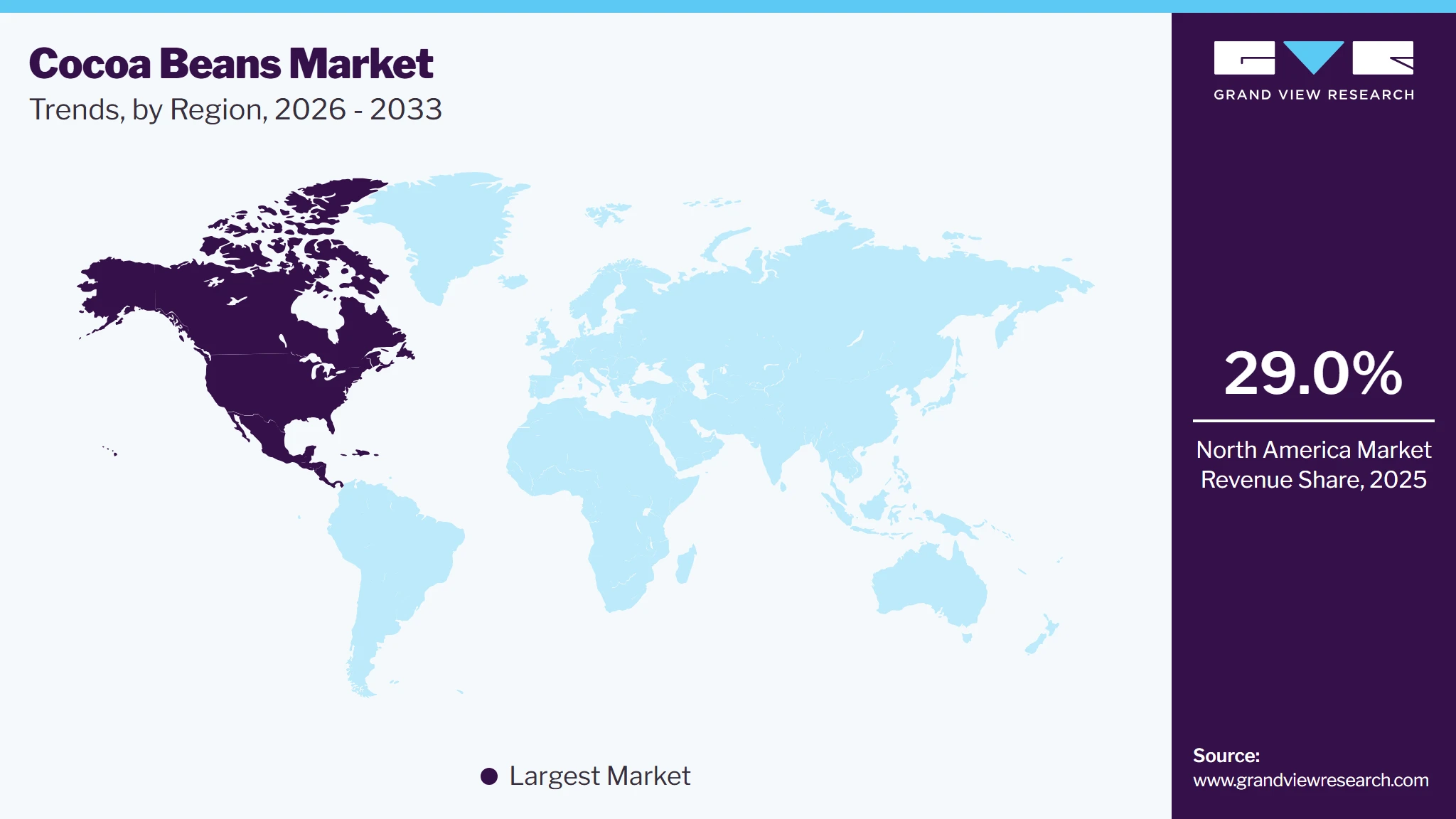
North America dominated the cocoa beans market with the largest revenue share of 29.0% in 2025. North American consumers increasingly seek high-quality, gourmet chocolates featuring exotic and unique cocoa bean varieties. This trend towards premiumization is fueled by a growing appreciation for sophisticated flavors and a willingness to pay a premium for luxury chocolate experiences. As a result, manufacturers focus on sourcing high-quality cocoa beans to meet this demand, thereby driving regional market growth.
 To learn more about this report, Download Free Sample Report
 U.S. Cocoa Beans Market Trends
The cocoa beans market in the U.S. held the largest share in the North America region in 2025. The U.S. market relies heavily on imports to meet the growing consumer preference for various cocoa varieties and formulations. American consumers seek premium and exotic chocolate experiences, so U.S. companies import cocoa beans from key producing countries such as Ivory Coast, Ghana, and Indonesia. This demand for high-quality and diverse cocoa inputs supports market growth by encouraging robust import activities. According to the U.S. Department of Agriculture (USDA), the country's import value of cocoa beans averaged more than USD 1.1 billion annually.
Europe Cocoa Beans Market Trends
The cocoa beans market in the U.K. held the largest share in the Europe region in 2025. The European cocoa marketplace is known for its innovative approach to confectionery and food products, including developing new cocoa-based ingredients and formulations. Innovations such as reduced-sugar chocolates, cocoa-infused beverages, and health-oriented products are gaining popularity. This continuous product development creates new opportunities for cocoa beans as manufacturers seek diverse, high-quality varieties to meet evolving consumer preferences and dietary trends.
The UK cocoa beans market is expected to grow rapidly over the forecast period. The UK boasts one of the highest per capita chocolate consumption rates globally, with an average of approximately 8.1 kg per person annually. With approximately 56% of British adults consuming chocolate more than once a week, manufacturers are motivated to source high-quality cocoa beans to meet consumer preferences for diverse chocolate products ranging from bars to gourmet confections.
Asia Pacific Cocoa Beans Market Trends
Asia Pacific cocoa beans market is anticipated to register the fastest CAGR of 5.8% from 2025 to 2033. The rising population and the increasing disposable income levels in many Asian countries have made premium cocoa-based products more affordable and accessible to a more extensive consumer base. Consumers spend more on high-quality chocolates with superior taste, texture, and convenience. Furthermore, there is a rise in online stores in the region selling cocoa-based products, simplifying the process for customers to purchase them from their residences.
The China cocoa beans market is growing significantly, driven by the country’s growing appetite for chocolate and cocoa-based products, supported by rising disposable incomes and Western lifestyle adoption. Increased demand for premium chocolates, bakery items, and flavored beverages is accelerating cocoa imports. In addition, China’s expanding middle class and growing interest in gifting culture during festivals are boosting chocolate consumption, creating a steady demand for quality cocoa beans.
Latin America Cocoa Beans Market Trends
The Latin America cocoa beans market is growing significantly over the forecast period, driven by its dual role as a production hub and an emerging consumer market. The region’s rich biodiversity and favorable climate support large-scale cocoa cultivation, especially in Ecuador and Peru. Rising local consumption of chocolate, combined with a growing global demand for specialty and organic cocoa, is encouraging investment in sustainable farming practices and export-oriented production, strengthening Latin America’s market presence.
The Brazil cocoa beans market is fueled by the country’s strong production base and government initiatives to revive cocoa farming in Bahia and Pará. Growing domestic demand for chocolate and confectionery, along with increasing exports of premium cocoa, is creating market growth. Brazil also benefits from global interest in traceable and sustainable cocoa, encouraging investments in agroforestry and certification programs supporting farmer incomes and environmentally friendly cultivation practices.
Middle East & Africa Cocoa Beans Market Trends
The cocoa beans industry in the Middle East and Africa region is showing a steady growth over the forecast period, driven by Africa’s position as the world’s leading cocoa producer, with the Ivory Coast and Ghana supplying the majority of global demand. Rising investments in processing facilities and infrastructure are strengthening export capabilities. In the Middle East, growing chocolate consumption among young, urban populations and the increasing popularity of luxury confectionery are fueling imports of high-quality cocoa beans for domestic processing and retail.
The UAE cocoa beans market is driven by rising demand for premium chocolates, artisanal confectionery, and cocoa-based beverages among expatriates and affluent consumers. The country’s role as a trade hub enhances cocoa bean imports and re-exports to neighboring regions. Luxury retail culture, frequent gifting traditions, and growing tourism are boosting chocolate sales. In addition, the increasing presence of global chocolate brands and specialty chocolatiers in the UAE supports market expansion.
Key Cocoa Beans Company Insights
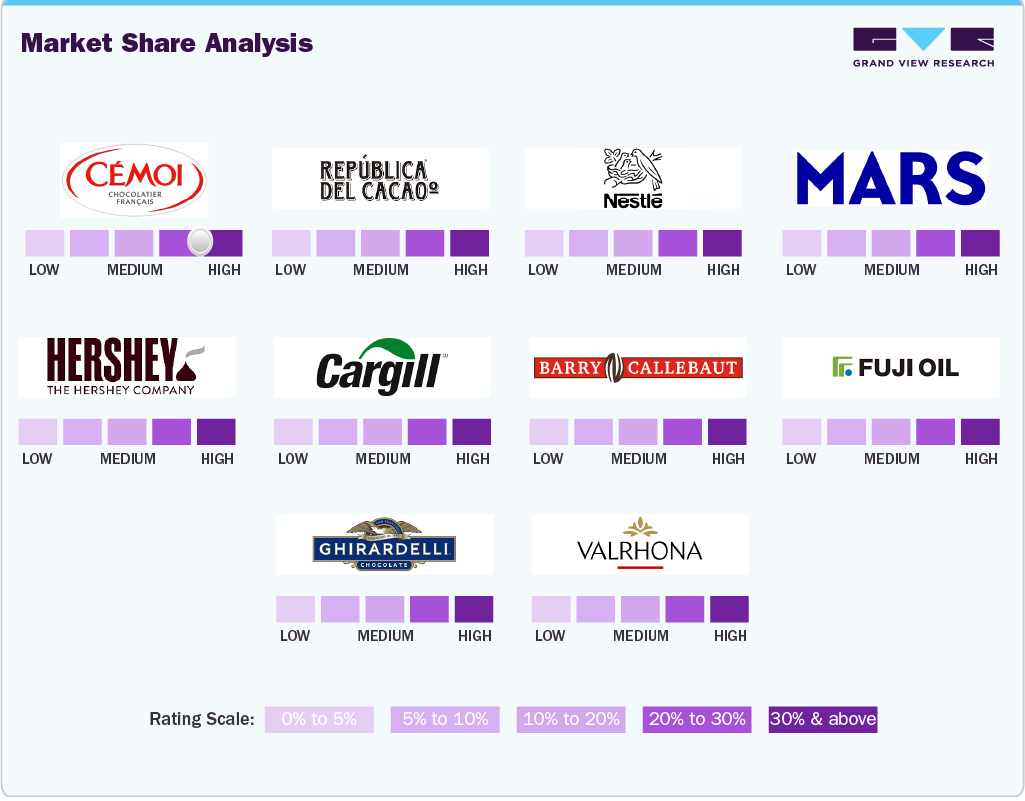
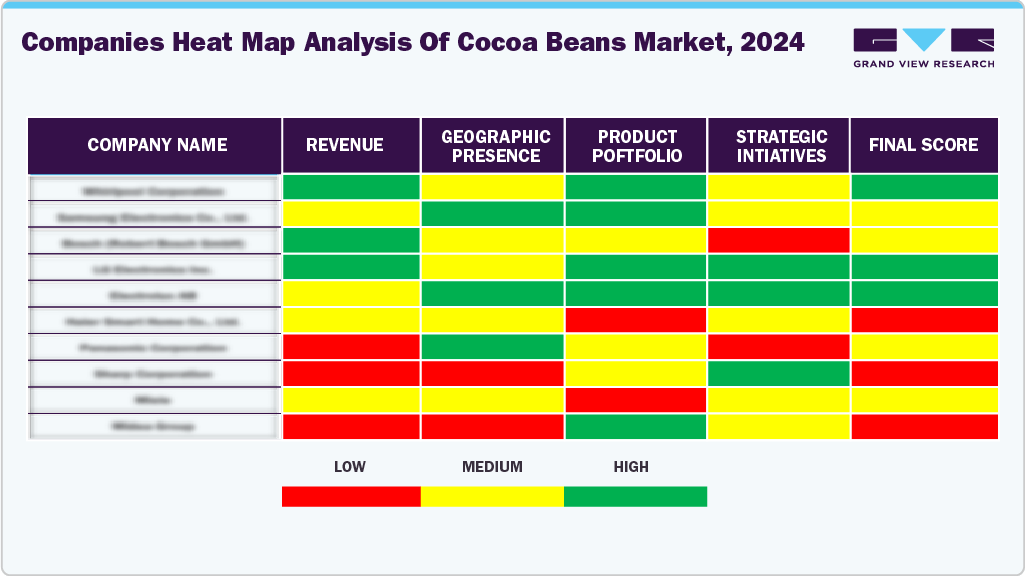
Some of the key companies in the cocoa beans market include Cemoi Chocolatier, Republica del Cacao, Nestlé S.A., Mars Incorporated, and others. Organizations in the cocoa marketplace are focusing on increasing customer base to gain a competitive edge in the industry. Therefore, key players are taking several strategic initiatives, such as mergers and acquisitions, and partnerships with other major companies.
 To learn more about this report, Download Free Sample Report
  To learn more about this report, Download Free Sample Report
 Key Cocoa Beans Companies
The following key companies have been profiled for this study on the cocoa beans market.
-
Cemoi Chocolatier
-
República del Cacao
-
Nestlé S.A.
-
Mars, Incorporated
-
THE HERSHEY COMPANY
-
Cargill, Incorporated
-
Barry Callebaut
-
FUJI OIL CO., LTD.
-
Ghirardelli Chocolate Company
-
Valrhona
Competitive Benchmarking
Category
Operating Strategies
Competitive Edge
Weakness
Established Players (Nestlé S.A.; Mars, Incorporated; THE HERSHEY COMPANY; Cargill, Incorporated; Barry Callebaut; FUJI OIL CO., LTD.)
- Strengthen upstream sourcing through long-term farmer partnerships and traceable procurement networks
- Expand investments in sustainable cocoa programs, processing capacity, and premium ingredient portfolios to secure supply continuity
- Extensive global sourcing and processing infrastructure with diversified customer base across food and beverage industries
- Strong procurement capabilities, sustainability certifications, and integrated value chains that improve operational efficiency
- High exposure to cocoa price volatility and tightening sustainability regulations
- Large-scale operations reduce flexibility in adapting rapidly to regional supply disruptions and changing sourcing requirements
Emerging Players (Cemoi Chocolatier; República del Cacao; Ghirardelli Chocolate Company; Valrhona)
- Differentiate through single-origin sourcing, premium cocoa offerings, and direct relationships with producing communities
- Expand specialty product portfolios while strengthening regional distribution and foodservice partnerships
- Strong positioning in premium and specialty cocoa segments supported by product quality and origin-based differentiation
- Greater agility in responding to evolving demand for traceable, ethically sourced, and high-value cocoa products
- Limited procurement scale compared with multinational processors, resulting in higher sourcing costs
- Greater dependence on premium market demand and narrower geographic presence, constraining volume expansion
Recent Developments
-
In May 2024, a Hyderabad-based craft chocolate company sought to elevate Indian cacao globally, combining scientific precision with farmer collaboration. It delivered traceable, single-origin chocolate, meticulously cultivated, fermented, and transformed from bean to bar under a disciplined, business-centric framework.
-
In April 2024, Nestlé S.A. partnered with Cargill, Incorporated, to achieve net-zero emissions by 2050 through an innovative agroforestry scheme focused on cocoa communities. This collaboration is part of a broader commitment to enhance environmental practices within the cocoa supply chain, addressing climate change and cocoa farmers' socio-economic challenges.
-
In March 2023, Utah State University’s Aggie Chocolate Factory became one of the first U.S. facilities to process Catongo, rare albino cocoa beans sourced from Fazenda Santa Teresa in Bahia, Brazil. The beans, known for their pale appearance, distinctive citrus-nutty-spice flavor, and low acidity, were roasted into a unique, mild 70% cacao chocolate. The initiative, conducted in collaboration with Fulbright Scholar Luciana Monterio of Ara Cacao, also emphasized sustainable, agro-ecological farming practices such as cabruca agroforestry.
Cocoa Beans Market Report Scope
Report Attribute
Details
Market size in 2025
USD 16.3 billion
Estimated market size in 2026
USD 17.2 billion
Projected market size by 2033
USD 23.7 billion
Growth rate
CAGR of 4.6% from 2026 to 2033
Base year for estimation
2025
Historical data
2021 - 2024
Forecast period
2026 - 2033
Quantitative units
Revenue in USD million/billion and CAGR from 2026 to 2033
Report coverage
Revenue forecast, company ranking, competitive landscape, growth factors, and trends
Segments covered
Product, distribution channel, application, region
Regional scope
North America; Europe; Asia Pacific; Central & South America; MEA
Country scope
U.S.; Canada; Mexico; UK; Germany; France; Italy; Spain; China; India; Japan; Australia & New Zealand; South Korea; Brazil; UAE
Key companies profiled
Cemoi Chocolatier; República del Cacao; Nestlé S.A.; Mars, Incorporated; THE HERSHEY COMPANY; Cargill, Incorporated; Barry Callebaut; FUJI OIL CO., LTD.; Ghirardelli Chocolate Company; Valrhona
Customization scope
Free report customization (equivalent up to 8 analysts' working days) with purchase. Addition or alteration to country, regional & segment scope.
Pricing and purchase options
Avail customized purchase options to meet your exact research needs. Explore purchase options
Global Cocoa Beans Market Report Segmentation
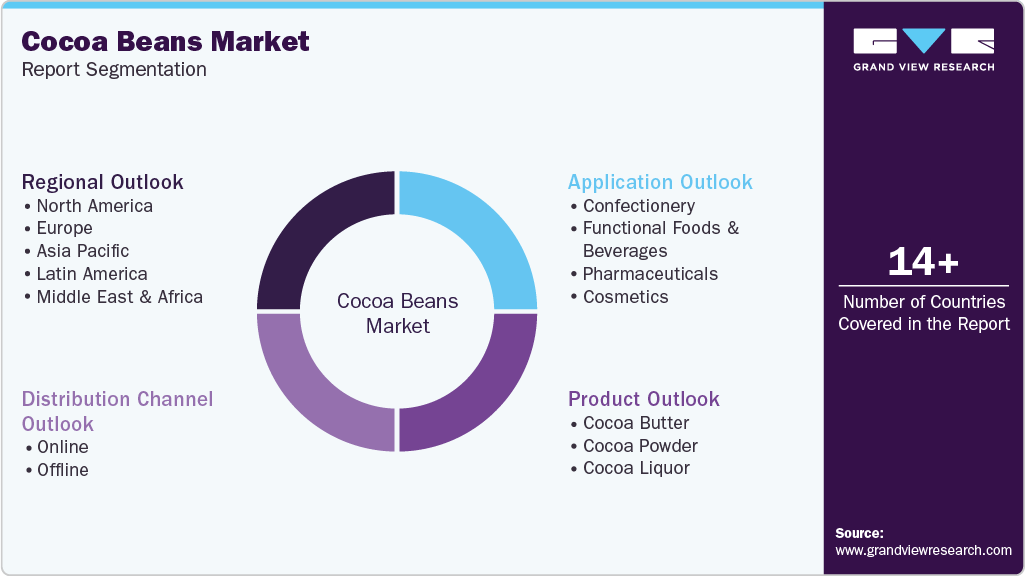
This report forecasts revenue growth at global, regional & country levels and provides an analysis of the latest trends and opportunities in each of the sub-segment from 2021 to 2033. For this study, Grand View Research has segmented the cocoa beans market based on product, application, distribution channel, and region:
 To learn more about this report, Download Free Sample Report
 -
Product Outlook (Revenue, USD Million, 2021 - 2033)
-
Cocoa Butter
-
Cocoa Powder
-
Cocoa Liquor
-
-
Application Outlook (Revenue, USD Million, 2021 - 2033)
-
Confectionery
-
Functional foods & beverages
-
Pharmaceuticals
-
Cosmetics
-
-
Distribution Channel Outlook (Revenue, USD Million, 2021 - 2033)
-
Online
-
Offline
-
Hypermarkets & Supermarkets
-
Convenience Stores
-
Specialty Stores
-
Others
-
-
-
Regional Outlook (Revenue, USD Million, 2021 - 2033)
-
North America
-
U.S.
-
Canada
-
Mexico
-
-
Europe
-
UK
-
Germany
-
France
-
Italy
-
Spain
-
-
Asia Pacific
-
China
-
India
-
Japan
-
Australia & New Zealand
-
South Korea
-
-
Latin America
-
Brazil
-
-
Middle East & Africa
-
UAE
-
-
Research Methodology
The Cocoa Beans market figures in this report are based on a proven research process that combines executive interviews with secondary research from proprietary databases, company filings, and recognized regulatory and institutional sources. Market size is built through value-chain sizing - reconciling supply-side and demand-side estimates - and triangulated with bottom-up and top-down approaches. Every estimate passes multiple levels of expert validation before publication, with each Cocoa Beans segment quantified using the revenue-capture definitions in the table below.
Segment Definition
Segment - Product
Revenue capture definition
Cocoa Butter
This segment includes the sales of cocoa butter extracted from cocoa beans through processing. It is widely supplied to the chocolate, confectionery, bakery, cosmetics, and pharmaceutical industries as a key functional ingredient.
Cocoa Powder
This segment includes the sales of cocoa powder produced by grinding cocoa press cake after butter extraction. It is utilized across beverage, bakery, confectionery, dairy, and nutritional food manufacturing applications.
Cocoa Liquor
This segment includes the sales of cocoa liquor obtained by grinding roasted cocoa nibs into a semi-liquid paste. It serves as the primary intermediate ingredient for manufacturing chocolate products, cocoa butter, and cocoa powder.
Estimation Model
Layer
Guiding Question
Description
Production Layer
Who produces cocoa beans?
Estimate global cocoa bean production by evaluating harvest volumes, cultivation area, climatic conditions, and productivity across major producing countries to determine available supply.
Commercial Supply Layer
Who supplies cocoa beans commercially?
Assess export flows, domestic processing, quality standards, and distribution channels to estimate commercially available cocoa beans supplied to global manufacturers and processors.
Industrial Demand Layer
Who utilizes cocoa beans?
Evaluate cocoa bean utilization across chocolate, confectionery, bakery, beverage, and ingredient processing industries to quantify commercially addressable industrial demand.
Monetisation Layer
How much revenue is generated?
Multiply annual cocoa bean trading volumes by average selling prices (USD/tonne) across producing regions, grades, and commercial channels to estimate total market revenue.
Delivered Customizations
This report has been delivered with the following In-depth customizations
Client Request
Customization Delivered
Value Adds
Cocoa Production & Supply Assessment
Conducted a comprehensive evaluation of cocoa bean production, cultivation trends, regional supply dynamics, export patterns, and processing capacity across key producing countries.
Enables stakeholders to identify supply concentration risks, production growth opportunities, and long-term sourcing strategies across global cocoa-producing regions.
Demand & End-Use Industry Analysis
Assessed cocoa bean utilization across chocolate, confectionery, bakery, beverages, cocoa ingredients, and specialty applications, including evolving procurement and processing trends.
Supports demand forecasting, end-use prioritization, and capacity planning by identifying high-growth application segments and changing procurement patterns.
Sustainability & Supply Chain Opportunity Assessment
Evaluated sustainability initiatives, certification adoption, traceability programs, climate-related production risks, and investment trends influencing the cocoa value chain.
Provides strategic insights into regulatory preparedness, resilient sourcing models, and investment opportunities that enhance long-term competitiveness in the cocoa beans market.
Frequently Asked Questions About This Report
The global cocoa beans market size was valued at USD 16.3 billion in 2025 and is estimated at USD 17.2 billion in 2026
Offline segment led the market with the largest revenue share of 79.5% in 2025.
Confectionary segment led the market with the largest revenue share of over 35% in 2025.
North America dominated with a 29.0% revenue share in 2025.
The global cocoa beans market is expected to grow at a CAGR of 4.6% from 2026 to 2033, reaching USD 23.7 billion by 2033.
Cocoa butter segment led the market with the largest revenue share of 55.5% in 2025.
Key players include Cemoi Chocolatier; República del Cacao; Nestlé S.A.; Mars, Incorporated; THE HERSHEY COMPANY; Cargill, Incorporated; Barry Callebaut; FUJI OIL CO., LTD.; Ghirardelli Chocolate Company; Valrhona.
Key factors include rising demand for chocolate and confectionery products, growing preference for sustainably sourced cocoa, increasing use in food and beverages, and rising awareness of cocoa's health benefits.
About the Author(s)
Consumer F&B Research Team
Consumer Goods · Consumer F&BThis report was authored by the consumer f&b research team at Grand View Research - comprising two research analysts, one senior research analyst, and one industry expert - with specialized expertise in the consumer f&b segment of the consumer goods industry. All findings are based on proprietary consumer goods databases, executive interviews, and regulatory analysis, subject to internal peer review prior to publication.
Last Updated:
Speak to Analyst

Customize this report to your needs - add regions, segments, or data points, with 20% free customization.
Or view our licence options:


ISO 9001:2015 & 27001:2022 Certified
We are GDPR and CCPA compliant! Your transaction & personal information is safe and secure. For more details, please read our privacy policy.


