
- Home
- »
- Organic Chemicals
- »
-
Compressed Gas Market Size & Share Report, 2026-2033GVR Report cover
![Compressed Gas Market (2026 - 2033)Report]()
Compressed Gas Market (2026 - 2033)
Size, Share & Trend Analysis Report By Product (Nitrogen, Oxygen, Hydrogen, Carbon Dioxide, Specialty Gases, Argon & Acetylene), By End Use (Infrastructure And Utilities), By Distribution Channel, By Region, And Segment Forecasts
Market Size, 2025
$4.8BMarket Estimate, 2026
$5.0BMarket Forecast, 2033
$7.6BCAGR, 2026–2033
6.1%Compressed Gas Market Size & Trends
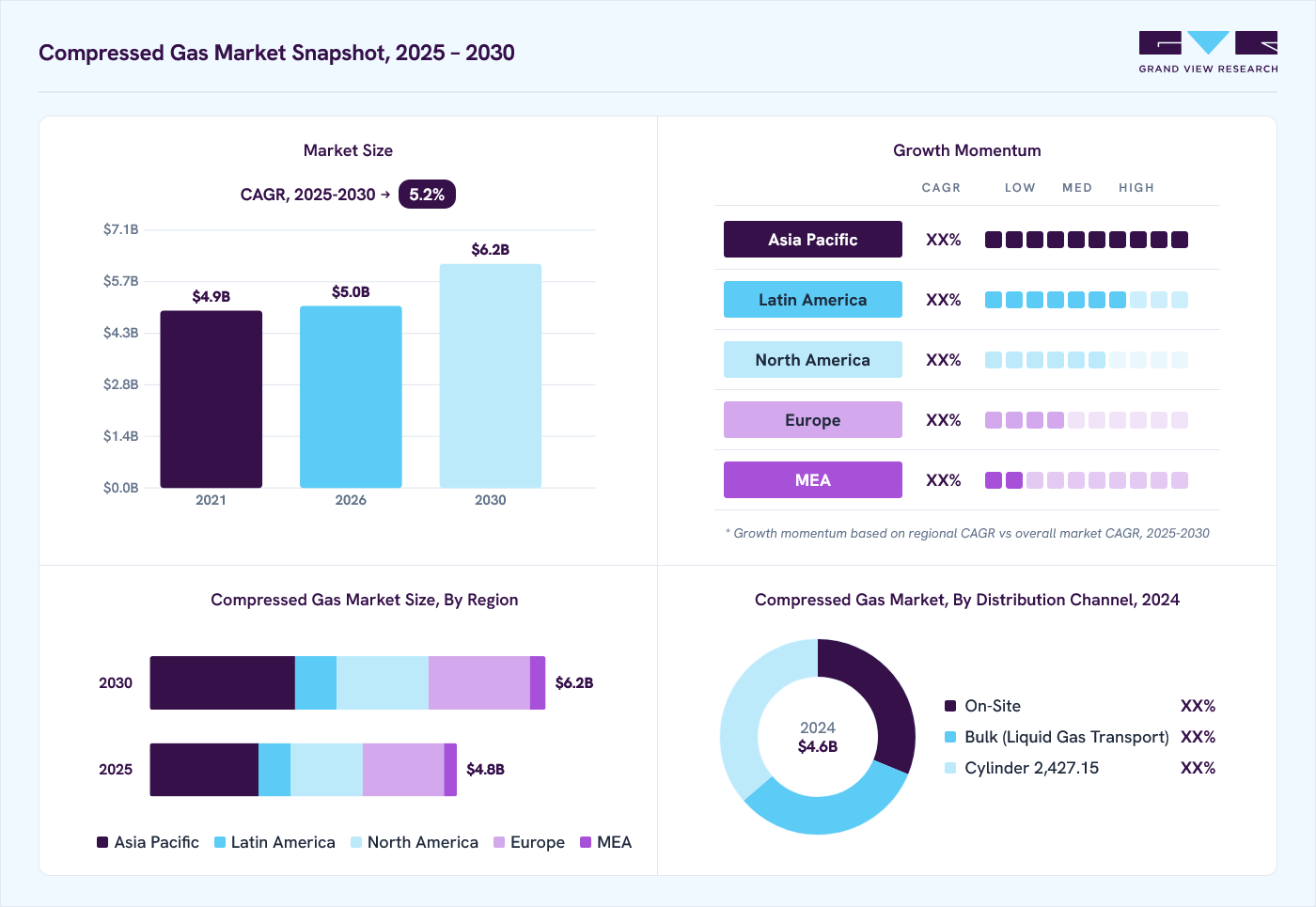
The global compressed gas market size was valued at USD 4.8 billion in 2025 and is projected to grow from USD 5.0 billion in 2026 to USD 7.6 billion by 2033, at a CAGR of 6.1% from 2026 to 2033. The market in Asia Pacific dominated with a revenue share of 35.4% in 2025. The demand for compressed gas, which is pressurized to a high density, is rising globally due to its critical role in various industries and its versatility in applications ranging from energy storage to transportation and industrial processes.
Key Market Trends & Insights
- By end use: Infrastructure and utilities segment held the largest market share of 55.3% in 2025.
- By distribution channel: Cylinder (merchant) segment held the largest market share of 35.3% in 2025.
- By product: Nitrogen segment held the largest market share of 28.7% in 2025.
Regional Highlights
- Largest regional market: Asia Pacific (35.4% revenue share, 2025)
- By country: China held the largest market share in 2025.
Market Size & Forecast
- Market size in 2025: USD 4.8 Billion
- Estimated market size in 2026: USD 5.0 Billion
- Projected market size by 2033: USD 7.6 Billion
- CAGR (2026-2033): 6.1%
Three ways to get this report
Buy it, customize it, or ask a question.Ask an Analyst
A direct answer, usually in 1 working day
- AccessReport author, directly
- Reply timeWithin 1 working day
- No sales callDirect answer only
- FormatEmail reply
- CostFree, no cost
Get the Full Report
What the study covers
- FormatsPDF · Excel · Dashboard
- Timeline2026–2033 annual, 2025 base
- Coverage20+ countries, 5 regions
- Companies10+ key players profiled
Customize the Report
20% free customization
- IncludeCountries, segments, points
- TailorTo your product definition
- ExtendDeeper competitor detail
- OrA fully bespoke study
- Turnaround5–10 working days
Compressed gases, such as compressed natural gas (CNG), hydrogen, and compressed air, are stored in high-pressure containers and are widely used because they allow for efficient storage and transportation of gases that would otherwise occupy large volumes at atmospheric pressure. Energy applications, compressed gases are vital in industrial and laboratory settings. Gases like nitrogen, oxygen, and argon are used in processes such as welding, cutting, and chemical synthesis. Laboratories and medical facilities also rely heavily on compressed gases for research and healthcare purposes, including the use of oxygen cylinders in medical treatments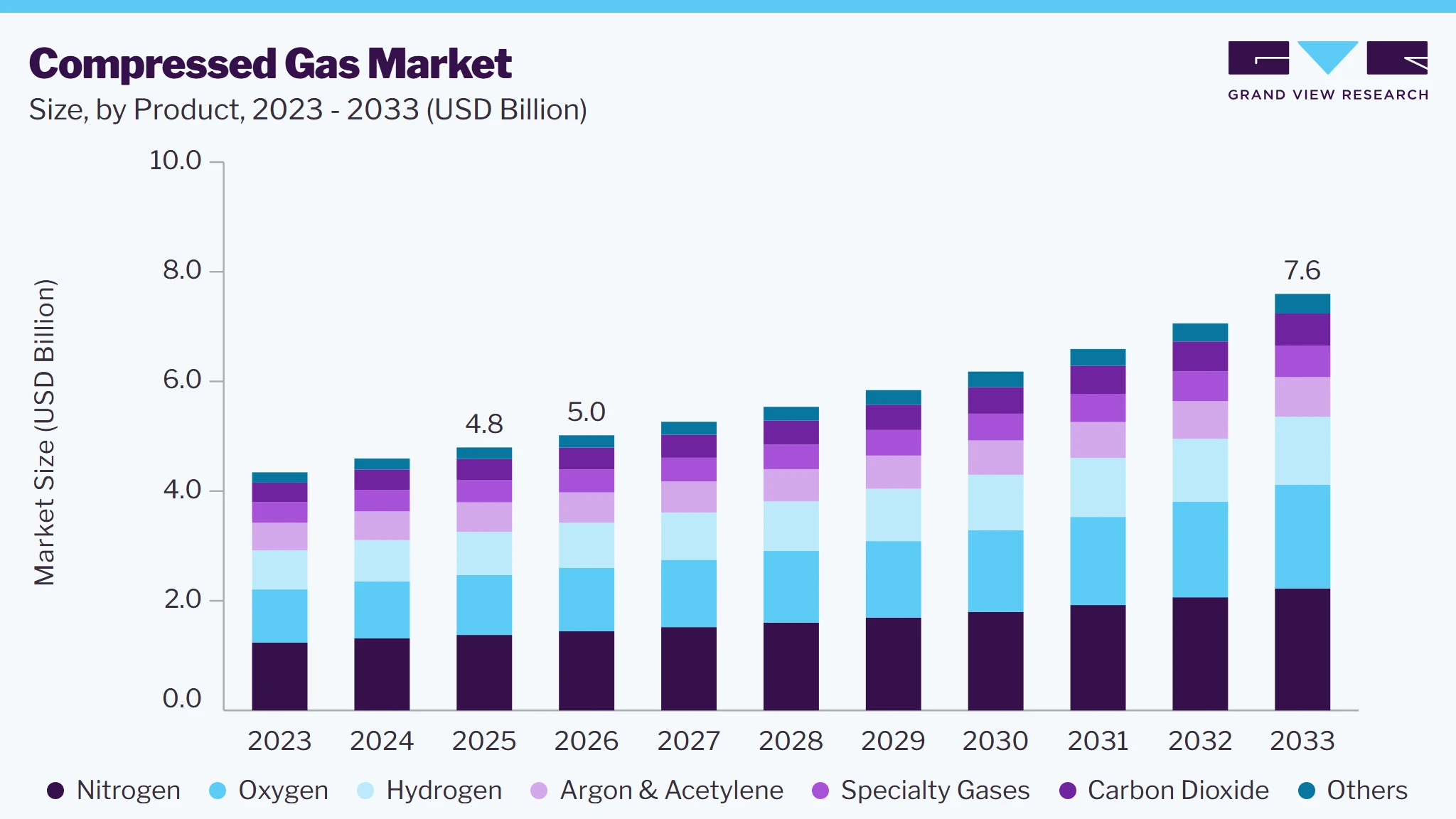
The ability to store these gases at high pressures ensures a steady and reliable supply, even in remote or high-demand locations. Furthermore, advancements in compressed-air energy storage (CAES) systems are enabling the use of compressed air to store energy generated during off-peak hours, which can then be released during periods of high demand, contributing to grid stability and renewable energy integration.
Market Dynamics
The compressed gas market is witnessing steady growth driven by increasing demand across manufacturing, healthcare, energy, food & beverage, chemicals, electronics, and transportation industries. Compressed gases such as oxygen, nitrogen, hydrogen, carbon dioxide, argon, and specialty gases play a critical role in industrial processes, medical treatments, welding and fabrication, semiconductor manufacturing, and clean energy applications. Rapid industrialization, expanding healthcare infrastructure, growing adoption of industrial automation, and rising investments in renewable energy and hydrogen technologies are supporting market expansion. Increasing demand for high-purity gases in advanced manufacturing and electronics production continues to create significant growth opportunities for the compressed gas market.
The growing use of compressed gases across industrial and healthcare sectors is a major driver of the market. Industrial gases are essential for metal fabrication, welding, cutting, chemical processing, food preservation, water treatment, and electronics manufacturing. In the healthcare sector, oxygen, nitrous oxide, medical air, and specialty gases are widely utilized for respiratory therapies, anesthesia, diagnostic procedures, and critical care applications.
The continued expansion of manufacturing activities, infrastructure development projects, and healthcare services globally is driving demand for compressed gas products. Increasing investments in semiconductor fabrication, pharmaceutical production, and industrial automation are boosting consumption of high-purity gases. The growing adoption of hydrogen as a clean energy carrier and fuel for transportation further supports long-term market growth.
The storage and transportation of compressed gases present significant challenges for market participants. Compressed gases require specialized cylinders, tanks, pipelines, and handling systems to ensure safe storage and distribution. Maintaining product integrity, preventing leakage, and complying with strict safety regulations can increase operational and logistics costs.
Fluctuations in energy prices, which significantly impact gas production and compression processes, may also affect profitability. Stringent regulatory requirements governing gas handling, transportation, workplace safety, and environmental compliance can create barriers for new market entrants. Supply chain disruptions and infrastructure limitations in developing regions may further restrict market growth.
The accelerating transition toward clean energy and advanced manufacturing technologies presents substantial opportunities for the compressed gas market. Rising investments in hydrogen production, storage, and fueling infrastructure are creating strong demand for compressed hydrogen systems. The increasing adoption of carbon capture, utilization, and storage (CCUS) technologies is also driving demand for carbon dioxide compression and handling solutions.
Growing semiconductor manufacturing, electronics production, and pharmaceutical research activities are expanding the need for ultra-high-purity specialty gases. Advancements in gas storage technologies, smart cylinder monitoring systems, and sustainable gas production methods are enhancing operational efficiency and product reliability. Companies focusing on innovative gas solutions, clean energy applications, and advanced distribution infrastructure are expected to strengthen their market position and capitalize on emerging growth opportunities throughout the forecast period.
Analyst Perspective
The compressed gas market is positioned for sustained growth, supported by increasing industrial activity, expanding healthcare infrastructure, and the growing importance of clean energy technologies. Compressed gases such as nitrogen, oxygen, hydrogen, carbon dioxide, and specialty gases have become indispensable across manufacturing, healthcare, energy, research, and infrastructure sectors, making the market highly resilient to economic fluctuations. Companies that successfully balance operational efficiency, supply reliability, sustainability objectives, and technological innovation are expected to capture a larger share of the growing compressed gas market. As industrial modernization, healthcare demand, and clean energy deployment continue to accelerate globally, the compressed gas industry is expected to experience steady expansion throughout the forecast period.
Product Insights
Nitrogen dominated the compressed gas market by product, accounting for a 28.7% revenue share in 2025, driven by its extensive use in industrial manufacturing, food packaging, electronics, chemicals, and metal processing. Its inert properties make nitrogen essential for preventing oxidation, creating controlled atmospheres, purging equipment, and preserving packaged products. Rising industrial production, increasing adoption of modified-atmosphere packaging, and growing demand for high-purity nitrogen in semiconductor and electronics manufacturing are supporting segment growth.
Oxygen segment is expected to grow fastest at a CAGR of 7.3% during the forecast period supported by rising healthcare requirements and expanding industrial applications. Oxygen is widely used in respiratory care, hospitals, metal cutting and welding, wastewater treatment, and chemical processing. Growth in healthcare infrastructure, increasing demand for medical oxygen from hospitals and home-care settings, and expanding metal fabrication and manufacturing activities are driving consumption of compressed oxygen.
End-Use Insights
Infrastructure and utilities segment held the largest revenue share of 55.3% in 2025 supported by the extensive use of compressed gases in construction, power generation, water treatment, maintenance, and industrial infrastructure operations. Gases such as oxygen, nitrogen, and carbon dioxide are used in welding, metal fabrication, wastewater treatment, equipment maintenance, and process operations. Expansion of urban infrastructure, investments in utilities, and increasing industrialization are sustaining demand for compressed gas solutions across this segment.
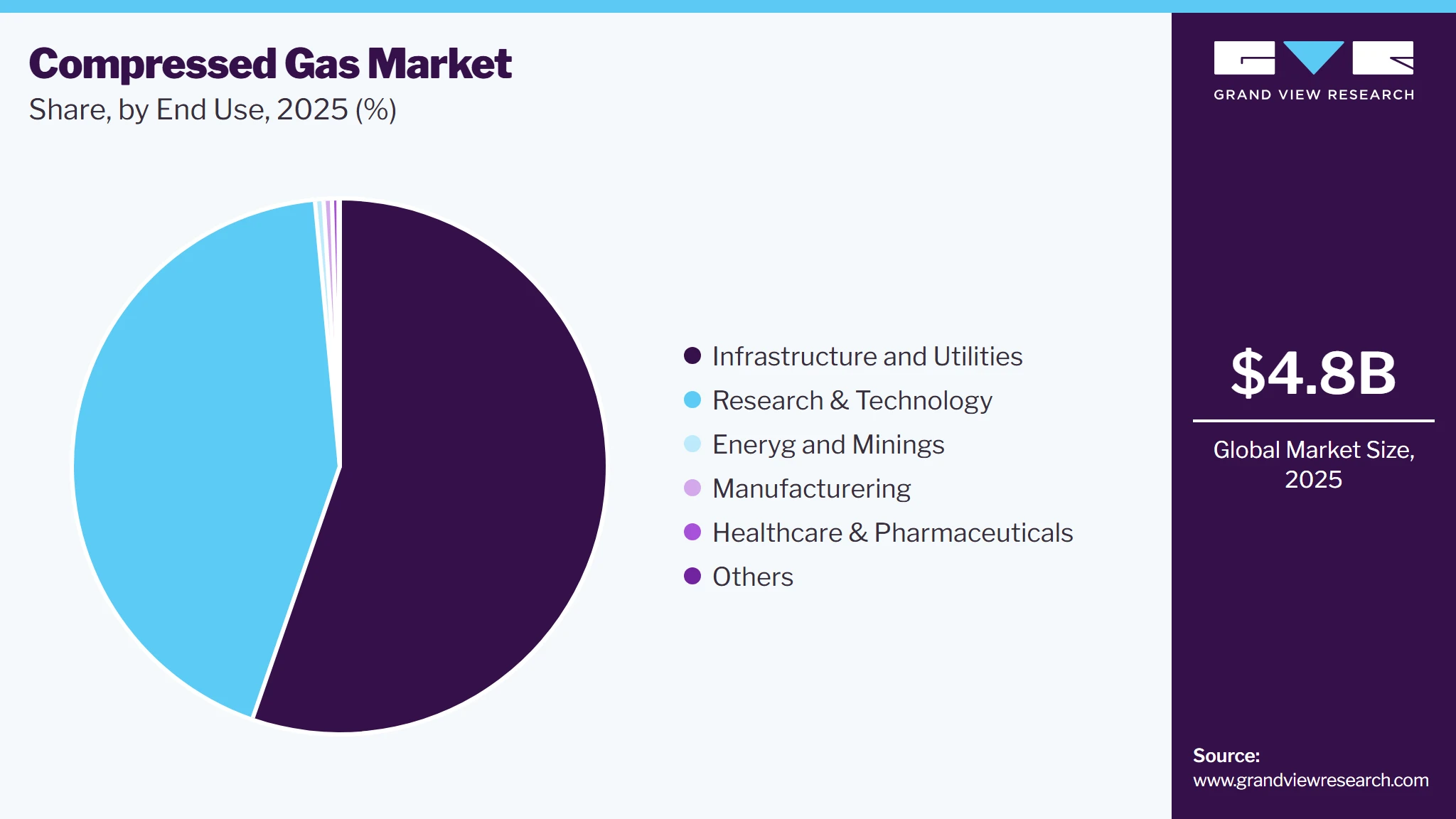
Healthcare & pharmaceuticals segment is expected to grow fastest during the forecast period at a CAGR of 11.5 % during the forecast period, driven by increasing healthcare expenditure, hospital expansion, and rising demand for medical gases in critical care, anesthesia, respiratory therapy, and pharmaceutical manufacturing. Growing prevalence of respiratory disorders, expansion of healthcare facilities in emerging economies, and stringent requirements for controlled gas environments in pharmaceutical production are increasing the need for high-purity compressed gases.
Distribution Channel
Cylinder (Merchant) segment accounted for the largest revenue share of 35.3% in 2025 driven by the flexibility and accessibility of cylinder-based gas supply for small and medium-scale users. Cylinders are widely used across healthcare facilities, welding and fabrication, laboratories, food processing, and chemical industries where gas requirements vary or continuous bulk supply is not practical. Rising demand for packaged industrial and medical gases, along with the expansion of distributed manufacturing and healthcare facilities, is supporting the segment.
On-Site segment is expected to grow fastest at CAGR of 6.3% during the forecast period driven by increasing demand for reliable and uninterrupted gas supply at large industrial facilities. On-site generation reduces dependence on gas transportation, minimizes logistics and storage requirements, and can provide cost advantages for operations with high and continuous gas consumption. Growing investments in steel, chemicals, refining, healthcare, and electronics manufacturing are encouraging industries to adopt on-site gas generation systems.
Regional Insights
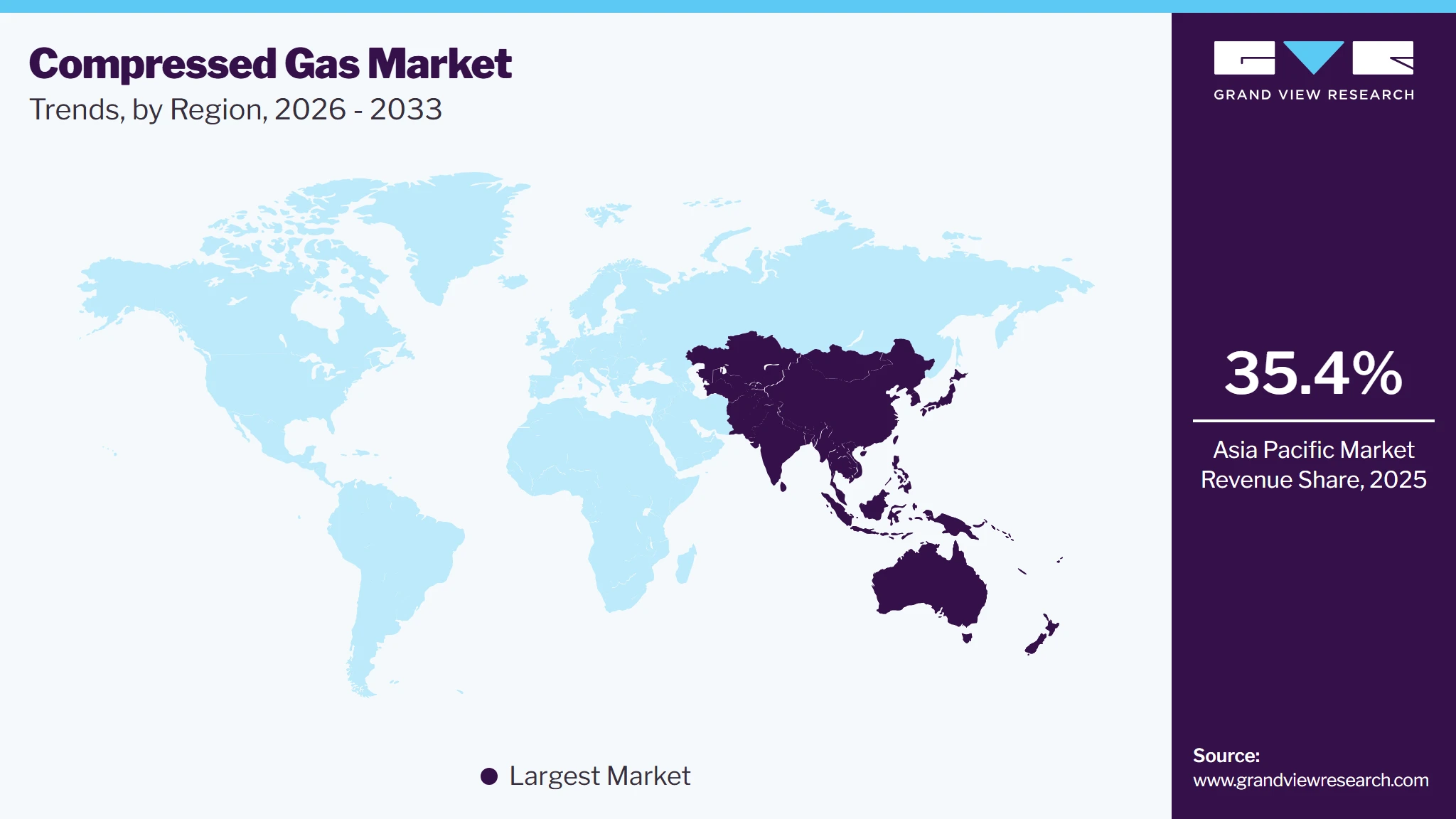
Asia Pacific accounted for 35.4% of the compressed gas market revenue in 2025, making it the largest regional market. The Asia Pacific region is witnessing a significant surge in demand for compressed gases, driven by rapid industrialization, urbanization, and the region's growing focus on sustainable energy solutions. Countries such as China, India, Japan, and South Korea are at the forefront of this demand, fueled by their thriving manufacturing sectors, expanding healthcare infrastructure, and increasing adoption of clean energy technologies. The region's diverse industrial landscape and population growth are key factors contributing to the rising demand for compressed gases such as oxygen, nitrogen, carbon dioxide, hydrogen, and compressed natural gas (CNG).
China Compressed Gas Market Trends
In China, as the world's largest manufacturing hub, China demands gases such as oxygen, nitrogen, and argon for metal fabrication, steel production, and chemical synthesis. Its electronics sector also relies heavily on nitrogen for creating inert environments during semiconductor manufacturing.
North America Compressed Gas Market Trends
The U.S. and Canada have a high demand for medical oxygen for respiratory care and nitrogen for pharmaceutical applications. The region's robust healthcare infrastructure ensures consistent gas consumption. North America's well-established industries, including aerospace, automotive, and chemicals, drive significant demand for compressed gases such as nitrogen, oxygen, and acetylene for welding, cutting, and metal fabrication.
Europe Compressed Gas Market Trends
Europe is a global leader in the energy transition, with significant investments in hydrogen production and infrastructure. The European Union's "Green Deal" aims to establish hydrogen as a key energy carrier, driving demand for compressed hydrogen. Countries such as Germany, France, and the UK have high healthcare spending, fueling demand for medical oxygen and nitrogen for drug manufacturing, cryopreservation, and other pharmaceutical applications.
Latin America Compressed Gas Market Trends
Brazil, Mexico, and Argentina are key markets for industrial gases such as oxygen, argon, and acetylene, used in metal fabrication, automotive manufacturing, and chemical production. Latin America is adopting compressed natural gas (CNG) as a cleaner alternative to diesel and gasoline for vehicles. Countries such as Brazil are global leaders in CNG adoption for transportation.
Middle East & Africa Compressed Gas Market Trends
The Middle East, being a global hub for oil and gas production, has high demand for gases like nitrogen and carbon dioxide for enhanced oil recovery (EOR) and gas injection processes. The construction and infrastructure sectors in the Middle East use acetylene and oxygen for welding and cutting operations. In addition, nitrogen is used in petrochemical production. The Middle East is exploring the use of hydrogen as part of its diversification strategies to reduce reliance on oil, with countries such as Saudi Arabia investing heavily in hydrogen production projects.
Key Compressed Gas Company Insights
Some of the key players operating in the market include Western International Gas & Cylinders, Inc., Keen Compressed Gas Co., Airgas, Superior Products, LLC, and A-L Compressed Gas
-
Western International Gas & Cylinders, Inc. is a leading wholesale supplier specializing in the production and distribution of industrial gases, high-pressure cylinders, and related equipment. The company is particularly recognized as the largest acetylene cylinder filler in the world, setting industry standards for safety, service, and automation in the gas wholesale sector.
-
Keen Compressed Gas Co. is a prominent manufacturer and supplier of industrial and medical gases, as well as welding equipment and supplies, serving the mid-Atlantic region of the U.S. since its establishment in 1919. The company has built a strong reputation for its commitment to customer satisfaction, extensive product offerings, and reliable delivery services.
Key Compressed Gas Companies
The following key companies have been profiled for this study on the compressed gas market.
-
Western International Gas & Cylinders, Inc.
-
Keen Compressed Gas Co.
-
Airgas
-
Superior Products, LLC
-
A-L Compressed Gas
-
Air Liquide
-
Air Products Inc.
-
INOX-Air Products Inc.
-
Iwatani Corp.
-
Linde plc
-
Messer
Competitive Benchmarking
Category
Operating Strategies
Competitive Edge
Weakness
Established Players (Air Liquide, Linde plc, Air Products Inc., Taiyo Nippon Sanso Corporation, Messer)
- Expand air separation, hydrogen production, and specialty gas manufacturing capacities.
- Invest in carbon capture, hydrogen infrastructure, and advanced gas purification technologies.
- Strengthen on-site gas supply contracts with large industrial customers.
- Pursuing acquisitions, strategic partnerships, and geographic expansion to strengthen global distribution networks.
- Extensive production infrastructure and integrated supply chains.
- Strong global presence with diversified customer portfolios.
- Advanced technical expertise in industrial, medical, and specialty gases.
- Ability to meet stringent safety, quality, and regulatory standards across multiple regions.
- High capital requirements for production facilities and distribution infrastructure.
- Exposure to fluctuations in energy and feedstock costs.
- Complex regulatory compliance requirements across jurisdictions.
- Longer investment payback periods for large-scale projects.
Emerging & Regional Players (Western International Gas & Cylinders, Inc., Keen Compressed Gas Co., Airgas, Superior Products, LLC, A-L Compressed Gas)
- Focus on regional distribution, cylinder gas supply, and customized customer service.
- Target niche industrial, healthcare, laboratory, and specialty gas applications.
- Expand merchant gas distribution networks and value-added services.
- Offer flexible supply arrangements and tailored gas solutions for local customers.
- Strong customer relationships in regional markets.
- Greater operational flexibility and responsiveness to customer requirements.
- Ability to provide specialized services and customized gas mixtures.
- Lower organizational complexity enables faster decision-making.
- Limited production capacity and geographic reach compared with multinational companies.
- Dependence on third-party gas sourcing in certain markets.
- Lower bargaining power with large industrial customers.
- Greater vulnerability to pricing pressure and supply chain disruptions.
Recent Developments
-
In February 2025, Bharat Petroleum Corporation Limited (BPCL), one of India's leading oil and gas companies, is making significant strides in expanding its natural gas business. The company has announced plans to establish 10 new LNG (liquefied natural gas) stations along key highways and has signed a five-year LNG supply agreement with Abu Dhabi National Oil Company (ADNOC).
Compressed Gas Report Scope
Report Attribute
Details
Market size in 2025
USD 4.8 billion
Estimated market size in 2026
USD 5.0 billion
Projected market size by 2033
USD 7.6 billion
Growth rate
CAGR of 6.1% from 2026 to 2033
Base year for estimation
2025
Historical data
2021 - 2024
Forecast period
2026 - 2033
Quantitative units
Revenue in USD million/billion, volume in kilotons and CAGR from 2026 to 2033
Report coverage
Volume and Revenue forecast, company ranking, competitive landscape, growth factors, and trends
Segments covered
Product, distribution channel, end use & region
Regional scope
North America; Europe; Asia Pacific; Latin America; MEA
Country scope
U.S.; Canada; Mexico; Germany; UK; France; Italy; Spain; China; India; Japan; South Korea; Brazil; Argentina; Saudi Arabia; South Africa
Key companies profiled
Western International Gas & Cylinders, Inc., Keen Compressed Gas Co., Airgas, Superior Products, LLC, and A-L Compressed Gas, Air Liquide; Linde plc; Air Products Inc.; Taiyo Nippon Sanso Corp.; Messer
Customization scope
Free report customization (equivalent up to 8 analysts' working days) with purchase. Addition or alteration to country, regional & segment scope.
Pricing and purchase options
Avail customized purchase options to meet your exact research needs. Explore purchase options
Global Compressed Gas Market Report Segmentation
This report forecasts revenue and volume growth at global, regional, and country levels and provides an analysis of the latest industry trends in each of the sub-segments from 2021 to 2033. For the purpose of this study, Grand View Research has segmented the global compressed gas market report on the basis of product, end-use, distribution channel and region.
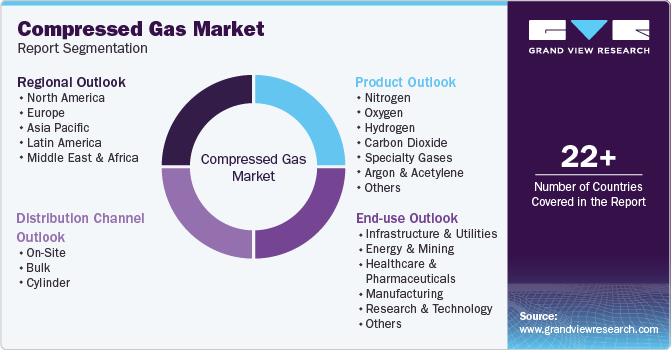
-
Product Outlook (Volume, Kilotons; Revenue, USD Million, 2021 - 2033)
-
Nitrogen
-
Oxygen
-
Hydrogen
-
Carbon Dioxide
-
Specialty Gases
-
Argon & Acetylene
-
Others
-
-
End Use Outlook (Volume, Kilotons; Revenue, USD Million, 2021 - 2033)
-
Infrastructure and Utilities
-
Energy and Mining
-
Healthcare & Pharmaceuticals
-
Manufacturing
-
Research & Technology
-
Others
-
-
Distribution Channel Outlook (Volume, Kilotons; Revenue, USD Million, 2021 - 2033)
-
On-Site
-
Bulk
-
Cylinder
-
-
Regional Outlook (Volume, Kilotons; Revenue, USD Million, 2021 - 2033)
-
North America
-
U.S.
-
Canada
-
Mexico
-
-
Europe
-
Germany
-
UK
-
France
-
Italy
-
-
Asia Pacific
-
China
-
India
-
Japan
-
South Korea
-
-
Latin America
-
Brazil
-
Argentina
-
-
Middle East & Africa
-
South Africa
-
Saudi Arabia
-
-
Research Methodology
Segment Definition
Segment - Product
Revenue capture definition
Nitrogen
Includes sales associated with nitrogen supplied for inserting, purging, food packaging, electronics manufacturing, chemical processing, and metal fabrication applications.
Oxygen
Covers income derived from oxygen utilized in healthcare treatments, steel production, welding and cutting operations, water treatment, and industrial combustion processes.
Hydrogen
Represents market value generated through hydrogen consumption in petroleum refining, ammonia and methanol production, fuel cell systems, clean energy projects, and industrial processing.
Carbon Dioxide
Comprises earnings from carbon dioxide supplied for beverage carbonation, food preservation, fire suppression systems, refrigeration, welding, and enhanced oil recovery applications.
Specialty Gases
Accounts for sales of high-purity gases and customized gas mixtures used in semiconductor manufacturing, laboratory testing, healthcare diagnostics, calibration, and pharmaceutical production.
Argon & Acetylene
Encompasses demand from welding, metal cutting, fabrication, additive manufacturing, and various industrial processing activities requiring argon or acetylene gases.
Other Products
Includes commercial value captured from gases such as helium, neon, xenon, krypton, nitrous oxide, medical air, and other specialty industrial gas products.
Segment - Distribution Channel
Revenue capture definition
On-Site
Covers revenues associated with dedicated gas production facilities installed at customer sites, supplying industrial gases directly through pipeline networks under long-term contracts.
Bulk (Liquid Gas Transport)
Reflects sales generated through the transportation and delivery of liquefied gases in bulk quantities via cryogenic tankers and storage systems.
Cylinder (Merchant)
Represents income from compressed gases distributed in cylinders and packaged containers for industrial, commercial, healthcare, laboratory, and specialty applications.
Segment- End Use
Revenue capture definition
Infrastructure and Utilities
Includes market value derived from compressed gases consumed in construction projects, water and wastewater treatment facilities, utility operations, and infrastructure maintenance activities.
Energy and Mining
Covers gas demand arising from oil & gas operations, power generation facilities, renewable energy projects, hydrogen infrastructure, mineral processing, and mining activities.
Healthcare & Pharmaceuticals
Encompasses consumption of medical and specialty gases used in respiratory care, anesthesia, diagnostics, pharmaceutical manufacturing, biotechnology, and healthcare facility operations.
Manufacturing
Represents sales linked to industrial gas usage in metal fabrication, chemical processing, food and beverage production, automotive manufacturing, electronics, and general industrial operations.
Research & Technology
Includes expenditures on high-purity and specialty gases utilized in laboratories, semiconductor fabrication, research institutions, aerospace development, and advanced technology applications.
Other End Use
Covers demand from agriculture, hospitality, education, environmental services, retail operations, and other niche commercial and industrial sectors.
Estimation Model
Layer Name
Key Question
Description
Compressed Gas Production Layer
What forms is the supply base?
Identify global compressed gas production capacity based on air separation units, hydrogen generation facilities, carbon dioxide recovery systems, specialty gas manufacturing plants, gas purification technologies, compression infrastructure, storage capabilities, and distribution networks. This layer establishes the foundational supply base serving industrial, healthcare, energy, manufacturing, research, and technology applications worldwide.
Application Adoption Layer
Where is compressed gas utilized?
Estimate the proportion of compressed gas consumed across manufacturing, healthcare & pharmaceuticals, energy & mining, infrastructure & utilities, research & technology, and other end-use industries based on operational requirements, industrial activity levels, technological adoption, and regional demand patterns.
Consumption Intensity Layer
How much is compressed gas used?
Analyze industry-specific consumption rates, production volumes, facility capacities, gas purity requirements, process integration levels, and operational demand trends to determine annual compressed gas consumption across key end-use sectors and geographic markets.
Revenue Layer
How is market revenue generated?
Market revenue is generated through the production, distribution, and sale of industrial, medical, specialty, and energy-related compressed gases supplied through on-site systems, bulk liquid gas deliveries, and cylinder-based distribution channels to customers across manufacturing, healthcare, infrastructure, energy, research, and other industrial sectors worldwide.
Delivered Customizations
This report has been delivered with the following In-depth customizations
Client Request
Customization Delivered
Value Adds
Cross-Segmentation Analysis
Detailed cross-segmentation assessment evaluating the relationship between gas types, end-use industries, distribution channels, and compressed gas consumption patterns. Analysis identifies usage intensity, purity requirements, delivery preferences, operational needs, and revenue contribution across intersecting segments such as oxygen supplied through on-site systems for healthcare facilities, nitrogen delivered in bulk for manufacturing operations, hydrogen used in energy applications, and specialty gases distributed via cylinders for research and technology sectors.
Supports product portfolio optimization and market prioritization by identifying the most attractive gas-end use-distribution combinations, enabling improved resource allocation, sales targeting, capacity planning, infrastructure investments, and long-term growth strategies across the compressed gas value chain.
Competitive Benchmarking
Comparative evaluation of leading compressed gas companies based on product portfolio breadth, production capacity, air separation and gas processing capabilities, distribution infrastructure, geographic presence, sustainability initiatives, hydrogen and clean energy investments, end-use specialization, customer relationships, and strategic developments across key regional markets.
Assists competitive intelligence, partnership evaluation, and supplier assessment by providing deeper visibility into market positioning, operational strengths, technological capabilities, distribution reach, innovation strategies, service differentiation, and areas of competitive advantage.
Opportunity Assessment
Comprehensive assessment of emerging opportunities associated with hydrogen economy development, carbon capture and storage projects, semiconductor manufacturing expansion, high-purity specialty gas demand, healthcare infrastructure growth, industrial automation, clean energy investments, and advanced gas monitoring and distribution technologies across global markets.
Helps identify high-growth investment areas, emerging application opportunities, infrastructure development priorities, technology adoption trends, and market expansion strategies, supporting long-term revenue growth and competitive positioning throughout the compressed gas value chain.
Frequently Asked Questions About This Report
Some key players operating in the compressed gas market include Western International Gas & Cylinders, Inc., Keen Compressed Gas Co., Airgas, Superior Products, LLC, and A-L Compressed Gas, Air Liquide; Linde plc; Air Products Inc.; Taiyo Nippon Sanso Corp.; Messer.
Rising demand for transportation, energy, and industrial processes is boosting demand for compressed gas market.
Nitrogen dominated the market, accounting for 28.7% of total revenue in 2025.
The cylinder (Merchant) segment held the largest market share of 35.3% in 2025.
Oxygen is projected to be the fastest-growing product segment, registering a CAGR of 7.3% during the forecast period.
The healthcare & pharmaceuticals segment is anticipated to record the highest growth rate, with a CAGR of 11.5% over the forecast period.
The global compressed gas market is expected to grow at a CAGR of 6.1% from 2026 to 2033, reaching USD 7.6 billion by 2033.
Asia Pacific dominated the compressed gas market with a share of 35.4% in 2025.
The global compressed gas market size was valued at USD 4.8 billion in 2025 and is estimated at USD 5.0 billion for 2026.
About the Author(s)
Organic Chemicals Research Team
Bulk Chemicals · Organic ChemicalsThis report was authored by the organic chemicals research team at Grand View Research - comprising two research analysts, one senior research analyst, and one industry expert - with specialized expertise in the organic chemicals segment of the bulk chemicals industry. All findings are based on proprietary bulk chemicals databases, executive interviews, and regulatory analysis, subject to internal peer review prior to publication.
Last Updated:
Speak to Analyst


Customize this report to your needs - add regions, segments, or data points, with 20% free customization.
Or view our licence options:


ISO 9001:2015 & 27001:2022 Certified
We are GDPR and CCPA compliant! Your transaction & personal information is safe and secure. For more details, please read our privacy policy.


