
- Home
- »
- Advanced Interior Materials
- »
-
Concrete Market Size, Share And Trends Report, 2026-2033GVR Report cover
![Concrete Market (2026 - 2033)Report]()
Concrete Market (2026 - 2033)
Size, Share & Trends Analysis Report By Application (Structural Components, Pavements, Roadways, Bridges), By End Use (Residential, Commercial, Industrial, Infrastructural), By Region (North America), And Segment Forecasts
Market Size, 2025
$1,894.6BMarket Estimate, 2026
$1,966.6BMarket Forecast, 2033
$2,553.3BCAGR, 2026–2033
3.8%Concrete Market Market Summary
The global concrete market size was valued at USD 1,894.6 billion in 2025 and is projected to grow from USD 1,966.6 billion in 2026 to USD 2,553.3 billion by 2033, at a CAGR of 3.8% from 2026 to 2033. Asia Pacific dominated the market, accounting for a revenue share of 38.9% in 2025. The growth is driven by the rapid pace of urbanization and industrialization across developing economies.
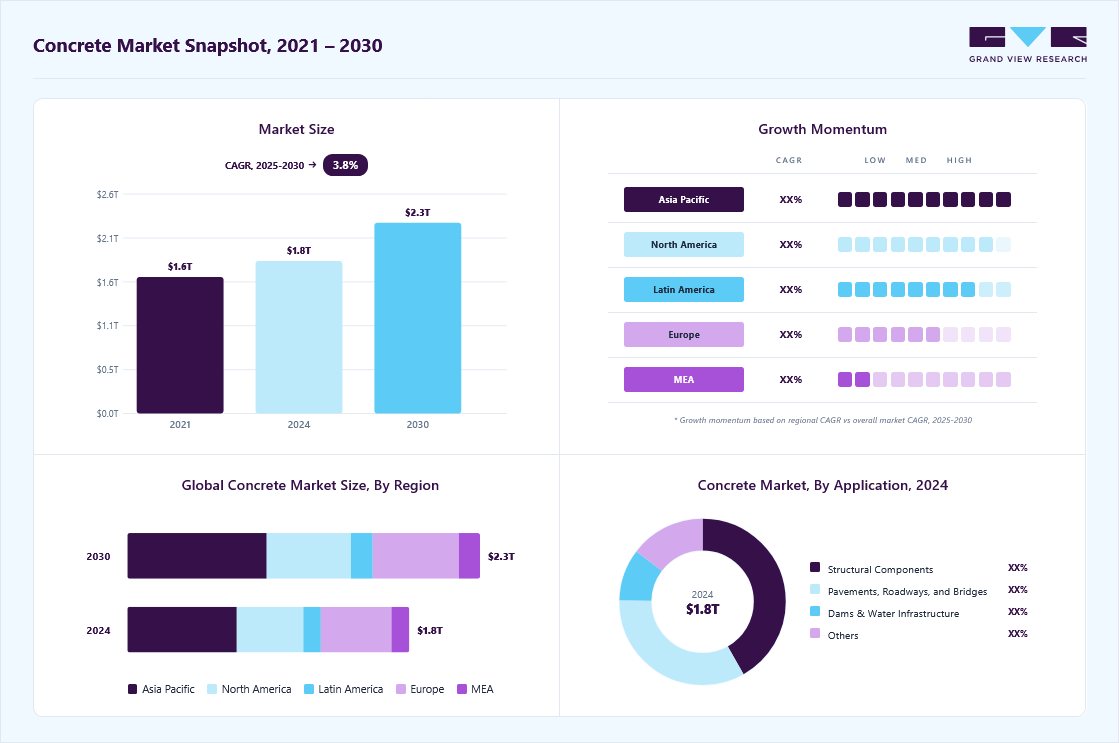
Key Market Trends & Insights
- By application: Structural components segment led the market with the largest revenue share of 41.8% in 2025.
- By end use: Residential segment led the market with the largest revenue share of 38.4% in 2025.
Regional Highlights
- Largest regional market: Asia Pacific (38.9% revenue share, 2025)
- By country: China held the largest share of Asia Pacific in 2025.
Market Size & Forecast
- Market Size in 2025: USD 1,894.6 Billion
- Estimated Market Size in 2026: USD 1,966.6 Billion
- Projected Market Size by 2033: USD 2,553.3 Billion
- CAGR (2026-2033): 3.8
Governments are investing heavily in public infrastructure and affordable housing schemes, creating a sustained need for high-performance construction materials. As concrete remains a fundamental building component due to its strength, durability, and cost-efficiency, it continues to experience robust demand in these emerging markets.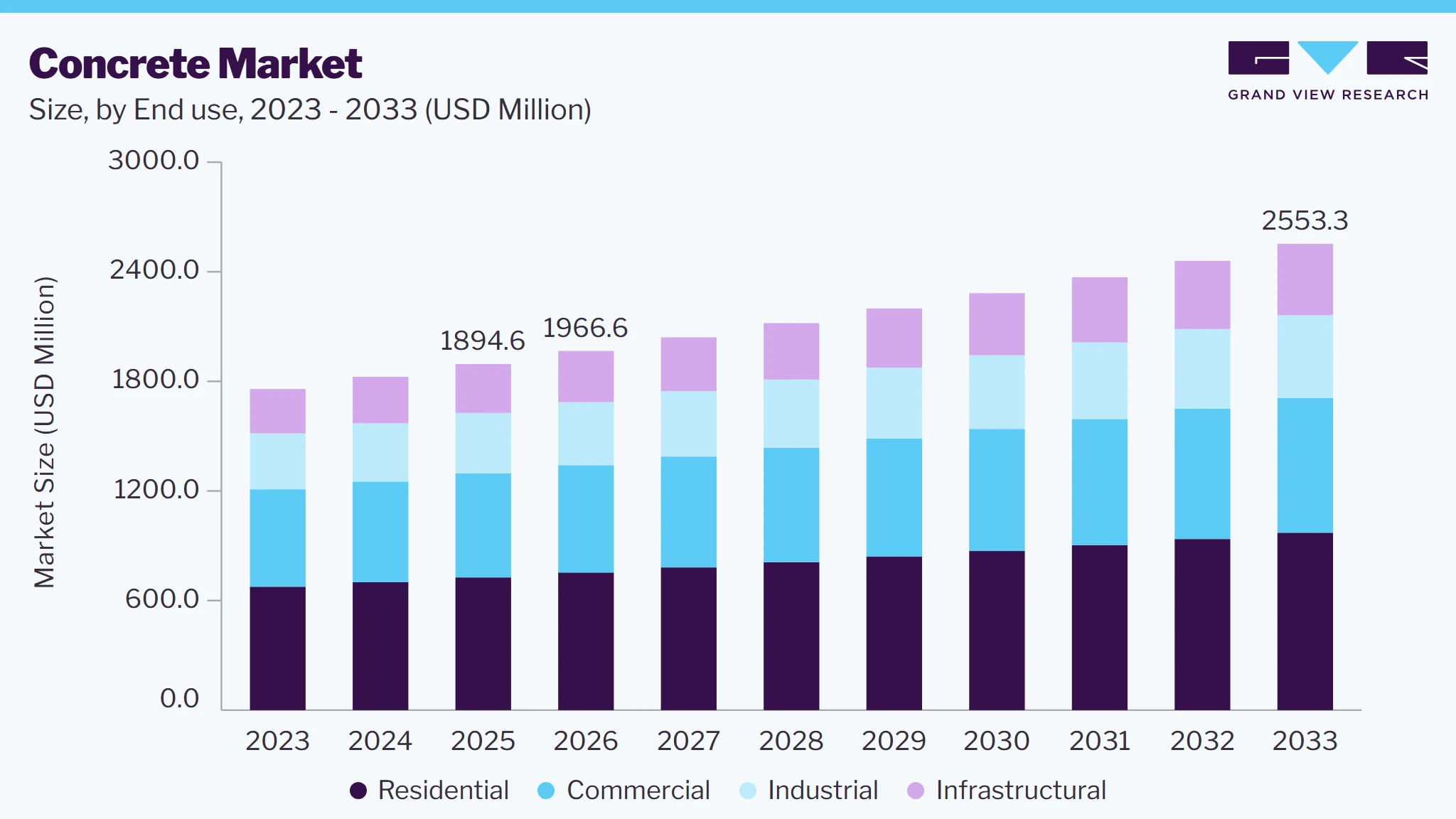
Governments are investing heavily in public infrastructure and affordable housing schemes, creating a sustained need for high-performance construction materials. As concrete remains a fundamental building component due to its strength, durability, and cost-efficiency, it continues to experience robust demand in these emerging markets.
The expansion of the global construction industry, particularly in commercial and industrial sectors, also propels the demand for concrete. The rise of smart cities, the proliferation of high-rise buildings, and increased investment in energy-efficient infrastructure are driving the use of advanced concrete types such as ready-mix concrete, precast concrete, and high-strength concrete. These specialized products cater to the evolving requirements of modern construction, including speed of execution, aesthetic appeal, and structural integrity. Moreover, the growing emphasis on resilience in building materials to withstand natural disasters and climate variability reinforces the importance of concrete in contemporary construction practices.
Another key driver of the concrete market is the increasing adoption of sustainable and high-performance concrete solutions. With growing environmental concerns and regulatory pressure to reduce carbon emissions, construction companies are turning toward green concrete alternatives that utilize supplementary cementitious materials such as fly ash, slag, and silica fume. These materials not only enhance the performance and lifespan of concrete but also contribute to lower environmental impact. The development of carbon capture technologies and innovations in cement production further support the shift toward eco-friendly concrete, fostering market growth.
Market Dynamics
The concrete market is witnessing steady growth driven by rapid urbanization, large-scale infrastructure development, increasing residential and commercial construction activities, and government investments in transportation and smart city projects. Growing demand for durable, cost-effective, and sustainable construction materials is encouraging the adoption of advanced concrete formulations, including high-performance, self-healing, ultra-high-performance, and low-carbon concrete. Technological advancements in digital construction, precast manufacturing, carbon capture, and recycled aggregates are transforming production processes while improving environmental performance. Rising emphasis on green buildings and circular economy initiatives is further accelerating innovation across the global concrete value chain.
Rapid urbanization across developing and developed economies continues to increase the need for residential housing, commercial complexes, transportation infrastructure, industrial facilities, and public utilities. Governments are investing heavily in highways, bridges, railways, airports, ports, tunnels, water management systems, and energy infrastructure, significantly boosting demand for ready-mix, precast, and high-strength concrete. Population growth and expanding metropolitan regions are further creating long-term construction requirements across emerging economies.
In addition, increasing investments in smart cities, industrial corridors, renewable energy projects, logistics hubs, and affordable housing programs are strengthening market growth. The growing adoption of prefabricated construction methods and high-performance concrete solutions enables faster project completion, improved structural durability, and lower maintenance costs. Public-private partnerships and long-term infrastructure modernization programs continue to support sustained concrete consumption across both developed and emerging markets.
Concrete production remains highly dependent on cement manufacturing, which is associated with significant carbon dioxide emissions and high energy consumption. Increasing environmental regulations, carbon pricing mechanisms, and stricter emission reduction targets are placing pressure on manufacturers to invest in cleaner production technologies and alternative cementitious materials. Furthermore, fluctuations in the prices of cement, aggregates, sand, steel reinforcement, fuel, and transportation increase overall production costs and affect project profitability. Supply chain disruptions and shortages of quality raw materials in certain regions further challenge market expansion.
The transition toward sustainable construction presents significant opportunities for the concrete market. Increasing use of supplementary cementitious materials such as fly ash, slag, silica fume, calcined clay, recycled aggregates, and carbon-cured concrete technologies is helping reduce embodied carbon while maintaining structural performance. Advancements in carbon capture, utilization and storage (CCUS), 3D concrete printing, AI-enabled mix optimization, and smart monitoring systems are enabling manufacturers to develop environmentally friendly and high-performance concrete products. Growing investments in green buildings, resilient infrastructure, and net-zero construction initiatives are expected to create substantial long-term growth opportunities for the global concrete market.
Market Concentration & Characteristics
The global concrete market exhibits moderate to high market concentration, with several major players operating alongside a fragmented base of regional and local manufacturers. The degree of innovation in the sector remains steady, primarily focused on enhancing the durability, sustainability, and environmental performance of concrete materials. Technological advancements such as self-healing concrete, ultra-high-performance concrete, and carbon-capturing formulations are gaining traction as environmental regulations grow more stringent. While innovation is gradually transforming product characteristics, the rate of breakthrough technologies remains measured due to the industry's heavy dependence on traditional methods and large-scale infrastructure compatibility.

Mergers and acquisitions play a significant role in shaping the competitive dynamics of the concrete industry. Companies are increasingly pursuing strategic alliances to expand geographical reach and optimize supply chains. Regulatory frameworks have a profound influence on the market, particularly environmental and building codes that push for sustainable practices and materials. The threat from service substitutes is minimal due to the irreplaceable structural properties of concrete in construction. However, alternative materials like cross-laminated timber (CLT) are being explored for specific applications. End-user concentration is moderately high, with the construction industry comprising residential, commercial, and infrastructure sectors dominating demand, especially in emerging economies experiencing urbanization and industrial growth.
Analyst Perspective
The concrete market is evolving toward technology-driven and sustainable solutions. Key trends include low-carbon concrete, advanced materials, CCUS, digital construction, 3D printing, and recycled aggregates. Growth is supported by residential, commercial, transportation, and infrastructure development. Increasing environmental regulations are driving demand for sustainable and high-performance concrete. Companies are focusing on improved durability, lower lifecycle costs, and reduced cement clinker content. Strong R&D, material innovation, customized solutions, and strategic partnerships will be key to gaining a competitive advantage and supporting long-term market growth.
Application Insights
Based on application, the structural components segment led the market with the largest revenue share of 41.8% in 2025 and is expected to grow at a CAGR of 4.0% over the forecast period., driven by the rapid expansion of infrastructure development projects worldwide. Governments and private sector entities are heavily investing in the construction of bridges, highways, tunnels, airports, and public buildings, all of which require durable and load-bearing materials. Concrete, known for its high compressive strength, versatility, and longevity, remains a material of choice for these applications. This has led to consistent demand across both developed and emerging economies, particularly in regions experiencing accelerated urbanization and modernization of existing infrastructure.
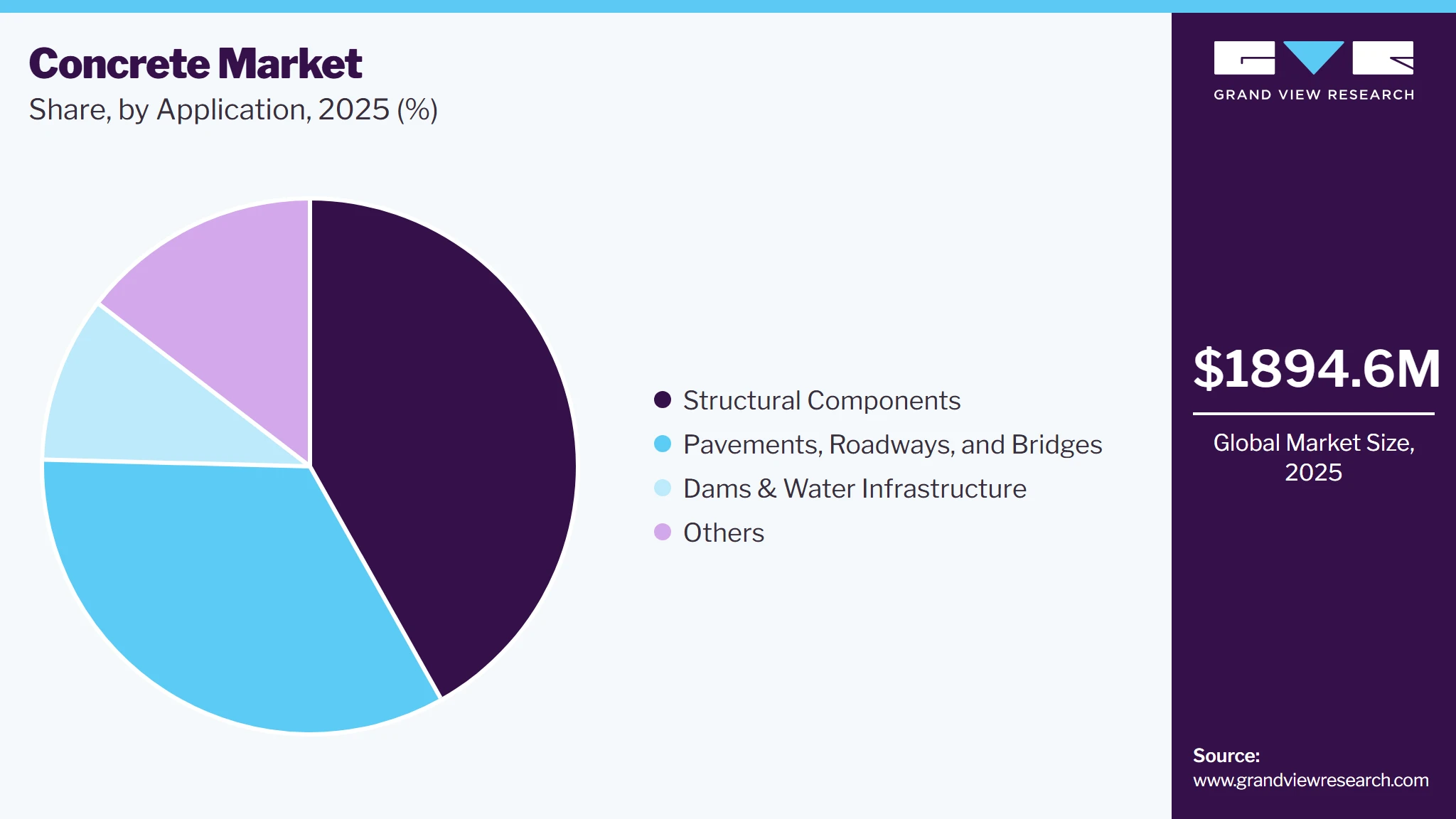
The pavements, roadways, and bridges segment is expected to grow at the fastest CAGR of 4.2% over the forecast period. This growth is driven by the increasing demand for durable and sustainable infrastructure to support growing urbanization and economic development worldwide. Governments and private sectors are investing heavily in the construction and renovation of transportation networks to improve connectivity and reduce traffic congestion. Concrete’s inherent strength, longevity, and low maintenance requirements make it the preferred material for these applications, particularly in environments subject to heavy traffic loads and harsh weather conditions. Additionally, advancements in concrete technology, such as high-performance and fiber-reinforced concrete, enhance the structural integrity and lifespan of pavements and bridges, further driving market growth in this segment.
End Use Insights
Based on end use, the residential segment led the market with the largest revenue share of 38.4% in 2025 and is expected to grow at a CAGR of 3.7% over the forecast period, driven by increasing urbanization and rising population levels, which fuel the demand for new housing developments and infrastructure. Rapid growth in urban areas, particularly in emerging economies, has led to a surge in the construction of apartments, villas, and residential complexes, thereby boosting concrete consumption. Additionally, government initiatives focused on affordable housing and urban renewal projects are significant contributors, encouraging large-scale residential construction activities that require durable and cost-effective building materials like concrete.
The infrastructural segment is expected to grow at the fastest CAGR of 4.9% over the forecast period, driven by escalating investments in public infrastructure projects worldwide. Governments across both developed and developing regions are prioritizing the development and modernization of transportation networks, including roads, bridges, tunnels, railways, and airports. These large-scale projects demand vast quantities of concrete due to its strength, durability, and cost-effectiveness, making it the preferred material for infrastructure construction. Additionally, the rising focus on urbanization and smart city initiatives further propels the need for robust infrastructure, increasing concrete consumption to support sustainable and resilient urban development.
Regional Insights
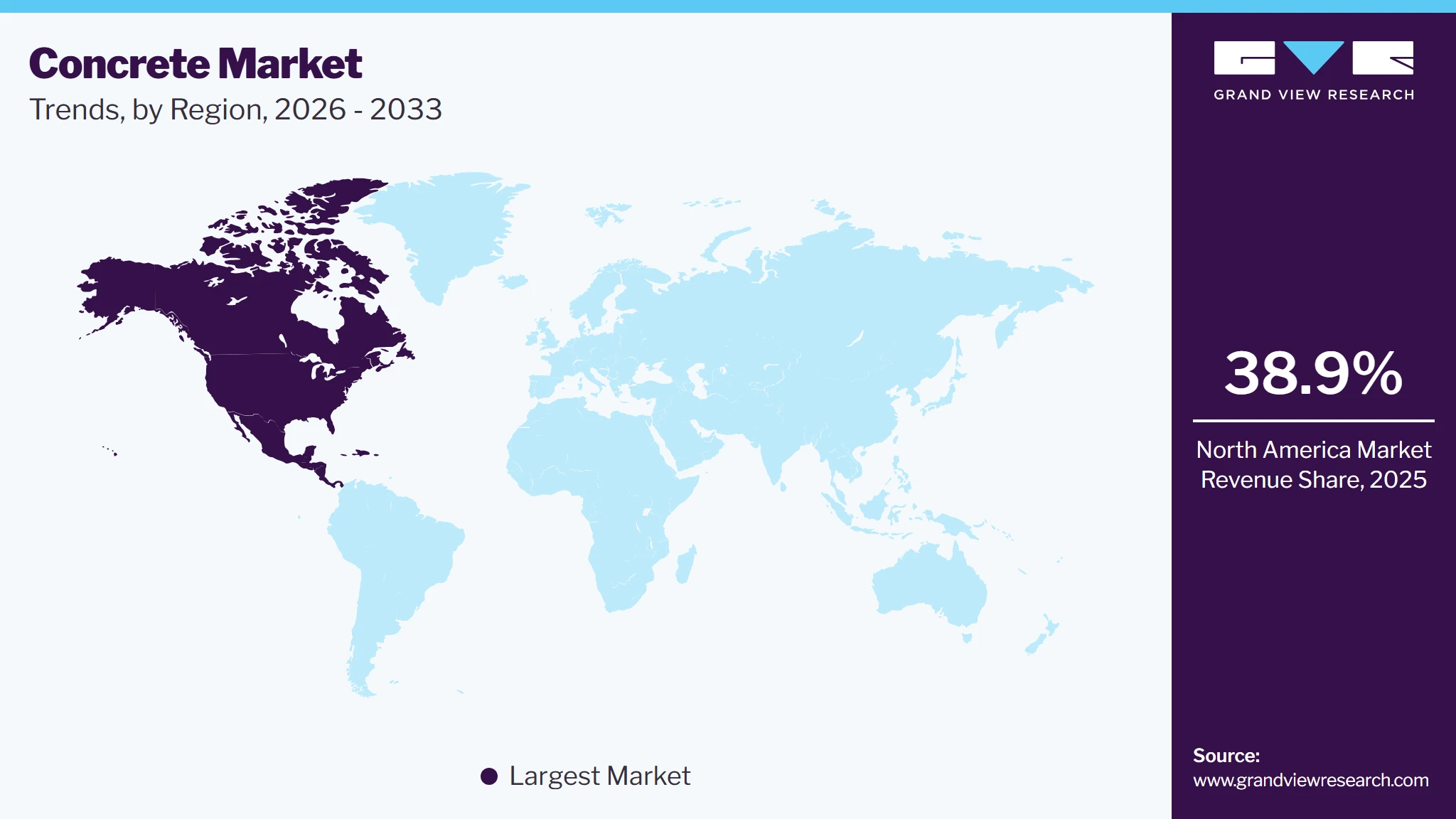
Asia Pacific dominated the concrete market with the largest revenue share of 38.9% in 2025, driven by rapid urbanization and industrialization across emerging economies such as India, China, and Southeast Asian nations. Massive infrastructure projects, including smart cities, highways, and public transit systems, are fueling demand for concrete. Additionally, government initiatives focused on affordable housing and sustainable construction practices are promoting the use of innovative concrete materials and technologies. The growing population and rising disposable incomes are also contributing to increased construction activities, further boosting concrete consumption in the region.
China Concrete Market Trends
The concrete market in China held the largest share in the Asia Pacific region in 2025. China’s concrete market growth is propelled by its continuous focus on large-scale infrastructure development and urban renewal programs. The government’s commitment to expanding transportation networks, such as high-speed railways and expressways, is driving high volumes of concrete demand. Furthermore, environmental regulations encouraging the use of eco-friendly and energy-efficient construction materials are leading to innovations in concrete formulations. The rapid expansion of commercial and residential real estate sectors also plays a significant role in supporting the market’s growth trajectory.
North America Concrete Market Trends
The North America concrete industry is supported by significant investments in repairing and upgrading aging infrastructure, including roads, bridges, and public utilities. Government funding through infrastructure stimulus packages is a key driver, stimulating demand for durable and resilient construction materials like concrete. Additionally, the rising adoption of advanced concrete technologies, such as high-performance and self-healing concrete, is enhancing the market’s growth. The commercial construction sector, buoyed by urban development and industrial projects, further propels the market in this region.
U.S. Concrete Market Trends
The U.S. concrete industry benefits from robust infrastructure spending driven by federal and state government initiatives aimed at revitalizing deteriorating transport systems and public facilities. The increased focus on sustainable building practices and green construction is encouraging the adoption of eco-friendly concrete variants. Moreover, growth in the residential sector, supported by low mortgage rates and population migration to urban and suburban areas, stimulates concrete demand. Industrial construction projects, particularly in energy and manufacturing, also contribute to market expansion.
Europe Concrete Market Trends
Europe’s concrete industry growth is largely influenced by stringent environmental regulations that promote the use of sustainable and low-carbon concrete solutions. The region is witnessing steady infrastructure investments, especially in transportation and renewable energy projects, which demand high-quality concrete materials. Urban regeneration and smart city projects in major European countries are further driving concrete consumption. Additionally, the restoration of heritage buildings and seismic retrofitting initiatives add to the infrastructural concrete demand.
Germany’s concrete market is driven by its strong emphasis on sustainable construction and energy-efficient building standards. Government policies encouraging the reduction of carbon footprints in the construction sector have accelerated the development and use of innovative concrete mixes. The country’s focus on expanding transport infrastructure, including rail and road networks, supports consistent concrete demand. Moreover, investments in industrial and commercial construction projects, along with residential housing developments, underpin the market’s growth.
Latin America Concrete Market Trends
Latin America’s concrete industry growth is fueled by increasing urbanization and government initiatives to improve public infrastructure and housing. Investments in road construction, airports, and energy projects, especially in countries like Brazil and Mexico, drive concrete consumption. Economic development and rising foreign direct investment in construction sectors also contribute to market expansion. Furthermore, efforts to enhance disaster-resilient infrastructure due to the region’s susceptibility to natural calamities boost demand for durable concrete solutions.
Middle East & Africa Concrete Market Trends
The Middle East & Africa concrete industry is propelled by large-scale infrastructure and real estate developments, including commercial complexes, airports, and transport networks, particularly in Gulf Cooperation Council (GCC) countries. Government-led mega projects and diversification efforts away from oil dependency stimulate construction activities, driving concrete demand. Additionally, the adoption of advanced concrete technologies to withstand harsh climatic conditions is gaining traction. Urban population growth and investments in affordable housing projects further support the market’s expansion across the region.
Key Concrete Company Insights
Some of the key players operating in the market include CEMEX S.A.B. de C.V. and China Petroleum & Chemical Corporation (Sinopec)
-
CEMEX is a global building materials company that offers a range of construction Applications, including Concrete. Their Concrete solutions are designed to meet various performance requirements, with Applications like VIALOW, a low-temperature Concrete that allows quicker reopening of roads post-construction. VIALOW also offers reduced carbon emissions, aligning with sustainable construction practices.
-
Sinopec is a major integrated energy and chemical company in China, engaged in the application and supply of various petroleum Applications, including Concrete. Their Concrete Applications are used extensively in road construction and maintenance across China. Sinopec's Concrete offerings cater to different climatic and traffic conditions, ensuring durability and performance.
Exxon Mobil Corporation, Marathon Petroleum Corporation are some of the emerging participants in the concrete market.
-
ExxonMobil is a leading global energy company with a significant presence in the Concrete market. They produce a variety of Concrete Applications, including Performance Graded (PG) concretes like PG 46-34, suitable for road construction. Their Concrete blendstocks are derived from selected crude oils through controlled refining processes, ensuring consistent quality for paving and industrial applications.
-
Marathon Petroleum is the largest Concrete producer in the United States, offering a comprehensive range of Concrete Applications. Their portfolio includes Concrete cements, polymer-modified Concretes, emulsified Concretes, and industrial Concretes. These Applications are utilized in various applications, from paving to roofing, and are distributed through an extensive network across the U.S.
Key Concrete Companies:
The following are the leading companies in the concrete market. These companies collectively hold the largest market share and dictate industry trends.
- CEMEX, S.A.B. de C.V.
- CRH
- Forterra
- Heidelbergcement AG
- Holcim
- Shay Murtagh Precast Ltd
- Sika AG
- Votorantim S.A.
- Weckenmann Anlagentechnik GmbH & Co. KG
- Wells Concrete
Competitive Benchmarking
Category
Operating Strategies
Competitive Edge
Weakness
Established Players (Holcim, Heidelberg Materials AG, CEMEX, S.A.B. de C.V., CRH plc, Votorantim S.A., Sika AG)
- Operate integrated business models spanning cement, aggregates, ready-mix concrete, and precast solutions to achieve supply chain efficiency.
- Invest heavily in low-carbon concrete, carbon capture technologies, recycled aggregates, and digital construction platforms to meet sustainability goals.
- Expand global presence through acquisitions, joint ventures, capacity expansions, and long-term infrastructure project partnerships.
- Extensive global manufacturing and distribution networks with strong brand recognition and established customer relationships.
- Broad product portfolios covering conventional, high-performance, self-compacting, fiber-reinforced, and specialty concrete solutions.
- Strong financial capabilities supporting continuous R&D, production optimization, and compliance with evolving environmental regulations.
- High dependence on energy-intensive cement production exposes companies to carbon pricing and emission regulations.
- Large manufacturing footprints result in significant fixed operating costs and sensitivity to fluctuations in construction demand.
- Complex multinational operations may slow decision-making and delay adoption of localized innovations.
Emerging Players (Forterra, Shay Murtagh Precast Ltd, Weckenmann Anlagentechnik GmbH & Co. KG, Wells Concrete)
- Focus on regional markets and niche applications such as precast concrete, modular construction, architectural concrete, and customized structural components.
- Differentiate through product customization, faster project execution, and specialized engineering services for local construction requirements.
- Invest in automation, digital fabrication, and advanced precast manufacturing technologies to improve productivity and quality.
- Greater operational flexibility enables rapid response to regional construction trends and customer specifications.
- Strong expertise in specialized concrete products, prefabrication, and value-added engineering solutions.
- Lower organizational complexity allows quicker adoption of innovative manufacturing processes and project-specific solutions.
- Limited geographic presence and production capacity compared to multinational market leaders.
- Lower investment capabilities for large-scale R&D, sustainability initiatives, and international expansion.
- Greater dependence on regional construction cycles and public infrastructure spending, increasing exposure to local economic fluctuations.
Recent Developments
- In August 2023, Cemex España took a strategic step to bolster its position in the Concrete market by acquiring two additional quarries near Madrid. This move significantly strengthens the company’s limestone reserves, a key raw material in concrete application. With enhanced access to high-quality aggregates, Cemex aims to support infrastructure development and meet growing demand for road construction materials.
Concrete Market Report Scope
Report Attribute
Details
Market size in 2025
USD 1,894.6 billion
Estimated Market size in 2026
USD 1,966.6 billion
Projected Market size by 2033
USD 2,553.3 billion
Growth rate
CAGR of 3.8% from 2026 to 2033
Base year for estimation
2025
Historical data
2021 - 2024
Forecast period
2026 - 2033
Quantitative units
Revenue in USD million/billion, and CAGR from 2026 to 2033
Report coverage
Revenue forecast, company ranking, competitive landscape, growth factors, and trends
Segments covered
Application, end use, region
Regional scope
North America; Europe; Asia Pacific; Central & South America; Middle East & Africa
Country scope
U.S.; Canada; Mexico; UK; Germany; France; Italy; Spain; China; India; Japan; South Korea
Key companies profiled
CEMEX, S.A.B. de C.V.; CRH plc; Forterra plc; HeidelbergCement AG; Holcim Ltd; Shay Murtagh Precast Ltd; Sika AG; Votorantim S.A.; Weckenmann Anlagentechnik GmbH & Co. KG; Wells Concrete
Customization scope
Free report customization (equivalent up to 8 analysts' working days) with purchase. Addition or alteration to country, regional & segment scope.
Pricing and purchase options
Avail customized purchase options to meet your exact research needs. Explore purchase options
Global Concrete Market Report Segmentation
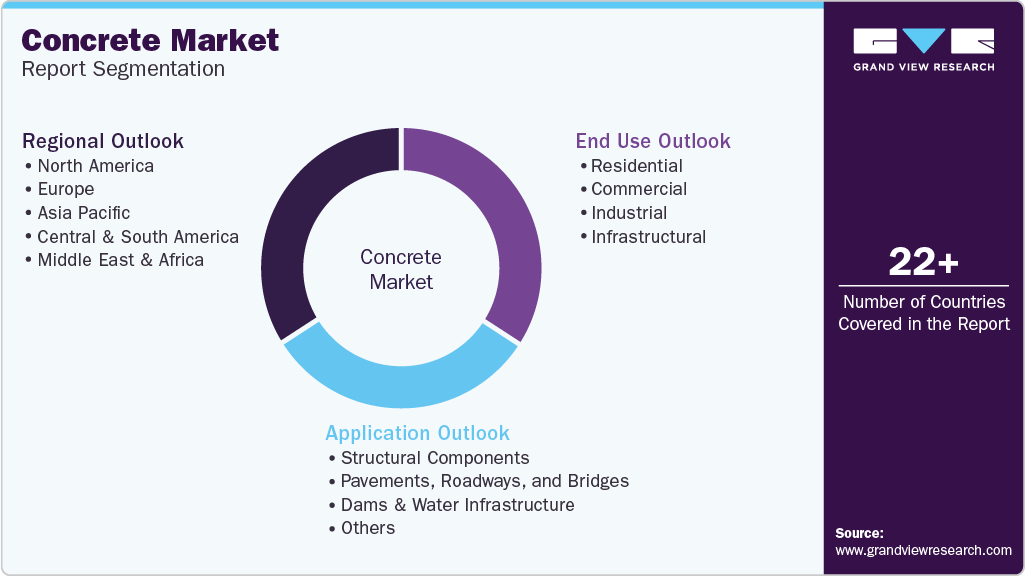
This report forecasts revenue growth at global, regional, and country levels and provides an analysis of the latest industry trends in each of the sub-segments from 2021 to 2033. For this study, Grand View Research has segmented the global Concrete market report based on application, end use and region.
-
Application Outlook (Revenue, USD Trillion, 2021 - 2033)
-
Structural Components
-
Pavements, Roadways, and Bridges
-
Dams & Water Infrastructure
-
Others
-
-
End Use Outlook (Revenue, USD Trillion, 2021 - 2033)
-
Residential
-
Commercial
-
Industrial
-
Infrastructural
-
-
Regional Outlook (Revenue, USD Trillion, 2021 - 2033)
-
North America
-
U.S.
-
Canada
-
Mexico
-
-
Europe
-
Germany
-
UK
-
France
-
Italy
-
Spain
-
-
Asia Pacific
-
China
-
Japan
-
India
-
South Korea
-
-
Central & South America
-
Middle East & Africa
-
Research Methodology
The concrete Market market figures in this report are based on a proven research process that combines executive interviews with secondary research from proprietary databases, company filings, and recognized regulatory and institutional sources. Market size is built through value-chain sizing - reconciling supply-side and demand-side estimates - and triangulated with bottom-up and top-down approaches. Every estimate passes multiple levels of expert validation before publication, with each concrete Market segment quantified using the revenue-capture definitions in the table below.
Segment Definition
Segment - Application
Revenue capture definition
Structural Components
Revenue generated from the sale of concrete used in structural building elements that provide load-bearing strength and durability. This includes revenues from concrete utilized in foundations, columns, beams, slabs, walls, floors, roofs, retaining structures, and other structural components across residential, commercial, industrial, and infrastructure construction projects.
Pavements, Roadways, and Bridges
Revenue generated from the sale of concrete used in transportation infrastructure requiring high strength, durability, and long service life. This includes revenues from concrete utilized in highways, expressways, urban roads, airport runways, taxiways, sidewalks, parking areas, bridges, overpasses, tunnels, and related transportation structures worldwide.
Dams & Water Infrastructure
Revenue generated from the sale of concrete used in hydraulic and water management infrastructure designed to withstand continuous water exposure and heavy structural loads. This includes revenues from concrete utilized in dams, reservoirs, canals, spillways, water treatment plants, wastewater treatment facilities, pipelines, culverts, irrigation systems, and flood control structures globally.
Others
Revenue generated from the sale of concrete used in miscellaneous construction and engineering applications beyond primary structural and transportation projects. This includes revenues from concrete utilized in precast products, marine structures, utility installations, landscaping, underground construction, mining infrastructure, energy facilities, ports, coastal protection systems, and other specialized civil engineering applications.
Segment - End Use
Revenue capture definition
Residential
Revenue generated from the sale of concrete used in residential construction projects. This includes revenues from concrete utilized in single-family homes, multi-family housing, apartments, condominiums, affordable housing developments, villas, residential foundations, driveways, parking areas, and other housing-related construction activities.
Commercial
Revenue generated from the sale of concrete used in commercial construction projects. This includes revenues from concrete utilized in office buildings, retail centers, shopping malls, hotels, hospitals, educational institutions, entertainment facilities, mixed-use developments, parking structures, and other commercial establishments.
Industrial
Revenue generated from the sale of concrete used in industrial construction and manufacturing facilities. This includes revenues from concrete utilized in factories, warehouses, logistics centers, manufacturing plants, power generation facilities, oil & gas infrastructure, chemical plants, mining facilities, and other heavy industrial developments requiring high-strength concrete.
Infrastructural
Revenue generated from the sale of concrete used in public infrastructure and large-scale civil engineering projects. This includes revenues from concrete utilized in highways, bridges, railways, airports, seaports, metros, tunnels, dams, water and wastewater infrastructure, public utilities, smart city developments, and other government and privately funded infrastructure projects worldwide.
Estimation Model
Layer Name
Key Question
Description
Global Construction & Infrastructure Spending
What is the total addressable construction expenditure that drives concrete consumption?
The analysis begins by evaluating global spending across residential, commercial, industrial, and infrastructure construction. Macroeconomic indicators, urbanization rates, government capital expenditure, and private sector investments establish the overall demand potential for concrete worldwide.
Concrete Penetration Across Construction Applications
What proportion of construction activity utilizes concrete as the primary construction material?
This layer estimates concrete adoption across structural components, pavements, bridges, dams, buildings, and civil engineering projects. Regional construction practices, building codes, engineering requirements, and substitution by steel, timber, asphalt, or composite materials are considered to determine concrete penetration.
Product Mix & End-use Analysis
Which concrete products and end-use industries contribute the highest market revenue?
Market revenues are segmented by application (Structural Components, Pavements/Roadways & Bridges, Dams & Water Infrastructure, Others) and end use (Residential, Commercial, Industrial, and Infrastructural). Demand for ready-mix, precast, site-mixed, and specialty concrete is analyzed to determine revenue distribution across segments.
Regional Revenue Validation & Competitive Benchmarking
How is the global concrete market validated across regions and key manufacturers?
The final layer validates market estimates using regional construction output, cement and concrete production statistics, infrastructure investments, pricing trends, company revenues, and project pipeline analysis. Primary interviews with manufacturers, contractors, distributors, and industry experts are combined with secondary research to ensure accurate market sizing and forecasting.
Delivered Customizations
This report has been delivered with the following In-depth customizations
Client Request
Customization Delivered
Value Adds
Low-Carbon Concrete & Sustainability Assessment
Comprehensive assessment of low-carbon concrete technologies, supplementary cementitious materials (SCMs), recycled aggregates, carbon capture, utilization and storage (CCUS), alternative binders, embodied carbon reduction strategies, green building certifications, and regulatory compliance across major construction markets.
Enables clients to develop sustainable product portfolios, achieve ESG objectives, comply with evolving environmental regulations, and capitalize on the growing demand for green construction materials.
Competitive Landscape & Strategic Benchmarking
Detailed benchmarking of global and regional concrete manufacturers based on market share, production capacity, geographic footprint, product portfolio, pricing strategies, sustainability initiatives, R&D investments, mergers & acquisitions, strategic partnerships, and recent capacity expansions.
Provides actionable competitive intelligence, identifies market leaders and emerging challengers, supports strategic planning, and helps clients strengthen their market positioning.
Technology & Innovation Mapping
In-depth evaluation of emerging concrete technologies including ultra-high-performance concrete (UHPC), self-healing concrete, 3D concrete printing, smart concrete with embedded sensors, AI-enabled mix optimization, advanced admixtures, digital construction technologies, and automated precast manufacturing systems.
Assists clients in identifying next-generation technologies, prioritizing R&D investments, accelerating product innovation, and gaining a competitive advantage in rapidly evolving construction markets.
Frequently Asked Questions About This Report
The global concrete market size was estimated at USD 1,894.6 billion in 2025 and is expected to reach USD 1,966.6 billion in 2026.
The structural components segment held the highest revenue market share of 41.8% in 2025, driven by extensive demand for foundations, columns, beams, slabs, and load-bearing structures across residential, commercial, industrial, and infrastructure construction projects worldwide.
Some of the prominent companies in the concrete market include CEMEX, S.A.B. de C.V., CRH plc, Forterra plc, HeidelbergCement AG, Holcim Ltd, Shay Murtagh Precast Ltd, Sika AG, Votorantim S.A., Weckenmann Anlagentechnik GmbH & Co. KG, and Wells Concrete.
Key factors driving the concrete market include rapid urbanization and infrastructure development, particularly in emerging economies, which are increasing the demand for roads, highways, and airports.
The global concrete market is expected to grow at a compound annual growth rate of 3.8% from 2026 to 2033 to reach USD 2,553.3 billion by 2033
Asia Pacific held the highest revenue market share of 38.9% in 2025, driven by rapid urbanization, massive infrastructure investments, expanding residential construction, and strong construction activity across China, India, and Southeast Asia.
Pavements, roadways, and bridges is the fastest-growing application segment in the concrete market.
The infrastructural segment is the fastest growing end use in the concrete market.
The residential segment accounted for the largest revenue share of 38.4% in 2025, driven by rapid urbanization, rising housing demand, government affordable housing initiatives, and increasing residential construction activities worldwide.
About the Author(s)
Advanced Interior Materials Research Team
Advanced Materials · Advanced Interior MaterialsThis report was authored by the advanced interior materials research team at Grand View Research - comprising two research analysts, one senior research analyst, and one industry expert - with specialized expertise in the advanced interior materials segment of the advanced materials industry. All findings are based on proprietary advanced materials databases, executive interviews, and regulatory analysis, subject to internal peer review prior to publication.
Last Updated:
Speak to Analyst


Customize this report to your needs — add regions, segments, or data points, with 20% free customization.
Or view our licence options:


ISO 9001:2015 & 27001:2022 Certified
We are GDPR and CCPA compliant! Your transaction & personal information is safe and secure. For more details, please read our privacy policy.


