
- Home
- »
- Medical Devices
- »
-
Corneal Cross Linking Devices Market Report, 2026-2033GVR Report cover

Corneal Cross Linking Devices Market (2026 - 2033)
Size, Share & Trends Analysis Report By Product (UVA Delivery Systems, Riboflavin Solutions), By Application, By End Use (Hospitals, Ophthalmology Clinics/ Eye Centers, Ambulatory Surgery Centers), By Region, And Segment Forecasts
Market Size, 2025
$151.7MMarket Estimate, 2026
$163.5MMarket Forecast, 2033
$279.4MCAGR, 2026–2033
8.0%Corneal Cross Linking Devices Market Summary
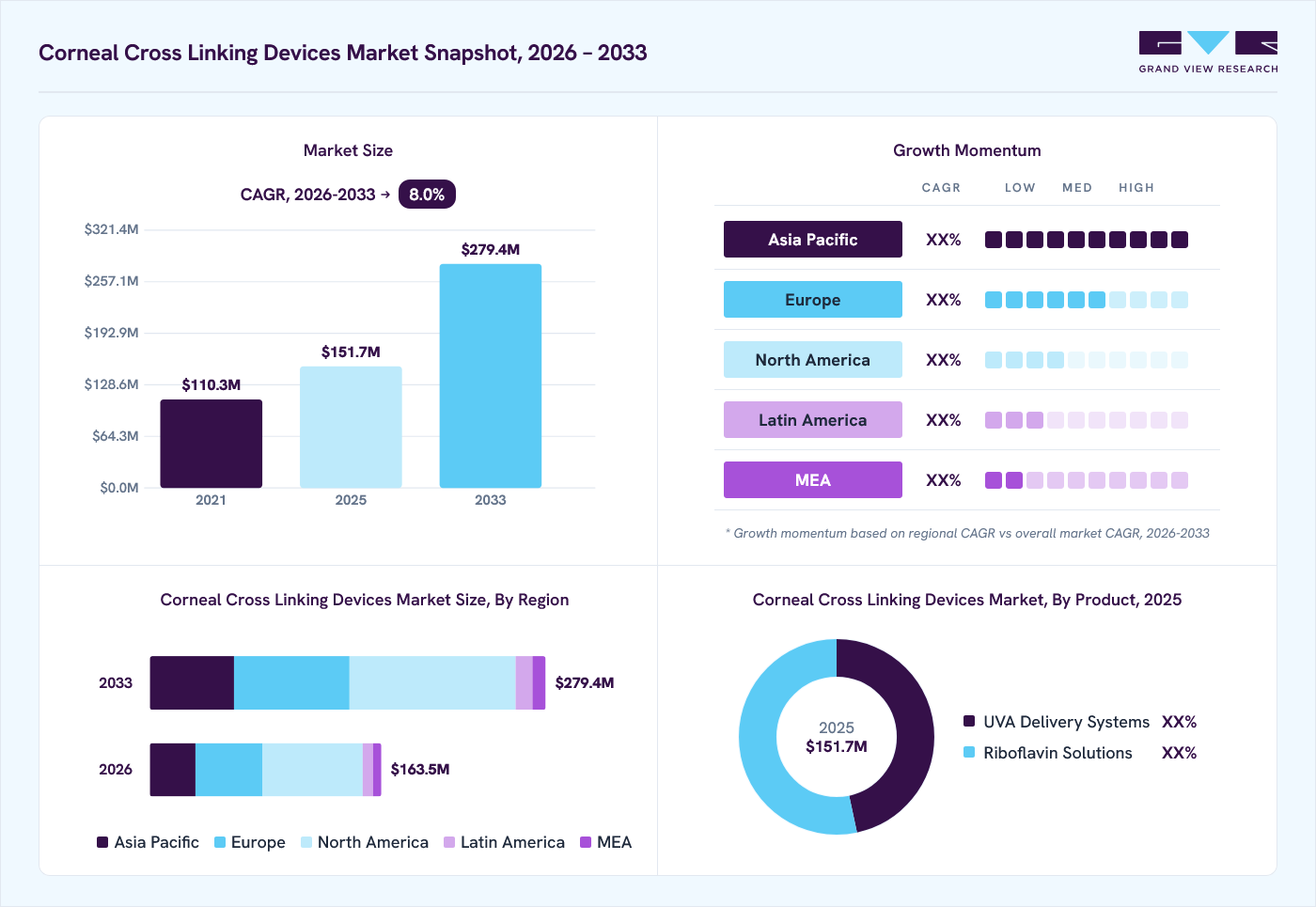
The global corneal cross linking devices market size was valued at USD 151.7 million in 2025 and is projected to grow from USD 163.5 million in 2026 to USD 279.4 million by 2033, at a CAGR of 8.0% from 2026 to 2033. North America dominated the market, accounting for the largest revenue share of 43.4% in 2025. The global market is experiencing strong growth, driven by the increasing prevalence and diagnosis of keratoconus and other corneal ectatic disorders.
 Source: Grand View Research, IR Documents, Primary Interviews, Paid DatabasesTo learn more about this report,
 Download Free Sample Report
Key Market Trends & Insights
- By product: Riboflavin solutions segment held the largest market share of 53.4% in 2025.
- By application: Keratoconus segment held the largest market share of 29.1% in 2025.
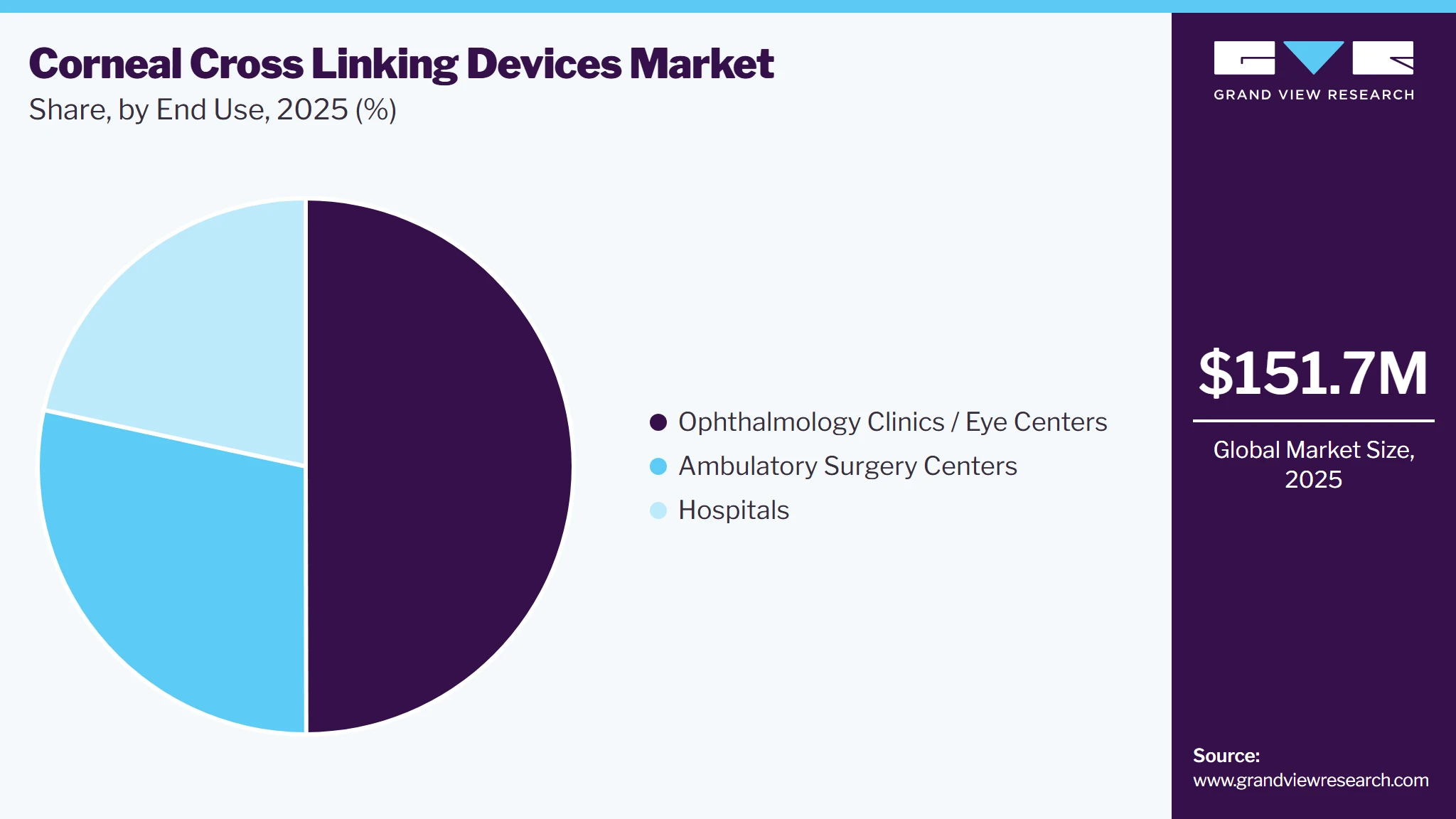
- By end use: Ophthalmology clinics/eye centers segment dominated the market with the largest revenue share of 50.0% in 2025.
Regional Highlights
- Largest regional market: North America (43.4% revenue share, 2025)
- Fastest-growing regional market: Asia Pacific (highest CAGR, 2026-2033)
- By country: The U.S. held the largest revenue share in 2025
Market Size & Forecast
- Market size in 2025: USD 151.7 Million
- Estimated market size in 2026: USD 163.5 Million
- Projected market size by 2033: USD 279.4 Million
- CAGR (2026-2033): 8.0%
Prism AI by Grand View Research Free to tryAsk a question about the corneal cross linking devices marketTry asking✓Every figure cited from GVR research Prefer the report? Download free sample →
Greater awareness of early disease detection and the clinical benefits of corneal cross-linking are encouraging the adoption of these procedures. Technological advancements, including accelerated and epithelium-on cross-linking systems, are improving treatment efficiency and patient convenience. The market is also benefiting from the expansion of ophthalmic infrastructure and the increasing availability of specialized corneal care.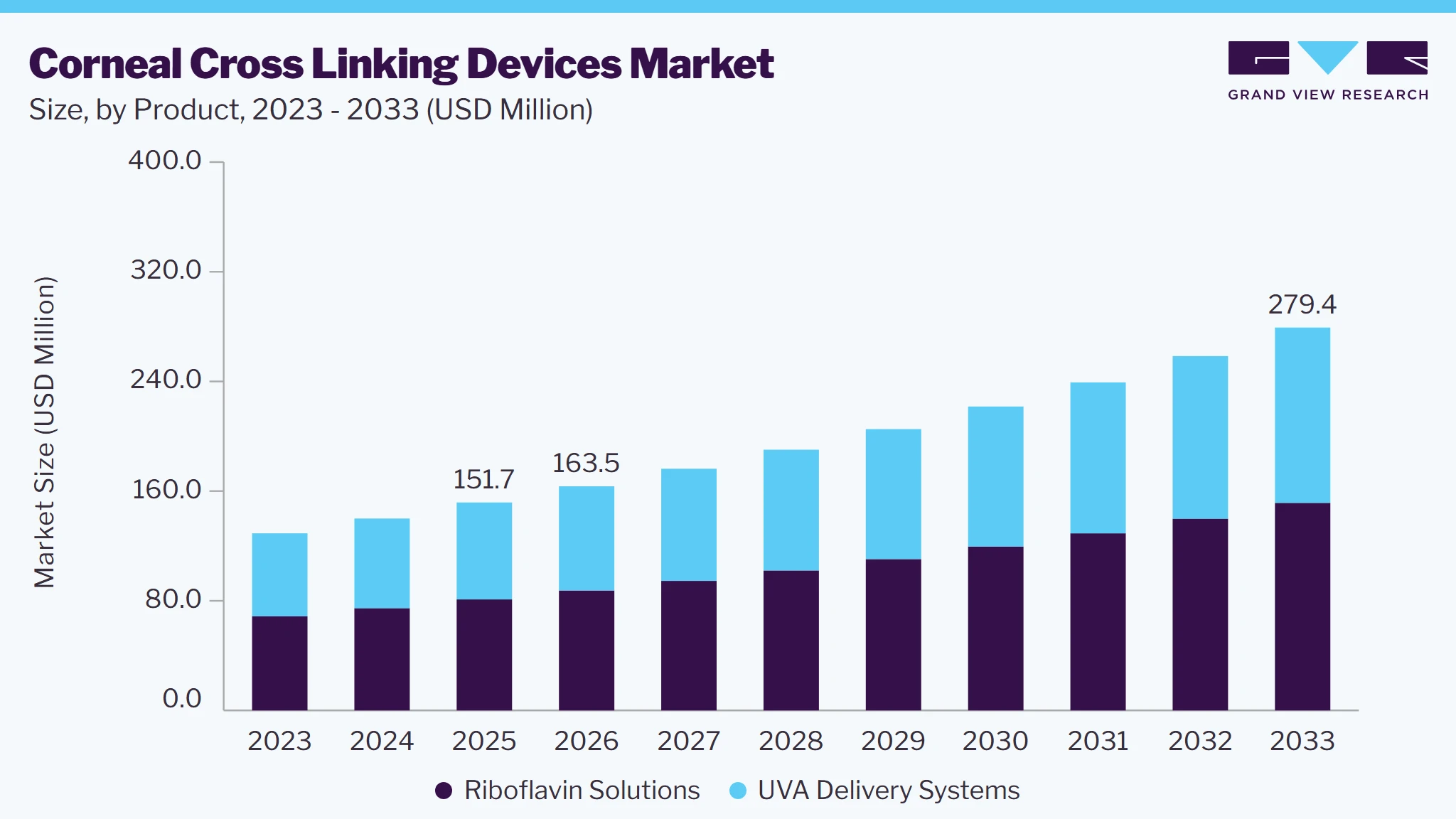 To learn more about this report, Download Free Sample Report
The corneal cross-linking devices industry is entering an important phase of development as rising awareness of keratoconus, improved diagnosis, and technological advances in cross-linking procedures expand the addressable patient population. Corneal cross-linking is primarily used to strengthen the cornea and slow or halt the progression of keratoconus, a progressive disorder characterized by thinning and weakening of the cornea. Unlike spectacles and contact lenses, which primarily correct the resulting visual impairment, CXL targets the underlying biomechanical instability of the cornea.
The market is particularly attractive because keratoconus frequently affects younger individuals, creating a substantial long-term clinical burden. A recent systematic review and meta-analysis published in Cornea estimated global keratoconus prevalence at 289.1 cases per 100,000 people, equivalent to approximately 0.24% of the population, and concluded that more than 23.7 million people globally are affected. The study also found that prevalence and incidence were highest among people aged 20-29 years and that prevalence was particularly high in South Asia, West Asia, and Africa.
Key Technology Segments
Technology
Characteristics
Market implication
Epi-off CXL
Epithelium removed before treatment
Established standard and a large installed base
Epi-on CXL
Epithelium retained
High-growth technology opportunity
Standard CXL
Conventional treatment duration
Mature segment
Accelerated CXL
Higher UV-A irradiance and shorter treatment
Supports higher procedure throughput
Combination platforms
Integrated UV-A and treatment components
Increasing product differentiation
The commercial opportunity therefore, extends beyond simply replacing existing UV-A systems. The introduction of epi-on therapy could increase patient willingness to undergo treatment, particularly among patients who may be reluctant to undergo epithelial removal. Reimbursement represents a major determinant of CXL adoption because treatment requires specialized equipment, trained ophthalmologists, and procedure-specific products.
The U.S. market has recently received an important reimbursement development. In April 2026, Glaukos announced that CMS had assigned a permanent HCPCS J-code, J2789, to Epioxa, effective July 1, 2026. The company stated that the product-specific code is expected to streamline reporting and payment and support market access initiatives. This development is important because regulatory approval alone does not guarantee commercial adoption. Physicians and facilities need a viable pathway for reimbursement, while patients need reasonable access to the treatment.
Market Dynamics
The corneal cross-linking devices industry is witnessing steady growth as increasing diagnoses of keratoconus and other corneal ectatic disorders drive demand for treatments that can slow or halt disease progression and preserve corneal function. The market is driven by rising awareness of keratoconus, improved availability of corneal topography and tomography for early diagnosis, increasing adoption of minimally invasive and accelerated CXL procedures, growing availability of specialized ophthalmology and corneal care centers, and technological advancements in epithelium-on (epi-on) and epithelium-off (epi-off) cross-linking systems.
The market comprises a range of CXL products and technologies, including UV-A illumination systems, riboflavin/photoenhancer solutions, treatment interfaces and accessories, accelerated CXL platforms, and emerging epi-on systems. These technologies are increasingly being used to manage progressive keratoconus and corneal ectasia, with the emergence of less-invasive epi-on approaches expected to improve patient acceptance, expand treatment eligibility, and support broader adoption of corneal cross-linking.
One of the most important underlying drivers is the rising rate of keratoconus diagnosis. The disease can be difficult to identify during its early stages because patients may initially present with refractive changes that can be managed with glasses or contact lenses. Increasing utilization of corneal topography and tomography enables ophthalmologists to detect abnormal corneal curvature and monitor disease progression more effectively.
The recent global meta-analysis provides an important indication of the size of the potential patient pool. It found a pooled prevalence of 289.1 cases per 100,000 people, while the 20-29-year age group had the highest prevalence at approximately 525.5 cases per 100,000. This demographic profile is commercially important because keratoconus is not primarily a disease of the elderly population. Treatment often occurs in adolescents and young adults, meaning that early diagnosis and intervention can have significant long-term value. The market, therefore, benefits from a patient funnel consisting of:
Population → Undiagnosed Keratoconus → Diagnosed Keratoconus → Progressive Disease → CXL Candidate → Treated Patient.
High procedural costs and inconsistent reimbursement coverage remain significant constraints on the corneal cross-linking devices industry, particularly in emerging markets and smaller ophthalmology centers. CXL requires specialized UV-A illumination systems, procedure-specific consumables such as riboflavin solutions, and trained corneal specialists, resulting in relatively high upfront equipment and procedural costs. While established reimbursement pathways exist in several developed markets, coverage can vary by country, payer, treatment indication, and CXL technique.
This variability can discourage hospitals and outpatient ophthalmology centers from investing in dedicated CXL platforms and may increase patients’ out-of-pocket expenses where reimbursement is limited. In addition, access to corneal specialists and advanced diagnostic technologies such as corneal topography and tomography remains uneven, particularly outside major urban healthcare centers. These factors can delay diagnosis and treatment of progressive keratoconus, limiting procedure volumes and device utilization. The emergence of newer epithelium-on technologies may also require additional clinical evidence and payer acceptance before achieving widespread reimbursement. Consequently, manufacturers need to demonstrate not only clinical efficacy but also cost-effectiveness, improved patient outcomes, and reduced long-term disease burden to support broader reimbursement and adoption.
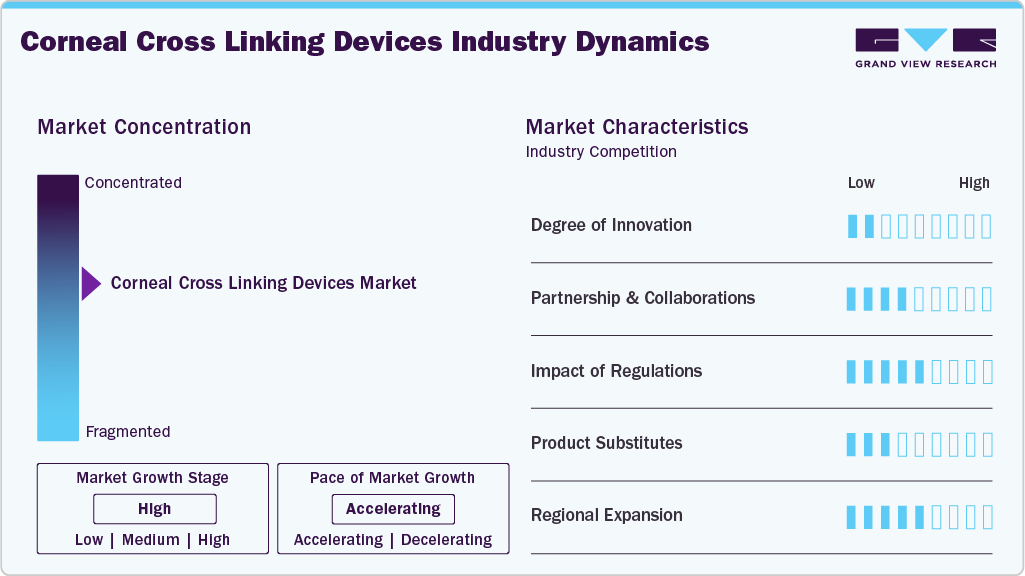
Market Concentration & Characteristics:
The corneal cross-linking devices industry is moderately concentrated, with leading companies such as Glaukos Corporation, Peschke Meditrade, and SCHWIND eye-tech-solutions competing across corneal treatment technologies. These companies are increasingly focusing on improving treatment efficacy, reducing procedure time, enhancing patient comfort, and expanding access to keratoconus management through advanced epithelium-off and epithelium-on techniques, accelerated CXL, UV-A illumination systems, and riboflavin-based treatment platforms.
The corneal cross-linking devices industry is characterized by continuous technological innovation focused on improving treatment efficacy, reducing procedure duration, minimizing patient discomfort, and expanding the population eligible for corneal stabilization. Innovation is increasingly centered on epithelium-on (epi-on), epithelium-off (epi-off), accelerated CXL, optimized UV-A delivery, riboflavin formulations, and integrated treatment platforms. Traditional epi-off CXL remains an established approach, while epi-on technologies are gaining attention for preserving the corneal epithelium and potentially reducing postoperative discomfort and recovery time. In October 2025, Glaukos received FDA approval for Epioxa/Epioxa HD, an epi-on CXL treatment for patients aged 13 years and older with keratoconus, representing an important technological development in the market. Innovation is also focused on treatment customization, controlled UV-A energy delivery, shorter treatment times, and integration with corneal imaging and diagnostic technologies to enable earlier, more precise intervention.
 To learn more about this report, Download Free Sample Report
Partnerships and collaborations are becoming increasingly important in the corneal cross-linking devices industry, supporting clinical research, product commercialization, physician training, distribution, and the expansion of advanced corneal treatment technologies. Manufacturers are increasingly working with ophthalmologists, corneal specialists, research institutions, and healthcare providers to generate clinical evidence and improve adoption. For example, Glaukos has developed an integrated ecosystem around its CXL portfolio, combining its photoenhancer products with dedicated treatment systems and accessories. The company's Epioxa platform uses Epioxa/Epioxa HD together with the O₂n System and Boost Goggles, demonstrating how collaboration between pharmaceutical/photoenhancer and device components can create an integrated treatment platform. Such partnerships can also strengthen physician education and facilitate the adoption of newer epi-on and accelerated treatment protocols.
Regulatory requirements have a significant impact on the corneal cross-linking devices industry because manufacturers must demonstrate the safety, efficacy, performance, and consistency of both UV-A treatment systems and associated photoenhancer products before commercialization. Regulatory agencies such as the U.S. Food and Drug Administration (FDA) play a particularly important role in determining the availability of new CXL technologies. The FDA's approval of Glaukos' Epioxa/Epioxa HD in October 2025 established an important new regulatory pathway for epithelium-on CXL in the U.S. market. Regulatory approvals can therefore create significant competitive advantages for manufacturers by enabling commercialization and supporting physician confidence, while stringent clinical and manufacturing requirements can increase development costs and extend product-launch timelines. Reimbursement and coding decisions also influence commercialization; in 2026, Glaukos announced a permanent HCPCS J-code for Epioxa, effective July 2026, to support the product's U.S. market access strategy.
The corneal cross-linking devices industry faces substitution from spectacles, specialty contact lenses, intracorneal ring segments, refractive procedures, corneal transplantation, and other approaches used to manage keratoconus and corneal ectasia. Spectacles and contact lenses remain important options for correcting refractive errors and improving visual acuity, particularly in patients with stable or earlier-stage disease, although they generally do not address the underlying biomechanical progression of keratoconus. Intracorneal ring segments can provide an alternative or complementary approach for selected patients by modifying corneal shape, while corneal transplantation may be considered in advanced disease when other treatments are insufficient. However, CXL maintains a distinct position because its primary objective is to stabilize the cornea and slow disease progression, rather than simply correct vision. The increasing availability of less-invasive epi-on CXL could further strengthen the technology's competitive position by reducing some of the disadvantages associated with conventional epi-off procedures.
Regional expansion in the corneal cross-linking devices industry is being supported by increasing awareness of keratoconus, improvements in corneal diagnostic capabilities, the expansion of specialty ophthalmology centers, and greater availability of advanced corneal treatment technologies. North America, particularly the U.S., remains a strategically important market because of its established ophthalmic infrastructure, regulatory pathways, reimbursement development, and early availability of new technologies such as Epioxa. Europe represents another mature market, supported by established corneal specialists and ophthalmology centers, although reimbursement varies significantly between countries.
Analyst Perspective
The corneal cross-linking devices market presents a favorable growth outlook, supported by increasing diagnosis of keratoconus, growing awareness of disease progression, and expanding adoption of corneal stabilization procedures. From an analyst perspective, the market is transitioning from conventional epithelium-off CXL toward accelerated and epithelium-on technologies, creating opportunities for differentiated treatment platforms and recurring consumable revenue. The recent FDA approval and commercialization of Glaukos' Epioxa further strengthen the outlook for less-invasive CXL approaches. Growth is also supported by the expansion of ophthalmology clinics, improved corneal imaging, and increased access to treatment in emerging markets. However, equipment costs, reimbursement variability, and limited specialist availability remain key constraints to market penetration.
Product Insights
The riboflavin solutions segment led the market with the largest revenue share of 53.4% in 2025 and is projected to grow at the fastest CAGR during the forecast period. This leading position is primarily attributed to the essential role of riboflavin as a photosensitizing agent during corneal collagen cross-linking procedures. Riboflavin facilitates the interaction between UV-A light and corneal collagen, enabling the formation of additional cross-links that strengthen the corneal structure and help slow keratoconus progression. Continued adoption of established epi-off CXL procedures, rising keratoconus diagnoses, and recurring demand for procedure-specific consumables further support the segment's strong revenue contribution.
The UVA Delivery Systems segment is expected to grow at a signficant CAGR during the forecast period, supported by increasing adoption of corneal cross-linking for progressive keratoconus and technological advancements in UV-A treatment platforms. These systems provide precisely calibrated, controlled ultraviolet-A energy to activate riboflavin during the CXL procedure, making them an essential component of treatment delivery. Demand is being driven by the growing adoption of accelerated CXL protocols, which can reduce treatment time and improve efficiency in ophthalmology clinics. Innovation in energy control, treatment customization, eye positioning, and integration with advanced corneal imaging is further improving system performance and supporting adoption across specialized ophthalmology and corneal care centers.
Application Insights
The keratoconus segment led the market with the largest revenue share of 29.1% in 2025, and is also expected to grow at the fastest CAGR during the forecast period. This leadership is primarily attributed to the increasing diagnosis of progressive keratoconus and the growing adoption of CXL as a disease-modifying treatment designed to strengthen the cornea and slow disease progression. Rising awareness among ophthalmologists, improved availability of corneal topography and tomography, and earlier detection of corneal abnormalities are expanding the pool of patients eligible for treatment. The development of less-invasive epithelium-on and accelerated CXL technologies is further supporting segment growth.
The ectasia following refractive surgery segment is expected to grow at a significant CAGR over the forecast period, driven by rising awareness of post-surgical corneal complications and the expanding use of corneal cross-linking as a treatment option for progressive corneal weakening. Post-refractive surgery ectasia can develop following procedures such as LASIK and other corneal refractive surgeries, creating demand for interventions that can stabilize the corneal structure. Growing adoption of corneal topography and tomography is improving early detection and monitoring of ectatic changes. In addition, advances in accelerated and epithelium-on CXL technologies may improve treatment convenience and patient acceptance, further supporting segment growth.
End Use Insights
The ophthalmology clinics/eye centers segment led the market with the largest revenue share of 50.0% in 2025 and is anticipated to grow at the fastest CAGR during the forecast period, driven by the growing availability of specialized corneal care and the increasing adoption of CXL procedures in outpatient ophthalmic settings. These facilities provide access to trained ophthalmologists, corneal specialists, diagnostic technologies such as corneal topography and tomography, and dedicated CXL treatment systems. The shift toward office- and outpatient-based ophthalmic procedures is further supporting segment growth by enabling efficient treatment with limited hospitalization requirements. Increasing diagnosis of keratoconus and corneal ectasia, combined with technological advances in accelerated and epithelium-on CXL, is expected to strengthen demand for CXL devices across specialized eye-care centers.
 To learn more about this report, Download Free Sample Report
The ambulatory surgery centers (ASCs) segment is expected to grow at a significant CAGR over the forecast period, supported by the increasing shift toward outpatient ophthalmic procedures and the growing adoption of minimally invasive corneal treatments. CXL procedures generally do not require prolonged hospitalization, making ASCs an attractive setting for efficient treatment and same-day patient discharge. The increasing availability of specialized ophthalmic equipment, improvements in accelerated CXL protocols, and the growing demand for convenient and cost-effective eye-care services are further supporting segment expansion. In addition, rising diagnoses of keratoconus and corneal ectasia are increasing the number of patients requiring intervention. The adoption of epithelium-on CXL technologies, which may offer improved patient comfort and recovery, could further encourage the delivery of treatments through ASCs.
Regional Insights
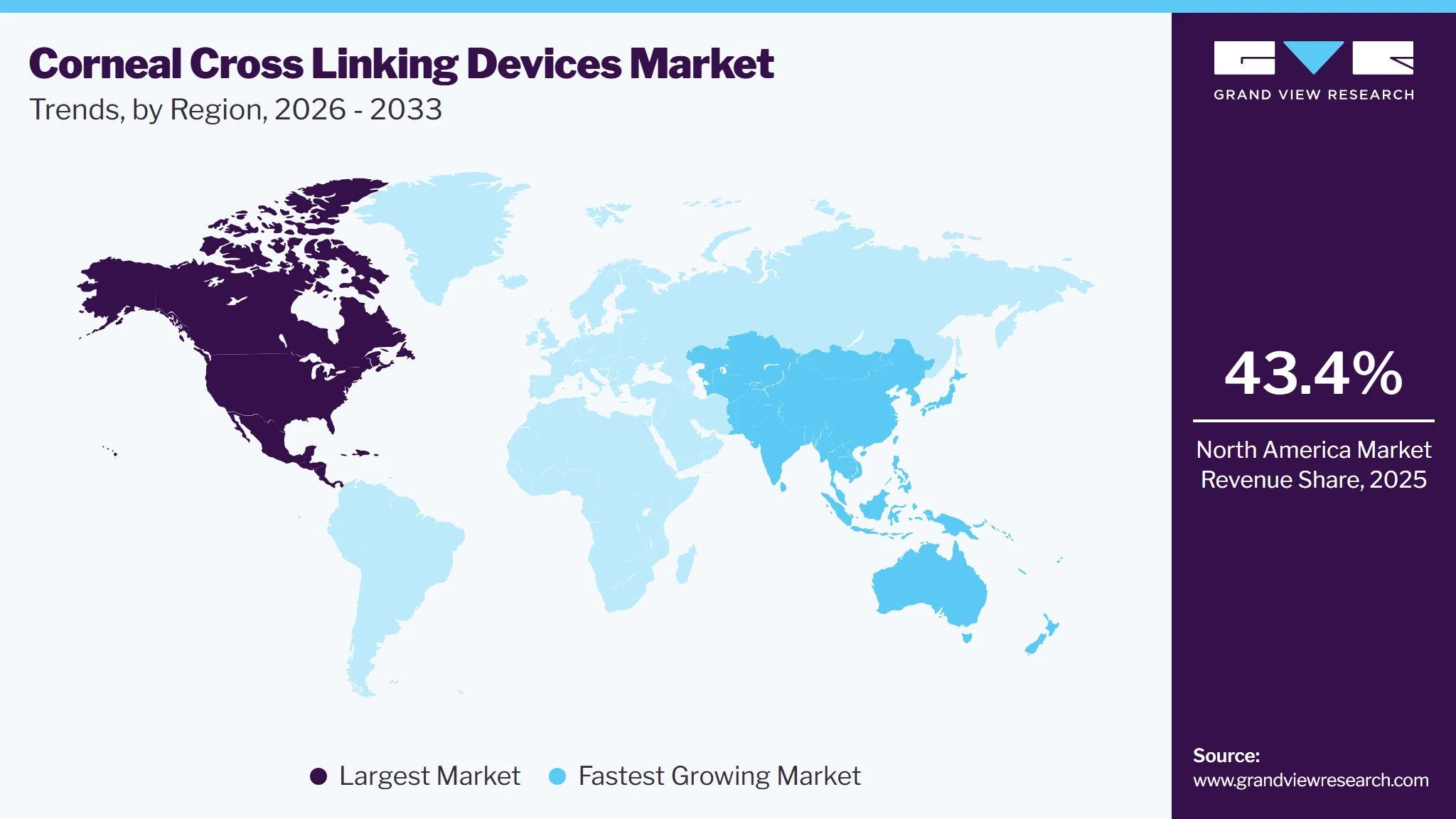
North America dominated the global corneal cross-linking devices market with the largest revenue share of approximately 43.4% in 2025. The region's leadership is supported by a well-established ophthalmology infrastructure, high availability of corneal specialists, advanced diagnostic capabilities, and established adoption of CXL for keratoconus and corneal ectasia. The U.S. is also entering a new phase of market development following the FDA approval of Epioxa, the first FDA-approved incision-free, epithelium-on CXL therapy for keratoconus. The commercial availability of Epioxa starting in March 2026 is expected to further support treatment adoption by offering an alternative to conventional epithelium-off procedures.
 To learn more about this report, Download Free Sample Report
U.S. Corneal Cross-Linking Devices Market Trends
The corneal cross-linking devices market in the U.S. accounted for the largest market revenue share in North America in 2025, driven by rising awareness and diagnosis of keratoconus, and supported by advanced corneal imaging, specialist ophthalmology centers, and an established treatment infrastructure. A major development occurred in October 2025 when the FDA approved Epioxa/Epioxa HD for epithelium-on CXL in adults and pediatric patients aged 13 years and older. Unlike conventional epi-off CXL, the technology does not require removal of the corneal epithelium, potentially improving patient comfort and treatment acceptance. Epioxa became commercially available in March 2026, providing physicians with a new treatment option and creating an important catalyst for the U.S. market.
Europe Corneal Cross-Linking Devices Market Trends
The corneal cross-linking devices market in Europe is supported by an established network of ophthalmology hospitals, specialist corneal centers, and experienced ophthalmic surgeons. Demand is being driven by increasing diagnoses of keratoconus, broader utilization of corneal topography and tomography, and continued adoption of established epi-off and accelerated CXL protocols. Germany, the UK, France, Italy, and Spain are important markets due to their developed ophthalmic infrastructure and access to specialized corneal care. The region is also positioned to benefit from technological advances in epi-on CXL as manufacturers expand regulatory and commercial availability beyond the U.S. The growing emphasis on earlier diagnosis and disease stabilization is expected to support procedure volumes over the forecast period.
The UK corneal cross-linking devices marketis supported by the country's established specialist ophthalmology infrastructure and availability of corneal diagnostic and treatment services. CXL is increasingly incorporated into specialist management pathways for progressive keratoconus, while improvements in corneal imaging enable clinicians to identify and monitor disease progression more effectively. The market is also positioned to benefit from the development of less-invasive CXL technologies, particularly epi-on approaches that eliminate the need for epithelial removal. Growing awareness of keratoconus among younger patients and continued concentration of specialist services within major ophthalmology centers are expected to support the adoption of advanced CXL platforms across the country.
Thecorneal cross-linking devicesmarket in Germany is characterized by a mature ophthalmic care infrastructure, a strong base of specialist eye care providers, and established clinical expertise in corneal disorders. Demand for CXL is driven by the increasing use of diagnostic technologies that enable ophthalmologists to detect corneal thinning and ectatic changes at earlier stages. German ophthalmology centers are also well-positioned to adopt accelerated CXL systems and newer treatment platforms as clinical evidence and regulatory approvals expand. The country's strong medical-device ecosystem and specialist physician base further support the introduction of innovative corneal treatment technologies, while increasing attention toward preserving vision in younger keratoconus patients is expected to sustain long-term demand.
The Spain corneal cross-linking devices market is benefiting from growing access to specialized ophthalmology services and increasing awareness of keratoconus management. Major urban areas, including Madrid and Barcelona, have established ophthalmology centers capable of providing advanced corneal diagnostics and CXL procedures. Greater use of corneal topography and tomography is enabling earlier identification of patients requiring intervention, while improvements in accelerated treatment protocols are helping to optimize procedural efficiency. The market is also expected to benefit from the gradual introduction of less-invasive CXL technologies across European markets. Expansion of private ophthalmology networks and specialist eye centers is further creating opportunities for manufacturers of CXL systems and associated riboflavin-based consumables.
Asia Pacific Corneal Cross-Linking Devices Market Trends
The corneal cross-linking devices market in the Asia-Pacific region is expected to grow at the fastest CAGR during the forecast period, supported by the region's large population, increasing diagnoses of keratoconus, expanding ophthalmology infrastructure, and rising access to specialized corneal treatments. Epidemiological evidence is particularly compelling for the region: a recent systematic review estimated the prevalence of keratoconus at 1,374.5 per 100,000 people in South Asia and 682.0 per 100,000 in West Asia, considerably above the global pooled prevalence of 289.1 per 100,000. Increasing availability of corneal imaging, specialist eye centers, and advanced CXL systems is expected to support greater treatment penetration across the Asia-Pacific.
The China corneal cross-linking devices market is expanding alongside improvements in ophthalmological infrastructure and rising diagnoses of corneal disorders. The country's large patient population presents a substantial opportunity for CXL manufacturers, while the expansion of specialist eye hospitals and private ophthalmology centers is improving access to advanced corneal treatments. Increasing utilization of corneal topography and tomography is supporting the identification of keratoconus and other ectatic disorders. As ophthalmologists gain greater familiarity with accelerated CXL and other treatment protocols, demand for UV-A delivery systems and procedure-specific consumables is expected to increase. China's expanding medical-device sector may also support greater availability of locally manufactured and competitively priced CXL technologies.
The corneal cross-linking devices market in Japan is supported by a highly developed healthcare system, advanced ophthalmology infrastructure, and strong adoption of sophisticated diagnostic technologies. The market is characterized by demand for precise and clinically validated treatment platforms, particularly among specialist ophthalmology centers. Increasing awareness of keratoconus and corneal ectatic disorders is supporting the utilization of advanced corneal imaging and treatment technologies. Manufacturers introducing newer CXL systems will benefit from Japan's emphasis on clinical evidence, treatment precision, and physician training. Over the forecast period, technological advances in accelerated and less invasive CXL could create additional opportunities as treatment approaches evolve.
Latin America Corneal Cross-Linking Devices Market Trends
The corneal cross-linking devices market in Latin America is expected to expand as ophthalmology infrastructure improves and awareness of keratoconus and corneal ectasia increases. Brazil, Mexico, and Argentina are important markets due to their relatively large populations and growing networks of specialist eye-care providers. Adoption is being supported by greater availability of corneal topography and tomography, which enables earlier identification and monitoring of ectatic disorders. However, the pace of adoption remains influenced by equipment costs, specialist availability, and reimbursement conditions. Manufacturers with distributor networks, physician training programs, and cost-effective CXL platforms are therefore well positioned to increase their penetration across the region.
The Brazil corneal cross-linking devices market is supported by its large population, established ophthalmology sector, and growing availability of specialized corneal services. Major urban centers provide access to advanced diagnostic and treatment facilities, creating a favorable environment for CXL adoption. Increasing awareness of keratoconus among ophthalmologists and greater use of corneal imaging are helping identify patients who may benefit from disease-stabilizing treatment. The expansion of private ophthalmology clinics and specialist eye hospitals is also creating opportunities for CXL equipment manufacturers. However, differences in healthcare access and treatment affordability between urban and less-developed areas remain important factors influencing market penetration.
Middle East & Africa Corneal Cross-Linking Devices Market Trends
The corneal cross-linking devices market in the Middle East and Africa presents a developing opportunity supported by increasing awareness of corneal disorders, expansion of specialist ophthalmology facilities, and growing access to advanced diagnostic technologies. The region is particularly relevant from an epidemiological perspective because the latest global systematic review reported the highest pooled prevalence of keratoconus in Africa, at approximately 2,414.2 cases per 100,000 people. Nevertheless, limited availability of specialists, uneven healthcare infrastructure, and differences in reimbursement can constrain adoption. Growth is therefore likely to be concentrated initially in major metropolitan ophthalmology centers and higher-income healthcare markets.
The Saudi Arabia corneal cross-linking devices market is supported by the continued development of advanced healthcare infrastructure and the increasing availability of specialized ophthalmology services. Major hospitals and private eye care centers are increasingly equipped with advanced diagnostic and treatment technologies, creating opportunities for CXL platforms to manage keratoconus and corneal ectasia. Demand is also supported by growing awareness of advanced vision-preserving interventions and increasing access to specialist ophthalmologists. Over the forecast period, adoption of accelerated and less-invasive CXL technologies could further strengthen the market, particularly as manufacturers expand physician education and distributor networks across the Kingdom.
Key Corneal Cross-Linking Devices Company Insight
The corneal cross-linking devices industry is highly competitive, with leading manufacturers focusing on developing advanced treatment platforms and technologies that improve corneal stabilization, treatment efficiency, patient comfort, and clinical outcomes. Market participants are increasingly investing in epithelium-on and epithelium-off CXL, accelerated UV-A delivery systems, optimized riboflavin formulations, integrated treatment platforms, and personalized treatment approaches to address the growing need for effective keratoconus management.
Recent innovation is particularly focused on reducing procedure time, minimizing postoperative discomfort, and improving recovery. For instance, Glaukos' FDA-approved Epioxa provides an epithelium-on approach that eliminates the need for epithelial removal and streamlines the CXL procedure.
Key Corneal Cross-Linking Devices Companies
The following key companies have been profiled for this study on the corneal cross linking devices market.
-
Glaukos Corporation
-
SCHWIND
-
Peschke Trade GmbH
-
Micro Medical Devices
-
IROMED GROUP / SERVImed Industrial
-
Appasamy Associates
-
iVis Technologies
-
Biotech Healthcare
-
Aurolab
-
Opto Eletrônica SA
Competitive Benchmarking
Category
Operating Strategies
Competitive Edge
Weakness
Established Players (Glaukos Corporation, SCHWIND, Peschke Trade GmbH, Micro Medical Devices, IROMED GROUP / SERVImed Industrial)
- Established companies focus on developing and commercializing comprehensive corneal cross-linking platforms for the treatment of keratoconus and corneal ectatic disorders. Their strategies emphasize regulatory approvals, clinical validation, optimized UV-A irradiation protocols, riboflavin-based treatment systems, physician training, hospital and ophthalmology-clinic partnerships, distributor networks, and expansion across developed and emerging ophthalmic markets. Companies also focus on improving treatment workflows, reducing procedure time, expanding indications, and integrating CXL systems with broader corneal and refractive surgery workflows.
- Strong brand recognition among ophthalmologists, established clinical evidence, regulatory clearances, physician relationships, international distribution networks, proprietary CXL technology, established treatment protocols, and experience in ophthalmic capital equipment provide these companies with significant competitive advantages. Their ability to provide complete treatment ecosystems-including CXL hardware, treatment software, accessories, and compatible consumables-can strengthen customer retention and recurring revenue opportunities.
- Relatively high device acquisition costs, dependence on ophthalmologist adoption and procedure volumes, regulatory requirements, clinical-evidence costs, and capital-budget constraints at hospitals and eye-care centers can limit expansion. Established players may also face pricing pressure from lower-cost regional manufacturers and alternative corneal treatment technologies. Dependence on the growth of keratoconus diagnosis and treatment rates can further constrain market expansion in regions with limited ophthalmic screening.
Emerging Players (iVis Technologies, Biotech Healthcare, Aurolab, Opto Eletrônica SA)
- Emerging and growth-oriented companies prioritize cost-effective CXL platforms, localized manufacturing, differentiated UV-A delivery technologies, simplified treatment workflows, and expansion into underserved ophthalmic markets. Their strategies include developing affordable systems for hospitals and specialty eye-care centers, strengthening relationships with corneal specialists, expanding distributor partnerships, obtaining regulatory approvals in additional countries, and improving accessibility of CXL procedures in emerging economies. Companies may also pursue integrated solutions combining corneal diagnostics, treatment planning, and CXL delivery.
- Competitive pricing, localized market knowledge, flexible product development, specialized ophthalmic technology expertise, and the ability to serve price-sensitive markets provide emerging companies with opportunities to gain share. Strong relationships with regional ophthalmologists and distributors can help these companies penetrate markets where premium international systems may be less accessible. Their ability to customize products and respond rapidly to physician requirements can also provide an advantage over larger organizations.
- Smaller international distribution networks, comparatively lower global brand recognition, limited clinical evidence compared with leading CXL manufacturers, regulatory hurdles, and dependence on distributor and physician adoption can constrain growth. Lower R&D and commercialization budgets may also limit product development and international expansion. Competition from established CXL platforms and increasing expectations for clinical validation can make it difficult for emerging companies to achieve rapid global penetration.
Recent Development
-
In July 2026, Glaukos received a permanent J-code for Epioxa, strengthening its U.S. reimbursement pathway and supporting adoption of epi-on corneal cross-linking.
“The assignment of a product-specific J-code for Epioxa represents an important milestone, supporting our market access initiatives to increase access and expand coverage for patients suffering from keratoconus. Once effective, this new J-code is expected to enable more streamlined and consistent coverage and payment for Epioxa over time, strengthening the foundation for our commercial launch and enabling broader patient access.”
- Chairman and Chief Executive Officer of Glaukos
“Keratoconus is currently an underdiagnosed and undertreated disease. For keratoconus patients who are fortunate enough to be diagnosed, the current standard-of-care requires removal of the epithelium, the top layer of the cornea. The pain and extended healing time associated with the current surgical procedure are major barriers to adoption. As an incision-free treatment that does not require removal of the epithelium, I expect the newly approved Epioxa treatment to address both of these major concerns.”
- Corneal Specialist at Eye Consultants of Atlanta and President of the Cornea Society
Corneal Cross Linking Devices Market Report Scope
Report Attribute
Details
Market size in 2025
USD 151.7 million
Estimated market size in 2026
USD 163.5 million
Projected market size by 2033
USD 279.4 million
Growth rate
CAGR of 8.0% from 2026 to 2033
Base year for estimation
2025
Historical data
2021 - 2024
Forecast period
2026 - 2033
Quantitative units
Revenue in USD million/billion, and CAGR from 2026 to 2033
Report coverage
Revenue forecast, company ranking, competitive landscape, growth factors, and trends
Segments covered
Product, application, end use, region
Regional scope
North America; Europe; Asia Pacific; Latin America; Middle East and Africa
Country scope
U.S.; Canada; Mexico; UK; Germany; France; Italy; Spain; Denmark; Sweden; Norway; Japan; China; India; Australia; Thailand; South Korea; Brazil; Argentina; South Africa; Saudi Arabia; UAE; Kuwait
Key companies profiled
Glaukos Corporation; SCHWIND; Peschke Trade GmbH; Micro Medical Devices; IROMED GROUP/SERVImed Industrial; Appasamy Associates; iVis Technologies; Biotech Healthcare; Aurolab; Opto Eletrônica SA
Customization scope
Free report customization (equivalent up to 8 analyst’s working days) with purchase. Addition or alteration to country, regional, and segment scope
Pricing and purchase options
Avail customized purchase options to meet your exact research needs. Explore purchase options
Global Corneal Cross Linking Devices Market Report Segmentation
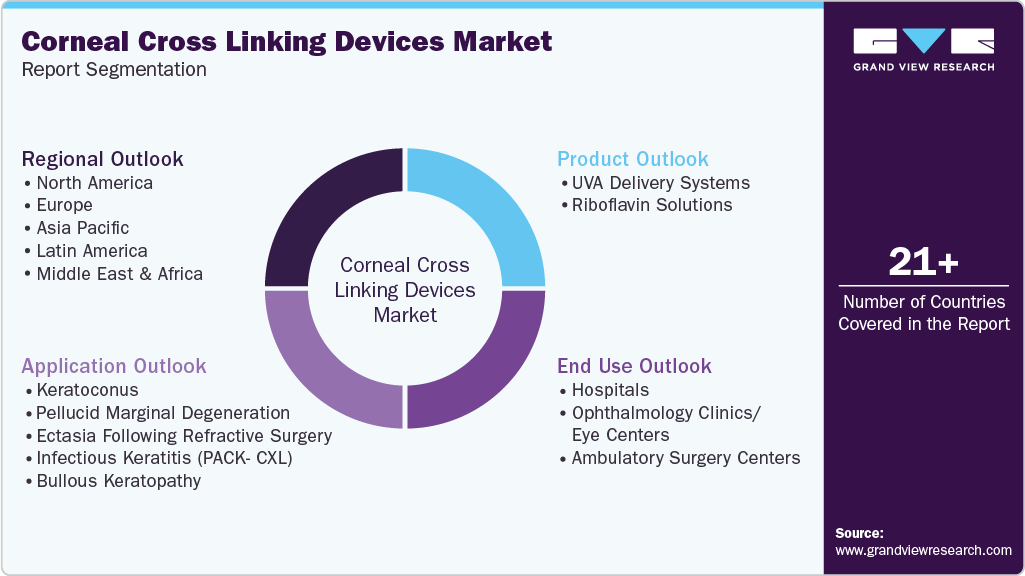
This report forecasts revenue growth at global, regional, and country levels and provides an analysis of the latest industry trends in each of the sub-segments from 2021 to 2033. For this study, Grand View Research has segmented the global corneal cross linking devices market report based on product, application, end use, and region:
 To learn more about this report, Download Free Sample Report
-
Product Outlook (Revenue, USD Million, 2021 - 2033)
-
UVA Delivery Systems
-
Riboflavin Solutions
-
-
Application Outlook (Revenue, USD Million, 2021 - 2033)
-
Keratoconus
-
Pellucid Marginal Degeneration
-
Ectasia Following Refractive Surgery
-
Infectious Keratitis (PACK- CXL)
-
Bullous Keratopathy
-
-
End Use Outlook (Revenue, USD Million, 2021 - 2033)
-
Hospitals
-
Ophthalmology Clinics/ Eye Centers
-
Ambulatory Surgery Centers
-
-
Region Outlook (Revenue, USD Million, 2021 - 2033)
-
North America
-
U.S.
-
Canada
-
Mexico
-
-
Europe
-
UK
-
Germany
-
France
-
Italy
-
Spain
-
Norway
-
Denmark
-
Sweden
-
-
Asia Pacific
-
China
-
Japan
-
South Korea
-
Thailand
-
Australia
-
-
Latin America
-
Brazil
-
Argentina
-
-
Middle East and Africa
-
South Africa
-
Saudi Arabia
-
UAE
-
Kuwait
-
-
Research Methodology
The corneal cross linking devicesmarketfigures in this report are based on a proven research process that combines executive interviews with secondary research from proprietary databases, company filings, and recognized regulatory and institutional sources. Market size is built through value-chain sizing-reconciling supply-side and demand-side estimates-and triangulated with bottom-up and top-down approaches. Every estimate passes multiple levels of expert validation before publication, with eachcorneal cross linking devicessegment quantified using the revenue-capture definitions in the table below.
Segment Definition
Segment - Product
Revenue capture definition
UVA Delivery Systems
Revenue generated from the sale of UV-A illumination and corneal cross-linking delivery systems used to administer controlled UV-A energy during CXL procedures. Includes capital equipment and associated treatment-system components.
Riboflavin Solutions
Revenue generated from riboflavin/photoenhancer solutions used during CXL procedures to facilitate the photochemical cross-linking reaction. Primarily represents recurring, procedure-based consumable revenue.
Segment - Application
Revenue capture definition
Keratoconus
Revenue generated from CXL devices, systems, and procedure-specific consumables used to treat progressive keratoconus and stabilize corneal structure.
Pellucid Marginal Degeneration
Revenue generated from CXL technologies and associated consumables is used to stabilize progressive corneal thinning and ectatic changes associated with pellucid marginal degeneration.
Ectasia Following Refractive
Surgery
Revenue generated from CXL systems and consumables used to manage corneal weakening or ectasia developing after refractive procedures such as LASIK or PRK.
Infectious Keratitis (PACK-CXL)
Revenue generated from CXL equipment and associated consumables used in photoactivated chromophore for keratitis-CXL (PACK-CXL) procedures, primarily targeting infectious corneal disease.
Bullous Keratopathy
Revenue generated from CXL systems and procedure-related products is used as an adjunctive treatment approach for selected cases of bullous keratopathy to help stabilize the cornea and reduce disease-related symptoms.
Segment - End Use
Revenue capture definition
Hospitals
Revenue generated through sales of CXL systems, UV-A delivery equipment, and associated consumables to hospital ophthalmology departments performing corneal cross-linking procedures.
Ophthalmology Clinics /
Eye Centers
Revenue generated from CXL equipment and recurring procedure consumables sold to specialized ophthalmology clinics and eye centers for outpatient corneal treatments.
Ambulatory Surgery Centers
Revenue generated from CXL systems and procedure-specific consumables supplied to ASCs performing same-day or outpatient corneal cross-linking procedures.
Estimation Model
Scope Definition
Build Procedure and Product Volume
Estimate Product Utilization
Revenue Conversion
What is being sized?
How large is the total addressable market?
How extensively are CXL products utilized?
How do CXL procedures translate into market revenue?
Process Steps1. Define the Corneal Cross-Linking Devices Market scope.2. Scope product, application, and end-use segments.3. Establish geographic coverage (global/regional).4. Align on base year and forecast horizon (2026–2033).
Process Steps1. Estimate annual procedure volumes across applications.2. Estimate the treatment-eligible patient pool.3. Estimate procedures performed per installed and active system.4. Calculate riboflavin solution utilization based on CXL procedure volume and average riboflavin requirement per treated eye/procedure.5. Forecast demand based on consumer adoption and technology penetration.
Process Steps1. Assess annual procedures performed per installed UVA delivery device.2. Determine average riboflavin solution consumption per procedure.3. Analyze replacement cycle of devices.4. Validate findings through interviews with providers and companies.
Process Steps1. Determine ASPs for devices and riboflavin solution by region.2. Estimate revenue from sales of devices and solutions.3. Apply regional pricing variations.4. Cross-validate with company revenues and public filings.
Delivered Customizations
This report has been delivered with the following In-depth customizations
Client Request
Customization Delivered
Value Adds
Competitive Landscape Analysis
Conducted a comprehensive assessment of the global corneal cross-linking devices market, evaluating manufacturers based on UVA delivery systems, riboflavin solutions, CXL protocols, regulatory approvals, clinical evidence, pricing strategies, product portfolios, distribution networks, and technological innovations.
Enables stakeholders to understand the competitive positioning, technology leadership, product differentiation, regulatory status, and commercialization strategies that shape the global CXL market. Supports supplier benchmarking, partnership evaluation, and investment planning.
Segment by Product & Application Analysis
Conducted a detailed assessment across UVA delivery systems and riboflavin solutions, with applications spanning keratoconus, pellucid marginal degeneration, post-refractive surgery ectasia, infectious keratitis, and bullous keratopathy. The analysis evaluates procedure volumes, product utilization, treatment protocols, and emerging clinical applications.
Enables stakeholders to identify high-growth applications, assess recurring consumable opportunities, optimize product portfolios, and align technology development with evolving corneal treatment practices.
Macroeconomic Analysis
Conducted an in-depth assessment of keratoconus prevalence, corneal disease diagnosis, ophthalmic healthcare expenditure, availability of corneal specialists, reimbursement policies, ophthalmic infrastructure, regulatory developments, and adoption of advanced corneal treatment technologies.
Enables stakeholders to understand the demographic, clinical, regulatory, and healthcare infrastructure factors that influence demand in the global corneal cross-linking devices market. The analysis supports long-term forecasting, regional expansion, pricing strategy, manufacturing planning, and investment prioritization.
Frequently Asked Questions About This Report
The global corneal cross linking devices market size was valued at USD 151.7 million in 2025 and is projected to reach USD 163.5 million in 2026.
The global corneal cross linking devices market is expected to grow at a compound annual growth rate of 8.0% from 2026 to 2033 to reach USD 279.4 million by 2033.
Based on product, the riboflavin solutions segment held the highest market share of 53.4% in 2025.
Based on application, the keratoconus segment held a leading market share in 2025.
Based on end use, the ophthalmology clinics / eye centers segment held a leading market share in 2025.
North America dominated the corneal cross linking devices market with a share of 43.4% in 2025.
Key factors that are driving the market growth include the increasing prevalence and diagnosis of keratoconus and other corneal ectatic disorders.
Key companies operating in the market are Glaukos Corporation, SCHWIND, Peschke Trade GmbH, Micro Medical Devices, IROMED GROUP / SERVImed Industrial, Appasamy Associates, iVis Technologies, Biotech Healthcare, Aurolab, Opto Eletronica SA.
About the Author(s)
Medical Devices Research Team
Healthcare · Medical DevicesThis report was authored by the medical devices research team at Grand View Research - comprising two research analysts, one senior research analyst, and one industry expert - with specialized expertise in the medical devices segment of the healthcare industry. All findings are based on proprietary healthcare databases, executive interviews, and regulatory analysis, subject to internal peer review prior to publication.
Last Updated:
Speak to Analyst

Customize this report to your needs - add regions, segments, or data points, with 20% free customization.
Or view our licence options:


ISO 9001:2015 & 27001:2022 Certified
We are GDPR and CCPA compliant! Your transaction & personal information is safe and secure. For more details, please read our privacy policy.


