
- Home
- »
- Next Generation Technologies
- »
-
Corporate Social Responsibility Software Market Report, 2026-2033GVR Report cover

Corporate Social Responsibility Software Market (2026 - 2033)
Size, Share & Trends Analysis Report By Deployment (On Premise, Cloud), By Application (Large Enterprise, Small & Medium Enterprises), By Component, By Organization Size, By Region, And Segment Forecasts
Market Size, 2025
$1.1BMarket Estimate, 2026
$1.2BMarket Forecast, 2033
$2.3BCAGR, 2026–2033
10.5%Corporate Social Responsibility Software Market Summary
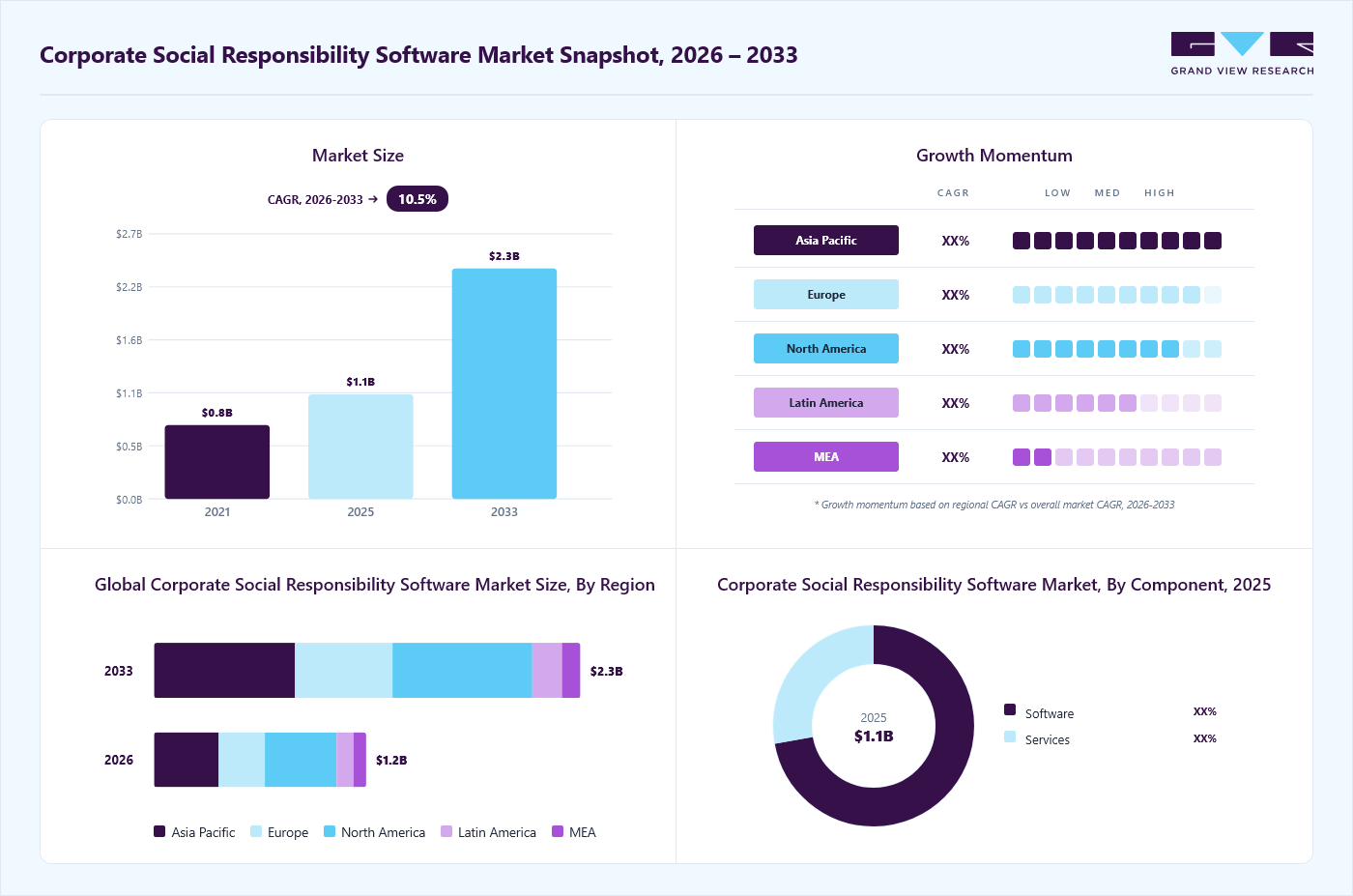
The global corporate social responsibility software market size was valued at USD 1.1 billion in 2025 and is projected to grow from USD 1.2 billion in 2026 to USD 2.3 billion by 2033, at a CAGR of 10.5% from 2026 to 2033. The market in North America dominated with a revenue share of 34.0% in 2025. This growth is driven by the increasing enforcement of ESG regulations and mandatory corporate sustainability reporting requirements.
 Source: Grand View Research, IR Documents, Primary Interviews, Paid DatabasesTo learn more about this report,
 Download Free Sample Report
Key Market Trends & Insights
- By component: Software segment dominated the market, with a revenue share of 72.1% in 2025
- By deployment: Cloud segment dominated the market, with a revenue share of 73.1% in 2025
- By organization size: Large enterprise segment dominated the market, with a revenue share of 71.4% in 2025
- By application: Environment, health & safety (EHS) compliance segment dominated the market, with a revenue share of 32.5% in 2025
- By industry vertical: IT & telecom segment held the largest revenue share in 2025
Regional Highlights
- Largest regional market: North America (34.0% revenue share, 2025)
- Fastest-growing regional market: Asia Pacific (highest CAGR, 2026-2033)
- By country: The U.S. held the largest market share in 2025.
Market Size & Forecast
- Market size in 2025: USD 1.1 Billion
- Estimated market size in 2026: USD 1.2 Billion
- Projected market size by 2033: USD 2.3 Billion
- CAGR (2026-2033): 10.5%
Three ways to get this report
Buy it, customize it, or ask a question.Ask an Analyst
Analyst response in 1 business day
- AccessReport author, directly
- Reply timeWithin 1 working day
- No sales callDirect answer only
- FormatEmail reply
- CostFree, no cost
Get the Full Report
What the study covers
- FormatsPDF · Excel · Dashboard
- Timeline2026–2033 annual, 2025 base
- Coverage20+ countries, 5 regions
- Companies10+ key players profiled
Customize the Report
20% free customization
- IncludeCountries, segments, points
- TailorTo your product definition
- ExtendDeeper competitor detail
- OrA fully bespoke study
- Turnaround5–10 working days
Corporate social responsibility (CSR) is a conceptual framework that enables companies to integrate environmental and social considerations into their business activities and stakeholder relationships. Organizations can use CSR software to assess and monitor their business operations and activities. CSR software aims to establish a connection between society and companies. Thus, companies must prioritize internal and external dimensions of corporate social responsibility, such as safety & health, HR management, local communities, environmental impact management, human rights, business partners, and more. Factors such as the increasing need to build a better brand reputation across enterprises and the growing demand among organizations to enhance their business practices & policies are driving the demand for corporate social responsibility software and services.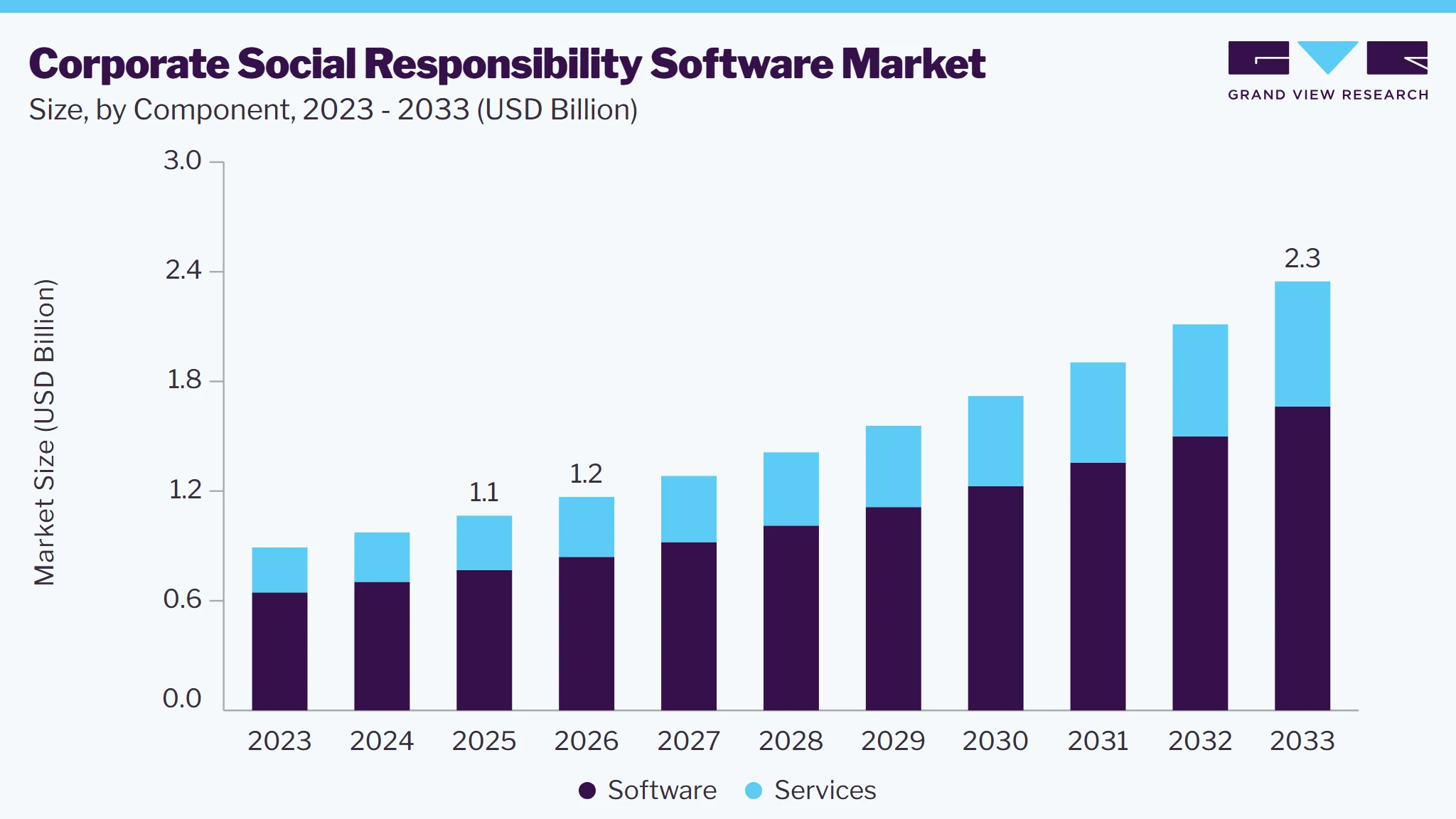 To learn more about this report, Download Free Sample Report
The growing regulatory and compliance landscape surrounding environmental, social, and governance (ESG) practices drives market growth. Governments worldwide are introducing stricter regulations and frameworks requiring businesses to disclose their CSR activities and environmental impacts. In the U.S., for instance, rules like the Securities and Exchange Commission’s (SEC) guidelines on ESG disclosures have led companies to implement more robust CSR programs to comply with the law. Similarly, global frameworks such as the United Nations Sustainable Development Goals (SDGs) and the Global Reporting Initiative (GRI) encourage businesses to measure and report on their contributions to sustainability. CSR software allows organizations to streamline compliance processes by automatically tracking relevant data, generating reports, and ensuring their activities align with legal requirements and global standards.
The rise in employee engagement in corporate social responsibility initiatives is another factor driving the adoption of CSR software. As businesses strive to engage their employees in their sustainability efforts, CSR software offers tools for tracking volunteer hours, matching employees with charitable causes, and promoting internal programs. Companies recognize the value of empowering employees to participate in CSR initiatives, as it fosters a sense of community, enhances employee morale, and strengthens corporate culture. By integrating CSR software with employee engagement tools, businesses can create more robust and inclusive CSR programs that resonate with their workforce and align with their values.
Furthermore, the demand for real-time tracking and reporting on CSR activities is contributing to the growth of the Corporate social responsibility (CSR) software market. Traditional CSR reporting often involved lengthy processes and static reports that were updated infrequently. However, as companies face increasing demands for real-time information, CSR software has evolved to provide dynamic tracking capabilities. These solutions enable businesses to monitor their CSR metrics in real time, track progress toward sustainability goals, and quickly respond to changes in environmental or social conditions. This agility is essential for staying ahead of trends, addressing challenges, and maintaining transparency in a rapidly changing business environment.
Market Dynamics
Corporate social responsibility (CSR) software is witnessing increasing adoption as enterprises place greater emphasis on sustainability reporting, ethical governance, environmental impact tracking, and stakeholder transparency. Organizations are leveraging CSR platforms to manage ESG (Environmental, Social, and Governance) data, automate sustainability reporting, track carbon emissions, monitor supply chain compliance, and ensure alignment with regulatory frameworks such as mandatory ESG disclosures and sustainability reporting standards. The integration of CSR software with enterprise systems like ERP, HRM, and supply chain platforms is further enabling seamless data collection and consolidated reporting. Rising investor pressure for ESG transparency, stricter regulatory requirements, and growing consumer preference for responsible brands are collectively accelerating the demand for CSR software solutions across industries.
The increasing enforcement of ESG regulations and mandatory corporate sustainability reporting requirements is a key driver for the CSR software market. Governments and regulatory bodies across multiple regions are introducing frameworks that require organizations to disclose detailed information on carbon emissions, labor practices, diversity metrics, supply chain ethics, and environmental impact. CSR software enables companies to systematically collect, validate, and report this data in compliance with evolving standards, reducing manual effort and minimizing reporting errors. It also supports audit readiness and improves governance by ensuring traceability and standardization of ESG data across business units. As regulatory scrutiny intensifies and disclosure norms become more stringent, organizations are increasingly adopting CSR software to ensure compliance and avoid reputational and financial risks.
High implementation complexity and integration challenges act as a significant restraint in the CSR software market, as deploying these platforms often requires aligning disparate data sources across multiple departments, subsidiaries, and global operations. Organizations must integrate CSR software with existing ERP, supply chain, HR, and financial systems to ensure accurate ESG data aggregation, which can be technically complex and resource-intensive. Additionally, the lack of standardized ESG metrics across industries further complicates configuration and reporting workflows. Smaller enterprises, in particular, may struggle with limited internal expertise and budget constraints, making adoption slower. These challenges can delay deployment timelines and increase total cost of ownership, thereby limiting widespread adoption.
The growing expansion of ESG-driven investment strategies and sustainability-linked financing presents a major opportunity for the CSR software market. Investors, financial institutions, and asset managers are increasingly prioritizing ESG performance when making investment decisions, driving companies to improve transparency and reporting accuracy. CSR software enables organizations to generate standardized ESG reports, track sustainability KPIs, and demonstrate compliance with investor requirements, thereby improving access to green bonds, sustainability-linked loans, and ESG-focused funding. Additionally, as organizations aim to enhance brand reputation and meet stakeholder expectations, demand for advanced CSR platforms with predictive analytics, benchmarking, and real-time ESG monitoring capabilities is expected to grow significantly.
Analyst Perspective
The corporate social responsibility (CSR) software market sits at the intersection of accelerating ESG regulatory mandates, increasing investor pressure for sustainability transparency, and the rapid digitization of enterprise compliance and reporting functions. Organizations are increasingly required to manage complex, multi-framework ESG disclosures spanning emissions, labor practices, governance metrics, and supply chain ethics, driving strong demand for centralized digital platforms that can consolidate and validate sustainability data across business units and geographies.
Component Insights
Based on component, the software segment led the market with the largest revenue share of 72.1% in 2025. The segment is driven by the increasing enterprise shift toward centralized, data-driven ESG management platforms that can automate sustainability reporting, streamline compliance, and improve transparency across complex organizational structures. As ESG regulations become more stringent and multi-framework reporting requirements expand globally, organizations are increasingly adopting CSR software to consolidate fragmented sustainability data from disparate sources such as ERP systems, HR platforms, supply chain networks, and energy monitoring systems
The services segment is anticipated to grow at the highest CAGR during the forecast period due to the increasing complexity of ESG implementation, which requires extensive support beyond software deployment to ensure effective utilization and compliance alignment. Organizations often depend on consulting, integration, and managed services to configure CSR platforms in line with multiple regulatory frameworks such as CSRD, GRI, SASB, and TCFD, while also integrating ESG systems with existing ERP, HR, procurement, and supply chain infrastructures
Deployment Insights
Based on deployment, the cloud segment led the market with the largest revenue share of 73.1% in 2025. Cloud-based CSR software solutions provide enhanced security and compliance features, which are crucial as businesses navigate an increasingly complex regulatory environment. With growing concerns about data privacy and compliance with environmental, social, and governance (ESG) regulations, cloud providers invest heavily in secure infrastructure and robust compliance frameworks. This ensures that organizations using cloud-based CSR software can manage sensitive data to legal requirements and industry standards. Features such as data encryption, multi-factor authentication, and regular security updates help protect the integrity of Corporate social responsibility data and prevent unauthorized access. The cloud's ability to offer customizable solutions that adhere to different regulatory requirements is a major advantage for companies operating in multiple regions or industries with varying compliance standards.
The on premise segment is expected to grow at a CAGR of over 11.4% over the forecast period. As the safety concerns of organizations regarding financial information, information about key stakeholders, data associated with their social activities, and other related concerns keep rising, the demand for on-premise deployment is expected to increase in the upcoming years.
Organization Size
Based on organization size, the large enterprise segment led the market with the largest revenue share of 71.4% in 2025. Large enterprises face increasingly stringent sustainability regulations across the regions in which they operate, requiring comprehensive ESG disclosures, carbon emissions reporting, and responsible business practices. CSR software automates the collection, validation, and reporting of ESG data while supporting compliance with global frameworks and regulatory standards. By reducing manual processes and improving reporting accuracy, these platforms help organizations minimize compliance risks, enhance transparency, strengthen stakeholder trust, and adapt efficiently to evolving regulatory requirements.
The SMEs segment is expected to grow at the highest CAGR over the forecast period. Growing awareness of ESG and sustainability encourages SMEs to adopt CSR software to strengthen their brand image and build customer trust. The software helps measure and report social and environmental performance, showcase sustainability achievements, and demonstrate responsible business practices, enabling SMEs to enhance competitiveness, attract investors, and foster long-term stakeholder confidence.
Application Insights
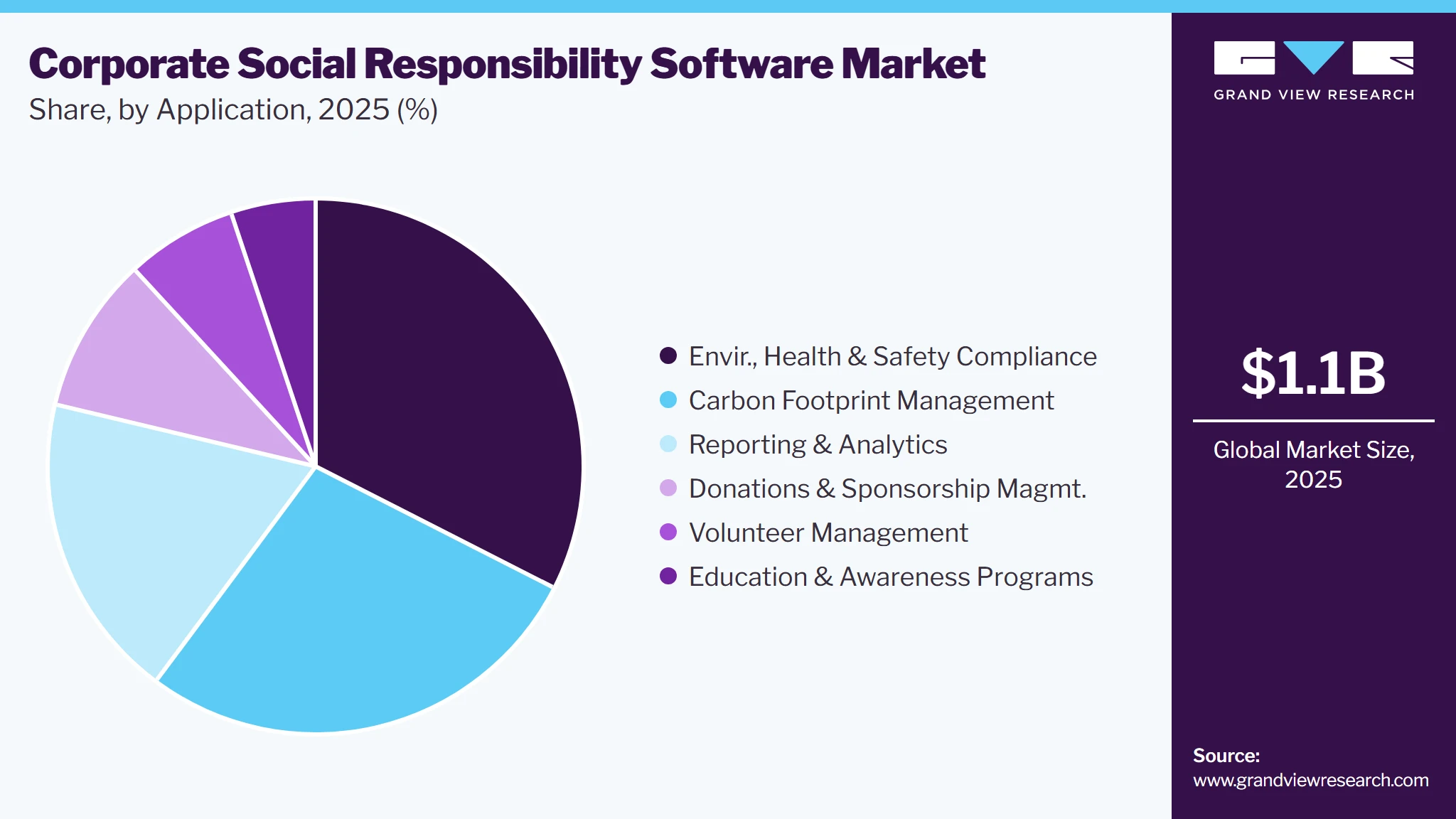
Based on application, the environment, health & safety (EHS) compliance segment led the market with the largest revenue share of 32.5% in 2025. The segment is driven by the tightening of global environmental regulations, occupational safety standards, and corporate sustainability disclosure mandates, which are compelling organizations to adopt structured systems for monitoring, reporting, and managing compliance risks. Enterprises are increasingly deploying CSR software to track workplace safety incidents, environmental impact metrics, emissions thresholds, and regulatory obligations in real time, ensuring adherence to evolving frameworks such as ESG disclosure rules and industry-specific safety standards.
 To learn more about this report, Download Free Sample Report
The carbon footprint management segment is anticipated to grow at the highest CAGR during the forecast period due to the intensifying global focus on decarbonization and net-zero commitments across industries, which is compelling organizations to systematically measure, track, and reduce greenhouse gas emissions. Rising regulatory pressure for mandatory carbon disclosure, coupled with investor expectations for transparent climate-risk reporting, is accelerating adoption of software tools capable of calculating emissions with high accuracy.
Industry Vertical Insights
Based on industry vertical, the IT & telecom segment led the market with the largest revenue share of 23.8% in 2025. The growth is driven by the industry’s high ESG visibility, large-scale global operations, and strong regulatory and stakeholder pressure to demonstrate sustainable and ethical business practices. Technology and telecom companies generate significant environmental impact through data centers, network infrastructure, and high energy consumption, which is accelerating the adoption of CSR software for carbon footprint tracking, energy efficiency monitoring, and emissions reduction initiatives.
The healthcare segment is anticipated to grow at the highest CAGR during the forecast period, driven by increasing regulatory scrutiny, rising emphasis on patient safety and ethical governance, and growing pressure to demonstrate measurable social and environmental impact across healthcare operations. Hospitals, pharmaceutical companies, and healthcare providers are adopting CSR software to track and report ESG metrics such as medical waste management, energy consumption in facilities, workforce diversity, community health initiatives, and supply chain ethics related to drug and equipment sourcing.
Regional Insights
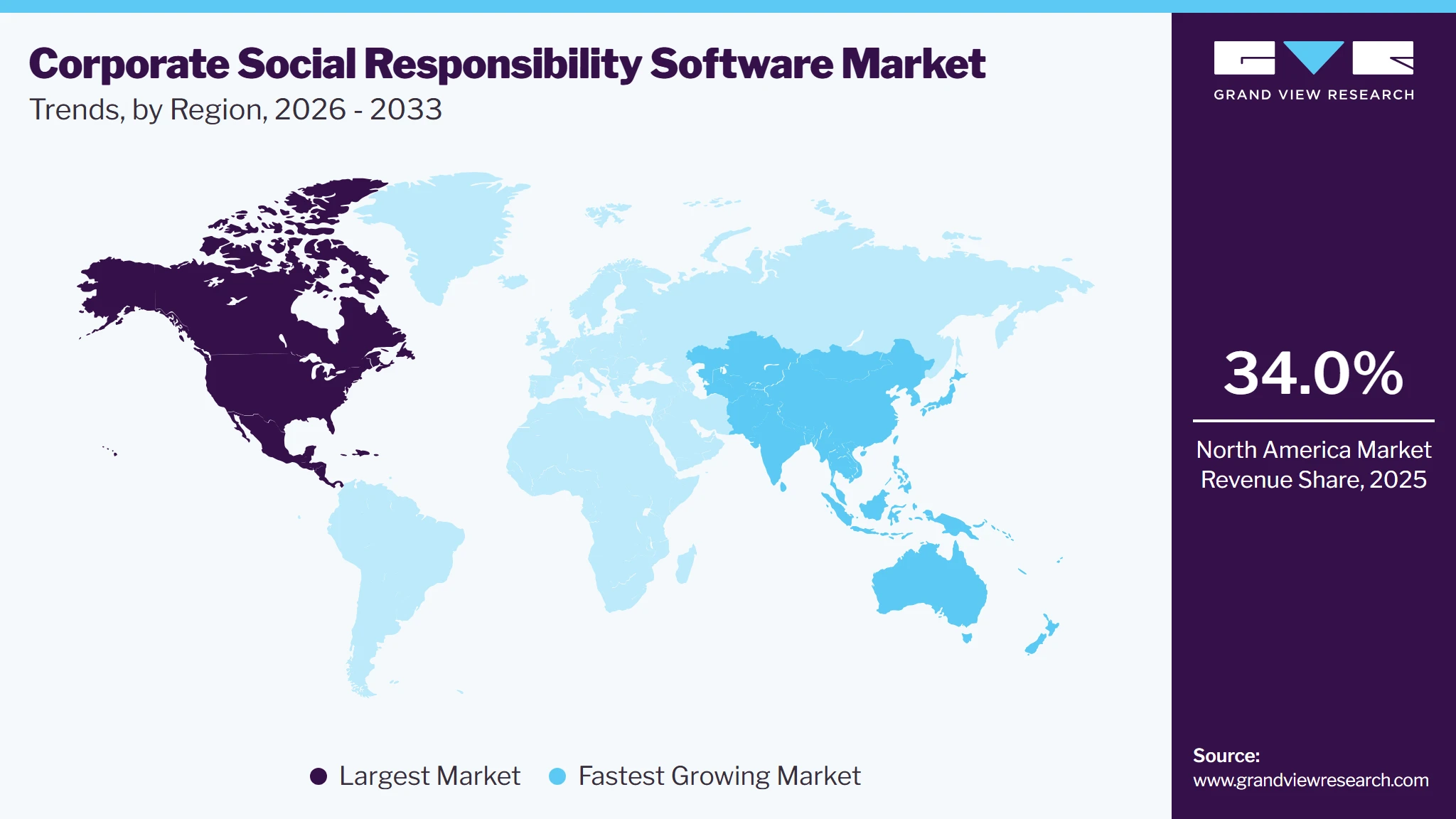
North America dominated the global corporate social responsibility software market with the largest revenue share of 34.0% in 2025, owing to factors such as the increasing focus of businesses on their social responsibilities and activities. Moreover, the factor behind this shift is primarily due to the growing expectations of U.S. citizens from the corporate sector to conduct their operations in a socially and ethically responsible manner. This is likely to drive the regional market growth.
 To learn more about this report, Download Free Sample Report
U.S. Corporate Social Responsibility Software Market Trends
The corporate social responsibility software market in the U.S. held the largest share in the North America region in 2025. The increasing digitalization of CSR strategies is a key driver of the U.S. CSR software market. Companies are leveraging cloud-based platforms, AI-driven analytics, and blockchain technology to enhance the accuracy and efficiency of their sustainability initiatives. Cloud-based CSR software allows businesses to consolidate sustainability data across multiple locations and business units, ensuring seamless reporting and collaboration. AI-powered analytics help organizations identify ESG trends, assess risks, and optimize sustainability strategies based on predictive insights. Additionally, blockchain technology is gaining traction in CSR applications, particularly for supply chain transparency and ethical sourcing verification. As digital transformation continues to reshape corporate sustainability efforts, businesses invest in advanced CSR software solutions to enhance data accuracy, compliance, and strategic decision-making.
Europe Corporate Social Responsibility Software Market Trends
The corporate social responsibility software market in Europe is expected to register considerable growth from 2025 to 2030. The growth of the Europe market for corporate social responsibility software can be attributed to digitalization, stringent regulations concerning business management, key players operating in the region, and improved customer experience, among other factors.
The UK corporate social responsibility software market held a substantial revenue share in 2024. The growing focus on carbon neutrality and climate action further accelerates the adoption of CSR software across Europe. Many European companies are setting ambitious net-zero targets in alignment with the Paris Agreement and the EU Green Deal, which aims to make Europe the world’s first climate-neutral continent by 2050. CSR software with carbon accounting capabilities enables organizations to measure their greenhouse gas (GHG) emissions, identify reduction strategies, and ensure compliance with evolving climate regulations such as the EU’s Carbon Border Adjustment Mechanism (CBAM). As carbon reduction initiatives become a top priority for European corporations, the demand for CSR software is expected to rise.
The corporate social responsibility software market in Germany is expected to grow rapidly during the forecast period. The increasing focus on corporate philanthropy and employee engagement in sustainability initiatives drives CSR software adoption in Germany. Many German corporations actively invest in social impact programs, employee volunteering initiatives, and community development projects to strengthen their corporate reputation and meet stakeholder expectations. CSR software helps businesses manage these initiatives by streamlining donation tracking, volunteer program management, and impact measurement. As consumers and employees in Germany place a high value on corporate social responsibility, companies are using CSR software to enhance their brand image, improve employee satisfaction, and foster a culture of social impact within their organizations.
Asia Pacific Corporate Social Responsibility Software Market Trends
Asia Pacific is anticipated to rise as the fastest developing regional market at a CAGR of 11.4% over the forecast period. Increasing investment and government initiatives in SaaS and many companies committed to corporate social responsibility and sustainability are driving the growth of corporate social responsibility software in the region. For instance, the government of India has eased its FDI regulations, which allow foreign companies to invest. However, local companies focus on their corporate social responsibility activities to attract foreign companies and stakeholders.
China's corporate social responsibility software market accounted for the largest revenue share in 2024. Advancements in digital transformation and artificial intelligence (AI) are accelerating the growth of the CSR software market in China. Companies are adopting AI-powered analytics and blockchain technology to enhance supply chain transparency, improve ESG data accuracy, and ensure compliance with global sustainability standards. Cloud-based CSR platforms are also gaining traction, enabling businesses to centralize sustainability data, automate compliance reporting, and integrate ESG performance metrics across multiple locations. As China continues to invest in digital innovation and smart technologies, the adoption of intelligent CSR software solutions is expected to rise significantly.
The corporate social responsibility softwaremarket in India is expected to grow rapidly during the forecast period. The growing emphasis on ESG-driven investments and sustainable business practices drives CSR software adoption in India. Indian corporations are under increasing pressure from domestic and international investors to enhance their sustainability performance and disclose ESG-related data. Stock exchanges such as the National Stock Exchange (NSE) and Bombay Stock Exchange (BSE) have introduced ESG reporting guidelines, and the Securities and Exchange Board of India (SEBI) has made Business Responsibility and Sustainability Reporting (BRSR) mandatory for the top 1,000 listed companies. This shift towards ESG transparency prompts businesses to adopt CSR software to manage ESG data, generate sustainability reports, and ensure compliance with investor expectations.
Key Corporate Social Responsibility Software Company Insights
Some of the key players operating in the corporate social responsibility software industry include Benevity, Inc.; Salesforce, Inc.; and NAVEX, Inc.
-
Benevity, Inc. is a corporate social responsibility (CSR) and employee engagement solutions company. Benevity's platform helps organizations create meaningful social impact by empowering employees, customers, and communities to contribute to causes they care about. The company has grown rapidly, serving many of the world's largest and most influential brands, including Microsoft, Google, Apple, Nike, and Salesforce.
Tennaxia, CyberSWIFT Infotech Pvt. Ltd., and iPoint-systems gmbh are some of the emerging market participants.
-
Tennaxia is a France-based company specializing in Environmental, Social, and Governance (ESG) performance management and regulatory compliance solutions for businesses. The company provides software and consulting services to help organizations improve their sustainability reporting, risk management, and corporate social responsibility (CSR) strategies. Tennaxia’s solutions enable companies to collect, analyze, and manage ESG data efficiently, ensuring compliance with evolving environmental regulations and investor expectations.
Key Corporate Social Responsibility Software Companies:
The following are the leading companies in the corporate social responsibility software market.
-
Benevity, Inc.
-
Chezuba
-
Wolters Kluwer N.V.
-
iPoint-systems gmbh
-
Blackbaud
-
Tennaxia
-
Vee Technologies
-
NAVEX, Inc.
-
Salesforce, Inc.
-
CyberSWIFT Infotech Pvt. Ltd.
Competitive Benchmarking
Category
Operating Strategies
Competitive Edge
Weakness
Established Players (Blackbaud, Benevity, Inc., Salesforce, Inc., Wolters Kluwer N.V.)
- Established players in the CSR software market focus on integrated ESG and sustainability management platforms that combine carbon accounting, CSR reporting, compliance management, employee engagement, and governance tracking.
- They offer end-to-end solutions covering ESG data collection, regulatory reporting automation, and stakeholder communication.
- Established players benefit from strong global brand recognition, large enterprise customer bases, and highly scalable SaaS platforms.
- Their solutions support multi-framework ESG reporting (CSRD, GRI, SASB, TCFD) and provide advanced analytics, audit-ready reporting, and real-time dashboards.
- These platforms often involve high implementation complexity and significant total cost of ownership.
- Integration across multiple enterprise systems and global subsidiaries can be challenging. Customization requirements for different ESG frameworks increase deployment time.
Emerging Players (iPoint-systems gmbh, Tennaxia, Chezuba)
- Emerging players focus on specialized ESG and CSR software solutions targeting specific sustainability domains such as carbon management, supply chain ESG compliance, employee volunteering, and ESG performance analytics.
- Their strategy emphasizes cloud-based delivery, modular platforms, and industry-specific solutions.
- Emerging players offer strong domain-specific expertise and faster deployment compared to legacy systems. Their platforms are more flexible and user-friendly, with quicker onboarding and lower entry barriers.
- Innovation in carbon accounting, ESG scoring, and sustainability analytics enables better decision support for organizations transitioning toward structured ESG reporting.
- These vendors face limited global scale and smaller enterprise penetration compared to established players. Many rely on third-party data sources or integrations for full ESG coverage.
- Resource and funding constraints may limit rapid expansion and feature depth. Lower brand recognition can reduce trust among large multinational enterprises.
Recent Developments
-
In May 2024, Tennaxia acquired Traace, enhancing the ability to provide a comprehensive sustainable performance management platform with advanced carbon footprint management functionalities in a continuously evolving market. As businesses focus on transitioning to sustainable models, driven notably by the Corporate Sustainability Reporting Directive (CSRD), there is a growing need for a comprehensive overview of emissions and effective tools for reducing environmental footprints. This combination enables companies to address all ESG aspects with greater depth, rigor, and ambition.
-
In December 2021, Benevity, Inc. announced the acquisition of Alaya, a Switzerland-based employee engagement SaaS platform provider. This acquisition is aimed at expanding the company’s international presence and enabling companies of all sizes to access its advanced suite of corporate-purpose solutions.
Corporate Social Responsibility Software Market Report Scope
Report Attribute
Details
Market size in 2025
USD 1.1 billion
Estimated market size in 2026
USD 1.2 billion
Projected market size by 2033
USD 2.3 billion
Growth rate
CAGR of 10.5% from 2026 to 2033
Base year for estimation
2025
Historical data
2021 - 2024
Forecast period
2026 - 2033
Quantitative units
Revenue in USD million/billion and CAGR from 2026 to 2033
Report coverage
Revenue forecast, company market share analysis, competitive landscape, growth factors, and trends
Segments covered
Component, deployment, organization size, application, industry vertical, and region
Regional scope
North America; Europe; Asia Pacific; Latin America; MEA
Country scope
U.S.; Canada; Mexico; Germany; UK; France; China; Japan; India; South Korea; Australia; Brazil; Saudi Arabia; South Africa; UAE
Key companies profiled
Benevity, Inc.; Chezuba; Wolters Kluwer N.V.; iPoint-systems gmbh; Blackbaud; Tennaxia, Vee Technologies; NAVEX, Inc.; Salesforce, Inc.; CyberSWIFT Infotech Pvt. Ltd.
Customization scope
Free report customization (equivalent up to 8 analysts' working days) with purchase. Addition or alteration to country, regional & segment scope.
Pricing and purchase options
Avail customized purchase options to meet your exact research needs. Explore purchase options
Global Corporate Social Responsibility Software Market Report Segmentation
This report forecasts revenue growth at the global, regional, and country levels and provides an analysis of the latest industry trends in each of the sub-segments from 2021 to 2033. For this study, Grand View Research has segmented the corporate social responsibility software market report based oncomponent, deployment, organization size, application, industry vertical, and region.
 To learn more about this report, Download Free Sample Report
-
Component Outlook (Revenue, USD Billion, 2021 - 2033)
-
Software
-
Services
-
-
Deployment Outlook (Revenue, USD Billion, 2021 - 2033)
-
On-premise
-
Cloud
-
-
Organization Size Outlook (Revenue, USD Billion, 2021 - 2033)
-
Large Enterprise
-
Small & Medium Enterprises (SMEs)
-
-
Application Outlook (Revenue, USD Billion, 2021 - 2033)
-
Environment, Health & Safety (EHS) Compliance
-
Donations & Sponsorship Management
-
Volunteer Management
-
Reporting & Analytics
-
Education & Awareness Programs
-
Carbon Footprint Management
-
-
Industry Vertical Outlook (Revenue, USD Billion, 2021 - 2033)
-
Manufacturing
-
Energy & Utilities
-
BFSI
-
Healthcare
-
IT & Telecom
-
Retail
-
Government
-
Education
-
Others
-
-
Regional Outlook (Revenue, USD Billion, 2021 - 2033)
-
North America
-
U.S.
-
Canada
-
Mexico
-
-
Europe
-
U.K.
-
Germany
-
France
-
-
Asia Pacific
-
China
-
India
-
Japan
-
South Korea
-
Australia
-
-
Latin America
-
Brazil
-
-
Middle East & Africa
-
UAE
-
Saudi Arabia
-
South Africa
-
-
Research Methodology
The corporate social responsibility software market figures in this report are based on a proven research process that combines executive interviews with secondary research from proprietary databases, company filings, and recognized regulatory and institutional sources. Market size is built through value-chain sizing - reconciling supply-side and demand-side estimates - and triangulated with bottom-up and top-down approaches. Every estimate passes multiple levels of expert validation before publication, with each corporate social responsibility software segment quantified using the revenue-capture definitions in the table below.
Segment Definition
Segment - Component
Revenue capture definition
Software
The largest share of market value is generated by CSR software platforms that enable organizations to manage ESG (Environmental, Social, and Governance) data, automate sustainability reporting, track carbon emissions, monitor compliance obligations, and analyze CSR performance metrics. Vendors monetize through SaaS subscriptions, enterprise licensing, modular feature access (e.g., carbon accounting, ESG reporting, supply chain transparency), and premium analytics capabilities such as predictive ESG risk assessment, benchmarking, and regulatory reporting automation.
Services
The services segment includes consulting, implementation, integration, customization, training, and managed services associated with CSR software deployment. Revenue is generated through onboarding services, system integration with ERP/HR/supply chain platforms, ESG framework alignment (GRI, SASB, CSRD, TCFD), data migration, compliance advisory, and ongoing support and maintenance contracts.
Segment - Deployment
Revenue capture definition
On-premise
On-premise CSR software revenue is generated through perpetual licensing or long-term enterprise contracts where organizations deploy ESG and CSR management systems within their internal IT infrastructure. This model is typically adopted by large enterprises with strict data security, regulatory control, and internal governance requirements, particularly for sensitive ESG and compliance data management.
Cloud
The cloud segment captures revenue primarily through SaaS-based subscription models, where CSR platforms are hosted on vendor-managed cloud infrastructure. Revenue is driven by recurring subscriptions, scalable usage tiers, API-based integrations, and value-added services such as real-time ESG dashboards, automated reporting, and continuous regulatory updates. Cloud deployment is widely preferred due to scalability, lower upfront costs, and faster implementation.
Segment - Organization Size
Revenue capture definition
Large Enterprise
The large enterprise segment, with respect to the number of employees, typically comprises organizations employing more than 1,000 employees for multinational corporations.
Small & Medium Enterprises (SMEs)
The SMEs segment, with respect to the number of employees, generally includes organizations employing between 10 and 999 employees.
Segment - Application
Revenue capture definition
Environment, Health & Safety (EHS) Compliance
Revenue is generated through CSR software modules that support regulatory compliance, workplace safety tracking, environmental impact monitoring, incident reporting, and audit management. These tools help organizations align with environmental and occupational safety regulations while ensuring ESG compliance reporting accuracy.
Donations & Sponsorship Management
This segment captures revenue from CSR platforms that manage corporate philanthropy activities, including donation tracking, sponsorship allocation, CSR fund management, beneficiary reporting, and impact measurement.
Volunteer Management
Revenue is generated from software modules that coordinate employee volunteering programs, track participation, manage event scheduling, and measure social impact contributions as part of CSR initiatives.
Reporting & Analytics
This application segment covers ESG reporting automation, sustainability dashboards, regulatory disclosures, KPI tracking, benchmarking, and audit-ready report generation aligned with global frameworks (e.g., CSRD, GRI, TCFD).
Education & Awareness Programs
Revenue is derived from CSR platforms that support internal training, sustainability awareness campaigns, ESG learning modules, employee engagement initiatives, and corporate sustainability communication programs.
Carbon Footprint Management
This segment generates revenue through carbon accounting tools that measure greenhouse gas emissions across Scope 1, 2, and 3, support decarbonization planning, emissions tracking, and sustainability goal monitoring aligned with net-zero commitments and regulatory disclosure requirements.
Estimation Model
Layer
Question
Analysis
CSR Data Opportunity Layer
Who can benefit from CSR software solutions?
Identify organizations across industries that generate ESG-related data such as emissions, workforce diversity, supply chain ethics, community impact, and governance metrics. These stakeholders require structured systems to capture, manage, and report CSR and ESG performance for compliance, investor communication, and sustainability initiatives.
ESG Digital Readiness Layer
Who can access CSR software solutions?
Evaluate organizations based on digital maturity, ERP/HR/supply chain system integration capability, cloud adoption levels, ESG data governance readiness, and regulatory exposure. Enterprises with established IT infrastructure, centralized data systems, and exposure to ESG disclosure requirements represent the addressable market for CSR software adoption.
Adoption & Utilization Layer
Who actively uses CSR software solutions?
Analyze actual deployment of CSR/ESG platforms for carbon accounting, sustainability reporting, compliance management, stakeholder reporting, volunteer tracking, and ESG analytics. Active users include large enterprises, listed companies, and multinational corporations using CSR tools for regulatory reporting, ESG framework alignment, and internal sustainability performance tracking.
Monetization Layer
How much revenue is generated?
Assess revenue generation through SaaS subscriptions, enterprise licensing, ESG module-based pricing (carbon management, reporting, compliance), and value-added services such as implementation, integration, ESG advisory, and managed reporting services. Include recurring revenue from cloud-based platforms, premium analytics, regulatory update features, and long-term enterprise contracts tied to ESG compliance obligations and sustainability reporting mandates.
Delivered Customizations
This report has been delivered with the following In-depth customizations
CLIENT REQUEST
CUSTOMIZATION DELIVERED
VALUE ADDS
ESG Reporting & Corporate Sustainability Disclosure Trends
Conducted a structured analysis of CSR software capabilities focused on ESG reporting automation, regulatory compliance management, sustainability disclosure frameworks (CSRD, GRI, SASB, TCFD), carbon emissions tracking, and enterprise-wide CSR data consolidation across global organizations.
Helps stakeholders understand evolving ESG disclosure requirements, identify high-demand reporting capabilities, and evaluate commercialization opportunities in automated sustainability reporting and compliance-driven CSR software solutions.
Carbon Accounting & Net-Zero Strategy Implementation Trends
Conducted a detailed assessment of CSR software capabilities in carbon accounting, including Scope 1, Scope 2, and Scope 3 emissions tracking, decarbonization planning, net-zero roadmap creation, and integration with energy consumption and supply chain emissions datasets.
Enables stakeholders to evaluate decarbonization-focused software demand, identify carbon management monetization opportunities, and assess enterprise readiness for net-zero transition strategies driven by regulatory and investor pressure.
SME ESG Adoption & Scalable SaaS CSR Platform Expansion Trends
Evaluated CSR software penetration among SMEs focusing on lightweight SaaS models, standardized ESG templates, cost-effective compliance tools, and simplified carbon tracking solutions tailored to smaller enterprises.
Supports identification of untapped SME market potential, highlights demand for low-cost scalable ESG solutions, and strengthens expansion strategies for SaaS-based CSR platforms in emerging markets.
Frequently Asked Questions About This Report
The global corporate social responsibility software market size was valued at USD 1.1 billion in 2025 and is expected to reach USD 1.2 billion in 2026.
The global corporate social responsibility software market is expected to grow at a compound annual growth rate of 10.5% from 2026 to 2033 to reach USD 2.3 billion by 2033.
The software segment led with a 72.1% revenue share in 2025, while the services segment is the fastest-growing segment.
The cloud segment led with a 73.1% revenue share in 2025, while the on-premise segment is the fastest-growing segment.
The environment, health & safety (EHS) compliance segment held the largest share (over 32%) in 2025, while the carbon footprint management segment is the fastest-growing segment.
Key players operating in the corporate social responsibility software market include Benevity, Inc.; Chezuba; Wolters Kluwer N.V.; iPoint-systems gmbh; Blackbaud; Tennaxia, Vee Technologies; NAVEX, Inc.; Salesforce, Inc.; CyberSWIFT Infotech Pvt. Ltd.
Key factors include the increasing enforcement of ESG regulations and mandatory corporate sustainability reporting requirements.
North America dominated with 34.0% revenue share in 2025.
Asia Pacific is the fastest-growing region over the forecast period.
About the Author(s)
Next Generation Technologies Research Team
Technology · Next Generation TechnologiesThis report was authored by the next generation technologies research team at Grand View Research - comprising two research analysts, one senior research analyst, and one industry expert - with specialized expertise in the next generation technologies segment of the technology industry. All findings are based on proprietary technology databases, executive interviews, and regulatory analysis, subject to internal peer review prior to publication.
Last Updated:
Speak to Analyst

Customize this report to your needs - add regions, segments, or data points, with 20% free customization.
Or view our licence options:


ISO 9001:2015 & 27001:2022 Certified
We are GDPR and CCPA compliant! Your transaction & personal information is safe and secure. For more details, please read our privacy policy.


