
- Home
- »
- Homecare & Decor
- »
-
Countertops Market Size, Share & Growth Report, 2026-2033GVR Report cover

Countertops Market (2026 - 2033)
Size, Share & Trends Analysis Report By Product (Granite, Solid Surface, Engineered Quartz, Laminate, Marble), By End-use (Residential, Commercial), By Application (Kitchen, Bathroom), By Region, And Segment Forecasts
Market Size, 2025
$157.7BMarket Estimate, 2026
$167.9BMarket Forecast, 2033
$267.4BCAGR, 2026–2033
6.9%Countertops Market Summary
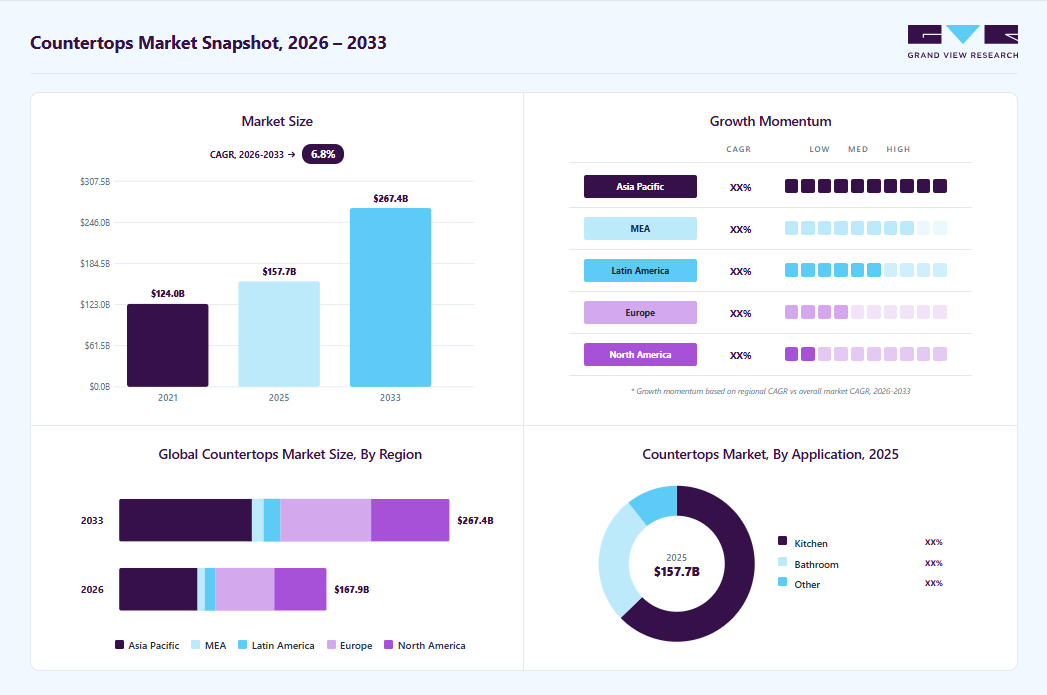
The global countertops market size was valued at USD 157.7 billion in 2025 and is projected to grow from USD 167.9 billion in 2026 to USD 267.4 billion by 2033, at a CAGR of 6.9% from 2026 to 2033. Asia Pacific dominated with the largest revenue share of 37.5% in 2025. The market has evolved in close alignment with long-term trends in urbanization, housing development, commercial construction, and changing interior design preferences.
 Source: Grand View Research, IR Documents, Primary Interviews, Paid DatabasesTo learn more about this report,
 Download Free Sample Report
 Key Market Trends & Insights
- By product type: Granite segment led the market with the largest revenue share of 28.0% in 2025.
- By application: Kitchen segment led the market with the largest revenue share of 62.8% in 2025.
Regional Highlights
- Largest regional market: Asia Pacific (37.5% revenue share in 2025)
- By Country: China held the largest market share in Asia Pacific in 2025.
Market Size & Forecast
- Market size in 2025: USD 157.7 billion
- Estimated market size in 2026: USD 167.9 billion
- Projected market size by 2033: USD 267.4 billion
- CAGR (2026-2033): 6.9%
Three ways to get this report
Buy it, customize it, or ask a question.Ask an Analyst
Analyst response in 1 business day
- AccessReport author, directly
- Reply timeWithin 1 working day
- No sales callDirect answer only
- FormatEmail reply
- CostFree, no cost
Get the Full Report
What the study covers
- FormatsPDF · Excel · Dashboard
- Timeline2026–2033 annual, 2025 base
- Coverage20+ countries, 5 regions
- Companies10+ key players profiled
Customize the Report
20% free customization
- IncludeCountries, segments, points
- TailorTo your product definition
- ExtendDeeper competitor detail
- OrA fully bespoke study
- Turnaround5–10 working days
Its lineage can be traced to post-war residential expansion in North America and Europe, where the standardization of kitchens and bathrooms created sustained demand for durable work surfaces. Over time, countertops transitioned from purely functional building components to design-led architectural elements, reflecting broader shifts in consumer lifestyles and real estate values. Growth in the market is fundamentally linked to construction activity and the expansion of the housing stock. According to the United Nations Department of Economic and Social Affairs (UN DESA), the global urban population increased from 55% in 2018 to over 57% in 2023, with urban residents expected to reach 68% by 2050, directly increasing demand for residential units and interior fittings such as countertops.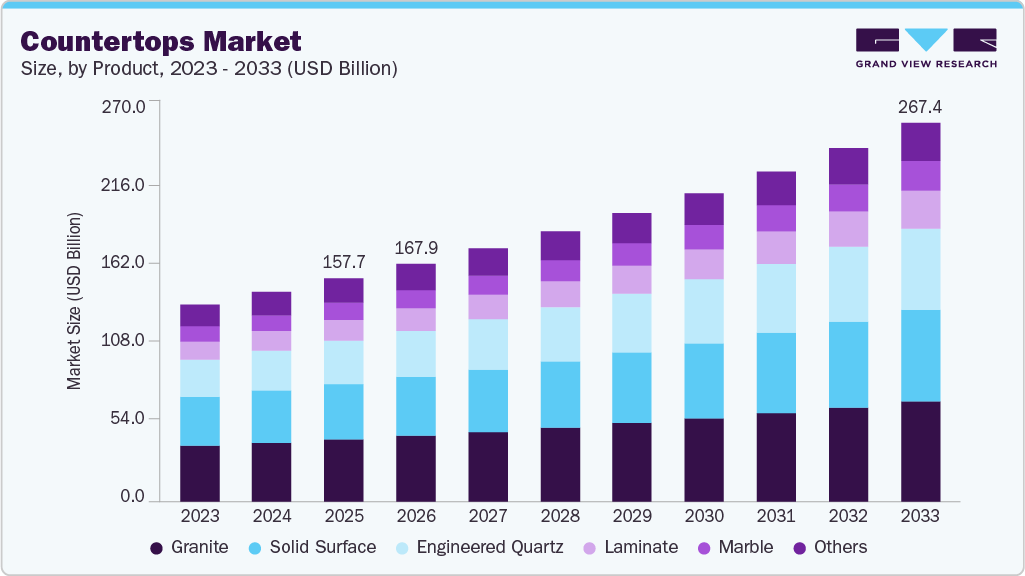 To learn more about this report, Download Free Sample Report
 Renovation and remodeling activity has become an equally important demand pillar. In the U.S., the Joint Center for Housing Studies of Harvard University reported that, on average, homeowner improvement spending registered USD 4,700 in 2023, a 9% increase from the previous market boom in 2007, driven by aging housing stock and value-add renovations, particularly kitchens and bathrooms, where countertops represent a core upgrade category.
The material lineage within the countertops market highlights a gradual shift from traditional stone to engineered and composite surfaces. Natural stone, such as granite and marble, gained prominence due to its durability and availability, particularly following quarry expansions in countries like China, India, Brazil, and Italy. These countries collectively account for the majority of reported global dimension stone output, supported by extensive reserves, mechanized extraction, and export-oriented processing infrastructure. In parallel, international trade data indicate sustained cross-border movement of natural stone, with the European Union alone importing a significant amount of natural stone products annually, underscoring the role of established supply chains in serving construction and interior surface applications.
In parallel, engineered surfaces such as quartz composites and solid surfaces gained traction as manufacturers responded to demand for uniform appearance, lower porosity, and ease of maintenance. The development of solid surface materials in the late 1960s marked a structural shift in the market, enabling seamless installations in healthcare, hospitality, and commercial interiors.
Design and specification trends further reinforce this shift. The Design Survey of Decorative Materials (DSDM 2022) indicates that engineered stone and quartz alternatives are increasingly preferred in kitchens and bathrooms due to lower porosity, stain resistance, and easier maintenance, particularly in high-use households.
From a manufacturing standpoint, scalability has become a decisive advantage. Engineered stone production supports automation, digital printing, and high-yield slab fabrication, reducing waste and enabling faster project execution. Printed and digitally enhanced engineered stones are also allowing manufacturers to replicate natural veining patterns at scale, narrowing the aesthetic gap with quarried stone.
Parameters
Natural Stones (Granite/Marble)
Engineered Stone (Quartz)
Production Model
Design Consistency
Fabrication Lead Time
Material Yield
Suitability for Multi-site Projects
Maintenance Profile
Craft-based, Slab-dependent
High natural variation
longer, project specific
Moderate
Limited
Periodic scaling required
Industrial, Scalable
High repeatability
Shorter, standardized
High
High
low maintenance
Source: Stone World; Natural Stone Institute; Republic Elite DSDM
Sustainability considerations are also influencing material transitions. Engineered surfaces allow optimized raw material utilization and, in some cases, the incorporation of recycled content, aligning with green building objectives.
Market Dynamics
The countertops market is experiencing steady expansion, driven by rising residential construction activity, increasing kitchen and bathroom renovation cycles, and growing consumer preference for aesthetically premium and durable interior surfaces. Countertops, primarily made from materials such as quartz, granite, marble, solid surfaces, laminate, and emerging engineered stone variants, have become a key design element in modern homes as well as commercial spaces, including hospitality, retail, and office environments. Demand is further supported by the shift toward modular kitchens, urban housing upgrades, and the increasing influence of interior design trends showcased through digital platforms and home improvement media. At the same time, manufacturers are innovating with advanced fabrication techniques, improved stain and scratch resistance, and a wider range of finishes to cater to both mass-market and premium consumer segments.
A key growth driver for the countertops market is the sustained rise in home renovation and remodeling activity, particularly in urban and semi-urban housing segments. Consumers are increasingly investing in kitchen upgrades as part of broader lifestyle enhancement, with countertops acting as both a functional and visual focal point. The growing preference for open kitchens, island counters, and integrated dining spaces has significantly elevated the importance of surface aesthetics and durability.
Materials like quartz and engineered stone are gaining traction due to their low maintenance requirements, uniform appearance, and resistance to stains and scratches compared to natural stone alternatives. Additionally, rising disposable incomes, expanding real estate ownership, and increased exposure to global interior design trends are encouraging consumers to opt for premium countertop solutions. Commercial demand from hospitality and food service sectors further reinforces growth, as businesses prioritize durable, hygienic, and visually appealing surfaces in high-traffic environments.
Despite strong demand, the countertops market faces constraints related to high material and installation costs, particularly for premium surfaces such as quartz, granite, and marble. These products often require specialized fabrication, transportation, and installation, increasing overall project costs and limiting adoption in price-sensitive segments. Additionally, engineered stone production has come under scrutiny due to health and environmental concerns, particularly related to crystalline silica exposure during cutting and processing, leading to stricter regulatory oversight in several regions. Volatility in raw material supply chains, energy-intensive manufacturing processes, and dependence on natural stone quarrying further contribute to cost fluctuations and operational challenges. These factors collectively create barriers for widespread adoption, especially in emerging markets where affordability remains a key purchasing criterion.
Significant growth opportunities are emerging through the development of sustainable, recycled, and low-emission countertop materials, as environmental awareness increasingly influences purchasing decisions. Manufacturers are investing in eco-friendly engineered surfaces made from recycled glass, resins, and composite materials that replicate the appearance of natural stone while reducing environmental impact.
Another major opportunity lies in advanced engineered stone technologies that enhance durability, antimicrobial properties, and heat resistance, catering to both residential and commercial hygiene requirements. The rise of digital kitchen planning tools and AI-enabled interior design platforms is also improving consumer decision-making and customization, enabling more precise visualization of countertop materials and layouts before purchase. Furthermore, the expansion of modular kitchen ecosystems and integrated smart home design is expected to create incremental demand for standardized, prefabricated countertop solutions that reduce installation time and improve cost efficiency.
Analyst Perspective
The countertops market is increasingly defined by a structural shift from traditional natural stone dependence toward engineered quartz and high-performance surfaces, driven by urban housing expansion, modular kitchen penetration, and hospitality refurbishments. Competitive advantage is consolidating around manufacturers that can balance aesthetics with functional durability, particularly scratch resistance, stain protection, and low-maintenance requirements, while also scaling localized fabrication networks to reduce installation lead times. The market is also becoming more design-cycle sensitive, with residential renovation trends and premium real estate development acting as key demand triggers. Over time, players that integrate digital templating, customizable surface design, and vertically integrated supply chains will be best positioned to capture margin expansion and recurring renovation-driven demand.
Product Insights
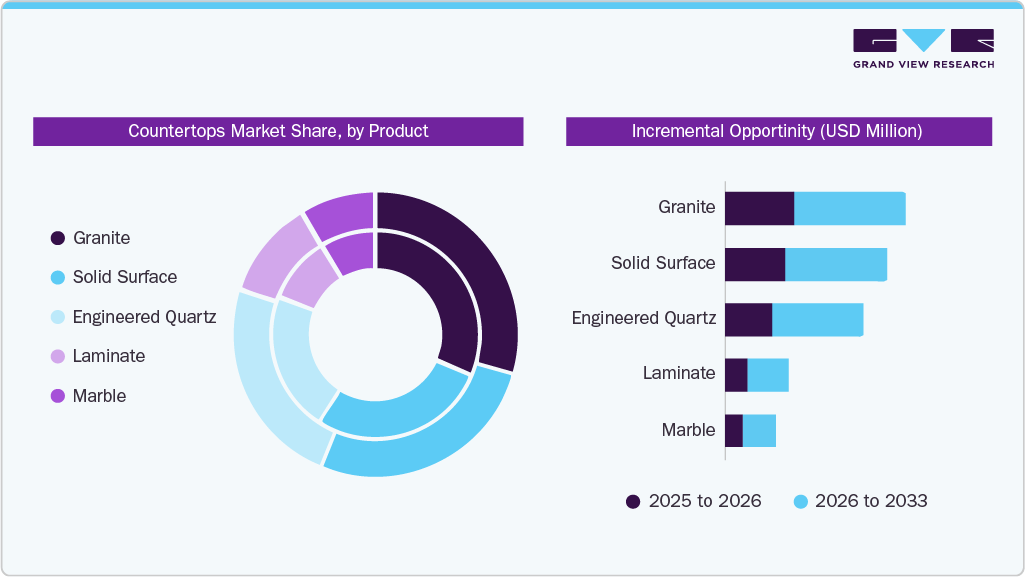
Based on product type, the Granite segment led the market with the largest revenue share of 28.0% in 2025. Granite continues to hold the largest share of the countertops market owing to its exceptional durability, natural aesthetics, heat resistance, and long service life. Consumers and builders widely prefer granite countertops for residential and commercial projects because each slab offers unique patterns and colors that enhance property value and interior appeal. The material’s ability to withstand scratches, stains, and high temperatures makes it particularly suitable for high-traffic environments. Additionally, increasing investments in home renovation and premium housing projects, coupled with growing consumer preference for natural stone surfaces, continue to support the strong demand for granite countertops across both developed and emerging markets.
 To learn more about this report, Download Free Sample Report
 Engineered quartz countertops are expected to grow at a CAGR of 8.2% from 2026 to 2033. The growth of engineered quartz countertops is driven by their durability, easy maintenance, and wide range of designs. Quartz surfaces are non-porous, resistant to stains, scratches, and heat, and do not require sealing, making them attractive for both homes and commercial spaces. Besides, they are available in many colors and patterns, allowing homeowners and designers to get the look of natural stone with more consistent quality. According to the National Kitchen & Bath Association’s 2026 Kitchen Design Trends report, 78% of industry professionals surveyed believe quartz will be the most popular countertop material.
End Use Insights
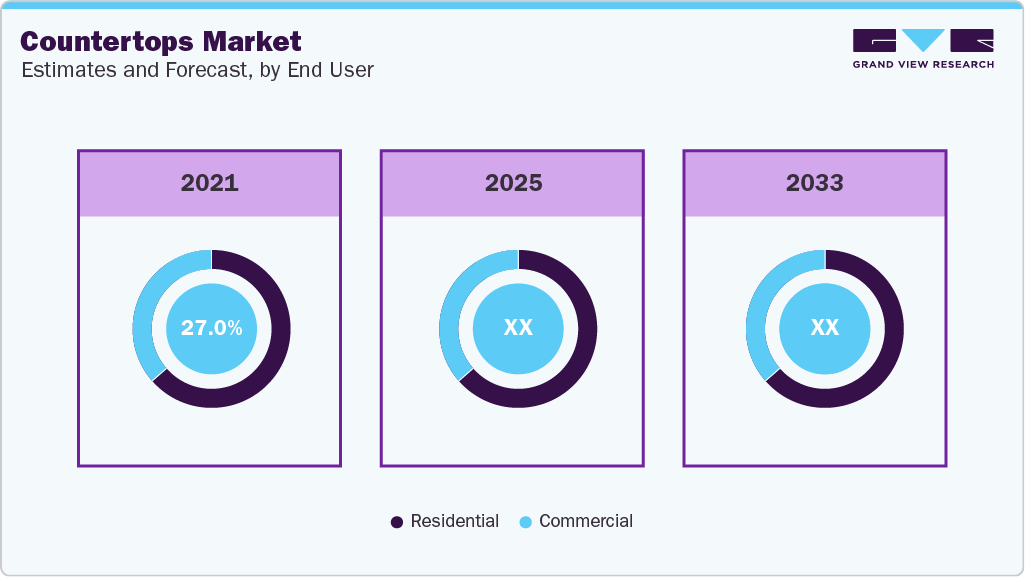
Countertops for residential accounted for the largest market revenue share of 72.3% 2025. The residential countertops market is steered by an increase in home renovations and new housing projects. Homeowners are increasingly replacing existing countertops in kitchens and bathrooms with durable, low-maintenance materials. Products such as granite, quartz, marble, and solid surfaces are gaining preference due to their strength, stain resistance, and variety of colors and finishes. This allows alignment with contemporary interior design trends. In addition, consumers seek materials that can withstand daily wear and tear while maintaining their appearance over time. The growing availability of pre-fabricated and customizable options also makes it easier for homeowners to install countertops that fit specific dimensions and design preferences.
 To learn more about this report, Download Free Sample Report
 Countertops for commercials are expected to grow at a CAGR of 7.5% from 2026 to 2033. The market for commercial countertops is expanding due to several key factors. A large number of offices, restaurants, hotels, and retail spaces are being built. This is creating demand for surfaces that are strong, long-lasting, and can handle heavy use. Urban growth and new infrastructure projects are also increasing the need for countertops that are both functional and visually appealing. Many businesses are also seeking countertops that complement the overall design and style of their space. Additionally, businesses choose commercial countertops mainly for practical benefits. In restaurants and hotels, surfaces must be easy to clean and maintain hygiene standards while withstanding daily wear and tear.
Application Insights
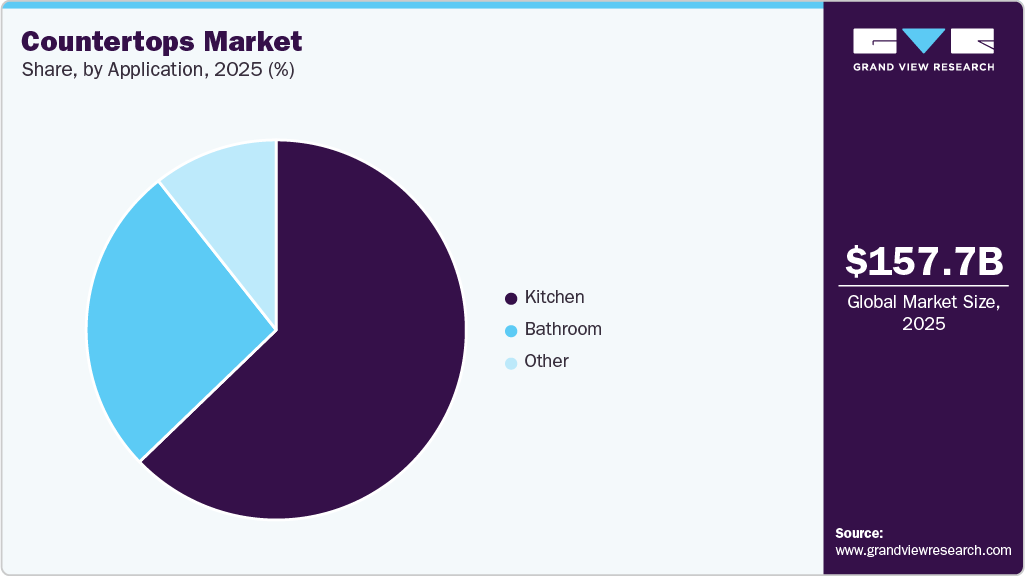
Based on applications, the kitchen segment led the market with the largest revenue share of 62.8% in 2025, as countertops serve as a critical functional and aesthetic component of modern kitchen spaces. Rising residential construction activity, growing kitchen remodeling expenditures, and increasing consumer focus on enhancing home value have significantly boosted demand for high-quality countertop materials. Modern kitchens require durable surfaces capable of withstanding daily food preparation, heat exposure, moisture, and frequent cleaning, making countertops an essential investment for homeowners. Furthermore, evolving interior design trends, the growing popularity of open-concept kitchens, and rising demand for premium and customized kitchen solutions continue to strengthen the segment’s leading position within the global countertops market.
 To learn more about this report, Download Free Sample Report
 Countertops for bathrooms are expected to register a growth rate of 7.8% over the forecast period. Homeowners are investing in durable and moisture-resistant materials such as quartz, solid surface, and engineered stone, which offer improved hygiene, stain resistance, and low maintenance compared to traditional laminates. The rising trend of bathroom remodeling, driven by aging housing stock, higher home equity, and lifestyle upgrades, has further accelerated demand for premium countertops, particularly in primary bathrooms and powder rooms.
Regional Insights
The countertop industry in North America accounted for a 25.5% share of the global market in 2025. The growth is closely linked to ongoing home renovation activity and steady new housing construction. Homeowners are increasingly updating kitchens and bathrooms with countertops that are durable, easy to maintain, and suitable for everyday use. As open kitchen layouts become increasingly common, countertops have assumed a larger role in overall home design, resulting in higher spending on upgrades and replacements.
U.S. Countertops Market Trends
The countertop industry in the U.S. is expected to grow at a CAGR of 5.7% from 2026 to 2033. Homeowners increasingly view countertops as both a functional surface and a design statement, prioritizing durability, ease of maintenance, and aesthetics. Rising home renovation activity, open-concept kitchens, and higher expectations for hygiene and longevity have accelerated demand for materials such as quartz, granite, and solid surfaces. Besides, countertops are seen as a high-impact upgrade that enhances resale value, making them a preferred investment in both new construction and remodeling projects.
Europe Countertops Market Trends
The countertop industry in Europe is expected to grow at a CAGR of 6.3% from 2026 to 2033. The consumers in Europe are purchasing countertops mainly for practical reasons. Homeowners seek surfaces that are easy to clean, durable, and align with current interior design preferences. Commercial buyers prioritize durability, hygiene, and low maintenance to minimize operating costs. There is also a growing preference for responsibly sourced and environmentally compliant materials, which has supported demand for engineered surfaces and certified natural stone. Overall, functionality, reliability, and suitability for modern living and working environments are driving countertop purchases in the European market.
Asia Pacific Countertops Market Trends
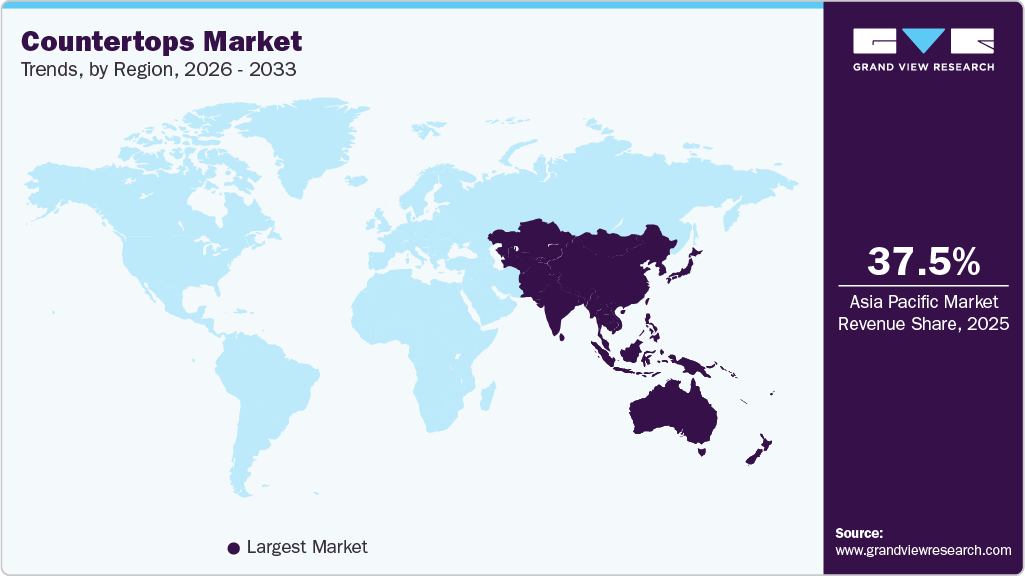
Asia Pacific dominated the countertops market with the largest revenue share of 37.5% in 2025. Asia Pacific's leadership in the countertops market is primarily driven by rapid urbanization, large-scale residential construction activity, and rising investments in commercial infrastructure across developing economies. Growing middle-class populations, increasing disposable incomes, and improving housing standards have significantly increased demand for modern kitchens and premium interior furnishings. The region also benefits from a strong manufacturing base for natural stone, engineered stone, ceramic, and solid surface materials, enabling cost-effective production and widespread product availability. Additionally, government-backed housing initiatives, expanding real estate developments, and increasing consumer preference for aesthetically appealing and durable home interiors continue to support market growth. The ongoing shift toward modular kitchens and premium residential projects is expected to further strengthen countertop demand across the region.
 To learn more about this report, Download Free Sample Report
 The countertops market in China held the largest share of about 32.1% in the Asia Pacific region in 2025, supported by its extensive construction sector, large housing stock, and well-established stone processing and engineered surface manufacturing industries. The country serves as a major global producer and exporter of granite, quartz, sintered stone, and engineered countertop materials, benefiting from significant economies of scale and integrated supply chains. Rising urban redevelopment projects, increasing demand for upgraded residential interiors, and continued growth in premium housing developments have accelerated countertop installations across both new-build and renovation projects. Furthermore, the increasing adoption of western-style kitchens, smart homes, and luxury interior design concepts among urban consumers is driving demand for high-performance countertop materials, positioning China as a key growth engine for the regional market.
Key Countertops Company Insights
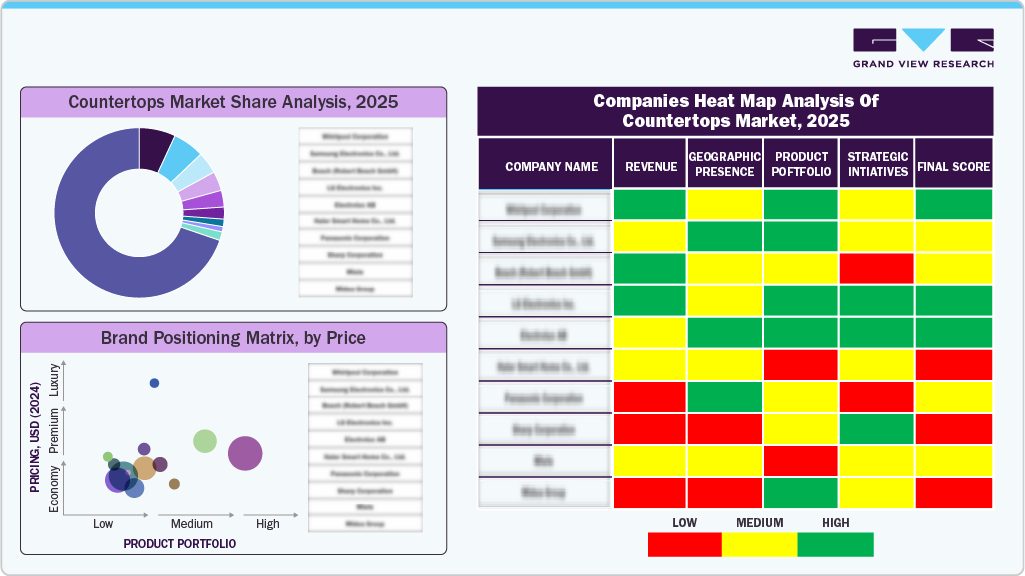
The countertops industry is characterized by intense competition, driven by a mix of established global players and regional manufacturers striving to cater to diverse consumer preferences and applications. Leading companies in the sector, such as Corian, Cambria, Cosentino, and Wilsonart, dominate through their extensive product portfolios, innovative designs, and a strong focus on sustainability. These players are heavily investing in research and development to introduce advanced materials such as engineered quartz, eco-friendly composite stones, and antimicrobial surfaces, which address evolving consumer needs for durability, hygiene, and aesthetics.
 To learn more about this report, Download Free Sample Report
 Key Countertops Companies
The following key companies have been profiled for this study on the countertops market.
-
Cosentino
-
Levantina
-
LX Hausys
-
Corian
-
Cambria
-
Wilsonart
-
EGGER
-
Polycor
-
Antolini
Competitive Benchmarking
Category
Operating Strategies
Competitive Edge
Weakness
Established Players (Cosentino; Levantina; LX Hausys; Corian; Cambria; Wilsonart; EGGER; Polycor; Antolini)
- Expand vertically integrated material ecosystems across engineered quartz, solid surfaces, porcelain, and natural stone.
- Invest heavily in advanced manufacturing (ultra-compact surfaces, resin-based composites), sustainability-led production, and global distributor networks targeting residential, commercial, and hospitality construction sectors.
- Strong global brand equity and architect/specifier influence, enabling high penetration in premium construction projects.
- Broad material portfolios and advanced R&D capabilities allow cross-segment dominance (quartz, solid surface, natural stone).
- High capital intensity due to manufacturing infrastructure, logistics, and raw material sourcing.
- Exposure to cyclical construction demand and increasing competition from regional low-cost manufacturers and digital-first surface brands.
Emerging Players ()
- Focus on localized distribution, custom fabrication, and niche design-driven countertop solutions for residential renovation and boutique commercial projects.
- Leverage cost competitiveness, faster turnaround times, and tailored design offerings to serve fragmented regional demand.
- Greater agility in customization, faster response to design trends, and strong regional contractor relationships.
- Ability to serve price-sensitive and mid-tier residential renovation markets effectively.
- Limited global scale and weaker brand recognition compared to multinational surface manufacturers.
- Lower bargaining power in raw material procurement and higher vulnerability to pricing pressure from large integrated players.
Recent Developments
-
In December 2025, ILKEM Marble & Granite introduced a premium line of modern kitchen countertops, offering customized solutions in marble, quartz, granite, and quartzite that blend durability with high-end aesthetics for contemporary homes. The company emphasizes helping homeowners understand material properties, such as appearance, maintenance, and resistance, before choosing surfaces. It provides a guided, step-by-step installation process to ensure precise and long-lasting results.
Countertops Market Report Scope
Report Attribute
Details
Market size in 2025
USD 157.7 billion
Estimated market size in 2026
USD 167.9 billion
Projected market size by 2033
USD 267.4 billion
Growth rate
CAGR of 6.9% from 2026 to 2033
Base year for estimation
2025
Historical data
2021 - 2024
Forecast period
2026 - 2033
Quantitative units
Revenue in USD million/billion and CAGR from 2026 to 2033
Report coverage
Revenue forecast, company ranking, competitive landscape, growth factors, and trends
Segments covered
Product, Application, end use, region
Regional scope
North America; Europe; Asia Pacific; MEA; and Central & South America
Country scope
U.S.; Canada; Mexico; Germany; UK; France; Italy; Spain; Rest of Europe; China; Japan; India; South Korea; Australia & New Zealand; Rest of Asia Pacific; Brazil; Rest of Latin America; Saudi Arabia; South Africa; Rest of Middle East & Africa
Key companies profiled
Cosentino; Levantina; LX Hausys; Corian; Cambria; Wilsonart; EGGER; Polycor; Antolini
Customization scope
Free report customization (equivalent up to 8 analysts' working days) with purchase. Addition or alteration to country, regional & segment scope.
Pricing and purchase options
Avail customized purchase options to meet your exact research needs. Explore purchase options
Global Countertops Market Report Segmentation
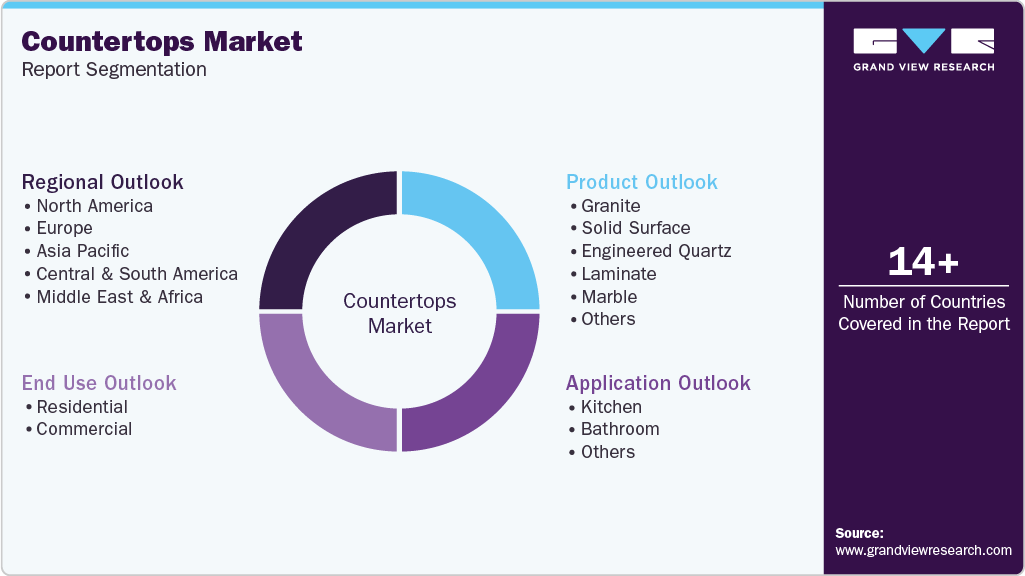
This report forecasts revenue growth at global, regional & country levels and provides an analysis of the latest trends and opportunities in each of the sub-segments from 2021 to 2033. For this study, Grand View Research has segmented the global countertops market report on the basis of product, end use, application, and region.
 To learn more about this report, Download Free Sample Report
 -
Product Outlook (Revenue, USD Million, 2021 - 2033)
-
Granite
-
Solid Surface
-
Engineered Quartz
-
Laminate
-
Marble
-
Others
-
-
End Use Outlook (Revenue, USD Million, 2021 - 2033)
-
Residential
-
Commercial
-
-
Application Outlook (Revenue, USD Million, 2021 - 2033)
-
Kitchen
-
Bathroom
-
Others
-
-
Regional Outlook (Revenue, USD Million, 2021 - 2033)
-
North America
-
U.S.
-
Canada
-
Mexico
-
-
Europe
-
UK
-
Germany
-
France
-
Italy
-
Spain
-
-
Asia Pacific
-
China
-
India
-
Japan
-
South Korea
-
Australia
-
-
Central & South America
-
Brazil
-
-
Middle East & Africa
-
South Africa
-
-
Research Methodology
The countertops market figures in this report are based on a proven research process that combines executive interviews with secondary research from proprietary databases, company filings, and recognized regulatory and institutional sources. Market size is built through value-chain sizing - reconciling supply-side and demand-side estimates - and triangulated with bottom-up and top-down approaches. Every estimate passes multiple levels of expert validation before publication, with each countertops segment quantified using the revenue-capture definitions in the table below.
Segment Definition
Segment - Product
Revenue capture definition
Granite
This covers granite-based countertop materials, including raw block extraction, slab processing, cutting, polishing, finishing, and fabrication into standard countertop formats. It includes residential and commercial applications, distribution channels, installation services, design variations, thickness options, surface finishes, and trade flows across imported and domestic supply chains.
Solid Surface
In this scope, we cover acrylic and polyester solid surface materials used for countertops, including sheet production, thermoforming, cutting, seamless fabrication, adhesive bonding, surface finishing, and repair processes. It includes residential kitchens, bathrooms, commercial spaces, healthcare and hospitality installations, design customization, color patterns, thickness variations, and distribution through direct and retail channels.
Engineered Quartz
Scope covers engineered quartz countertop materials composed of natural quartz aggregates and polymer resins, including compaction, slab formation, curing, surface finishing, and edge profiling. It includes residential kitchen and bathroom applications, commercial interiors, standardized designs, color consistency variants, installation practices, and distribution across retail showrooms, wholesalers, and project-based supply networks.
Laminate
This scope covers laminate countertop surfaces manufactured using high-pressure laminate sheets bonded over particleboard or MDF cores, including resin impregnation, pressing, cutting, edging, and finishing. It includes low-cost residential kitchen applications, rental housing, modular furniture integration, decorative patterns, moisture-resistant variants, and distribution through home improvement stores and organized retail channels.
Marble
It covers natural marble countertop materials, including quarry extraction, block cutting, slab processing, polishing, sealing, and finishing treatments. It includes luxury residential kitchens, bathrooms, hospitality projects, architectural applications, aesthetic grading, veining patterns, thickness variations, and supply through import channels, specialty stone distributors, and premium installation service providers.
Others
The Scope covers alternative countertop materials, including terrazzo, concrete, stainless steel, glass, and hybrid composites, along with emerging engineered materials. It includes manufacturing processes, custom fabrication, surface treatments, durability enhancements, niche residential and commercial applications, experimental designs, and distribution through specialized suppliers and project-based architectural procurement channels.
Segment - Application
Revenue capture definition
Kitchen
In this, we cover countertop installations and usage in residential and commercial kitchen environments, including modular kitchens, premium culinary spaces, and renovation projects. It includes material selection, fabrication standards, heat and stain resistance requirements, design aesthetics, installation practices, and integration with sinks, cabinetry, and kitchen appliances.
Bathroom
It covers countertop applications in residential and commercial bathrooms, including vanity tops, integrated sink surfaces, and wet-area installations. It includes moisture-resistant material requirements, compact design formats, edge finishing, hygiene considerations, installation practices, and usage across hotels, hospitals, residential homes, and premium bathroom renovation projects.
Others
It covers non-kitchen and non-bathroom countertop applications across commercial, institutional, and specialty environments. It includes reception desks, laboratory surfaces, retail counters, hospitality bars, office installations, and custom architectural elements along with material specifications, durability standards, fabrication requirements, and design customization for diverse end-use environments.
Estimation Model
Title
Focus Question
Description
Built Space & Installation Base Layer
Where are countertops required?
Identify the global stock of residential housing, commercial buildings, and institutional infrastructure. Apply kitchen and bathroom presence rates along with renovation/reconstruction frequency to identify spaces where countertops are required or replaced due to wear, aesthetics, or functional upgrades.
Renovation & New Construction Access Layer
Which spaces are actively creating demand?
Filter eligible built spaces based on new construction activity, remodeling intensity, and interior finishing penetration rates. Segment demand across single-family homes, multi-family units, hospitality kitchens, commercial foodservice areas, and institutional facilities.
Material & Replacement Demand Layer
Who is actively purchasing or replacing countertops?
Apply material selection and adoption behavior across categories like granite, engineered quartz, marble, solid surface, and laminate. Factor in consumer preference shifts toward durability, aesthetics, maintenance, and premiumization, along with substitution patterns.
Monetisation Layer
How much revenue is generated?
Multiply installed countertop surface area or unit installations by blended ASPs across materials. Include fabrication, edge finishing, installation services, and replacement demand cycles to estimate total market revenue.
Delivered Customizations
This report has been delivered with the following In-depth customizations
Client Request
Customization Delivered
Value Adds
Cross-Segmentation Analysis of Countertop Materials, Applications, End-Use & Regional Demand Patterns
Provides a detailed cross-segmentation analysis of the global countertops market across product types (granite, engineered quartz, solid surface, laminate, marble, and other natural/engineered stones). It maps these against application areas (kitchen, bathroom, and specialty surfaces like islands, bars, and utility counters) and end-use segments (residential housing and commercial spaces). The analysis is also layered across regional markets with sub-country granularity for key demand hubs.
Identifies how granite and quartz dominate global demand, with quartz gaining share due to low maintenance and design flexibility, while laminate remains cost-led in emerging markets. It highlights that kitchen countertops remain the core demand driver, while bathroom and commercial surfaces are growing faster due to hygiene upgrades and hospitality expansion.
Material Technology, Aesthetics & Performance Benchmarking Across Countertop Ecosystem
Offers comprehensive benchmarking of countertop materials based on durability, porosity, stain resistance, heat resistance, lifecycle cost, aesthetics, and fabrication complexity. This includes comparisons of natural stone (granite, marble), engineered stone (quartz), solid surfaces (acrylic-based), and laminates, along with emerging eco-friendly composites and recycled material surfaces.
Helps distinguish premium natural stone positioning versus engineered quartz dominance in modern kitchens. It highlights the shift toward non-porous, low-maintenance, and design-consistent surfaces, which is reshaping product innovation. It also supports pricing architecture, product differentiation, and material substitution risk assessment.
Residential Renovation vs New Build Demand Mapping
Provides a detailed breakdown of countertop demand across new housing construction versus renovation/remodeling cycles, including purchase triggers such as kitchen upgrades, bathroom remodeling, real estate resale value enhancement, and aging housing stock replacement.
Identifies renovation as a structural growth driver in developed economies, especially in North America and Europe, where homeowners prioritize kitchen upgrades for ROI. In contrast, it notes that new-build demand dominates in Asia Pacific, driven by urbanization, housing expansion, and rapid residential development.
Frequently Asked Questions About This Report
The global countertops market was valued at USD 157.7 billion in 2025 and is estimated at USD 167.9 billion in 2026.
The global countertops market is expected to grow at a CAGR of 6.9% from 2026 to 2033, reaching USD 267.4 billion by 2033.
The Granite Countertops segment led the market with a 28.0% revenue share in 2025, driven by its durability, premium appearance, and widespread residential and commercial applications.
Some key players operating in the countertops market include Cosentino, Levantina, LX Hausys, Corian, Cambria, Wilsonart, EGGER, Polycor, and Antolini.
Key factors include increasing residential and commercial construction activities, growing demand for kitchen and bathroom remodeling projects, rising consumer preference for premium and aesthetically appealing interior surfaces, expanding adoption of engineered stone materials, and continuous innovations in durable, stain-resistant, and low-maintenance countertop products.
Asia Pacific dominated the market with a 37.5% revenue share in 2025.
Asia Pacific is also the fastest-growing regional market, projected to expand at a 7.8% CAGR during the forecast period.
Kitchen segment held the largest revenue share of 62.8% in 2025, owing to extensive countertop installations in residential kitchens, modular kitchen projects, and commercial food-service environments.
Residential segment accounted for the largest share of 72.3% in 2025, supported by strong demand from new housing construction and renovation activities.
About the Author(s)
Homecare & Decor Research Team
Consumer Goods · Homecare & DecorThis report was authored by the homecare & decor research team at Grand View Research - comprising two research analysts, one senior research analyst, and one industry expert - with specialized expertise in the homecare & decor segment of the consumer goods industry. All findings are based on proprietary consumer goods databases, executive interviews, and regulatory analysis, subject to internal peer review prior to publication.
Last Updated:
Speak to Analyst

Customize this report to your needs - add regions, segments, or data points, with 20% free customization.
Or view our licence options:


ISO 9001:2015 & 27001:2022 Certified
We are GDPR and CCPA compliant! Your transaction & personal information is safe and secure. For more details, please read our privacy policy.


